LondonLife Special – The Lord Mayor’s Show…

Last Saturday was the Lord Mayor’s Show, the annual three mile long procession through the streets of the City of London celebrating the arrival of the new Lord Mayor – in this case David Wootton, the City’s 684th Lord Mayor…

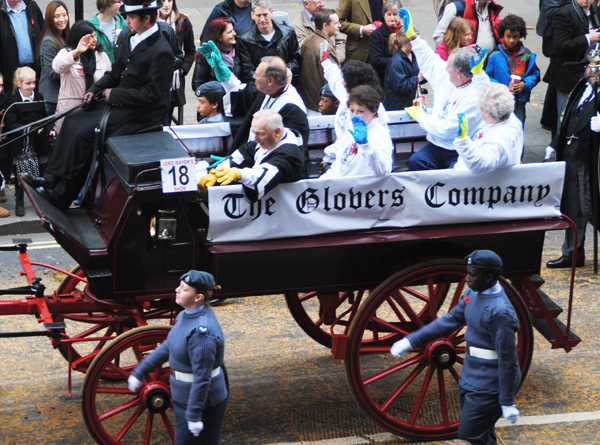
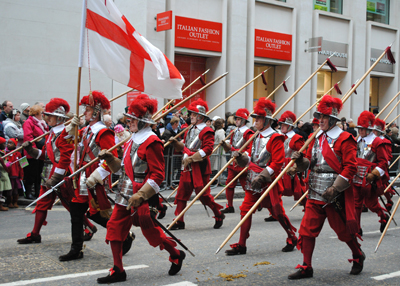
The Show always features entries by livery companies, some of which have ancient roots such as the Worshipful Company of Glovers (pictured above), first formed in 1349…

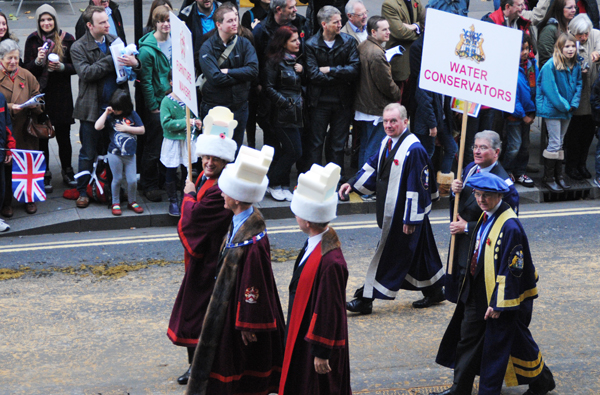
…and some which don’t, such as the Worshipful Company of Furniture Makers and the Worshipful Company of Water Conservators (representatives of which are pictured above), two of the so-called “modern livery companies”.

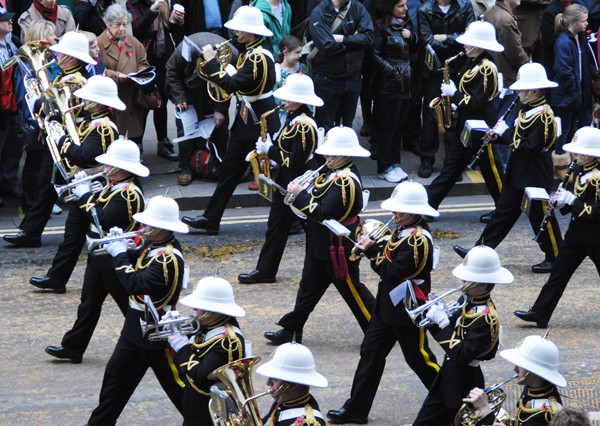
From our vantage point above Cheapside, we saw massed bands aplenty (seen above is the Royal British Legion Band & Corps of Drums from Romford)…

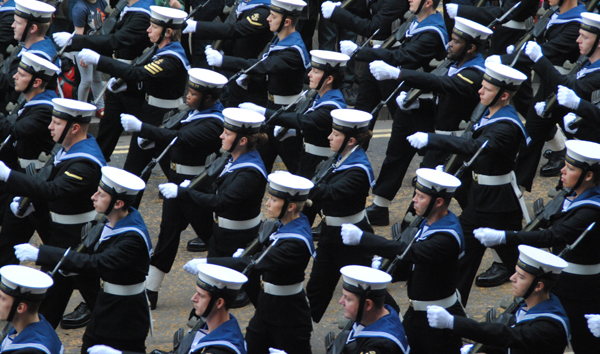
          …marching naval, army and airforce personnel…

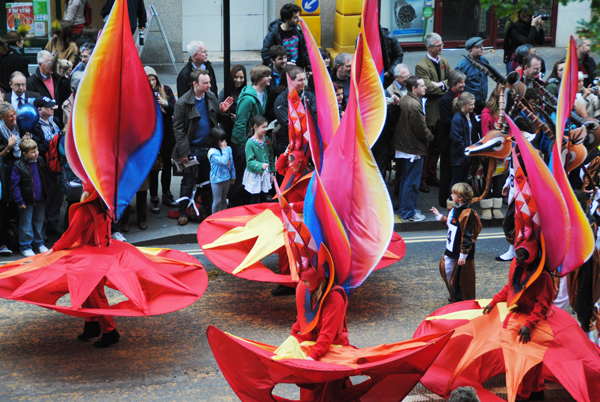
         …as well as lots of color…

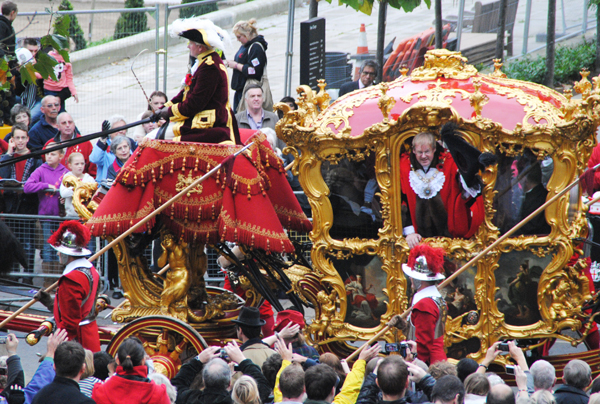
…before the arrival of Lord Mayor David Wootton in the 18th century State Coach drawn by six shire horses. The Lord Mayor proceded onto St Paul’s Cathedral where he was blessed before moving onto the Royal Courts of Justice where he swore allegiance to the Sovereign (and then returning to Mansion House via Queen Victoria Street). Late in the afternoon, he presided over a stunning fireworks display on the Thames. For more information about this annual event, see www.lordmayorshow.org.

Around London – The Lord Mayor’s Show goes on; London 2012 Festival launched; dowry tradition lives on; and, Leonardo da Vinci at the National Gallery…

On Saturday the annual Lord Mayor’s Show will crawl its way across London’s Square Mile in a three mile long procession that will involve 123 floats and 6,200 people. The show (a scene from last year’s procession is pictured) is held each year as the first public outing of the newly elected Lord Mayor – this year it’s David Wootton, the City of London’s 684th Lord Mayor, who officially takes up his new office tomorrow (11th November). Organisers have said the procession will follow its usual route despite the protestors currently encamped outside St Paul’s. Leaving Mansion House, the official residence of the Lord Mayor, at 11am, it will make its way down Cheapside to St Paul’s Cathedral, where the new Lord Mayor will be blessed, before heading onto the Royal Courts of Justice, where the Lord Mayor swears an oath of allegiance to Queen Elizabeth II, and then returning to Mansion House. The the procession, the origins of which date back to 1215, will feature representatives of livery companies, educational and youth organisations, military units and other London-associated organisations and charities like St Bart’s Hospital. There will be a fireworks display at 5pm on the Thames between Blackfriars and Waterloo. For more information, see www.lordmayorshow.org.

• Organisers have unveiled plans for the London 2012 Festival, a 12 week nationwide cultural celebration of music, theatre, dance, art, literature, film and fashion held around next year’s Games. We’ll be providing more details in upcoming weeks and months but among the highlights in London will be a British Museum exhibition on the importance of Shakespeare as well as “pop-up” performances by actor Mark Rylance – both held as part of the World Shakespeare Festival, a musical tribute to the history of jazz at the Barbican by the London Symphony Orchestra and Jazz at the Lincoln Center Orchestra, an exhibition of the work of artist Damien Hirst at the Tate Modern and another on Yoko Ono at the Serpentine Gallery, and ‘Poetry Parnassus’ at the Southbank Centre – the largest poetry festival ever staged in the UK. The festival is the finale of the “Cultural Olympiad” – launched in 2008, it has featured a program of events inspired by the 2012 Olympics – and will see more than 10 million free events being held across the country. For more details, see www.london2012.com.

In a tradition which dates back to the late 1800s, three “poor, honest (and) young” women have been awarded a dowry by the City of London Corporation. Susan Renner-Eggleston, Elizabeth Skilton, and Jenny Furber have each received around £100 under the terms of a bequest Italian-born Pasquale Favale made to the City in 1882. Inspired by the happiness he found is his marriage to his London-born wife Eliza, Favale bequeathed 18,000 Lira to the City in 1882 and stipulated that each year a portion of the money was to be given to “three poor, honest, young women, natives of the City of London, aged 16 to 25 who had recently been or were about to be married”. To be eligible the women must have been born in the City of London or currently reside there.

• On Now: Leonardo da Vinci: Painter at the Court of Milan. Billed as the year’s blockbuster art event in London, this exhibition at the National Gallery focuses on Da Vinci’s time as a court painter in Milan in the 1480s-90s and features 60 paintings and drawings. Thanks to a collaboration between the National Gallery and the Louvre, they include two versions of the Virgin of the Rocks (it is the first time the two versions are being shown together). Other paintings include Portrait of a Musician, Saint Jerome, The Lady with an Ermine (an image of Cecilia Gallerani, mistress of Milan’s ruler at the time – Ludovico Maria Sforza, ‘Il Moro’) and Belle Ferronniere as well as a copy of Da Vinci’s painting, The Last Supper, by his pupil Giamopietrino. Runs until 5th February and an admission charge applies. For more, see www.nationalgallery.org.uk.

LondonLife – Remembering September 11

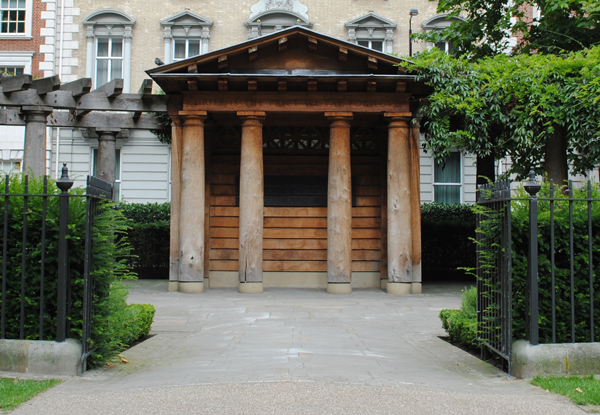
London, along with the rest of the world, will this week pause to remember 11th September, 2001, when nearly 3,000 people died after planes were flown into New York’s World Trade Center towers and the Pentagon (a fourth plane crashed in Pennsylvania). In preparation for the 10th anniversary, London’s Mayor Boris Johnson unveiled a 10 metre high sculptural memorial, After 9/11, in Battersea Park which controversially uses steel girders from the towers in its design. But London already has a memorial to the events of 11th September. This is located in Grosvenor Square Garden, opposite the US Embassy. Opened on 11th September, 2003, the memorial features a pavilion which has three bronze plaques listing the name of UK citizens, UK Overseas Territories and people of dual nationality who lost their lives. The site was chosen partly on the basis that it was at the foot of the nearby Roosevelt Memorial that people laid flowers and lit candles in the immediate aftermath of the attacks. Plants at the memorial include white Bianca Roses which were among the flowers in the Queen’s bouquet laid at Westminster Abbey in a service held on 29th November, 2001, and were the roses that family members laid on the innocent victims memorial outside the abbey . In addition, more than 3,000 of the rose petals cascaded from the Whispering Gallery to the altar of St Paul’s Cathedral on the  first anniversary service.

10 Questions – Martin Stancliffe, Surveyor to the Fabric, St Paul’s Cathedral…

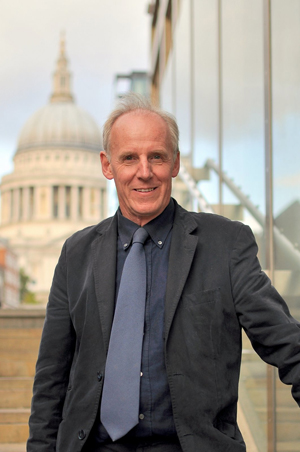
In the first of a new series in which we ask 10 questions of someone involved with one of London’s historic sites, we speak to Martin Stancliffe, Surveyor of the Fabric at St Paul’s Cathedral, about the £40 million, 15 year cleaning and restoration project at the iconic London structure which came to an end last month…

1. What does your job at the cathedral involve? “Advising on all aspects of the care and repair of the fabric of the cathedral, and its setting. This involves devising and leading all fabric projects, major or minor.”

 2. What prompted the 15 year repair and cleaning project? “The perception that the cathedral could reach out more to all its visitors both as a great centre for worship and as a great tourist attraction if it were in better condition and had improved facilities.”

3. How much of a difference has the cleaning and repair project made to the look of the cathedral, both inside and out? “I think it is not too much to say that the cleaning has transformed the appearance of both the exterior and the interior. In particular, the interior now speaks much more clearly of its primary purpose as a great church and a setting for great national services of memorial or celebration. In addition, the programme of repair works in almost all parts of the cathedral has put it into good condition in ways that can be sensed, but cannot  – I hope – be seen.”

4. How many people have been involved? “It is hard to make a count, but the number must run into several hundred.”

5. What trades did the task require and was it easy to source the sort of expertise required? “The various different tasks required a great range of skills, from masons to electricians and scaffolders,  and from expert painters and gilders to conservators. There is a wonderful supply of skilled craftsmen and professionals in this country; but younger people need to be encouraged to understand how creative and rewarding such work is, and to learn the expert skills required to continue to care for buildings like this.”

6. What was the most challenging aspect of the project? “The most challenging aspect was the organisation of the internal cleaning project, which required special techniques and special scaffolding to enable the cathedral to continue its day to day work uninterruptedly throughout the 15 year programme – including having to remove all scaffolding from the interior for the Queen’s Golden Jubilee right in the middle of the project!”

7. Is the cathedral we now see as (original architect) Sir Christopher Wren envisaged it? “No, the interior had already been substantially altered in the 19th century by the removal of the original choir screen, the stripping of paint from all the internal stonework, and the installation of mosaic decorations. However, the atmosphere in the cathedral is certainly closer to how Wren envisaged it than in its gloomy state 15 years ago; and he would certainly have recognised – and welcomed – the radiant quality of light which has been restored to the interior.”

8. Did you make any interesting discoveries about the building during the restoration project? “A building like this is always revealing new things. We discovered much more about how the lower parts of the dome were constructed, and we have understood much better why and how the building moved and settled as a structure over the last 300 years. We also discovered many fragments of the great cathedral which stood on this site for some 600 years before the destruction of the Great Fire, built into the structure of  Wren’s cathedral.”

 9. What’s your favorite part of the cathedral?  “I love all parts of the dome, from the top of the lantern down to its complex foundations on the top of the arches of the nave.”

10. Can you tell us something about St Paul’s that many visitors may be unaware of? “Many people are unaware of the reason why the dome seems so all embracing when you are in the interior. This is because the dome spans right across the whole width of the church,  allowing the aisles to pass through it, unlike St Peter’s in Rome, for instance.”

WHERE: St Paul’s Cathedral, St Paul’s Churchyard (nearest tube station is St Paul’s); WHEN: St Paul’s is open from 8.30am to 4pm (galleries from 9.30am to 4.15pm), Monday to Saturday. Open for worship only on Sundays;  COST: £14.50 an adult/£13.50 concessions/£5.50 a child (6-18 years)/£34.50 a family of four; WEBSITE: www.stpauls.co.uk

LondonLife – St Paul’s celebrates 300 years since its completion…

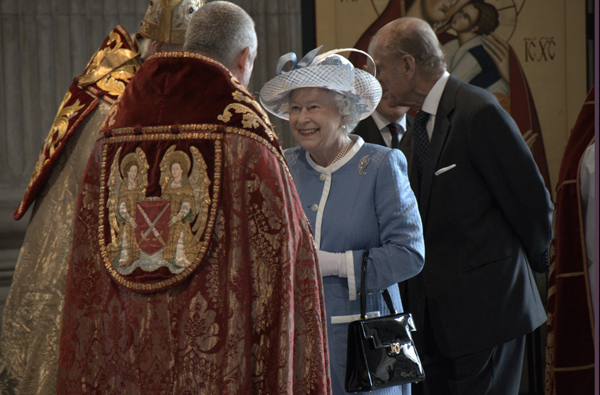
Queen Elizabeth II attends the tercentenary service at St Paul’s. PICTURE: Graham
Lacdao/St Paul’s Cathedral

A service was held at St Paul’s today in celebration of the 300 year anniversary of the cathedral’s completion.

The tercentenary service also marks the end of a massive 15 year, £40 million repair and cleaning project, meaning the cathedral is now clear of scaffolding for the first time in 15 years.

Designed by the indomitable Sir Christopher Wren, work on St Paul’s Cathedral began in 1677 and was formally completed in 1710 (although it had been holding services since 1697). (For more on the history of St Paul’s, see our earlier post, part of our series on Wren’s London, here).

Said to have the largest dome after St Peter’s in Vatican City, St Paul’s has been at the centre of London’s (and the United Kingdom’s) religious and political life for centuries, hosting state funerals (Lord Nelson, the Duke of Wellington and Winston Churchill’s were all held here) as well as the royal wedding of Prince Charles and Lady Diana and many celebration services.

Sights include the crypt – containing the tombs of both Nelson and Wellington – and the Whispering Gallery (see our earlier post on the Whispering Gallery here) as well as the exterior viewing galleries.

To celebrate the cathedral’s liberation from scaffolding, St Paul’s is holding a 300th Anniversary Photography Competition in which photographers are invited to submit their best exterior shots of the building. The 10 winning images will then be displayed in the cathedral crypt. The competition runs until 16th July.

To enter, upload pictures to St Paul’s 300th anniversary competition group at Flickr – www.flickr.com/groups/stpaulslondon/. For more information, see www.stpauls.co.uk/photocomp.

The Royal Wedding – Eight curious facts about Royal Weddings past and present…

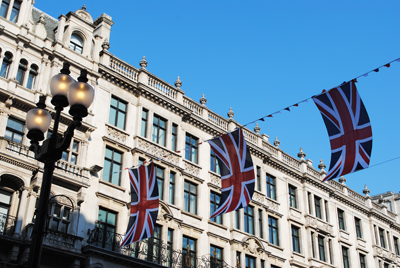
PICTURE: Bunting in Regent Street ahead of the Royal Wedding tomorrow.

Ahead of the wedding of Prince William and Kate Middleton tomorrow, here’s a look at some of the more curious and interesting facts related to London’s Royal Wedding past…

The first public Royal Wedding in modern times was that of Prince Albert, Duke of York (later King George VI), and Lady Elizabeth Bowes-Lyon (later Queen Elizabeth, the Queen Mother) which took place on 26th April, 1923. Instead of being held at a royal chapel as was more usual, they were married at Westminster Abbey in a public display which was apparently staged to lift the national spirit in the aftermath of World War I.

Lady Diana Spencer (later Diana, Princess of Wales) memorably said Prince Charles’ name in the wrong order during their wedding ceremony at St Paul’s Cathedral on 29th July, 1981. Lady Diana accidentally called him Philip Charles Arthur George instead of the correct Charles Philip Arthur George.

• Queen Victoria’s extravagant wedding cake was the first to feature a model of the bride and groom on its summit (with a figure of Britannia looming over them). The two tier cake measured nine foot across and weighed 300 lbs.

While white wedding dresses had been worn for some time, it was apparently after Queen Victoria wore a white dress at her 1840 wedding that the idea spread to the masses. (Interestingly, the first documented princess to wear a white wedding dress is said to have been Philippa of England, the daughter of King Henry IV, in 1406).

The first televised Royal Wedding was that of Princess Margaret, younger sister of Queen Elizabeth II, to Antony Armstrong-Jones (Lord Snowdon) on 6th May, 1960. It attracted some 300 million viewers worldwide.

The tradition of a royal bride leaving her bouquet on the Tomb of the Unknown Warrior in Westminster Abbey was started by Queen Elizabeth, the Queen Mother. She apparently did so in tribute to her brother Fergus who had died during World War I. Princess Mary, daughter of King George V, made a similar gesture at her wedding in 1922 – she left her bouquet at the Cenotaph in Whitehall after her wedding.

One of the most scandalous Royal Weddings was that of George, Prince of Wales (later King George IV) to Princess Caroline of Brunswick on 8th April, 1795 at the Chapel Royal in St James’s Palace. Described as being “far from a love match” on the Historic Royal Palaces’ website, Prince George was said to have been drunk during the wedding and at one stage apparently even attempted to escape from the ceremony.

If the rain stays away, the newly married prince and his bride will be returning to Buckingham Palace in the 1902 State Landau. The open-topped carriage was constructed for King Edward VII’s coronation and apparently made roomy to accommodation him. The carriage was used by Prince Charles and Lady Diana when they left St Paul’s Cathedral after their 1981 wedding. If the weather it poor, it’s expected that the 1881 Glass Coach, bought for the coronation of King George V in 1911, will be used instead.

For more fascinating facts on Royal Weddings, see the BBC website (www.bbc.co.uk/history/royal_weddings), or Historic Royal Palaces’ blog, The ‘other’ royal weddings (http://blog.hrp.org.uk). For more on the current Royal Wedding, see the official website (www.officialroyalwedding2011.org).

Treasures of London – The Whispering Gallery, St Paul’s Cathedral

Found 98 feet (30 metres) above the cathedral’s floor, the Whispering Gallery at London’s iconic St Paul’s Cathedral is an architectural marvel.

As with other “whispering galleries” found around the world, its construction is such that something whispered into the wall on one side of the gallery, which runs around the interior of the cathedral’s inner dome (part of the first ever ‘triple dome’), can be heard on the other side of the gallery, around 100 feet (30 metres) away.

The dome (pictured right), the design of which draws inspiration from that of St Peter’s Basilica in Vatican City, was constructed to the designs of Sir Christopher Wren. The cathedral, including the dome, was essentially completed in 1708.

As well as giving views down into the cathedral, the Whispering Gallery – a relatively easy climb of only 257 steps – also provides a close-up view of murals painted on the dome’s inner surface by Sir James Thornhill. Painted between 1715 and 1719, these depict images from St Paul’s life.

Two further galleries on the dome are also publicly accessible – the Stone Gallery, which stands 173 feet (53.4 metres) above the cathedral floor, and the Golden Gallery, which stands 280 feet (85.4 metres) above the cathedral floor and offers stunning views of the city as well as southward over the Thames. But be prepared for a long climb – 528 steps – up what are in places narrow, winding staircases.

The current ball and cross on top of the dome date from 1821 (these replaced those which had first topped the cathedral). Together they stand 23 feet (seven metres) high and weigh seven tonnes.

WHERE: St Paul’s Cathedral, St Paul’s Churchyard (nearest tube station is St Paul’s); WHEN: The galleries are open from 9.30am to 4.15pm, Monday to Saturday (small children must be accompanied by an adult)/Cathedral is open from 8.30am;  COST: £14.50 an adult/£13.50 concessions and students/£5.50 a child (6-18 years)/£34.50 a family of four; WEBSITE: www.stpauls.co.uk

Around London – New Year’s Eve fireworks; New Year’s Day Parade; and remembering the Blitz…

A British pyrotechnic company, Kimbolton Fireworks, will be used for the first time in the creation of the Mayor of London’s fireworks display at the London Eye on New Year’s Eve. And in another first, the firework display will be accompanied by music. The mayor’s office have warned that viewing areas for the fireworks fill up early (and will be closed when full) and have suggested that families with young children may consider attending a fireworks display closer to home. For more information, including a detailed viewing area plan, see www.london.gov.uk/get-involved/festivals/newyearseve/at-fireworks.

London’s New Year’s Day parade celebrates it’s 25th anniversary when it kicks off at 11.45am on New Year’s Day. The parade route starts outside the Ritz Hotel in Piccadilly and runs down Lower Regent Street and along Pall Mall and Cockspur Street into Trafalgar Square before heading down Whitehall and into Parliament Square where it concludes at 3pm. The parade will involve some 10,000 people representing 20 different countries. More than half a million people are expected to line the route. For more information, see www.londonparade.co.uk.

Firefighters have laid wreaths at the Firefighters’ Memorial outside St Paul’s Cathedral in commemoration of the 70th anniversary of one of the worst nights of the Blitz. More than 160 people were killed on the night of 29th December, 1940, in what became known as the ‘Second Great Fire of London’. While large parts of the city were destroyed in the German attack, St Paul’s was spared a similar fate thanks to the actions of specialist firefighters assigned to the building. The night was immortalised by Daily Mail photographer Herbert Mason in what is now an iconic photograph of the Blitz showing the great dome of St Paul’s wreathed in smoke.

The return of the Temple Bar

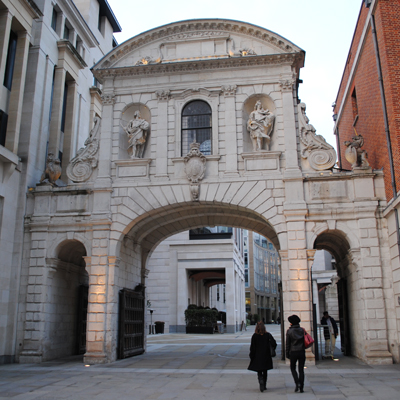
Temple Bar, LondonIt’s been a while since I was in London so I was delighted to find that the Temple Bar had been restored (not to its original site, but to the city as a whole!). The only surviving gateway into the city of London, it was constructed in 1672 to replace a crumbling wooden predecessor and was designed by Sir Christopher Wren (he of St Paul’s fame). The Temple Bar stood at the junction of Fleet Street and the Strand until 1878 when, to help traffic flow, it was removed. Apparently it was intended that it would be rebuilt somewhere else in the city, but time passed and no suitable site was found, so it eventually ended up on an estate in Hertfordshire. Where it remained until 2004 when – thanks to the work of the Temple Bar Trust – it was able to be returned to the city – it is now located between St Paul’s and Paternoster Square – for all to now enjoy.

WHERE: Between Paternoster Square and St Paul’s Cathedral. Nearest tube station is St Paul’s. COST: Free to see (actual building not open to public). WEBSITE: www.thetemplebar.info.

The Temple Bar isn’t the only ‘monument’, for want of a better word, which has been relocated in London. Another is the Wellington Arch, a magnificent structure which was originally finished (though not really completed) in 1830. Then known as the Green Park Arch, it stood parallel with the Hyde Park Screen (it was created to be seen in conjunction with it) and was later adorned with a huge – and controversial – statue of Wellington. But by the 1880s, traffic flow was again a problem and so it was decided to move the arch to its current location, perpendicular to the Hyde Park Screen. As a footnote, when the arch was moved in 1883, the statue of Wellington was not placed back on top but moved to a new site – Aldershot, where it is now.

WHERE: Grosvenor Place, Westminster, SW1X 7. Nearest tube station is Hyde Park Corner. COST: Adults £3.70/child £1.90 (English Heritage members free – there is a joint offer for others combined with Apsley House). WEBSITE: www.english-heritage.org.uk/daysout/properties/wellington-arch/.