This Week in London – Art deco at the London Transport Museum; art storage during WWII commemorated; and, William Dobson’s self-portrait…

An exhibition exploring the influence of the art deco movement on graphic poster design in on now at the London Transport Museum in Covent Garden. Art deco: the golden age of poster design features more than a hundred original 1920s and 1930s transport posters and poster artworks alongside photography, short films, ceramics and other objects to mark the centenary of the 1925 Paris exhibition where art deco originated. In the UK, Frank Pick, then-chief executive of London Transport, was the individual most responsible for advancing this form of graphic style, master-minding the publicity for the Underground and LT from 1908 onwards. A number of the posters in the exhibition in the Global Poster Gallery have never been put on public display before. Admission charge applies. For more, see www.ltmuseum.co.uk/whats-on/art-deco.

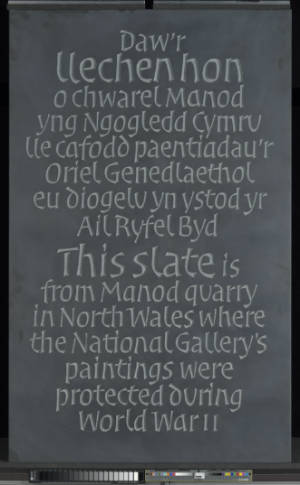
Jeremy Deller, designed and carved by John Neilson ‘Manod Slate Tablet’, 2025 © Jeremy Deller / John Neilson
Photo: The National Gallery, London

An inscribed stone tablet commemorating the Welsh quarry where The National Gallery’s art was protected during World War II has been put on permanent display in the gallery. The tablet, made from slate taken from the Manod quarry in Eryri (Snowdonia), was conceived by the artist Jeremy Deller and designed and carved by letter-carver John Neilson. The work, which was commissioned by Mostyn, an art gallery in Llandudno and supported by CELF – the national contemporary art gallery for Wales, can be seen in the Portico Vestibule, close to Boris Anrep’s floor mosaic of Sir Winston Churchill depicted in war time. The Manod slate mine in north Wales was chosen to store the art after an earlier proposal to evacuate the works to Canada was vetoed over fears of U-boat attacks. At the mine, explosives were used to enlarge the entrance to allow access for the the largest paintings and several small brick ‘bungalows’ were built within the caverns to protect the paintings from variations in humidity and temperature. What was known as an ‘elephant’ case was constructed to transport the paintings on trucks from London and, by the summer of 1941, the entire collection had moved to its new subterranean home, where it was to remain for four years, returning to London only after the end of the war in 1945. For more see www.nationalgallery.org.uk/.

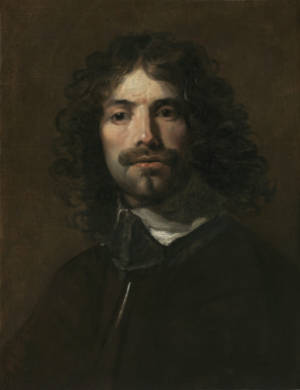
William Dobson, ‘Self-Portrait’, c1635-40. Image courtesy of Tate and the National Portrait Gallery

A self-portrait by William Dobson, widely considered to be the first great painter born in Britain, has gone on display at Tate Britain alongside a Dobson’s portrait of his wife. Dobson’s painting, which was acquired by the Tate and the National Portrait Gallery, was made between 1635 and 1640 and is said to be a “groundbreaking example of English self-portraiture”. His Portrait of the Artist’s Wife (c1635-40), which joined Tate’s collection in 1992, depicts Dobson’s second wife Judith and would have been conceived around the time of their marriage in December, 1637. Dobson rose to the role of King Charles I’s official painter before his career was cut tragically short when he died at the age of 35. For more, see tate.org.uk/visit/tate-britain.

• Send items for inclusion to exploringlondon@gmail.com.

This Week in London – Lee Miller at the Tate; the Hallelujah Chorus’ origins and impact, and conkers on Hampstead Heath…

• The UK’s largest retrospective of trail-blazing 20th century surrealist photographer Lee Miller opens at Tate Britain today. Lee Miller features around 230 vintage and modern prints, some of which are on display for the first time, which reveal how her approach pushed boundaries and led to the creation of some of the most iconic images of last century. Highlights include the newly discovered solarisation exemplar, Sirène (Nimet Eloui Bey) (c1930-32), her celebrated surrealist image of Egypt’s Siwa Oasis, Portrait􏰊of Space (1937), London-based works such as You will not lunch in Charlotte Street today (1940) and Fire Masks􏰘(1941) which convey the “pathos and absurdity” of the city in wartime, and war-related images including portraits of Miller and David E Scherman in Hitler’s private bath in April, 1945, as well as a rare 1950 self-portrait showing Miller posed in Oskar Kokoschka’s London studio flanked by artworks. Runs until 15th February. Admission charge applies. For more, see www.tate.org.uk/whats-on/tate-britain/lee-miller

The initial and enduring impact of the Hallelujah Chorus is the subject of a new display at the Foundling Museum in Bloomsbury. A Grand Chorus explores the profound impact music can have on listeners and performers and brings together musical scores, librettos, and musical instruments as well as paintings, photographs, audio, video, personal testimonies􏰞, and other archival material spanning three centuries. Originally􏰞composed as part of his famous Messiah oratorio, George Frideric Handel later incorporated the Hallelujah Chorus into an anthem he created specially􏰞for the Foundling Hospital that premiered in 1749 as a fund-raising exercise. The exhibition also showcases a major sound and video installation by􏰞Mikhail Karikis – We are Together􏰈 Because (2025), described as a modern counterpart to the Hallelujah Chorus. Runs until 29th March. Admission charge applies. For more, see https://foundlingmuseum.org.uk/event/a-grand-chorus-the-power-of-music/.

• Swing a conker at the Hampstead Heath Conker Championships this Sunday. People are all ages are invited to join in, whether a conker veteran or a newcomer, with competitions held in a range of age categories. The competition is being held near the Parliament Hill Bandstand from 1pm to 4pm. Entry is free. For more, see www.cityoflondon.gov.uk/events/go-conkers-on-hampstead-heath-5-october.

Send all items for inclusion to exploringlondon@gmail.com

This Week in London – New room for Turner at Tate Britain; slavery and Caribbean post ships; and, ‘The Power of Trees’ at Kew…

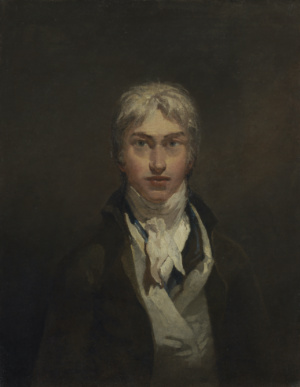
JMW Turner, ‘Self-Portrait’, c1799, PICTURE: Courtesy of Tate

A new room dedicated to the watercolours and drawings of painter JMW Turner has opened at the Tate Britain to mark the 250th anniversary of his birth. The new room at the Millbank gallery, whichfeatures some of the more than 100 works by Turner on display in the gallery, includes the earliest Turner in Tate’s collection, made when he was only 12-years-old, as well as a dramatic image of a building on fire, long thought to be the Houses of Parliament but now revealed to in fact be the Tower of London. The display draws on the latest research developed in preparing a new catalogue of Turner’s 37,500 works on paper which, to be completed this year, will be freely accessible on Tate’s website from November and offers a news insight into the artist’s ideas and methods. Further events related to Turner are planned for later this year. The new room can be seen daily. Entry is free. For more on how the Tate is marking the Turner anniversary, see tate.org.uk/turner-250.

The stories of enslaved people – whose labour fuelled 19th century postal ships between the UK and the Caribbean – are explored in an exhibition at the Postal Museum in Clerkenwell. Voices of Resistance: Slavery and Post in the Caribbean draws on letters between plantation owners and managers to provide glimpses into the lives of enslaved people who worked on the plantations and celebrates their courageous acts of resistance. The display also features a movie by filmmaker Emmanual Phillips which honours the Caribbean coal workers involved in refuelling postal ships on the island of St Thomas (and which was created in partnership with Dollar fo’ Dollar, St Thomas-based organisation that works to ensure the legacies of the coal workers live on to inspire people). Entry is included in the museum ticket. Runs until 5th January. For more, see www.postalmuseum.org.

On Now: The Power of Trees. This exhibition at Kew Garden’s Shirley Sherwood Gallery of Botanical Art celebrates trees and their use as a source of artistic inspiration across cultures and time. The display features a variety of botanical works including 20 newly commissioned botanical artworks created by the artists of the Bedgebury Florilegium Society and Horizontal – Vaakasuora, a spectacular cinematic installation from Finnish artist Eija-Liisa Ahtila. Entry is free with Kew Gardens admission. Runs until 14th September. For more, see www.kew.org.

Send all items to exploringlondon@gmail.com.
This Week in London – A celebration of 14th century Siena works; ‘The Hedge of Halomancy’ at Tate Britain; and, ‘Unfolding Time’ at Lambeth Palace…

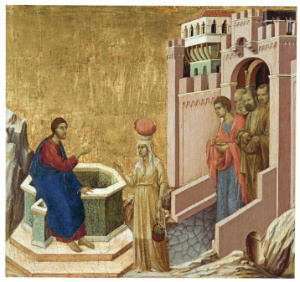
Duccio Maestà – Panels, 1308-11, Christ and the Woman of Samaria (Tempera and gold on panel 43.5 x 46 cm), Museo Thyssen-Bornemisza, Madrid (133 (1971.7)), © Copyright Museo Thyssen-Bornemisza, Madrid

Paintings by some of the greatest Italian artists of the 14th century have been reunited in a new exhibition opening at the National Gallery on Saturday. Siena: The Rise of Painting 1300‒1350, which is being held to mark the gallery’s 200th anniversary, features around 100 works including some of the most innovative in the Western tradition. Highlights include Maestà, painted by Sienese artist Duccio di Buoninsegna (active 1278, died 1319). The first double-sided altarpiece in Western painting, it was dismantled in the 18th century and the National Gallery’s own three panels are now reunited with others from the original ensemble including Christ and the Woman of Samaria from the Museo Thyssen- Bornemisza in Madrid, and The Calling of the Apostles Peter and Andrew from the National Gallery of Art in Washington DC. Another work being reunited for the exhibition is the Orsini Polyptych by Sienese artist Simone Martini (1284‒1344). A folding work of art made for private devotion, probably for Cardinal Napoleone Orsini, it is today divided into six works held by the Louvre, Paris, the Royal Museum of Fine Arts, Antwerp and the Gemäldegalerie, Berlin. All six panels are being brought together for the National Gallery’s exhibition. Two triptychs by Duccio which seem to have been conceived as a single work are also being reunited and the display also features works by Pietro Lorenzetti (active possibly 1306; died probably 1348) and his brother Ambrogio Lorenzetti (active 1319; died 1348/9) as well as Sienese works in a variety of media (metalwork, enamel, gilded glass, wood, marble, and manuscript illumination). The display runs until 22nd June. Admission charge applies. For more, see www.nationalgallery.org.uk.

Hylozoic/Desires, ‘The Hedge of Halomancy’, 2025. PICTURE: Courtesy the artists

An installation featuring new work by artist duo Hylozoic/Desires (Himali Singh Soin & David Soin Tappeser) has opened at Tate Britain. In The Hedge of Halomancy, which runs in parallel with a large-scale new commission by Hylozoic/Desires at Somerset House, the artists excavate the lost archive of the Inland Customs Line, a 4,000 kilometre-longe barrier which comprised 2,500 kilometres of planted hedge and was created by the British Empire in the 19th century to prevent salt smuggling between British-occupied territories and neighbouring independent states. A 23-minute film at the heart of the installation focuses on Mayalee, a character inspired by a courtesan who defied the British Empire’s attempts to cut off her stipends of salt. Alongside it sits an embroidered tapestry, entitled Mokshapat (Snakes and Ladders) which was woven as mashru fabric – cotton on one side and silk on the other. Runs until 25th August. Admission is free. For more, see www.tate.org.uk.

On Now: Unfolding Time: The Medieval Pocket Calendar. A “remarkable” set of medieval concertina-fold almanacs grappling with the concept of time is on display at the Lambeth Palace library. Less than 30 such manuscripts are known to exist and the display brings a group of the works, in which time is expressed in colourful pictures, poems, tables and devices, together for the first time. Runs until 15th May. For more, see https://www.lambethpalacelibrary.info.

Send all items for inclusion to exploringlondon@gmail.com.

This Week in London – Photographing the 80s; Tirzah Garwood at Dulwich; and, Mars comes to Greenwich…

Paul Trevor, ‘Outside police station, Bethnal Green Road, London E2′ 17 July 1978. Sit down protest against police racism’, 1978 © Paul Trevor

The largest survey of the development of photography in Britain across the 1980s to date goes on show at the Tate Britain today. The 80s: Photographing Britain draws on almost 350 images and archive materials from the period to explore how photographers responded to the “seismic social, political, and economic shifts around them” during the decade. It features the work of more than 70 lens-based artists and collectives and features images taken from across the UK – from John Davies’ post-industrial Welsh landscape to Tish Murtha’s portraits of youth unemployment in Newcastle and Don McCullin’s portraits of London’s disappearing East End. Along with documentary photography capturing key political events such as John Harris and Brenda Prince’s images of the miners’ strikes and
Syd Shelton and Paul Trevor’s images of anti-racism demonstrations, the exhibition also includes
a series of thematic displays, featuring works such as Roy Mehta and Vanley Burke images of their multicultural communities, which explore how photography became a compelling tool for representation. Other subjects covered include countercultural movements that took place in the 80s and the presence and visibility of the LGBTQ+ community during the period of the AIDS epidemic. Runs until 5th May. Admission charge applies. For more, see www.tate.org.uk.

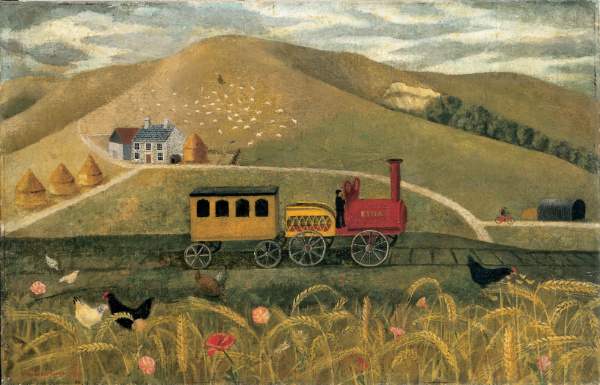
Tirzah Garwood, ‘Etna’, 1944, oil on canvas. PICTURE: Courtesy of Fleece Press/Simon Lawrence

The first major exhibition devoted to the British artist and designer Tirzah Garwood has opened at the Dulwich Picture Gallery. Tirzah Garwood: Beyond Ravilious comes 10 years after the critically acclaimed show celebrating the work of Eric Ravilious, husband of Garwood who was a celebrated artist and printmaker in her own right. More than 80 of Garwood’s work are on show including most of her existing oil paintings. Along with Garwood’s works – which include everything from woodgravings to a series of experimental marbled papers and collaged paper portraits – are 10 watercolours by her husband which draw out the couple’s “thematic similarities, shared interests and distinct artistic personalities”. Runs until 26th May. Admission charge applies. For more, see www.dulwichpicturegallery.org.uk.

Luke Jerram’s massive travelling installation Mars is unveiled at the Painted Hall in Greenwich this Saturday. Measuring seven metres in diameter and internally lit, the work features detailed NASA imagery of the Martian surface, recreated to scale (but about a million times smaller than the actual planet). The installation, which follows on from Jerram’s earlier artworks Gaia and Museum of the Moon, features a surround sound composition by BAFTA-winning composer Dan Jones which includes clips from NASA missions to Mars. Can be seen until 28th January. Admission charge applies. For more, see https://ornc.org/whats-on/mars/.

Send all items to exploringlondon@gmail.com.
This Week in London – Royal portraits; Sir Elton’s photographic collection revealed; and, women artists…

• Royal portrait photography, from the 1920s through to today, is the subject of a new exhibition opening at the King’s Gallery at Buckingham Palace on Friday. Royal Portraits: A Century of Photography features more than 50 photographic prints, proofs and documents from the Royal Collection and the Royal Archives. Among the royal photographers whose work is on show are everyone from Cecil Beaton and Dorothy Wilding to Annie Lebovitz and Rankin as well as Lord Snowdon (born Antony Armstrong-Jones). Highlights include Beaton’s 1939 shoot featuring Queen Elizabeth, The Queen Mother, in Buckingham Palace Gardens dressed in her “White Wardrobe” by Norman Hartnell, and his original coronation portraits of Queen Elizabeth II. Admission charge applies. Runs until 6th October. For more, head here.

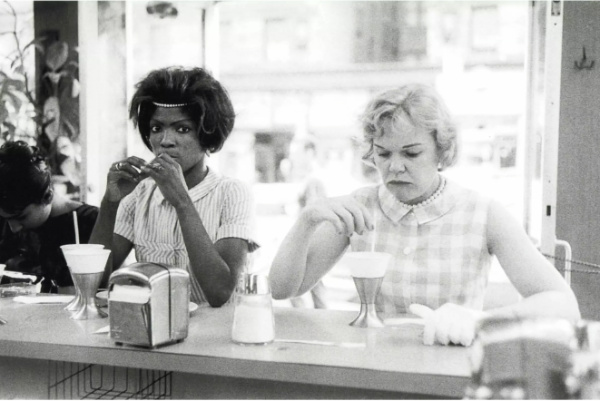
Bruce Davidson, Black Americans. New York City. 1962 © Bruce Davidson Magnum Photos

More than 300 prints from the private photographic collection of Sir Elton John and David Furnish got on display at the V&A from Saturday. Fragile Beauty: Photographs from the Sir Elton John and David Furnish Collection will showcase the work of more than 140 photographers and the V&A’s largest temporary exhibition of photography to date. Photographers include everyone from Robert Mapplethorpe, Cindy Sherman, and William Eggleston to Diane Arbus, Sally Mann, Zanele Muholi, Ai Weiwei and Carrie Mae Weems and the subjects explored include fashion, reportage, celebrity, the male body, and American photography. Portraits of Marilyn Monroe, Miles Davis, and Chet Baker are among the highlights. Runs until 5th January in The Sainsbury Gallery. Admission charge applies. For more, see www.vam.ac.uk.

Anna Airy, ‘Shop for Machining 15-inch Shells: Singer Manufacturing Company’, Clydebank, Glasgow, 1918. © Imperial War Museum

An exhibition focusing on the path women have taken to being recognised as professional artists opens today at Tate Britain. Now You See Us: Women Artists in Britain 1520-1920 features more than 200 works, including oil painting, watercolour, pastel, sculpture, photography and ‘needlepainting’, created by more than 100 artists including Artemisia Gentileschi, Angelica Kauffman, Julia Margaret Cameron and Gwen John. Highlights include Tudor miniatures by Levina Teerlinc, Gentileschi’s Susanna and the Elders (1638-40), the work of 18th century needlewoman Mary Linwood, Elizabeth Butler (née Thompson)’sThe Roll Call (1874), and, the work of Laura Knight and Ethel Walker, who, on the 120th century achieved critical acclaim and membership of the Royal Academy. Runs until 13th October. Admission charge applies. Head to tate.org.uk.

Send all items to exploringlondon@gmail.com.
This Week in London – John Singer Sargent at the Tate; vote for the Fourth Plinth occupants; and the Black figure celebrated in contemporary art at the National Portrait Gallery…

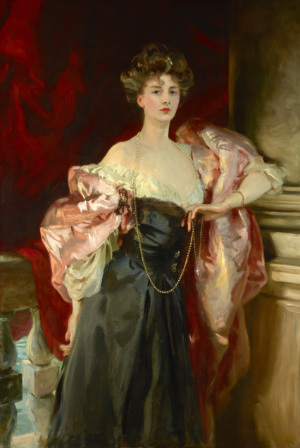
John Singer Sargent, Lady Helen Vincent, Viscountess d’Abernon, 1904 Birrmingham Museum of Art. Photo Sean Pathasema

The work of portrait painter John Singer Sargent (1856-1925) is the subject of a new exhibition opening at Tate Britain today. Sargent and Fashion features some 60 paintings as well as a dozen period dresses and accessories with many of the former worn by his sitters and several reunited for the first time with the portraits in which they are shown. Highlights include Lady Helen Vincent, Viscountess d’ Abernon (1904), Mrs. Charles E. Inches (Louise Pomeroy) (1887), which will be juxtaposed with the red velvet evening dress illustrated, and, Charles Stewart, sixth Marquess of Londonderry at the Coronation of Edward VII (1904) which will be reunited with the regalia worn by the marquess. Also on show is Sargent’s iconic painting of socialite Virginie Amélie Gautreau, Madame X (1883-4), which caused a stir by depicting Mme Gautreau with one diamond strap falling from her shoulder, Mrs Montgomery Sears (1899) which is being shown alongside Mrs Sears’ own dresses and her photographs of Sargent at work, and his dramatic image, Ellen Terry as Lady Macbeth 1889 which is being shown alongside Terry’s dress and cloak. Runs until 7th July. Admission charge applies. For more, see www.tate.org.uk/whats-on/tate-britain/sargent-and-fashion.

The public are being asked to vote on a shortlist of seven sculptural works to determine which of them will occupy Trafalgar Square’s Fourth Plinth in 2026 and 2028. The works include Ruth Ewan’s Believe in Discontent depicting a black cat, Chila Kumari Singh Burman’s The Smile You Send Returns to You featuring a colourful bus with a tiger atop it and Veronica Ryan’s Sweet Potatoes and Yams are Not the Same which features a sweet potato “island” with growing vine leaf sprouting out of it. Models of the short-listed works can be seen at The National Gallery (Room 1, entry is free) until 1st March. To vote, head to https://www.london.gov.uk/programmes-strategies/arts-and-culture/current-culture-projects/fourth-plinth-trafalgar-square/fourth-plinth-commissions

A major exhibition exploring the Black figure opens at the National Portrait Gallery today. The Time is Always Now: Artists Reframe the Black Figure features 55 contemporary works, including sculpture, paintings and drawings, by some 22 African artists working in the US and UK. The works include Amy Sherald’s life-size greyscale portraits of African Americans, American figurative artist Nathaniel Mary Quinn’s fragmented portraits, Thomas J Price’s life-sized fictional female figure, As Sounds Turn to Noise (2023), Noah Davis’ depiction of Greenwood, Oklahoma, known as Black Wall Street (2008), Kimathi Donkor’s history painting Nanny of the Maroons’ Firth Act of Mercy (2012) and Lubaina Himid’s work Le Rodeur: The Exchange (2016) which responds to a case of blindness that affected a French slave ship in 1819. The display is curated by writer Ekow Eshun, former director of the Institute of Contemporary Arts. Runs until 19th May. Admission charge applies. For more. see www.npg.org.uk.

Send all items to exploringlondon@gmail.com

This Week in London – English Heritage unveils 1000th Blue Plaque; Chris Ofili’s ‘Requiem’ at Tate Britain; and, Astronomy Photographer of the Year…

English Heritage has unveiled its 1000th Blue Plaque in London. The plaque – located on a three storey building at number 1, Robert Street in Westminster – marks the former London headquarters of the suffragist organisation, the Women’s Freedom League. The league, which was formed in 1907, worked out of the building between 1908 and 1915 – its most active period. The blue plaques scheme has been running for more than 150 years and honours everyone from John Keats and Charles Dickens to Ada Lovelace and Alan Turing. For more, see www.english-heritage.org.uk/visit/blue-plaques/.

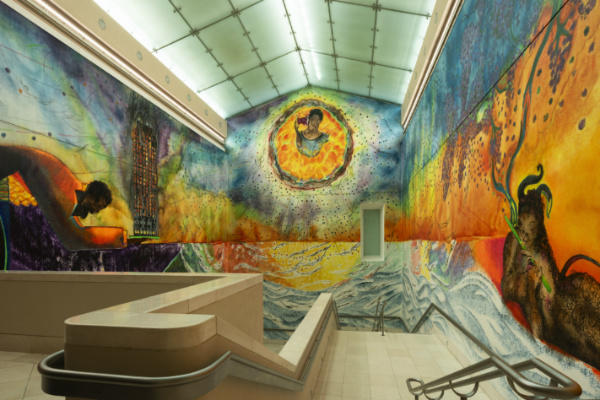
Chris Ofili, ‘Requiem’, 2023 (detail) commissioned for Tate Britain’s north staircase
© Chris Ofili. Courtesy the artist. PICTURE: Thierry Bal

A major new work by Chris Ofili commemorating fellow artist Khadija Saye and the tragedy of the Grenfell Tower fire in which Saye died, has gone on display at the Tate Britain in Millbank.  Requiem, a site-specific work which is shown across three walls, is described as a “journey through an imagined landscape of giant skies with vast horizons and flowing water” which unfolds in three chapters. Ofili says that when making the work, he recalled the feelings he had when creating No Woman, No Cry in 1998 as a tribute to murdered Black teenager Stephen Lawrence and his mother Doreen. “That feeling of injustice has returned,” he said. “I wanted to make a work in tribute to Khadija Saye. Remembering the Grenfell Tower fire, I hope that the mural will continue to speak across time to our collective sadness.” For more, see  tate.org.uk/visit/tate-britain.

The Astronomy Photographer of the Year display has opened at the National Maritime Museum in Greenwich featuring the competition’s winning image, Andromeda. The picture, the work of Marcel Drechsler, Xavier Strottner and Yann Sainty, depicts a huge plasma arc next to the Andromeda Galaxy. Other winners include two 14-year-old boys from China – Runwei Xu and Binyu Wang – who won the Young Astronomy Photographer of the Year award for The Running Chicken Nebula as well as Argentinian Eduardo Schaberger Poupeau who won the ‘Our Sun’ category for A Sun Question which captures a huge filament in the shape of a question mark, China’s Angel An, who won the ‘Skyscapes’ category for Grand Cosmic Fireworks – a photograph of the extremely rare phenomenon of atmospheric luminescence, and the UK’s John White who won the Annie Maunder Prize for Image Innovation for Black Echo which used audio source material from NASA’s Chandra Sonification Project, to visually capture the sound of the black hole at the centre of the Perseus Galaxy. For more, see www.rmg.co.uk/astrophoto.

Send all items for inclusion to exploringlondon@gmail.com

This Week in London – The Crown Jewels (redisplayed); The Troubles at IWM; and, Tate Britain, rehung…

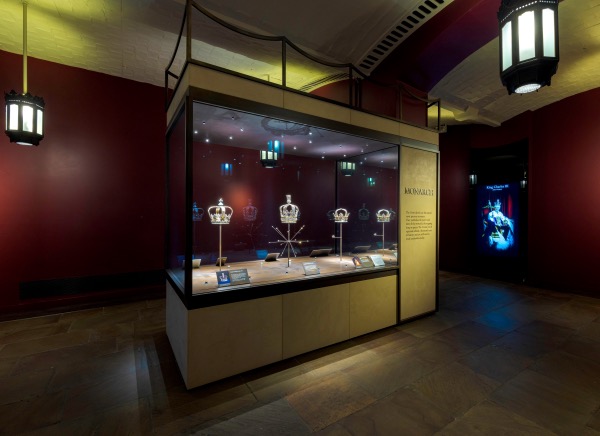
Part of the new Jewel House display of the Crown Jewels at The Tower of London. PICTURE: ©Historic Royal Palaces

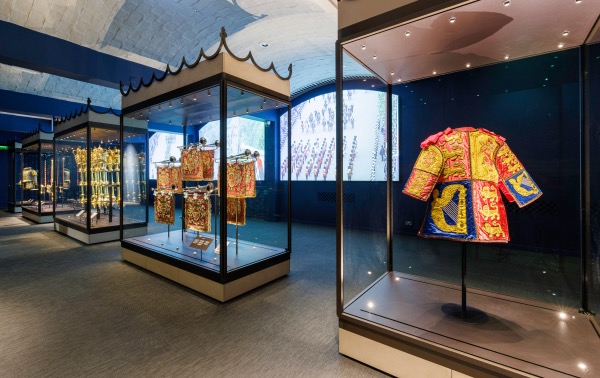
A new display of the Crown Jewels opens in the Tower of London’s Jewel House tomorrow – the first major change to the display in more than a decade. Opening just weeks after the coronation regalia was used in the coronation of King Charles III and Queen Camilla at Westminster Abbey, the re-presentation of the jewels comes about thanks to a partnership between Historic Royal Palaces and royal jewellers Garrard and is the culmination of a four year project aimed at delving deeper into the history of the collection and coronations. The display, which features images from the recent coronation, starts with a celebration of the timelessness of monarchy featuring the State Crown frames worn by King George I, King George IV and Queen Victoria. It explains how historic jewels including the Black Prince’s Ruby have passed from crown to crown and explores the origins of the current jewels, starting with the destruction of the medieval coronation regalia in 1649. The story of gems including the Koh-i-Noor and Cullinan Diamond will also be explored while at the heart of the display is a room dedicated to the spectacle of the Coronation Procession. It ends with the Treasury containing more than 100 objects including the St Edward’s Crown of 1661, the Sovereign’s Sceptre with Cross and the Sovereign’s Orb. As an added spectacle, for nine nights in November, the Tower will also host a touring light and sound show, Crown and Coronation, which, created in partnership with Luxmuralis Artist Collaboration, will feature imagery and footage of monarchs and coronations past, along with images of the regalia. Images will be projected on buildings of the Inner Ward including the White Tower. The light and sound show, which will run at the Tower from 17th to 25th November, will tour the UK in 2024. Entry is included in general admission. For more, see www.hrp.org.uk/tower-of-london/whats-on/the-crown-jewels/.

More of the new display in the Jewel House of the Crown Jewels at The Tower of London. PICTURE: ©Historic Royal Palaces

The almost 30-year conflict in Northern Ireland known as The Troubles is the subject of a new exhibition at the Imperial War Museum. Northern Ireland: Living with the Troubles, which opens tomorrow, features familiar objects including rubber bullets, propaganda posters and a Good Friday Agreement booklet as well as rarer items such as a screen-printed handkerchief made by UVF paramilitaries in the Long Kesh internment camp. There will also be the chance to hear first-hand testimonies including from republican and loyalist paramilitaries as well as British soldiers, local police and ordinary civilians, and the opportunity to see archival photography depicting hunger strike riots, army checkpoints and bomb wreckage. Admission is free. Runs until 7th January. For more, see www.iwm.org.uk/visits/iwm-london.

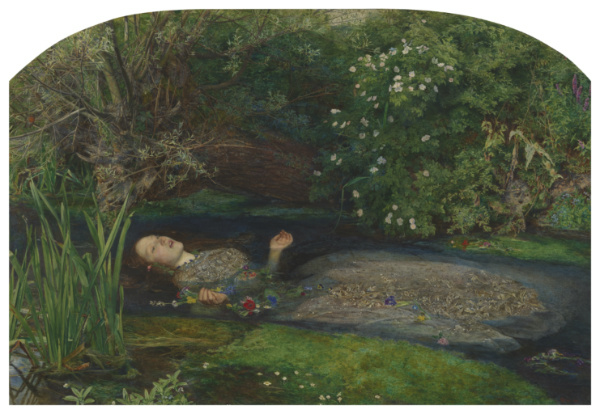
Sir John Everett Millais, Ophelia, 1851-2, Oil paint on canvas; Support: 762 × 1118 mm, frame: 1105 × 1458 × 145 mm
PICTURE: Tate (Seraphina Neville)

Tate Britain has completed a complete rehang of its free collection displays – the first for 10 years. Visitors can see more than 800 works by 350 artists including iconic treasures such as John Everett Millais’ Ophelia (pictured above), William Hogarth’s The Painter and his Pug, David Hockney’s A Bigger Splash, Barbara Hepworth’s Pelago and Chris Ofili’s No Woman, No Cry. The collection also includes more than 100 works by JMW Turner, rooms devoted to such luminaries as William Blake, John Constable, the Pre-Raphaelites and Henry Moore, and a series of changing solo displays exploring other ground-breaking artists such as Annie Swynnerton, Richard Hamilton, Aubrey Williams and Zineb Sedira. Some 70 of the works in the collection – ranging from Tudor portraits to contemporary installations – which have been acquired in the last five years alone. For more, see www.tate.org.uk.

Send all items to exploringlondon@gmail.com.
This Week in London – The Georgian court meets contemporary fashion; the Rossettis at Tate Britain; and, the Lindt Gold Bunny Hunt returns…

We’re taking a short break for Easter and will be back on Tuesday!

The glittering world of the Georgian court and the glamour of the modern red carpet come together in a new exhibition at Kensington Palace. Crown to Couture sees contemporary fashion worn by the likes of celebrities like Lizzo and Lady Gaga displayed alongside historical costumes, drawing some fascinating parallels between the two worlds. More than 200 objects are included in the display in the State Apartments with highlights including the  Thom Browne dress worn by musician Lizzo to the 2022 Met Gala, Christopher John Roger’ luminous green gown worn by Lady Gaga to the 2020 MTV Awards, the Rockingham Mantua – brocaded in silver thread and silver lace trim and believed to have been worn by the wife of British Prime Minister, 2nd Marquess of Rockingham, in the 1760s, and the world-famous Silver Tissue Gown. On loan from the Fashion Museum Bath, the latter is a rare example of fashion worn at the court of Charles II and is believed to have been worn to court by a young Lady Theophila Harris, who later went on to become the wife of MP Sir Arthur Harris of Hayne. Runs until 29th October. Admission charge applies. For more, see www.hrp.org.uk/kensington-palace/whats-on/crown-to-couture.

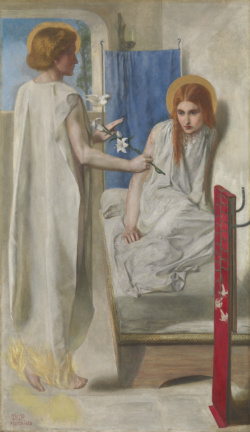
Dante Gabriel Rossetti
Ecce Ancilla Domini (The Annunciation) 1849-50
© Tate, Purchased 1886

A major exhibition charting the romance and radicalism of the Rossetti generation opens at Tate Britain today. The Rossettis – he first retrospective of Dante Gabriel Rossetti at Tate and the largest exhibition of his iconic pictures in two decades as well as the first full retrospective of Elizabeth Siddal for 30 years – features more than 150 paintings and drawings as well as photography, design, and poetry. Highlights include Dante Gabriel’s Ecce Ancilla Domine (The Annunciation) (1850), Elizabeth Siddal’s Lady Clare (1857) and Christina Rosetti’s famous poem The Goblin Market (1859). There’s also Aesthetic portraits from the later part of Dante Gabriel’s career, such as Bocca Baciata (1859), Beata Beatrix (c1864-70) and The Beloved (1865-73), as well as Lady Lilith (1866-8) and Mona Vanna (1866). Runs until 24th September. Admission charge applies. For more, see www.tate.org.uk/whats-on/tate-britain/the-rossettis.

The Lindt Gold Bunny Hunt is on again at Hampton Court Palace. Youngsters are invited to explore the palace’s 60 acres in a search for a series of hidden Lindt Gold Bunny statues, matching the name of an important character from the palace’s history with each bunny to unwrap a fascinating story. At the end of the experience, they’ll be rewarded with their own delicious Lindt Gold Bunny. Visitors to the palace will also encounter historic characters as the royal court compete with chocolatier Grace Tosier to help Prince George, the son of King George I, achieve his mission of sleeping-in, drinking chocolate and dancing all day. Runs until 16th April. Admission charge applies. For more, see www.hrp.org.uk/hampton-court-palace/whats-on/easter-lindt-gold-bunny-hunt/.

Send items to exploringlondon@gmail.com

This Week in London – Musical theatre at the V&A; getting spooky at Hampton Court and the Tower; and, Bill Brandt at Tate Britain…

Costume for Eliza Doolittle in Lerner and Lowe’s musical My Fair Lady, designed by Cecil Beaton, worn by Julie Andrews, Theatre Royal, Drury Lane, 1958. Given bythe Friends of the Victoria and Albert Museum.© Cecil BeatonImage courtesy of Victoria and Albert Museum, London

The glittering world of musical theatre is at the centre of a new exhibition which opened at the V&A in South Kensington recently. Re:Imagining Musicals showcases some 100 objects, most being displayed for the first time, with highlights including Paul O’Grady’s Miss Hannigan costume from Annie, new costume acquisitions from SIX the MusicalEverybody’s Talking About JamieMoulin Rouge! The MusicalCompany, and A Chorus Line, the rarely displayed beaded gown designed by Cecil Beaton which was worn by Julie Andrews in My Fair Lady in 1958; the toy Olaf puppet from Frozen the Musical, and an original poster from the off-Broadway premiere of Hamilton signed by the cast and creatives. There’s also a 1965 original cast recording of Hello Dolly! signed by Carol Channing, Bunny Christie’s Olivier and Critics’ Circle award winning costume design, model and costume for Rosalie Craig as Bobbie in the 2019 West End revival of Company and Shakespeare’s first folio, which celebrates its 400th anniversary in 2023. The free display can be seen in the Theatre and Performance Galleries until 27th November, 2023. For more, see www.vam.ac.uk/exhibitions/reimagining-musicals.

Base Court and cloisters dressed for the Halloween ghost trail at Hampton Court Palace. PICTURE: © Historic Royal Palaces.

Visitors to Hampton Court Palace and the Tower of London are being invited to explore some of the properties’ spookiest stories in the lead-up to Halloween. Until 30th October, visitors to Hampton Court are able to explore the stories of everyone from King James I to tormented wives to Tudor trumpeters with special effects including mystical projections and eerie sound effects. Meanwhile, until 31st October, visitors can follow in the footsteps of infamous prisoners at the Tower of London with “spooky decorations, spine-tingling sound effects, and rooms transformed to tell terrifying tales about past inhabitants” while ghostly figures such as the Welsh Prince Gruffydd ap Llywelyn and King Henry VIII’s ill-fatded wife Anne Boleyn wander the grounds. Admission charges apply. For more, see www.hrp.org.uk.

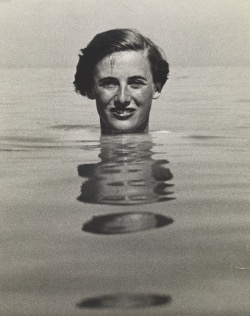
Bill Brandt – Woman Swimming
Tate. Accepted by HM Government in lieu of inheritance tax from the Estate of Barbara Lloyd and allocated to Tate 2009 © The Estate of Bill Brandt.

The work of British photographer Bill Brandt (1904-83) is the subject of a new exhibition at Tate Britain on Millbank. Bill Brandt: Inside the Mirror features 44 original photographs from across his career are displayed alongside the magazines and photobooks in which these images were most often seen. Brandt was first known as a photojournalist, renowned in the 1930s for his observations of British life, and later for his landscapes, portraits and nudes. Highlights include Woman Swimming (pictured), Hail, Hell & Halifax and his handmade photobook ‘A Dream’ – which is being exhibited for the first time. Runs until 15th January. Admission is free. For more, see tate.org.uk.

Send all items for inclusion to exploringlondon@gmail.com.
This Week in London – Walter Sickert at the Tate; Philips Wouwerman revisited; and, Victorian physicist commemorated…

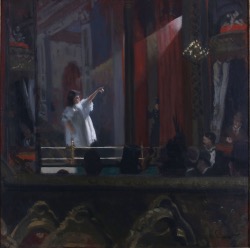
Walter Sickert, ‘Little Dot Hetherington at the Bedford Music Hall’ (1888) Private collection. Photo: James Mann

Britain’s biggest retrospective on the work of artist Walter Sickert (1860-1942) in almost 30 years opens at the Tate Britain in Millbank today. The exhibition features more than 150 of his works spanning the six decades of his career. They include paintings and drawings of music halls in London and Paris such as The Old Bedford (1894-5) and Théâtre de Montmartre (c1906) and an examination of key influencers upon his work such as American artist James Abbott McNeill Whistler whose A Shop (1884-90) is being shown with Sickert’s A Shop in Dieppe (1886-8) as well as Whistler’s 1895 portrait of Sickert. Other works on show include The Camden Town Murder (1908), Ennui (1914) and Off To the Pub (1911). Admission charge applies. Runs until 18th September. For more, see www.tate.org.uk/whats-on/tate-britain/walter-sickert.

A new exhibition at the Dulwich Picture Gallery explores the truth behind 18th century gossip suggesting 17th century Dutch artist Philips Wouwerman was a plagiarist. True Crime: The Case of Philips Wouwerman looks at claims the painter, who created more than 600 paintings over his career, stole the drawings of the dead artist Pieter van Laer and subsequently used them for his own works. The display features works by Wouwerman and Van Laer as well as expert testimony from the past and present. It’s the first in a series of displays – Unlocking Paintings – which have been devised by the recently appointed curator Helen Hillyard to present new perspectives on the Gallery’s collection. Can be seen until 21st August. For more, follow this link.

A self-taught Victorian physicist, Oliver Heaviside, has been commemorated with an English Heritage Blue Plaque at his former home in Camden Street. The property is where the young Victorian scientist, who had been left almost entirely deaf after suffering scarlet fever in childhood, continued with his self-education after leaving school at 16 and where he later worked on his ground-breaking interpretation of James Clerk Maxwell’s Treatise on Electricity and Magnetism. Heaviside played a key role in the development and advancement of electrical communications and was even name-checked in Cats where a line referring to “the Heaviside layer” is a reference to his discovery of a reflective layer in the upper atmosphere which allowed radio waves to be ‘bent’ around the earth. For more, see www.english-heritage.org.uk/visit/blue-plaques/.

Send all items for inclusion to exploringlondon@gmail.com.
This Week in London – ‘Westminster Elves’; a song for Nelson; and, Caribbean-British art…

Christmas is fast approaching and, to add to the festivities, Westminster City Council has created an augmented reality experience for families to enjoy at four landmark locations. Under the ‘Westminister Elves’ initiative, families are invited to scan a QR code at Piccadilly Circus, Marble Arch Mound, Soho Square and Hanover Square which will lead them to a microsite which, in turn, will transport them into the elves’ world. There, they can throw snowballs, share a moment with Santa’s reminder and glimpse inside Santa’s workshop as well as, of course, seeing the man himself. Those taking part are also invited to take a selfie or picture of a family member or friend alongside the elves at one of the four locations and post it on Twitter, Instagram or Facebook using the #WestminsterElves and tagging @CityWestminster. They’ll then be entered into a competition to win a £50 Love to Shop voucher. The competition closes at midnight next Wednesday with the winner announced on Christmas Eve. For more, see www.westminster-elves.co.uk.

A recording of old sea song paying tribute to Horatio Nelson was released by the Museum of London this week. The song, which was  thought to have been sung after the battle of Cape St Vincent in 1797 and subsequently transcribed by Nelson, was brought to life by musicians from the Guildhall School of Music & Drama. The recording marked the first performance of the piece in more than 200 years. While th song’s existence had previously been known about – it was referred to in a letter from Nelson to William Douglas, 4th Duke of Queensberry, which was was sold at auction in 2013 – it was one of four rediscovered last year among songbooks belonging to Nelson’s lover, actress and model Emma Hamilton. “The song was written by Nelson’s crew in one of his early victories,” said Lluis Tembleque Teres, the Museum of London librarian who found the songs. “It is fascinating how, some four years later and already a national hero, he recovers the lyrics and sends them to the Duke of Queensberry, almost as if showing off his early successes. The Duke then adds music and a chorus, and gifts the manuscript to Emma Hamilton, thus allowing us exactly 220 years later to relive Nelson’s fame while performing it.” The song’s release follows a special one-off live performance of all four songs at the Museum of London Docklands on 11th December, which will be available to watch in full as an online event – DIGITAL Emma’s Songbooks: rediscovered music for Nelson – next Tuesday, 21st December. Admission charge applies. For more, see museumoflondon.org.uk 

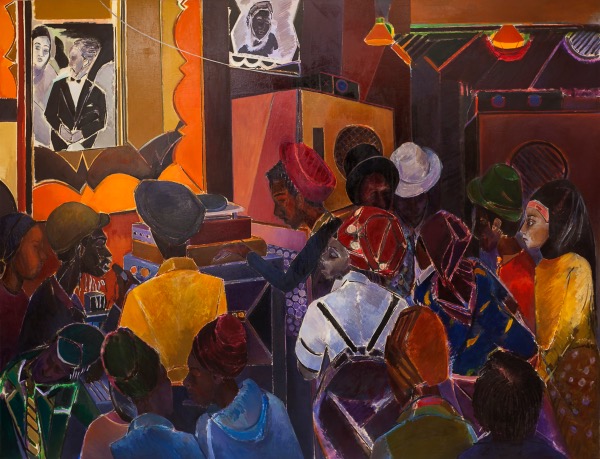
Denzil Forrester Jah Shaka, 1983. Collection Shane Akeroyd, London © Denzil Forrester

A landmark exhibition exploring the extraordinary breadth of Caribbean-British art over four generations can be seen at Tate Britain. Life Between Islands  spans 70 years of culture, experiences and ideas expressed through art and features more than 40 artists, including those of Caribbean heritage as well as those inspired by the Caribbean, such as Ronald Moody, Frank Bowling, Sonia Boyce, Claudette Johnson, Peter Doig, Hew Locke, Steve McQueen, Grace Wales Bonner and Alberta Whittle. Highlights include Neil Kenlock’s Black Panther school bags (1970), Denzil Forrester’s Death Walk (1983) – a tribute to Winston Rose who died in police custody, Lisa Brice’s After Ophelia (2018) – a work inspired by her time on Trinidad and new works including designs by Grace Wales Bonner evoking the brass bands and parades of the Commonwealth Caribbean. Runs until 3rd April. Admission charge applies. For more, see www.tate.org.uk.

Send all items for inclusion to exploringlondon@gmail.com.
This Week in London – William Hogarth and the Europeans; Christmas in the post; and, Paul McCartney’s lyrics…

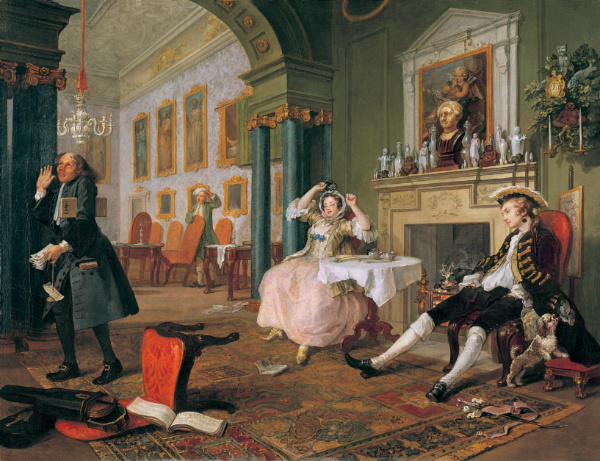
William Hogarth, ‘Marriage A-la-Mode: 2, The Tête à Tête’ (1743) 45 © The National Gallery, London.

• See the works of 18th century English artist William Hogarth alongside those of his European contemporaries in a new exhibition which opened at Tate Britain this week. Hogarth and Europe features more than 60 of Hogarth’s works and has some of his best-known paintings and prints – such as Marriage A-la-Mode (1743), The Gate of Calais (1748), Gin Lane (1751) and his celebrated series, A Rake’s Progress (1734) – shown alongside works by famed European artists including Jean-Siméon Chardin, Pietro Longhi, and Cornelis Troost. The display also includes Hogarth’s work, Miss Mary Edwards (1742) – it depicts the eccentric, wealthy patron who commissioned many of Hogarth’s best-known works and has not been seen in the UK for more than century. Admission charge applies. See www.tate.org.uk.

The first commercial Christmas card, created after civil servant Henry Cole commissioned artist​ John​ Callcott​ Horsley to design one for him in 1843, can once again been seen at The Postal Museum’s permanent display. That’s just one of the drawcards (pardon the pun), at the Postal Museum in the lead-up to Christmas with others including a new display, Letters to Santa, featuring Royal Mail cards sent by Father Christmas to children between 1963 and 2010 (from a recently donated collection), and the chance to ride on the Mail Rail which has undergone a Christmas makeover. The museum is also holding a series of ‘Festive Family Fun Days’ on selected dates in December. Admission charges apply. For more, head to www.postalmuseum.org.

Handwritten lyrics and photographs spanning the career of Paul McCartney feature in a new free Entrance Hall display at the British Library from tomorrow. Paul McCartney: The Lyrics features previously unseen materials from his personal archives as it reveals the process and people behind some of the most famous songs of all time, from some of his earliest compositions to his time with The Beatles, Wings and through to today. The display accompanies his new book, The Lyrics: 1956 to the Present. Can be seen until 13th March next year. For more, see www.bl.uk/events/paul-mccartney-the-lyrics.

Send all items for inclusion to exploringlondon@gmail.com.
This Week in London – The Marble Arch Mound opens; Wampum at the Guildhall Art Gallery; and, Paula Rego at the Tate…

The 25 metre high viewpoint in the grass and tree covered Marble Arch Mound opens to visitors on Monday. Created by Westminster City Council, the mound – which has been designed by Dutch architectural studio MVRDV, provides expansive views of Oxford Street, Hyde Park, Mayfair and Marylebone. Visitors can either climb the 130 stairs to the top or take a lift. The mound will be open to the public until January next year. Ticket holders are also invited to visit W1Curates art installation Lightfield, led by British/American artist, Anthony James, which is located inside the mound. For more information and to book tickets, see www.westminster.gov.uk/news/get-set-summit-marble-arch-mound-summer.

The history, art and culture of the Native Americans who met the passengers of the Mayflower is explored in a new exhibition at the Guildhall Art Gallery. Opening on Friday, Wampum: Stories from the Shells of Native America centres on a newly-crafted wampum belt created by the Wampanoag people of Massachusetts alongside historic material from the British Museum. Wampum belts are the creative expression of the Wampanoag people, with each shell on the belt imbued with memory and meaning. The display is presented by The Box, Plymouth, and supported by Arts Council England as part of commemorations of the 400th anniversary of the sailing of the Mayflower from England to America. Runs until 5th September. Entry is free (booking required). For more, head here.

On Now: Paula Rego. This exhibition at Tate Britain – the largest retrospective of Paula Rego’s work to date – features more than 100 works including collage, paintings, large-scale pastels, drawings and etchings as it showcases the career of the Portuguese-born artist. As well as early work from the 1950s, the display features her large pastels of single figures from the acclaimed Dog Women and Abortion series and richly layered, staged scenes from the 2000s. Runs until 24th October. Admission charge applies. For more, see www.tate.org.uk/whats-on/tate-britain/exhibition/paula-rego.

Send all items for inclusion to exploringlondon@gmail.com.
LondonLife – Tate Britain goes Technicolour…

Artist Chila Kumari Singh Burman has transformed the facade of the Tate Britain with an eye-popping art installation, the fourth in an annual series of outdoor commissions to mark the winter season. The Liverpool artist’s neon work, Remembering a Brave New World, references Hindu mythology, Bollywood, colonial history and family memories. It can be seen until 31st January. For more, see www.tate.org.uk. PICTURE: A Winter Commission – Chila Kumari Singh Burman © Tate (Joe Humphrys)

This Week on London – New Blue Plaques for women; Aubrey Beardsley at the Tate; and, the kimono scrutinised…

Two World War II spies, one of the 20th century’s greatest artists and and a leading figure in the British military’s women’s corps in World War I are among women being honoured with Blue Plaques this year. English Heritage unveiled plans this week for six female-focused plaques with the first to celebrate Dame Helen Gwynne-Vaughan (1879-1967), a botanist and leader of women in the armed forces during the ‘Great War’. Others will honour Christine Granville (1908-1952) – who served as Britain’s longest-serving female SOE agent in World War II, Noor Inayat Khan (1914-1944) – Britain’s first Muslim war heroine and the first female radio operator working in Nazi-occupied France, and ground-breaking 20th century sculptor Barbara Hepworth (1903-1975). Blue Plaques will also be unveiled at the former headquarters of the National Union of Women’s Suffrage Societies in Westminster and the Women’s Social and Political Union in Holborn. While only 14 per cent of the more than 950 Blue Plaques in London commemorate women, English Heritage’s ongoing ‘plaques for women’ campaign has seen a dramatic rise in the number of public nominations for women since it launched in 2016. This year will be only the second the organisation has unveiled as many as six plaques honouring women. For more, see www.english-heritage.org.uk/visit/blue-plaques/.

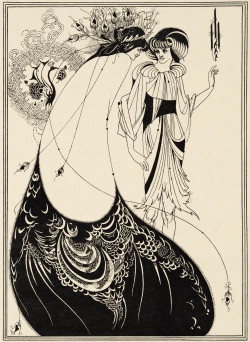
The brief career of controversial artist Aubrey Beardsley (1872-98) is the subject of a new exhibition which opened at Tate Britain this week. Aubrey Beardsley features some 200 works in the largest display of his original drawings in more than 50 years and the first exhibition of his work at the Tate since 1923. Highlights include key commissions that defined Beardsley’s career – a new edition of Sir Thomas Malory’s Le Morte d’Arthur (1893-4), Oscar Wilde’s play Salomé (1893) and Alexander Pope’s The Rape of the Lock (1896) – as well as bound editions and plates of the literary quarterly The Yellow Book, of which he was art director. There’s also a collection of Beardsley’s bold poster designs and his only oil painting. The exhibition runs until 25th May. Admission charge applies. For more, see www.tate.org.uk. PICTURE: Aubrey Beardsley (1872-1898) The Peacock Skirt – illustration for Oscar Wilde’s ‘Salome’ (1893), lineblock print on paper, Stephen Calloway Photo: © Tate

The first major UK exhibition on the kimono – described as the “ultimate symbol of Japan” – has opened at the V&A. Kimono: Kyoto to Catwalk examines the sartorial and social significance of the kimono spanning the period from the 1660s to today. Highlights include a kimono created by ‘Living National Treasure’ Kunihiko Moriguchi, an Alexander McQueen-designed dress worn by Björk on the cover of the album Homogenic, and original Star Wars costumes modelled on kimono by John Mollo and Trisha Biggar. There are also designs by Yves Saint Laurent, Rei Kawakubo and John Galliano. The exhibition features more than 315 works including kimonos but also paintings, prints, films and dress accessories. Can be seen in Gallery 39 and the North Court until 21st June. Admission charge applies. For more, see www.vam.ac.uk/kimono.

Send all items for inclusion to exploringlondon@gmail.com.
This Week in London – Britain’s Baroque culture; a celebration of orchids and Indonesia; and, London’s “hidden” Underground…

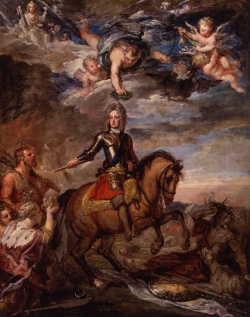
Britain’s Baroque culture – spanning the period from the Restoration of King Charles II to the death of Queen Anne in 1714 – is the subject of a new exhibition which opened this week at Tate Britain. British Baroque: Power and Illusion – the first major exhibition on the subject – shows how magnificence was used to express status and influence and features works by painters including Sir Peter Lely, Sir Godfrey Kneller, and Sir James Thornhill as well as designs, prints and wooden models of the works of architects like Sir Christopher Wren, Nicholas Hawksmoor and Sir John Vanbrugh. The importance of portraiture, the visual differences in Protestant and Catholic worship and the illusions contained in painted baroque interiors are all explored in the display along with how the subject of war was dealt with through heroic equestrian portraiture, panoramic battle scenes and accompanying propaganda. The exhibition, which is being accompanied by a programme of events, runs until 19th April. Admission charge applies. For more, see www.tate.org.uk. PICTURE: Godfrey Kneller, John Churchill, 1st Duke of Marlborough, c1706, National Portrait Gallery, London.

The 25th Kew Orchid Festival kicks off at Kew Gardens on Saturday in a celebration of the wildlife and culture of Indonesia. Located in the Princess of Wales Conservatory, the festival will take visitors on an immersive journey evoking the sights, smells and sounds of Indonesia though a series of orchid displays which include a life-sized animals such as orang-utans, a tiger and a rhinoceros, an archway made of hundreds of carnivorous pitcher plants and an erupting volcano. A programme of evening events featuring gamelan music and traditional dancers as well as cooking demonstrations by renowned author and chef Petty Elliott is also planned – these must be booked online in advance. Admission charge applies. Runs until 8th March. For more, see www.kew.org.

On Now: Hidden London: The Exhibition. This display at the London Transport Museum in Covent Garden takes visitors on an immersive journey to some of the secret places in the Tube network. Featuring rare archive photos, objects, vintage posters, secret diagrams and decorative tiles from disused stations, it uncovers stories such as how Churchill took shelter in the Railway Executive Committee’s bomb-proof headquarters deep underground at Down Street station at the height of the Blitz during World War II and how almost 2,000 members of staff, mostly women, worked in the Plessey aircraft underground factory located in two 2.5 mile-long tunnels on the eastern section of the Central line. The exhibition is being accompanied by a series of events including late openings and tours. Runs until next January. For more, see www.ltmuseum.co.uk/whats-on/exhibitions/hidden-london#.

Send all items for inclusion to exploringlondon@gmail.com

This Week in London – Blake at the Tate; London’s scientific contributions explored; and, dining out in the Tower moat…

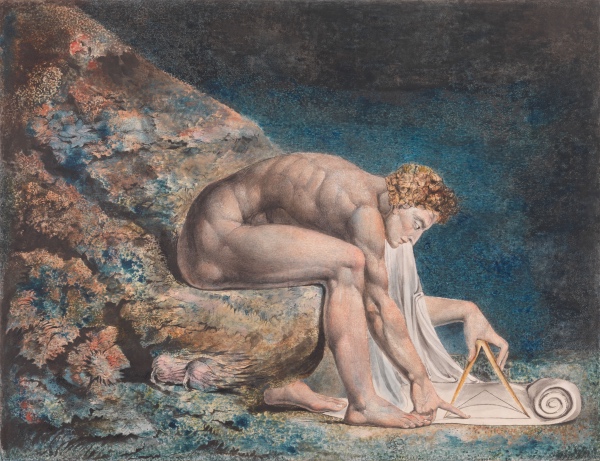
The largest survey of the work of visionary artist and poet William Blake to be seen in the UK in a generation has opened at the Tate Britain in Millbank. William Blake features more than 300 works with highlights including The Spiritual Form of Nelson Guiding Leviathan (c1805-9) and The Spiritual Form of Pitt Guiding Behemoth (c1805) which, in a bid to see them as Blake intended, have been digitally enlarged and projected onto the gallery’s wall, providing them with the sort of the scale he had envisaged for them but never realised. The actual works themselves are displayed nearby in a recreation of the artist’s only significant attempt to acquire a public reputation as a painter – his ill-fated exhibition of 1809 which took place in a room over his family’s hosiery shop. The exhibition also provides a focus on London, described as a “constant inspiration” for Blake, and highlights the vital role of his wife Catherine played in the creation of his engravings and illuminated books with illustrations to Pilgrim’s Progress (1824-27) and a copy of the book The complaint, and the consolation Night Thoughts (1797) on display, both of which are thought to have been coloured by Catherine. Other highlights include what is thought to be the only self-portrait of Blake – exhibited in the UK for the first time, the work Albion Rose (c1793) depicting the mythical founding of Britain, illuminated books such as Songs of Innocence and of Experience (1794) and some of his best-known paintings including Newton (1795-c1805 – pictured above) and Ghost of a Flea (c1819-20). The exhibition closes with The Ancient of Days (1827), a frontispiece for an edition of Europe: A Prophecy, which was completed only days before Blake’s death. Runs until 2nd February. Admission charge applies. For more, see www.tate.org.uk. PICTURE: William Blake (1757-1827) Newton 1795-c1805 (Colour print, ink and watercolour on paper, 460 x 600mm Tate).

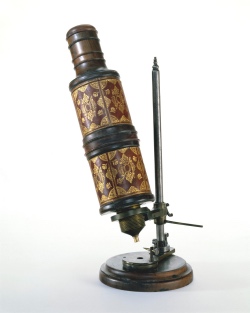
A new gallery exploring how London’s scientists and artisans transformed our understanding of the world over 250 years spanning the period from the mid-16th century to the end of the 18th century opens at the Science Museum in South Kensington today. The 650 square metre gallery, known as ‘Science City 1550-1800: The Linbury Gallery’, features iconic objects such as Sir Isaac Newton’s famous work, Principia Mathematica, Robert Hooke’s microscope (pictured), and objects including an air pump and ‘Philosophical Table’ which were commissioned by King George III as the king conducted his own scientific investigations. There’s also a range of machine models including one of a pile driving machine used in the construction of Westminster Bridge in the 1740s. The gallery is free to visit. For more, see www.sciencemuseum.ac.uk. PICTURE: Microscope designed by Robert Hooke, 1671-1700 formerly in the George III collection, King’s College London © Science Museum Group

The Tower of London Food Festival is being held in the fortress’ dry moat this weekend. Culinary talents including Chris Bavin and Emily Roux are among those offering live cookery demonstrations while visitors can put their own skills to the test with masterclasses. There’s also wine and sherry tasting sessions, an expanded array of food and drink to sample, activities for kids including cookery classes, games and face painting, and the Bandstand is back with deckchairs to relax in. Admission is included with entry to the Tower. Closes on Sunday. For more, see www.hrpfoodfestivals.com.

Send all items for inclusion to exploringlondon@gmail.com.

This Week in London – London’s architecture on show; D-Day commemorations at Duxford; and, Frank Bowling at the Tate…

An exhibition charting the changing architecture of London opens at the Guildhall Art Gallery on Friday. Architecture of London features more than 80 works by more than 60 artists and spans the period from the 17th century to the present day. The display is arranged thematically and starts with views of London before exploring the city’s continuous transformation – including its rebuilding after World War II, moving on to portrayals of everyday London and finishing with a focus on architectural details that help form the rich tapestry of the city’s built form. Highlights include a rare Jacobean view of London – Old St Paul’s Diptych (1616), Canaletto’s London Seen Through an Arch of Westminster Bridge (1747), David Ghilchik’s Out of the Ruins at Cripplegate (1962), Richard IB Walker’s London from Cromwell Tower, Barbican (1977), and works by Spencer Gore, Lucian Freud, and Frank Auerbach as well as Brendan Neiland’s Broadgate Reflections (1989) and Simon Ling’s paintings of East London. The exhibition, runs until 1st December, is being accompanied by a series of talks as well as a ‘Late View’ on 27th September. Admission charge applies.

The display forms part of the City of London Corporation’s outdoor public events programme, Fantastic Feats: the building of London, which celebrates London’s long-standing history of architectural and engineering firsts and looks at how these innovations have contributed to improving the lives of Londoners over the centuries. Another of the projects taking place under the Fantastic Feats umbrella is Illuminated River, an unprecedented light artwork by American architect Leo Villarreal and London-based Lifschutz Davidson Sandilands that will be installed on up to 15 of London’s bridges with the first four bridges – London, Cannon, Southwark, and Millennium – to be lit up this summer. Architectural drawings and visualisations of the project will be on show at Guildhall from Friday until 1st September sitting alongside paintings of the Thames from the gallery’s collection which have been selected by Villareal. Admission is free applies. For more on either exhibition and Fantastic Feats, follow this linkPICTURED: One of the panels from the Old St Paul’s Diptych by John Gypkin (1616) –  Society of Antiquaries of London.

A mass flight display will take place over the historic Duxford airfield in Cambridge next week as part of commemorations surrounding the 75th anniversary of the D-Day landings. On 4th and 5th June, IWM Duxford will host the Daks over Duxford event, featuring the greatest number of Douglas C-47 Skytrain aircraft – also known as Dakotas – in one location since World War II as well as mass parachute jumps and flight displays. The event will also feature a mass flight display over Duxford as aircraft head off for Normandy where parachute landings will take place on 6th June in a recreation of the original D-Day landings. Duxford is located less than 50 miles from central London. Admission charges apply. For more see www.iwm.org.uk/daks-over-duxford.

The first major retrospective of the work of British painter Frank Bowling opens at the Tate Britain on Friday. Frank Bowling will span the artist’s entire six decade career and will feature early works like Cover Girl (1966) – seen for the first time in the UK since it was painted, 10 of his celebrated ‘Map Paintings’ including Who’s Afraid of Barney Newman (1968) and Polish Rebecca (1971), examples of his ‘Poured Paintings’, sculptural works like his Great Thames paintings, and Sacha Jason Guyana Dreams (1989), a work inspired by the artist’s first visit to his birth country of Guyana with his son Sacha. Runs until 26th August. Admission charge applies. For more, see www.tate.org.uk.

Send all items for inclusion to exploringlondon@gmail.com.