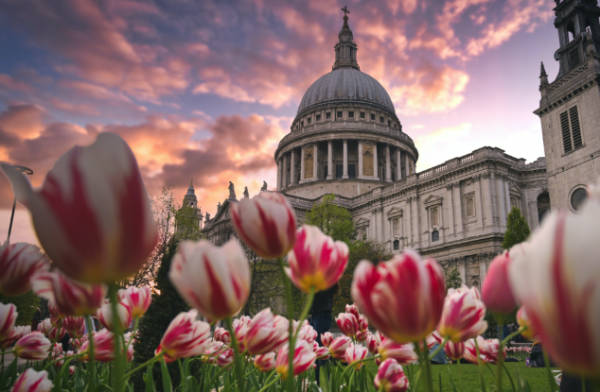
Wishing all our readers a very happy and safe Easter break!
Wishing all our readers a very happy and safe Easter break!
We pause our series on Winnie-the-Pooh to take a brief look at three uniquely London traditions which take place each Easter…
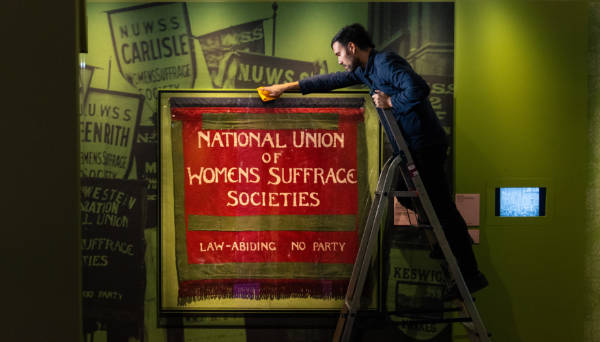
• A new exhibition celebrating the 150th anniversary of Punjabi princess and suffragette Sophia Duleep Singh opens at Kensington Palace today. The Last Princess of Punjab: The story of Sophia Duleep Singh and the women who shaped her explores the life of Sophia Duleep Singh and her intersections with six other women including her sisters Catherine and Bamba, her mother Bamba Muller, grandmother Jind Kaur and godmother Queen Victoria. On show is an ornately painted rocking horse from Princess Sophia’s childhood at Elveden Hall in Suffolk which was remodelled to resemble an Indian Mughal palace, an original copy of The Suffragette featuring an iconic image of Sophia selling copies of the magazine on the gate of Hampton Court Palace, a “No Vote, No Tax’ banner used in the early 1900s protest marches, and Princess Sophia’s handwritten letter to Winston Churchill reporting police brutality at the Black Friday suffragette march. And, for the first time since 1886, an iconic portrait of Jind Kaur will be reunited with real earrings she wore in the image. The exhibition runs until 8th November. Admission charge applies. For more, see https://www.hrp.org.uk/kensington-palace/whats-on/the-last-princesses-of-punjab/.
• A celebration of the fantastical creatures, heroes and villains that populate the world of fairy tales opens at the British Library tomorrow. Fairy Tales takes visitors on a journey through an mysterious forest and enchanted palace as they discover the origins and evolution of fairy tales. Items on show include a Mervyn Peake illustration made for an edition of Household Tales by the Brothers Grimm, early printed editions of the legend of Mulan, puppets of Kai and Gerda from the Little Angel Theatre’s production of The Snow Queen, a copy of Cinderella illustrated by Arthur Rackham, a beautiful manuscript illustration of a dragon from the Persian legend, the story of Darab, and the original manuscript of Lewis Carroll’s Alice’s Adventures Under Ground. Admission charge applies. Runs until 23rd August. For more, see https://events.bl.uk/exhibitions/fairy-tales.
• A new temporary space-themed gallery opens at the National Maritime Museum in Greenwich tomorrow. Astronomers Take Over is a hands-on space that provides the opportunity to meet astronomers from the Royal Observatory just up the hill, participate in science demonstrations and ask questions about space and astronomy. The gallery also includes a planetarium which features live astronomers shows ranging from ‘Animals in Space’ for young visitors to ‘The Night Sky’ – a classical guide to the cosmos, and ‘Solar System Sightseeing’, an introduction to Earth’s celestial neighbourhood. Science theatre shows will also be held at the museum from 3rd April. Admission charge applies. The gallery is open to 2028. For more, see https://rmg.co.uk/takeover.
• The Science Museum in South Kensington is marking the 60th anniversary of Star Trek with a new program of events. They include the chance to see all 13 Star Trek films on one of the biggest screens in Europe as well as a free trail featuring iconic objects from the franchise’s archives and an exclusive range of anniversary merchandise for purchase. For more, see sciencemuseum.org.uk/star-trek-60.
Send all items for inclusion to exploringlondon@gmail.com
There’s a couple of connections between the creation of Winnie-the-Pooh and this London institution.
It won’t come as a surprise, but this pub, located a short distance east of Tower Hill, is named for the character from Charles Dickens’ Oliver Twist.
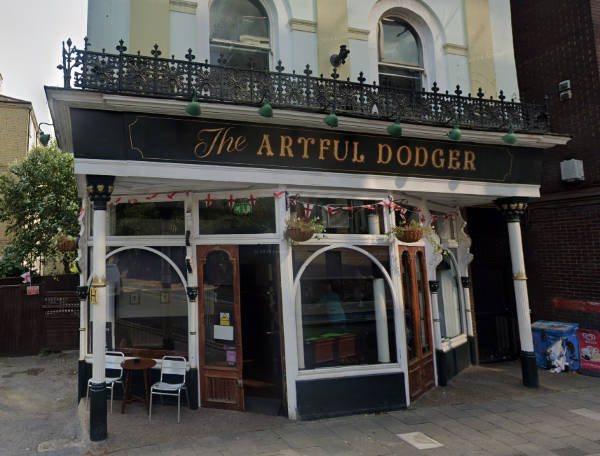
Located in Royal Mint Street, the pub was formerly known as the Crown and Seven Stars. It closed in 1981 and reopened under its current name in 1985.
While the history of the Crown and Stars apparently goes back some years earlier, the current four storey building, which is Grade II-listed, dates from a rebuild in the 1820s. But the facade, which features a crown and seven stars on the uppermost level, was partially rebuilt in the 1880s.
It’s not quite clear why the pub is so re-named – there doesn’t appear to be any particular connection of the character – known as the Artful Dodger but whose ‘real’ name in the novel is Jack Dawkins – with the location except that it’s in the East End where large sections of the book are set.
The pub is located at number 47. For more, see https://camra.org.uk/pubs/artful-dodger-london-155070.
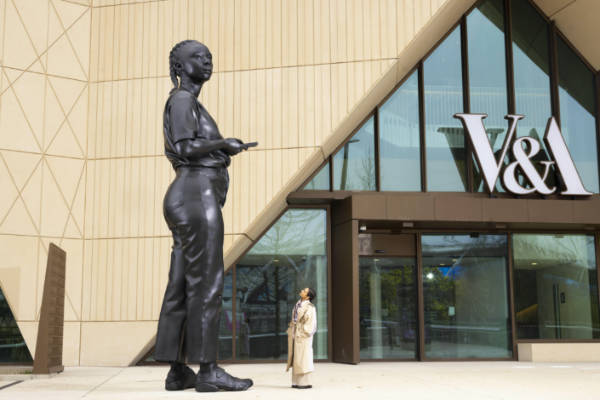
• An 18 foot tall sculpture of a young person, holding a mobile phone and looking towards a horizon “full of possibilities”, has appeared outside the V& East Museum ahead of its public opening next month. A Place Beyond, the work of artist Thomas J Price, has been created from an amalgamation of images, 3D scans and observations and has been constructed in bronze using digital technologies and ancient techniques. Also announced this month have been the artists involved with New Work, the V&A’s new six-monthly rotating creative commissions programme. The artists – who include Turner Prize-nominated artist Rene Matić, Lawrence Lek, Laura Wilson, Tania Bruguera, Es Devlin, Shahed Saleem, Justinien Tribillon and Carrie Mae Weems – have been invited to reflect on east London’s layered histories and creative futures under the theme of Making East London. The works will be displayed across V&A East’s two sites – V&A East Museum and Storehouse – from the museum’s public opening on 18th April. For more, see vam.ac.uk.
• On Now: Londoners on Trial: Crime, Courts and the Public 1244-1924. This free exhibition at The London Archives explores the history of law and order in the city and draws on documents from famous cases involving the likes of 17th century pickpocket Moll Cutpurse, highwayman Dick Turpin, Jack Sheppard, Oscar Wilde, and suffragette Sylvia Pankhurst. runs until 25th February next year. For more, head to www.thelondonarchives.org/visit-us/exhibitions/londoners-on-trial.
• The work and impact of Elsa Schiaparelli, one of the 20th century’s most innovative fashion designers is the subject of a new exhibition at the V&A. Opening on Saturday in the Sainsbury Gallery, Schiaparelli: Fashion Becomes Art follows the fashion house’s evolution from its origins through to its present day incarnation under creative director Daniel Roseberry. It features more than 200 objects including garments, accessories, jewellery, paintings, photographs, sculpture, furniture, perfumes and archive materials. Highlights include the V&A’s Skeleton dress and the Tear dress as well as a hat shaped to look like an upside-down shoe – all of which were conceived in collaboration with Salvador Dalí. There will also be artworks by Pablo Picasso, Jean Cocteau and Man Ray on display. Runs until 1st November. Admission charge applies. For more, see vam.ac.uk.
Send all items for inclusion to exploringlondon@gmail.com.
Think of locations related to Winnie-the-Pooh and chances are you’ll think of idyllic rural scenes like the Hundred Acre Wood (based on Ashdown Wood in East Sussex – more on that in a later post). But, as we’ll find, there are numerous locations in London which tell the some of the story of the world famous books and their creator, AA Milne.
To mark the 100th anniversary of publication of Winnie-the-Pooh in 1926, we’re taking a look at some of them…
An orphan who lived on London’s streets in the 1860s, Jim Jarvis is famous for having inspired Dr Thomas Barnardo to establish his first home for boys.
Barnardo had moved to London from Dublin in Ireland to train as a doctor and, after a cholera epidemic swept through the East End, leaving many children orphans, in 1867 he established the Hope Place Ragged School in Stepney where children could get a basic education for free.
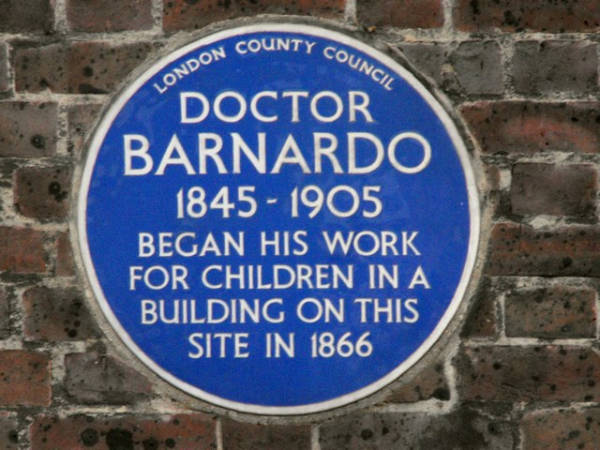
Jim Jarvis, who was 10-years-old at the time (although Barnardo later said he looked older but had the body of a boy of seven or eight), was one of the children who attended the school.
Barnardo’s account is that one night, after he was about to close the school, the boy had begged to be allowed to stay and, when pressed, had told his story.
Jarvis explained that had been living in a workhouse with his mother (he apparently never knew his father) but after she died, he ran away. Living on the streets of Stepney, he was initially helped by a woman who sold whelks and shrimp. He subsequently did some odd jobs for coal lighter but was treated very cruelly – this included the lighterman, ‘Swearin’ Dick’ setting his dog on him when he was drunk.
Jarvis was able to escape and lived on the streets for a time, including being briefly detained in a workhouse. Eventually he attended Barnardo’s newly opened ragged school and asked for help.
Jarvis explained that there were many other boys in a similar position to his own. Barnardo asked him to show him where some of these boys were staying, so Jim took him to a rooftop near a hayloft where 11 boys were sleeping in a huddle.
That encounter helped open Barnardo’s eyes to the hardships faced by the children in the East End – in his words, “I had seen enough, and I needed no fresh proof of the truth of his story or any new incentive to a life of active effort on behalf of destitute street lads”.
After the fateful night on which Jarvis told his story, Barnardo paid for Jarvis’ lodgings. It’s been suggested that, thanks to the aid of a charity, he later went to live on a Canadian farm.
Barnardo meanwhile, established his first home for boys in Stepney in 1870 – a place where they could live and learn skills such as carpentry, metalwork, and shoemaking to help them secure apprenticeships.
Barnardo went on to open further homes and by his death in 1905 the charity he and his wife Syrie Louise Elmslie founded had some 96 homes caring for more than 8,500 children.
Jarvis’ story is encapsulated in Berlie Doherty’s bestselling children’s novel, Street Child.
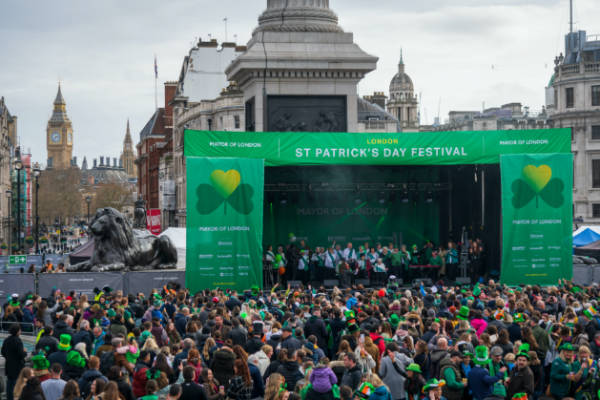
• The St Patrick’s Day parade and celebrations in Trafalgar Square take place this Sunday. The parade, which features Irish CountyAssociations, marching bands, dancers, musicians and carnival performers, kicks off at noon and heads along Piccadilly, through Piccadilly Circus, down Regent Street and then Cockspur Street before ending in the square. In the square, Irish comedian Rachel Galvo will host the main stage where acts will include traditional and contemporary performances from the likes of Irish Culture Centre Hammersmith’s Singing and Reminiscence Choir, Moonlight: The Philip Lynott Enigma, Carrie Baxter, Cór na nÓg Caisleán, Jig and Swig and the London Bodhrán Band, The Wran, Nell Mescal, Huartan, David Keenan and Robert Arkins ‘Commitments’. There’s also a tent hosting comedy, spoken word, music, and Irish film and TV shorts, an exhibition, Irish language lessons, children’s arts and crafts, and the ‘Oldbog Cottage’ experience. Meanwhile, celebrity chef Anna Haugh and The Wee Sister restaurant will be serving Irish dishes while the square will also host a range of stalls offering food, crafts and other Irish delights. For more, see london.gov.uk/events/st-patricks- festival-2026
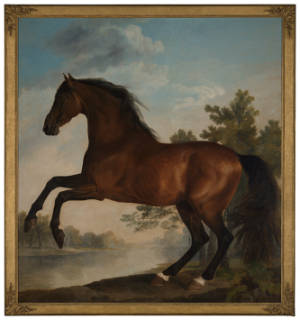
• George Stubbs’ (1724-1806) monumental portrait of a rearing horse is at the centre of an exhibition which opened at The National Gallery this week. Alongside Scrub, a bay horse belonging to the Marquess of Rockingham (c1762), Stubbs: Portrait of a Horse also features other paintings and works on paper by the artist and visitors can compare the large-scale equine portrait with another of Stubbs’ masterpieces, Whistlejacket (c1762), which is on display nearby in Room 34. The exhibition can be seen in Room 1 until 31st May. Admission is free. For more, see www.nationalgallery.org.uk/.
• People are invited to visit the Banqueting House in Whitehall for a “sneak preview” following a major project to upgrade visitor facilities ahead of its formal reopening this summer. The 400-year-old building boasts a new passenger lift offering step-free access to the main hall, home, of Peter Paul Rubens’ masterpiece ceiling, for the first time while a new heating system has been installed along with a new sustainably sourced English Oak floor. The sneak previews will take place on 20th March, 3rd April, 1st May, 29th May and 26th June ahead of its reopening on 1st August. Admission charge applies. For more, see www.hrp.org.uk/banqueting-house/.
Send all items for inclusion to exploringlondon@gmail.com
Before we move on to our next Wednesday series, here’a quick look back at the last…
• British artist Luke Jerram’s monumental sculpture Mirror Moon has gone on display at the Royal Observatory Greenwich. Made of stainless steel and measuring two metres in diameter, the sculpture uses topographic data from NASA to map the textures of the Moon onto its mirrored surface. Visitors are able to run their fingers over the Earth’s surface – the craters, valleys, mountains and smooth lava field as well as the heavily cratered surface of the far side of the Moon. Mirror Moon can be found in the Meridian Courtyard, beside the Prime Meridian. Admission charge applies. For more, see rmg.co.uk/mirrormoon.
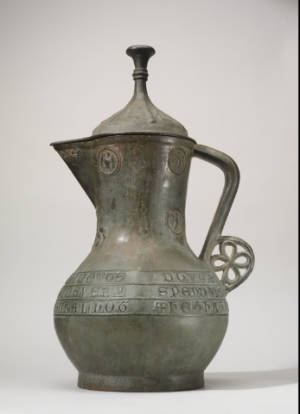
• A medieval jug known as the ‘Asante Ewer’ is at the heart of a new display which has opened at the British Museum. One of the finest examples of a bronze casting from the Middle Ages, it dates from between 1340 and 1405 and it just one of three ewers from medieval Europe to have travelled to Ghana where it eventually ended up in the royal palace of the king of the Asante people in Kumasi before being taken by British troops as military during during the Anglo-Asante War in 1896 (and subsequently being purchased by the museum). The ewer is displaced alongside another medieval ewer which also travelled to Ghana and comes with a replacement brass lid which was produced in West Africa as well as the Aya Kese brass basin which dates from 1500-1700 and was looted from its position outside the royal mausoleum at Bantama in Kumasi before it too was looted – this time by Robert Baden-Powell – during the 1896 Anglo-Asante War. The free exhibition, which follows on from a three year research project examining the connections between Western Europe and West Africa during the Middle and Early Modern ages, can be seen in Room 3 until the 7th June. For more, see www.britishmuseum.org/exhibitions/asante-ewer.
• On Now: Tracey Emin: A Second Life. The largest ever survey of the work of Dame Tracey Emin has opened at the Tate Modern. Spanning her 40 years of practice, the display brings together more than 100 works including paintings, videos, textiles, neon, sculptures and installations. It opens with works from her first solo exhibition at White Cube, such as My Major Retrospective (1982-93), reflects on her years in her hometown of Margate through works such as Mad Tracey From Margate: Everybody’s Been There (1997), includes deeply personal works such as the neon I could have Loved my Innocence (2007) and more recent works such as the bronze sculpture Ascension (2024) which explores Emin’s new relationship with her body following major surgery for bladder cancer. At the centre of the exhibition are two seminal installations – Exorcism of the Last Painting I Ever Made (1996) and My Bed (1998) – while outside can be found the monumental bronze I Followed You Until The End (2023). Runs until 31st August. Admission charge applies. For more, see www.tate.org.uk.
Send all items for inclusion to exploringlondon@gmail.com.
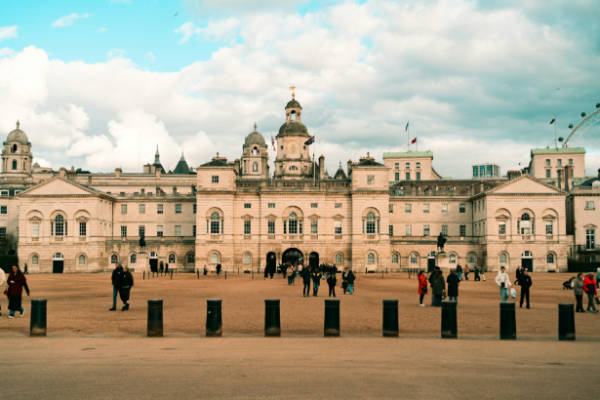
Containing a residence for the Bishop of London (although, it has to be said, certainly not traditionally a bishop’s palace), the Old Deanery is located in Dean’s Court, to the south-east of St Paul’s Cathedral.
The subject of a recent fund-raising campaign by the British Museum, the unique 24 carat gold heart-shaped pendant is linked to King Henry VIII and his first wife Queen Katherine of Aragon.
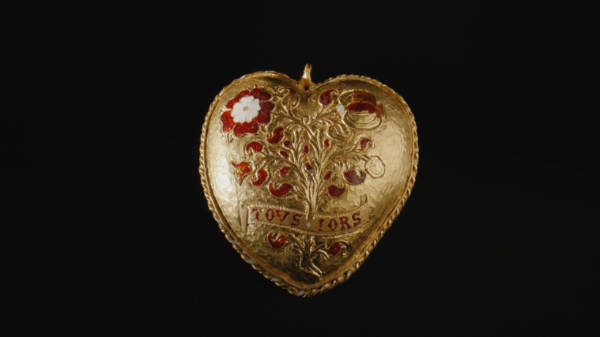
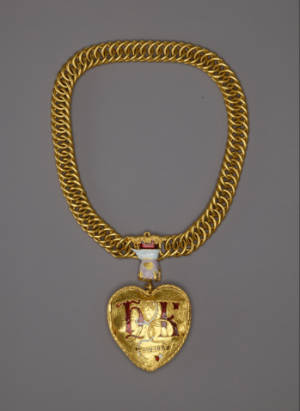
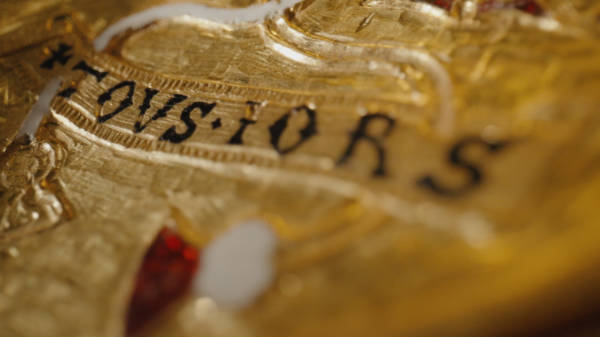
The pendant was discovered by a metal detectorist in Warwickshire in 2019. It features enamelled motifs depicting a Tudor rose intertwined with a pomegranate tree – the personal emblem of Katherine. Beneath them is a banner containing the word ‘touriors’, old French for ‘always’.
The obverse side is decorated with the initials ‘H’ and ‘K’ united by a tasselled cord and it also features a banner with the word ‘touriers’.
The jewel is attached to a 75 link gold chain by a clasp in the form of a hand emerging from a cloud.
The pendant is a rare surviving object celebrating Henry and Katherine’s marriage which was the longest of his life, lasting some 24 years before he ultimately had it annulled in 1533.
British Museum research has suggested that it may have been created for a tournament held in October, 1518, to mark the betrothal of the couple’s daughter, Princess Mary (late Queen Mary I), to the French heir. King Henry VIII was known to have frequently commissioned London goldsmiths to create jewellery peces for major celebrations and state occasions.
The museum announced that it had raised its target of £3.5 million to acquire the pendant on Valentine’s Day following a £1.75 million grant from the National Heritage Memorial Fund.
Other major donations made during the campaign, which was championed by actor Damian Lewis (who played King Henry VIII in the series Wolf Hall: The Mirror and The Light), included £500,000 from the Julia Rausing Trust, £400,000 from the Art Fund including a contribution from The Rought Fund, and £300,000 from the American Friends of the British Museum.
Meanwhile, more than 45,000 people gave individual donations to the campaign, totalling £380,000.
The pendant can be seen in the British Museum’s Collecting the world gallery.
• Jock McFadyen’s large-scale Tube paintings have come together in a new exhibition opening at the Guildhall Art Gallery on Friday. Jock McFadyen with Jem Finer: Underground (and Surface) revisits McFadyen’s Underground series from the late 1990s and also features a layered soundscape by The Pogues’ Jem Finer which were composed from field recordings on the Northern and Central lines. Admission is by Pay What You Can. Runs until 20th September, 2026. For more, see www.cityoflondon.gov.uk/events/underground-and-surface-exhibition.
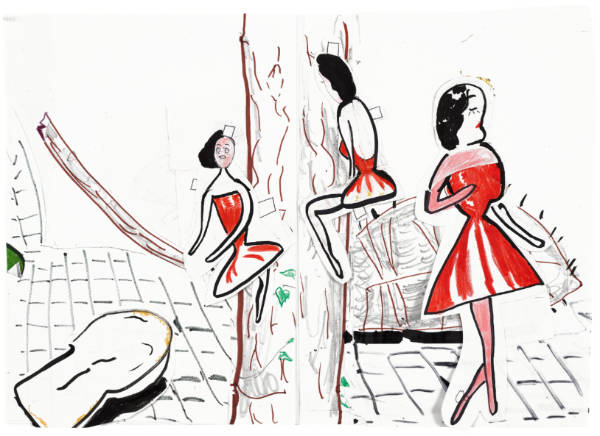
• The largest survey to date of celebrated British artist and Royal Academician Rose Wylie opens at the Royal Academy on Saturday. Rose Wylie: The Picture Comes First features more than 90 works, including Wylie’s most iconic, alongside new paintings and drawings. Works on show include those depicting memories of
family life and bombing raids in London during World War II such as Wing Tips and Blue Doodlebugs (2022/23), Room Project (2002-3) – Wylie’s first major series to receive significant critical acclaim, works on paper such as Bottom Teeth, Self-Portrait (2016), and works from the series Film Notes. It concludes with four large monochromatic paintings of animals in ginger, black, blue and red made directly by the artist onto the canvas using her hands. Runs in the Main Galleries until 19th April. Admission charge applies. For more, see www.royalacademy.org.uk/exhibition/rose-wylie.
• A life-sized wooden galleon has arrived in Kensington Gardens where it will become the centrepiece of the Diana, Princess of Wales Memorial Playground when it reopens this summer. The ship has been manufactured in Frasdorf, Germany, and is predominately made from mountain larch wood drawn from sustainably managed forests in the Bavarian Alps. It’s part of a £3 million renewal of the free-to-enter playground, which is inspired by the adventures of Peter Pan. For more, see www.royalparks.org.uk/visit/parks/kensington-gardens/diana-memorial-playground.
• Further Afield – Historic Duxford: Air Crew Room, Pilot’s Briefing Room and Pilots Locker Room. Three newly transformed historic rooms opened at IWM Duxford just south of Cambridge late last year, each of which contains newly acquired objects and interactive elements. The air crew room, located beside the Battle of Britain Hangar, tells the stories of the US 8th Air Force and RAF Bomber Command through personal objects belonging to former pilots and crew. They include false identity papers and the diary of American fighter pilot Lonnie Moseley of Duxford’s 78th Fighter Group who was forced to bail out of his P-47 Thunderbolt over France in 1944 and took shelter with a local French farmer’s family until returning to England. Nearby in the pilot’s briefing room, meanwhile, visitors can enjoy an audio-visual recreation of a real-life briefing given on D-Day in which they can sit among their ‘fellow pilots’. And in the pilot’s locker room, the everyday life of pilots who were stationed at Duxford in 1940 is explored including with interactive elements such as the opportunity to try on replica uniforms and see lockers containing recreated details of some of the pilots such as a conversation between 19 Squadron’s George ‘Grumpy’ Unwin and 302 (Polish) Squadron’s Julian Kowalski. The rooms can be visited with standard admission. For more, see www.iwm.org.uk/visits/iwm-duxford.
Send all items from inclusion to exploringlondon@gmail.com.
A former summer residence of the Archbishops of Canterbury for centuries, Croydon Palace has in more recent times been used as a school.
 Exploring London