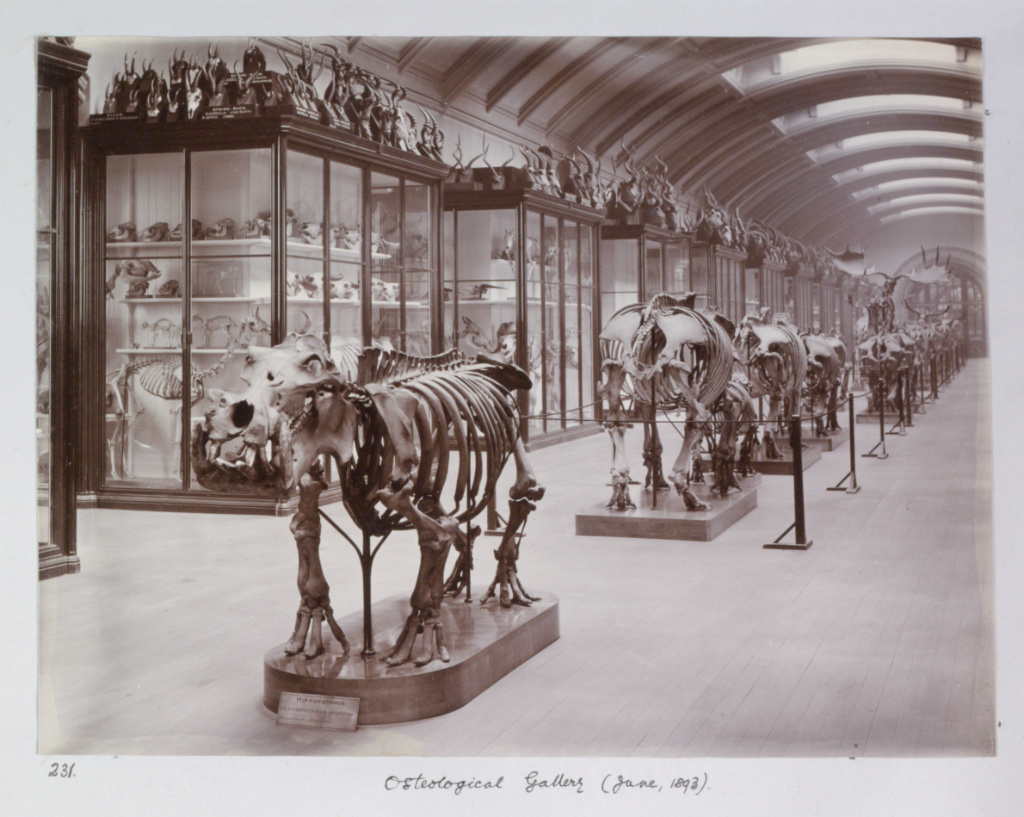
• A gallery at the Natural History Museum which has been sealed off to the public for 80 years has reopened with a new display exploring our relationship with the natural world through 50 objects. Among the objects on show in the Nature and Us exhibition are a miniature model of a Crystal Palace dinosaur; Jenny, a Victorian skeleton of a monk seal; a bryozoan-encrusted Star Wars toy from the 1980s; and a 400,000-year-old handaxe whose discovery transformed our understanding of when humans first existed. Visitors will also be able to touch a replica jaw of one of Britain’s earliest known domesticated dogs, dating to around 14,300 years ago. The gallery is open for an initial 18 months and visitors can have their say on what appears in the permanent gallery when it opens in 2029. Located on the second floor of the main Museum’s Waterhouse building, the gallery historically served as both an osteology (skeleton) gallery and a mammals gallery and, after the herbarium was damaged in World War II, was repurposed to house the botanical collection. It has been closed to the public until now. For more on the new gallery, visit www.nhm.ac.uk.
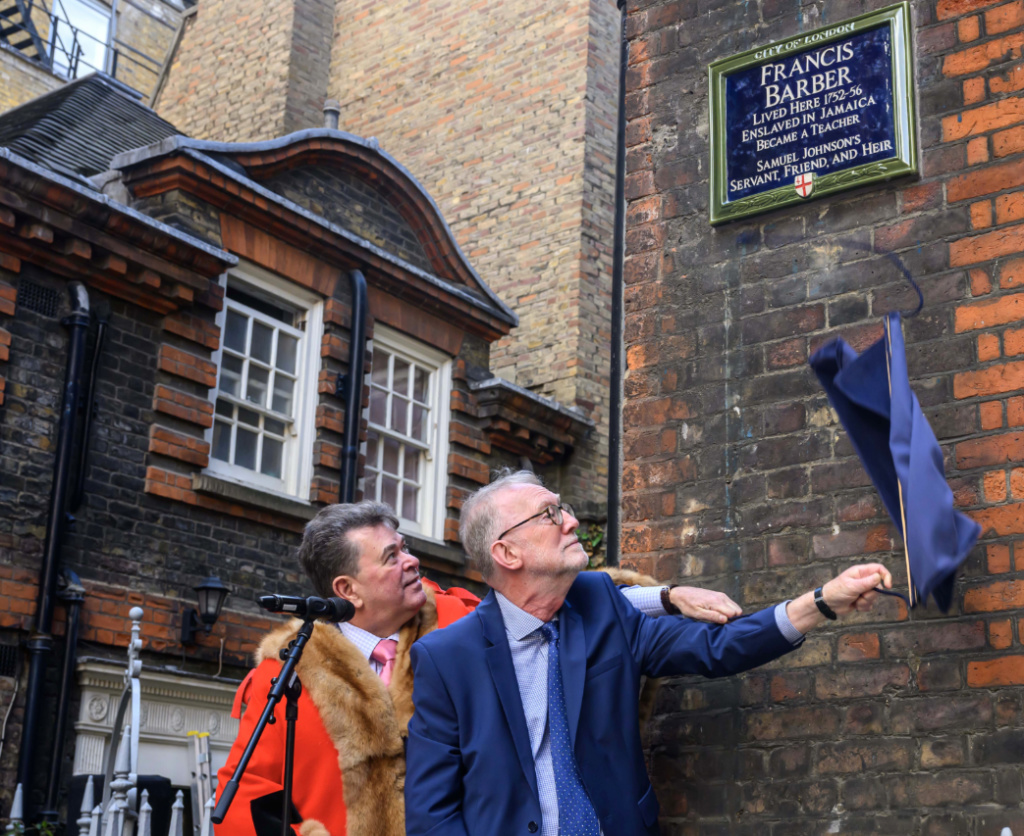
• Britain’s first Black schoolteacher, Francis Barber, has been commemorated by a Blue Plaque at the writer’s townhouse in the heart of the City of London’s Fleet Street Quarter. The plaque commemorating Dr Samuel Johnson’s former servant, friend, and heir was unveiled on Dr Johnson’s House in Gough Square as the City launches a redesigned “modern, transparent, inclusive” City of London Blue Plaques Scheme and marks 150 years since the City’s oldest Blue Plaque was unveiled honouring Dr Johnson at same historic site. Barber, a West African man born into slavery in Jamaica, came to London as a child and lived at Dr Johnson’s house from 1752 to 1756 where he worked as his servant. Dr Johnson, who compiled the Dictionary of the English Language (1755), supported him and his family throughout his life, and helped secure his financial future. Dr Johnson also named Barber as the sole heir and beneficiary of a Trust established in his will. Barber later became the first known Black schoolteacher in British history. The 17th century townhouse known as Dr Johnson’s House is now a museum and believed to be the only surviving property in the City that was home to a formerly enslaved person who later lived there as a free man. The plaque was unveiled by Alderman Tim Hailes and Michael Bundock, director of Dr Johnson’s House Trust and author of The Fortunes of Francis Barber.
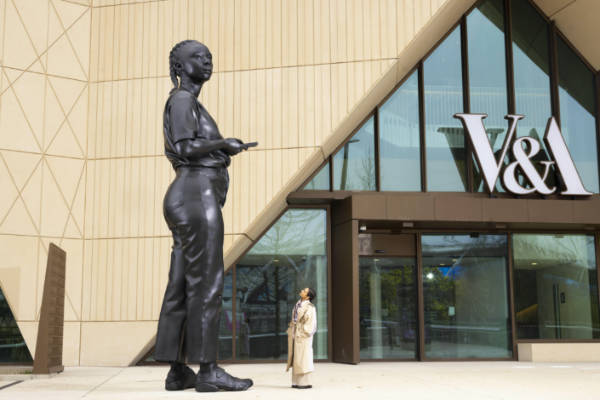
• London Sculpture Week kicks off on Saturday in a citywide celebration of London’s public art. The week – which brings together sculptures in the Fourth Plinth, East Bank, Frieze Sculpture, Sculpture in the City and The Line – includes the chance to gain new insights into London’s outdoor artworks through talks, walking tours, film screenings and other activities. Highlights include the 16th Fourth Plinth commission, Lady in Blue, Frieze Sculpture’s 14th edition which features the work of 11 leading international artists sited throughout the historic English Gardens of The Regent’s Park, and a walking tour organised by East Bank featuring works commissioned for the London 2012 Olympic and Paralympic Games as well as recent East Bank commissions such as Larry Achiampong and David Blandy’s Trēow of Time and Thomas J Price’s A Place Beyond. There’s also a walking tour taking in the eight works in Sculpture in the City followed by the chance to sample canapés inspired by a selection of the sculptures, and a free wellbeing walk along The Line, East London’s public art trail. For the full programme, head to https://tinyurl.com/london-sculpture-week-2026.
Send all items to exploringlondon@gmail.com