Famous Londoners – Sir Robert Geffrye…

He lends his name to one of London’s best small museums but who was the person behind the name the Geffrye Museum?
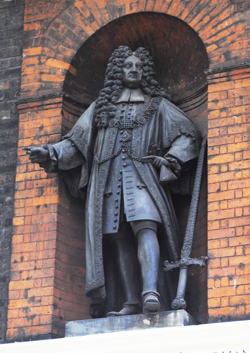
Sir-Robert-GeffryeDetails about his life are somewhat scant but it is generally believed Sir Robert Geffrye (among a number of variants of the spelling of his name) was born around 1613 in the village of Landrake near Saltash in Cornwall.

Moving to London while still just in his teens, he is believed to have undertaken a seven year apprenticeship, eventually admitted as a member of the Worshipful Company of Ironmongers and freeman of the City of London.

It’s been suggested he was an ironmonger in name only but it seems to be the case that his new status gave him the opportunity to launch his career as a merchant and he apparently made a fortune from investing in African and East Indian trade.

Geffrye – who married Priscilla Cropley, a lawyer’s daughter, at the chapel in the Mercer’s Hall in Cheapside in 1651 and lived in Lime Street – was twice Master of the Worshipful Company of Ironmongers (first in 1667 and then again in 1685).

He was knighted by King Charles II in 1673 (his coat-of-arms can still be seen in the Ironmonger’s Hall) and in 1674, he was appointed a sheriff of London before being elected Lord Mayor in 1685 (his wife Priscilla had died in 1676).

In 1688, Geffrye became president of Bridewell and Bethlehem Hospitals – a role which he held for two years and which apparently saw him attending Bridewell every Friday to judge and sentence prisoners.

He died in February 1704 and was buried in the now long-gone St Dionis Backchurch, where his wife had been buried earlier. Their remains were transferred to the almshouses grounds after the church was demolished in 1878.

Geffrye left behind a substantial fortune and, along with bequests to family, friends and charities, he made a sizeable bequest which funded the building of 14 almshouses in Shoreditch (now home to the Geffrye Museum which this year celebrates its tercentenary) (for more on the museum and alms houses, see our earlier posts here and here).

A replica of an original 1723 statue of Sir Robert still adorns the almshouses which bear his name (pictured above).

For more on the people that made London, see Boris Johnson’s Johnson’s Life of London: The People Who Made the City That Made the World.

This Week in London – Rare chance to see four Magna Cartas together; Covent Garden films; Raymond Chandler’s childhood home recalled; and Rembrandt at Kenwood…

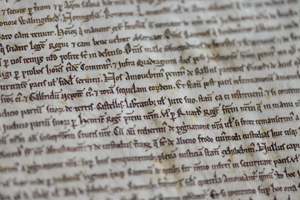
Magna-Carta• The only four surviving copies of the original Magna Carta from 1215 will go on display together for the first time ever  at the British Library in King’s Cross next February – and you have a chance to be among the 1,215 people to see them. In an event to mark the 800th year of the creation of the document, the library – which holds two copies of the document – along with Lincoln Cathedral and Salisbury Cathedral – each of which holds one copy – are holding a ballot with winners able to attend an event in which they’ll have the unique opportunity to see the documents side-by-side as well as be treated to a special introduction on its history and legacy by historian and TV presenter Dan Jones. The ballot to see the documents is open until 31st October with winners drawn at random. It’s free to enter – head to www.bl.uk/magna-carta to do so. The four documents will subsequently feature separately in displays at each of the three institutions. One not to miss! PICTURE: Salisbury Cathedral’s Magna Carta/Ash Mills.

The Silent Swoon Free Film Festival kicks off in St Martin’s Courtyard, Covent Garden, next week. The courtyard will be transformed into an open air movie theatre showing a different movie each night – The Talented Mr Ripley on 14th October, Crazy, Stupid, Love on 15th October and Rebel without a Cause on 16th October. Most of the free tickets will be allocated through an online draw but a small number will be allocated each night on a first come, first serve basis. For those with tickets, a range of freebies will be available on the night (including popcorn!). For more information, head to www.stmartinscourtyard.co.uk/silent-swoon-cinema-festival.

Crime writer and film noir pioneer Raymond Chandler has been remembered with the placement of an English Heritage blue plaque outside his childhood home in Upper Norwood, south east London. Chandler, who received global acclaim for his Philip Marlowe novels and his work on movies like The Blue Dahlia, lived at the home from 1901 after emigrating from the US with his mother, aunt and grandmother at the age of 12. He remained at the double-fronted red brick villa until 1908 – the same year he published his first poem, The Unknown Love. In his early Twenties, Chandler worked as a freelance reporter for London newspapers but, disillusioned with writing, returned to the US in 1912. He spent the next decade working for an oil company before the loss of his job in 1932 pushed him to restart writing. He first novel was published in 1939, and he went on to write further books and movie screenplays to ongoing renown. For more on the blue plaques scheme, see www.english-heritage.org.uk/discover/blue-plaques/.

Two early works of Rembrandt have gone on display at Kenwood House this month. Anna and the Blind Tobit and Jeremiah Lamenting the Destruction of Jerusalem, both of which date from around 1630, will be seen in the Hampstead landmark until May next year. The two paintings replace Rembrandt’s Portrait of the artist which usually hangs in Kenwood and is on show at the National Gallery and Rijksmuseum in Amsterdam (from where the two paintings now at Kenwood have come). For more, see www.english-heritage.org.uk/kenwood. An exhibition of Rembrandt’s works opens at the National Gallery next week – more details then!

Send all items for inclusion to exploringlondon@gmail.com.

10 of London’s World War I memorials – 9. Great Western Railway War Memorial…

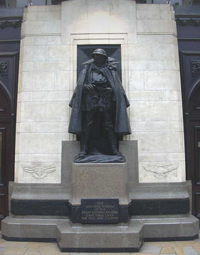
One of many memorials located in London’s railway stations, the  Great Western Railway War Memorial is located on platform one of Paddington Station.

The memorial features a bronze figure of a soldier sculpted by Charles Sargeant Jagger standing against a granite and marble backdrop designed by Thomas S Tait. The soldier, who is dressed in battle gear with a helmet on his head and a great coat thrown about his shoulders, is depicted apparently reading a letter from home.

GWR-Memorial-smallTo either side of the soldier are reliefs depicting the emblems of the Royal Air Force and the Royal Navy while inscribed on the plinth beneath him is an inscription dedicated the memorial to employees of the railway who died in World War I. Inside the plinth was placed a sealed casket containing a vellum roll on which is written the names of all 2,524 men who died.

The memorial, known as the ‘GWR Memorial’, was unveiled on Armistice Day by Viscount Churchill, chairman of the Great Western Railway, in 1922 before a crowd estimated at around 6,000 people. It was later updated after World War II.

Restored in 2001, the memorial recently featured in the World War I commemorative project – “Letter to an Unknown Soldier” – in which members of the public were invited to write a letter to the soldier. The statue is also among more than 20 in London which have been brought to life as part of Sing London’s Talking Statues initiative (it has the voice of Patrick Stewart!).

Among our favourite railway memorials, others include the magnificent “Victory Arch” at Waterloo Station.

PICTURE: Cnbrb at the English language Wikipedia

LondonLife – Sheep in the City…

Sheep

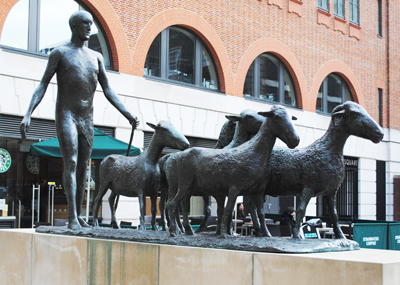
A small flock of sheep made their way across London Bridge this week as the Freemen of the City of London exercised their ancient prerogative to drive sheep over the span. A reported 600 Freemen from the City’s 110 livery companies took part in the annual drive along with a score of sheep – all in an effort to raise for the Lord Mayor’s Appeal. There’s a permanent reminder of the tradition of driving sheep in the heart of the City in Paternoster Square near St Paul’s Cathedral where Dame Elisabeth Frink’s bronze sculpture of Shepherd and Sheep can be found (pictured above).

What’s in a name?…Chancery Lane

This central London street, which runs between Fleet Street and High Holborn, has long been associated with the law and government, and still is so today with the Royal Courts of Justice standing close to its southern end and Lincoln’s Inn – one of the four Inns of Court – located on the lane’s western side.

Its name is a corruption of the original Chancellor Lane – a moniker which apparently dates back to at least the 14th century – and which referred to the buildings where the official documents of the Lord Chancellor’s Office, known as the Rolls of the Court of Chancellory (Chancery), were stored.

The street was apparently first known as New Street and later as Converts Lane; the latter in reference to the House of Converts (Domus Conversorum) King Henry III founded here in the 1272 for the conversion of Jews to Christianity.

When King Edward I expelled all the Jews from the kingdom in 1290, the ‘house’ continued in use as such for foreign-born Jews, albeit with very small numbers of residents until the early 17th century.

In the meantime, in 1377 King Edward III gave orders that the complex of buildings used by the Domus Conversorum also be given over to the Master of the Rolls for the storage of chancellory documents and it was this move which led to the lane gaining its new name.

The buildings – which included a chapel which had become known as the Chapel of the Master of the Rolls or the simply the Rolls Chapel which had been rebuilt several times including to the designs of 17th century architect Inigo Jones – were finally demolished around the turn of the 20th century and subsumed into the Public Records Office complex on Chancery Lane (this was formerly housed in what is now the Maughan Library of King’s College London).

The lane these days is also home to such august institutions as The Law Society and the London Silver Vaults. It also lends its name to an Underground Station located to the east of the lane entrance in High Holborn.

Daytripper – Maiden Castle…

Maiden-Castle

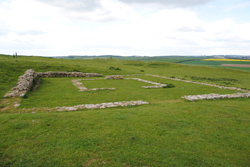
Located just outside the town of Dorchester in southern Dorset to the south-west of London, Maiden Castle is the largest extant Iron Age hillfort known to have been built in Britain and among the largest and most complex in all of Europe.

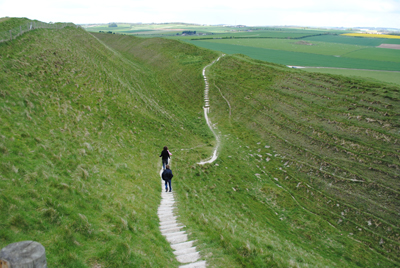
Featuring multiple earthen ramparts (pictured above is the ditch between two of them) – from the top of which you can see spectacular views of the surrounding countryside – and well-defended entrances, it would have once been home to several hundred people. It’s been speculated the name may come from the Celtic word “mai-dun”, meaning a great hill.

Maiden-Castle2The first archaeological excavations were carried out here in the 1930s by Mortimer Wheeler and then later in the 1980s.

Initially built between 800 and 550 BC, the first Iron Age hillfort – built on the site of an earlier Neolithic enclosure with settlement dating back some 6000 years – was enclosed by a single rampart.

In the middle Iron Age, between 550 and 300 BC, it was extended to some 19 hectares or 50 football fields and, apparently densely populated with “round houses” which over time were organised into an increasingly regimented layout, eventually become the pre-eminent settlement in southern Dorset.

In the late Iron Age, the settlement became focused on the eastern end of the fort and with the arrival of the Romans and their establishment of the town of Dorchester (Durnovaria), it was finally abandoned.

Among the features identified within the hillfort’s precincts are well-defended and complex entrances at the western and eastern ends and a large Iron Age cemetery just outside the eastern entrance.

Discovered by Sir Mortimer, the cemetery contained more than 52 burials, some of which held the remains of males with terrible injuries. While Sir Mortimer believed it was a war cemetery created following a battle between the locals and the Roman, it is now thought to have been used as a more general cemetery over a longer period of time.

The remains of a Romano-British temple (pictured above right), dating from the late 4th century AD – about 200 years after the site was abandoned, has also been found inside the hillfort’s boundaries. It consisted of a central room surrounded by a passage with a portico open to the weather. Nearby is what is believed to have been a shrine and a two roomed building thought to have been a priest’s house. A bronze plaque depicting the goddess Minerva has been found on the site, suggesting the temple have been dedicated to her.

The site is managed by English Heritage who have an MP3 audio tour you can download from the website and play on an iPod, smart phone or MP3 player to give an extra dimension to your visit!

WHERE: Maiden Castle, two miles south of Dorchester, off A354, north of bypass or train – two miles from Dorchester South/West; WHEN: Any reasonable time in daylight hours; COST: Free; WEBSITE: www.english-heritage.org.uk/daysout/properties/maiden-castle/

For more on Iron Age Britain, check out Barry Cunliffe’s Iron Age Britain (English Heritage).

This Week in London – Gothic literature at the British Library; founder of War Graves Commission honoured; and, New Year’s Eve tickets on sale…

Gothic The UK’s largest exhibition of Gothic literature opens at the British Library in Kings Cross on Saturday (4th October), marking the 250th anniversary of the publication of the breakthrough book, Horace Walpole’s The Castle of Otranto. Terror and Wonder: The Gothic Imagination will feature manuscripts and rare and personal editions of Gothic classics like Bram Stoker’s Dracula, Mary Shelley’s Frankenstein, Robert Louis Stevenson’s Strange Case of Dr Jekyll and Mr Hyde and Charles Dickens’ Oliver Twist as well as the work of contemporary writers like Angela Carter and Mervyn Peake. There will also be Gothic-inspired artworks by the likes of Henry Fuseli and William Blake and modern art, photography, costumes and movies by the likes of Chapman Brothers and Stanley Kubrick. A range of literary, film and music events will accompany the exhibition which runs until 20th January. Admission charge applies. For more, see www.bl.uk/whatson/exhibitions/gothic/. PICTURE: Percival Delivering Belisane from the Enchantment of Urma, Henry Fuselli. © Tate.

The founder of the Imperial (now Commonwealth) War Graves Commission, Sir Fabian Ware (1869-1949), has been honoured with an English Heritage blue plaque at his former home in Marylebone. Sir Fabian lived at the early 19th century Grade II-listed terraced house at 14 Wyndham Place between 1911 and 1919. It was during this period that he served with the British Red Cross in France and first began recording the graves of soldiers killed in battle. In 1917, the Imperial War Graves Commission was formed with the task of reburying the war dead in permanent cemeteries in France. Knighted in 1920, Sir Fabian was to be director of graves registration and enquiries at the War Office during World War II and it was at this time that he extended the war graves scheme to civilians killed in the conflict. The commission changed its name to the Commonwealth War Graves Commission in 1960. Today it cares for cemeteries and memorials at 23,000 locations in 153 countries. For more, see www.english-heritage.org.uk/discover/blue-plaques/.

New Year’s Eve in London will be a ticketed event for the first time this year with 100,000 tickets being made available to the public with each costing a £10 administration fee – the entire sum of which will apparently be used to pay for the ticketing system. Making the announcement last month, the Mayor of London, Boris Johnson’s, office, said the growth in numbers of those who have gathered to watch the fireworks on the Thames – from around 100,000 in 2003 to an estimated 500,000 last year – has put an enormous strain on transport and safety infrastructure and meant people have had to turn up earlier and earlier to get a good view, facing hours waiting in cold and cramped conditions, or risk being among the “hundreds of thousands” unable to get a good view or even see the display at all. Booking tickets – people may secure up to four – will guarantee “good views of the celebrations and a better visitor experience”. To book tickets, head to www.london.gov.uk/nye.

Send all items for inclusion to exploringlondon@gmail.com.

10 of London’s World War I memorials – 8. The RAF Memorial…

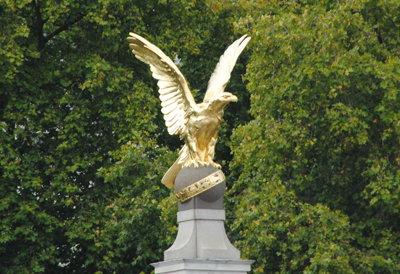
RAF-Memorial
Aerial combat probably isn’t the first thing that springs to mind when thinking about the fighting in World War I but, as the Royal Air Force Memorial on Victoria Embankment records, air crew played a vital role.

The memorial features a bronze eagle perched on an orb girded with a belt depicting the signs of the zodiac which sits atop a Portland stone pylon. It was designed by Sir Reginald Blomfield with the eagle, inspired by the RAF’s badge, sculpted by William Reid Dick. Along with the dedication, it carries an inscription from the Bible (Exodus 19:4) –  “I bare you on eagles wings and brought you unto myself” (sic).

Various other sites were apparently considered for the memorial before the location – amid a string of other memorials between Westminster and Hungerford Bridge – was settled upon (as were other designers including the renowned Edwin Lutyens).

Unveiled on 13th July, 1923, by the Prince of Wales, the memorial was dedicated to the memory of all those who gave their lives in the ranks of the Royal Flying Corps, the Royal Naval Air Service  and the Royal Air Force  (formed through the amalgamation of the RFC and RNAS at a hotel in Strand in 1918) during World War I, along with those who had died while serving in air forces from across the British Empire.

A further dedication was later unveiled in 1946 on Battle of Britain Sunday remembering the men and women of air forces from across the Commonwealth and Empire who died during World War II.

A simple, yet still evocative, memorial.

LondonLife – Admiral Arthur Phillip honoured in Westminster Abbey…

Admiral-Arthur-PhillipA memorial to Admiral Arthur Phillip, described as the “father of modern Australia”, was unveiled in Westminster Abbey back in July. Admiral Phillip (1738-1814) commanded the ‘First Fleet’ which left the UK in 1787, transporting convicts and military to the new colony Phillip founded as New South Wales. Prince Phillip, the Duke of Edinburgh, attended the memorial’s dedication service on 9th July which was conducted by the Dean of Westminster, Dr John Hall, who credited Admiral Phillip – a “modest, yet world-class seaman, linguist and patriot”- with laying the foundations “on which was developed the Commonwealth of Australia”. Among other dignitaries who attended was Dame Marie Bashir, the Governor of the Australian state of New South Wales, who described Admiral Phillip as “enlightened, far-sighted and indeed humane” and paid tribute to his attempts to actively foster harmonious relations with the Aboriginal people. Carved from Sydney sandstone, the memorial is set in the floor of the nave of the minster close to memorials of David Livingstone, Thomas Cochrane and Isaac Newton. The memorial stone is among a number of projects around Britain instigated by the Britain-Australia Society to mark the bicentenary year of Admiral Phillip’s death. For more on the abbey, see www.westminster-abbey.org. PICTURE: Andrew Dunsmore/Westminster Abbey.

London Pub Signs – The Captain Kidd…

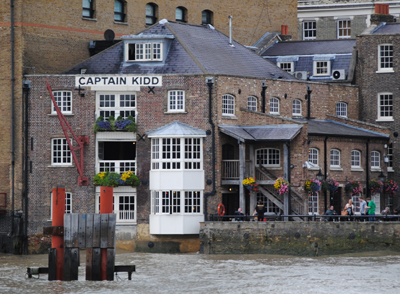
Captain-Kidd2

Located on the north bank of the River Thames in Wapping, East London, this pub owes its name to the infamous mariner who met his end at nearby Execution Dock.

Located in what was originally a warehouse, the pub – one of several riverside pubs in Wapping – only apparently dates from the 1980s but the historic location – and the ample views it provides over the river from its garden area – ensures it still has plenty of atmosphere.

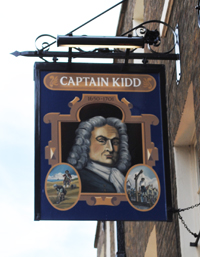
Captain-KiddCaptain William Kidd himself was a Scot, born in 1645, who took to the seas in the Caribbean where he operated as a privateer. It was during a voyage in the Indian Ocean – he had set off from London in 1696 – that he undertook actions which led him to being accused of murder and piracy, something he discovered upon his return to the Caribbean soon after.

He traveled to the North American city of Boston to plead his case with the governor but was instead arrested and eventually sent to England where he stood trial for piracy and murder. He was found guilty on all charges and was hanged on 23rd May, 1701, at Execution Dock –  believed to have been located just to the west of the pub – in Wapping.

It was apparently a messy affair – the hangman’s rope broke on the first attempt and he was only successfully hanged on the second. Kidd’s tar-covered body was later displayed in a gibbet hung over the Thames at Tilbury Point as a warning to other pirates for three years.

Kidd’s fame grew after his death, thanks in large part to rumours he’d left buried treasure someone in the US, and his name has become somewhat synonymous with piracy ever since.

The pub, at 108 Wapping High Street, is operated by Samuel Smith’s.

This Week in London – Dr Livingstone’s beetles; the Great River Race; Snowdon at the NPG; and Foundlings at War…

BeetleFrom Dr Livingstone, I presume? A recently unearthed collection of beetles gathered together by Dr David Livingstone during his Zambezi expedition of 1858-64 will go on display in its original box at the Natural History Museum in South Kensington on Friday night. The specimens were found among the museum’s 10 million beetles by beetle curator Max Barclay who stumbled on an unusual box received from a private collector. The collector was later found out to be amateur entomologist Edward Young Western (1837-1924) who apparently bought the specimens from a member of Livingstone’s expedition. The 20 beetles found inside the box are believed to the only surviving specimens known to have been collected by Livingstone. The specimens will be on show as part of Science Uncovered, a free annual after hours event – part of European Researcher’s Night – which will take place at the museum between 3pm and 10.30pm Friday night. Other highlights of the night include the chance to extract DNA from strawberries and bananas, create your own earthquake and chat live with NASA about chasing asteroids. For more, see www.nhm.ac.uk/scienceuncovered. PICTURE: Giant Predatory Ground Beetle, Termophilum alternatum © The Trustees of the Natural History Museum, London.

Totally Thames – the month long celebration of the great river – is going out with a bang this weekend with more than 300 crews expected to take part in the Great River Race. Running from Millwall to Ham in Surrey, the 21.6 mile long event attracts entries from across the globe. The first boats leave Millwall at 12.40pm. Head to the riverbank between Richmond and Ham at approximately 3.40pm to see the winners cross the line to a cannon broadside. For more on the Great River Race, see www.greatriverrace.co.uk. Other events on as part of Totally Thames this weekend include historic riverside walks – one focused on Brunel and another on London’s ports before the Great Fire of 1666 as well as exhibitions including Richmond’s River at Orleans Gallery House in Twickenham and your last chance to see Florentijn Hofman’s HippopoThames. For more on Totally Thames, see www.totallythames.org.

Some of Snowdon’s most iconic images will be on show as part of a new exhibition opening at the National Portrait Gallery near Trafalgar Square on Friday. Snowdon: A Life in View will feature studio portraits spanning a period from the 1950s to the 1990s alongside images from Private View, Snowdon’s 1965 examination of the British art world, created in collaboration with art critic John Russell and then director of Whitechapel Gallery, Bryan Robertson. More than 40 black-and-white portraits are included in the display including some works acquired by the gallery last year. To be held in Room 37 and 37a of the ground floor Lerner Contemporary Galleries until 21st June. Admission is free. For more, see www.npg.org.uk.

On Now: Foundlings at War: World War I. This display at the Foundling Museum in Bloomsbury reveals for the first time the stories of foundlings who fought as well as those of the mothers forced to leave their children at the hospital as a result of bereavement or abandonment of those serving abroad. A free digital ibook, The Foundlings at War: World War I, containing expanded background information was published to coincide with the opening of the display earlier this month and can be downloaded from iTunes. The exhibition is part of a major research project, Foundlings at War, supported by the Heritage Lottery Fund and is the first of several displays examining the institution’s historic links with the military. For more, see www.foundlingmuseum.co.uk.

Send all items for inclusion to exploringlondon@gmail.com.

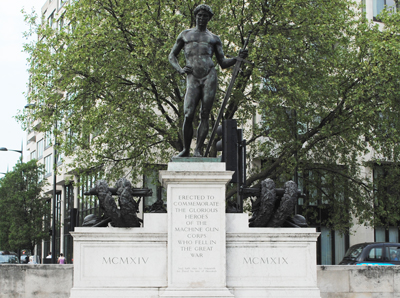
10 of London’s World War I memorials – 7. The Machine Gun Corps Memorial…

Machine-Gun-Corps-MemorialWhile most of London’s World War I memorials feature sculptures depicting soldiers or weaponry, the controversial Machine Gun Corps Memorial at Hyde Park Corner takes as its centrepiece a more classical theme.

Designed by Francis Derwent Wood (known for his role in making masks for soldiers disfigured during the war), the larger than life-sized sculpture on top of this memorial is a nude statue of the Biblical character, David, who stands holding a giant sword – that of Goliath whose head he cut off. The Biblical theme is also found in an accompanying inscription from the Bible: 1 Samuel 18: 7 – “Saul hath slain his thousands but David his tens of thousands”.

To either side of the bronze figure – which has led to the memorial also being known as The Boy David – are two real bronzed Vickers guns wrapped in laurels while the Italian marble plinth carries a dedicated to the almost 14,000 of the corps who died between the raising of the corps in 1915 and its disbanding in 1922. The reverse of the memorial details the corps’ history, recording its service in “France, Flanders, Russia, Italy, Egypt, Palestine, Mesopotamia, Salonica, India, Afghanistan and East Africa”.

The Grade II* listed monument, which was much criticised thanks to the juxtaposition of the naked figure and machine guns, was unveiled by the Duke of Connaught in 1925. Originally located on a traffic island to the south of the Royal Artillery Memorial it was dismantled in 1945 when roadworks were carried out and it wasn’t until 1963 that it was reassembled on its current site.

Interestingly, there is another statue of The Boy David by Edward Bainbridge Copnall standing atop a column which stands on Chelsea Embankment.

A Moment in London’s History – The landing of King George I at Greenwich…

GreenwichFollowing on from the last moment in London’s history which looked at the death of Queen Anne, we pause a moment to look at the day 300 years ago – 18th September, 1714 – when her successor, King George I, landed at Greenwich as he arrived to take up his new throne.

There was apparently thick fog when the Elector of Hanover made his way up the Thames accompanied by a flotilla of boats carrying his family and entourage including 18 cooks as well as his mistress, Ehrengard Melusine von der Schulenburg, and his half-sister Sophia Charlotte von Kielmansegg (known rather nastily among English courtiers as the “Maypole” and the “Elephant”).

He landed at the water gates of the Sir Christopher Wren-designed Royal Hospital for Seamen, now known as the Old Royal Naval College, in Greenwich (pictured above) but when the waiting crowds cheered the disembarking king, it was a case of mistaken identity. In fact, they were cheering his son, George Augustus (and future King George II) and by the time the king actually disembarked, much of the crowd had already dissolved, leaving a much smaller – and probably disappointing – gathering to welcome him.

The arrival of the king – a re-enactment of which took place at the ORNC last week – is depicted in a painting in the upper part of the the college’s Painted Hall. The work of artist James Thornhill, it depicts the king wearing Roman costume riding a chariot and appears alongside a figure of St George defeating the dragon (who, of course, stood for the papacy and family of the deposed King James II).

The Painted Hall also features a family portrait of the new Royal Family, excluding George’s wife Sophia Dorothea who was imprisoned in Germany at the time following allegations of infidelity. The future King George II is featured with his back to the king in reference to the hostility between the two of them.

The ORNC is currently looking to raise £5.5 million to conserve Thornhill’s paintings following a restoration of the Painted Hall in 2013. For more details, head to www.ornc.org/support/current/conserve-the-painted-hall.

Treasures of London – Geffrye almshouses…

GeffryeIt’s a big year for the Geffrye Museum in Shoreditch – not only 300 years since the almshouses were first opened to house the poor and elderly, it’s 100 years since the almshouses were converted into the museum which now occupies the site.

Geffrye2With that in mind, we thought we’d take a look at the almshouses themselves (we’ve looked at the museum – which features 11 period rooms from the 17th to 20th centuries – a couple of times previously). The Grade I-listed almshouses were built in 1714 by the Worshipful Company of Ironmongers, using funds that had been bequeathed to them by Sir Robert Geffrye, a Cornishman who became twice-master of the company and a Lord Mayor of London (there’s a fine statue of him adorning the front of the building).

They comprised 14 houses, each of which had four rooms, and provided accommodation for up to 56 pensioners. Arranged in a U-shape around a courtyard, the two storey almshouses came complete with a chapel which still stands at the centre of the the complex and where residents were expected to attend each week (a walkway which runs around the back of the chapel was added in 1914 offers some great views of the garden).

The almshouses, which had originally been built in what was a largely rural context, remained in use until the early 20th century by which time the area had become one of London’s most crowded with poor sanitation. In 1910, the Ironmongers’ decided to sell off the almshouses and move out to the safer, cleaner area of Mottingham in Kent.

In 1912, the houses and gardens were purchased by the London County Council – attracted by the public open space – and following representations from members of the Arts and Crafts movement, the museum opened its doors in 1914.

It’s still possible to visit a former almshouse – number 14 –  which was restored and opened in 2002 and has been furnished to show what life was like there for the pensioners (contrast the sparse furnished there with that with some of the more opulent rooms on display in the museum – and don’t forget to allow some time to visit the gardens; there is also a shop and cafe on site).

WHERE: 136 Kingsland Road, Shoreditch. Nearest tube is Liverpool Street or Old Street (a fair walk) or Hoxton Overground Station (next door); WHEN: The almshouses are open on select days only – check website. The museum is open Tuesdays to Sundays, 10am-5pm (gardens open until 31st October); COST: £3 for admission to  almshouses/admission to the museum and gardens is free; WEBSITE: www.geffrye-museum.org.uk

This Week in London – Open House London this weekend; the Ming dynasty at the British Museum; John Constable at the V&A; and Totally Thames…

The-Leadenhall-Building• Open House London is finally here with some 800 buildings across the city – some of them rarely accessible to the public – open for free this weekend, from grand historical institutions and modern skyscrapers through to ‘green’ schools, engineering projects, parks and gardens, and private homes. The weekend – which is being run this year under the theme of ‘revealing’ – also includes a programme of walks, engineering and landscape tours, cycle rides, a bus tour, childrens’ activities and expert talks as well as a moonlit ‘culture crawl’ through London on Friday night and into Saturday morning (a fundraiser for Maggie’s Centres). Among the buildings opening their doors in the festival – created by London-based architecture organisation Open-City – are the ever popular 30 St Mary Axe (aka ‘The Gherkin’), the Foreign and India Office in Whitehall, the Bank of England, Portcullis House and City Hall along with everything from The Leadenhall Building (aka ‘The Cheesegrater’ – pictured), and Temple Church in the City to the Admiral’s House in Greenwich, the Dutch Embassy in Kensington and the steam coaster, the SS Robin, in Tower Hamlets. As mentioned in a previous week, some visits required pre-booking so make sure you check the programme before heading out. For a full copy of the programme of events, see www.londonopenhouse.org. PICTURE: © R Bryant.

A major new exhibition focusing on China during the “pivotal” 50 years of Ming Dynasty rule between 1400-1450 opens at the British Museum in Bloomsbury today. Ming: 50 years that changed China features some of the finest objects ever made in China – loaned from institutions in China and elsewhere – as it explores some of the “great social and cultural changes” that saw Beijing established as the capital and the building of the Forbidden City. It includes objects from the imperial courts along with finds from three regional “princely tombs”. Four emperors ruled during the period and the display will feature the sword of Yongle Emperor, “the warrior”, the handwriting of the Hongxi emperor, “the bureaucrat”, the paintings of the Xuande emperor, “the aesthete”, and portraits of the regents who ruled while the Zhengtong emperor was a boy. The exhibition runs until 4th January. Admission charge applies. For more, see www.britishmuseum.org.

The work of 19th century artist John Constable and its debt to 17th century masters is the focus of a new exhibition opening at the V&A on Saturday. Constable: The Making of a Master – which features more than 150 works including celebrated pieces by Constable like The Hay Wain (1821), The Cornfield (1826) and Salisbury Cathedral from the Meadows (1831) as well as oil sketches, drawings, watercolours and engravings – will juxtapose his works with those of 17th century landscape masters like Ruisdael, Rubens and Claude. Among those of their works on display will be Rubens’ Moonlight Landscape (1635-1640) and Ruisdael’s Windmills near Haarlem (c.1650-62). The exhibition runs until 11th January. Admission charge applies. For more, see www.vam.ac.uk/constable.

And don’t forget, Totally Thames continues to run throughout this month which an extensive programme of river-related events. Those on during the coming week include Londonist Afloat: Terrific Tales of the Thames, a series of discussion sessions on aspects of the River Thames being held aboard the HMS President and London’s River – The City’s Ebb and Flow, a guided walk along the river (held on every Saturday and Monday during September), and Hospital and Troop Ships – Transporting the walking and wounded in the First World War, an exhibition held aboard the HQS Wellington (open Sundays and Mondays in September). For the full programme of events, see www.totallythames.org.

Send all items for inclusion to exploringlondon@gmail.com.

10 of London’s World War I memorials – 6. The Royal Fusilier’s Memorial…

Fusiliers-MonumentLocated at Holborn Bar – one of the traditional entry points to the City of London, this memorial was erected in 1922 to the memory of the almost 22,000 solider of the Royal Fusiliers (City of London Regiment) who died during the Great War.

The monument, which stands on a traffic island in the middle of busy High Holborn, was designed by sculptor Albert Toft (and hence is known affectionately as “Albert”) along with architects Cheadle and Harding at the behest of several senior officers from the regiment.

It was originally intended to be erected in one of the capital’s many parks. Hounslow Barracks was the next intended location but, after consultation with the City, the site in Holborn was eventually settled upon.

The larger-than-life bronze figure, which stands on a Portland stone pedestal holding a rifle with fixed bayonet, was apparently modelled on an actual person – a Sgt Cox, who served with the Royal Fusiliers throughout the war. The east face features a plate listing all the battalions who served in World War I; the west face features the regimental crest and dedication.

The Grade II-listed memorial, which was officially unveiled by the Lord Mayor of London (we think it was Sir Edward Cecil Moore) on 4th November, 1922, was later updated with inscriptions commemorating those who fell during World War II and in subsequent conflicts.

The original model for the monument can now be seen in the Fusilier Museum at the Tower of London. Interestingly, there is a twin monument, dedicated to the 41st Division, at Flers on the Somme, in France. It was unveiled in 1932.

PICTURE: Mike Peel (www.mikepeel.net)

LondonLife – Amy Winehouse remembered at Camden…

Amy-Winehouse

Singer Amy Winehouse was remembered with the unveiling of a life-size bronze statue at the Stables Market in Camden this week. The work of London-based artist and designer Scott Eaton, the statue – seen here in the studio – was commissioned by her father Mitch Winehouse. Located in the north London district where Winehouse lived until her death in 2011, the statue was unveiled on what would have been her 31st birthday. For more of Eaton’s work, see www.scott-eaton.com. PICTURE: Courtesy of Scott Eaton.

Famous Londoners – Sir Edwin Lutyens…

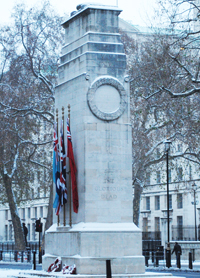
We’re looking at some of London’s World War I memorials so it’s only fitting we look at the life of acclaimed architect Sir Edwin Lutyens, the man credited with designing the Cenotaph – the UK’s national war memorial – in Whitehall (pictured below).

Lutyens was born in London at 16 Onslow Square, South Kensington, on 29th March, 1869, and – the ninth son and 10th of 13 children of soldier Captain Charles Lutyens and his wife Mary – was named for painter and sculptor Edwin Henry Landseer, a friend of his father’s. He grew up in London and Surrey and in 1885 commenced studying architecture at the South Kensington School of Art. In 1887, he left before completing the course, briefly joining the practice of Ernest George and Harold Peto before starting his own practice in 1889.

Cenotaph-in-LondonEarly commissions included country houses and it was during this period that he met with mentor and landscape gardener Gertrude Jekyll, a relationship which led him to design her home, Munstead Wood near Godalming in Surrey.

In 1897, Lutyens, known familiarly as ‘Ned’, married Emily Lytton – daughter of the late Viceroy of India and first earl of Lytton, Edward Buller-Lytton – and by 1908 the couple had five children. The family’s London addresses included 29 Bloomsbury Square (which also served as his office), 31 Bedford Square and 13 Mansfield Street, Marylebone, while his offices were located in numerous places including at 17 Queen Anne’s Gate.

Lutyens continued designing country houses – he eventually designed more than 35 major properties and altered and added many more – and among his commissions were Castle Drogo in Devon and the refurbishment of Northumberland’s spectacularly sited Lindisfarne Castle – both now National Trust properties. He was also involved in helping to plan and design Hampstead Garden Suburb in London, work which included designing two churches.

In 1912, Lutyens was invited to advise on the planning of the new Indian capital in New Delhi and his most important contribution was the design of the Viceroy’s House which combined elements of classical architecture with traditional Indian decoration. He was knighted in 1918 for his contributions in India and for his advice to the Imperial War Graves Commission.

It was his role in this latter effort which led to his becoming a national figure. He was involved in the creation of numerous monuments to commemorate the war dead, the best known of which are the Cenotaph in Whitehall – initially commissioned as a temporary structure (see our earlier post here) –  and the Memorial to the Missing of the Somme in Thiepval in northern France as well as the Australian War Memorial at Villers-Bretonneux and the Anglo-Boer War Memorial in Johannesburg.

He also designed more than 100 war cemeteries in France and Belgium and other war memorials – including overseas in places like Dublin – as well as London’s Tower Hill Memorial (see our earlier post here). Other London buildings he designed included the headquarters of Country Life magazine in Tavistock Street, Britannic House in Finsbury Square, the head office of the Midland Bank in Poultry and the Reuters and Press Association headquarters at 85 Fleet Street (now home to the Lutyens Restaurant, Bar and Private Rooms).

Lutyens was elected a fellow of the Royal Academy in 1920 (he was later president) and in 1924 was appointed a founding member of the Royal Fine Arts Commission. Even as he continued work in Delhi, he took on other commissions – such as the British Embassy in Washington, DC – and in 1924 he completed one of his most lauded – and smallest – designs: that of the one twelfth scale Queen Mary’s Dolls’ House which was shown at the 1924 British Empire Exhibition at Wembley and which can still be seen at Windsor Castle.

In 1929 Lutyens was commissioned to design a new Roman Catholic Cathedral for Liverpool but when he died on 1st January, 1944, this work was still unfinished with only the crypt completed thanks to the outbreak of World War II broke. Lutyens’ funeral was held in Westminster Abbey a few days later and his ashes were subsequently placed in the crypt of St Paul’s Cathedral.

For more information on Lutyens’ life and works, check out The Lutyens Trust, founded in 1984 to preserve and protect his legacy.

This Week in London – The Magna Carta at the new City of London Heritage Gallery; Tudor monarchs at the NPG; Mapping London; and objects with story at Pitzhanger…

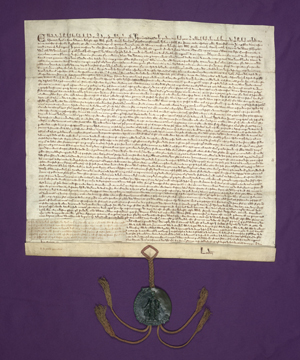
Magna-Carta-1297_Copright-London-Metropolitan-Archives---CopyThe 13th century’s finest surviving copy of the Magna Carta is taking centre stage at the new City of London Heritage Gallery which opens to the public this Friday. The 1297 document, which bears a superimposed memo reading ‘make it happen’, is being featured as part of the Corporation’s efforts to mark next year’s 800th anniversary of the signing of the landmark document. Other items on display in the new permanent, purpose-built exhibition space at the Guildhall Art Gallery include the medieval Cartae Antiquae, a volume containing transcripts of charters and statues covering laws enacted between 1327 and 1425 – a period which includes the reign of King Richard III, a poster for a World War I recruitment meeting held at the Guildhall in 1914, and a series of paintings depicting the 25 City Aldermen who were in office in the mid-1400s. The gallery, admission to which is free, will in future feature a rotating selection of rare documents from the City of London Corporation’s archives including the purchase deed William Shakespeare signed on buying a home in Blackfriars in 1613. For more, including opening times, see www.cityoflondon.gov.uk/heritagegallery. For more on events to mark the 800th anniversary of the signing of the Magna Carta next year, see www.magnacarta800th.com. PICTURE: Copyright London Metropolitan Archives.

Rare depictions of Tudor monarchs will be seen at the National Portrait Gallery in the most complete presentation of their portraiture to date. The Real Tudors: Kings and Queens Rediscovered features the gallery’s oldest portrait – that of King Henry VII – displayed alongside a Book of Hours inscribed by the king to his daughter, six portraits of King Henry VIII along with his rosary (on loan from Chatsworth), portraits of King Edward VI and a page from his diary in which he relates his father’s death, five portraits of Queen Mary I along with her prayer book (on loan from Westminster Cathedral) and several portraits of Queen Elizabeth I displayed alongside her locket ring (on loan from Chequers, the country residence of the PM). There will also be a discussion surrounding the search for a “real” portrait of the ‘nine days queen’, Lady Jane Grey, alongside a portrait of her that dates from the Elizabethan period. With many of the portraits newly examined as part of the gallery’s ‘Making Art in Tudor Britain’ project, visitors to the gallery will also be able to access a specially created app which allowing them to access the new research while looking at the portraits. The display, which will form the core of a larger exhibition in Paris next year, can be seen until 1st March. Admission to the gallery, off Trafalgar Square, is free. For more, see www.npg.org.uk.

An exhibition of rare maps from London, dating from between 1572 and last year, at gallery@oxo on South Bank, is closing on Sunday. Part of the Totally Thames festival, the Mapping London exhibition shows how the landscape along the River Thames as it passes through the capital has changed over the years. It features the first available map of London, which dates from 1572, as well as a 2013 map of underground London, monumental wall maps, and even a map of London that doubles as fan. The free exhibition at Oxo Tower Wharf is being curated by Daniel Crouch, one of the world’s leading map dealers. For more, see www.totallythames.org/events/info/mapping-london.

• A Crafts Council touring exhibition showcasing the work of 12 contemporary artisans and design studios – each of which uses objects as a means of storytelling – has opened at Pitzhanger Manor House and Gallery in Ealing – its first stop – this week. Crafting Narrative: Storytelling through objects and making explores the potential of objects to reflect on history, culture, society and technology through a combination of new and commissioned works, film text and photography. Works include Hilda Hellström’s The Materiality of a Natural Disaster which consists of food vessels made of soil from a field belonging to the last resident inside the Japanese Daiichi nuclear plant exclusion zone, Onkar Kular and Noam Toran’s archive of objects belonging to the fictional Lövy-Singh clan – an East London family of mixed Jewish and Sikh descent, and Hefin Jones’ The Welsh Space Campaign which features objects such as astronaut boots in the form of traditional Welsh clogs in an attempt to show how Wales has the capacity to explore space. The free exhibition is at the manor until 19th October. For more, see www.pitzhanger.org.uk.

Send all items for inclusion to exploringlondon@gmail.com.

10 of London’s World War I memorials – 5. Royal Artillery Memorial…

Royal-Artillery-Memorial

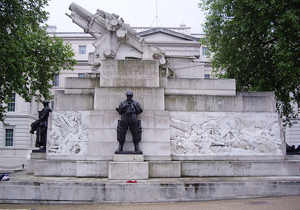
Often deemed to be one of London’s finest war memorials, if not the finest (indeed London Historians’ Mike Paterson has said so previously on these very pages), the Royal Artillery Memorial at Hyde Park Corner commemorates the more than 49,000 members of the Royal Artillery Regiment who died in World War I.

Royal-Artillery-Memorial3Designed by sculptor Charles Sargeant Jagger – who had served in the infantry during the war – and architect Lionel Pearson, it was unveiled in 1925 by Prince Arthur and Anglican priest, Rev Alfred Jarvis.

The monument, described by architectural historian Nikolaus Pevsner as a “masterpiece of British 20th century sculpture”, features an oversized stone replica of a 9.2 inch Howitzer Mk I atop a stone plinth accompanied by a series of four realistic bronze figures and a series of carved reliefs depicting scenes of military life.

The figures represent a gun crew: a driver, artillery captain, shell carrier and, controversially at the time, a dead soldier lying beneath his cape and helmet with an inscription from Shakespeare’s Henry V –  “Here was a royal fellowship of death”.

Three bronze panels were later added at the south end of the monument in commemoration of the almost 30,000 of the Royal Artillery who died in World War II. It was unveiled by the then Princess Elizabeth in 1949.

In late 2011, English Heritage completed a major restoration of the Grade I-listed work with a grant from the Bulldog Trust.

PICTURE: Above – David Adams. Below – virtusincertus/Flickr