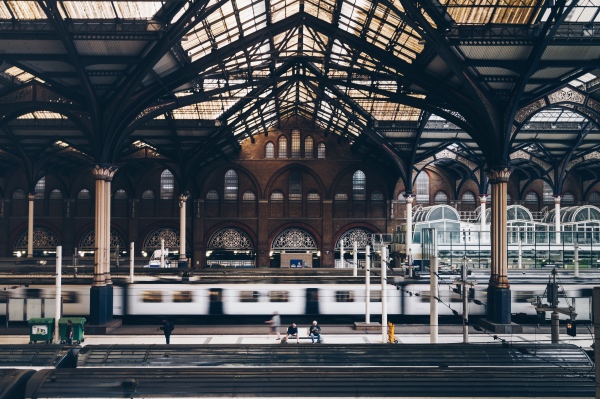
PICTURE: Ugur Akdemir/Unsplash
PICTURE: Ugur Akdemir/Unsplash
This narrow City of London street, which runs from Fleet Street to St Bride Street, apparently has nothing to do with Mary Poppins. In fact, it’s named after a bird.
 The name is said to be a corruption of ‘popinjay’, an archaic word for parrot (and later used to describe someone who is vain). So, what’s that got to do with London?
Well, the bird was apparently featured on the crest of the Abbot of Cirencester and in medieval times, their London property – a hostel or inn – stood where the court now stands and was given the name of Popyngaye.
In later years Popinjay Alley became Popinjay Lane, Popinjay Court and, eventually, Poppin’s Court.
The north end of the alley was cut off in 1870.
There was once a relief of a carved parrot over the entrance to the court to remind people of its history but it’s long gone.
PICTURE: jansos (licensed under CC BY-NC-ND 2.0/image cropped)

Conservator Rachel Turnbull completes the conservation of the 15th century Madonna of the Pomegranate – a painting revealed to be a rare example by the workshop of Italian artist Sandro Botticelli (1445-1510) which is now on display at the Ranger’s House in Blackheath.
Long believed to be a later imitation of his work, the discovery of the painting’s true origins was made while it was undergoing cleaning and the work’s true colours – hidden under more than a century of yellow varnish – revealed.
The painting depicts the Madonna and Christ Child flanked by four angels while the Madonna holds a pomegranate – a symbol of the future suffering of Christ. The angels hold lilies – a symbol of Mary’s virginity and purity, garlands of roses – a symbol of Mary’s love of God, and books of prayer.
The assumption that it was a later copy arose because of its variations from the original – now in the Uffizi Gallery in Florence – and the varnish that had concealed its quality. X-ray testing, infrared studies and pigment analysis have now, however, revealed it to be from the same Florentine workshop where Botticelli created his masterpieces.
English Heritage conservators removed surface dirt, nineteenth-century overpaint and old varnish to reveal the painting’s original vivid reds, blues and golds. It is believed this “tondo”, a kind of circular painting, is the closest existing copy of the original.
The painting was purchased by diamond magnate Julius Wernher in 1897 and subsequently found among the more than 700 artworks in the Wernher Collection, elements of which are on display at the Ranger’s House.
WHERE: Ranger’s House Chesterfield Walk, Blackheath (nearest train station is Blackheath); WHEN: 11am to 5pm, Sunday to Thursday; COST: £9.50 adults/£8.60 concession/£5.70 children (5-17 years) (members free; family tickets available); WEBSITE: www.english-heritage.org.uk/rangershouse.
PICTURES: © English Heritage.

Many people are aware of the memorial to 17th century playwright and poet Ben Jonson that sits among the who’s who of the literary world commemorated in Westminster Abbey’s famous Poet’s Corner. But fewer people visit the poet’s actual grave, located a short distance away in the northern aisle of the nave.
 And while visitors to the northern aisle of the nave may think its a small stone set into the wall above the floor itself, with the inscription ‘O rare Ben Johnson’ (note the ‘h’ used here in his name), which marks the grave’s location, we’re not quite there yet.
The stone, which was indeed the original stone covering Jonson’s grave, was actually moved from the floor to this position when the entire nave floor was being relaid in the 19th century. For the actual location of Jonson’s grave you have to head back to the aisle’s floor and there, just to the east of a brass commemorating John Hunter, you’ll find a small, grey lozenge-shaped stone which marks the actual grave site (and bears the same inscription with the same spelling).
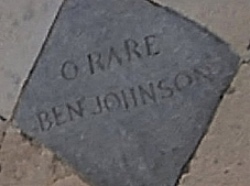 The inscription can also be found on his Poet’s Corner memorial. It was apparently put on Jonson’s grave stone when one Jack Young passed by the grave as it was being covered and gave a mason 18 pence to carve it (Young is said to have been knighted later on).
All that’s very well but what really sets Ben Jonson’s grave apart from the other more than 3,500 graves buried in the abbey is that Jonson is the only person known to have been interred below the abbey floor standing upright.
The poet died in a somewhat impoverished state and it’s that which is said to explain the unusual arrangement. One version of the tale has the poet begging for just 18 square inches of ground for his burial from King Charles I; another has him telling the Abbey’s Dean that he was too poor to be buried with his fellow poets and that a space two foot square would serve him (the Dean apparently granted him his wish which meant Jonson’s coffin lowered into the ground end on end).
The fact he was buried upright in his coffin was apparently confirmed in 1849 when a clerk saw skeletal remains of a standing person in the spot Jonson was buried while doing another burial nearby.
The monument in Poet’s Corner, meanwhile, was erected in the early 1720s by the Earl of Oxford. It features a medallion portrait of him with actor’s masks and a broken golden lamp symbolising death on top. It was designed by James Gibbs and attributed to the sculptor JM Rysbrack.
WHERE: North Aisle, Westminster Abbey (nearest Tube stations are Westminster and St James’s Park); WHEN: Times vary – see the website for details; COST: £23 adults/£20 concession/£10 children (discounts for buying online; family rates available); WEBSITE: www.westminster-abbey.org
PICTURES: Top – The original grave marker now set in the wall; Below – The tile marking the actual grave site (Google Maps – images have been treated to improve resolution).
Inside the London Underground. PICTURE: Tom Parsons/Unsplash.
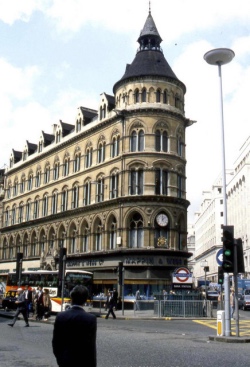 A much-fought for building in the City of London, the neo-gothic Mappin & Webb building was built in the 19th century as a branch of the royal jewellers, Mappin & Webb.
Located on the corner of Poultry and Victoria Street opposite Mansion House – the official residence of the Lord Mayor of London, the triangular-shaped building was designed by John Belcher and completed in 1870.
The building, which featured a cone-roofed tower on the main corner of the site, was granted Grade II status
Following a long – and complicated – battle over the future of the site (which involved no less than Prince Charles), the Mappin & Webb building was demolished in 1994.
The site is now 1 Poultry, which was completed in 1997 and subsequently became the youngest building to be listed as Grade II*. It was designed by James Stirling and is considered an exemplar of post-modernist architecture.
PICTURE: The Mappin & Webb building in 1993 (Derek Voller (licensed under CC BY-SA 2.0))
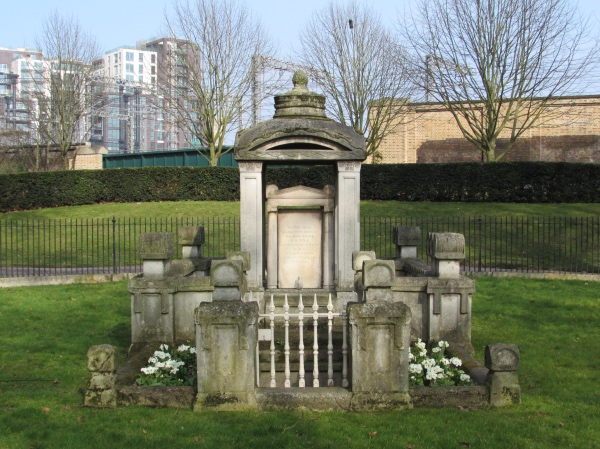
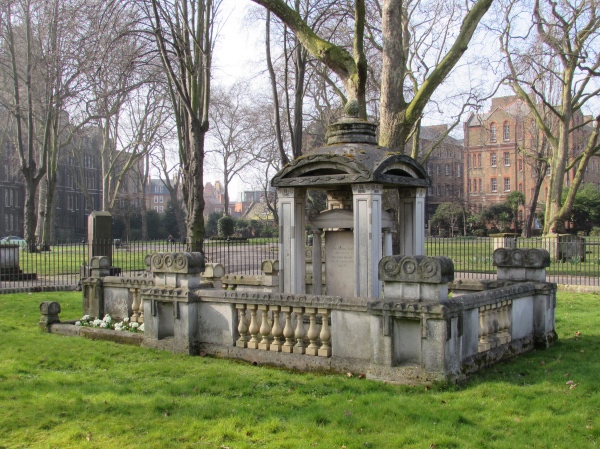
It should probably come as no surprise that this rather elegant memorial in the former graveyard of St Pancras Old Church is that of architect – and founder of a rather remarkable museum – Sir John Soane (as well as his wife Eliza and their oldest son, John).
The tomb, described by architectural commentator Nikolaus Pevsner as an “outstandingly interesting monument”, was, of course, designed by the heart-broken Soane, the architect of neo-classical buildings like the Bank of England and Dulwich Picture Gallery, following the death of his wife on 22nd November, 1815.
Erected in 1816, it features a central cube of Carrara marble with four faces for inscriptions topped by a domed canopy supported on four ionic columns. A Portland stone balustrade surrounds the whole structure as well as stairs down to the subterranean tomb itself.
Among the symbolic decorative elements on the monument are a pine cone finial – a symbol of regeneration, a serpent swallowing its tail – a symbol of eternity, and reliefs of boys holding extinguished churches – symbols of death.
Sir John’s son, John, was buried in the tomb after his death in 1823 and Sir John himself was interred following his death on 20th January, 1837.
The monument is said to be only one of two Grade I-listed monuments in London – the other being Karl Marx’s gravestone in Highgate Cemetery. It is also famously said to have formed part of the inspiration for Sir Giles Gilbert Scott’s design of famous K2 red telephone box.
The Soane tomb was vandalised in 1869 – and it was suggested at the time that it should be relocated to Lincoln’s Inn Fields for its protection.
It was more recently restored in 1996 by the Soane Monuments Trust and again, after more vandalism, in 2000-01 as part of a restoration of St Pancras Gardens by the London Borough of Camden.
The graveyard of St Pancras Old Church, incidentally, is also the site of The Hardy Tree.
WHERE: St Pancras Gardens, Pancras Road, Camden Town (nearest Tube station is Kings Cross St Pancras); WHEN: Daylight hours; COST: free; WEBSITE: https://posp.co.uk/st-pancras-old-church/; www.camden.gov.uk/parks-in-camden.
PICTURES: Michael Day (licensed under CC BY-NC 2.0).

Millennium Bridge crossing the Thames between the City of London and South Bank. PICTURE: Toa Heftiba/Unsplash (image cropped).

This month (we’ve just managed to sneak it in) marks the 330th anniversary of the coronation of joint sovereigns, King William III and Queen Mary II – the first and only time such a coronation has ever happened in England.
The two were crowned in a joint – and glittering – ceremony at Westminster Abbey on 11th April, 1689, following what was known as the “Glorious Revolution” in which they assumed the monarchy after Mary’s father, King James, II fled to the continent following William’s invasion in late 1688.
At the coronation, King William took the abbey’s famous Coronation Chair while a second seat was brought in for the Queen.
William also used the coronation regalia which had been created for King Charles II in 1661 but Mary, a monarch in her own right, needed a new set. Given the time constraints (the ceremony was to take place as soon as possible given the uncertain political climate), she ended up using the repurposed regalia created for her step-mother, second wife and consort of King James II, Mary of Modena, as well as some newly created pieces.
Controversially, the ceremony was presided over by the Bishop of London, Henry Compton, after William Sancroft, Archbishop of Canterbury – his title meant he would usually undertake such a task, refused to be involved thanks to his support of the now deposed King James II.
Earlier that day, the King and Queen had travelled separately from Whitehall to Westminster – him by barge and she by chair – and after being taken into Westminster Hall, processed, surrounded by dignitaries and to the sound of trumpets, to Westminster Abbey where the ceremony took place.
After the coronation, the newly crowned Sovereigns returned to Westminster Hall where a lavish banquet was held.
PICTURE: William III and Mary II in part of an image by Dutch printmaker Romeyn de Hooghe (c1690) (via Wikipedia)
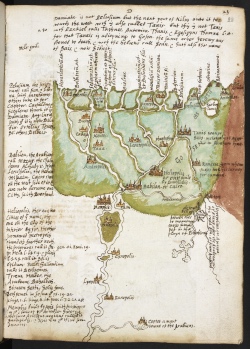 • Carved stone inscriptions, medieval manuscripts and early printed works are among items on display in a new exhibition looking at the act of writing and its impact on human civilisation at the British Library. Writing: Making Your Mark spans five millennia and five continents and includes writing examples from more than 30 writing systems including Greek, Chinese and Arabic. Highlights include an 1,800-year-old ancient wax tablet, early 19th century Burmese tattooing instruments, the final diary entry of Antarctic explorer Captain Robert Falcon Scott, James Joyce’s notes for Ulysses, Caxton’s 1476-7 printing of The Canterbury Tales – the first book printed in England, and the personal notebooks of Elizabethan explorer Sir Walter Raleigh (pictured). There’s also a 60,000 signature petition from 1905 protesting the first partition of Bengal, Mozart’s catalogue of his complete works from 1784-1791 featuring his handwriting and musical notation, and Alexander Fleming’s notebook in which he recorded his discovery of penicillin in 1928. A programme of events accompanies the exhibition which runs until 27th August. Admission charge applies. For more see www.bl.uk. PICTURE: © British Library.
• London’s forgotten rivers, tunnels, sewers, deep shelters, and the world’s first subterranean railway are all explored in a new free exhibition at the London Metropolitan Archives in Clerkenwell. Under Ground London in part celebrates the 200th anniversary of the birth of Victorian engineer Sir Joseph Bazalgette – who designed the scheme to overhaul the city’s sewers in the 19th century. As well as Bazalgette’s landmark work, the exhibition explores the legend of a cobbled street buried beneath today’s Oxford Street and tells the story of the Thames Tunnel which, when it opened in 1843, was the world’s first tunnel under a river. There’s also information on London’s ‘ghost stations’, including Strand and King William Street; and the Metropolitan Railway – the world’s first underground railway as well as images of the River Fleet, displayed for the first time. The display can be seen until 31st October. For more, follow this link.
• Women artists working in Britain in the past 60 years are being celebrated in a new display at the Tate Britain in Millbank. Sixty Years features about 60 works spanning painting, photography, sculpture, drawing and film and includes many recent acquisitions. Artists whose works are on show include Mona Hatoum, Sarah Lucas, Bridget Riley, Mary Martin and Anthea Hamilton. Highlights include Gillian Wearing’s film Sacha and Mum (1996), Susan Hiller’s large scale multimedia installation Belshazzar’s Feast, the Writing on Your Wall (1983-84), and two new mixed media works by Monster Chetwynd – Crazy Bat Lady (2018) and Jesus and Barabbas (Odd Man Out 2011) (2018). For more, see www.tate.org.uk/visit/tate-britain.
Send all items for inclusion to exploringlondon@gmail.com.
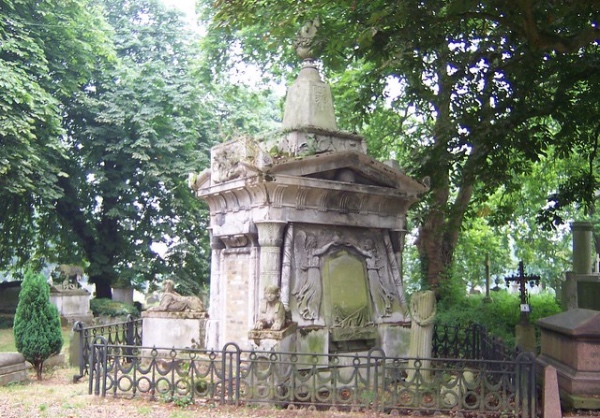
Located in Kensal Green Cemetery in London’s north-west, the mausoleum of circus equestrian performer Andrew Ducrow (1793-1842) is one of the largest and most decorated in the cemetery. Fitting, given Ducrow – who was also proprietor of Astley’s Amphitheatre – was known as the “Colossus of Equestrians”.
The grand Grade II*-listed tomb on the cemetery’s Central Avenue was designed by George Danson, theatrical designer for Ducrow’s horse shows, and is a pastiche of styles with Greek and Egyptian influences among others.
The elaborately decorated tomb features reeded columns, lotus capitals and sphinxes as well as beehives, reliefs of angels holding wreathes, masks of comedy and tragedy and plenty of pegasi.
The crumbling tomb, regarded as one of the most outstanding funerary monuments of Victorian England, was actually first erected for Ducrow’s wife 1837 at a cost of £3,000. It was further embellished for his own internment – including an inscription which reads in part, rather immodestly, “erected by genius for the reception of its own remains”.
WHERE: Kensal Green Cemetery, Harrow Road, Kensal Green (nearest Tube station is Kensal Green); WHEN: 9am to 6pm, Monday to Saturday; 10am to 6pm Sunday (summer opening hours); COST: free; WEBSITE: www.kensalgreen.co.uk.
PICTURE: Loz Pycock (licensed under CC BY-SA 2.0)
London illuminated. PICTURE: Christopher Burns/Unsplash
Wishing all of our readers a very happy Easter!
• Easter is being celebrated in London through a range of events over the long weekend. They include an ‘Easter Extravaganza’ treasure hunt for children at The Royal Mews, Buckingham Palace, and a special Easter-themed trail at the Russia: Royalty & the Romanovs exhibition in the Queen’s Gallery, Lindt Gold Bunny Hunts at royal palaces including Hampton Court Palace and Kensington Palace, and, of course, all the pageantry of Easter services at the city’s many churches.
• A major new exhibition of the work of contemporary glass artist Dale Chihuly has opened at Kew Gardens in London’s west. Chihuly at Kew features 32 works by the Seattle-based artist at 13 locations across the gardens. Highlights include Sapphire Star – located at the Victoria Gate, Drawings, the Rotolo series and Seaforms – all located in the Shirley Gallery of Botanical Art and a new, specially-designed sculpture as well as nine other installations in the Temperate House. An interactive trail designed for families takes visitors around the installations and there will be special night-time viewings from 15th August. Kew is also running family activities during Easter. Chihuly runs until 27th October. Admission charge applies. For more, see www.kew.org.
• New works by Irish-born but American-based artist Sean Scully have gone on show at the National Gallery. Sea Star: Sean Scully at the National Gallery was inspired by the artist’s love for JMW Turner’s painting The Evening Star and features new and recent large scale multi-panel works that include his celebrated Landline paintings as well as Robe Blue Blue Durrow (2018), which suggests the seventh-century Book of Durrow from his native Ireland, and Human 3 (2018), inspired by the New York subway. Admission is free. Runs until 11th August. For more, see www.national gallery.org.uk.
• On Now: Mary Quant. This exhibition at the V&A focuses on the 20 years between 1955 and 1975 and reveals how Dame Mary Quant democratised fashion for a new generation as she popularised the miniskirt, colourful tights, and tailored trousers. The display brings together more 120 garments as well as accessories, cosmetics, sketches and photographs, most of which have never been on display. Highlights include 35 objects from 30 people received after a public call-out to track down rare Quant items from wardrobes across the nation and 50 photographs of women wearing their Quant clothes. Runs until 8th March, 2020. Admission charge applies. For more, see vam.ac.uk/exhibitions/mary-quant.
Send all items for inclusion to exploringlondon@gmail.com.
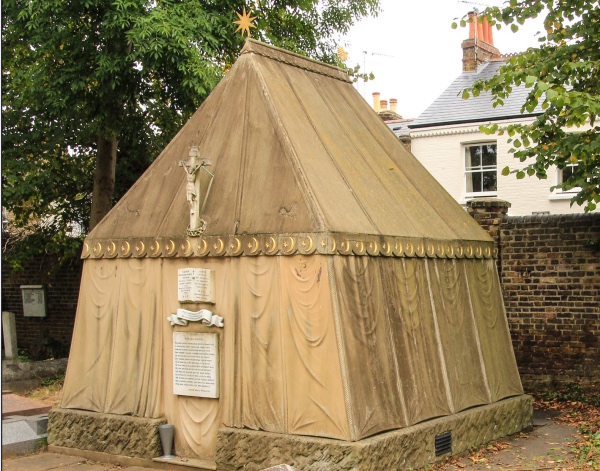
One of the more uniquely designed tombs in London, that of Victorian explorer, soldier, linguist and diplomat Sir Richard Burton (1821-1890; not to be confused with the actor of the same name) was created in the shape of a Bedouin tent.
Located in the cemetery of St Mary Magdalen Roman Catholic Church in Mortlake in south-west London, the Grade II* tomb was designed by Burton’s strongly Catholic wife, Isabel, Lady Burton (1831-96), who is buried in it with him (his body was brought back from Trieste, Italy, where he expired; hers added after he death several years later). The tent’s form was apparently inspired by one the couple stayed in during a visit to Syria.
The tomb, which is constructed of stone from the Forest of Dean and Carrara marble and topped with two gilt stars, looks a fitting tribute for Burton who not only took part in the search for the source of the Nile but also scandalously translated the texts The Arabian Nights, The Perfumed Garden and The Kama Sutra into English.
The coffins of the couple can be seen inside the tomb through a large window in the rear of the roof which is accessed by a short ladder. The interior is also decorated with a range of items including religious paintings, statues and other items symbolic of the Catholic faith as well as strings of camel bells.
The inscription on the front of the mausoleum features a commemorative sonnet by poet Justin Huntly McCarthy as well as the inscription, “This monument is erected to his memory by his living countrymen”.
The tomb was restored in 1975 and more recently in 2012-13.
The interior of the church also features a memorial to Burton (who actually described himself as an atheist). It takes the form of a stained glass window which depicts Burton as a medieval knight.
WHERE: St Mary Magdalen Church, 61 North Worple Way, Mortlake (nearest overground station is Mortlake); WHEN: Reasonable hours; COST: free; WEBSITE: www.stmarymags.org.uk.
PICTURES: Maureen Barlin (licensed under CC BY-NC-ND 2.0/image cropped)
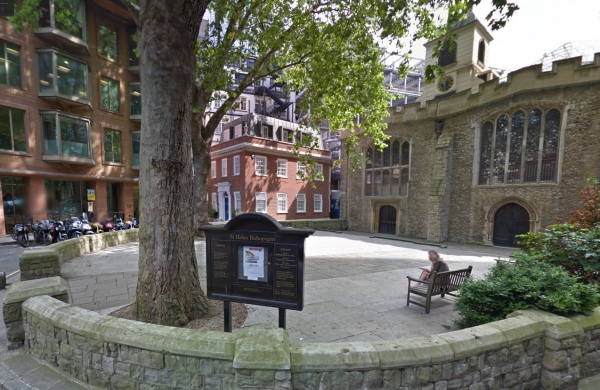
A theatre historian believes he has discovered where William Shakespeare lived while he was writing some of his most famous works including Romeo and Juliet and A Midsummer Night’s Dream. While it has long been known the playwright lived close to the site of Liverpool Street station in the late 1590s, Geoffrey Marsh says an examination of official records has pinpointed the location as being on the site of what is now an office block at 35 Great St Helen’s, only a stone’s throw from The Gherkin. The BBC reports that Marsh, who is also the director of the V&A’s department of theatre and performance, found Shakespeare was a tenant of the Company of Leatherworkers and most likely lived among dwellings overlooking the churchyard of St Helen’s Bishopsgate, pictured above. PICTURE: Via Google maps
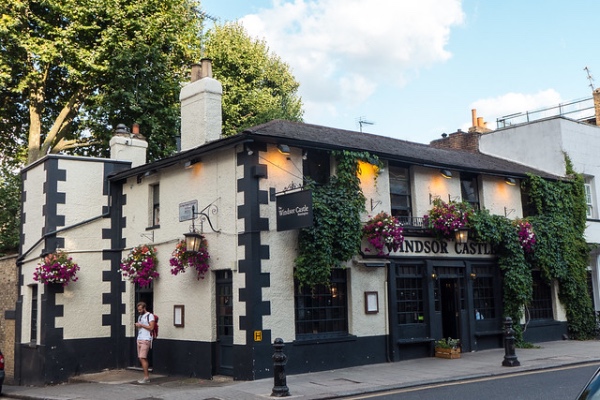
The story goes that this Kensington pub – which sits on the brow of Campden Hill – was given its name because on a clear day it was possible to see the crenellated towers and walls of that royal residence from the windows on the upper floor.
Whether or not that’s the case remains a matter of some speculation – perhaps the pub was simply named after the salubrious royal abode for its cachet.
The Grade II-listed pub, at 114 Campden Hill Road just to the east of Holland Park, dates from the 1820s when customers apparently included farmers taking their livestock to Hyde Park for market day.
It is said to have been remodelled in the 1930s but, according to its listed building entry “retains a substantial proportion original fabric” as well as, given the remodelling, “exemplifying the ‘Old English’ phase of inter-war pub design”.
The original features of the pub, which also has a walled garden, include wooden screens which separate what were the original bars – Campden, Private and Sherry (the name of the latter apparently comes from a drink once served here called the Hunter). The screens are fitted with small doors, the tiny size due to the fact they were originally intended only for use by bar staff.
There’s a story that the bones of philosopher and author Thomas Paine – he of Rights of Man fame – are buried in the cellar. The bones of Paine, who had died in America where he’d been one of the Founding Fathers, were apparently shipped back to his birthplace of England by MP and social reformer William Cobbett – he had intended to give them a fitting burial on his native soil but that never took place. Instead, when his son inherited them, he is said to have sold his skeleton to the landlord to settle his tab.
Not to be confused with other ‘Windsor Castles’ in London including one in East Finchley and another in Marylebone.
For more, see www.thewindsorcastlekensington.co.uk.
PICTURE: Ewan Munro (licensed under CC BY-SA 2.0)
• A sapphire and diamond coronet made for Queen Victoria goes on permanent display in the V&A’s William and Judith Bollinger Gallery from today. The new display is being unveiled as part of the V&A’s commemoration of the 200th anniversary of the births of the Queen and her husband, Prince Albert. The coronet was designed for the Queen by Prince Albert in 1840, the year they were married. Albert based the design on the Saxon Rautenkranz (circlet of rue) which runs diagonally across the coat of arms of Saxony. Victoria wore the coronet in a famous portrait by Franz Xavier Winterhalter completed in 1842 and again in 1866 when she wore it instead of her crown at the opening of Parliament. Entrance to the gallery is free. For more, see www.vam.ac.uk.
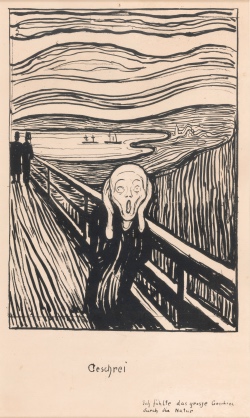 • A major new exhibition of the work of Edvard Munch (1863-1944) opens at the British Museum in Bloomsbury today. Edvard Munch: love and angst, a collaboration with Norway’s Munch Museum, features 83 artworks taken from the museum’s collection as well as loans from across the UK and Europe. Highlights include a black-and-white lithograph of The Scream – the first time any version of the work has been on show in the UK for a decade, Vampire II – considered to be one of his most elaborate and technically accomplished prints, the controversial erotic image Madonna, and, Head by Head, a print representing the complex relationship between human beings. All of the latter three latter prints are being displayed alongside their original matrix (the physical objects Munch used to transfer ink onto paper). Runs until 21st July in the Sir Joseph Hotung Exhibition Gallery. Admission charge applies. For more, see www.britishmuseum.org. (PICTURE: The Scream (1895), Edvard Munch (1863-1944), Private Collection, Norway. Photo: Thomas Widerberg)
• A retrospective of the work of Abram Games (1914-1996), a poster artist for the War Office during World War II, has opened at the National Army Museum in Chelsea. The Art of Persuasion: Wartime Posters By Abram Games features more than 100 posters he designed while working in the War Office’s Public Relations Department between 1941 and 1945. It explores how his Jewish refugee heritage, his experiences while a soldier and the turbulent politics of the time shaped his career and how his work – Games is described as a “master of reductive design” – still influences design professionals today. In conjunction with the opening of the exhibition last week, Games has been commemorated with an English Heritage Blue Plaque at his former home in Golders Green. Runs until 24th November. Admission charge applies. For more, see www.nam.ac.uk/artofpersuasion.
Send all items for inclusion to exploringlondon@gmail.com.
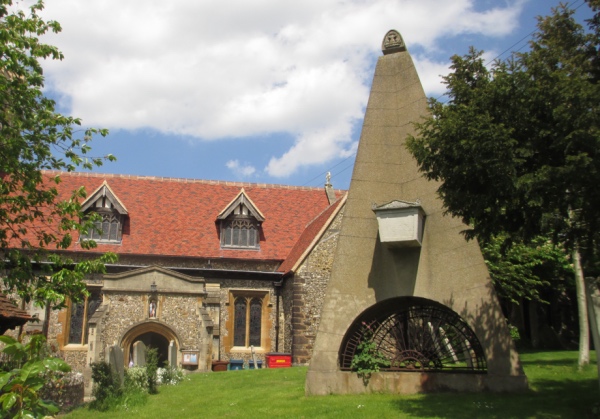 One of the more eccentric grave monuments in London, this massive triangular shaped memorial in a Pinner churchyard was erected by landscape gardener and horticultural writer John Claudius Loudon for his parents.
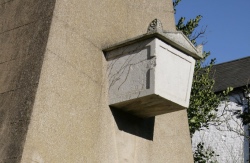 Located in the churchyard of St John the Baptist, the massive Grade II-listed monument is shaped like an inverted V with an arch piercing the base and features what appears to be a stone coffin stuck through it about halfway up the structure.
On one end, it bears an inscription to Scottish merchant William Loudon, who died on 29th December, 1809, and, on the other end, another to his wife Agnes, who died on 14th October, 1841.
It’s been suggested – and the words on the ornamental ironwork in the arch, ‘I Byde My Time’, are seen as supporting this theory – that the reason for the odd design lies in the terms of a will which stipulated Loudon and his wife would only inherit a sum of money if their bodies stayed above ground.
That theory kind of falls apart, however, given that they are actually both buried below the monument. Another theory suggests the monument was deliberately designed to show that the couple were socially above – or perhaps closer to God – than the rest of those buried in the graveyard.
John Claudius Loudon, who died in 1843 – just a couple of years after the monument was erected, is buried at Kensal Green.
WHERE: St John the Baptist Church, Church Lane, Pinner (nearest Tube station is Pinner); WHEN: Reasonable hours; COST: free; WEBSITE: www.pinnerparishchurch.org.uk
PICTURE: Top – Matt Brown (licensed under CC BY 2.0/cropped); Right – Peter Reed (licensed under CC BY-NC 2.0/cropped)
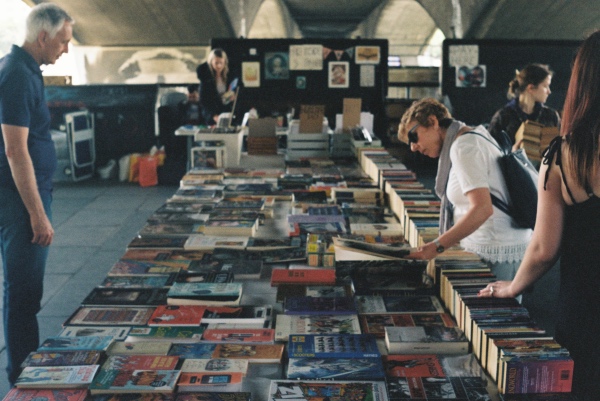
Book fair on South Bank. PICTURE: Charlie Read/Unsplash
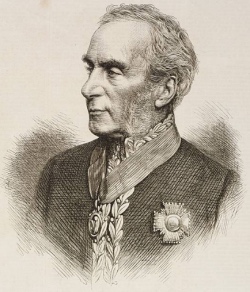
One of the first joint commissioners of the London Metropolitan Police, Sir Richard Mayne was also the youngest ever commissioner, and – with a stint of some 39 years, between 1829 and 1868 – the longest serving commissioner in the service’s history.
Mayne was born in Dublin, Ireland, on 27th November, 1796, as the son of Judge Edward Mayne of the Queen’s Bench in Dublin. He studied at Trinity College, graduating in 1818 with an arts degree and then at Trinity College in Cambridge, graduating with a Master of Arts in 1821.
 He was called to the Bar at Lincoln’s Inn in February, 1822, and commenced practice as a barrister in England’s north where he would spend the next seven years.
In 1829, he was selected by Home Secretary Sir Robert Peel – without interview – after applying to serve as one of the two new commissioners of the Metropolitan Police. Just 33-years-old, he was officially known as the “Second Joint Commissioner” with Colonel Charles Rowan his senior colleague.
The pair – with his military background, Rowan brought his organisational and leadership skills to the job; Mayne his legal expertise – took up their posts on 7th July, 1829, and from their offices in 4 Whitehall Place (the back entrance was in Scotland Yard) set about creating the new police force.
The first constables of the new force were sworn in at the Foundling Hospital on 16th September and commenced their work patrolling the streets of the capital on 29th of that month.
Supported by his new income of £800 a year, Mayne married Georgina Marianne Catherine in 1831. The couple’s children would include Richard Charles Mayne who became a Royal Navy vice admiral.
In 1850, when Rowan retired, Mayne became the First Commissioner with Captain William Hay appointed the Second Commissioner.
In 1851, Mayne took personal charge of policing at the Great Exhibition and, despite Hay’s protests that he should have done that job given his military background, so successful was Mayne’s efforts that he was made a Knight Commander of the Bath (he had been made a Companion of the Bath in 1848 at the same time Rowan had been made a Knight Commander of the Bath – it had been suggested by some at the time that Mayne should have received the same honour as Rowan but it’s worth noting the latter had been a Companion of the Bath for his military services since 1815).
When Hay died in 1855, an Act of Parliament was passed changing the force’s structure so that it was to be headed by a single commissioner with two assistant commissioners. Mayne would serve in the role of sole commissioner for the next 13 years.
His period as sole commissioner was not a particularly happy one – the force’s handling of the Hyde Park riot of June, 1866, and the force’s mishandling of the Clerkenwell bombing in December, 1867 were two events which led Mayne to offer his resignation (which wasn’t accepted).
Mayne died while still in office at his home in Chester Square in Belgravia on Boxing Day, 1868, as the head of a force which had grown to almost 8,000 officers and policed a huge area.
Mayne, who was survived by his wife, was buried at Kensal Green Cemetery. A monument to him was unveiled there on 25th January, 1871.
Mayne’s legacy – his work in the formation of the Metropolitan Police – can still be felt in the capital today as well as in other police forces, not only in the UK but around the world.
PICTURE: Portrait of Richard Mayne in an illustration from an 1869 edition of The Illustrated London News. (Via Wikipedia).
 Exploring London