A Moment in London’s History – The mysterious case of the ‘Bottle Conjurer’…

London was agog. Gathering at what is now the Theatre Royal in Haymarket on the evening of 16th January, 1749, the city’s inhabitants were ready to experience a most amazing spectacle as a man would not only play a “common walking cane” as if it were any instrument but, apparently shrinking himself, step inside a common, ordinary sized wine bottle placed upon a table.

Spurred on by newspaper advertisements promising a night of “surprising things” (which also included the promise of the performer taking on the likeness of any person, living or dead), it was with great expectation that the crowd, which included the Duke of Cumberland, settled into their seats in the theatre, having willingly paid at least two shillings (and some substantially more) for the privilege of being present.

When the time came for the curtain to rise and nothing happened, there were no doubt some who thought it merely a tactic of the performer to build suspense. But the crowd was getting restless and soon after began booing and stamping their feet in their annoyance.

One of the theatre’s staff then appeared on stage to inform them the performer had not arrived and that all entrance fees would repaid  – his comments were apparently answered by a wit who claimed they would pay double if the magician could enter a pint bottle instead of a quart bottle. Further catcalls followed and before long someone apparently threw a candle, setting the stage curtains on fire. Panic broke out among those in the theatre as people sought to escape but for some rage took over as they realised that they had been the victims of a hoax.

The theatre was destroyed as people tore up the seats and smashed the scenery, carting what they could out into Haymarket where it was burnt in a bonfire. The theatre manager called out the guards but the rioting was largely over by the time they arrived. There were apparently no casualties, apart from the theatre itself, although the Duke of Cumberland did, it was said, lose a jewelled sword.

Apparently a bizarre hoax, attention quickly turned to who was behind it. It was commonly believed that it had been the 2nd Duke of Montagu, a notorious practical joker, who had placed the advertisement in order to win a bet that he could fill a theatre by promising something impossible such as a man being able to step inside a bottle. Yet to this day, the identity of the hoaxer remains something of a mystery and the case went on to be cited in reference to the gullibility of the London populace.

PICTURE: Kbthompson at English Wikipedia/CC BY-SA 3.0

Lost London – Cremorne Gardens, Chelsea…

Located on the north bank of the River Thames at Chelsea, these 19th century pleasure gardens were only open for about 40 years.

The origins of the gardens go back to the 1830s when a mansion and surrounding estate – previously owned by Thomas Dawson, Viscount Cremorne (hence the name) – was sold to one Charles Random who went by the name of Baron de Berenger or Baron de Beaufain, a convicted stockmarket fraudster. Random established a sports facility called the Cremorne Stadium on the site where people could indulge in swimming, rowing, fencing, boxing and shooting (the ‘baron’ himself was apparently a crack shot).

The venture was not an immediate success however and so management began to diversify and provide other entertainments more synonymous with pleasure gardens including mock tournaments and pony races as well as dances and, of course, balloon ascents. Nonetheless, the venture failed and was sold off to a City coffee house owner of the name of Thomas Bartlett Simpson.

He sublet the 12 acre site to James Ellis who reopened the house and grounds as a pleasure gardens in 1845.  Ellis, however, went bankrupt within just a few years – an interesting side note is that he then went to Melbourne in the Colony of Victoria (part of what is now Australia) where he established another Cremorne Gardens beside the city’s Yarra River  – although like his London venture that, too, didn’t have a long life.

Back in London, Simpson then took over management of the gardens himself and  within just a few years the gardens had become popular among the fashionable.

The gardens featured a dazzling array of facilities including a banqueting hall, theatre, and American-style bowling saloon and provided all manner of entertainments such as balloon ascents, firework displays, dancing, and performances. The site could be entered from the grand entrance on King’s Road or at the Cremorne Pier on the river.

Alongside its regular entertainments, the gardens also hosted numerous spectacular events including, in 1861, being the site from where Madame Genevieve Young, the ‘Female Blondin’, crossed the Thames on a tightrope and where, in 1864, Mr Godard ascended in his Montgolfier Balloon. Other acts – such as a 1855 renactment of the storming of a fort at Sebastapol during which a stage collapsed, and another in which a balloon drifted onto the spire of a nearby church – were less successful.

The garden passed through the hands of several other managers over the ensuing years and but by the 1870s has acquired something of a bad reputation. While while then-manager John Baum, who had invested considerable sums in upgrading the gardens’ facilities, won a libel case against a local minister who had published a pamphlet condemning the gardens (in principle at least – he was apparently only awarded a farthing in damages), in 1877 he decided not to reapply for his licence and closed the gardens.

During its final years of operations, the gardens were captured on canvas by artist James Abbott McNeill Whistler, who was a resident in nearby Cheyne Walk.

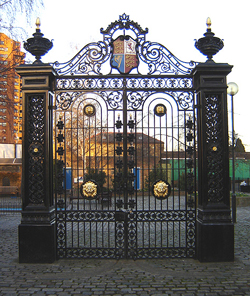
The modern Cremorne Gardens – located by the Thames near the Lots Road power station – were opened in 1982. Iron gates from the original gardens (pictured), which had been taken to a brewery, were restored and installed in the new gardens.

PICTURE: Above – The Dancing Platform at Cremorne Gardens by Phoebus Levin, 1864. Via Wikimedia Commons; Right – The Cremorne Gardens gates, Tarquin Binary/Wikimedia Commons/CC BY-SA 2.5

10 of the most memorable (and historic) views of London – 7. View of the Houses of Parliament from across the Thames…

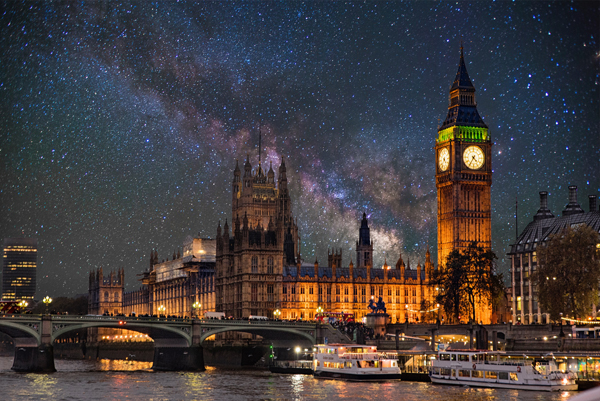
A smaller scale albeit spectacular view – in this one, the focus is on a particular building – but among the most splendid views of London is that of the Houses of Parliament (aka The Palace of Westminster) from across the Thames.

Featured in various ways in numerous films and TV shows (1980s sitcoms Yes Minister and Yes, Prime Minister among them) as well on bottles of HP Sauce, the iconic view from the east bank of the Thames, taking the facade of the building with the bookends of Victoria and Elizabeth Towers, has only been around its current form following the completion of  Sir Charles Barry’s gothic masterpiece in 1870 (although the Palace of Westminster and adjacent buildings have occupied the site for far longer).

The site, along with the neighbouring Westminster Abbey and St Margaret’s Church, is protected as part of the UNESCO World Heritage List, the official listing of which notes that the “iconic silhouette of the ensemble is an intrinsic part of its identity, which is recognised internationally with the sound of ‘Big Ben’ being broadcast regularly around the world”.

PICTURE: Cody Thompson/Unsplash

LondonLife – Tate Modern marks 100 years since Russia’s 1917 October Revolution…

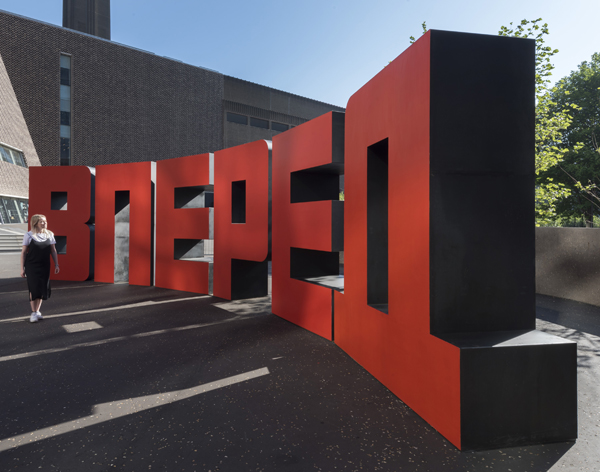
Created by Russian-born artist Erik Bulatov to mark the centenary of the revolution, the 10 foot high steel Cyrillic letters, some of which appear to have fallen over, spell out the word ‘forward’ four times and are arranged in a circle. Forward 2016 is Bulatov’s first sculpture and was apparently conceived after a visit to a decommissioned 19th century iron foundry in France which Bulatov, who was born in 1933, felt represented – through its sheer scale and lost sense of power and energy – not only the aspirations of his generation but the disillusionment they experienced. While the bright colours of the letters create a sense of energy and movement, their distribution in a closed loop seem to imply that progress may not really be possible. The work, which is installed on the south terrace of the Tate Modern, will remain on display throughout the summer as a precursor to two major art exhibitions being held at the gallery in autumn – Ilya and Emilia Kabakov: Not Everyone Will Be Taken Into The Future, the UK’s first major exhibition of the works of this pioneering couple (from 18th October), and Red Star Over Russia, an exploration of visual culture and design in the decades following the revolution (from 18th November). For more, see www.tate.org.uk. PICTURE: Courtesy of Tate Photography.

A city grapples with tragedy…

Thinking of all those affected by the London Bridge/Borough Market attack. PICTURE: http://www.freeimages.com

Treasures of London – Richard Coeur de Lion…


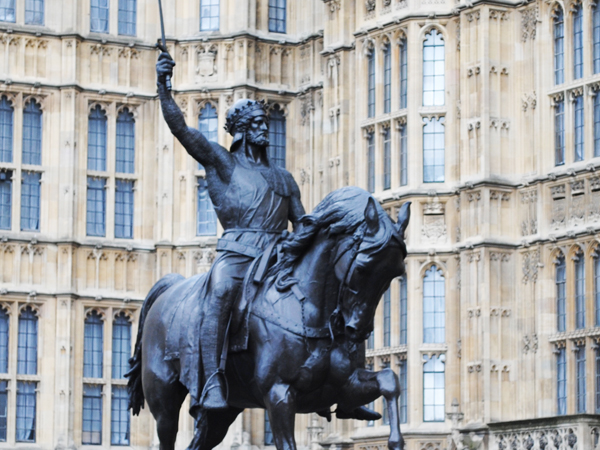
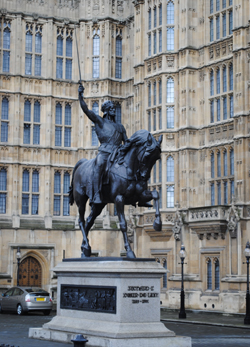
Located in Old Palace Yard outside the Palace of Westminster, this Grade II-listed equestrian statue of 12th century crusader-monarch King Richard I, known as the “Lionheart” or Coeur de Lion, is the work of 19th century sculptor Baron Carlo Marochetti. 

The nine metre high statue was originally exhibited as a clay work at the Great Exhibition of 1851 – it was located outside the west entrance of the Crystal Palace – and, despite the tail falling off soon after it was display, it was well enough received by the crowds attending the exhibition (as well as the critics) that a public subscription was raised to cast the statue in bronze. Queen Victoria and Prince Albert were among those who subscribed.

It was initially proposed that the statue be placed on the site of the Crystal Palace as a memorial to the exhibition (along with a statue of Prince Albert), but this plan was put aside and, after numerous other sites were considered, the current location was settled on.

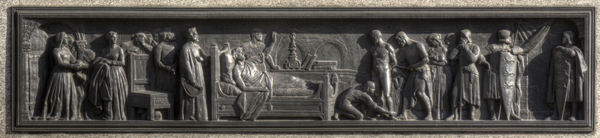
The statue was erected on the site, facing south, in 1860, although it wasn’t completed with the addition of two bronze bas relief panels until 1867. These depict Richard on his death bed pardoning Bertran de Born, the archer whose arrow caused his death, and Richard fighting Saracens at Ascalon during his crusade in the Holy Land. Two other proposed panels were never made.

The statue was peppered with shrapnel when a bomb landed only a few metres away in 1940 during the Blitz, leaving Richard’s sword bent and damaging the tail and granite pedestal. The sword was fixed soon after. Further conservation works were carried out in 2009.

Italian-born Marochetti had worked in Paris as a sculptor before following King Louis-Philippe to London after the revolution of 1848 and largely remained in the city until his death in 1867. He was created a baron by the King of Sardinia.

His statue of Richard is one of few artworks created by non-British artists in the Parliamentary estate and while Marochetti had plans to create another equestrian statue, this one of Edward, the Black Prince, to face his statue of Richard across the entrance to the House of Lords, it never eventuated. Plans to install the second statue are, however, once more being talked about.

PICTURES: Above – The statue in Old Palace Yard (David Adams); Below – Detail of the panel depicting the death of the king (Prioryman/CC BY-SA 4.0)

10 of the most memorable (and historic) views of London – 6. View from Parliament Hill…

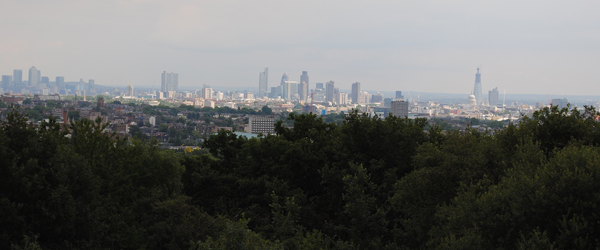
Once apparently known as Traitor’s Hill, Parliament Hill in Hampstead Heath offers stunning views of the City of London and surrounds.

The summit of the hill, the view from which is protected, features a plaque, donated by the Heath and Hampstead Society and installed in 2016, which identifies various London landmarks visible from the site (it updated a similar plaque installed in 1984). Among the landmarks visible from the hill, which lies some six miles from the City in the south-east of the heath, are The Gherkin (St Mary Axe), St Paul’s Cathedral, The London Eye and the Houses of Parliament.

The hill’s name is somewhat shrouded in mystery. According to one story, it relates to the fact it was defended during the English Civil War by troops loyal to Parliament (hence first Traitor’s, then Parliament, Hill). Another named-related story, generally deemed to be somewhat dubious, has it as the site where Guy Fawkes and co-conspirator Robert Catesby planned to watch the destruction of Parliament in the Gunpowder Plot of 1605.

Once part of a manor granted by King Henry I to a local baron, the hill was added to the public open space of Hampstead Heath in the late 1880s although manorial rights to the land persisted until the mid-20th century. The City of London Corporation has managed the hill since 1989.

Parliament Hill, these days a popular place for kite flying, is also the site of a short white pillar known as the ‘Stone of Free Speech’, once believed to have been a focal point for religious and political meetings (although its origins, like the hill’s name, are somewhat sketchy).

WHERE: Parliament Hill, Hampstead Heath (nearest Tube station is Hampstead/nearest Overground stations are Gospel Oak and Hampstead Heath); WHEN: Always; COST: Free; WEBSITE: www.cityoflondon.gov.uk/things-to-do/green-spaces/hampstead-heath/visitor-information/Pages/Parliament-Hill-Viewpoint.aspx.

LondonLife – Creativity and beauty celebrated at Chelsea…


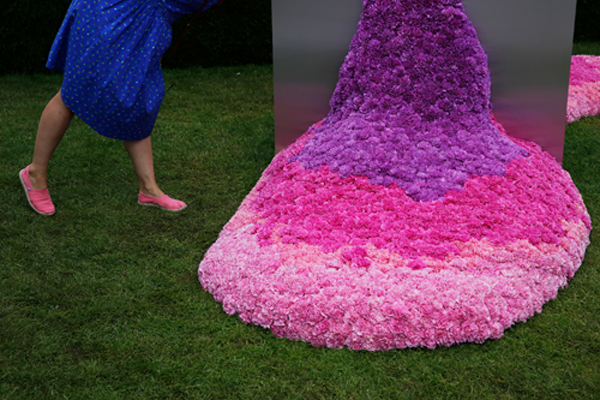
The RHS Chelsea Flower Show was held in London last week at the Royal Hospital in Chelsea and was once again a celebration of horticultural creativity and beauty. Here’s just a sample of what was on show…

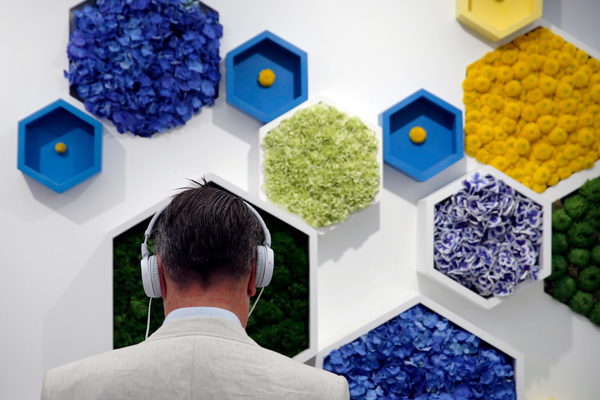
Above, animal sculptures are displayed on the Easigrass exhibit while, below, a visitor listens to an audio recording whilst viewing a floral installation on the Interflora exhibit.

ALL PICTURES: RHS/Luke MacGregor.

Above, a visitor views “Neoteric” a floral installation by Robert Hornsby.
Above, lilies are displayed on the Harts Nursery exhibit.

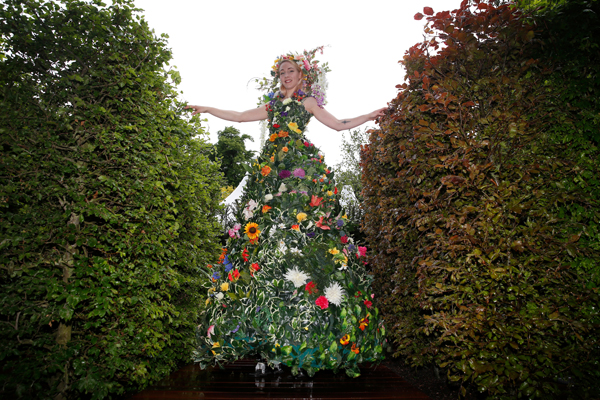
Above, stilt walker “Mrs Flora” poses on the Big Hedge Co. garden.


Lost London – The King’s Bench Prison (part 1)…

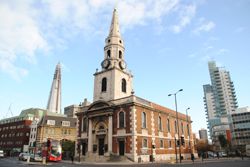
This prison dates from the time of King Richard II (1377-99) and stood off Borough High Street (just to the north of the Church of St George the Martyr) in Southwark until the mid 18th century when it moved to a new premises.

The prison, originally based in two houses apparently known as the Crane and the Angel (Angel Place bears witness to the latter), was first used for those convicted at the travelling court of the King’s Bench.
The prison was burned several times during periods of unrest and was upgraded during the reign of King Henry VIII. Among those imprisoned here were the reformer and martyr John Bradford who was held here before being burned at the stake in 1555 during the reign of Queen Mary (when it would have been known as the Queen’s Bench).

By the 1600s, it had become a debtors’ prison and in the mid-17th century – during the Commonwealth it was known as the ‘Upper Bench’ –  it reportedly held around 400 inmates who carried a collective debt of £900,000.

As with other prisons, the comfort of prisoners depended very much on their financial circumstances – those with money were able to live quite well. Those imprisoned here during this period included the dramatist Thomas Dekker and the King of Corsica, imprisoned in 1752 for debt (he died only four years later).

A Parliamentary inquiry in the 1750s revealed a host of problems with the prison including overcrowding, the practice of extortion by prison officers, promiscuity and drunkenness among prisoners and other irregularities, all of which led, in 1758, to the prison being closed (and later demolished) and moving to a new premises in St George’s Fields, Southwark (we’ll deal more with that facility in an upcoming post).

PICTURE: St George the Martyr on Borough High Street near where the first King’s Bench stood.

This Week in London – Beyond the ‘Great Wave’; Balenciaga’s fashions; British women cartoonists; and, The Royal Parks’ touring snail…

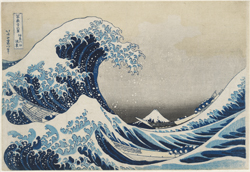
The later years of the life of Japan’s greatest artist, Katsushika Hokusai (1760-1849), is the subject of a new exhibition at the British Museum. Hokusai: beyond the Great Wave features his iconic print, The Great Wave (c1831), along with works he created during the last 30 years of his life until his death at the age of 90. Around 110 works – major paintings, drawings, woodblock prints and illustrated books depicting everything from iconic land and seascapes, to deities, mythological creatures, flora and fauna, and beautiful women – will be on display with about half the artworks changed over midway through the exhibition due to conservation reasons. Alongside The Great Wave, other key works, which come from the British Museum’s own collection as well as loans from Japan, Europe and the US, include Hokusai’s print series, Thirty-Six Views of Mt Fuji (published around 1831-33), a depiction of Red Shoki (the demon queller) – borrowed from the Metropolitan Museum in New York, and his brush drawing manual Hokusai manga. The exhibition, which opens today, runs until 13th August in Room 35. Admission charge applies. For more, see www.britishmuseum.org. PICTURE: British Museum

The fashions of Cristóbal Balenciaga are on show at the V&A in the first ever UK exhibition to explore his work and influence. Marking the centenary of the opening of Balenciaga’s first fashion house in San Sebastian and the 80th anniversary of the opening of his famous Paris house, Balenciaga: Shaping Fashion focuses on the latter part of his career in the 1950s and 1960s, a period during which he dressed some iconic figures and introduced revolutionary shapes such as the ‘baby doll’, the tunic and the sack. More than 100 garments and 20 hats are featured with highlights including ensembles made for Hollywood actress Ava Gardner, dresses and hats belonging to Sixties fashion icon Gloria Guinness and pieces worn by one of the world’s wealthiest women, Mona von Bismarck. Opens on Saturday and runs until 18th February. Admission charge applies. For more, see www.vam.ac.uk/balenciaga.

British female cartoonists and comic artists are celebrated in an exhibition on now at the Cartoon Museum in Bloomsbury. The Inking Woman features the work of more than 80 artists as it traces the evolution of British women in their role as satirists, humorists and story-tellers. Among them are Mary Darly, 18th century print seller, artist and the author of the first book on the art of caricature, Principles of Caricatura (1762), Marie Duval, an early artist for the 19th century magazine Judy, Sally Arts, Grizela and Kathryn Lamb – cartoonists for mainstream publications like Punch and Private Eye, political and joke cartoonists, strip cartoonists and caricaturists and comic artists and graphic novelists. Runs until 23rd July. Admission charge applies. See www.cartoonmuseum.org.

• An eight foot high snail will be touring The Royal Parks from the end of the month as part of The Royal Park’s Mission: Invertebrate. Funded with £600,000 from the People’s Postcode Lottery, the project aims to inspire people with the “amazing story of nature’s unsung workforce” and help park managers gain better insight into the 4,100 invertebrates species which live in The Royal Parks’ 5,000 acres. The snail, which will be visiting the parks during the half-term break and summer holidays, will bring with it interactive story-telling and a range of free, creative activities. For a full itinerary of the snail’s wanderings, head to www.royalparks.org.uk/be-involved/mission-invertebrate/family-programme.

Send all items for inclusion to exploringlondon@gmail.com.

10 of the most memorable (and historic) views of London – 5. View from the top of The Monument…

Another historic City of London view, this one dates from 1677 when construction of this memorial to the Great Fire of London was completed.

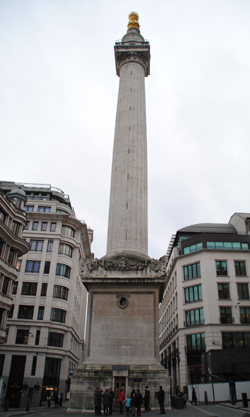
Located just a stone’s throw from the site where the fire of 1666 apparently started (more on that in our earlier post), the 61 metre high Monument was designed by Sir Christopher Wren and Dr Robert Hooke with a platform viewing platform set just below a stone drum and gilt copper urn from which flames emerge in a symbolic representation of the fire.

The viewing platform was intended as a place where Wren and Hooke could conduct experiments for the Royal Society (to this end, the Monument also features a laboratory in the cellar while its hollow shaft was designed to accommodate experiments with pendulums, its staircase steps measure exactly six inches high so they could be used in experiments on pressure and there is a trapdoor in the top of the orb to facilitate use of a telescope).

Vibrations caused by the traffic on Fish Street Hill, however, caused problems and so the idea was abandoned and the platform, located at a height of about 48.5 metres, was left to the public.

A mesh cage was added to the top in the mid 19th century, apparently as a preventative measure after a number of people had leapt from the top. The cage was replaced in 2008 as part of a major, £4.5 million, 18 month-long restoration of the Grade I-listed structure.

While people are welcome to climb the 311 steps to the top on a circular staircase that winds its way up the inside of the pillar to take in the views over the City and Thames (and about 100,000 d0 so each year, gaining themselves a special certificate for their efforts), for those who can’t make the climb, equipment enabling the streaming of live video images, taking in a 360 degree panorama from the top of the Monument, was installed as part of the restoration. These images can be accessed via the Monument’s website. The images, which take in the city, are updated every minute.

WHERE: The Monument, junction of Fish Street Hill and Monument Street (nearest Tube station is Monument); WHEN: 9.30am to 6pm daily (until October); COST: £4.50 adults/£2.30 children (aged five to 15)/£3 seniors (joint tickets with Tower Bridge available); WEBSITE: www.themonument.info

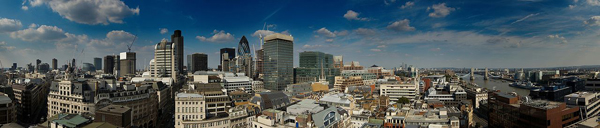
Top – Panoramic view from the top of The Monument taken in 2006; Below – The Monument. PICTURES: Top – Piotr Zarobkiewicz/Wikimedia Commons/CC BY-SA 3.0/Below – David Adams

LondonLife – King’s Cross railway station…

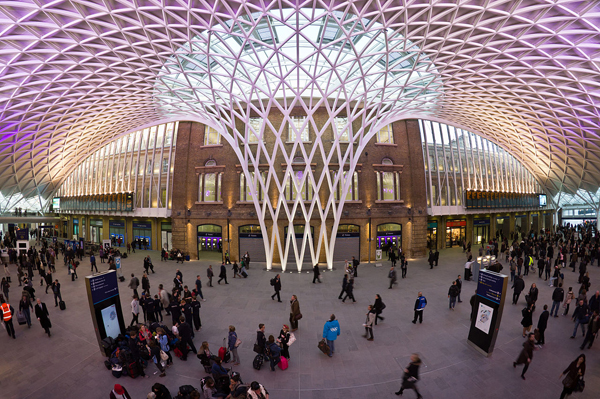
King’s Cross railway station, the western concourse. Designed by John McAslan, the semi-circular building – which opened in 2012 – features a steel roof engineered by Arup, claimed to be the longer single-span station structure in Europe. The image was taken with a fisheye lens. PICTURE:  Colin/Wikimedia Commons/CC BY-SA 3.0.

London Pub Signs – The Flask, Hampstead…

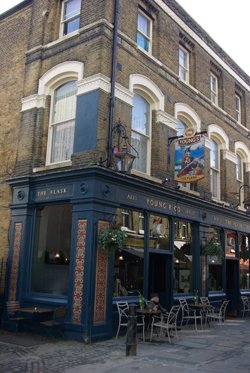
This Grade II-listed pub owes its name to the fact it was from where “medicinal waters” taken from nearby springs were taken to be bottled before being sold to coffee houses and taverns across London at threepence a flask.
The business was established by the Wells Trustees which had initially intended the waters to be solely for the use of the Hampstead poor. That idea, however, soon developed into a lucrative trade in bottled water with distribution across the city apparently handled by an apothecary, a Mr Philips, from his base at a Fleet Street tavern.

Known initially as the Thatched House due to its roofing material (and later as the Lower Flask to distinguish it from The (Upper) Flask in Highgate), the pub was famously mentioned in Samuel Richardson’s novel, Clarissa.

The current premises at 14 Flask Walk was built in 1874 – designed by Cumming and Nixon – and among its public rooms are a grand saloon bar and a conservatory.

Part of the Young & Co’s chain since 1904. For more, see www.theflaskhampstead.co.uk.

The Flask in an image taken in 2014. PICTURE: Adam Bruderer/Flickr/CC BY 2.0

Treasures of London – ‘Newton’ at the British Library…

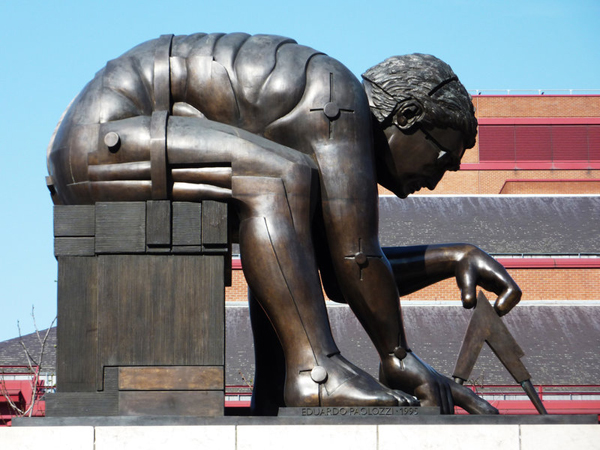
This tribute to Sir Isaac Newton by artist Eduardo Paolozzi shows him in the unusual pose of being seated and leaning over with compass in hand. Installed in the British Library‘s courtyard off Euston Road in 1997, the 12 foot high bronze is based on a large watercolour by Romantic Age poet and artist William Blake, one of a series of 12 he produced in Lambeth in the 1790s. It’s on show at the Tate Britain. The statue was given a voice in 2014 as part of the Talking Statues project. PICTURE: British Library.

This Week in London – New insights into Canaletto’s Venice; a rare Shakespearean opportunity; and, a Green Plaque for William Henry Hudson…

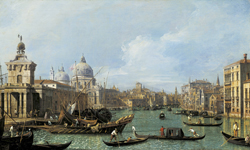
Methods employed by world renowned 18th century Venetian painter Canaletto in creating his evocative images of the city where he lived are the subject of a new exhibition which opens at The Queen’s Gallery in Buckingham Palace tomorrow. Canaletto & the Art of Venice showcases the findings of recent research in an exhibition which focuses on the Royal Collection’s remarkable group of paintings, drawings and prints by the artist – a collection obtained by King George III in 1762 from dealer (and the then-British Consult in Venice) Joseph Smith. Royal Collection Trust conservators used infrared technology to uncover previously hidden marks on drawings, providing new insights into Canaletto’s artistic techniques and casting doubt on a long held theory that he used a camera obscure to achieve topographical accuracy in his work. The exhibition, which features more than 200 paintings, drawings and prints, displays his work alongside that of contemporary artists Sebastiano, Marco Ricci, Rosalba Carriera, Francesco Zuccarelli, Giovanni Battista Piazzetta and Pietro Longhi. Runs until 12th November. Admission charge applies. For more, see www.royalcollection.org.uk. PICTURE: Canaletto, The Grand Canal looking East from Campo San Vio towards the Bacino, c.1727-8, from a set of 12 paintings of the Grand Canal. Royal Collection Trust/© Her Majesty Queen Elizabeth II 2017

• A rare ‘First Folio’ of William Shakespeare’s work – widely regarded as one of the most perfect copies in existence – will be available for viewing before an outdoor performance of Twelfth Night next month. Five actors from acting company The Three Inch Fools will perform the comedy in the St Mary Aldermanbury’s Garden on 1st June at 7pm, the same garden where Henry Condell and John Heminges, two of the Bard’s co-partners at the Globe Theatre and the men behind the production of the First Folio in 1623, were buried. Those attending the performance will be given the chance to view the folio in the nearby Guildhall Library before the performance. Tickets to this one night only opportunity can be purchased from Eventbrite.

Author and naturalist William Henry Hudson, whose work so inspired author Ernest Hemingway that his name was referenced in Hemingway’s first novel The Sun Also Rises, has been commemorated with a City of Westminster Green Plaque in Leinster Square, Bayswater. Born the son of British parents in Argentina, Hudson came to Westminster after leaving South America in 1874. An early support of the Royal Society for the Protection of Birds, his books on the English countryside became famous and helped foster the back to nature movement of the 1920s and 1930s.

Send all items for inclusion to exploringlondon@gmail.com.

10 of the most memorable (and historic) views of London – 4. View from King Henry’s Mound, Richmond Park…

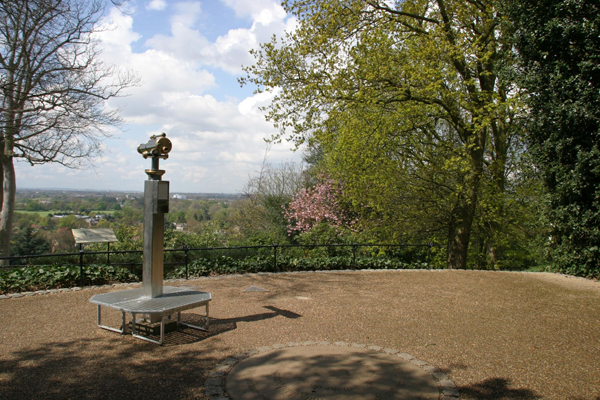
Tradition holds that the spot where this officially protected view originates from – the prehistoric barrow known as King Henry’s Mound – was where King Henry VIII stood on 19th May, 1536, to watch for a rocket fired from the Tower of London.

The signal was to indicate that his former wife, Anne Boleyn, had been beheaded for treason and hence that he was now free to marry Jane Seymour.

Sadly, the story is seen as unlikely – the king was apparently in Wiltshire at the time.

But it adds a nice nostalgia to this tree-framed view which looks across Richmond Park and areas south of the River Thames to the great dome of St Paul’s Cathedral.

The mound, which also offers views west over the Thames Valley towards Windsor, is believed to cover a burial chamber from the Bronze Age (it would have stood more prominently over the Thames Valley in those days) and was later used as a viewing position for hunting deer and falconry.

A permanent public telescope has been set up on the mound which since the 19th century has sat in Pembroke Lodge Garden (named for the Countess of Pembroke who lived in a cottage here between about 1788 and 1831).

The historic view made headlines last year over calls for London’s Mayor to step in and halt building work amid concerns that the 42-storey Manhattan Loft Gardens tower in Stratford, east London, could be seen in the view behind the cathedral dome.

WHERE: King Henry’s Mound, Richmond Park (nearest Tube station is Richmond); WHEN: 24 hour pedestrian access except during the deer cull in November and February; COST: Free entry; WEBSITE: www.royalparks.org.uk/parks/richmond-park

PICTURE: Royal Parks

LondonLife – Taking in the view…

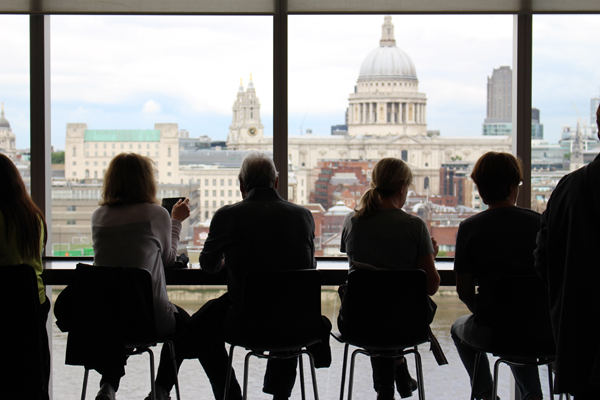
Looking over the River Thames from the Tate Modern at the dome of St Paul’s. PICTURE: Christian Battaglia/Unsplash

Famous Londoners – Michael Faraday…

A towering figure of the scientific world, Faraday made significant contributions to understanding the fields of electromagnetism and electrochemistry and was a key figure at the Royal Institution of Great Britain in the 19th century.

Faraday was born in Newington Butts in Surrey (now in south London, part of the Borough of Southwark) on 22nd September, 1791, and, coming from a poorer family, received only a basic education before, at the age of 14, he started an apprenticeship as a bookbinder.

The job proved, however, to be something of a godsend, for Faraday was able to read a wide range of books and educate himself – it was during this time that he began what was a lifelong fascination with science.

In 1812 at the end of his apprenticeship, he attended a series of lectures at the Royal Institution by the chemist Sir Humphry Davy. Subsequently asking Sir Humphry for a job, he eventually was granted one the following year – in 1813 – when Sir Humphry appointed him to the post of chemical assistant in the laboratory at the RA (the job came with accommodation).

Faraday’s ‘apprenticeship’ under Davy – which included an 18 month long tour of Europe in his company – was critical to his future success and from 1820 onward – having now settled at the RA, he made numerous contributions to the field of chemistry – including discovering benzene, inventing the earliest form of Bunsen burner and popularising terms like ‘cathode’ and ‘ion’.

But it was in physics that he made his biggest impact, making discoveries that would, according to the Encyclopaedia Britannica, “revolutionise” our understanding of the field.

Faraday, who married Sarah Barnard, the daughter of a silversmith, in 1821 and was thereafter an active member of the Sandemanian Church to which she belonged, published his ground-breaking first work on electromagnetism in 1821 (it concerned electromagnetic rotation, the principle behind the electric motor). His discovery of electromagnetic induction (the principle behind the electric transformer and generator) was made in 1831 and he is credited with having constructed the first electric motor and the first ‘dynamo’ or electric generator.

Faraday, who would continue his work on ideas concerning electricity over the next decade, was awarded numerous scientific appointments during his life including having been made a member of the Royal Society in 1924, the first Fullerian Professor of Chemistry at the Royal Institution, from 1833 until his death, scientific advisor to lighthouse authority for England and Wales – Trinity House, a post he held between 1836 and 1865, and Professor of Chemistry at the Royal Military Academy in Woolwich, a post her held between 1830 and 1851.

He also, in 1825, founded the Royal Institution’s famous “Friday Evening Discourses” and the “Christmas Lectures”, both of which continue to this day. Over the ensuring years, he himself gave many lectures, firmly establishing himself as the outstanding scientific lecturer of the day.

Faraday’s health deteriorated in the early 1840s and his research output lessened although by 1845 he was able to return to active research and continued working until the mid 1850s when his mind began to fail. He died on 25th August, 1867, at Hampton Court where he had been granted, thanks to Prince Albert, grace and favour lodgings by Queen Victoria (she’d also apparently offered him a knighthood which he’d rejected). He was buried in Highgate Cemetery.

Faraday is commemorated with numerous memorials around London including a bronze statue at Savoy Place outside the Institution of Engineering and Technology, a Blue Plaque on the Marylebone property where he was an apprentice bookbinder (48 Blandford Street), and a rather unusual box-shaped metallic brutalist memorial at Elephant and Castle. And, of course, there’s a famous marble statue of Faraday by John Henry Foley  inside the RI (as might be expected, the RI, home of The Faraday Museum, have a host of information about Faraday including a ‘Faraday Walk’ through London’s streets).

PICTURE: Adambro/Wikimedia Commons/CC BY 3.0


Lost London – Thomas Chippendale’s workshop…

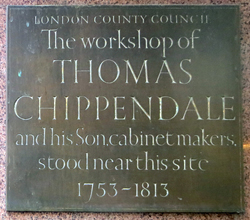
Located in Covent Garden, the workshop of 18th century cabinet-maker and interior designer Thomas Chippendale (1718-1778) was a hub of sought-after design.

The Yorkshire-born Chippendale leased the premises at 60-61 St Martin’s Lane in the mid 1750s and, joined by partner James Rannie, in 1754 he published his famous – and then ground-breaking – catalogue, The Gentleman Cabinet Maker’s Director, which illustrated his work.

Chippendale’s clients includes something of a who’s who of the Georgian era – actor David Garrick, architect Robert Adam, Lord Mansfield (he installed Chippendale’s furnishings at Kenwood House in Hampstead) and Mrs (Teresa) Cornelys who apparently counted Casanova among her lovers.

The Chippendale workshop remained at the premises in St Martin’s Lane until 1813 when his son, also Thomas Chippendale, was evicted from the site for bankruptcy. The current building dates from the 19th century.

PICTURE: Diane Griffiths/Flickr/CC BY 2.0

This Week in London – Pink Floyd at V&A; examining the Syrian conflict; and, Giacometti’s works on show…

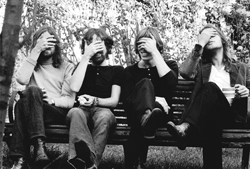
Marking 50 years since the release of their first album, The Piper At The Gates Of Dawn, a new exhibition opens at the V&A this Saturday celebrating the work of pioneering band Pink Floyd. The Pink Floyd Exhibition: Their Mortal Remains is an “immersive, multi-sensory and theatrical journey” through the “extraordinary world” of the band, encompassing their music as well as their iconic visuals and staging, which included ground-breaking use of special effects, sonic experimentation and imagery. The exhibition features more than 350 objects with highlights including set and construction pieces from some of the band’s most famous album covers and stage performances including the more than six metre tall metallic heads from 1994’s The Division Bell and a life-sized model of a British soldier seen in the artwork of 1988’s The Final Cut as well as instruments such as David Gilmour’s famous ‘Black Strat’, Roger Waters’ handwritten lyrics songs Wish You Were Here and Have a Cigar and psychedelic prints and posters. There is also never-seen-before classic Pink Floyd concert footage and a custom-designed laser light show as well as an accompanying sound experience – featuring past and present band members – provided by Sennheiser. Runs until 1st October. Admission charge applies. For more, see www.pinkfloydexhibition.com. PICTURE: © Pink Floyd Music Ltd photo by Storm Thorgerson/Aubrey ‘Po’ Powell 1971 Belsize Park

The ongoing conflict in Syria is the subject of a new exhibition at the Imperial War Museum which explores its origins, escalations and impacts. Syria: Story of a Conflict features a collection of objects – some of which have recently come from Syria – which point to the tragic and complex nature of the conflict as well as a film installation and a series of personal stories from Syrians affected by the fighting. It runs alongside a collection of more than 60 photographs by award-winning Russian documentary photographer Sergey Ponomarev taken around the conflict, a number of which are being displayed for the first time. Both the photography display – Sergey Ponomarev: A Lens on Syria – and the exhibition are part of the IWM’s Syria: A Conflict Explored ‘season’, with Syria the first contemporary conflict to be explored in the Imperial War Museum’s ‘Conflict Now’ ‘strand’, launched to coincide with the museum’s centenary. Both the exhibition and photographic display can be seen until 3rd September. Admission to both, which are accompanied by a programme of events including debates and tours, is free. For more, see www.iwm.org.uk/exhibitions/iwm-london/syria-a-conflict-explored

The work of sculptor, painter and draughtsman, Alberto Giacometti, is the subject of a new exhibition at the Tate Modern – the UK’s first major retrospective of his work for 20 years. More than 250 works are featured in the exhibition, which draws on the collection of Paris’ Fondation Alberto et Annette Giacometti, including rarely seen and never before exhibited plasters and drawings as well as works from across the span of Giacometti’s 50 year career – from Head of a Woman [Flora Mayo] (1926) to Walking Man 1 (1960). While Giacometti is best known for his bronze figures, Tate Modern is, in this exhibition, repositioning him as an artist with a far wider interest in materials and textures, especially plaster and clay, Runs until 10th September. Admission charge applies. See www.tate.org.uk.

Send all items to exploringlondon@gmail.com.