What’s in a name?…Fitzrovia…

BT_Tower-1This West End district, located between Bloomsbury, Marylebone and Soho, probably owes its name to the Fitzroy Tavern, a public house which in turn is believed to owe its name to the Dukes of Grafton, whose family name was Fitzroy.

The Fitzroys (the name derives from  a Norman-French phrase and was typically associated with base-born royal sons), owned land in the area until the end of the 1800s.

The family first become associated with the area after the Manor of Tottenham (more on that name in an upcoming post) came into the possession of Henry Fitzroy, an illegitimate son of King Charles II who became the Earl of Euston and later Duke of Grafton.

Incidentally, the grand Fitzroy Square, developed by the duke’s great-grandson, and Fitzroy Street are both also named after the family as are numerous other locations in the area including Grafton Street.

Fashionable as a residential area in the 1700s, the houses were gradually transformed into workshops – the area was noted for furniture-makers in particular – or cheap tenements and it’s during this period in the early 1800s that artists like John Constable were living in the area.

The name Fitzrovia apparently became popularised for the district which in the inter-war years, due to the community of artists and writers that met at the pub; it is said to have first appeared in print in the 1940s. Among those who were associated with the area during this period were the likes of writers Dylan Thomas and George Orwell and artists like Roger Fry and Augustus John.

More recently the area has become home to numerous media companies, particularly TV-related companies, and still hosts ample pubs, restaurants and cafes.

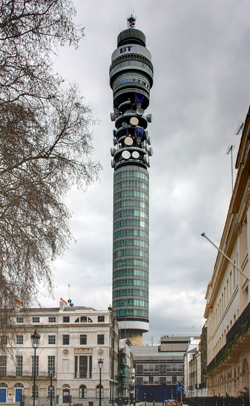
Notable buildings in the area include the BT Tower, a communications tower completed in 1964 which was until 1980, the tallest building not only in London but in the UK (and from where panoramic views could once be had – sadly it’s been long closed to the public).

Fitzrovia is also home to the quirky Pollock’s Toy Museum.

PICTURE: David Castor (caster)/Wikipedia

Correction: Fitzroy Square was developed by the great grandson of the 1st Duke of Grafton, not grandson as was originally stated.
This Week in London – Talking Shakespeare; Dickens’ letter in support of ‘fallen women’; and, wallpaper at the Geffrye…

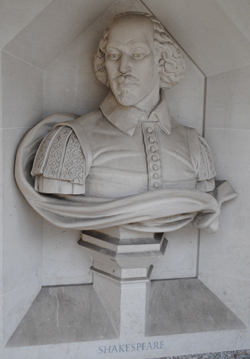
William-Shakespeare6• Guildhall is hosting an “open mic” Shakespeare day this Tuesday as part of commemorations marking the 400th anniversary of his death. Speeches, Soliloquies and Songs from Shakespeare will be opened with recitals from actors Simon Russell Beale and John Heffernan before members of the public will have their chance to recite their favourite piece from Shakespeare. Participants are invited to sign up by emailing ghlevents@cityoflondon.gov.uk or calling 020 7332 1868. The event will run between 10am to 12pm and 1.30pm to 3.30pm at the Basinghall Suite in the Guildhall Art Gallery. For more, see www.cityoflondon.gov.uk/things-to-do/visit-the-city/attractions/guildhall-galleries/Pages/guildhall-art-gallery.aspx.

A letter written by author Charles Dickens to the governors of the Foundling Hospital has gone on display at the Foundling Museum in Bloomsbury. The letter was written to the governors in support of an application for a new matron and touches on Dickens’ belief that the downward path of a ‘fallen woman’ wasn’t irreversible and inevitable but that reform was possible. Tempted to Virtue: Dickens and the Fallen Woman can be seen until 22nd May. In a related event, Lynda Nead, curator of the recent exhibition, The Fallen Woman, will join Jenny Earle, programme director at the Prison Reform Trust, in discussing the hidden stories of vulnerable women in the 19th century and today on 21st May. This event is free but booking is essential. For more, see www.foundlingmuseum.org.uk.

An exhibition celebrating how wallpaper is made is running at the Geffrye Museum in Shoreditch as part of London Craft Week. The Craft of Wallpaper demonstrates the variety of processes being used to make wallpaper in today’s world and features papers by some of the UK’s most innovative makers including Claire Coles, Elise Menghini, Helen Morley, Identity Paper, Juliet Chadwick, Linda Florence, Erica Wakerly, Fromental, CUSTHOM, Tracey Kendall and Graham & Brown who are showcasing six of their most successful wallpaper designs: from its first design in 1946, Original, to the 2016 Wallpaper of the Year, Marble. You’ll have to be quick – only runs until Sunday. For more, see www.londoncraftweek.com.

Send all items for inclusion to exploringlondon@gmail.com.

This Week in London – Of Empress Catherine the Great and Capability Brown; a blue plaque double; and, the British graphic novel on show…

A once forgotten collection of watercolour paintings and drawings owned by Empress Catherine the Great of Russia has gone on show at Hampton Court Palace as part of commemorations marking the 300th anniversary of the birth of Lancelot ‘Capability’ Brown. The Empress and the Gardener exhibition features almost 60 intricately detailed views of the palace and its park and gardens during the time when Brown worked there as chief gardener to King George III between 1764 and 1783. The works came to be in the collection of the Empress – a renowned fan of English gardens – after Brown’s assistant, John Spyers, sold two albums of his drawings of the palace to the her for the considerable sum of 1,000 roubles. The albums disappeared into her collection at the Hermitage (now the State Hermitage Museum) and lay forgotten for more than 200 years before they were rediscovered by curator Mikhail Dedinkin in 2002. As well as the collection – on public show for the first time, the exhibition features portraits of Brown and the Empress, previously unseen drawings of her ‘English Palace’ in the grounds of the Peterhof near St Petersburg, and several pieces from the ‘Green Frog’ dinner service, created for the Empress by Wedgwood, which is decorated with some of the landscapes the prolific Brown created across England. Runs until 4th September. Admission charge applies. For more, see www.hrp.org.uk/hampton-court-palace/.

A house in Chelsea has become only one of 19 homes in London to bear two official blue plaques. Number 48 Paultons Square has the honour of having been home to two Nobel prize winners (albeit in different fields) – dramatist Samuel Beckett, who lived there for seven months in 1934 while writing his first novel, Murphy, and physicist Patrick Blackett, noted for his revolutionary work in U-boat detection during World War II, who lived there from 1953 to 1969. Other ‘doubles’ include 20 Maresfield Gardens in Hampstead (home to Sigmund Freud and Anna Freud) and 29 Fitzroy Street in Fitzrovia (home to George Bernard Shaw and Virginia Woolf). This year marks the 150th anniversary of the blue plaques scheme. For more, see www.english-heritage.org.uk/visit/blue-plaques/.

The rise of the British graphic novel is the subject of a new exhibition at the Cartoon Museum in Bloomsbury. The Great British Graphic Novel features works by 18th century artist William Hogarth as well as Kate Charlesworth, Dave Gibbons (one of the creators of the ground-breaking Watchmen), Martin Row, Posy Simmonds (creator of the Tamara Drewe comic strip) and Bryan and Mary Talbot. It runs until 24th July. Admission charge applies. For more, see www.cartoonmuseum.org.

Send all items for inclusion to exploringlondon@gmail.com.


This Week in London – Beacons to mark Queen Elizabeth II’s 90th; 4,000 years of Sicilian history; underwear’s history exposed; a Shakespearean banknote remembered…

• Queen Elizabeth II’s 90th birthday is being marked in various ways across the capital today. Along with street parties, gun salutes in Hyde Park and at the Tower of London, beacons will be lit in numerous locations across the city (as well as around the country and even internationally) tonight. Further celebrations will be held across May and June.

Sicily

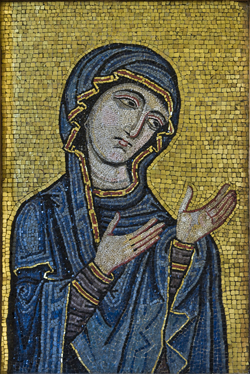
More than 4,000 years of Sicily’s history is being explored in a new exhibition opening at the British Museum in Bloomsbury today. Sicily: culture and conquest features more than 200 objects and focuses on two major eras: the arrival of the Greeks in the latter half of the 7th century BC and their subsequent encounters with earlier settlers and the Phoenicians; and, the period under Norman rule between 1100 and 1250 AD. Highlights include a spectacularly well preserved terracotta altar from about 500 BC, a terracotta sculpture of a Greek Gorgon, an iconic marble sculpture of a warrior from ancient Akragas, a bronze battering ram used by the Romans to sink enemy ships, a 12th century Byzantine-style mosaic and marble, and wooden Islamic-influenced architectural decorations along with ceremonial glassware and ivory, gold pendants and intricate enamel mosaics and cameos from the Norman period. The exhibition, being run in conjunction with Regione Siciliana, Assessorato dei Beni Culturati e dell’Identita Siciliana, runs in Room 35 until 14th August. Admission charges apply and a programme of events accompanies the exhibition. For more, see www.britishmuseum.org/sicily.

• The largest ever museum exhibition of underwear has opened at the V&A in South Kensington. Undressed: A Brief History of Underwear charts the history of underwear from the 18th century to today and features some of the more than 60 individual pieces of mostly contemporary underwear the museum recently acquired for its permanent collection as well as loaned objects. Among the objects on display are an “austerity corset” dating from 1917-18 which has been made from woven paper twine, a man’s waist belt used on the wearer’s wedding day which dates from 1842, a late 19th century corset designed for cycling as well as a rare surviving example of a 1978 panty thong designed by Rudi Gernreich (credited with giving the thong its name) and numerous contemporary pieces – everything from a butt lifter and waist trainer for women to a pair of EnlargetIt briefs designed by aussieBum to add volume to a man’s crotch and a mastectomy bra and prosthesis. The exhibition can be seen until 12th March next year. For more, see www.vam.ac.uk/undressed.

Banknote designer Harry Norman Eccleston’s Shakespearean-related design for the now out of circulation £20 banknote is the subject of an exhibition at the Bank of England Museum in the City. Held as part of commemorations marking 400 years since the Bard’s death, Eccleston’s Shakespeare explores the design elements used in the note, first issued in July, 1970, from his rendering of William Kent’s statue of Shakespeare to his drawing of the balcony scene of Romeo and Juliet. Entry is free. For more, see www.bankofengland.co.uk.

Send all items for inclusion t0 exploringlondon@gmail.com.

This Week in London – Seminal moments in Shakespearean performance; Maria Merian’s Butterflies; and, British conceptual art…

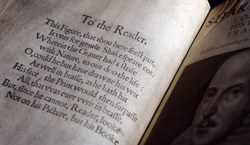
ShakespearesFirstFolio1623BritishLibraryPhotobyClareKendall It’s the 400th anniversary of Shakespeare’s death (in case you missed that), and among the many events marking the occasion comes a major exhibition at the British Library focusing on 10 key performances that it says have made the Bard the “cultural icon” he is today. Shakespeare in Ten Acts, which opens on Friday, focuses on performances which may not be the most famous but which represent key moments in shaping his legacy. They span the period the first performance of Hamlet at the Globe theatre in around 1600 to a radical interpretation of the same play from US theatre company The Wooster Group in 2013. Among the exhibition highlights are a human skull which was given to the actress Sarah Bernhardt by writer Victor Hugo (and which she used as Yorik’s skull when she played Hamlet in 1899), a dress worn by Vivien Leigh playing Lady Macbeth in the 1955 production of Macbeth at the Royal Shakespeare Company, the only surviving play script written in the Bard’s own hand and rare printed editions including Shakespeare’s First Folio and the earliest printed edition of Hamlet from 1603 (one of only two copies in the world). The exhibition, which runs until 6th September, is accompanied by a season of events. Admission charge applies. For more, see www.bl.uk. PICTURE: Shakespeare’s First Folio 1623 British Library Photo by Clare Kendall.

Still talking exhibitions commemorating Shakespeare’s death and a manuscript of William Boyce’s Ode to the Memory of Shakespeare will be on display at The Foundling Museum’s Handel Gallery from tomorrow. The work, which was composed in 1756, was performed annually at the Theatre Royal in Drury Lane. The manuscript, the first page of which was thought to be lost until it was acquired in 2006, formerly belonged to Samuel Arnold, who compiled the first complete edition of Handel’s works. Runs at the Bloomsbury-based museum until 30th May. Admission charge applies. For more, see www.foundlingmuseum.org.uk.

 Exquisite watercolours depicting the natural world go on show in The Queen’s Gallery at Buckingham Palace from tomorrow. Maria Merian’s Butterflies features 50 works produced by the eighteenth century German artist and entomologist Maria Sibylla Merian. The works – many of which record the flora and fauna of the then Dutch colony of Suriname in South America, were published in the 1706 work Metamorphosis Insectorum Surinamensium (The Metamorphosis of the Insects of Suriname) and partially printed, partially hand-painted versions of the plates were purchased by King George III for his library at Buckingham House (later Buckingham Palace). As well as insects, the works – which were based on a visit Merian made to the colony in 1699, depict lizards, crocodiles and snakes as well as tropical plants such as the pineapple. The exhibition runs until 9th October. Admission charge applies. For more, see www.royalcollection.org.uk/visit/the-queens-gallery-buckingham-palace.

The evolution of conceptual art in Britain is the subject of a new exhibition at Tate Britain in Milbank  Conceptual Art in Britain 1964-1979 features 70 works by 21 artists and positions conceptual art “not as a style but rather a game-changing shift in the way we think about art, how it is made and what it is for”. Highlights include Michael Craig-Martin’s An Oak Tree (1973) and Roelof Louw’s Soul City (Pyramid of Oranges) (1987) as well as Victor Burgin’s Possession (1976), Mary Kelly’s Post-Partum Document (1974-78) and Conrad Atkinson’s Northern Ireland 1968 – May Day 1975 (1975-76). Admission charge applies. Runs until 29th August. For more, see www.tate.org.uk.

Send all items for inclusion to exploringlondon@gmail.com.

This Week in London – Literary ‘foundlings’; Anthony Van Dyck re-examined; Astronights; and, Liberty in Fashion…

A new exhibition featuring drawings of fictional child protagonists who were orphaned, adopted, fostered or ‘found’ opens at the Foundling Museum in Bloomsbury tomorrow. Drawing on Childhood shows how illustrators, spanning the period from the 18th century until today, was inspired by Lemn Sissay’s 2014 commission, Superman was a Foundling. It features original drawings, first editions and special illustrated editions depicting everyone from James Trotter (James and the Giant Peach) to Cinderella and Rapunzel. Among the artists whose work will be on display are Phiz (Hablot K Browne), Arthur Rackham, Quentin Blake, Stref, George Cruikshank, Thomas Rowlandson, Nick Sherratt and David Hockney. Three contemporary artists – Chris Haughton, Pablo Bronstein and Posy Simmonds – have also been invited to produce a new illustration for Henry Fielding’s 1749 novel, The History of Tom Jones, a Foundling. Runs until 4th May. Admission charge applies. For more, see www.foundlingmuseum.org.uk.

NPG Supplementary Image

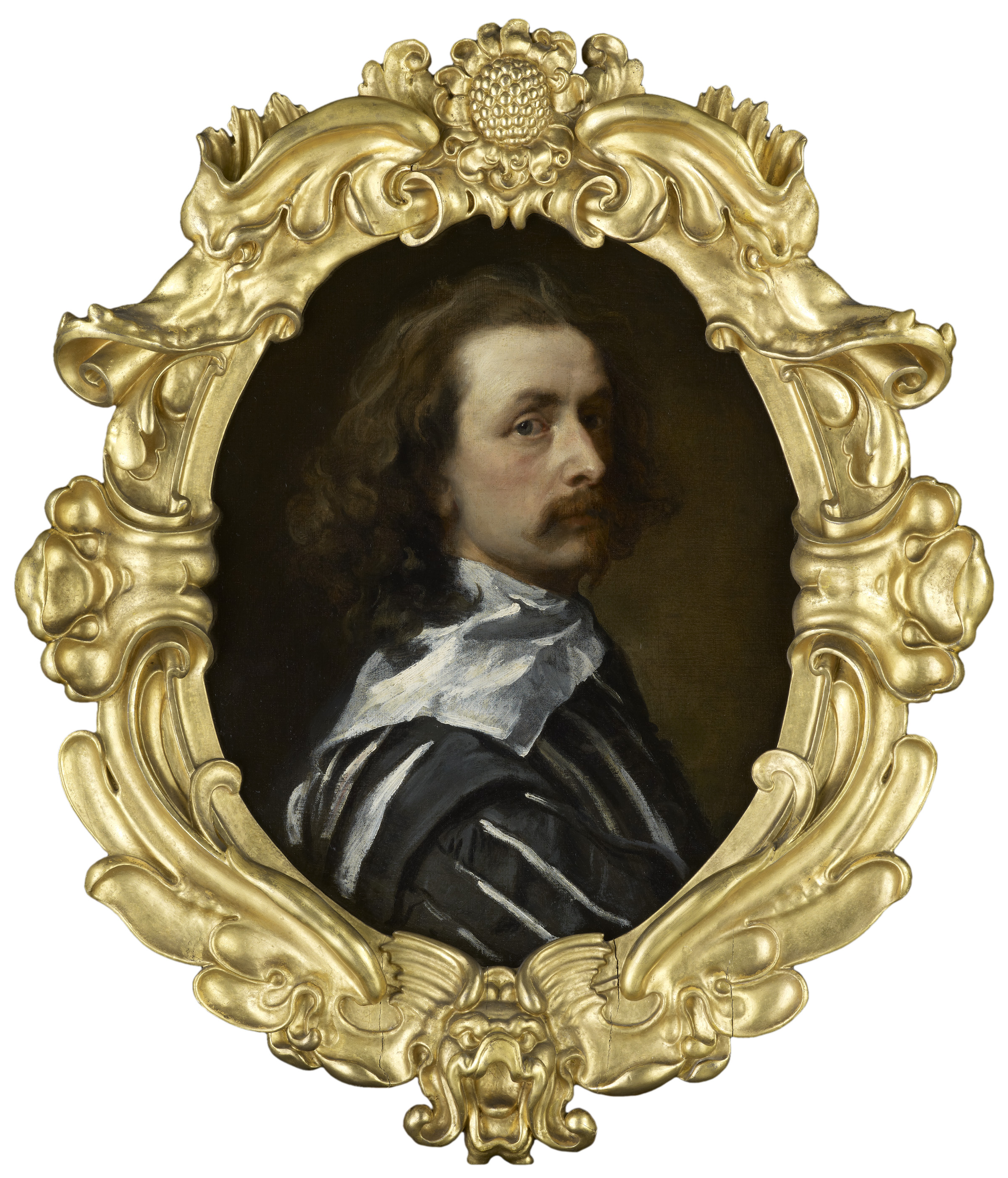
The works of Anthony van Dyck are the subject of a new display at the Dulwich Picture Gallery. I Am Van Dyck centres around a self-portrait of the artist recently acquired by the National Portrait Gallery and lent to Dulwich and juxtaposes the painting with two works by contemporary British artist Mark Wallinger – Self (Times New Roman) and I Am Innocent – in an effort to explore the meanings of individuality and our sense of self. The display – the first of four under the umbrella of Making Discoveries: Dutch and Flemish Masterpieces – also reveals new information on works by Van Dyck held by the gallery and shows how he developed and altered his compositions. Runs until 24th April. Admission charge applies. For more, see www.dulwichpicturegallery.org.uk.

The Science Museum is holding the first of its Astronights – “sleepovers for grown-ups” – this Saturday night. Guests will be treated to a midnight screening of Star Wars: Episode VII – The Force Awakens before which they’ll enjoy a three course meal with live music and an evening of entertainment. The next Astronight will be held on 4th March. Charges apply. For more, see www.sciencemuseum.org.uk/astronights.

On Now: Liberty in Fashion. Commemorating the 140th anniversary of the company in 2015, this exhibition at the Fashion and Textiles Museum in Bermondsey Street explores the impact of Liberty & Co on British fashion and features more than 150 garments, textiles, and objects which demonstrate the company’s relationships with designers such as Yves Saint Laurent and Vivienne Westwood. The exhibition, which opened in October, runs until 28th February. Admission charge applies and there’s a series of events accompanying the exhibition (many of which have still to run). For more, see www.ftmlondon.org.

Send all items for inclusion to exploringlondon@gmail.com.

Treasures of London – The Lampedusa Cross…

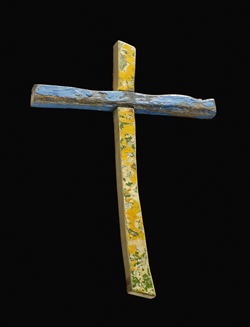
The-Lampedusa-CrossDonated to the British Museum in October (the last acquisition made under former director Neil MacGregor), the Lampedusa Cross was constructed by carpenter Francesco Tuccio out of wreckage from a refugee boat which sank off the Italian island of Lampedusa on 3rd October, 2013. At least 349 of the 500 refugees on board were drowned, some of whom were Eritrean Christians fleeing persecution, while 151 survived. Mr Tuccio, a resident of Lampedusa, decided to make a series of small crosses from the wreckage after meeting some of the refugees in the church of San Gerlando as a gift for them to both reflect their salvation and as a symbol of hope for the future. He was subsequently also asked to make a further cross which was carried by Pope Francis at the memorial service for the survivors. Asked by the British Museum if it could acquire a cross for its collection, Mr Tuccio made a cross specifically for the museum which he then donated to the institution, saying after he received a letter of thanks that “it is I who should thank you for drawing attention to the burden symbolised by this small piece of wood.” The cross went on display in Room 2 of the museum on 18th December (the last day of Mr MacGregor’s directorship). Entry is free. For more on the British Museum, see www.britishmuseum.org. PICTURE: © Trustees of the British Museum.

This Week in London – New guides to British Museum; Jean-Etienne Liotard at the RA; and Peter Lanyon’s gliding landscapes…

The British Museum has unveiled a new audio guide to provide the museum’s 6.7 million annual visitors with a new way to interact with its permanent collections. The guide comes in 10 different languages as well as in British Sign Language, an updated and improved audio descriptive guide and a “family game guide” for children to play with their parents. It boasts 70 new commentaries detailing the most recent research on key objects as well as new tours for China and A History of the World, a highlights feature and Top 1o tour, stunning new photography and a ‘My visit’ feature which sends visitors a visual record of their visit by email. The guide is available for hire at the Bloomsbury institution. See www.britishmuseum.org for more.

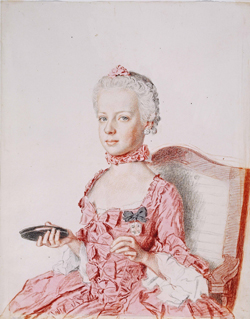
Marie-AntoinetteOn Now: Jean-Etienne Liotard. This exhibition at the Royal Academy of Arts’ Sackler Wing of Galleries off Piccadilly, which closes at the end of the month, features more than 70 works by the 18th century Swiss artist including works in pastels (of which he was an undisputed master), oil paintings, drawings and miniatures. The exhibition is divided into six sections – they include a detailed look at the artist and his family, his four year sojourn in Constantinople and his royal portraits which include Archduchess Marie-Antoinette of Austria, painted in 1762 (pictured). Runs until 31st January. Admission charge applies. For more, see www.royalacademy.org.uk. PICTURE: Bettina Jacot-Descombes/RA

On Now: Soaring Flight: Peter Lanyon’s Gliding Paintings. The first exhibition devoted to the post-war artist’s gliding paintings, this display at the Courtauld Gallery in Somerset House explores Lanyon’s (1918-1964) pioneering artistic breakthroughs in landscape painting as he created works inspired and influenced by his own gliding experiences in West Cornwall. The display features 15 major paintings from public and private collections around the world. Closes on 17th January. Admission charges apply. See www.courtauld.ac.uk.

Send all items for inclusion to exploringlondon@gmail.com.

This Week in London – V&A reopens Europe 1600-1815 galleries; the Victorian era’s finest; and, ‘Handel’s Performers’…

ZMMA_VA_Dec_2015_DG_01

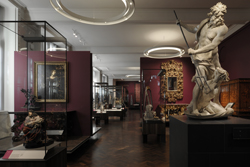
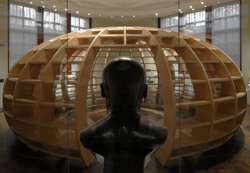
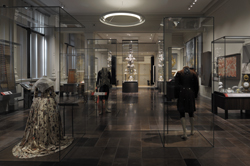
The V&A has reopened its ‘Europe 1600-1815’ galleries to the public this week following a major £12.5 million refurbishment. The seven transformed galleries, located close to the South Kensington museum’s grand entrance, tell the story of how France succeeded Italy as the “undisputed leader” of fashionable art and design in Europe in the late 17th century and how Europeans systematically “explored, exploited and collected” resources from Africa, Asia and the Americas. Featuring more than 1,100 objects, the galleries – redesigned in conjunction with architectural practice ZMMA – include four V&A2large rooms introducing the story of Europe across the period and three smaller rooms focusing on specific activities – ‘collecting in the Cabinet’, ‘enlightened thought in the Salon’, and ‘entertainment and glamour in the Masquerade’. Objects on display include a highly ornate Rococo writing cabinet made from Augustus III (on show for the first time since it has undergone a conservation work), a newly conserved 18th century bed from the Parisian workshop of George Jacob – furniture maker to Napoleon, a 17th century Venetian table by Lucio de Lucci and Pierre-Denis Martin’s oil painting, The Visit of Louis XIV to the Chateau de V&A3Juvisy (both on show for the first time) as well as several large recently cleaned tapestries including the 1860s Gobelins tapestry, The infant Moses tramples on Pharoah’s crown. The display also includes three recreated period rooms – a 17th century French bedchamber, Madame de Sérilly’s cabinet and a mirrored room from 18th century Italy – while in the Salon can be found a contemporary installation, The Globe. A curved architectural sculpture, it is the creation of Havana-based artist collective Los Carpinteros and forms a “room within a room” within the ‘Salon’. It will be used for events and discussions. Entry to the galleries is free. For more, see www.vam.ac.uk/europegalleries. PICTURES: David Grandorge/©Victoria and Albert Museum, London.

On Now: A Victorian Obsession: The Pérez Simón collection. This exhibition at the Leighton House Museum – former home of artist Frederic, Lord Leighton – features more than 50 works by leading Victorian artists, some of which are rarely exhibited. The paintings, which include six works by Leighton himself as well as works by Dante Gabriel Rossetti, Edward Burne-Jones, John Everett Millais and John William Waterhouse, all form part of the collection of Mexican Juan Antonio Pérez Simón who has the largest private collection of Victorian art outside the UK. The highlight of the exhibition, however, is Lawrence Alma-Tadema’s The Roses of Heliogabalus, being shown in London for the first time since 1913. Admission charge applies. The exhibition at the property on the edge of Holland Park runs until 6th April. For more, see www.leightonhouse.co.uk.

On Now: Handel’s Performers. This display of portraits and documents in The Foundling Museum’s Handel Gallery is a showcase of celebrities and singers who brought the work of composer George Frideric Handel’s work to the public in the 18th century. Among those depicted are Anastasia Robinson and Senesino, among the highest paid singers of their time, Anna Maria Strada, a leading soprano, Gustavus Waltz, a bass singer who sang at the benefit performance of Handel’s Messiah at the Foundling Hospital in 1754, and John Hebden, who played in the orchestra during benefit performances of the Messiah in 1754 and 1758. Runs at the Bloomsbury museum until 1st May. Admission charge applies. For more, see www.foundlingmuseum.org.

Send all items for inclusion to exploringlondon@gmail.com.

This Week in London – Life after the pharaohs in Egypt; Days of the Dead; horrible histories at two royal palaces; and Dickin and Gombrich honoured with Blue Plaques…

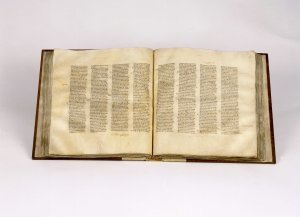
 •untitled 276.tif The first major exhibition to explore the history of Egypt after the pharaohs opens at the British Museum today. Egypt: Faith after the pharaohs spans 1,200 years of history – from 30 BC to 1171 AD – with 200 objects showing how Christian, Islamic and Jewish communities reinterpreted the pharaonic past of Egypt and interacted with each other. The exhibition opens with three significant examples of the Hebrew Bible, the Christian New Testament and the Islamic Qur’an – the texts include the New Testament part of the 4th century AD Codex Sinaiticus, the world’s oldest surviving Bible and the earliest complete copy of the New Testament, which is now part of the British Library’s collection. All three are juxtaposed with everyday stamps associated with each of the three religions in an illustration of the relationship between the institutional side of religion and its everyday practice, both key themes of the exhibition. Other exhibits include a pair of 6th-7th century door curtains featuring classical and Christian religious motifs, a 1st-2nd century statue of the Egyptian god Horus in Roman military costume, and a letter from the Roman Emperor Claudius (41-54 AD) concerning the cult of the divine emperor and the status of Jews in Alexandria. Admission charge applies. Runs until 7th February in Room 35. A programme of events accompanies the exhibition. For more, see www.britishmuseum.org/egypt. PICTURE: Codex Sinaiticus, open at John 5:6-6:23. Image courtesy of the British Library.
Still at the British Museum and a free four day festival of art, performance, storytelling and talks kicks off on Friday night to mark the Mexican tradition of the Days of the Dead. The annual celebration, which draws on both native and Catholic beliefs, is held on 1st and 2nd November and sees families gather to remember relatives and friends who have died. The festival, which is being conducted in association with the Mexican Government, includes a Friday evening event, a weekend of family activities featuring storytelling, films, music and dance, and a study day  on Monday featuring lectures, gallery talks and activities. The museum will feature elaborate decorations by Mexican artists – including Betsabeé Romero – throughout the festival with a particular focus on the Great Court and Forecourt. Events – which run from 30th October to 2nd November – are free. For more, see www.britishmuseum.org/dotd.

Horrible histories indeed! Hampton Court Palace and Kensington Palace are both hosting ghost tours from this weekend. The tours focus on some of the more grisly aspects of the history of the palaces with tours at Hampton Court featuring a visit to a shallow grave which was only uncovered in 1870 and those at Kensington Palace encountering the gruesome details of King William III’s fatal horse-riding accident and Queen Caroline’s horrific final hours. Admission charges apply. For more details, head to www.hrp.org.uk.

Animal welfare campaigner Maria Dickin (1870-1951) and art historian EH Gombrich (1909-2001) have been honoured with English Heritage Blue Plaques. The plaque commemorating Dickin – founder of the People’s Dispensary for Sick Animals (PDSA) and of the PDSA Dickin medal, awarded to animals associated with the armed forces or civil defence who have shown conspicuous gallantry and devotion to duty – has been placed on the Hackney house at 41 Cassland Road where she was born and spent the first few years of her life. Meanwhile the plaque to Gombrich was placed on the house at 19 Briardale Gardens in Hampstead where he lived for almost 50 years, from shortly after publication of his seminal work The Story of Art to his death in 2001. For more see www.english-heritage.org.uk/visit/blue-plaques/.

Send all items for inclusion to exploringlondon@gmail.com.

This Week in London – Celts at the British Museum; the Fallen Woman at the Foundling; and Ai Weiwei…

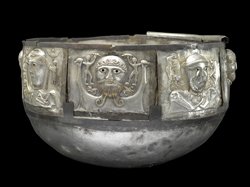
Gundestrup_Whole-ImageThe story of the Celts and their culture is being explored in a new exhibition which opens at the British Museum in Bloomsbury today. Celts: Art and Identity, being run in partnership with National Museums Scotland, is the first British exhibition on the Celts in 40 years. Highlights of the display include a hoard of four gold torcs found at Blair Drummond in Stirling in 2009, Christian artefacts including iron handbells used to call people to prayer, elaborately illustrated Gospels, carved stone crosses and, a gilded bronze processional cross which, dating from 700-800 AD and coming from Tully Lough in Ireland, will be on show for the first time in Britain. Also present will be the Gundestrup cauldron, which dates from 100 BC-1 AD and comes from Denmark (pictured), London artefacts such as the Waterloo helmet and Battersea shield, and works created more recently which reflect on an often mythical Celtic past such as George Henry and Edward Atkinson Homel’s 1890 painting The Druids: Bringing in the Mistletoe. Runs until 31st January in the Sainsbury Exhibition Gallery (Room 30). Admission charge applies. For more, see www.britishmuseum.org. PICTURE: © The National Museum of Denmark.

A new exhibition exploring the myth and reality of the ‘fallen woman’ in Victorian Britain opens at the Foundling Museum in Bloomsbury tomorrow. The Fallen Woman features works by artists including Dante Gabriel Rossetti, Richard Redgrave, George Frederic Watts and George Cruikshank, displayed alongside stereoscopes and depictions of the fallen woman in the era’s popular media. It also looks at the petitions of women applying to the Foundling Hospital, bringing to life the real ‘fallen women’ of the period through a specially-commissioned sound installation by artist and musician Steve Lewinson. The exhibition runs until 3rd January. Admission charge applies. For more, see www.foundlingmuseum.org.uk.

The London Transport Museum’s Depot in Acton hosts its autumn open days this weekend. The day includes the chance to see the original printing blocks used for the Johnston font – London Transport’s iconic typeface, expert talks on transport vehicles, a chance to see how the moquette – the seat covering on the tube – is made and film screenings from the LTM archive. From 11am to 5pm Saturday and Sunday. Admission charge applies. For more, see www.ltmuseum.co.uk.

The Worshipful Company of Woolmen will be holding their annual  sheep drive across London bridge this Sunday. The event, free to watch, kicks off at 10am and runs until 5pm. For more, see www.woolmen.com.

• On Now: Ai Weiwei. This landmark exhibition at the Royal Academy of Arts in Piccadilly celebrates the work of Honorary Royal Academician and leading Chinese artist Ai Weiwei with significant works from 1993 onwards and new, site specific installations. Among the key exhibits is Straight (2008-12), a body of work related to the Sichuan earthquake of 2008, fabricated from 90 tonnes of bent and twisted rebar which was collected by the artist and straightened by hand. Runs until 13th December.  Admission charge applies. For more, see www.royalacademy.org.uk.

Send all items for inclusion to exploringlondon@gmail.com.

This Week in London – Party like a Georgian; a playground with a history; and, a Dickens whodunnit…

Kensington-Palace• Join the Georgian Queen Caroline for a garden party in the grounds of Kensington Palace this weekend. The Georgian Court will be taking to the palace gardens for a summer celebration featuring music, military drills and theatre as they bring the era to life. Visitors are encouraged to immerse themselves in the experience as a courtier with the gardens decked out in a range of tents where they can try out costumes and powdered wigs as well as learn court etiquette, swordplay and dancing while the ice-house will feature Georgian ice-cream (and it’s rather odd flavours such as parmesan). Runs from tomorrow until Sunday. Admission charges apply (under 16s go free with a maximum of six children per paying adult). For more, see www.hrp.org.uk/KensingtonPalace/. PICTURE: ©Historic Royal Palaces

First created in 1923, a playground in Victoria Tower Gardens – newly named the Horseferry Playground – has been reopened after improvement works. The works, carried out under the management of Royal Parks, have seen the reintroduction of a sandpit as well as the installation of new swings and slide, dance chimes and a stare play installation to represent the River Thames. The playground, located close to the Houses of Parliament in Westminster, also features a series of timber horse sculptures, new seating and a refreshment kiosk with metal railings designed by artist Chris Campbell depicting events such as the Great Fire of London and Lord Nelson’s funeral barge and views of the River Thames. The project has also seen the Spicer Memorial, commemorating role of paper merchant and philanthropist Henry Spicer in the establishment of the playground – then just a large sandpit, restored. For more, see www.royalparks.org.uk/parks/victoria-tower-gardens.

Now On – A Dickens Whodunnit: Solving the Mystery of Edwin Drood. This temporary exhibition at the Charles Dickens Museum in Bloomsbury explores the legacy of Dickens’ final novel The Mystery of Edwin Drood, left unfinished after his death in 1870. Visitors are able to investigate crime scenes, search for murder clues and see the table on which the novel was penned as well as clips from theatrical adaptations, and a wealth of theories on ‘whodunit’. The exhibition runs until 11th November. Admission charge applies. For more, see www.dickensmuseum.com.

Send all items for inclusion to exploringlondon@gmail.com.

This Week in London – Virtual reality at the British Museum; British Library’s Grade I listing; and, Deptford’s cardboard tower…

Get an up close and in-depth look at the Bronze Age as virtual reality comes to the British Museum this weekend. For the first time, families including children aged 13 or over will be able to wear Samsung Gear VR devices to virtually explore a Bronze Age site designed by Soluis Heritage which features objects from the museum’s collections. They will also be able to enter an “immersive fulldome” where they can explore a virtual reality world featuring a Bronze Age roundhouse and objects. The event will take place in the Samsung Digital Discovery Centre on Saturday and Sunday. For more, see www.britishmuseum.org.

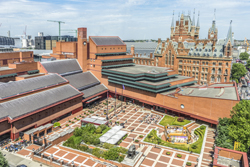
british-library-aerial-shotThe British Library at St Pancras has been given Grade I heritage status, joining the top 2.5 per cent of listed buildings in England. Designed by architect Sir Colin St John Wilson and his partner MJ Long and completed in the late Nineties, the library is the largest public building to have been built in the UK in the 20th century. At the heart of the library is the King’s Library tower which houses the library of George III as well as the Treasures Gallery where national treasures such as the Magna Carta, Lindisfarne Gospels and original Beatles lyrics are displayed. The library was listed along with seven other libraries in England, all of which have been given Grade II status. Meanwhile the record-breaking exhibition Magna Carta: Law, Liberty, Legacy has entered its final month before closing on 1st September. The display features two of the four surviving Magna Cartas as well as the US Declaration of Independence and Bill of Rights – in the UK for the first time – and more than 200 objects including medieval manuscripts, artworks, 800-year-old garments and esoterica such as King John’s teeth and thumb bone. Admission charge applies. For more, see www.bl.uk/magna-carta. PICTURE: Tony Antoniou/British Library.

Help build The People’s Tower in Douglas Square in Deptford, south east London, this weekend. French artist Olivier Grossetete has been invited by the Albany to build the tower – with your help – out of cardboard boxes. Tower assembly takes place between 10am and 3pm on Saturday and then between 11am and 5pm on Sunday, there will be free live music and family entertainment in the Albany Garden as the tower is finished and then knocked down. No booking is required. For more, check out www.thealbany.org.uk.

Send all items for inclusion to exploringlondon@gmail.com.

This Week in London – Exploring London’s archaeology; Alice in Bloomsbury; and, ‘Soundscapes’ at the National Gallery…

Canal-MuseumDescend into ice wells at the London Canal Museum; delve into the archaeological archives of the Egypt Exploration Society; discover the history of the Spitalfields Charnel House; and, tour the remains of London’s Roman military fort with experts from the Museum of London. The British Festival of Archaeology kicked off last weekend and there’s a plethora of events happening across London as part of the more than 1,000 taking place across the country. For a full programme of events – many of which are free – head to www.archaeologyfestival.org.uk. The festival runs until 26th July.

Follow Alice down the rabbit hole in a new exhibition which opened at the Cartoon Museum in Bloomsbury yesterday. Marking the 150th anniversary of the book’s publication, Alice in Cartoonland looks at how cartoonists, caricaturists, satirists, animators and graphic artists adapted and used author Lewis Carroll (aka Charles Lutwidge Dodson) and original illustrator John Tenniel’s work in social and political commentaries as well as just to have fun. The display features posters, cartoon strips, comic and graphic novels and artwork from TV and film versions of Alice with Low, Vicky, Shepard, Steadman and Gilroy among the artists represented. Runs until 1st November (with some events held in conjunction with it). Admission charge applies. For more, see www.cartoonmuseum.org.

Exploring the National Gallery’s art collection is usually done with the eyes but thanks to an innovative project which kicked off last week, it’s now also about listening. A series of contemporary sound artists and musicians including Nico Muhly, Gabriel Yared, Susan Philipsz, Jamie xx, Chris WatsonJanet Cardiff and George Bures Miller have created sounds and musical pieces in response to works they have chosen from the gallery’s collection. Selected works include the late 14th century The Wilton Diptych (Muhly), Hans Holbein’s 1533 painting The Ambassadors (Philipsz) and Paul Cézanne’s painting Bathers (Les Grandes Baigneuses) (Yared). Soundscapes runs until 6th September in the Sainsbury Wing. Admission charge applies. For more, see www.nationalgallery.org.uk.

Send all items for inclusion to exploringlondon@gmail.com.

This Week in London – The Waddesdon Bequest has a new home; history painted at the Tate; and, early release NYE tickets…

Holy-Thorn-ReliquaryThe Waddesdon Bequest, a collection of medieval and Renaissance treasures left to the British Museum by Baron Ferdinand de Rothschild in 1898, has a new home. Redisplayed in a new gallery which opened at the museum last week, the collection features the Christian relic known as Holy Thorn Reliquary (pictured) – a concocotion of gold, enamel and gems set around a thorn supposedly taken from Christ’s Crown of Thorns, the Lyte Jewel – a diamond-studded locket made in London in 1610-11 to hold a miniature of King James I and presented by the king to Thomas Lyte as thanks for a genealogy he created representing the king as a descendant of the Trojan Brutus, and the Cellini Bell – cast from silver in Nuremberg around 1600 and later displayed by Horace Walpole at his west London villa in Strawberry Hill. The bequest collection, which must always be displayed in a room of its own under its original terms, was first displayed at Baron Ferdinand’s country home of Waddesdon Manor in Buckinghamshire (now a National Trust property) and moved to the museum after his death. The redisplay reconnects the collection with its past at the manor and the history of the museum – the room where it is now displayed, Room 2a, was the museum’s original Reading Room and part of a neo-classical suite of rooms designed by Robert Smirke in 1820. It has been given the “most ambitious digital treatment” of any permanent gallery in the institution. Admission is free. For more, see www.britishmuseum.org.

The “enduring significance and emotional power” of British history painting is under examination in a new exhibition which opened at Tate Britain on Millbank last week. Fighting History features everything from the large scale works of 18th century painters John Singleton Copley and Benjamin West through to 20th century and contemporary works by Richard Hamilton and Jeremy Deller and looks at how they reacted, captured and interpreted key historical events. Works on show include Singleton Copley’s 1778 work The Collapse of the Earl of Chatham in the House of Lords, 7 July, William Frederick Yeames’ 1877 work Amy Robsart, John Minton’s 1952 work The Death of Nelson and Deller’s 2001 work The Battle of Orgreave, a re-enactment of 1984 protest in South Yorkshire. The exhibition also compares traditional and contemporary renderings of events from scripture, literature and the classical world and features a room dedicated to interpretations of the great Biblical flood of Noah. Runs until 13th September. Admission charges apply. For more, see www.tate.org.uk.

A limited number of early release tickets to London’s New Year’s Eve celebrations will go on sale from noon tomorrow (Friday, 19th June). The tickets, the bulk of which will be released in September, cost £10 a person with the proceeds being used to cover costs including printing and infrastructure. As was the case last year, people without tickets will not be able to access the event. To get hold of tickets, head to www.london.gov.uk/nye.

Send all items for inclusion to exploringlondon@gmail.com.

This Week in London – London Festival of Architecture’s ‘Work in Progress’; objects and sestudes at the Foundling Museum; and, sculpting Sir Tim Berners-Lee…

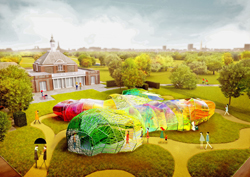
SerpentineThe month-long London Festival of Architecture is underway with this year’s theme ‘Work in Progress’. Highlights of this year’s programme – which includes 220 exhibitions, installations, talks and tours – include a discussion at this year’s Serpentine Gallery (pictured) by architects SelgasCano, access to development sites including Olympic Park, Goodman’s Fields, and Nine Elms, a London Transport Museum tour of London’s first skyscraper, an installation exploring the role of coffee shop as workspace by the Not to Scale Collective, and a Routemaster tour of the West End. For more, including a downloadable PDF of the programme, see www.londonfestivalofarchitecture.org.

A series of  26 ‘sestudes’ – texts exactly 62 words long – are being displayed along with the objects that inspired them in a new exhibition, 26 Pairs of Eyes, at The Foundling Museum in Bloomsbury. The sestudes have been written by the likes of former Poet Laureate Sir Andrew Motion in a bid cast new light on the objects, which are all from the museum’s collection and which range from a pencil which once belonged to Hospital Secretary John Brownlow to George Frideric Handel’s will. The display, which opens today, is on show until 6th September. Meanwhile the museum is also hosting another exhibition, Lines of Beauty, which explores the tradition of decorative plasterwork including the restored Rococo splendour of the hospital’s Court Room (donated by William Wilton in the 1740s and saved when the Foundling Hospital building was demolished in the 1920s). Admission charges apply. For more, see www.foundlingmuseum.org.uk.

A new portrait of the inventor of the World Wide Web, Sir Tim Berners-Lee, has been unveiled at the National Portrait Gallery. The work of Sean Henry, the painted bronze sculpture depicts a two-thirds life size Berners-Lee carrying the leather rucksack in which he keeps his laptop. It was commissioned to mark Sir Tim’s 60th birthday and is the gallery’s first commissioned portrait sculpture for seven years. On display in Room 40. Admission is free. For more, see www.npg.org.uk.

Send all items for inclusion to exploringlondon@gmail.com.

This Week in London – The Boat Race; Designs of the Year; Heckling Hitler; and Victorian-era homelessness…

The 161st Boat Race is on this weekend and will once more see Oxford and Cambridge rowing crews battling it out in their annual contest on the Thames. The day’s schedule of festivities kicks off at noon at Bishop’s Park near the race’s starting point just west of Putney Bridge and at Furnivall Gardens near Hammersmith Bridge but the main highlights don’t take place until late in the afternoon – the Newton Women’s Boat Race at 4.50pm and the main event, the BNY Mellon Boat Race, at 5.50pm. The race runs along the Thames from Putney Bridge through to Chiswick Bridge with plenty of vantage points along the way. The tally currently sits at 78 to Oxford and 81 to Cambridge. For more information, including where to watch, head to http://theboatraces.org/.

• Prospective “Designs of the Year” are on display at the Design Museum in Shad Thames ahead of the announcement of awards in May and June. With the awards – handed out in six categories – now in their eighth year, the 76 designs on display include Google’s self-driving car, the Frank Gehry-designed Foundation Louis Vuitton in Paris and Asif Kahn’s experimental architectural installation Megafaces which debuted at the Sochi Olympics as well as Norwegian banknotes, a billboard that cleans pollutants from the air and a book printed without ink. Runs until 23rd August. Admission charge applies. For more, see www.designmuseum.org/exhibitions/designs-of-the-year-2015.

On Now: Heckling Hitler: World War II in Cartoon and Comic Art. Showing at the Cartoon Museum in Bloomsbury, this exhibition explores how World War II unfolded through the eyes of British cartoonists. It features more than 120 original drawings and printed ephemera and while the focus is largely on those contained newspapers and magazines, the exhibition does include some sample materials from books, aerial leaflets, artwork from The Dandy and The Beano, postcards and overseas propaganda publications as well as some unpublished cartoons drawn in prisoner-of-war camps and by civilians at home (the latter on scrap paper from the Ministry of Food), and even a rare pin cushion featuring Hitler and Mussolini. Among the artists whose works are featured are ‘Fougasse’ (creator of Ministry of Information posters reminding the public that ‘Careless Talk Costs Lives’), William Heath Robinson and Joe Lee. The exhibition runs until 12th July. Admission charge applies. For more, see www.cartoonmuseum.org/exhibitions/current-exhibitions/heckling-hitler.

On Now: Homes of the Homeless: Seeking Shelter in Victorian London. This exhibition at the Geffrye Museum in Shoreditch explores the places inhabited by London’s poor during the 19th and 20th centuries and brings them to life through paintings, photographs and objects as well as the retelling of personal stories and reports. Starting in the 1840s, the exhibition charts the problems faced by London’s poor and examines the dirty and cramped conditions of lodging houses, workhouses and refuges where they took shelter along with, for those even less fortunate, the streets where they slept rough before moving on to some of the housing solutions designed specifically to help the poor. Runs until 12th July. Admission charge applies. Running alongside the exhibition is a free display, Home and Hope – a collaborative exhibition with the New Horizon Youth Centre which explores the experience of young homeless people in London today. For more, see www.geffrye-museum.org.uk/whatson/exhibitions-and-displays/homes-of-the-homeless/.

Send all items for inclusion to exploringlondon@gmail.com

This Week in London – Greek sculpture at the British Museum; Hew Locke at HMS Belfast; an interactive high seas adventure at the National Maritime Museum; and, coral reefs at the Natural History Museum…

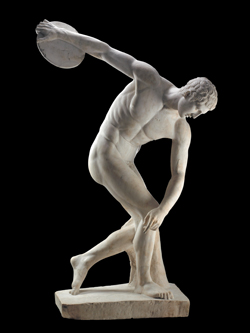
DiscobolusThe ancient Greek “preoccupation with the human form” is the subject of a new exhibition which opens at the British Museum in Bloomsbury today. Defining beauty: The body in ancient Greek art features about 150 objects dating from the prehistoric to the age of Alexander the Great. Highlights include a newly discovered bronze sculpture of a new athlete scraping his body with a metal tool after exercise before bathing, six Parthenon sculptures from the museum’s collection including a sculpture by Phidias of the river god Ilissos, and  copies of Greek originals including the Towny Discobolus (discus-thrower – pictured) – a Roman copy of Myron’s lost original – and Georg Romér’s reconstruction of Polykleitos’ Doryphoros (spear-bearer) . Runs until 5th July. Admission charge applies. For more, see www.britishmuseum.org/definingbeauty. PICTURE: © The Trustees of the British Museum.


London-based contemporary artist Hew Locke has transformed an entire deck of the HMS Belfast in a major new work, ironically titled work, The Tourists. The installation – which is on show until 7th September – depicts imaginative events in which the crew of the ship are preparing to arrive at Trinidad in time for Carnival in 1962 (the ship’s last international journey – to Trinidad – actually arrived three months after the celebration). Free with general admission charge. For more see www.iwm.org.uk/visits/hms-belfast. Meanwhile, the Imperial War Museum in Lambeth is hosting a free exhibition of Locke’s work in which he explores the idea of naval power through a series of ship sculptures. This free exhibition can be seen until 4th May. For more, see www.iwm.org.uk/visits/iwm-london.

Families are invited to take part in a new interactive experience on the “high seas of maritime history” which launches at the National Maritime Museum in Greenwich on Saturday. The museum has joined with Punchdrunk Enrichment to take six to 12 year-olds and their families on an adventure, Against Captain’s Orders: A Journey into the Uncharted. Visitors don life jackets as they become part of the crew of the HMS Adventure and take on various seafaring roles as they navigate their way through the exhibition. Admission charge applies. Runs until 31st August. For more, see www.rmg.co.uk/againstcaptainsorders.

See a real coral reef and take a virtual dive in new exhibition at the Natural History Museum in South Kensington. Coral Reefs: Secret Cities of the Sea – which opens tomorrow on World Oceans Day – also features more than 200 specimens including coral, fish and fossils. These include examples collected by Charles Darwin on the voyage of the HMS Beagle in the 1830s, giant Turbinate coral and creatures ranging from the venomous blue-ringed octopus to tiny sponge crabs. For more see www.nhm.ac.uk.

Send items for inclusion to exploringlondon@gmail.com.

This Week in London – John Singer Sargent (and friends); Chinese New Year in Soho; and, ‘Cravings’ at the Science Museum…

NPG_920_1362_RobertLouisSteA major exhibition of the works of John Singer Sargent has opened at the National Portrait Gallery off Trafalgar Square this week. Sargent: Portraits of Artists and Friends – which has been organised in conjunction with the Metropolitan Museum of Art in New York – brings together a collection of the artist’s intimate and informal portraits of his friends including Robert Louis Stevenson, Claude Monet and Auguste Rodin. Sargent (1856-1925), born the son of an American doctor in Florence, studied in Italy and France before scandal led him to move to England where he established himself as the country’s leading portrait painter. He made several visits to the US during his career, painting portraits as well as decorative paintings for public buildings including the Boston Public Library and Museum of Fine Arts. The exhibition runs until 25th May. Admission charge applies. For more, see www.npg.org.uk. PICTURE: Courtesy of the Taft Museum of Art, Cincinnati, Ohio

It’s Chinese New Year and the celebrations kick off in London’s Chinatown in Soho this Sunday. The day starts with a parade at 10am which runs from Duncannon Street to Shaftesbury Avenue featuring floats and Chinese lion and dragon teams. It will be followed by a free programme of events in Trafalgar Square which, starting at noon, include music, dance, acrobatics and martial arts. Other events are taking place at a range of locations across the West End. For more information, check out www.london.gov.uk/get-involved/events/chinese-new-year-2015.

Ever wondered how your appetite is shaped by food? A new free exhibition at the Science Museum in South Kensington, Cravings: Can Your Food Control You? explores how the brain, ‘gut brain’ and bacteria influence our diets. Along with personal stories and objects as well as the use of science and tech to present the display, those who attend the exhibition will also be able to take part in a ground-breaking neurogastronomy experiment to explore how our senses influence appetite (the experiment is also available online – follow the link below). There’s also a digital quiz where you can consider the ethical challenges that cravings, appetite control and food regulations pose. Runs until January next year. For more, see www.sciencemuseum.org.uk/cravings.

The history of the Foundling Hospital’s Boy’s Band is the subject of a display at the Foundling Museum in Bloomsbury. Foundlings at War: Military Bands is part of a series of exhibits supported by the Heritage Lottery Fund exploring the hospital’s links with the military. The Boy’s Band was established in 1847 and boys who joined increasingly went on to serve in the military. Runs until 10th May. For more, see www.foundlingmuseum.org.uk.

Send all items for inclusion to exploringlondon@gmail.com.

This Week in London – 70 years of British history in the spotlight at the Hayward; Napoleonic propaganda at the British Museum; pick the copy at the Dulwich Picture Gallery; and, Fulham Palace during World War I…

The last 70 years of British history is under the spotlight at the Hayward Gallery, South Bank, in a new exhibition, History is Now:7 Artists Take on Britain. As the title suggests, seven UK-based artists – John Akomfrah, Simon Fujiwara, Roger Horns, Hannah Starkey, Richard Wentworth and Jane and Louise Wilson – are each looking at a particular period of cultural history spanning the years from 1945 to today. The artists have selected more than 250 objects from public and private collections and have displayed these along with photographs, newspapers, films, domestic items and artefacts. The exhibition, which runs until 26th April, is part of the Southbank Centre’s Changing Britain 1945-2015 Festival which runs until 9th May. For more, see www.southbankcentre.co.uk.

The use of Napoleon’s image in propaganda during the Napoleonic Wars is the subject of an exhibition which opened last week at the British Museum in Bloomsbury. Bonaparte and the British: prints and propaganda in the age of Napoleon looks at how propaganda was used on both sides of the channel and includes works by both British and French satirists. Among British artists whose work is featured is that of James Gillray, Thomas Rowlandson, Richard Newton and George Cruikshank and the exhibition also features a range of objects – mugs, banners and even Napoleon’s death mask – drawn from the museum’s collection. The exhibition, which runs until 16th August, is free and can be found in Room 91. For more, see www.britishmuseum.org.

DulwichCan you pick a copy? Visitors to the Dulwich Picture Gallery in the city’s south have the opportunity to test their skills with a new initiative which has seen a Chinese replica placed somewhere among the 270 Old Master paintings on display. Made in China: A Doug Fishbone Project explores the nature and importance of the concept of the original versus that of the copy and the role of art as commodity. People have three months – until 26th April – to visit the gallery and find the replica painting before submitting their answers via an iPad in the gallery (those who correctly identify it will be entered into a competition to win a custom print from the gallery’s collection signed by the American artist Doug Fishbone). The replica will be revealed on 28th April when it will hang side-by-side with the original. Admission charge applies. For more, see www.dulwichpicturegallery.org.uk. PICTURE: © Stuart Leech/Dulwich Picture Gallery.

• The Talk: Isambard Kingdom Brunel – The man who built the world. Robert Pulse, director of The Brunel Museum, will give a free talk about the life and achievements of the great Victorian engineer Brunel at the John Harvard Library 211 Borough High Street on 17th February at 6.30pm. For more information, follow this link.

On Now: Fulham Palace through the Great War. This exhibition at the former home of the Bishop of London on the Thames River in west London tells the story of the palace during World War I and examines the lives of those connected with the palace who died in the conflict, such as William Burley, son of Bishop Winnington-Ingram’s chauffeur. It tells how the bishop – described as an “enthusiastic” recruiter – visited the frontline in 1915 and how, in 1918, the palace was occupied by a Red Cross hospital. Runs until 16th April. Entry is free. For more, see www.fulhampalace.org/visiting-whats-on/exhibitions/.

Send all items for inclusion to exploringlondon@gmail.com.