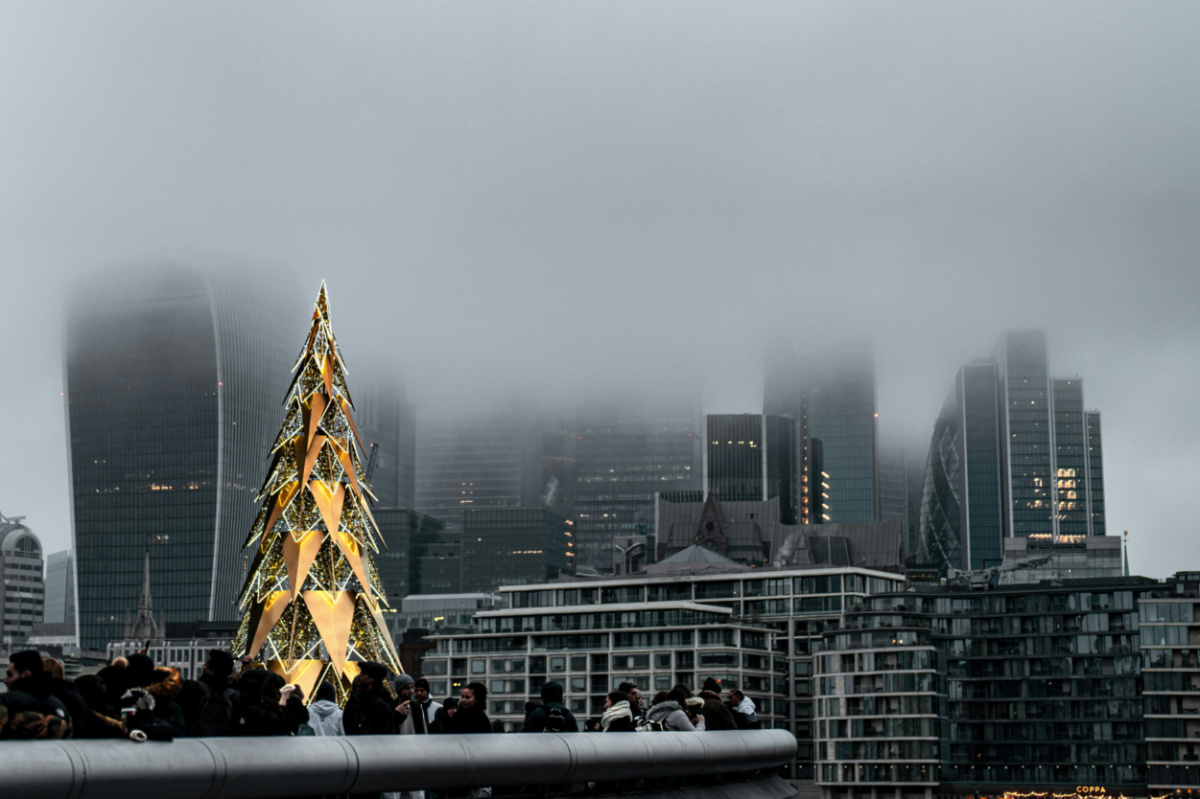
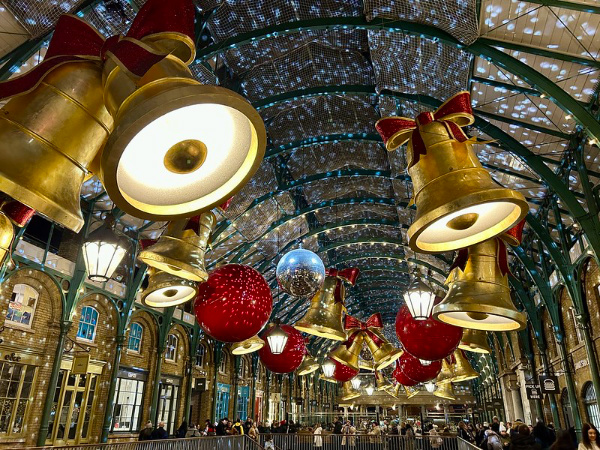
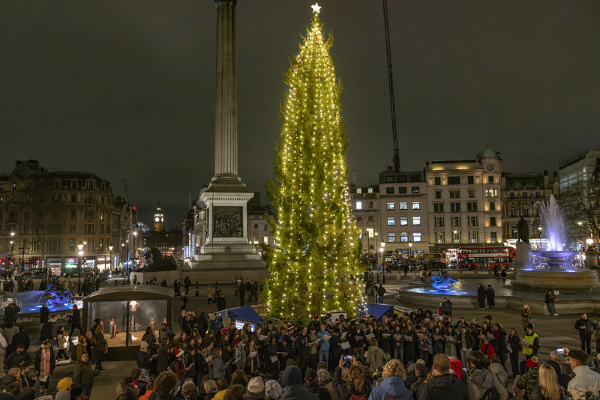
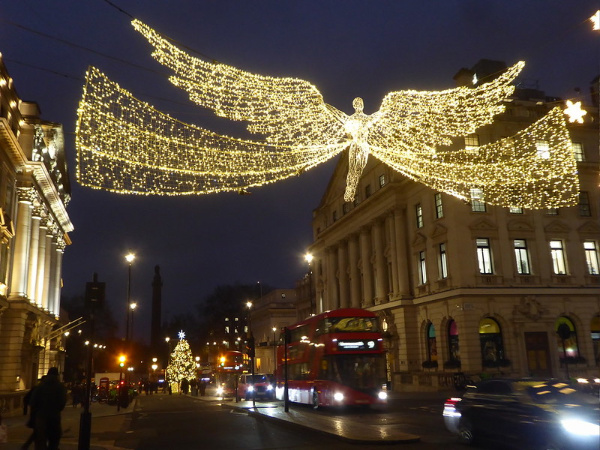
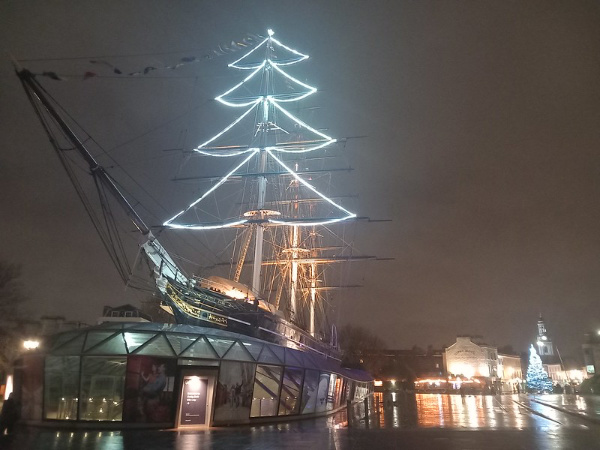
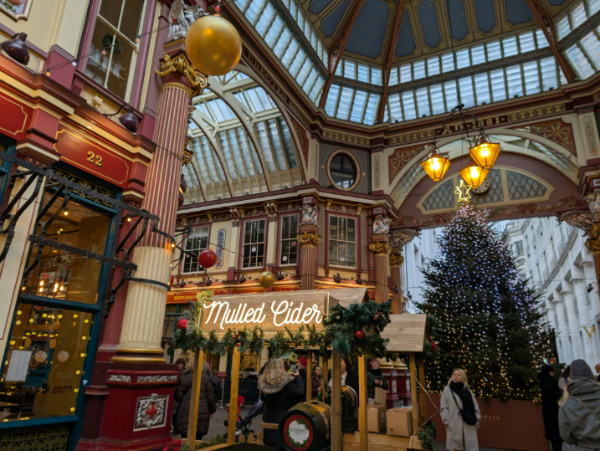
LondonLife – Christmas intersection…

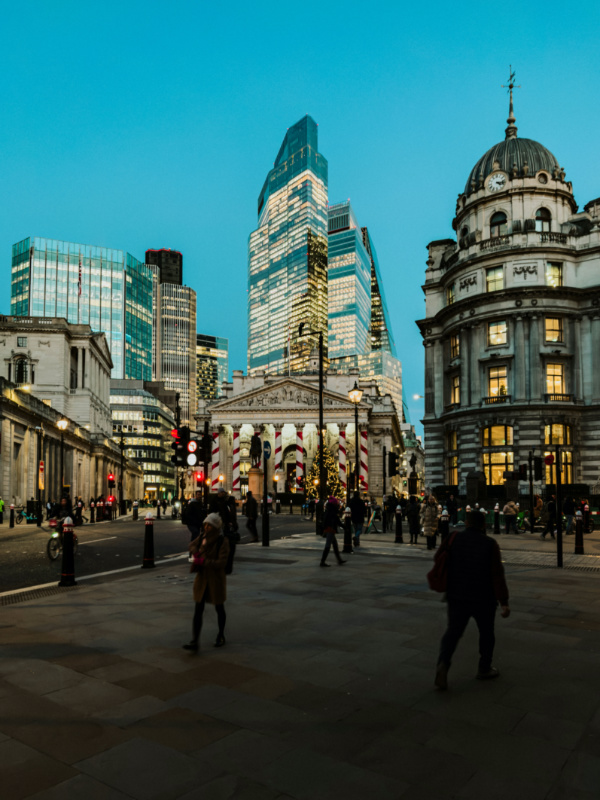
PICTURE: Samuel Regan-Asante/Unsplash

Looking toward the Royal Exchange in the City of London.

10 London mysteries – 2. Who was Jimmy Garlick?

This week we look at a mysterious mummified figure who was “discovered” in the vaults beneath the floor of St James Garlickhythe in the 1850s.

Subscribe to Exploring London for just £3 a month and get access to every article (and help us maintain and develop the site at the same time)!

10 London mysteries – 1. The murder of Robert Pakington…

London’s rich layers of history has left its fair share of mysteries and in this series we’re going to take a look at 10, some well-known and others, such as this first one, less so…

First up, it’s a 500-year-old murder mystery. The victim was Robert Pakington, an MP and prominent member of the Worshipful Company of Mercers, who is often said to be the first victim to be murdered with a handgun.

Subscribe for just £3 a month to see all of Exploring London’s content (and the rest of this post). Thanks for your support of our work

This Week in London – Lord Mayor’s Show; ‘Poppy Fields at the Tower’; and, ‘The Great Mughals’ at the V&A…

The Lord Mayor’s Show – featuring the 696th Lord Mayor of London, Alastair King – will be held this Saturday. The three-mile long procession – in which the Lord Mayor will ride in the Gold State Coach – features some 7,000 people, 250 horses, and 150 floats. It will set off from Mansion House at 11am and travel down Poultry and Cheapside to St Paul’s Cathedral before moving on down Ludgate Hill and Fleet Street to the Royal Courts of Justice. The return journey will set off again at 1:10pm from Temple Place and travel via Queen Victoria Street back to Mansion House where he will take the salute from the Pikemen and Musketeers at 2:40pm. For more information, including where to watch the show, head to https://lordmayorsshow.london.

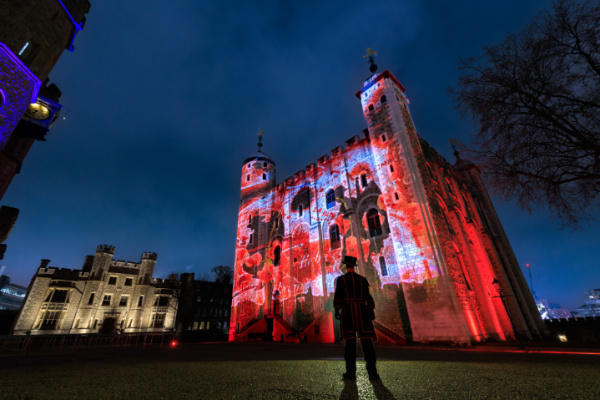
 Poppy Field at the Tower. PICTURE: © Luxmuralis / Historic Royal Palaces.

An immersive sound and light show commemorating World War I and II opens at the Tower of London tomorrow ahead of Armistice Day and Remembrance Sunday. Historic Royal Palaces has partnered with Luxmuralis to present Poppy Fields at the Tower with visitors invited to go inside the Tower where – recalling the 2014 display Bloodswept Lands and Seas of Red in the Tower of London moat to mark the centenary of World War I – the walls will not only be illuminated with tumbling poppies but also historic photographs, documents and plans. The display is being accompanied by music composed by David Harper, and poetry recordings. Visitors will also be granted special access to see the Crown Jewels after-hours to learn more about their removal from the Tower during both World Wars. Runs until 16th November and should be pre-booked. Admission charges apply. For more, see https://www.hrp.org.uk/tower-of-london/whats-on/poppy-fields-at-the-tower/.

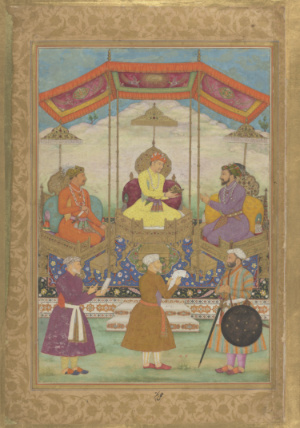
Akbar handing the imperial crown to Shah Jahan in the presence of Jahangir, Bichitr. Dated regnal year 3 (18th January 1630–7 January 1631), the borders c1630–1640. Opaque watercolour and gold on paper. Folio
from the Minto Album. © CC BY – 4.0. Chester Beatty, Dublin

An exhibition celebrating the golden age of the Mughal Court opens at the V&A in South Kensington on Saturday. The Great Mughals: Art, Architecture and Opulence examines the “creative output and internationalist culture” of Mughal Hindustan during the age of its greatest emperors, a period spanning c1560 to 1660. More than 200 objects are on display arranged in three sections corresponding to the reigns of the Emperor Akbar (1556-1605), Jahangir (1605 to 1627) and Shah Jahan (1628 to 1658). The objects include paintings, illustrated manuscripts, vessels made from mother of pearl, rock crystal, jade and precious metals. Highlights include four folios from the Book of Hamza, commissioned by Akbar in 1570, and the Ames carpet which was made in the imperial workshops between c1590 and 1600 and is on display for the first time in the UK. There’s also a unique wine cup made from white nephrite jade in the shape of a ram’s head for Shah Jahan in 1657, two paintings depicting a North American Turkey Cock and an African zebra created by Jahangir’s artists, and a gold dagger and scabbard set with over 2,000 rubies, emeralds and diamonds. Runs in Galleries 38 and 39 until 5th May. Admission charge applies. For more, see www.vam.ac.uk.

• Send all items for inclusion to exploringlondon@gmail.com.

LondonLife – John Keats at Moorgate…

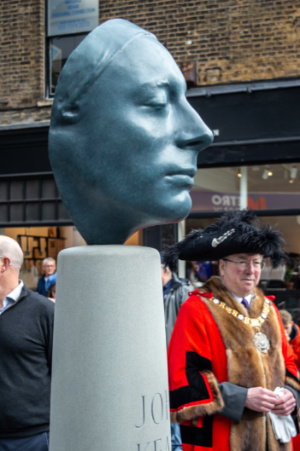
The new sculpture of John Keats with Lord Mayor of the City of London, Michael Mainelli.. PICTURE: Courtesy of the City of London Corporation.

A new sculpture of Romantic poet John Keats has been unveiled near his birthplace in Moorgate to mark the 229th anniversary of his birth.

The work of British artist Martin Jennings, the sculpture is a bronze cast of an enlarged life mask of Keats which was made when he was 21 (he died just four years later of consumption in 1821).

A plaster cast of the life mask is owned by Keats House, in Hampstead, and it was scanned and digitally enlarged as the basis for the sculpture which is mounted on a stone plinth. The plinth in turn is set in a circular slate base inscribed with some words from the Keat’s Ode on Idolence.

The new statue, which was unveiled last Thursday, was funded by former City of London Corporation Alderman, Bob Hall, who has donated it to the City of London Corporation. Hall has previously funded a statue of poet John Donne – the work of Nigel Boonham – which sits outside St Paul’s Cathedral.

Keats was son of an ostler at an inn and livery stable called The Swan and Hoop, which stood not far from the modern-day Moorgate station.

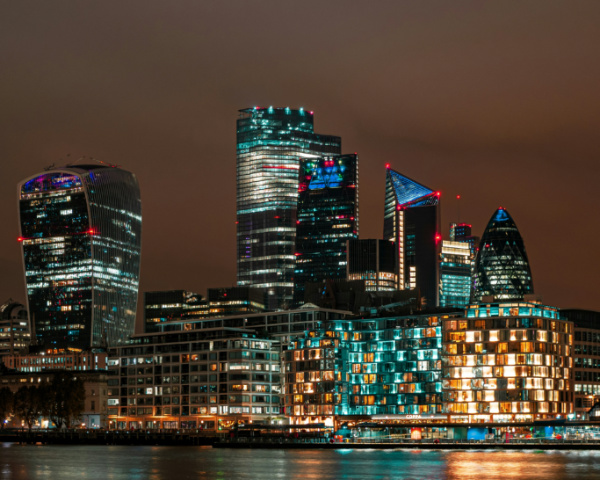
LondonLife – City lights…

PICTURE: Vitalijs Barilo/Unsplash

This Week in London – Dick Whittington explored at the Guildhall Library; Francis Bacon’s portraits; and, the 60th Photographer of the Year competition…

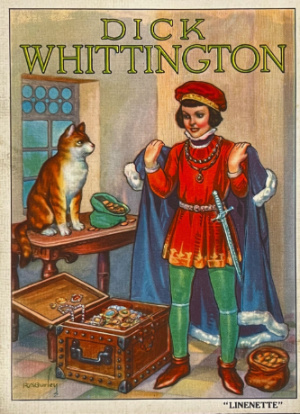
PICTURE: Courtesy of the City of London Corporation

A new exhibition exploring the life of one of the City of London’s most famous Lord Mayors has opened at the City of London’s Guildhall Library. Marking the library’s 600th anniversary, Whittington, the Man, the Myth and the Cat uses chapbooks (small printed booklets used for street literature in early modern Europe), children’s books, and works relating to pantomimes, to investigate Whittington’s story (including the question of whether or not he owned a cat). The exhibition details Whittington’s “rags to riches” tale and the many myths that later grew up around him, revealing information about his many loans to to kings (Richard II, Henry IV and Henry V), how he was three times Lord Mayor of London (1397, 1406 and 1419) and how he paid for the building of public lavatories at St Martin Vintry and a refuge for unmarried mothers at St Thomas’ Hospital as well as the rebuilding of Newgate Prison, and the establishment of the first library at Guildhall. Addressing the myth of the Whittington’s cat, it explains how it may have come about as a result of a play on words – ‘cat’ (or cattes) being a word used to describe a fleet of boats used for importing and exporting which was a mistranslation of the French word, ‘achat’, for trade. The exhibition, which runs until April next year, is free to visit. For more, see www.cityoflondon.gov.uk/services/libraries/guildhall-library.

The first exhibition in almost 20 years to focus on Francis Bacon’s portraits opened at the National Portrait Gallery, off Trafalgar Square, this week. Francis Bacon: Human Presence charts the artist’s career through 50 of his works arranged in five sections – ‘Portraits Emerge’, ‘Beyond Appearance’, ‘Painting from the Masters’, ‘Self Portraits’, and ‘Friends and Lovers’. Works on show include self-portraits as well as Head VI (1949), Study for a Pope I (1961), Three Studies for a Portrait of Isabel Rawsthorne (1965) and Portrait of a Man Walking Down Steps (1972). The exhibition also includes photographic portraits and film of Bacon by some of the century’s leading photographers, including Cecil Beaton, Arnold Newman, and Bill Brandt. Can be seen until 19th January. Admission charge applies. For more, see www.npg.org.uk.

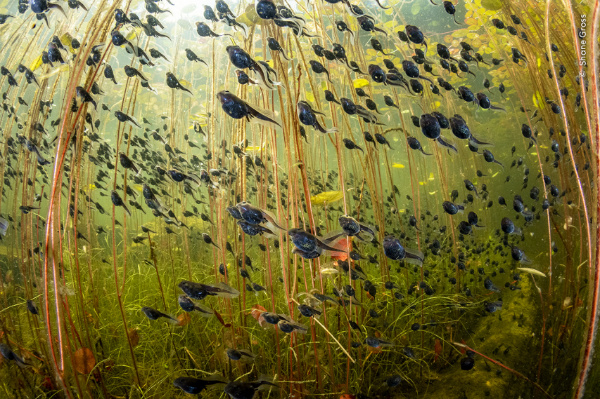
‘The Swarm of Life’ by Shane Gross, Canada, winner of the 60th Wildlife Photographer of the Year competition.

A Canadian marine conservation photojournalist, Shane Gross, has won this year’s Wildlife Photographer of the Year competition for an image capturing the magical underwater world of western toad tadpoles. The Swarm of Life is among 100 prize-winning images which are going on show at the Natural History Museum in South Kensington from tomorrow as it celebrates the 60th year of its Photographer of the Year competition. This year’s contest attracted a record-breaking 59,228 entries from 117 countries and territories. Among the other images on display are German Alexis Tinker-Tsavalas’ Life Under Dead Wood  depicting the fruiting bodies of slime mould with a tiny springtail (Tinker-Tsavalas won Young Wildlife Photographer of the Year). Wildlife Photographer of the Year is developed and produced by the Natural History Museum, London. The exhibition runs until 29th June. Admission charge applies. For more, see www.nhm.ac.uk/wpy.

Send all items for inclusion to exploringlondon@gmail.com

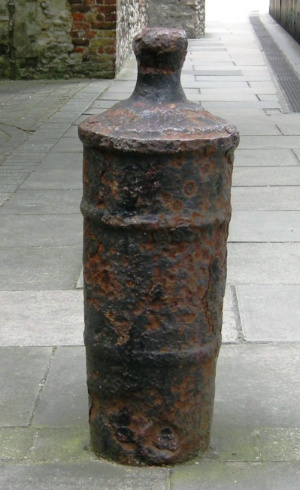
Where’s London’s oldest…bollard?

PICTURE: GrindtXX (licensed under CC BY-SA 4.0)

London is filled with bollards designed to prevent vehicles, old and new, from travelling where they shouldn’t. And, of course, there’s much debate over which is the oldest.

The oldest may well be a rather rusty looking one in the courtyard outside the Church of St Helen’s Bishopsgate.

In what was a practice replicated elsewhere in the City around the time, it’s apparently made out of the French naval cannon dating from the 18th century.

The cannon’s muzzle end has been embedded into the pavement with the non-loading end sticking up.

Legend says that another cannon bollard, located just outside the Globe Theatre on South Bank, comes from French ships captured at the Battle of Trafalgar. While it is indeed said to be a cannon, many have cast doubt on its origins as coming from Trafalgar.

Correction: We’ve correct the story to say it was the non-loading end sticking up.

This Week in London – Silk Road treasures; a new Lord Mayor of London; and, reassessing the UK’s early Emo scene…

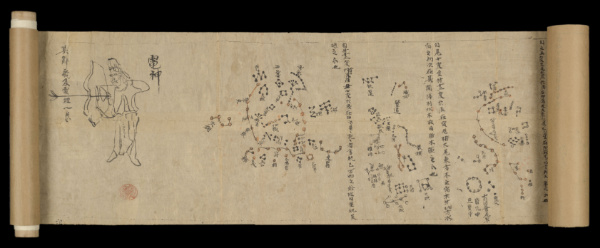
Dunhuang Star Chart 649 – 700 CE – Or.8210/S.3326 © British Library Board

The world’s earliest complete printed book with a date, the earliest known manuscript atlas of the night sky and the earliest surviving historical document in Tibetan are among treasures on show in a new exhibition at the British Library. A Silk Road Oasis: Life in Ancient Dunhuang features more than 50 manuscripts, printed documents and pictorial works including many which were sealed in the so-called ‘Library Cave’ in the Buddhist Mogao cave complex near the oasis town of Dunhuang in Gansu province, China, for almost 900 years before they were rediscovered in 1900. Highlights in the display include the Diamond Sutra (868 AD) – the world’s earliest complete printed book with a date, the Dunhuang star chart (649-700) – the earliest known manuscript atlas of the night sky (pictured), and the Old Tibetan Annals (641-761) – the earliest surviving historical document in Tibetan. On public display for the first time is a rubbing of the Stele of Sulaiman – a carved stone slab that was erected in the caves in 1348, a copy of the Diamond Sutra written in the scribe’s own blood (considered by Buddhists to be an act of powerful sincerity), and one of the most important and complete manuscripts among the Old Uyghur Manichaean texts, the Xuastuanift. There is also a 9th century manuscript fragment about the prophet Zoroaster or Zarathustra (believed to be nearly 400 years older than any other surviving Zoroastrian scripture) and the longest surviving manuscript text in the Old Turkic script, a Turkic omen text known as the Irk Bitig or Book of Omens (930 or 942). The exhibition, which explores Silk Road interactions through a case of characters including a scribe, merchant and Buddhist nun, runs until 23rd February and is accompanied by a programme of events. Admission charge applies. For more, see https://silkroad.seetickets.com/timeslots/filter/a-silk-road-oasis-life-in-ancient-dunhuang

Alderman Alastair King has been elected the 696th Lord Mayor of London. King, who succeeds Lord Mayor Professor Michael Mainelli, takes office on 8th November for a one year term with the annual Lord Mayor’s Show, which takes place the following day, his first public event. “It is a tremendous honour to be elected as the 696th Lord Mayor of the City of London,” the Lord Mayor-elect, whose role will see him serving as a global ambassador for the UK financial and professional services industry, said. “London remains the world’s leading financial centre, but global competition is fierce. We have the expertise and talent to thrive, yet we must do more to unlock growth, equip people to innovate, and harness the remarkable dynamic diversity that makes the City exceptional.”

An “unfiltered” look at the early Emo scene in the UK is the subject of a new exhibition at the Barbican Music Library. I’m Not Okay (An Emo Retrospective), a collaboration between the library and the Museum of Youth Culture (MOYC), features personal photos taken on early digital and phone cameras and focuses on the first-generation Emo scene (2004-2009), a time when bands such as My Chemical Romance, Fall Out Boy, and Finch were “hugely influential”.  Jamie Brett, creative director at the MOYC said the Emo scene “resonated deeply with teens who wanted to express their angst, doubts, insecurity, and sense of feeling and being different, and channelled their collective melancholy into a transatlantic subculture”. The exhibition, which is free to enter, can be seen until 15th January. For more, see www.cityoflondon.gov.uk/services/libraries/barbican-music-library.

Send all items for inclusion to exploringlondon@gmail.com.

A Moment in London’s History…London Mithraeum refound…

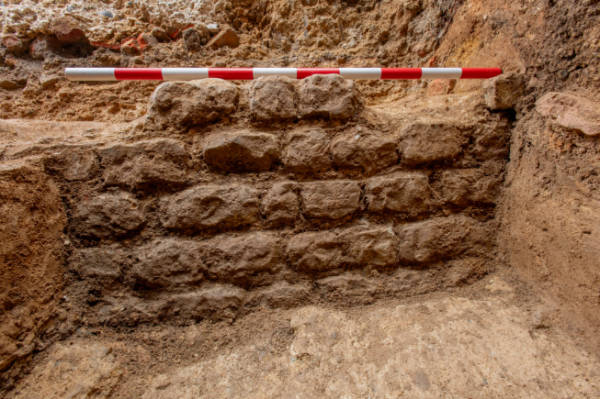
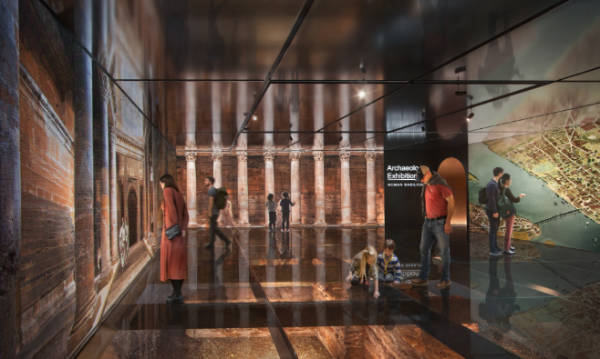
It was on 18th September, 1954 – 70 years ago this month – that archaeologists working on a site in central London discovered one of the greatest archaeological finds in London of the 20th century – a head of Mithras in the remains of a mid-3rd century Roman temple.

Support our work and subscribe for just £3 a month to get full access to our stories.

This Week in London – ‘Lucky Jim’ reunited with historic plane; Banksy work related to Guildhall Yard; and, a new Kew audio tour…

‘Lucky Jim’, a toy cat mascot belong to Jim Alcock – pilot of the first trans-Atlantic flight, has been reunited with the Vickers Vimy biplane aircraft that made the flight for the first time since 1919. The cat accompanied the famous aviator and his navigator Arthur Whitten Brown on their historic 17 hour, 1,880 mile journey. Following preservation efforts is now displayed alongside the aircraft in the Flight gallery at the Science Museum in South Kensington. Lucky Jim was previously displayed at the Science and Industry Museum in Manchester until 2019. A cartoon version of the cat is also the star of a new family trail around the gallery. For more, see https://www.sciencemuseum.org.uk/see-and-do/flight.

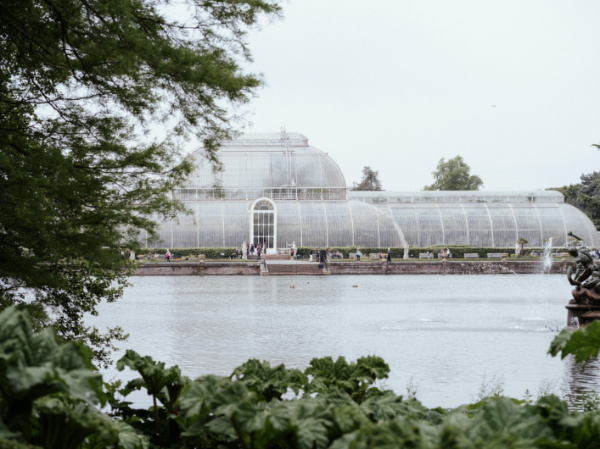
The Palm House at Kew Gardens. PICTURE: Annie Spratt/Unsplash

Explore the plants of Kew Gardens’ historic Palm House with a new audio tour. Created by Kew’s Community Horticulture Programme in collaboration with outreach participants, Pollinators of the Palm House puts a spotlight on some of the remarkable stories and pollination tricks of incredible plants inside the 175-year-old structure. These include the giant cycad (Encephalartos altensteinii) – officially the oldest pot plant in the world, and the traveller’s palm (Ravenala madagascariensis), which is pollinated by lemurs in the wild on Madagascar. For more, see www.kew.org.

An artwork by Banksy has been relocated to Guildhall Yard for its protection. The work, which depicts swimming piranhas, appeared on a sentry box near Ludgate Hill earlier this month. A City of London Corporation spokesperson saying a permanent home would be found “in due course”.

Send all items for inclusion to exploringlondon@gmail.com.

10 towers with a history in London – 2. The tower of St Olave, Old Jewry…

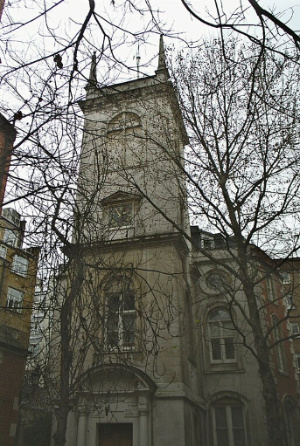
This tower is a survivor and was originally part of the rebuilt Church of St Olave, Old Jewry.

The medieval church, which was apparently built on the site of an earlier Saxon church, originally dated from 12th century. Its name referred to both the saint to whom it was dedicated – the patron saint of Norway, St Olaf (Olave) – and its location in the precinct of the City that was largely occupied by Jews (up until the infamous expulsion of 1290).

The former tower of St Olave, Old Jewry. PICTURE: Mark C Grant (public domain).

The church, which is also referred to as Upwell Old Jewry (this may have related to a well in the churchyard), was the burial place of two former Lord Mayors – mercer Robert Large (William Caxton was his apprentice) and publisher John Boydell (who apparently washed his face under the church pump each morning). Boydell’s monument was later transferred to St Margaret Lothbury.

The church was sadly destroyed in the Great Fire of 1666 but it was among those rebuilt under the eye of Sir Christopher Wren in the 1670s. It’s from this rebuilding that the current tower dates.

At this time, the parish was united with that of St Martin Pomeroy (which had already shared its churchyard and which was also destroyed in the Great Fire).

Wren’s church was eventually demolished in 1887 as moves took place to consolidate church parishes under the Union of Benefices Act – the parish was united with that of St Margaret Lothbury and proceeds from the sale were used to fund the building of St Olave, Monor House. It’s worth noting that a Roman pavement was found on the site after the church demolition.

The tower (and the west wall), meanwhile, survived. The tower was subsequently turned into a rectory for St Margaret Lothbury and later into offices.

Interestingly, the Grade I-listed, Portland stone tower is said to be the only one built by Wren’s office which is battered – that is, wider at the bottom than the top. It’s topped by some obelisk-shaped pinnacles and a weather vane in the shape of a sailing ship which was taken from St Mildred, Poultry (was demolished in 1872).

The tower’s former clock was built by Moore & Son of Clerkenwell. It was removed at the time of the church demolition was installed in the tower of St Olave’s Hart Street. The current clock was installed in 1972.

Lost London – The Guildhall Chapel…

Used by the Lord Mayor of London and his retinue as a location for weekly worship for more than 200 years, the Guildhall Chapel was once an important part of the City infrastructure.

Please consider supporting our work for just £3 a month.

This week in London – Re-live the ‘Golden Age of Piracy’; getting below the surface of the Thames; a look inside East London houses through time; and, a new public garden in the City…

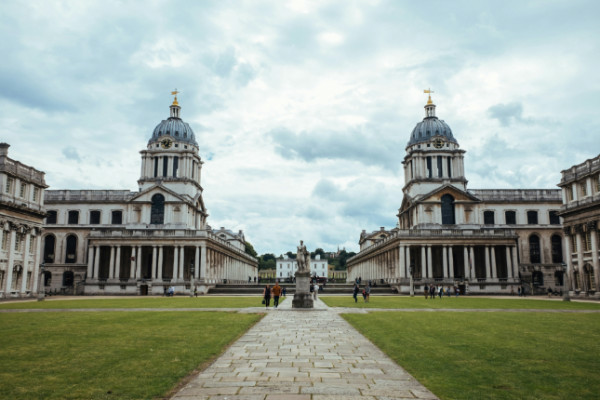
The Old Royal Naval College in Greenwich. PICTURE: Robert Bye/Unsplash

• ‘The Golden Age of Piracy’ will come to life in a living history weekend this Saturday and Sunday at the Old Royal Naval College in Greenwich. With the focus on the period between 1650 and 1720 (when more than 5,000 pirates were said to have been active), visitors will learn how to separate pirate fact from fiction, enjoy songs of the sea, witness sword and cutlass fights, and hear the tale of a real 18th-century mutiny. Each day culminates with a demonstration of the firepower of pirates and marines in the arena on the lawns overlooking the River Thames. There’s also the opportunity to wander through the pirate encampment and learn about the clothes and weapons of the period, listen to some love music and sample food from the Taste of History period kitchen. Runs from 11am to 4pm on Saturday and Sunday. Admission charge applies. For more, see https://ornc.org/whats-on/golden-age-of-piracy/.

The world of sound below the surface of the River Thames is the subject of a new contemporary art installation at the Natural History Museum which opens tomorrow. The River, composed by Norwegian sound artist Jana Winderen in collaboration with spatial audio expert Tony Myatt, uses underwater audio recordings to immerse visitors in a 360 degree audio composition which spans the river from the source by Kemble through central London and on to the sprawling estuary leading into the North Sea. The River is free to visit. Bookings, to ensure entry, can be made at https://www.nhm.ac.uk/visit.html.

One of the new rooms at the Museum of the Home – a Jewish tenement flat from 1913. PICTURE: Courtesy of the Museum of the Home.

Seven new and reimagined period rooms reflecting the stories of our East London community, past, present and future, have been unveiled at the Museum of the Home in Shoreditch. Thanks to the Real Rooms project, the expanded ‘Rooms Through Time: 1878-2049’ now includes a Jewish tenement flat from 1913, an Irish couple’s house in the 1950s, LGBTQ+ renters sharing an ex-council home in the 2005, a British-Vietnamese home in 2024, and the Innovo Room of the Future, which explores real homes amid challenges such as the climate crisis and technological advances. The scope of the existing 1870s Parlour and Front Room in 1976 have also both been expanded. Entry to the permanent display is free. For more, see https://www.museumofthehome.org.uk.

A new public garden has been opened at the intersection of Cheapside and New Change in the City of London. Formerly known as the Sunken Garden, the area has undergone a transformation and now features benches created from 150-year-old-plus granite stones salvaged from the Thames River Wall and recycled timber from fallen London Plane trees. There’s also new permeable paving which lets rain drain freely into the ground and stores it for trees to use later, reducing pressure on the sewer system while new plant species have been selected with local wildlife in mind.

Send all items for inclusion to exploringlondon@gmail.com.

This Week in London – West Ham Park celebrates its 150th; rare examples of 17th century paper-cutting; King Henry VIII jousts at Hampton Court; the collection of Elizabeth Legh; and, ‘Horrible Science’…

West Ham Park celebrates its 150th anniversary this weekend with a festival of music, food, sport, and other activities. On Saturday there will be a free, family-friendly festival with music – including appearances by Australian-born singer-songwriter Celina Sharma and singer-songwriter, Fiaa Hamilton, as well as a DJ set from Ellis – along with arts and crafts, a children’s fun fair and local food stalls. On Sunday, activities are based around the theme of ‘give it a go’ with visitors able try out various sports and health activities, including football, cricket, tennis, athletics, Tai Chi, and long-boarding. There will also be free taster sessions and opportunities to meet local sporting legends. An outdoor exhibition about the park’s history can be seen in Guildhall Yard in the City leading-up to the event after which it will be moved to Aldgate Square. West Ham Park is the largest green space in the London Borough of Newham and has been managed by the City of London Corporation since 1874. Activities on both days start at 12pm. For more, see www.cityoflondon.gov.uk/westhampark150.

To see the rest of this post (and all of our coverage), subscribe for just £3 a month. This small contribution – less than the cost of a cup of coffee – will help us continue and grow our coverage. We appreciate your support!

10 significant (and historic) London trees – A recap…

We’ll kick off a new series next week, but, in the meantime, here’s a recap…

1. Queen Elizabeth’s Oak, Greenwich…

2. The Cheapside Plane…

3. Charter Oak of Bexley…

4. The Royal Oak, Richmond Park…

5. Black mulberry trees, Middle Temple Gardens…

6. Mendelssohn’s Tree…

7. D-Day Tree…

8. The Old Lions…

9. The Fulham Palace Oak…

10. Berkeley Square Plane Tree…

London Explained – Royal Peculiars…

A Royal Peculiar is a Church of England parish that is exempt from the jurisdiction of the church diocese or province in which it sits and instead answers directly to the monarch.

The concept of the Royal Peculiar first began to emerge in Anglo-Saxon times and was developed over the following centuries.

Subscribe for just £3 a month get access

Lost London – St Benet Fink…

This unusually named church dates back to at least the 13th century and stood on what is now Threadneedle Street.

St Benet is a contraction of St Benedict (he who founded monastic communities in Italy in the 6th century) and this was once of four City churches dedicated to the saint before 1666. The word ‘Fink’, meanwhile, is a corruption of Finch and apparently referred to Robert Finch (or Fink) who paid for a rebuild of the church in the 13th century.

‘The Church of St Benet Fink’ (1839), seen in The Churches of London by George Godwin (1839).

The medieval rectangular church was among those destroyed in the Great Fire of 1666. Rebuilding commenced soon after, thanks in part to a £1,000 donation from a Catholic George Holman (he was rewarded with two pews and a place in the vault). The church was completed in 1675 apparently for a cost at just over £4,000.

Designed by Sir Christopher Wren, the church – due to the irregular shape of the site after the City decided to widen Threadneedle Street, was rebuilt on a decagonal plan, over which sat a dome, with a tower at the west end topped by a bell cage over which sat a ball and cross (apparently this latter feature was unique for a Wren church).

The church survived until the mid-18th century when the Corporation of London petitioned Parliament for permission to demolish the tower of St Benet Fink in order make way for an expanded Royal Exchange (which had burned down in 1838).

Following the demolition of the tower (over which there were some protests), a new entrance was cut into the west wall of the church but it proved less than ideal and the City of London was granted permission to knock down the rest of the church which took place in 1846.

The parish was merged with that of St Peter le Poer. Proceeds of the sale of the site were used to build St Benet Fink Church, Tottenham.

The furniture was sold off and paintings of Moses and Aaron that had formed part of the altarpiece are now in the chapel of Emanuel School in Battersea.

Famous associations include John Henry Newman, the future Catholic cardinal, who was baptised in the church on 9th April, 1801.

An office block now occupies the site. A City of London blue plaque marks the site.

10 significant (and historic) London trees…5. Black mulberry trees, Middle Temple Gardens…

The two gnarled mulberry trees on either side of the fountain. PICTURE: Jim Linwood (licensed under CC BY 2.0)

While there’s been gardens here dating back possibly as far as the middle of the 12th century when the Templars established a preceptory here, these two trees have a more recent historic (and royal) link.

The gnarled black mulberrys (Morus nigra) in the Fountain Court were planted here on 20th June, 1887, to commemorate the Golden Jubilee of Queen Victoria.

There were actually four mulberry trees planted to mark the occasion – which was celebrated with a grand dinner in the nearby Middle Temple Hall – but these two trees are the only survivors, the other two having been removed in the 1970s.

Both trees are these days leaning on supports.

This Week in London – RNLI’s first HQ commemorated; “weird and wonderful” birds; and, Princess Diana in photographs…

The City of London has unveiled a new blue plaque commemorating the Royal National Lifeboat Institution which is this year marking its 200th anniversary. The plaque is on the Furniture Makers’ Hall in Austin Friars which is where the organisation has its first headquarters from 1824 to 1826. The plaque was unveiled by the Lord Mayor of London, Professor Michael Mainelli. The RNLI, which today operates 238 lifeboat stations in the UK and Ireland including four on the River Thames, was founded by Sir William Hillary in the City of London Tavern in Bishopsgate on 4th March, 1824, and early meetings were held at various addresses until it moved into 12 Austin Friars. Meanwhile, ‘Ian Visits’ reports that a new plaque has also been installed at Limehouse Basin to commemorate Lifbåt 416 which was built there by Forrestt & Son’s boatyard in 1868 and sent as a gift to the King of Sweden, Karl XV. The Lifbåt 416, which has been restored, returned to Limehouse Basin this week after attending RNLI commemorations in Poole, Dorset (where it was the oldest lifeboat to take part in a mile-long flotilla).

Hargila army papier-mache headdress close up. PICTURE: Courtesy of Natural History Museum

The “weird and wonderful” ways birds have adapted to survive are celebrated in a new exhibition at the Natural History Museum. Birds: Brilliant and Bizarre, which opens at the South Kensington institution on Friday, has been created in partnership with the Royal Society for the Protection of Birds and features installations and hands-on exhibits which allow visitors to feel how fast a hummingbird’s heart beats when in flight, smell the strange oil one bird uses to protect its eggs and listen to the sound of a dawn chorus of birds in the year 2050. Objects on show include the ‘Wonderchicken’ – the oldest known fossil of a modern bird, a replica of a stork that flew across the world from the African continent with a spear lodged in its neck, and a headdress of the ‘Hargila army’ (pictured), a group of women in the Indian state of Assam who work to protect one of the world’s rarest storks. Admission charge applies. Runs until 5th January. For more, see www.nhm.ac.uk/visit/exhibitions/birds-brilliant-bizarre.html.

A walk-through photographic exhibition featuring some of the most iconic photos of Princess Diana opens on Saturday. Princess Diana: Accredited Access features 75 life-sized photographs by her official royal photographer, Anwar Hussein, and his two sons – Samir and Zak – which include behind the scenes access. The exhibition at the Dockside Vaults, St Katharine Docks, runs until 2nd September. Admission charge applies. For more, see www.princessdianaexhibit.com.

Send all items to exploringlondon@gmail.com.