What’s in a name?…Old Street…

The name of this mile-long street is fairy self-explanatory – lying on the route of an old Roman, or possibly even pre-Roman, route, it was part of an “old” road which ran from London to the north of England.
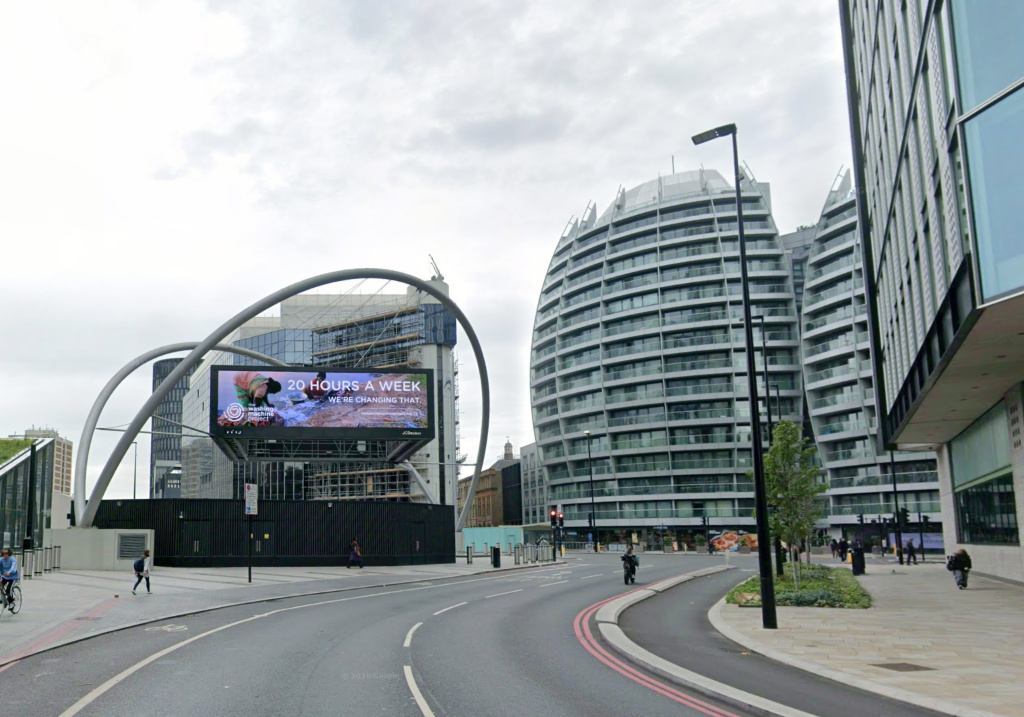
Looking east on Old Street towards the Old Street Roundabout in September, 2025. PICTURE: Courtesy of Google Maps.

The street now runs north-east from Goswell Road (it becomes Clerkenwell Road to the west) to Shoreditch High Street. It was apparently first recorded as Ealdestrate as far back as 1200.

Landmarks on the street include St Luke’s Church, built in 1727-33 and designed by John James and Nicholas Hawksmoor in their role as the Surveyors for the Commissioners for Building Fifty New Churches. It was converted for use of the London Symphony Orchestra in 2003 and now houses the galleried auditorium Jerwood Hall.

Shoreditch Town Hall, which originally dates from the 1860s and sits at the eastern end of the street, was the site of the inquest into the murder of Mary Kelly, the last victim of Jack the Ripper, in 1888. By the mid 20th century it was being used to host boxing matches and is now an arts, events and community space.

A Tube station bears the street’s name. It opened in 1901 and was rebuilt in 1925.

The Old Street Roundabout, at the junction with City Road (and with no actual roundabout any longer; it was removed in the early 2020s), is known as ‘Silicon Roundabout’ thanks to the area being known for technology industry start-ups.

A shopping complex under the roundabout is named after St Agnes Well, an ancient well believed to have been located nearby.

Old Street has also become known for its street art, including works by Banksy. Two 2004 works – depicting a rat and a TV being thrown out a window – are preserved on the exterior of the art’otel London Hoxton.
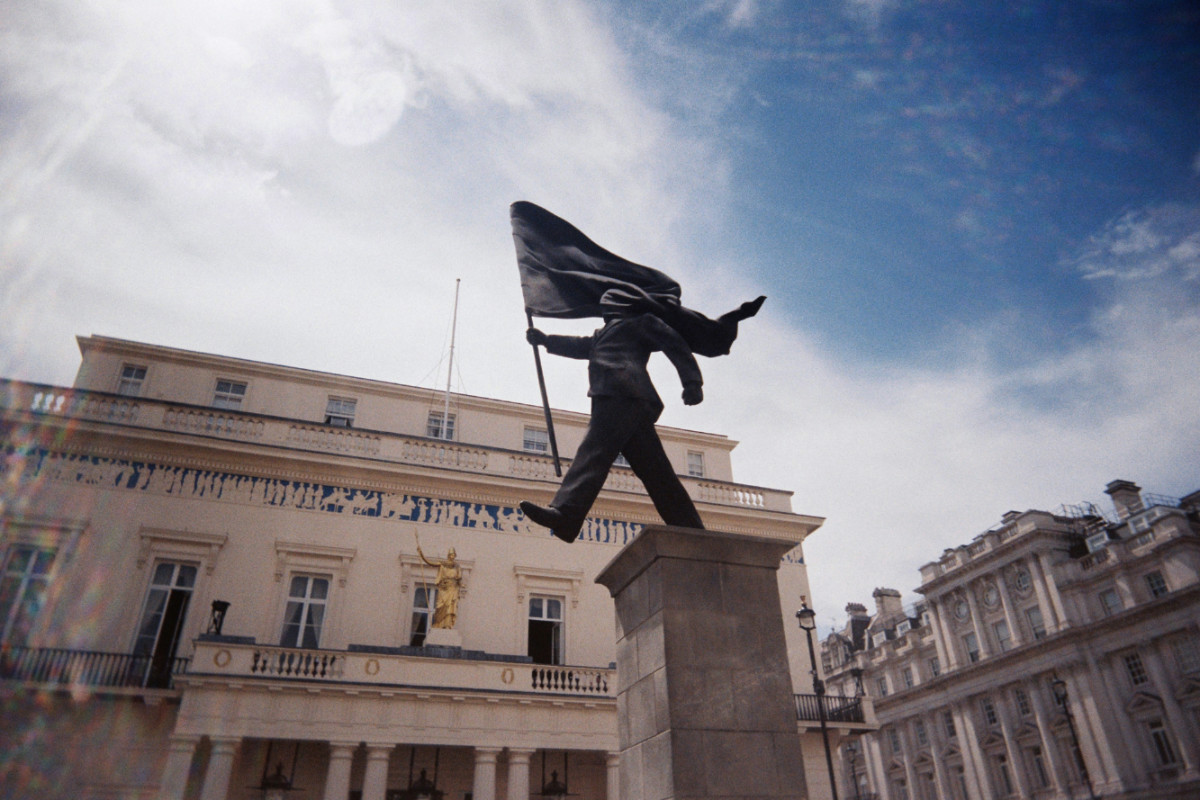
LondonLife – A Banksy at Waterloo Place…

PICTURE: Nick Page/Unsplash

This Week in London – Millet at The National Gallery; exploring Great Ormond Street Hospital’s new children’s cancer centre; and, a Banksy at the London Transport Museum…

• The first UK exhibition in almost 50 years dedicated to the works of 19th century French artist Jean-François Millet (1814-1875) opens at The National Gallery today. Millet: Life on the Land, which coincides with the 150th anniversary of his death, features around 13 drawings and paintings from British public collections including The National Gallery’s The Winnower (about 1847‒8) as well as L’Angelus (1857‒9) from the Musée d’Orsay, Paris. The exhibition can be seen in Room 1 until 19th October. Admission is free. For more, see www.nationalgallery.org.uk/exhibitions/millet-life-on-the-land.

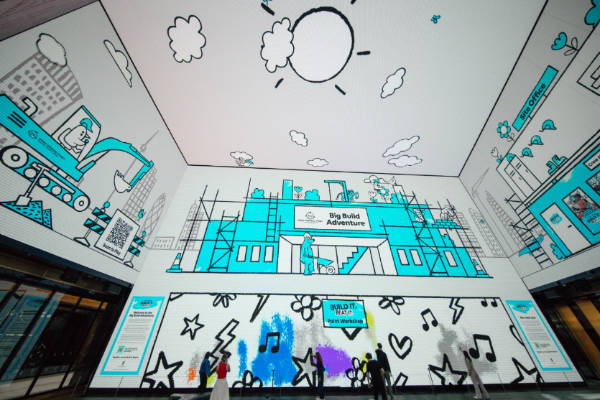
The Big Build Adventure at Outernet London.

• An immersive digital experience which brings to life the Great Ormond Street Hospital’s new Children’s Cancer Centre opened at Outernet London off Tottenham Court Road this week. The Big Build Adventure, a partnership between the Great Ormond Street Hospital Charity and Outernet London, features a giant virtual paint wall, building themed games, a construction site selfie station and the chance to symbolically buy a brick to help build the centre. The free experience can be experienced until 31st August. Admission is free. For more, see www.outernet.com/news/great-ormond-street-hospital-charity-and-outernet-studios-launch-the-big-build-adventure.

• An artwork by Banksy – depicting a rat hanging from the arm of a clock – has gone on show at the London Transport Museum in Covent Garden. The artwork first appeared on the door of a Transport for London signal controller cabinet in Croydon in October, 2019, which was located in front of the artist’s pop-up showroom installation, Gross Domestic Product. The work, which was preserved by the museum, has been mounted onto an identical cabinet body to provide context for its original appearance. Admission charge applies. For more, see www.ltmuseum.co.uk.

Send all items for inclusion to exploringlondon@gmail.com

This Week in London – ‘Lucky Jim’ reunited with historic plane; Banksy work related to Guildhall Yard; and, a new Kew audio tour…

• ‘Lucky Jim’, a toy cat mascot belong to Jim Alcock – pilot of the first trans-Atlantic flight, has been reunited with the Vickers Vimy biplane aircraft that made the flight for the first time since 1919. The cat accompanied the famous aviator and his navigator Arthur Whitten Brown on their historic 17 hour, 1,880 mile journey. Following preservation efforts is now displayed alongside the aircraft in the Flight gallery at the Science Museum in South Kensington. Lucky Jim was previously displayed at the Science and Industry Museum in Manchester until 2019. A cartoon version of the cat is also the star of a new family trail around the gallery. For more, see https://www.sciencemuseum.org.uk/see-and-do/flight.

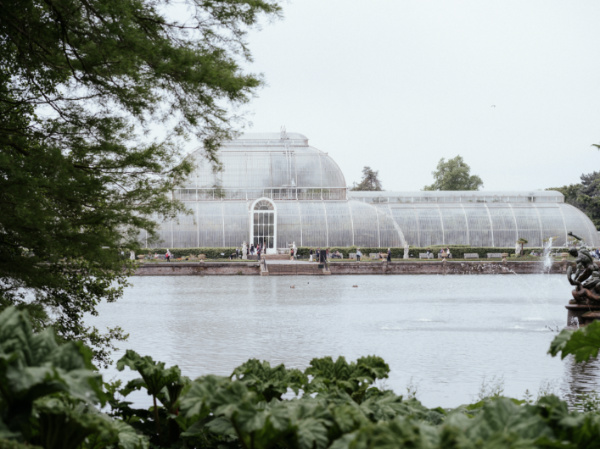
The Palm House at Kew Gardens. PICTURE: Annie Spratt/Unsplash

• Explore the plants of Kew Gardens’ historic Palm House with a new audio tour. Created by Kew’s Community Horticulture Programme in collaboration with outreach participants, Pollinators of the Palm House puts a spotlight on some of the remarkable stories and pollination tricks of incredible plants inside the 175-year-old structure. These include the giant cycad (Encephalartos altensteinii) – officially the oldest pot plant in the world, and the traveller’s palm (Ravenala madagascariensis), which is pollinated by lemurs in the wild on Madagascar. For more, see www.kew.org.

• An artwork by Banksy has been relocated to Guildhall Yard for its protection. The work, which depicts swimming piranhas, appeared on a sentry box near Ludgate Hill earlier this month. A City of London Corporation spokesperson saying a permanent home would be found “in due course”.

Send all items for inclusion to exploringlondon@gmail.com.