• West Ham Park celebrates its 150th anniversary this weekend with a festival of music, food, sport, and other activities. On Saturday there will be a free, family-friendly festival with music – including appearances by Australian-born singer-songwriter Celina Sharma and singer-songwriter, Fiaa Hamilton, as well as a DJ set from Ellis – along with arts and crafts, a children’s fun fair and local food stalls. On Sunday, activities are based around the theme of ‘give it a go’ with visitors able try out various sports and health activities, including football, cricket, tennis, athletics, Tai Chi, and long-boarding. There will also be free taster sessions and opportunities to meet local sporting legends. An outdoor exhibition about the park’s history can be seen in Guildhall Yard in the City leading-up to the event after which it will be moved to Aldgate Square. West Ham Park is the largest green space in the London Borough of Newham and has been managed by the City of London Corporation since 1874. Activities on both days start at 12pm. For more, see www.cityoflondon.gov.uk/westhampark150.
City
10 significant (and historic) London trees – A recap…
We’ll kick off a new series next week, but, in the meantime, here’s a recap…
1. Queen Elizabeth’s Oak, Greenwich…
4. The Royal Oak, Richmond Park…
London Explained – Royal Peculiars…
A Royal Peculiar is a Church of England parish that is exempt from the jurisdiction of the church diocese or province in which it sits and instead answers directly to the monarch.
The concept of the Royal Peculiar first began to emerge in Anglo-Saxon times and was developed over the following centuries.
Subscribe for just £3 a month get access
Lost London – St Benet Fink…
This unusually named church dates back to at least the 13th century and stood on what is now Threadneedle Street.
St Benet is a contraction of St Benedict (he who founded monastic communities in Italy in the 6th century) and this was once of four City churches dedicated to the saint before 1666. The word ‘Fink’, meanwhile, is a corruption of Finch and apparently referred to Robert Finch (or Fink) who paid for a rebuild of the church in the 13th century.
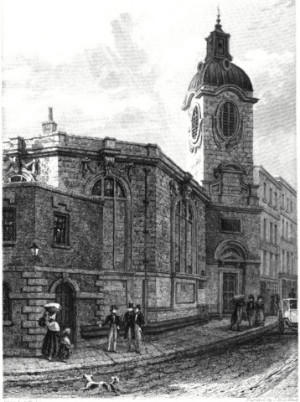
The medieval rectangular church was among those destroyed in the Great Fire of 1666. Rebuilding commenced soon after, thanks in part to a £1,000 donation from a Catholic George Holman (he was rewarded with two pews and a place in the vault). The church was completed in 1675 apparently for a cost at just over £4,000.
Designed by Sir Christopher Wren, the church – due to the irregular shape of the site after the City decided to widen Threadneedle Street, was rebuilt on a decagonal plan, over which sat a dome, with a tower at the west end topped by a bell cage over which sat a ball and cross (apparently this latter feature was unique for a Wren church).
The church survived until the mid-18th century when the Corporation of London petitioned Parliament for permission to demolish the tower of St Benet Fink in order make way for an expanded Royal Exchange (which had burned down in 1838).
Following the demolition of the tower (over which there were some protests), a new entrance was cut into the west wall of the church but it proved less than ideal and the City of London was granted permission to knock down the rest of the church which took place in 1846.
The parish was merged with that of St Peter le Poer. Proceeds of the sale of the site were used to build St Benet Fink Church, Tottenham.
The furniture was sold off and paintings of Moses and Aaron that had formed part of the altarpiece are now in the chapel of Emanuel School in Battersea.
Famous associations include John Henry Newman, the future Catholic cardinal, who was baptised in the church on 9th April, 1801.
An office block now occupies the site. A City of London blue plaque marks the site.
10 significant (and historic) London trees…5. Black mulberry trees, Middle Temple Gardens…
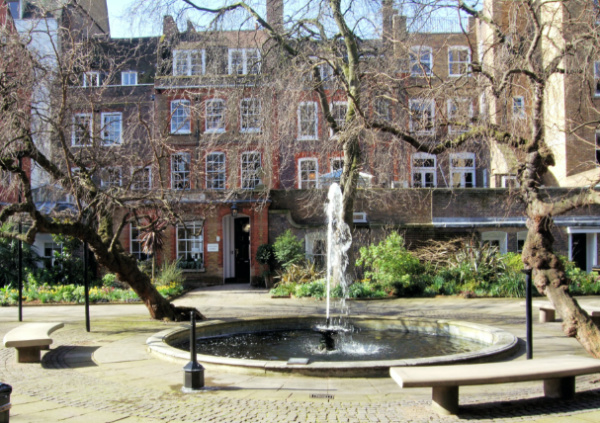
While there’s been gardens here dating back possibly as far as the middle of the 12th century when the Templars established a preceptory here, these two trees have a more recent historic (and royal) link.
The gnarled black mulberrys (Morus nigra) in the Fountain Court were planted here on 20th June, 1887, to commemorate the Golden Jubilee of Queen Victoria.
There were actually four mulberry trees planted to mark the occasion – which was celebrated with a grand dinner in the nearby Middle Temple Hall – but these two trees are the only survivors, the other two having been removed in the 1970s.
Both trees are these days leaning on supports.
This Week in London – RNLI’s first HQ commemorated; “weird and wonderful” birds; and, Princess Diana in photographs…
• The City of London has unveiled a new blue plaque commemorating the Royal National Lifeboat Institution which is this year marking its 200th anniversary. The plaque is on the Furniture Makers’ Hall in Austin Friars which is where the organisation has its first headquarters from 1824 to 1826. The plaque was unveiled by the Lord Mayor of London, Professor Michael Mainelli. The RNLI, which today operates 238 lifeboat stations in the UK and Ireland including four on the River Thames, was founded by Sir William Hillary in the City of London Tavern in Bishopsgate on 4th March, 1824, and early meetings were held at various addresses until it moved into 12 Austin Friars. Meanwhile, ‘Ian Visits’ reports that a new plaque has also been installed at Limehouse Basin to commemorate Lifbåt 416 which was built there by Forrestt & Son’s boatyard in 1868 and sent as a gift to the King of Sweden, Karl XV. The Lifbåt 416, which has been restored, returned to Limehouse Basin this week after attending RNLI commemorations in Poole, Dorset (where it was the oldest lifeboat to take part in a mile-long flotilla).
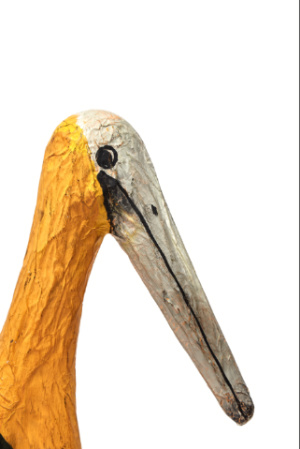
• The “weird and wonderful” ways birds have adapted to survive are celebrated in a new exhibition at the Natural History Museum. Birds: Brilliant and Bizarre, which opens at the South Kensington institution on Friday, has been created in partnership with the Royal Society for the Protection of Birds and features installations and hands-on exhibits which allow visitors to feel how fast a hummingbird’s heart beats when in flight, smell the strange oil one bird uses to protect its eggs and listen to the sound of a dawn chorus of birds in the year 2050. Objects on show include the ‘Wonderchicken’ – the oldest known fossil of a modern bird, a replica of a stork that flew across the world from the African continent with a spear lodged in its neck, and a headdress of the ‘Hargila army’ (pictured), a group of women in the Indian state of Assam who work to protect one of the world’s rarest storks. Admission charge applies. Runs until 5th January. For more, see www.nhm.ac.uk/visit/exhibitions/birds-brilliant-bizarre.html.
• A walk-through photographic exhibition featuring some of the most iconic photos of Princess Diana opens on Saturday. Princess Diana: Accredited Access features 75 life-sized photographs by her official royal photographer, Anwar Hussein, and his two sons – Samir and Zak – which include behind the scenes access. The exhibition at the Dockside Vaults, St Katharine Docks, runs until 2nd September. Admission charge applies. For more, see www.princessdianaexhibit.com.
Send all items to exploringlondon@gmail.com.
10 significant (and historic) London trees…2. The Cheapside Plane…

Said to be among the oldest still living trees in the City of London, the Cheapside Plane stands in what was once the churchyard of St Peter Cheap.
The church itself was destroyed in the Great Fire of London but how long this leafy tree, which stands more than 70 feet high, has occupied the site remains a matter of some conjecture.
A City of London tree trail puts the age of the tree – which stands at the corner of Wood Street and Cheapside – at 250 years (records held by the City say the tree was originally purchased for sixpence).
Over the years, this landmark tree – which has stood silent witness to everything from the 1854 cholera outbreak to the bombs of the Blitz – has garnered considerable attention appearing in various media, such as the Illustrated London News, and even, so say some, a 1797 poem by William Wordsworth (although some say the poem doesn’t refer to the tree at all).
The tree, which stands behind protective black iron railing, is the only one in the City of London listed among the “Great Trees of London” and planning laws protect it from over-development of the surrounding buildings.
LondonLife – Quiet corner…
(More) atmospheric ruins in London…
Further to our recent series on atmospheric ruins in London, here are eight more ruins we’ve previously mentioned that deserve a place on the list:
Lost London – St Dunstan in the East…
Lost London – Winchester Palace
10 subterranean sites in London – 5. Whitefriars Priory crypt…
Lost London – Billingsgate Roman House and Baths
This Week in London – Maharaja Ranjit Singh at the Wallace Collection; Anne Desmet’s Kaleidoscope/London and displaced Ukrainians at the Foundling Museum…

Lahore, Punjab or Delhi, c 1841–42 © Toor Collection
• The remarkable life and legacy of Maharaja Ranjit Singh (1780-1839), the founder of the Sikh Empire, is the subject of a new exhibition which opened at the Wallace Collection this week. Ranjit Singh: Sikh, Warrior, King features historic objects from Ranjit Singh’s court, courtiers and family members, including those personally owned by the Maharaja and the most famous of his wives, Maharani Jind Kaur, as well as their son, Maharaja Duleep Singh. Highlights include a fine miniature painting of Ranjit Singh and his favourite, a Golden Throne made by Hafez Muhammad Multani, and a sword richly mounted in gold and gemstones which was thought to belong to the Maharajah. Runs until 20th October at the Manchester Square institution. Admission charge applies. For more, see www.wallacecollection.org/whats-on/events/ranjit-singh-sikh-warrior-king/.
• A “fresh perspective” on London can be seen in a new exhibition by multi-award-winning wood engraver Anne Desmet at the Guildhall Art Gallery. Inspired by looking at a fragmented view of the world through a toy kaleidoscope, Anne Desmet: Kaleidoscope/London features works created by the artist slicing into prints focused on London from her earlier wood-engravings, linocuts and hand-drawn lithographs to make a new series of digital collages. The display features 150 works including 41 London-themed kaleidoscopic prints created exclusively for this exhibition. Among highlights is a complex collage, Fires of London, created using 18 razor-clam shells to present a theme of the many historic fires of London over the last 1,500 years. Admission is ‘pay what you can’. There are an accompanying series of artist-led tours. Runs until 8th September. For more, see www.cityoflondon.gov.uk/events/anne-desmet-kaleidoscopelondon-exhibition.
• Photographs depicting women and children forced to leave their Ukrainian homes following Russia’s invasion is on at the Foundling Museum in Bloomsbury. Polly Braden: Leaving Ukraine features the work of photographer Polly Braden and includes first-hand photographs, personal films and recorded conversations. It focuses on four central stories – that of three school friends trying to forge new lives and continue their education; that of a young graduate making a fresh start as a lawyer in London; that of a mother whose baby was born shortly after a perilous escape from Kherson to Warsaw; and that of two friends and their children who fled to Moldova with help from a kickboxing club, now struggling to find work in Italy. Admission charges apply. Can be seen until 1st September. For more, see https://foundlingmuseum.org.uk/event/polly-braden-leaving-ukraine/.
Send all items to exploringlondon@gmail.com
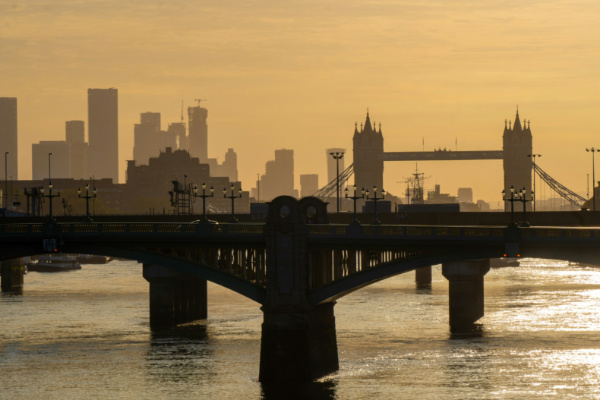
LondonLife – Crossings…
Lost London – Nonsuch House, London Bridge…
Once located at the southern end of London Bridge, Nonsuch House is the earliest documented prefabricated building.
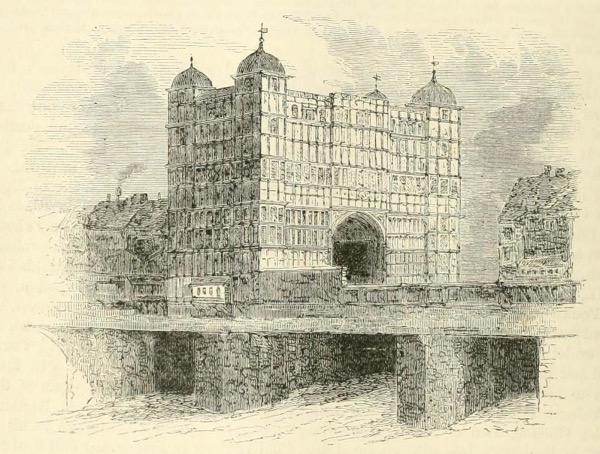
Originally constructed in what is now The Netherlands, it was shipped to London in pieces – each individually marked – in 1578 with the reassembly completed the following year.
The four storey building, which was said to have been constructed using wooden pegs and no nails, featured an arched tunnel through the middle through which bridge traffic would pass.
The main facade faced toward Southwark and there were towers at each of the four corners, topped with onion domes. The east and west sides of the building, which protruded beyond the bridge out over the Thames were elaborately carved.
The northern facade of the building abutted other properties while the southern side had a clear space in front over which a drawbridge is believed to have been located (it could be raised to allow larger ships through).
The name may have referenced King Henry VIII’s Nonsuch Palace, located near Ewell in Surrey, and was said to refer to the fact there was no such building as splendid.
The property was demolished along with the other buildings on the bridge in about 1757.
10 atmospheric ruins in London – 7. London Wall, Noble Street…
There’s many remnants of the Roman and later medieval wall which once surrounded the City of London – the towering section at Tower Hill near the Tower of London no doubt the most famous.
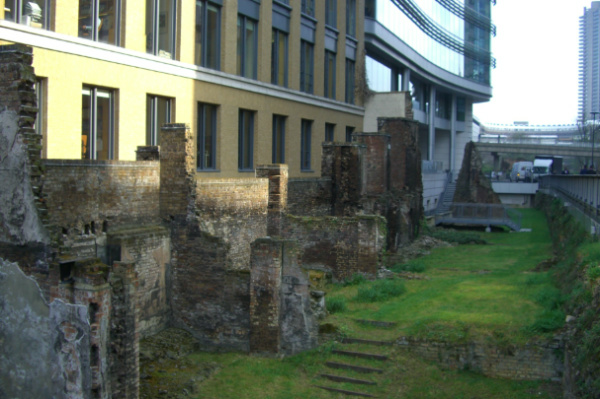
But there are several other stretches of the stone and brick wall left which evoke a sense of the structure it once was and the defensive role it played in protecting Londoners – among them is a substantial section of the wall located in Noble Street on the city’s western side.
The 80 metre long section of Roman and later medieval remains includes two internal turrets on what was the west side of the Roman Cripplegate fort (built between 120 and 150 AD) as well as a substantial bastion located at the southern end of the site.
The highest fragment of the Roman wall can be seen opposite Oat Lane, near the southern end of the site, while the highest section of the wall – which stands some 4.5 metres high and is mostly medieval – can be seen at the northern end of the site.
As well as reflecting the City’s Roman and medieval history, this section of wall also evokes a sense of the horrors of the Blitz.
Projecting eastward on the inside of the wall are party walls from World War II bomb-damaged and later demolished homes which once fronted onto Noble Street.
WHERE: Noble Street, London (nearest Tube stations are Barbican and Bank; WHEN: Anytime; COST: Free.
A Moment in London’s History – Catherine Murphy’s execution…
It’s 235 years ago this month that Catherine Murphy became the last woman in England to be executed by being burnt at the stake.

Murphy and her husband Hugh had both been convicted of “coining” (producing counterfeit coins, then seen as a matter of high treason) at the Old Bailey and sentenced to death on 18th September, 1788.
The following year – on 18th March, 1789 – they and seven other men were executed at Newgate Prison.
All eight of the men were executed by hanging but Murphy was, as the law then stipulated, made to stand on a foot high platform in front of a stake to which she was fastened.
It is believed Murphy, who was reportedly dressed in a striped gown with a black ribbon around her cap, was strangled to death before she was burned. A noose had been placed around her neck and the platform on which she was standing removed a half-an-hour before the faggots were lit about her, leaving her to hang (this had become a somewhat standard practice since the 1650s).
Execution by burning – which was increasingly attracting public opprobrium, not because of its barbarity but because of its impact on local residents offended by the smell and smoke which accompanied such a method of execution – was officially abolished the following year when the Treason Act was passed.
This was apparently on the initiative of Sir Benjamin Hammett, a former sheriff of London and now MP.
This Week in London – Underground shelters in wartime – then and now; new Ravenmaster at the Tower; and, ‘La Ghirlandata’ back at the Guildhall Art Gallery…
• A new photographic exhibition exploring how Underground stations and metro systems provide shelter to citizens during periods of war, both now and in the past, opened at the London Transport Museum in Covent Garden last week. Echoes of the Blitz: Underground shelters in Ukraine and London features 70 images, including historical pictures from the museum’s collection as well as 38 contemporary photographs shot by six renowned, mainly Ukrainian, documentary photographers. The latter include photography showing ordinary Ukrainian citizens sleeping, waiting, cooking, washing clothes, caring for their pets and creating temporary make-shift homes in metro stations of Kyiv and and Kharkiv show alongside black and white archive images of Londoners taking refuge in Tube stations during World War II. The exhibition, which is being run in partnership with Berlin-based journalistic network n-ost, can be seen until spring next year. Admission charge applies. For more, see www.ltmuseum.co.uk.
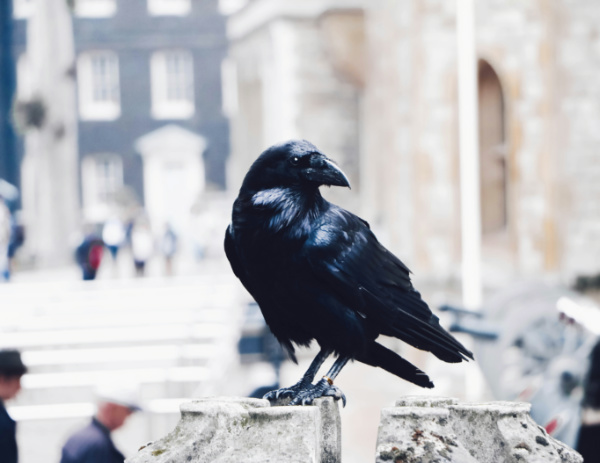
• A new Ravenmaster has been appointed at the Tower of London. Yeoman Warder Michael ‘Barney’ Chandler took up the role at the start of this month, 15 years after he first became a Yeoman Warder at the Tower. The Ravenmaster oversees a team of four responsible for the care of the Tower’s seven ravens which legend says must remain at the Tower to ensure its protection. The legend apparently goes back to at least the reign of King Charles II – when the King’s astronomer John Flamsteed complained that the resident ravens were impeding his work at the Tower and requested their removal, the King was told that if the ravens left the Tower then the Kingdom would fall (and so they remained). While the Yeoman Warders have longed cared for the ravens, the post of Ravenmaster was only created in the past 50 years and was first held by Yeoman Warder Jack Wilmington. Yeoman Warder Chandler, who became the 387th Yeoman Warder at the Tower when he was appointed in March, 2009, is only the sixth person to hold the office. For more, see www.hrp.org.uk/tower-of-london/.
• One of the most popular paintings at the Guildhall Art Gallery is being reinstalled to mark International Women’s Day on Friday. Dante Gabriel Rossetti’s La Ghirlandata has been on loan – first to the Tate Britain and then to the Delaware Art Museum in the US – but is now being returned. The painting dates from 1873 and depicts a ‘garlanded woman’ playing an arpanetta and looking directly at the viewer. The muse for the woman is said to have been the actor and model, Alexa Wilding, while the two ‘angels’ in the top corners were posed by William and Jane Morris’ youngest daughter, May Morris. The City of London Corporation acquired the oil on canvas work in 1927. On Saturday, free family activities will be held at the gallery to mark the work’s return. For more, see www.thecityofldn.com/la-ghirlandata.
Send items to exploringlondon@gmail.com.
LondonLife – Leadenhall beauty…
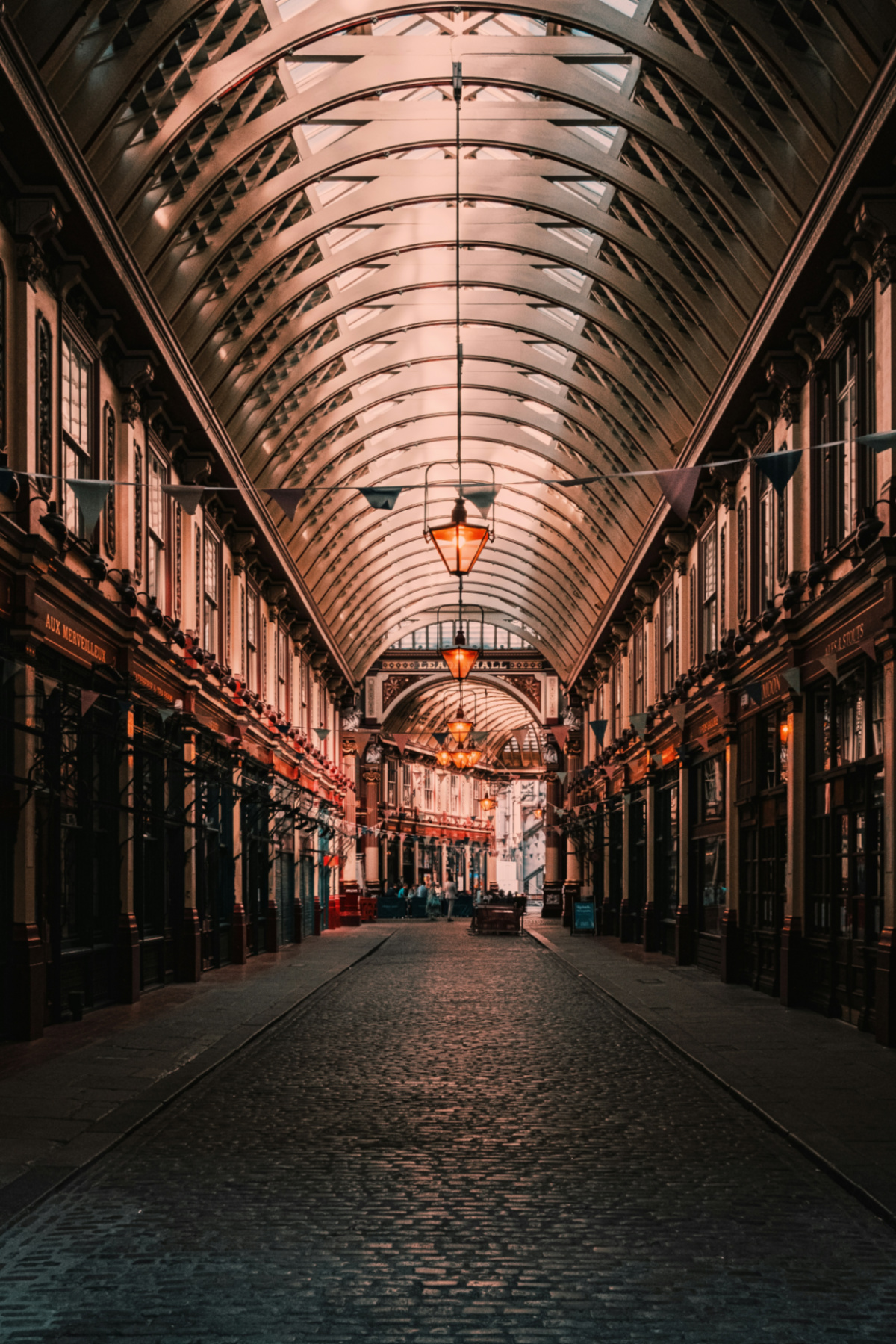
Leadenhall Market in the City of London.
10 atmospheric ruins in London – 5. All Hallows Staining…
Located in at the junction of Mark Lane and Dunster Court in the City of London, All Hallows Staining was a medieval church which was mostly demolished in the late 19th century.

These days only the lonely tower remains (above ground at least) as testament to building that once stood there and the lives that were impacted by it.
All Hallows Staining was originally built in the late 12th century and while the origins of its name are somewhat shrouded in mystery, there are a couple of theories.
One says it takes its name from the fact it was built in stone when other churches at the time were wooden (“staining” meaning “stone”) while another says it takes it names from the fact it was built on land belonging to the Manor of Staines.
Princess Elizabeth (later Elizabeth I) is said to have presented the church with new bell ropes after she was released after two months in the Tower of London in 1554 during the reign of her half-sister Queen Mary I (paying tribute to the sound they provided while she was in the Tower).
The church survived the Great Fire of London in 1666 but collapsed just five years later, its foundations apparently weakened by too many graves in the adjoining churchyard.
It was rebuilt in 1674-75 but largely demolished in 1870 when the parish was combined with St Olave Hart Street (and the proceeds were used to fund construction of All Hallows, Bow, in the East End).
Just the tower, parts of which date from the 12th century, remained. The property was bought by the Worshipful Company of Clothworkers. Underneath the adjacent yard they installed the remains of the 12th century crypt of the hermitage chapel of St James in the Wall (later known as Lambe’s Chapel) following the demolition of the chapel in the 1870s.
During World War II, when St Olave Hart Street was badly damaged in the Blitz, a temporary prefabricated church was erected on the site of All Hallows Staining which used the tower as its chancel. It was known as St Olave Mark Lane.
The church was Grade I listed in 1950. In 1957, Clothworkers had a hall for St Olave Hart Street constructed on part of the site of the former church.
The tower is usually able to be seen across a small yard from Mark Lane.
London Explained – The Common Cryer and Sergeant-at-Arms…
One of three ceremonial officers appointed by the City of London’s Court of Aldermen, the office of Common Cryer and Sergeant-at-Arms, commonly known as the “Macebearer”, is believed to the oldest of them, established well before 1338.

The Common Cryer and Sergeant-at-Arms has the role of carrying the Great Mace of Government ahead of the Lord Mayor of London.
The post was originally held by one of the King’s Sergeant-at-Arms. In 1419, the title held by the mace bearer was referred to as the “Common Serjeant-at-Arms of the City”, otherwise known as the “Common Cryer”.
Records show he had a salary of 60 shillings a year, robes, fees from the alderman and sheriffs and a “sufficient horse” for the honour of the City.
By 1559 the current title was in use.
As well as bearing the ceremonial mace before the Lord Mayor, the Macebearer also opens proceedings at Common Hall, the electoral assembly at Guildhall, with the cry “Oyez, Oyez, Oyez”. The Macebearer also proclaims the orders at the monarch and Privy Council at appointed places within the City.
Along with the City Marshall and the Sword-Bearer, the Common Cryer and Sergeant-at-Arms is one of three Esquires based at Mansion House, the official residence of the Lord Mayor of London.
They run the Lord Mayor’s official residence and office, and accompany him on official occasions. They are usually senior military officers with diplomatic experience.
Major Peter Oweh was appointed to the post of Common Cryer and Sergeant-at-Arms in December, 2022.
What’s in a name?…Basinghall Street…

This City of London street, which sits on the eastern side of the Guildhall complex, is named for the wealthy Basing (or Bassing) family who had a hall here in the 13th century.
The street, which links Gresham Street in the south to Basinghall Avenue in the north, has been the site of numerous prominent buildings including the medieval hall of the Weaver’s Company (demolished in 1856, having replaced an earlier hall which burnt down in the Great Fire of London in 1666, the hall is now located in Gutter Lane), the Cooper’s Company (demolished in 1867, the hall is now located in Devonshire Square) and the Girdler’s Company (destroyed in the Blitz in 1940; the hall is now located in Basinghall Avenue).
It was also the location of the Sir Christopher Wren-designed Church of St Michael Bassishaw until 1899 after it was seriously damaged when the crypt was being cleared of human remains in line with the orders of City authorities. The parish with united with St Lawrence Jewry.
Famous denizens included the goldsmith, banker and civil engineer Sir Hugh Myddelton, most renowned for his design of the New River scheme to bring clean water to the City, who, according to The London Encyclopaedia, would sit in the doorway of his office and smoke his pipe while chatting with the likes of Sir Walter Raleigh.
The family also gave their name to the City of London’s Bassishaw Ward.
This Week in London – Billingsgate Market history explored; new landscapes at Dulwich; and, recovered gems on show…
• The history of Billingsgate Market in the City of London is being explored in am exhibition at the City of London Heritage Gallery. Billingsgate Market at the Heritage Gallery features items including the Liber Horn, a compilation of charters, statutes, and customs made by Andrew Horn, chamberlain of the City of London from 1320-1328, in 1311 which is illustrated by small images of fish showing their importance to Londoners, a late 17th century petition by the fishermen protesting the landing of vessels loaded with salt and oranges, 19th century volumes recording the collection of tolls and detailing the licensing of porters, and 20th century photographs of the market at work. Free to view, the display, located in the Guildhall Art Gallery, can be seen until 16th May. For more, see www.thecityofldn.com/billingsgateexhibition
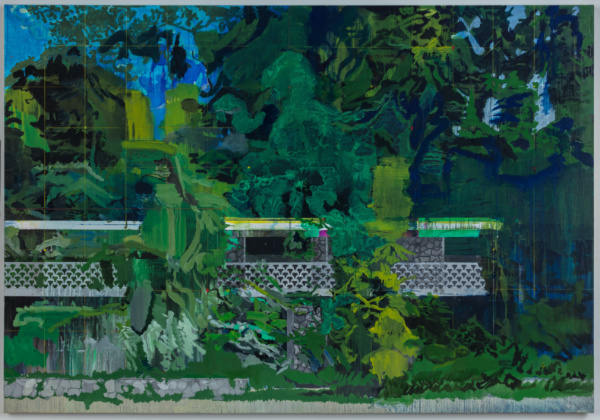
• A major new exhibition featuring new interpretations of landscape art has opened at the Dulwich Picture Gallery. Soulscapes features more than 30 contemporary works spanning painting, photography, film, tapestry and collage by artists such as Hurvin Anderson, Phoebe Boswell, Njideka Akunyili Crosby, Kimathi Donkor, Isaac Julien, Marcia Michael, Mónica de Miranda and Alberta Whittle. Highlights include Anderson’s Limestone Wall (2020), Akunyili’s Cassava Garden (2015) and Donkor’s Idyl series (2016-2020). Runs until 2nd June. Admission charge applies. For more, see www.dulwichpicturegallery.org.uk.
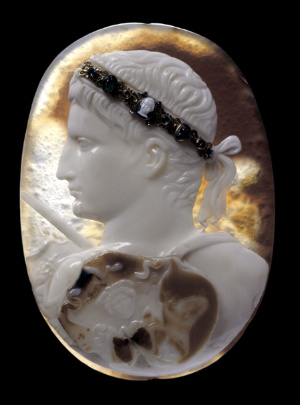
• A selection of gems recovered after news that around 2,000 objects from the British Museum’s collections were missing, stolen or damaged go on show at the museum from today. Rediscovering gems explores the significance of classical gems – used as seals, worn as jewellery or collected as objects of beauty in the ancient world – and the impression they have left throughout history. The gems are displayed in a typical 18th century gem cabinet, along with a collector’s equipment, in reflection of the huge interest in classical gems during the period. The display can be seen in Room 3 until 15th June. Admission is free. For more, see britishmuseum.org/exhibitions/rediscovering-gems.
Send all items to exploringlondon@gmail.com
 Exploring London