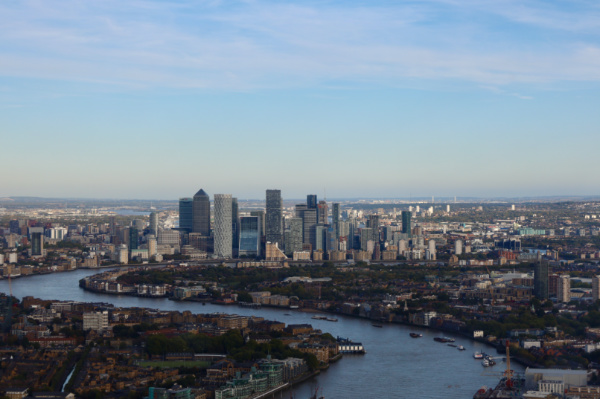
LondonLife – Winding river…
One of only two twin screw, coal fired steam tugs still active in the UK, the steam tug Portwey can these days be found in London’s Docklands.
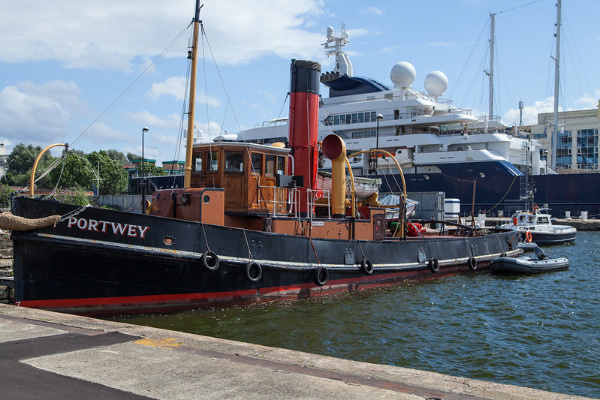
Ordered by the Portland & Weymouth Coaling Co Ltd, Portwey (the name comes from the company’s) was built by Harland & Wolff at Govan yard in Glasgow and launched on 10th August, 1927.
The 80 foot long vessel was based in Weymouth, Dorset, performed a range of tasks including carrying coal to steamers and being on call for any ship in distress requiring assistance or salvage. This included extinguishing a fire aboard the Danish timber-carrier Bodil in 1928, assisting ships like the cargo steamer Winslow (which had developed a list in heavy seas in 1932), and the Winchester Castle which had run aground in 1936, and even being involved in the search for a sunken submarine in 1932.
The Portwey was seconded by the Admiralty and moved to Dartmouth in Devon during World War II. Narrowly avoiding German bombs while in the harbour, during this time the tug was went to the assistance of ships attacked by the enemy. In 1944, she was assigned to US forces as they prepared for D-Day and her duties including clearing obstructions from the channel and supplying fresh water to naval vessels as well as, when a rehearsal for the landings went wrong at Slapton Sands, rescuing personnel and landing craft.
After the war, the Portwey resumed duties as a harbour tug including ferrying pilots and customs officers out into the Channel. In 1947, she helped put out a fire at the Queen’s Hotel in Dartmouth.
The Portwey was sold to the Falmouth Dock and Engineering Company in Cornwall in 1952. As well as rescuing the captain and first officer of the cargo ship Flying Enterprise, during this period she was involved in the construction of the Lizard Lifeboat Station in Cornwall, and a car ferry slipway at Holyhead in north Wales.
In 1967, with coal-fired steam tugs being replaced by diesel-engined ships, she was laid up to be scrapped. But it wasn’t the end for the Portwey, which was bought by Richard Dobson, the assistant harbour master at Dartmouth. Along with a group of friends, he returned her to working condition and during the 1960s and 1970s, she took part in many events on the River Dart and around Torbay.
In 1982, the Portwey joined the Maritime Trust’s Historic Ship Collection at St Katharine’s Dock where the newly formed Friends of Portwey continued with restoration and operation of the tug.
The Friends of Portwey became the Steam Tug Portwey Trust in 2000 and purchased the tug from the Maritime Trust, moving the vessel to West India Dock.
WHERE: Steam Tug Portwey, West India Dock (South Quay) (nearest DLR station is South Quay); WHEN: 2pm to 9pm Wednesdays; WEBSITE: www.stportwey.co.uk.
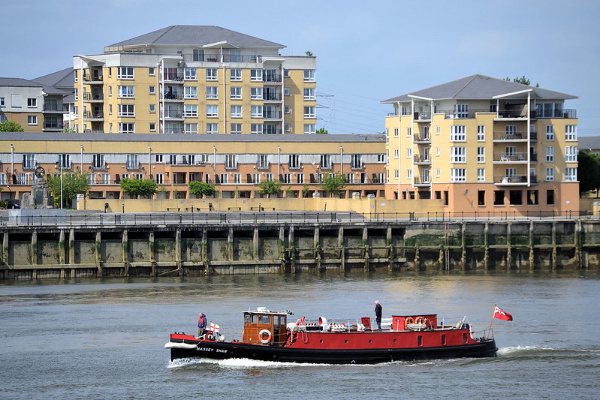
Moored at West India Dock, the Massey Shaw is a former London Fire Brigade fireboat.
The fireboat was constructed in 1935 for a cost of £18,000 by the J Samuel White company in Cowes on the Isle of Wight. Named for Sir Eyre Massey Shaw – the first Chief Officer of what was then named the Metropolitan Fire Brigade, the vessel was designed to London County Council specifications with a deliberately low profile so it could fit under the Thames bridges in all tides.
The vessel, which was was powered by two eight cylinder diesel engines and featured a main deck monitor as well as eight deck outlets (and a wheelhouse which was added later), soon proved its worth, playing an important role in saving what the press said was a million pounds worth of stock at a large warehouse fire on Colonial Wharf.
During World War II, the Massey Shaw took part in Operation Dynamo, forming part of the small boat flotilla which evacuated British troops from the beach at Dunkirk. She ferried more than 500 troops to a larger ship offshore and transported almost 100 back to England and it’s believed she was the last of the small boats to leave Dunkirk harbour (rescuing survivors from a French vessel which struck a mine along the way).
Back in London, Massey Shaw performed a critical role during the Blitz, pumping large quantities of Thames water to douse fires along the city’s waterfront.
It remained in service until the early 1970s, although it had operated as a reserve boat since 1960 with newer models taking over frontline duties.
Decommissioned in 1971, the Massey Shaw was found abandoned 10 years later at St Katharine Dock by a group who went on to found The Massey Shaw Fireboat Society with a view to preserving the vessel. They were granted a 50 year lease on the vessel.
In 1985, the Massey Shaw joined the Association of Dunkirk Little Ships on their return to Dunkirk for the first time since 1965 and two years later, she attended the centenary of Sir Eyre Massey Shaw’s review of 1000 firemen at Oxford.
In 1990 the Massey Shaw was sunk close to the London Fire Brigade headquarters at Lambeth but was subsequently salvaged and the following year, after restoration work, joined the 50th anniversary return trip to Dunkirk.
The society gained full ownership of Massey Shaw in 2002 and restoration work was carried out by the TV programme Salvage Squad (a second appearance on the show and more work followed two years later).
In 2008, a £500,000 Heritage Lottery Grant was used to fund the restoration of the vessel at Gloucester docks. She returned to London by road in 2013 where the restoration was completed and in 2015 was officially launched back on the River Thames with an event at the Westminster Boating Base.
Later that year she participated in another “little ships” armada to Dunkirk, this time commemorating the 75th anniversary of the evacuation. Massey Shaw has since taken part in other events including celebrations marking Queen Elizabeth II’s record as longest reigning monarch in 2015.
The vessel is now moored at the eastern end of West India Docks on the Isle of Dogs.
While Massey Shaw did appear in the 1958 film, Dunkirk, recapturing its role as one of the “little ships”, it did not appear in the 2017 film of the same name.
WHERE: Massey Shaw, West India Dock, Poplar (nearest DLR station is South Quay; nearest Tube station is Canary Wharf); WHEN: Between March and November, from 11am to 3pm daily (check website for details); WEBSITE: https://masseyshaw.org.
• The 20th anniversary of the Museum of London Docklands will be marked on Saturday night with the Big Docklands Street Party celebrating the history, cultures and communities of the East End. . Two decades after Queen Elizabeth II opened the museum, the street party and museum late includes live performances headlined by Vanity Milan, star of Ru Paul’s Drag Race, street food, pop-up bars, talks and tours, workshops, film screenings, a makers market, pub quiz and after hours gallery access. The museum’s big day will also be marked with the ringing of the Bow Bells – tradition holds that to be a true Cockney one must be born within earshot of the Bow Bells. For tickets and further information, head to www.museumoflondon.org.uk/museum-london-docklands/whats-on/mold20

• A new exhibition showcasing how technology is transforming story-telling has opened at the British Library. Digital Storytelling features a range of digital stories including 80 Days, a four-time BAFTA nominated interactive adaptation of Jules Verne’s Around the World in Eighty Days, and the exclusive public preview of Windrush Tales, the world’s first interactive narrative game based on the experiences of Caribbean immigrants in post-war Britain as well as the popular auto fiction fitness app Zombies, Run! and Breathe, a ghost story that “follows the reader around”, reacting to users’ real-time location data. The display will also explore how writers and artists look into the lived realities behind the news with the inclusion of the likes of A Dictionary of the Revolution, which charts the evolution of political language in Egypt during the uprising in 2011, and c ya laterrrr, an intimate autobiographical hypertext account of the loss of author Dan Hett’s brother in the 2017 Manchester Arena terrorist attack. The exhibition, which runs until 15th October, is accompanied by a series of events. Admission charge applies. For more, see www.bl.uk/events/digital-storytelling.
• Two portraits created three centuries apart and depicting two Jamaican gentlemen scholars – Vanley Burke and Francis Williams – are at the heart of a display at the V&A marking the 75th anniversary of the arrival of HMT Empire Windrush. The display features documentary photographs by Burke, the ‘Godfather of Black British photography’, and everyday things collected by him as well as historical artefacts and scientific images that shed new light on the museum’s enigmatic portrait of 18th-century Jamaican writer Francis William. The free display, which opens Monday, can be seen in Galleries 88a and 90. The occasion is also being marked by a series of events – for more, see vam.ac.uk/season/2023/windrush-75.
Send all items to exploringlondon@gmail.com
The world’s only complete surviving Victorian steamship, the SS Robin is moored in east London, close to where it was built.
One of a pair of steam coasters (the other being Rook) built initially by Mackenzie, MacAlpine & Co at Orchard House Yard on Bow Creek (and then completed by London shipowner Robert Thomson) in 1890, the SS Robin was fitted out at East India Dock before being towed to Dundee to be fitted with her engine, boiler and auxiliary machinery at Gourlay Brothers & Co.
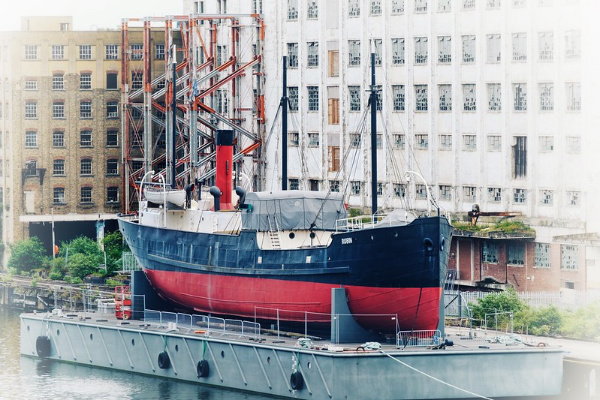
The SS Robin commenced her sailing career at Liverpool on 20th December, 1890, and spent the next decade carrying cargos – including grain, coal, and iron ore – between British ports as well as some in northern France. Early on – in 1892 – she was sold to Alexander Forrester Blackater of Glasgow and re-registered there.
In 1900, the Robin was sold to what would be the first of three Spanish owners and renamed the Maria. The ship would then spend the next 74 years working along the Spanish coast, carrying a range of cargos including iron and coal.
In 1974, only days after discharging her final cargo and about to be sold to Spanish ship breakers, the Maritime Trust purchased the ship.
Following a two restoration project at the Doust & Co shipyard in Rochester, Kent, and, once again named the Robin, she was subsequently moored in St Katharine Docks. The ship was moved to a new mooring at West India Quay in 1991 but fell into disrepair.
In 2000, David and Nishani Kampfner bought Robin for £1 with the idea of creating an educational centre and gallery. Two years later, in 2002, SS Robin Trust was created and volunteers subsequently began the work of restoring the coastal steamer.
From 2004 until 2007, the vessel was home to a gallery and workshops run by Kampfner to encourage creative thinking in children.
But the need for further refurbishment saw this come to an end and, financed by a £1.9 million loan from Crossrail and a £1 million grant from The Heritage Lottery Fund, in June, 2008, the Robin undertook her first sea journey in 35 years, travelling to Lowestoft for the much needed restoration works.
Once at Lowestoft, however, it was discovered the ship was too fragile to go to sea again and so a pontoon was created onto which the ship was lifted in 2010. Towed to Tilbury, the Robin underwent further refurbishment there until, in July, 2011, she returned to London.
Moored initially at the Royal Albert Dock, she is now located at Royal Victoria Dock (and can be seen from nearby viewing points). There are now plans to relocate her to Trinity Buoy Wharf and for further development as a museum ship.
For more information, head to http://ssrobin.com.
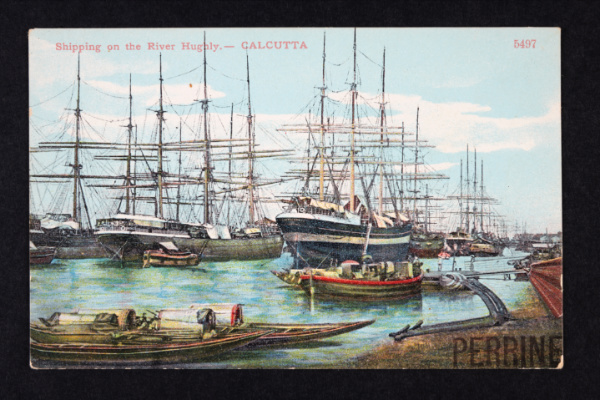
• A new exhibition examining the history of Indian indenture in the British Caribbean and Indo-Caribbean culture in London today opens at the Museum of London Docklands from tomorrow. Indo + Caribbean: The creation of a culture puts a spotlight on the 450,000 Indians who left India between 1838 and 1917 to work for periods of three to five years on Caribbean plantations in return for transport, a minimal wage and some basic provisions. Among the objects on show are letters from Caribbean planter Sir John Gladstone petitioning the government to provide workers from India as well as contracts, shipping company records, postcards, and papers from the Parliamentary Archives that give insights into the realities of life under indenture. Also on display are photos, jewellery, film and artwork which uncover personal stories and family memories from London’s Indo-Caribbean community. Admission to the exhibition in the London, Sugar and Slavery gallery is free. For more, see www.museumoflondon.org.uk.
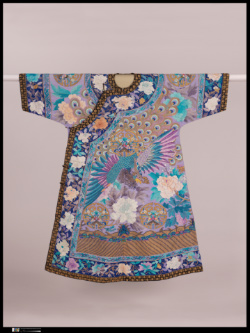
• The resilience and creativity of people in 19th century China is explored in a new exhibition at the British Museum which opens today. The Citi exhibition China’s hidden century examines the age of the Qing Dynasty, which ruled from 1796 to 1912, and focuses on a spectrum of different groups in society – from members of the court and military to artists and writers, farmers and city-dwellers as well as the globalised communities of merchants, scientists and diplomats, reformers and revolutionaries. Among the more than 300 objects on display are a water-proof straw cape made for a street worker, farmer or fisherman which is being publicly displayed for the first time, cloisonné vases given by the Last Emperor’s court to King George and Queen Mary for their coronation in 1911, and, a silk robe which belonged to the Empress Dowager Cixi, de facto ruler of China from 1861 to 1908 and a contemporary of Queen Victoria. Admission charge applies. Runs in the Sainsbury Exhibitions Gallery until 8th October. For more, see britishmuseum.org/exhibitions/chinas-hidden-century.
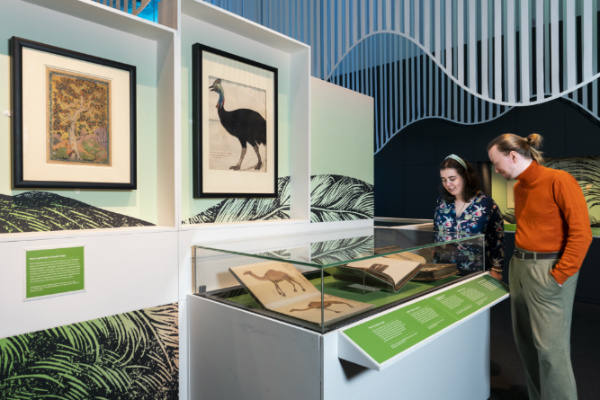
• The intersection between science, art and sound and how that impacts our understanding of the natural world is explored in an exhibition at the British Library. Animals: Art, Science and Sound features 120 artworks, manuscripts, sound recordings and books, many of which are on display for the first time. They include the earliest known illustrated Arabic scientific work documenting the characteristics of animals alongside their medical uses (c1225), the earliest use of the word ‘shark’ in printed English (1569), Leonardo da Vinci’s notes (1500-08) on the impact of wind on a bird in flight, and one of the rarest ichthyology publications ever produced, The Fresh-Water Fishes of Great Britain (1828-38), which features hand-painted illustrations by Sarah Bowdich. Also present is the first commercially published recording of an animal from 1910 titled Actual Bird Record Made by a Captive Nightingale (No. I) by The Gramophone Company Limited and one of the earliest portable bat detectors – the Holgate Mk VI – used by amateur naturalist John Hooper during the 1960s-70s to capture some of the first sound recordings of British bats. The exhibition, which runs until 28th August and which carries an admission charge, is accompanied by two free displays at the library – Animal Rights: From the Margins to the Mainstream (runs to 9th July) and Microsculpture (runs to 20th November). For more, see www.bl.uk/events/animals.
Send all items to exploringlondon@gmail.com.

Museum of London Docklands’ major exhibition, Executions, has less than a month to run, closing on 16th April. This week sees a special late opening on Friday night (24th March) with a candlelit evening featuring screenings, pop-up talks and tours. There will be execution ballads sung live and a selection of exhibition-inspired drinks available as visitors have the chance to explore some of London’s grisly past before the doors clang shut for good. For more, see www.museumoflondon.org.uk/museum-london-docklands/whats-on/exhibitions/executions.


View of the Docklands from North Greenwich.

The Docklands reflected in The Thames.
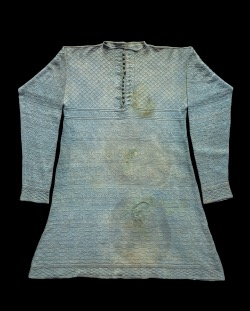
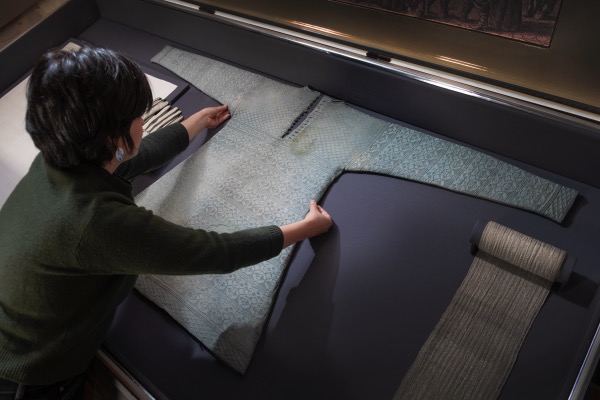
• The history of public executions in London – spanning a period of some 700 years – is the subject of a landmark new exhibition at the Museum of London Docklands in West India Quay. Executions explores how capital punishment became embedded in the city’s landscape – from the first recorded public execution in 1196 to the last in 1868 – and looks at the rarely told and often tragic human stories behind them. Items on display include an intricately woven silk vest said to have been worn by King Charles I at his execution outside the Banqueting House (pictured), a 300-year-old bedsheet embroidered with a love note in human hair and personal items which once belonged to prison reformer Elizabeth Fry. Visitors can also stand in front of the Newgate Prison door, marking the last steps for prisoners heading to the scaffold, and see a dramatic recreation of the Tyburn “Triple Tree” gallows. Visitors will also learn about the 200 offences that became punishable by death and the spectacle and rituals of execution days as well as what led celebrity criminals to the gallows. Admission charge applies. Runs until 16th April next year. For more, see https://www.museumoflondon.org.uk/museum-london/whats-on/exhibitions/executions.
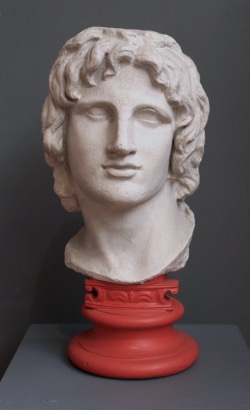
• The first exhibition exploring the rich history of story-telling around one of the most famous figures of the ancient world – Alexander the Great – opens at the British Library tomorrow. Alexander the Great: The Making of a Myth features almost 140 exhibits from 25 countries including astrological clay tablets, ancient papyri and medieval manuscripts as well as comics, films and video games. It reveals how Alexander’s character has been adapted and appropriated by different cultures and religions, with conflicting interpretations. Runs until 19th February. Admission charge applies. A season of in-person and online events accompanies the exhibition. For more, see www.bl.uk/events/alexander-the-great-the-making-of-a-myth.
• Portraits of the Euro 2020 England men’s football squad and its manager, Gareth Southgate, will be shown at the City of London Corporation’s Guildhall Art Gallery from today. The free exhibition, This is England, features the most successful men’s national team – finalists in Euro 2020 – since the winners of the World Cup in 1966, from Harry Kane and Jude Bellingham to Bukayo Saka and Raheem Sterling. The paintings are the work of artist Matt Small and were commissioned by the FA and exhibited at the St George training ground during the Euro 2020 finals. The paintings can be seen until 19th February. For more, see www.cityoflondon.gov.uk/events/this-is-england.
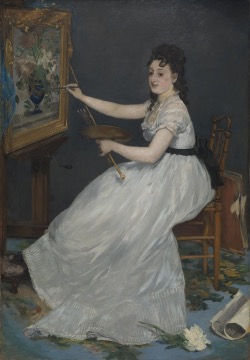
• Édouard Manet’s 1870 portrait of Eva Gonzalès is the subject of a new exhibition at The National Gallery opening on Friday. The painting was considered by the early 20th century to be the most famous modern French painting in the UK and Ireland. The exhibition, the first in a new series of ‘Discover’ exhibitions to be staged in the Sunley Room with the aim of exploring well-known paintings in the collection through a contemporary lens, examines the lifelong artistic dialogue and the complexities of the friendship and mentorship between Manet and Gonzalès, his only formal pupil. It also looks at the broader context of female self portraits from the 18th to early 20th centuries, alongside portraits of women artists by male friends, husbands, and teachers The free exhibition includes works by Eva Gonzalès, Elisabeth Louise Vigée Le Brun, Edouard Manet, Berthe Morisot, Alfred Stevens and Laura Knight. Runs until 15th January. For more, see www.nationalgallery.org.uk/exhibitions/discover-manet-eva-gonzalès.
Send all items for inclusion to exploringlondon@gmail.com.
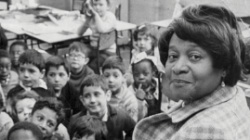
• The archive of writer, teacher and ethno-psychotherapist Beryl Gilroy has been acquired by the British Library. Highlights from the archive, which includes working drafts for published and unpublished novels, letters with publishers and literary agents and ‘born-digital’ material, is at the centre of the free Celebrating Beryl Gilroy display which opened in the Treasures Gallery earlier this month. Gilroy, who was born in Guyana (then British Guiana) and who immigrated to Britain in 1952, became the first black head teacher in London in 1969 and wrote a number of acclaimed children’s books to better reflect the lives of her pupils. Her works – which explore the lives of families, particularly of women and children, the impact of 20th century migration and societal change that came as a result – also included number of novels, a collection of poems, non-fiction writing and a 1976 memoir, Black Teacher. The free display can be seen until 26th June. For more, see www.bl.uk.
• A controversial bronze statue of merchant and slave trader Robert Milligan which formerly stood on West India Quay outside the Museum of London Docklands is joining the museum’s collection. The statue was removed in June, 2020, following a petition signed by over 4,000 people called for it to be removed from public view. Its acquisition by the museum follows a public consultation conducted in partnership with the Tower Hamlets Council and landowners Canal & River Trust, which concluded that the statue should be housed in a museum where it can be fully contextualised. “Over the last 15 years, the museum has been working with academics, community leaders and activists to tell the story of London’s involvement in the transatlantic slave trade, and give voice to its legacy,” said a museum spokesman. “The West India Docks, championed by Milligan using wealth from the slave trade, are a visible reminder of how this history has shaped our city. It is right and important that we acknowledge this in the statue’s story. We will now take time to consult with the local community to decide how best to take this forward as part of our collection.” The statue will be held in storage whilst the museum consults further with local communities about how best to present it.
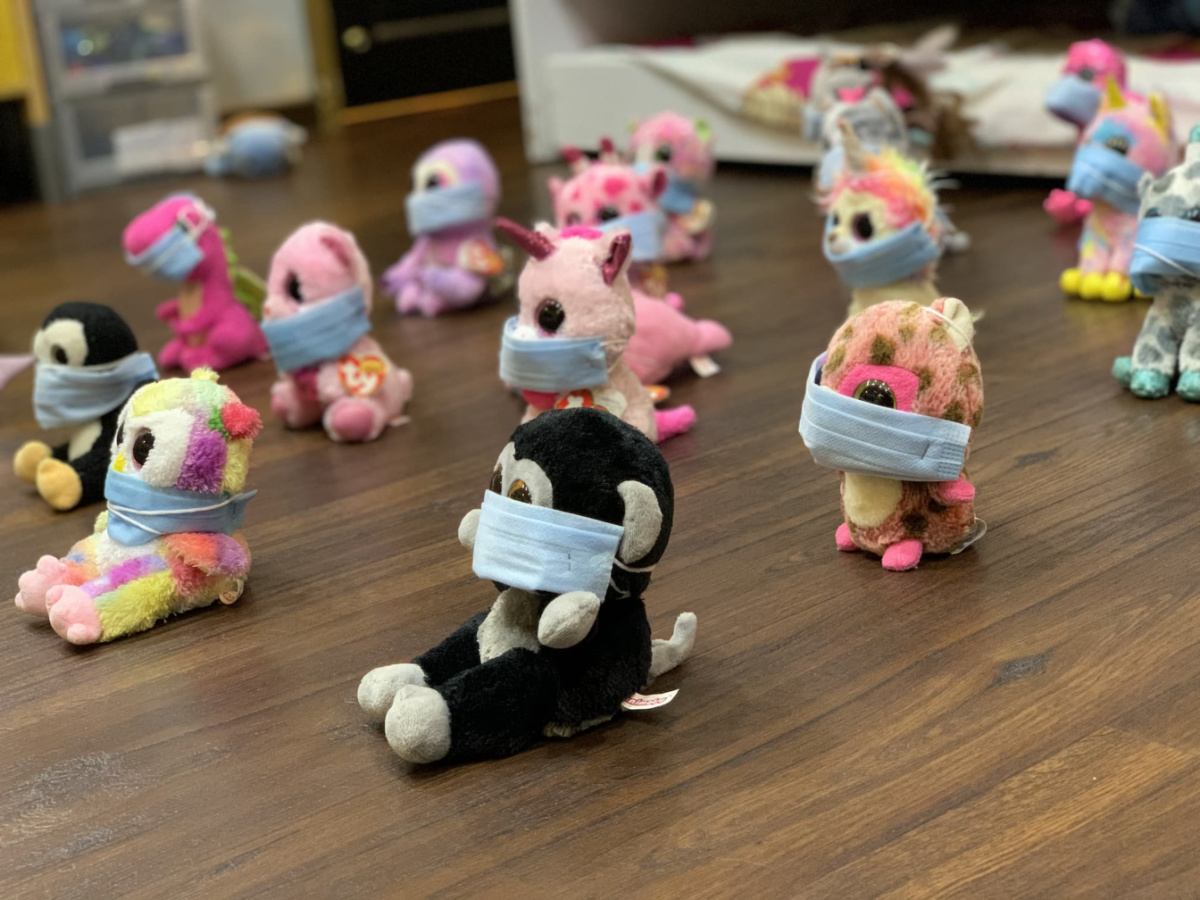
• The impact of the global coronavirus pandemic on children’s play is the subject of an online exhibition launched by Young V&A and its partners UCL and the University of Sheffield this week. Play In The Pandemic features some of the 100 submissions sent in from around the globe in answer to a call-out from The Play Observatory research project for people to submit their experiences of play – everything from music videos to children’s artworks and films made by parents showing their children splashing in puddles – alongside objects from the Young V&A’s collection. The exhibition, which takes the form of an unfolding origami house, also features a series of activities – ranging from how to make your own origami house to creating dens and window boxes for people to get involved. Head to the Play Observatory website.
Send all items to exploringlondon@gmail.com.

The DLR, or Docklands Light Rail, is a driverless train network connected to the Tube system.
The DLR, which is located at the eastern end of the city, connects to the Tube network at numerous stations including Bank, Tower Gateway and Canary Wharf. It reaches as far south as Lewisham, east to Beckton and Woolwich Arsenal and north to Stratford International.
The 24 mile-long network, which first opened on 31st August 1987 and has since been extended numerous times, has 45 stations. It also provides connections to the Emirates Air Line and London City Airport.
The DLR trains run from around 5.30am to around 12.30am from Monday to Saturday with Sunday services starting later and finishing earlier.
The fares are the same as the Tube and you can use Oyster cards.
In the 2019/2020, the line hosted more than 115 million passenger journeys.
For a route map, head to https://content.tfl.gov.uk/dlr-route-map.pdf
• Pop-Up London, a free festival for families, kicks off in central London on Saturday and runs throughout the half-term break until 31st October. The festival features more than 300 artists – including musicians, dancers, comedy acts and circus performers – who can be seen in more than 100 performances at locations including Trafalgar Square, King’s Cross, Spitalfields, and Canary Wharf. The diverse range of acts will include Brazilian drumming, Cantonese story-telling and Caribbean steelpans. For the full list of events. head to www.visitlondon.com/things-to-do/lets-do-london/pop-up-london.
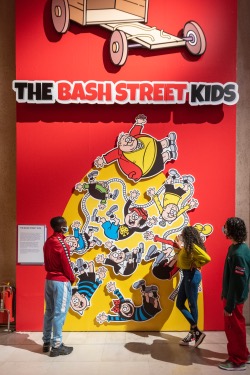
• The world’s longest-running weekly comic, Beano, is celebrated in a new exhibition opening at Somerset House today. Beano: The Art of Breaking the Rules features 100 comic artworks from the Beano archive exhibited, including original drawings never previously seen in public, and, works by contemporary artists including artist duo Gilbert & George, sculptor Phyllida Barlow and Oscar-winning animator Nick Park as well as larger-than-life recreations of Beano’s most iconic settings and interactive installations including Peter Liversidge’s patchwork of protest signs and a jukebox filled with music influenced by Beano’s rebellious streak. Beano was first released in 1938 and is still created weekly at its home in Dundee. This year marks the 70th since Dennis, Beano‘s top mischief-maker, made his debut. Runs until 6th March. Admission charge applies. For more, see www.somersethouse.org.uk/beano.
• Barrister and women’s rights advocate Helena Normanton (1882-1957) has been honoured with an English Heritage Blue Plaque at her former home. The plaque at 22 Mecklenburgh Square – where Normanton lived from 1919 to 1931 – was unveiled almost 100 years since she passed her Bar finals on 26th October, 1921. Normanton played an instrumental tole in paving the way for women to practice law, being the first female students one of London’s Inns of Court, one of the first women to be called to the Bar, the first female counsel to lead a case in the High Court, the first woman to run a trial at the Old Bailey and the first women to lead murder trials in England as well as one of the first two women to take silk as King’s Counsel. For more, see www.english-heritage.org.uk/visit/blue-plaques.
Send all items for inclusion to exploringlondon@gmail.com.

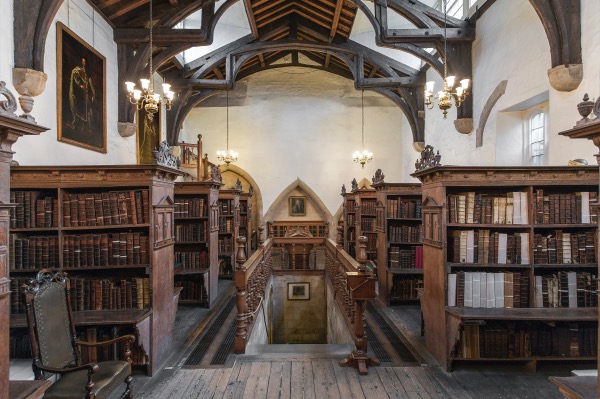
• A lost medieval sacristy used by Westminster Abbey’s monks in the 13th-century which has been revealed in the abbey grounds has been opened to the public. A visit to the dig uncovering the former sacristy is one of the stops on new ‘Hidden Highlights’ tours which also take in other areas not usually open to the public including the Jerusalem Chamber where King Henry IV died in 1413 and, the Library, formerly part of the monk’s dormitory which features a 15th century oak roof and 17th century bookcases (pictured above). The tour, which finishes in the Diamond Jubilee Galleries which have been closed since the start of the pandemic, is part of a summer of events at the abbey which also includes open air cinema, visits to the abbey after dark, live music performances and a chance to look behind the scenes at the abbey’s role in the 2011 wedding of the Duke and Duchess of Cambridge. For more, see www.westminster-abbey.org/abbey-news/lost-medieval-sacristy-opens-to-public-for-summer-festival-of-events.
• A new exhibition looking at the central role food plays in Black entrepreneurship and identity in the city’s south east has opened at the Museum of London Docklands. Feeding Black: Community, Power & Place puts four businesses in the spotlight – Livity Plant Based Cuisine in Croydon, Woolwich businesses African Cash & Carry and Junior’s Caribbean Stall, and Zeret Kitchen in Camberwell – and tells their stories through objects, recipes and videos as well as newly commissioned photography by Jonas Martinez and original oral histories and soundscapes by Kayode ‘Kayodeine’ Gomez. The free display can be seen until 17th July next year in the London, Sugar & Slavery gallery. For more, see www.museumoflondon.org.uk.
• Ride the dodgems at Somerset House. Dodge, described as a “thrilling open air experience” that takes an “inventive twist on the traditional fairground”, features dodgem cars and installations from acclaimed artists as well as food and drink and DJ sets. The event runs until 22nd August. There is free entry to the site but charges apply for the dodgem rides. For more, see www.somersethouse.org.uk. The event is part of the #LetsDoLondon campaign, described as the “biggest domestic tourism the capital has ever seen”.
Send all items for inclusion to exploringlondon@gmail.com.
• Hampton Court Palace is hosting its first ever Tulip Festival. Featuring more than 100,000 bulbs placed throughout the formal gardens, the festival pays homage to the estate’s long history of tulip cultivation and, thanks to partnership with the Hortus Bulborum in the Netherlands, involves some types of tulip that have not been on show at the palace since the 17th century. First introduced to the British Isles in the 1630s, tulip planting at Hampton Court dates back to the reign of Queen Mary II. Ten different heritage and modern types have been planted across the gardens for the festival including Parrot, Triumph, Rembrandt and Darwin tulips. Visitors can undertake a self-guided trail which takes in both the palace’s courtyards – filled with ornate planters and flowers specially-selected to match the historic brickwork – and the gardens. Admission charge applies (tickets must be pre-booked). Runs until 3rd May. For more, see www.hrp.org.uk/hampton-court-palace/whats-on/tulip-festival-2021.

• The National Gallery has acquired Portrait of a Girl (about 1650) by Isaack Luttichuys, the first work by the artist to enter a British public collection. Luttichuys, who name is pronounced ‘Lootickhouse’, was born in London to Dutch parents and spent his early life in England (where the family was known as Littlehouse, the literal English translation of the name). The artist later moved to Amsterdam where he enjoyed a highly successful career as a portrait painter until his death in 1673. The work was acquired from the estate of banker and philanthropist George Pinto under the Acceptance in Lieu scheme, administered by the Arts Council.
• Escape to faraway lands with a new art installation at Crossrail Place Roof Garden at Canary Wharf. Crossorelle is the work of artists Baker & Borowski, and features a design inspired by the Jardin Majorelle in Marrakech which fuses the Moroccan garden’s rich palette and art deco shapes with exotic flora. Free to visit, the display can be seen until 19th June. For more, see https://canarywharf.com/whats-on/crossorelle-roof-garden-mar-jun-2021/.
Send all items for inclusion to exploringlondon@gmail.com.
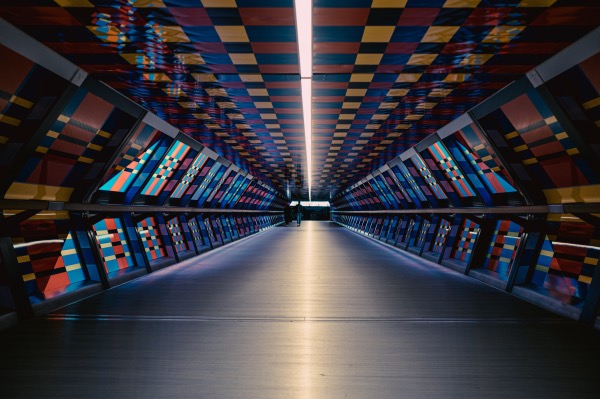
Adams Plaza Bridge, Canary Wharf, Docklands. The colourful crossing, which links Crossrail Place and One Canada Square, was created by artist Camille Walala as part of last year’s London Mural Festival. PICTURE: Samuel Regan-Assante/Unsplash

Cabot Square, Docklands. PICTURE: Tom Podmore/Unsplash

It was on 7th September, 1940, that the German bombers raided London in what was to be the first of 57 consecutive nights of bombings and the start of the air attacks on the city known as the Blitz (short for ‘Blitzkrieg’ meaning ‘lightning war’ in German).
Almost 350 German bombers, escorted by more than 600 Messerschmitt fighters, were involved in the raid on what became known as “Black Saturday”.
This first wave of bombing, which ended just after 6pm on what had been a hot day, largely targeted London’s docks in attempt to destroy the city’s infrastructure and industrial sites including the munitions factories of the Woolwich Arsenal, gasworks at Beckton, West Ham power station and oil storage tanks at Thameshaven.
A second wave, which lasted eight hours and involved another 400 bombers, arrived from 8pm striking Millwall, commercial docks at Tilbury and Thameshaven, and the heavily populated slums of the East End in localities including Silvertown, Canning Town, East Ham, Poplar, Stratford, Wapping, and Whitechapel.
Hundreds of tons of bombs were dropped in the raids during which some 448 of London’s civilians were killed and 1,600 injured. Some of the fires started in the bombing burned for five days with the flames visible for miles.
While the attack was the first day of the Blitz, it was actually the 60th day of the Battle of Britain in which the German Luftwaffe had targeted air fields, oil installations and other war-related infrastructure.
While Nazi Reichsmarschall Hermann Göring had gone on radio on the day of the raid, describing it as an “historic hour, in which for the first time the German Luftwaffe has struck at the heart of the enemy”, the strategy shift – to target London instead of the air defence-related installations – proved to be what Hugh Dowding, chief of Fighter Command described as a “mistake”, giving the defences time to rebuild.
But at the time, the attack on London was believed at the time to herald the start of a full invasion. It’s known that as the Luftwaffe attacked the East End, the military chiefs of staff were meeting in Whitehall – at 8pm that night, just as the second wave of planes was starting to bomb the city, they issued the code word ‘Cromwell’ which indicated that invasion was imminent and defending troops need to prepare.
The planned invasion – Operation Sea Lion – never eventuated but the Blitz was to continue until May the following year.
PICTURE: The London docks ablaze during the Blitz on 7th September, 1940. Palls of smoke rise in the docks beyond the Tower of London with the Surrey Docks to the right of the bridge and the West India Docks on the Isle of Dogs in the distance. PICTURE: © Port of London Authority Collection / Museum of London. For more on the ‘Docklands at War’, head to www.museumoflondon.org.uk/museum-london-docklands/permanent-galleries/docklands-war.
With the impact of the new rules being put in place to counter the coronavirus outbreak still being assessed, some scheduled events may be subject to change. As we would always advise anyway, please check with organisations before making any plans…
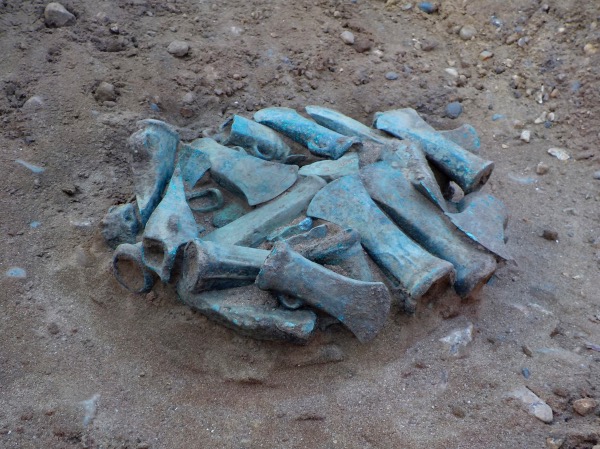
• The ‘Havering Hoard’ goes on display at the Museum of London Docklands on Friday, the first time it’s ever been on public display. Havering Hoard: A Bronze Age Mystery features all 453 objects found during an archaeological investigation in Havering in London’s east, in September, 2018. Dating from between c900 and c800 BC, the cache of items – the largest Bronze Age hoard ever found in London and the third largest find in the UK – includes fragments of swords and spears as well as tools including axeheads, sickles, gouges and awls, and terret rings, believed to prevent reins from tangling when horses were pulling a cart (these are the first examples found in England). There are also bracelet fragments, part of a double-sided razor, a ceramic loomweight and bronze pin decorated with amber which may have been used to secure a cloak. The display will explore questions surrounding who buried the hoard and why as well as why it was never recovered. Runs until 18th April. Admission charge applies. For more – including how to prebook tickets to the museum – see www.museumoflondon.org.uk/haveringhoard. PICTURE: Part of the hoard found in Havering (© Archaeological Solutions).
• Totally Thames – London’s annual celebration of its river – is once again underway with a program featuring art exhibitions and installations, tours and online performances. The events include an online performance of Whittington about the life of the City’s famous mayor, ‘Words on the Wind’ – an outdoor art installation in Kingston featuring a soundscape of recorded poets, and online tours of The Golden Hinde, a replica of Sir Francis Drake’s famous ship. Many events are free and the festival runs to the end of the month. For more, see https://thamesfestivaltrust.org.
Send all items for inclusion to exploringlondon@gmail.com.
 Exploring London