This Week in London – A Greenwich chocolate house recreated; Bridgerton wig debuts at Kew; and, climate tech at the Science Museum…

• Happy Easter to all our readers! We’ll be taking a break over the next few days with our usual coverage returning next Tuesday.

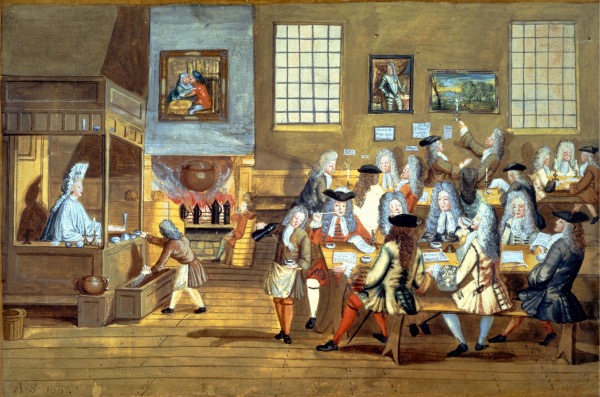
A caricature of Lloyd’s Coffee House from the 17th century.

Experience a recreation of Grace and Thomas Tosier’s famous ‘royal’ Chocolate House in Greenwich this Easter. Located in the Old Royal Naval College, Chocolate House Greenwich recreates the Tosier Chocolate House which was located in what became known as Chocolate Row, on the edge of Blackheath. A social space for the leading figures of the day, the chocolate house was run by Grace while her husband Thomas served as chocolate maker for King George I, running the chocolate kitchen at Hampton Court Palace. Visitors will be able to immerse themselves in the chocolate house via an audio and visual experience created by Unusual Expo and actor-writer Jonathan Coote. As well as meeting Grace, there is also the chance to listen in to luminaries such as architect and astronomer Sir Christopher Wren, writer and diarist John Evelyn, the first Astronomer Royal, John Flamsteed, and playwright and architect John Vanbrugh. A series of events will accompany the exhibition – which opens tomorrow – including an Easter Trail for families, a gin and chocolate tasting experience and a ‘Choc-o-Late’ event. Admission charge applies. Runs until 3rd November. For more, see https://ornc.org/whats-on/chocolate-house-greenwich/.

A wig worn by Golda Rosheuvel in Netflix’s hit series Queen Charlotte: A Bridgerton Story goes on display at Kew Palace from the end of this month. The grey wig with accompanying tiara will be showcased in Queen Charlotte’s dressing room, alongside a lock of the real Queen Charlotte’s hair. Visitors will also be able to join daily 30 minute Queen Charlotte: A Kew Palace story tours, walking in the footsteps of famous royals like King George III and Queen Charlotte. Admission charge applies. For more, see https://www.hrp.org.uk/kew-palace/.

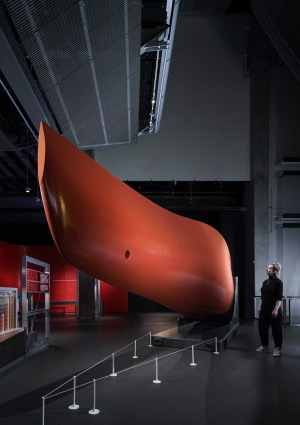
A visitor looks at a tidal turbine blade in Energy Revolution The Adani Green Energy Gallery at the Science Museum © Science Museum Group

A major new gallery examining the rapid energy transition and decarbonisation needed globally to limit climate change has opened at the Science Museum. The Energy Revolution: The Adani Green Energy Gallery is divided into three sections – Future Planet, Future Energy and Our Future – and highlights technologies and projects being used to address the climate crisis. Objects on show include a seven metre long tidal turbine blade made by Orbital Marine Power which was used in the Orkneys, rare surviving Edison tube mains cables used to power world’s first public electricity network in London in 1882, and a three metre high CoolAnt passive air-cooling facade from India that reduces dependence on powered air conditioning. At the centre of the gallery sits Only Breath, a kinetic sculpture created by artists Alexandra Carr and Colin Rennie from Torus Torus Studios that moves and blooms, stretching to around five metres in diameter when unfurled. The gallery can be found on Level 2 of the South Kensington museum. Admission is free. For more, see sciencemuseum.org.uk/energy-revolution.

Send all items to exploringlondon@gmail.

Treasures of London – Long John Silver Figurehead Collection…

PICTURE: David McDonald45 (licensed under CC BY-ND 2.0)

Said to be the largest collection of Merchant Navy ship figureheads in the world, the figurehead collection was that of Sydney Cumbers, nicknamed “Long John Silver” due to the eye-patch he wore after a childhood accident.

A successful businessman, Cumbers built up a significant collection of more than 100 figureheads – carved wooden figures which decorated the prows of sailing ships, which he and his wife – The Mate – kept along with a larger collection of maritime memorabilia at their residence in Kent nicknamed ‘The Look-Out’ (which features rooms named after parts of a ship).

In 1953, he donated the collection to the Cutty Sark a restoration of which had recently been completed so it could be opened to the public.

The figureheads, which are made from a variety of woods including oak and teak, date mostly from the 19th century. They depict a range of characters, some anonymous, and others taken from history and myth.

The latter include everyone from Sir Lancelot, the classical warrior Thermopylae and Hiawatha to Elizabeth Fry, Florence Nightingale and William Wilberforce. Others feature political figures such as Benjamin Disraeli, William Pitt and William Gladstone.

The collection is dedicated to the merchant seamen of Great Britain and the flotilla of small ships that rescued the British Expeditionary Force from Dunkirk in 1940.

WHERE: Long John Silver Figurehead Collection, Cutty Sark, King William Walk, Greenwich (nearest DLR is Cutty Sark Station); WHEN: 10am to 5pm daily (last entry 4:15pm); COST: £18 adults/£9 child (4-15)/£12 student/under 25s/Free for under fours; WEBSITE: www.rmg.co.uk/cutty-sark.

This Week in London – Women of the RNLI; ‘Tropical Modernism’ at the V&A; and, a new memorial to Sir Ernest Shackleton unveiled at Westminster Abbey…

National Maritime Museum in Greenwich. PICTURE: Keith Murray (licensed under CC BY-NC-ND 2.0)

The role of women in the Royal National Lifeboat Institution is being celebrated in a new exhibition at the National Maritime Museum in Greenwich. Women of the RNLI, which marks the bicentenary of the organisation, features a series of 42 photographs depicting women volunteers and the lifeboat stations’ slipways where they work. The images by photographer Jack Lowe are part of his ongoing ‘Lifeboat Station Project’an attempt to photograph all 238 operational RNLI lifeboat stations and their crews.. Lowe uses a 12×10 inch (30×25cm) Thornton-Pickard field camera from about 1905 and develops the photos using a process called ‘wet collodion’, a technique invented in the mid-19th century. The display also features oral histories from some of the sitters. The display can be seen from Saturday until 1st December. For more, see www.rmg.co.uk.

• A new exhibition exploring the architectural style of Tropical Modernism in West Africa and India opens at the V&A on Saturday. Tropical Modernism: Architecture and Independence centres on the work of British architects Jane Drew and Maxwell Fry who developed Tropical Modernism in the 1940s, working primarily in Ghana and India. The style, which valued function over ornamentation, became a symbol of a post-colonial future. The exhibition includes models, drawings, letters, photographs, and archival ephemera as it documents the key figures and moments of the Tropical Modernist movement. There is also a half hour film installation displayed on three screens. Runs until 22nd September. Admission charge applies. For more, see vam.ac.uk.

A new memorial stone dedicated to Antarctic explorer Sir Ernest Shackleton has been unveiled at Westminster Abbey. The triangular-shaped memorial, which can be found on a wall in the south cloister, was unveiled at a service earlier this month attended by Princess Anne and members of Shackleton’s family. Located close to tributes to pioneering sailors Captain James Cook, Sir Francis Chichester and Sir Francis Drake, it was designed and made by sculptor Will Davies and its shape reflects Shackleton’s preference to be at the apex of a triangle in group photographs. The memorial incorporates stones including Connemara marble and Kilkenny limestone in reflection of Shackleton’s Irish heritage, and the names of his expedition ships, Nimrod and Endurance, are inscribed upon it, along with the lifeboat The James Caird, and his family motto, ‘FORTITUDINE VINCIMUS’ (‘By Endurance We Conquer’). For more, see www.westminster-abbey.org.

Send all items to exploringlondon@gmail.com.

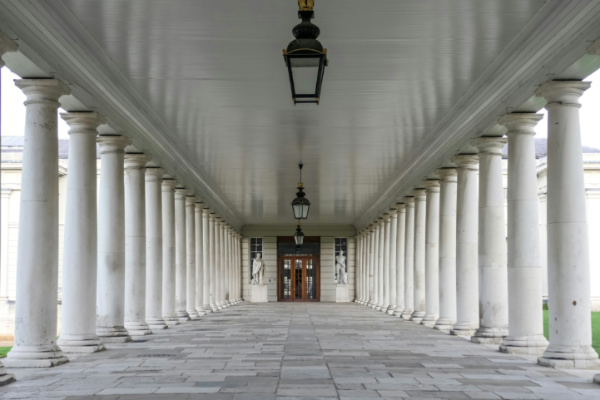
LondonLife – Greenwich colonnade…

PICTURE: Chikashi Miyamoto/Unsplash

This Week in London – English Heritage unveils 1000th Blue Plaque; Chris Ofili’s ‘Requiem’ at Tate Britain; and, Astronomy Photographer of the Year…

English Heritage has unveiled its 1000th Blue Plaque in London. The plaque – located on a three storey building at number 1, Robert Street in Westminster – marks the former London headquarters of the suffragist organisation, the Women’s Freedom League. The league, which was formed in 1907, worked out of the building between 1908 and 1915 – its most active period. The blue plaques scheme has been running for more than 150 years and honours everyone from John Keats and Charles Dickens to Ada Lovelace and Alan Turing. For more, see www.english-heritage.org.uk/visit/blue-plaques/.

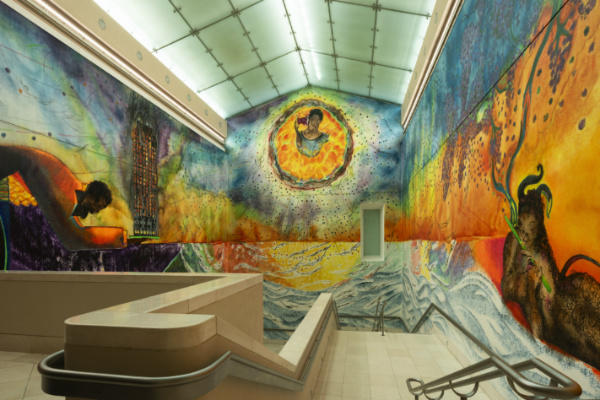
Chris Ofili, ‘Requiem’, 2023 (detail) commissioned for Tate Britain’s north staircase
© Chris Ofili. Courtesy the artist. PICTURE: Thierry Bal

A major new work by Chris Ofili commemorating fellow artist Khadija Saye and the tragedy of the Grenfell Tower fire in which Saye died, has gone on display at the Tate Britain in Millbank.  Requiem, a site-specific work which is shown across three walls, is described as a “journey through an imagined landscape of giant skies with vast horizons and flowing water” which unfolds in three chapters. Ofili says that when making the work, he recalled the feelings he had when creating No Woman, No Cry in 1998 as a tribute to murdered Black teenager Stephen Lawrence and his mother Doreen. “That feeling of injustice has returned,” he said. “I wanted to make a work in tribute to Khadija Saye. Remembering the Grenfell Tower fire, I hope that the mural will continue to speak across time to our collective sadness.” For more, see  tate.org.uk/visit/tate-britain.

The Astronomy Photographer of the Year display has opened at the National Maritime Museum in Greenwich featuring the competition’s winning image, Andromeda. The picture, the work of Marcel Drechsler, Xavier Strottner and Yann Sainty, depicts a huge plasma arc next to the Andromeda Galaxy. Other winners include two 14-year-old boys from China – Runwei Xu and Binyu Wang – who won the Young Astronomy Photographer of the Year award for The Running Chicken Nebula as well as Argentinian Eduardo Schaberger Poupeau who won the ‘Our Sun’ category for A Sun Question which captures a huge filament in the shape of a question mark, China’s Angel An, who won the ‘Skyscapes’ category for Grand Cosmic Fireworks – a photograph of the extremely rare phenomenon of atmospheric luminescence, and the UK’s John White who won the Annie Maunder Prize for Image Innovation for Black Echo which used audio source material from NASA’s Chandra Sonification Project, to visually capture the sound of the black hole at the centre of the Perseus Galaxy. For more, see www.rmg.co.uk/astrophoto.

Send all items for inclusion to exploringlondon@gmail.com

10 historic vessels in London’s Thames…5. ‘Cutty Sark’…

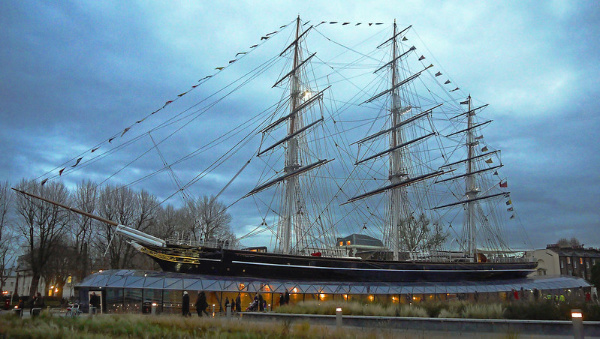
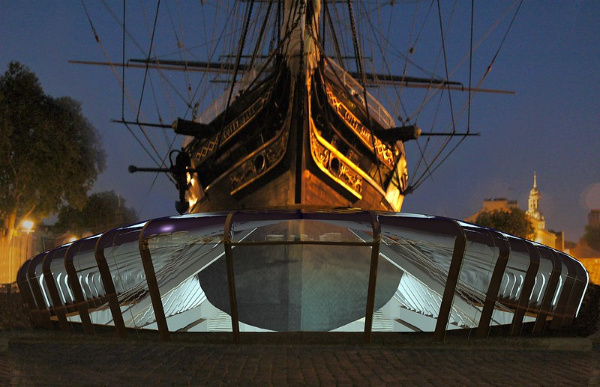
Almost destroyed in a May, 2007, fire, the Cutty Sark, the world’s last surviving 19th century tea clipper, is now a major international tourist attraction (although no longer in the Thames but on a dry dock beside the river).

The Cutty Sark in Greenwich. PICTURE: It’s No Game (licensed under CC BY 2.0)

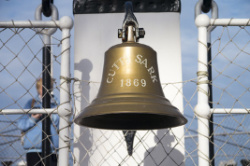
The Cutty Sark was built in Dumbarton, Scotland, in 1869, for shipping company Willis & Sons.

Designed by Hercules Linton specifically for the China tea trade (meaning with speed in mind), she cost some £16,150 and featured some 32,000 square feet of sails, a staggering 11 miles of rigging with a main mast standing 153 feet high and a hull sheathed in a copper and zinc alloy to prevent damage.

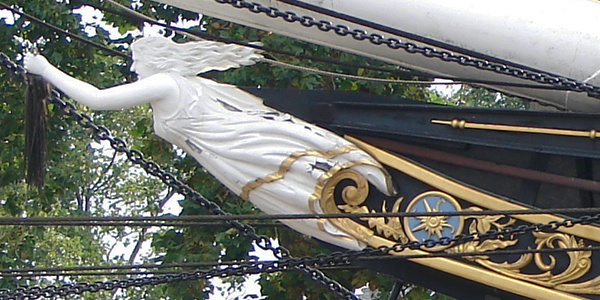
Her name was taken from a Robert Burns poem, Tam o’ Shanter, in which a witch is given the nick-name Cutty-sark because of the short undergarment – in 18th century Scots, a “cutty-sark” or “little shirt” – that she wore (the vessel’s figurehead is a representation of the witch).

On her maiden voyage, the Cutty Sark departed from London on 15th February, 1870, bound for Shanghai and carrying a general cargo including wine, spirits and beer and manufactured goods. Reaching its destination on 31st May, it then returned to London, arriving on 13th October laden with 1,305,812 lbs of tea.

It subsequently made another seven trips to China, collecting its last tea cargo in 1877. Unable to source further tea cargoes, the ship was then used to transport different cargoes to various destinations around the world including everything from coal and gunpowder, to jute, whiskey and buffalo horns.

PICTURE: Pat Scullion (licensed under CC BY-NC-ND 2.0)

There was a tragic episode aboard the ship in 1880 when the First Mate Sidney Smith killed seaman John Francis. Smith was confined by Captain James Wallace then helped him escape at Anger in Indonesia. The crew refused to work as a result and Wallace decided to continue the voyage with just six apprentices and four tradesmen but when the ship was becalmed in the Java Sea for three days, he committed suicide by jumping overboard. Wallaces was replaced by William Bruce but a later inquiry suspended him from service because of his incompetence.

While it was never the fastest ship on the tea trade (although it came close on return journey from Shanghai before a rudder mishap in 1872), it did establish itself between the mid-1880s and early 1890s as the fastest ship in the wool trade.

But with steamships starting to dominate the wool trade, in 1895, the Cutty Sark was sold to Portuguese firm J Ferreira & Co and, renamed the Ferreira, spent the next 20 years transporting cargoes between ports including Oporto, Rio, New Orleans and Lisbon.

Damaged during a storm in 1916, the clipper was subsequently converted into a barquentine in Cape Town, South Africa, and then sold in 1920 to Wilfred Dowman, a retired windjammer skipper and owner of the training ship Lady of Avenel.

The Cutty Sark’s figurehead. PICTURE: Sanba38 (licensed under CC BY-SA 3.0)

Her former name now restored, Dowman set about restoring the ship – now docked at Falmouth in Cornwell – back to being a tea clipper and using her as a cadet training ship.

Following Dowman’s death in 1936, the Cutty Sark was given to the Incorporated Thames Nautical Training College, Greenhithe, Kent, where she was used as an auxiliary vessel for the cadet training ship HMS Worcester.

The Cutty Sark was sent to London and moored in the Thames for the 1951 Festival of Britain before returning to Greenhithe.

The deteriorating state of the ship led to the formation of The Cutty Sark Society and in a ceremony held just before the coronation of Queen Elizabeth II, Prince Philip, patron of the society, took possession of the ship on its behalf.

In December, 1954, the ship was towed to a specially constructed dry dock at Greenwich and after three years of restoration work was opened to the public by Queen Elizabeth II in 1957.

The ship has remained there ever since. In November 2006, the ship’s rig was dismantled in preparation for a restoration project but a fire broke out aboard the ship on 21st May, 2007, and almost destroyed it.

The Cutty Sark’s bow. PICTURE: Visit Greenwich (licensed under CC BY 2.0)

Following a major restoration and development project which saw the lower part of the ship, from the waterline down, encased in glass, it was officially reopened by Queen Elizabeth II and Prince Philip on 25th April, 2012. It is now under the operational management of Royal Museums Greenwich.

WHERE: The Cutty Sark, King William Walk, Greenwich (nearest DLR is Cutty Sark; nearest overground stations are Greenwich and Maze Hill); WHEN: Daily 10am to 5pm; COST: £18 adults; £9 children; WEBSITE: www.rmg.co.uk/cuttysark.

This Week in London – Shakespeare’s First Folio; Charles Dickens and fog; and, Berthe Morisot at Dulwich…

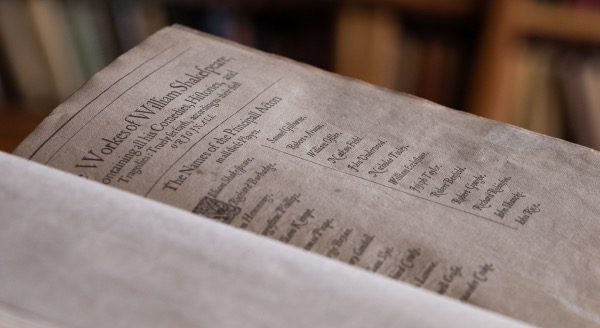
The Dulwich College Folio. PICTURE: © Dulwich College

Shakespeare’s First Folio goes on display at the National Maritime Museum in Greenwich from tomorrow. The display is part of a national celebration of the 400th anniversary of the folio’s publication. Shakespeare’s First Folio was published in 1623, seven years after the playwright’s death. Some 235 copies are known to survive with 50 remaining in the UK. The version on display – the Dulwich College Folio, which includes the Comedies and Histories (but lack the Tragedies), is believed to have been acquired by the college in 1686 from the estate of William Cartwright, a bookseller and actor who performed with the King’s Company and is known to have played Brabantio in Othello and Falstaff in Henry IV Part I and Part II. The two volumes feature handwritten notes, ink and water stains, and burn holes, suggesting they were well-used before the college acquired them. The Tempest and the Thames can be seen until 24th September. Admission is free. For more, see www.rmg.co.uk/folio-400.

London’s fog and its reflection in Charles Dickens’ writings are the subject of a new exhibition opening at the Charles Dickens Museum in Bloomsbury. A Great and Dirty City: Dickens and the London Fog explores how the fog affected Dickens’ work, his health and that of his family, and how London has endeavoured to mitigate the problem of air pollution over the past couple of centuries. Among the items on display are the hearthstone Dickens laid in front of the fireplace in the Drawing Room, the fire poker from Dickens’ dining room at Gad’s Hill Place (his home from 1856 until his death in 1870), original first edition parts of Dickens’ ‘foggiest’ novel Bleak House, an original pen and wash illustration by Frederick Barnard depicting Martin Chuzzlewit, Mary Graham, and Mark Tapley, and, a letter from Dickens to his sister-in-law Helen Dickens in which he writes about his brother Alfred’s “inflammation in the region of the lungs” which is dated on 16th July, 1860 – just 11 days before Alfred’s death. Runs until 22nd October. Admission charge applies. For more, see https://dickensmuseum.com.

Forty of Impressionist painter Berthe Morisot’s works have been brought together for a new exhibition at the Dulwich Picture Gallery. Berthe Morisot: Shaping Impressionism, which opens tomorrow, is the first major UK exhibition of the renowned Impressionist since 1950 and features many works never seen before. Highlights include Eugène Manet on the Isle of Wight (1875) – painted while Morisot was on honeymoon in England, Self-Portrait (1885) – which will appear alongside Jean-Honoré Fragonard’s Young Woman (c.1769) from Dulwich Picture Gallery’s collection, Apollo revealing his divinity to the shepherdess Issé, after François Boucher (1892), In the Apple Tree (1890) and Julie Manet with her Greyhound Laerte (1893). Runs until 10th September. Admission charge applies. For more, see www.dulwichpicturegallery.org.uk.

Send all items to exploringlondon@gmail.com.

10 historic London homes that are now museums…10. Flamsteed House…

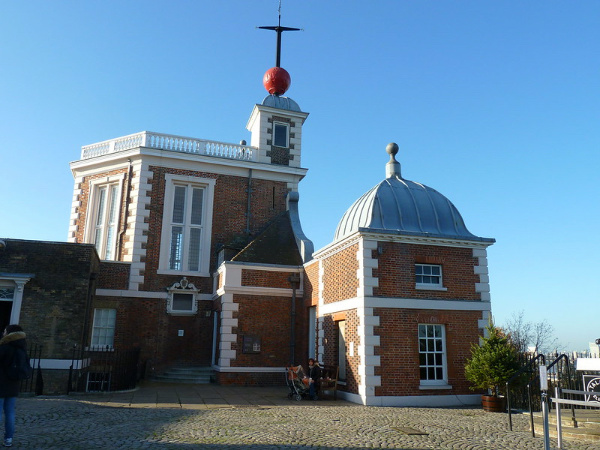
Flamsteed House from Greenwich Park. PICTURE: David Adams

Located at the heart of what is now known as the Old Royal Observatory in Greenwich is a residence, built for the first Astronomer Royal John Flamsteed and subsequently used by his successors to the post.

The property was built at the behest of King Charles II after he appointed Flamsteed to the post in March, 1675. Flamsteed, who initially worked out of the Queen’s House below, laid the foundation stone for the new property on 16th August that year.

Designed by Sir Christopher Wren and built under the supervision of Robert Hooke, the building was constructed on the foundations of the previous building on the site – known variously as Duke Humphrey’s Tower or Greenwich Castle) – and used bricks from spare stock at Tilbury Fort, and wood, iron and lead from a demolished gatehouse at the Tower of London.

Costing some £520, the three story property featured a large hall and parlour on the ground floor, a bedroom and study for the then-single Flamsteed, a basement kitchen and “astronomer rooms” while on the floor above was a single large, octagonal room, known initially as the “Great Room” and later as the “Octagon. Room”, featuring a series of tall windows through which Flamstead could conduct his observations of the heavens.

A telescope was mounted on the roof and two summerhouses, one of which contained Flamsteed’s camera obscura, were built on either side. Other buildings on the site during Flamsteed’s time included the adjoining Quadrant House and Sextant House (so-named for the equipment they housed).

The original property was extended several times and a series of additional buildings were also added to the site including what is now known as the Meridian Building (which incorporates not only Flamsteed’s Sextant House and Quadrant House but subsequent additions including apartments for an assistant, fireproof record rooms and domes to house equipment including the Telescope Dome.

Flamsteed House. PICTURE: givingnot@rocketmail.com (licensed under CC BY-NC 2.0)

In 1946, the scientific work of the observatory was relocated to Herstmonceux in Sussex and the complex came under the management of the National Maritime Museum. In 1960, Flamsteed House was reopened as part of the museum; other buildings later followed suit.

The site was renovated in the early 1990s and reopened to the public as a museum in 1993.

These days Flamsteed House hosts displays about its construction as well as what life was like for those who lived there. Wren’s Octagon Room, which houses a collection of timepieces and astronomical instruments, remains a highlight.

Flamsteed House is now topped by a time-ball which was installed in 1919 (replacing an earlier one which was installed in 1833) and drops each day at 1pm.

WHERE: Flamsteed House, Royal Observatory Greenwich (nearest stations are Cutty Sark DLR and Greenwich and Maze Hill Stations); WHEN: 10am to 5pm daily; COST: £16 adults/£10 under 25s/students/£8 children; WEBSITE: www.rmg.co.uk/royal-observatory/attractions/flamsteed-house.

London Pub Signs – The Spanish Galleon…

PICTURE: Ewan Munro (licensed under CC BY-SA 2.0)

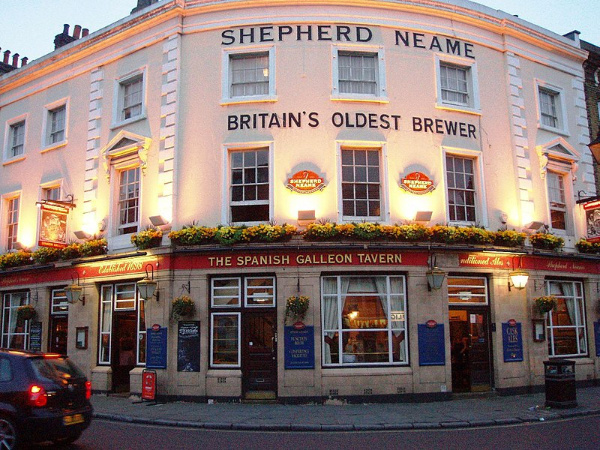
This early 19th century pub was built in the Regency style as part of a redevelopment of central Greenwich.

The redevelopment was undertaken by architect Joseph Kay in the 1830s while he served as clerk of works to what was then Greenwich Hospital (now known as the Old Royal Naval College).

Its name, one of a number of nautical names for pubs in the area, purportedly comes from the pictures of British naval victories at the hospital.

The pub received minor damage during the Blitz.

Located at 1 College Approach, the pub has been Grade II-listed since 1973. In 2012, the pub underwent a refurbishment.

Part of the Shepherd Neame chain. For more, see www.spanishgalleon.co.uk.

This Week in London – Wren letter in the Painted Hall; art from America’s South; and, ‘Finding Family’ at the Foundling Museum…

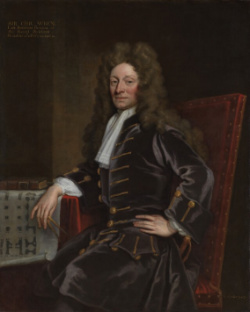
Sir Christopher Wren, by Sir Godfrey Kneller, Bt, oil on canvas, 1711 NPG 113

A letter written by Sir Christopher Wren requesting stone for the construction of the Royal Hospital for Seamen in Greenwich is on display in the Painted Hall vestibule. Wren wrote the letter requesting 2,000 tonnes of Portland stone to Thomas Gilbert, overseer of the King’s Quarries of the Isle of Portland, on 11th October, 1700. It is being displayed along with information explaining how the stone was brought from Dorset to London. The display is one of a series of events taking place at the Old Royal Naval College marking the 300th anniversary of Wren’s death on 25th February, 1723. Can be seen until January, 2024. An admission charge applies. For more, see https://ornc.org/whats-on/painted-hall-display-letter-written-by-sir-christopher-wren/. For more on events surrounding the 300th anniversary of Wren’s death, head to https://ornc.org/celebrating-wren300/.

Slavery, the cruel segregationist policies of the Jim Crow era, and the civil rights movement in the southern United States are all explored in a new exhibition at the Royal Academy. Souls Grown Deep like the Rivers: Black Artists from the American South, features around 64 works – including assemblages, sculpture, paintings, reliefs, and drawings – by 34 artists spanning the period from the mid-20th century to the present. Drawn mostly from the collection of the Souls Grown Deep Foundation in Atlanta, Georgia, many of the works are being seen in Europe for the first time. The display in the Gabrielle Jungels-Winkler Galleries also features quilts by the celebrated quiltmakers of Gee’s Bend, Alabama, and the neighbouring communities of Rehoboth and Alberta. Opening on Friday, the exhibition can be seen until 18th June. Admission charge applies. For more, see royalacademy.org.uk.

Three masterpieces from The National Gallery’s collection – by Hogarth, Gainsborough and the Le Nain Brothers – have gone on show at The Foundling Museum in Bloomsbury as part of a new exhibition exploring what family is and can be. Finding Family examines the ways in which artists have represented and responded to ideas of family with reference to the historic paintings as well as contemporary works of art. The art is accompanied by creative writing created by participants in ‘Tracing Our Tales’ – the museum’s award-winning programme for young care leavers – who have responded to the exhibition’s themes. Opens on Friday and runs until 27th August. Admission charge applies. For more, see https://foundlingmuseum.org.uk/event/finding-family/.

Send items for inclusion to exploringlondon@gmail.com.
LondonLife – Van de Veldes inspiration at Greenwich…

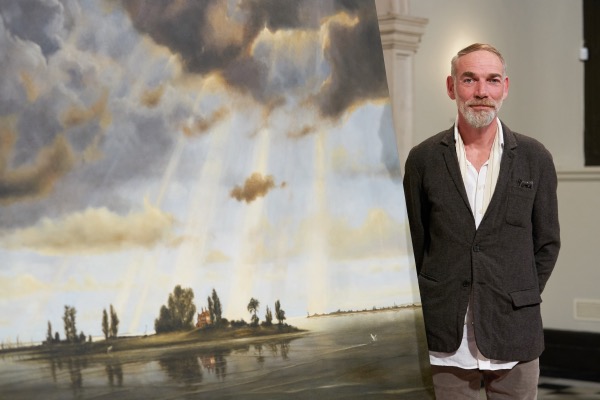
Finn Campbell-Notman and Fail We May, Sail We Must. PICTURE: © SKY UK Ltd

British artist Finn Campbell-Notman has been named as the winner of the Sky Arts’ Landscape Artist of the Year for his creation of a contemporary seascape inspired by the work of 17th century marine painters, Willem van de Velde the Elder and his son, Willem van de Velde the Younger. Campbell-Notman’s work, Fail We May, Sail We Must, has gone on display at the Queen’s House in Greenwich which is currently hosting the new exhibition, The Van de Veldes: Greenwich, Art and the Sea. The new painting was inspired by Campbell-Notman’s personal experience as he found out more about the Van de Veldes while travelling in The Netherlands. “My approach to landscape painting is that a painting is rarely, if ever, a direct transcription from a single view, even those painted en plein air,” Campbell-Notman said in a statement. “One composes and constructs, simplifies, rearranges and perhaps adds certain elements to create a picture. The finished painting is thus a record of a dialogue with what is seen and what is reflected within and want I to transmit; between what is seen and what is felt.” For more, see www.rmg.co.uk/queens-house.

This Week in London – A celebration of Spain and the Hispanic world; Lunar New Year at Greenwich; and, RA gifts at The Queen’s Gallery…

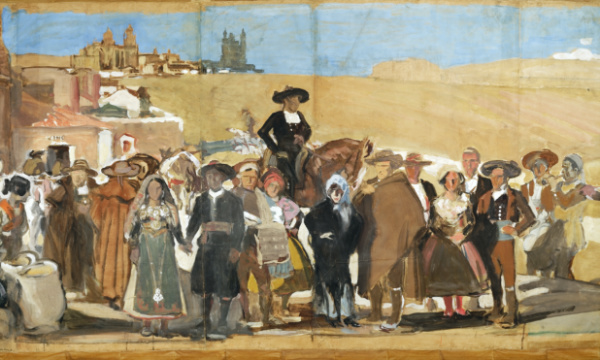
Joaquín Antonio de Basarás y Garaygorta, ‘Indian Wedding, in Origen, costumbres y estado presente de mexicanos y filipinos’ (1763); Illustrated manuscript on paper (41 x 65.7 cm). On loan from The Hispanic Society of America, New York, NY

• The collection of the Hispanic Society Museum & Library in New York is being celebrated in a new exhibition opening at the Royal Academy of Arts. Opening Saturday, Spain and the Hispanic World: Treasures from the Hispanic Society Museum & Library features more than 150 works from the collection – founded in 1904 by Archer M Huntington – which range from paintings and sculptures to jewellery, maps and illuminated manuscripts. Highlights include Francisco de Goya’s painting The Duchess of Alba (1797), Pedro de Mena’s reliquary bust, Saint Acisclus (c1680), earthenware bowls from the Bell Beaker culture (c2400-1900 BC), Celtiberian jewellery from the Palencia Hoard (c150-72 BC), and Hispano-Islamic silk textiles including the Alhambra Silk (c1400). There’s also a beautifully illuminated Hebrew Bible (after 1450-97), an exceptionally rare Black Book of Hours (c1458), and, Giovanni Vespucci’s celebrated world map from 1526. The exhibition runs until 10th April. Admission charge applies. For more, see www.royalacademy.org.uk.

The Lunar New Year is being celebrated in Greenwich this Saturday with a series of events at the National Maritime Museum. Activities range from Mahjong workshops to seeing a traditional lion dance, lantern making, a tea ceremony demonstration and, of course, the chance to find out about the items in the museum’s collection with Asian connections. For more, see www.rmg.co.uk/whats-on/national-maritime-museum/lunar-new-year.

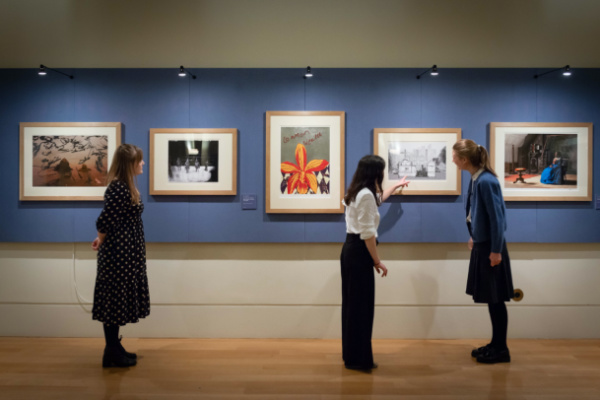
Royal Collection Trust staff conduct final checks of a display opening today at The Queen’s Gallery, Buckingham Palace, showcasing 20 contemporary artworks gifted to Queen Elizabeth II to mark the Platinum Jubilee. PICTURE: Royal Collection Trust / © His Majesty King Charles III 2023.

Twenty contemporary artworks gifted by the Royal Academy of Arts to Queen Elizabeth II ar on display at The Queen’s Gallery in Buckingham Palace. The works on paper – created by Royal Academicians elected in the past decade – were presented to the Queen to mark her Platinum Jubilee in 2022. They include Wolfgang Tillmans’ Regina – a photograph taken during Queen Elizabeth II’s Golden Jubilee celebrations in 2002 depicting the Queen in the Gold State Coach passing along Fleet Street, Yinka Shonibare’s Common Wealth – a digital print of an orchid against a collage of platinum leaf and Dutch wax printed fabric, and Sir Isaac Julien’s Lady of the Lake – a fictionalised portrait of the American abolitionist Anna Murray Douglass as well as a digital print of Thomas Heatherwick’s design for the Tree of Trees project. This 21-foot sculpture incorporates 350 saplings and was erected outside Buckingham Palace as part of The Queen’s Green Canopy and was illuminated during a special Platinum Jubilee ceremony on 2nd June last year. The works can be seen until 26th February. Admission charge applies. For more, see www.rct.uk.

Send all items for inclusion to exploringlondon@gmail.com.
LondonLife – Bright lights, big city…

PICTURE: Kevin Grieve/Unsplash

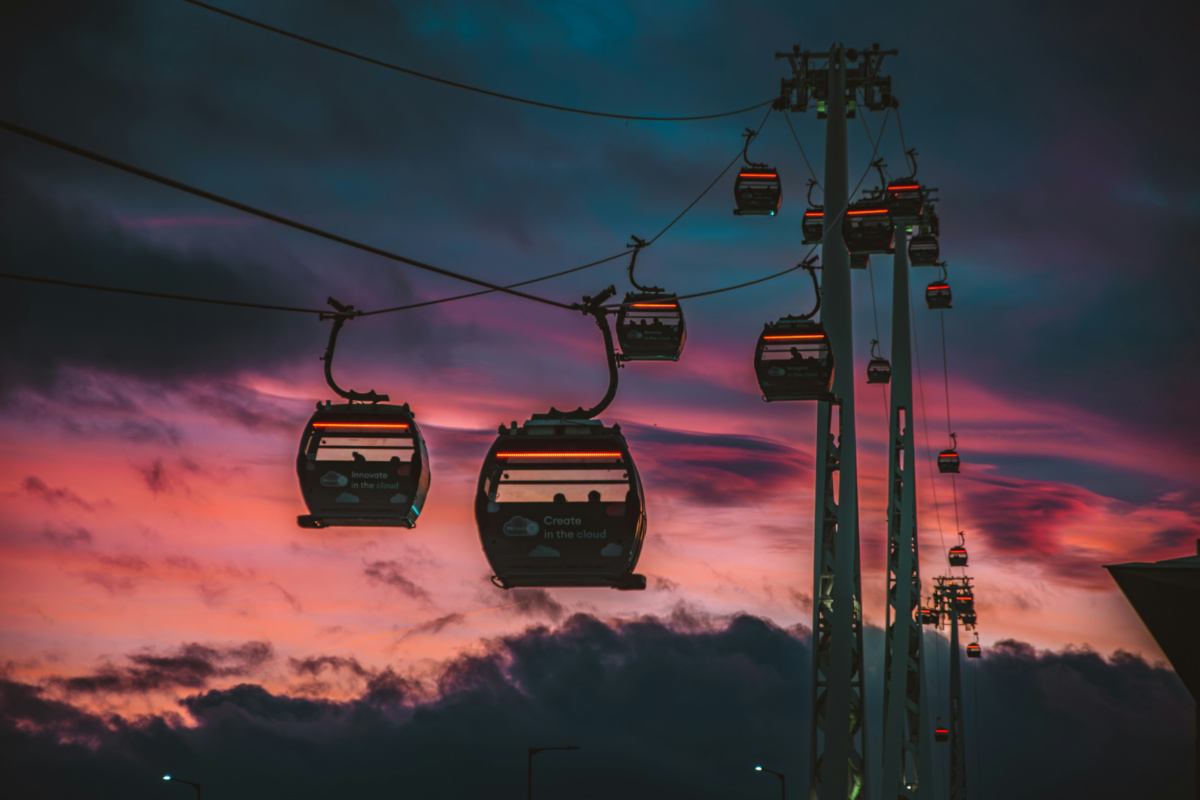
View of the Docklands from North Greenwich.

10 most popular posts for 2022 – Numbers 10 and 9…

It’s that time of year again – our annual countdown of our 10 most read posts for the year!

First up are numbers nine and ten… 

10. Where’s London’s oldest…pharmacy?

9. LondonLife – Greenwich Park restoration…

This Week in London – Newly restored ‘Nativity’ back on display for Christmas; Tutankhamun 100 years on; and, ‘Museum of the Moon’ at Greenwich…

Following a restoration, early Renaissance artist Piero Della Francesca’s The Nativity has gone on display in The National Gallery in time for Christmas. The painting, created circa 1470, had been in the possession of Piero’s family until it came to London in the 1860s. Then in a poor condition, it was acquired by The National Gallery in 1874. It has now been restored by the gallery’s senior restorer Jill Dunkerton with panel work by Britta New in a process which has shed new light on the painting. This includes the understanding that while it was previously framed and displayed as an altarpiece, instead the work is now believed to have been a very grand, domestic painting which Piero may even have painted for himself. To complement this new interpretation, the gallery has been able to acquire a carved walnut frame, of almost exactly the correct dimensions, date and probable origin. You can see a video of the conservation process below. For more, see www.nationalgallery.org.uk.

• Marking the 100th anniversary of the discovery of Tutankhamun’s tomb in Egypt in November, 1922, the British Museum has opened a new display looking at the way the ancient Egyptian pharaoh was viewed, both by his contemporaries and by people today. The free Asahi Shimbun Display Tutankhamun Reimagined features artwork by contemporary Egyptian graffiti artist Ahmed Nofal alongside a statue of Tutankhamun which was discovered before his tomb was even found. Accompanying the display is a trail through the Egyptian Sculpture Gallery (Room 4) in which visitors can learn more about Tutankhamun and his times. Can be seen until 29th January. For more, see www.britishmuseum.org.

Artist Luke Jerram – of Gaia fame – is returning to the Old Royal Naval College in Greenwich next week with his artwork Museum of the Moon. The large scale installation, which will hang in the Painted Hall, features NASA imagery of the lunar surface. Visitors are invited to lean back on daybeds to experience the installation which is accompanied by a surround sound composition by BAFTA-winning composer Dan Jones. Runs from Tuesday, 13th December, to 2nd February. Admission charge applies. For more, see https://ornc.org/whats-on/museum-of-the-moon/.

Send all items to exploringlondon@gmail.com.

This Week in London – 12 Days of Christmas at the Tower; Museum of London celebrates its London Wall closing; and, William Beatty at the Old Royal Naval College…

The Tower of London is getting into the festive spirit with a celebration of the Twelve Days of Christmas. Twelve installations have been installed at the Tower, each representing as different aspect of the fortress’s unique history – from nine wreaths representing “nine rowdy ravens” to five gold coins representing the Mint once housed there. There’s also the six Queens of King Henry VIII and three “lordly lions” – a reference to a gift presented to King Henry III and housed in a Lion Pit at the tower. Visitors will have the chance to collect a map at the start of their visit and follow a trail to find the installations at they explore the Tower. Christmas at the Tower of London runs daily until 3rd January. Admission charge applies. For more, see www.hrp.org.uk/tower-of-london/.

The Museum of London is preparing to close its doors at its London Wall site as it moves to its new location in Smithfield and to celebrate it’s holding two free weekend festivals. The first, to be held this weekend, will feature family-friendly activities including arts and crafts, dance, face painting and theatrical performances while the second, to be held on the weekend of 3rd and 4th December (after which the museum will close), will feature a celebration of London’s music scene from the 70s to the present day with a DJ sets, a late night film festival and museum’s first ever 24 hour opening. Visitors on both weekends can also take part in London Biggest Table Football competition for a chance to win an England shirt signed by Harry Kane and to see the museum’s collection in a new light thanks to an illuminated display. For more on the festivals, see www.museumoflondon.org.uk/museum-london.

Now On: Blood and Battle: Dissecting the life of William Beatty. The life and work of renowned 19th-century naval surgeon and physician, Sir William Beatty, is explored in this exhibition at the Old Royal Naval College in Greenwich. The display – which marks 200 years since Beatty, who had served as ship’s surgeon on HMS Victory during the Battle of Trafalgar (and who wore the musket ball that killed Nelson in a locket on his watch chain for the rest of his life afterwards) – took up the post of Physician to the Royal Hospital for Seamen – explores Beatty’s work as a ship’s surgeon, his time at Greenwich Hospital and how he was honoured by being knighted and appointed Physician Extraordinary to George IV and the Duke of Clarence (later William IV) as well as his outside interests including his involvement in developing the London – Greenwich Railway. Admission charge applies. For more, see https://ornc.org.

Send all items for inclusion to exploringlondon@gmail.com.
This Week in London – Hieroglyphs explored at the British Museum; King Charles III coronation date announced; ‘The Admiral’s Revenge’ in Greenwich’; and, Dickens and ghosts…

The Rosetta Stone. Granodiorite; Rasid, Egypt; Ptolemaic, 196 BC © The Trustees of the British Museum.

• Marking 200 years since French Egyptologist Jean-Francois Champollion (1790-1832) was able to decipher hieroglyphs using the Rosetta Stone, a new exhibition opening at the British Museum explores how the stone and other inscriptions and objects helped scholars unlock one of the world’s oldest civilisations. Hieroglyphs: unlocking ancient Egypt centres on the Rosetta Stone but also features more than 240 other objects, many of which are shown for the first time. Alongside the Rosetta Stone itself, highlights include: “the Enchanted Basin”, a large black granite sarcophagus from about 600 BCE which is covered with hieroglyphs and images of gods; the richly illustrated, more than 3000-year-old Book of the Dead papyrus of Queen Nedjmet which measures more than four metres long; and the mummy bandage of Aberuait, a souvenir from one of the earliest ‘mummy unwrapping events’ in the 1600s where attendees each received a piece of the linen, preferably inscribed with hieroglyphs. There’s also the personal notes of key figures in the race to decipher hieroglyphs including those of Champollion which come from the Bibliothèque nationale de France as well as those of England’s Thomas Young (1773 – 1829) from the British Library. The exhibition can be seen in the Sainsbury Exhibition Gallery until 19th February. Admission charge applies. For more, see britishmuseum.org/hieroglyphs.

• King Charles III will be crowned at Westminster Abbey on 6th May next year, Buckingham Palace has announced this week. The Queen Consort, Camilla, will be crowned alongside him in the first such coronation since 12th May, 1937, when King George VI and Queen Elizabeth were crowned in the abbey. The ceremony, which will be conducted by the Archbishop of Canterbury, will, according to the palace, “reflect the monarch’s role today and look towards the future, while being rooted in longstanding traditions and pageantry”. King Charles III is expected to sign a Proclamation formally declaring the coronation date at a meeting of the Privy Council later this year. The first documented coronation at Westminster Abbey was that of King William the Conqueror on 25th December, 1066, and there have been 37 since, the most recent being that of Queen Elizabeth II on 2nd June, 1953.

https://www.youtube.com/embed/Vfmo5dgTEl0″ title=”YouTube video player” frameborder=”0″ allow=”accelerometer; autoplay; clipboard-write; encrypted-media; gyroscope; picture-in-picture” allowfullscreen

A new dark comedy, The Admiral’s Revenge, has opened in The Admiral’s House in the Old Royal Naval College, Greenwich. The play, set in 1797, features sea shanties, puppetry and follows a crew of shipmates in the wake of the ill-fated Battle of Tenerife. Audiences have the chance to explore the Admiral’s House before the show and enjoy a complimentary rum cocktail. Runs until 12th November. For ticket prices, head to https://ornc.org/whats-on/1797-the-mariners-revenge/.

A new exhibition exploring Charles Dickens’ interest in the paranormal has opened at the Charles Dickens Museum in Bloomsbury. To Be Read At Dusk: Dickens, Ghosts and the Supernatural explores Dickens’ famous ghost stories, including A Christmas Carol, and reveals his influence on the genre. Highlights include a copy of The Chimes which Dickens gifted to fellow author Hans Christian Anderson, original John Leech sketches of Dickens’ ghosts of the past, present and future and original tickets and playbills relating to the author’s public performances of his ghost stories. The display will also look into Dickens’ own views on the supernatural as a fascinated sceptic and includes  correspondence in which he was asking about the location of a supposedly haunted house. Runs until 5th March. Admission charge applies. For more, see https://dickensmuseum.com/blogs/all-events/to-be-read-at-dusk-dickens-ghosts-and-the-supernatural.

Send all items to exploringlondon@gmail.com

LondonLife – Greenwich Park restoration…

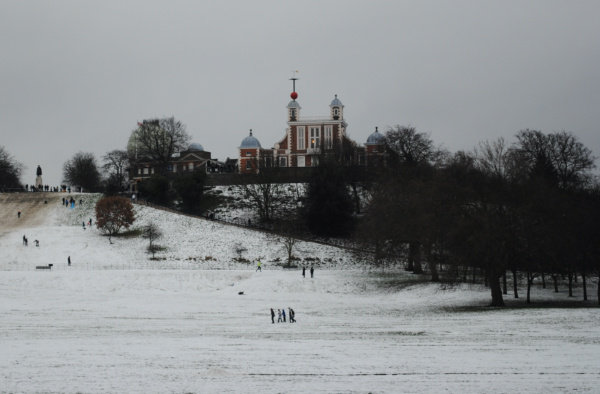
Looking up to the Royal Observatory in Greenwich Park. PICTURE: mkos83/iStockphoto.

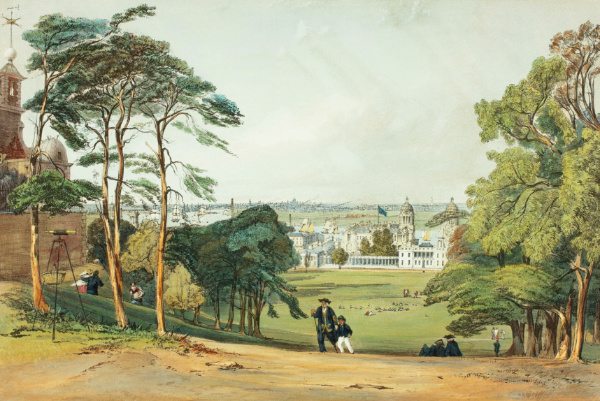
The Royal Parks announced recently Greenwich Park, here pictured showing the view up to the Royal Observatory, was to undergo a three year project to restore its 17th century landscape. The formal landscape of the park was commissioned by King Charles II and, designed by French landscape architect André Le Nôtre (who also designed the world-famous Versailles gardens), features tree-lined avenues which frame the view up the hill from the Queen’s House as well as “The Grand Ascent”, a series of giant, grass steps leading up the hill, and a terraced layout – known as a parterre. Massive numbers of visitors – some five million annually – have, however, seen the landscape features erode and slump while the trees – Turkey oaks planted in the 1970s to replace the elms wiped out by Dutch elm disease – are now in decline. The restoration work, which begins next month, will see the terraces restored and the declining tree avenues recreated with 92 new, more resilient trees. The work is scheduled to be completed by March, 2025. For more on Greenwich Park, see www.royalparks.org.uk/parks/greenwich-park.

Lost London – Greenwich’s Romano-Celtic temple…

Although little now remains of it (and none to be seen above ground), a mound in Greenwich Park is thought to have once been the location of a Romano-Celtic temple.

Site of the temple remains in Greenwich Park. PICTURE: Matt Brown (licensed under CC BY 2.0)

Given its site close to Watling Street – the main Roman road linking London and the Kent ports, it’s believed that the temple may have served travellers as well as the local community. The Historic England listing for the ruins, which are a scheduled monument, suggests the temple was in use by 100AD and continued to be used until about 400AD.

The remains, which are now located on the eastern side of Greenwich Park on a site known as Queen Elizabeth’s Bower, was excavated in 1902 after they were stumbled across during works on the park. Three different floor surfaces were revealed, one of which was a tessellated pavement, along with the right arm of an almost life-sized statue, fragments of stone inscriptions and more than 300 coins dating between the 1st and 5th centuries.

A further excavation occurred in the early 1970s and another in 1999 – all of which provided further evidence of a temple.

Finds from the 1999 dig – which was undertaken by TV Channel Four’s ‘Time Team’, Birkbeck University of London and the Museum of London in the creation of a programme broadcast the following year – included part of an inscription to Jupiter and the spirits of the emperors and a stamped tile.

It is thought the temple precinct, known as a temenos, would have included a main temple building known as a cella as well as ancillary buildings and been surrounded by a stone wall.

A Moment in London’s History – The martyrdom of St Alphege…

This month marks the 1010th anniversary of the murder of Alphege, the Archbishop of Canterbury, by Vikings in Greenwich.

St Alphege, Archbishop of Canterbury, is asked for advice in this early 15th century manuscript from Paris.

Alphege, also known as Ælfheah and Alfege, had been kidnapped from Canterbury during a Viking raid in September, 1011. Alphege’s captors were said to have been seeking a huge sum for his ransom – some 3,000 gold marks, reports the monk Osbern – but that, knowing such a sum would bring starvation upon the people under his care, he refused to allow himself to be ransomed – for money or anything else – and this drew the anger of his captors.

According to the Anglo-Saxon Chronicle, one day, seven months after his kidnapping – on 19th April, 1012, the Vikings were drunk and, had the elderly archbishop brought before their assembly. Then, in an act of execution, they began throwing ox bones and heads at the unfortunate archbishop before one of them struck him on the back of the head with the butt of an axe, killing him.

According to tradition, the murder took place on the site of St Alfege’s Church in Greenwich. A contemporary account also tells that a Viking lord named Thorkell the Tall, a Christian convert, had tried to save the archbishop’s life – offering everything he owned except his ship in exchange for the cleric’s life – but failed (interestingly, so appalled was Thorkell at the murder that he switched sides and fought for the English king Ethelred the Unready following Alphege’s death). There is also an account that the fatal blow was actually delivered by a Christian converted named Thrum as an act of mercy.

Alphege’s body was recovered and he was buried in St Paul’s Cathedral in London. In 1023, the body was moved by King Cnut to Canterbury in a gesture of goodwill to the English. The first Archbishop of Canterbury to meet such a violent end, he was canonised in 1078.

There is a memorial stone to the saint set in the floor in front of the altar in the Greenwich church.