This Week in London – Life after the pharaohs in Egypt; Days of the Dead; horrible histories at two royal palaces; and Dickin and Gombrich honoured with Blue Plaques…

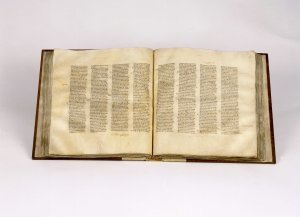
 •untitled 276.tif The first major exhibition to explore the history of Egypt after the pharaohs opens at the British Museum today. Egypt: Faith after the pharaohs spans 1,200 years of history – from 30 BC to 1171 AD – with 200 objects showing how Christian, Islamic and Jewish communities reinterpreted the pharaonic past of Egypt and interacted with each other. The exhibition opens with three significant examples of the Hebrew Bible, the Christian New Testament and the Islamic Qur’an – the texts include the New Testament part of the 4th century AD Codex Sinaiticus, the world’s oldest surviving Bible and the earliest complete copy of the New Testament, which is now part of the British Library’s collection. All three are juxtaposed with everyday stamps associated with each of the three religions in an illustration of the relationship between the institutional side of religion and its everyday practice, both key themes of the exhibition. Other exhibits include a pair of 6th-7th century door curtains featuring classical and Christian religious motifs, a 1st-2nd century statue of the Egyptian god Horus in Roman military costume, and a letter from the Roman Emperor Claudius (41-54 AD) concerning the cult of the divine emperor and the status of Jews in Alexandria. Admission charge applies. Runs until 7th February in Room 35. A programme of events accompanies the exhibition. For more, see www.britishmuseum.org/egypt. PICTURE: Codex Sinaiticus, open at John 5:6-6:23. Image courtesy of the British Library.

Still at the British Museum and a free four day festival of art, performance, storytelling and talks kicks off on Friday night to mark the Mexican tradition of the Days of the Dead. The annual celebration, which draws on both native and Catholic beliefs, is held on 1st and 2nd November and sees families gather to remember relatives and friends who have died. The festival, which is being conducted in association with the Mexican Government, includes a Friday evening event, a weekend of family activities featuring storytelling, films, music and dance, and a study day  on Monday featuring lectures, gallery talks and activities. The museum will feature elaborate decorations by Mexican artists – including Betsabeé Romero – throughout the festival with a particular focus on the Great Court and Forecourt. Events – which run from 30th October to 2nd November – are free. For more, see www.britishmuseum.org/dotd.

Horrible histories indeed! Hampton Court Palace and Kensington Palace are both hosting ghost tours from this weekend. The tours focus on some of the more grisly aspects of the history of the palaces with tours at Hampton Court featuring a visit to a shallow grave which was only uncovered in 1870 and those at Kensington Palace encountering the gruesome details of King William III’s fatal horse-riding accident and Queen Caroline’s horrific final hours. Admission charges apply. For more details, head to www.hrp.org.uk.

Animal welfare campaigner Maria Dickin (1870-1951) and art historian EH Gombrich (1909-2001) have been honoured with English Heritage Blue Plaques. The plaque commemorating Dickin – founder of the People’s Dispensary for Sick Animals (PDSA) and of the PDSA Dickin medal, awarded to animals associated with the armed forces or civil defence who have shown conspicuous gallantry and devotion to duty – has been placed on the Hackney house at 41 Cassland Road where she was born and spent the first few years of her life. Meanwhile the plaque to Gombrich was placed on the house at 19 Briardale Gardens in Hampstead where he lived for almost 50 years, from shortly after publication of his seminal work The Story of Art to his death in 2001. For more see www.english-heritage.org.uk/visit/blue-plaques/.

Send all items for inclusion to exploringlondon@gmail.com.

This Week in London – The Waterloo Cartoon on show; see inside a former Huguenot’s home; and, Royal Parks’ harvest festivals…

A monumental Victorian-era drawing of the Battle of Waterloo has gone on display in London for the first time since 1972. The Waterloo Cartoon, more formally known as The Meeting of Wellington and Blucher after the Battle of Waterloo, measures more than 13 metres long and three metres high. A preparatory drawing for a wall painting which still exists in the House of Lords’ Royal Gallery, it took artist Daniel Maclise more than a year to complete in 1858-59 and was based on eye-witness accounts (the artist even recruited Queen Victoria and Prince Albert to use their German contacts to gather information from Prussian officers present on the day). Long considered a masterpiece, it was bought by the Royal Academy in 1870 – the year of Maclise’s death – and was on show at Burlington House until the 1920s. It has been in storage for much of last century and, newly restored following a grant from Arts Council England, has now gone on display to mark the 200th anniversary of the Battle of Waterloo. The newly conserved drawing is the focus of a new exhibition – Daniel Maclise: The Waterloo Cartoon, which opened at the Royal Academy in Piccadilly yesterday (between May and August, it was on show as part of a Waterloo exhibition at the Royal Armouries in Leeds). Runs until 3rd January. Admission charge applies. For more, see www.royalacademy.org.uk.

There’s a rare chance to see inside a former Huguenot merchant’s house dating from 1719 in Spitalfields this weekend. The property at 19 Princelet Street was the home of the Ogier family, who had come to London escaping persecution in France and worked in the silk weaving trade. It was later subdivided into lodgings and workshops with later occupants following a range of trades and professionals while a synagogue was opened in the garden in 1869. The site – which the Spitalfields Centre charity hopes to establish as a museum of immigration – is not generally open to the public but will be open this Saturday and Sunday – from 2pm to 6pm. Entry is free (but donations would be welcome) and there may be queues so its suggested you arrive early. For more, see www.19princeletstreet.org.uk.

Watch a bee keeping demonstrations, help dig up some potatoes and introduce the children to some farm animals. The Kensington Gardens’ Harvest Festival will be held this Sunday, between 11am and 4pm, and will also include a range of children’ activities, experts from the Royal Parks Guild on hand to answer your questions about food growing and complimentary hot and cold drinks available throughout the day while stocks last. It’s the first of three harvest festivals to be held in Royal Parks this month with Greenwich Park set to host its inaugural harvest festival on 13th September (11am to 4pm) and The Regent’s Park Allotment Garden to host one on 19th September (11am to 5pm). For more, see www.royalparks.org.uk.

Send all items for inclusion to exploringlondon@gmail.com.

This Week in London – Party like a Georgian; a playground with a history; and, a Dickens whodunnit…

Kensington-Palace• Join the Georgian Queen Caroline for a garden party in the grounds of Kensington Palace this weekend. The Georgian Court will be taking to the palace gardens for a summer celebration featuring music, military drills and theatre as they bring the era to life. Visitors are encouraged to immerse themselves in the experience as a courtier with the gardens decked out in a range of tents where they can try out costumes and powdered wigs as well as learn court etiquette, swordplay and dancing while the ice-house will feature Georgian ice-cream (and it’s rather odd flavours such as parmesan). Runs from tomorrow until Sunday. Admission charges apply (under 16s go free with a maximum of six children per paying adult). For more, see www.hrp.org.uk/KensingtonPalace/. PICTURE: ©Historic Royal Palaces

First created in 1923, a playground in Victoria Tower Gardens – newly named the Horseferry Playground – has been reopened after improvement works. The works, carried out under the management of Royal Parks, have seen the reintroduction of a sandpit as well as the installation of new swings and slide, dance chimes and a stare play installation to represent the River Thames. The playground, located close to the Houses of Parliament in Westminster, also features a series of timber horse sculptures, new seating and a refreshment kiosk with metal railings designed by artist Chris Campbell depicting events such as the Great Fire of London and Lord Nelson’s funeral barge and views of the River Thames. The project has also seen the Spicer Memorial, commemorating role of paper merchant and philanthropist Henry Spicer in the establishment of the playground – then just a large sandpit, restored. For more, see www.royalparks.org.uk/parks/victoria-tower-gardens.

Now On – A Dickens Whodunnit: Solving the Mystery of Edwin Drood. This temporary exhibition at the Charles Dickens Museum in Bloomsbury explores the legacy of Dickens’ final novel The Mystery of Edwin Drood, left unfinished after his death in 1870. Visitors are able to investigate crime scenes, search for murder clues and see the table on which the novel was penned as well as clips from theatrical adaptations, and a wealth of theories on ‘whodunit’. The exhibition runs until 11th November. Admission charge applies. For more, see www.dickensmuseum.com.

Send all items for inclusion to exploringlondon@gmail.com.

A Moment in London’s History – Princess Victoria’s christening…

Cupola-Room

On Sunday, Princess Charlotte, daughter of Prince William and Princess Kate, was christened at Sandringham. So we thought we’d take a quick look at another christening that took place in London almost 200 years ago, that of Princess Victoria.

The future Queen Victoria was born on 24th May, 1819 – the daughter of Edward, Duke of Kent (fourth son of King George III), and his wife, Princess Victoria Mary Louisa of Saxe-Coburg-Saalfeld.

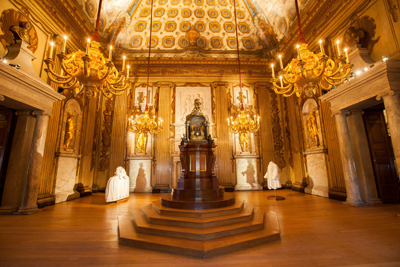
At the insistence of the Prince Regent (later King George IV), the christening was a small affair and was held a month after the birth on the afternoon of 24th June in the magnificent Cupola or Cube Room of Kensington Palace (pictured as it is now, above).

The guest list was small and included the Prince Regent, Prince Frederick, the Duke of York, and his wife Princess Frederica, Princess Augusta Sophia, Princess Mary, the Duchess of Gloucester, and her husband, Prince William, and Prince Leopold, who had recently become a widower after the death of Princess Charlotte.

The ceremony was conducted by Charles Manners-Sutton, the archbishop of Canterbury, and, thanks to the intransigence of the Prince Regent, her name was apparently only decided at the last minute.

The Prince Regent has earlier forbidden the use of such ‘royal’ names including Charlotte, Elizabeth, Georgina or Augusta and when asked by the archbishop what she would be named, he replied brusquely that she would be named Alexandrina in honour of the Russian Tsar Alexander, one of the new princess’s godparents.

Her second name was Victoria in honour of her mother, and while Victoria was often called “Drina” while a girl, she herself apparently preferred her second name to her first.

The gold font used in the ceremony formed part of the Crown Jewels and its origins go back to the time of King Charles II.

Interestingly, there were a couple of significant Victorian connections during Princess Charlotte’s christening – the font used at this christening was known as the Lily Font (like its predecessor, it is usually found with the Crown Jewels in the Tower of London).

It was commissioned by Queen Victoria and Prince Albert for the christening of their first daughter, Princess Victoria, in 1841, apparently due to Queen Victoria’s dislike for the gold font used at her own christening – it had been used by King Charles II to christen his illegitimate children.

The Lily Font has apparently been used at every royal christening since except that of Princess Eugenie who had a public baptism in Sandringham in 1990.

Princess Charlotte also wore a replica of the christening gown worn by Princess Victoria.

WHERE: The Broad Walk, Kensington Gardens, Kensington (nearest Tube stations are High Street Kensington or Queensway); WHEN: Daily 10am to 6pm (until 31st October); COST: £17.50 adult/£14.10 concession/children under 16 free (online booking discounts available, Historic Royal Palaces members free); WEBSITE: www.hrp.org.uk/KensingtonPalace.

PICTURE: HRP/newsteam

LondonLife – The Serpentine’s 2015 Pavilion…

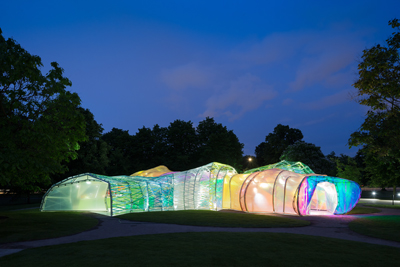
Serpentine-2015This year’s Serpentine Pavilion, marking the 15th anniversary of the annual summer commission by the Serpentine Galleries in Kensington Gardens, is a polygonal multi-coloured structure designed by Spanish architects selgascano. Made from a fluorine-based polymer, the pavilion has multiple entry and exit points and takes as its inspiration the site itself as well as the way in which people move through London, notably via the web-like network of the London Underground. Say selgascano: “We sought a way to allow the public to experience architecture through simple elements: structure, light, transparency, shadows, lightness, form, sensitivity, change, surprise, colour and materials. We have therefore designed a pavilion which incorporates all of these elements.” The architects say the pavilion was also designed as a tribute to the previous pavilion commissions, designed by the likes of Frank Gehry, Oscar Niemeyer and Zaha Hadid. For more, see www.serpentinegalleries.orgPICTURE: © Iwan Baan

10 London sites associated with Sir Winston Churchill – 5. London residences…

Throughout his life – as a child, bachelor, husband and family man, Sir Winston lived in many properties in London (although, of course, a couple of the most famous properties associated with him – his birthplace, Blenheim Palace, and the much-loved family home, Chartwell in Kent – are located outside the city). But, those and 10 Downing Street aside, here are just some of the many places he lived in within London…

29 St James’s Place, St James: Having been born at Blenheim Palace in Oxfordshire and then having spent time in Dublin, at the age of five (1880) he came to live here with his family. He remained here until 1882 when he was sent off to school in Ascot (he later attended schools in Sussex and, most famously, Harrow School). The family, meanwhile, moved to a townshouse at 2 Connaught Place which backed on to Hyde Park.

33 Eccleston Square, Pimlico: The Churchills moved here in 1909 and it was here that their first two children Diana and Randolph were born in 1909 and in 1911. The family remained here until 1913. A blue plaque marks the property.

• Admiralty House, Whitehall: The Churchills first moved into Admiralty House – part of the Admiralty complex on Whitehall – in 1913 (from the aforementioned Eccleston Square) after Churchill was made First Lord of the Admiralty. They remained here until 1915 – years he would go onto to describe as the happiest in his life – before he resigned but returned in 1939 when he was once again appointed to the position.

• 2 Sussex Square, Bayswater: In 1920, the Churchills bought this property just north of Hyde Park which they kept until 1924 when they moved into 11 Downing Street (see below). The property is marked with a blue plaque.

• 11 Downing Street, Whitehall: The Churchills lived at 11 Downing Street when Sir Winston was Chancellor of the Exchequer, from 1925 to 1929. The property, located in Downing Street, is not accessible to the public.

11 Morpeth Mansions, Morpeth Terrace, Westminster:  The Churchill family lived at this Westminster address between 1930 and 1939 (prior to him becoming Prime Minister). The property is marked by a brown plaque.

28 Hyde Park Gate, Kensington: Churchill died in this Grade II-listed, mid 19th century property on the morning of 24th January, 1965. The couple moved in after the end of World War II and, while it’s not clear whether they fully vacated the residence when he was prime minister between 1951-55, it remained their property until his death 10 years later. The property next door, number 27, provided accommodation for his staff. The property is marked with a blue plaque.

Treasures of London – Queen Caroline’s Temple…

Queen-Caroline's-Temple

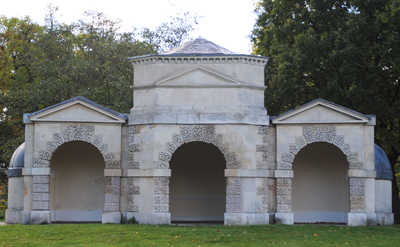
Located in Kensington Gardens, this neo-classical summer house was designed by William Kent for Queen Caroline (who was responsible for much of the shape of the gardens as they are now).

Standing amid naturalistic plantings overlooking the Long Water (which was among the features created at the order of Queen Caroline – consort of King George II), it was built in 1734-35 and designed to be glimpsed down one of the avenues of trees which radiated out from the Round Pond in front of Kensington Palace.

The Grade II-listed ‘temple’, which features graffiti inside dating back until 1821, was later converted to a park keeper’s home but restored to its use as a summer house in 1976.

Kent apparently also designed a second summer house for Kensington Gardens which revolved – it stood on a 13 metre high mound constructed by Kent’s predecessor Charles Bridgeman using spoil from the excavation of the Serpentine in the south-eastern corner of the gardens (the summer house was later demolished and the mound levelled).

Not the most prominent feature of the gardens but like the much later Princess Caroline’s Bath in Greenwich Park (see our earlier post here), it does have an important royal connection and is worthy of a stop when visiting the gardens.

WHERE: Kensington Gardens (nearest tube stations are that of Queensway, Bayswater, Lancaster Gate, South Kensington, Gloucester Road and Kensington High Street); WHEN: 6am to dusk; COST: Free; WEBSITE: www.royalparks.org.uk/parks/kensington-gardens.

This Week in London – Open House London this weekend; the Ming dynasty at the British Museum; John Constable at the V&A; and Totally Thames…

The-Leadenhall-Building• Open House London is finally here with some 800 buildings across the city – some of them rarely accessible to the public – open for free this weekend, from grand historical institutions and modern skyscrapers through to ‘green’ schools, engineering projects, parks and gardens, and private homes. The weekend – which is being run this year under the theme of ‘revealing’ – also includes a programme of walks, engineering and landscape tours, cycle rides, a bus tour, childrens’ activities and expert talks as well as a moonlit ‘culture crawl’ through London on Friday night and into Saturday morning (a fundraiser for Maggie’s Centres). Among the buildings opening their doors in the festival – created by London-based architecture organisation Open-City – are the ever popular 30 St Mary Axe (aka ‘The Gherkin’), the Foreign and India Office in Whitehall, the Bank of England, Portcullis House and City Hall along with everything from The Leadenhall Building (aka ‘The Cheesegrater’ – pictured), and Temple Church in the City to the Admiral’s House in Greenwich, the Dutch Embassy in Kensington and the steam coaster, the SS Robin, in Tower Hamlets. As mentioned in a previous week, some visits required pre-booking so make sure you check the programme before heading out. For a full copy of the programme of events, see www.londonopenhouse.org. PICTURE: © R Bryant.

A major new exhibition focusing on China during the “pivotal” 50 years of Ming Dynasty rule between 1400-1450 opens at the British Museum in Bloomsbury today. Ming: 50 years that changed China features some of the finest objects ever made in China – loaned from institutions in China and elsewhere – as it explores some of the “great social and cultural changes” that saw Beijing established as the capital and the building of the Forbidden City. It includes objects from the imperial courts along with finds from three regional “princely tombs”. Four emperors ruled during the period and the display will feature the sword of Yongle Emperor, “the warrior”, the handwriting of the Hongxi emperor, “the bureaucrat”, the paintings of the Xuande emperor, “the aesthete”, and portraits of the regents who ruled while the Zhengtong emperor was a boy. The exhibition runs until 4th January. Admission charge applies. For more, see www.britishmuseum.org.

The work of 19th century artist John Constable and its debt to 17th century masters is the focus of a new exhibition opening at the V&A on Saturday. Constable: The Making of a Master – which features more than 150 works including celebrated pieces by Constable like The Hay Wain (1821), The Cornfield (1826) and Salisbury Cathedral from the Meadows (1831) as well as oil sketches, drawings, watercolours and engravings – will juxtapose his works with those of 17th century landscape masters like Ruisdael, Rubens and Claude. Among those of their works on display will be Rubens’ Moonlight Landscape (1635-1640) and Ruisdael’s Windmills near Haarlem (c.1650-62). The exhibition runs until 11th January. Admission charge applies. For more, see www.vam.ac.uk/constable.

And don’t forget, Totally Thames continues to run throughout this month which an extensive programme of river-related events. Those on during the coming week include Londonist Afloat: Terrific Tales of the Thames, a series of discussion sessions on aspects of the River Thames being held aboard the HMS President and London’s River – The City’s Ebb and Flow, a guided walk along the river (held on every Saturday and Monday during September), and Hospital and Troop Ships – Transporting the walking and wounded in the First World War, an exhibition held aboard the HQS Wellington (open Sundays and Mondays in September). For the full programme of events, see www.totallythames.org.

Send all items for inclusion to exploringlondon@gmail.com.

A Moment in London’s History – The death of Queen Anne…

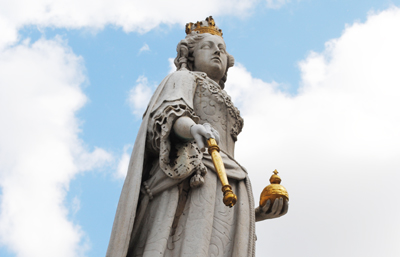
Queen-Anne

While much attention is being paid this year to the fact it’s the 300th anniversary of the accession of King George I (and the House of Hanover), we thought we’d take a quick look at the event which precipitated that moment – the death of the last Stuart monarch, Queen Anne, on 1st August, 1714.

The queen (depicted here in Richard Belt’s copy of a Francis Bird original outside St Paul’s Cathedral), who had ruled since 1702 and was the first monarch of Great Britain thanks to the 1707 Act of Union, died at Kensington Palace at about 7.30am. She had apparently suffered a series of strokes, having experienced declining health for the previous couple of years (this included gout which had severely limited her mobility and saw her carried in a chair even at her coronation). She was 49.

Her body was so swollen at the time of her death that she had to be placed in a large square-shaped coffin which was carried by 14 men.

Following her funeral, on 24th August she was laid to rest next to her husband, George of Denmark (he’d died at Kensington six years before), in the Stuart vault on the south side of King Henry VII’s chapel in Westminster Abbey.

Many of the bones of her infant and stillborn children lie nearby (Anne was pregnant 18 times) and apparently due to a lack of space, only a “small stone” marks her grave site. Anne’s seated wax funeral effigy, modelled from her death mask, can be seen in the abbey’s museum.

The idiom “Queen Anne is dead” – used as a response to someone who brings old news or who states the obvious – is thought to have its origins in the idea that while news of her death was officially kept quiet so the Hanoverian succession could be shored up, news of it nonetheless leaked quite quickly meaning that by the time it was officially announced, it was already well known.

10 fictional character addresses in London – 8. The Darling’s House…

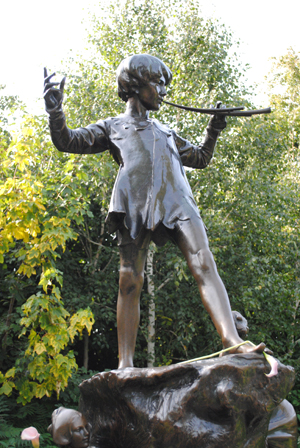
Peter-Pan2In JM Barrie’s 1911 novel, Peter and Wendy (based on the stage play Peter Pan; or, the Boy Who Wouldn’t Grow Up), the adventure begins when Peter Pan visits the home of the Darling family.

He secretly listens in – via an open window – while Mrs Darling tells bedtime stories to her children – Wendy, John and Michael – but during one visit loses his shadow and it’s on returning to claim it that he meets Wendy and, well, you know the rest…

Peter Pan is most famously associated with Kensington Gardens – it’s here that we are first introduced to the character of Peter in the book Peter Pan in Kensington Gardens (in fact there’s a rather famous statue of him there to this day, pictured above) – it’s most often assumed that the Darling’s house must be nearby.

But, in fact, the book Peter and Wendy never states where the Darlings’ house is located exactly  – just that it is at number 14 in the street in which they live – while in the 1904 play the address is given as “a rather depressed street” in Bloomsbury. Barrie explains that he placed the Darlings’ house in Bloomsbury because Mr Roget (of Thesaurus fame) once lived there and “we whom he has helped to wend our way through life have always wanted to pay him a little compliment”.

Worth noting, however, is a property at 31 Kensington Park Gardens. Once the home of the Llewellyn Davies family, family friend Barrie was a frequent visitor here and in fact went on to adopt the five Llewellyn Davies children following the death of their parents in the early 1900s. The property, which is divided into a series of flats, is, as a result, said to have been something of a model for the Darling’s house.

Barrie, himself, meanwhile, owned a house at 100 Bayswater Road – not far from Kensington Gardens where he first meet the Llewellyn Davies family – but, interestingly, had previously lived in Bloomsbury. The house is marked with a blue plaque.

Another Peter Pan-related address we have to mention is that of the Great Ormond Street Hospital for Children to which Barrie gave the rights to receive royalties from Peter Pan in perpetuity. You can arrange for a tour of the hospital’s Peter Pan-related memorabilia.

For more on the story behind the writing of Peter Pan, see Andrew Birkin’s book, J.M.Barrie and the Lost Boys.

This Week In London – Kensington Palace celebrates Christmas; plant a tree at Epping; and, the Long Range Desert Group memorial unveiled at Westminster Abbey…

Apologies we didn’t post a new instalment in our Wednesday series yesterday – it will resume next week!

Inspired by a spectacular month of partying by King William III in December, 1699, Kensington Palace is celebrating Christmas with a month of family-friendly entertainment in the Georgian State Apartments. Historic Royal Palaces has joined with games makers Hide & Seek to create Game of Crowns, transforming Kensington into a play palace with games, mummery and the chance to proclaim yourself king or queen for a day. On the weekends, there’s also the chance to join in parlour games from 1700 onward and a Christmas Day sensory room which brings to life King William III and Queen Mary II’s Christmas morning (by which time they must have been exhausted!). The palace will also play host to its largest ever Christmas tree – 30 feet tall – and on December 16th, you can join in Carols by Candlelight. Admission charge applies. Runs until 6th January. For more, see www.hrp.org.uk/KensingtonPalace/.

Epping Forest is expanding and this weekend, you have a chance to help by planting some new saplings. The City of London Corporation, which runs the forest, is creating a new area of woodland, named Gifford Wood in honour of former Lord Mayor Roger Gifford, after purchasing 30 acres of land at Upshire last year. Members of the public are invited to join City of London staff and the Friends of Epping Forest at Upshire Village Hall, Horseshoe Hill (EN9 3SP) between 11am and 1pm on Saturday to plant 2,000 new oaks and hornbeam as well as a mix of alder, birch, beech, cherry, field maple, rowan, small lime, wild apple, wild service, holly and yew. Bring your spade. For more, phone 0208 532 1010 or email epping.forest@cityoflondon.gov.uk.

A memorial to the Long Range Desert Group was dedicated in Westminster Abbey this week.  The LRDG was formed in 1940 by Major Ralph Bagnold to act as the forward intelligence arm of the British army in North Africa. The group later shared their expertise in desert navigation with the fledgling SAS (Special Air Service) who also carried out offensives in the desert from 1941. The memorial is located in the west cloister below that of the SAS. For more, see www.westminster-abbey.org.

LondonLife – The new Serpentine Sackler Gallery…

Serpentine-Sackler-Gallery


Designed by Pritzker Prize winning architect Zada Hadid, the new Serpentine Sackler Gallery opened to the public in Kensington Gardens on Saturday. Located just a few minutes walk from the Serpentine Gallery on the north side of the Serpentine Bridge, the 900 square metre premises is partly located in a renovated Grade II*-listed building, The Magazine (built in 1805 as a gunpowder store and used by the military until 1963), as well as in a curvaceous modern extension to the north and west. The new gallery, which also features a ‘social space’ and restaurant, is named after Dr Mortimer and Dame Theresa Sackler, whose foundation provided the largest donation for the project – the largest single gift donated to the Serpentine Gallery in its 43-year history. The opening exhibition, Today We Reboot The Planet, features the large scale sculptural work of Argentinian artist Adrián Villar Rojas. The exhibition runs until 10th November. For more, see www.serpentinegallery.orgPICTURES: Serpentine Sackler Gallery, © 2013 Luke Hayes

Serpentine-Sackler-Galllery2

10 (more) curious London memorials…9. The Speke Monument…

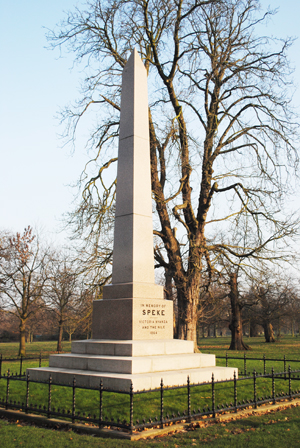
Speke-MonumentWhile thousands walk past this obelisk in Kensington Gardens each day, few probably realise it commemorates the life of John Hanning Speke, a Victorian-era explorer who discovered Lake Victoria in East Africa and named its northern outflow as the source of the Nile.

The red granite monument, designed by Philip Hardwicke and made from stone quarried in Scotland, was paid for by public donations and sponsored by Sir Roderick Murchison, president of the Royal Geographic Society which had paid for two of Speke’s expeditions. It was installed in 1866 and is located near the junction of Lancaster Walk and Budges Walk.

Speke, who had been on several expeditions in Africa, had only died at the age of 37 two years before in relatively controversial circumstances. He was shot by his own gun only the day before he was to participate in a debate with another explorer, Sir Richard Burton, about the source of the River Nile (Speke claimed the source of the Nile was Rippon Falls which flowed out of Lake Victoria; Sir Richard disputed this claim – it was later proven correct). Some have claimed Speke’s death to be suicide; others that it was an accident.

The monument itself was circumspect with regard to Speke’s success – it didn’t directly credit him as being the discoverer of the river’s source. This was rectified in 1995 when a plaque giving credit where it was due was placed on the ground in front of the monument by the Friends of Hyde Park and Kensington Gardens.

LondonLife – Pull up a deckchair…

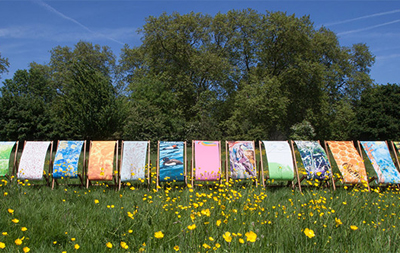
Deckchair-dreams

Summer is fading fast but until the end of October, there’s still time to sit back and relax in one of the 550 “designer deckchairs” which have been placed in five central Royal Parks this summer. Designed by the likes of Rolling Stone Ronnie Wood, comedian Harry Enfield and actor Miranda Richardson and artists Michael Craig-Martin, Susan Stockwell and Maggi Hambling under the theme of ‘Nature’s Grand Designs’, the deckchairs can be found in Hyde Park, Green Park, St James’s Park, Kensington Gardens and the Regent’s Park. The chairs join the more than 6,700 deckchairs already in the five Royal Parks which are available for hire (they can also be bought at the Royal Park’s online shop). For more on hiring a deck chair in the Royal Parks, check out http://www.royalparks.org.uk/parks/hyde-park/facilities-in-hyde-park/park-deck-chairs.

Around London – John Snow’s legacy; a spotlight on the music hall; Alice Kettle at the Queen’s House; and, Sydney Lee at the RA…

A new exhibition on the work and legacy of John Snow – who traced the source of a deadly cholera outbreak in the 1850s to a Soho water pump – opened at the London School of Hygiene and Tropical Medicine this week. Cartographies of Life & Death – John Snow and Disease Mapping – part of a series of events planned for the bicentenary of Snow’s birth – features both historical treasures, such as disease maps from the school’s archives, and new artworks inspired by science with the entire display presented as a disease mapping ‘detective trail’. There will be a pop-up water bar and street lectures and performances. Snow (1813-1858) is considered the founder of modern epidemiology, the study of patterns and causes of health and disease in populations. His work remain influential even today. Admission is free. The exhibition runs until 17th April at the school in Keppel Street. For more, see www.johnsnow.org.uk.

A new installation at the V&A opening on Saturday will explore the rise – and fall – of the music hall. Music Hall: Sickert and the Three Graces picks up on artist Walter Sickert’s obsession with the New Bedford Music Hall in Camden Town and features film, music and objects presented in a ‘theatrical narrative’ which focuses on the world of the Edwardian Music Hall. Highlights include filmed extracts of Tanika Gupta’s specially produced play The Boy I Love (directed by Katie Mitchell) which takes its name from George Ware’s celebrated music hall song The Boy I Love is Up in the Gallery. Admission is free. The exhibition, which is in the Theatre and Performance Galleries of the V&A, runs until 5th January next year. For more see www.vam.ac.uk.

Three specially commissioned artworks by British textile artist Alice Kettle will be unveiled today at the Queen’s House in Greenwich. The Garden of England – Royal Museums Greenwich’s first contemporary arts program – features Flower Helix (hanging in the Tulip Stairs), Flower Bed (a “textile garden” found in the North West Parlour), and Queen Henrietta Maria (a stitched portrait of the wife of King Charles I also found in the North West Parlour). The display is accompanied by a program of events – for more on them, see www.rmg.co.uk. Entry is free – the exhibition is on show until 18th August.

On Now – From the Shadows: The Prints of Sydney Lee RA. This exhibition at the Royal Academy represents a reappraisal of the work of painter-printmaker Sydney Lee (1866-1949) and features more than 50 prints and two major paintings. Lee studied in Manchester and Paris before coming to London where he lived in a house and studio in Holland Park Road in Kensington. He was elected a Royal Academician in 1930 and served as Treasurer from 1932-1940. The first exhibition devoted to his art since 1945, the event coincides with the publication of the first book on Lee written by its curator Professor Robert Meyrick, head of the School of Art at Aberystwyth University. Runs until 26th May. Admission charge applies. For more, see www.royalacademy.org.uk.

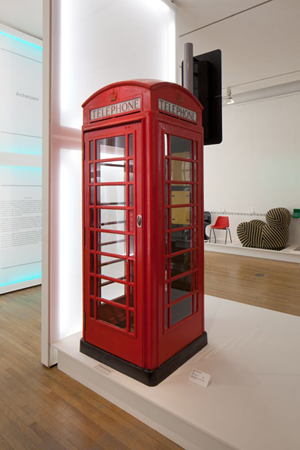
Treasures of London – K2 telephone kiosk at the Design Museum…

This version of the iconic British ‘institution’ – the red phone box – was designed by architect Sir Giles Gilbert Scott in 1924 (you may know him as the designer of the Battersea Power Station).

K2-KioskFormally known as the K2 telephone kiosk, Scott’s design was selected after a competition organised by the Royal Fine Art Commission (there’s a wooden prototype of Scott’s K2 located under the entrance to the Royal Academy of Arts in Piccadilly – the location where it was originally positioned).

The design featured a classical-looking dome (said to have been influenced by the work of architect Sir John Soane) which featured the royal crest of King George V (done in perforation, so it also provided ventilation). The phone box was made in cast iron and painted red (Scott had apparently suggested silver). From 1926 onwards, around 1,700 of the K2s – which weighed more than a ton – were deployed around London (very few were ever erected outside the city).

The surviving K2s – there are said to be slightly more than 200 – are now listed buildings.

The telephone box is a part of the Design Museum’s permanent collection which is currently held in two locations but from 2015 will be housed in a new purpose-built museum in High Street Kensington.

The box, which will be displayed on the museum’s top floor which will be dedicated to the display of 20th century artefacts, is currently featured in a special exhibition, Design Museum Collection: Extraordinary Stories About Ordinary Things, which runs at the museum’s current premises until January, 2015.

To further explore the Design Museum’s collection, you can download a free Design Museum Collection App for iPad app via iTunes.

WHERE: Design Museum, 28 Shad Thames (nearest Tube stations are London Bridge and Tower Bridge); WHEN: 10am to 5.45pm daily (last admission 5.15pm); COST: £11.85 adults/£10.70 concessions/£7.50 students (children under 12 are free); WEBSITE: www.designmuseum.org

Exploring London’s 10 most popular posts for 2012 – 8 and 7…

8. Olympics Special – London bridges aglow. A piece showing how many of inner London’s bridges were illuminated at night during the Games.

7. LondonLife – The Queen visits the newly transformed Kensington Palace. Queen Elizabeth II pays a visit to mark the completion of a £12 million, two year renovation project at Kensington Palace.

Around London – Christmas at the Geffrye; a Kensington Palace advent calendar; new furniture gallery at the V&A; and, last chance to see Bronze…

Christmas is looming and at the Geffrye Museum in Hoxton that means the museum’s many period rooms have been transformed for the Christmas festivities. The rooms span 400 years of history, from 1600 until today, and show how the middle class have lived over that time. The Christmas display will also provide insights into such Christmas traditions as kissing under the mistletoe, hanging up stockings, sending Christmas cards and decorating trees. The Christmas theme carries through to the restaurant and gift shop. Entry to the exhibition is free. Runs until 6th January. For an online gallery showing some of the rooms, click here. For more on the museum, see www.geffrye-museum.org.uk.

• Meanwhile Kensington Palace is to be transformed into giant advent calendar in the lead-up to Christmas with a daily ‘reveal’ inspired by Princess Victoria’s Christmas diary entries and letters. The halls of the palace will be decorated with 24 specially designed mirrored baubles, Christmas music will be played throughout and a sparkling 25 foot high Christmas tree will be placed in the gardens. As part of the Christmas festivities, an evening of carol singing will be held on 5th December in the King’s Gallery with carols sung by the Hampton Court Palace Royal Chapel Choir. Other events include a Midwinter Masquerade Ball on 13th December and an Eerie Evening Tour on 20th December. For more, see www.hrp.org.uk/KensingtonPalace/.

• A new permanent furniture gallery opens at the V&A this Saturday. The Dr Susan Weber Gallery – the first at the museum dedicated to furniture – will display more than 200 pieces of British and European furniture, spanning a period stretching from the Middle Ages through to present day, as well as examples of American and Asian furniture. Each piece is examined in detail with information provided about the materials and techniques used in creating it. Among the designers represented will be Thomas Chippendale, Grinling Gibbons, Robert Adam, Ron Arad and Tom Dixon. Highlights include a 20th century Frank Lloyd Wright-designed dining chair, a gilded cassone made for the Duke of Urbino in about 1509, and a scagliola decorated table which was formerly at Warwick Castle and dates from 1675. Twenty-five ‘key’ pieces have been selected for a central chronological display including a storage unit by Charles and Ray Eames dating from 1949-50, a Gothic revival cradle dating from 1861 and designed by Richard Norman Shaw and one of the museum’s newest acquisitions, the 2011 ‘Branca’ chair, designed by Industrial Facility. The display includes the use of touch screen interfaces, films and audio recordings. Entry is free. For more, see www.vam.ac.uk.

• On Now: Bronze. Last chance to see this exhibition at the Royal Academy of Arts which closes on 9th December. The exhibition brings together more than 150 of the finest bronzes in the world, spanning 5000 years of history, with many of the pieces on display never seen before in the UK. Among the earliest works are the 14th century BC bronze and gold Chariot of the Sun from Denmark, ancient Chinese ritual vessels including an elephant-shaped vessel dating from the Shang Dynasty (1100-1050 BC) and an Etruscan masterpiece – Chimera of Arezzo, dating from about 400 BC. Other highlights include a Roman cavalry helmet found in Cumbria in 2010 and the Portrait of King Seuthes III, dating from the early Hellenistic period, and found in Bulgaria in 2004 as well as a series of Renaissance bronzes and more recent works like Rodin’s The Age of Bronze (c 1876). Admission charge applies. For more, see www.royalacademy.org.uk.

Around London – Resurrection men at the MoL; Hollywood costumes at the V&A; Hanwell locks “at risk”; and, David Nash sculptures at Kew…

• A new exhibition at the Museum of London opens tomorrow (Friday) looking at the “murky world” of the early 19th century ‘resurrection men’ and the surgeon/anatomist whom they supplied with bodies. Doctors, Dissection and Resurrection Men will centre around the 2006 excavation of a until then forgotten burial ground at the Royal London Hospital in Whitechapel. The excavation of the area – which was used between 1825-41 – uncovered some 262 burials and while many contained just one person, others contained a mix of bones providing ample evidence of dissections, autopsies, amputations and the wiring together of bones for teaching as well as evidence animals had been dissected for comparative studies. The excavation revealed that rather than rely on body snatchers, the hospital had used its own ‘unclaimed’ patients for dissection practice. As well as human remains from the find (displayed for the first time), exhibition highlights include various instruments used in early 19th century surgery, a plaster cast of James Legg who was hanged for murder before his body was flayed and cast in plaster for study purposes and a wooden skeleton and other detailed anatomical models made by Joseph Browne. The exhibition runs until 14th April. An admission charge applies. For more details – including the programme of talks taking place alongside the exhibition – see www.museumoflondon.org.uk.

• The three piece white suit worn by John Travolta in Saturday Night Fever, the blue and white gingham pinafore dress worn by Judy Garland in The Wizard of Oz and costumes worn by Meryl Streep in the recent film, The Iron Lady,  are all making their public appearance in London this weekend with the V&A’s major autumn exhibition. Opening on Saturday, Hollywood Costume features more than 100 iconic costumes designed for some of the big screen’s most unforgettable characters. A three gallery (or three ‘act’) journey covering the silent film era of Charlie Chaplin through to a look at motion capture costume design in Avatar, the exhibition explores the role costume design plays in cinematic storytelling and examine the changing social and technological context in which designers worked over the past century. Sourced from major motion picture studios, costume houses, museums, archives and private collections, the costumes will be  displayed alongside interviews with costume designers, actors and directors. Runs until 27th January. Admission charge applies. For more, see www.vam.ac.uk/hollywoodcostume.

A flight of locks which raise the Grand Union Canal 53 feet over the course of a third of a mile at Hanwell in west London is among the top Grade II heritage sites at risk in England, according to English Heritage. The organisation released its Heritage At Risk Register 2012 this week and announced a new program to examine how Grade II listed buildings not already covered by the register can be assessed. Other “at risk” sites in London include Kensal Green (All Souls) Cemetery – one of London’s “magnificent seven” Victoria cemeteries, Abney Park Cemetery in Hackney, Gunnersbury Park in Houslow and 94 Piccadilly (Cambridge House) in Westminster. For more, see www.english-heritage.org.uk/caring/heritage-at-risk/.

• On Now: David Nash at Kew: A Natural Gallery. New works by renowned sculptor David Nash were officially unveiled at Kew Gardens last weekend. Mostly created using Kew trees which have come to the end of their life whether through storms, lightning or disease, the series of sculptures – created on site since April in a ‘wood quarry’ in the arboretum – has been installed in gallery spaces across the gardens including The Nash Conservatory, the Temperate House and The Shirley Sherwood Gallery of Botanical Art. They are displayed along with a series of drawings and short films. Runs until 14th April. An admission charge applies. See www.kew.org.

LondonLife – The 2012 Serpentine Gallery Pavilion…

The 12th in the Serpentine Gallery’s annual architecture series, this year’s Serpentine Gallery Pavilion in Kensington Gardens has been designed  by Herzog & de Meuron and Ai Weiwei, the design team behind for the Beijing National Stadium, star of the 2008 Olympic Games and commonly known as the “bird’s nest”. Twelve columns – each of which represents one of the 12 annual pavilions created so far (including this one) – support a floating platform roof standing 1.5 metres off the ground. The interior is clad in cork and the pavilion designed to “inspire visitors to look beneath the surface of the park as well as back in time across the ghosts of the earlier structures”. Open until 14th October. For more information, see www.serpentinegallery.orgPICTURE: Serpentine Gallery Pavilion 2012. Designed by Herzog & de Meuron and Ai Weiwei © Herzog & de Meuron and Ai Weiwei. IMAGE –  © 2012 Iwan Baan.