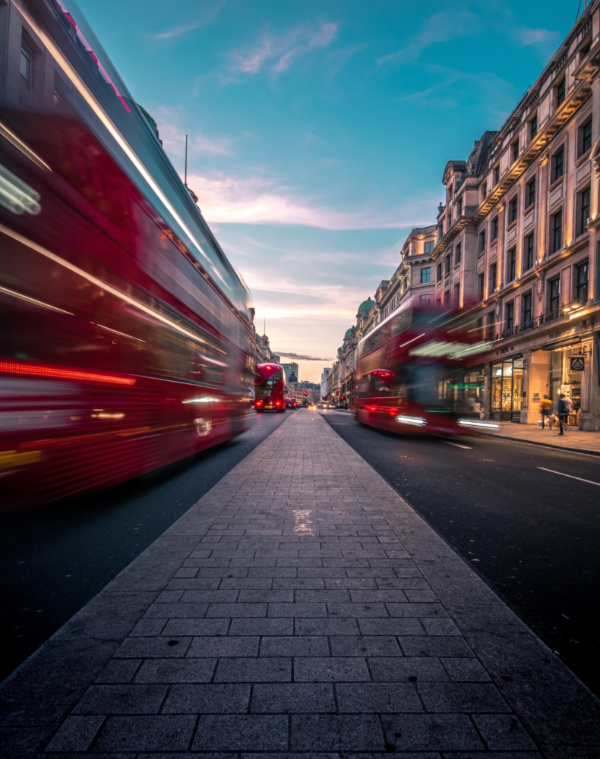
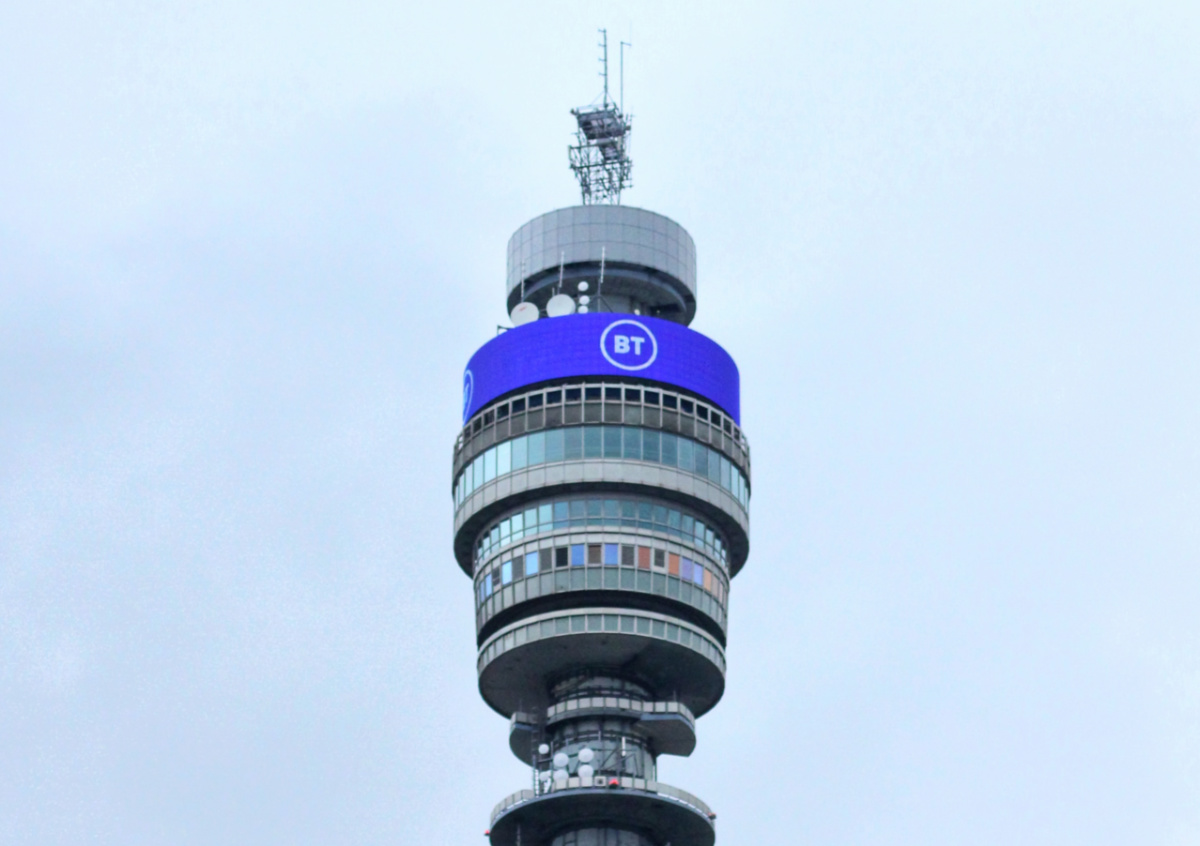
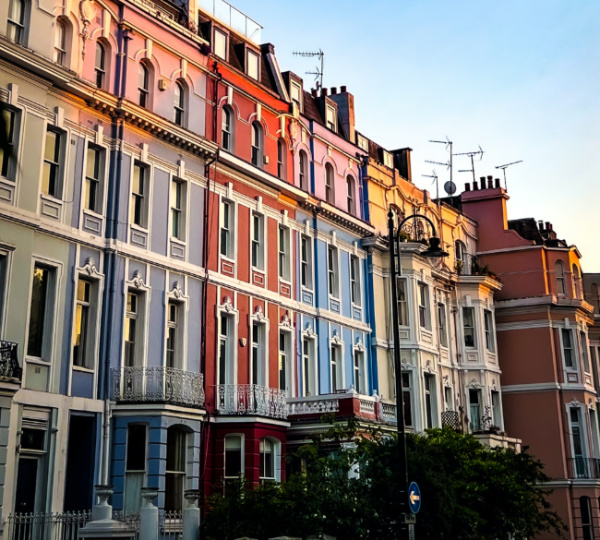
LondonLife – Notting Hill colour…

PICTURE: Matt Halls/Unsplash (image cropped)

London Explained – The Pool of London…

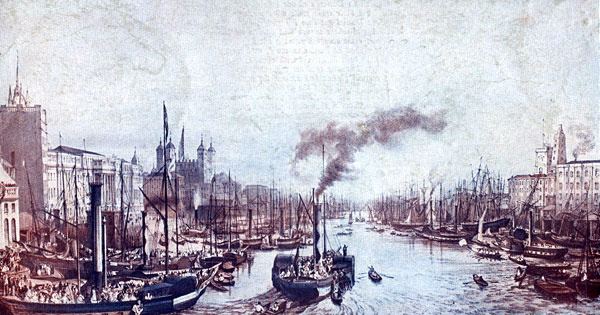
A lithograph showing the Pool of London from London Bridge in 1841. PICTURE: W Parrott/Public Domain

A stretch of the River Thames which spans the area from London Bridge to below Limehouse, the Pool of London was the highest part of the river navigable by tall-masted ships (thanks to the them not being able to pass under London Bridge).

The term originally referred to the stretch of the river at Billingsgate in the City of London which was where all imports had to be delivered for inspection by customs officers (hence these wharves were given the name ‘legal quays’).

But as trade expanded and reached its peak in the 18th and 19th centuries, so too did the stretch referred to as the “Pool of London”. It came to be divided into two sections – the Upper Pool, which stretches from London Bridge to Cherry Garden Pier in Bermondsey (and is bisected by Tower Bridge), and the Lower Pool, which stretched from the latter pier to Limekiln Creek.

The Upper Pool’s north bank includes the Tower of London, the old Billingsgate Market and the entrance to St Katharine’s Dock while the south bank features Hay’s Wharf and the HMS Belfast. The Lower Pool’s north bank includes the entrance to Limehouse Cut as well as Regent’s Canal and Execution Docks while below it runs the Thames and Rotherhithe Tunnels.

This Week in London – New section of London’s Wall revealed; ‘Summer on the Square’; and, Heath Robinson’s fairy tale illustrations…

PICTURES: Courtesy of Urbanest.

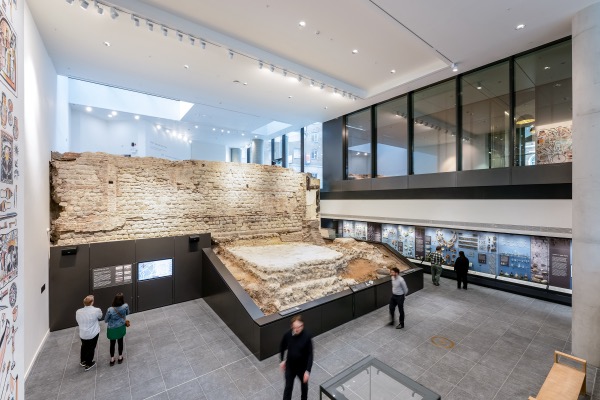
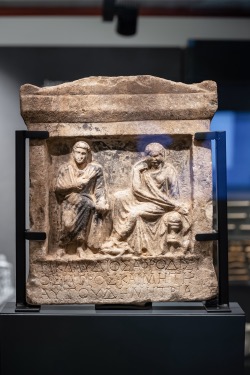
A large section of London’s Roman wall had gone on show to the public thanks to an innovative collaboration between Urbanest, the City of London Corporation, Historic England, and the Museum of London. A new free display – The City Wall at Vine Street – has been created by Urbanest as part of a redevelopment of the site. At its heart is a segment of London’s Roman wall, including the foundations of a bastion or tower. Alongside the wall is a permanent display of artefacts from the Museum of London ranging from a tile marked with a cat’s paw print to Roman coins and ceramics. Completed between AD 190 and 230, the Roman wall was between two and three metres thick and faced with blocks of Kentish ragstone. This section of the wall was first rediscovered in 1905 when a new building – Roman Wall House – was constructed on the site and the inner face of the wall was exposed and preserved in the basement. In 1979, the outer face of the wall and the bastian foundations were also uncovered – but the wall was still left largely forgotten in the building’s basement. The site was acquired by Urbanest in 2016 and during the subsequent construction of Urbanest City in 2018, the wall was protected by a timber enclosure. Tickets to The City Wall at Vine Street, located at 12 Jewry Street in the City of London, can be booked for free. For more head to https://citywallvinestreet.org.

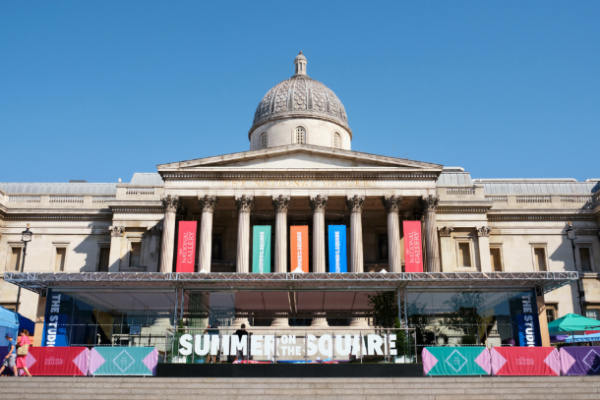
Summer on the Square PICTURE: © James Ross, courtesy The National Gallery, London

‘Summer on the Square’ has returned to The National Gallery’s North Terrace with a series of workshops aimed at inspiring the local community and visitors to engage with themes around the gallery’s collection. The programme sees the gallery work with a variety of artists and creative practitioners in a shared focus of creating child-led art, design and play activities. The workshops – which range from a session on discovering what you can do with bamboo to discovering movement and shapes in the National Gallery paintings – are free, drop-in and open to all ages and abilities. Summer on the Square, which runs until 28th August, is supported by and part of Westminster City Council’s Inside Out Programme. For the full programme, see www.nationalgallery.org.uk/whats-on/summer-on-the-square.

On Now: Happily Ever After? Illustrating Andersen & Perrault. This exhibition at the Heath Robinson Museum in Pinner focuses on works Heath Robinson created for the fairy tale collections of Hans Christian Andersen, which he illustrated three times, and Charles Perrault’s Old Time Stories published in 1921. The display, which also features works on the same subjects by Michael Foreman, shows how Heath Robinson was able to explore subjects and characters which ranged from sleeping princesses to adventurers and monsters in some of his lesser known works. Runs until 17th September. Admission charge applies. For more, see www.heathrobinsonmuseum.org.

LondonLife – View across the Thames…

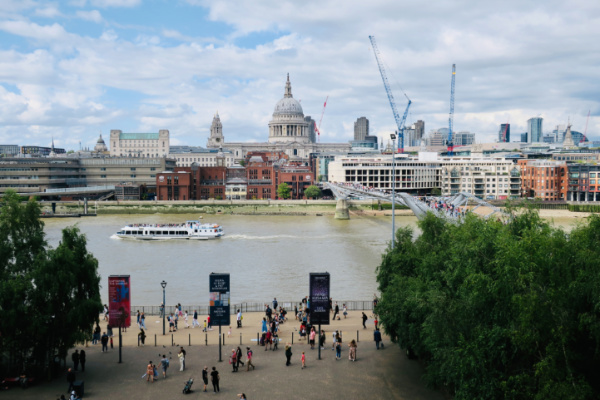
Looking from Bankside to the City of London. PICTURE: Rose Galloway Green/Unsplash

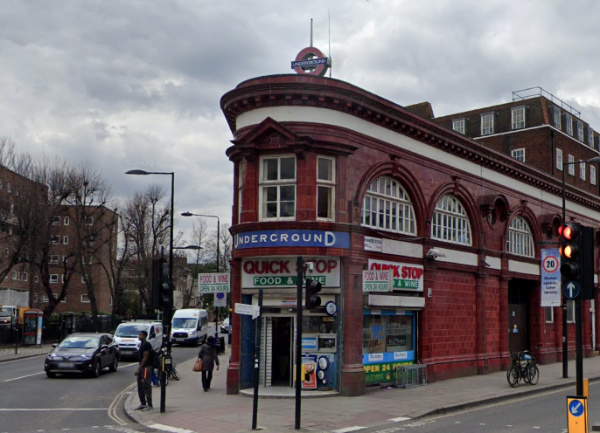
What’s in a name?…Chalk Farm…

This area in London’s north was recorded as far back as the 13th century when it was known Chaldecote, meaning “cold cottages”.

It’s been suggested that the name may have referred to accommodation for travellers who were travelling up to Hampstead.

Chalk Farm Underground Station in the heart of the area. PICTURE: Courtesy of Google Maps

The area was part of the prebendal manor of Rugmere and was gifted to Eton College by King Henry VIII in the 15th century.

The area was still farmland by the 17th century and what was then known as Upper Chalcot Farm was located at the end of what’s now England’s Lane. At Lower Chalcot was an inn known as the White House (apparently for its white-washed walls) – believed to have been built on the site of the original manor house.

By the 18th century, the farm was known as Chalk House Farm (apparently a corruption of Chalcot). The Chalk Farm Tavern was built on the site in the 1850s and was a popular entertainment venue which featured tea gardens (and in more recent times was a restaurant).

The area, which had been a popular site for duelling, underwent development from the 1820s – some of the street names, such as Eton Villas and Provost Road reflect the area’s relationship with Eton College.

This development received a considerable boost in the early 1850s when the London to Birmingham railway had its London terminus in Chalk Farm (it’s now Primrose Hill Station). The former railway building known as the Roundhouse is a legacy of the railway’s arrival.

Chalk Farm became part of the London Borough of Camden in the 1960s.

10 historic vessels in London’s Thames…10. The ‘Knocker White’…

The ‘Knocker White’ in 2013. PICTURE: martin_vmorris (licensed under CC BY-SA 2.0)

A Dutch-built tugboat, the Knocker White (originally called the steam tug Cairnrock) was built in 1924 by T Van Duijvendijk’s yard at Lekkerkek near Rotterdam, Netherlands for Harrisons (London) Lighterage Ltd.

Following the installation of a steam engine and boiler at Great Yarmouth, the steel-hulled Cairnrock – which was designed for general towage work and featured a drop-down funnel for travelling under bridges – was initially used to Tow the Harrisons’ floating steam-powered coal elevator Wotan around the lower reaches of the Thames. 

In 1960, the 77 foot long tug was sold and passed through the hands of a couple of different owners and ended up, by 1962, in the hands of WE White and Sons. It was during this time that its name was changed (after a White family nickname), marine diesel engines installed and the steam engines and boilers removed.

The Knocker White continued in service, operating out of the WE White & Sons base at Hope Wharf in Rotherhithe, working on the Thames and the Solent until 1982.

In November of that year, it was sold for scrap to Todd (Breakers) Ltd of Dartford but, after being drawn to the attention of the Museum of London, was acquired by them in March 1985 as a classic example of an early tall-funnelled Thames steam tug.

In November, 2016, the Knocker White – along with the Varlet – was acquired by Trinity Buoy Wharf with the aim of restoring the vessel and putting on public display. It can be seen moored at the wharf today.

LondonLife – Wall of windows…

Corner of Great College Street and Millbank in Westminster. PICTURE: Nader/Unsplash

This Week in London – Joshua Reynolds at Kenwood; ‘Power Up’ at the Science Museum; and ‘Crivelli’s Garden’…

Seventeen of Joshua Reynolds’ paintings – from one of his earliest portraits to the last painting he ever completed – have gone on show at Kenwood House. Marking the 300th anniversary of the artist’s birth (on 16th July, 1723), Spotlight on Reynolds: Lord Iveagh’s Favourite Artist at 300 features works including Catherine Moore (painted in Paris in 1752 when he was returning from his studies in Italy), Miss Cocks and her Niece (one of the last paintings begun by Reynolds before the loss of his sight around 1790), and a self-portrait he completed in 1788 when aged around 65 (the only self-portrait to show Reynolds wearing spectacles). Also on show in the display are three full-length works that span the early 1770s to the early 1780s: Mrs Tollemache as MirandaLady Louisa Manners and Mrs Musters as Hebe. Runs until 19th November. For more, see www.english-heritage.org.uk/visit/places/kenwood/.

Power Up at the Science Museum PICTURE: © Benjamin Ealovega

After five successful temporary seasons, Power Up, the popular hands-on video gaming gallery, returns permanently to the Science Museum from today. Visitors will be able to play on more than 160 consoles and hundreds of video games, as well as undertake a journey through five decades of gaming, from Pong and Mario Kart to the PlayStation 5 and Xbox and the latest in VR technology. The exhibition is divided into 14 themes and sections including a physical games area and a dedicated PC-area. Admission charge applies (daily and annual passes are available). The opening is accompanied by the return of adults-only Gaming Lates. For more, see www.sciencemuseum.org.uk.

Dame Paula Rego’s public commission, Crivelli’s Garden, is the subject of a new display at The National Gallery. Planned in collaboration with Rego, who died on 8th June last year, the display unites the monumental 10-metre-long artwork with the 15th-century altarpiece by Carlo Crivelli that inspired it, alongside life studies Rego produced of the gallery colleagues that feature in the painting. The display can be seen until 29th October. Admission is free. For more, see https://www.nationalgallery.org.uk.

• Send all items for inclusion to exploringlondon@gmail.com.

LondonLife – Winding river…

PICTURE: Denys Smirnov/Unsplash

Where’s London’s oldest…barbershop?

Truefitt and Hill at 71 St James’s Street. PICTURE: Google Maps

This one comes with a Guinness World Records stamp of approval. The oldest barbershop in the world, according to the record-recording organisation, is Truefitt & Hill.

William Francis Truefitt, who styled himself as hairdresser to the British Royal Court, established his first barbershop at 2 Cross-Lane, Long Acre, on 21st October, 1805 – famously on the same day as the Battle of Trafalgar.

In 1811, he moved the business to 40 Old Bond Street. In 1935, Truefitt acquired Old Bond Street firm Edwin S Hill & Co – which had been established in 1911 – and the firm moved to its address at 23 Old Bond Street.

The company, which now has outlets around the world – received its first Royal Warrant – wigmaker – from King George III and also held a warrant from the late Prince Philip.

Royalty aside, customers at the shop have included everyone from Lawrence Olivier to Mahatma Gandhi, Frank Sinatra, John Wayne, David Niven, Oscar Wilde and Winston Churchill. The firm was also referenced by such literary luminaries as Charles Dickens and William Thackeray.

The firm moved to its current location at 71 St James’s Street in 1994.

For more, see www.truefittandhill.co.uk.

This Week in London – Ceremony of Cart Marking; London Underground’s K8 phoneboxes listed; and, ‘Ice Weekend’…

A carriage takes part in the 2008 Ceremony of Cart Marking. PICTURE: Clive A Brown (licensed under CC BY-NC 2.0)

The ceremony of Cart Marking takes place this Saturday in Guildhall Yard. Hosted by the City of London and the Worshipful Company of Carmen, the ceremony dates back 500 years and involved people having their carts marked – with a brand – after paying the appropriate licence fee. More than 50 vintage vehicles – ranging from handcarts, to horse-drawn, steam and modern vehicles – will take part in the event, entering Guildhall Yard through its famous arch and then symbolically marked with a brand. Entry to watch the event is free. For more, see www.cartmarking.org.

Four rare K8 phonebooks – located in the London Underground network – have been listed at Grade II. The K8 kiosks were the last generation of the classic public telephone box and some 11,000 were installed across the UK between 1968 and 1983. Only around 50 now remain in their original position – most of them were removed by British Telecom following its privatisation in 1984. The K8 was replaced by the sleek silver KX100 kiosk, which in turn were made virtually obsolete by mobile phones. While most of the surviving K8s were located in Hull, there are four in the London Underground network including blue boxes at High Street Kensington and Chorleywood stations, a maroon one at Chalfont and Latimer and a white one at Northwick Park.

It’s Ice Weekend at the London Canal Museum. Events – including a showing of rare film of ice harvesting, ice cream making demonstrations, and talks about the ice trade – take place on both Saturday and Sunday but the chance to visit the facility’s ice well takes place on Sunday only. Admission charges apply. For more, see www.canalmuseum.org.uk/whatson/icewell-visit.htm. The event is part of the 2023 Festival of Archaeology.

Send all items to exploringlondon@gmail.com

This Week in London – Coronation outfits at Buckingham Palace; Rex the Raven; and, a Crystal Palace dinosaur recreated…

Royal Collection Trust / © His Majesty King Charles III 2023

The coronation outfits worn by King Charles III and Queen Camilla can be seen at Buckingham Palace from Friday as part of the summer opening of the State Rooms. The clothing includes the Robe of Estate worn by the King for his departure from Westminster Abbey (it had been worn by his grandfather King George VI for his coronation in 1937), the King’s cream silk overshirt and the Purple Coronation Tunic – both specially created for the occasion – and the King’s Royal Naval Trousers as well as Queen Camilla’s Bruce Oldfield-designed Coronation Dress and her Robe of Estate. Also on display will be the Coronation Glove and the Girdle or Coronation Sword Belt – both of which were first worn by King George VI at his coronation. Visitors to the State Rooms will also be able to see the Diamond Jubilee State Coach, and by combining their trip with a visit to the Royal Mews, the Gold State Coach, used in every coronation procession since King William IV in 1831. The State Rooms are open until 24th September. Admission charges apply. For more, including an accompanying programme of events, see www.rct.uk.

A new raven chick, Rex, has joined the flock at the Tower of London. Rex, who is joining the six other ravens at the Tower, is named for the Latin title meaning “King, Ruler” – appropriate for a Tower raven born in the year of HM King Charles III’s Coronation. The term is referenced on King Charles III’s cypher that appears on the uniforms of Yeoman Warders, and above the entrance to the Jewel House. The cypher displays the intertwining initials “C” and “R”, representing “Charles” and “Rex”, an update from Her Late Majesty Queen Elizabeth’s cypher “E R” “(Elizabeth Regina).

PICTURE: James Balston

• A recreation of a Victorian-era sculpture of an extinct mammal distantly related to horses, has been placed at the Grade I-listed Crystal Palace dinosaurs site. The 2.2 metre-long sculpture of Palaeotherium magnum is the work of one of Britain’s leading palaeo artist, Bob Nicholls, under the supervision of the Friends of Crystal Palace Dinosaurs, scientists from the Natural History Museum and the University of Portsmouth. It has been funded by the new Crystal Palace Park Trust and Friends of Crystal Palace Dinosaurs.

Send all items to exploringlondon@gmail.com.

10 historic vessels in London’s Thames…7. Lightship 95…

Lightship 95 at Trinity Buoy Wharf. PICTURE: Steve James (licensed under CC BY-NC-ND 2.0/image cropped)

This red-painted vessel once served as a beacon at South Goodwin Sands off the Kentish coast but, now permanently moored at Trinity Buoy Wharf, has been converted into a recording studio.

The 550 tonne ship was built in 1939 by Philip and Sons of Dartmouth for Trinity House, a company established during the reign of King Henry VIII initially to regulate pilotage on the River Thames. It later established lighthouses and floating lightships and took over responsibility for all buoys in England. It currently maintains 65 automated lighthouses.

The steel-hulled vessel, one of three built to the same design (one, converted into a home, is now at Victoria Dock in Silvertown – and currently for sale with an asking price of £595,000 – and another in Rotterdam, The Netherlands), features a central light tower and originally had crew quarters.

It was mostly used to mark South Goodwin Sands but was also deployed to other locations including Inner Dowsing off the coast of Norfolk.

In the 1990s, it became the first light vessel in the UK to be converted to solar power to enable unmanned operation and underwent a complete refit in 1999.

Lightship 95 in 2012. PICTURE: Reading Tom (licensed under CC BY 2.0)

It was taken out of service in 2003 and subsequently sold at auction by Trinity House. Initially bought by the Port Werburgh Marina on the Medway, it was later onsold to Ben Phillips who converted it to a floating music recording studio. Since 2008, it has been based at Trinity Buoy Wharf.

London pub signs…The Red Lion, Westminster…

The Red Lion pub. PICTURE: Google Maps

There has been a pub on this storied Whitehall location, located between conveniently for politicians between the Houses of Parliament and Downing Street, since at least the 15th century.

PICTURE: TomasEE (licensed under CC BY 3.0)

Then named Hopping Hall, a pub is recorded on this site at 48 Parliament Street (on the corner with Derby Gate) as early as 1434. It passed into the hands of the Crown by 1531 and by the early 19th century it had taken on the name of the Red Lion (at the time, it was visited by Charles Dickens as a young man). The current, now Grade II-listed, building was erected on the site in 1890.

The pub’s name – one of the most common in England (there’s several more in London alone) – apparently originated at the ascension of the Scottish King James I to the throne in 1603. The King ordered that all significant buildings display the red heraldic lion of Scotland and that included pubs. Hence the Red Lion.

The four storey pub has been popular among politicians (and journalists interviewing politicians) including Prime Ministers – indeed, it’s claimed to have served every PM up until Edward Heath in the 1970s (as such it’s one of the many pubs in London which features division bells, although the function of these has apparently been replaced by an app).

For more, see www.redlionwestminster.co.uk.

This Week in London – Young V&A opens its doors; contemporary African photography; and, Yehudi Menuhin honoured…

The Young V&A’s Town Square PICTURE: © Luke Hayes courtesy of Victoria and Albert Museum, London.

The new Young V&A in Bethnal Green has opened its doors and a free summer festival takes place this weekend. Designed with and for children aged up to 14-year-olds, the Young V&A features more than 2,000 objects, dating from 2,300 BC to today, found across three galleries – ‘Play’, ‘Imagine’ and ‘Design’. The ‘Play’ gallery includes a ‘Mini Museum’ as well as a construction zone called Imagination Playground in which children can build dens, The Arcade in which they can explore Minecraft worlds and Adventure in which they can create stories inspired by objects on show. The ‘Imagine’ gallery features a new performance space, portraits of local children and luminaries such as Quentin Blake, Kenneth Branagh and Linda McCartney, while ‘Design’ showcases innovative objects and case studies that explore how things are designed, made and used, and the ways in which design can change the world. Among the objects on show at the museum is everything from a life-size Joey the War Horse puppet to a Microline car suspended from the ceiling, Harry Potter’s Nimbus 2000 broomstick, Christopher Reeve’s original Superman costume and a large-scale installation of doll’s houses – Place (Village) – by Rachel Whiteread. Meanwhile, the free Summer Festival, which takes place on Saturday and Sunday, invites visitors to explore the museum as well as join in free and creative activities and see performances from young talent including Britain’s Got Talent finalists IMD Legion, the east London-based Grand Union Orchestra, and hula-hoop performance group Marawa’s Majorettes. There’s also the chance help create a large-scale art installation with Leap then Look. For more see vam.ac.uk/young.

‘The Place (Village)’ installation in Imagine Gallery at the Young V&A PICTURE: © David Parry, courtesy of Victoria and Albert Museum, London
Aïda Muluneh, ‘Star Shine Moon Glow, Water Life’, 2018 Photograph, inkjet print on paper; 800 x 800mm Commissioned by WaterAid. ©  Aïda Mulune

A major new exhibition celebrating contemporary African photography has opened at the Tate Modern. Featuring works by 36 artists, A World in Common: Contemporary African Photography is spread across seven thematic sections and highlights contemporary perspectives on cultural heritage, spirituality, urbanisation and climate change. As well as illuminating alternative visions of Africa’s many histories, cultures and identities, the display also explores the rise of studio photography across the continent during the 1950s and 1960s – a time when many African nations gained independence – before moving on to document the expansion and transformation of cities today as well as exploring themes of migration and climate activism. Runs until 14th January, 2024. Admission charge applies. For more, see tate.org.uk.

Celebrated 20th century violinist and conductor Yehudi Menuhin has been honoured with an English Heritage Blue Plaque at his former home in Belgravia. The six-storey house at 65 Chester Square, built by Thomas Cubitt in 1838, was where Menuhin lived and worked for the last 16 years of his life. The lower-ground floor vaults provided space for his collection of violins while an open space on the fourth floor served as his studio, a place which hosted much of his teaching and mentoring and where he also practiced yoga – including his famous headstand.

Send all items to exploringlondon@gmail.com.

10 historic vessels in London’s Thames…6. ‘Portwey’…

One of only two twin screw, coal fired steam tugs still active in the UK, the steam tug Portwey can these days be found in London’s Docklands.

PICTURE: Paul Gravestock (licensed under CC-BY-NC-ND 2.0)

Ordered by the Portland & Weymouth Coaling Co Ltd, Portwey (the name comes from the company’s) was built by Harland & Wolff at Govan yard in Glasgow and launched on 10th August, 1927.

The 80 foot long vessel was based in Weymouth, Dorset, performed a range of tasks including carrying coal to steamers and being on call for any ship in distress requiring assistance or salvage. This included extinguishing a fire aboard the Danish timber-carrier Bodil in 1928, assisting ships like the cargo steamer Winslow (which had developed a list in heavy seas in 1932), and the Winchester Castle which had run aground in 1936, and even being involved in the search for a sunken submarine in 1932.

The Portwey was seconded by the Admiralty and moved to Dartmouth in Devon during World War II. Narrowly avoiding German bombs while in the harbour, during this time the tug was went to the assistance of ships attacked by the enemy. In 1944, she was assigned to US forces as they prepared for D-Day and her duties including clearing obstructions from the channel and supplying fresh water to naval vessels as well as, when a rehearsal for the landings went wrong at Slapton Sands, rescuing personnel and landing craft.

After the war, the Portwey resumed duties as a harbour tug including ferrying pilots and customs officers out into the Channel. In 1947, she helped put out a fire at the Queen’s Hotel in Dartmouth.

The Portwey was sold to the Falmouth Dock and Engineering Company in Cornwall in 1952. As well as rescuing the captain and first officer of the cargo ship Flying Enterprise, during this period she was involved in the construction of the Lizard Lifeboat Station in Cornwall, and a car ferry slipway at Holyhead in north Wales.

In 1967, with coal-fired steam tugs being replaced by diesel-engined ships, she was laid up to be scrapped. But it wasn’t the end for the Portwey, which was bought by Richard Dobson, the assistant harbour master at Dartmouth. Along with a group of friends, he returned her to working condition and during the 1960s and 1970s, she took part in many events on the River Dart and around Torbay.

In 1982, the Portwey joined the Maritime Trust’s Historic Ship Collection at St Katharine’s Dock where the newly formed Friends of Portwey continued with restoration and operation of the tug.

The Friends of Portwey became the Steam Tug Portwey Trust in 2000 and purchased the tug from the Maritime Trust, moving the vessel to West India Dock.

WHERE: Steam Tug Portwey, West India Dock (South Quay) (nearest DLR station is South Quay); WHEN: 2pm to 9pm Wednesdays; WEBSITE: www.stportwey.co.uk.

LondonLife – By the canal…

Looking down Regent’s Canal from Pritchard’s Road bridge in Haggerston. PICTURE: Samuel Regan-Asante/Unsplash

This Week in London – McCartney’s photographic portraits; Georgian-era ice-cream; and, the UK’s rocky past…

In the wake of last week’s reopening of the National Portrait Gallery, another new exhibition – this time focused on the photography of Paul McCartney – opened yesterday. Paul McCartney Photographs 1963-64: Eyes of the Storm reveals, for the first time, portraits captured by McCartney using his own camera between December, 1963, and February, 1964, – a period during which John, Paul, George and Ringo went from being Britain’s most popular band to international stardom. The images reveal McCartney’s personal perspective on what it was like to be a Beatle at the start of what became known as ‘Beatlemania’ through images captured everywhere from gigs in Liverpool and London to performing on The Ed Sullivan Show in New York. Runs until 1st October. Admission charge applies. For more, see www.npg.org.uk/whatson/exhibitions/2023/paul-mccartney-photographs-1963–64-eyes-of-the-storm/.

Kenwood House. PICTURE: Marc Barrot (licensed under CC BY-NC-ND 2.0)

Kenwood House in London is among 13 English Heritage sites across the country where you can try out Georgian-era “brown bread ice-cream” this summer. Created in partnership with family ice cream maker Marshfield Farm, the flavour is inspired by some of the more bizarre flavours of ice-cream popular among the Georgians including cucumber, black tea and parmesan. For the full list of places where it will be available, head to www.english-heritage.org.uk/about-us/search-news/the-best-thing-since-sliced-bread–english-heritage-re-creates-georgian-brown-bread-ice-cream-this-summer/.

Angela Palmer with ‘Tower of Time’. PICTURE: Ewa McBride Photography.

A unique sculptural portrait of the UK formed with interlocking blocks of stones from all four countries is on show in an exhibition at the Pangolin London Sculpture Gallery in King’s Cross. Four Nations is just one of the works by Highbury-based artist Angela Palmer in the display, Deep Time: Uncovering Our Hidden. Among others is the 2.5 metre high Tower of Time, which features 16 rocks from the four countries including a 2.5-billion-year-old White Anorthosite rock, the same type of rock brought back from the Moon by Apollo 15 in 1971, and Torus of Time, a one-metre diameter ring representing the country’s three billion year history as a circle of time. Runs until 16th September. For more, see www.pangolinlondon.com.

Send all items to exploringlondon@gmail.com.

LondonLife – Barbican curvature…

PICTURE: Artem Zhukov/Unsplash

A Moment in London’s History…The opening (and subsequent burning) of Alexandra Palace…

This month marks the 150th anniversary of the fire which destroyed the first Alexandra Palace in the north of London, only two weeks after it was opened.

Conceived by British architect Owen Jones as a “palace of the people”, the palace at Muswell Hill was created to serve as a public centre of recreation, entertainment and education for the people of north London as something of a counterpart to the Crystal Palace in the city’s south.

The 1873 fire as depicted in the Illustrated London News.

Designed by Alfred Meeson and John Johnson, the massive glass, iron and brick building covered some 250,000 square feet. It was constructed using recycled materials from the vast temporary building built for the 1862 International Exhibition in South Kensington. Building works commenced in September, 1865, and it was completed in early 1873.

Officially named Alexandra Palace after the popular Princess of Wales, Alexandra of Denmark (although the name Palace of the People – which had originally been given to the project – remained an alternative as did, later, the shortened “Ally Pally”), it featured a vast 900 foot long central nave capped with a 220 foot high dome as well as first floor galleries and terraces.

The palace and surrounding park were officially opened on 24th May, 1873, the 54th birthday of Queen Victoria. The grand celebration, which was attended by tens of thousands of people, featured concerts, recitals and ended with fireworks.

It was only 16 days after the opening, at lunchtime on 9th June, that the palace was destroyed by a fire believed to have started when a burning ember from a brazier being used by plumbers working on the roof set fire to the building’s timber. Numerous horse drawn and manual fire engines were dispatched to the scene along with some 120 firefighters but to no avail.

Tragically three staff members died as a result of the blaze which left only the outer walls of the palace standing. Among the items destroyed was a collection of English pottery and porcelain which, comprising some 4,700 items, had been on loan.

Plans to rebuild the palace were quickly acted upon and a new and improved palace opened on 1st May, 1875. This building survived a fire in 1980 but about a third of the building was destroyed.

The now Grade II-listed building has since been rebuilt(but that’s a story for a another time).