This Week in London – ‘Indo + Caribbean’; 19th century China explored; and, animals, art, science and sound at the British Library…

Postcard – Shipping on the River Hughly Calcutta, cira 1900. PICTURE: Courtesy of JF Manicom

A new exhibition examining the history of Indian indenture in the British Caribbean and Indo-Caribbean culture in London today opens at the Museum of London Docklands from tomorrow. Indo + Caribbean: The creation of a culture puts a spotlight on the 450,000 Indians who left India between 1838 and 1917 to work for periods of three to five years on Caribbean plantations in return for transport, a minimal wage and some basic provisions. Among the objects on show are letters from Caribbean planter Sir John Gladstone petitioning the government to provide workers from India as well as contracts, shipping company records, postcards, and papers from the Parliamentary Archives that give insights into the realities of life under indenture. Also on display are photos, jewellery, film and artwork which uncover personal stories and family memories from London’s Indo-Caribbean community. Admission to the exhibition in the London, Sugar and Slavery gallery is free. For more, see www.museumoflondon.org.uk.

Empress Dowager Cixi’s robe, China, about 1880–1908. © The Metropolitan Museum of Art, New York.

The resilience and creativity of people in 19th century China is explored in a new exhibition at the British Museum which opens today. The Citi exhibition China’s hidden century examines the age of the Qing Dynasty, which ruled from 1796 to 1912, and focuses on a spectrum of different groups in society – from members of the court and military to artists and writers, farmers and city-dwellers as well as the globalised communities of merchants, scientists and diplomats, reformers and revolutionaries. Among the more than 300 objects on display are a water-proof straw cape made for a street worker, farmer or fisherman which is being publicly displayed for the first time, cloisonné vases given by the Last Emperor’s court to King George and Queen Mary for their coronation in 1911, and, a silk robe which belonged to the Empress Dowager Cixi, de facto ruler of China from 1861 to 1908 and a contemporary of Queen Victoria. Admission charge applies. Runs in the Sainsbury Exhibitions Gallery until 8th October. For more, see britishmuseum.org/exhibitions/chinas-hidden-century.

Animals: Art, Science, and Sound at the British Library

The intersection between science, art and sound and how that impacts our understanding of the natural world is explored in an exhibition at the British Library. Animals: Art, Science and Sound features 120 artworks, manuscripts, sound recordings and books, many of which are on display for the first time. They include the earliest known illustrated Arabic scientific work documenting the characteristics of animals alongside their medical uses (c1225), the earliest use of the word ‘shark’ in printed English (1569), Leonardo da Vinci’s notes (1500-08) on the impact of wind on a bird in flight, and one of the rarest ichthyology publications ever produced, The Fresh-Water Fishes of Great Britain (1828-38), which features hand-painted illustrations by Sarah Bowdich. Also present is the first commercially published recording of an animal from 1910 titled Actual Bird Record Made by a Captive Nightingale (No. I) by The Gramophone Company Limited and one of the earliest portable bat detectors – the Holgate Mk VI – used by amateur naturalist John Hooper during the 1960s-70s to capture some of the first sound recordings of British bats. The exhibition, which runs until 28th August and which carries an admission charge, is accompanied by two free displays at the library – Animal Rights: From the Margins to the Mainstream (runs to 9th July) and Microsculpture (runs to 20th November). For more, see www.bl.uk/events/animals.

Send all items to exploringlondon@gmail.com.
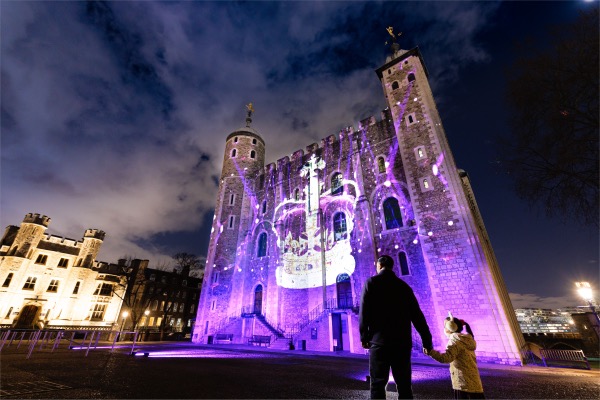
LondonLife – The Tower and City of London from another angle…

PICTURE: Zetong Li/Unsplash

London Pub Signs – The King’s Head, Mayfair…

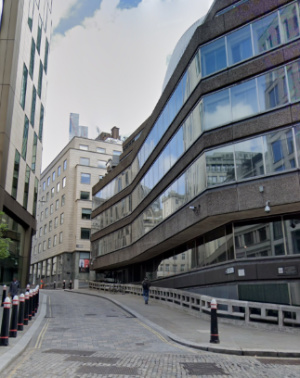
Ignore the rather large no entry sign and look closely to see King George II on the sign to the left of the picture and King Charles II on the sign to the right. PICTURE: Google Maps

It’s a pub dedicated to a king – but which one?

Located at 10 Stafford Street (within walking distance of current royal residences at Buckingham and St James’s Palace), this pub dates back to at least 1710 and has gone through several name changes including, apparently, Shelley’s Hotel and The King John’s Head, but has now returned to its original name of the King’s Head.

While some believe the name refers to King Charles II, there’s another school of thought that says the pub was named for King George II.

With the dispute still apparently live, the owners have cleverly opted to depict the heads of both kings on the pub’s signs.

The pub, which features a cellar bar, is one of a number named The King’s Head in London (we’ll take a look at some others in upcoming posts).

Now part of the Nicholson’s chain. For more, see https://www.nicholsonspubs.co.uk/restaurants/london/thekingsheadmayfairlondon.

This Week in London – Luxury and power in the ancient world; St Francis of Assisi; and, St Bart’s 900 year history…

Panagyurishte Treasure

The relationship between luxury and power in the ancient world is explored in a new exhibition at the British Museum. Luxury and power: Persia to Greece focuses on the period between 550-30 BC in the Middle East and south-east Europe, a period during which the Persian empire of ancient Iran clashed with the cities and kingdoms of Greece before it was conquered by Alexander the Great. Highlights include Bulgaria’s Panagyurishte Treasure which, on loan, consists of nine richly decorated Persian gold vessels including eight rhyta used to pour wine and one bowl to drink it. There’s also a Persian gilt silver rhyton shaped as a griffin, Athenian examples of drinking vessels, and, a gold wreath from Turkey which consists of two branches with a bee with two cicadas and showcases how styles evolved into the period after the death of Alexander in 323 BC. The exhibition in the Joseph Hotung Great Court Gallery can be seen until 13th August. Admission charge applies. For more, see www.britishmuseum.org/luxuryandpower.

Sandro Botticelli, ‘Saint Francis of Assisi with Angels’ (about 1475-80)/Tempera and oil on wood/
© The National Gallery, London

The first major art exhibition to explore the life and legacy of Saint Francis of Assisi has opened at The National Gallery. Saint Francis of Assisi, which features works spanning the period from the 13th century to today, includes 40 works, ranging from medieval painted panels to relics, manuscripts and even a Marvel comic book. Highlights include Francisco de Zurbarán’s Saint Francis in Meditation (1635‒9), Antony Gormley’s Untitled (for Francis) (1985), Sandro Botticelli’s Saint Francis of Assisi with Angels (about 1475‒80 – pictured), El Greco’s Saint Francis Receiving the Stigmata (1590‒5), Giovanni Costa’s Frate Francesco e Frate Sole (1878‒86), and Matthew Paris’ drawings in the Chronica maiora, which present some of the earliest English depictions of Saint Francis. There’s also a relic of Francis’s habit from Santa Croce, Florence, and a small section of the exhibition is dedicated to Saint Clare, one of the first followers of Francis. The exhibition in the Ground Floor Galleries can be seen until 30th June. Admission is free. For more, see nationalgallery.org.uk.

England’s oldest hospital, St Bartholomew’s Hospital, is being celebrated in an outdoor exhibition in the City of London. Founded in 1123 – 900 years ago this year, the history of the hospital is being being told using photographs, art, and history drawn from Barts Health NHS Trust Archives’ extensive collections. The display can be seen in Guildhall Yard until 6th June after which it will move to Aldgate Square until 5th July before finally moving to St Bartholomew’s Hospital Square until 1st August. The exhibition is part of Barts900. For more on the programme of events, see Barts900 website.

Send all items to exploringlondon@gmail.com

LondonLife – Coronation moments…

Some more images from the coronation of King Charles III and Queen Camilla on the weekend…

Military personnel, seen here at Wellington Barracks, before taking part in the King’s Coronation. PICTURE: Graeme Main/UK MOD © Crown copyright 2023
A quiet moment before the Coronation Service in Westminster Abbey as the King walks through the Great West Doors. PICTURE: Sgt Robert Weideman, RLC/ UK MOD © Crown copyright 2023
The Gold State Coach, and other royal coaches waiting outside Westminster Abbey for members of the Royal Family before the Coronation Procession. PICTURE: Sgt Jimmy Wise/UK MOD © Crown copyright 2023
Three of the thousands who lined The Mall to watch the Coronation Procession on Saturday. PICTURE: Sgt EJ Marriott. PICTURE: UK MOD Crown Copyright 2023
The Red Arrows perform a fly past for King Charles III’s Coronation Day. The sortie was led by Squadron Leader Tom Bould (Red 1). The Red Arrows aerobatics team flew directly down the length of The Mall and over Buckingham Palace, where members of the Royal Family watched on the balcony during the fly past, which was reduced in size because of the weather. PICTURE: Cpl Phil Dye/UK MOD © Crown copyright 2023
The massed pipers muster before the Royal Salute in the garden of Buckingham Palace following the Coronation Procession. PICTURE: Sgt EJ Marriot/UK MOD © Crown copyright 2023

LondonLife Special – (More) coronation preparations…

Flags are flying in Regent Street. PICTURE: Miltof (licensed under CC BY 2.0/picture cropped)
Dignataries are arriving in London ahead of the coronation – here British Prime Minister Rishi Sunak meets Australian Prime Minister Anthony Albanese outside 10 Downing Street. PICTURE: Alice Hodgson / No 10 Downing Street (licensed under CC BY-NC-ND 2.0)

The Burlington Arcade rolls out the red carpet with the new King’s cipher. PICTURE: Matt Brown (licensed under CC BY 2.0)

A crown atop a bus stop in Oxford Street, central London. PICTURE: Matt Brown (licensed under CC BY 2.0)
A London Underground roundel changed into a “crowndel” ahead of the coronation. PICTURE: diamond geezer (licensed under CC BY-NC-ND 2.0).

This Week in London – It’s Coronation weekend!…

Part of the final Coronation Procession rehearsal this week. PICTURE: Sgt Robert Weideman, RLC/Copyright: UK MOD © Crown copyright 2023

It’s Coronation weekend in London, so first up it’s a look at the Coronation Procession. The 1.42 mile route from Buckingham Palace to Westminster Abbey, which opens for viewers at 6am on Saturday, will see the procession – with King Charles III and Queen Camilla travelling in the Diamond Jubilee State Coach – leave Buckingham Palace at 10:20am. Known as The King’s Procession, the coach, which will be accompanied by The Sovereign’s Escort of the Household Cavalry, will travel down The Mall, through Admiralty Arch and past Trafalgar Square, before turning down Whitehall. The procession will then make its way down to the Houses of Parliament and around the east and south sides of Parliament Square to Broad Sanctuary and Westminster Abbey.

• The ceremony is scheduled to begin at 11am and is expected to run for two hours. There is, of course, no access to the abbey for uninvited guests but the ceremony will be broadcast live by the BBC and big screens are being set up to watch in St James’s Park, Green Park and Hyde Park as well as Holland Park, Valence Park in Dagenham and Walpole Park in Ealing. 

• At 1pm, the King and Queen will return from Westminster Abbey to Buckingham Palace in The Coronation Procession. They will be riding in the 260-year-old Gold State Coach that has been used in every coronation since that of William IV and accompanied by almost 4,000 members of the armed forces in what’s been called the largest ceremonial military operation in recent decades. Representatives of Commonwealth nations and British Overseas Territories will also take part in the return procession. The route will be the reverse of the outgoing route and see the procession travel back through Parliament Square (lined with an honour guard of 100 members of the Royal British Legion) and up Whitehall to Trafalgar Square, turning left to travel through Admiralty Arch and back down The Mall. Reaching Buckingham Palace, the King and Queen will receive a Royal Salute from the armed forces who have been escorting them followed by three cheers.

The balcony appearance and flypast. The newly crowned King and Queen Consort are scheduled to appear on the famous balcony on Buckingham Palace at 2.30pm accompanied by members of the royal family. They will watch a six minute flypast of military planes, ending with a display by the Red Arrows.

On Sunday, communities are invited to join in the Coronation Big Lunch (communities will also be holding street parties throughout the weekend). On Sunday night, the BBC will broadcast The Coronation Concert from Windsor Castle. The concert will feature the Coronation Choir as well as ‘Lighting Up The Nation’ in which locations across the UK will take part. For details on where events are being held, head to https://coronation.gov.uk/events/.

On Monday, people are encouraged to join in The Big Help Out by volunteering time to help out in your local community. To find out where your local events are, head to https://thebighelpout.org.uk.

Four sites related to royal coronations in London – 4. Buckingham Palace…

Buckingham Palace. PICTURE: Mike Marrah/Unsplash

Buckingham Palace will play an important role in this weekend’s coronation of King Charles III – not only as the location from which he and Queen Camilla will leave for the ceremony, but also for the famous balcony appearance.

Not just for coronations – the Royal Family on the Buckingham Palace balcony at Trooping the Colour in 2010. PICTURE: David Adams

Monarchs have only been living at the palace since 1837 when Queen Victoria moved in and it has been the official London residence of kings and queens ever since (although it should be noted that since becoming King, Charles has reportedly continued to reside at Clarence House and apparently intends continuing to do so following the coronation).

The palace has been in royal hands since 1761 when King George III bought what was then Buckingham House for the use of his wife Queen Charlotte, given, in particular, its proximity to St James’s Palace where court was held. Hence it become known as the Queen’s House.

King George IV intended using it the same way but in the 1820s had a change of heart and decided, with the aid of architect John Nash, to transform it into a palace. The ballooning work was unfinished when he died, and his successor and younger brother, King William IV, replaced Nash with Edward Blore to complete the work (thanks, apparently, to Nash’s budget blow-outs).

But William didn’t move into the property (in fact, he offered it up as a new home for parliament after much of the old Houses of Parliament were consumed by fire in 1834 – an offer which was not taken up).

Queen Victoria, however, decided to make it her home and she became the first monarch to leave the palace headed to a coronation when she did so in June, 1838.

Victoria also made the first balcony appearance by a monarch at the palace, doing so during celebrations to make the opening of the Great Exhibition in 1851.

But the first balcony appearance by a monarch immediately after their coronation was her son King Edward VII, who appeared on the balcony with his wife Queen Alexandra, to the joy of onlookers following his coronation on 9th August, 1901. Every monarch since has done so after their coronation (King Edward VIII, of course, never having had a coronation).

The King’s mother, Queen Elizabeth II, was the first monarch to watch a flypast on the balcony after her coronation, a tradition the King is expected to continue.

Buckingham Palace has also been the site of Coronation Banquets since the coronation of Queen Victoria (when it replaced Westminster Hall as the location). Queen Elizabeth held two Coronation Banquets in the palace following her coronation on 3rd and 4th June, each attended by 400 guests.

Few details have yet been released about King Charles III’s Coronation Banquet.

LondonLife – Coronation preparations…

A banner announcing the coronation of the King Charles III on the 6th of May. PICTURE: Devis M/Shutterstock
A stage erected in Westminster Abbey ahead of the coronation. PICTURE: jpellgen (@1179_jp) (licensed under CC BY-NC-ND 2.0)
Decorations in Carnaby Street. PICTURE: dom fellowes (licensed under CC BY 2.0/image cropped and straightened).
The Household Division rehearsing three cheers for the King which will be called at the end of the Coronation procession. PICTURE: Corporal Rob Kane/© MoD Crown Copyright 2023.
Six F-35B Lightning jets above RAF College Cranwell in a rehearsal for the Coronation Flypast that will take place over Buckingham Palace. The full flypast will involve more than 60 aircraft, including the iconic Red Arrows and historic Battle of Britain Memorial Flight. PICTURE: Andrew Wheeler/UK MOD © Crown copyright 2023
Coronation banners in New Bond Street PICTURE: dom fellowes (licensed under CC BY 2.0).

This Week in London – Three of London’s oldest charters on show and other coronation celebrations; Sir Christopher Wren’s life explored; and, a Pre-Raphaelite model and artist honoured…

• Three of the City of London’s oldest charters go on display at the City of London Heritage Gallery on Saturday as part of a series of events commemorating the coronation of King Charles III. On display will be the William Charter, which, drawn up in 1067 following the coronation of King William the Conqueror, was the earliest known royal document in Europe to guarantee the collective rights of all people in a town and not just a select few. Also to be seen is the Shrievalty Charter, which, issued by King John in 1199, confirms the rights of Londoners to elect their own sheriffs, and the Mayoralty Charter, which, also issued by King John – this time in 1215, confirmed that the Mayor of London could also chosen by Londoners with the proviso that they were publicly presented. Visitors can also see the beautifully illustrated Cartae Antiquae which records charters and statutes covering laws enacted from the reign of Edward III (1327 onwards) to the accession of Henry VII in 1485 and was used as an essential reference tool by City officials, as well as prints of the 19th century coronations of Queen Victoria, King William IV and King George IV. Admission is free but booking is recommended. Runs until 5th October. For more, see www.cityoflondon.gov.uk/events/heritage-gallery-exhibition.

St Paul’s Cathedral PICTURE: Vinay Datla/Unsplash

• Other events marking the coronation kick off in the City of London in the coming week. Among the extensive list of activities is a pop-up well-being garden in Seething Lane where you can pose for pictures with a floral crown installation, a guided walking tour of the City entitled ‘1000 Years of Royalty – the Best, the Worst and the Very Horribilus’, and a “Cockney knees-up” with Pearly King and Pearly Prince at Leadenhall Market. For more details and the full list of events, head to www.cityoflondon.gov.uk/events/coronation.

• A new exhibition commemorating the expansive career of Sir Christopher Wren opens today in St Paul’s Cathedral – the extraordinary building designed by Wren to replace the medieval cathedral destroyed in the Great Fire of London in 1666 Part of a series of events marking the 300th anniversary of the death of Sir Christopher in 1723, Sir Christopher Wren: The Quest for Knowledge explores not only his early life and career as an architect but also his lesser-known contributions to the fields of mathematics, astronomy and physiology. The display, located in the north aisle of the crypt, features drawings, photographs and objects from the cathedral’s collections. Entry to the exhibition is included in general admission. For more, see www.stpauls.co.uk/whats-on/exhibition-christopher-wren-quest-for-knowledge.

• The Pre-Raphaelite model and artist, Marie Spartali Stillman, has been honoured with an English Heritage Blue Plaque at what was her family home in Battersea. It was while living at The Shrubbery – a 1770s Grade II-listed property now located on Lavender Gardens – that Stillman first modelled for Pre-Raphaelite artists. Tutored by Ford Madox Brown, she went on to become one of a small number of professional women artists in the late 19th century, creating more than 150 works over a period spanning 50 years. Stillman is the first female Pre-Raphaelite artist and one of only very few female artists to receive a Blue Plaque. For more, see www.english-heritage.org.uk/visit/blue-plaques/.

Send all items for inclusion to exploringlondon@gmail.com

Four sites related to royal coronations in London – 3. Westminster Abbey…

Westminster Abbey has been centre-stage at coronations since at least the Norman Conquest.

William the Conqueror set the precedent for coronations at the abbey when he decided not to get crowned at Winchester Cathedral (where Edward the Confessor had been crowned) and instead chose to be crowned at the minster built by Edward the Confessor (there is some suggestion King Harold Godwinson, the last Saxon King, was crowned at Westminster Abbey before the Conquest but no documentary evidence exists for this).

William the Conqueror’s coronation was held on Christmas Day, 1066, and since then some 39 coronations have been carried out (King Charles III’s will be the 40th).

A view of the pulpit and to the right the Cosmati Pavement and behind it the High Altar inside Westminster Abbey. PICTURE: PJ photography/Shutterstock

Arrangements for the coronation ceremony are the responsibility of the Earl Marshal and the coronation committee but the abbey’s dean acts as a liaison with the sovereign and assists the Archbishop of Canterbury who is usually the bishop who crowns the monarch.

Since the late 14th century, the service has largely followed that laid down in the Liber Regalis (Royal Book), an illuminated manuscript created in around 1390.

Since 1308, the heart of the coronation service has taken place on the Cosmati Pavement, located just before the High Altar, in what is known as the “Coronation Theatre”.

Having processed into the abbey and been acclaimed or “recognised” as sovereign by those present, the monarch then makes promises to God and the people they rule in what is known as the Oath, before being presented with a Bible.

Then, seated in the Coronation Chair, the monarch is anointed with holy oil while a canopy is held over them to shield this most sacred part of the ceremony from the eyes of those gathered.

Still seated, the monarch is then invested with the coronation regalia, including the Sovereign’s Ring, the Sovereign’s Orb, the Sceptre with Cross and the Sceptre with Dove, before St Edward’s Crown is brought from the altar and placed on the monarch’s head (it’s only since that coronation of King James I in 1603 that both the anointing and the crowning are carried out while the monarch is seated on the Coronation Chair – before that, the chair was used for only one aspect of the ceremony).

The monarch then moves to a throne and receives the homage of the royal princes and senior peers. It’s at this point that the coronation of a Queen Consort typically takes place in a simpler form of the ceremony.

The monarch then retires into St Edward’s Chapel where they dress on a purple robe known as the Imperial State Robe or Robe of Estate as well as the Imperial State Crown before processing back out through the abbey.

Other elements of the coronation include music which since the Coronation of King George II has included the George Fredric Handel anthem, Zadok the Priest. The introit I was glad has been sung at every coronation since that of King Charles I in February, 1626.

The abbey is currently closed in preparation for the Coronation of King Charles III. It reopens on Monday, 8th May. The Coronation Theatre will remain in place for visitors to see until 13th May.

WHERE: Westminster Abbey, Westminster (nearest Tube station is Westminster or St James’s Park); WHEN: Open to tourists everyday except Sunday  (times vary so check the website); COST: £27 an adult/£24 for seniors (65+)/£12 a child (6-17 years); WEBSITE: www.westminster-abbey.org.

LondonLife – Rush hour, St Pancras…

PICTURE: George Petca/Unsplash

Moments in London’s history – Five (more) unusual facts about royal coronations past…

Following last week’s unusual facts, here’s five more…

The coronation of King William I (aka William the Conqueror) was marred by riots. The new King had chosen to be crowned in Westminster Abbey on Christmas Day, 1066, in a display of power (kings had in the past been crowned in Winchester). But when shouts of support for the new king were mistakenly thought to be an assassination attempt, Norman soldiers outside the abbey began setting fire to nearby houses, causing the abbey to fill with smoke and the congregation to flee while outside people rioted. William nonetheless ensured the service was completed.

Henry, the eldest son of King Henry II, had a coronation service at Westminster Abbey while his father was still monarch – the only instance of this occurring. While crowning the heir during the lifetime of the monarch was a more common practice in France, it was not so in England. But in an effort to settle the succession, King Henry II had Henry crowned on 14th June, 1170. Sadly Henry, known as Henry the Young King, did not live to succeed his father but died at just the age of 28 in 1183 after contracting dysentery while campaigning with his younger brother Richard (later King Richard I) against their father. King Henry II died on 6th July, 1189, and was succeeded by Richard.

There has only been one coronation in the abbey in which two monarchs were crowned at the same time. After King James II was deposed, William of Orange and his wife Mary were jointly invited to rule in what was known as the Glorious Revolution. They were crowned together at Westminster Abbey on 11th April, 1689. King William III sat in the Coronation Chair while another chair was specifically made for Queen Mary II, and, while the king was crowned using the traditional regalia, a special set of regalia was made for Mary.

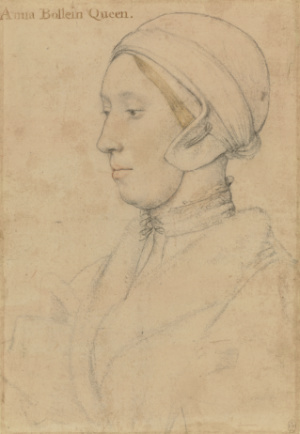
Only two of King Henry VIII’s six wives had coronations. Catherine of Aragon was crowned alongside the King on 24th June, 1509 (she sat on a lower chair). Anne Boleyn, meanwhile, was crowned on 1st June, 1533. Interestingly, she was crowned with St Edward’s Crown which had up until then only been used to crown the monarch. Jane Seymour died before she could be crowned (there had been plague in London at the time she married Henry), while his marriage with Anne of Cleves was annulled before she could be crowned and Catherine Howard was executed before any coronation took place. By the time the king married Catherine Parr, he was ageing and ill and a coronation was unlikely to be high on his agenda.

King Henry VI is the youngest monarch to have been crowned at Westminster Abbey. He was aged just eight-years-old when he was crowned on 6th November, 1429, having become king at the age of just eight-months-old when his father, King Henry V, died on 31st August, 1422 (other children to have been crowned in the abbey include King Edward VI, who was just nine at his coronation). King Charles III – whose coronation will take place on 6th May – will be the oldest monarch to have been crowned at the abbey.

Correction: We’ve corrected the position of the two Catherines after the names were accidentally transposed.

This Week in London – Georgian fashion; Shakespeare’s First Folio; what’s new at the British Museum…

Wedding dress worn by 
Princess Charlotte of Wales, 1816. PICTURE: Royal Collection Trust/© His Majesty King Charles III 2023

• The only royal wedding dress that survives from the Georgian period – the silk embroidered bridal gown of Princess Charlotte of Wales, daughter of King George IV – is one of the star sights at a new exhibition at The Queen’s Gallery, Buckingham Palace. Style and Society: Dressing the Georgians features more than 200 works from the Royal Collection including rare surviving examples of clothing and accessories as well as artworks by artists such as Gainsborough, Zoffany and Hogarth. Other highlights include a portrait of the wedding ceremony of George IV and Princess Caroline of Brunswick by John Graham – on display for the first time – as well as the original silver and gold dress samples supplied for the bride and other royal guests. There’s also a Thomas Gainsborough,’ depicting’s full-length portrait of Queen Charlotte wearing a magnificent court gown, a preserved gown of similar style worn at Queen Charlotte’s court in the 1760, and life-size coronation portraits of George III and Queen Charlotte by Allan Ramsay. Other items include a 1782 portrait of Prince Octavius, the 13th child of George III and Queen Charlotte, by Benjamin West in which the three-year-old wears a a style of dress known as a ‘skeleton suit’, jewellery including diamond rings given to Queen Charlotte on her wedding day and a bracelet with nine lockets – one with a miniature of the left eye of Princess Charlotte of Wales, and accessories such as a silver-gilt travelling toilet service acquired by the future George IV as a gift for his private secretary at a cost of £300. The exhibition can be seen until 8th October. Admission charges apply. For more, see www.rct.uk.

One of the finest copies of Shakespeare’s First Folio goes on display at the City of London’s Guildhall Library for just one day on Monday, 24th April, as part of the celebrations surrounding the 400th anniversary of its publication. The document will be on display between 10.30am to 3.30pm with a 10-minute introductory talk given on the hour throughout the day. Two small and original copies (‘Quartos’) of Henry IV Part One and Othello will also be on display, next to a replica copy of the First Folio that visitors can look through. The First Folio brought together 36 plays in one volume and was published in an edition of around 750 copies on 8th November, 1623 – seven years after Shakespeare’s death. It is now regarded as one of the most valuable books in the literary world. For more, see www.cityoflondon.gov.uk/things-to-do/history-and-heritage/guildhall-library.

Prints and drawings acquired by the British Museum over the past five years have gone on show in Room 90. New acquisitions: Paul Bril to Wendy Red Star features works ranging from an early 17th-century study for a fresco by the Flemish artist Paul Bril to 19th century drawings by Dante Gabriel Rossetti, 2019 prints by the Apsáalooke (Crow) artist Wendy Red Star and Cornelia Parker’s From H to B and back again – made during with the COVID-19 pandemic. Can be seen until 10th September. Admission is free. For more, see britishmuseum.org/exhibitions/new-acquisitions-paul-bril-wendy-red-star.

Send all items for inclusion to exploringlondon@gmail.com.
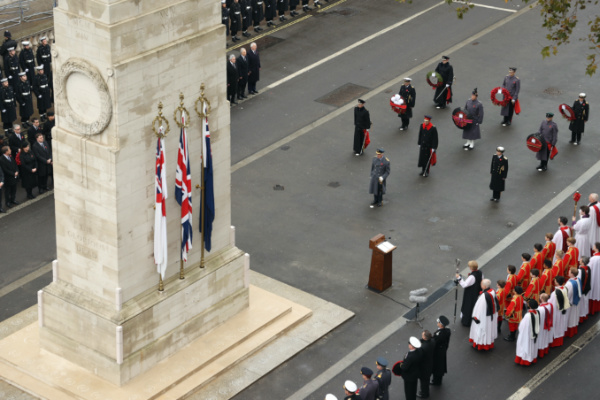
Moments in London’s history – Five unusual facts about royal coronations past…

Westminster Abbey, scene of coronations for more than 950 years. PICTURE: Benjamin Elliott/Unsplash.

Ahead of the coronation of King Charles III, here’s five unusual facts about coronations of bygone eras…

1. Queen Mary I did not use the Coronation Chair during her coronation on 1st October, 1553. An ardent Catholic, the Queen apparently believed the ancient seat had been tainted by her half-brother Edward VI’s Protestantism and so was crowned in a different chair. The chair is said to have been sent to her by the Pope but what became of it remains something of a mystery. The Queen also had a new, special supply of coronation oil for the anointing part of the ceremony made and sent to her by the Bishop of Arras for the same reason – that Edward had “polluted” the previous oil.

2. So many things went wrong at Queen Victoria’s coronation that a group of historians was established to examine the history of coronations and create a more structured ceremony. The mishaps during the five hour ceremony included the Queen having the Coronation Ring painfully forced into the wrong finger, the Bishop of Bath and Wells prematurely announcing that the ceremony had ended, and the elderly Lord John Rolle falling down a flight of steps when making his homage to the Queen (the Queen then graciously went down to him rather than have him attempt the steps again).

3. Two (or possibly three) English monarchs never had coronations. They include King Edward V – one of the “Princes in the Tower” who became king following the death of his father, Edward IV, on 9th April, 1483, but who then disappeared with his brother Richard after last being seen in the Tower of London (King Richard III was subsequently crowned King instead). They also include King Edward VIII who, having became king on 20th January, 1936, abdicated in December that year before his coronation was held (King George VI was subsequently crowned on the date set for Edward’s coronation – 12th May, 1937). And, depending on whether you accept her monarchy, Lady Jane Grey, who reigned for only nine days before she was executed.

4. King Edward VII’s coronation had to be delayed because of an emergency appendectomy operation. The ceremony, which had originally been scheduled for 26th June, 1902, took place some weeks later than planned on 9th August – and was then marred when the Archbishop of Canterbury, Frederick Temple, placed the crown back-to-front on the King’s head.

5. King George IV refused to let his wife Queen Caroline attend his coronation. Such was the acrimonious nature of their relationship that, having already been informed she was not welcome at the event, Caroline found the doors to Westminster Abbey barred to her when she attempted to enter as he was being crowned on 19th July, 1821. After repeated attempts to enter, she was eventuallys forced to leave without having gained entry.

Treasures of London – The Gold State Coach…

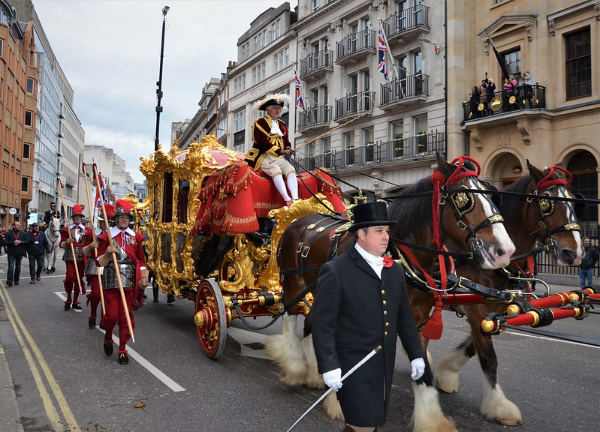
The Gold State Coach will feature in the Coronation Procession of King Charles III (though, interestingly, not for both journeys), it was announced earlier this week so we thought we’d take a more detailed look at it.

The Gold State Coach in the Royal Mews. PICTURE: Crochet.david (talk) (licensed under CC BY-SA 3.0)

The coach – which was last seen publicly during Queen Elizabeth II’s Platinum Jubilee in June, 2022 – was built for King George III to travel to the State Opening of Parliament in 1762.

Designed by Sir William Chambers, it was built in the London workshops of coach maker Samuel Butler and cost more than £7,500 at the time.

The coach weighs some four tonnes and is 28 foot long and 12 feet high. The coach is made of giltwood – a thin layer of gold leaf over wood – and features sculptures by Sir Joseph Wilton including three cherubs on the roof (representing England, Ireland and Scotland) and four tritons (a display of imperial power) above the wheels. The coach is also decorated with painted panels depicting Roman gods and goddesses by artist Giovanni Battista Ciprian.

Inside the coach is lined with velvet and satin.

The coach is pulled by a team of eight horses wearing a Red Morocco leather harness. At the coronation it will be pulled by Windsor Greys and due to its age and weight, will only move at walking pace.

The coach has been used in every coronation since that of King William IV and was also used for the State Opening of Parliament by Kings George III, George IV and William IV as well as Queen Victoria (up until Prince Albert’s death).

The coach is, however, not said to be the most comfortable ride – Queen Elizabeth II is known to have said so while King William IV described travelling in the coach as like being on a ship “in a rough sea”. So it will only be used for the return, post-Coronation, journey from Westminster Abbey to Buckingham Palace.

For the outward journey – from Buckingham Palace to Westminster Abbey – the King and Queen Consort Camilla will travel in the more comfortable – and Australian-made – Diamond Jubilee State Coach (unlike the Gold State Coach, it comes with air-conditioning, modern suspension and electric windows).

Both coaches are usually housed in the Royal Mews at Buckingham Palace.

On Coronation Day, the Gold State Coach will transport the newly crowned King and Queen Consort on a shorter route than that of Queen Elizabeth II on her Coronation Day – just 1.3 miles compared to the late Queen’s five mile route back to the palace. Leaving Westminster Abbey, it will travel down Whitehall and pass under Admiralty Arch before travelling down The Mall to Buckingham Palace.

WHERE: The Royal Mews, Buckingham Palace (nearest Tube stations are Victoria, Green Park, St James’s Park and Hyde Park Corner); WHEN: 10am to 5pm (check website for closure dates around the coronation); COST: £15 adults/£10 young person (aged 18-24)/£9 child (aged five to 17); WEBSITE: www.rct.uk/visit/the-royal-mews-buckingham-palace

This Week in London – Coronations at Westminster Abbey; tulips at Hampton Court; St Bartholomew at The National Gallery; and, Food Season at the British Library…

A new exhibition exploring the 1,000-year history of coronations at Westminster Abbey has opened in the abbey’s medieval chapter house. The exhibition, which has opened ahead of the coronation of King Charles III on 6th May, draws on historic illustrations and archive photography to explore the elements of the coronation service including the oath-taking, anointing, investing and crowning and takes a closer look any some of key artefacts present in the ceremony including the Coronation Chair. The exhibition, which is free with admission to the abbey and which runs until the end of September, is part of a season of events celebrating the coronation including themed late evenings, family activities and special afternoon teas at the Cellarium Café. Meanwhile, the abbey has also announced that visitors will be able to view the ‘Coronation Theatre’ – the special area which will be built for the historic occasion, from the Abbey’s North and South Transepts – following the coronation. Tickets for the special viewing – which will include the chance to see key elements from the coronation service including the Coronation Chair still in position on the Cosmati Pavement – can be purchased for timed slots between 8th and 13th May. For more on the abbey’s events surrounding the coronation, see www.westminster-abbey.org/events.

Tulips at Hampton Court Palace in 2021. PICTURE: Derek Winterburn (licensed under CC BY-ND 2.0)

Hampton Court Palace bursts into colour from Friday with its annual Tulip Festival. More than 110,000 bulbs have been planted to creat dramatic displays in the formal gardens and cobbled courtyards, among them a selection of heirloom bulbs on display in the Lower Orangery Garden which presents visitors with the chance to see tulips as they would have looked during the time of King William III and Queen Mary II, soon after the flowers were first introduced to Britain. Thanks to a special relationship with Netherlands-based Hortus Bulborum, the bulbs on display include Sylvestris (1595) and Rubella Broken (1700) as well as the Orange King (1903) and Queen of the Night (1940). Other highlights of the festival include 3,000 wine-toned tulips, including the merlot variety, flowing down from the steps and parapet of the Wine Fountain, as well as a floral fantasy in the palace’s courtyards in which tulips such as Raspberry Ripple, Apricot Emperor and Purple Prince flow out of wheelbarrows, barrels and a horse cart, and a free-style tulip planting in the Kitchen Garden inspired by Van Gogh’s 1883 painting, Bulb Fields. Runs until 1st May. Admission charge applies. For more, see https://www.hrp.org.uk/hampton-court-palace/whats-on/tulip-festival/.

Bernardo Cavallino (1616 ‑ 1656?), Saint Bartholomew (about 1640-1645), oil on canvas H x W: 176 x 125.5 cm; The National Gallery, London. Bought with the support of the American Friends of the National Gallery, 2023
PICTURE: © The National Gallery, London

The recently acquired Bernardo Cavallino work, Saint Bartholomew has gone on show at The National Gallery. The painting, which dates from 1640-45 and which was last exhibited at The Metropolitan Museum of Art in New York in 1993, is being displayed alongside other 17th century works by artists such as Caravaggio, Artemisia and Orazio Gentileschi, Guercino, Reni and Ribera in the Hans and Julia Rausing Room (Room 32). The National Gallery has one other work by Cavallino – Christ driving the Traders from the Temple – but his depiction of Saint Bartholomew is considered one of his most splendid works. Admission is free. For more, see nationalgallery.org.uk.

Featuring everything from a celebration of African Caribbean takeaways to a “deep-dive” into the issues surrounding food production and access, Food Season kicks off at the British Library Monday. Highlights include a discussion of the sandwich by food writers Nigella Lawson, Jonathan Nunn and Rebecca May Johnson, a day-long celebration of African Caribbean cuisine featuring chefs and broadcasters Jimi Famurewa, Fatmata Binta and Andi Oliver, and, an exploration of the big challenges in food, land use and food production featuring author Henry Dimbleby alongside Dr Tara Garnett, Nick Saltmarsh, Abby Allen and Dimitri Houtart. Runs until 7th June. Admission charges apply. For the full programme, see www.bl.uk/events/food-season.

Send all items to exploringlondon@gmail.com

Four sites related to royal coronations in London – 1. The Jewel House…

In the lead-up to the coronation of King Charles III and Queen Consort Camilla on 6th May, we’re taking a look at sites in London which have played an important role in coronations past (and, mostly, in this coronation as well).

First up, it’s the Tower of London’s Jewel House which is linked to the coronation through the role it plays in housing the Crown Jewels and, more specifically, the Coronation Regalia.

The entrance to the Jewel House in the Waterloo Block. PICTURE: Dave Campbell (licensed under CC BY-NC-ND 2.0)

The centrepiece of the Crown Jewels is St Edward’s Crown, with which King Charles will be crowned in Westminster Abbey.

The crown, which has already been removed from the Tower of London so it could be resized for the occasion, is made from 22 carat gold and adorned with some 444 precious and semi-precious gems. Named for St Edward the Confessor, it dates from 1661 when it was made for the coronation of King Charles II and replaces an earlier version melted down after Parliament abolished the monarchy in 1649.

The crown was subsequently used in 1689 in the coronation of joint monarchs King William III and Queen Mary II and then not used again until 1911 when as used to crown King George V. It was also used to crown King George VI and Queen Elizabeth II in 1953.

St Edward’s Crown is not the only crown that will be used in the coronation ceremony – the King will also wear the Imperial State Crown at the end of the service.

Made by Garrard and Company for the coronation of King George VI in 1937 (replacing a crown made for Queen Victoria in 1838), it features the Black Prince’s Ruby in the front – said to have been a gift to Edward, the Black Prince, in 1357 from the King of Castile.

Further gems in the crown include the Stuart Sapphire, the Cullinan II Diamond and St Edward’s Sapphire, said to have been worn in a ring by St Edward the Confessor and found in his tomb in 1163.

Among other items which will be used in the coronation are the Sovereign’s Sceptre with Cross, the Sovereign’s Orb, and the Coronation Spoon.

The sceptre was made for King Charles II and now features the world’s largest diamond, the Cullinan Diamond, which was added to it in 1911. The orb was also made for King Charles II’s coronation and is topped with a cross.

The spoon, meanwhile, is one of the oldest items in the Crown Jewels, dating from the 12th century. It is used for anointing the new sovereign with holy oil – which comes from the Church of the Holy Sepulchre in Jerusalem – during the ceremony. It survived the abolition of the monarchy after it was purchased by a member of King Charles I’s wardrobe and later returned to King Charles II after the monarchy. The oil is held in a golden vessel known as an ampulla which is shaped like an eagle.

Other items to be used in the coronation are a series of swords – among them the Sword of State, the Sword of Temporal Justice, the Sword of Spiritual Justice, and the Sword of Mercy (this has its tip blunted to represent the Sovereign’s mercy).

The regalia was housed at Westminster Abbey until 1649. They have been kept at the Tower of London since the Restoration (even surviving a theft attempt by Colonel Thomas Blood and accomplices in 1671).

The Crown Jewels, which are now held under armed guard, have been housed in several different locations during their time at the Tower of London including in the Martin Tower and the Wakefield Tower. They were moved into a subterranean vault in the western end of the Waterloo Block (formerly the Waterloo Barracks), now known as the Jewel House (and not to be confused with The Jewel Tower in Westminster), in 1967.

A new Jewel House was opened by Queen Elizabeth II on the ground floor of the former barracks in 1994. The exhibit was revamped in 2012 and following King Charles III’s coronation, the display is again being transformed with a new exhibition exploring the origins of some of the objects for the first time.

WHERE: The Jewel House, Tower of London (nearest Tube station Tower Hill); WHEN: 9am to 4.30pm (last admission), Tuesday to Saturday, 10am to 4.30pm (last admission) Sunday to Monday; COST: £29.90 adults; £14.90 children 5 to 15; £24 concessions (family tickets available; discounts for online purchases/memberships); WEBSITE: https://www.hrp.org.uk/tower-of-london/whats-on/the-crown-jewels/.

LondonLife – Taking flight…

Geese in Richmond Park. PICTURE: John Cox/Unsplash

This Week in London – The Georgian court meets contemporary fashion; the Rossettis at Tate Britain; and, the Lindt Gold Bunny Hunt returns…

We’re taking a short break for Easter and will be back on Tuesday!

The glittering world of the Georgian court and the glamour of the modern red carpet come together in a new exhibition at Kensington Palace. Crown to Couture sees contemporary fashion worn by the likes of celebrities like Lizzo and Lady Gaga displayed alongside historical costumes, drawing some fascinating parallels between the two worlds. More than 200 objects are included in the display in the State Apartments with highlights including the  Thom Browne dress worn by musician Lizzo to the 2022 Met Gala, Christopher John Roger’ luminous green gown worn by Lady Gaga to the 2020 MTV Awards, the Rockingham Mantua – brocaded in silver thread and silver lace trim and believed to have been worn by the wife of British Prime Minister, 2nd Marquess of Rockingham, in the 1760s, and the world-famous Silver Tissue Gown. On loan from the Fashion Museum Bath, the latter is a rare example of fashion worn at the court of Charles II and is believed to have been worn to court by a young Lady Theophila Harris, who later went on to become the wife of MP Sir Arthur Harris of Hayne. Runs until 29th October. Admission charge applies. For more, see www.hrp.org.uk/kensington-palace/whats-on/crown-to-couture.

Dante Gabriel Rossetti
Ecce Ancilla Domini (The Annunciation) 1849-50
© Tate, Purchased 1886

A major exhibition charting the romance and radicalism of the Rossetti generation opens at Tate Britain today. The Rossettis – he first retrospective of Dante Gabriel Rossetti at Tate and the largest exhibition of his iconic pictures in two decades as well as the first full retrospective of Elizabeth Siddal for 30 years – features more than 150 paintings and drawings as well as photography, design, and poetry. Highlights include Dante Gabriel’s Ecce Ancilla Domine (The Annunciation) (1850), Elizabeth Siddal’s Lady Clare (1857) and Christina Rosetti’s famous poem The Goblin Market (1859). There’s also Aesthetic portraits from the later part of Dante Gabriel’s career, such as Bocca Baciata (1859), Beata Beatrix (c1864-70) and The Beloved (1865-73), as well as Lady Lilith (1866-8) and Mona Vanna (1866). Runs until 24th September. Admission charge applies. For more, see www.tate.org.uk/whats-on/tate-britain/the-rossettis.

The Lindt Gold Bunny Hunt is on again at Hampton Court Palace. Youngsters are invited to explore the palace’s 60 acres in a search for a series of hidden Lindt Gold Bunny statues, matching the name of an important character from the palace’s history with each bunny to unwrap a fascinating story. At the end of the experience, they’ll be rewarded with their own delicious Lindt Gold Bunny. Visitors to the palace will also encounter historic characters as the royal court compete with chocolatier Grace Tosier to help Prince George, the son of King George I, achieve his mission of sleeping-in, drinking chocolate and dancing all day. Runs until 16th April. Admission charge applies. For more, see www.hrp.org.uk/hampton-court-palace/whats-on/easter-lindt-gold-bunny-hunt/.

Send items to exploringlondon@gmail.com