This Week in London – Totally Thames kicks off; Black On The Square; and, ‘Rivers and Roads’…

The River Thames. PICTURE: Sander Crombach/Unsplash

It’s September and that means Totally Thames – London’s annual month-long festival centred on the famous waterway – is underway. This year’s festival includes a packed programme of events which this weekend include the St Katharine Docks Classic Boat Festival, the Kingston River Cultures Festival, a mud-larking exhibition held in the ancient Roman amphitheatre under Guildhall Yard and a Victorian family day out at Crossness Pumping Station. Other highlights include a foreshore archaeology walk at Deptford (14th September), guided tours of the HMS Wellington (20th September), the month-long exhibition of winners and runners-up from the annual Thames Lens photography competition on the Riverside Walkway on the north bank near Millennium Bridge, and, of course, the annual Great River Race (on Saturday, 20th September). For more, head to https://thamesfestivaltrust.org/whats-on/.

The contribution of Black Londoners is again being celebrated this weekend as Black On The Square returns to Trafalgar Square. The free, family-friendly festival, now in its third year features live music, dance, food and workshops and this year includes a focus on London’s nightlife under the theme ‘Intergenerate’ recognising Black Londoners’ contribution to electronic culture and night life and featuring Garage music producer and DJ Wookie. There will also be a series of stalls offering foods ranging from Caribbean classics to West African vegan bites and artisanal goods including jewellery, art, books, homeware and fashion with the ‘Accra to London’ stall offering a range of items influenced by Ghana’s capital city, Accra, a highlight. Runs from 12pm to 6pm on Saturday. For more, see https://www.london.gov.uk/events/black-square-2025.

The Great West Road and the Thames have served as key routes into London since Roman times and they’re now the subject of a new exhibition at the Barbican Library. Rivers and Roads features the work of Brentford-based painter Helena Butler, who paints in a semi abstract style to capture the landscape and the feelings and images the local scenery inspires, and ceramic artist Anna Butler, who has produced a series in response to Alfred Noyes’ beloved poem The Shining Streets of London. Admission is free. Runs until 29th September. For more, see www.cityoflondon.gov.uk/events/rivers-and-roads-art-exhibition

Send all items for inclusion to exploringlondon@gmail.com.
10 places to encounter London’s animal life…3. WWT London Wetland Centre…

This year celebrating its 25th anniversary, the 105 acre site on the west bank of the River Thames at Barnes known as the WWT London Wetland Centre is a waterway-studded oasis not far from the heart of London.

Subscribe for just £3 a month to access all of our content and support our work at Exploring London!

Aerial view of the WWT London Wetland Centre. PICTURE: yujie chen/iStockphoto

The centre, which is managed by the Wildfowl and Wetlands Trust (founded by Sir Peter Scott in the 1940s), first opened in 2000 on the site which had previously been home to several small reservoirs which had been there since the 1880s.

The reservoirs had been converted into wetland habitats (the work included removing an unexploded bomb from World War II), creating what was, at the time, the largest man-made wetland in any capital city. Sir David Attenborough, who has reportedly described the site as an “extra lung for Londoners”, officially opened the centre, initially known as the Barn Elms Wetland Centre.

In 2002, a significant area of the site – some 29 hectares (72 acres) – was declared a Site of Special Scientific Interest by Natural England.

The site is home to a diverse range of wildlife including all manner of birdlife and insects as well as a couple of Asian short-clawed otters, the smallest of all 13 species of otters around the world, and a colony of water voles.

The wide variety of birdlife at the sanctuary – more than 250 species have been recorded – includes American wood ducks, white-faced whistling ducks, Hawaiian geese (nenes) and cranes as well as lapwings, common terns, pochards, sand martins, and reed warblers.

Insects found at the site include moths, dragonflies, crickets, grasshoppers and beetles and during summer months, two of Britain’s rarest bat species – the Leisler’s bat and Nathusius’ pipistrelle – are also often detected hunting over wetlands.

An Asian short-clawed otter eating fish at the WWT London Wetland Centre. PICTURE: nicholas_dale/iStockphoto.

Along with six hides for watching and photographing the wildlife, the site also includes an adventure play area with a zip line, a water play area, a “mud kitchen”, a ‘Wild Walk’ featuring balance beams and bridges, and special pools for “pond dipping”.

The centre also boasts a discovery centre with interactive displays and a cafe. It holds a range of activities each week including walks, photography workshops and special tours, such as a British Sign Language tour.

WHERE: WWT London Wetland Centre, Queen Elizabeth Walk, Barnes (nearest railway station is Barnes Bridge); WHEN: 10am to 5:30pm daily (until the end of October); COST: Adults from £16.29/Junior (3-17 years) from £10.58/Family from £45.81; WEBSITE: www.wwt.org.uk/wetland-centres/london

LondonLife – Murals, Hawley Street, Camden Town…

PICTURE: Philippe BONTEMPS/Unsplash

This Week in London – Wildlife Photographer of the Year is coming; ‘Vanishing Africa’; and, ‘Black Chiswick Though History’…

‘Wake-up Call’ by Gabriella Comi, Italy, (Highly Commended, Behaviour: Mammals). PICTURE: Courtesy of the Wildlife Photographer of the Year, Natural History Museum

Depicting a dramatic stand-off between a lion and a cobra in the Serengeti National Park in Tanzania, Gabriella Comi’s impressive image is among the 60,636 entries, from across 113 countries and territories, received in the Natural History Museum’s 61st annual Wildlife Photographer of the Year competition. The competition’s category winners and the prestigious ‘Grand Title’ and ‘Young Grand Title’ awards will be announced on 14th October, 2025, after which, from 17th October, 100 of the images will go on show at the museum in South Kensington. Other images revealed this week include Amit Eshel’s portrait of an inquisitive pack of Arctic wolves and photographs of flamingoes, coyotes and red deer by emerging young photographers as young as nine-years-old. For more, see https://bit.ly/WPY61Exhibition.

One of the images in ‘Vanishing Africa’. PICTURE: © Mirella Ricciardi

The Science Museum has launched a new online exhibition, Vanishing Africa, which features images by Kenyan-born photographer Mirella Ricciardi and reveal how much climate change is changing the continent. Taken in East Africa over two years in the 1960s, the photographs are a visual record of the Indigenous peoples of the region, including the Maasai, Samburu, Turkana, Orma, Pokot and Rendille people, and “capture a land of untamed wilderness, diverse wildlife, and Indigenous communities attuned to nature”, an East Africa which many no longer recognise. The exhibition has been published to celebrate the ‘UK/Africa Season of Culture’ and launches ahead of the international climate summit, COP30. To view it, head to www.sciencemuseum.org.uk/objects-and-stories/vanishing-africa-through-mirella-ricciardis-lens.

On Now: Black Chiswick Through History. This project, launched in 2011, looks at how the history of Chiswick House is connected to Black history and people of colour. This year’s installation explores the life of 18th-century Chiswick House resident James Cumberlidge – one of the few people of African heritage in Britain whose likeness was captured and preserved for posterity – and traces his journey from  page boy at Chiswick House to trumpeter in the Royal Court of King George III. There’s also a painting dating from the 1870s which depicts Queen Victoria attending a fashionable garden party right here at Chiswick House in July, 1875. Runs until 28th September. Admission charge applies. For more, see https://chiswickhouseandgardens.org.uk/event/visit-chiswick-house/.

Send all items for inclusion to exploringlondon@gmail.com.
10 places to encounter London’s animal life…2. Mudchute Park and Farm…

There are a number of “city farms” in London and one of the largest is Mudchute Park and Farm on the Isle of Dogs.

Subscribe for £3 a month to access all of our articles and support our work!

Lost London – Kew Gardens’ flagpole(s)…

Once the tallest wooden flagpole in the world at 68 (225 feet) tall, the Kew Gardens flagpole stood for almost 50 years before it was dismantled in 2007.

The Kew Gardens flagpole shortly before it was removed. PICTURE: © Copyright David Hawgood (licensed under CC BY-SA 2.0)

The flagpole, a Douglas fir from Copper Canyon on Vancouver Island, was erected on 5th November, 1959, as a gift from the the British Columbia Loggers Association in Canada to mark both the centenary of the Canadian province of British Columbia (1958) and the bicentenary of Kew Gardens (1959).

The tree, which was around 370-years-old when cut, had originally weighed 37 tonnes, but after it was floated up the Thames to Kew and there underwent shaping, this was reduced to 15 tonnes.

Sadly, in 2006, it unfortunately failed its safety inspection – thanks to decay and woodpeckers – and was taken down the following year.

The flagpole was apparently the third (strictly the fourth) erected on the same site at the gardens which had originally been occupied by the ‘Temple of Victory’, a structure which had been built on the orders of King George III to commemorate the Anglo-German victory over the French at the 1759 Battle of Minden during the Seven Years’ War and which was removed in the mid 19th century.

The first flagpole on the site, which stood more than 31 metres (100 feet) tall. was erected in 1861. It had also come from Vancouver Island in British Columbia and replaced one which had snapped when it was in the process of being erected.

The pole was finally taken down in 1913 after being found to be suffering from dry rot.

A replacement, again from British Columbia, was erected in 1919 (its raising having been somewhat delayed by factors related to World War I). It was removed some time before 1959.

After the third giant flagpole was removed (the concrete footing can still be seen), the gardens decided not to erect another as that would mean cutting down another large tree. While far less of a spectacle, there is now a lesser flagpole near Victoria Gate where the flag is flown on special occasions.

This Week in London – Downton Abbey in London; new evening street market for Rupert Street; and, ‘Virtual Beauty’ at Somerset House…

Highclere Castle in Hampshire which doubles as Downton Abbey in the TV series and movies. PICTURE: Tim Alex/Unsplash

Downton Abbey has popped up in London. With the final Downton Abbey movie, Downton Abbey: The Grand Finale next month, Bonhams auction house are auctioning off some iconic props, costumes and set pieces from across the series and is accompanying it with a preview exhibition which is open to the public. Among the items up for sale in Downton Abbey: The Auction are everything from a 1925 Sunbeam saloon car and various dresses and costumes including Lady Mary Crawley’s wedding dress (as worn by Michelle Dockery) to a George III oak dresser (seen in the Servant’s Hall in season 1), a silver pocket watch worn by Mr Carson (played by Jim Carter) and an autographed script from episode one, season one. The display can be seen at Bonham’s salesroom at 101 New Bond Street until 16th September. Admission is free but bookings are essential. For more head to https://www.eventbrite.co.uk/e/downton-abbey-the-auction-tickets-1555891024939

• A new evening market opens in Rupert Street, Soho, tomorrow night. The market – said to be the city’s first evening market – will be open from Mondays to Saturdays between 3pm and 10pm and will feature different themes on different days including artisan food on Wednesdays, world street food on Thursdays, vintage clothing on Fridays, and arts, crafts and jewellery on Saturday. Monday and Tuesday will be a general market. For more, see https://www.westminster.gov.uk/licensing/markets-and-street-trading/markets-westminster/rupert-street-w1.

On Now: Virtual Beauty. This exhibition at Somerset House explores the impact of digital culture and technologies on the traditional definitions of beauty today. It features the work of more than 20 artists with highlights including ORLAN’s Omniprésence (1993), a groundbreaking performance in which the artist live-streamed her own facial aesthetic surgery, and Amalia Ulman’s Excellences & Perfections, a powerful commentary on the authenticity of social media personas. There are also AI-generated portraits by Minnie Atairu, Ben Cullen Williams, and Isamaya Ffrench, and Harriet Davey, Frederik Heyman, and Andrew Thomas Huang explore digital self-expression and the creation of avatars beyond human boundaries. Not suitable for under 15s. Admission is pay what you can. Runs until 28th September. For more, see https://www.somersethouse.org.uk/whats-on/virtual-beauty.

Send all items to exploringlondon@gmail.com

10 places to encounter London’s animal life…1. Deer in Richmond Park…

We start a new series looking at places to encounter (at a distance, for some), London’s wildfire and we start by heading west to Richmond Park.

Subscribe for just £3 a month to access all of Exploring London’s articles – and support our work!

LondonLife – Remembering VJ Day, 80 years on…

PICTURE: Sergeant Rob Kane UK MOD © Crown copyright 2025

Lance Corporal James Bell plays the bag pipes in front of the Cenotaph to commemorate the 80th anniversary of Victory in Japan Day on Friday, 15th August. Lance Corporal Bell was one of six military pipers who performed solemn laments across the UK, the Far East, and aboard HMS Prince of Wales at sea, to honour the end of World War II and the sacrifices of the Commonwealth forces.

London Explained – Lord Mayor or Mayor?

Lord Mayor of London or Mayor of London? They have similar titles but their roles and responsibilities (not to mention their history) are quite different.

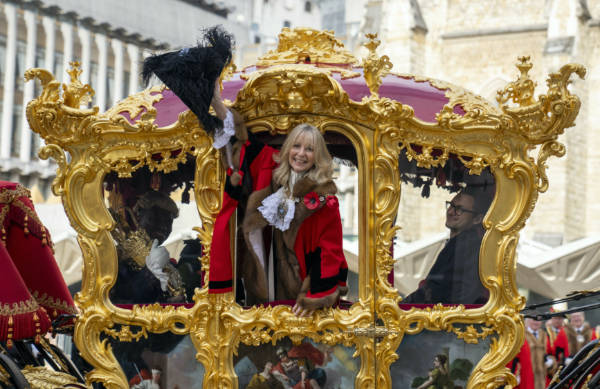
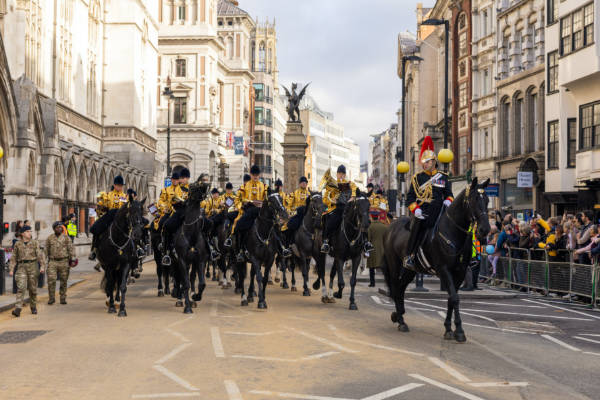
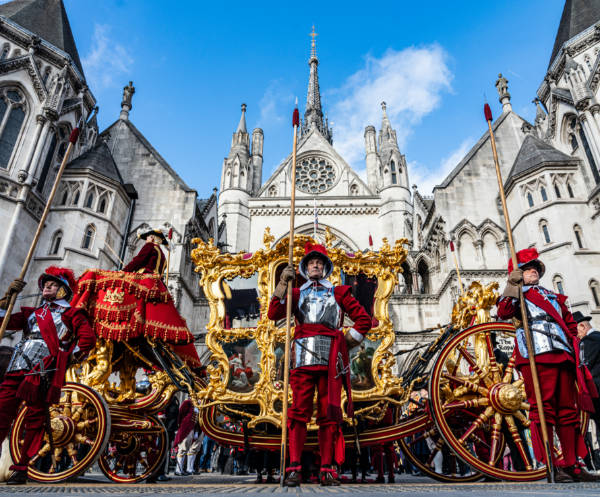
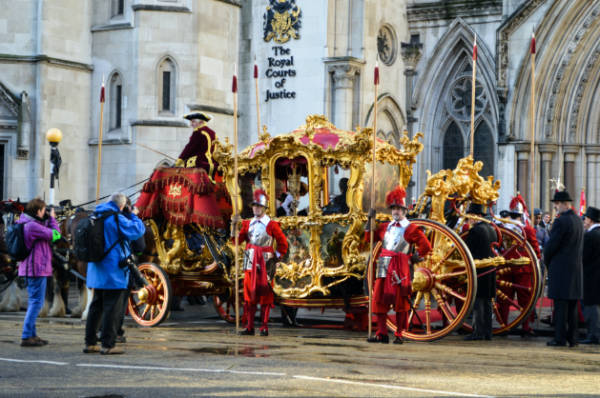
The Lord Mayor’s Show in November, 2023, with then newly elected Lord Mayor of London Michael Mainelli. PICTURE: j Thomas Salas/Shutterstock

The older of the two posts is the Lord Mayor of London, a title which refers to the governance of the City of London, known to many as the “Square Mile” in the heart of the capital.

The Lord Mayor of London (officially, since 2006, known as the Lord Mayor of the City of London) heads the City of London Corporation and is an elected position; in fact it’s one of the world’s oldest continuously elected offices dating back to the late 12th century.

The Lord Mayor, who holds office for one year, is elected by the City liverymen at the Common Hall held on Michaelmas (29th September) each year. They must be serving in the office of Alderman at the time.

The Lord Mayor of London takes office on the Friday before the second Saturday of November in what is known as The Silent Ceremony (the Lord Mayor’s Show, a celebration of the newly elected Lord Mayor, takes place the following day).

The role of the Lord Mayor of London – who takes precedence over all individuals in the City of London with the exception of the monarch – has historically been to represent the residents and businesses within the City although in modern times the role is effectively an “international ambassador” for the UK’s financial and professional services sector.

The current Lord Mayor of London is Alastair King who is the 696th Lord Mayor of London. The Lord Mayor of London works out of offices at their official residence near the Royal Exchange and Bank of England known as Mansion House.

Onto the Mayor of London. A much more modern position (it was created in the year 2000), the Mayor of London is directly elected by the registered voters of Greater London. They serve as the chief executive of the Greater London Authority and work with the 25 members of the London Assembly.

The Mayor of London, Sadiq Khan. PICTURE: Courtesy of the Mayor of London

The Mayor of London is charged with overseeing the strategic governance of Greater London which includes the City of London and all 32 London boroughs (each of which also has a ceremonial or elected mayor).

Responsible for setting an overall vision for the city, the Mayor is tasked with creating policies on everything from arts and culture, the environment and the economy to policing and crime, transport, sport and housing.

The Mayor of London is based at City Hall at Royal Docks in Newham.

The current Mayor of London is Sadiq Khan, the third to serve in the role, has been mayor since 2016. The previous two mayors include Ken Livingstone and Boris Johnson, who, of course, went on to be PM.

This Week in London – Rare Tudor choirbook at Lambeth; Sculpture in the City returns; and, picturing Blondie…

One of only two surviving choirbooks from the reign of King Henry VIII is on display in a new exhibition at the Lambeth Palace Library. Sing Joyfully: Exploring Music in Lambeth Palace Library displays the ‘Arundel’ or ‘Lambeth’ Choirbook (Arundel, Sussex, c. 1525) – this year marking its 500th birthday – along with other items from the library’s collection such as two leaves of a 14th century polyphony recently discovered in the binding of an early printed book. The exhibition, which is free, can be seen until 6th November. For more, see www.lambethpalacelibrary.info/sing-joyfully/.

Looping Loop, © Andrew Sabin, Courtesy of the artist and Brooke Benington. PICTURE © Nick Turpin

On Now: Sculpture in the City. The 14th edition of the annual sculpture exhibition in the City of London features 11 pieces including three new works as well as six works which have been retained from previous iterations of the exhibition and two permanent acquisitions. The new works include: Ai Weiwei’s Roots: Palace, a cast-iron tree root sculpture located outside St Botolph without Bishopsgate which, as part of a series created in collaboration with Brazilian artists and communities, explores the concept of unrootedness; Jane and Louise Wilson’s Dendrophiles which, located beneath the escalators of The Leadenhall Building, combines ink drawings based on images of DNA with 3D scans of ancient oak wooden samples; and, Andrew Sabin’s Looping Loop which, located outside 70 St Mary Axe, which forms a continuous loop creating what’s described as a “lively, pulsating sensation”. Runs until April. For more – including a map of the locations – see https://www.sculptureinthecity.org.uk/.

Rare, behind the scenes images of US band Blondie have gone on show at the Barbican Music Library from today. Taken by photographer Martyn Goddard during the group’s breakthrough year of 1978, the 50 images show the band in concert, backstage, in the studio and during photo shoots. The display of photographs is complemented by poster prints, album covers, tour and concert memorabilia, period cameras, and photographic equipment. There are also items lent by Alan Edwards, who has handled Blondie’s publicity since 1978, from his private collection. Blondie in Camera 1978 runs until 5th January. Admission is free. For more see, www.cityoflondon.gov.uk/services/libraries/barbican-music-library.

Send all items for inclusion to exploringlondon@gmail.com.
LondonLife – Queen Elizabeth Olympic Park…

PICTURE: John-Mark Strange/Unsplash

Where’s London’s oldest…bagel bakery?

Founded in 1855, the Beigel Shop on Brick Lane in the East End claims to be the oldest bagel bakery in the UK.

PICTURE: Ollie Singleton/Unsplash

The shop, located at 155 Brick Lane, is sometimes known as the ‘yellow shop’, thanks to its bright yellow sign, to distinguish it from the ‘white one’, another bagel bakery a few doors down, Beigel Bake.

Two brothers named David Barel and Aron Zelman took over the business, then known as the Evering Bakery, in 1987, and were, according to the shop’s website, joined by their sister Mazal White soon after.

The shop, which changed the spelling of bagel to beigel in its name in 2002 in reflection of its Yiddish roots, introduced a bagel-shaping machine in 1994 but many products are still hand-made. According to the website, the bakery these days makes more than 7,000 bagels a day.

The shop, which is famously open 24 hours a day, did briefly close for several months last year, explaining on social media when it reopened in June that the closure had been for a range of reasons including a long-standing family dispute over the building’s ownership and rents and the health struggles of Aron.

They announced that the next generation – including Aron’s 22-year-old quadruplets and Mazal’s three children – would be taking over the business and launched a funding raising effort to help with some of financial burdens the shop was facing.

For more, see www.thebeigelshop.com.

Treasures of London – Shackleton’s Crow’s Nest…

This barrel-shaped object, which can be found in the church of All Hallows by the Tower in the City of London, was used the crow’s nest on the ship Quest during Sir Ernest Shackleton’s third – and last – Antarctic voyage in the early 1920s.

Subscribe for just £3 a month to access all of Exploring London’s content…

This Week in London – Millet at The National Gallery; exploring Great Ormond Street Hospital’s new children’s cancer centre; and, a Banksy at the London Transport Museum…

The first UK exhibition in almost 50 years dedicated to the works of 19th century French artist Jean-François Millet (1814-1875) opens at The National Gallery today. Millet: Life on the Land, which coincides with the 150th anniversary of his death, features around 13 drawings and paintings from British public collections including The National Gallery’s The Winnower (about 1847‒8) as well as L’Angelus (1857‒9) from the Musée d’Orsay, Paris. The exhibition can be seen in Room 1 until 19th October. Admission is free. For more, see www.nationalgallery.org.uk/exhibitions/millet-life-on-the-land.

The Big Build Adventure at Outernet London.

An immersive digital experience which brings to life the Great Ormond Street Hospital’s new Children’s Cancer Centre opened at Outernet London off Tottenham Court Road this week. The Big Build Adventure, a partnership between the Great Ormond Street Hospital Charity and Outernet London, features a giant virtual paint wall, building themed games, a construction site selfie station and the chance to symbolically buy a brick to help build the centre. The free experience can be experienced until 31st August. Admission is free. For more, see www.outernet.com/news/great-ormond-street-hospital-charity-and-outernet-studios-launch-the-big-build-adventure.

An artwork by Banksy – depicting a rat hanging from the arm of a clock – has gone on show at the London Transport Museum in Covent Garden. The artwork first appeared on the door of a Transport for London signal controller cabinet in Croydon in October, 2019, which was located in front of the artist’s pop-up showroom installation, Gross Domestic Product. The work, which was preserved by the museum, has been mounted onto an identical cabinet body to provide context for its original appearance. Admission charge applies. For more, see www.ltmuseum.co.uk.

Send all items for inclusion to exploringlondon@gmail.com

LondonLife – Kensington Gardens birdlife…

PICTURE: Aleks/Unsplash

London pub signs – The Shakespeare’s Head, Soho…

PICTURE: Courtesy of Google Maps

Located at the northern end of Carnaby Street, this Soho pub features a life-sized bust of the Bard looking out of a first floor window at the people passing by in the street below.

The pub in 2015. PICTURE: David (licensed under CC BY 2.0)

According to the pub’s signage, it was first constructed in 1735 and owned by Thomas and John Shakespeare, who were said to be distant relatives of William (and, if indeed they were the owners, no doubt keen to capitalise on his fame).

The current, rather ornate, building, designed in a faux-Tudor style, reportedly dates from the late 19th century.

As well as the bust, which features a missing hand due to damage from a bomb in World War II, the pub sign features an image of Shakespeare with his quill poised.

The pub, now part of the Greene King chain, is located on the corner of Fouberts Place and Carnaby Street (although its address is 29 Great Marlborough Street – it has a street sign for this on its facade – we’ll try and find out some more about why this is so). For more, see www.greeneking.co.uk/pubs/greater-london/shakespeares-head.

This Week in London – Jousting at Eltham; Thamesmead Festival returns; and, ‘Robot Zoo’ at the Horniman…

A knight prepares to joust at an earlier event at Hampton Court Palace. PICTURE: David Adams

Eltham Palace returns to the medieval age this weekend with a jousting tournament in which knights will compete for glory. The ‘Legendary Joust’ will feature four knights, each representing a character from myth or legend including The Wyvern, The Wildman, Sir Lancelot and Jason of the Argonauts. The event runs from 10am to 5pm on Saturday and Sunday. Admission charge applies. For more, see https://www.english-heritage.org.uk/visit/whats-on/eltham-palace-legendary-joust-2-3-aug-2025/.

The Thamesmead Festival returns to Southmere Park in south-east London over the next two weekends. The free, family-friendly festival boasts four big stages with headline guest Omar and musical performances across genres including Afrobeat, R&B, rock and pop as well as spoken word, comedy, and street dance. There will also be a market featuring local artists and food from around the world. Runs from 12pm to 7:30pm on Saturday and on 8th August. For more, head to https://www.thamesmeadnow.org.uk/whats-on/arts-culture/thamesmead-festival-2025/.

On Now: Robot Zoo. This exhibition at the Horniman Museum in Forest Hill features a range of larger-than-life animals recreated using machine parts and gadgets in a bid to reveal how their real life counterparts see, eat, hunt and hide. The display also features interactive exhibits giving visitors the chance to try jet-propelled squid racing and shoot a chameleon’s ‘tongue-gun’. There’s also two specially commissioned interactive murals by artist Giulia Casarotto. Runs until 2nd November. Admission charge applies. For more, see www.horniman.ac.uk/event/robot-zoo/.

Send all items for inclusion to exploringlondon@gmail.com

10 World War II memorials commemorating Londoners – 10. Blitz Memorial (Memorial to the Civilians of East London)…

This evocative memorial, which stands on the north bank of the River Thames at Wapping, is designed to show the figure (or rather the absence of the figure) of a dove.

Subscribe for just £3 a month to access all of Exploring London’s content – and support our work…

LondonLife – Kew Gardens’ new Carbon Garden…

The Carbon Garden at Kew Gardens. PICTURES: Ines Stuart-Davidson © RBG Kew

A cutting edge ‘Carbon Garden’ opened at Kew Gardens on 25th July with the aim of revealing the critical role carbon plays in sustaining life on Earth, the scale of the climate crisis, and the “extraordinary potential of the natural world to combat it”. The permanent new garden features a selection of herbaceous perennials which illustrate the dramatic rise in global average temperatures over time, a dry garden which showcases how we can work with plants to adapt to a changing climate, more than 20 new trees selected for their resilience to projected future climate conditions, a rain garden and bioswale which, among other things, illustrate the ways we can manage waterflow, prevent soil erosion, and reduce flooding, and carbon storage. and grasslands, wildflower meadows and native hedgerows which aim to boost biodiversity. At the centre of the garden is a pavilion designed by Mizzi Studio which is inspired by the symbiotic relationship between the plant and fungal kingdoms, and is created using low-carbon, natural materials. Admission charges apply. For more, see www.kew.org/kew-gardens/whats-in-the-gardens/carbon-garden