Exploring London’s most popular posts for 2016 (part II)…

And so here are the five most popular new articles we published in 2016…

5. LondonLife – New Underground line named in honour of Queen Elizabeth II…

4. This Week in London – Norway on show at Dulwich; Bruegel the Elder at the Courtauld; and, Kew Gardens celebrates the orchid… 

3. A Moment in London’s History – Sir Walter Raleigh leaves the Tower… 

2. Lost London – The King’s Mews at Charing Cross…

1. (10) iconic London film locations…1. Mary Poppins and feeding the birds at St Paul’s Cathedral… 

Wishing all Exploring London readers a joyous Christmas!

trafalgar-square-christmas

Trafalgar Square at Christmas. PICTURE: London & Partners

Treasures of London – Nonsuch Palace from the South…

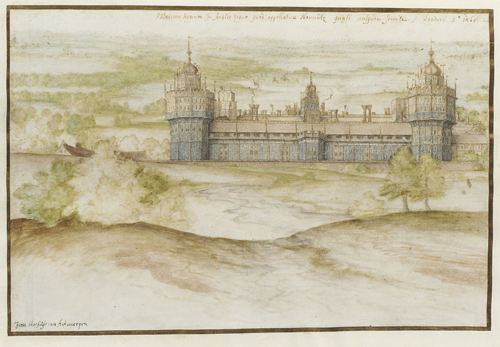
nonsuch-palaceThe earliest and most detailed depiction of King Henry VIII’s famed Nonsuch Palace, a watercolour by the celebrated Flemish painter Joris Hoefnagel, has been recently acquired by the V&A. 

The painting, made in 1568, is the most faithful only six surviving images of the palace which was located in Cheam, Surrey. The fanciful building was commissioned by the king in 1538 and featured a facade decorated with elaborate plasterwork in Franco-Italianate style with the aim of rivalling the Fontainebleau residence of French King Francois I.

One of the most important buildings of the English Renaissance period, it was unfinished when the king died in 1547 and was subsequently purchased from Queen Mary I by Henry Fitzalan, 12th Earl of Arundel, in 1557 – it was he who finished the building and most likely commissioned the Antwerp-born Hoefnagel to paint it. Later acquired by Queen Elizabeth I, it became one of her favourite residences and was eventually demolished by King Charles II’s mistress, the Duchess of Cleveland, between 1682 and 1688 to pay off gambling debts.

Nonsuch Palace from the South, which is the first major work of Hoefnagel to enter the collection, can be seen in the museum’s British Galleries in South Kensington. Entry is free. For more, see www.vam.ac.uk.

PICTURE: Nonsuch Palace from the South, Joris Hoefnagel, 1558, Watercolour © Victoria and Albert Museum, London.

This Week in London – Skating on Ice; Christmas trees worth seeing; and, Westminster Abbey’s new galleries…

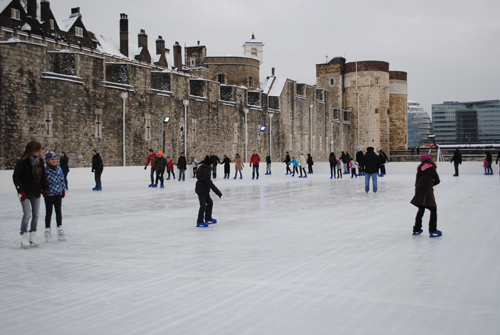
ice-skating-in-the-tower-moatLondon’s obsession with ice-skating is the subject of an exhibition which opened at the Museum of London earlier this month. Skating on Ice looks at the history of the popular pastime, from the 12th century – when locals are described strapping animals bones to their feet to skate on ice at Moorfields – across the centuries (and the developments that went with them) to today. Among the artefacts on show is an 1839 oil painting by J Baber depicting skaters on the Serpentine in Hyde Park, sketches from the London Illustrated News showing a rescue operation to recover the 40 of some 40 skaters who plunged beneath the ice in Regent’s Park on 15th January, 1867, a navy blue gabardine skirt suit from Fortnum & Mason dating from the 1930s and a series of skates, ranging from some made of animal bones through to a pair of Victorian racing skates known as Fen Runners and a pair of ice skates used from the late 1930s by Londoner Christina Greenberry at Streatham Ice Arena. Runs until 8th February. Entry is free. See www.museumoflondon.org.uk for more. (Pictured – ice-skating in the Tower of London moat).

• Christmas is looming and so, if you haven’t been out and about already, here’s five Christmas trees worth seeing over the coming few days (excluding the obvious one in Trafalgar Square):

  • Covent Garden. Always a glittering treat (this year complete with virtual prizes!).
  • St Pancras International. A rather odd design this year, this 100 foot tall tree is inspired by the Cirque du Soleil show Amaluna and lights up every time a donation is made to Oxfam.
  • Granary Square, Kings Cross. Looking like a Christmas tree frozen inside an ice-cube, this seven metre high installation – Fighting fire with ice cream – by British artist Alex Chinneck features some 1,200 lights.
  • Tate Britain, Millbank. An upside down tree, designed by Iranian artist Shirazeh Houshiary.
  • Connaught Hotel, Mount Street, Mayfair. Designed by British sculptor Antony Gormley, this 57 foot tall tree features a trunk transformed into a pillar of light.

Prince Charles last week unveiled the foundation stone for a tower that will take visitors to Westminster Abbey into the institution’s new museum and galleries. The tower is being built outside Poet’s Corner – between the 13th century Chapter House and 16th-century Henry VII’s Lady Chapel – and will be the principal entrance to the medieval triforium, which has never before been opened to the public and which house the proposed The Queen’s Diamond Jubilee Galleries. The tower and galleries, costing almost £23 million, will be the most significant addition to the abbey since Nicholas Hawksmoor’s west towers were completed in 1745. The galleries, which will be located 70 feet above the abbey’s floor, are due to open in summer 2018, and will display treasures from the abbey’s history as well as offering magnificent views of Parliament Square and the Palace of Westminster. To help meet the cost of the new galleries, the abbey has launched a #makehistory campaign asking for public donations to the project. For more, see www.westminster-abbey-galleries.org/Content/Filler.

Send all items for inclusion to exploringlondon@gmail.com.

Eight historic department stores in London…7. Hamleys…

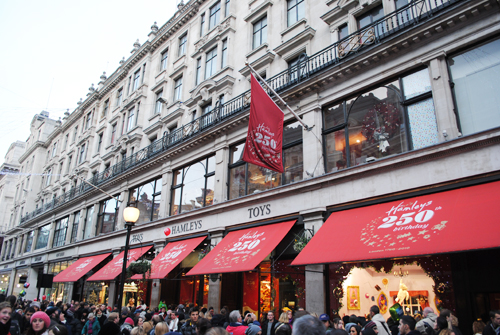
hamleysThis Regent Street establishment – the oldest and largest toy store in the world – dates back to 1760 when Cornishman William Hamley came to London and founded his toy store – then called ‘Noah’s Ark’ – on High Holborn.

Selling everything from wooden hoops to tin soldiers and rag dolls, the business aimed to capture the trade of affluent Bloomsbury families and proved rather successful, attracting a clientele in the early 19th century which included not only wealthy families but royalty.

Such was its success that in 1881, Hamley’s descendants opened a new branch of the shop at 200 Regent Street. The Holborn store, meanwhile, burned down in 1901 and was subsequently relocated to a larger premises at numbers 86-87 in the same street.

Faced with the Depression in the 1920s, the shop closed briefly in 1931 but was soon reopened by Walter Lines, chairman of Tri-ang Toys, and in 1938 was given a Royal Warrant by Queen Mary, consort of King George V.

The premises at 188-196 Regent Street was bombed five times during the Blitz but the shop (and its tin hat-wearing staff survived). In 1955, having presented a Grand Doll’s Salon and sizeable model railway at the 1951 Festival of Britain, the shop was given a second Royal Warrant – this time by Queen Elizabeth II, who has been given Hamleys toys as a child – as a ‘toys and sports merchant’.

The business, which has passed through several owners since the early 2000s, is now owned by Chinese-based footwear retailer C.banner.  The flagship store is spread over seven floors and tens of thousands of toys on sale, located in various departments.

As well as the Regent Street premises (it moved into the current premises at number 188-196 Regent Street in 1981), Hamlets has some 89 branches located in 23 countries, from India to South Africa. A City of Westminster Green Plaque was placed on the store in February 2010, in honour of the business’s 250th anniversary.

The toy store holds an annual Christmas parade in Regent Street which this year featured a cast of 400 and attracted an estimated 750,000 spectators.

www.hamleys.com

PICTURED: Hamleys during its 250th birthday celebrations.

LondonLife – Christmas illuminated…

London is illuminated for Christmas. Here’s some of what photographers on Flickr have captured this year…
regent-street

Christmas in Regent Street. PICTURE: Michael Reilly/Flickr/CC BY 2.0

west-end

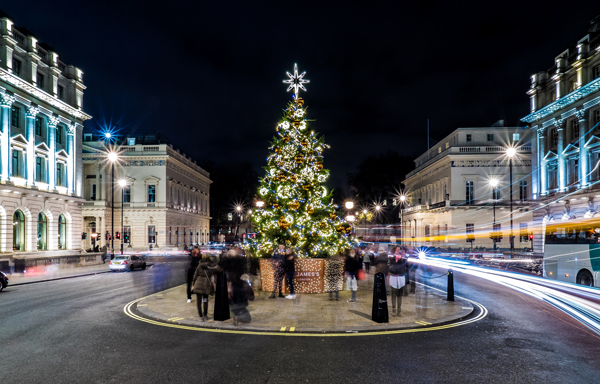
Christmas tree in Waterloo Place. PICTURE: William Warby/Flickr/CC BY 2.0

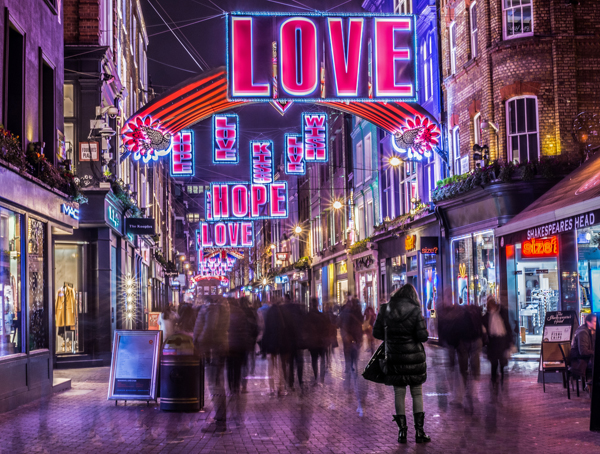
carnaby-street

Carnaby Street. decorations PICTURE: Roger/Flickr/CC BY-SA 2.0

oxford-street

Oxford Street under lights. PICTURE: Paolo Braiuca/Flickr/CC BY 2.0  (image cropped).

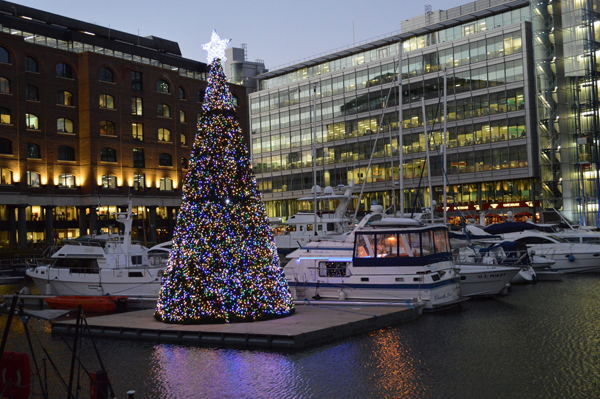
st-katharines

A floating Christmas tree at St Katharine Docks. PICTURE: Matt Brown/Flickr/CC BY-SA 2.0

A Moment in London’s History – Sir Henry Cole sends Christmas cards…

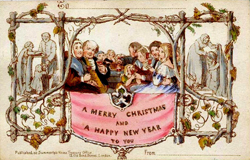
The practice of sending Christmas cards really began in the Victoria era and it was in London, in 1843, that the first commercial Christmas cards are widely said to have been designed and printed.

first-christmas-cardThe idea had come from Sir Henry Cole, the first director of the Victoria and Albert Museum, who, overwhelmed with the volume of correspondence he was receiving, conceived it as answer to his problem, allowing him to send Christmas greetings to a wide group of people – all at once.

He asked his friend, artist John Callcott Horsley, to design the card and an edition of 1,000 were printed by Jobbins of Warwick Court in Holborn.

The hand-coloured card, published by Summerley’s Home Treasury Office in Old Bond Street, showed a family gathered for a Christmas celebration with two side images showing people engaged in charitable acts and a message, ‘A Merry Christmas and a Happy New Year to You’. Designed as a single flat card (not foldable like they are today), it came complete with ‘To’ and ‘From’ spaces for the sender to fill in.

The cards which Sir Henry didn’t need for his personal use were placed on sale for a shilling each but it was a fairly steep price and that – and the fact that the image of people drinking at the festive season apparently roused the ire of temperance campaigners, helped to ensure the cards weren’t an immediate success.

Nonetheless, further cards were produced in the following years and within a couple of decades, they were being mass produced.

One of Sir Henry’s original cards was reportedly sold at an auction in 2013 for £22,000.

This Week in London – New armoury display at the Tower; Margaret Thatcher’s clothes on show; and James Ensor at the RA…

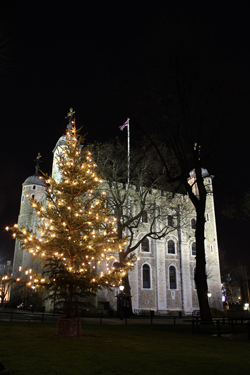
tower-of-londonA new “family friendly” permanent exhibition, Armoury in Action, opens today on the top floor of the White Tower at the Tower of London. The display, presented by Royal Armouries and Historic Royal Palaces, brings to life 1,000 years of history in a hands-on experience in which visitors can explore the weapons, skills and people from the Norman through to the Victorian eras. Featured are a master mason who explains the building of the White Tower – constructed on the orders of William the Conqueror, a medieval longbowman who explains the different types of arrows, a Civil War artillery captain who guides visitors through the process of firing a cannon, and a Victorian superintendent of firearms from the Ordnance Office who invites visitors to design their own musket. There’s also the chance to have a go at drawing back a medieval longbow, to dress King Henry VIII in his armour, to fire a half-sized Civil War cannon and sharpen sword skills against cabbages in an immersive interactive installation. The exhibition can be seen as part of a visit to the Tower. Meanwhile the Tower of London ice rink has opened once more in the fortress’ moat while, between 27th and 31st December, King Richard III and Queen Anne Neville are roaming the tower with their court as well as jesters and minstrels. Admission charges apply (ice-skating is separate to tower entry). For more, see www.hrp.org.uk/tower-of-london/ or www.toweroflondonicerink.co.uk. PICTURE: HRP. 

Three iconic outfits worn by former PM Margaret Thatcher have gone on show in the fashion galleries at the V&A in South Kensington. The outfits, which were worn by Baroness Thatcher at significant moments in her public and private life, are among six outfits donated to the museum earlier this year by her children. The outfits include a distinctive blue wool Aquascutum suit she wore to the Conservative Party Conference in Blackpool in 1987 and again to place her vote in the general election that year, a custom-designed brocade suit and taffeta opera cape with sweeping train designed by Marianne Abrahams for Aquascutum which she wore when delivering the keynote speech at the Lord Mayor’s Banquet at London’s Guildhall in 1988, and a wool crepe suit in striking fuchsia-pink by Starzewski that she wore to the Women of Achievement reception at Buckingham Palace on 11th March, 2004. There’s also a black slub silk hat with feathers and velvet-flecked tulle designed by Deida Acero, London, that she wore to the funeral of her husband, Sir Denis Thatcher, in 2003. The display is free to visit. For more, see www.vam.ac.uk.

On Now: Intrigue: James Ensor by Luc Tuymans. The first major exhibition of Belgian artist James Ensor’s work in the UK in 20 years, the exhibition at the Royal Academy of Arts Sackler Wing of Galleries off Piccadilly features some 70 paintings, drawings and prints by the modernist artist, who lived between 1860 and 1949, and is curated by contemporary Belgian artist Luc Tuymans. The display features three of his most important works – The Intrigue (1890), The Skate (1892) and Self-Portrait with Flowered Hat (1883). Runs until 29th January. Admission charges apply. For more, see www.royalacademy.org.uk.

Send all items for inclusion to exploringlondon@gmail.com.

Eight historic department stores in London…6. Debenhams…

Debenhams’ origins go back to 1778 when a draper’s store started trading at 44 Wigmore Street in London’s West End. Soon run by Thomas Clark and his partner Mr Flint, the shop sold fabrics, bonnets, gloves and parasols. 

debenhamsThe Debenhams name entered the story in 1813 when William Debenham, still young but having already learnt something of the trade at a hosiery in Nottingham, invested in the firm, now known as Clark & Debenham.

Success followed (apparently they expanded into a store across the road, calling one Clark & Debenham and the other Debenham & Clark) and in 1818, the firm opened its first store outside London – an exact replica of the Wigmore Street store in fashionable Cheltenham. This was followed by stores in other locations across England. (The original Debenhams store, which was rebuilt as a department store in the Edwardian era, is now largely occupied by offices).

The firm prospered in the coming years thanks to the demand for mourning attire in the Victorian age and in 1851 underwent another name change when Clement Freebody, brother of Debenham’s wife Caroline, invested in the firm, becoming Debenham, Son & Freebody and later just Debenham & Freebody (when William Debenham retired, it was his son William, Jr, who entered into partnership with Freebody) . At this time a wholesale business was established selling cloth and other items to dressmakers and other large retailers.

The company continued to expand and offices opened in various countries around the world – from Australia and South Africa to Canada and China. It’s said that in 1899, the store even had its own fire brigade and constabulary and around the start of the 20th century it became one of the first businesses to get a telephone.

In 1905, Debenhams Ltd was incorporated and in 1919 the business merged with Marshall and Snellgrove. Knightsbridge retailer Harvey Nichols was acquired in 1920 and seven years later the Debenham family’s involvement ended as the company went public.

Famous faces associated with the store in the early part of the 20th century included King Edward VII, for whom the business supplied coronation robes.

By 1950, Debenhams had become the largest department store group in the UK, owning 84 companies and 110 stores. Between 1985 and 1998, it was part of the Burton Group and it was during this period that it launched the Designers at Debenhams initiative as well as, in 1997, opening the first international franchise store in Bahrain. Debenhams listed on the London Stock Exchange following its demerger with the Burton Group and remain so until 2003 – when it was acquired by Baroness Retail Ltd – before returning to the London Stock Exchange in 2006.

It acquired nine stores from Roches in Ireland in 2007 and in 2009 acquired Danish department store chain Magasin du Nord.

As well as its flagship store in Oxford Street (refurbished for Debenhams 200th birthday in 2013), these days Debenhams owns and operates more than 18o stores in the UK, Ireland and Denmark (these include Browns of Chester which, following its acquisition in 1976, was allowed to keep its name). There are also some 60 franchise stores in more than 25 other countries.

For more, see www.debenhams.com.

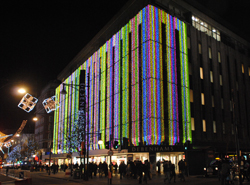
PICTURE: Debenhams flagship Oxford Street store dressed up for Christmas.

LondonLife – The colours of Winter Wonderland, Hyde Park…

winter-wonderland

Kinson Leung captures the vibrant colours of the annual Winter Wonderland fair in Hyde Park. PICTURE: Via Unsplash.

London Pub Signs – The Albert…

the-albert2This pub’s name isn’t too mysterious – it is, of course, named after Albert, Prince Consort to Queen Victoria, and given the date on which the building that now occupies the site was built – between 1862 and 1867, nor is the motivation to name it so – Prince Albert died on 14th December, 1861, leaving a bereft queen and a nation in mourning.

There had been a pub on this site at 52 Victoria Street prior to the current building – it was called The Blue Coat Boy and named after the nearby Blue Coat school – but in the mid-19th century the Artillery Brewery, which was located next door, bought the premises and renamed it.

The four storey building, which is now Grade II-listed (and dwarfed by the glass towers surrounding it), survived the Blitz and is the only building remaining from the first phase of the development of Victoria Street (and redevelopment of the area which had been a slum known as Devil’s Acre), only a stone’s throw from Westminster Abbey and the Houses of Parliament.

Inside, the Victorian features include ornate ceilings and hand-etched frosted windows and wrought iron balconies. Also of note is the Prime Minister’s gallery – including some who were patrons here – as well as memorabilia including a House of Commons Division Bell and one of Queen Victoria’s napkins.

For more, see www.taylor-walker.co.uk/pub/albert-victoria/c6737/.

PICTURE: Patche99z/Wikimedia

Treasures of London – The Trafalgar Square Christmas Tree…

A fixture of London’s Christmas festivities since 1947, the Trafalgar Square Christmas Tree is given annually to the people of Britain by the city of Oslo as gift thanking them for their support of Norway during World War II.

christmas-treeThis included hosting the Norwegian Government-in-exile and the Royal Family during the Nazi occupation of the country between 1940 and 1945.

The tree is harvested from forests near the Norwegian capital and the selection process for the giant, known by forestry workers as the “Queen of the Forest”, starts in May.

The tree is typically a Norway spruce aged somewhere between 50 and 60 years and stands at least 20 metres high. This year’s tree – the 70th – is said to be 116-years-old, stands 22 metres tall and weighs

In keeping with tradition, it was cut down on 16th November in a special ceremony attended by the Mayor of Oslo, Marianne Borgen, and the Lord Mayor of Westminster, Cr Steve Summers, along with various local school children so it can shipped to Britain ready in time for its unveiling at the start of December.

The tree is adorned with lights – in more recent years these are energy efficient light bulbs – in Norwegian style and these are turned on at a special ceremony on the first Thursday in December. The tree remains on display until just before the Twelfth Night of Christmas when it is taken down and recycled as mulch.

The tree now has its own Twitter account.

This Week in London – Marie Duval explored; Christmas in Trafalgar Square and at Dulwich; and, Australian Impressionists at The National Gallery…

The life and work of 19th century London actress, cartoonist and illustrator Marie Duval is the subject of a new exhibition which opens at the Guildhall Library in the City tomorrow. Marie Duval: Laughter in the First Age of Leisure is the first one solely dedicated to Duval’s work (her real name was Isabelle Émilie de Tessier) as a 19th century pioneer of the art of comics. Her work first appeared in a range of cheap British ‘penny papers’ and comics of the 1860s to 1880s aimed at working class people. The exhibition has been produced by the University of Chester in partnership with the library and with the support of the British Library.

Carol singing has kicked off in Trafalgar Square to mark the Christmas season. More than 40 groups are taking part in the sessions – free to watch – which take place between 4pm and 8pm on weekdays and from 2pm on weekends until 23rd December. The square is also home to a traditional Norwegian spruce Christmas Tree which has, as has been the case every year since 1947, been brought from forest near Oslo in thanks for Britain’s support of Norway during World War II. For more, see www.london.gov.uk/events.

The Dulwich Picture Gallery’s Christmas festival – featuring the ‘Winterlights’ lights trail, artisan Christmas market, pop-up carollers and other entertainments – has opened at the south London gallery. This year’s festivities also include two contemporary baroque-inspired Christmas trees by 3D art specialists, Nagual Creations, and visitors also have the chance to create their own festive family photo using a specially commissioned giant gold frame in the grounds as well as listen to Christmas story-telling in the gallery’s Keeper’s Cottage. The Winterlights display runs from 6pm to 10pm until 18th December (excluding Mondays; admission charges apply) with the market, featuring 50 stalls, held over the next two weekends – 10th-11th December and 17th-18th December (entry is free). For more, see www.dulwichpicturegallery.org.uk.

The first UK exhibition to focus on Australian impressionist paintings has opened at The National Gallery. Australia’s Impressionists features 41 paintings including some never shown before in the UK and explores the impact of European Impressionism on Australian painting of the 1880s and 1890s with a particular focus on four artists: Tom Roberts, Arthur Streeton, Charles Conder and John Russell. The exhibition is organised into three sections: the first looking at the landmark 1889 9 by 5 Impression Exhibition held in Melbourne, the second looking at the role of Australian Impressionism in the forging of a national identity, and the third looking at the work and influence of John Russell. The exhibition can be seen in the Sunley Room until 26th March. Entry is free. For more, see www.nationalgallery.org.uk.

Eight historic department stores in London…5. Harvey Nichols

Another Knightsbridge institution, the origins of luxury fashion department store Harvey Nichols (known to many as ‘Harvey Nicks’) go back to the founding, by Benjamin Harvey, in 1831 of a small  linen shop in a terraced house on the corner of Knightsbridge and Sloane Street.

Such was his initial success that the shop expanded quickly, just four years later taking over the neighbouring property (it was to expand further in following years).

harvey-nicholsIn 1841, James Nichols from Oxfordshire joined the company; he was promoted to management just four years later and three years after that, in 1848, he married Harvey’s niece, Anne Beale.

When Harvey died in 1850, he left the business to his wife, also Anne, and she subsequently went into partnership with Nichols to form Harvey Nichols & Co.

Anne died in 1872 and Nichols in 1873 leaving Harvey’s son, Benjamin Charles Harvey, as sole remaining partner.

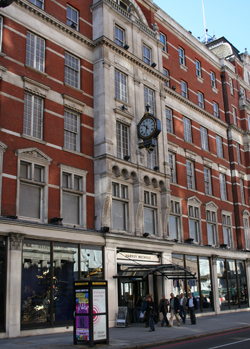
By 1874, Harvey Nichols occupied the entire block between Seville and Sloane Streets and, in 1889, the existing properties were all demolished to make way for a new purpose-built department store. Designed by architect CW Stephens (designer of Claridges), it was built between 1889 and 1894. In 1904, the address of the store was changed (while the location remained the same) to 109-125 Knightsbridge.

The store opened a range of new departments in 1919 – including haberdashery and hosiery, and was acquired by Debenhams in 1920.

The first restaurant – Harvey’s – opened on the fifth floor in 1975. It was famously a favourite of Princess Diana’s.

Harvey Nichols has since gone through several ownership changes – and following the latest when it was bought by Dickson Poon, of Dickson Concepts (International) Ltd, in 1991, the store was refurbished and a new restaurant, cafe, bar and food market opened on the fifth floor, complete with an express lift allowing it to stay open after the rest of the store had closed (the restaurant was refurbished in 2002).

Harvey Nichols now also has stores in Leeds, Edinburgh, Birmingham, Manchester, Bristol and Liverpool as well as Ireland, Turkey, Saudi Arabia, Kuwait, United Arab Emirates and Hong Kong.

For more, see www.harveynichols.com.

Famous Londoners – William Sessarakoo…

The Museum of London Docklands is currently running an exhibition exploring the history of the Royal African Company through the story of William Ansah Sessarakoo. But just who was this African ‘prince’ who came to London (albeit only briefly) and caused such a stir through Georgian society?

Born around 1736, William Ansah Sessarakoo was the son of John Correntee, head of Annamaboe, the largest slave-trading port on Africa’s Gold Coast (now Ghana). Correntee had earlier sent one of his sons to France to be educated and the English traders, apparently worried at the close relationship Correntee had with the French, offered Correntee the chance for another of his sons to receive an English education.

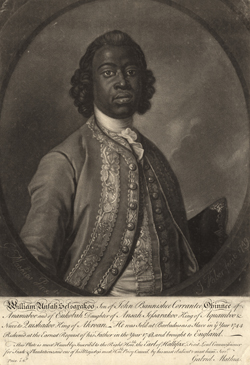
portrait-of-william-ansah-sessarakoo-1749-c-national-portrait-gallery-londonCorrentee agreed and his son Ansah subsequently spent much of his time at Fort William, the English base in the region,  learning English and their customs and culture. When offered the chance to send Ansah to England, Correntee again agreed and it was decided he would take ship aboard the Lady Carolina with Captain David Bruce Crichton.

Crichton, however, soon betrayed his trust and instead of taking Ansah to England, sold him into slavery in Bridgetown, Barbados. Back in Africa, his family were led to believe he was dead.

But, well known as he was among the Fante people, Ansah was “discovered” four years later by a Fante trader in Barbados. When news reached Correntee he petitioned the English to free him and honour the original deal to send him to England. Anxious to protect their trade, the English agreed and the Royal African Company, which traded along Africa’s west coast, liberated him and transported him to England.

Upon his arrival in early 1749, he was presented as Prince William Ansah Sessarakoo or ‘The Royal African’. Staying as a guest in the Grosvenor Square home of George Montagu Dunk, the 2nd Earl of Halifax, he made numerous appearances in London society. Most notably, on 1st February, 1749, when he attended a showing of Thomas Southerne’s play Oroonoko which tells the story of an African prince sold into slavery by Europeans who then rebels and, after being forced to kill his wife, is himself executed. Sessarakoo was apparently so disturbed by the similarities between that story and his own, that he left the performance early.

In 1750, Ansah returned home. Within a year of his return he had gained work as a writer at Cape Coast Castle, the seat of English power on the Gold Coast and, using his connections there and abroad, he helped his father in his trading with both the English and French. His relationship with the English soured, however, after a physical altercation with William Mutter, the governor of Cape Coast Castle, over a pay dispute involving watered-down whiskey.

Ansah lived the rest of his life in relative obscurity back in Annamaboe and while there are records he did work as a slave trader during this period, little else is known. While no records exist, it is generally believed he probably died around 1770.

Despite his ignoble end, one of the legacies of Ansah’s visit to London was to show the nobility of the African people – a line of thought which did contribute to the rise of the abolitionist movement in Britain.

The Royal African display, featuring the story of William Ansah Sessarakoo, can be seen at the Museum of London Docklands until 4th June, 2017. Admission is free. For more, see www.museumoflondon.org.uk/museum-london-docklands/whats-on/exhibitions/royal-african.

PICTURE: William Ansah Sessarakoo by John Faber, Jr. c. 1749 © National Portrait Gallery, London


Lost London – The Hope Playhouse…

Recently added to the National Heritage List for England (or what little remains of it at least), the Hope Playhouse was the last Elizabethan era theatre to be built in Southwark and was designed to be a joint acting venue and bear baiting arena.

bear-gardensThe theatre, which opened in about 1614, was built by impresario Philip Henslowe, who had built the Rose Playhouse in 1587 and the Fortune in 1600, and new partners a waterman Jacob Meade and carpenter Gilbert Katherens on a site slightly to the south of the Bear Garden (demolished in 1613) which had previously housed been dog kennels.

Designed deliberately to be similar to The Swan Playhouse in Paris Garden, the stage was apparently located on the south side of the structure with the main entrance located opposite on the riverside of the building. Upper galleries provided more salubrious seating for those who could afford it.

The first play to be staged there was Ben Jonson’s Bartholomew Fair, performed by Lady Elizabeth’s Company on 31st October, 1614 – in the play Jonson famously refers to the dual use of the playhouse by likening the smell to that of the animals at Smithfield Market.

The relationship of the theatre with acting, however, was to be short-lived. Bear-baiting and other past-times gradually took over the use of the playhouse despite the fact it had originally been envisaged that animal baiting would only be held on Sundays and Thursdays.

Tensions between the actors and other groups eventually led to Lady Elizabeth’s Company departing the playhouse in 1617, although another company, the Prince Charles’s Men, continued to use it for a few more years). Henslowe, meanwhile, had died in 1616 and his share of the property had passed to his son-in-law (and actor) Edward Alleyn (who was also the founder of the Prince Charles’s Men).

Very few plays were subsequently seen at the playhouse which, by 1620, had become known by the name Bear Garden – a reference to the former property which had stood to the north. Bear and bull-baiting as well as prize-fighting and fencing contests were apparently among the activities carried out there.

The Hope was ordered closed by Parliament in 1643 but survived until 1656 when, during the Civil War, it was closed and dismantled. Industrial buildings, including glass-blowing workshops, were later constructed over the top.

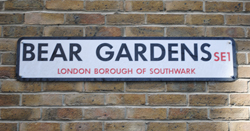
PICTURE: The street known as Bear Gardens in Southwark is near the site of the former Hope Playhouse.

This Week in London – The Gilbert Galleries reopen at the V&A and period Christmases at the Geffrye…

gilbert-galleriesA 17th century Peruvian gold bowl recovered from a shipwreck, Tudor fashion accessories and a collection of ‘micromosaics’ including tabletops commissioned by Tsar Nicholas I are among highlights of the newly reopened Rosalinde and Arthur Gilbert Galleries at the V&A. The South Kensington museum reopened the four galleries last month after the objects within the collection were removed in 2014 as part of the V&A’s Exhibition Road building project which will be completed in July next year. Amassed by collectors Rosalinde and Arthur Gilbert over a period of 40 years from the 1960s, the collection features about 1,200 objects, more than 500 of which are now on display. The collection was on display at the Los Angeles County Museum of Art before being transferred to the UK in 1996 and accepted as a gift to the nation by the Queen Mother in 2000. It was displayed at Somerset House until coming to the V&A where it opened to the public in 2009. Other highlights on display include a newly acquired silver christening gift presented by King George II to his god-daughter, Lady Emilia Lennox, in 1731, and a life-sized silver swan made by Asprey, London, in 1985 (pictured). Entry to the galleries is free. For more, see www.vam.ac.uk. PICTURE: © Victoria and Albert Museum, London

The period living rooms at the Geffrye Museum of the Home have been transformed for Christmas in its annual Yuletide display. Now in its 25th year, the exhibition at the Shoreditch establishment recreates the Christmas traditions of times past including everything from kissing under the mistletoe to decorating the tree, parlour games such as blind man’s bluff to hanging up stockings and sending cards. Christmas Past is accompanied by a programme of events including craft fairs, festive evenings, carol sings and decoration workshops with festive food and drinks available in the cafe. Runs until 8th January. Entry is free. For more, see www.geffrye-museum.org.uk.

Send all items for inclusion to exploringlondon@gmail.com.


Eight historic department stores in London…4. Harrods…

harrods

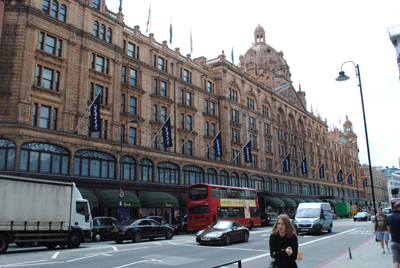
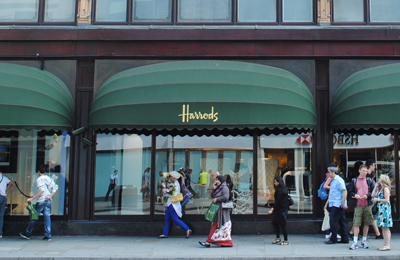
Famed as a luxury shopping destination for the rich and famous, Harrods on Brompton Road in Knightsbridge takes its name from founder Charles Henry Harrod.

Harrod first established a drapery business in Southwark in 1824 and in 1832, founded Harrods & Co Grocers in Clerkenwell. Two years later he established another grocery, this time in Stepney, with a particular interest in tea.
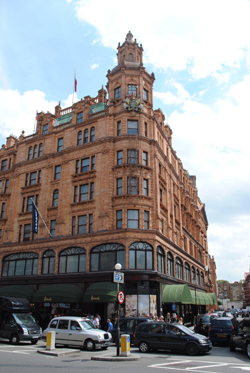
harrods2In 1849, to capitalise on trade to the upcoming Great Exhibition in Hyde Park in 1851, he took over a small shop on the site of the current store – initially with just two assistants and a messenger boy. In 1861 his son, the similarly-named Charles Digby Harrods, took over the business and by 1880, the store was employing more than 100 people offering customers everything from medicines and perfumes to clothing and food and already attracting the wealthy customers it would become known for.

Even the burning down of the store in late 1883, failed to dint its long-term success, and Harrod took the opportunity to build a capacious new building on the site. Designed by Charles Williams Stephens, the building, which wasn’t finished until 1905, featured Art Nouveau windows and was topped with a dome. One of its attractions opened on 16th November, 1898, when it became home to England’s first “moving staircase” (escalator). Nervous customers were apparently offered a brandy once they’d made the journey.

Harrods’ fame continued to grow and over the years a who’s who of London society has been associated with the store – everyone from writers like Oscar Wilde, and AA Milne, actors Ellen Terry, Charlie Chaplin and Laurence Olivier and luminaries such as the “father of psychoanalysis” Sigmund Freud and many members of the Royal family.

Under the motto of Omnia Omnibus Ubique (All Things for All People, Everywhere), the store became famous for selling whatever the customer wanted including, thanks to an exotic pets department which lasted up until the 1970s, a lemur called Mah-Jongg which was sold to Stephen and Virginia Courtauld in 1923 and lived with them at Eltham Palace and a lion called Christian to Australian expats John Rendall and Anthony “Ace” Bourke in 1969 (it was later set free in Kenya).

The ownership meanwhile has long since left the Harrods family – Charles Digby had sold his shares as far back as 1889 when the company was floated on the London Stock Exchange and renamed Harrods Stores Limited with Sir Alfred James Newton as chairman and Richard Burbridge as managing director. Burbridge was succeeded by his son in 1917 and he by his son in 1935.

In 1959, the company was bought by House of Fraser and in 1985, the store was sold to the Al-Fayed brothers (Mohamed Al-Fayed famously had two memorials created inside dedicated to Diana, Princess of Wales, and his son Dodi Fayed, both of whom died in a car crash in Paris in 1997. He also decided not to renew the company’s Royal warrants – it has had up to four). Current owners Qatar Holding, the sovereign wealth fund of Qatar, bought the company in 2010.

The company has opened a number of other Harrods stores over the years – including its only ever foreign branch (long since independent) in Argentina in 1914 and, in 2000, a shop aboard the ship RMS Queen Elizabeth 2.

The Knightsbridge store, meanwhile, has been twice bombed by the IRA – in 1983 when six were killed and scores more injured after a car bomb exploded in an adjoining street and in 1993 when a bomb was placed in a litter bin, injuring four. In 1989, it controversially introduced a dress code, banning casual wear like flip-flops and Bermuda shorts.

Now the largest department store in Europe, the Brompton Road store has more than million square feet of selling floor over seven stories. It attracts some 15 million customers a year to its more than 300 different departments and other facilities including more than 25 restaurants and cafes, a concierge, bank, spa and personal shopping service.
harrods3

LondonLife – Christmas lights up at Kew…

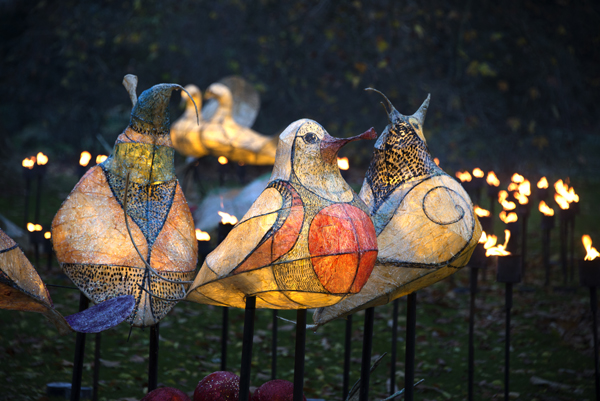
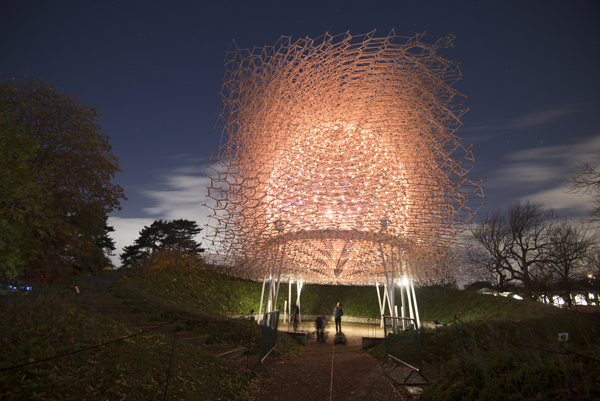
kewaMore than 60,000 lights are being used to illuminate Kew Gardens this Christmas in a mile long trail through the foliage. The trail features eight newly commissioned installations from UK and international artists including Bloom – a display of 1,700 swaying flowers by the group Squidsoup (above), and the roaring scented Fire Garden – a display themed around the Twelve Days of Christmas by And Now: (pictured below are three French hens from the installation). The trail also features Wolfgang Buttress’ bee-inspired installation, known as the The Hive (pictured second below), which has been lit with 1,000 LEDs that pulsate and glow against the night sky, and finishes with an “explosion” of brightly coloured laser beams across the Palm House Pond (pictured third below). There’s also a panto featuring Santa and his elves and a Victorian carousel. The night lights can be seen until 2nd January. Admission charge applies (and there’s timed entry). Kew is also running a program of family-oriented Christmas activities during the day across the period. For more, see www.kew.org. PICTURES: Jeff Eden, RBG Kew.

kewb

kewc

kew-1

Where’s London’s oldest…public clock (with a minute hand)?

st-dunstans-clock

We reintroduce an old favourite this month with our first ‘Where’s London’s oldest’ in a few years. And to kick it off, we’re looking at one of London’s oldest public clocks.

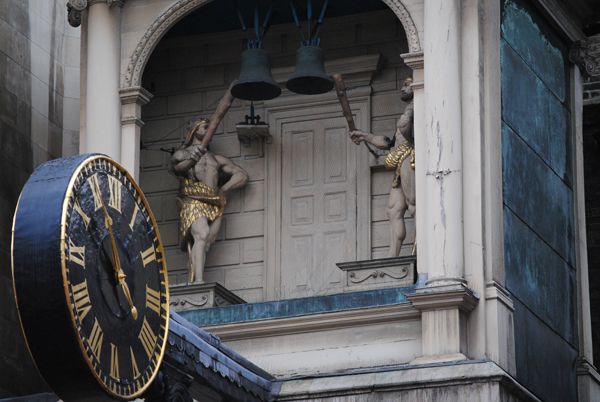
Hanging off the facade of the church of St Dunstan-in-the-West in Fleet Street is a clock which is believed to have been the first public clock to be erected in London which bears a minute hand.

The work of clockmaker Thomas Harris, the clock was first installed on the medieval church in 1671 – it has been suggested it was commissioned to celebrate the church’s survival during the Great Fire of London and was installed to replace an earlier clock which had been scorched in the fire. Its design was apparently inspired by a clock which had once been on Old St Paul’s Cathedral and was destroyed in the fire.

Like the clock it replaced, this clock sat in brackets and projected out into Fleet Street which meant it was able to be seen from a fair distance away (and being double-sided meant the black dials could be seen from both the east and the west). Like the Roman numerals that decorate it, the two hands, including the famous minute hand, are gold.

To the rear and above the clock dials are located the bells and striking mechanism. The bells are struck on the hours and the quarters by ‘automata’ – Herculean figures, perhaps representing Gog and Magog (although to most they were traditionally simply known as the ‘Giants of St Dunstan’s’), who do so using clubs and turn their heads.

Such was the attention these figures attracted that when the clock was first installed the area became notorious for pick-pockets who apparently went to work on unsuspecting passersby who had stopped to watch the giants at work.

This church was demolished in the early 1800s to allow the widening of Fleet Street and when it was rebuilt in 1830, the clock was absent. Having decided it couldn’t be accommodated in the new design, it had been auctioned off with the art collector, Francis Seymour-Conway, the 3rd Marquess of Hertford, the successful bidder.

He had it installed on his Decimus Burton-designed villa in Regent’s Park and there it remained until 1935 when Lord Rothermere, who had bought the villa in 1930, returned it to the church to mark the Silver Jubilee of King George V.

There are numerous literary references to the clock including in Charles Dickens’ David Copperfield, Thomas Hughes’ Tom Brown’s Schooldays, Oliver Goldsmith’s Vicar of Wakefield and a William Cowper poem.