Treasures of London – The Australian State Coach…

Australian-State-Coach
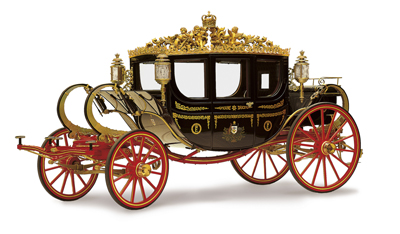
Among the treasures on show at this year’s summer opening of Buckingham Palace, the Australian State Coach was a gift to Queen Elizabeth II by Australia on 8th May, 1988, to mark the Australian Bicentennial.

The coach – the first to be built for the Royal Family since the Coronation of King Edward VII in 1902 – was built by Australian WJ “Jim” Frecklington who also designed the Diamond Jubilee State Coach.

The coach, which is usually kept in the Royal Mews where it can be viewed by the public, has been used at the State Opening of Parliament and other occasions involving foreign royal families and visiting heads of state. It was also used to carry Prince Charles, the Duchess of Cornwall and Michael and Carole Middleton back to Buckingham Palace after the wedding of Prince William and Catherine Middleton.

It was last used to carry the Duke of Edinburgh and Señora Rivera, wife of the president of Mexico, on a State Visit in March this year.

The summer opening of the palace runs from 25th July to 27th September. The coach will be on display in the Grand Entrance portico.

WHERE: Summer Opening of Buckingham Palace (nearest Tube stations are Victoria, Green Park and Hyde Park Corner); WHEN: 25th July to 31st August – 9.30am to 7.30pm daily (last admission 5.15pm)/1st to 27th September – 9.30am to 6.30pm (last admission 4.15pm); COST: £35.60 adults/£20 under 17 and disabled/£32.50 concessions/£91.20 family (2 adults and three under 17s); WEBSITE: www.royalcollection.org.uk/visit/the-state-rooms-buckingham-palace/plan-your-visit.

PICTURE: Royal Collection Trust © Her Majesty Queen Elizabeth II, 2015 

This Week in London – Hampton Court Palace lights up; doll house histories; more on Christmas; and, memories of a royal progress at The Queen’s Gallery…

Hampton Court Palace’s world famous gardens have been transformed into an “illuminated wonderland” which can be explored using a specially created trail. From tomorrow, visitors can use a glow-in-the-dark map to follow the trail which starts at the palace’s hedge maze – the UK’s oldest – and meanders through various locations around the grounds – including the formal gardens – before ending up at the palace’s East Front where, through the use of interactive technology, visitors can ‘paint’ the building’s facade just by moving around. Allow about an hour. Entry is timed between 5pm and 8pm. Runs until 23rd December. Admission charge applies. For more, see www.hrp.org.uk/HamptonCourtPalace/.

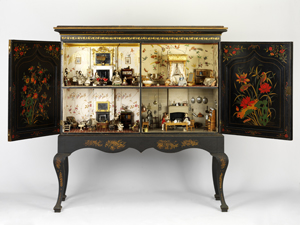
Killer_Cabinet_1840sThe stories behind some of the UK’s best-known dolls’ houses are the focus of a new exhibition which opens at the V&A Museum of Childhood in Bethnal Green on Saturday. Small Stories: At home in a dolls’ house tells the story of 12 dolls’ houses dating as far back as 300 years. Each of the houses – which are displayed chronologically – has been set up to represent a particular time of day and, using interactive technology, tells the story of those who live and work in the building in a series of stories featuring marriages, parties, politics and even crimes. Highlights include: the Tate Baby House – dating from 1760, it features original wallpapers and painted panelling in the style of Robert Adam; the Killer House (pictured) – a gift from surgeon John Egerton Killer to his wife and daughters in the 1830s, this Chinese-style cabinet has gilded wallpapers, a four poster bed and liveried servants; Whiteladies House – a Modernist country villa designed by artist Moray Thomas and built in the 1930s; the Hopkinson House – based on the homes built in the 1930s in the London County Council suburb, the St Helier Estate; and, the Kaleidoscope House – designed by Laurie Simmons to suit a “design conscious step-family living in the new millennium”. There’s a further 20 dolls’ houses, dating from 1673 to 2014, on display in the museum’s permanent galleries (just some of the more than 100 in the museum’s collection). Admission is free. Runs until 6th September, 2015. For more, see www.museumofchildhood.org.uk. PICTURE: Victoria and Albert Museum, London.

The V&A has unveiled its 2014 Christmas Tree at the grand entrance to its South Kensington building. Designed by Gareth Pugh, Ceremony stands at more than four metres in height and, along with a shape not unlike a traditional Christmas tree, features nine tiered gold pyramids located around a central beacon of light to represent the nativity. For more, see www.vam.ac.uk/content/articles/c/christmas-tree-installation-by-gareth-pugh/Meanwhile Winter Wonderland continues to entertain in Hyde Park with rides, markets, ice-skating and all the usual attractions. Open 10am to 10pm every day until 4th January (closed on Christmas Day). For more, see www.hydeparkwinterwonderland.com.

On Now: Cairo to Constantinople: Early Photographs of the Middle East. This exhibition at The Queen’s Gallery, Buckingham Palace, features objects collected by the 20-year-old Prince of Wales, Albert Edward (later King Edward VII), during an educational tour of the Middle East in 1862. The display, which also features photographs taken by Francis Bedford – the first photographer to join a royal tour, follows the prince as he progresses through Egypt, Palestine and the Holy Land, Syria, Lebanon, Turkey and Greece. The exhibition is being show alongside Gold, a display of 50 gold items drawn from the Royal Collection. They include the Rillaton Cup, found in a Bronze Age burial dating from between 1700 and 1500 BC, a gold crown from Ecuador that predates the Incas, and an 18th century tiger’s head made from gold and rock crystal and taken from the throne of the Tipu Sultan of Mysore in India. Both run until 22nd February. Admission charge applies. For more, see www.royalcollection.org.uk.

Send all items for inclusion to exploringlondon@gmail.com.

Around London – Reclaiming Castiglione; transport open weekend; and, Australia at the RA…

Oriental The UK’s first major exhibition on the work of the innovative but violent 17th century artist Giovanni Benedetto Castiglione opens tomorrow at the Queen’s Gallery next to Buckingham Palace. The exhibition, which features 90 drawings and prints from the Royal Collection, is aimed at re-establishing Castiglione as one of the greatest artists of the Baroque period, thanks to his being credited with creating huge drawings in oil directly on paper, producing about 60 etchings and inventing the technique of monotype. Works include his monotype prints Head of an oriental (late 1640s) and The Nativity with angels (about 1655), a translation of Titian’s Sacred and Profane Love and drawings like Circe with the companions of Odysseus transformed into animals. Castiglione’s “nomadic” career was marred by his violent temperament – he was repeatedly before the courts for assaulting people, apparently tried to throw his sister off a roof and was forced to leave Rome because, it is believed, he had committed murder. Castiglione: Lost Genius runs with Gifted: From the Royal Academy to The Queen, an exhibition of prints and drawings given to the Queen by Royal Academicians to mark her Diamond Jubilee, until 16th March. Admission charge applies. For more, see www.royalcollection.org.uk. PICTURE: Giovanni Benedetto Castiglione, The head of an oriental, late 1640s. Royal Collection Trust/©Her Majesty Queen Elizabeth II 2013.

The restored Met Locomotive 1 and the Victorian Jubilee Carriage 353 will be on show this weekend as part of the London Transport Museum’s Open Weekend at its Acton Depot. Visitors will be able to explore the depot’s vast collection of more than 400,000 objects along with a range of other activities including miniature tram and railway rides, heritage bus rides, talks and film screenings, and costumed interpreters as well as the chance to watch artist Ross Ashmore paint the locomotive and Jubilee Carriage. The weekend kicks off tomorrow. For more information and bookings, see www.ltmuseum.co.uk/whats-on/museum-depot/events.

On Now: Australia. This landmark exhibition at the Royal Academy of Arts at Burlington House in Piccadilly features more than 200 works including paintings, drawings, photography, watercolours and multimedia pieces by 146 Australian artists. Spanning the period from 1800 until today, the display includes works by Aboriginal artists such as Albert Namatjira, nineteenth century immigrants such as John Glover and Eugene von Guerard, impressionists like Arthur Streeton and Tom Roberts, early modernists like Margaret Preston and Roy de Maistre, 20th century painters including Arthur Boyd, Albert Tucker and Brett Whiteley and contemporary artists including Gordon Bennett, Fiona Hall and Shaun Gladwell. Highlights include Frederick McCubbin’s The Pioneer (1904), four paintings from Sidney Nolan’s Ned Kelly series (1946), Rover Thomas’ Cyclone Tracy (1991) and Emily Kame Kngwarreye’s Big Yam Dreaming (1995). Organised with the National Gallery of Australia, the exhibition runs until 8th December. Admission charge applies. For more, see www.royalacademy.org.uk.

Celebrating the Diamond Jubilee with 10 royal London locations – 5. Buckingham Palace…

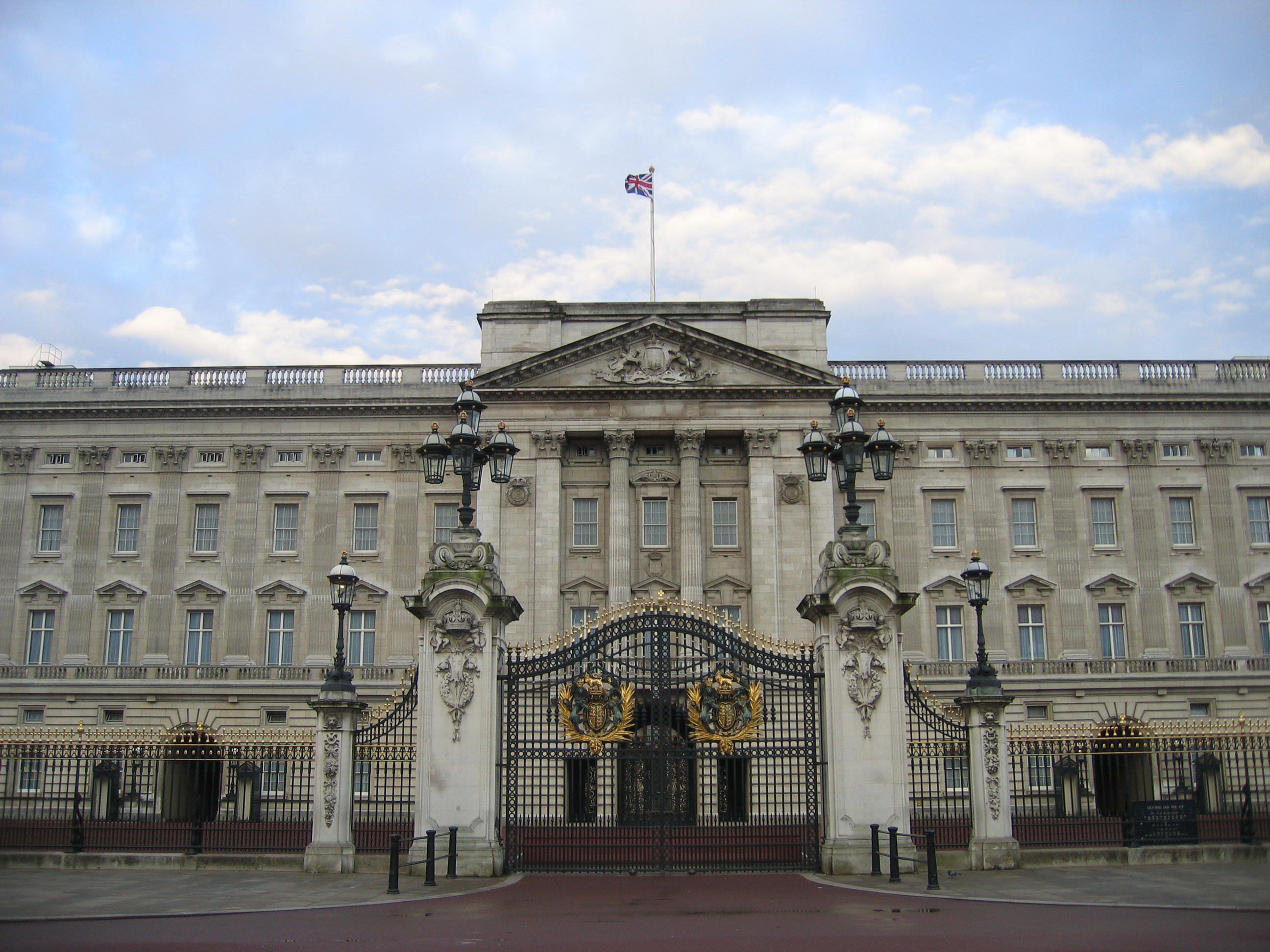
Following her coronation, Queen Elizabeth II and Prince Philip, the Duke of Edinburgh, took up residence in Buckingham Palace and have resided there ever since.

The Queen and her family’s appearance on the palace’s balcony to wave to crowds at events like Trooping the Colour and last year’s Royal Wedding have become symbols of her reign.

We’ve already written about some of the history of the 775 room palace (see our earlier post here), so today we’re looking specifically at the palace as the residence of Queen Elizabeth II.

While the focus for visitors to the palace is on the grand state rooms (of which there are 19 located in the west block facing the palace gardens – they include the Throne Room and State Dining Room), the Queen and the Duke of Edinburgh live in private apartments on the north side of the palace while rooms on the upper floors of the palace’s north and east sides are occupied by other members of the Royal Family. A large part of the ground floor and palace’s south wing are occupied by service quarters and members of the Royal Household.

As well as weekly meetings at the palace – including audiences with the Prime Minister, foreign and British ambassadors, clergy and senior members of the civil service, the Queen also hosts a variety of grand events at the palace throughout the year. These include the Diplomatic Reception given for members of the diplomatic corps in the autumn (more than 1,500 people attend from more than 130 countries), three large garden parties in the summer and grand State Banquets which are held in the Ballroom on the first evening of a visit from a foreign head of state. The Queen is also noted for the small private lunch parties she holds to which community leaders are invited.

The head of the 1,200 strong Royal Household is the Lord Chamberlain (since 2006 The Earl Peel), a non-political office responsible for the organisation of ceremonial activities at court as well as the palace’s upkeep. Under him are the various departments heads – these include the Comptroller, who heads the Lord Chamberlain’s Office (this oversees everything from State Visits to the Royal Mews), the Keeper of the Privy Purse (responsible for the management of the sovereign’s financial affairs) and the Master of the Household (responsible for domestic and staff arrangements as well as catering and official entertainment, this position dates back to 1539).

A typical day in the life of the Queen when at the palace involves her spending the morning at her desk where she reviews a sample of incoming letters (an estimated 200 to 300 arrive each day almost all of which are answered by her staff) and meets with her Private Secretaries to deal with official papers which arrive in the famous ‘red boxes’.

The Queen will then often hold a series of audiences during which she’ll meet with a range of people – from retiring senior members of the armed forces to newly appointed ambassadors and judges and people who have won awards for excellence in a particular field. She may then participate in an investiture at which honors and decorations are presented (about 25 of these are held every year, usually in the palace Ballroom).

Lunch is often private although as previously mentioned, the Queen and Duke of Edinburgh are known for hosting small lunch gatherings for a range of people. In the afternoon, the Queen will often attend engagements outside the palace (she attends about 430 engagements and audiences a year) before possibly meeting with the Privy Council.

Evenings are spent reviewing a report of the day’s parliamentary proceedings, meeting with the Prime Minister (something she does every Wednesday when both are in London), attending further engagements or hosting events at the palace.

And, of course, when the Queen is in residence, Buckingham Palace is also home to the Queen’s corgis – Monty, Willow and Holly – and dorgis (a cross between a corgi and a dachshund) – Cider, Candy and Vulcan.

For more on Buckingham Palace and the life of the Queen, go www.royal.gov.uk.

WHERE: State Rooms, Buckingham Palace (includes special exhibition Diamonds: A Jubilee Celebration) (nearest Tube stations are Victoria, Green Park and Hyde Park Corner); WHEN: 9.45am to 6.30pm, 30th June to 8th July and 31st July to 7th October; COST: £18 an adult/£10.50 a child (under 17s/under fives free)/£16.50 concession/£47 family; WEBSITE: www.royalcollection.org.uk/visit/buckinghampalace.

PICTURE: Christa Richert/sxc.hu