We pause our series on Winnie-the-Pooh to take a brief look at three uniquely London traditions which take place each Easter…
Ceremonies
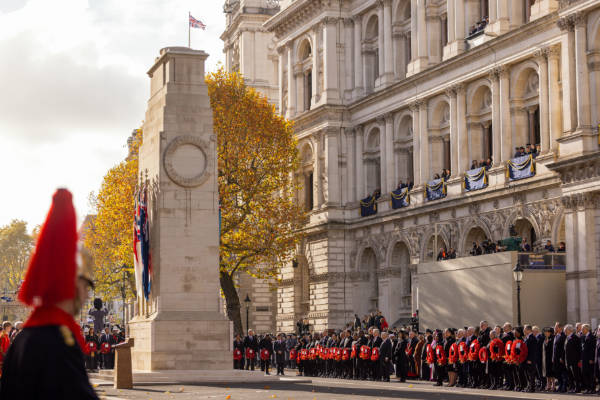
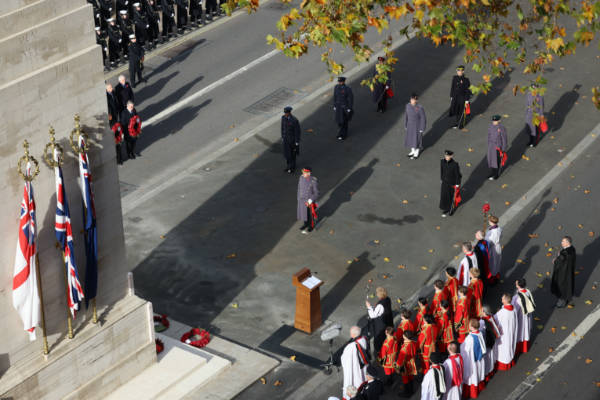
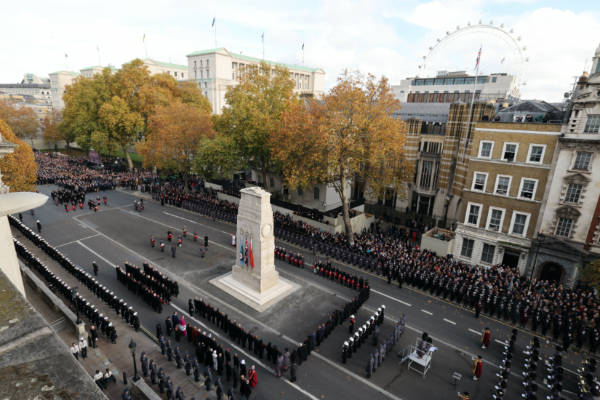
LondonLife I – Marking 80 years since the end of World War II…
Earlier…
10 London mysteries – 4. How did King Henry VI die?
The Tower of London is known for many mysteries – the most famous, perhaps, being the fate of the two ‘Princes in the Tower’. But among the other mysterious deaths which took place behind the closed doors of the fortress is the death of the deposed King Henry VI.
Support our work for just £3 a month to gain access to all Exploring London’s content!
This Week in London – Lord Mayor’s Show; ‘Poppy Fields at the Tower’; and, ‘The Great Mughals’ at the V&A…
• The Lord Mayor’s Show – featuring the 696th Lord Mayor of London, Alastair King – will be held this Saturday. The three-mile long procession – in which the Lord Mayor will ride in the Gold State Coach – features some 7,000 people, 250 horses, and 150 floats. It will set off from Mansion House at 11am and travel down Poultry and Cheapside to St Paul’s Cathedral before moving on down Ludgate Hill and Fleet Street to the Royal Courts of Justice. The return journey will set off again at 1:10pm from Temple Place and travel via Queen Victoria Street back to Mansion House where he will take the salute from the Pikemen and Musketeers at 2:40pm. For more information, including where to watch the show, head to https://lordmayorsshow.london.
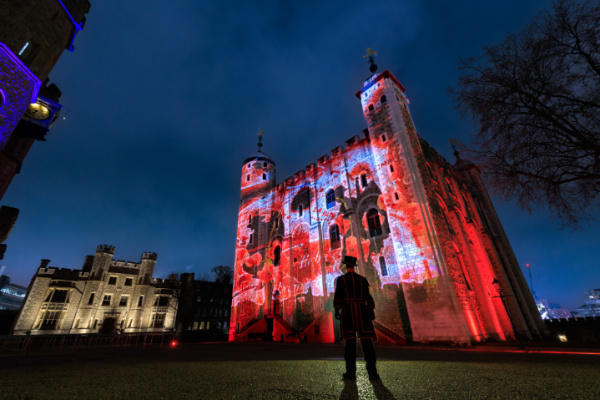
• An immersive sound and light show commemorating World War I and II opens at the Tower of London tomorrow ahead of Armistice Day and Remembrance Sunday. Historic Royal Palaces has partnered with Luxmuralis to present Poppy Fields at the Tower with visitors invited to go inside the Tower where – recalling the 2014 display Bloodswept Lands and Seas of Red in the Tower of London moat to mark the centenary of World War I – the walls will not only be illuminated with tumbling poppies but also historic photographs, documents and plans. The display is being accompanied by music composed by David Harper, and poetry recordings. Visitors will also be granted special access to see the Crown Jewels after-hours to learn more about their removal from the Tower during both World Wars. Runs until 16th November and should be pre-booked. Admission charges apply. For more, see https://www.hrp.org.uk/tower-of-london/whats-on/poppy-fields-at-the-tower/.
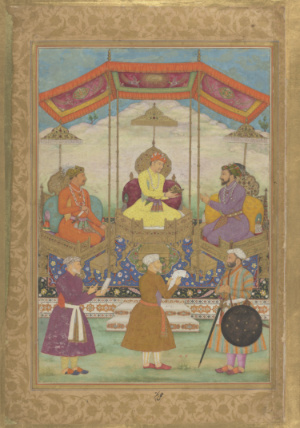
from the Minto Album. © CC BY – 4.0. Chester Beatty, Dublin
• An exhibition celebrating the golden age of the Mughal Court opens at the V&A in South Kensington on Saturday. The Great Mughals: Art, Architecture and Opulence examines the “creative output and internationalist culture” of Mughal Hindustan during the age of its greatest emperors, a period spanning c1560 to 1660. More than 200 objects are on display arranged in three sections corresponding to the reigns of the Emperor Akbar (1556-1605), Jahangir (1605 to 1627) and Shah Jahan (1628 to 1658). The objects include paintings, illustrated manuscripts, vessels made from mother of pearl, rock crystal, jade and precious metals. Highlights include four folios from the Book of Hamza, commissioned by Akbar in 1570, and the Ames carpet which was made in the imperial workshops between c1590 and 1600 and is on display for the first time in the UK. There’s also a unique wine cup made from white nephrite jade in the shape of a ram’s head for Shah Jahan in 1657, two paintings depicting a North American Turkey Cock and an African zebra created by Jahangir’s artists, and a gold dagger and scabbard set with over 2,000 rubies, emeralds and diamonds. Runs in Galleries 38 and 39 until 5th May. Admission charge applies. For more, see www.vam.ac.uk.
• Send all items for inclusion to exploringlondon@gmail.com.
LondonLife – Dress rehearsal…
Members of the Household Division in London rehearse for the King’s Birthday Parade, known as Trooping the Colour. The Colonel’s Review is held one week before and saw some 250 musicians, 20 pipers, 240 military working horses, and almost 1,000 dual role soldiers of the British Army’s Household Division run through their paces on Saturday. Trooping the Colour will take place on 15th June.


© MoD Crown Copyright 2024

London Explained – The Common Cryer and Sergeant-at-Arms…
One of three ceremonial officers appointed by the City of London’s Court of Aldermen, the office of Common Cryer and Sergeant-at-Arms, commonly known as the “Macebearer”, is believed to the oldest of them, established well before 1338.

The Common Cryer and Sergeant-at-Arms has the role of carrying the Great Mace of Government ahead of the Lord Mayor of London.
The post was originally held by one of the King’s Sergeant-at-Arms. In 1419, the title held by the mace bearer was referred to as the “Common Serjeant-at-Arms of the City”, otherwise known as the “Common Cryer”.
Records show he had a salary of 60 shillings a year, robes, fees from the alderman and sheriffs and a “sufficient horse” for the honour of the City.
By 1559 the current title was in use.
As well as bearing the ceremonial mace before the Lord Mayor, the Macebearer also opens proceedings at Common Hall, the electoral assembly at Guildhall, with the cry “Oyez, Oyez, Oyez”. The Macebearer also proclaims the orders at the monarch and Privy Council at appointed places within the City.
Along with the City Marshall and the Sword-Bearer, the Common Cryer and Sergeant-at-Arms is one of three Esquires based at Mansion House, the official residence of the Lord Mayor of London.
They run the Lord Mayor’s official residence and office, and accompany him on official occasions. They are usually senior military officers with diplomatic experience.
Major Peter Oweh was appointed to the post of Common Cryer and Sergeant-at-Arms in December, 2022.
This Week in London – Ceremony of Cart Marking; London Underground’s K8 phoneboxes listed; and, ‘Ice Weekend’…
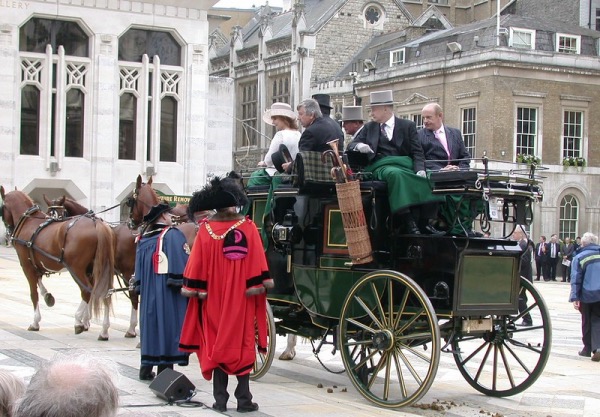
• The ceremony of Cart Marking takes place this Saturday in Guildhall Yard. Hosted by the City of London and the Worshipful Company of Carmen, the ceremony dates back 500 years and involved people having their carts marked – with a brand – after paying the appropriate licence fee. More than 50 vintage vehicles – ranging from handcarts, to horse-drawn, steam and modern vehicles – will take part in the event, entering Guildhall Yard through its famous arch and then symbolically marked with a brand. Entry to watch the event is free. For more, see www.cartmarking.org.
• Four rare K8 phonebooks – located in the London Underground network – have been listed at Grade II. The K8 kiosks were the last generation of the classic public telephone box and some 11,000 were installed across the UK between 1968 and 1983. Only around 50 now remain in their original position – most of them were removed by British Telecom following its privatisation in 1984. The K8 was replaced by the sleek silver KX100 kiosk, which in turn were made virtually obsolete by mobile phones. While most of the surviving K8s were located in Hull, there are four in the London Underground network including blue boxes at High Street Kensington and Chorleywood stations, a maroon one at Chalfont and Latimer and a white one at Northwick Park.
• It’s Ice Weekend at the London Canal Museum. Events – including a showing of rare film of ice harvesting, ice cream making demonstrations, and talks about the ice trade – take place on both Saturday and Sunday but the chance to visit the facility’s ice well takes place on Sunday only. Admission charges apply. For more, see www.canalmuseum.org.uk/whatson/icewell-visit.htm. The event is part of the 2023 Festival of Archaeology.
Send all items to exploringlondon@gmail.com
10 historic vessels in London’s Thames…8. MV Havengore….
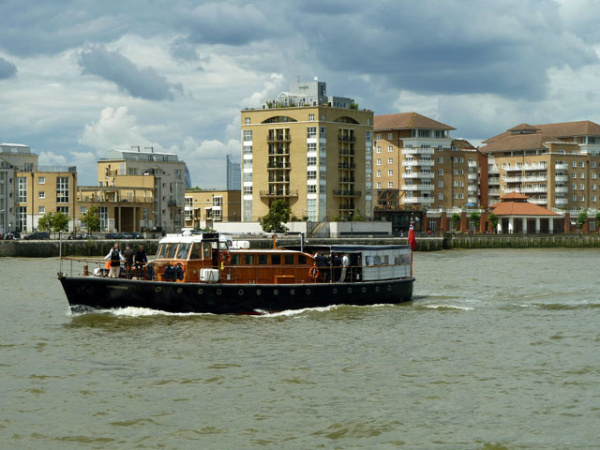
Still plying the waters of the Thames, the MV Havengore is perhaps most famous for having carried the coffin of Sir Winston Churchill on the River Thames as part of his state funeral in 1965.
The MV Havengore – named for a low-lying island off the coast of Essex – was originally constructed as a hydrographic survey launch for the Port of London Authority in 1956. As the PLA’s principal survey vessel and flagship, she was moored at Gravesend and tasked with recording changes to Thames bed and estuary. She became the first survey vessel in the UK to have a computer to record survey data.
The highpoint of her during her almost 40 years of service with the PLA came on 30th January, 1965, when she transported the body of Churchill from Tower Pier to Festival Pier. On the journey, she was saluted by flight of 16 fighter jets while dock cranes were made to bow as she passed (there’s a plaque on board commemorating her role in the funeral).
But the almost 26 metre long vessel also participated in other historic events including the river pageant to celebrate the Queen Elizabeth II’s Silver Jubilee in 1977 and, more recently, the flotilla formed to celebrate the Queen’s Diamond Jubilee in 2012 as well as the Thames tribute to the Queen’s long reign in 2015 and the Queen’s 90th birthday parade in 2016.
The MV Havengore was withdrawn from service in 1995 and sold after which she underwent restoration and refitting at the Chatham Historic Dockyard. The vessel was then used to provide excursions for underprivileged children on the Medway.
Sold again in 2006, she has subsequently undergone further restoration work. The MV Havengore is these days used for a range of ceremonial, corporate and private events. When not on the river, she is berthed at St Katharine Docks. The vessel was listed, as of May this year, as being up for sale.
Treasures of London – The Gold State Coach…
The Gold State Coach will feature in the Coronation Procession of King Charles III (though, interestingly, not for both journeys), it was announced earlier this week so we thought we’d take a more detailed look at it.
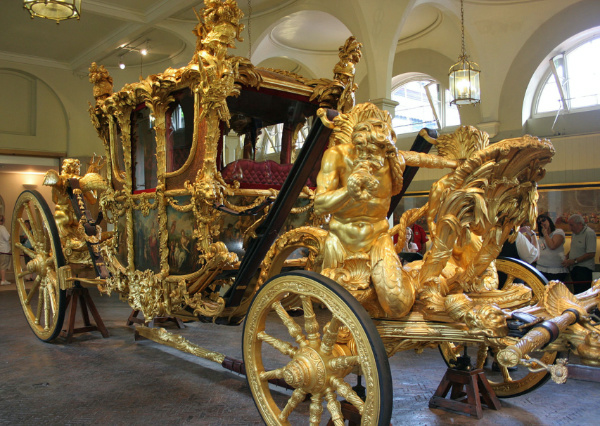
The coach – which was last seen publicly during Queen Elizabeth II’s Platinum Jubilee in June, 2022 – was built for King George III to travel to the State Opening of Parliament in 1762.
Designed by Sir William Chambers, it was built in the London workshops of coach maker Samuel Butler and cost more than £7,500 at the time.
The coach weighs some four tonnes and is 28 foot long and 12 feet high. The coach is made of giltwood – a thin layer of gold leaf over wood – and features sculptures by Sir Joseph Wilton including three cherubs on the roof (representing England, Ireland and Scotland) and four tritons (a display of imperial power) above the wheels. The coach is also decorated with painted panels depicting Roman gods and goddesses by artist Giovanni Battista Ciprian.
Inside the coach is lined with velvet and satin.
The coach is pulled by a team of eight horses wearing a Red Morocco leather harness. At the coronation it will be pulled by Windsor Greys and due to its age and weight, will only move at walking pace.
The coach has been used in every coronation since that of King William IV and was also used for the State Opening of Parliament by Kings George III, George IV and William IV as well as Queen Victoria (up until Prince Albert’s death).
The coach is, however, not said to be the most comfortable ride – Queen Elizabeth II is known to have said so while King William IV described travelling in the coach as like being on a ship “in a rough sea”. So it will only be used for the return, post-Coronation, journey from Westminster Abbey to Buckingham Palace.
For the outward journey – from Buckingham Palace to Westminster Abbey – the King and Queen Consort Camilla will travel in the more comfortable – and Australian-made – Diamond Jubilee State Coach (unlike the Gold State Coach, it comes with air-conditioning, modern suspension and electric windows).
Both coaches are usually housed in the Royal Mews at Buckingham Palace.
On Coronation Day, the Gold State Coach will transport the newly crowned King and Queen Consort on a shorter route than that of Queen Elizabeth II on her Coronation Day – just 1.3 miles compared to the late Queen’s five mile route back to the palace. Leaving Westminster Abbey, it will travel down Whitehall and pass under Admiralty Arch before travelling down The Mall to Buckingham Palace.
WHERE: The Royal Mews, Buckingham Palace (nearest Tube stations are Victoria, Green Park, St James’s Park and Hyde Park Corner); WHEN: 10am to 5pm (check website for closure dates around the coronation); COST: £15 adults/£10 young person (aged 18-24)/£9 child (aged five to 17); WEBSITE: www.rct.uk/visit/the-royal-mews-buckingham-palace
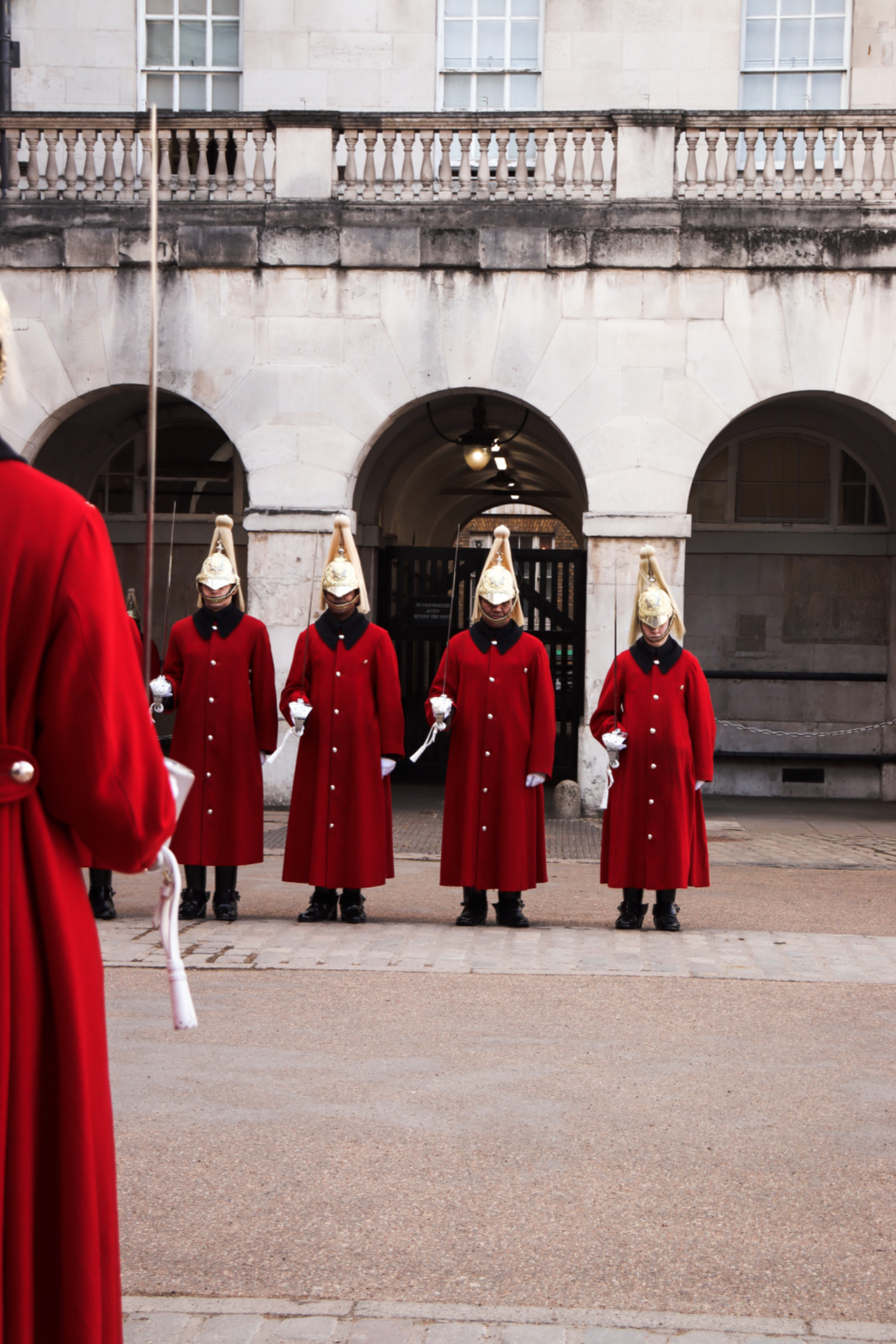
LondonLife – Changing of the Guard, Horse Guards…
LondonLife – Changing of the Guard returns…
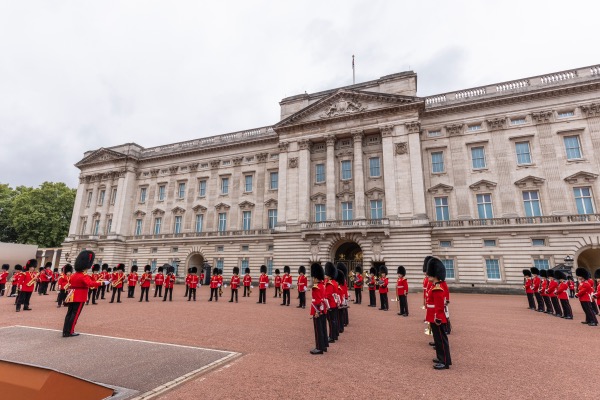
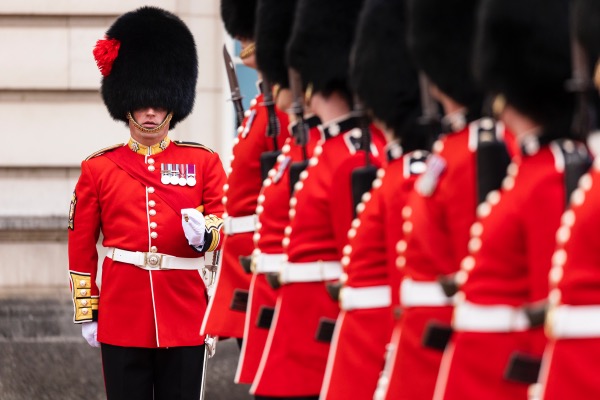
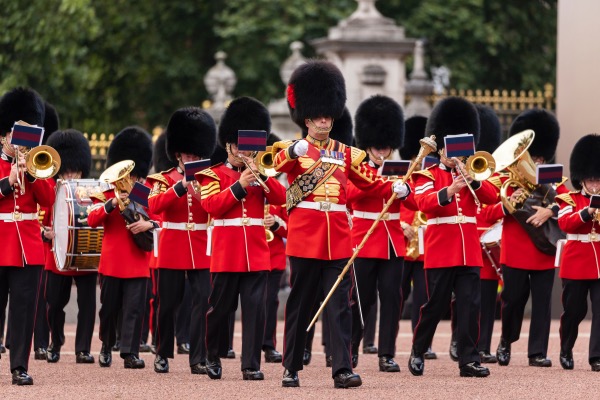
The full Changing of the Guard ceremony returned to Buckingham Palace, St James’s Palace and the Tower of London on Monday after the longest pause in its taking place since World War II. The ceremony, usually a popular tourist drawcard, had been absent from London since March last year due to the COVID-19 pandemic. The return to the ceremonial duty was carried out by the Number 3 Company from 1st Battalion Coldstream Guards based in Windsor, accompanied by the Band of The Coldstream Guards. PICTURES: Sergeant Donald C Todd, RLC (UK MOD © Crown copyright 2021/published under the MOD News Licence).
 Exploring London


