Around London – ‘Wild London’; National Trust photography contest; JK Rowling gets Freedom; and, Royal Devotion at Lambeth…

• Celebrate the Diamond Jubilee next Tuesday in Richmond Park as it hosts ‘Wild London’, the borough’s “first festival aimed at celebrating London’s woodlands, parks and gardens”. The event, which is being put on by Richmond Council and Royal Parks, will mark the Queen’s first visit to the borough in 23 years. It will showcase the conservational, recreational and inspirational role that parks and gardens play in London and will include hands-on exhibits, demonstrations, displays and performances. The event will be the first in a series celebrating the Diamond Jubilee held in Royal Parks. For more information, see www.richmond.gov.uk/home/leisure_and_culture/diamond_jubilee.htm

• The National Trust has launched a new photography competition aimed at celebrating green spaces and the life of the Trust founder Octavia Hill. The competition, called Your Space, is running in conjunction with National Trust Magazine and is open for entries until August. The competition was launched by internationally acclaimed photographers – Mary McCartney, Joe Cornish, Arnhel de Serra and Charlie Waite – with a new collection of pictures at National Trust places. One of the three Trust founder, Octavia Hill was a leading environmental campaigner in the Victorian Age and campaigned to save places in and around London like Parliament Hill. Entries in the competition, which aims to capture images of everyday green spaces, could include pictures from the local park or countryside. For details on how to enter, follow this link

• The author of the Harry Potter books, JK Rowling, received the Freedom of the City of London this week. The books have sold an estimated 450 million copies worldwide and have been made into films. The Freedom ceremony took place at Mansion House, the official residence of the Lord Mayor of London. Speaking before the ceremony on Tuesday, Rowling was quoted as saying that both her parents were Londoners. “They met on a train departing from King’s Cross Station in 1964, and while neither of them ever lived in London again, both their daughters headed straight for the capital the moment that they were independent.  To me, London is packed with personal memories, but it has never lost the aura of excitement and mystery that it had during trips to see family as a child. I am prouder than I can say to be given the Freedom of the City, which, on top of all the known benefits (and few people realize this), entitles me to a free pint in The Leaky Cauldron and a ten Galleon voucher to spend in Diagon Alley.” For more, see www.cityoflondon.gov.uk.

• On Now: Royal Devotion. This exhibition in the Great Hall of Lambeth Palace is being held to mark both the Diamond Jubilee of Queen Elizabeth II and the 350th anniversary of the revised Book of Common Prayer. The display charts the relationship between Crown and Church and its embodiment in the history of the Book of Common Prayer, one of the most important books in the English language. As well as the 1662 revision of the Book of Common Prayer, highlights include a 1549 printing of the Book of Common Prayer, medieval illuminated manuscripts, including the Book of Hours of King Richard III, Queen Elizabeth I’s personal prayer book and a copy of the book of private devotions compiled for Queen Elizabeth II in preparation for her coronation, the Book of Common Prayer used at the wedding of Queen Victoria, and King Charles I’s own handwritten revision of State Prayers. Admission fee applies. Runs until 14th July. For more, see www.lambethpalacelibrary.org/
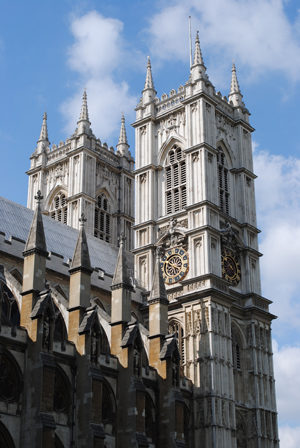
Celebrating the Diamond Jubilee with 10 royal London locations – 4. Westminster Abbey…

Westminster Abbey has played a key role in the life of Queen Elizabeth II – it was here on 20th November, 1947, that she was married to Prince Philip (then Lieutenant Philip Mountbatten) and it was here on 2nd June, 1953, that she was crowned Queen Elizabeth II.

First to the wedding. Princess Elizabeth was only the 10th royal to be married in the Abbey (her predecessors included her parents who married here on 26th April, 1923). The ceremony started at 11.30am and the princess, who wore a white dress designed by Norman Hartnell, entered to a specially composed fanfare accompanied by eight bridesmaids and two pages.

Due to post war austerity measures, only about 2,000 people attended the wedding (we’ve previously mentioned that the princess had to save coupons for her wedding dress like any other bride). On the day, the grave of the Unknown Warrior was the only stone that was not covered by the special carpet and the day after the wedding, the now married Princess Elizabeth followed a royal tradition started by her mother, Queen Elizabeth, which involved sending her wedding bouquet back to the Abbey to be laid on the grave.

It was about five-and-a-half years after her wedding that the princess returned to the Abbey to be crowned a queen.

Then Princess Elizabeth was in Kenya (on her way to Australia) when news reached her on 6th February that year of the death of her father, King George VI. After Prince Philip broke the news to her, the new queen chose Elizabeth as her “regnal name”, and the couple returned to England.

Queen Elizabeth II’s grandmother, Queen Mary, died on 24th March, but it was decided to proceed with the coronation anyway (Queen Mary had apparently asked that the coronation not be delayed by her death).

The coronation, the 38th to be conducted in the Abbey, was the first to be televised (with the exception of the anointing and communion) and was “instrumental” in helping to popularise it in the UK and elsewhere.

The building was closed for five months so preparations could be made for the more than 8,000 wedding guests. The Queen’s coronation dress, meanwhile, was made by Norman Hartnell (as had been her wedding dress) and was made of white satin embroidered with emblems of the United Kingdom and the Commonwealth.

Having arrived from Buckingham Palace in the Gold State Coach, the Queen entered the Abbey at 11.20am and, having been invested with the Regalia while seated in the Coronation Chair, was crowned with St Edward’s Crown at 12.34pm. She left the Abbey at 2.53pm and rode through the streets of London back to the palace.

Of course, the Queen has since attended many other events at the Abbey – including thanksgiving services for their golden and silver wedding anniversaries and last year’s Royal Wedding – since her coronation which we don’t have space to talk about here. But it is worth noting before signing off that the Abbey continues to have a special relationship to her – it is a “Royal Peculiar” meaning it is exempt from any ecclesiastical jurisdiction but that of the Sovereign.

WHERE: Westminster Abbey, Westminster (nearest Tube station is Westminster or St James’s Park); WHEN: Open to tourists everyday except Sunday  (times vary so check the website); COST: £16 an adult/£13 concessions/£6 schoolchildren (11-18 years), free for children aged under 11/£38 for a family (two adults, two children); WEBSITE: www.westminster-abbey.org

LondonLife – The ‘Royal River’ celebrated at the National Maritime Museum

Canaletto’s image of Greenwich Hospital from the north bank of the Thames (1750-52) is among almost 400 paintings, manuscripts and objects selected to be part of the National Maritime Museum’s new exhibition, Royal River: Power, Pageantry & The Thames.

Curated by historian David Starkey, the exhibition, part of the Diamond Jubilee celebrations, focuses on the use of the river across five centuries covering events including Anne Boleyn’s coronation procession and Admiral Lord Nelson’s stately funeral through to the evolving Lord Mayor’s pageant and the ‘Great Stink’ of the mid-1800s.

Highlights include the oldest known copy of Handel’s Water Music, the sixteenth century Pearl Sword (which the monarch must touch on entering the City of London), a stuffed swan, treasures from the City’s livery companies, and another Canaletto work – this time his famous view of the river filled with boats getting ready for the Lord Mayor’s Day, seen as an inspiration for this year’s Diamond Jubilee Pageant and on show in the UK for the first time since its completion.

As well as celebrating the Diamond Jubilee, the exhibition also marks the 75th anniversary of the opening of the National Maritime Museum by King George VI on 27th April, 1937. The king’s speech from that day and his Admiral of the Fleet uniform also feature in the exhibition.

WHERE: National Maritime Museum Greenwich (nearest DLR station is Cutty Sark); WHEN: Daily 10am to 5pm (opening times may vary during the Paralympic and Olympic Games) until 9th September; COST: £11 adult/£9 concession/family ticket £24.50; WEBSITE: www.rmg.co.uk.

PICTURE: © National Maritime Museum, London

Celebrating the Diamond Jubilee with 10 royal London locations – 2. The Queen’s childhood homes

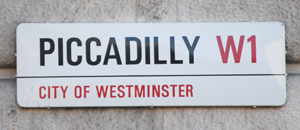
Having spent the first few months of her life at 17 Bruton Street, the future Queen Elizabeth II moved into her parents’ new property at 145 Piccadilly.

The property, located close to Hyde Park Corner, was previously the townhouse of the Marquesses of Northampton (interestingly, it was while living here that her father the Duke of York first started visiting the Harley Street-based Australian speech therapist Lionel Logue, as depicted in The King’s Speech). The 25 bedroom house was later destroyed by a bomb during the war, long after the Yorks had moved out.

As well as the house at 145 Piccadilly, the young Princess Elizabeth (and from 1930 her younger sister and only sibling Princess Margaret) also lived at White Lodge in the centre of Richmond Park in the city’s south-west. The Lodge, a Georgian property built as a hunting lodge for King George II, now houses part of the Royal Ballet School.

She also considerable time outside the city, staying in places including Scotland with her grandparents at either Balmoral Castle (owned by the Royal Family) or at Glamis Castle (owned by the parents of her mother, the Earl and Countess of Strathmore) as well as, from the age of six, at Royal Lodge in Windsor Great Park, the country home of the Yorks. The princess apparently had her own small house, known as Y Bwthyn Bach (the Little Cottage), in the grounds  – a gift from the people of Wales in 1932.

Following the death of King George V and subsequent abdication of King Edward VIII in 1936, new King George VI and his family moved from 145 Piccadilly to Buckingham Palace. Following the outbreak of World War II in 1939, the princesses lived in Balmoral, Scotland, and Sandringham but spent most of the war at Windsor Castle.

Princess Elizabeth, meanwhile, had met Prince Philip of Greece during the 1930s and in 1947, he asked for permission to marry her.

Celebrating the Diamond Jubilee with 10 royal London locations – 1. The Queen’s birthplace

This week we start a new series in honour of this year being the Diamond Jubilee of Queen Elizabeth II. We’ll be looking at locations across the city which have played an important role in the story of the Queen. First up, it’s the Queen’s birthplace – a now non existent townhouse in Mayfair.

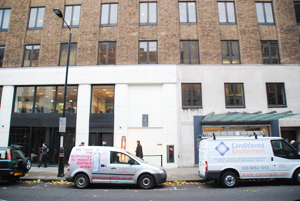
The property at 17 Bruton Street, which is marked by a small plaque installed in 1977 – the Queen’s Silver Jubilee (it’s in the middle of the image to the right), was actually the home of the Queen Mother’s parents, the Earl and Countess of Strathmore. It and the neighbouring townhouse at 18 Bruton Street have both been demolished and replaced with a rather bland office building.

Born here at 2.40am on 21st April, 1926, the Queen, named Elizabeth Alexandra Mary, was the first child of the then Duke and Duchess of York (later King George VI and Queen Elizabeth). At her birth, Queen Elizabeth II was only third in line to the throne after her uncle, the Prince of Wales (later, briefly, King Edward VIII), and her father.

The Queen’s grandparents, King George V and Queen Mary, both visited the newborn child at the property (along with an apparently large crowd outside). Elizabeth was christened five weeks later at the Chapel Royal in Buckingham Palace. She spent the first few months of her life living in a room at 17 Bruton Street which had been previously used by her mother before her marriage.

Recent books on the Queen include Andrew Marr’s  The Diamond Queen: Elizabeth II and Her People, the souvenir album Queen Elizabeth II: A Diamond Jubilee Souvenir Album, and Sarah Bradford’s Queen Elizabeth II: Her Life in Our Times.

• Correction: Bruton Street was mistakenly copied here as Brunton Street. It has been corrected. Apologies for the error!

Around London – Crown Jewels polished for Diamond Jubilee; Diana’s dresses at Kensington Palace; a plaque for Ziggy Stardust; and At Home with the World…

• A revamped Crown Jewels display opens today at the Tower of London to mark the Diamond Jubilee of Queen Elizabeth II. The new display features graphics, music and newly restored film footage and will focus on the coronation ceremony as its central theme, exploring how the regalia are used in the ceremony. The regalia – which includes some of the most extraordinary diamonds in the world such as the Star of Africa and Koh-i-Nur – is being displayed in the order in which it is used at the coronation ceremony. The Crown Jewels have been on show to the public at the Tower of London since at least 1661 after they were remade for King Charles II’s coronation. The previous collection had been largely destroyed in the Civil War although some pieces survived including a gilt silver spoon probably made for King Henry II or King Richard I (the “Lionheart”). For more information, see www.hrp.org.uk/TowerOfLondon/.

Five dresses worn by Diana, Princess of Wales, have gone on display at Kensington Palace  which re-opened to the public this week following a £12 million overhaul. The five dresses include a black silk taffeta gown (designed by Emanuel) which Diana wore to a fundraising event at the Goldsmith’s Hall in 1981 – her first official engagement with Prince Charles as well as a formal dinner dress of ivory silk (Catherine Walker) created for a State Banquet for the King and Queen of Malaysia in 1993 and a black ribbed silk shift evening dress (Gianni Versace) worn to the London premiere of Apollo 13 in Hammersmith in 1995. For more on the revamp of the palace see our earlier post. Or visit www.hrp.org.uk/KensingtonPalace/.

• A plaque commemorating the site where the iconic image for the cover of David Bowie’s 1972 album The Rise and Fall of Ziggy Stardust and the Spiders of Mars was photographed has been unveiled in the West End. The plaque at the somewhat innocuous site at 23 Heddon Street, just off Regent Street, was installed by the Crown Estate and unveiled this week by Gary Kemp of Spandau Ballet. The image for the album cover was shot by the late photographer Brian Ward who managed to persuade Bowie to step outside the ‘studio’ space he had rented upstairs despite the fact it was a cold, wet January night.

• On Now: At Home with the World. This exhibition at the Geoffrye Museum explores the cosmopolitan nature of London’s homes over the past 400 years and looks at how diverse cultures have helped shaped the homes – covering everything from Chinese porcelain and the tea craze of the 1700s to the use of Islamic and Indian patterns in the 1800s, the popularity of Scandinavian and American design in the 1900s and the globalism of today. The period rooms on show at the museum have been reinterpreted to highlight the international influences. This is one of a series of Stories of the World: London exhibitions taking place across the city which are exploring four aspects of life – home, identity, journeys and place – as part of the London 2012 Cultural Olympiad program. Runs until 9th September. Entry is free. For more, see www.geffrye-museum.org.uk.

LondonLife – The Queen visits the newly transformed Kensington Palace…

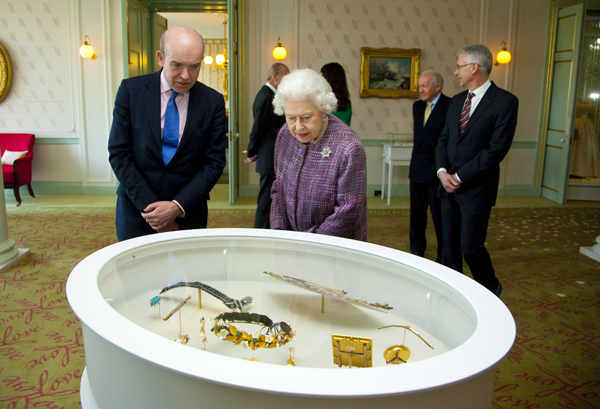
Queen Elizabeth II looks over gifts exchanged by Queen Victoria and Prince Albert in a display which forms part of the Victoria Revealed exhibition at Kensington Palace.

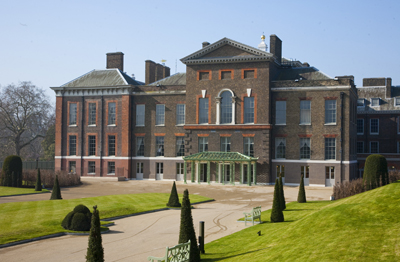
The Queen and Duke of Edinburgh visited palace last week to officially reopen the building following a £12 million, two year renovation project aimed at “transforming the visitor experience”.

The works have involved restoring the palace gardens – which will now be permanently open to the public free-of-charge – and reconnecting the palace with the surrounding parklands of Kensington Gardens partly through the provision of a new entrance. Landscape designer Todd Longstaffe-Gowan’s plan – which centres on a statue of Queen Victoria – features new lawns and avenues and a “maze-like path” inspired by 18th century “wilderness walks”.

There is also a new visitor reception area and “orientation hub” as well as a new courtyard terrace and cafe to complement The Orangery, shop and learning centre.

Victoria Revealed, a new permanent exhibition at the palace looks in intimate detail at the life of the Queen who once lived here and features everything from her black silk baby shoes to her wedding dress and the mourning clothing she wore following the death of Prince Albert as well as archive film footage showing the celebrations for the Diamond Jubilee of her reign in 1897.

The palace reopens on 26th March.

WHERE: The Broad Walk, Kensington Gardens, Kensington (nearest Tube stations are High Street Kensington or Queensway); WHEN: Daily 10am to 6pm (until 31st October); COST: £14.50 adult/£12 concession/children under 16 free (online booking discounts available, Historic Royal Palaces members free); WEBSITE: www.hrp.org.uk/KensingtonPalace.

PICTURES: Courtesy of Historic Royal Palaces/newsteam.co.uk

Queen unveils final Jubilee Greenway plaque; a Barbican weekend; and, the Transit of Venus at Greenwich…

Queen Elizabeth II this week unveiled the final plaque marking the end of the 37 mile/60 kilometre Jubilee Greenway in front of Buckingham Palace. The circular Greenway – marked by 542 glass plaques – has been created to celebrate the Queen’s Diamond Jubilee. It can be walked or cycled and takes in key sites around London, including Kensington Palace, Regent’s Park, the Thames Barrier and Olympic sites including Greenwich Park (equestrian events), the O2 Arena (hosting gymnastics, trampoline and basketball events) as well as the main stadium at Olympic Park. The Greenway is divided into 10 sections and you can download either the entire walk or brochures for one of the sections only here.

This weekend sees the Barbican Centre play host to the event known as ‘Barbican Weekender’ – two days of free art, dance, music, theatre and film at the Barbican Foyers. Part of London 2012 Festival, the event’s ‘Freestage’ programme features Roxxxan,Dizralie and the Small Gods, young drummers from East London and performance poetry by the Barbican Young Poets. There’s also street dance classes with Boy Blue Entertainment, the chance to make an Opera in a Day with the Hip Hop Shakespeare Company, a Digital Graffiti wall, street food stalls, the Wah Nails Pop-Up boutique and free running by Streets United. For more, see www.barbican.org.uk/weekender.

• On Now – Measuring the Universefrom the Transit of Venus to the edge of the cosmos. Marking the 2012 transit of Venus, this exhibition at the Greenwich Observatory follows the story of man’s ongoing quest to understand the vastness of space, looking at the people and technologies involved in seeing farther than ever before – from the Astronomer Royal, Edmond Halley, to Captain James Cook and Edwin Hubble and through to the possibilities offered by the Cosmic Microwave Background Explorer. It’s accompanied by a series of talks, observing events – including this month’s Daytime Sky Watch sessions – and a planetarium show. Runs until 2nd September. Admission is free. For more information, see www.rmg.co.uk.

Around London – Family festival to celebrate Diamond Jubilee; British Library publishes world’s first detective novel; and, Closing Ceremony Celebration Concert tickets on sale Friday…

Sainsbury’s and Royal Parks have unveiled plans for a two day festival in Hyde Park – billed as the largest family festival London has ever seen – celebrating the Queen’s Diamond Jubilee over the June holiday weekend. The Jubilee Family Festival will feature live music and entertainment with one of the key highlights of each day being the finale – a 70 minute Disney concert specially created to celebrate the Jubilee. Other activities will include appearances by celebrity performers and dancer and children’s TV characters as well as equestrian events and motorcycle displays. There will also be a range of “Commonwealth-inspired” acts, food and drink supplied by Sainsbury’s and giant screens showing Jubilee-related events taking place elsewhere. There will be capacity for 50,000 ticket holders on each of the two days – Saturday, 2nd June, and Sunday, 3rd June. The event will run from 10.30am to 7pm on each day. Tickets – priced at £20 an adult/£12.50 for under 16s (children under three free) or £52 for a family of two adults and two children – go on sale at 9am tomorrow (Friday 24 February) from Ticketmaster – www.ticketmaster.co.uk or call 0844 847 1661 (+44 161 385 3211 from outside the UK) – or Seetickets –  www.seetickets.com  or call 0844 858 6760 (+44 1142 249 784 from outside the UK). In addition, from 28th March, Sainsbury’s customers who spend £60 in store will be able to enter a daily ballot for free family tickets. For more information on the festival, see www.sainsburys.co.uk/jubilee.

• The British Library has republished what many believe was the first detective novel ever published. The Notting Hill Mystery by Charles Felix was originally serialised between 1862 and 1863 in the magazine Once a Week (pictured right – image courtesy of the British Library). It was also published as a single volume in 1863, meaning it predates both Wilkie Collins’ The Moonstone (1868) and Emile Gaboriau’s first Monsieur Lecoq novel, L’Affaire Lerouge, but has not been available commercially since. The story is presented in the form of diary entries, family letters, chemical analysis reports, and interviews with witnesses as well as a crime scene map and follows an insurance investigator, Ralph Henderson, as he builds a case against the sinister Baron ‘R___’ whom he suspects of murdering his wife for life insurance. Available from the British Library bookshop – www.bl.uk/shop.

• Tickets for the BT London Live Closing Ceremony Celebration Concert go on sale tomorrow. The open air event will feature headline act Blur and will be held in Hyde Park on Sunday, 12th August, the day of the Olympic Games Closing Ceremony. Other artists performing at the concert will include The Specials and New Order, and giant screens in the park will show highlights of the Closing Ceremony. Another concert will be held in Hyde Park on Friday July 27, coinciding with the Games’ Opening Ceremony (headline acts and ticket prices will be announced shortly – BT customers will have 48 hour priority access for tickets for both concerts via www.bt.com/londonlive. Tickets for the August concert, priced at £55 (plus booking fee) go on sale at 9am on Friday via www.btlondonlive.com.

LondonLife – A look back at Queen Elizabeth II’s reign…

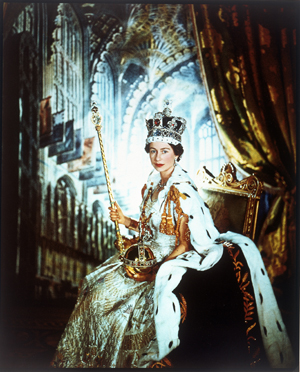
In celebration of Queen Elizabeth II’s Diamond Jubilee (the 60th anniversary of her reign officially passed on Monday), the Victoria and Albert Museum is holding an exhibition of portraits of the Queen taken by the acclaimed late photographer Cecil Beaton, including this one of Queen Elizabeth II in Coronation Robes taken in June, 1953. The exhibition, Queen Elizabeth II by Cecil Beaton: A Diamond Jubilee Celebration, depicts the Queen in various roles – as princess, monarch and mother – and includes a number of never-before-seen photographs as well as excerpts from Beaton’s diaries and letters. Runs from tomorrow (8th February to 22nd April). For more, see http://www.vam.ac.uk.

Image: Copyright, Victoria and Albert Museum, London

LondonLife Special – Long-serving royals…

Today marks 60 years since Queen Elizabeth II ascended to the throne, making her Britain’s second-longest serving monarch. While the celebrations are yet to kick off in earnest (the Diamond Jubilee weekend will be officially held over the 2nd to 5th June), we thought we’d take a quick look at the top 10 longest-serving monarchs who were crowned at Westminster Abbey in London:

1. Queen Victoria – 63 years (20th June, 1837-22nd January, 1901)

2. Queen Elizabeth II – 60 years (6th February, 1952-current)

3. King George III – 59 years (25th October, 1760-29th January, 1820)

4. King James I (VI of Scotland) – 57 years (24th July, 1567-27th March, 1625)

5. King Henry III – 56 years (18th October, 1216-16th November, 1272)

6. King Edward III – 50 years (25th January, 1327-21st June, 1377)

7. Queen Elizabeth I – 44 years (17th November, 1558-24th March, 1603)

8. King Henry VI – 38 years (31st August, 1422-4th March,1461, and, 31st October, 1470-11th April, 1471)

9. King Henry VIII – 37 years (22nd April, 1509-28th January, 1547)

10. King Henry I – 35 years (3rd August, 1100-1st December, 1135)

LondonLife – New Year’s Day Parade 2012

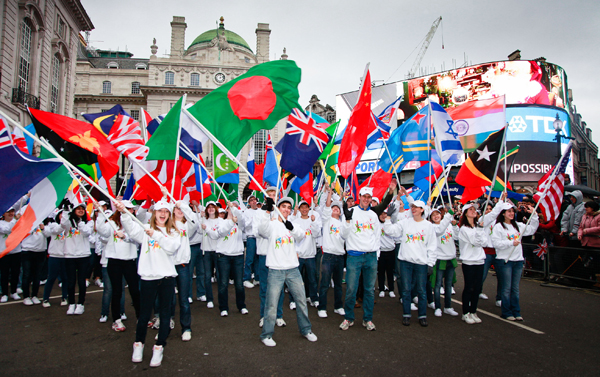
More than 8,500 performers – including those pictured celebrating the launch of London’s Olympic year – took part in this year’s New Year’s Day Parade in London, the wettest in the event’s 26 year history. But the wild weather didn’t put off the more than 500,000 people who turned out to watch the parade as it made its way from the starting point outside the Ritz Hotel in Piccadilly via Trafalgar Square to Parliament Square. As many as 19 London boroughs submitted entries in a competition based on the themes of the Olympics and the Queen’s Diamond Jubilee with Merton (its entry ‘From Horsepower To High Speed Rail’ featured animatronics) and the City of Westminster (its entry ‘Peter Pan’ involved a giant galleon and the The Sylvia Young Theatre School) announced as joint winners. For more on the parade, see www.londonparade.co.uk.

IMAGE: Courtesy of www.londonparade.co.uk

Around London: A new pleasure garden for London; music hall star Dame Gracie Fields honored; mystery portraits at the NPG; and, celebrating the Olympics (from a Peruvian perspective)…

A new pleasure garden will be built in the city’s east as part of celebrations for next year’s Diamond Jubilee. London Pleasure Gardens, announced back in March, will be built upon a 60,000 square metre site at Pontoon Dock, opposite the ExCeL Exhibition Centre, and consist of an “ever-evolving creative playground for both resident Londoners and tourists alike”. The gardens, which will feature landscaped walkways, a floating cinema, an ‘adult’s playground’ and a range of facilities such as a ‘glass cafe’ – are expected to be open for the Queen’s Jubilee Weekend on 1st June. It’s expected that more than 40,000 people a day will pass through the site during the Olympics. London has had a long association with the concept of pleasure gardens – places where people gathered to listen to music, see art, eat and drink and talk, the most famous of which was the Vauxhall Pleasure Gardens. But the Royal Docks also had its own pleasure gardens in the past – these existed between 1851 and 1884 and were named the Royal Victoria Gardens.  For more, see www.londonpleasuregardens.com.

• Music hall star Dame Gracie Fields has been honored by English Heritage with a blue plaque on the Islington house where she lived for three years in the 1920s. It was while living at 72a Upper Street with her parents and first husband Archie Pitt, that she consolidated her reputation as one of Britain’s most popular performers and it was also during this time that she recorded for the first time (she was to become a regular on the BBC and by 1933 had cut a massive four million discs) and appeared before King George V and Queen Mary at a Royal Variety Performance. Following her success, Fields and Pitt built a mansion in The Bishop’s Avenue, Hampstead, called ‘The Tower’ in honor of the show which had made her a star – Mr Tower of London. She later separated from Pitt and married an Italian born director Monty Banks. They moved to the US in 1940 amid fears her husband would be interned and, after the war, she settled on the Italian island of Capri where, following Banks’ death in 1950, she married again. She made her final appearance on the London stage in 1978 – closing a Royal Variety Performance – and died back in Capri the following year.

• And, briefly…..A new species of dinosaur – Spinops sternbergorum – has reportedly been discovered at the Natural History Museum, identified from bones previously gathering dust on a shelf at the museum.

On Now: Imagined Lives: Portraits of Unknown People. This exhibition at the National Portrait Gallery centres on a group of 14 portraits from the 16th and 17th centuries which depict unknown people. Originally thought to represent famous figures like Queen Elizabeth I, the identity of the sitters is now considered unknown. In response to the pictures, eight internationally renowned authors – from Alexander McCall Smith and Joanna Trollope to Julian Fellowes and Terry Pratchett – have written imaginative short stories about the portraits, bringing them to life. The exhibition was originally shown in Somerset but is now running at the NPG until 22nd July. Admission is free. For more information, see www.npg.org.uk.

On Now: London and the Olympics. The Museum of London is hosting a new display which looks at the 1908 and 1948 Olympic Games held in London but, in twist, looks at not only the experiences of Londoners but those of the 41 man team Peru sent to the 1948 games. Pictures included in the display come from an album made by one of the athletes, Enrique Mendizabal Raig, recording the team’s visit (you can find the images on Flickr here). Entry is free. Runs until September. For more, see www.museumoflondon.org.uk.

10 curiously named churches of London – 4. St James Garlickhythe

Situated close to London’s riverfront, there is believed to have been a church on this site since at least 1100, although it is believed to have been previously dedicated jointly to the apostles St James and St John.

The name of Garlickhythe can be explained by its location – the word ‘hythe’ is a Saxon word for a landing place or jetty and it is believed garlic, used as a preservative and medication, was unloaded nearby and even possibly traded on Garlick Hill where the church stands.

The church was rebuilt in the 1300s and again after the Great Fire (it was another of Sir Christopher Wren’s designs and thanks to the abundance of natural light inside was known as ‘Wren’s Lantern’) but it largely escaped damaged in World War II (the projecting tower clock was among the casualities but while a 500 lb bomb buried itself in the south-east corner of the church, it failed to explode).

What bombs failed to do, however, a death watch beetle did and when one was discovered in the roof timbers in the 1950s, the church was closed until 1963 while it was restored. The exterior clock was restored in 1988 and repairs to the south transept were required after a crane counterweight smashed into the church in 1991.

Inside, the church boasts the second highest ceiling  – 40 foot – of any churches in London (St Paul’s being the highest) and much of the carved woodwork inside, including the font cover, altar table and churchwardens pews, is still original.

There is also original ironwork including a mayoral swordrest as well as a Stuart and Georgian coat-of-arms (the Stuart arms are among a number of features which come from St Michael Queenhithe – it was combined with this parish in the late 1800s; St Michael’s was pulled down in 1894 ).

The magnificent Bernhard Schmidt organ was installed in 1718. The church also houses two rare chalices dating from the time of Edward VI in the mid-16th century and some other rare plate as well as the oldest parish registers in England (these date from the 16th century with the first entry being that of the baptism of Edward Butler on 18th November, 1535).

St James Garlickhythe, which sits in the parish of St James Garlickhythe with St Michael Queenhithe and Holy Trinity-the-Less (the latter being another now demolished church), boasts connections to 12 livery companies including the Vintners (the church is located in Vintry Ward) and the Joiners. Among those buried there are six former mayors.

The church is currently appealing for funds for a new ring of eight bells to mark the Diamond Jubilee of Queen Elizabeth II next year.

And we couldn’t mention the church without referring to Jimmy Garlick, the church’s mummy. An embalmed body of an older man, this was discovered in the church vaults in 1855 and, identity unknown, was subsequently put on display so that curious onlookers could, for a small fee, look upon him or apparently even touch him. Jimmy, whose identity remains unknown, is no longer on public view.

WHERE: Garlick Hill (just off Upper Thames Street) (nearest Tube station is Mansion House). WHEN: See website for service timesCOST: Free; WEBSITE: www.stjamesgarlickhythe.org.

Around London – See museums after hours; the White Tower is white again; and, foundation stone for Bomber Command is laid…

• The annual Museums at Night event returns to London (and Britain) this weekend with hundreds of museums and galleries across the country opening their doors for special after hours events. Among those places in London taking part is the Churchill War Rooms, which is hosting a 1940s evening on Friday night, the London Canal Museum which is hosting”candle-lit tours, atmospheric lighting, and exhibits of art and film in dark places”, and the Petrie Museum of Egyptian Archaeology which is hosting a double hill of Hammer films and a “Gothic Egypt” trail. Other institutions taking part include the Sir John Soane Museum, the National Gallery, the Bank of England Museum, and Orleans House Gallery in Twickenham.  For more information about what’s on see www.museumsatnight.org.uk

King William the Conqueror celebrated at the Tower of London this week following the completion of a £2 million, three year project to clean the White Tower. First built shortly after the Norman Conquest of 1066, the tower had become blackened by pollution but has now been restored to its original color. For more information on visiting the Tower, see www.hrp.org.uk/toweroflondon/.

A foundation stone has reportedly been laid for a Bomber Command Memorial in Green Park. The memorial, which is due to be completed for the Queen’s Jubilee celebrations in 2012, will be constructed of Portland stone and will feature a nine foot tall statue of a bomber command aircrew. Bomber Command lost more than 55,000 airmen during World War II. The foundation stone was laid by the Duke of Gloucester. Supporters of the monument’s construction have included former Bee Gee Robin Gibb, Sir Michael Beetham, Marshal of the RAF, and  The Daily Telegraph newspaper which is running an appeal to help raise funds for the memorial.