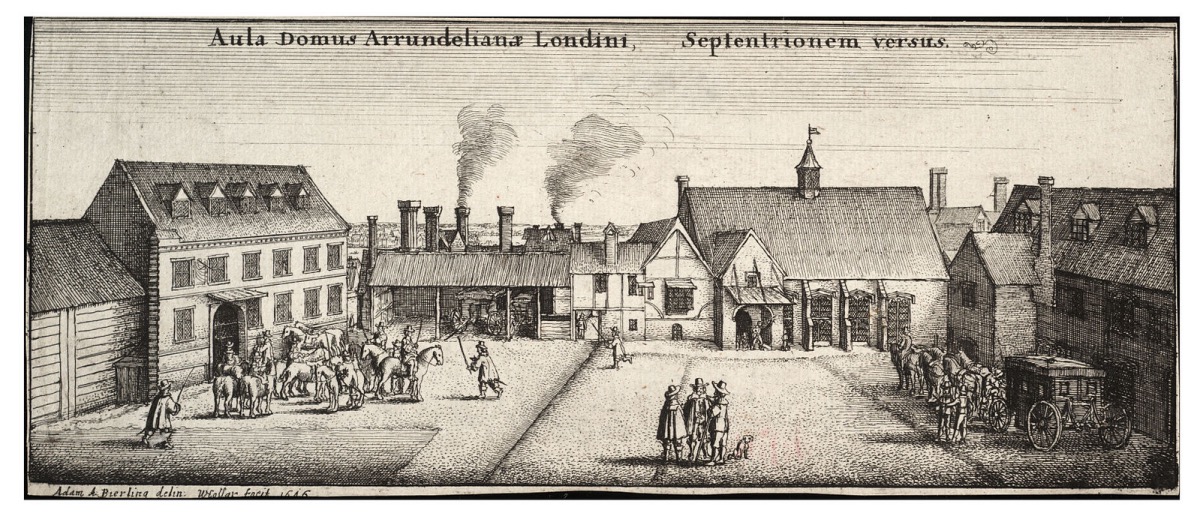
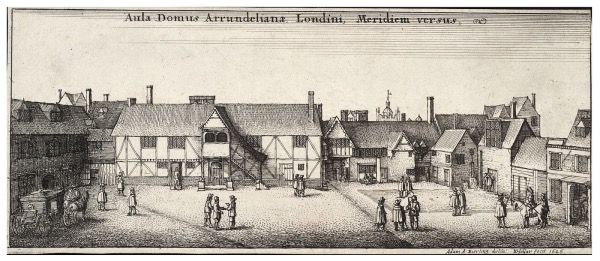
Arundel House, from the south, by Wenceslas Hollar.Via Wikimedia Commons.
One of a string of massive residences built along the Strand during the Middle Ages, Arundel House was previously the London townhouse of the Bishops of Bath and Wells (it was then known as ‘Bath Inn’ and Cardinal Thomas Wolsey was among those who resided here during this period).
Following the Dissolution, in 1539 King Henry VIII granted the property to William Fitzwilliam, Earl of Southampton (it was then known as Hampton Place). After reverting to the Crown on his death on 1542, it was subsequently given to Thomas Seymour, 1st Baron Seymour of Sudeley, a younger brother of Queen Jane Seymour, Henry VIII’s third wife, and known as ‘Seymour Place’. Then Princess Elizabeth (late Queen Elizabeth I) stayed at the property during this period (in fact, it’s said her alleged affair with Thomas Seymour took place here).
Arundel House, from the south, by Wenceslas Hollar.Via Wikimedia Commons.
Seymour significantly remodelled the property, before in 1549, he was executed for treason. The house was subsequently sold to Henry Fitz Alan, 12th Earl of Arundel, for slightly more than £40. He was succeeded by his grandson, Philip Howard, but he was tried for treason and died in the Tower of London in 1595. In 1603, the house was granted to Charles, Earl of Nottingham, but his possession was short-lived.
Just four years later it was repurchased by the Howard family – in particular Philip’s son, Thomas Howard, 14th Earl of Arundel – who had been restored to the earldom.
Howard, who was also the 4th Earl of Surrey, housed his famous collection of sculptures, known as the ‘Arundel Marbles’, here (much of his collection, described as England’s first great art collection, is now in Oxford’s Ashmolean Museum).
During this period, guests included Inigo Jones (who designed a number of updates to the property) and artist Wenceslas Hollar who resided in an apartment (in fact, it’s believed he drew his famous view of London, published in 1647, while on the roof).
Howard, known as the “Collector Earl”, died in Italy in 1646. Following his death, the property was used as a garrison and later, during the Commonwealth, used as a place to receive important guests
It was restored to Thomas’ grandson, Henry Howard, 6th Duke of Norfolk, following the Restoration. Following the Great Fire of London in 1666, for several years the property was used as the location for Royal Society meetings.
The house was demolished in the 1678. It’s commemorated today by the streets named Surrey, Howard, Norfolk and Arundel (and a late 19th century property on the corner of Arundel Street and Temple Place now bears its name).
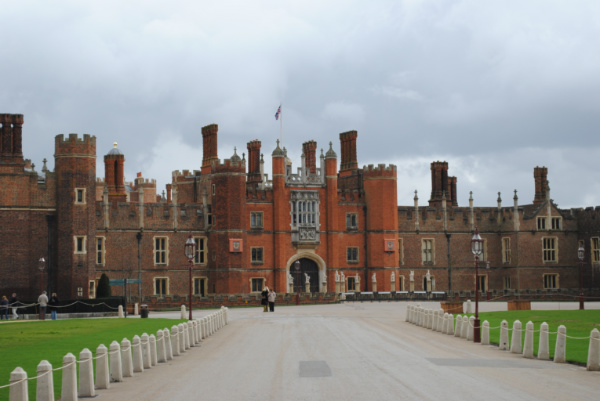
Standing with Giants, a thought-provoking art installation at Hampton Court Palace, commemorates the lives lost in World War I and II and, in particular, the Indian soldiers who resided on the palace’s estate prior to the coronation of King Edward VII in 1902, and again for the World War I Victory Parade in London. The work of Oxfordshire artist Dan Barton and a dedicated group of volunteers, the work – located in the East Front gardens – features 100 almost life-sized silhouettes of soldiers and 75 screen-printed poppy wreaths along with an additional 25 specially commissioned silhouettes which represent the Indian soldiers. Almost 1,800 Indian Army officers, soldiers, and civilian workers sailed from India for the World War I Victory Parade and a camp was specially created to house them in the palace grounds in what was at the time one of the largest gatherings of people from India and South-East Asia ever assembled the UK. During their stay in London, the soldiers were treated to excursions in London and across the country which included trips to the Tower of London and a Chelsea football match. Alongside the display, a special trail map has been created to allow visitors to explore other aspects of the palace’s World War I history and former residents who took on roles ranging from frontline nurses to campaigners for improved care for injured veterans. One of the most poignant contributions the palace made to the war effort was the use of wood, supplied from an oak tree felled in Hampton Court’s Home Park, for the making of the coffin for the Unknown Soldier. Can be seen until 28th November. Admission charge applies. For more, see www.hrp.org.uk.
• The Lord Mayor’s Show returns to London this weekend after being cancelled last year due to the coronavirus pandemic. More than 6,500 people, 120 horses and more than 50 decorated floats are expected to take part in the event – which dates back to the 13th century – on Saturday. It comes a day after Alderman Vincent Keaveny, who has been elected as the 693rd Lord Mayor of the City of London, officially takes office tomorrow. Highlights in this year’s three mile-long procession include colourful full-size model elephants, Japanese taiko drummers, and a horse-drawn bus as well as a fire engine with a 210-foot extendable turntable ladder – the tallest in Europe. The procession, which will be watched by millions live on the BBC and through online streaming, will leave The Mansion House, the Lord Mayor’s official residence, at 11am. In honour of this year’s show, three of London’s Thames bridges – London, Cannon St and Southwark – are being lit specially for the occasion. For more, including details on where to watch the show, see www.lordmayorsshow.london.
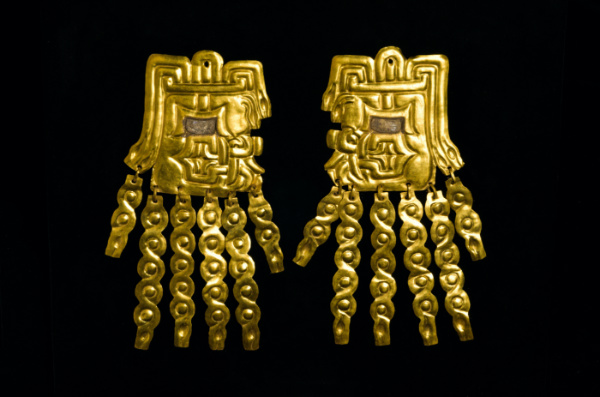
Gold alloy and shell ear plates with feline features, Peru, 800–550 BC. Museo Kuntur Wasi.
• More than 40 ancient objects from Peru are the centrepiece of a new exhibition which opened at the British Museum this week.Peru: a journey in time is the first major exhibition the museum has ever staged focused on Peru and coincides with the 200th anniversary of the country’s independence. The exhibition charts the rise and fall of six societies, from the early culture of Chavin in 1200 BC to the fall of the Incas in AD 1532. Highlights include a 2,500-year-old gold headdress and pair of ear plates which were part of an elite burial found at the site of Kuntur Wasi, Cajamarca, a ceremonial drum from around 100 BC-AD 650 featuring a depiction of the capture of defeated enemies in ritual combat, and, the oldest object on loan – a ceremonial vessel from the Cupisnique culture in the shape of a contorted human body, which dates from up to 1200 BC. The display can be seen until 20th February, 2022, in the Joseph Hotung Great Court Gallery. Admission charge applies. For more, see www.britishmuseum.org.
• Streatham Hill Theatre in London’s south is among buildings added to Historic England’s ‘Heritage at Risk’ register for this year. Opened in 1929, the Grade II-listed building was designed by William George Robert Sprague and is described as an “unusually lavish example of a theatre built outside of the West End”. Other London buildings on the list include everything from a Toll Gate House in Spaniards Road, Highgate, to Alexandra Palace in Wood Green, and churches such as St Mary Woolnoth in the City of London. Meanwhile, among the sites removed from the list this year after being “saved” are the Battersea Power Station, first added to the list in 1991 and in recent years the subject of a major redevelopment, and former public conveniences at Guilford Place, Lamb’s Conduit Street, in Bloomsbury, which have been “sensitively transformed into a cosy wine and charcuterie bar”. For more, see https://historicengland.org.uk/whats-new/news/heritage-at-risk-2021/.
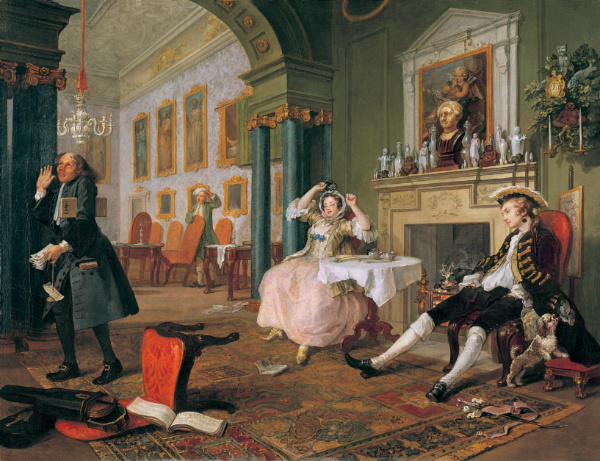
• See the works of 18th century English artist William Hogarth alongside those of his European contemporaries in a new exhibition which opened at Tate Britain this week.Hogarth and Europe features more than 60 of Hogarth’s works and has some of his best-known paintings and prints – such as Marriage A-la-Mode (1743), The Gate of Calais (1748), Gin Lane (1751) and his celebrated series, A Rake’s Progress (1734) – shown alongside works by famed European artists including Jean-Siméon Chardin, Pietro Longhi, and Cornelis Troost. The display also includes Hogarth’s work, Miss Mary Edwards (1742) – it depicts the eccentric, wealthy patron who commissioned many of Hogarth’s best-known works and has not been seen in the UK for more than century. Admission charge applies. See www.tate.org.uk.
• The first commercial Christmas card, created after civil servant Henry Cole commissioned artist John Callcott Horsley to design one for him in 1843, can once again been seen at The Postal Museum’s permanent display. That’s just one of the drawcards (pardon the pun), at the Postal Museum in the lead-up to Christmas with others including a new display, Letters to Santa, featuring Royal Mail cards sent by Father Christmas to children between 1963 and 2010 (from a recently donated collection), and the chance to ride on the Mail Rail which has undergone a Christmas makeover. The museum is also holding a series of ‘Festive Family Fun Days’ on selected dates in December. Admission charges apply. For more, head to www.postalmuseum.org.
• Handwritten lyrics and photographs spanning the career of Paul McCartney feature in a new free Entrance Hall display at the British Library from tomorrow. Paul McCartney: The Lyrics features previously unseen materials from his personal archives as it reveals the process and people behind some of the most famous songs of all time, from some of his earliest compositions to his time with The Beatles, Wings and through to today. The display accompanies his new book, The Lyrics: 1956 to the Present. Can be seen until 13th March next year. For more, see www.bl.uk/events/paul-mccartney-the-lyrics.
Send all items for inclusion to exploringlondon@gmail.com.
Arguably the grandest music venue in London, the Royal Albert Hall, named in memory of Queen Victoria’s husband Prince Albert, has been hosting musical events since it first hosted a concert in 1871.
The Grade I-listed hall, which has a seating capacity of more than 5,000 and which did suffer from acoustic problems for many years (until mushroom-shaped fibreglass acoustic diffusers were hung from the ceiling following tests in the late 1960s), has been the setting for some of the most important – and, in some cases, poignant – music events of the past 150 years, not just in London but the world at large.
Among some of the most memorable are the Titanic Band Memorial Concert – held on 24th May, 1912, just six weeks after the sinking of the iconic ship to remember the 1514 people who died with a particular focus on the eight musicians who played on as the stricken vessal sank, the ‘Great Pop Prom’ of 15th September, 1963 – only one of a handful of occasions when The Beatles and Rolling Stones played on the same stage, and Pink Floyd’s gig of 26th June, 1969 – coming at the end of a UK tour, the on-stage antics saw the band banned (it was short-lived, however, they returned just a few years later in 1973).
Other musical figures to have taken to the stage here include everyone from composers Richard Wagner, John Philip Sousa, and Benjamin Britten to the Von Trapp family, jazz greats Billie Holiday and Ella Fitzgerald, and the likes of Shirley Bassey, Bob Dylan and Elton John – a veritable musical who’s who of the past 150 years. The venue also hosted the 13th Eurovision Song Contest in 1968.
Of course, Royal Albert Hall is famous for The Proms, an annual festival of classical music which was first performed here in 1941 after the venue where it had been held since 1895 – the Queen’s Hall on Langham Place – was lost to an incendiary bomb during World War II.
Prom stands for ‘Promenade Concert’, a phrase which originally referred to the outdoor concerts in London’s pleasure gardens during which the audience was free to walk around while the orchestra was playing (there are still standing areas during performances). The most famous night of the season is the ‘Last Night of the Proms’ which, broadcast by the BBC, features popular classics and ends with a series of patriotic tunes to stir the blood.
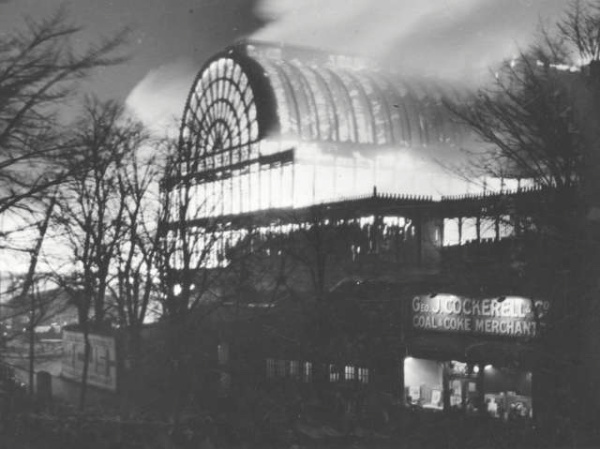
The Crystal Palace fire in 1936. PICTURE: Unknown author (via Wikipedia)
This month marks 85 years since the Crystal Palace in London’s south was destroyed in a fire.
The Joseph Paxton-designed building had originally been located in what is now Hyde Park for the Great Exhibition of 1851 and, following the end of the exhibition, had been dismantled and relocated to Sydenham.
When the fire in broke out on the night of 30th November, 1936, two night watchmen tried to put it out. Sir Henry Buckland, the building’s general manager, was out walking his dog with his daughter Crystal (named, apparently after the building) when he spotted the flames and called the fire brigade.
They arrived at about 8pm but the fire, fanned by a wind, was soon out of control and so further aid as summoned with hundreds of firefighters and some 88 engines attending the scene. It has been said the blaze could be seen across eight counties.
A crowd of spectators – said to number as high as 100,000 – arrived to watch what was apparently a rather spectacular sight (special trains were apparently put on to transport people from towns in Kent and private airplanes were spotted overhead). Police, some on horseback, did their best to keep the crowds away but had limited success given the numbers who turned out (Winston Churchill, among those watching the building burn, is said to have remarked: “This is the end of an age” while Sir Henry told reporters later that the palace would “live in the memories not only of Englishmen, but the whole world”).
By morning, the building was reduced to bits of twisted metal and ash but thankfully no lives were lost in the conflagration. The cause, however, remained a mystery – there was speculation it had been started by a stray cigarette butt or had been deliberately lit by a disgruntled worker. Television pioneer John Logie Baird, who had a workshop in the building, believed it could have been started by a leaking gas cylinder in his workshop.
Two water towers, located at either end of the building, survived the blaze but were later demolished. Among the few remains of the building which did survive the blaze is the subway located under Crystal Palace Parade. The park which surrounded the building remains home to the famous ‘Crystal Palace dinosaurs’.
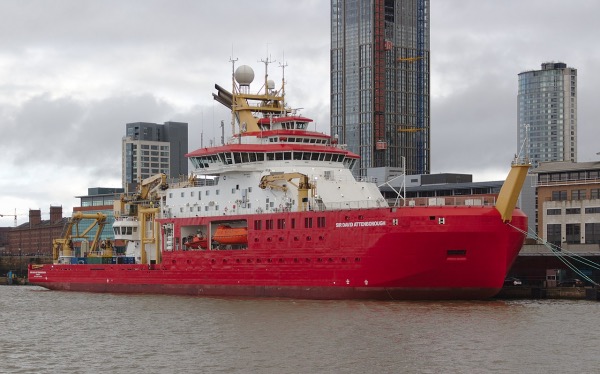
The RRS Sir David Attenborough in Liverpool. PICTURE: By Phil Nash from Wikimedia Commons CC BY-SA 4.0 & GFDL.
• Find out what it’s like to live and work in the Earth’s polar extremes at Greenwich from today. The three day ‘Ice World Festival’ centres on the British Antarctic Survey’s vessel, the RRSSir David Attenborough, which is visiting Greenwich before beginning its first mission to the Antarctic. Visitors will also be able to meet real polar scientists and explorers and see the Boaty McBoatface submersible as well as treasures from the National Maritime Museum’s polar collection including relics from HMS Erebus and Terror and items belonging to Captain Scott and Ernest Shackleton. While the ship can be seen from the dockside, a limited number of tickets are available for walk-up visitors to the festival (advanced booking tickets have sold out). Runs from today until 30th October. Admission is free. For more information, head here.
• More than 200 images – captured by Brazilian photographer Sebastião Salgado over seven years – explore the rich diversity of the Amazon in an exhibition at the Science Museum.Amazônia provides a close-up look at one of the most unique environments on the planet through Salgado’s eyes, including panoramic scenery and the Indigenous peoples of the region (Salgado spent time with 12 different Indigenous groups over his period in the Amazon). Runs until March next year. Admission charge applies. For more, see www.sciencemuseum.org.uk/see-and-do/amazonia.
• Father Christmas with return to The National Gallery for selected dates in November and December. The gallery’s Christmas experience will provide children with the chance to have their photo taken with Santa in his grotto, listen to an elven story in the winter forest set and receive a special token which they can exchange for a gift at the Elven Sorting Office. Meanwhile, Hendrick Avercamp’s paintingA Winter Scene with Skaters near a Castle (about 1608–9) will be enlarged and reproduced on a canvas to provide a scenic backdrop for the activities. Admission charge applies. Bookings are now open. For more, head to www.nationalgallery.org.uk/whats-on/meet-father-christmas.
Send all items for inclusion to exploringlondon@gmail.com.
• Pop-Up London, a free festival for families, kicks off in central London on Saturday and runs throughout the half-term break until 31st October. The festival features more than 300 artists – includingmusicians, dancers, comedy acts and circus performers – who can be seen in more than 100 performances at locations including Trafalgar Square, King’s Cross, Spitalfields, and Canary Wharf. The diverse range of acts will include Brazilian drumming, Cantonese story-telling and Caribbean steelpans. For the full list of events. head to www.visitlondon.com/things-to-do/lets-do-london/pop-up-london.
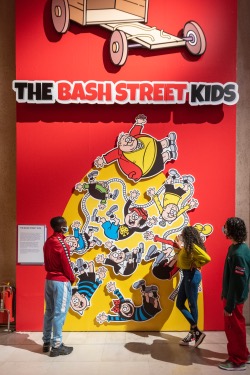
The Bash Street Kids cut outs in ‘Beano: The Art of Breaking the Rules’ PICTURE: Stephen Chung for Somerset House
• The world’s longest-running weekly comic, Beano, is celebrated in a new exhibition opening at Somerset House today.Beano: The Art of Breaking the Rules features 100 comic artworks from the Beano archive exhibited, including original drawings never previously seen in public, and, works by contemporary artists including artist duo Gilbert & George, sculptor Phyllida Barlow and Oscar-winning animator Nick Park as well as larger-than-life recreations of Beano’s most iconic settings and interactive installations including Peter Liversidge’s patchwork of protest signs and a jukebox filled with music influenced by Beano’s rebellious streak. Beano was first released in 1938 and is still created weekly at its home in Dundee. This year marks the 70th since Dennis, Beano‘s top mischief-maker, made his debut. Runs until 6th March. Admission charge applies. For more, see www.somersethouse.org.uk/beano.
• Barrister and women’s rights advocate Helena Normanton (1882-1957) has been honoured with an English Heritage Blue Plaque at her former home.The plaque at 22 Mecklenburgh Square – where Normanton lived from 1919 to 1931 – was unveiled almost 100 years since she passed her Bar finals on 26th October, 1921. Normanton played an instrumental tole in paving the way for women to practice law, being the first female students one of London’s Inns of Court, one of the first women to be called to the Bar, the first female counsel to lead a case in the High Court, the first woman to run a trial at the Old Bailey and the first women to lead murder trials in England as well as one of the first two women to take silk as King’s Counsel. For more, see www.english-heritage.org.uk/visit/blue-plaques.
Send all items for inclusion to exploringlondon@gmail.com.
Not to be confused with the Mayor of London (a position currently held by Sadiq Khan, the Mayor is the head of the Greater London Authority – more on that in a later post), the Lord Mayor of London serves as the head of the City of London Corporation which governs the Square Mile.
Lord Mayor of London William Russell in February, 2020. PICTURE: Bank of England (licensed under CC BY-NC-ND 2.0/image cropped)
The Lord Mayor of London is generally elected annually (last year was an exception due to the coronavirus pandemic) by members of the City’s livery companies who are summoned by the previous Mayor to meet at at Guildhall on Michaelmas Day (29th September) or on the closest weekday
The Lord Mayor is subsequently sworn into office in November in an event known as the ‘Silent Ceremony’ because, aside from a short declaration from the incoming mayor, no speeches are made. The following day, the Lord Mayor participates in a procession from the City of London to the Royal Courts of Justice in the City of Westminster, where they swear allegiance to the Crown. The event is known as the Lord Mayor’s Show (this year it’s being held on 13th November).
Lord Mayors must be one of the City of London’s 25 alderman (elected to represent the City’s wards) and must first served as one of the City’s two sheriffs prior to taking on the position – the sheriffs support the Lord Mayor in their role as advisors. They also host dinners for visiting dignitaries, accompany the Lord Mayor in their business travels and look after the judges at the Old Bailey.
The first Lord Mayor is said to have been Henry FitzAilwin, who served between 1189 and 1212. The current Lord Mayor, William Russell, is the 692nd to hold the post. Until 1354, the title was simply Mayor of London.
The role of the Lord Mayor these days is to serve as an international ambassador for the UK’s financial and professional services sector.
The official residence of the Lord Mayor is called the Mansion House. It is used for some of the City’s official events.
• Some 5,000 papers and photographs relating to the life and legacy of Prince Albert, consort of Queen Victoria, have been published online. The move, which marks the completion of the Prince Albert Digitisation Project, means some 22,000 archival documents, prints and photographs from the Royal Archives, the Royal Collection and the Royal Commission for the Exhibition of 1851 are now publicly available, many for the first time, through the website Prince Albert: His Life and Legacy which was launched in mid-2019 to mark the 200th anniversary of the Prince’s death. The new items predominantly consist of the Prince’s private and official papers and correspondence as well as excerpts from Albert’s now lost diaries, spanning the years from 1841 to 1852. Highlights include a note he wrote to Victoria on October, 1858, which reads: “I declare that I have every confidence in you. A”; a letter from 10-year-old Princess Louise to her father from Swiss Cottage, the life-sized playhouse he had installed for his children at Osborne House on the Isle of Wight, in which she reports cooking and making “some wafers and schneemilch” (a type of Austrian pudding); and, an annotated list of candidates for the role of Master of the Household in which Albert lists why they are unsuitable with reasons including ‘too old’ and ‘too useful to the Navy’ and ‘bad temper’ and ‘French mistress’.
• London Transport Museum are offering people the chance to go behind the scenes at its depot in Acton, West London, this weekend. The depot, which houses more than 320,000 objects from London’s transport history, will play host to a programme of events – ‘Underground Uncovered’ – which includes talks, vintage vehicle displays and family activities. Highlights include a talk by Siddy Holloway, a disused station history expert and co-presenter of the new Secrets of the London Underground TV series, the chance to try your hand at being a train operator in the Victoria Line driving cab, and the opportunity to watch a demonstration of restored London Underground signalling frames. The open days are being held from today until Sunday, 11am to 5pm. Admission charge applies. To book and see the full programme of events, see www.ltmuseum.co.uk/visit/depot/events.
• W1 Curates and artist Anthony James’ light exhibition inside the Marble Arch Mound has opened to the public with free entry to what has been a somewhat controversial attraction to continue. James’ Lightfield installation involves a series of 12 cubed light sculptures in three rooms inside the mound through which visitors will make their way after first visiting the viewing platform on top. James, who has described the cubes as alluding to the “mycorrhizal nature of birch tree forests”, says it’s the first time his works have been displayed and viewed in such a “fully immersive way”. Visitors are asked to book an entry time at www.themarblearchmound.com.
Send all items for inclusion to exploringlondon@gmail.com.
John Brodie Donald, the creator of the Lost London Churches Project, talks about how the project came about, its aim and his personal favourite “lost” church…
1. First up, when you talk about London’s “lost churches”, what do you mean by the expression? “Of the 108 churches in the City of London in 1600 only 39 remain. The rest have been lost in the last 350 years, either destroyed in the Great Fire of London in 1666 or in the Blitz or demolished by commercial developers as property prices soared.”
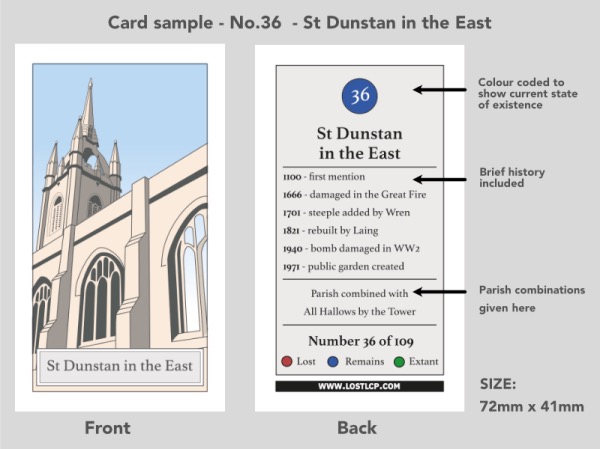
2. What is the aim of the Lost London Churches Project? “The Lost London Churches Project aims to promote interest in the ancient church buildings and parishes of the City of London through collectable cards, books, maps and downloadable explorers walks. We have created a ecclesiastical treasure hunt – a way of exploring the history of the square mile that costs nothing and can be easily fitted into a few spare lunchtimes.”
3. How many churches are included in the project? “There are 78 churches for which collectable cards have been produced and these are available in a growing number of churches in the City. It is hard to find evidence of what the churches lost in the fire of 1666 looked like, but hopefully after further research these will be included in a second edition. “
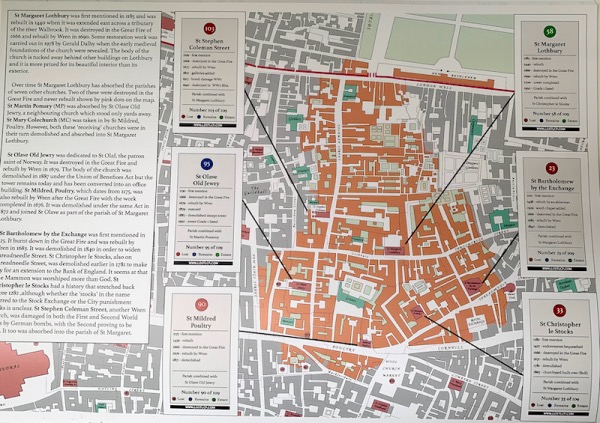
4. Does the project cover every “lost” church in the City of London? “It covers not just ‘lost’ churches but also the extant ones for two reasons. First, because those who are collecting the cards need a place to pick them up which they can do in the churches that still exist. Secondly, although the church buildings were lost, the parishes still remain to this day for administrative reasons. Every one of the 109 churches still has a parish clerk. The parishes have been amalgamated with the existing churches. So, for example, St Vedast in Foster Lane is a church of 13 united parishes having acquired them as the church buildings were lost over the centuries.”
5. Tell us how the Lost London Churches Project came about? “It all started when I was redrawing the Ogilby and Morgan map of 1676 in colour for my own pleasure. This large scale map (100 feet the inch) shows every single house in the City of 350 years ago. It was completed just after the Great Fire and so shows the location of all the lost churches clearly. The original covered 20 separate black and white sheets but I redrew them all joined together in colour on my computer. The end result was so huge it was impractical to print…So it made sense to break it up and publish in a book, and since the most interesting information in the map was the churches lost in the fire. it became the basis for the collectors book for the Lost London Churches project. At the same time, I was going through my late father’s papers and found a booklet of cigarette cards that he had collected in the 1940s. He also had a passion for painting watercolours of churches. That’s when I had the idea of producing a series of ‘cigarette cards’ showing the lost churches and the project was born.”
6. What’s the role of the cards? “The role of the cards is to give some tangible treasure to collect while exploring the lost churches. Like trading cards or Pokemon the challenge is – can you collect them all? In every participating church you will be able to pick up that church’s card along with a pack of five random cards for a small voluntary donation. Cards are also available from the project’s website lostlcp.com.”
7. You mentioned earlier that there were a number of ways the City of London’s churches become lost? “They were lost in three phases. Around 85 were destroyed or damaged in the Great Fire of 1666 of which 34 were never rebuilt. The others were rebuild by Christopher Wren, along with St Pauls Cathedral. Then 26 more churches were lost after the Union of Benefices Act of 1860 triggered a second wave of demolition. The purpose of the act was to combine parishes and free up space for the swelling capital of the British Empire. Lastly, the City suffered badly in the Blitz of World War II which took a further toll on these ancient buildings.”
8. How easy is it to spot remnants of the City’s lost churches? “Though the buildings are lost, the parishes remain and you can still see the old parish boundary markers even on modern buildings. The best place to see an example of these is to walk down Cheapside along the New Change shopping centre towards the church of Mary le Bow. In only 100 or so yards you will have crossed the boundaries of five different parishes; St Vedast Foster Lane, St Matthew Friday Street, St Peter Westcheap, All Hallows Bread Street and St Mary Magdalene Milk Street. As you walk down the street look up above the shops ( see picture below) and you will see little plaques marking these parish boundaries. These type of parish boundary markers are scattered throughout the City. Our downloadable explorers walks on Google Maps available (for free) on our website lostlcp.com will show you some routes to find them. There is also a A4 sized map of the ancient parishes we have published for you to use as a guide.”
Parish markers on a building on Cheapside and, inset, in detail.
9. Have you uncovered any particularly interesting stories in your research into London’s lost churches? “I think one the most interesting things is the unusual names and how they were derived: Benet Fink, Stephen Coleman, Mary Somerset, Martin Ludgate and Gabriel Fenchurch. Couldn’t these be the names in an Agatha Christie mystery where the key to the murder is church themed aliases? But seriously, every church has a rich history since most were established before 1200 so in visiting them you are trekking right back to medieval times.”
10. And lastly, do you have a favourite “lost” London church? “My favourite is St Mary Abchurch just off Cannon Street. It is not only the headquarters of the ‘Friends of the City Churches’ charity but also a perfect jewel of a Wren church with the most glorious painted ceiling – like a secret Sistine chapel!”
St Leonards Court Air Raid Shelter in Sheen. PICTURE: Courtesy of Open House London
• Open House London kicks off this weekend and this year is being billed as a nine day ‘festival’ of the city’s architecture and urban landscapes. This year’s programme features “hidden gems” such asa World War II air raid shelter designed to appear like an old dovecote or garden storeroom in East Sheen (pictured right) and the UK’s only Brutalist Quaker Meeting House in Blackheath as well as buildings deemed at risk from demolition such as the soon to be vacated City Hall and Notting Hill’s landmark Trellick Tower. The programme also features five of London’s outstanding housing estates in a bid to celebrate those estates which helped support positive wellbeing during the COVID-19 pandemic. There’s also a number of important projects from some of the black, Asian and ethnic minority designers as well as annual programme favourites like 10 Downing Street, the HM Treasury building, and various churches across the metropolis. For the full programme of events (most of which are free but some of which have to be rebooked), check out https://open-city.org.uk/open-house.
• The first in a new series of ‘After Dark’ events kicks off at the London Transport Museum on Friday night. The nights, which run from 6,30pm to 9pm, come with a variety of themes starting with a night themed around the museum’s ‘Hidden London’ tours of ‘ghost’ stations and other secret sites across the Capital’s transport network. As well as the chance to explore the museum’s galleries free from crowds and enjoy the thematic fun, guests can also visit a pop-up bar featuring the museum’s signature red Routemaster cocktail. For full details of the events, head to www.ltmuseum.co.uk/news/new-season-after-dark-evening-events-kick-september.
• The work of award-winning illustrator Korky Paul will be on display at the Heath Robinson Museum on Saturday.Korky Paul’s Magic of Illustration (with a Flying Visit from Winnie and Wilbur) is the first solo exhibition of his original work which includes such characters as Winnie the Witch, The Fish Who Could Wish, Professor Puffendorf and Sir Scallywag. The exhibition will provide an insight into Korky Paul’s process of illustrating and preparing illustrations by drawing on his archive of drawings and other material relating to the development of the illustrations of each book and its publication. Korky Paul, whose work “often clearly shows the influence of Heath Robinson’s humorous drawings” according to the museum, has sold over 10 million of books worldwide in more than 35 languages. Runs until 9th January. Admission charge applies. For more, see www.heathrobinsonmuseum.org.
Send items for inclusion to exploringlondon@gmail.com.
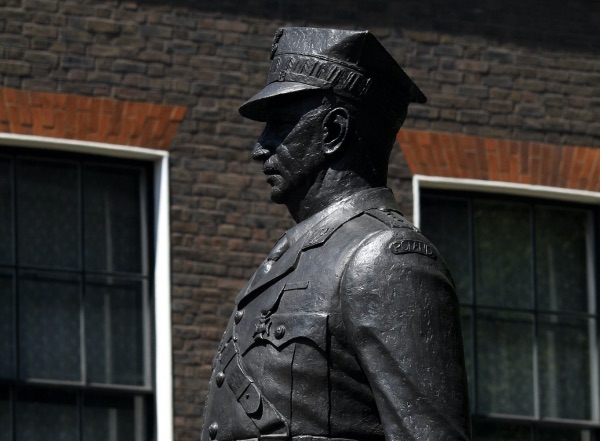
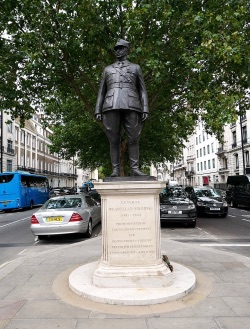
This statue in Portland Place in Marylebone commemorates wartime Polish Prime Minister and military leader (and British ally) Władysław Sikorski (1881-1943).
Larger than lifesize, the bronze statue depicts Sikorski in military uniform standing on a white stone plinth. It is the work of late British artist Faith Winter (also the sculptor of a controversial statue of Air Chief Marshal Sir Arthur Harris outside the RAF church on the Strand).
Funded by public subscription, this statue of Sikorski was erected on 24th September, 2000, and unveiled by the Duke of Kent. It stands near the Polish Embassy on a traffic island near the intersection with Weymouth Street.
There’s inscriptions on each face of the plinth which commemorate Sikorski as well as the “Soldiers, Seamen and Airmen of the Polish Armed Forces and the Resistance Movement” between 1939 – 1945. The east face inscription commemorates Polish involvement in World War II through a listing of battles.
Sikorski is also commemorated with a plaque adorning the Rubens Hotel in Buckingham Palace Road which served as his headquarters between 1940 until his death in an air crash in Gibraltar in 1943 (where there is another memorial to him).
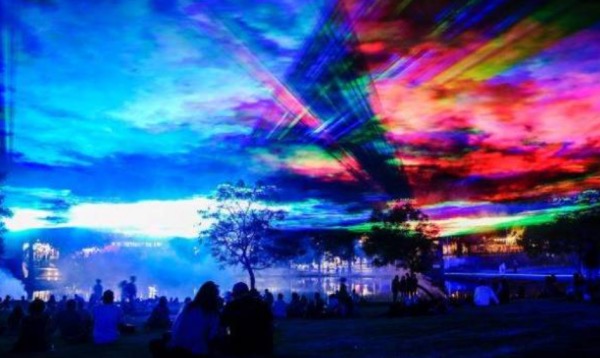
• The Northern Lights come to Greenwich this Bank Holiday weekend. The Greenwich + Docklands International Festival, promoted as London’s “leading festival of free outdoor theatre and performing arts”, features two major installations in the Old Royal Naval College grounds – the Borealis and We are Watching – from artist Dan Acher as well as the Greenwich Fair on Sunday. There’s also dance and theatrical performances – including Family Tree, a performance inspired by the life of Henrietta Lacks, an African American woman whose cells were harvested and cultivated without her consent after her death from cervical cancer in 1951, and Future Cargo, Requardt & Rosenberg, a contemporary sci-fi dance show – and pop-up events in neighbourhoods across the Royal Borough of Greenwich. The festival opens tomorrow and runs until 11th September. For the full programme of events and for more information, see https://festival.org/gdif/whatson/. For bookings for Borealis, head here.
• Art historian and broadcaster, Sir Kenneth Clark, has been honoured with an English Heritage Blue Plaque at his former Marylebone home. Clark (1903-1983), who is probably best known for the landmark 1969 BBC TV series Civilisation, lived in the property at 30 Portland Place between 1934 and 1939 – the period when he became director of The National Gallery and when he was knighted. Sir Kenneth and his wife Jane hosted parties at the property where guests included Winston Churchill and Vanessa Bell. Sir Kenneth, who also headed organisations including the Arts Council of Great Britain and the Independent Television Authority, is noted for having saved some of the nation’s most valuable artworks during World War II by having more than 800 paintings evacuated to rural Wales. He was also responsible for many of the Ministry of Information’s wartime films and sponsored emerging artists including Henry Moore and Graham Sutherland. For more, see www.english-heritage.org.uk/visit/blue-plaques/.
• A celebration of Phyllida Barlow’s art has opened at the Tate Modern on South Bank.ARTIST ROOMS: Phyllida Barlow spans the British artist’s 60 year career and features some of her large-scale sculptures as well as more than 30 works on paper. Highlights include Object for the television (1994), the only surviving work from Barlow’s 1990s series Objects for… and major installations such as untitled: brokenstage/hangingcontainer, 2012/2013 and untitled: upturnedhouse2, 2012. The exhibition is free to enter. For more, see www.tate.org.uk.
Send all items for inclusion to exploringlondon@gmail.com.
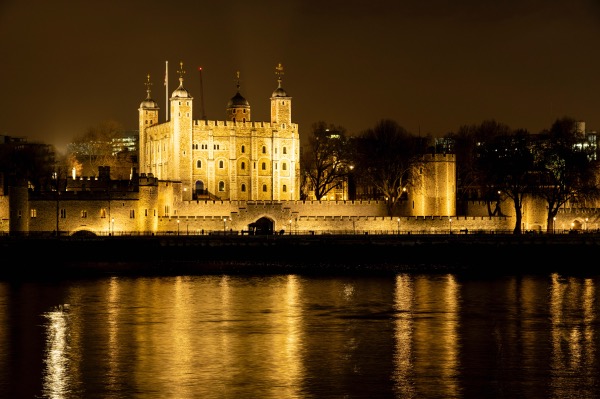
This month marks the 80th anniversary of the last person to be executed at the Tower of London for treason.
Injured when he was shot in the chest while serving as a conscript in the German army during World War I, Josef Jakobs worked as a dentist after the war (and was briefly imprisoned in Switzerland for selling counterfeit gold). Following the Nazi Party rose to power in Germany during the 1930s, he was arrested in 1938 by the Gestapo for selling black market passports to Jewish people fleeing the country and sent to the Sachsenhausen concentration camp.
After two years, Jakobs was released after he agreed to work as a spy in England for the German military intelligence.
Having flown from Holland, Jakobs parachuted into England at a located near Ramsey in what was then Huntingdonshire, in late January, 1941. Breaking his ankle during the landing and in pain, he fired his pistol into the air early on February 1st and was subsequently apprehended by members of the Home Guard.
Among the items he was found with were a wireless transmitter, a small torch with a flashing device, a map marking positions of nearby RAF airfields and a German sausage.
Jakobs was taken to a local police station before being transferred to London where he was subsequently interrogated by MI5 during which he claimed he had escaped to England with the intent of securing passage to America. He was later taken to a hospital and treated for his injuries.
His court martial before a military tribunal was held at the Duke of York’s headquarters in Chelsea on 4th and 5th August. After hearing from eight witnesses in a closed court (due to intelligence sensitivities), he was convicted of spying and sentenced to death.
Jakobs’ execution was carried out at the miniature rifle range at the Tower of London – the same place where death sentences had been carried out on 11 spies executed during World War I – on 15th August.
Jakobs was blindfolded and tied to a chair (which can still be viewed in the White Tower) with a white target pinned over his heart. A firing squad of eight – all members of the Scots Guards – carried out the sentence at 7.12am (five of those in the squad had live rounds). He is said to have died instantly.
Jakobs was subsequently buried in an unmarked grave at St Mary’s Catholic Cemetery in Kensal Green.
Jakobs was the only spy executed at the Tower in World War II and the last person to suffer such a sentence there.
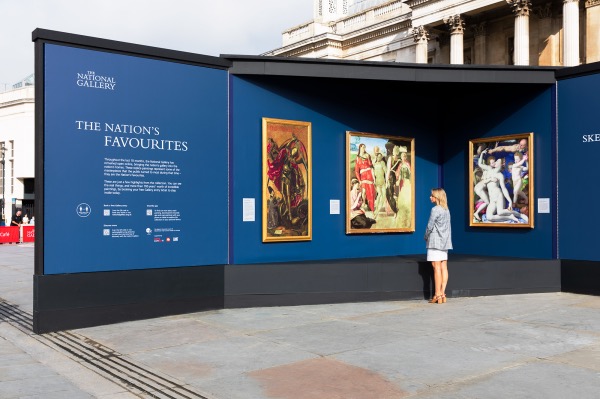
Inside Out Festival launch at The National Gallery. PICTURE: Nyla Sammons
• Reproductions of some of The National Gallery’s most famous works have appeared on Trafalgar Square’s North Terrace as part of the City of Westminster’s ‘Inside Out’ festival. The life-sized replicas include Van Gogh’s Sunflowers (1888), Turner’s The Fighting Temeraire (1839), Botticelli’s Venus and Mars (1485), Titian’s Bacchus and Ariadne (1520-3) and John Constable’s The Hay Wain (1821). The display is being accompanied by ‘Sketch in the Square’, a programme of free, daily alfresco art activities with a strong emphasis on mindfulness and wellbeing. Other events in the Inside Out festival include the ‘Tusk Lion Trail’ in which 22 life-sized lion sculptures take visitors on a journey to trail some of the West End’s most iconic landmarks, a immersive light installation by artist Chila Burman at Covent Garden’s historic Market Building, and ‘Art of London’, in which five Royal Academy artists have brought their art to Piccadilly Circus and its surrounding streets. The ‘Inside Out’ festival is part of the ‘Westminster Reveals’ campaign which aims to encourage visitors to return to the city’s streets and enjoy the city’s cultural scene. For more on ‘Inside Out’ – which runs until 31st October, see www.westminster.gov.uk/insideout.
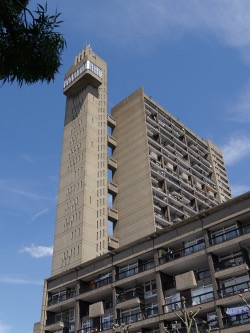
Trellick Tower (courtesy of Open House London).
• Usually held over a weekend, Open House London is this year a nine day celebration of London’s architecture and urban landscapes. Highlights this year include the chance to see inside 10 Downing Street, Ernő Goldfinger’s brutalist landmark Trellick Tower (pictured), a street of self-build timber houses in Lewisham and a former Victorian workhouse which has been transformed into a homeless shelter in Camden. There’s also the first chance to see a new design district in Greenwich, a yet to be opened community centre in Holborn and a special focus on the capital’s pubs and breweries. The full programme for the festival – which runs from 4th to 12th September and features hundreds of events – is now available online. For full listings, see www.openhouselondon.org.uk/2021.
• Historic sites and objects related to the landmark 1951 Festival of Britain have been officially recognised to mark the event’s 70th anniversary. The London sites include Calvary Charismatic Baptist Church in Tower Hamlets, built as part of the ‘live’ architectural exhibition of the Festival of Britain, which has seen its heritage listing upgraded from Grade II to Grade II*. Among the sites which have had their listings updated are: Royal Festival Hall which was designed by the London County Council Architect’s Department as part of their contribution to the Festival of Britain; the Church of St John located just off the Waterloo roundabout which, struck by a bomb during World War II, remained damaged until 1950 when the interior was remodelled in a neo-Georgian style for the festival; and, the Newbury Park Bus Station Canopy, which was designed with a high arched, open structure in what has been described as the modernist ‘Festival style’. The Festival of Britain, which ran from May to September, 1951, was a national exhibition and fair aimed at promoting British design, science, technology, architecture, industry, and the arts. Held in the aftermath of World War II, one of its key aims was to help foster a national sense of recovery.
Send all items for inclusion to exploringlondon@gmail.com.
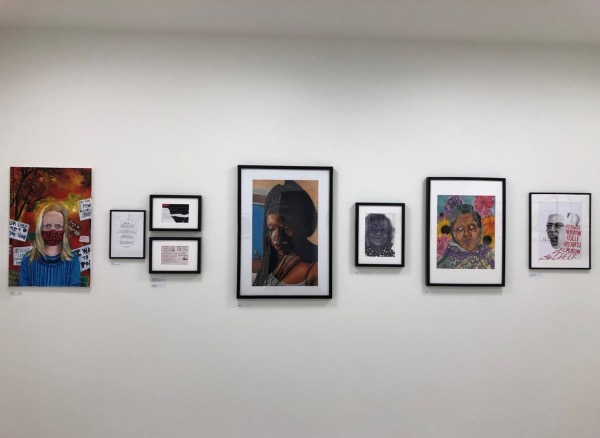
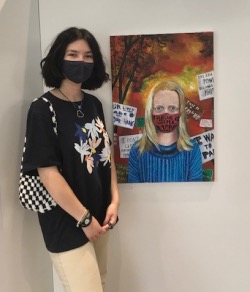
Julietta and her artwork which is among those in the exhibition..
Works by young Londoners depicting their COVID-19 experiences as well as their feelings in support of the Black Lives Matter movement have gone on show in an exhibition at the Saatchi Gallery and online. A Westminster City Council project, called Creative Collective, asked young people to produce works in any medium – audio clips, short films, poems, paintings, drawings, statements or digital works – responding to themes including lockdown, resilience and hope, community and Black Lives Matter. The results, which have previously been on display at libraries across Westminster, can now be viewed until 31st August at in the Learning Gallery at the Saatchi Gallery as part of the JR Chronicles Exhibition. The display is also available to see online here. The project is the work of the council’s cultural youth engagement programme – City Lions – in partnership with children’s services, local schools, professional artists, libraries and archives.
• A 19-year-old graphic design student from Nottinghamshire has won a competition to find an emblem for the Queen’s Platinum Jubilee. Edward Roberts, who is studying at Leeds, said that for his design, “I wanted to give a modern twist to the iconic elements of St Edward’s Crown, and so I created a continuous line, which I felt was a fitting representation of The Queen’s reign”. Paul Thompson, vice-chancellor of the Royal College of Art and a member of the judging panel which selected the winning design said it takes people “on a simple line journey to create the crown and the number 70, beautifully capturing the continuous thread of Her Majesty The Queen’s 70-year reign”. “Drawn on a computer, the ingenious emblem works across all scales and the flow of the line gives us a sense of a human touch behind the digital design process.” The competition, which was was open to young people aged between 13 and 25 from all over the United Kingdom, was judged by a panel of graphic designers, visual artists and design professionals, experts from the V&A, the Royal College of Art, the Design Museum, and a representative from the Royal Household. It was chaired by V&A Director Tristram Hunt. As the winner, Edward will be invited to next year’s Jubilee celebrations including the ‘Platinum Party at the Palace’, and his winning design, along with the other nine shortlisted emblem design entries which will be revealed next year, will be displayed at the V&A in June. Edward will also receive a prize of £1,500 and a year’s free membership of the V&A.
• The £8 entrance fee to the Marble Arch Mound has been dropped for visitors during August after it closed only two days after opening following sustained criticism from visitors. In a statement Stuart Love, chief executive of the City of Westminster, apologised that the Marble Arch Mound wasn’t ready for visitors when it opened. “London’s businesses and residents have suffered through the pandemic and we built the Mound as part of our bigger plan to get people back into the City and into the shops, restaurants, theatres and to see the amazing sights the West End has to offer,” he said. “We wanted to open the Mound in time for the summer holidays and we did not want to disappoint people who had already booked tickets. We made a mistake and we apologise to everyone who hasn’t had a great experience on their visit.” The 25 metre high temporary attraction will reopen on Monday. For more, head here.
• Explore the stories of real-life pets and their owners in a new feature at the Museum of The Home in Shoreditch. Pet Life – which features animations, projections, hands on activities and stories written by author and storyteller Bernadette Russell – aims to show “the joy, companionship and challenges our pets bring to the home”. Runs until 31st October. Admission charge applies. For more, see www.museumofthehome.org.uk/whats-on/exhibitions-and-installations/pet-life/.
Send items for inclusion to exploringlondon@gmail.com.
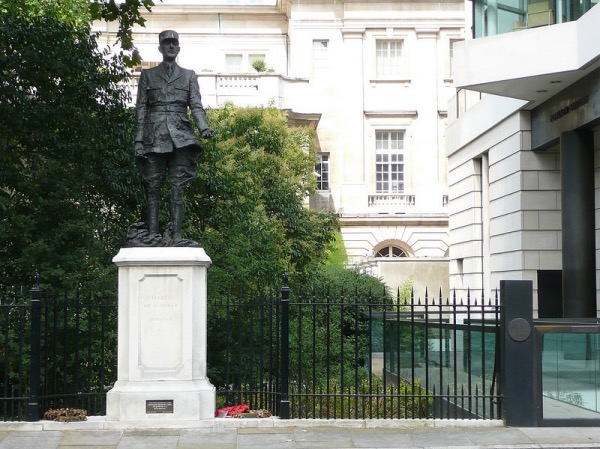
Unveiled in the early 1990s, this statue of the French leader Charles de Gaulle (1890-1970) is located in St James’s, close to the headquarters where de Gaulle headed the government-in-exile following the fall of France in 1940.
The life-sized statue is the work of sculptor Angela Conner and architect Bernard Wiehahn and was erected in Carlton Gardens following a campaign by Lady Soames, daughter of Winston Churchill. De Gaulle is depicted standing in the uniform of a General de Brigade.
The was unveiled by Queen Elizabeth, The Queen Mother, in June 1993. Nearby are an English Heritage Blue Plaque as well as another plaque, both commemorating the location of the headquarters.
A commemorative ceremony takes place each year at the statue organised by the French Embassy.
De Gaulle flew to England in June, 1940, and was subsequently recognised by Britain as the leader of the Free French. He established his headquarter at 4 Carlton Gardens on 22nd July that year, initially living at the Connaught Hotel and, from 1942 to 1944, in Hampstead. He returned to France following the D-Day invasion in 1944.
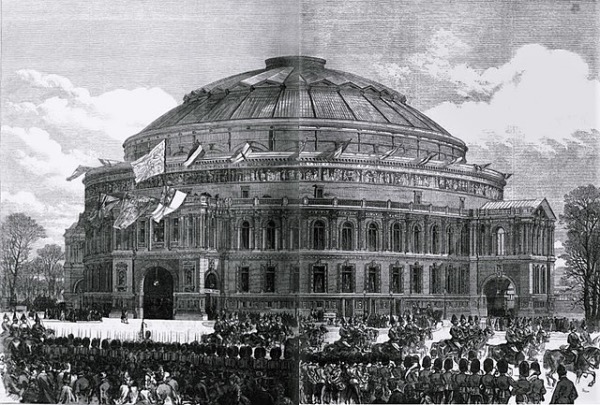
Crowds gathered at the Opening of Royal Albert Hall, on 29th March, 1871, as seems in the Illustrated London News, on the 8th April, 1871.
Next week sees the Royal Albert Hall’s 150th anniversary concert taking place, one of a number of events to mark the anniversary of the hall’s opening.
This spectacular building in South Kensington was officially opened on 29th March, 1871, as The Royal Albert Hall of Arts and Sciences (the opening was actually brought forward from 1st May – 20th anniversary of the opening of the Great Exhibition – at the request of Queen Victoria).
The Queen had laid the foundation stone in 1867 and the work on the building, the creation of which was partly funded by profits from the Great Exhibition of 1851, was complete by the end of 1870 (at least its structure – much of the interior decoration was apparently added later).
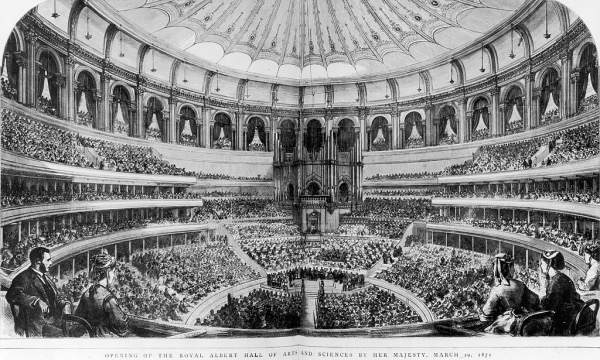
An image of the interior of the hall during the opening ceremony on 29th March. 1871. The illustration originally appeared in The Graphic.PICTURE: Via Wikipedia.
Queen Victoria and members of the Royal Family left Buckingham Palace in a line of state carriages for the event at noon escorted by the Royal Horse Guards Blue. Large crowds lined the route of her passage and a guard of honour composed of the Grenadiers stood opposite the entrance.
On arriving, the Queen was met by the Edward, the Prince of Wales (the future King Edward VII), members of the building committee and some of those who has served as commissioners of the Great Exhibition of 1851.
The Queen processed to a dais inside the building’ auditorium where some 8,000 dignitaries and invited guests waited in the audience. But she was apparently too overcome by memories of her late husband – Prince Albert, after whom the building as named – to give a speech. So it was the Prince who did so, although the Queen did reportedly add her own comments, saying according to an account in The Guardian: “I cannot but express my great admiration for this beautiful building, and my earnest wishes for its complete success.”
A battery of artillery performed a salute in nearby Hyde Park after which the Queen and Royal Family took their seats in the Royal Box to watch the musical program that followed. The Queen then returned to Buckingham Palace.
Interestingly, the first concert at the hall, held to test acoustics, actually took place month earlier on 25th February for an audience of some 7,000 people made up of those who had worked on the building and their families as well as officials and various invited members of the public.




 Exploring London

