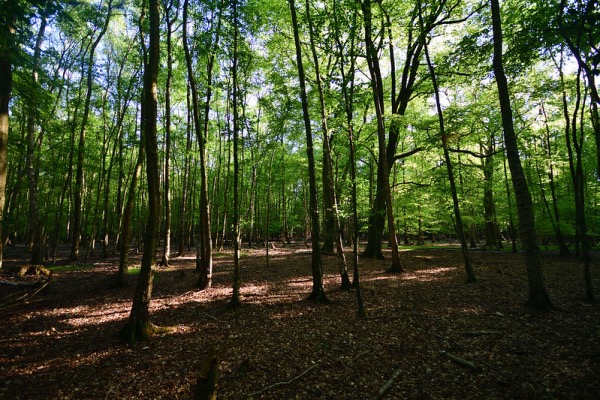
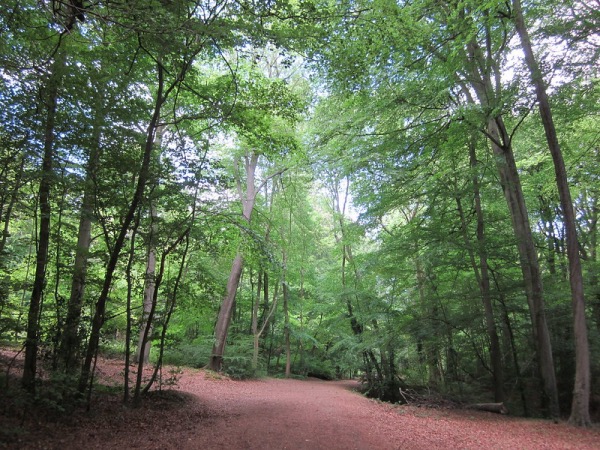
City of London-managed open spacesEpping Forest, Burnham Beeches and Ashtead Common have been selected to be part of a nationwide network of 70 ancient woodlands to be dedicated to The Queen in celebration of the Platinum Jubilee. At almost 6,000 acres, Epping Forest is London and Essex’s largest green space and is known as the “green lungs” of London. Burnham Beeches, located in Buckinghamshire, is only a square mile in size but is described as a “New Forest in miniature” while Ashtead Common in Surrey’s 200 hectares of open public space is home to more 1,000 living ancient oak pollards. For more on The Queen’s Green Canopy initiative, see www.queensgreencanopy.org. For more on the City of London’s green spaces, see www.cityoflondon.gov.uk/things-to-do.
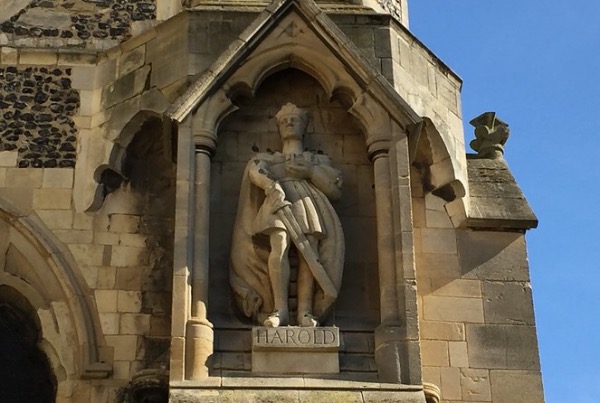
Depicting the last crowned Anglo-Saxon king who famously died at the Battle of Hastings, this statue is located in a niche on the exterior of Waltham Abbey Church on the north-eastern outskirts of Greater London.
The life-sized statue was the work of Canadian-born, Dorset-based, sculptor Elizabeth Muntz and was erected in the 1960s.
King Harold, also known as King Harold II, not only rebuilt the abbey church (apparently after he was healed of paralysis on a pilgrimage to Waltham), the abbey is also a possible site for his grave.
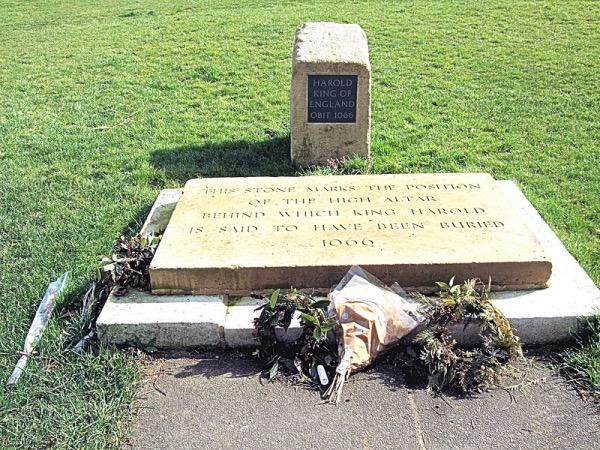
The grave is marked by a memorial stone now located in the churchyard which was erected in 1960. The inscription says the stone marks the position of the former church’s high altar. King Harold is said to have been buried behind this in 1066 after he was killed, according to tradition, by a well-aimed arrow to the eye at the Battle of Hastings (the church was rebuilt in the 12th century which explains why the altar is now located outside).
There are alternate theories for his burial place including in Bosham, West Sussex.
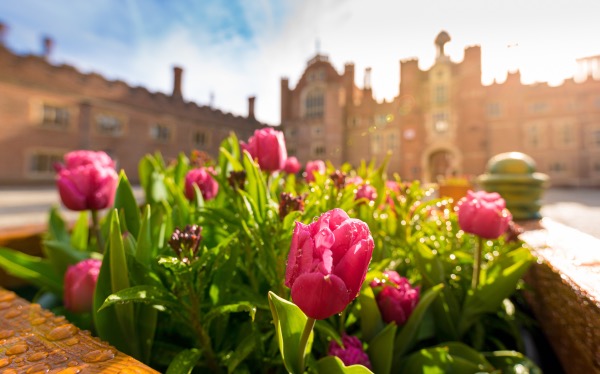
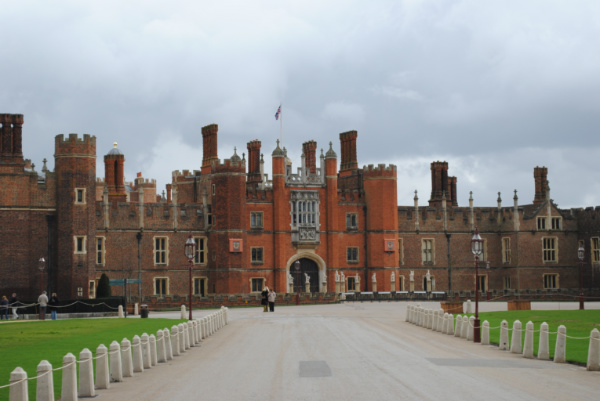
• Hampton Court Palace’s Tulip Festival – the largest of its kind in the UK – is returning following its successful inaugural year in 2021. From Friday until 2nd May (depending on flowering periods), the palace’s 60 acres of formal gardens are expected to be filled with rare, historic and specialist tulip varieties inspired by Queen Mary II’s famous 17th century collection which was once housed at the palace. Some 120,000 tulip bulbs of 60 different varieties have been planted, including breath-taking floating tulip vases located in the palace’s famous fountains, and floral displays which will fill the cobbled courtyards of Base Court and Clock Court. Visitors will be able to find out all about the links between the flower and the palace’s history with a dedicated Tulip Festival Guide. Included with admission. For more, head here.
• New exhibits marking the 40th anniversary of the Falklands Conflict have gone on show at the Imperial War Museum in Lambeth. Among the new items on display are drawings by Linda Kitson, the first female artist commissioned by IWM to accompany troops into conflict, and images of the conflict – many of which have never been seen before – taken by photographer Paul RG Haley who covered it for Soldier Magazine. The museum is also exploring the story and legacy of the conflict through a digital programme of events including a series of short films and a new episode of the Conflict of Interest podcast featuring actor Katherine Parkinson. For more, see www.iwm.org.uk.
• The Regent’s Park will soon boast a new 1.5 acre garden at its centre in honour of Queen Elizabeth II’s Platinum Jubilee. The new garden, to be created on the site of a former plant nursery near the Inner Circle, will include design features that reflect the Queen’s “love of trees and nature”. The Royal Parks will be committing £1 million to the project and will seek external funding and public donations. Designs for the new park will be shared as they are developed. Meanwhile, The Royal Parks have also announced they will be creating a new wood in Richmond Park as part of the Queen’s Green Canopy Initiative. The new woodland, which will be located adjacent to Ham Cross, will be planted with 70 large trees, each one to mark a year of Her Majesty’s reign.
Queen Anne Boleyn’s carved heraldic badge. PICTURE: Courtesy of Historic Royal Palaces.
• Five hundred years after Queen Anne Boleyn is recorded as first appearing before her future husband, King Henry VIII, her carved heraldic badge has gone on show at Hampton Court Palace. The blackened oak carving, which features a crowned falcon atop a tree stump flowering with Tudor roses, was discovered by antiques expert Paul Fitzsimmons. While it had been covered in centuries of soot, grime and wax, conservation saw the removal of a layer of black paint to reveal the original colouring of white, gold and red. Subsequent research revealed the carving’s similarity to the 43 surviving falcon badges with the ‘frieze’ above the windows and hammer beams in the palace’s Great Hall, leading researchers to believe that the carving is an element of the room’s original Tudor scheme. Records show one Michael Joyner was paid to create carvings of the King’s and Queen’s badges. Following Boleyn’s downfall and Henry VIII’s subsequent marriage to Jane Seymour, craftsmen were paid to overpaint the former Queen’s white falcons in black, severing their association with her. Boleyn, who first appeared before Henry playing the role of Perseverance in a court masque, first started using the white falcon as her device around the time she was created Marquess of Pembroke, shortly before her public marriage to Henry in 1533. After her marriage and coronation, new imperial falcon badge was created, featuring the crown and sceptre. The badge can be seen in the Great Hall (included in general admission). For more, see www.hrp.org.uk/hampton-court-palace/.
• St Patricks’ Day will be marked in London this weekend for the first time in three years with a parade through central London and festivities in Trafalgar Square. The annual parade of Irish marching bands and dancers will start at Green Park at noon on Sunday and wind its way through the streets to Whitehall. Trafalgar Square, meanwhile, will play host to a line-up of Irish talent from noon to 6pm on Sunday with family-friendly concerts, storytelling, children’s films and youth performances, as well community choirs, schools, dance troupes and children’s workshops featuring camogie games, medal-making and face painting as well as a food and drinks stalls. For the full programme, head to www.london.gov.uk/st-patricks.
Another ‘oldest’ question that’s not as simple as it might seem.
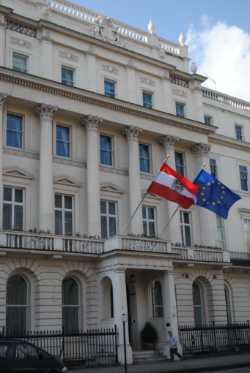
Austrian Embassy, Belgrave Square. PICTURE: David Adams
Austria has occupied a building at 18 Belgrave Square in Belgravia since it moved there from Chandos House in Queen Anne Street in 1866.
But the embassy was vacated with the outbreak of World War I and the building entrusted, firstly to the protection of the ambassador of the United States, and following the severing of their relations in 1917, to the Royal Swedish Legation.
The Austrians returned in 1920 but following Hitler’s incorporation of Austria into the German Reich in 1938, it was used as a department of the German Embassy.
Following the outbreak of World War II, the Swiss legation room over protection of the building and following the end of the war the damaged building fell under the care of Britain’s Ministry of Works.
The Austrians returned in September, 1948, with the new ambassador arriving in 1952. It continues today to serve as the residence of the Austrian Ambassador.
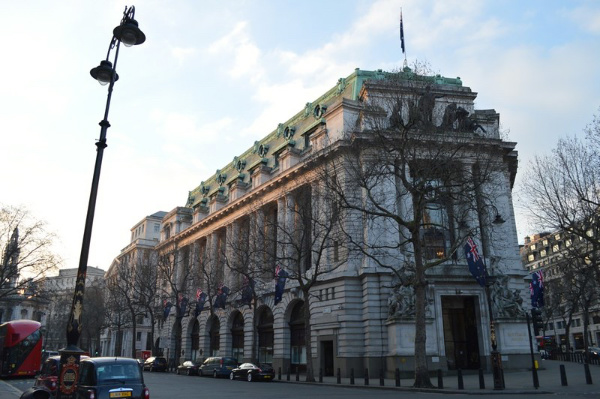
Not to be confused with the Austrians, the Australian High Commission resides in ‘Australia House’ which claims to be “the longest continuously occupied foreign mission in London”.
In 1912, the Australian Government bought the freehold of a site on the corner bounded by Strand, Aldwych and Melbourne Place. Following a design competition, Scottish architects A Marshal Mackenzie and Son were selected as the designers of the new Australia House with Commonwealth of Australia’s chief architect, Mr JS Murdoch, arriving in London to assist them.
Work began in 1913 – King George V laid the foundation stone – but was interrupted by World War I and in 1916, former Australian PM and now High Commissioner Andrew Fisher moved into temporary offices on the site even as the work continued around him. King George V officially opened Australia House on 3rd August, 1918, with then Australian Prime Minister, WM “Billy” Hughes, in attendance.
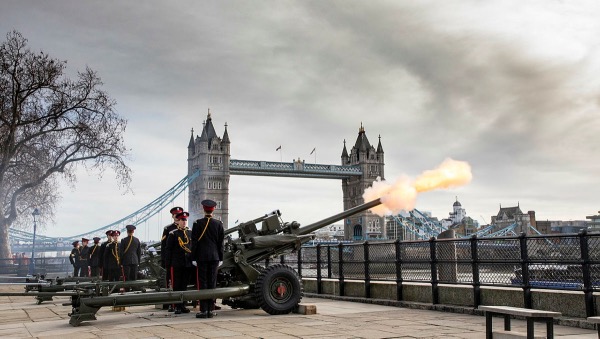
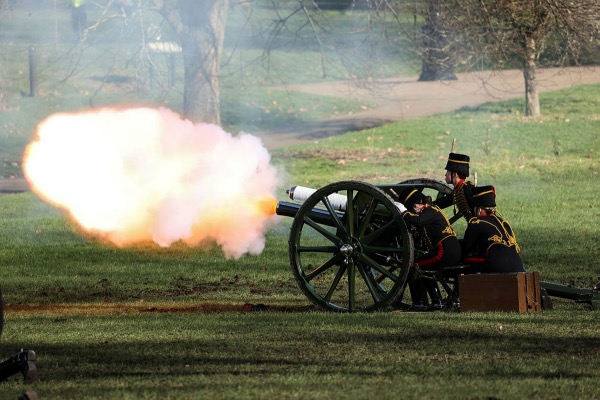
The Honourable Artillery Company fires a 62 gun salute at the Tower of London to mark the 70th Anniversary of Queen Elizabeth II’s accession to the throne. The gun salute at the Tower was one of a number which took place across the UK on Monday – while the date of the Queen’s accession was the 6th February, gun salutes do not traditionally take place on a Sunday. The gun salutes are traditionally comprised of 21 rounds with a further 20 rounds fired at Royal Parks and palaces and a further 21 at the Tower to show the respect the City of London has for the Queen. Below, the King’s Troop Royal Horse Artillery can be seen firing 41 rounds in Green Park.
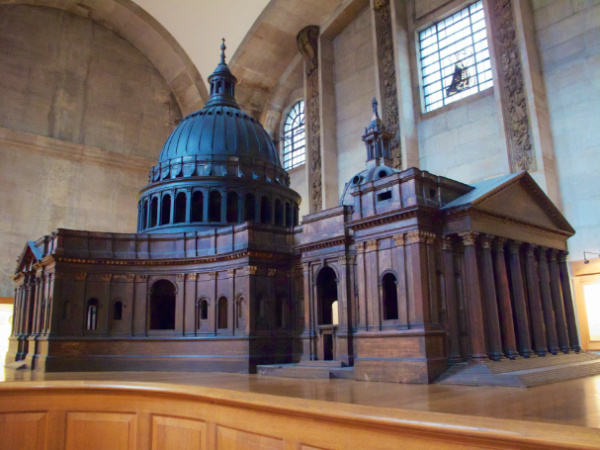
Housed now in the building it depicts, the Great Model of St Paul’s Cathedral was created by architect Sir Christopher Wren to show King Charles II what his proposed grand new English Baroque cathedral would look like (following the destruction of the medieval cathedral in the Great Fire of 1666).
Made of oak, plaster and lime wood, the model was made by William Cleere to Wren’s design in between September, 1673, and October, 1674, at a scale of 1:25. It measures 6.27 metres long, 3.68 metres wide and more than four metres tall, making it one of the largest in the UK.
The model, which cost about £600 to make – an extraordinary sum which could apparently buy a good London house, was designed to be “walked through” at eye level and, as well as being a useful way to show the King what the proposed building would look like, was also something of an insurance policy in case something happened to Wren.
It was based on drawings made by Wren and his assistant Edward Woodroofe on a large table in the cathedral’s convocation or chapter house (later demolished in the early 1690s) and was originally painted white to represent Portland stone with a blue-grey dome and gilded details.
There are some differences between the model and the finished cathedral – among them was a substantial extension of the quire, double-height portico on the west front, and, of course, the bell towers on the west front which were made in place of the cupola which was located halfway down the nave on the model.
Part of an earlier wooden model from 1671 also survives – it was apparently lost for many years and rediscovered in 1935.
The Great Model can be seen on tours of the Triforium.
WHERE: St Paul’s Cathedral (nearest Tube stations are St Paul’s, Mansion House and Blackfriars); WHEN: 8.30am to 4.30pm Monday to Saturday; COST: £21 adults/£18.50 concessions/£9 children/£36 family (these are walk-up rates – online advanced and group rates are discounted); WEBSITE: www.stpauls.co.uk (for tours, head to www.stpauls.co.uk/visits/visits/guided-tours)
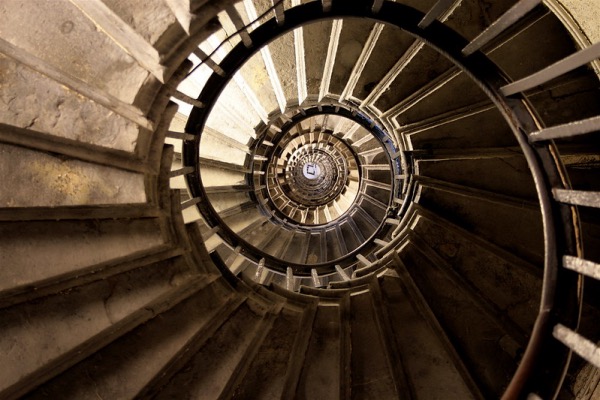
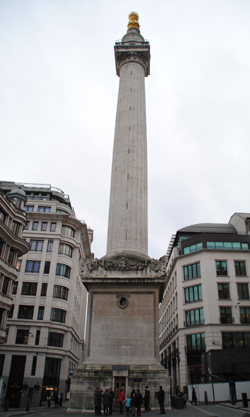
Running up the centre of the tallest free-standing stone column in the world, this 311 step stairway takes the visitor straight to the top of the Monument erected to commemorate the Great Fire of 1666.
The Monument
The Monument – actually a Doric column – was built close to Pudding Lane in the City – where the fire is believed to have started – between 1671 and 1677. It was designed by Sir Christopher Wren in collaboration with City Surveyor Sir Robert Hooke.
The cantilevered stairway – each step of which measures exactly six inches high – leads up to a viewing platform which provides panoramic views of the City. Above the platform stands is a large sculpture featuring a stone drum topped with a gilt copper urn from which flames emerge as a symbol of the fire (King Charles II apparently squashed the idea of an equestrian statue of himself lest people think he was responsible for the fire).
Interestingly, the circular space in the centre of the stairway was designed for use as a zenith telescope (a telescope which points straight up). There is a small hatch right at the top which can be opened up to reveal the sky beyond and a subterranean lab below (reached through a hatch in the floor of the ticket both) where it was envisaged the scientist could take measurements using a special eyepiece (two lenses would be set into the actual telescope). But it wasn’t successful (reasons for this could have been vibrations caused by passing traffic or the movement of the column in the wind).
Hooke also apparently attempted to use the staircase drop for some other experiences – including measuring differences in air pressure.
Among those who have climbed the stairs was writer James Boswell who visited the Monument and climbed the stairs in 1763. He suffered a panic attack halfway up but was able to complete the climb.
WHERE: The Monument, junction of Fish Street Hill and Monument Street (nearest Tube station is Monument); WHEN: Check website; COST: £5.40 adults/£2.70 children (aged five to 15)/£4.10 seniors (joint tickets with Tower Bridge available); WEBSITE: www.themonument.org.uk
Amid controversy over plans for a new Holocaust memorial in London and the marking of Holocaust Memorial Day this week, we thought it would be a good time to take a look at where the oldest public memorial to the victims of the Holocaust in London, which actually isn’t that old, is located.
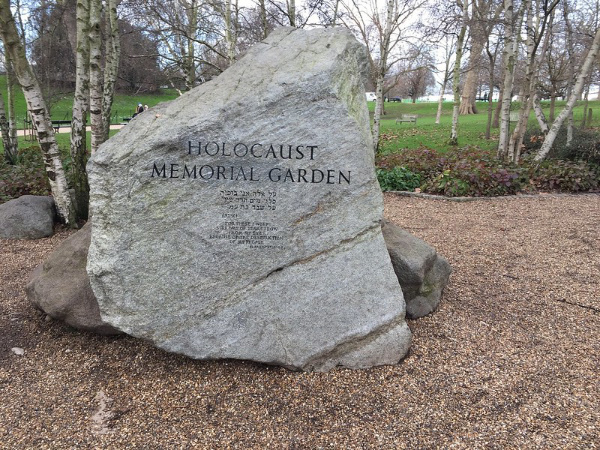
Unveiled in 1983 in Hyde Park at site just to the east of the Serpentine, it consists of a grouping of boulders surrounded by white-trunked birch trees. Designed by Richard Seifert and Derek Lovejoy and Partners, the largest of the boulders is inscribed with a text, in Hebrew and English, from the Biblical Book of Lamentations. It reads: “For these I weep. Streams of tears flow from my eyes because of the destruction of my people.”
The Holocaust Memorial Garden, which was actually the first such memorial dedicated to the victims of the Holocaust in Britain, was erected by the Board of British Jews.
Plans for a new memorial to the victims of the Holocaust – to be located in Victoria Tower Gardens, just to the south of the Houses of Parliament – were approved by the government in the middle of last year following a controversial public inquiry. But a High Court judge subsequently granted the London Historic Parks And Gardens Trust permission to appeal that decision.
• The largest collection of Spitfires gathered under one roof can be seen at the Imperial War Museum Duxford’s AirSpace hall. Twelve of the iconic planes have been gathered at the airfield, often referred to as the “home of the Spitfire”. Spitfire: Evolution of an Icon, which is being accompanied by a programme of tours, talks, events and family activities, shows how the plane evolved throughout World War II in order to keep pace with German aircraft development. As well as the IWM’s iconic Mk Ia Spitfire, the display also features Mk V, Mk IX and Mk XIV models. The Spitfires be seen until 20th February. Admission charge applies. For more including details of events, head to www.iwm.org.uk/events/spitfire-evolution-of-an-icon.
• A new exhibition focused on photographs of iconic 70s and early 80s band The Jam opens at the City of London Corporation’s Barbican Music Library tomorrow.True is the Dream features the photography of Derek D’Souza who has captured the band and frontman Paul Weller, who went on to found The Style Council, on film over several decades. D’Souza’s work include a career-defining shoot of the band at Chiswick House. The display is free to see until 16th May. For more, see www.barbican.org.uk/whats-on/2022/event/true-is-the-dream.
• The Waterloo & City line has reopened following a brief closure over Christmas. The London Underground line, which connects Waterloo to Bank, was temporarily closed by Transport for London in late December following increasing COVID cases in the capital and the impact on staff absence. Meanwhile, the Bank branch of the Northern line (between Moorgate and Kennington) for 17 weeks from 15th January to allow for upgrade works.
Buckingham Palace is among the sites across London which will be hosting events to mark Queen Elizabeth II’s Platinum Jubilee this June. The Queen’s 70th year on the throne will be marked with four days of celebrations across the June bank holiday weekend which will include the Queen’s Birthday Parade (known as Trooping the Colour), the lighting of Platinum Jubilee Beacons – including the principal beacon at Buckingham Palace, a Service of Thanksgiving at St Paul’s Cathedral, the ‘Platinum Party at the Palace’ – a celebration concert in the gardens of Buckingham Palace, The Big Jubilee Lunch in communities across the city, and a special Platinum Jubilee Pageant, part of which will see a moving river of flags rippling down The Mall. For more information, head to www.royal.uk/platinum-jubilee-central-weekend.
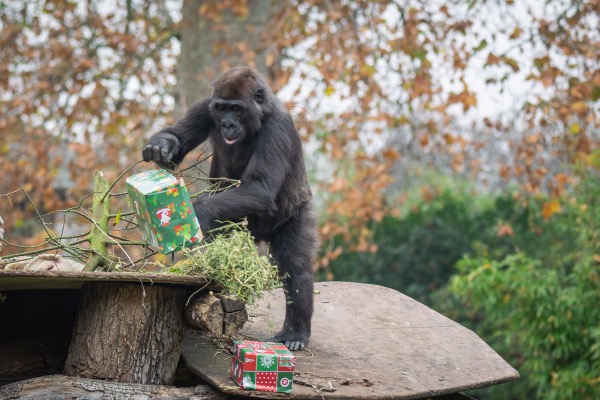
Christmas came early for some of the residents at ZSL London Zoo this week. Asiatic lions Bhanu and Arya discovered brightly wrapped boxes scented with seasonal spices in the Land of the Lions while in the Gorilla Kingdom, the zoo’s troop of Western lowland gorillas found gifts of their favourite festive vegetables. “Gorillas Alika, Gernot, Mjukuu and Effie are always keen to clean their plates of all the festive veg at Christmas – they loved digging into their presents to find juicy carrots and tasty Brussels sprouts,” said head zookeeper Dan Simmonds. “And while lioness Arya carefully picked up her gifts and carried them off to play with later, Bhanu opened his all at once, rolling around in the boxes to release his favourite seasonal scents – nutmeg and cinnamon.” The zoo is open every day apart from Christmas Day. For more, see www.zsl.org/london-zoo. PICTURES: ZSL London Zoo.
• Christmas is fast approaching and, to add to the festivities, Westminster City Council has created an augmented reality experience for families to enjoy at four landmark locations. Under the ‘Westminister Elves’ initiative, families are invited to scan a QR code at Piccadilly Circus, Marble Arch Mound, Soho Square and Hanover Square which will lead them to a microsite which, in turn, will transport them into the elves’ world. There, they can throw snowballs, share a moment with Santa’s reminder and glimpse inside Santa’s workshop as well as, of course, seeing the man himself. Those taking part are also invited to take a selfie or picture of a family member or friend alongside the elves at one of the four locations and post it on Twitter, Instagram or Facebook using the #WestminsterElves and tagging @CityWestminster. They’ll then be entered into a competition to win a £50 Love to Shop voucher. The competition closes at midnight next Wednesday with the winner announced on Christmas Eve. For more, see www.westminster-elves.co.uk.
• A recording of old sea song paying tribute to Horatio Nelson was released by the Museum of London this week. The song, which was thought to have been sung after the battle of Cape St Vincent in 1797 and subsequently transcribed by Nelson, was brought to life by musicians from the Guildhall School of Music & Drama. The recording marked the first performance of the piece in more than 200 years. While th song’s existence had previously been known about – it was referred to in a letter from Nelson to William Douglas, 4th Duke of Queensberry, which was was sold at auction in 2013 – it was one of four rediscovered last year among songbooks belonging to Nelson’s lover, actress and model Emma Hamilton. “The song was written by Nelson’s crew in one of his early victories,” said Lluis Tembleque Teres, the Museum of London librarian who found the songs. “It is fascinating how, some four years later and already a national hero, he recovers the lyrics and sends them to the Duke of Queensberry, almost as if showing off his early successes. The Duke then adds music and a chorus, and gifts the manuscript to Emma Hamilton, thus allowing us exactly 220 years later to relive Nelson’s fame while performing it.” The song’s release follows a special one-off live performance of all four songs at the Museum of London Docklands on 11th December, which will be available to watch in full as an online event – DIGITAL Emma’s Songbooks: rediscovered music for Nelson – next Tuesday, 21st December. Admission charge applies. For more, see museumoflondon.org.uk
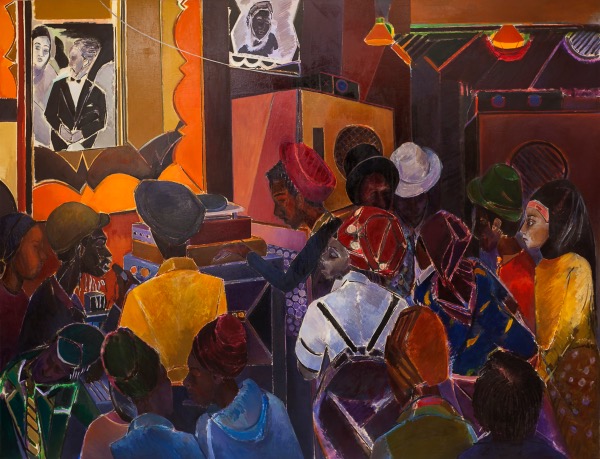
• A landmark exhibition exploring the extraordinary breadth of Caribbean-British art over four generations can be seen at Tate Britain. Life Between Islands spans 70 years of culture, experiences and ideas expressed through art and features more than 40 artists, including those of Caribbean heritage as well as those inspired by the Caribbean, such as Ronald Moody, Frank Bowling, Sonia Boyce, Claudette Johnson, Peter Doig, Hew Locke, Steve McQueen, Grace Wales Bonner and Alberta Whittle. Highlights include Neil Kenlock’s Black Panther school bags (1970), Denzil Forrester’s Death Walk (1983) – a tribute to Winston Rose who died in police custody, Lisa Brice’s After Ophelia (2018) – a work inspired by her time on Trinidad and new works including designs by Grace Wales Bonner evoking the brass bands and parades of the Commonwealth Caribbean. Runs until 3rd April. Admission charge applies. For more, see www.tate.org.uk.
Send all items for inclusion to exploringlondon@gmail.com.
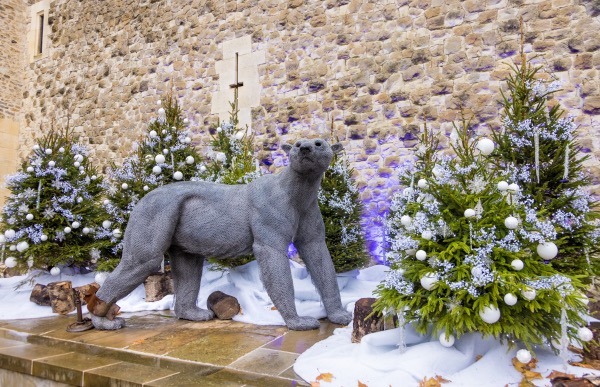
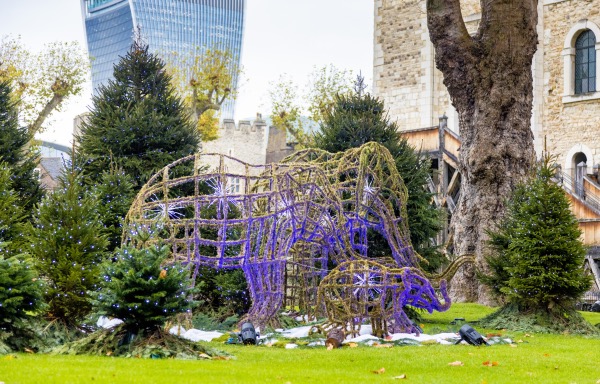
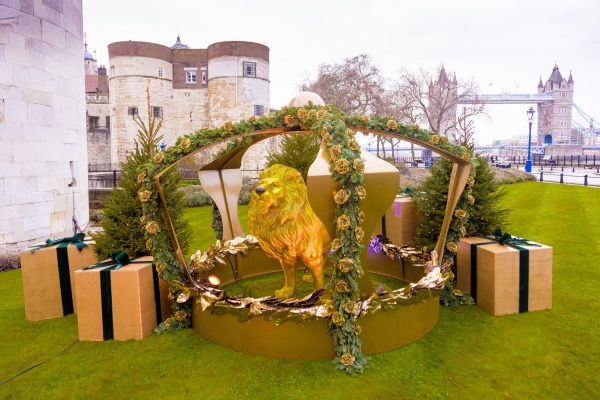
The Royal Menagerie at the Tower of London has been decked out for Christmas with an array of glittering decorations. Animals including a polar bear, elephants and lions were kept at various times in the Tower’s menagerie which started thanks to a royal penchant to giving exotic animals as gifts to fellow monarchs. King Edward I created the first permanent home for the menagerie which, after hundreds of years, closed for good in 1835. The Christmas display the Tower, which centres on the Tower Green Christmas tree, can be seen until 3rd January. Admission charges apply. For more, see www.hrp.org.uk.
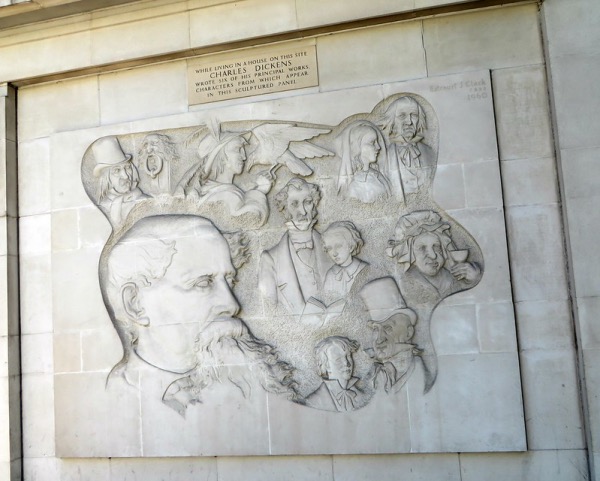
Christmas is fast arriving so we went in search of some related monuments in London and found one depicting two famous characters from an iconic Yuletide text.
Located on the site of a house where 19th century writer Charles Dickens wrote six of his famous books, including A Christmas Carol, is a stone relief featuring several characters from them including Scrooge and Marley’s Ghost (represented as a door knocker in the top left).
The bas-relief is the work of Estcourt J “Jim” Clack and features a large portrait of Dickens as well as the characters who, alongside the characters from A Christmas Carol.
They apparently include Barnaby Rudge with his raven ‘Grip’ (from the book of the same name), Little Nell and Granddad (The Old Curiosity Shop), Dombey and his daughter Florence (Dombey and Son), Sairey Gamp (Martin Chuzzlewit), David Copperfield and Wikins Micawber (David Copperfield).
Correction: The name of Barnaby Rudge’s raven has been corrected.
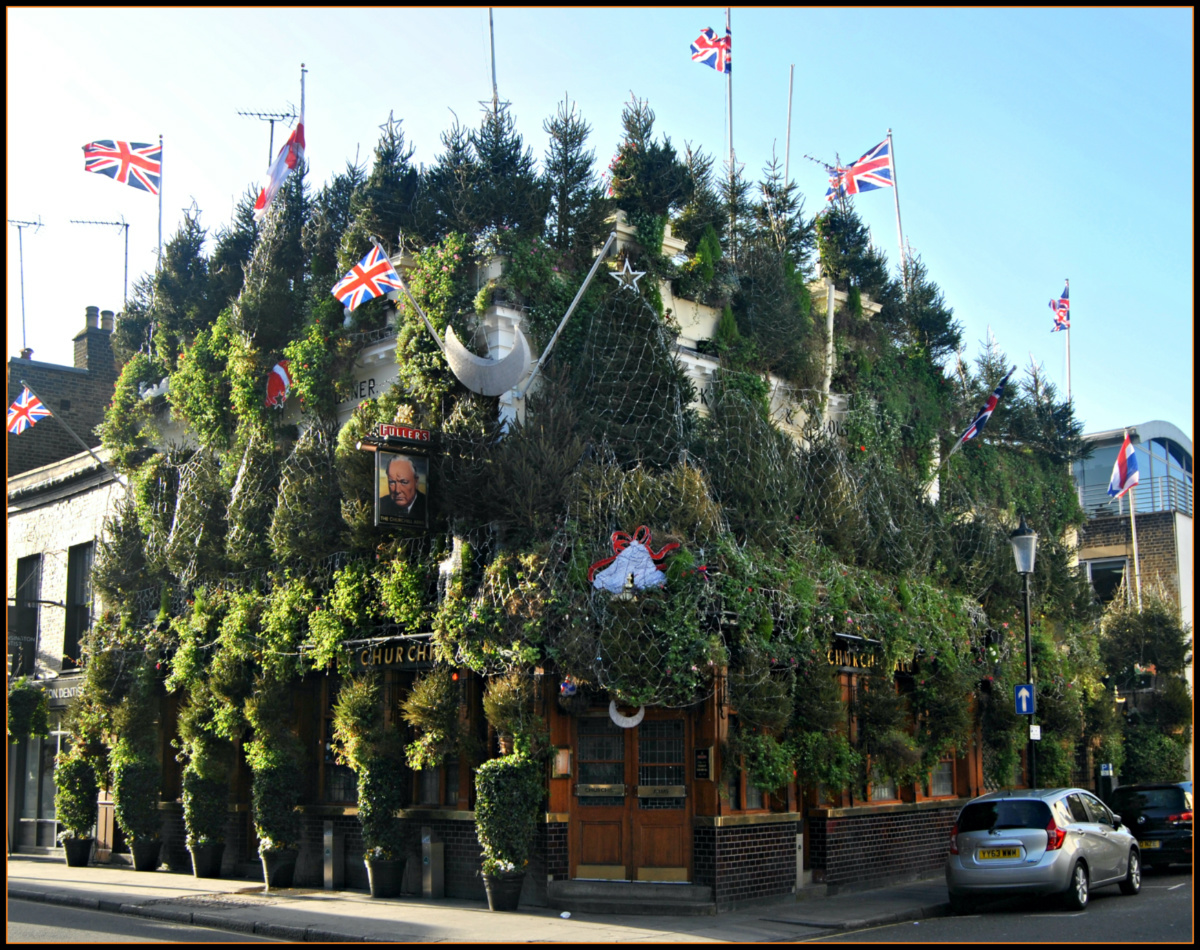
The Churchill Arms decorated for Christmas in 2015. PICTURE: Loco Steve (licensed under CC BY-SA 2.0)
It’s Christmas in London and for such a festive occasion, one pub immediately springs to mind – The Churchill Arms.
The name is certainly not a mystery and doesn’t really have anything to do with the Christmas theme. It stems from, of course, wartime Prime Minister Winston Churchill – or rather, his grandparents, the Duke and Duchess of Marlborough, John and Frances Anne Spencer-Churchill, who were patrons here and which, in honour of Churchill and them, saw the pub so-named after World War II.
Churchill remains a theme in the interior where a good deal of related memorabilia can be found – including wartime posters, pictures of the man himself and a (fake) plaque commemorating Churchill’s use of the pub for his wartime broadcasts (there’s even a celebratory night held each year around Churchill’s birthday).
The pub, which is located at 119 Kensington Church Street, dates from 1750.
But in recent times, it’s become famous for its stunning Christmas light displays which this year reportedly feature some 80 Christmas trees and 22,000 lights. The pub is also known for its extraordinarily profuse flower displays which cost thousands of pounds each year and which have even won at none other than the Chelsea Flower Show.
It also holds the claim to fame of being the first London pub to serve Thai food when it did so as far back as 1988.
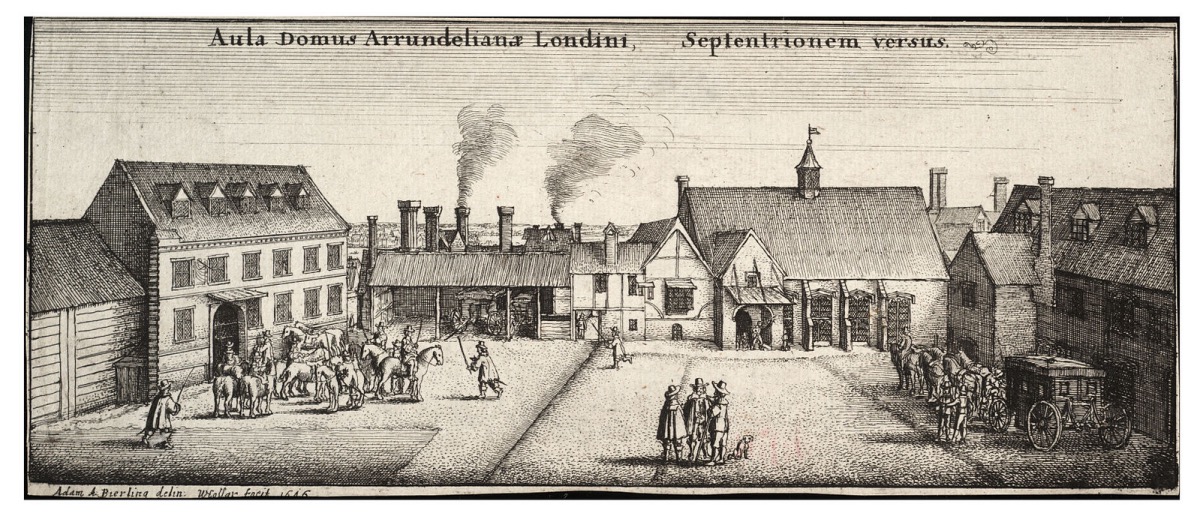
Arundel House, from the south, by Wenceslas Hollar.Via Wikimedia Commons.
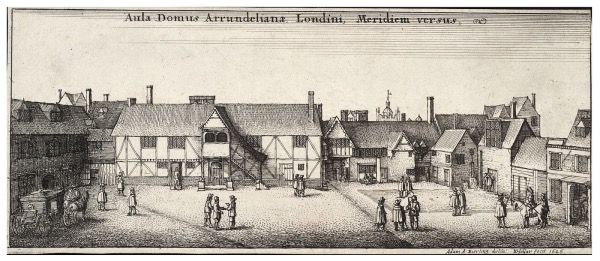
One of a string of massive residences built along the Strand during the Middle Ages, Arundel House was previously the London townhouse of the Bishops of Bath and Wells (it was then known as ‘Bath Inn’ and Cardinal Thomas Wolsey was among those who resided here during this period).
Following the Dissolution, in 1539 King Henry VIII granted the property to William Fitzwilliam, Earl of Southampton (it was then known as Hampton Place). After reverting to the Crown on his death on 1542, it was subsequently given to Thomas Seymour, 1st Baron Seymour of Sudeley, a younger brother of Queen Jane Seymour, Henry VIII’s third wife, and known as ‘Seymour Place’. Then Princess Elizabeth (late Queen Elizabeth I) stayed at the property during this period (in fact, it’s said her alleged affair with Thomas Seymour took place here).
Arundel House, from the south, by Wenceslas Hollar.Via Wikimedia Commons.
Seymour significantly remodelled the property, before in 1549, he was executed for treason. The house was subsequently sold to Henry Fitz Alan, 12th Earl of Arundel, for slightly more than £40. He was succeeded by his grandson, Philip Howard, but he was tried for treason and died in the Tower of London in 1595. In 1603, the house was granted to Charles, Earl of Nottingham, but his possession was short-lived.
Just four years later it was repurchased by the Howard family – in particular Philip’s son, Thomas Howard, 14th Earl of Arundel – who had been restored to the earldom.
Howard, who was also the 4th Earl of Surrey, housed his famous collection of sculptures, known as the ‘Arundel Marbles’, here (much of his collection, described as England’s first great art collection, is now in Oxford’s Ashmolean Museum).
During this period, guests included Inigo Jones (who designed a number of updates to the property) and artist Wenceslas Hollar who resided in an apartment (in fact, it’s believed he drew his famous view of London, published in 1647, while on the roof).
Howard, known as the “Collector Earl”, died in Italy in 1646. Following his death, the property was used as a garrison and later, during the Commonwealth, used as a place to receive important guests
It was restored to Thomas’ grandson, Henry Howard, 6th Duke of Norfolk, following the Restoration. Following the Great Fire of London in 1666, for several years the property was used as the location for Royal Society meetings.
The house was demolished in the 1678. It’s commemorated today by the streets named Surrey, Howard, Norfolk and Arundel (and a late 19th century property on the corner of Arundel Street and Temple Place now bears its name).
Standing with Giants, a thought-provoking art installation at Hampton Court Palace, commemorates the lives lost in World War I and II and, in particular, the Indian soldiers who resided on the palace’s estate prior to the coronation of King Edward VII in 1902, and again for the World War I Victory Parade in London. The work of Oxfordshire artist Dan Barton and a dedicated group of volunteers, the work – located in the East Front gardens – features 100 almost life-sized silhouettes of soldiers and 75 screen-printed poppy wreaths along with an additional 25 specially commissioned silhouettes which represent the Indian soldiers. Almost 1,800 Indian Army officers, soldiers, and civilian workers sailed from India for the World War I Victory Parade and a camp was specially created to house them in the palace grounds in what was at the time one of the largest gatherings of people from India and South-East Asia ever assembled the UK. During their stay in London, the soldiers were treated to excursions in London and across the country which included trips to the Tower of London and a Chelsea football match. Alongside the display, a special trail map has been created to allow visitors to explore other aspects of the palace’s World War I history and former residents who took on roles ranging from frontline nurses to campaigners for improved care for injured veterans. One of the most poignant contributions the palace made to the war effort was the use of wood, supplied from an oak tree felled in Hampton Court’s Home Park, for the making of the coffin for the Unknown Soldier. Can be seen until 28th November. Admission charge applies. For more, see www.hrp.org.uk.