A Moment in London’s History – The first Anderson shelter is built…

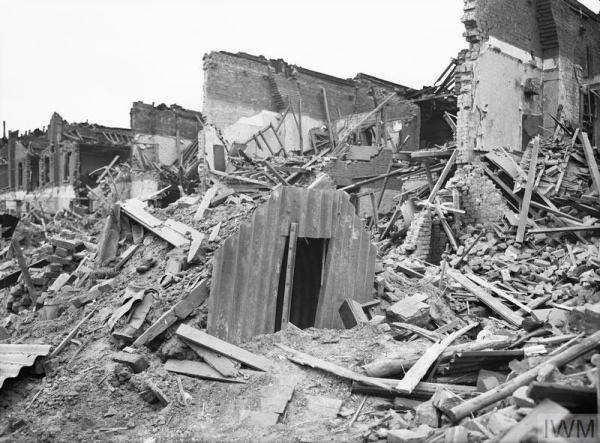
A small air raid shelter designed for people to erect on their properties in preparation for the expected bombing campaigns of World War II, the first of London’s ‘Anderson’ shelters were rolled out 80 years ago in a backyard garden of a house in Islington on 25th February, 1939.

The shelter’s name comes from Sir John Anderson, Lord Privy Seal and the man tasked with the job of overseeing air-raid preparations across the country. As part of that job, he commissioned engineers to come up with an easy-to-construct, affordable shelter that could be used by the population at large.

The resulting arched-roofed structures, designed to be flexible and absorb the impact when bombs hit, were made from six curved sheets of corrugated steel or iron and, at six feet tall, 6.5 feet long and 4.5 feet wide, could house a family of six. They were designed to be buried under four feet of earth in backyards and the roof covered with a minimum of 15 inches of soil.

The shelters were given out for free to lower income families but those with the means had to buy them for £7. Some chose to incorporate them into their gardens and grew vegetables and plants on top and some decorated them – there were even competitions held for the best looking.

By the time bombs started hitting London in the Blitz, more than 1.5 million of the shelters had been built (and a further 2.1 million were erected as the war raged).

It was expected that families would use them every night but the shelters were found to be cold and damp and often flooded which meant many people only used them when air raid sirens sounded (and some not even then – one 1940 survey apparently found only 27 per cent of Londoners used them).

After the war, most were scrapped for the metal but some of the Anderson shelters were repurposed as garden sheds. A small number of them survive across London.

PICTURE: An intact Anderson shelter sits amid devastation in Poplar caused after a land mine fell a few yards away in in 1941. The three people inside were not hurt. Via Imperial War Museum (© IWM (D 5949))

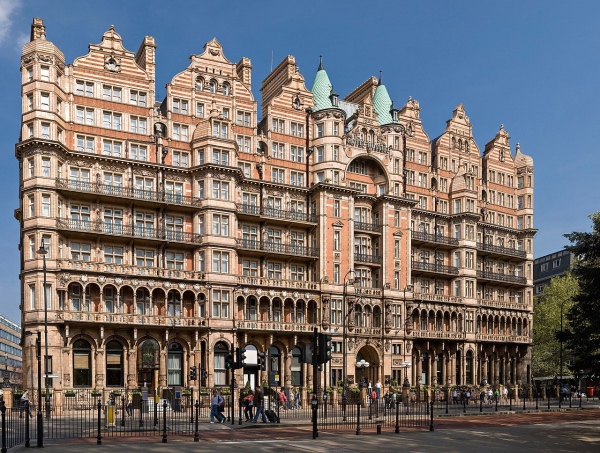
10 historic London hotels…6. The Midland Grand Hotel (The St Pancras Renaissance London)

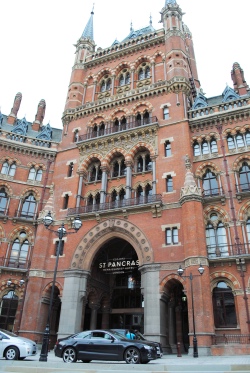
Another of the opulent Victorian hotels built at London’s railway termini, the Midland Grand Hotel was designed by Sir George Gilbert Scott in an ornate High Gothic style.

Scott’s design for the new hotel – which was to be built adjoining the railway station and would form its southern facade on Euston Road – was selected over 10 other submissions to win an 1865 competition run by the Midland Railway Company.

Scott was apparently reluctantly involved – he only entered the competition after pressure from one of the company’s directors despite apparently previously refusing to get involved with the project prior to that.

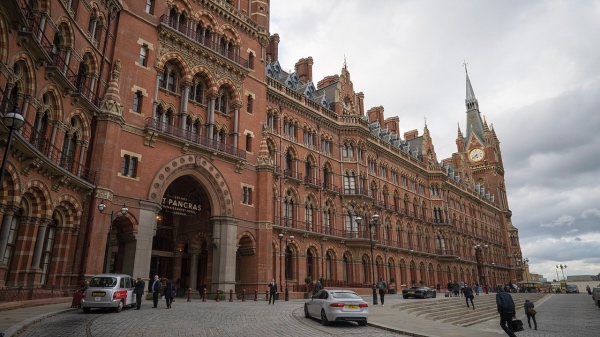
His expensive – and expansive – design (apparently resembling his rejected plans for government offices in Whitehall) included an 82 metre high clock tower at the east end of the more than 170 metre long facade and a 76 metre high tower at the west end (it also originally had an extra floor that wasn’t included in the final building).

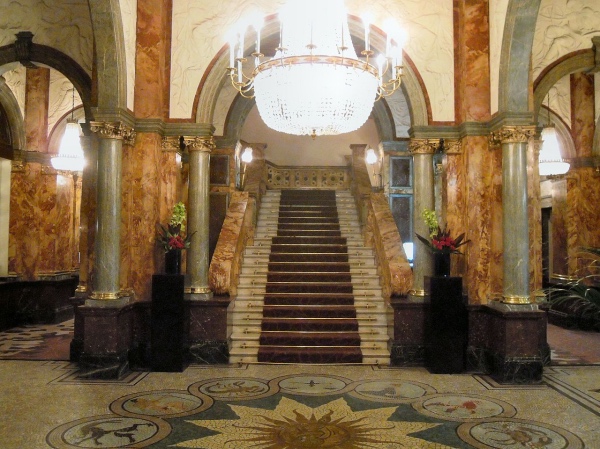
The luxurious property – considered from the outset one of London’s best hotels, it cost whopping £438,000 – featured some 300 bedrooms, a grand double staircase, curved dining room and mod-cons like water-driven lifts (it was the first private building to boost these and one remained in place until 1958), an electric bell calling system and flushing toilets.

Staff communicated via a system of speaking tubes and wary of fires after the Palace of Westminster burned down, a “fireproof floor”. The property also boasted the first ladies’ smoking room in London in 1873 and, in 1899, the first revolving door in Britain was installed at the entrance.

Decorative details in the best guest rooms, meanwhile, included Axminster carpets, carved marble fireplaces, 18 foot high ceilings, and vast windows. En suite bathrooms, however, were not included.

The hotel’s east wing opened on 5th May, 1873, but it wasn’t completed until spring of 1876. One Herr Etzesberger, formerly of the Victorian Hotel in Venice, was apparently appointed general manager.

Guests included music hall singer and comedian Marie Lloyd, Jesse Boot (of Boots chemists fame), railroad and shipping entrepreneur Cornelius Vanderbilt and George Pullman (of the Pullman sleeping car fame).

The hotel was taken over by the London, Midland and Scottish Railway in 1922. It closed in 1935 thanks to its now outdated and expensive-to-maintain facilities and, despite innovations like a Moroccan coffee house and in-house orchestra.

Renamed St Pancras Chambers, the building was subsequently used as railway company offices. It survived the Blitz and attempts to have it demolished thanks to a high profile campaign led by poet Sir John Betjeman, architectural historian Nikolaus Pevsner and the Victorian Society and in 1967 the hotel and St Pancras station were given Grade I-listed status.

British Rail continued using it as offices but in the 1980s the building was deemed unsafe and closed. It was restored in the 1990s and in 2004, permission was given for it to be redeveloped into a new hotel – the same period during which the station was being redeveloped into one of the largest rail termini in Europe in order to accommodate cross-channel trains.

This project saw the main public rooms of the old Midland Grand Hotel kept and restored as well as some bedrooms while the former driveway for taxes was converted into the new lobby and a new bedroom wing constructed. The upper floors of the original building, meanwhile, were converted into 68 apartments.

The five star, 245 room St Pancras Renaissance Hotel opened on 14th March, 2011, to guests but the formal opening took place on 5th May that year – exactly 138 days after it first opened its doors.

Facilities at the property today, part of the Marriott group, include The Chambers Club, The Booking Office Bar & Restaurant, MI + ME, The Marcus Wareing-designed Gilbert Scott Restaurant, the Hansom Lounge – where afternoon tea is served, and George’s Bar. There’s also a spa and leisure club and pool and meeting facilities.

The premises has appeared in films including the The Secret GardenRichard III, Batman Begins, Bridget Jones’ Diary and Harry Potter and the Chamber of Secrets. It also served as the backdrop for the Spice Girls video clip, Wannabee.

For more, see www.stpancraslondon.com.

PICTURE: Top – LepoRello (licenced under CC BY-SA 3.0);  Right – David Adams; Below – Jwslubbock (licenced under CC BY-SA 3.0).

LondonLife – Chinese New Year celebrations…

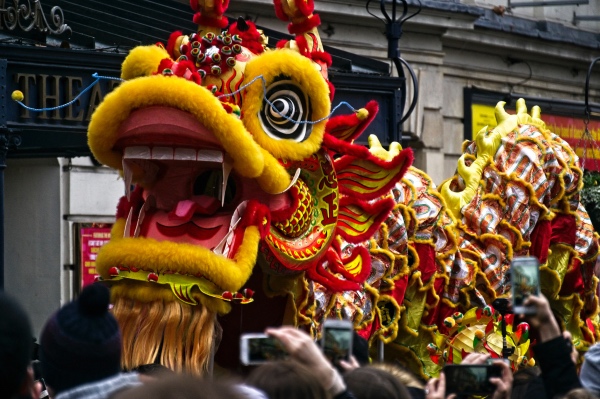
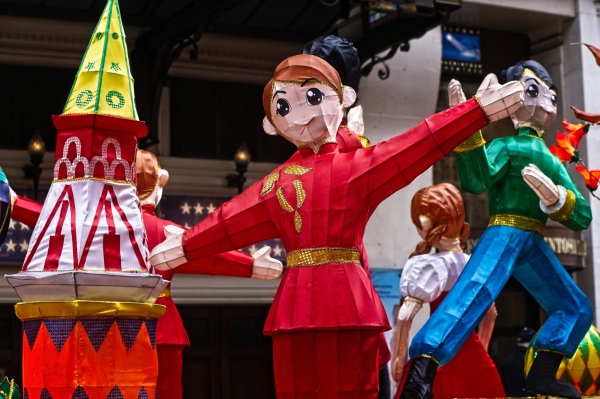
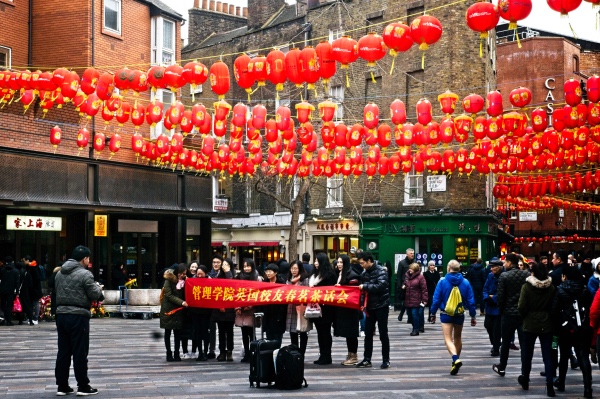
Chinese or Lunar New Year celebrations in London – the largest outside Asia – were held at various West End sites including Chinatown, on Sunday to welcome in the Year of the Pig.

PICTURES: Garry Knight (licensed under CC BY 2.0)

London Pub Signs – The Wenlock Arms…

Located just to the north of the City, The Wenlock Arms takes its name from the former Wenlock Brewery (the name was also given to the nearby Wenlock Basin which runs off Regent’s Canal).
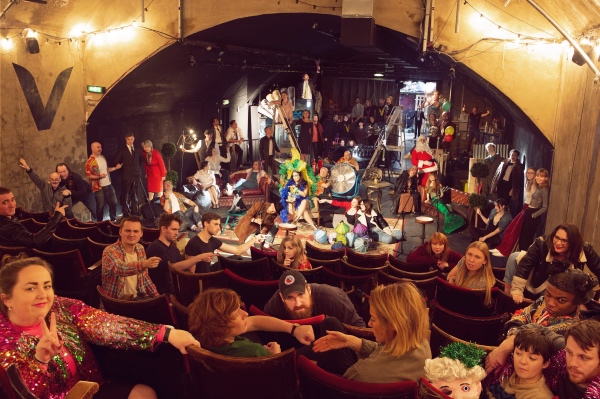
Located at 26 Wenlock Road in Hoxton, the pub is said to have opened in 1836 as a tap for the nearby brewery and went on to become a rare survivor of the Blitz (for the area in which it’s located).
The pub has an interesting recent history – it was successfully saved from demolition several years ago following a campaign from locals and is now a protected building. Having undergone a bit of a spruce up since, it is highly regarded for both its ales and its live music.

It also featured as a location in the 2013 film, The World’s End, starring Simon Pegg.

For more, see http://wenlockarms.com.

PICTURE: Marcuswenlock (licensed under CC BY-SA 4.0)

10 historic London hotels…4. The Langham Hotel…

This sprawling London hotel in Portland Place – just past the top end of Regent Street – has spent much of its life as a hotel but was also once part of the BBC.

Built in 1863-65 to the plans of John Giles and James Murray, the £300,000 Langham Hotel – claimed as Europe’s first “grand hotel” – was deliberately designed to be on a scale and with a level of magnificence the city had not yet seen.

Spread over 10 floors – including those below ground – and designed in the style of an Italian palace, it boasted 600 rooms including numerous suites and featured mod-cons including the city’s first hydraulic lifts (electric lighting and air-conditioning would follow).

Features included its celebrated Palm Court, said to be the birthplace of the traditional afternoon tea.

It opened in a rather spectacular celebration on 10th June, 1865, with more than 2,000 guests including the Prince of Wales (later King Edward VII).

It soon gained a reputation among the rich and influential. Along with exiled members of European royal families including the Emperor Napoleon III of France and exiled Ethiopian Emperor Haile Selassie, those who stayed here included the likes of American writer Mark Twain, Italian conductor Arturo Toscanini, Czech composer Antonin Dvorak, explorer Henry Morton Stanley and romantic novelist Ouida.

Charles Dickens believed there was no better place for dinner parties and Sir Arthur Conan Doyle, another guest, used it as a setting in his Sherlock Holmes novels.

Its proximity to All Soul’s in Langham Place – the scene of many a fashionable wedding – saw it host many wedding receptions and the servants at Langham were led in prayers each morning by a clergyman from the church.

It was also popular with international musicians and artists thanks to the location of Queen’s Hall nearby.

The Langham declined in popularity during the two World Wars as the social centre of London moved west. Having served as a first aid and military post during World War II, it was badly damaged during the Blitz with much destruction caused when its massive water tank ruptured.

After the war, the BBC bought the hotel and used it for offices, studios and the BBC Club.

The BBC sold the building in the mid-Eighties and in 1991 after a £100 million renovation, it reopened as the Langham Hilton Hotel with Diana, Princess of Wales, a regular visitor.

It was sold again in 1995 and extended and refurbished. It again underwent a five year, £80 million, refurbishment in the mid 2000s, reopening in 2009.

The five star Langham – now the flagship of a group of hotels, celebrated its 150th anniversary in 2015 with the opening of the Regent Wing as well as The Sterling Suite, a luxurious six bedroom suite, and a new Langham Club Lounge.

Now a Grade II-listed building, it contains some 380 suites and rooms as well as The Grand Ballroom, the aforementioned Palm Court, restaurants including Roux at The Landau and Artesian, a British tavern, The Wigmore, and a spa.

It has appeared in numerous films, including the 1995 James Bond film, GoldenEye, in which it doubled for a hotel in St Petersburg. It also features a City of Westminster Green Plaque commemorating a meeting there between Oscar Wilde, Conan Doyle and Joseph Marshall Stoddart who commissioned the two writers to write stories for his magazine.

For more, see www.langhamhotels.com/en/the-langham/london.

PICTURE: Top – Sheep”R”Us (licensed under CC BY-NC-ND 2.0); Right – David Adams

Correction – this is actually number four in our special series, not three!

This Week in London – VAULT returns to Waterloo, and, ‘Making Music’ at the Barbican…

London’s largest arts festival, VAULT, kicks off next Wednesday in Waterloo with more than 400 shows on offer. Taking place across a range of venues including the main festival hub, The Vaults below Waterloo Station, as well as pop-ups in shipping containers, caravans and escape rooms and the festival’s new space for immersive events – Unit 9, highlights of the seventh festival include the Belarus Free Theatre’s production of the immersive Ukrainian folk opera Counting Sheep, the Lucy Jane Atkinson-directed play Vespertilio, and the comedy of Ciarán Dowd – winner of “best newcomer” at the Edinburgh Comedy Awards. There’s also a twilight program – featuring the VAULT Comedy Showcase – from 10pm on Thursdays and Fridays and a series of Lates including Launch Party: Hype Time featuring the eight-piece New Orleans band Brass Funkeys,  blues band Slow Mojo and special guest DJs including Hazel Marimba. The festival runs from 23rd January to 17th March, from Wednesdays to Sundays (times vary). For a full programme of events and tickets, head to vaultfestival.com. PICTURE: VAULT Festival’s 2019 “class photo” (courtesy of VAULT)

• The joy found in communities making music together is explored in a new exhibition which opened at the Barbican Music Library in the City of London this week. Making Music Together: A celebration of leisure-time music in the UK shows how 13,000 leisure-time groups gather to play and perform a wide range of music – from jazz and folk to classical and barbershop – in locations ranging from houses and garages to halls, theatres and fields across the country. The exhibition, held in conjunction with Making Music – the UK’s largest organisation for leisure-time music, will feature posters, films and quotes by contributing Making Music member groups as well as specially commissioned portraits of leisure-time musicians. Runs until 23rd March. Free admission. For more, see www.barbican.org.uk/your-visit/general-info/library.

Send all emails for inclusion to exploringlondon@gmail.com.

Happy New Year! (and the conclusion to our most popular (new) posts countdown for 2018)…

2019 is upon us so we at Exploring London would like to take the opportunity to wish all our readers a very Happy New Year! We look forward to bringing you fascinating new stories about London’s history and culture in the year to come.

Meanwhile, here are the two most popular (new) posts of 2018…

2. Treasures of London – The Great Hall at Eltham Palace…

1. A Moment in London’s History – The execution of the George, Duke of Clarence…

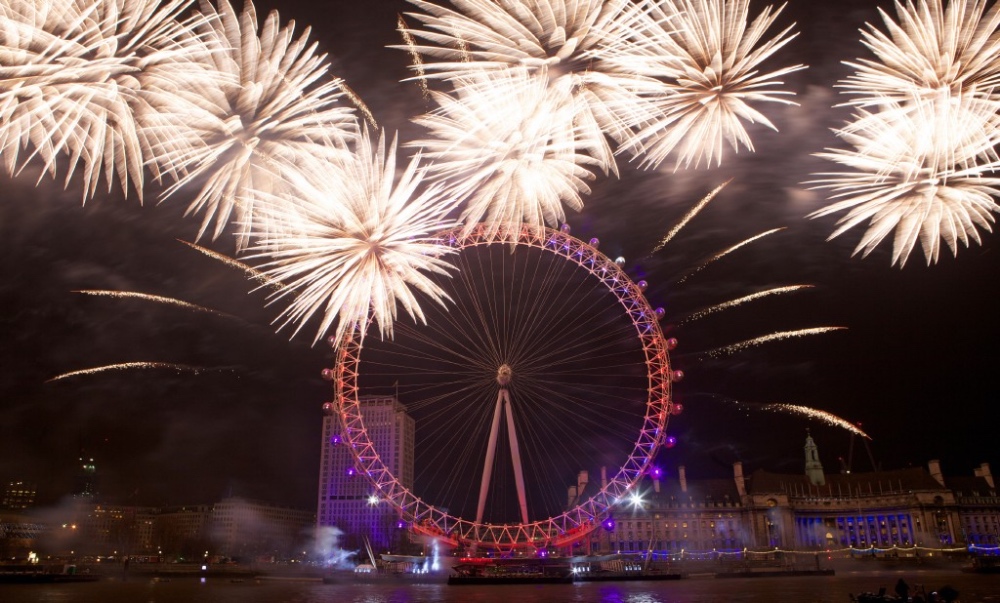
PICTURE: © ENGLAND’S HISTORIC CITIES (New Year’s Eve fireworks from 2014).

Merry Christmas!


Wishing all our readers a very Merry Christmas and a great start to 2019!


PICTURE: Christmas tree in St James (KotomiCreations (licensed under CC BY-NC 2.0))

LondonLife – It’s Christmas!…

Trafalgar Square bedecked for Christmas with its famous Norwegian tree. PICTURE: Ben Pipe Photography via London Partners.

This Week in London – Hampton Court kicks off Christmas festivities; ‘The Monarch of the Glen’ returns to National Gallery; and Alfred Munnings’ World War I art…

Visitors to Hampton Court Palace will be transported back to 1906 from Saturday as the palace community prepares for Christmas. Christmas Present, Christmas Past features a range of activities from carol singing around the tree to telling ghost stories (and looking at the traditions behind them) as well as live culinary demonstrations in the kitchens showing the evolution of Christmas dinner as we know it today. Meanwhile, the Hampton Court Palace Festive Fayre returns next weekend (7th to 9th December) with more than 90 stalls set up in the palace courtyards selling mince pies, mulled wine and a host of other festive treats. And the palace’s ice-skating rink has returned to the Tudor West Front (and will be there until 6th January). Admission charges apply. For more, see www.hrpfoodfestivals.com.

Sir Edwin Landseer’s dramatic work – The Monarch of the Glen – is at the centre of a new exhibition celebrating the connections between the 19th century artist and the National Gallery. “Coming home” to the Trafalgar Square-based institution for the first time in more than 160 years, the painting – arguably the most famous animal painting in the world – is one of 14 works included in a new free show opening today. Among paintings created to decorate the Palace of Westminster after fire devastated the building in 1834, Landseer’s (1802-1873) work was first exhibited at the Royal Academy in 1851, then housed in what is now the National Gallery building. It’s now on loan from the National Galleries of Scotland, which acquired the work in 2017. This is the first London showing since 1983. Other works in the display include Landseer’s Ecorche drawing of a dog’s leg (1821), as well as paintings and drawings connected with the famous lions Landseer designed for Trafalgar Square including a John Ballantyne portrait of the artist modelling the lions in his studio and a work by Queen Victoria, whom Landseer tutored in etching, entitled A pencil drawing of a stag after Landseer’s mural on the Dining Room wall at Ardverikie Shooting-lodge (1847). Can be seen in Room 1 until 3rd February. For more, see www.nationalgallery.org.uk. PICTURE: Edwin Landseer, ‘The Monarch of the Glen’ (about 1851), © National Galleries of Scotland

More than 40 paintings created during the final year of World War I by artist Alfred Munnings (1878-1959) go on show at the National Army Museum in Chelsea tomorrow. Alfred Munnings: War Artist, 1918 shows his mastery of equine subjects as well as portraiture and landscapes. Munnings was commissioned by the Canadian War Memorials Fund as an official war artist to capture the fighting front and logistics behind the scenes and in early 1918 was embedded with the Canadian Expeditionary Force. The exhibition has been developed by the Canadian War Museum in partnership with The Munnings Art Museum and is supported but The Beaverbrook Canadian Foundation. Can be seen until 3rd March. Admission charge applies. For more, see www.nam.ac.uk.

Send all items for inclusion to exploringlondon@gmail.com.

LondonLife – Christmas comes to ZSL London Zoo…

Christmas has arrived at ZSL London Zoo with a series of light sculptures illuminating a mile long festive trail. More than a million pea lights have been used in the first show of its kind at the zoo which taking a month to build, features 200 visual displays including a pair of giant golden giraffes (above), an 11 metre tall Christmas tree made of recycled Christmas sledges (below) and two illuminated flying flamingoes (below). Historic zoo buildings have been lit up as well, including the Grade I-listed Penguin Pool and the historic Mapping Terraces. The trail, which circles the zoo’s 36 acre site so as not to wake up the sleeping animals, has been created in partnership with Raymond Gubbay Limited and designed by Culture Creative. It can seen on selected nights until 1st January. Admission charge applies. For dates and times, see  christmasatlondonzoo.co.ukPICTURES: ZSL London Zoo.


This Week in London – Kew gets all Christmassy; Thomas Gainsborough’s family; and, William Heath Robinson and home life…

Christmas at Kew kicks off tonight with the garden landscape once again transformed into a spectacular light and sound show. Highlights from this year’s display include a ‘Field of Light’ by Brighton based artists Ithaca which reaches across the landscape towards the newly restored Great Pagoda, a laser garden by Australian studio Mandylights, 300 illuminated origami boats floating on Kew’s lake in an installation by Italian artists Asther & Hemera, ‘Firework Trees’ lit up by explosions of coloured light, a seven metre tall Cathedral of Light, a fire garden and “enchanted walkway” of giant glowing peonies and papyrus by French artists TILT and, of course, the famous Palm House finale which brings the giant glasshouse to life with a show featuring criss-crossing laser beans, jumping jets of light and kaleidoscopic projections playing across a giant water screen. Santa and his helpers can be found along the trail and there is a festival fairground with a Victorian carousel as well as food and drink at a range of stalls in Victoria Plaza. Runs from 5pm on select dates until 5th January. Admission charge applies. For more, head to www.kew.org/christmas. PICTURE – Below: The Fire Garden/Raymond Gubbay Ltd (RBG Kew).

All 12 surviving portraits of celebrated 18th century artist Thomas Gainsborough’s daughters have been brought together for the first time in a major new exhibition at the National Portrait Gallery. Gainsborough’s Family Album depicts the development of the Gainsborough girls from playful young children to fashionable adults with highlights including The Artist’s Daughters chasing a Butterfly (c1756) and The Artist’s Daughters with a Cat (c1760-1) as well as the little seen double full-length of Mary and Margaret Gainsborough as young women (c1774). More than 50 works are included in the display and a number have never been seen in the UK before. The latter include an early portrait of the artist’s father John Gainsborough (c 1746-8) and a drawing of Thomas and his wife Margaret’s pet dogs, Tristram and Fox. The display traces the career of the artist (1727-88) who, despite his passion for landscapes, painted more portraits of his family members than any other artist of the time or earlier. Together they form an “unusually comprehensive” visual record of an 18th century British kinship network, with several of its key players shown more than once at different stages of their lives. The exhibition runs until 3rd February. Admission charge applies. For more, see www.npg.org.uk.

Artist William Heath Robinson and his fascination with domestic life is the subject of a new exhibition opening at the Heath Robinson Museum in Pinner on Saturday. Heath Robinson’s Home Life centres on the fact that from about 1930 onwards, the artist’s humour was centred on domestic life including the construction of his house, ‘The Gadgets’, at the Ideal Home Exhibition of 1934 and the release, from 1936, of the first of his ‘How to’ books, How to Live in a Flat. The display features an early series of “Ideal Home” cartoons published in 1933 and rare photographs of ‘The Gadgets’ under construction at the Ideal Home Exhibition. There’s also original artwork from How to Live in a Flat and examples of a set of nursery china that he designed for a Knightsbridge department store in 1927. Runs until 17th February. Admission charge applies. For more see www.heathrobinsonmuseum.org.

Send all items for inclusion to exploringlondon@gmail.com

LondonLife – Brompton’s new memorial for those lost in World War I…


A new permanent World War I memorial was unveiled at Brompton Cemetery earlier this month dedicated to the 24 members of the Royal Parks and Palaces staff who died in the Great War. The inscribed memorial stone, placed on one of the chapel’s colonnades (pictured above), also commemorates all the parks, gardens and grounds staff from across the UK who never returned from the war. It was unveiled at a service conducted by Reverend Canon Anthony Howe, Chaplain to the Chapel Royal at Hampton Court Palace, the gardens of which were managed by the Royal Parks during World War I. Meanwhile, the foundations for a new permanent wildflower meadow honouring the 2,625 Chelsea Pensioners buried in the cemetery were also laid near the Chelsea Pensioners’ monument (pictured below). The meadow will feature flowers which appeared in French fields after the Battle of the Somme including poppies, cornflowers, loosestrife, mallow and cranesbill. Two benches, positioned to either side of the Grade II-listed memorial, have been donated by the Royal Hospital Chelsea as a place for quite reflection. For more on the cemetery, see www.royalparks.org.uk/parks/brompton-cemetery. PICTURE: The Royal Parks/Paul Keene.

Treasures of London – Cavalry Memorial…

With World War I commemorations taking place last weekend, so we thought it fitting to take a look at one of the city’s memorials.

Located in Hyde Park, the Cavalry Memorial (also known as the Cavalry of the Empire Memorial), which commemorates the more than 4,000 members of the cavalry regiments killed during the “Great War”, depicts St George (patron saint of cavalry), shown as a knight, triumphing over the defeated dragon coiled beneath his horse’s hooves.

It’s said that St George was modelled on 1454 bronze effigy of Richard de Beauchamp, 13th Earl of Warwick, and that the horse was adapted from a 15th century engraving by Albrecht Dürer.

The pedestal underneath is decorated with a frieze of galloping horsemen from different countries within the Empire and the statue is accompanied by a stone backdrop, originally designed to shield the statue from Park Lane, upon which are bronze plates listing cavalry units from across the British Empire that served in World War I along with the names of the four cavalry officers who became field marshals – Haig, French, Allenby and Robertson.

Designed by army vet Captain Adrian Jones, the bronze sculpture was made from guns captured during the war (Jones also sculpted the Quadriga atop Wellington Arch on Hyde Park Corner). The Portland stone pedestal was designed by Sir John Burnet.

The Grade II*-listed memorial, which was proposed in 1920, was originally unveiled by Field Marshal John French, 1st Earl of Ypres and the Prince of Wales (later Edward VIII) on 21st May, 1924.

It was originally located at Stanhope Gate but was moved to its present site to the west, near the bandstand, in 1961 after Park Lane was widened.

For more on Hyde Park, see www.royalparks.org.uk/parks/hyde-park.

For more World War I memorials in London, see our previous special series here.

LondonLife – Remembrance Sunday marks 100 years since the guns fell silent…

Thousands of people, including Queen Elizabeth II and members of the Royal Family, attended Whitehall on Sunday to take part in the National Service of Remembrance, this year marking 100 years since the end of World War I. The event included two minutes silence at 11am and wreaths were laid at the base of the Cenotaph to commemorate the servicemen and women killed in all conflicts from the World War I onwards. In an historic first, German President Frank-Walter Steinmeier laid a wreath during the ceremony. Following the service, a procession involving 10,000 members of the public who were selected by a ballot marched past the monument and through London. ALL PICTURES: Crown Copyright/Ministry of Defence.

What’s in a name?…Exhibition Road…

This important Kensington thoroughfare runs through the heart of South Kensington’s world-famous museum precinct from Thurloe Place, just south of Cromwell Road, all the way to Hyde Park.

Along its length, it takes in such important institutions as the Victoria & Albert Museum, the Natural History Museum, Science Museum and Imperial College London while Royal Albert Hall is only a stone’s throw to the west.

It was, as might be expected given the name, indeed laid out as part of Prince Albert’s grand scheme surrounding the Great Exhibition of 1851 as a means of accessing the vast Crystal Palace which was located in Hyde Park (before moving out to south London).

It wasn’t the only road in the area built specifically for that purpose – the transecting Cromwell Road and Queen’s Gate, which runs in parallel and, yes, is named for Queen Victoria, were also built for to provide access to the Great Exhibition.

After the exhibition was over, Exhibition Road formed part of the precinct known as “Albertopolis” in which, inspired by the Great Exhibition, became something of a knowledge and cultural centre featuring various museums and the great concert hall which sadly Albert didn’t live long enough to see.

In the 2000s, a scheme to give pedestrians greater priority along the road was realised (in time for the 2012 Olympics).

PICTURE: Looking north along Exhibition Road from the intersection with Cromwell Road (the Natural History Museum is on the left; the Victoria & Albert Museum – and the Aston Webb Screen – on the right)/Google Maps.


This Week in London – The 803rd Lord Mayor’s Show; the National Service of Remembrance; and the Romanov’s at the Queen’s Gallery…

The 803rd Lord Mayor’s Show will this Saturday wend its way through the streets of the City of London as new Lord Mayor Peter Estlin takes office. This year’s hour-and-a-half long procession features more than 7,000 people, 200 horses and 140 motor and steam-driven vehicles. Leaving from Mansion House at 11am, it travels to the Royal Courts via St Paul’s and then returns along Embankment at 1.15pm. And while there will be no fireworks this year, there will be two new ‘family entertainment zones’. The first, in Paternoster Square and around St Paul’s Cathedral, will include a film show featuring archival footage, art installations and street theatre as well as food stalls. The second, in Bloomberg Arcade near Mansion House, will feature music and dance, art and sound installations, the MOLA’s (Museum of London Archaeology) Time Truck, as well as technology and apprenticeship workshops and food. For more information, head to https://lordmayorsshow.london. PICTURE: The Lord Mayor’s coach during last year’s procession (John; licensed under CC BY-NC-ND 2.0)

The National Service of Remembrance at the Cenotaph in Whitehall will this Sunday mark a century since the end of World War I. Starting at 11am (the public will be admitted to Whitehall from 8am), the service commemorates the contribution of British and Commonwealth military and civilian servicemen and women involved in the two World Wars and later conflicts. This year’s ceremony will be followed by ‘The Nation’s Thank You – The People’s Procession’, featuring 10,000 members of the public. Large viewing screens will be placed to the north of the Cenotaph, near the green outside the main Ministry of Defence building and outside the Scotland Office, and south of the Cenotaph on the corner of King Charles Street. For more on the day, follow this link and for more on bell-ringing ceremonies across the day, see https://armistice100.org.uk.

The relationship between the British Royal Family and the Romanovs in Russia is explored in a new art exhibition opening at the The Queen’s Gallery, Buckingham Palace, this Friday. Highlights of Russia: Royalty & the Romanovs include a series of watercolours specially commissioned by Prince Alfred, second eldest son of Queen Victoria, to record his wedding to Grand Duchess Maria Alexandrovna, daughter of Alexander II, at the Winter Palace in St Petersburg in 1874 so that his mother, who was unable to attend, didn’t miss out. There’s also works by Fabergé and portraits of royal figures by the likes of Sir Godfrey Kneller and Sir Thomas Lawrence. The exhibition is accompanied by another display featuring renowned photographer Roger Fenton’s images from the war in Crimea in 1855. Both exhibitions run until 28th April. Admission charges apply. The exhibition is accompanied by a programme of events. For more, see www.rct.uk/visit/the-queens-gallery-buckingham-palace. PICTURE (above): Nicholas Chevalier, The Bal Polonaise at the Winter Palace, St Petersburg, 23 January 1874, 1876 (Royal Collection Trust/© Her Majesty Queen Elizabeth II 2018).

Send all items for inclusion to exploringlondon@gmail.com.

LondonLife – The Tower remembers…

Thousands of flames have filled the moat at the Tower of London as part of a moving light and sound display marking the centenary of the end of World War I. Beyond the Deepening Shadow: The Tower Remembers evolves over four hours each night as the moat gradually fills with flames accompanied by a specially commissioned sound installation exploring the shifting political alliances, friendship, love and loss in a time of war. At the heart of the sound installation is a new choral work featuring the words of war poet Mary Borden taken from her Sonnets to a Soldier. The display, which can be seen at the Tower every night from 5pm to 9pm until Armistice Day on Sunday, 11th November, starts with a solemn procession led by the Tower’s Yeoman Warders who ceremonially light the first flame and then gains pace as volunteers slowly light up the rest of the installation. It’s free to view from Tower Hill and the Tower concourse. For more, see www.hrp.org.uk/tower-of-london/explore/the-tower-remembers/. PICTURES: © Historic Royal Palaces (click on the images to enlarge).

This Week in London – The Regent Street Motor Show; four plant exhibitions at Kew; and photographer Roman Vishniac re-examined…

The largest free-to-view motor show in the UK comes to Regent Street on Saturday showcasing vehicles from the past 125 years. The Illinois Route 66 Regent Street Motor Show, the key event in the Royal Automobile Club’s London Motor Week, features more than 100 pioneering vehicles, some of which date from pre-1905, which parade in a Concours d’Elegance judged by Alan Titchmarsh. There will also be retro F1 and Le Mans racers, “celebrity” vehicles such as ‘Herbie’ and the time-travelling DeLorean from the Back to the Future film franchise while manufacturers such as Renault and Triumph will be displaying their latest designs. Iconic US street machines on show as part of the Visit Illinois display will include a Ford Thunderbird, Dodge Charger, Pontiac Trans-Am, 1957 Chevy Pick-up and a pair of Harley Davidson Sportsters. There’s also activities for children including a state-of-the-art display by Scalextric. Among the anniversaries being marked at the show are the 80th anniversary of the Volkswagen Beetle and Jaguar anniversaries including the 70th anniversary of the XK120 and Mk C Saloon and the 50th anniversary of the XJ. Held on Regent Street between Oxford Circus and Piccadilly Circus, the free show runs from 10.30am to 4pm. For more, head to http://regentstreetmotorshow.com. PICTURE: One of the vehicles on show in 2011 (Garry Knight; licensed under CC BY 2.0)

A series of vibrant Japanese woodblock prints of orchids, first published in 1946, are on show at the Shirley Sherwood Gallery of Botanical Art at Kew Gardens. One of four art exhibitions currently on display as part of the gallery’s 10th anniversary, Rankafu: Masterpieces of Japanese Woodblock Prints of Orchids is believed to be the first major exhibition of Rankafu woodblock colour prints outside Japan. Other exhibitions showing simultaneously at the gallery feature a series of 20 highly intricate graphite drawings of veteran oaks by Mark Frith, a series of works focusing on the smaller details of trees such as leaves, seeds and fruit, and a display of the work of Pandora Sellars whose complex compositions have been described as “botanical theatre”. The four exhibitions can be seen until 17th March. Admission charge applies. For more, see www.kew.org.

The first UK retrospective of Russian-born American photographer Roman Vishniac (1897-1990) has opened simultaneously at the Jewish Museum in Camden and The Photographers’ Gallery in Soho. Roman Vishniac Rediscovered spans his career from the early 1920s to the late 1970s and features his well-known images of Jewish life in Eastern Europe between the two World Wars. Other items on show include recently discovered vintage prints, rare and ‘lost’ film footage from his pre-war period, contact sheets, personal correspondence, original magazine publications, newly created exhibition prints and his high magnification photography known as ‘photomicroscopy’. Runs until 24th February. For more, see www.jewishmuseum.org.uk or www.thephotographersgallery.org.uk.

Send all items for inclusion to exploringlondon@gmail.com.

Famous Londoners – Sir John Lawrence, Lord Mayor of London…

The Lord’s Mayor’s Show is coming up soon (10th November) so we thought it a good time to take a quick look at the life of one of the city’s most memorable Lord Mayors – Sir John Lawrence, who served in the office in 1664-65.

Sir John, a merchant and member of the Worshipful Company of Haberdashers (and Master of the company in 1677), is remembered for the role he played during the Great Plague of 1665 which preceded the Great Fire of London the following year.

Following the arrival of the plaque in London, those with the means took to their heels and left the city for safer climes. But Sir John assured the public that he and the City officers would remain at their posts to keep law and order among the frightened populace.

He oversaw the issuing of a series of plague-related orders designed to stem the spread of disease and appointed people to oversee and attend to the needs of households affected by the disease and search out the bodies to be taken away as well as doctors to tend to the sick and help prevent infection.

His efforts in ensuring the food supply remained steady have been particularly praised as has his opening of his own home in St Helen’s Bishopsgate to those servants who were discharged when the households in which they worked fled the city.

His tenure as mayor is often favourably contrasted with that of his successor, Sir Thomas Bludworth but Sir John also had numerous other positions during his lifetime, including as president of St Thomas’ Hospital, a committee member of the East India Company and a Fellow of the Royal Society.

Sir John was married and had two children. He died on 26th January, 1692, and was buried at the Church of St Helen’s Bishopsgate.

He is remembered on a plaque at Bunhill Fields for being mayor when, at the City’s expense, the burial ground was enclosed with a wall.

PICTURE: Part of the inscription at the gates of Bunhill Fields commemorating Sir John’s role in enclosing the burial ground. (Edwardx; licensed under CC BY-SA 3.0).