This Week in London – Architecture on show; designing London’s transport system; and, the Battle of the Somme commemorated…

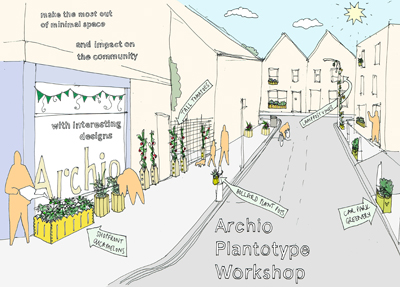
Archio-Plantotype-Workshop-1The London Festival of Architecture kicked off this week with more than 200 events planned for the capital across the month of June. Highlights include “open studios” in which 50 architectural practices across London open their doors to the public, a series of film showing at the BFI concerning the portrayal of the built environment in documentaries and hosted tours through some of London council estate’s green spaces and private gardens. The festival, which centres around three key themes – housing renewal and regeneration, creative workspaces and community engagement, also features a range of exhibitions, installations, talks and workshops including the Archio Plantotype Workshop on 25th June in which participants are asked to help design and build model prototype planters to grow compact and hybrid plants (pictured). For the full programme, check out www.londonfestivalofarchitecture.org.
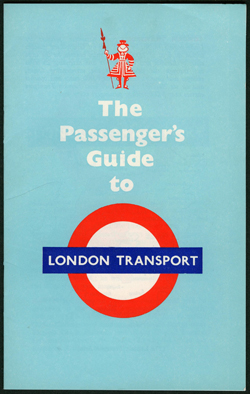
1997-14154-Booklet;-The-Passenger's-Guide-to-London-Transport,-issued-by-London-Transport,-March-1962The design of London’s transport system – from posters, maps and signage to the styling of trains and stations – is the subject of a new exhibition at the London Transport Museum in Covent Garden. Designology – Shaping London explores the role design has played in London’s public transportation systems, spanning the period from the system’s Victorian origins to today. Among the objects on display are an 1834 Shillibeer Woolwich Omnibus timetable, original architectural drawings by Charles Holden of Arnos Grove and Sudbury art deco stations, and a 1994 magnetic ticket hall station model. There are also case studies on key design features found across the transport network such as the New Johnston typeface and the design of Moquette fabric used on the Underground and buses. Visitors are also encouraged to design their own bus stop sign (and share it on social media with the hashtag #pimpmybusstop) and visit a pop-up design studio to find out more about contemporary design innovation. There’s an accompanying programme of events. Admission charges apply. For more, see www.ltmuseum.co.uk. PICTURE: The Passenger’s Guide to London Transport, issued by London Transport, March, 1962./The London Transport Museum.

The “worst day” in the history of the British Army – 1st July, 1916, when almost 60,000 died during the Battle of the Somme – is being commemorated in an exhibition marking the battle’s centenary in Guildhall Yard. Fields of Battle, Lands of Peace: Somme 1916, features a series of evocative photographs by Michael St Maur Sheil of the battlefields as they look today contrasted with images taken at the time. The outdoor exhibition is being accompanied by a display of Somme-related artefacts in the City of London Heritage Gallery at the Guildhall Art Gallery. Admission to the display is free. Runs until 5th July.

Send all items for inclusion to exploringlondon@gmail.com.

Lost London – The Nunnery of St Mary, Clerkenwell…

St-James-ClerkenwellThe Church of St James, which stands just to the north of Clerkenwell Green, is all that remains today of the medieval nunnery which once occupied a large swathe of land in the area. 

The Augustinian Nunnery of St Mary was founded in about 114o by Jorden de Briset, the lord of Clerkenwell Manor (he also founded the Hospitaller Priory of St John of Jerusalem which lay to the south – more on this here) on 14 acres of land to the east of the famous “Clerk’s Well” (more on the well, which was located close to, but within, the western border of the nunnery, in our earlier post here).

By 1160 a wall had been built around the precinct said to have been roughly bounded by Farringdon Lane, Clerkenwell Green (an open space between the two religious houses), St James’s Walk and a boundary to the south of, and parallel with, Bowling Green Lane to the north.

The church – where Briset and his wife were later buried and which doubled as a parish church – was built about the same time, along with an adjoining chapter-house – both of which were made of stone in contrast to the timber buildings which initially made up the rest of the complex.

A cloister and other stone buildings were erected to the north of the church later in the 12th and 13th centuries including a lodging for the prioress, a dormitory, refectory and kitchen for the nuns. Other buildings on the site included  a gatehouse, what was known as the “Nun’s Hall” – possibly a hall for guests – and an infirmary with its own chapel, the location of which is apparently something of a mystery.

Substantial renovation works were carried out in the late 15th and early 16th centuries and by the time of King Henry VIII’s dissolution, it had become one of the wealthiest monasteries in England (although it only ever housed about 20 canonesses).

One of the last nunneries to be suppressed, it was dissolved in 1539 with the nuns being pensioned off.

The site was initially granted to Thomas Howard, 3rd Duke of Norfolk, who held it only briefly being returning it to the king in a deal for another property and subsequently purchased by a succession of different owners.

Many of the buildings were converted for use as private mansions and outbuildings, among them Newcastle House and Challoner (later Cromwell due to the legend that Oliver Cromwell resided there) House which faced them across what had been the cloister courtyard.

The mansions were gradually redeveloped into smaller properties – it remained a popular residential area despite the building of a House of Detention to the immediate north – and in 1788-92, the parish church of St James was rebuilt to the designs of local architect James Carr, with the spire apparently modelled on St Martin-in-the-Fields (Carr also bought Newcastle House and pulled most of it down before redeveloping the area).

Church gardens, which are open to the public, now occupy some of the site of the former nunnery – in 1987, part of the medieval cloisters were excavated here.

For some insightful walks delving into the history of London, see Stephen Millar’s three books, London’s Hidden Walks: Volumes 1-3.

This Week in London – Commemorating the Battle of Jutland; ‘lost’ Egyptian cities; and, new Blue Plaques…

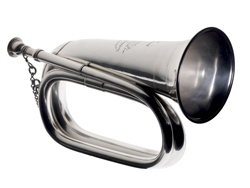
The largest naval conflict of World War I – the Battle of Jutland – is the subject of a new exhibition opening at the National Maritime Museum in Greenwich tomorrow. BugleMarking the centenary of the battle, Jutland 1916: WWI’s Greatest Sea Battle explores the battle itself (which claimed the lives of more than 8,500 as the British Grand Fleet met the German High Seas Fleet in what neither side could claim as a decisive victory) as well as its lead-up, aftermath and the experience of those serving on British and German warships through paintings and newspaper clippings, photographs, ship models and plans, sailor-made craft work and medals. Among the objects on display is a 14 foot long shipbuilder’s model of the HMS Queen Mary, which, one of the largest battle cruisers involved,was destroyed with only 18 survivors of the 1,266 crew. Among the personal stories told in the exhibition, meanwhile, is that of boy bugler William Robert Walker, of Kennington, who served on the HMS Calliope and, severely wounded during the battle, was later visited by King George V
and presented with a silver bugle by Admiral Sir John Jellicoe (the bugle, pictured, is on display). A series of events will accompany the exhibition which runs until November. Admission is free. For more, see www.rmg.co.uk/national-maritime-museum. PICTURE: © National Maritime Museum, London 

• Two ‘lost’ Egyptian cities and their watery fate are the subject of a new exhibition which opens at the British Museum today. Sunken cities: Egypt’s lost worlds is the museum’s first exhibition of underwater discoveries and focuses on the recent discoveries of Thonis-Heracleion and Canopus – submerged at the mouth of the Nile for more than 1,000 years. Among the 300 objects on display are more than than 200 artefacts excavated between 1996 and 2012. Highlights include a 5.4 metre statue of Hapy, a sculpture excavated from Canopus representing Arsine II (the eldest daughter of the Ptolemaic dynasty founder Ptolemy I) who became a goddess after her death, and a stela from Thonis-Heracleion which advertises a royal decree of Pharaoh Nectanebo I concerning taxes.  The exhibition runs until 27th November. Admission charge applies. For more, see www.britishmuseum.org.

New English Heritage Blue Plaques marking the homes of comedian Tommy Cooper and food writer Elizabeth David have been unveiled this month as part of the 150th anniversary of the scheme. Tommy Cooper lived at his former home at 51 Barrowgate Road in Chiswick between 1955 to 1984 and while there entertained fellow comedians such as Roy Hudd, Eric Sykes and Jimmy Tarbuck. Elizabeth David, meanwhile, is the first food writer to ever be commemorated with a Blue Plaque. She lived at the property at 24 Halsey Street in Chelsea for some 45 years until her death in 1992. For more, see www.english-heritage.org.uk/visit/blue-plaques/.

Send all items for inclusion to exploringlondon@gmail.com.

A Moment in London’s history…The ‘longest night’…

FirefightersIt was 75 years ago this year – on the night of 10th/11th May, 1941 – that the German Luftwaffe launched an unprecedented attacked on London, an event that has since become known as the ‘Longest Night’ (it’s also been referred to as ‘The Hardest Night’).

Air raid sirens echoed across the city as the first bombs fells at about 11pm and by the following morning, some 1,436 Londoners had been killed and more than that number injured while more than 11,000 houses had been destroyed along and landmark buildings including the Palace of Westminster (the Commons Chamber was entirely destroyed and the roof of Westminster Hall was set alight), Waterloo Station, the British Museum and the Old Bailey were, in some cases substantially, damaged.

The Royal Air Force Museum records that some 571 sorties were flown by German air crews over the course of the night and morning, dropping 711 tons of high explosive bombs and more than 86,000 incendiaries. The planes were helped in their mission – ordered in retaliation for RAF bombings of German cities – by the full moon reflecting off the river below.

The London Fire Brigade recorded more than 2,100 fires in the city and together these caused more than 700 acres of the urban environment, more than double that of the Great Fire of London in 1666 (the costs of the destruction were also estimated at more than double that of the Great Fire – some £20 million).

Fighter Command sent some 326 aircraft into the fight that night, not all of them over London, and, according to the RAF Museum, the Luftwaffe officially lost 12 aircraft (although others put the figure at more than 30).

By the time the all-clear siren sounded just before 6am on 11th May, it was clear the raid – which turned out to be the last major raid of The Blitz – had been the most damaging ever undertaken upon the city.

Along with the landmarks mentioned above, other prominent buildings which suffered in the attack include Westminster Abbey, St Clement Danes (the official chapel of the Royal Air Force, it was rebuilt but still bears the scars of the attack), and the Queen’s Hall.

Pictured above is a statue of firefighters in action in London during the Blitz, taken from the National Firefighters Memorial near St Paul’s Cathedral – for more on that, see our earlier post here.

For more on The Longest Night, see Gavin Mortimer’s The Longest Night: Voices from the London Blitz: The Worst Night of the London Blitz.

This Week in London – Talking Shakespeare; Dickens’ letter in support of ‘fallen women’; and, wallpaper at the Geffrye…

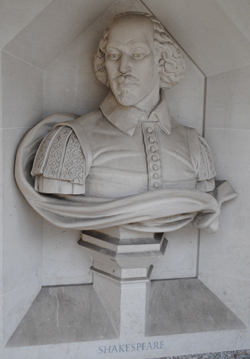
William-Shakespeare6• Guildhall is hosting an “open mic” Shakespeare day this Tuesday as part of commemorations marking the 400th anniversary of his death. Speeches, Soliloquies and Songs from Shakespeare will be opened with recitals from actors Simon Russell Beale and John Heffernan before members of the public will have their chance to recite their favourite piece from Shakespeare. Participants are invited to sign up by emailing ghlevents@cityoflondon.gov.uk or calling 020 7332 1868. The event will run between 10am to 12pm and 1.30pm to 3.30pm at the Basinghall Suite in the Guildhall Art Gallery. For more, see www.cityoflondon.gov.uk/things-to-do/visit-the-city/attractions/guildhall-galleries/Pages/guildhall-art-gallery.aspx.

A letter written by author Charles Dickens to the governors of the Foundling Hospital has gone on display at the Foundling Museum in Bloomsbury. The letter was written to the governors in support of an application for a new matron and touches on Dickens’ belief that the downward path of a ‘fallen woman’ wasn’t irreversible and inevitable but that reform was possible. Tempted to Virtue: Dickens and the Fallen Woman can be seen until 22nd May. In a related event, Lynda Nead, curator of the recent exhibition, The Fallen Woman, will join Jenny Earle, programme director at the Prison Reform Trust, in discussing the hidden stories of vulnerable women in the 19th century and today on 21st May. This event is free but booking is essential. For more, see www.foundlingmuseum.org.uk.

An exhibition celebrating how wallpaper is made is running at the Geffrye Museum in Shoreditch as part of London Craft Week. The Craft of Wallpaper demonstrates the variety of processes being used to make wallpaper in today’s world and features papers by some of the UK’s most innovative makers including Claire Coles, Elise Menghini, Helen Morley, Identity Paper, Juliet Chadwick, Linda Florence, Erica Wakerly, Fromental, CUSTHOM, Tracey Kendall and Graham & Brown who are showcasing six of their most successful wallpaper designs: from its first design in 1946, Original, to the 2016 Wallpaper of the Year, Marble. You’ll have to be quick – only runs until Sunday. For more, see www.londoncraftweek.com.

Send all items for inclusion to exploringlondon@gmail.com.

Lost London – The Three Tuns, Guildhall Yard…

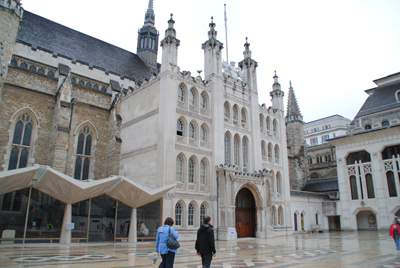
Guildhall-Yard

A medieval tavern, The Three Tuns once stood in Guildhall Yard in the City (picture above).

The tavern, which was located by Guildhall Gate, is noted for having served as lodgings for the Royalist military commander General George Monck when he arrived in the city in early 1660 in the lead-up to the Restoration of the monarchy later that year. It was also, according to poet Robert Herrick, a haunt of playwright Ben Jonson.

The Three Tuns – meaning three great wine casks – was incidentally a popular name for taverns and there were several others in London which bore the same name including, in the 17th century, one in Ludgate Hill, another in Cheapside and another in Gracechurch Street.

The Museum of London has a trade token, which was worth half a penny, and was issued by the tavern’s proprietor, Thomas Ailay, in the mid-17th century for use at the business.

This Week in London – Of Empress Catherine the Great and Capability Brown; a blue plaque double; and, the British graphic novel on show…

A once forgotten collection of watercolour paintings and drawings owned by Empress Catherine the Great of Russia has gone on show at Hampton Court Palace as part of commemorations marking the 300th anniversary of the birth of Lancelot ‘Capability’ Brown. The Empress and the Gardener exhibition features almost 60 intricately detailed views of the palace and its park and gardens during the time when Brown worked there as chief gardener to King George III between 1764 and 1783. The works came to be in the collection of the Empress – a renowned fan of English gardens – after Brown’s assistant, John Spyers, sold two albums of his drawings of the palace to the her for the considerable sum of 1,000 roubles. The albums disappeared into her collection at the Hermitage (now the State Hermitage Museum) and lay forgotten for more than 200 years before they were rediscovered by curator Mikhail Dedinkin in 2002. As well as the collection – on public show for the first time, the exhibition features portraits of Brown and the Empress, previously unseen drawings of her ‘English Palace’ in the grounds of the Peterhof near St Petersburg, and several pieces from the ‘Green Frog’ dinner service, created for the Empress by Wedgwood, which is decorated with some of the landscapes the prolific Brown created across England. Runs until 4th September. Admission charge applies. For more, see www.hrp.org.uk/hampton-court-palace/.

A house in Chelsea has become only one of 19 homes in London to bear two official blue plaques. Number 48 Paultons Square has the honour of having been home to two Nobel prize winners (albeit in different fields) – dramatist Samuel Beckett, who lived there for seven months in 1934 while writing his first novel, Murphy, and physicist Patrick Blackett, noted for his revolutionary work in U-boat detection during World War II, who lived there from 1953 to 1969. Other ‘doubles’ include 20 Maresfield Gardens in Hampstead (home to Sigmund Freud and Anna Freud) and 29 Fitzroy Street in Fitzrovia (home to George Bernard Shaw and Virginia Woolf). This year marks the 150th anniversary of the blue plaques scheme. For more, see www.english-heritage.org.uk/visit/blue-plaques/.

The rise of the British graphic novel is the subject of a new exhibition at the Cartoon Museum in Bloomsbury. The Great British Graphic Novel features works by 18th century artist William Hogarth as well as Kate Charlesworth, Dave Gibbons (one of the creators of the ground-breaking Watchmen), Martin Row, Posy Simmonds (creator of the Tamara Drewe comic strip) and Bryan and Mary Talbot. It runs until 24th July. Admission charge applies. For more, see www.cartoonmuseum.org.

Send all items for inclusion to exploringlondon@gmail.com.


10 iconic London film locations…9. A chapel of many faces…

There’s an ancient church in London which has taken on the role of various other cathedrals and churches in many recent historic films, most notably in the 1998 film Shakespeare in Love (a fitting reference this week, given the 400th anniversary of the Bard’s death last weekend).

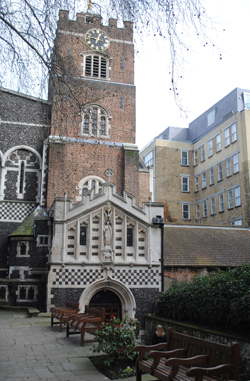
St-BartsBut the church – location of the scene in the film in which Shakespeare’s begs forgiveness after the death of Kit Marlowe – has also been seen in everything from the 1991 Kevin Costner-vehicle, Robin Hood: Prince of Thieves (where it represented the interior of Nottingham Cathedral) to Guy Ritchie’s 2009 film Sherlock Holmes (where it represented St Paul’s Cathedral, location of a ritual sacrifice being conducted by the evil Lord Blackwood).

It has also appeared in the 1996 Victorian-era drama Jude, 2006’s Amazing Grace – the story of William Wilberforce’s effort to combat the slave trade, 2007’s Elizabeth: The Golden Age (where it hosts the execution of Mary, Queen of Scots), 2008’s The Other Boleyn Girl, and the 2012 fantasy epic, Snow White and the Huntsman.

Oh, and the church? The priory church of St Bartholomew The Great (St Bart’s) located in West Smithfield, which has a history dating back 900 years (for more on the history of the church, see our earlier post here).

But the church hasn’t just been seen in films of the historic genre – it’s also played roles in more contemporary movies as well, from 1994’s Four Weddings and Funeral (St Julian’s where a wedding doesn’t take place) to 1999’s The End of the Affair and, more recently, the 2014 film Muppets: Most Wanted.

It’s doubtful there’s a church interior in London that’s been in so many movies in recent times. For more on the church itself, see www.greatstbarts.com.

This Week in London – Seminal moments in Shakespearean performance; Maria Merian’s Butterflies; and, British conceptual art…

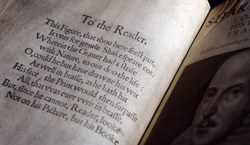
ShakespearesFirstFolio1623BritishLibraryPhotobyClareKendall It’s the 400th anniversary of Shakespeare’s death (in case you missed that), and among the many events marking the occasion comes a major exhibition at the British Library focusing on 10 key performances that it says have made the Bard the “cultural icon” he is today. Shakespeare in Ten Acts, which opens on Friday, focuses on performances which may not be the most famous but which represent key moments in shaping his legacy. They span the period the first performance of Hamlet at the Globe theatre in around 1600 to a radical interpretation of the same play from US theatre company The Wooster Group in 2013. Among the exhibition highlights are a human skull which was given to the actress Sarah Bernhardt by writer Victor Hugo (and which she used as Yorik’s skull when she played Hamlet in 1899), a dress worn by Vivien Leigh playing Lady Macbeth in the 1955 production of Macbeth at the Royal Shakespeare Company, the only surviving play script written in the Bard’s own hand and rare printed editions including Shakespeare’s First Folio and the earliest printed edition of Hamlet from 1603 (one of only two copies in the world). The exhibition, which runs until 6th September, is accompanied by a season of events. Admission charge applies. For more, see www.bl.uk. PICTURE: Shakespeare’s First Folio 1623 British Library Photo by Clare Kendall.

Still talking exhibitions commemorating Shakespeare’s death and a manuscript of William Boyce’s Ode to the Memory of Shakespeare will be on display at The Foundling Museum’s Handel Gallery from tomorrow. The work, which was composed in 1756, was performed annually at the Theatre Royal in Drury Lane. The manuscript, the first page of which was thought to be lost until it was acquired in 2006, formerly belonged to Samuel Arnold, who compiled the first complete edition of Handel’s works. Runs at the Bloomsbury-based museum until 30th May. Admission charge applies. For more, see www.foundlingmuseum.org.uk.

 Exquisite watercolours depicting the natural world go on show in The Queen’s Gallery at Buckingham Palace from tomorrow. Maria Merian’s Butterflies features 50 works produced by the eighteenth century German artist and entomologist Maria Sibylla Merian. The works – many of which record the flora and fauna of the then Dutch colony of Suriname in South America, were published in the 1706 work Metamorphosis Insectorum Surinamensium (The Metamorphosis of the Insects of Suriname) and partially printed, partially hand-painted versions of the plates were purchased by King George III for his library at Buckingham House (later Buckingham Palace). As well as insects, the works – which were based on a visit Merian made to the colony in 1699, depict lizards, crocodiles and snakes as well as tropical plants such as the pineapple. The exhibition runs until 9th October. Admission charge applies. For more, see www.royalcollection.org.uk/visit/the-queens-gallery-buckingham-palace.

The evolution of conceptual art in Britain is the subject of a new exhibition at Tate Britain in Milbank  Conceptual Art in Britain 1964-1979 features 70 works by 21 artists and positions conceptual art “not as a style but rather a game-changing shift in the way we think about art, how it is made and what it is for”. Highlights include Michael Craig-Martin’s An Oak Tree (1973) and Roelof Louw’s Soul City (Pyramid of Oranges) (1987) as well as Victor Burgin’s Possession (1976), Mary Kelly’s Post-Partum Document (1974-78) and Conrad Atkinson’s Northern Ireland 1968 – May Day 1975 (1975-76). Admission charge applies. Runs until 29th August. For more, see www.tate.org.uk.

Send all items for inclusion to exploringlondon@gmail.com.

A Moment in London’s History – Birth of a future queen…

17-Bruton-StreetQueen Elizabeth II, the oldest British monarch, celebrates her 90th birthday later this month and, although we’ve run a piece on the Queen’s birth before, we thought it only fitting to take a second look at what proved to be a momentous birth.

The then Princess Elizabeth (Elizabeth Alexandra Mary) was born at 17 Bruton Street in Mayfair – the London home of her maternal grandparents, the Earl and Countess of Strathmore (they also owned Glamis Castle in Scotland) – at 2.40am on 21st April, 1926.

She was apparently delivered by Caesarian section and the Home Secretary, Sir William Joynson-Hicks, was in attendance to ensure everything was above board (the custom, which has since been dropped, was apparently adopted after what was known as the ‘Warming Pan Scandal’ when, following the birth of Prince James Francis Edward, son of King James II and Queen Mary of Modena, in June, 1688, rumours spread that the baby had been stillborn and replaced by an imposter brought into the chamber inside a warming pan).

The first child of the Prince Albert, the Duke of York (Bertie) and Elizabeth Bowes-Lyon, the Duchess of York (later King George VI and Queen Elizabeth), she was third in line to the throne at her birth but thanks to the abdication of King Edward VIII, became her father’s heir.

The event apparently drew a crowd to the property (although none could yet suspect how important this princess was to become) and among the well-wishers who visited the newborn that afternoon were her paternal grandparents, King George V and Queen Mary, who had apparently been woken at 4am to be informed of the birth of their second grandchild.

The property was to be Princess Elizabeth’s home for the first few months of her life (named after her mother, paternal great-grandmother, Queen Alexandra, and paternal grandmother, Queen Mary, she was christened in the private chapel at Buckingham Palace five weeks after her birth).

The home of her birth and a neighbouring townhouse have both since been demolished and replaced by an office building. A plaque commemorating it as the Queen’s birthplace was installed in the Queen’s Silver Jubilee Year of 1977 and another to mark the Diamond Jubilee in 2012.

The Queen’s birthday will be officially commemorated in June.

PICTURE: Via London Remembers


Treasures of London – The Knowledge of London…

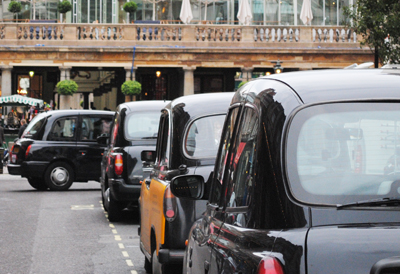
Black-cabsHaving celebrated its 150th anniversary last year, The Knowledge of London is the world famous test given to the city’s black cab drivers.

The test dates back to 1865 and involves drivers memorising 320 routes, 25,000 street names and some 20,000 landmarks and places of public interest including museums, theatres, churches, police stations, schools and parks within a six mile radius of Charing Cross.

The routes through central London – which previously numbered as many as 468 – are contained within the Blue Book (there’s also a series of ‘Knowledge schools’ to help would-be drivers prepare for the test).

The test includes a written exam and a series of one-to-one interviews, known as appearances, in which the prospective driver is given start and finish points and expected to describe the shortest route between them. It is overseen by the Public Carriage Office, once part of the Metropolitan Police Force, but now part of Transport for London.

It was introduced by Sir Richard Mayne, First Joint Commissioner of the Metropolitan Police Service, after thousands of complaints were received about the lack of knowledge of London cabbies from visitors to the Great Exhibition in Hyde Park in 1851.

It apparently takes on average between two and four years to learn all you need to know to pass the test and you can often spot what are fondly known as ‘knowledge boys (or girls)’ riding scooters around the city with a clipboard attached to the handlebars as they learn what they need to know for the test.

This Week in London – The Venetian Renaissance on show; Art at the Bridge; and, Martin Parr’s London…

Giorgione A survey of some 50 works from the Venetian Renaissance will go on show at the Royal Academy of Arts in Piccadilly on Saturday. In the Age of Giorgione features works from the first decade of the 16th century by artists including Giorgione, Titian, Giovanni Bellini, Sebastian del Piombo and Lorenzo Lotto as well as those of lesser known painters like Giovanni Mariani. Highlights include Giorgione’s paintings Portrait of a Man – only one of two known painting bearing a contemporary inscription identifying the artist (from The San Diego Museum of Art) and Il Tramonto (The Sunset) (from London’s National Gallery) as well as Titian’s works Christ and the Adultress (Glasgow Museums), and Jacopo Pesaro being Presenting By Pope Alexander VI to Saint Peter (Koninklijk Museum voor Schone Kunsten, Antwerp). The exhibition will be divided into four sections. Runs until 5th June. Admission charge applies. For more, see Cwww.royalacademy.org.uk. PICTURE: Attributed to Giorgione, Portrait of a Young Man, c. 1505.

Art at the Bridge returned to Tower Bridge this week with an all-female exhibition launched on International Women’s Day. Building Bridges: The Female Perspective, which is being run in collaboration with the Southwark Arts Forum and represents the 7th ‘edition’ of Art at the Bridge, features the work of 15 artists in a variety of media. They include Charlotte Timms, a mixed media artist who takes her inspiration from living on an historic barge on the Thames, print artist Donna Leighton whose work The New Baby is a commentary on the bridges a mother must build with a new baby, and photographer Pauline Etim-Ubah who explores the career of civil engineering through a series of images. Exhibition runs until 31st July. Included in normal bridge admission price. For more, see www.towerbridge.org.uk.

Gain new insights into life inside the City of London Corporation in photographs taken by Martin Parr, the City of London’s photographer-in-residence. Opening at the Guildhall Art Gallery last week, Unseen City: Photos by Martin Parr provides insight into the City of London Corporation’s private ceremonies, ancient and modern traditions, processions, banquets and other public occasions as well as more informal times. Twenty of the works on show will be acquired for the gallery’s permanent collection following the closure of the exhibition on 31st July. Admission charge applies. For more, see www.cityoflondon.gov.uk/things-to-do/visit-the-city/attractions/guildhall-galleries/Pages/guildhall-art-gallery.aspx.

Send all items for inclusion to exploringlondon@gmail.com.

LondonLife – Celebrating International Women’s Day…

Cavell

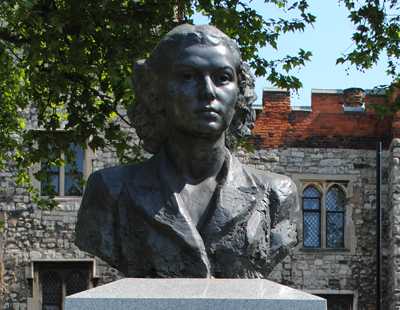
It’s International Women’s Day, so we’re celebrating by remembering two heroic women immortalised in statues in central London. Above is Edith Cavell, a British nurse who was trapped in Brussels by advancing German armies in 1914 and then subsequently arrested for aiding French and British soldiers to escape before being executed by firing squad on 12th October, 1915 – an event widely condemned around the world. The marble statue, located in St Martin’s Place at the intersection of Charing Cross Road and St Martin’s Lane, is by George Frampton and was erected in 1920. Below, meanwhile, is a bust of Violette Szabo which tops a memorial to the Special Operations Executive (SOE). Szabo, who was posthumously awarded the George Cross and the Croix de Guerre after she was captured and eventually executed by the German Army in early 1945, was among 117 SOE agents who did not return from their missions to France. Located on Albert Embankment, the statue – which is the work of Karen Newman – was unveiled in 2009.
Szabo

This Week in London – Botticelli at the V&A; Shakespeare recalled in free sound and light show; and, ‘punk’ captured on film…

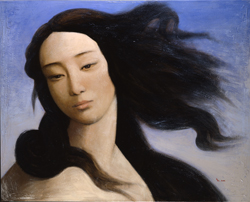
VenusA major new exhibition opening at the V&A this Saturday will feature more than 150 works from around the world in a display exploring how artists and designers have responded to the artistic legacy of Botticelli. Italian artist Sandro Botticelli (1445-1510) was largely forgotten for more than 300 years after his death but is now widely recognised as one of the greatest artists of all time. Botticelli Reimagined features painting, fashion, film, drawing, photography, tapestry, sculpture and print with works by Dante Gabriel Rossetti, Edward Burne-Jones, William Morris, René Magritte, Elsa Schiaparelli, Andy Warhol and Cindy Sherman. The exhibition is divided into three sections: ‘Global, Modern, Contemporary’, ‘Rediscovery’, and ‘Botticelli in his own Time’. Runs until 3rd July. Admission charge applies. For more, see www.vam.ac.uk/Botticelli. PICTURE: Venus, after Botticelli by Yin Xin (2008). Private collection, courtesy Duhamel Fine Art, Paris. (Name of artist corrected)

The historic facade of Guildhall in the City of London will become a canvas for a free son et lumiére show on Friday and Saturday nights to mark the 400th anniversary of the death of William Shakespeare. The display, which runs on a 20 minute loop between 6.45pm and 8.45pm, will feature period images and music from the City’s extensive archives and use 3D projection mapping techniques to transform the Dance Porch of the 15th century building. The Guildhall Art Gallery will be open from 6pm to 9pm and, as well as allowing people to view a property deed for a house in Blackfriars which was signed by the Bard, will feature a pop-up bar with a Shakespeare-themed cocktail. For more on this and other events, see www.cityoflondon.gov.uk/shakespeare400.

The 40th anniversary of punk is the subject of a new photographic exhibition drawn from the archives of world renowned music photographer and rockarchive.com founder Jill Furmanovsky which opened at the City of London Corporation’s Barbican Music Library this week. Chunk of Punk, which runs until 28th April, features many of Furmanovsky’s well-known punk-related images as well as hitherto unseen pictures with The Ramones, Buzzcocks, The Clash, The Sex Pistols, Blondie, The Undertones, Siouxsie and the Banshees, Blondie and Iggy Pop among the bands featured. The exhibition forms part of Punk.London: 40 Years of Subversive Culture. For more, see www.cityoflondon.gov.uk.

Send all items for inclusion to exploringlondon@gmail.com.

Treasures of London – William Shakespeare’s last will and testament…

William-Shakespeares-Will

Recently conserved by the National Archives, Shakespeare’s last will and testament is at the heart of a new exhibition on show at Somerset House.

By Me William Shakespeare: A Life In Writing, the first joint exhibition of the National Archives and King’s College London, features four of the six known signatures of Shakespeare still in existence and, along with his last will and testament, shows some of the most significant Shakespeare-related documents in the world tracking his existence as everything from a London citizen, businessman, family man, servant to possibly even a thief and subversive.

But back to the will. While not written in the Bard’s hand, the will is signed by him in three places and indicates the wealth and status he had garnered by the time of his death on 23rd April, 1616.

Evidence shows that Shakespeare revised his will as his estate changed, and just before his death, he added personal bequests including that a silver bowl be given to his second eldest daughter Judith, memorial rings to actor friends in London and his second best bed to his wife Anne. He left most of his property to his eldest daughter, Susanna, although his will, according to the National Archives, indicates that he had hoped to establish a male legacy.

Other beneficiaries named in the will include his sister Joan and her sons and his grand-daughter Elizabeth Hall while Susanna and her husband John Hall were named as his executors.

The exhibition, which is being held in the Inigo Jones Rooms in Somerset House’s East Wing as part of the series of events being held to mark the 400th anniversary of Shakespeare’s death, runs until 29th May. Admission charge applies.

Other documents featured in the display – all of which are registered with UNESCO – include accounts listing the grant of four-and-half yards of red cloth to Shakespeare by King James I for participation in his coronation procession in 1604, accounts from the Master of Revels showing when plays were performed at court (useful for helping to date when Shakespeare wrote particular plays), and a document recording testimony Shakespeare gave in court when his landlord, Christopher Mountjoy, failed to provide his son-in-law with a dowry for his daughter’s hand (Shakespeare is likely to have played a role in arranging the marriage).

For more on the exhibition, see www.bymewilliamshakespeare.org.

This Week in London – Charlotte Bronte celebrated; A Right Royal Buzz; iconic London etching revisited; and, Delacroix at the National Gallery…

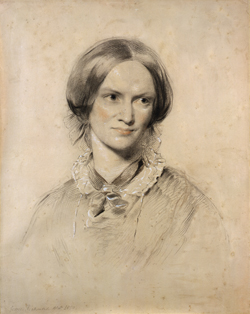
Charlotte-BrontePaintings and drawings by Charlotte Bronte, the first of famous “little books” she ever made, and a pair of her ankle boots worn will go on show at the National Portrait Gallery on Monday. Celebrating Charlotte Bronte 1816-1855 is being held to mark the 200th anniversary of the author’s birth and features 26 items loaned from the Bronte Parsonage Museum in Haworth. As well as portraits from the gallery’s collection (including the only painted portrait of Charlotte), the display will also feature first editions of her novel Jane Eyre and Elizabeth Gaskell’s biography, Life of Charlotte Bronte, as well as chalk drawings George Richmond made of both women. The exhibition, which is free to enter, is in Room 24 and runs until 14th August. For more, see www.npg.org.uk. PICTURE: National Portrait Gallery, London.

Find out what the buzz is all about in London this week when The Royal Park’s A Right Royal Buzz exhibition is held across three venues – Duck Island Cottage in St James’s Park, The National Gallery and the Mall Galleries. The community arts project features art created in a series of workshops under the guidance of artist Alex Hirtzel – all in a bid to teach the public about the importance of pollination. The installations a blacked out box in the Mall Galleries where you can discover how bees see, a room of 3D flowers at the National Gallery inspired by Van Gogh’s Sunflowers and Jan Van Huysum’s Flowers in a Terracotta Vase, and a four foot high beehive and bug hotel made of ceramic tiles on Duck Island in St James’s Park. For more on the project – which can only be seen until 20th February – see www.royalparks.org.uk/arightroyalbuzz.

• A recreation of Claes Jansz Visscher’s iconic 1616 engraving of London goes on show in the Guildhall Art Gallery from Saturday as part of commemorations of the 400th anniversary of William Shakespeare’s death. Artist Robin Reynolds has recreated the work and depicts London, reaching from Whitehall to St Katharine’s Dock, on four large plates. In recognition of the Shakespearean commemoration, the new drawing also features references to the Bard’s 37 plays, three major poetic works and sonnets. Visscher Redrawn: 1616-2016 can be seen until 20th November and is part of a full program of events being held as part of the commemoration (including the Shakespeare Son et Lumiére show in Guildhall Yard on 4th and 5th March). For more, see www.cityoflondon.gov.uk/visscher and www.cityoflondon.gov.uk/shakespeare400.

The first major presentation of the art of Eugene Delacroix to be held in the UK in more than 50 years has opened at the National Gallery’s Sainsbury Wing. Delacroix and the Rise of Modern Art celebrates the career and legacy of the artist, arguably the most famous and controversial French painter of the late 19th century and one of the first “modern masters” yet whose name today is overshadowed by those of many of his contemporaries. The display features more than 60 works borrowed from 30 public and private collections around the world with highlights including Delacroix’s Self Portrait (about 1837), The Convulsionists of Tangiers (1838), and Bathers (1854) as well as works by other artists which pay tribute to the impact he had: among them, Bazille’s La Toilette, Van Gogh’s Pieta and Cezanne’s Battle of Love. Organised by the National Gallery in conjunction with the Minneapolis Institute of Art, the exhibition runs until 22nd May. Admission charge applies. For more, see www.nationalgallery.org.uk.

Send all items for inclusion to exploringlondon@gmail.com.

A Moment in London’s History – ‘The London Gazette’ first published 350 years ago…

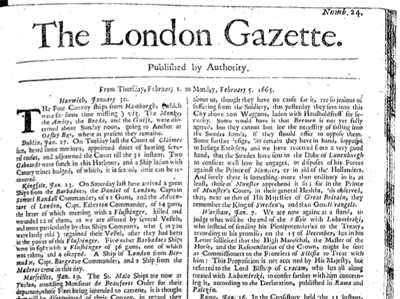
The-London-Gazette

An official public record of the British Government, The London Gazette, initially known as The Oxford Gazette, was first published on 7th November, 1665. 

But its publication didn’t take place in London – rather it was in Oxford (hence its being initially named – The Oxford Gazette) where King Charles II, having fled London due to the plague, ordered the publication to be printed at the University Press.

There’s several reasons behind its publication – one is that courtiers were apparently so worried about the plaque they didn’t even want to touch newspapers from London for fears of contagion of the plaque. But there was also a need, amid the swirl of rumours, gossip and sensationalism found in other publications, for a reputable publication of record (not the least because the introduction of censorship a few years before had suppressed other publications).

Published for the first couple of months under its Oxford masthead, it wasn’t until the following year – on 5th February, 1666 – that the gazette was first published in London (issue 24) after the royal court’s return.

The gazette had unparalleled access to government information – including reports from foreign embassies about what was happening abroad (important when news from overseas was limited), and official reports, including those ‘Mentioned in despatches’ from the War Office and Ministry of Defence.

Adopting the same model, official government gazettes followed in the coming years in Edinburgh (1699) and Dublin (1706 – later The Belfast Gazette). All three, from 1889, were published by Her Majesty’s Stationery Office. Today, The Gazette is published by The Stationary Office (TSO), on behalf of The National Archives (and is now online as well as in print).

Initially published only a couple of days a week, it is now published every weekday except on Bank Holidays.

Notable events published in The London Gazette include the Great Fire of London in 1665 (issue 85), the founding of the Bank of England in 1694 (issue 2982), the burial of Sir Isaac Newton in 1727 (issue 6569), the announcement of the American Declaration of Independence in 1776 (issue 11690), the outcome of the Battle of Waterloo in a “Gazette Extraordinary” in 1815 (issue 17028), and the Coronation of Queen Elizabeth II in 1953 (Supplement 40020).

You can see The London Gazette today and back issues as well as to order commemorative editions, head to www.thegazette.co.uk.

Special – 10 London ‘battlefields’, a recap…

It seems an age ago that we started this Wednesday series on some of London’s ‘battlefields’ (we’ve used quotes given many of the battlefields we’ve covered haven’t featured what we might think of as having hosted battles in the traditional sense).

But we’ve finally come to an end, so before we launch a new series next week, here’s a recap of what the series entailed and please vote for your favourite below…

10 London ‘battlefields’ – 1. Queen Boudicca takes on the Romans…

10 London ‘battlefields’ – 2. ‘London Bridge is falling down’…

10 London ‘battlefields’ – 3. London sacked in the Peasant’s Revolt…

10 London ‘battlefields’ – 4. Jack Cade’s rebellion…

10 London ‘battlefields’ – 5. Battle of Barnet…

10 London ‘battlefields’ – 6. Battle of Turnham Green…

10 London ‘battlefields’ – 7. Battle of Brentford…

10 London ‘battlefields’ – 8. The Gordon Riots…

10 London ‘battlefields’ – 9. The Battle of Cable Street…

10 London ‘battlefields’ – 10. The Battle of London…

LondonLife – London in a different light…

195 Piccadilly

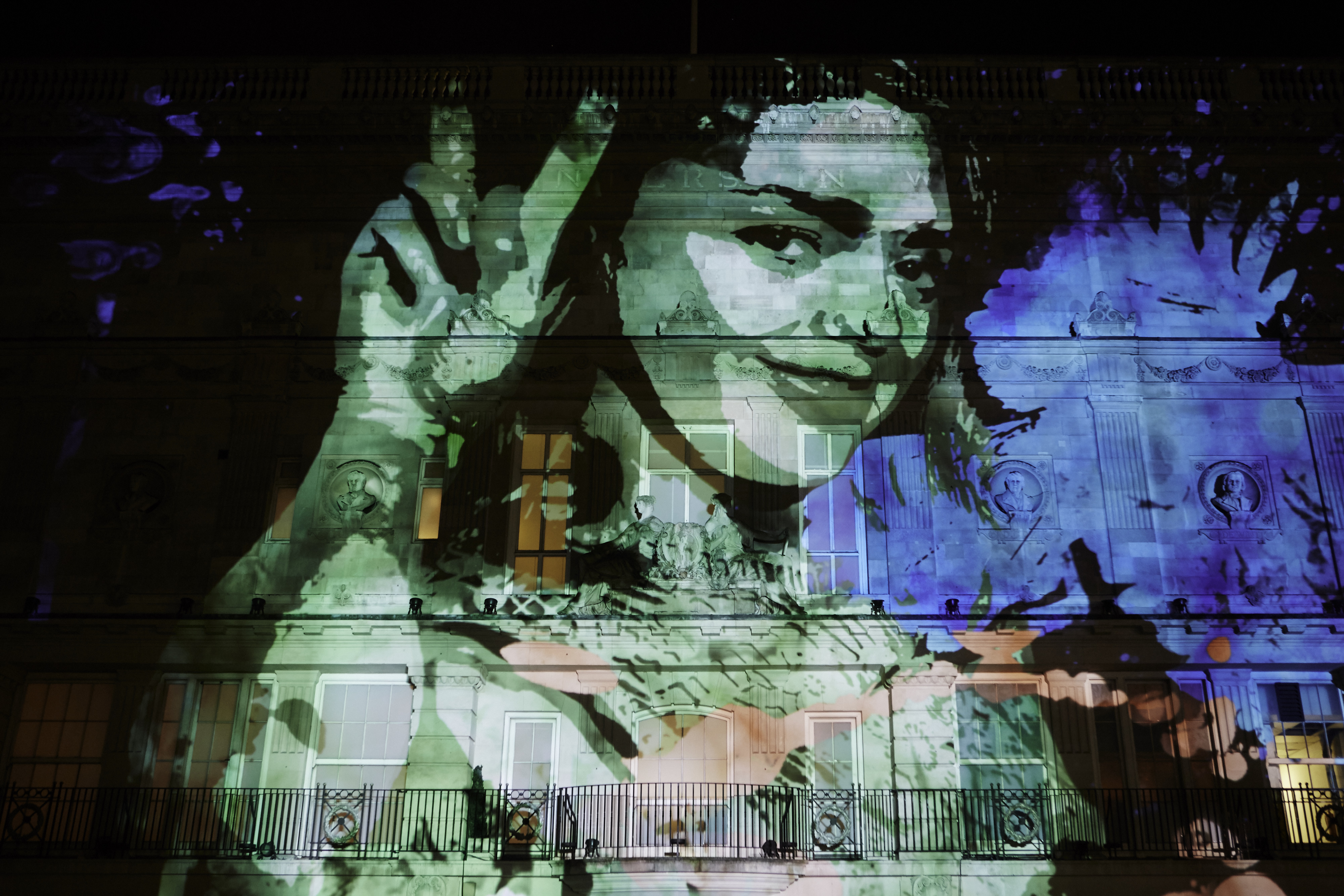
Last weekend saw London transformed in a blaze of colour and light as the city hosted its first Lumiere light festival. More than a million people hit the streets over the four nights of the event – developed by creative producers Artichoke and supported by the Mayor of London – to take in the 30 artworks. Above are some of images of British screen stars and directors which were projected on 195 Piccadilly in an installation by Newcastle-based studio NOVAK. Below are some more images from the rather spectacular event. For more on the event, check out www.visitlondon.com/lumiere.

Les-Voyageurs

Above is Les Voyageurs (The Travellers) by French artist Cédric Le Borgne (located in St James) while below is Litre of Light by Mick Stephenson and Central Saint Martin’s students in Kings Cross.

Litre-of-Light

binaryWaves

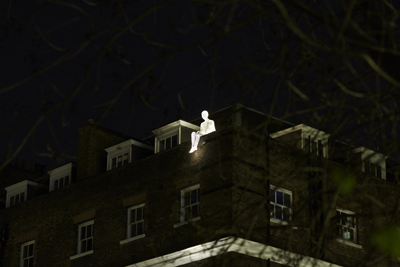
Above is binaryWaves by LAB[au] while below is Ron Haselden’s Diver depicting an illuminated figure plunging into the water of the King’s Cross Pond Club.

DiverAll images courtesy of Lumiere London.

This Week in London – London illuminated; commemorating Shakespeare’s death; and, of bees and pollination…

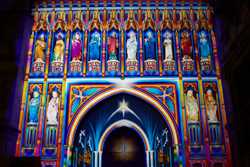
Westminster-Abbey-west-front The biggest ever light festival to hit London opens tonight. Lumber London, produced by Artichoke with the support of the Mayor of London and visitlondon.com, will see a host of international artists transform a series of iconic buildings and locations in four areas across the city – Piccadilly, Regent Street and St James’s, Trafalgar Square and Westminster, Mayfair and King’s Cross. The 30 installations include French collective TILT’s Garden of Light featuring giant illuminated plants in Leicester Square, Patrice Warrener’s The Light of the Spirit which envelopes the west front of Westminster Abbey in colour and light, Deepa Mann-Kler’s Neon Dogs – a collection of 12 neon dogs inspired by the balloon dogs seen at children’s parties, this sits near Trafalgar Square, and, Pipette, a colourful installation by Miriam Gleeman (of The Cross Kings) and Tom Sloan (of Tom Sloan Design) which sits in the pedestrian subway, the King’s Cross Tunnel. Other highlights include Julian Opie’s work Shaida Walking, 2015 which will be permanently located in Broadwick Street, Soho, and Janet Echelon’s enormous net sculpture 1.8 London which is strung between buildings at Oxford Circus. The festival runs from 6.30pm to 10.30pm over the next four nights. You can download a free map on the installations or use the free London Official City Guide app to locate them. For more information – including the full programme – see www.visitlondon.com/lumiere.

A property deed signed by playwright William Shakespeare and one of the most complete first folios of his works have gone on show in the London Heritage Gallery at the Guildhall Art Gallery. Alongside the two documents which dates from 1613 and 1623, the Shakespeare and London exhibition marks the 400th anniversary of Shakespeare’s death – to be commemorated on 23rd April this year – will also display other documents related to the story of London’s playhouses. The property deed – which relates to a property in Blackfriars – is only one of six surviving documents to bear the playwrights authenticated signature while the first folio is one of five of the most complete copies in existence and is apparently usually only brought out for consultation by Shakespearean scholars and actors. The exhibition runs until 31st March. Admission is free. For more on it and other events being run to commemorate the Bard’s death, see www.cityoflondon.gov.uk/shakespeare400. For more on other events this year, check out www.shakespeare400.org.

• See your art featured in an upcoming exhibition on the importance of bees and pollination by attending a drop-in workshop at Victoria Tower Gardens next to the Houses of Parliament next week. The workshop, which will be held from 10am to 2pm on 20th January, will see participants create their own 3D flowers based on famous paintings by Vincent Van Gogh and Jan Van Huysum currently in The National Gallery’s collection – all as part of a focus looking at what plants bees are attracted to. The art created in the workshop will be seen in an exhibition A Right Royal Buzz which is the result of a collaboration between The Royal Parks, The National Gallery and Mall Galleries and will be seen across all three venues (Victoria Tower Gardens representing the Royal Parks) from 17th t0 20th February. For more, head to this link.

Send all items for inclusion to exploringlondon@gmail.com.