A Moment in London’s History – The first Anderson shelter is built…

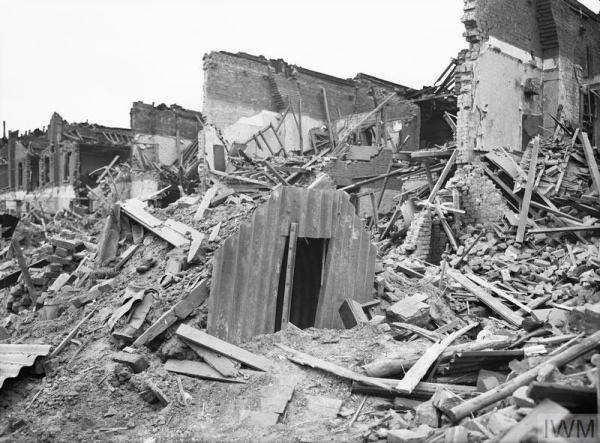
A small air raid shelter designed for people to erect on their properties in preparation for the expected bombing campaigns of World War II, the first of London’s ‘Anderson’ shelters were rolled out 80 years ago in a backyard garden of a house in Islington on 25th February, 1939.

The shelter’s name comes from Sir John Anderson, Lord Privy Seal and the man tasked with the job of overseeing air-raid preparations across the country. As part of that job, he commissioned engineers to come up with an easy-to-construct, affordable shelter that could be used by the population at large.

The resulting arched-roofed structures, designed to be flexible and absorb the impact when bombs hit, were made from six curved sheets of corrugated steel or iron and, at six feet tall, 6.5 feet long and 4.5 feet wide, could house a family of six. They were designed to be buried under four feet of earth in backyards and the roof covered with a minimum of 15 inches of soil.

The shelters were given out for free to lower income families but those with the means had to buy them for £7. Some chose to incorporate them into their gardens and grew vegetables and plants on top and some decorated them – there were even competitions held for the best looking.

By the time bombs started hitting London in the Blitz, more than 1.5 million of the shelters had been built (and a further 2.1 million were erected as the war raged).

It was expected that families would use them every night but the shelters were found to be cold and damp and often flooded which meant many people only used them when air raid sirens sounded (and some not even then – one 1940 survey apparently found only 27 per cent of Londoners used them).

After the war, most were scrapped for the metal but some of the Anderson shelters were repurposed as garden sheds. A small number of them survive across London.

PICTURE: An intact Anderson shelter sits amid devastation in Poplar caused after a land mine fell a few yards away in in 1941. The three people inside were not hurt. Via Imperial War Museum (© IWM (D 5949))

10 historic London hotels…6. The Midland Grand Hotel (The St Pancras Renaissance London)

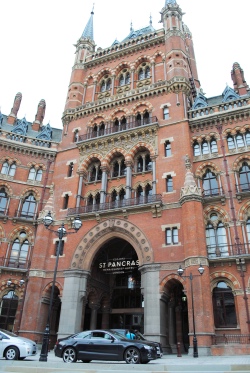
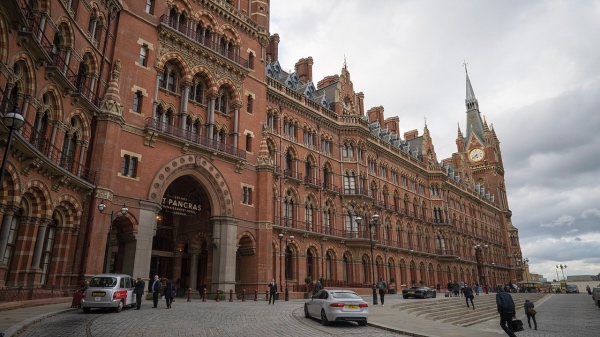
Another of the opulent Victorian hotels built at London’s railway termini, the Midland Grand Hotel was designed by Sir George Gilbert Scott in an ornate High Gothic style.

Scott’s design for the new hotel – which was to be built adjoining the railway station and would form its southern facade on Euston Road – was selected over 10 other submissions to win an 1865 competition run by the Midland Railway Company.

Scott was apparently reluctantly involved – he only entered the competition after pressure from one of the company’s directors despite apparently previously refusing to get involved with the project prior to that.

His expensive – and expansive – design (apparently resembling his rejected plans for government offices in Whitehall) included an 82 metre high clock tower at the east end of the more than 170 metre long facade and a 76 metre high tower at the west end (it also originally had an extra floor that wasn’t included in the final building).

The luxurious property – considered from the outset one of London’s best hotels, it cost whopping £438,000 – featured some 300 bedrooms, a grand double staircase, curved dining room and mod-cons like water-driven lifts (it was the first private building to boost these and one remained in place until 1958), an electric bell calling system and flushing toilets.

Staff communicated via a system of speaking tubes and wary of fires after the Palace of Westminster burned down, a “fireproof floor”. The property also boasted the first ladies’ smoking room in London in 1873 and, in 1899, the first revolving door in Britain was installed at the entrance.

Decorative details in the best guest rooms, meanwhile, included Axminster carpets, carved marble fireplaces, 18 foot high ceilings, and vast windows. En suite bathrooms, however, were not included.

The hotel’s east wing opened on 5th May, 1873, but it wasn’t completed until spring of 1876. One Herr Etzesberger, formerly of the Victorian Hotel in Venice, was apparently appointed general manager.

Guests included music hall singer and comedian Marie Lloyd, Jesse Boot (of Boots chemists fame), railroad and shipping entrepreneur Cornelius Vanderbilt and George Pullman (of the Pullman sleeping car fame).

The hotel was taken over by the London, Midland and Scottish Railway in 1922. It closed in 1935 thanks to its now outdated and expensive-to-maintain facilities and, despite innovations like a Moroccan coffee house and in-house orchestra.

Renamed St Pancras Chambers, the building was subsequently used as railway company offices. It survived the Blitz and attempts to have it demolished thanks to a high profile campaign led by poet Sir John Betjeman, architectural historian Nikolaus Pevsner and the Victorian Society and in 1967 the hotel and St Pancras station were given Grade I-listed status.

British Rail continued using it as offices but in the 1980s the building was deemed unsafe and closed. It was restored in the 1990s and in 2004, permission was given for it to be redeveloped into a new hotel – the same period during which the station was being redeveloped into one of the largest rail termini in Europe in order to accommodate cross-channel trains.

This project saw the main public rooms of the old Midland Grand Hotel kept and restored as well as some bedrooms while the former driveway for taxes was converted into the new lobby and a new bedroom wing constructed. The upper floors of the original building, meanwhile, were converted into 68 apartments.

The five star, 245 room St Pancras Renaissance Hotel opened on 14th March, 2011, to guests but the formal opening took place on 5th May that year – exactly 138 days after it first opened its doors.

Facilities at the property today, part of the Marriott group, include The Chambers Club, The Booking Office Bar & Restaurant, MI + ME, The Marcus Wareing-designed Gilbert Scott Restaurant, the Hansom Lounge – where afternoon tea is served, and George’s Bar. There’s also a spa and leisure club and pool and meeting facilities.

The premises has appeared in films including the The Secret GardenRichard III, Batman Begins, Bridget Jones’ Diary and Harry Potter and the Chamber of Secrets. It also served as the backdrop for the Spice Girls video clip, Wannabee.

For more, see www.stpancraslondon.com.

PICTURE: Top – LepoRello (licenced under CC BY-SA 3.0);  Right – David Adams; Below – Jwslubbock (licenced under CC BY-SA 3.0).

London Pub Signs – The Wenlock Arms…

Located just to the north of the City, The Wenlock Arms takes its name from the former Wenlock Brewery (the name was also given to the nearby Wenlock Basin which runs off Regent’s Canal).

Located at 26 Wenlock Road in Hoxton, the pub is said to have opened in 1836 as a tap for the nearby brewery and went on to become a rare survivor of the Blitz (for the area in which it’s located).

The pub has an interesting recent history – it was successfully saved from demolition several years ago following a campaign from locals and is now a protected building. Having undergone a bit of a spruce up since, it is highly regarded for both its ales and its live music.

It also featured as a location in the 2013 film, The World’s End, starring Simon Pegg.

For more, see http://wenlockarms.com.

PICTURE: Marcuswenlock (licensed under CC BY-SA 4.0)

10 historic London hotels…4. The Langham Hotel…

This sprawling London hotel in Portland Place – just past the top end of Regent Street – has spent much of its life as a hotel but was also once part of the BBC.

Built in 1863-65 to the plans of John Giles and James Murray, the £300,000 Langham Hotel – claimed as Europe’s first “grand hotel” – was deliberately designed to be on a scale and with a level of magnificence the city had not yet seen.

Spread over 10 floors – including those below ground – and designed in the style of an Italian palace, it boasted 600 rooms including numerous suites and featured mod-cons including the city’s first hydraulic lifts (electric lighting and air-conditioning would follow).

Features included its celebrated Palm Court, said to be the birthplace of the traditional afternoon tea.

It opened in a rather spectacular celebration on 10th June, 1865, with more than 2,000 guests including the Prince of Wales (later King Edward VII).

It soon gained a reputation among the rich and influential. Along with exiled members of European royal families including the Emperor Napoleon III of France and exiled Ethiopian Emperor Haile Selassie, those who stayed here included the likes of American writer Mark Twain, Italian conductor Arturo Toscanini, Czech composer Antonin Dvorak, explorer Henry Morton Stanley and romantic novelist Ouida.

Charles Dickens believed there was no better place for dinner parties and Sir Arthur Conan Doyle, another guest, used it as a setting in his Sherlock Holmes novels.

Its proximity to All Soul’s in Langham Place – the scene of many a fashionable wedding – saw it host many wedding receptions and the servants at Langham were led in prayers each morning by a clergyman from the church.

It was also popular with international musicians and artists thanks to the location of Queen’s Hall nearby.

The Langham declined in popularity during the two World Wars as the social centre of London moved west. Having served as a first aid and military post during World War II, it was badly damaged during the Blitz with much destruction caused when its massive water tank ruptured.

After the war, the BBC bought the hotel and used it for offices, studios and the BBC Club.

The BBC sold the building in the mid-Eighties and in 1991 after a £100 million renovation, it reopened as the Langham Hilton Hotel with Diana, Princess of Wales, a regular visitor.

It was sold again in 1995 and extended and refurbished. It again underwent a five year, £80 million, refurbishment in the mid 2000s, reopening in 2009.

The five star Langham – now the flagship of a group of hotels, celebrated its 150th anniversary in 2015 with the opening of the Regent Wing as well as The Sterling Suite, a luxurious six bedroom suite, and a new Langham Club Lounge.

Now a Grade II-listed building, it contains some 380 suites and rooms as well as The Grand Ballroom, the aforementioned Palm Court, restaurants including Roux at The Landau and Artesian, a British tavern, The Wigmore, and a spa.

It has appeared in numerous films, including the 1995 James Bond film, GoldenEye, in which it doubled for a hotel in St Petersburg. It also features a City of Westminster Green Plaque commemorating a meeting there between Oscar Wilde, Conan Doyle and Joseph Marshall Stoddart who commissioned the two writers to write stories for his magazine.

For more, see www.langhamhotels.com/en/the-langham/london.

PICTURE: Top – Sheep”R”Us (licensed under CC BY-NC-ND 2.0); Right – David Adams

Correction – this is actually number four in our special series, not three!

10 sites from Mary Shelley’s London…4. Church of St Mildred, Bread Street

Following their sojourn at Lake Geneva where, in September, 1816, Mary Shelley (then Godwin) first started writing Frankenstein, Shelley and her lover – the poet Percy Bysshe Shelley – returned to England and then to London where on 30th December, 1816, they were married at St Mildred’s Church, Bread Street.

The marriage followed the suicide of Percy Shelley’s wife, Harriet, who was found drowned in the Serpentine in Hyde Park on 10th December that year. Harriet’s family had apparently resisted the poet taking custody of the couple’s two children and it has been reported that Percy was advised by lawyers that marrying Mary, pregnant to him again at this stage, would improve his chances of his winning custody of them.

Mary’s father William Godwin and step-mother Mary Jane Claremont Godwin attended the wedding and the rift which had divided the family due to the couple’s earlier elopement was apparently at least partly mended as a result. Others in attendance were the publisher and poet Leigh Hunt.

The church in which they were married once stood on the east side of the south end of Bread Street in the City of London (and is not to be confused with the Church of St Mildred, Poultry, which once stood near Mansion House).

Originally dating at least as far back as the early 13th century, it had been destroyed in the Great Fire of London in 1666 and then rebuilt to the designs of Sir Christopher Wren in the years following.

In good condition and retaining many of Wren’s original fittings into the 20th century, the building was sadly destroyed by bombing in 1941 (and the parish subsequently united with that of St Mary le Bow). The site is now covered by the Grade II-listed Seventies office building, 30 Cannon Street.

A memorial to Admiral Arthur Philip, which now stands just off New Change, was once located in this church.

PICTURE: Interior of St Mildred, Bread Street from The Churches of London by George Godwin (1839). (Via Wikipedia)

This Week in London – Video games explored; NHM celebrates ‘James and the Giant Peach’; and Thames Mudlarks’ finds on show…

Video games – their design and use both in terms of gaming but also in pushing boundaries – are the subject of a new exhibition opening at the V&A this Saturday. Videogames: Design/Play/Disrupt will provide rare glimpses into the creative process behind games like The Last of Us, Journey and Kentucky Route Zero through original prototypes, early character designs and notebooks as well as cultural inspirational material ranging from a Magritte painting to a viral cat video. The display also features large scale, interactive and immersive multimedia installations featuring games like Minecraft and League of Legends, and explore how major technological advancements have transformed the way games are designed, discussed and played. Runs in Room 39 and North Court until 24th February. Admission charge applies. For more, see vam.ac.uk/videogames. PICTURE: V&A.

The Natural History Museum is celebrating Roald Dahl Day (13th September) with a James and the Giant Peach weekend. The South Kensington museum will this weekend offer a range of James and the Giant Peach-inspired family-friendly events and activities including the chance to see insects up close in the Darwin Centre and the Wildlife Garden as well as specimens in the Attenborough Studio. There’s also the chance to take in a ‘Whizzbanging Words’ session with a team from the Roald Dahl Museum and Story Centre, and music from the three-piece band, Roald Dahl’s Giant Bugs. Runs from 11am to 4.50pm on Saturday and Sunday. Admission is free (but some events are ticketed – check website for details). For more, see www.nhm.ac.uk/events/james-and-the-giant-weekend.html

An exhibition revealing some of the historical artefacts found by some of London’s most prolific Mudlarks along the banks of the River Thames opens on Tuesday as part of Totally Thames. Hannah Smiles has been taking the pictures over the past year and they capture everything from Tudor-era pins to World War II shells, medieval pottery, human teeth and even messages in bottles. The photographs and artefacts themselves both form part of the display. A series of talks by Mudlarks accompanies the free display. It can be viewed at the Art Hub Studios, 5-9 Creekside, in Deptford until 16th September. For more information, head to www.totallythames.org.

Send all items for inclusion to exploringlondon@gmail.com.

10 (lesser known) memorials to women in London – 4. Noor Inayat Khan…

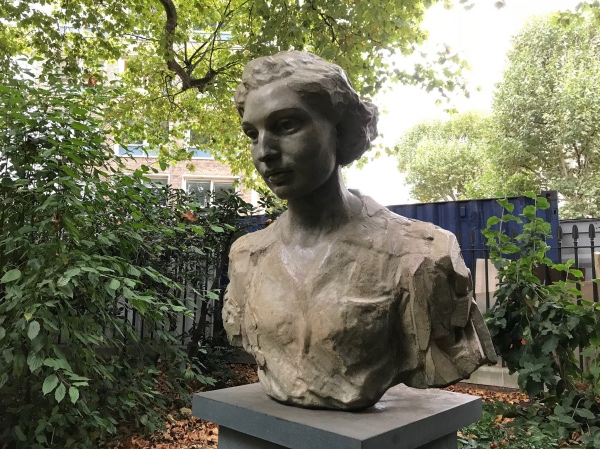
Located in Gordon Square Gardens in King’s Cross, this bust commemorates British agent Noor Inayat Khan (1914-1944), who was executed during World War II.

Khan, who was of Indian descent (in fact, a direct descendent of Tipu Sultan of Mysore), had escaped to England from her home in Paris after the fall of France during World War II. She joined the Women’s Auxiliary Air Force (WAAF) in November, 1940, and in 1942 was recruited to join the Special Operations Executive (SOE) as a radio operator.

In June, 1943, she became the first female radio operator to be flown into occupied France. There she worked for the “Prosper” resistance network under the code name Madeleine but in October she was betrayed and arrested by the Gestapo.

Sent to Germany the following month, she was held in prison before, in September 1944, Khan and three other female SOE agents were transferred to Dachau concentration camp where they were shot on the 13th of that month. Her last word was said to have been “Liberte”.

Khan, dubbed the “Spy Princess” by her biographer, was posthumously awarded the George Cross and the French Croix de Guerre.

The bust of her in Gordon Square Gardens was unveiled by Princess Anne, the Princess Royal, on 8th November, 2012. A message from her brother Hidayat Inayat-Khan was read out at the unveiling.

The bust is believed to be the first stand-alone memorial to an Asian woman in the UK. The work of Karen Newman, it was commissioned by the Noor Inayat Khan Memorial Trust.

Various inscriptions on the bust plinth provide biographical details and also record that Noor lived nearby and “spent some quite time in this garden”.

PICTURE: Matt Brown (licensed under CC BY 2.0)

Lost London – Poet’s Fountain…

This rather large fountain once stood in Mayfair as a tribute to literary greats Geoffrey Chaucer, William Shakespeare and John Milton.

Designed by Thomas Thorneycroft (and apparently funded from wealth of a lady who died intestate but who had apparently always advocated for the location of a fountain on the site), the fountain stood on the centre of what is now a roundabout at the intersection of Old Park Lane and Hamilton Place.

Unveiled in July, 1875, it featured the three poets standing on various sides of a central pillar (Shakespeare taking pride of place looking towards Hyde Park). Below them sat three muses and above them, on top of a central column, stood a figure representing fame, blowing a trumpet.

The fountain,  and survived until World War II during which it sustained damaged. It was dismantled in 1948 and only the figure of ‘Fame’ is believed to have survived.


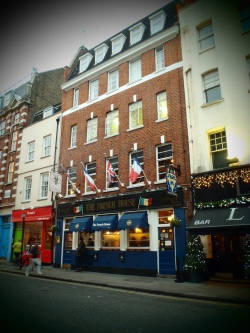
London Pub Signs – The French House…

Opened in 1891 (albeit under a different name), this Soho institution was apparently founded by a German couple named Schmitt who ran it until the outbreak of World War I.

It was then sold to Belgian chef Victor Berlemont and it’s at this point that some say the name, previously said to have been the Wine House, was changed to the York Minister (although there seems to be a bit of confusion about when the name changed).

Its French associations, meanwhile. were given a big boost during World War II when General Charles de Gaulle and Free French Army officers, in London following the fall of France, made it their HQ. In fact, some say that it was in this pub that de Gaulle wrote his famous speech against the Vichy settlement.

While it was often informally called the “French pub” thereafter, the name didn’t officially change until it reopened after a fire in 1984.

M Berlemont’s son Gaston, meanwhile, had succeeded his father in running the pub many years earlier – there’s a story that when he walked into the pub after World War II, still dressed in his uniform, his father handed over the keys and left him to it. A well-loved Soho identity, the moustachioed Gaston remained at the helm until 1989 when the pub passed into the hands of some French House regulars.

Located at 49 Dean Street, The French House is known for its Bohemian links, particularly with the literary and artistic set. Dylan Thomas is said to have accidentally left his handwritten manuscript Under Milk Wood here while others associated with the pub include Irish poet and playwright Brendan Behan, artists Francis Bacon and Lucian Freud, writer John Mortimer (of Rumpole fame) and actor Tom Baker (of Dr Who fame).

For more, see www.frenchhousesoho.com.

PICTURE: Tom (licensed under CC BY-NC 2.0)

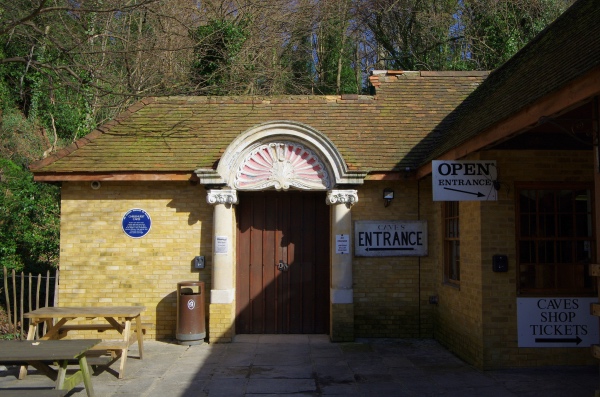
10 subterranean sites in London – 10. Chislehurst Caves…

We finish our series on subterranean London with a visit to the Chislehurst Caves in the outer south-east.

The ‘caves’, located in Chislehurst in Kent, are actually 22 miles of man-made tunnels which were dug out in the search for chalk – used in lime-burning and brick-making – as well as, in later years, flint for use in tinder boxes and flintlock guns.

There’s considerable debate over the age of the caves but it’s claimed the earliest mention of the complex apparently dates back to the 13th century and they are believed to have been last worked in the 1830s. The three main sections of the caves are named after the Druids, Romans and Saxons in a reference to who some believed helped to create them.

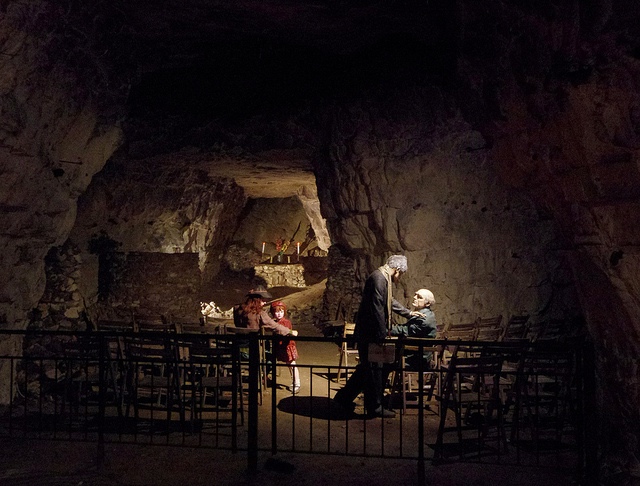
They were first opened to the public at the turn of the 20th century and have since been used for munitions storage (during World War I, to cater for overflow from the Woolwich Arsenal), mushroom growing, and, during World War II provided accommodations for some 15,000 people as one of the largest deep air-raid shelters in the country.

They also hosted music events in the 1960s when the likes of David Bowie, Jimi Hendrix, Led Zepplin and Pink Floyd were among those who performed there and have appeared in several episodes of Dr Who

These days the caves are visited only on lamplit, 45 minute guided tours, which take in about a mile of the tunnels.

WHERE: Chislehurst Caves, Caveside Close, Old Hill, Chislehurst, Kent (nearest railway station is at Chislehurst); WHEN: 10am to 4pm everyday during school holidays and Wednesday to Sunday outside those periods; COST: £6 an adult/£4 seniors and children aged three to 15 (children under three free); WEBSITE: chislehurst-caves.co.uk.

PICTURE: Above – the entrance; Below – a reconstruction of the church, part of the air-raid shelter (both images – David Edwards, licensed under CC BY -NC-ND 2.0)

This Week in London – New early 20th century galleries at the NPG; Modigliani at the Tate; and, Lord John gets a plaque…

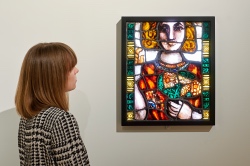
Works including a recently acquired portrait of Prince Edward (later King Edward VIII) which was painted on the Western Front during World War I, a self-portrait in stained glass of artist and actor Pauline Boty (pictured), and three life-sized World War I portraits of military officers which have been reunited for the first time in decades, are among highlights of the National Portrait Gallery’s new early 20th century galleries. Four new rooms – split into the ‘Early 20th Century’, ‘The Great War’, ‘The Interwar Years’, and the ‘Second World War and Post-War Recovery’ – hold 121 portraits which have been hung chronologically and feature everyone from Virginia Woolf to Sir Winston Churchill, Dame Christabel Pankhurst to Sir Ernest Shackleton. Along with Frank O Salisbury’s oil sketch of Prince Edward, Boty’s stained glass portrait (the gallery’s first), and the three group portraits from World War I,  highlights of the gallery include a 1913 portrait of the Royal Family at Buckingham Palace by Sir John Lavery, a 1931 portrait of Aldous Huxley by Vanessa Bell and a portrait of Roald Dahl in RAF uniform by Matthew Smith. Admission to the galleries is free. For more, see www.npg.org.uk. PICTURE: Courtesy of National Portrait Gallery.

The “most comprehensive” exhibition of the work of French artist Amedeo Modigliani opens at the Tate Modern today. Modigliani features 100 works including portraits, some of his lesser known sculptures and 10 of his controversial nude paintings, the largest group of such ever shown in the UK. The exhibition re-evaluates Modigliani’s work and experimentation and includes well known and lesser known works with more than 40 of them never seen in the UK before. The works on show include Bust of a Young Woman (1908), Jean Cocteau (1916), and Boy with a Blue Jacket (1919). Runs until 2nd April. Admission charge applies. For more, see www.tate.org.uk.

Former iconic Carnaby Street shop Lord John has been honoured with a City of Wesminster Green Plaque. Lord John, which dressed everyone from The Rolling Stones to the Beatles and The Kinks, was opened by brothers Warren, David and Harold Gold in 1964. The plaque can be seen at 43 Carnaby Street.

Send all items for inclusion to exploringlondon@gmail.com.

10 subterranean sites in London – 2. The London Silver Vaults…

Located on (or should that be under?) Chancery Lane in the City of London, the subterranean complex of underground chambers now known the London Silver Vaults was initially opened by the Chancery Lane Safe Deposit Co in 1876.

Originally intended to provide strong rooms for Londoners to store their valuables – things like jewellery, household silver and important documents, the vaults also proved popular with businesses, such as jewellers and diamond and silver dealers from nearby Hatton Garden, both for storage and eventually for selling directly out of.

The building above was bomb damaged during World War II and when it was rebuilt, the vaults  – at the request of the silver dealers who had previously rented space there – were reconfigured as retail units and re-opened in its current form in 1953.

Featuring 3.9 foot (1.2 metre) thick walls, the vaults proved popular among US servicemen who purchased silver to take home to their families, and film and music stars as well as royalty have all apparently shopped here.

There are just under 30 specialist shops in the complex, claimed to be home to the largest collection of antique silver in the world including everything from cutlery to jewellery and candlesticks. Many of the businesses housed within have been passed down within families.

And, according to the management, the vaults have never been burgled.

WHERE: London Silver Vaults, Chancery Lane (nearest Tube is Chancery Lane); WHEN: 9am to 5.30pm Monday to Friday/0am to 1pm Saturday; COST: free; WEBSITE: silvervaultslondon.com

PICTURES: Matt Brown under license CC BY 2.0.

10 subterranean sites in London – 1. The Greenwich Foot Tunnel…


An institution linking the Isle of Dogs to Greenwich underneath the Thames for more than a century, the Greenwich Foot Tunnel was built to provide an alternative to a sometimes unreliable ferry service – thanks to weather – and was principally aimed at workers making their way from their homes in London’s south to docks and shipyards.

It was one of two tunnel crossings – the other being at Woolwich – which were lobbied for by Will Crooks, chair of the LCC’s bridges committee and later MP for Woolwich.

Designed by engineer Sir Alexander Binnie for the London County Council, the project – which reportedly cost some £127,000 – commenced in June, 1899, with the tunnel completed and opened, with very little fanfare (there was apparently no opening ceremony) on 4th August, 1902.

The design features a glass-topped dome at either end with steps spiralling downward (reported as 87 steps to the north and 100 to the south). Lifts were installed in 1904 and then upgraded in the 1990s and more recently in 2012. The tunnel itself. which is positioned at a depth of about 50 feet, is made of cast-iron and lined with 200,000 glazed white tiles. It measures 1,215 feet long with an internal diameter of nine feet.

The northern end of the tunnel was damaged by bombs during World War II and repairs include  a thick steel and concrete lining that substantially reduce the interior size of the tunnel for a short distance.

The tunnel, which has its own friends group, is classed as a public highway and so as a matter of law is kept open 24 hours a day. Its depth means it remains a cool place even on a hot day.

WHERE: Greenwich Foot Tunnel (nearest DLR (northern end) is Island Gardens and (southern end) is Cutty Sark; WHEN: Always; COST: free; WEBSITE: www.royalgreenwich.gov.uk/info/200102/walking/693/foot_tunnels.

PICTURES: Top – James Stringer under licence CC BY-NC 2.0; and below – Neil Turner under licence CC BY-SA 2.0

This Week in London – Wrens at the Old Royal Naval College; Stella Reading commemorated; Korean culture celebration; and, Hetty Feather at the Foundling…

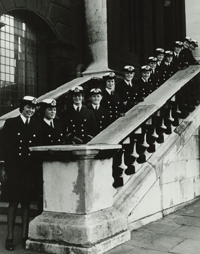
• An new exhibition marking the 100th anniversary of the Women’s Royal Naval Service opens at the Old Royal Naval College in Greenwich on Saturday. The free display explores the lives and experiences of the women who served and trained at Greenwich, spanning the period from World War I to the late 1970s. As well as covering the role of the WRNS during the first and second World Wars, the exhibition also looks at the post war experiences of the Wrens and features 16 new interviews and rarely seen photographs which bring to life this chapter in the history of the Old Royal Naval College. The exhibition can be seen until 3rd December. Entry is free. For more, www.ornc.org/wrns. PICTURE: Newly commissioned WRNS officers at Greenwich, 1969. Courtesy Old Royal Naval College.

An English Heritage blue plaque commemorating Stella Reading, founder of the Women’s Voluntary Services, was unveiled at the organisation’s former London headquarters this week. Lady Reading (1894-1971) founded the “army that Hitler forgot” from a single room in the building in 1938 with the so-called ‘ladies in green’ going on to serve in a range of roles – from looking after child evacuees and collecting aluminium for aircraft to serving thousands of cups of tea from static and mobile canteens. The plaque at 41 Tothill Street in Westminster was unveiled by actress and Royal Voluntary Service ambassador Dame Patricia Routledge. For more on blue plaques, see www.english-heritage.org.uk/visit/blue-plaques/.

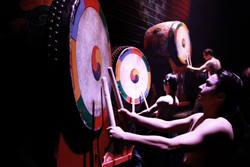
A year-long season of Korean art in the UK is being launched with a free festival at Olympia London this Saturday. The family-friendly London Korean Festival features food tastings, Korean drumming, martial arts exhibitions, traditional craft workshops and a sneak peak at the Olympic Winter Games in PyeongChang using the latest VR technology. There’s also a chance for budding K-Pop stars to audition for the K-Pop World Festival and a ticketed evening concert at 7pm featuring four K-pop sensations. The free daytime festival runs from 11am to 5.30pm. For more information, visit www.kccuk.org.uk. Tickets for the K-Pop concert can be obtained at londonkoreanfestival.co.uk.

On Now: Picturing Hetty Feather. This exhibition at The Foundling Museum in Bloomsbury explores the depiction of the Foundling Hospital through the life of the fictitious Victorian foundling Hetty Feather. Feather first came to life in 2008 and Dame Jacqueline Wilson has since gone on to write four more books about the spirited character, the first two of which feature the Foundling Hospital. The popularity of the books, which have sold millions of copies, has resulted in a stage show and TV series. This exhibition, the first devoted to Hetty Feather and the Foundling Hospital, explores the ways in which curators, writers, directors and designers have used historical evidence (and gaps in it) to bring the 19th century hospital to life. Objects on show include props and original costumes from the CBBC TV series as well as treasures from the Foundling Hospital Collection and the exhibition also includes immersive experiences such as the chance for visitors to try on costumes, try their hand at script writing and discover their own ‘picturing’ abilities (a reference to the imaginative story-telling Hetty employs to help her cope with life’s challenges). Runs until 3rd September. Admission charge applies. For more (including information on associated events), see foundlingmuseum.org.uk.

Send all items for inclusion to exploringlondon@gmail.com.

10 of the most memorable (and historic) views of London – 8. View from Point Hill, Greenwich…

Another of London’s protected views, though perhaps lesser known, is the panoramic vista from the top of Point Hill in Blackheath towards the City.

The view from a small park known as The Point (reached via Point Hill, just to the west of Blackheath) takes in modern City skyscrapers as well as Tower Bridge, St Paul’s Cathedral and even the dome of the Old Bailey.

While there is a danger the growth of plants along the brow of the hill can partially block the view (which stretches as far as Essex), it remains a splendid site from which to view the city and no doubt was a vantage point for those, such as the leaders of the Peasant’s Revolt of 1381, who historically gathered on Blackheath before marching to London.

The park, meanwhile, is host to a memorial stone erected to mark the site where an Australian-born RAF pilot, Flight Lieutenant Richard Carew Reynell, fell to his death on 7th September, 1940, after his Hurricane fighter was shot down over Blackheath on the first day of the Blitz.

PICTURE: © Mike Mojopin/Flickr

Treasures of London – Richard Coeur de Lion…


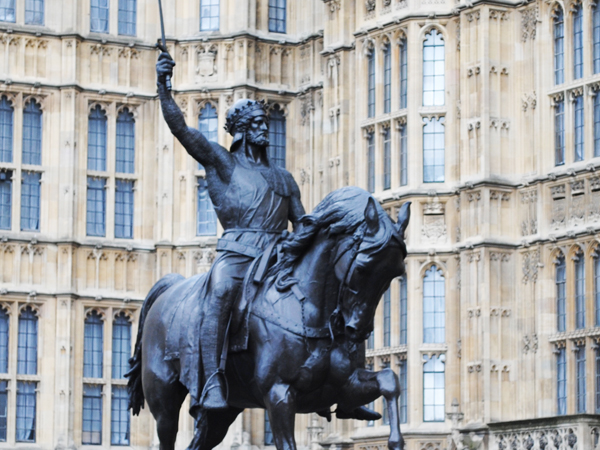
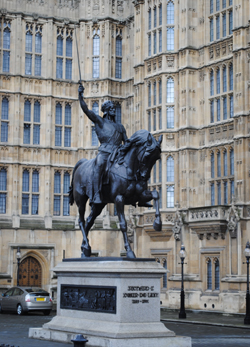
Located in Old Palace Yard outside the Palace of Westminster, this Grade II-listed equestrian statue of 12th century crusader-monarch King Richard I, known as the “Lionheart” or Coeur de Lion, is the work of 19th century sculptor Baron Carlo Marochetti. 

The nine metre high statue was originally exhibited as a clay work at the Great Exhibition of 1851 – it was located outside the west entrance of the Crystal Palace – and, despite the tail falling off soon after it was display, it was well enough received by the crowds attending the exhibition (as well as the critics) that a public subscription was raised to cast the statue in bronze. Queen Victoria and Prince Albert were among those who subscribed.

It was initially proposed that the statue be placed on the site of the Crystal Palace as a memorial to the exhibition (along with a statue of Prince Albert), but this plan was put aside and, after numerous other sites were considered, the current location was settled on.

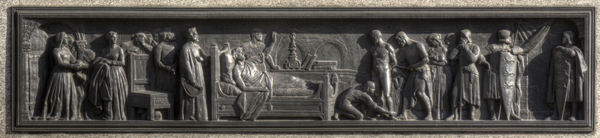
The statue was erected on the site, facing south, in 1860, although it wasn’t completed with the addition of two bronze bas relief panels until 1867. These depict Richard on his death bed pardoning Bertran de Born, the archer whose arrow caused his death, and Richard fighting Saracens at Ascalon during his crusade in the Holy Land. Two other proposed panels were never made.

The statue was peppered with shrapnel when a bomb landed only a few metres away in 1940 during the Blitz, leaving Richard’s sword bent and damaging the tail and granite pedestal. The sword was fixed soon after. Further conservation works were carried out in 2009.

Italian-born Marochetti had worked in Paris as a sculptor before following King Louis-Philippe to London after the revolution of 1848 and largely remained in the city until his death in 1867. He was created a baron by the King of Sardinia.

His statue of Richard is one of few artworks created by non-British artists in the Parliamentary estate and while Marochetti had plans to create another equestrian statue, this one of Edward, the Black Prince, to face his statue of Richard across the entrance to the House of Lords, it never eventuated. Plans to install the second statue are, however, once more being talked about.

PICTURES: Above – The statue in Old Palace Yard (David Adams); Below – Detail of the panel depicting the death of the king (Prioryman/CC BY-SA 4.0)

Lost London – Canterbury Music Hall, Lambeth

Described by the Theatres Trust as a “key building” in music hall history, the Canterbury Music Hall was first erected in Westminster Bridge Road in 1852 on the site of an old skittles alley which had been attached to the Canterbury Tavern.

It was the tavern owner, Charles Morton, who erected the building which he apparently paid for out of the profits he made on selling drink while offering the entertainment for free.

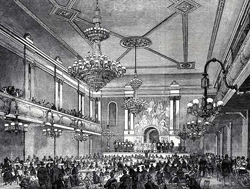
Morton built upon the “song and supper room” tradition by employing a resident group of singers and such was its popularity that only a couple of years after the doors to the first hall opened, Morton was able to build a second, much larger music hall on the same site complete with a grand staircase, supper room and art gallery as well as seating for some 1,500 people.

Among stars to perform there was French acrobat Charles Blondin, who apparently made his way across the hall on a tightrope tied between the balconies.

In 1867 William Holland took a lease from Morton and the programmes then began to move away from the light music and ballads it was known for toward a more varied program with comedy prevailing. The art gallery was converted into a bar and a proscenium stage may have been added at this time.

RE Villiers took over management in 1876 and the building was again largely rebuilt – this time as a three tier theatre with a sliding roof. The venue hosted regular ballet performances and these proved popular with royalty – the Prince of Wales (later King Edward VII) was said to be a regular patron. The interior was again remodelled, this time with an Indian theme, in 1890.

The decline of the popularity of music halls saw it start to show films from 1914 and eventually to become a dedicated cinema. It survived until it was destroyed during a World War II bombing raid in 1942.

PICTURE: A print showing the hall after its 1856 rebuild (via Wikipedia)


Eight historic department stores in London…7. Hamleys…

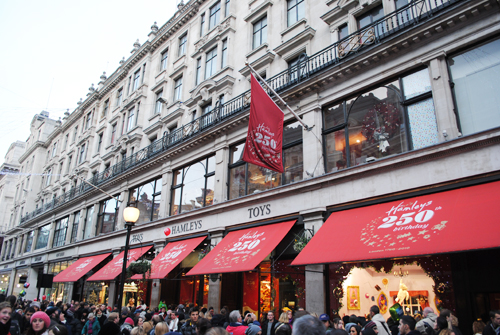
hamleysThis Regent Street establishment – the oldest and largest toy store in the world – dates back to 1760 when Cornishman William Hamley came to London and founded his toy store – then called ‘Noah’s Ark’ – on High Holborn.

Selling everything from wooden hoops to tin soldiers and rag dolls, the business aimed to capture the trade of affluent Bloomsbury families and proved rather successful, attracting a clientele in the early 19th century which included not only wealthy families but royalty.

Such was its success that in 1881, Hamley’s descendants opened a new branch of the shop at 200 Regent Street. The Holborn store, meanwhile, burned down in 1901 and was subsequently relocated to a larger premises at numbers 86-87 in the same street.

Faced with the Depression in the 1920s, the shop closed briefly in 1931 but was soon reopened by Walter Lines, chairman of Tri-ang Toys, and in 1938 was given a Royal Warrant by Queen Mary, consort of King George V.

The premises at 188-196 Regent Street was bombed five times during the Blitz but the shop (and its tin hat-wearing staff survived). In 1955, having presented a Grand Doll’s Salon and sizeable model railway at the 1951 Festival of Britain, the shop was given a second Royal Warrant – this time by Queen Elizabeth II, who has been given Hamleys toys as a child – as a ‘toys and sports merchant’.

The business, which has passed through several owners since the early 2000s, is now owned by Chinese-based footwear retailer C.banner.  The flagship store is spread over seven floors and tens of thousands of toys on sale, located in various departments.

As well as the Regent Street premises (it moved into the current premises at number 188-196 Regent Street in 1981), Hamlets has some 89 branches located in 23 countries, from India to South Africa. A City of Westminster Green Plaque was placed on the store in February 2010, in honour of the business’s 250th anniversary.

The toy store holds an annual Christmas parade in Regent Street which this year featured a cast of 400 and attracted an estimated 750,000 spectators.

www.hamleys.com

PICTURED: Hamleys during its 250th birthday celebrations.

London Pub Signs – The Albert…

the-albert2This pub’s name isn’t too mysterious – it is, of course, named after Albert, Prince Consort to Queen Victoria, and given the date on which the building that now occupies the site was built – between 1862 and 1867, nor is the motivation to name it so – Prince Albert died on 14th December, 1861, leaving a bereft queen and a nation in mourning.

There had been a pub on this site at 52 Victoria Street prior to the current building – it was called The Blue Coat Boy and named after the nearby Blue Coat school – but in the mid-19th century the Artillery Brewery, which was located next door, bought the premises and renamed it.

The four storey building, which is now Grade II-listed (and dwarfed by the glass towers surrounding it), survived the Blitz and is the only building remaining from the first phase of the development of Victoria Street (and redevelopment of the area which had been a slum known as Devil’s Acre), only a stone’s throw from Westminster Abbey and the Houses of Parliament.

Inside, the Victorian features include ornate ceilings and hand-etched frosted windows and wrought iron balconies. Also of note is the Prime Minister’s gallery – including some who were patrons here – as well as memorabilia including a House of Commons Division Bell and one of Queen Victoria’s napkins.

For more, see www.taylor-walker.co.uk/pub/albert-victoria/c6737/.

PICTURE: Patche99z/Wikimedia

Treasures of London – The Trafalgar Square Christmas Tree…

A fixture of London’s Christmas festivities since 1947, the Trafalgar Square Christmas Tree is given annually to the people of Britain by the city of Oslo as gift thanking them for their support of Norway during World War II.

christmas-treeThis included hosting the Norwegian Government-in-exile and the Royal Family during the Nazi occupation of the country between 1940 and 1945.

The tree is harvested from forests near the Norwegian capital and the selection process for the giant, known by forestry workers as the “Queen of the Forest”, starts in May.

The tree is typically a Norway spruce aged somewhere between 50 and 60 years and stands at least 20 metres high. This year’s tree – the 70th – is said to be 116-years-old, stands 22 metres tall and weighs

In keeping with tradition, it was cut down on 16th November in a special ceremony attended by the Mayor of Oslo, Marianne Borgen, and the Lord Mayor of Westminster, Cr Steve Summers, along with various local school children so it can shipped to Britain ready in time for its unveiling at the start of December.

The tree is adorned with lights – in more recent years these are energy efficient light bulbs – in Norwegian style and these are turned on at a special ceremony on the first Thursday in December. The tree remains on display until just before the Twelfth Night of Christmas when it is taken down and recycled as mulch.

The tree now has its own Twitter account.