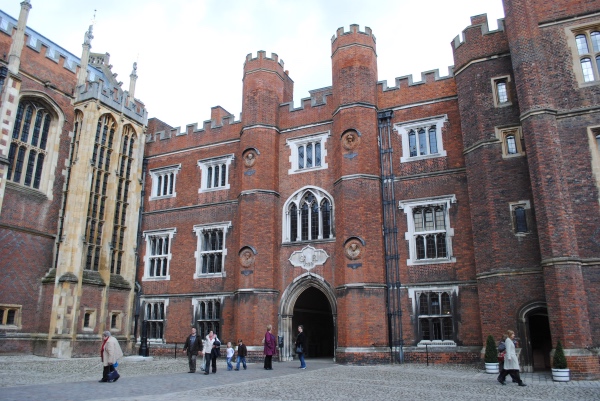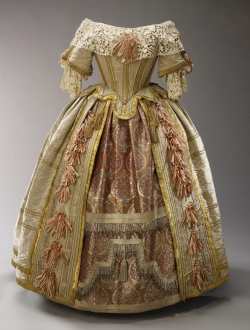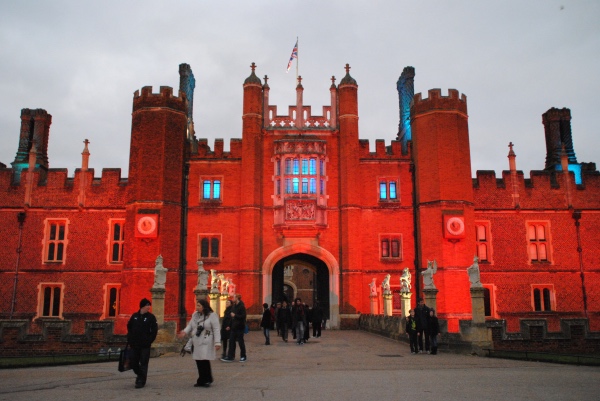
• Hampton Court Palace is once again holding its ‘Festive Fayre’ this weekend. More than 80 stalls will fill the palace’s historic courtyards serving Christmas-related treats like mince pies and mulled wine. Included in entry price. Hampton Court will also host carol singing in the courtyards between 6pm and 7pm, 8pm and 9pm on 16th, 22nd and 23rd of December. Meanwhile, Kensington Palace is offering the visitors on select dates between 7th December and 5th January to take part in Princess Victoria’s Christmas by assisting her in staging a Christmas panto, joining in the type of seasonal crafts she enjoyed as a child and discovering the history of the festive food Victoria would have enjoyed growing up at Kensington. Included in palace admission. And, of course, the ice rinks at Hampton Court Palace and in the Tower of London’s moat are now open. For more, see www.hrp.org.uk.
• More than 500 lanterns made by local children and adults will feature in this year’s Aldgate Lantern Parade tomorrow afternoon. The parade will launch from Sir John Cass’s Foundation Primary School at about 4.45pm and through streets north of Aldgate High Street to the beat of the Barbican’s Drum Works ending in a festive fete in the new Aldgate Square. A Winter Fair will simultaneously take place between Aldgate Square and St Botolph without Aldgate, complete with an array of performances, art, food, drink and festive activities.
• On Now: Dora Maar. The first UK retrospective of the artist Dora Maar (1907-97) whose provocative photographs and photomontages became celebrated icons of surrealism is on at the Tate Modern. It features more than 200 works spanning the six decades of her career. Among highlights are The years lie in wait for you (c1935), Portrait of Ubu (1936), photomontages 29, rue d’Astorg (c1936) and The Pretender (1935), rarely seen works like The Conversation (1937) and The Cage (1943), and a substantial group of camera-less photographs that she made in the 1980s. Runs until 15th March. Admission charge applies. For more, see www.tate.org.uk.
Send all items for inclusion to exploringlondon@gmail.com.