This Week in London – Wildlife Photographer of the Year is coming; ‘Vanishing Africa’; and, ‘Black Chiswick Though History’…

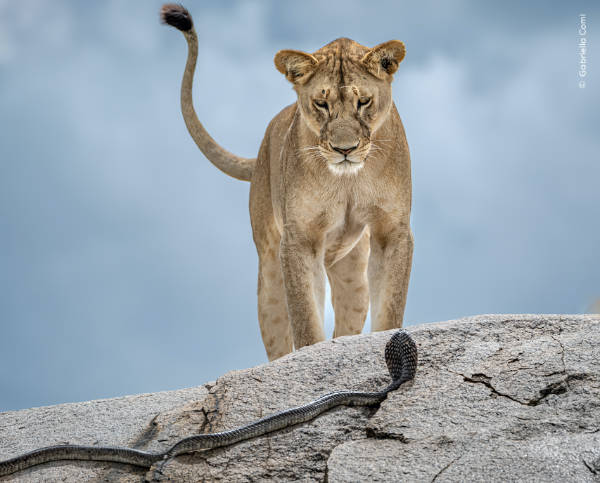
‘Wake-up Call’ by Gabriella Comi, Italy, (Highly Commended, Behaviour: Mammals). PICTURE: Courtesy of the Wildlife Photographer of the Year, Natural History Museum

Depicting a dramatic stand-off between a lion and a cobra in the Serengeti National Park in Tanzania, Gabriella Comi’s impressive image is among the 60,636 entries, from across 113 countries and territories, received in the Natural History Museum’s 61st annual Wildlife Photographer of the Year competition. The competition’s category winners and the prestigious ‘Grand Title’ and ‘Young Grand Title’ awards will be announced on 14th October, 2025, after which, from 17th October, 100 of the images will go on show at the museum in South Kensington. Other images revealed this week include Amit Eshel’s portrait of an inquisitive pack of Arctic wolves and photographs of flamingoes, coyotes and red deer by emerging young photographers as young as nine-years-old. For more, see https://bit.ly/WPY61Exhibition.

One of the images in ‘Vanishing Africa’. PICTURE: © Mirella Ricciardi

The Science Museum has launched a new online exhibition, Vanishing Africa, which features images by Kenyan-born photographer Mirella Ricciardi and reveal how much climate change is changing the continent. Taken in East Africa over two years in the 1960s, the photographs are a visual record of the Indigenous peoples of the region, including the Maasai, Samburu, Turkana, Orma, Pokot and Rendille people, and “capture a land of untamed wilderness, diverse wildlife, and Indigenous communities attuned to nature”, an East Africa which many no longer recognise. The exhibition has been published to celebrate the ‘UK/Africa Season of Culture’ and launches ahead of the international climate summit, COP30. To view it, head to www.sciencemuseum.org.uk/objects-and-stories/vanishing-africa-through-mirella-ricciardis-lens.

On Now: Black Chiswick Through History. This project, launched in 2011, looks at how the history of Chiswick House is connected to Black history and people of colour. This year’s installation explores the life of 18th-century Chiswick House resident James Cumberlidge – one of the few people of African heritage in Britain whose likeness was captured and preserved for posterity – and traces his journey from  page boy at Chiswick House to trumpeter in the Royal Court of King George III. There’s also a painting dating from the 1870s which depicts Queen Victoria attending a fashionable garden party right here at Chiswick House in July, 1875. Runs until 28th September. Admission charge applies. For more, see https://chiswickhouseandgardens.org.uk/event/visit-chiswick-house/.

Send all items for inclusion to exploringlondon@gmail.com.
Lost London – Kew Gardens’ flagpole(s)…

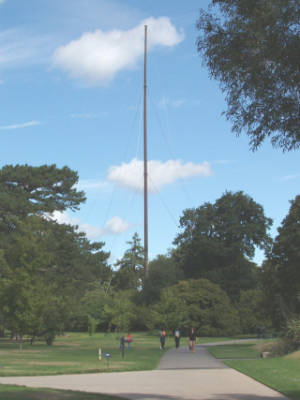
Once the tallest wooden flagpole in the world at 68 (225 feet) tall, the Kew Gardens flagpole stood for almost 50 years before it was dismantled in 2007.

The Kew Gardens flagpole shortly before it was removed. PICTURE: © Copyright David Hawgood (licensed under CC BY-SA 2.0)

The flagpole, a Douglas fir from Copper Canyon on Vancouver Island, was erected on 5th November, 1959, as a gift from the the British Columbia Loggers Association in Canada to mark both the centenary of the Canadian province of British Columbia (1958) and the bicentenary of Kew Gardens (1959).

The tree, which was around 370-years-old when cut, had originally weighed 37 tonnes, but after it was floated up the Thames to Kew and there underwent shaping, this was reduced to 15 tonnes.

Sadly, in 2006, it unfortunately failed its safety inspection – thanks to decay and woodpeckers – and was taken down the following year.

The flagpole was apparently the third (strictly the fourth) erected on the same site at the gardens which had originally been occupied by the ‘Temple of Victory’, a structure which had been built on the orders of King George III to commemorate the Anglo-German victory over the French at the 1759 Battle of Minden during the Seven Years’ War and which was removed in the mid 19th century.

The first flagpole on the site, which stood more than 31 metres (100 feet) tall. was erected in 1861. It had also come from Vancouver Island in British Columbia and replaced one which had snapped when it was in the process of being erected.

The pole was finally taken down in 1913 after being found to be suffering from dry rot.

A replacement, again from British Columbia, was erected in 1919 (its raising having been somewhat delayed by factors related to World War I). It was removed some time before 1959.

After the third giant flagpole was removed (the concrete footing can still be seen), the gardens decided not to erect another as that would mean cutting down another large tree. While far less of a spectacle, there is now a lesser flagpole near Victoria Gate where the flag is flown on special occasions.

Lost London – The Chinese Bridge and Pagoda, St James’s Park…

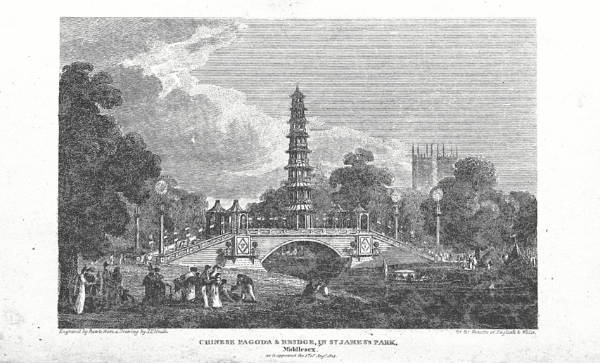
Briefly a sizeable landmark on London’s skyline, this seven-storey high structure and bridge were built over the canal in St James’s Park in 1814 as part of celebrations over the 100th anniversary of the accession of the House of Hanover, the 16th anniversary of Nelson’s victory at the Battle of the Nile and the signing of Treaty of Paris with France on 30th May following Napoleon’s abdictation in April.

British Library digitised image from “A Topographical and Historical Description of London and Middlesex” By Brayley, Brewer, and Nightingale

The pagoda and bridge, designed by none other than John Nash and Auguste Pugin, were among a number of structures built for the celebrations held in Royal Parks on 1st August – others included a ‘Temple of Concord’ and a naval arch. There was also a naval re-enactment on The Serpentine in Hyde Park.

As well as bands, food stalls and marquees for guests, the event, which was billed (among other names) as the Grand Jubilee, also included balloon ascents and fireworks.

The latter wasn’t good news for the pagoda – it was hit by a stray firework and destroyed (and tragically at least one person lost their life). The bridge lasted a few years longer – it apparently survived until 1825.

This Week in London – Royal garments; Victor Hugo’s drawings; and, British Black music…

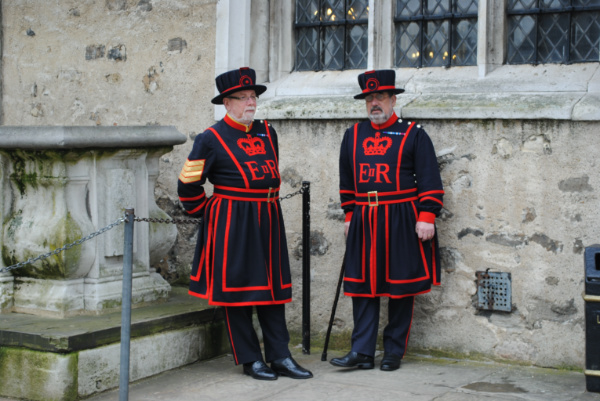
Yeoman Warders at the Tower of London. PICTURE: David Adams

Almost 200 garments from the Royal Ceremonial Dress Collection are able to be explored online thanks to a new collaboration between Historic Royal Palaces, which looks after six royal palaces including Hampton Court Palace and the Tower of London, and Google Arts & Culture. Drawing on ultra-high-resolution photography and 3D scanning, the garments – which include everything from ceremonial uniforms such as those worn by Yeoman Warders and a rare Bristow hat which may have been worn by King Henry VIII to Queen Victoria’s silk shoes, a waistcoat worn by King George III and a dress worn by the future Queen Elizabeth II in 1927 when she was just 18-months-old – can now be viewed in unprecedented detail (a billion pixels per image) without the risk of the damage which can occur thanks to light, humidity, and handling. The Royal Ceremonial Dress Collection comprises over 10,000 pieces of historic dress and related materials spanning the period from the 16th century to the present day and features garments worn by monarchs and key historical figures, including, as well as the aforementioned, Prince Albert, Princess Margaret, and Diana, Princess of Wales. To see the items, head to goo.gle/royalwardrobe.

Author, politician and artist Victor Hugo’s rarely seen works on paper have gone on show at the Royal Academy of Arts. Astonishing Things: The Drawings of Victor Hugo features around 70 works drawn from European collections and follows his preoccupation with drawing from early caricatures and travel drawings to later landscapes and abstract works. Arranged across four sections, the works on show include everything from Mushroom (1850) – which depicts a giant anthropomorphic toadstool, some of his many works depicting castles such as The cheerful castle (c 1847), and drawings that Hugo created in tandem with writing his 1866 novel The Toilers of the Sea, set in Guernsey in the years following the Napoleonic Wars, as well some relating to his most famous work, Les Misérables. The exhibition, being held in the Jillian and Arthur M Sackler Wing of Galleries, can be seen until 19th June. Admission charge applies. For more, see royalacademy.org.uk.

A “ground-breaking” exhibition showing the outsized impact British Black music has had on the world stage over the past 100 years has opened at the Barbican Music Library. Black Sound London highlights artists who created their own platforms, audiences, and spaces, often without mainstream support and spans genres including jazz, lovers’ rock, jungle, grime, and drill. Among the objects on show are vintage mixtapes, iconic magazine covers, and fly-posted walls. Runs until 19th July. For more, see www.cityoflondon.gov.uk/services/libraries/barbican-music-library.

Send all items for inclusion to exploringlondon@gmail.com.
Lost London – Richmond Lodge…

Located close to the River Thames, Richmond Lodge was a royal hunting lodge before becoming a favoured residence for Hanoverian royals for several decades in the 18th century.

Subscribe for just £3 a month – that’s less than the cost of a cup of coffee – to access all of Exploring London’s content!

Where’s London’s oldest…(surviving) street gas lamps?

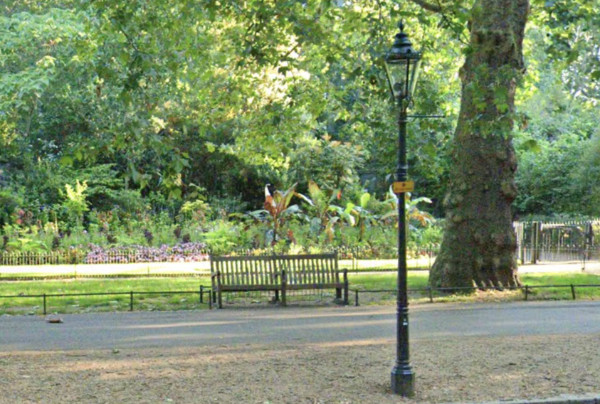
One of the George IV lamps in Birdcage Walk. PICTURE: Via Google Maps

There remain some 1,300 publicly maintained gas lamps still in use in London’s streets but the oldest surviving gas lamps can be found in Birdcage Walk (along the south side of St James’s Park).

These cast iron lamps bear the insignia of King George IV who ruled from 1820 to 1830. While lamps had been installed in London since the reign of King George III (the earliest permanent placement was on Westminster Bridge in 1813), these lamps were installed during his successor’s reign.

They are among numerous Grade II-listed lamp stands on Birdcage Walk (some others are marked with thee insignia of King William IV).

Where’s London’s oldest…roundabout?

PICTURE: Matt Brown (licensed under CC BY 2.0)

London’s oldest roundabout is said to be located in Southwark at the intersection of Borough, Westminster Bridge, Waterloo, London and Blackfriars Roads.

St George’s Circus was built in 1771 (during the reign of King George III) and designed by Robert Mylne as a grand southern entrance to London with radiating roads leading to three bridges over the Thames: London Bridge, Westminster Bridge and Blackfriars Bridge.

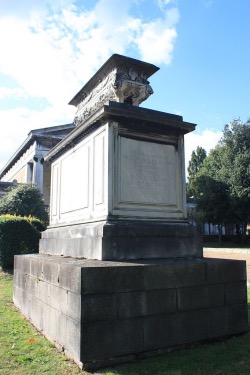
Mylne also designed the obelisk which still stands in the centre of the circus. As well as showing the date on which it was erected, the obelisk also records distances to Palace Yard in Westminster, Fleet Street, and London Bridge. Gas lamps were placed at each corner to illuminate the intersection.

The now Grade II*-listed obelisk has a rather interesting history in itself. Having stood at the roundabout for more than a century, in about 1897 it was relocated to Geraldine Mary Harmsworth Park outside the Imperial War Museum on Lambeth Road to make way for a clocktower designed to mark Queen Victoria’s Diamond Jubilee.

The clocktower itself, however, was removed in the 1930s to help with traffic flow. It wasn’t until 1998 that the obelisk was moved back to its original site (now minus the oil lamps).

Interestingly, an Act of Parliament passed in 1812 specifies that all buildings on the intersection must be located 240 feet from the obelisk (the reason, apparently, for curved facades on some of the surrounding buildings).

Where’s London’s oldest…barbershop?

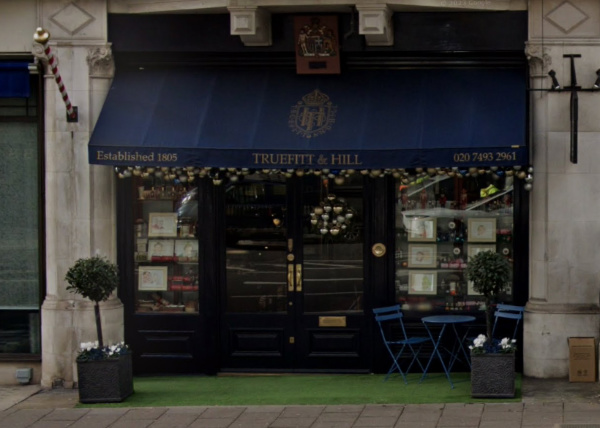
Truefitt and Hill at 71 St James’s Street. PICTURE: Google Maps

This one comes with a Guinness World Records stamp of approval. The oldest barbershop in the world, according to the record-recording organisation, is Truefitt & Hill.

William Francis Truefitt, who styled himself as hairdresser to the British Royal Court, established his first barbershop at 2 Cross-Lane, Long Acre, on 21st October, 1805 – famously on the same day as the Battle of Trafalgar.

In 1811, he moved the business to 40 Old Bond Street. In 1935, Truefitt acquired Old Bond Street firm Edwin S Hill & Co – which had been established in 1911 – and the firm moved to its address at 23 Old Bond Street.

The company, which now has outlets around the world – received its first Royal Warrant – wigmaker – from King George III and also held a warrant from the late Prince Philip.

Royalty aside, customers at the shop have included everyone from Lawrence Olivier to Mahatma Gandhi, Frank Sinatra, John Wayne, David Niven, Oscar Wilde and Winston Churchill. The firm was also referenced by such literary luminaries as Charles Dickens and William Thackeray.

The firm moved to its current location at 71 St James’s Street in 1994.

For more, see www.truefittandhill.co.uk.

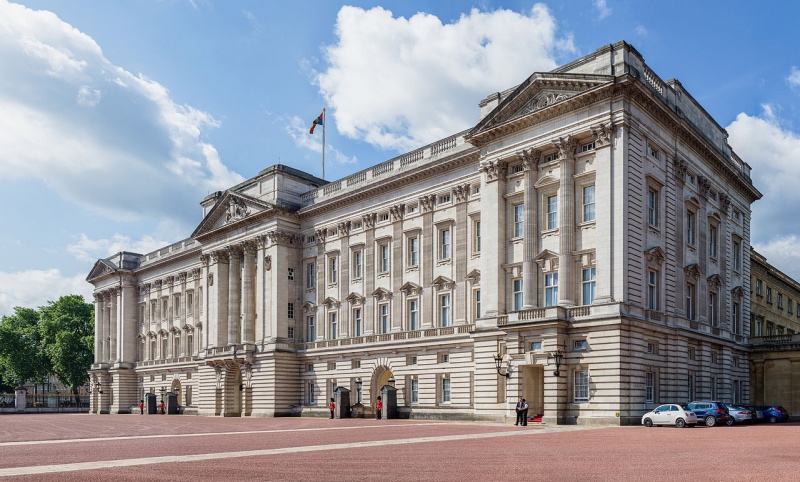
Four sites related to royal coronations in London – 4. Buckingham Palace…

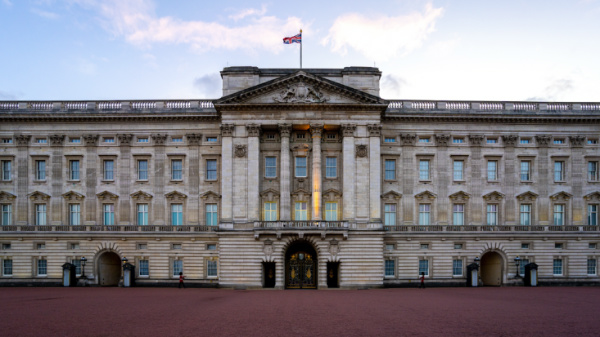
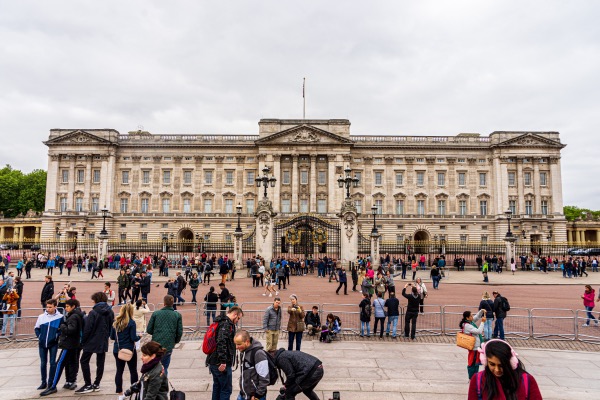
Buckingham Palace. PICTURE: Mike Marrah/Unsplash

Buckingham Palace will play an important role in this weekend’s coronation of King Charles III – not only as the location from which he and Queen Camilla will leave for the ceremony, but also for the famous balcony appearance.

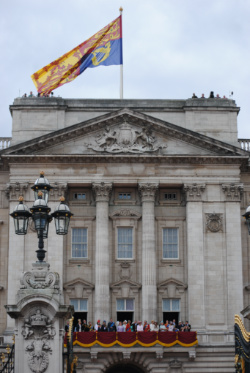
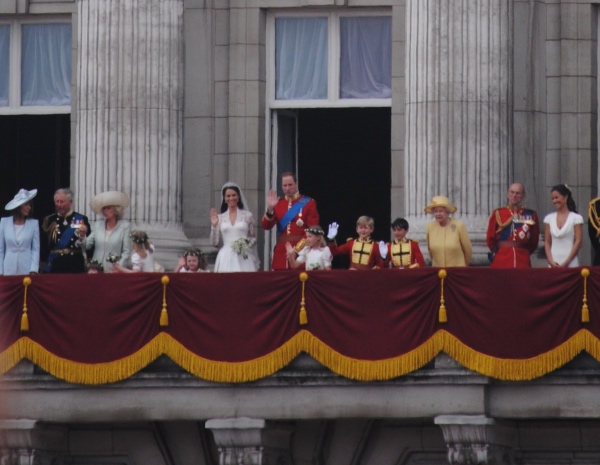
Not just for coronations – the Royal Family on the Buckingham Palace balcony at Trooping the Colour in 2010. PICTURE: David Adams

Monarchs have only been living at the palace since 1837 when Queen Victoria moved in and it has been the official London residence of kings and queens ever since (although it should be noted that since becoming King, Charles has reportedly continued to reside at Clarence House and apparently intends continuing to do so following the coronation).

The palace has been in royal hands since 1761 when King George III bought what was then Buckingham House for the use of his wife Queen Charlotte, given, in particular, its proximity to St James’s Palace where court was held. Hence it become known as the Queen’s House.

King George IV intended using it the same way but in the 1820s had a change of heart and decided, with the aid of architect John Nash, to transform it into a palace. The ballooning work was unfinished when he died, and his successor and younger brother, King William IV, replaced Nash with Edward Blore to complete the work (thanks, apparently, to Nash’s budget blow-outs).

But William didn’t move into the property (in fact, he offered it up as a new home for parliament after much of the old Houses of Parliament were consumed by fire in 1834 – an offer which was not taken up).

Queen Victoria, however, decided to make it her home and she became the first monarch to leave the palace headed to a coronation when she did so in June, 1838.

Victoria also made the first balcony appearance by a monarch at the palace, doing so during celebrations to make the opening of the Great Exhibition in 1851.

But the first balcony appearance by a monarch immediately after their coronation was her son King Edward VII, who appeared on the balcony with his wife Queen Alexandra, to the joy of onlookers following his coronation on 9th August, 1901. Every monarch since has done so after their coronation (King Edward VIII, of course, never having had a coronation).

The King’s mother, Queen Elizabeth II, was the first monarch to watch a flypast on the balcony after her coronation, a tradition the King is expected to continue.

Buckingham Palace has also been the site of Coronation Banquets since the coronation of Queen Victoria (when it replaced Westminster Hall as the location). Queen Elizabeth held two Coronation Banquets in the palace following her coronation on 3rd and 4th June, each attended by 400 guests.

Few details have yet been released about King Charles III’s Coronation Banquet.

Treasures of London – The Gold State Coach…

The Gold State Coach will feature in the Coronation Procession of King Charles III (though, interestingly, not for both journeys), it was announced earlier this week so we thought we’d take a more detailed look at it.

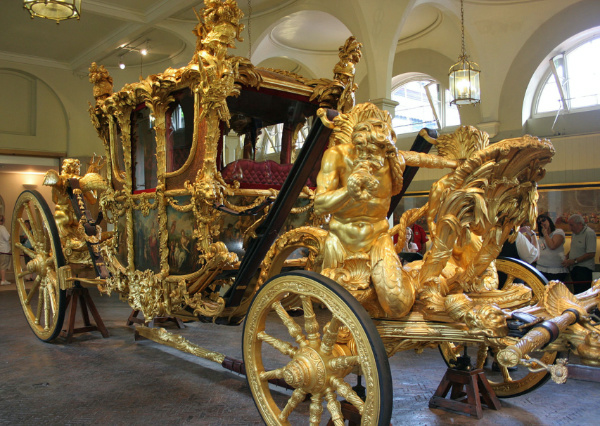
The Gold State Coach in the Royal Mews. PICTURE: Crochet.david (talk) (licensed under CC BY-SA 3.0)

The coach – which was last seen publicly during Queen Elizabeth II’s Platinum Jubilee in June, 2022 – was built for King George III to travel to the State Opening of Parliament in 1762.

Designed by Sir William Chambers, it was built in the London workshops of coach maker Samuel Butler and cost more than £7,500 at the time.

The coach weighs some four tonnes and is 28 foot long and 12 feet high. The coach is made of giltwood – a thin layer of gold leaf over wood – and features sculptures by Sir Joseph Wilton including three cherubs on the roof (representing England, Ireland and Scotland) and four tritons (a display of imperial power) above the wheels. The coach is also decorated with painted panels depicting Roman gods and goddesses by artist Giovanni Battista Ciprian.

Inside the coach is lined with velvet and satin.

The coach is pulled by a team of eight horses wearing a Red Morocco leather harness. At the coronation it will be pulled by Windsor Greys and due to its age and weight, will only move at walking pace.

The coach has been used in every coronation since that of King William IV and was also used for the State Opening of Parliament by Kings George III, George IV and William IV as well as Queen Victoria (up until Prince Albert’s death).

The coach is, however, not said to be the most comfortable ride – Queen Elizabeth II is known to have said so while King William IV described travelling in the coach as like being on a ship “in a rough sea”. So it will only be used for the return, post-Coronation, journey from Westminster Abbey to Buckingham Palace.

For the outward journey – from Buckingham Palace to Westminster Abbey – the King and Queen Consort Camilla will travel in the more comfortable – and Australian-made – Diamond Jubilee State Coach (unlike the Gold State Coach, it comes with air-conditioning, modern suspension and electric windows).

Both coaches are usually housed in the Royal Mews at Buckingham Palace.

On Coronation Day, the Gold State Coach will transport the newly crowned King and Queen Consort on a shorter route than that of Queen Elizabeth II on her Coronation Day – just 1.3 miles compared to the late Queen’s five mile route back to the palace. Leaving Westminster Abbey, it will travel down Whitehall and pass under Admiralty Arch before travelling down The Mall to Buckingham Palace.

WHERE: The Royal Mews, Buckingham Palace (nearest Tube stations are Victoria, Green Park, St James’s Park and Hyde Park Corner); WHEN: 10am to 5pm (check website for closure dates around the coronation); COST: £15 adults/£10 young person (aged 18-24)/£9 child (aged five to 17); WEBSITE: www.rct.uk/visit/the-royal-mews-buckingham-palace

10 historic London homes that are now museums…8. Queen Charlotte’s Cottage…

PICTURE: Maureen Barlin (licensed under CC BY-NC-ND 2.0)

A confession to begin – this property, located in Kew Gardens, was never actually a residence but instead was built as a country day retreat for the family of King George III at the behest of his wife Queen Charlotte.

The cottage, which features a thatched roof and half-timbered walls and dates from around 1772, is known as a cottage orné (decorated cottage).

Located in what’s described as “one of London’s finest bluebell woods” with parts of it more than 300-years-old, it was designed to be a place where the Queen and her growing family (the King and Queen would have 15 children) could enjoy picnics or take tea while on walks through the gardens during their summers at Kew.

Inside, the ground floor of the premises features two halls – one for the royal family on the left and another for servants on the right, each of which features a staircase leading to the first floor. In the centre of the ground floor is the Print Room, a small room hung with more than 150 satirical engravings including works by the famed James Gillray. There’s also a small kitchen.

On the upper floor is the Picnic Room which features two expansive recycled 17th century windows looking out to the garden and wall and roof paintings featuring trailing nasturtiums and convolvulus to give the appearance of a bower. The latter are thought to have been the work of Princess Elizabeth, generally viewed as the most artistic of King George III’s children.

Behind the cottage was a large paddock which was used to contain a growing menagerie of animals, no doubt to the delight of the royal children. Initially the occupants were Tartarian pheasants and oriental cattle but later it also housed a now extinct quagga (an animal similar to a zebra) and some of the first kangaroos to arrive in Britain (these were bred by the early 19th century, there were up to 18 of them). In 1806, the gardener was instructed to turn the paddock into a flower garden.

King George III was apparently fond of the cottage but he was last at Kew in 1806. It was used in 1818 following the double wedding of his sons, the Duke of Clarence (who became King William IV) and Edward, the Duke of Kent (father of Queen Victoria).

Queen Victoria rarely visited the cottage but had it maintained by a housekeeper. In 1889, the Queen gave the cottage to the public to commemorate her Diamond Jubilee.

The Grade II* cottage is these days managed by Historic Royal Palaces.

WHERE: Queen Charlotte’s Cottage, the south-west corner of, Kew Gardens (nearest Tube station is Kew Gardens); WHEN: Cottage is open from 4th April from 11.30am to 3.30pm on weekends and bank holidays; COST: (entry to Kew Gardens) £21.50 adults/£10 students/children £5 (discounts apply for advance bookings); WEBSITE: www.kew.org.

8 locations for royal burials in London…8. Kensal Green Cemetery…

Princess Sophia’s grave at Kensal Green Cemetery. PICTURE: Stephencdickson (licensed under CC BY-SA 4.0)

The oldest of London’s so-called ‘Magnificent Seven’ cemeteries established in the 19th century, Kensal Green is the burial place of a few members of the royal family dating from the Georgian and Victorian eras.

The ninth child and sixth son of King George III, Prince Augustus Frederick, the Duke of Sussex, died at Kensington Palace at the age of 70. In his will, he specifically requested he not have a state funeral and so was buried at Kensal Green on 4th May, 1843. His rather plain grey monument which is surrounded by concrete bollards, is located in front of the cemetery’s main chapel.

Opposite his grave is the tomb of his sister Princess Sophia, the 12th child of King George III. She, too, died at Kensington Palace – on 27th May, 1848 – and wished to be buried near her brother instead of at Windsor.

King George III’s grandson, Prince George, Duke of Cambridge, was also buried at Kensal Green. A military man (and ally of Queen Victoria), he served as commander-in-chief for 39 years before being forced to resign in 1895. He died in 1904 at Gloucester House, Piccadilly, in 1904 and was buried at Kensal Green with his wife the following day.

WHERE: Kensal Green Cemetery, Harrow Road, Queen’s Park (nearest Tube station is Kensal Green); WHEN: Monday to Saturday 9am to 5pm, Sundays 10am to 5pm; COST: Free: WEBSITE: www.kensalgreencemetery.com.

London Explained – Royal residences…

There are numerous royal palaces in London but which are royal residences?

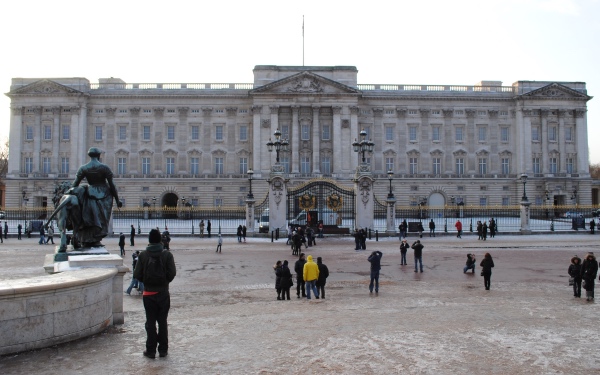
Buckingham Palace. PICTURE: Sung Shin/Unsplash

Foremost is Buckingham Palace, the official residence and office of the monarch – Queen Elizabeth II – in London. The palace – acquired for the Crown by King George III in 1761, converted to a palace by King George IV and first lived in by Queen Victoria – is also used for State ceremonies and for official entertaining.

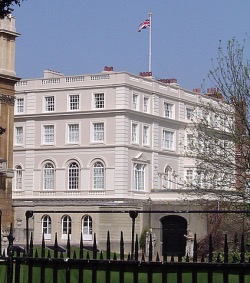
Clarence House. PICTURE: ChrisO (licensed under CC BY-SA 3.0)

Other royal residences include Clarence House which is the official London residence of Prince Charles and Camilla, Duchess of Cornwall.

The property was built between 1825 and 1827 to the designs of John Nash for Prince William Henry, Duke of Clarence (hence the name).

It was the home of Queen Elizabeth, the Queen Mother, between 1953 and her death in 2002, and was also temporarily the home of the then-Princess Elizabeth and Prince Philip following their marriage in 1947.

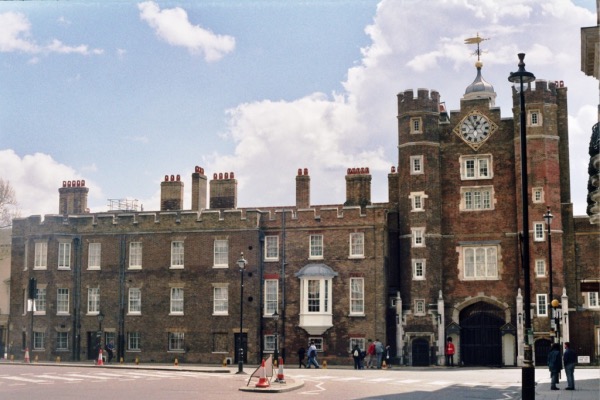
St James’s Palace. PALACE: Elisa.rolle (licensed under CC BY-SA 3.0)

St James’s Palace, which was largely built by King Henry VIII and served as the residence of numerous monarchs until King William IV, also remains the home of several members of the Royal Family – including Princess Anne and Princess Alexandra – and their household offices.

The State Apartments are sometimes used for entertaining during in-coming State Visits, as well as for other ceremonial and formal occasions. Its history means diplomats are still accredited to the Court of St James.

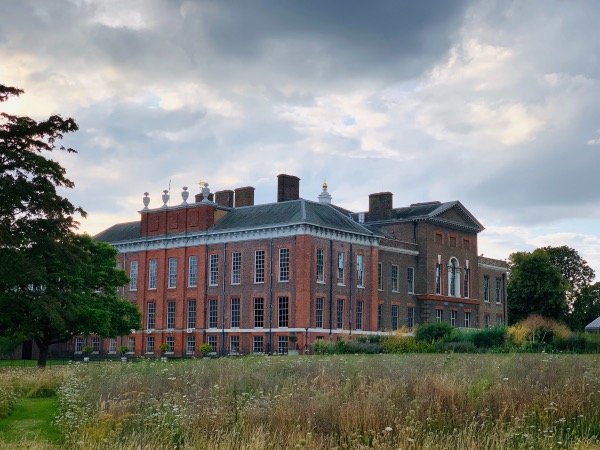
Kensington Palace. PICTURE: Pranav Thombare/Unsplash.

Kensington Palace – childhood home of Queen Victoria and favoured residence of monarchs from King William III to King George II – is these days the official London residence of Prince William and Katherine, the Duchess of Cambridge.

It also contains the London residences and offices of the Duke and Duchess of Gloucester, the Duke and Duchess of Kent and Prince and Princess Michael of Kent.

While Hampton Court Palace, the Tower of London, Kew Palace and the remnant of the Palace of Whitehall known as the Banqueting House are all royal palaces, they ceased being used regularly for royal court purposes in the 18th century and are now in the care of Historic Royal Palaces (along with parts of Kensington Palace).

10 sites of (historic) musical significance in London – 8. The home where Mozart composed his first symphony…

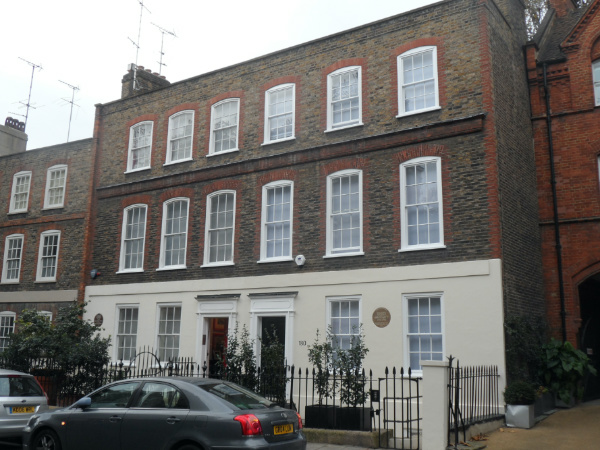
180 Ebury Street, Belgravia. PICTURE: Spudgun67 (licensed under CC BY-SA 4.0)

Think of Austrian composer Wolfgang Amadeus Mozart and chances are it isn’t London which immediately comes to mind. But it was in a home in Belgravia that the then-precocious eight-year-old composed his first symphony.

Mozart, his father Leopold, mother Anna Maria and his elder sister Maria Anna spent almost a year-and-a-half in London, between April, 1764, and July, 1765, as part of a European grand tour. Having initially taken lodgings above a barber’s shop in Cecil Court in Soho, they moved to the more rural setting of 180 Ebury Street, then known as Five Fields Row, in August so his father could recover from a serious illness which apparently developed after he caught a cold.

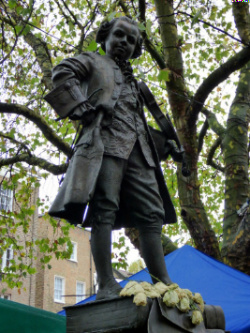
Philip Jackson’s statue of Wolfgang Amadeus Mozart in Orange Square. PICTURE: Peter O’Connor (licensed under CC BY-SA 2.0)

Mozart and his sister were both child prodigies and during their London sojourner performed in various London theatres and for King George III and Queen Charlotte at Buckingham Palace on several occasions. But, with his father now needing quiet, they were forbidden to play instruments in the house and so, according to his sister’s writings, in order to keep himself busy it was there that he composed his “first symphony for all the instruments of the orchestra, especially for trumpets and kettledrums”.

While the work she was referring to is now lost, Mozart did go on to compose the symphony that is now seen as his first at the same time. Known as K.16 in E flat major, it was first performed at the Haymarket Little Theatre in February, 1765.

Leopold did recover and so the family moved back to Soho – lodging at 20 Frith Street to be précise – in September, 1764. It was there that Mozart met the youngest son of Johann Sebastian Bach, Johann Christian, who was to be a key influence on his musical style. They left the property – and brought their time in England to an end in July, 1765, amid waning public interest in their performances (they gone from performing for the Royal Family to entertaining pub patrons). The family continued with their European tour before eventually returning to their home town of Salzburg (Mozart later settled in Vienna where he died at the young age of 35).

Mozart’s time at the Ebury Street residence (and the composition he wrote there) is commemorated with an English Heritage Blue Plaque (albeit this one is brown) which was erected by the then London County Council in 1939. Following damage in the war, it was reinstated in 1951. There’s also a statue commemorating Wolfgang Amadeus Mozart in nearby Orange Square. Designed by Philip Jackson, it was erected in 1994.

A Moment in London’s History – The coronation of King George III and Queen Charlotte…

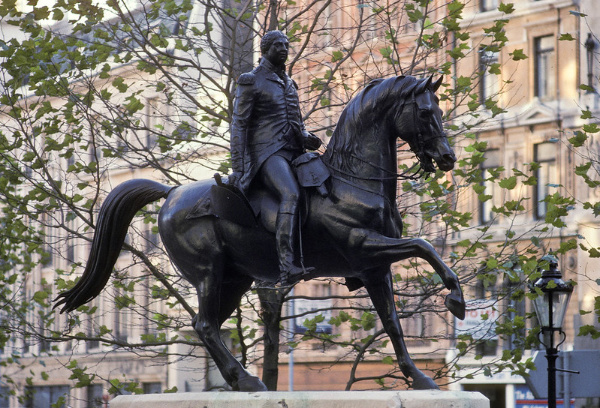
Equestrian statue of King George III in Cockspur Street. PICTURE: David Nicholls
(licensed under CC BY-NC 2.0)

This month marks 260 years since King George III and Charlotte of Mecklenburg-Strelitz were crowned King and Queen of the Kingdom of Great Britain at a ceremony at Westminster Abbey.

Only 23-years-old at the time, King George III had ascended to the throne before following the death of his grandfather, King George II, in October, 1760. He and his wife, then Princess Charlotte of Mecklenburg-Strelitz, had married in the Chapel Royal at St James’s Palace just two weeks prior to the coronation on 8th September, 1761 (they had met earlier the same day).

The royal couple started the day of the coronation – 22nd September – at St James’s Palace and were carried in sedan chairs to Westminster Hall, arriving at about 11am. They then processed on foot through crowds from the hall to Westminster Abbey (the crowds were said to be such that numerous carriages had collided with each other in the bid to reach the abbey). There, they proceeded to a special platform built in the abbey for the occasion.

Commencing at about 3pm, the coronation ceremony began. In an elaborate ceremony overseen by the Archbishop of Canterbury Thomas Secker, the new King was then crowned (Zadok the Priest, which George Frideric Handel had written for the coronation of King George II, was the anthem at the new king’s request). A simpler ceremony followed in which Charlotte was crowned Queen Consort.

The whole affair reportedly lasted more than six hours, so long that some guests are said to have tucked into snacks while watching.

A feast was subsequently held in Westminster Hall during which the King’s Champion, wearing full armour, rode into the hall and threw down a gauntlet challenging any who questioned the King’s legitimacy to step up (none did). During the feast, spectators in the galleries above let down baskets and handkerchiefs for their better placed friends below to fill with food.

The King and Queen departed the feat at about 10pm followed by guests. After they’d vacated the premises, the doors were then opened for the public to come in and to finish off the food.

Famous Londoners – Old Martin…

A grizzly bear (not Old Martin). PICTURE: Joshua J Cotten/Unsplash

A large, fully grown, grizzly bear presented to King George III by the Hudson’s Bay Company in 1811, Old Martin was one of the scarier residents of the Tower of London’s menagerie.

The bear, who was apparently named after a famous bear in Europe (the “old” was added because he spent so long in resident at the Tower), is said to have been the first grizzly in London.

He was not, however, the first bear to live there – King Henry III had been given a polar bear by King Haakon IV Haakonsson of Norway in 1251 (George, however, was apparently unimpressed with his gift, said to have commented in private that he would have preferred a tie or pair of socks).

Despite his many years in the menagerie, Old Martin apparently refused to be tamed and remained fierce towards both strangers and his keepers alike.

When the Duke of Wellington closed the menagerie in the early 1830s (King William IV apparently had little interest in the animals), Old Martin was moved to the London Zoo in Regent’s Park. He died there in 1838.

His skin and skull were subsequently sent to the Natural History Museum and rediscovered there in 1999 for an exhibition at the Tower.

There’s a rather odd story associated with Old Martin. It’s said that in 1816 – when Old Martin was living in the Tower’s menagerie – a Yeoman Warder saw a ghostly bear while on night duty near the Martin Tower. He apparently attempted to run it through with a bayonet but the blade went straight through and struck the door frame behind it. The somewhat dubious story goes that the poor Yeoman Warder died of shock just a few hours later.

This Week in London – King’s maps go online; life at Tower Bridge; Wildlife Photographer of the Year; and, the Gruffalo at Kew…

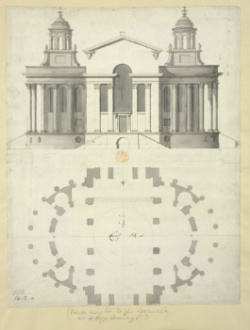
• Treasures including a hand-drawn map of New York City presented to the future King James II in 1664, Nicholas Hawksmoor’s architectural drawings for Castle Howard and some London churches, and Italian Jesuit Matteo Ripa’s massive 1719 Kangxi Map of China are among thousands of maps and views The British Library have placed online. The library is now nearing the end of the project to put 40,000 early maps and views online and most can now be accessed via the library’s Flickr Commons collection website. The documents are all part of the Topographical Collection of King George III, itself a distinct segment of the King’s Library which was donated to the Nation by King George IV in 1823. Other highlights to go online include Italian artist Bernardo Bellotto’s drawings of the town of Lucca, dating from about 1742, James Cook’s 1763 large manuscript map of the islands of St Pierre and Miquelon, and watercolours by noted 18th century artists including Paul Sandby and Samuel Hieronymus Grimm. PICTURED: Nicholas Hawksmoor, [An elevation and plan for St George, Bloomsbury]. London, between 1712 and 1730. Maps K.Top 23.16.2.a.

• A new exhibition celebrating the lives of those who work behind the scenes at Tower Bridge and the visitors who walk its floors opens in the iconic bridge’s Engine Rooms on Friday. Lives of a Landmark features images commissioned in 2019 to commemorate the 125th anniversary of the bridge. Photographer Lucy Hunter spent several months at the bridge, recording daily life there and this display is the result. Admission charge applies. For more, head here.

Winning images from The Natural History Museum’s Wildlife Photographer of the Year – including Sergey Gorshkov’s Grand Title winner, a rare glimpse of Siberian tigress – go on show at the South Kensington-based museum from Friday. The exhibition features the 100 images, selected from more than 49,000 entries, that were short-listed for the 56th annual competition, the results of which were announced in a virtual ceremony earlier this week. Runs until 6th June. Admission charge applies. For more, head to www.nhm.ac.uk/visit/exhibitions/wildlife-photographer-of-the-year.html.

The Gruffalo is the subject of a new “curated journey” taking place over the half-term break in Kew Gardens’ Arboretum. Visitors are encouraged to play the role of the “little brown mouse” and follow a trail to track down the Gruffalo, along the way encountering some of the other characters from Julia Donaldson’s famous book including Fox, Owl and Snake. Admission charge applies. For more, see www.kew.org.

Send all items for inclusion to exploringlondon@gmail.com.
Treasures of London – King George III’s military maps…

King George III’s massive collection of military maps, views and prints forms a key part of the Royal Collection and to mark the 200th anniversary of the King’s death, more than 3,000 of which have been published online.

The publication of the selection from the more than 55,000 items in the collection marks the culmination of 10 years of research by Dr Yolande Hodson who has catalogued the contents of the collection which dates from the 16th to the 18th centuries and provides a contemporary account of theatres of war in Britain, Europe and America.

The collection includes everything from so-called “presentation maps” of sieges, battles and marches to rough sketches drawn in the field, depictions of uniforms and fortification plans.

Highlights include two-metre-wide maps of the American War of Independence (1775–83) which designed to hang on purpose-made mahogany stands in Buckingham House – among them is a map of the final British defeat at the Battle of Yorktown in 1781, the only known copy to survive outside the US.

There’s also a memorandum written by Scottish military engineer William Roy to the king in 1766 in which Roy proposes a national survey of Britain based on his map and survey experience during the Seven Years War (1756–63) – it’s regarded as the founding document of the Ordnance Survey.

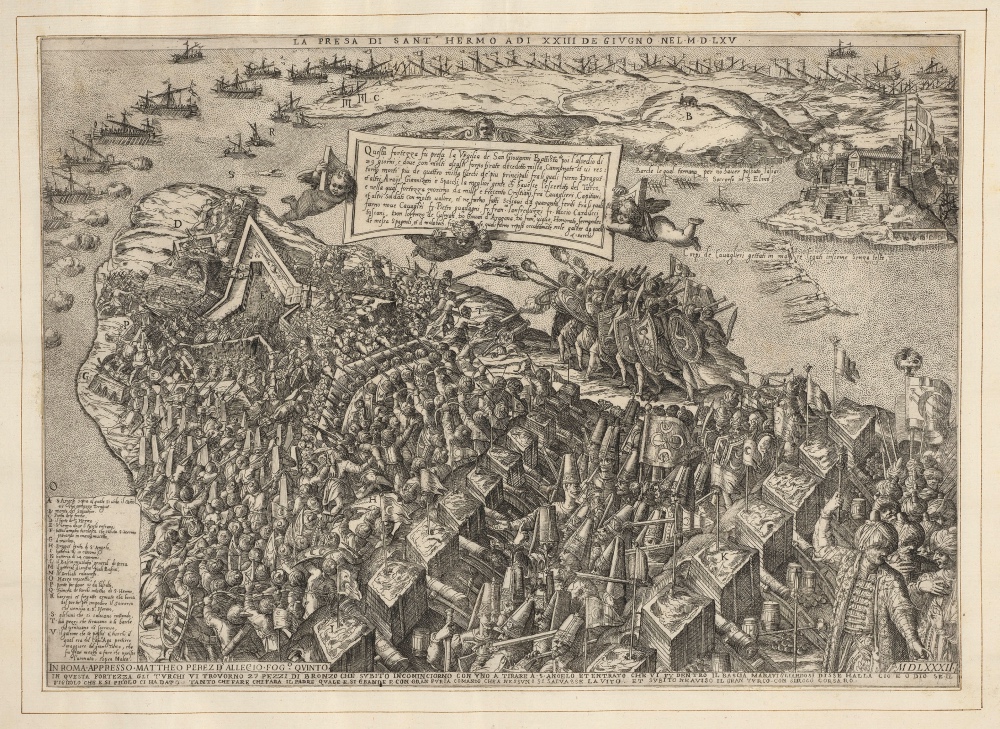
And there’s a rare engraving of the Siege of Malta (1565) showing how the Fort of St Elmo was overrun Turkish forces, resulting in the death of 1,300 Christian knights, captains and soldiers (pictured).

The collection can be found at militarymaps.rct.uk.

PICTURE: Matteo Perez d’Aleccio, A view of the Turkish assault on the Fort of St Elmo, Malta, on 23 June 1565. From the collection of Cassiano dal Pozzo. (Royal Collection Trust / © Her Majesty Queen Elizabeth II 2020)


This Week in London – Blake at the Tate; London’s scientific contributions explored; and, dining out in the Tower moat…

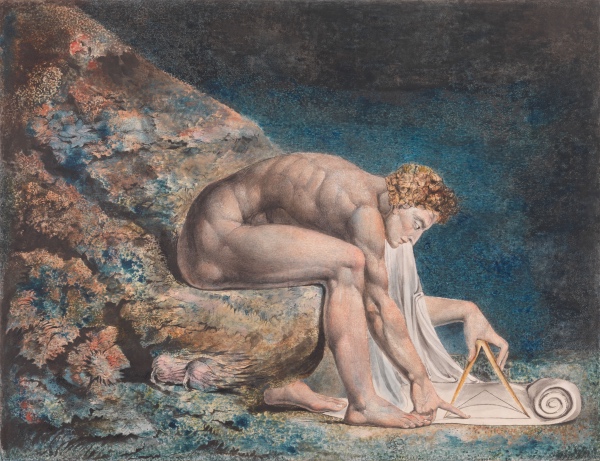
The largest survey of the work of visionary artist and poet William Blake to be seen in the UK in a generation has opened at the Tate Britain in Millbank. William Blake features more than 300 works with highlights including The Spiritual Form of Nelson Guiding Leviathan (c1805-9) and The Spiritual Form of Pitt Guiding Behemoth (c1805) which, in a bid to see them as Blake intended, have been digitally enlarged and projected onto the gallery’s wall, providing them with the sort of the scale he had envisaged for them but never realised. The actual works themselves are displayed nearby in a recreation of the artist’s only significant attempt to acquire a public reputation as a painter – his ill-fated exhibition of 1809 which took place in a room over his family’s hosiery shop. The exhibition also provides a focus on London, described as a “constant inspiration” for Blake, and highlights the vital role of his wife Catherine played in the creation of his engravings and illuminated books with illustrations to Pilgrim’s Progress (1824-27) and a copy of the book The complaint, and the consolation Night Thoughts (1797) on display, both of which are thought to have been coloured by Catherine. Other highlights include what is thought to be the only self-portrait of Blake – exhibited in the UK for the first time, the work Albion Rose (c1793) depicting the mythical founding of Britain, illuminated books such as Songs of Innocence and of Experience (1794) and some of his best-known paintings including Newton (1795-c1805 – pictured above) and Ghost of a Flea (c1819-20). The exhibition closes with The Ancient of Days (1827), a frontispiece for an edition of Europe: A Prophecy, which was completed only days before Blake’s death. Runs until 2nd February. Admission charge applies. For more, see www.tate.org.uk. PICTURE: William Blake (1757-1827) Newton 1795-c1805 (Colour print, ink and watercolour on paper, 460 x 600mm Tate).

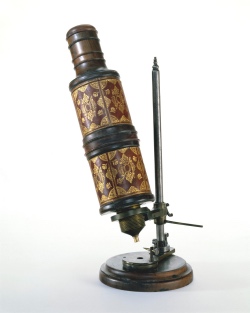
A new gallery exploring how London’s scientists and artisans transformed our understanding of the world over 250 years spanning the period from the mid-16th century to the end of the 18th century opens at the Science Museum in South Kensington today. The 650 square metre gallery, known as ‘Science City 1550-1800: The Linbury Gallery’, features iconic objects such as Sir Isaac Newton’s famous work, Principia Mathematica, Robert Hooke’s microscope (pictured), and objects including an air pump and ‘Philosophical Table’ which were commissioned by King George III as the king conducted his own scientific investigations. There’s also a range of machine models including one of a pile driving machine used in the construction of Westminster Bridge in the 1740s. The gallery is free to visit. For more, see www.sciencemuseum.ac.uk. PICTURE: Microscope designed by Robert Hooke, 1671-1700 formerly in the George III collection, King’s College London © Science Museum Group

The Tower of London Food Festival is being held in the fortress’ dry moat this weekend. Culinary talents including Chris Bavin and Emily Roux are among those offering live cookery demonstrations while visitors can put their own skills to the test with masterclasses. There’s also wine and sherry tasting sessions, an expanded array of food and drink to sample, activities for kids including cookery classes, games and face painting, and the Bandstand is back with deckchairs to relax in. Admission is included with entry to the Tower. Closes on Sunday. For more, see www.hrpfoodfestivals.com.

Send all items for inclusion to exploringlondon@gmail.com.
10 sites from Victoria and Albert’s London – 2. Buckingham Palace…

You may have noticed that last week we kicked off a new Wednesday series on 10 (more) London garden squares, only having kicked off a new series on 10 sites from Victoria and Albert’s London the week before. To clarify, we are currently running the Victoria and Albert series, the garden squares entry snuck in by accident (but we’ll be returning to the garden squares down the track)! Apologies for any confusion...


Queen Victoria, the first British monarch to use Buckingham Palace as an official residence, moved her household into the palace just three weeks after ascending to the throne on 20th June, 1837.

The palace, which had been empty for seven years following the death of her uncle King George IV, had been undergoing a grand repurposing under architect John Nash, transforming it from a house into a palace.

Originally built in 1703 as a London residence for John Sheffield, the 3rd Earl of Mulgrave, in 1761 the property had been purchased by King George III as a family home for his wife Queen Charlotte (14 of the couple’s 15 children were born here).

Remodelling of the property began the following year and had been continued by King George IV following his accession to the throne in 1820. As a result of the ongoing work, George IV never lived in the palace nor did his successor, King William IV, who preferred Clarence House.

The building works still weren’t finished when Victoria moved in. Her ministers had advised her to remain at Kensington Palace, her childhood home, until the works were finished but Victoria wasn’t having any of that – the move would help her escape the overbearing care of her mother Victoria, Duchess of Kent, the ambitious Sir John Conroy, and the so-called (and stifling) ‘Kensington System’ of rules under which she’d been brought up.

When Victoria married Albert (see the previous entry) on 10th February, 1840, the newly weds made the palace their London home. It was here that, over the next 17 years, Victoria would give birth to eight of their nine children (starting with Victoria ‘Vicky’, in 1840), and where the couple would work, controversially at side-by-side desks.

The couple’s growing family was soon stretching the palace accommodations and following a request from Queen Victoria, in 1846 some £20,000 was granted by Parliament on 13th August to complete and extend the grand property with an additional £50,000 for the works raised from the sale of the Royal Pavilion to the Brighton Corporation.

Under the direction of architect Edward Blore and builder Thomas Cubitt, the East Wing was added at the front of the palace, enclosing what had previously been a horseshoe-shaped courtyard and creating the famous central balcony where the Royal Family now gather on special occasions. Queen Victoria made the first public appearance on the balcony in 1851 during the Great Exhibition (pictured above are members of the Royal Family at the wedding of Prince William and Kate Middleton).

A new ballroom – designed by Nash’s student James Pennethorne – was added to the State Rooms shortly after. This was inaugurated in May, 1856, with a ball held there the following month to mark the end of the Crimean War.

The ball was one of several held at the palace during those years along with official royal ceremonies and other entertainments including musical performances by the likes of Felix Mendelssohn and Johann Strauss II.

A new exhibition, Queen Victoria’s Palace, opens at Buckingham Palace next month. 

WHERE: State Rooms, Buckingham Palace (nearest Tube stations are Victoria, Green Park and Hyde Park Corner); WHEN: 20th July to 29th September (opening at 9am, closing times vary – see website for details); COST: £25 an adult/£14 a child (under 17s/under fives free)/£22.80 concession/£64 family; WEBSITE: www.royalcollection.org.uk/visit/buckinghampalace.

PICTURES: Top – Diliff (licensed under CC BY-SA 1.0); Lower – David Adams.