Treasures of London – The Magna Carta

It’s regarded as one of the seminal documents of medieval England. First issued 15th June, 1215, the Magna Carta (“Great Charter”) was endorsed by England’s barons and King John at Runnymede near Windsor Castle and put limits in the power of the king by demanding he govern according to established feudal law.

The document was forced upon King John by rebellious barons after he broke away from established customs and imposed oppressive taxes and fines and seized the estates of nobles.

Its terms were immediately repudiated by the king, leading to further rebellion which ended when the king died on 18th October, 1216. Less than a month after the king’s death, the regent, William Marshal, issued a revised version of the document and a second revision almost exactly a year later. A further version was later issued by King Henry III and later confirmed by King Edward I.

Copies of the document were sent throughout the land in 1215. There is now a copy in the Lincoln Cathedral Archives and another in Salisbury Cathedral Chapter House while the British Library has two copies, both from the collection of Sir Robert Cotton, who died in 1631. One of the library’s two copies was burned in a fire 100 years after Sir Robert’s death and still bears fire damage.

The text of the Magna Carta is not abstract in nature but deals in detail with practical realities, covering issues ranging from what happens when a noble who holds land from the Crown dies through to who heirs may marry, standard measures of wine, ale and corn and the removal of foreign knights from the country.

Only three of the Magna Carta’s 63 clauses are still law: one guaranteeing the liberties of the English Church; another confirming the privileges of London and other towns; and a third, often viewed as a forerunner of clauses contained in documents such as American Bill of Rights and Universal Declaration of Human Rights, which states that no free man shall be imprisoned, dispossessed, outlawed or exiled without the lawful judgement of his equals or by the law of the land.

The legacy of the Magna Carta is not however in the individual rights it seeks to uphold but rather the principle that for the first time in English history, it elevates the law above all men, even the king.

WHERE: Sir John Ritblat Gallery: Treasures of the British Library: Magna Carta and associated documents, The British Library, 96 Euston Road (nearest tube station is Kings Cross St Pancras or Euston); WHEN: 9.30am to 6pm Monday, Wednesday, Thursday and Friday; closes 8pm Tuesday and 5pm Saturday; 11am to 5pm Sunday; COST: Entry is free; WEBSITE: www.bl.uk or for a detailed guide and virtual tour of the Magna Carta, see  www.bl.uk/treasures/magnacarta/index.html.

Lost London – London Bridge

In the first of a new regular series looking at “lost” London, Exploring London takes a look at London Bridge.

It’s a commonly confused fact that many first-time visitors to London think Tower Bridge and London Bridge are the same. As Londoners know, London Bridge (pictured right with St Paul’s and the city in the background) lies west of Tower Bridge. It’s not a particularly inspiring bridge having been built in the early Seventies. But there’s been a bridge spanning the Thames here for almost 2,000 years. So what happened to Old London Bridge?

The first bridge built across the River Thames on or close to the current site of London Bridge is thought to have been a wooden pontoon bridge constructed by the Romans around 50 AD. It was quickly followed by a more permanent bridge (rebuilt after it was destroyed by Boudicca and her marauding army in 60 AD).

Following the end of the Roman era, the bridge fell into disrepair although it’s known that there was a wooden Saxon bridge on the site by around the year 1,000. A succession of Norman bridges followed the Conquest and in 1176, during the reign of Henry II, construction of a new stone bridge began under the supervision of the priest Peter de Colechurch to service to growing numbers of pilgrims travelling from London to Thomas a Becket’s shrine in Canterbury. The new bridge, which had a chapel dedicated to St Thomas at the centre, wasn’t finished until 1209.

The bridge had 19 arches sitting on piers surrounding by protective wooden ‘starlings’ and a drawbridge and defensive gatehouse. The design of the bridge meant the water shot rapidly through the arches, leading boatmen to describe the practice of taking a vessel between the starlings as “shooting the bridge”.

King John, in whose reign the bridge was completed, licensed the building of houses on the bridge and it soon became a place of business with some 200 shops built upon its length, many of them projecting over the sides and reducing the space for traffic to just four metres. Many of the buildings actually connected at the top, creating a tunnel-like effect.

One of the more remarkable buildings on the bridge was Nonsuch House, built in 1577. A prefabricated building, it had been assembled in the Netherlands before being taken apart, shipped to London, and then reassembled. No nails were used in its construction, just timber pegs.

The practice of putting the heads of traitors on pikes above the southern gatehouse (see picture right, dating from 1660) started in 1305 with Scottish rebel William Wallace’s head and continued until it was stopped after 1678 when goldsmith William Stayley’s head was the last to be displayed there. Famous heads to adorn the gateway over the years included Peasant’s Revolt leader Wat Tyler in 1381, rebel Jack Cade in 1450, the former chancellor Sir Thomas More and Bishop John Fisher in 1535, Thomas Cromwell in 1540 and Guy Fawkes in 1606.

Some of the bridge’s arches collapsed over the years and had to be restored and there were several fires which destroyed houses upon it, including those which occurred during the Peasants’ Revolt in 1381 and Jack Cade’s rebellion in 1450.

Congestion reached such a state by the 18th century that in 1756 Parliament passed an act which allowed for the demolition of all the shops and houses upon it (it had remained the only bridge spanning the Thames east of Kingston until Westminster Bridge was completed in 1750). This was carried out in 1758-62 along with the removal of two central arches which were replaced with a single wider span.

With traffic only increasing – by 1896, 8,000 people and 900 vehicles were reportedly crossing the bridge every hour – it was clear a new bridge was needed and work on a new stone bridge with five arches – following a design competition won by John Rennie – began in 1824. The old bridge, located about 30 metres east of the new one, remained in use until the new one was opened in 1831. Widening work carried out the early 20th century, however, was too much for the bridge’s foundations and it began to sink.

What followed was one of the strangest episodes in the bridge’s history when in 1967 the Common Council of the City of London decided to sell the bridge. It was sold the following year to Missourian entrepreneur Robert P. McCulloch of McCulloch Oil for $US2.5 million.

Carefully taken apart piece by piece, the bridge was then transported to the desert resort of Lake Havasu City in Arizona in the US and rededicated in 1971.

The current London bridge, designed by Mott, Hay and Anderson, was built from 1967 to 1972 and opened by Queen Elizabeth II in 1973. It stands on the same site as the previous bridge.

As for the song, “London Bridge is falling down”? There’s several stories to explain its origins – one being that it came about as the result of an attack by a joint force of Saxons and Vikings on Danish held London in 1014 during which they pulled the bridge down, and another being that it became popular after Henry III’s wife, Queen Eleanor, was granted the tolls from the bridge by her husband but instead of spending them on maintenance, used it for her own personal use. Hence, “London Bridge is falling down, my fair lady”.

PICTURES: Top: © Steven Allan (istockphoto.com); Bottom – London Bridge (1616) by Claes Van Visscher. SOURCE: Wikipedia.

Where’s London’s oldest…surviving building?

The oldest intact building in London is generally believed to be the White Tower, which stands in the heart of the Tower of London.

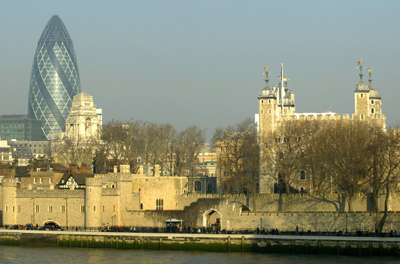
Construction on the White Tower (which stands to the right in the picture) was started on the orders of William the Conqueror some time prior to 1070 and was completed by 1100. The newly appointed Bishop of Rochester, Gundulf, was placed in charge of the project which used stone imported from Normandy (much of this was replaced in later centuries).

Built as a towering stronghold and fortress for the English kings, the walls of the tower at 15 feet (4.5 metres) thick and 90 feet (27 metres) high. It was later enclosed by a curtain wall and moat, taking the shape of the Tower of London as we now know it by about 1350.

The White Tower, also known as the Great Tower, has been the scene of many dramatic events in British history – from the deposition of Richard II in 1399 to the disappearance (and possible murder) or the Princes in the Tower – Edward V and his brother Richard, Duke of York, around 1483 (two skeletons, which some believed to be theirs, were unearthed here in 1674).

The White Tower, which is now part of a World Heritage Site, contains the splendid 11th century Chapel of St John the Evangelist. While three of the turrets at the corners of the tower are square, the fourth – the north-east turret, is round and once contained the first royal observatory.

The onion-shaped domes and weathervanes on the turrets were added in the 1520s.

These days the tower contains an exhibition of royal armour – including that worn by King Henry VIII – as well as exhibits on the tower’s history.

WHERE: Tower of London (nearest tube station is Tower Hill); WHEN: Tuesday to Saturday 9am to 4.30pm; Sunday to Monday 10pm to 4.30pm (closing times are 5.30pm between March and October); COST £18.70 an adult/£15.95 concessions/£10.45 a child (children under five free)/£51.70 for a family of two adults and up to six children; WEBSITE: www.hrp.org.uk/TowerOfLondon/

PICTURE: Stephen Pond/Historic Royal Palaces

Around London – Imperial War Museum’s WWI revamp; St Paul’s Christmas broadcasts; House Mill to be restored; Henry III’s rolls online; and, Winter Wonderland in Hyde Park

The Imperial War Museum has unveiled plans for a major rebuilding project at its Lambeth headquarters to culminate with the 100th anniversary of the start of World War I in 2014. Under a £71 million proposal, the size of the existing World War I galleries will be doubled and a new atrium will be created with further works – including a new sunken entrance – to be completed by 2019. The museum moved to its Lambeth location, formerly the Bethlem Royal Hospital, in 1936. Prince William is fronting the first £29 million appeal for funds. Meanwhile plans have reportedly been mooted to have the decommissioned aircraft carrier, the HMS Ark Royal, brought to London where it would be permanently moored in the Thames as a tourist attraction akin to the HMS Belfast.

St Paul’s Cathedral has announced it will provide live outdoor broadcasts of its three most popular Christmas services for the first time to allow those who can fit in the cathedral to participate. A 25 metre screen will be set up in Paternoster Square, next to the cathedral, where ‘A Celebration of Christmas’ will be screen on 16th December at 6.30pm along with Christmas Carol services on the 23rd and 24th December at 4pm. See www.stpauls.co.uk.

An historic 18th century mill in East London will undergo restoration after the granting of a £248,000 lottery grant. House Mill, which dates from 1776, is believed to be the largest tidal mill still in existence anywhere in the world. Built across the River Lea, the mill was used for flour-making and for a distillery located next door on Three Mills Island in Bow. The project, which is being managed by the River Lea Tidal Mill Trust, involves the restoration of the mill as well as the adjoining Miller’s House and the creation of a visitor’s centre. The trust says it has also been given the “green light” for a further £2.65 million Heritage Lottery Fund grant. See http://housemill.org.uk.

A three year project has made documents drawn up for King Henry III in the 13th century available on the internet for the first time. Project partners Canterbury Christ Church University, King’s College London, and the National Archives in Kew have translated and digitised the king’s ‘fine rolls’, written to record money and favours owed to the king. The rolls consist of 56 parchments – one for each year of his reign which started in 1216 and ended in 1272 – and contain as many as 40,000 entries amounting to some two million words. Some of the parchments, the originals of which are held at the National Archives, measure up to three metres in length. See www.finerollshenry3.org.uk.

On now: Winter Wonderland in Hyde Park. Christmas festivity on a vast scale, Winter Wonderland includes the city’s largest open air ice rink, circus acts, a giant observation wheel, rides and eating places including the igloo-style E:Cube and the Spiegel Saloon. For more information see www.hydeparkwinterwonderland.com.

Famous Londoners – Beau Brummell

Generally acknowledged as having introduced the concept of men wearing a suit and tie during the Regency, ‘Beau’ Brummell’s sense of fashion continues to impact the way we dress right across the globe.

George Brummell was born in London 0n 7th June, 1788, the son of William Brummell, the private secretary of Lord North. Educated at Eton and Oxford, Brummell later joined the army and it was there that he became friends with George, Prince of Wales (the future King George IV). It was the prince who aided his promotion to captain before he resigned his commission.

Setting up home in Chesterfield Street, Mayfair, using the small fortune he inherited on his father’s death, Brummell became a member of the prince’s inner circle and quickly established a reputation for his elegant – and sober – dress sense and skills at the art of conversation.

But Brummell’s talent for spending above his means and his reckless gambling began to catch up with him as did his, at times, overly sharp tongue, and he gradually fell out of favour with his highly placed friends, including the Prince Regent whom he is said to have famously insulted after the prince snubbed him.

In 1816 he fled to France to escape debtor’s prison and remained there for the rest of his life. While friends helped him to secure the position of British consul in Caen briefly during the 1830s, he gradually slipped into decline and spent time in a French debtor’s prison until, impoverished and now insane, he died in an asylum in Caen in 1840.

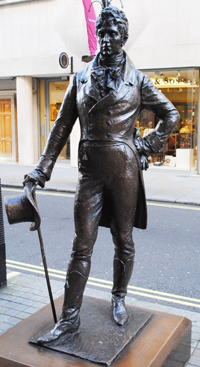
Brummell, whose life has since inspired numerous books, plays and films, can be seen standing on Jermyn Street where a statue of him by Irena Sedlecka was erected in 2002 (pictured). His legacy to fashion lives on.

What’s in a name?…Whitehall

Running southward from Trafalgar Square towards the Houses of Parliament (the southern part of Whitehall is actually known as Parliament Street), Whitehall is lined with government buildings – everything from the Foreign Office to the Cabinet Office, from the Scotland and Wales Offices to the Ministry of Defence – and has become so identified with government that its very name is now used to mean just that. But where does the name come from?

Whitehall takes its name from the Palace of Whitehall which once stood on the site of the current street. The palace’s origins go back to the 14th century when a grand house known as York Place was built as the London residence of the Archbishops of York.

The building was gradually expanded over the years – work which continued when Thomas Wolsey was made Archbishop of York in 1513. When Cardinal Wolsey fell from favour in the late 1520s, however, King Henry VIII seized the house along with his other assests.

With the royal Palace of Westminster badly damaged in a fire in 1512, King Henry VIII had been staying at Lambeth Palace. He saw the newly acquired palace, renamed Whitehall, as a suitable new home and continued expansion works, constructing a series of recreationally-oriented buildings on the west side of what is now Whitehall including tennis courts, a cockfighting pit and a tiltyard for tournaments. By the time of Henry VIII’s death in 1547, the palace covered 23 acres and was the largest in Europe.

The palace continued to be used by subsequent monarchs until much of it was destroyed by fire in 1698. These days the only surviving part of the palace is the Banqueting House. Built by Inigo Jones for King James I, it was from a window on the first floor of this 1622 building that King Charles I stepped onto a scaffold where his head was cut off.

Apart from the Banqueting House, other significant sites in Whitehall including the Cenotaph, the focus of Remembrance Sunday commemorations. Downing Street, meanwhile, runs off the south-eastern end of Whitehall and behind gates which have blocked it off since 1989, stands the Prime Minister’s official residence.

What’s in a name?…Pall Mall

This curiously named street in the heart of London’s St James district traces the origins of its moniker back to the 17th century when the game of “pall mall” (“pell mell” and “paille maille” being among a host of alternative spellings) was played there.

The game, mentioned by Samuel Pepys in his famous diary, involves the use of a mallet and ball similar to that used in modern croquet but, according to some commentators, pall mall was more likely a predecessor of golf than croquet, with players attempting to belt the ball as far as possible along a pitch before putting the ball through a hoop suspended high off the ground.

Pall Mall, which runs parallel to The Mall from St James’ Street in the west to Haymarket in the east with an eastern extension, Pall Mall East, completing the journey from Haymarket into the northern end of Trafalgar Square, became famous in the 19th and early 20th centuries for housing numerous ‘gentlemen’s clubs’. Among those still in business are the Travellers Club, the Athaenaeum Club, the Reform Club, the Army and Navy Club, the Oxford and Cambridge Club, and the Royal Automobile Club.

St James’s Palace sits at the street’s western end and it is of note that nearly all of the southern side of the street is still part of the Crown Estate (the exception being a home Charles II is believed to have given to the actress Nell Gwynne, who apparently sensibly demanded the freehold on the property).

Other buildings along the street include Schomberg House, built for the Duke of Schomberg in the late 17th century (only the facade of which remains), and the Sir Christopher Wren-designed Marlborough House, which is tucked in between Pall Mall and The Mall and sits opposite St James’s Palace. The National Gallery and the Royal Academy also both briefly had homes in Pall Mall.

Treasures of London – The Cosmati Pavement

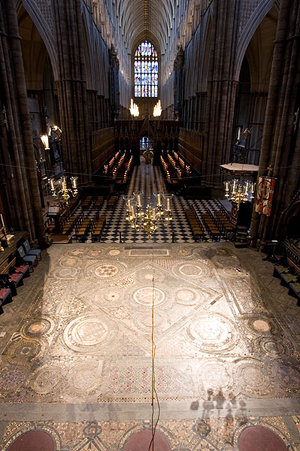
Hidden underneath carpet and a layer of grime for years, this unique medieval “carpet of stone” before the High Altar of Westminster Abbey can now be seen in all its glory, thanks to two years of restoration works.

Laid down in 1268 on the orders of King Henry III who, 23 years earlier had started rebuilding the abbey in the new Gothic style, it was created by a team of workmen from Rome headed by a man called Odoricus.

The decision to create the pavement was apparently taken after the Abbot of Westminster, Richard de Ware, visited the Pope, saw a newly made pavement in His Holiness’ summer residence, and thought it would be just the ticket for the abbey.

The pavement, described by one writer as a “prayer set in stone”, takes its name from ‘Cosmati’ work which describes the type of inlaid stone decoration used in its making (Cosmati work, in turn, was named after one of the families that specialised in it).

Made from rare marbles, gemstones and even glass (with some pieces recycled from earlier projects), the design is abstract. Unlike Roman and earlier medieval mosaic work which tended to feature stones cut into squares of equal sizes, it features stones of various colors and sizes cut into a range of different shapes which create a geometric pattern and is believed to symbolise the world, the universe and the end of both.

In this regard, the pavement also features three brass inscriptions, now damaged, which refer to the end of the world and suggest that at the time of its creation, there were 19,683 years left to go. The inscriptions, which also express the date of its making in a most unusual style, are a unique feature of the pavement and are not found on other Cosmati works.

The pavement has recently undergone a two year restoration program, now completed, which has removed the dirt and stains which had covered it – this was in part caused by the thick carpets which have covered it for the most of the 150 years.

WHERE: Westminster Abbey, Westminster (nearest Tube station is Westminster or St James’s Park); WHEN: Open to tourists everyday except Sunday  (times vary so check the website); COST: £15 an adult/£12 concessions/£6 schoolchildren (11-18 years), free for children aged under 11/£36 for a family (two adults, two children); WEBSITE: www.westminster-abbey.org

PICTURE: Copyright: Dean and Chapter of Westminster.

LondonLife – Lord Mayor’s Show 2010

On Saturday, the City of London paused for the 2010 Lord Mayor’s Show. We’ve captured some images from the event…

The crowd waiting patiently in Poultry, looking towards Mansion House, home of the Lord Mayor. The parade makes its way to the Royal Courts of Justice, stopping off at St Paul’s and then back via Victoria Embankment.


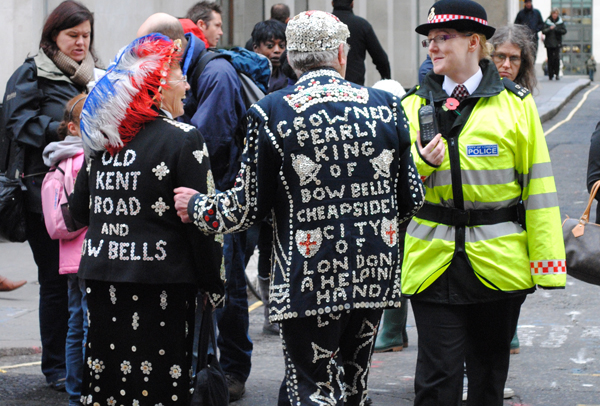
A Pearly King and Queen seek some advice from the local constabulary.


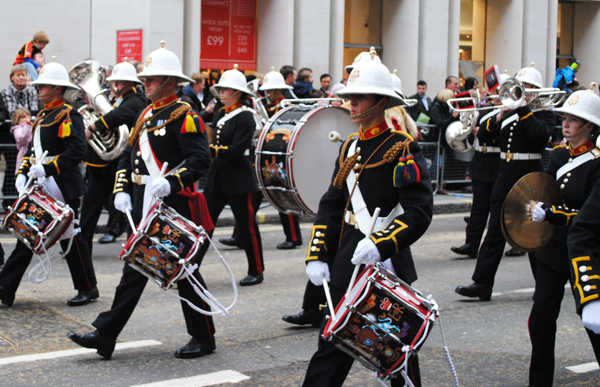
The parade opened with the Band of Grenadier Guards, formed in 1685 by Charles II.


Members of the Council of the Hamburger Morgensprache, successor to the medieval gathering of merchants of Hanseatic cities on the Baltic and North Sea coasts of which Hamburg was a leading member. Under a charter granted by Henry III, the merchants had their own enclave in the City of London.

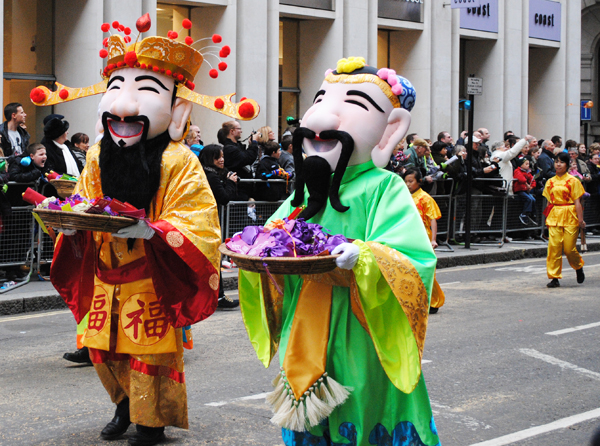
Part of the Hong Kong Economic and Trade Office’s representation.


One of the many bands in the parade.

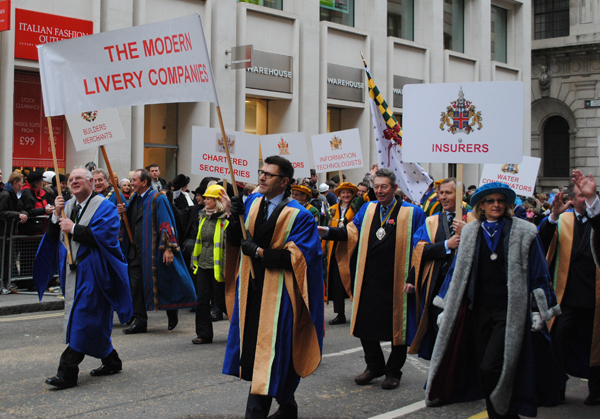
The Modern Livery Companies had walkers representing 21 livery companies, from Actuaries and Arbiters to Farmers, Solicitors, Tobacco Pipe Makers and World Traders. Other livery companies represented in the parade included the Worshipful Company of Lightmongers, the Worshipful Company of Paviors, and the Worshipful Company of International Bankers.


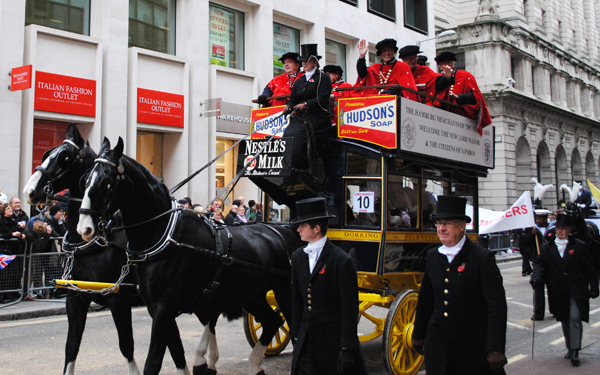
One of the many carriages transporting city officers. This one contains Sheriff Richard Sermon and his chaplain, Rev Michael Marshall, with two Doggett’s Coat and Badge men at the back.


Doggetts Coat and Badge Men – every year since 1715, apprentices from the Company of Watermen have contested a boat race on the Thames to win the coveted Doggett’s Coat and Badge.

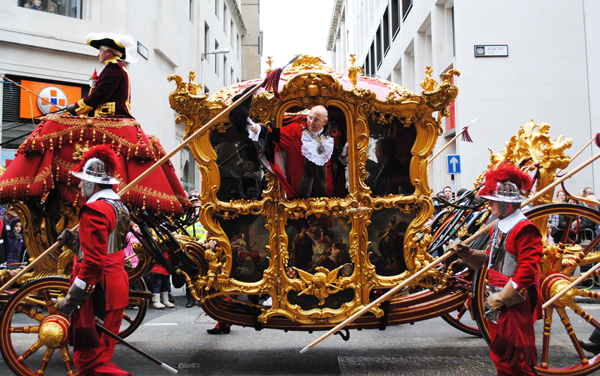
Lord Mayor Michael Bear, the 683rd Lord Mayor of London, greets Londoners. The State Coach dates from 1757.


Pikemen, part of the Lord Mayor’s bodyguard for ceremonial occasions. The style of uniform dates from the reign of Charles I.


On the Thames, looking out from Waterloo Bridge. A fireworks display was held here from 5pm onwards.

~ www.lordmayorsshow.org

Wren’s London – 9. Marlborough House

We’re nearing the end of our series on Wren’s London (next week we’ll take a final look at some of the Wren designs we’ve not yet mentioned), so this week we look at one of his lesser known (and less accessible) designs – Marlborough House.

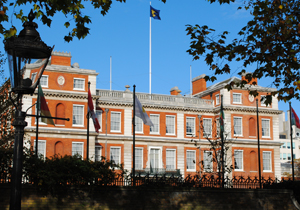
Tucked away behind high brick walls next to St James’ Palace just off Pall Mall, Marlborough House was built for Sarah Churchill, the Duchess of Marlborough – a confidant of Queen Anne – and completed in 1711.

The duchess, who secured a lease of the site from Queen Anne, selected Sir Christopher as the architect in preference to Sir John Vanbrugh, but she later fell out with Wren and, after dismissing him, oversaw the completion of the building herself. It is believed that the design of the house was actually the work of Wren’s son, also named Christopher, although the plans were undoubtedly drawn up under Wren senior’s watchful eye.

The house, built of red Dutch bricks brought to England as ballast in troop transports, was noted for its plain design. But the walls of the central salon and staircases were decorated with scenes of battles the Duke had fought in.

The property remained in the hands of the Dukes of Marlborough until it was acquired by the Crown in 1817. The building – which was substantially extended in the mid 1800s to the designs of Sir James Pennethorne – was subsequently used by members of the royal family including Princess Charlotte (only daughter of the future King George IV) and her husband Prince Leopold (later the King of the Belgians), Queen Adelaide, widow of William IV, Edward, Prince of Wales (later Edward VII), George, Prince of Wales (later George V), King Edward VII’s widow, Queen Alexandra, and, lastly, Queen Mary, widow of  George V.

Following the death of the Queen Dowager in 1953, Queen Elizabeth II donated it for use by the Commonwealth Secretariat who still occupy the building today.

WHERE: Pall Mall (nearest Tube stations are Green Park and Piccadilly); WHEN: Two hour tours are usually held every Tuesday morning (check first); WEBSITE: www.thecommonwealth.org/Internal/191086/34467/marlborough_house/

Wren’s London – 8. Old Royal Naval College, Greenwich

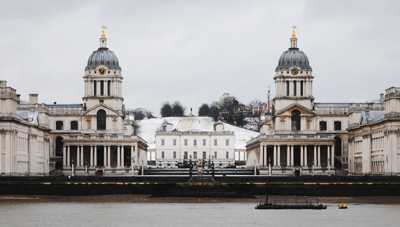
Hunkering down on the south bank of the Thames, the Old Royal Naval College at Greenwich is yet another Wren masterpiece and the centrepiece of the UNESCO-listed Greenwich Maritime World Heritage Site.

What is now known as the college was originally designed as a ‘hospital’ or retirement home for old or infirm sailors. Established by Royal Charter in 1694, it was King William III who pushed the project into fruition as per the wishes of his then late wife Queen Mary II.

Wren was selected to design the building and along with the diarist John Evelyn, who had been appointed treasurer, laid the foundation stone on 30th June, 1696.

Wren’s initial design – for a three side courtyard facing the river – was rejected by Queen Mary who insisted the view from the existing Queen’s House to the river be maintained. So, instead, the hospital was built as a series of four pavilions, each with its own court, with the Queen’s House standing as it’s centrepiece when viewed from the river.

Wren himself never lived to see the building’s completion – it was in the end completed by a number of other famous architects including Sir John Vanbrugh, Thomas Ripley, and Wren’s pupil Nicholas Hawksmoor. Fortunately Wren had laid out all the foundations which ensured the basic design conformed to his plans.

The first 42 pensioners moved in in 1706 and the numbers grew as buildings were completed to a peak of 2,710 in 1814. However, declining numbers of pensioners by the mid 1800s – thanks to a period of peace on the seas and the success of a program which saw more pensioners living with their families, eventually led to the hospital’s closure in 1860.

In 1873, the Royal Naval College took over the premises, assuming the role of both the former Naval College at Portsmouth and the School or Naval Architecture and Marine Engineering which had been based in South Kensington. The Naval Staff College opened on the site in 1919 and further navy departments including the Department of Nuclear Science and Technology moved there in later years. The Royal Navy left the college in 1998.

Now in the care of the Greenwich Foundation, the college is now used by the University of Greenwich and the Trinity College of Music as well as for public events. The public can also visit certain parts of the former college including the grounds, the spectacular Painted Hall and the Chapel.

The domed Painted Hall, which features a series of classically themed paintings with King William III and Queen Mary II at its heart, was originally planned by Wren to be the hospital’s dining hall but due to the length of time it took for Sir James Thornhill to complete – 19 years – his paintings it was never used as such. Instead it stood empty until the body of Admiral Lord Nelson was brought there to lie in state in January 1806. In 1824 it became the National Gallery of Naval Art but in the 1930s became a dining room again with the gallery’s contents transferred to the National Maritime Museum.

The Chapel of St Peter and St Paul, meanwhile was completed in 1751 to the design of Sir Thomas Ripley but was gutted by fire only 28 years later. It was then rebuilt, largely to the designs of James “Athenian” Stuart with some of the detailing designed by his Clerk of Works William Newton, and was reopened in 1789. Restored in the 1950s, it is said to look “almost as it was” when it opened in 1789. The chapel is still in use for services.

WHERE: Located adjacent to Greenwich Pier with entry from Cutty Sark Gardens, College Approach, Romney Road Gate, Royal Gate or Park Row, Greenwich (nearest DLR station is Cutty Sark for Maritime Greenwich); WHEN: The Painted Hall and Chapel are open daily from 10am to 5pm (chapel used for worship on Sunday mornings, open for sightseeing  from 12.30pm); COST: Free (Booked guided tours are available for £5 an adult/children under 16 free); WEBSITE: www.oldroyalnavalcollege.org

A Moment in History – Guy Fawkes and the Gunpowder Plot

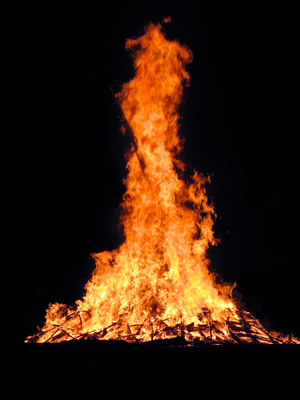
This week, on November 5th and surrounding days, people across England will mark Bonfire Night, an annual event which involves burning effigies of Guy Fawkes on top of a bonfire and setting off copious amounts of firecrackers.

So who was Guy Fawkes and what’s it all about?

Bonfire Night (the 5th November is also known as Guy Fawkes Day or Fireworks Night) has its origins in 1605 when a group of Catholics – including Guy or Guido Fawkes (the latter the Spanish form of his name) – attempted to blow up parliament in what became known as the Gunpowder Plot.

Born in York in 1570, Fawkes converted to Catholicism some time before selling his inheritance and heading to continental Europe where he fought as a mercenary for Catholic Spain against the Protestant Dutch in the Eighty Years War.

Having later travelled to Spain where he unsuccessfully tried to drum up support for a Catholic rebellion in England, he then returned to England where he was introduced to Robert Catesby, who planned to assassinate King James I and much of parliament and put a Catholic monarch back on the throne.

Having leased an undercroft beneath the House of Lords, the group of 13 plotters stockpiled gunpowder there with Fawkes put in charge of lighting it on 5th November before making his escape to the Continent. An anonymous letter, however, to Catholic Lord Monteagle warning him not to attend the State Opening of Parliament, led authorities to the site around midnight on 4th November and there they found Fawkes guarding the 36 barrels of gunpowder.

Arrested (he initially gave them the name of John Johnson), he subsequently confessed under torture and was sentenced to be hung, drawn and quartered – a sentence which he shortened by leaping off the scaffold and breaking his own neck before it could be carried out. The other plotters were also either killed, imprisoned or executed.

Bonfires were supposed to have been lit the night after the plot was foiled – 5th November – to celebrate the king’s safety and they have been ever since that date (in fact, James I passed an Act of Parliament making 5th November a day of thanksgiving – it remained in force until 1859).

Effigies of Fawkes followed (although some people substitute that of Fawkes with other people) as did the firecrackers. Some children carry effigies of Fawkes around asking for a “penny for the Guy” in an effort to apparently raise money for firecrackers. The poem which starts “Remember, remember, the fifth of November” is also associated with the night.

The night, which is now celebrated for all sorts of reasons – some suggest Guy Fawkes should be recognised as a hero for defending persecuted people against governments, is reportedly still observed in places as far afield as the US and New Zealand.

The cellar where Fawkes was arrested no longer exists – it was destroyed during a fire which consumed much of the medieval Houses of Parliament in 1834. But interestingly, the Yeoman of the Guard still do search the Houses of Parliament before each State Opening of Parliament. Two confessions signed by Fawkes are held at the National Archives.

PICTURE:  Agata Urbaniak (www.sxc.hu)

LondonLife – Horse Guards Parade…

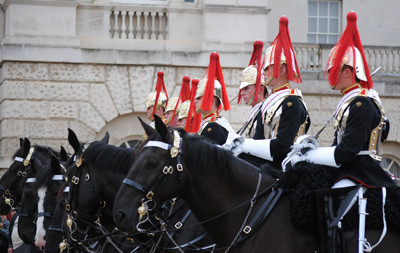
The Queen’s Life Guard at Horse Guards Parade. The parade ground, which lies between Whitehall and St James’ Park, was formerly the site of the tiltyard of the Palace of Whitehall and was the location for tournaments during the rule of Henry VIII. It now serves as the site for the annual Trooping the Colour ceremony. The men pictured (wearing blue tunics and red plumed helmets) are part of a squadron of The Blues and Royals (Royal Horse Guards and 1st Dragoons) who, along with a squadron of The Life Guards (wearing red tunics and white plumed helmets), make up the Household Cavalry Mounted Regiment, responsible for providing The Queen’s Life Guard. The “Horse Guards” have guarded this site – still regarded as the official entrance to St James’ Palace and Buckingham Palace – since the Restoration of Charles II in 1660 and can be seen there in the Changing of the Guard ceremony on weekdays and Sundays. For more information, visit www.army.mod.uk/events/ceremonial/2355.aspx

Wren’s London – 7. Kensington Palace

A once favored residence of British monarchs, Kensington Palace’s connections with royalty date back to 1689 when, then a private country home known as Nottingham House, the building was purchased by King William III and Queen Mary II.

The royal couple turned to Sir Christopher Wren, then Surveyor of the King’s Works, who was charged with adapting the property into a suitably regal residence.

Wren’s work included the addition of four new pavilions – one at each corner – to provide extra accommodation for the king and queen. The King’s Apartments, approached by a Grand Staircase, were located in the south east, and the Queen Apartment’s in the north west. While many later additions were made, the basic layout of these buildings remains true to Wren’s original design.

Among the many spectacular original rooms is the King’s Gallery, built for William in 1695. It features an 1694 wind dial connected to a weather vane which turns according to the direction of the prevailing wind.

The property’s subsequent royal residents have included Queen Anne, King George I and King George II (it was King George III who made Buckingham Palace his primary London residence). Princess (later Queen) Victoria was born here in 1819 (it was she who first opened the State Apartments to visitors in 1899) while more recent residents in the palace’s private areas have included Princess Margaret and, of course, Diana, Princess of Wales.

WHERE: The Broad Walk, Kensington Gardens, Kensington (nearest tube stations are High Street Kensington or Queensway); WHEN: Daily 10am to 5pm (last admission 4pm); COST: £12.50 adult/£11 concession/£6.25 child/£34 family (online booking discounts available, Historic Royal Palaces members free); WEBSITE: www.hrp.org.uk/KensingtonPalace

PICTURE: Historic Royal Palaces/newsteam.co.uk

What’s In A Name? – Piccadilly

One of the principal thoroughfare’s of London’s West End – and lending its name to that most famous of intersections, Piccadilly Circus, the name Piccadilly derives from the stiff ruffs known as ‘piccadils’ which were widely worn by the fashionable during the 17th century.

The street was known as Portugal Street until the 17th century. While there are several different stories explaining the name, the most widely accepted story is that the name’s origins go back to a tailor by the name of Robert Baker.

He’d made a fortune from making and selling piccadils and used that money to purchase a large tract of land in the area, then largely countryside, and 1611-12 built a mansion there which became known, probably derisively, as Piccadilly Hall in reference to his trade.

When the area came to be developing in the years after the Restoration of Charles II in 1660, the name stuck.

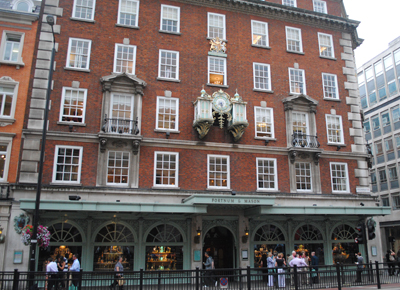
Famous sights along Piccadilly include grocer Fortnum & Mason, founded in 1707 by one of Queen Anne’s footmen (pictured above), the Royal Academy of the Arts, the Ritz Hotel, which opened in 1906 and indicated a new level in luxurious hotels, the Wren-designed St James’ Church, and the entry to the 19th century Burlington Arcade.

Wren’s London – 5. Royal Hospital Chelsea

Known as the home of the scarlet-coated ‘Chelsea Pensioners’, the Royal Hospital Chelsea’s origins go back to December 1681 when King Charles II issued a Royal Warrant authorising the building of a royal hospital to care for old and maimed soldiers.

Sir Christopher Wren, then Charles II’s Surveyor-General of Works, was subsequently commissioned to design and construct the new buildings on a site next to the River Thames in Chelsea. Sir Stephen Fox, a commissioner of the Treasury, had the unenviable task of finding enough money to fund it – a task he managed through tapping a range of different sources.

Charles II didn’t live to see the completed project (although he did inspect the partially complete work just before his death in 1685) which was finally finished in 1692. The first pensioners were admitted in February that year.

Wren’s initial design comprised a single quadrangle with accommodation blocks for more than 400 veterans and their officers on the sides, and a chapel and great hall in a colonnaded building at the northern end while the southern end is open to the river (the picture above shows the ‘rear’ of the Hospital as seen from Royal Hospital Road). Known as Figure Court, it was named after a 7′ tall statue of Charles II which stands within it and which depicts the king as a Roman general.

Before the work was complete, however, Wren had realised that the design would not be large enough and added a two further quadrangles – one on each side of the original, they are known as Light Horse and College Courts – to the design.

There are some 300 ‘in-pensioners’ who still live in the hospital’s ‘berths’. When inside, they are encouraged to wear the Royal Hospital’s blue uniform while their famous scarlet coats with tricorne hats are worn on ceremonial occasions including Founder’s Day.

Held on a day close to 29th May – Charles II’s birthday and the date of his restoration – Founder’s Day commemorates his escape after the Battle of Worcester in 1651 and is known as Oak Apple Day in remembrance of the story that the fleeing Charles had to hide in an oak tree to avoid capture by parliamentary forces.

Women were first admitted to the hospital in 2009.

WHERE: Royal Hospital Road, Chelsea (nearest tube station is Sloane Square); WHEN: Entry to the courts, chapel and Great Hall is from 10am to 12pm, 2pm to 4pm; the museum is open Monday to Saturday, 10am to noon, 2pm to 4pm and Sundays 2pm to 4pm (closed Sundays from October to March); COST: Free; WEBSITE: www.chelsea-pensioners.co.uk

Where’s London’s oldest…pub?

There’s a number of contenders for this controversial title and a number of different ways of looking at the question. So, rather than take sides, we’ll just canvas a few of them.

Our initial contenders are:

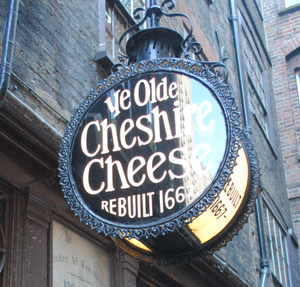
• Ye Olde Cheshire Cheese (145 Fleet Street, the City). Built in 1667 after the Great Fire of London, the current building replaced one previously on the site. The cellar is apparently 13th century and forms part of the remains of an old monastery on the site. Dr Samuel Johnson, who lived just around the corner while creating his famous dictionary, was a regular here and the pub is also said to have been frequented by writers Mark Twain, Alfred, Lord Tennyson, and Sir Arthur Conan Doyle, creator of Sherlock Holmes.

The Spaniards Inn (Spaniard’s Road, Hampstead). Located on the edge of Hampstead Heath, the Spaniard’s Inn dates from around 1585. The story goes that it was named after the Spanish ambassador to the court of James I who lived here for a time (another version says it was two Spanish brothers who first converted the building into a pub in the 1700s). Other historical figures associated with the inn include the highwayman Dick Turpin (some say he was born here while others say he used to wait here while watching for vulnerable coaches to pass by), the poets Byron and Keats and the painter Sir Joshua Reynolds – who apparently visited, and Charles Dickens who mentioned the inn in the Pickwick Papers (it also gets a mention in Bram Stoker’s Dracula).

• The Lamb and Flag (33 Rose Street, Covent Garden). The building has been occupied since Tudor times but it’s only been a licensed premises since 1623. The pub, certainly the oldest still standing in Covent Garden, was previously associated with prize fighting and was apparently once called the Bucket of Blood. The poet John Dryden is said to have been involved in a fight here.

The George Inn (77 Borough High Street, Borough). Located on the south side of London Bridge, the George Inn is a rare surviving galleried coaching inn. Now owned and leased by the National Trust, the current building dates from 1676 after the previous inn was destroyed by fire. The inn is mentioned in Dickens’ Little Dorrit and the author himself was apparently a regular visitor.

UPDATE: It seems we left one of the list which is certainly worth mentioning –  The Prospect of Whitby in Wapping (57 Wapping Wall). There’s been a tavern on this site on the bank of the Thames since 1520 and during its early days it became known the ‘Devil’s Tavern’ due to its rather dodgy clientele, alleged to have included smugglers, prostitutes and thieves as well as more famous people such as diarist Samuel Pepys, the notorious Judge Jeffreys, known as the ‘Hanging Judge’, and much later, Charles Dickens. Later destroyed by fire, it was rebuilt and given the new name, The Prospect of Whitby, after a ship that moored nearby. The building now incorporates a ship’s mast.

Wren’s London – 4. Hampton Court Palace

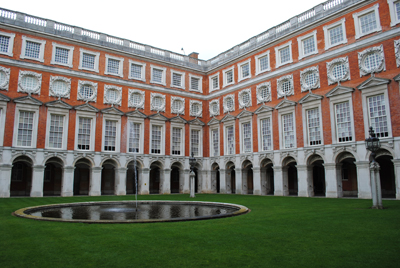
Hampton Court Palace in London’s outer south-west is known to many as the palace of Henry VIII. Yet a considerable part of the complex of buildings we see today was also created during the reign of some time joint rulers William III and Mary II.

It was to Christopher Wren – assisted by the able Nicholas Hawksmoor – that the rulers turned when looking to update the Royal Apartments. Wren’s designs for a domed baroque palace to rival Versailles in France were apparently so ambitious that they were only half-built (and built in haste – two workmen died and another 11 were injured when the main wall collapsed in 1689). The death of the queen in 1694 also meant work on the palace stopped – it was resumed in 1697 (under control of Wren’s deputy William Talman who had offered a lower price than Wren) but again stalled after the death of the king in 1702.

Wren’s imprint is on the palace we see today is nonetheless considerable and includes the Baroque-style South and East Front (the size of the formal gardens which radiate out from the latter give a glimpse into the grand plans Wren had for the palace), Fountain Court which replaced the Tudor Cloister Court and around which were located new state apartments for both the king and queen, and the Orangery.

Among those who worked on the interiors of were the famous woodcarver Grinling Gibbons and painter Antonio Verrio.

WHERE: Hampton Court Palace, East Molesey, Surrey (nearest station is Hampton Court from Waterloo); WHEN: 10am to 6pm everyday (winter hours 10am to 4.30pm from 31st October to 26th March); COST: Adult £15.40, Concession £12.65, Child under 16 £7.70 (under fives free), family tickets, garden only tickets and online booking discounts available; WEBSITE: www.hrp.org.uk/HamptonCourtPalace/

Famous Londoners – Samuel Pepys

A navy administrator and an MP who lived in London for much for the 17th century, it is for his remarkable diary – filled with reflections on great events and the intimate goings on of daily life – that Samuel Pepys is renowned around the world.

Born the son of a tailor in Salisbury Court, Fleet Street (the site is now marked with a plaque), on 23rd February, 1633, Pepys (pronounced ‘peeps’) attended St Paul’s School before moving on to Cambridge University. After graduation, he entered the household of one of his father’s cousins, Sir Edward Montagu, as a secretary around 1655 – the same year he married Elisabeth de St Michel.

Under the patronage of Sir Edward – after he became the Earl of Sandwich – Pepys was appointed Clerk of the Acts to the Navy Board – a task which saw him playing a key role in shaping the English fleet which fought (unsuccessfully) in the Second Anglo-Dutch War (1665-1667).

In 1673, he became Secretary to the Admiralty and the same year was elected an MP for Castle Rising in Norfolk (he later became an MP for Harwich). Pepys also served as president of the Royal Society from 1684-1686, and even visited Tangier where he was involved in the evacuation of the short-lived English colony there. He was imprisoned twice in later years – at least once on suspicion of supporting the Jacobites – but the charges were dropped and he retired at the age of 57 in 1690.

In 1701 he moved out to a house in Clapham and lived there until his death on 26th May, 1703 (his wife Elisabeth had died many years earlier in 1669 and they’d had no children). His extensive library – including his six volume diary – were bequeathed to Magdalene College at Cambridge.

Despite an illustrious public career, it is his diary for which Pepys is most celebrated. Covering the years from 1660 to 1669 (he only stopped writing for fear he would go blind), it records his reactions to such monumental events as Charles II’s coronation (he was present as a youth at the beheading of Charles I), the Great Plague of London in 1665 and the Great Fire of London the following year as well as intimate details from his personal life including how he spent his leisure time, his various illnesses and his sexual liaisons. Written originally in a form of shorthand, it was first published in 1825 – and only fully published in 1976 – and has since gone on to enthral and entertain millions around the world.

Among places in London which still hold a Pepys connection are St Bride’s Church (he was baptised there), All Hallows by the Tower (it was in the tower from which Pepys watched the Great Fire), St Olave’s on Seething Lane (pictured above) where Pepys and his wife are buried (he was living in Seething Lane when he started the diary and St Olave’s served as his parish church between 1660 and 1674). Further down Seething Lane, there is a bust of Pepys in the gardens which now cover the Navy Office where Pepys once lived and worked.

There is also an exhibition on Pepy’s in Prince Henry’s Room at 17 Fleet Street (the building dates from around 1610 and was a pub when Pepys was alive), although it is currently closed.  An online version of Pepys’ diary can be found at the website Pepys’ Diary. For more on Pepys’ life, we do recommend Claire Tomalin’s best-selling biography Samuel Pepys: The Unequalled Self.

Wren’s London – 3. The Royal Observatory, Greenwich

Leaving Wren’s churches momentarily, we turn this week to another of Wren’s designs, that of the Royal Observatory in Greenwich in London’s east.

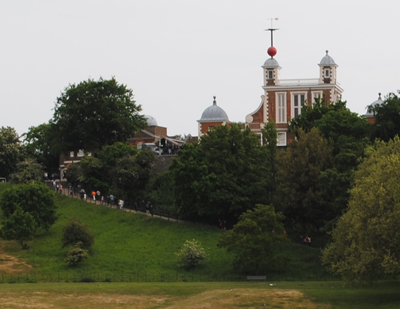
Commissioned in 1675 by King Charles II, the first part of the observatory – Flamsteed House, named for the first Astronomer Royal, John Flamsteed – was designed by Wren with, it is believed, the assistance of architect and scientist Robert Hooke.

Built using second-hand materials including stone brought from a Tudor fort at Tilbury, Flamsteed House was located on the former site of Greenwich Castle which had been previously used as a guest house and hunting lodge by Henry VIII. It is said to be the first purpose-built scientific research facility in the country.

The turreted building includes the Octagon Room from which Flamsteed made observations of events in the skies (although its position meant its use for this was somewhat limited), as well as living quarters for the astronomer. On top of the house is a red time ball which, since it was first used in 1833, has marked the time by falling at 1pm each day.

These days part of the National Maritime Museum and a UNESCO World Heritage Site since 1997, the site also hosts the Prime Meridian and is the place from where Greenwich Mean Time, since 1884 the basis for all world time, is calculated.

WHERE: Blackheath Avenue, Greenwich (nearest DLR station is Cutty Sark); WHEN: 10am to 5pm Monday to Sunday; COST: Entry is free; WEBSITE: www.nmm.ac.uk/places/royal-observatory/