8 locations for royal burials in London…3. St Edward’s Chapel, Westminster Abbey…

This chapel at the heart of Westminster Abbey is so named for the first king that was buried there – St Edward “the Confessor” – in early 1066.

The abbey, which had been constructed on the site of a Saxon Church at the behest of King Edward in fulfilment of a vow, was newly built when the King died. It had been consecrated on 28th December, 1065, but the king had been too ill to attend the service.

He died just a few days later some time on the night of 4th to 5th January. His burial took place on 6th January (the burial procession is actually depicted in the Bayeux Tapestry) with his body laid to rest beneath the floor of the new church (archaeologists using ground-penetrating radar believe they located the exact location of his original tomb in 2005).

He wasn’t to rest there for long. King Edward’s saintly reputation grew over the ensuing years and miracles began to be reported at the tomb – it’s also said said that when the tomb was opened in 1102, a “wonderful fragrance” is said to have filled the church suggesting that it he wasn’t embalmed the body was packed with aromatic herbs.

In 1163, two years after Edward had been made saint by Pope Alexander III, the king’s body was transferred from the tomb to a specially made shrine.

In the 13th century, King Henry III rebuilt St Edward’s church in the new Gothic-style of architecture, spending extravagant sums on the new building. His rebuilding programme culminated in 1269 when the bones of St Edward was translated into a new shrine featuring mosaics on a stone base created by Italian workmen in which the king’s coffin was placed with a wooden canopy over the top (such was his veneration of St Edward that King Henry III, his brother Richard, Duke of Cornwall, and the king’s two sons bore the coffin to the new shrine).
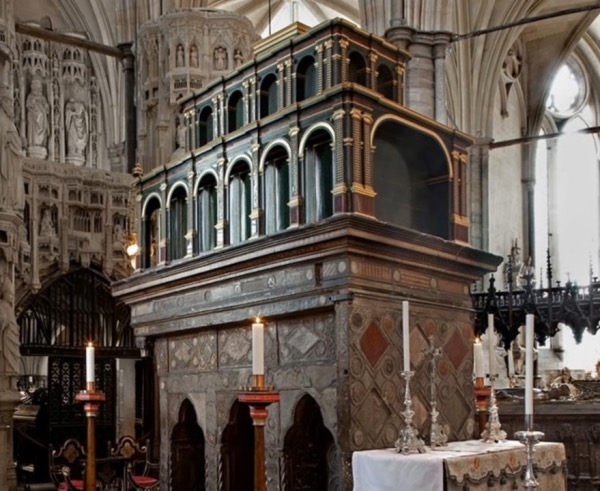
Shrine of St Edward the Confessor. PICTURE: VCR Giulio19 (licensed under CC BY-SA 4.0)

The shrine became a place of pilgrimage during King Henry III’s reign but his cult declined in the later years (and St Edward, who had for a time been considered patron saint of England was eventually replaced by St George).

The shrine was despoiled during King Henry VIII’s Dissolution of 1540 – the jewels were removed and presented to the King – and Edward’s body removed to another location in the abbey. But Queen Mary I had the Purbeck marble base reassembled (with new jewels added) and Edward’s body returned. The tiered wooden canopy which stands above the stone stone dates from the 16th century (and was heavily restored in the 1950s).

St Edward isn’t the only king buried in the chapel space. Others buried there – around the outer edges of the chapel – included King Henry III, King Edward I and his wife Eleanor of Castile, King Edward III and his wife Philippa of Hainault, King Richard II and his wife Queen Anne of Bohemia, King Henry V and Catherine of Valois (King Henry V had a chantry chapel built above his tomb at the eastern end of St Edward’s Chapel). Matilda, the wife of King Henry I, is also buried there.

WHERE: North Aisle, Westminster Abbey (nearest Tube stations are Westminster and St James’s Park); WHEN: Times vary – see the website for details; COST: £27 adults/£24 concession/£12 children (discounts for buying online; family rates available); WEBSITE: www.westminster-abbey.org
This Week in London – Hieroglyphs explored at the British Museum; King Charles III coronation date announced; ‘The Admiral’s Revenge’ in Greenwich’; and, Dickens and ghosts…

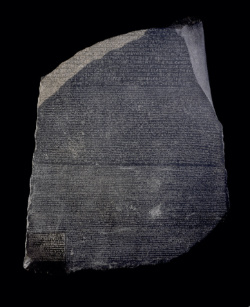
The Rosetta Stone. Granodiorite; Rasid, Egypt; Ptolemaic, 196 BC © The Trustees of the British Museum.

• Marking 200 years since French Egyptologist Jean-Francois Champollion (1790-1832) was able to decipher hieroglyphs using the Rosetta Stone, a new exhibition opening at the British Museum explores how the stone and other inscriptions and objects helped scholars unlock one of the world’s oldest civilisations. Hieroglyphs: unlocking ancient Egypt centres on the Rosetta Stone but also features more than 240 other objects, many of which are shown for the first time. Alongside the Rosetta Stone itself, highlights include: “the Enchanted Basin”, a large black granite sarcophagus from about 600 BCE which is covered with hieroglyphs and images of gods; the richly illustrated, more than 3000-year-old Book of the Dead papyrus of Queen Nedjmet which measures more than four metres long; and the mummy bandage of Aberuait, a souvenir from one of the earliest ‘mummy unwrapping events’ in the 1600s where attendees each received a piece of the linen, preferably inscribed with hieroglyphs. There’s also the personal notes of key figures in the race to decipher hieroglyphs including those of Champollion which come from the Bibliothèque nationale de France as well as those of England’s Thomas Young (1773 – 1829) from the British Library. The exhibition can be seen in the Sainsbury Exhibition Gallery until 19th February. Admission charge applies. For more, see britishmuseum.org/hieroglyphs.

• King Charles III will be crowned at Westminster Abbey on 6th May next year, Buckingham Palace has announced this week. The Queen Consort, Camilla, will be crowned alongside him in the first such coronation since 12th May, 1937, when King George VI and Queen Elizabeth were crowned in the abbey. The ceremony, which will be conducted by the Archbishop of Canterbury, will, according to the palace, “reflect the monarch’s role today and look towards the future, while being rooted in longstanding traditions and pageantry”. King Charles III is expected to sign a Proclamation formally declaring the coronation date at a meeting of the Privy Council later this year. The first documented coronation at Westminster Abbey was that of King William the Conqueror on 25th December, 1066, and there have been 37 since, the most recent being that of Queen Elizabeth II on 2nd June, 1953.

https://www.youtube.com/embed/Vfmo5dgTEl0″ title=”YouTube video player” frameborder=”0″ allow=”accelerometer; autoplay; clipboard-write; encrypted-media; gyroscope; picture-in-picture” allowfullscreen

A new dark comedy, The Admiral’s Revenge, has opened in The Admiral’s House in the Old Royal Naval College, Greenwich. The play, set in 1797, features sea shanties, puppetry and follows a crew of shipmates in the wake of the ill-fated Battle of Tenerife. Audiences have the chance to explore the Admiral’s House before the show and enjoy a complimentary rum cocktail. Runs until 12th November. For ticket prices, head to https://ornc.org/whats-on/1797-the-mariners-revenge/.

A new exhibition exploring Charles Dickens’ interest in the paranormal has opened at the Charles Dickens Museum in Bloomsbury. To Be Read At Dusk: Dickens, Ghosts and the Supernatural explores Dickens’ famous ghost stories, including A Christmas Carol, and reveals his influence on the genre. Highlights include a copy of The Chimes which Dickens gifted to fellow author Hans Christian Anderson, original John Leech sketches of Dickens’ ghosts of the past, present and future and original tickets and playbills relating to the author’s public performances of his ghost stories. The display will also look into Dickens’ own views on the supernatural as a fascinated sceptic and includes  correspondence in which he was asking about the location of a supposedly haunted house. Runs until 5th March. Admission charge applies. For more, see https://dickensmuseum.com/blogs/all-events/to-be-read-at-dusk-dickens-ghosts-and-the-supernatural.

Send all items to exploringlondon@gmail.com

8 locations for royal burials in London…2. St Clement Danes…

This “island church”, located in the middle of the Strand just outside the Royal Courts of Justice, is believed to have been the eventual burial site of King Harold I “Harefoot” who died in 1040.

St Clement Danes today. PICTURE: eltpics (licensed under CC BY-NC 2.0)

The son of King Cnut, Harold’s rule was brief. Following the death of his father, he initially ruled as regent on behalf of his father’s heir and younger half-brother Harthacnut (Harthacnut was in Denmark and threats to the kingdom meant he couldn’t leave).

While Harold had apparently sought to be crowned king from the start of his rule (without success thanks to the opposition of Aethelnoth, the Archbishop of Canterbury), it was only in 1037 that, with the support of Leofric, the Earl of Mercia, and other nobles, he was crowned king.

But Harold (who was known by the name Harefoot apparently due to his speed and skill at hunting) died in 1040 and his brother subsequently returned from Denmark to claim the throne peacefully.

The story goes that King Harold had originally been buried in Westminster but that Harthacnut (clearly not a fan) had his body exhumed and flung into marshlands by the River Thames. The body was said to have been found by a fisherman who then had him buried at the church.

It had been established in the ninth century to serve the Danish community which was established after King Alfred the Great had granted them land.

Of course, the current church was not one King Harold would have recognised, having last been completely rebuilt in the 1680s to the designs of Sir Christopher Wren (and then having had its interior completely restored after it was gutted when bombed during World War II).

St Clement Danes, also known as one of the contenders for the church mentioned in the song Oranges and Lemons, is now the central church of the Royal Air Force. It’s one of two “island churches” in the Strand, the other being St Mary le Strand.

WHERE: St Clement Danes, Strand (nearest Tube stations are Temple, Covent Garden and Holborn); WHEN: 10am to 3:30pm weekdays; 10am to 3pm weekends; COST: Free (donations appreciated); WEBSITE: https://stclementdanesraf.org

8 locations for royal burials in London…1. (Old) St Paul’s Cathedral…

Following the laying to rest of Queen Elizabeth II in St George’s Chapel, Windsor, we’re taking a look at where some royal burials have taken place within London.

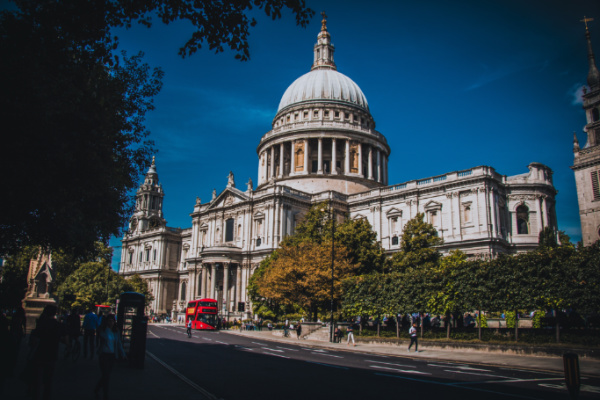
St Paul’s Cathedral. PICTURE: Catalin Bot/Unsplash

We start our new series with Old St Paul’s Cathedral which believed to have been the burial site of two Anglo-Saxon kings before it was destroyed in the Great Fire of 1666.

Aethelred (Ethelred) the Unready, who ruled from 978 until 1013 (and then again from 1014 until his death on 23rd April, 1016) was known to have been buried in the quire of the old cathedral (it’s marked on Wenceslaus Hollar’s 1658 plan of the cathedral as being on the northern side of the quire, just past the north transept) but his tomb was lost in the fire.

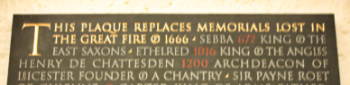
His memorial is among those which were lost in the Great Fire mentioned on a modern plaque in the crypt of the St Paul’s of today.

PICTURE: Stephencdickson (licensed under CC BY-SA 4.0‘/cropped and straightened)

While his was the last royal burial to take place in St Paul’s, Aethelred wasn’t the only Anglo-Saxon king who was interred there.

Sæbbi, a king of the East Saxons who ruled from 664 to 694 (and is also known as Sebba or Sebbi), is also listed as being buried there (Aethelred was apparently buried close to him) and his grave also lost in the great fire.

There’s a story that when Sæbbi was about to be buried in a stone coffin, it was found it was too short for his body to lie at full length. Various solutions were proposed – including burying him with bent legs, but when they put the body back in the stone coffin this time, miraculously, it did fit.

Following an earlier fire in St Paul’s – in 1087 – Sæbbi body was transferred to a black marble sarcophagus in the mid-1100s and it’s that which was lost in the Great Fire.

Special – Lying in state at Westminster Hall…

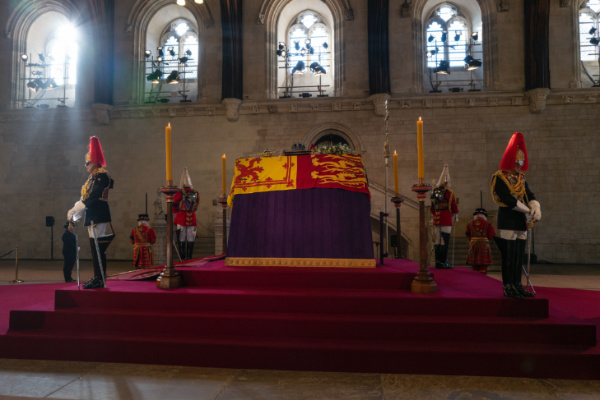
The coffin of Queen Elizabeth II is seen here lying-in-state at the Palace of Westminster in London in 14th September. PICTURE: Harland Quarrington/UK MOD © Crown copyright 2022

The tradition of lying in state – whereby the monarch’s coffin is placed on view to allow the public to pay their respects before the funeral – at Westminster Hall isn’t actually a very old one.

The first monarch to do so was King Edward VII in 1910. The idea had come from the previous lying-in-state of former Prime Minister William Ewart Gladstone who had lain in state following his death in 1898.

Ever since then, every monarch, with the exception of King Edward VIII, who had abdicated, has done so along with other notable figures including Queen Mary, wife of King George V, in 1953, former Prime Minister Sir Winston Churchill in 1965, and Queen Elizabeth, the Queen Mother, for a three day period in 2002 when some 200,000 people paid their respects.

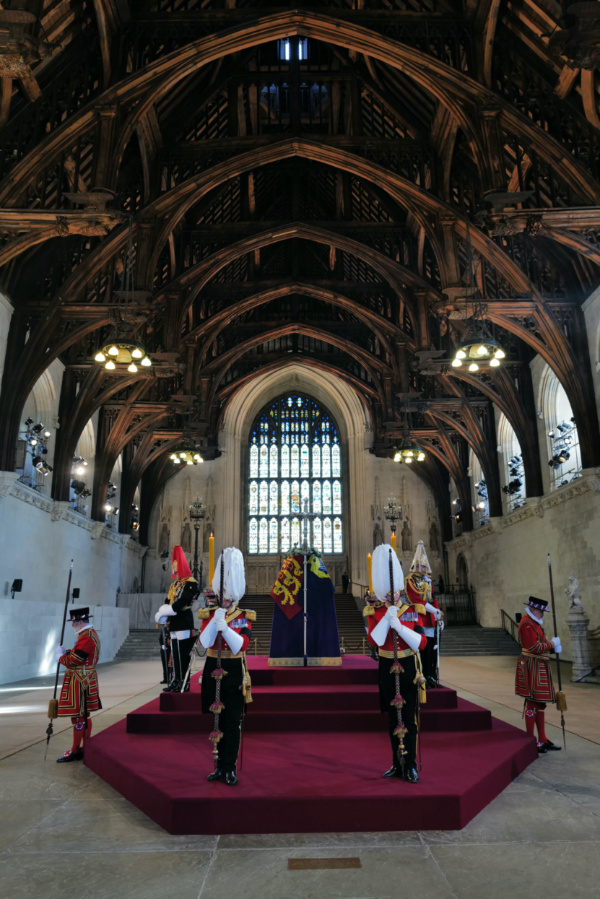
The coffin of Queen Elizabeth II is seen here lying-in-state at the Palace of Westminster in London in 14th September. PICTURE: Harland Quarrington/UK MOD © Crown copyright 2022

During the lying-in-state period (which members of the public may pay their respects), the coffin is placed on a central raised platform, known as a catafalque, and each corner of the platform is guarded around the clock by units from the Sovereign’s Bodyguard, Foot Guards or the Household Cavalry Mounted Regiment. The coffin is draped with the Royal Standard and placed on top is the Orb and Sceptre.

Westminster Hall, the oldest surviving building in the Palace of Westminster and the only part which survives almost in original form, was constructed between 1097 and 1099 on the order of King William (Rufus) II.

Measuring 240 by 67 feet and covering some 17,000 square feet, at the time it was the largest hall in England and possibly the largest in Europe (although once anecdote has the King, when an attendant remarked on its size, commenting that it was a mere bedchamber compared to what he’d had in mind).

Since then, it has been used for a range of purposes including coronation banquets – the earliest recorded is that of Prince Henry, the Young King, son of King Henry II and King Henry’s other son, King Richard the Lionheart, other feasts and banquets – including in 1269 to mark the placing of Edward the Confessor’s remains in the new shrine in Westminster Abbey, and for political events and gatherings such as in 1653 when Oliver Cromwell took the oath as Lord Protector.

It has also been the location of law courts (the trial of William Wallace was held here in 1305 and that of King Charles I in 1649) and even shops.

King Charles III proclaimed monarch in London…

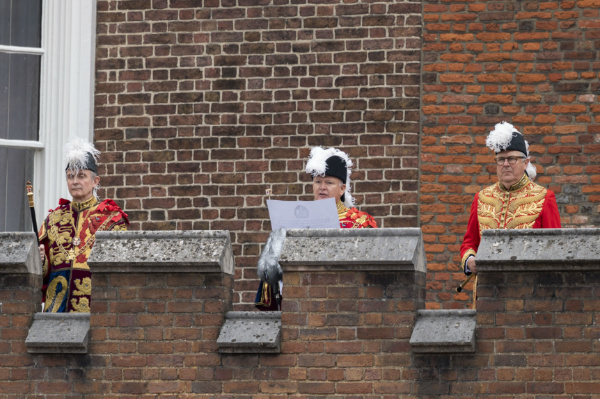
The Principal Proclamation of King Charles III was read by the Garter King of Arms at 11am from the balcony above Friary Court, St James’s Palace on Saturday. 10th September. PICTURE: LSgt Galvin/UK MOD © Crown copyright 2022
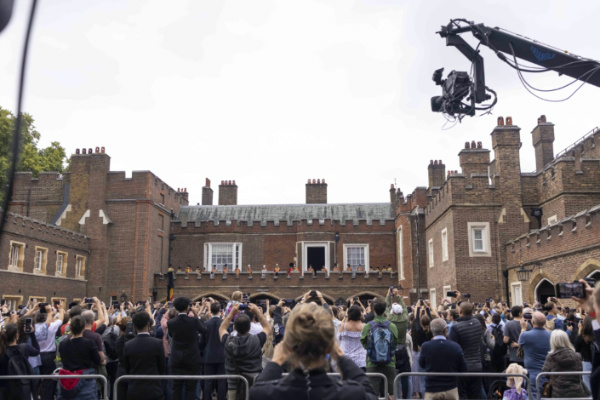
A wider view of the crowd gathered outside St James’s Palace. PICTURE: Sgt Donald C Todd RLC Photographer//UK MOD © Crown copyright 2022
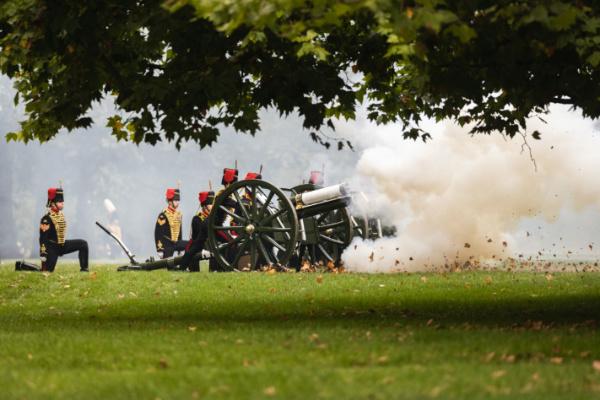
A Gun Salute at the Tower of London for the Principal Proclamation of King Charles III. Immediately following the Principal Proclamation, a Royal Salute of 41 rounds was fired by the King’s Troop Royal Horse Artillery in Hyde Park, and a Royal Salute of 62 rounds from HM Tower of London was fired by the Honourable Artillery Company (below). PICTURES: Above – Corporal Cameron Eden, RLC/UK MOD © Crown copyright 2022; Below – Sgt Jimmy Wise/UK MOD © Crown copyright 2022
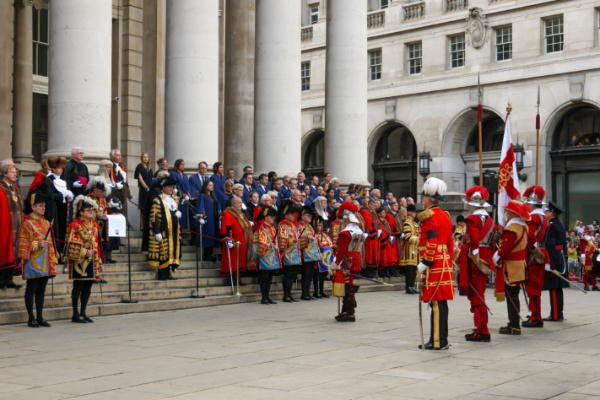
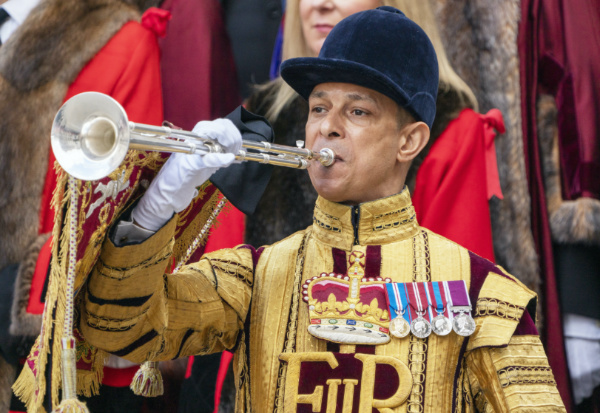
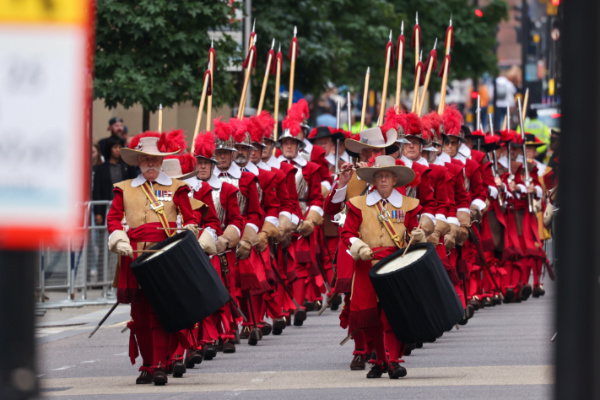
At noon, the Proclamation was read from the steps of The Royal Exchange (pictured) by Clarenceux King of Arms. The Lord Mayor of the City of London, together with the Court of Aldermen and Members of Common Council, were present. The Company of Pikemen and Musketeers of the Honourable Artillery Company, the Lord Mayor’s Body Guard in the City of London, were on duty at the Royal Exchange, accompanied by The Band of the Honourable Artillery Company and eight State Trumpeters of The Household Cavalry. PICTURE: PO Phot Joel Rouse/UK MOD © Crown copyright 2022
One of the State Trumpeters positioned on the steps of the Royal Exchange echoing the fanfare from four State Trumpeters at Mansion House as part of the ceremony of the Proclamation of His Majesty King Charles III from the Royal Exchange. PICTURE: Giles Anderson/©MoD Crown Copyright 2022
The Company of Pikemen and Musketeers (pictured) of the Honourable Artillery Company, the Lord Mayor’s Body Guard in the City of London, were on duty at the Royal Exchange. PICTURE: PO Phot Joel Rouse/UK MOD © Crown copyright 2022

LondonLife – Greenwich Park restoration…

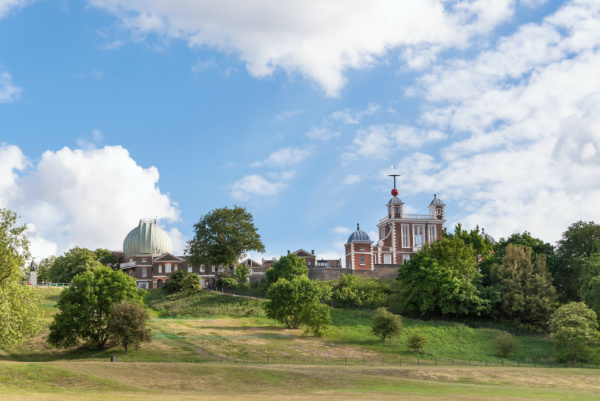
Looking up to the Royal Observatory in Greenwich Park. PICTURE: mkos83/iStockphoto.

The Royal Parks announced recently Greenwich Park, here pictured showing the view up to the Royal Observatory, was to undergo a three year project to restore its 17th century landscape. The formal landscape of the park was commissioned by King Charles II and, designed by French landscape architect André Le Nôtre (who also designed the world-famous Versailles gardens), features tree-lined avenues which frame the view up the hill from the Queen’s House as well as “The Grand Ascent”, a series of giant, grass steps leading up the hill, and a terraced layout – known as a parterre. Massive numbers of visitors – some five million annually – have, however, seen the landscape features erode and slump while the trees – Turkey oaks planted in the 1970s to replace the elms wiped out by Dutch elm disease – are now in decline. The restoration work, which begins next month, will see the terraces restored and the declining tree avenues recreated with 92 new, more resilient trees. The work is scheduled to be completed by March, 2025. For more on Greenwich Park, see www.royalparks.org.uk/parks/greenwich-park.

Famous Londoners – Will Somers…

The most famous of court jesters during the reign of King Henry VIII, little is known of Will Somers’ early life although it is suggested he was born in Shropshire.

It’s said Somers (also spelt Somer or Sommers) entered the service of a wealthy Northamptonshire merchant Sir Richard Fermor who presented him to King Henry VIII at Greenwich in 1525 (he is known to have been in service by 1535).

King Henry VIII as David, seated with harp, in an interior with his jester, William Sommers; illustrating Psalm 52. Taken from Psalter of Henry VIII (1530-1547).

Somers’ role as jester involved using his wit to comment on court life and those in it – including the likes of Cardinal Wolsey – and while he was permitted a wide latitude he would over-step including when he insulted Queen Anne Boleyn and her daughter Princess Elizabeth, leading to the King to threaten to kill Somers himself.

Somers was provided with royal livery to wear at court (he also sometimes apparently wore elaborate costumes) and was provided with a “keeper” to look after him.

Such was the esteem Somers’ was held in, he is believed to be the fool depicted in a family portrait of the King, his wife Jane Seymour and children Prince Edward and Princesses Mary and Elizabeth (Somers has a monkey on his shoulder in the painting; Jane Foole also appears in the portrait). He’s also believed to be depicted in an image with King Henry VIII which appeared in a psalter (pictured)

Towards the end of King Henry’s life it’s said Somers was the only one who could make him laugh. He remained at court following the King’s death through the reigns of King Edward VI and Queen Mary I and present at the coronation of Queen Elizabeth I, eventually retired during her reign.

Somers is believed to have died on 15th June, 1560, and be buried in St Leonards, Shoreditch. There’s now a plaque to Somers there commemorating his burial.

Sommers subsequently appeared in various works of literature in following centuries including in more recent years when he has also appeared in TV shows – including the series The Tudors – as well as various novels including Paul Doherty’s The Last of Days.

This article contains an affiliate link.

Lost London – The Painted Chamber, Palace of Westminster…

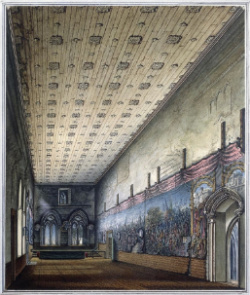
Part of the medieval Palace of Westminster, the Painted Chamber took its name from a series of large paintings which decorated the walls.

A watercolour of the Painted Chamber in Westminster Palace by William Capon made in 1799.

The long and narrow chamber, which stood parallel to St Stephen’s Chapel, was constructed in the 13th century during the reign of King Henry III and was apparently initially intended as a private apartment for the king as well as a reception room.

It featured a state bed at one end positioned under a painting of King Edward the Confessor and also had a “squint” – a small opening at eye level – through which the monarch could view religious services in a chapel located next door.

The chamber was apparently originally known as the King’s Chamber but came to be known as the Painted Chamber when the walls were decorated with paintings depicting vices and virtues and Biblical figures.

These paintings, which were completed over an almost 60 year period from 1226 and which were repaired a couple of times during that period, were added to with commissions by successive monarchs.

The painted chamber was the location for the State Opening of Parliament in the Middle Ages and was where Oliver Cromwell and the others signed King Charles I death warrant in 1649. The body of King Charles II rested here overnight before he was interred in Westminster Abbey.

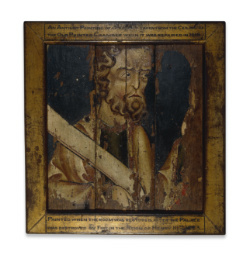
A ceiling panel from the Painted Chamber depicting a prophet, created between 1263-1266 PICTURE: © The Trustees of the British Museum (licensed under CC BY-NC-SA 4.0)

Later neglected, the walls of the chamber were whitewashed and hung with tapestries and in the early 19th century restoration work was done to reveal the paintings again with artist and antiquarian Charles Stothard commissioned by the Society of Antiquarians in 1819 to make watercolour copies (further copies were also made by the clerk of works at Westminster, Thomas Crofton Croker).

By 1820, the chamber was being used for the Court of Requests, a civil claims court.

The Painted Chamber was gutted when fire devastated much of the Palace of Westminster on the night of 16th October, 1834. It was reroofed and refurnished and used by the House of Lords until 1847 – as well as for the State Opening of Parliament in February, 1835. It was finally demolished in 1851.

Two ceiling paintings which were removed in 1816 during repairs are now at the British Museum (pictured right).

A Moment in London’s History – The Great Fire of Southwark…

Think of fire in relation to London and the events of 1666 no doubt spring to mind. But London has had several other large fires in its history (with a much higher loss of life), including during the reign of King John in July, 1212.

The fire started in Southwark around 10th July and the blaze destroyed most of the buildings lining Borough High Street along with the church of St Mary Overie (also known as Our Lady of the Canons and now the site of Southwark Cathedral) before reaching London Bridge.

PICTURE: Guido Jansen/Unsplash

The wind carried embers across the river and ignited buildings on the northern end before the fire spread into the City of London itself (building on the bridge had been authorised by King John so the rents could be used to help pay for the bridge’s maintenance).

Many people died on the bridge after they – and those making their way south across the bridge to aid people in Southwark (or perhaps just to gawk) – were caught between the fires at either end, with some having apparently drowned after jumping off the bridge into the Thames (indeed, it’s said that some of the crews of boats sent to rescue them ended up drowning themselves after the vessels were overwhelmed).

Antiquarian John Stow, writing in the early 17th century, stated that more than 3,000 people died in the fire – leading some later writers to describe the disaster as “arguably the greatest tragedy London has ever seen”.

But many believe this figure is far too high for a population then estimated at some 50,000. The oldest surviving account of the fire – Liber de Antiquis Legibus (“Book of Ancient Laws”) which was written in 1274 and mentions the burning of St Mary Overie and the bridge, as well as the Chapel of St Thomas á Becket built upon it – doesn’t mention a death toll.

London Bridge itself survived the fire thanks to its recent stone construction but for some years afterward it was only partly usable. King John then raised additional taxes to help rebuild destroyed structures while the City’s first mayor, Henry Fitz Ailwyn, subsequently apparently joined with other officials in creating some regulations surrounding construction with fire safety in mind.

The cause of the fire remains unknown.

Treasures of London – The ‘Line of Kings’…

PICTURE: HRP/Newsteam

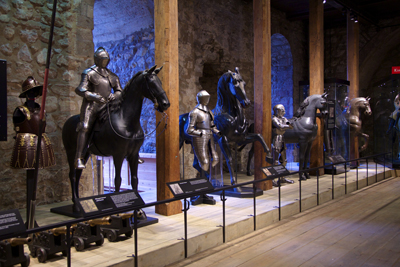
A star sight at the Tower of London for some 350 years, the ‘Line of Kings’ dates back to the mid-17th century and was originally installed in the Royal Armouries at the Tower to promote the restored monarchy of King Charles II and the Stuart dynasty.

Often described as the “world’s longest running tourist attraction” (the first visitor was recorded in 1652), it features the historic armour of monarchs on wooden figures and accompanied by fully decked-out carved horses – the work of Grinling Gibbons and others among Britain’s best woodcarvers.

The line has been added to and redisplayed numerous times over its history, partly to accommodate successive monarchs (17 in all were included with King George II being the last).

Only those monarchs deemed worthy were included – this deemed “bad” kings like King Richard III were omitted while “good” kings like King William the Conqueror, King Edward III and King Henry V were included. Queens were not included – when Queen Mary II and King William III were created joint monarchs, only King William was included.

The display began to be mentioned in guidebooks from the 1750s onwards. In 1825, amid growing scholarship and criticism, the line underwent a major change.

It was dismantled and then redisplayed in a purpose-built gallery adjoining the south side of the White Tower. The new line-up included prominent noblemen as well as kings while the kings themselves were reshuffled with some, like King Edward III, dropped, and King James II added.

It was further enhanced in 1869 but the display closed in 1882. The equestrian figures then appeared on the upper floor of the White Tower.

The Line of Kings, which is now located on the entrance floor of the Tower, last underwent a significant revamp between 2011 and 2013.

Highlights include the earlier surviving armour of King Henry VIII – a silvered and engraved armour which was made in the years following his coronation in 1509 – as well as the gilded armours of King Charles I and King James II.

WHERE: White Tower, Tower of London (nearest Tube station Tower Hill); WHEN: 9am to 5.30pm daily; COST: £29.90 adults; £14.90 children under 15; £24 concession; family tickets from £52.20; WEBSITE: www.hrp.org.uk/toweroflondon/.  

A Moment in London’s History – The opening of the Bethnal Green Museum…

This month marks 150 years since the opening of the Bethnal Green Museum, the first public museum located in London’s east.

The museum had at its core a pre-fabricated building which had earlier been erected as part of the first phase of the South Kensington Museum. It was brought to the Bethnal Green site and encased in a red brick exterior designed by James Wild.

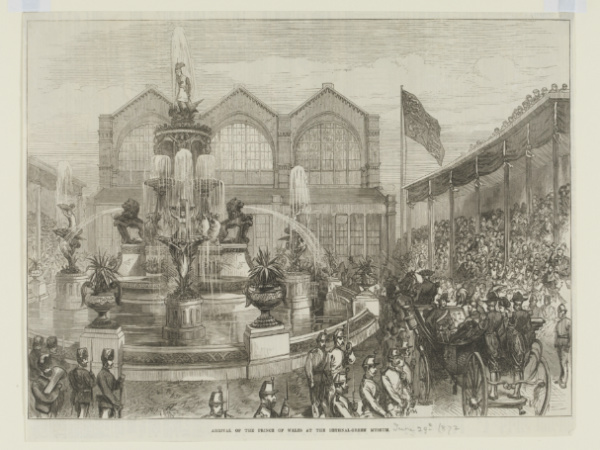
Black and white print of the Prince and Princess of Wales arriving at the official opening of the Bethnal Green Museum (now Young V&A) on 24th June, 1872. Originally printed in the London Illustrated News. PICTURE: Courtesy of Young V&A

Formally known as the East London Museum of Science and Art, it was opened on 24th June, 1872, by the Prince of Wales, later King Edward VII, amid considerable pomp and great crowds.

The museum, a branch of what became the Victoria & Albert Museum in South Kensington, was built to house and display many of the collections which had been exhibited at the Great Exhibition of 1851. Among the art collections on show was that of Sir Richard Wallace (now housed in the Wallace Museum).

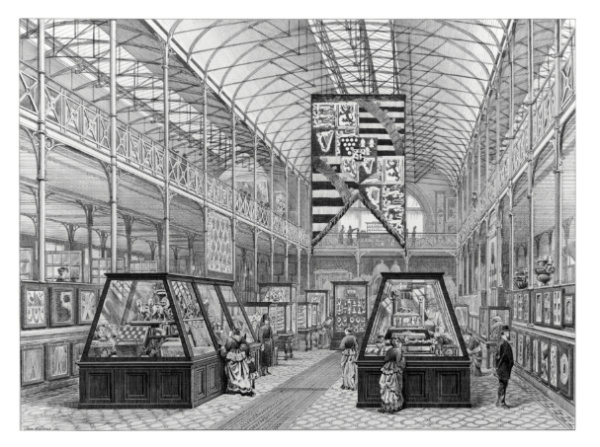
An interior view of the Bethnal Green Museum (now Young V&A). PICTURE: Courtesy of Young V&A.

After World War II, the museum was remodelled as an art museum and included a children’s section. Then, in 1974, the museum became the Museum of Childhood with displays focusing on everything from toys and dolls houses to children’s dress and books.

It underwent an extensive renovation in the mid 2000s and reopened in December, 2006, as the Victoria & Albert Museum of Childhood.

The now Grade II*-listed museum, located on Cambridge Heath Road, is currently undergoing a £13 million redevelopment and will reopen in mid-2023 as Young V&A, a new museum dedicated to 0 to 14-year-olds, their families and carers.

The V&A marked a year to the opening of the new museum with the launch of a year-long Reinvent Festival, “celebrating 150 years with 150 waysto be creative”. For more, see www.vam.ac.uk/blog/museum-life/young-va-reinvent-festival-reinventing-a-museum-for-the-young.

Lost London – ‘Charles II trampling Cromwell’…

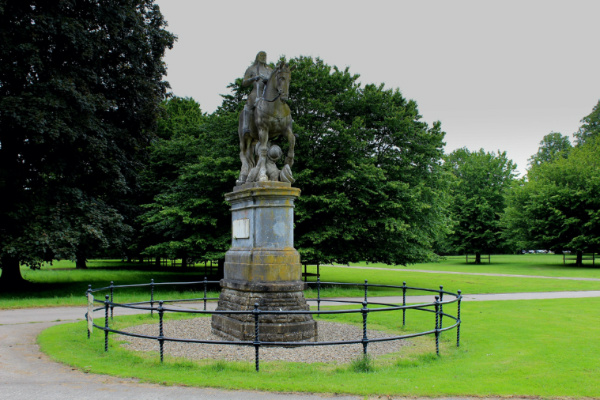
The statue at Newby Hall in North Yorkshire. PICTURE: Chris Heaton (licensed under CC BY-SA 2.0)

Originally installed at the Stocks Market in the City of London, this equestrian statue shows a figure atop a horse which is trampling over a prostrate figure lying on the ground.

The marble statue, which stands on a tall plinth, is believed to have been created in Italy by an unknown sculptor. It originally depicted Polish King John III Sobieski riding down a Turkish soldier. But it was bought to London by goldsmith and banker Sir Robert Vyner in the early 1670s.

A strong supporter of King Charles II, he had the sculpture’s head remodelled by Jasper Latham to depict the King (although the figure beneath was left largely untouched, meaning if it is supposed to represent Cromwell, he’s wearing a turban).

Sir Robert, who had been responsible for making the king’s new coronation regalia to replace items lost or destroyed during the Commonwealth, offered to have the statue installed at the Royal Exchange after it was rebuilt following the Great Fire of 1666. When that was rejected, he had the statue installed at the Stocks Market – originally named for being the only location of fixed stocks in the City – near Cornhill in 1675 (Sir Robert served as Lord Mayor around the same time).

The statue was removed in 1739 to make way for the Mansion House. But all was not lost – given back to Vyner’s grandnephew, also Robert Vyner, it reappeared some years later at the Vyner family estate at Gautby Hall. In 1883, it was relocated to Newby Hall in North Yorkshire (which had come into the family via an inheritance) and still remains there today, about 150 metres east of the hall. It received a Grade II listing in 1967.

10 (lesser known) statues of English monarchs in London…9. Empress Matilda?…

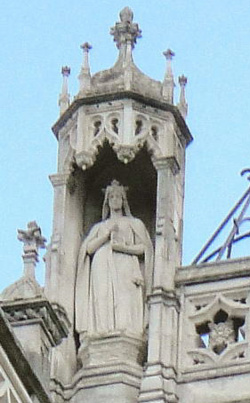
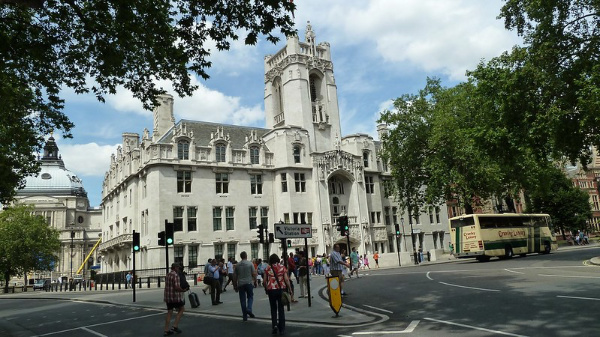
The neo-Gothic former Public Record Office (now the Maughan Library of King’s College) in Chancery Lane is adorned with statues of several kings and queens including two kings – King Edward III and King Henry III – as well as four queens.

PICTURE: Robert Freidus/The Victorian Web (image cropped)

The queens, which can be found at the top of the tower over the main entrance, include three who are represented with more famous statues elsewhere – Queen Elizabeth I (on the facade of St Dunstan-in-the West), Queen Anne (outside of St Paul’s Cathedral) and Queen Victoria (outside Buckingham Palace among others).

But one of those statues – that of the Empress Matilda – is something of an outlier – unlike the others, the Empress Matilda, while she claimed the title of Queen of England, was never actually crowned (her attempt to be crowned at Westminster failed when opposed by the London mob which supported her opponent, King Stephen).

Instead, Matilda (sometimes known as Maud) claimed the title ‘Lady of the English’ and while she was eventually driven out of England to Normandy where she died, her eldest son did take the crown in 1154 as King Henry II.

The statue, which stands on top of the east side of the tower (and is quite difficult to spot), stands 2.4 metres high and was made of Portland stone to adorn the 1850s, now Grade II* listed building (the gatehouse leading to Chancery Lane – which features the two kings – was an extension in the 1890s). It is said to be the work of sculptor Joseph Durham.

What’s a little puzzling is why the Empress was included as one of the four, particularly given other English queens and monarchs – Queen Mary I and II – were not.

10 (lesser known) statues of English monarchs in London…8.  King Alfred the Great…

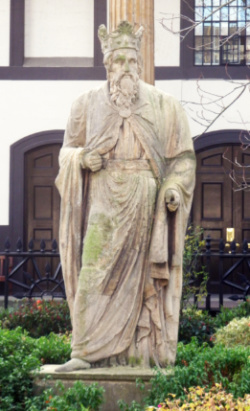
Long thought to have been London’s oldest public statue (and certainly the oldest of a monarch), this statue of Anglo-Saxon King Alfred the Great stands in a quiet location in Trinity Church Square in Southwark.

The statue prior to conservation work in 2009. PICTURE: Svitapeneela/Wikipedia

The statue – which depicts the bearded king robed and wearing a crown – was believed to have medieval origins with some suggesting it was among those which north face of Westminster Hall since the 14th century and were removed by Sir John Soane in 1825.

But recent conservation work has shown that half of the statue is actually much older. In fact, it’s believed that the lower half of the figure was recycled from a statue dedicated to the Roman goddess Minerva and is typical of the sort of work dating from the mid-second century.

Measurements of the leg of the lower half indicate the older statue stood some three metres in height, according to the Heritage of London Trust. It is made of Bath Stone and was likely carved by a stone worker located on the continent. It probably came from a temple.

The top half, meanwhile is made of Coade stone and, given that wasn’t invented by Eleanor Coade until around 1770, the creation of the statue as it appears today is obviously much later than was originally suspected which may give credence to theory that it was one of a pair – the other representing Edward the Black Prince – made for the garden of Carlton House in the late 18th century.

Putting the two parts of the statue together would have required some specialised skills.

The Grade II-listed statue has stood in the square since at least 1826. Much about who created it still remains a mystery. The fact it incorporates a much older statue means the question of whether it is in fact London’s oldest outdoor public statue remains a matter of some debate.

10 (lesser known) statues of English monarchs in London…7. Three Stuart Kings and a Queen… 

King Charles I (left) and his son King Charles II on what is now the south side of the gateway. PICTURE: haluk ermis (licensed under CC BY 2.0)

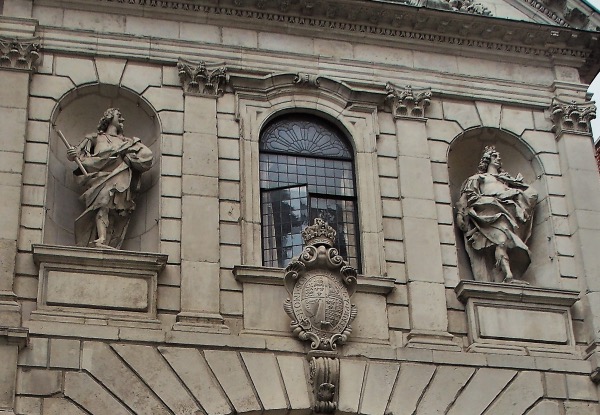
The equestrian statue of King Charles I at the top of Whitehall is one of London’s most well-known. But less well-known is the statue of the ill-fated King which can be found standing in a niche on the Temple Bar gateway, located at the entrance to Paternoster Square just outside of St Paul’s Cathedral.

Charles is not alone. Part of the gateway’s purpose was as a dynastic statement in support of the Stuarts so the grand portal also features statues of Charles’ father King James I, his mother Queen Anne of Denmark, and his son King Charles II. King James and Queen Anne can be found on the north side of the gateway (originally the east side) and the two Charles’ on the south side (originally the west side).

The design of the gateway, which originally stood at the intersection of Fleet Street and the Strand as a ceremonial entrance into the City of London, is believed to be the work of Sir Christopher Wren who was acting on the orders of King Charles II after the Great Fire of London.

Queen Anne of Denmark and King James I on the north side of the gateway. PICTURE: lizsmith (licensed under CC BY-NC-ND 2.0)

The statues, which cost a third of the total £1,500 spent on the gateway, are said to have been sculpted by one John Bushnell. They are depicted in Roman attire rather than the dress they would have worn during the period.

They were removed when the gateway was dismantled in 1878 and stored in a yard of Farringdon Road and when the gateway was re-erected at Lady Meux’s Hertfordshire estate at Theobold’s Park, they were placed back in their original locations. And they also accompanied the gateway back to the city when it was positioned its current location in 2004.

Lost London – Westminster Abbey’s Sanctuary Tower…

The Middlesex Guildhall building, once site of the Sanctuary Tower. PICTURE: Cary Bass-Deschenes (licensed under CC BY-SA 2.0)

Located on the site now occupied by the Middlesex Guildhall, the Sanctuary Tower and Old Belfry was where fugitives of the law could seek refuge from those who pursued them.

The 13th century tower was located on the western side of Thorney Island upon which Westminster Abbey stood. Standing two stories high, it was a fortified structure with heavy oak doors.

The tower had some high profile (temporary) residents over the years of its existence. These included Elizabeth Woodville, Queen of King Edward IV, who twice had to take sanctuary in the abbey during the Wars of the Roses, Henry Holland, the Duke of Exeter, who claimed sanctuary after the Battle of Barnet (and was subsequently found drowned in the Thames), and Tudor Poet Laureate John Skelton who had to flee here after crossing Cardinal Thomas Wolsey (he is buried in nearby St Margaret’s Church, some claim he died in the tower).

While the practice of granting sanctuary was abolished by King James I in 1623, the tower wasn’t demolished in 1776.

The name of the building and practice of sanctuary is reflected in the name of the nearby street known as Broad Sanctuary and short drive before Westminster named The Sanctuary.

10 (lesser known) statues of English monarchs in London…6. King Edward the Confessor and King Henry III…

PICTURE: Davide Simonetti (licensed under CC BY-NC 2.0/image has been cropped and enhanced).

These two statues are listed together because they both appear on the exterior of the same building – The Sanctuary which stands next to Westminster Abbey.

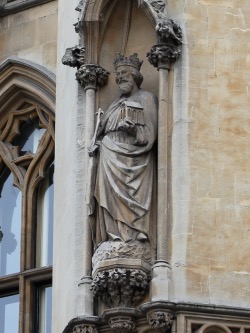
Close-up of Henry III. PICTURE: Can Pac Swire (licensed under CC BY-NC 2.0/image has been cropped).

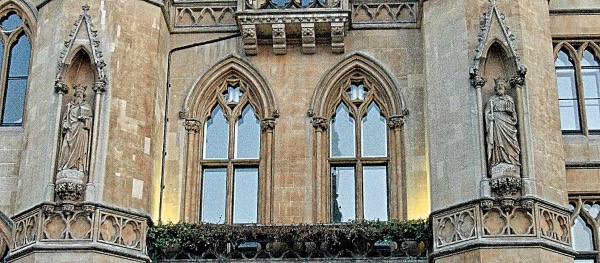
This Grade II-listed building, which contains a gateway to the Dean’s Yard, was designed by Sir George Gilbert Scott and built in Bath stone with slate roofs in the mid-1850s.

The statues, which stand in niches on the exterior of the turrets on either side of the gateway, have been identified as the two kings on London Remembers.

Their position at this location is not random. The king on the left, identified as Edward the Confessor, had St Peter’s Abbey rebuilt here in the mid 11th century (and was buried in it only a week after its consecration).

The king on the right, King Henry III, rebuilt the abbey church in the mid-13th century to provide a shrine to venerate Edward the Confessor and as a site for his own tomb.

The kings are apparently not the only monarchs adorning the building – two roundels below them depict Queen Victoria and Prince Albert.

Treasures of London – The Tijou Screen at Hampton Court Palace…

A section of the Tijou Screen representing Scotland. PICTURE: Man vyi

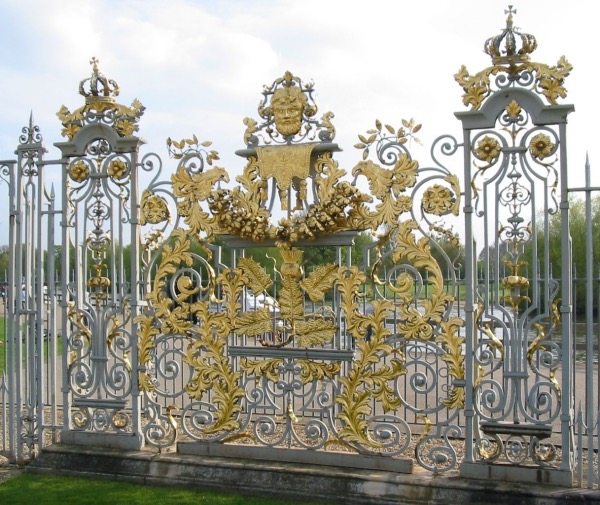
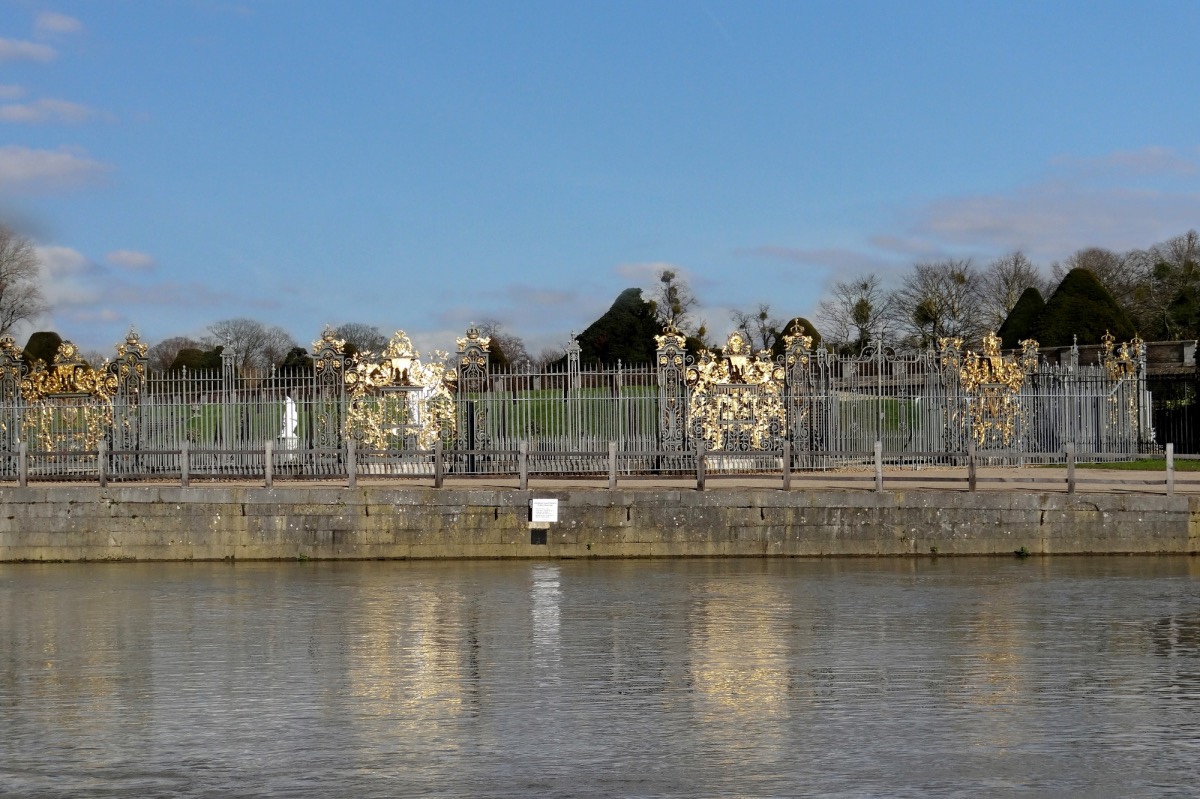
Standing at the river end of the Privy Garden at Hampton Court Palace is a stretch of wrought-iron screen designed and made by Huguenot ironworker Jean Tijou for King William III and Queen Mary II.

The screen, which is one of the finest examples of 17th century ironwork in the world, was created between 1689 to 1692. It features 12 panels displaying symbols including the monogram of William and Mary, the garter emblem and representations of England, Ireland, Scotland and France.

William expressed his personal admiration for the work.

The Tijou Screen seen from the Thames. PICTURE: Maxwell Hamilton (licensed under CC BY-SA 3.0)

The screen was among numerous royal commissions created by Tijou, who had arrived in England in about 1689 and secured the patronage of the joint monarchs.

The screen fell into neglect in the 18th century and were subsequently repaired numerous times before being split up in the 19th century. It was re-erected at Hampton Court in 1902 and since been restored several times.

This Week in London – Marble Hill revived; Harry Kane at the Museum of London; and, golden books at the British Library…

Marble Hill in London’s west reopens on Saturday following a restoration and the reinstatement of a lost pleasure garden. Once home to King George II’s mistress Henrietta Howard, Countess of Suffolk, Marble Hill is a rare example of a home built by and for a woman in Georgian England and is one of the last survivors of the many 18th century villas that once fronted the Thames in the area. Marble Hill was built as a country retreat from London’s crowds and among those entertained here were poet Alexander Pope, Horace Walpole, John Gay and Jonathan Swift. English Heritage has invested £3 million into a major transformation of the house and 66 acres of riverside parkland which also used a £5 million grant from The National Lottery Heritage Fund and The National Community Lottery Fund. This has included the reinstatement of a pleasure garden – an “Arcadian landscape” which was inspired by sketches made by Pope – with the opening up of previously inaccessible woodland areas, the reinstallation of paths and the replanting of avenues of trees that led from the house to the river. Howard’s ninepin bowling alley has been restored and an 18th-century garden grotto has been excavated and returned to its 18th-century appearance. Inside the house, English Heritage has re-instated the paint scheme that existed during Howard’s lifetime in several interior spaces, including the Great Room, conserved the fine collection of early Georgian paintings which includes portraits of Howard’s circle and re-created furniture including an intricate carved peacock motif table and luxurious crimson silk wall hangings in her dressing room. The new display has reframed Howar’s beyond being simply the King’s mistress by also exploring her abusive first marriage and the role deafness played in her life as well as her rise in Georgian society and the social circles she captivated. Entry to the house is free. For more, head to www.english-heritage.org.uk/visit/places/marble-hill-house/.

Harry Kane of England celebrates after scoring their side’s second goal during the UEFA Euro 2020 Championship Round of 16 match between England and Germany at Wembley Stadium on 29th June, 2021 in London, England. PICTURE: Catherine Ivill/Getty Images.

England football captain Harry Kane is the subject of a new exhibition opening at the Museum of London on Saturday. Harry Kane: I want to play football features sporting memorabilia including the shirt Kane, who grew up in Chingford, East London, wore on his debut for England where he scored against Lithuania just 79 seconds after coming on the pitch, Kane’s MBE which was awarded to him in March 2019 for ‘services to sport’ and the 2018 World Cup Golden Boot (Kane being one of only two British players to receive a Golden Boot at a World Cup competition, where he was named Man of the Match three times) as well as family photos. The display also includes a changing room space where visitors can listen to Kane’s pre-match playlist and an interactive area where visitors can learn more about who has inspired Harry and share their own hopes and dreams. A programme of activities for families and children will run alongside the free display. Runs until December. For more, see www.museumoflondon.org.uk.

The use of gold in embellishing and enhancing the written word across cultures, faiths and through time is the subject of a new exhibition opening at the British Library. Gold, which opens Friday, showcases some of the most luxurious illuminated manuscripts, gold-tooled books, sacred texts and scrolls from the British Library’s collection with objects on display including the Harley Golden Gospels, the Lotus Sutra and a treaty in Malayalam, beautifully inscribed on a long strip of gold itself. Admission charge applies. Runs until 2nd October. For more, see www.bl.uk.

Send all items to exploringlondon@gmail.com.