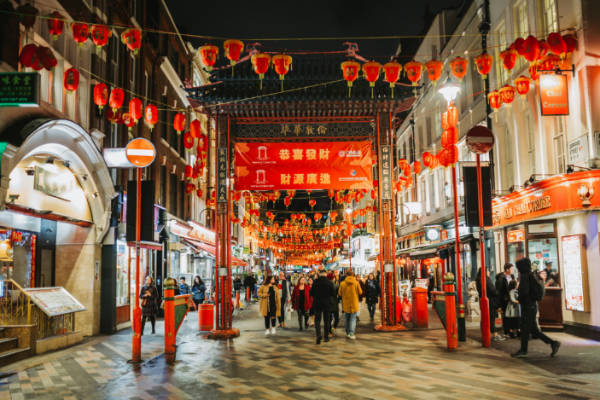
While the street dates back to the 17th century, by the first half of the 20th century it had become known for its nightlife, initially for nightclubs and then for a seedier side as striptease clubs opened.
The city’s first Chinatown had been established in Limehouse in the 18th century as Chinese immigrants and sailors frequented the area.
But after World War II, the damage in the Limehouse area and the comparatively cheap leases available around Gerrard Street, saw Chinese moved in during the 1950s and began opening restaurants and grocery shops.
Growing numbers of Chinese arrived from Hong Kong and by 1970, Gerrard Street has become a hub for the Chinese community in London. The London Chinese Chinatown Association formed in 1978.
It was in the late 1980s that Chinese gateways, a pagoda and street furniture were added. Gerrard Street and parts of Newport Place and Macclesfield Street became pedestrianised.
The first organised Chinese New Year celebrations took place in Gerrard Street in 1985.
London has several police forces so let’s explain.
PICTURE: Tadas Petrokas/Unsplash
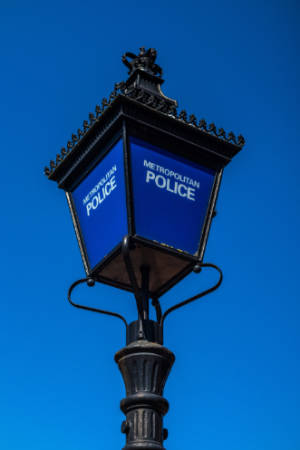
The largest police force in London (and the UK as a whole) is the Metropolitan Police. They are responsible for policing the Greater London area and its 8.6 million residents (with some exceptions – more on that in a moment).
The Met, currently led by Commissioner Sir Mark Rowley, was founded by Sir Robert Peel in 1829 and across the almost 200 years since has grown to a service of more than 33,000 police officers, 11,000 staff, almost 1500 police community support officers and more than 1,100 special officers.
They are headquartered at New Scotland Yard on Victoria Embankment in Westminster.
The Met’s jurisdiction comprises some 620 square miles – the 32 boroughs of Greater London.
An exception within Greater London is within the Square Mile of the City of London, home to some 8,000 residents but host to an additional 500,000 workers, tourists and others each day. This falls under the jurisdiction of the much smaller City of London Police.
The London City Police officially formed in 1832 but became the City of London Police with the passing of the City of London Police Act 1839.
Led by Commissioner Peter O’Doherty, the 17th City of London police commissioner, the service consists of more than 1,000 officers and staff and as well as providing policing services locally, the City of London Police also leads policing efforts nationally on fraud and cyber-crime.
They are currently temporarily headquartered at Guildhall.
A number of other police services also operate in London. They include the British Transport Police, responsible for policing the railway network including track and stations as well as the London Underground and Docklands Light Railway.
The Ministry of Defence Police, meanwhile, are responsible for policing Ministry of Defence property in London including the ministry itself in Whitehall while the tiny Kew Constabulary is responsible for policing Kew Gardens (the former Royal Parks Constabulary merged with the Met in 2004 – the parks are now policed through a specialist unit in the Met).
Lord Mayor of London or Mayor of London? They have similar titles but their roles and responsibilities (not to mention their history) are quite different.
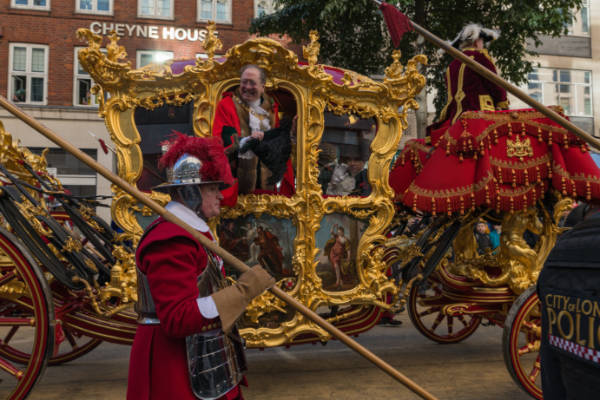
The Lord Mayor’s Show in November, 2023, with then newly elected Lord Mayor of London Michael Mainelli. PICTURE: j Thomas Salas/Shutterstock
The older of the two posts is the Lord Mayor of London, a title which refers to the governance of the City of London, known to many as the “Square Mile” in the heart of the capital.
The Lord Mayor of London (officially, since 2006, known as the Lord Mayor of the City of London) heads the City of London Corporation and is an elected position; in fact it’s one of the world’s oldest continuously elected offices dating back to the late 12th century.
The Lord Mayor, who holds office for one year, is elected by the City liverymen at the Common Hall held on Michaelmas (29th September) each year. They must be serving in the office of Alderman at the time.
The Lord Mayor of London takes office on the Friday before the second Saturday of November in what is known as The Silent Ceremony (the Lord Mayor’s Show, a celebration of the newly elected Lord Mayor, takes place the following day).
The role of the Lord Mayor of London – who takes precedence over all individuals in the City of London with the exception of the monarch – has historically been to represent the residents and businesses within the City although in modern times the role is effectively an “international ambassador” for the UK’s financial and professional services sector.
The current Lord Mayor of London is Alastair King who is the 696th Lord Mayor of London. The Lord Mayor of London works out of offices at their official residence near the Royal Exchange and Bank of England known as Mansion House.
Onto the Mayor of London. A much more modern position (it was created in the year 2000), the Mayor of London is directly elected by the registered voters of Greater London. They serve as the chief executive of the Greater London Authority and work with the 25 members of the London Assembly.
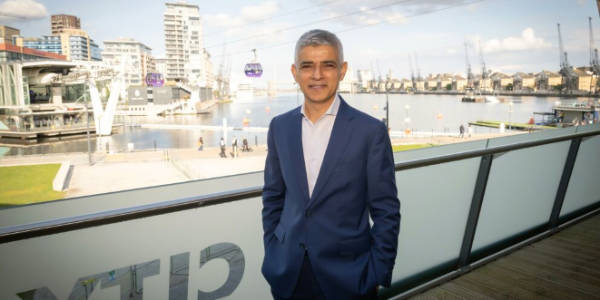
The Mayor of London, Sadiq Khan. PICTURE: Courtesy of the Mayor of London
The Mayor of London is charged with overseeing the strategic governance of Greater London which includes the City of London and all 32 London boroughs (each of which also has a ceremonial or elected mayor).
Responsible for setting an overall vision for the city, the Mayor is tasked with creating policies on everything from arts and culture, the environment and the economy to policing and crime, transport, sport and housing.
The Mayor of London is based at City Hall at Royal Docks in Newham.
The current Mayor of London is Sadiq Khan, the third to serve in the role, has been mayor since 2016. The previous two mayors include Ken Livingstone and Boris Johnson, who, of course, went on to be PM.
Said to be the largest theatre district in the world, London’s Theatreland is located in the West End (and some say synonymous with it) and features some 40 playhouses.
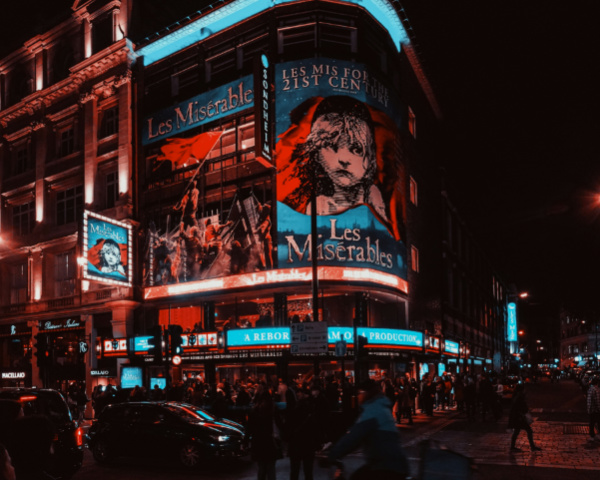
The lights of Theatreland – pictured is the production of Les Miserables at the Sondheim Theatre. PICTURE: Samuel Regan-Asante/Unsplash
The theatres are primarily located in Covent Garden, around Leicester Square and Piccadilly Circus and in Soho. The street most associated with today’s Theatreland is perhaps Shaftsbury Avenue.
Many of the privately owned theatres date from the Victorian or Edwardian period and are protected against inappropriate development (although this means they also sometimes lack more modern amenities)
Among the theatres in the district is the Theatre Royal, Drury Lane (the oldest theatre in London, it opened in 1663) as well as the Savoy Theatre (which in 1881 became the first to be lit by electricity), the London Palladium in Soho (which has hosted the Royal Variety Performance 43 times), and the Lyceum Theatre (where Bram Stoker was once manager).
The longest-running production in the world – Agatha Christie’s play The Mousetrap – has been running at St Martin’s Theatre since 1952 (though it was interrupted during the COVID-19 pandemic). The longest-running musical in the West End – Les Miserables – has been running since 1985 (first at the Palace Theatre and now at the Sondheim Theatre (formerly Queens Theatre)).
UNESCO’s World Heritage List includes as many as 1223 properties right across the globe which the World Heritage Committee considers as having “outstanding universal value”.
Most of them are cultural sites (952) but they also include some 231 natural sites and 40 which have both qualities.
The UK is actually home to 35 sites on the list, ranging from Stonehenge and the English Lake District to neolithic Orkney and the City of Bath.
London itself is home to four internationally recognised UNESCO World Heritage Sites. These include the Tower of London, the Royal Botanic Gardens in Kew, the Palace of Westminster and Westminster Abbey (including the neighbouring St Margaret’s Church), and maritime Greenwich.
The first of the four to be added to the list was the 10 hectare site of Palace of Westminster and Westminster Abbey in 1987 (described as being of “great historic and symbolic significance”). It was followed by the Tower of London in 1988, and the 109 hectare area covering the Queen’s House, Old Royal Naval College and Royal Observatory known as maritime Greenwich in 1997.
The 132 hectare site of the Royal Botanic Gardens at Kew was the most recent addition to the list in 2003.
As well as being added to the list, sites can also be removed as happened when Liverpool became the third site to be removed from the list in 2021 due to what the World Heritage Committee said was “the irreversible loss of attributes conveying the outstanding universal value of the property”.
Concerns have been raised over the Tower of London’s future on the list due to surrounding development and, of course, there are always other sites that can be added (we vote for Hampton Court Palace, among others).
Red phone boxes in Covent Garden in 2017. PICTURE: Nick Fewings/Unsplash
They’re one of the most iconic and enduring symbols of London – the once ubiquitous red phone boxes. But what are their origins and how did they come to be red?
The phone boxes went through several iterations with the first standardised kiosk to house public telephones – a concrete box appropriately designated K1 – introduced by the General Post Office, manager of the telephone network, in 1921. It was usually painted cream with a red door.
These were subsequently produced in cast iron and while Scott had apparently suggested they be painted silver with a green-blue interior, they were painted red. The Post Office’s pillar boxes were already painted this colour which was thought to be good for visibility, so it followed the colour could be used for phone boxes as well.
The K3, made of reinforced concrete and again designed by Scott, was introduced in 1929. Various other iterations were also produced including the K6 which Scott designed to commemorate the Silver Jubilee of King George VI (it was the most in-use across the UK).
New designs continued to be rolled out in the ensuing decades and appeared in a range of colours.
The number of BT-operated telephone boxes in the UK is, according to BT, said to have peaked at about 92,000 in 1992.
While call volumes from public phone boxes have continued to decline in recent years, it was reported that about five million calls were made in the year to May, 2020, illustrating the ongoing need for some to remain.
The M25 is an 117 mile-long orbital roadway which encircles most of the Greater London area.
Part of the M25 seen from a plane looking north as it took off from Heathrow. PICTURE: RFBailey (licensed under CC BY-SA 3.0)
Originally mostly built as a dual three lane motorway, widening has since taken place in more than half of it – to as much as six lanes in parts.
The idea was first proposed in the early 20th century and then re-mooted several times in subsequent decades before construction began in 1973.
The final section of the M23 was opened by then-Prime Minister Margaret Thatcher in 1986 (it was Europe’s longest ring road when it opened and has since been bypassed by the Berliner Ring).
The M25, which has 31 junctions, is these days one of the busiest motorways in Europe. It connects to 10 other motorways.
Connect Plus – a joint venture between Balfour Beatty, Atkins and Egis – works on behalf of National Highways to manage and operate the M25 network.
A Royal Peculiar is a Church of England parish that is exempt from the jurisdiction of the church diocese or province in which it sits and instead answers directly to the monarch.
The concept of the Royal Peculiar first began to emerge in Anglo-Saxon times and was developed over the following centuries.
Greater London, which includes the former county of Middlesex and parts of what were Surrey, Kent, Essex and Hertfordshire, is governed by 32 local authorities – boroughs – as well as the City of London itself.
The Crystal Building in Newham, seat of the Greater London Authority. PICTURE: Matt Buck (licensed under CC BY-SA 2.0)
Overarching these is the Greater London Authority, which consists of two branches – the Mayor of London (currently Sadiq Khan), who has executive powers, and the 25 member London Assembly who, as well as the mayor, are elected.
The Greater London Authority is now headquartered at City Hall in Newham, having moved there from City Hall in Southwark at the end of 2021.
The London boroughs, which were all created on 1st April, 1965, include three “Royal boroughs” – that of Greenwich, Kensington and Chelsea, and, Kingston upon Thames (more on them in a future post).
The boroughs are administered by councils who are elected every four years.
One of three ceremonial officers appointed by the City of London’s Court of Aldermen, the office of Common Cryer and Sergeant-at-Arms, commonly known as the “Macebearer”, is believed to the oldest of them, established well before 1338.
The Macebearer (right) with the Swordbearer emerging from the Royal Courts of Justice in 2011. PICTURE: Rodolph at English Wikipedia (licensed under CC BY SA 3.0)
The Common Cryer and Sergeant-at-Arms has the role of carrying the Great Mace of Government ahead of the Lord Mayor of London.
The post was originally held by one of the King’s Sergeant-at-Arms. In 1419, the title held by the mace bearer was referred to as the “Common Serjeant-at-Arms of the City”, otherwise known as the “Common Cryer”.
Records show he had a salary of 60 shillings a year, robes, fees from the alderman and sheriffs and a “sufficient horse” for the honour of the City.
By 1559 the current title was in use.
As well as bearing the ceremonial mace before the Lord Mayor, the Macebearer also opens proceedings at Common Hall, the electoral assembly at Guildhall, with the cry “Oyez, Oyez, Oyez”. The Macebearer also proclaims the orders at the monarch and Privy Council at appointed places within the City.
Along with the City Marshall and the Sword-Bearer, the Common Cryer and Sergeant-at-Arms is one of three Esquires based at Mansion House, the official residence of the Lord Mayor of London.
They run the Lord Mayor’s official residence and office, and accompany him on official occasions. They are usually senior military officers with diplomatic experience.
Major Peter Oweh was appointed to the post of Common Cryer and Sergeant-at-Arms in December, 2022.
On 1st December this year – World AIDS Day, four leading figures from two major HIV charities – Richard Angell, chief executive of Terrence Higgins Trust, and colleagues Dominic Edwardes and Barbara Tinubu, and Mark Santos, executive director of Positive East – were awarded the Freedom of the City of London.
But what exactly does it mean to be awarded the Freedom of the City of London?
An ancient tradition of the City of London, the Freedom is believed to date back to 1237 and was originally awarded to help citizens carry out their trade. The recipient was viewed as a “free man” and not subject to a feudal lord with the right to earn money for themselves and own property.
The Freedom of the City became closely linked with London’s medieval guilds, known as livery companies, and it was through membership of such a company that an application could be made to be a freeman, a necessary step for anyone who wants to hold office in a livery company.
In 1835, the Freedom was widened to include people living or working in the City or those with a strong London connection.
The award is these days also offered to people as a way of paying tribute to their “outstanding contribution” to London or public life, or to celebrate a very significant achievement. It is also necessary to be a freeman to stand for elected office in the City.
Freedom ceremonies take place in the Chamberlain’s Court at Guildhall and are usually conducted by the Clerk of the Court or his assistant. Prospective freemen read the ‘Declaration of a Freeman’ – which, among other things they swear allegiance to the King and obedience to Lord Mayor of London – and sign the Freeman’s Declaration Book.
A parchment document, known as The Copy of the Freedom, is then presented to the recipient along with a copy of the ‘Rules for the Conduct of Life’ which date from the mid-18th century. The clerk then extends the right hand of fellowship to the recipient and greets them as “a Citizen of London”.
A fee, known as a “fine”, is charged for applications (currently it’s £170).
Other recent high-profile recipients of the Freedom of the City of London include the UK’s Chief Medical Officer, Professor Sir Chris Whitty, England football captain and former Tottenham Hotspur striker Harry Kane, Deputy Governor for Financial Stability at the Bank of England, Sir Jon Cunliffe and theatrical impresario Sir Cameron Mackintosh.
You may have noticed small stone or metal plaques installed on buildings which are inscribed with some letters and a date.
These are typically parish boundary markers, marking the geographical reach of a particular parish. The letters refer to the parish name and the date when the boundary was set or marked (some markers actually have more than one date, the second being when parish boundaries were confirmed).
Parish boundary markers in Chancery Lane. PICTURE: R~P~M (licensed under CC BY-NC-ND 2.0)
Traditionally, parishioners were reminded of the boundaries each year at Rogationtide – the three days of the Monday, Tuesday and Wednesday before Ascension Day (39 days after Easter Sunday) – in a ceremony known as the ‘Beating the Bounds’.
This custom involved the priest and parishioners, led by the churchwardens and beadle, walking around the stones which served as boundary markers and pausing to beat each one with sticks and pray for protection and blessings (apparently there was also a practice of pushing boys from the charity schools into the boundary walls so they’d remember them or beating them with willow wands when there was no wall).
The boundary stones have, in more recent centuries, been replaced by the plaques in London but the ceremony is still carried out in some parishes.
Interestingly, in some parishes, the boundary is located in the midst of the Thames and boats are taken to ‘beat the mark’ in the middle of the river.
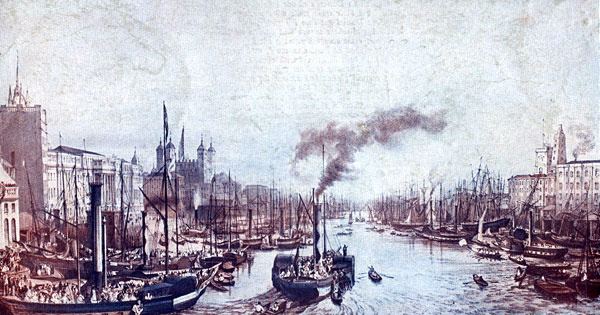
A lithograph showing the Pool of London from London Bridge in 1841. PICTURE: W Parrott/Public Domain
A stretch of the River Thames which spans the area from London Bridge to below Limehouse, the Pool of London was the highest part of the river navigable by tall-masted ships (thanks to the them not being able to pass under London Bridge).
The term originally referred to the stretch of the river at Billingsgate in the City of London which was where all imports had to be delivered for inspection by customs officers (hence these wharves were given the name ‘legal quays’).
But as trade expanded and reached its peak in the 18th and 19th centuries, so too did the stretch referred to as the “Pool of London”. It came to be divided into two sections – the Upper Pool, which stretches from London Bridge to Cherry Garden Pier in Bermondsey (and is bisected by Tower Bridge), and the Lower Pool, which stretched from the latter pier to Limekiln Creek.
The Upper Pool’s north bank includes the Tower of London, the old Billingsgate Market and the entrance to St Katharine’s Dock while the south bank features Hay’s Wharf and the HMS Belfast. The Lower Pool’s north bank includes the entrance to Limehouse Cut as well as Regent’s Canal and Execution Docks while below it runs the Thames and Rotherhithe Tunnels.
Walk the streets of London and chances are you’ll soon come across an English Heritage Blue Plaque commemorating someone famous.
There are now more than 990 Blue Plaques in London, commemorating everyone from diarist Samuel Pepys to writer Virginia Woolf and comedian Tony Hancock.
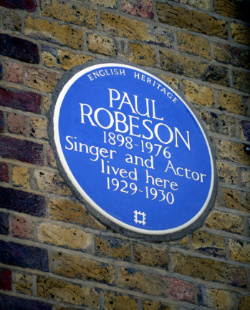
An English Heritage Blue Plaque commemorating singer and actor Paul Robson. PICTURE: Brett Jordan/Unsplash
The scheme was started in 1866 by the Society of Arts (later the Royal Society of Arts) having been proposed by MP William Ewart three years before. The first two plaques were erected in 1867 – one commemorating poet Lord Byron at his birthplace, 24 Holles Street in Cavendish Square (although this property was later demolished) and the other commemorating Napoleon III in King Street, Westminster (this is now the oldest survivor of the scheme).
Thirty-five years – and 35 plaques – later, the London County Council took over the scheme. It was this body that standardised the plaque’s appearance (early plaques come in various shapes and colours) and while ceramic blue plaques were standard by 1921, the modern simplified Blue Plaque didn’t appear until 1938 when an unnamed student at the Central School of Arts and Crafts, who was paid just four guineas for their troubles, came up with what is now an iconic design.
In 1965, the LCC, having created almost 250 new Blue Plaques, was abolished and its successor, the Greater London Council, took over the scheme, expanding its area of coverage to includes places like Richmond, Redbridge and Croydon. In 1984, the GLC appointed artisan ceramicists Frank and Sue Ashworth of London Plaques to make the Blue Plaques (and they continue to do so).
The GLC placed some 262 Blue Plaques before, in 1986, English Heritage took over management of the scheme. Since then it’s placed more than 360 plaques.
The plaques, which are 495mm (19½ inches) in diameter and 50mm (two inches) thick, are slightly domed in a bid to encourage self-cleaning in the rain.
Anyone can propose a subject for a new plaque – but generally only one plaque is erected per person (although there have been some exceptions to this), only a maximum of two plaques are allowed per building (there are 18 buildings with two), and proposals, if turned down, must wait 10 years before they are reconsidered.
In addition, new Blue Plaques are only erected a minimum of 20 years after the subject’s death, the building on which one is placed must “survive in a form that the commemorated person would have recognised, and be visible from a public highway”, and buildings which may have many different personal associations, such as churches, schools and theatres, are not normally considered.
The Blue Plaques panel meet three times a year to decide on proposals. Among those currently serving on the 12 person body are architectural historian Professor William Whyte, who chairs the panel, award-winning journalist and author Mihir Bose, Emily Gee, regional director for London and the South East at Historic England, and, Susie Thornberry, assistant director at Imperial War Museums.
The plaques don’t confer any legal protection to buildings but English Heritage says they can help preserve them through raising awareness.
Recently unveiled plaques have commemorated pioneering social research organisation Mass-Observation, lawyer Hersch Lauterpacht – who played a key role in prosecuting the Nazis at the Nuremberg trials, and, Dadabhai Naoroji, an Indian Nationalist and the first Indian to win a popular election to Parliament in the UK. Among those being unveiled this year are plaques commemorating anti-racist activist Claudia Jones, suffragette Emily Wilding Davison and Ada Salter, the first female mayor of a London borough.
English Heritage’s Blue Plaques scheme isn’t the only one commemorating people in London. Others include the City of London’s Blue Plaques scheme (there is only one English Heritage Blue Plaque in the City of London – it commemorates Dr Samuel Johnson), Westminster City Council’s Green Plaques and Heritage Foundation plaques which commemorate figures who worked in entertainment.
Simply put, this is the name London was given during Roman times (and perhaps derives from an earlier Celtic word – although this remains the matter of much speculation).
There’s no substantial evidence of a settlement where London now stands until after the arrival of the Romans in 43 AD. The location was selected for the ease with which the Thames could be bridged and two hills which stand in what is now the city of London – Ludgate Hill on which St Paul’s cathedral stands and Cornhill – which could be fortified as a military stronghold.
A reconstruction of Londinium in 120 AD by Peter Froste which has was on show in the Museum of London. PICTURE: Carole Raddato (licensed under CC BY-SA 2.0)
The fledging settlement was destroyed during the revolt of Queen Boudicca of the Iceni in 60 AD but rebuilt centred on Cornhill and the Walbrook stream. By the 70s AD, the main public buildings of the forum and basilica were placed on high ground east of the Walbrook and by the end of of the first century AD further grand buildings – the governor’s palace, amphitheatre and baths – had been added. Waterfront infrastructure for shipping – including quays and warehouses – stretched along the northern side of the river.
A fort was added and public buildings renovated before the visit of the Emperor Hadrian in 122 AD. Another fire destroyed much of the city but it was again rebuilt and late in the 2nd century walls were built around it, partially encircling a site of some 330 acres. Buildings subsequently constructed in the 3rd century included the Temple of Mithras and a monumental arch.
There were known to have been “suburbs” including at both Southwark and to the west around Trafalgar Square and cemeteries were built outside the walls.
The city’s population had already contracted somewhat by the time the legions were recalled to Rome in 410 AD. While the walls still offered the inhabitants some protection 50 years after the withdrawal of the legions, there’s scant evidence for how much longer it remained inhabited with the Anglo-Saxons known to have viewed the ruins of the Roman buildings with some trepidation.
The City of London is dotted with halls for the city’s livery companies. But ever wondered what they are?
There are 110 livery companies in the City, representing ancient and more modern trade associations and guilds, including everything from grocers to saddlers, ironmongers to musicians. The newest livery company is the Worshipful Company of Arts Scholars which was created in 2014.
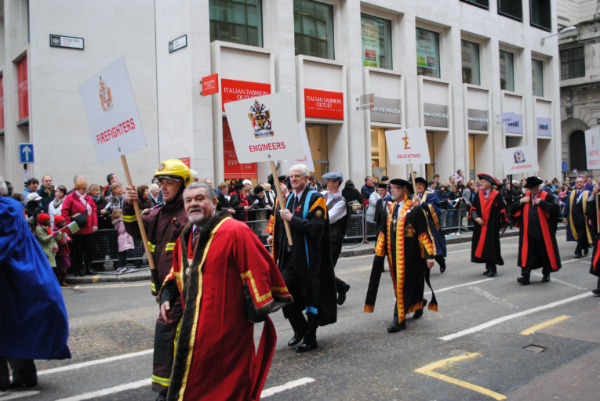
Members of livery companies taking part in the Lord Mayor’s Show. PICTURE: David Adams
Many of today’s livery companies have their origins in the city’s medieval guilds which were responsible for such things as regulating wages and conditions and setting industry standards (while many of these responsibilities have since passed to other bodies, some – such as the Worshipful Company of Gunmakers and the Worshipful Company of Goldsmiths – still play important roles in quality control).
These days the companies are also known for their support of the industries they represent and their philanthropic work.
Livery companies – many of which also traditionally had religious links – built halls as central meeting places – about 40 companies today still own or have a share in a hall.
Members of the livery companies (known as liverymen after the distinctive clothing or uniform they wore) – who are awarded the Freedom of the City of London – have the right to vote for senior offices in the City such as the Lord Mayor of London and sheriffs.
The livery companies of the City of London are listed in an “order of precedence” which was settled in 1515 for the 48 then in existence based on their political and economic power (the Worshipful Company of Mercers comes in at number one). All the companies created since then are ranked according to their date of creation.
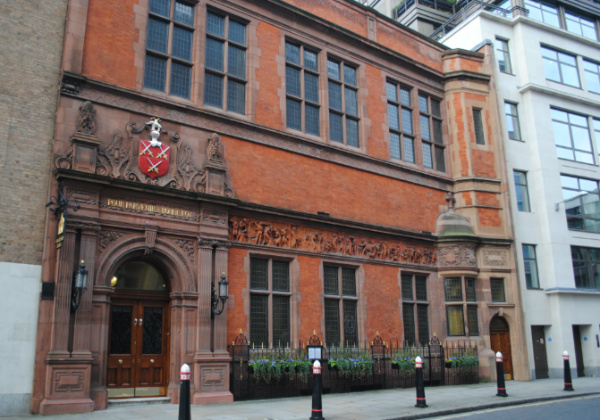
Hall of the Worshipful Company of Cutlers. PICTURE: David Adams
The 12 highest ranked companies are known as the Twelve Great City Livery Companies. Among them in the Worshipful Company of Merchant Taylors which disputes its position at number seven and so once a year at Easter swaps places with the Worshipful Company of Skinners at number six.
Modern mudlarks at Queenhithe on the River Thames. PICTURE: Geoff Henson (licensed under CC BY-ND 2.0)
Spotted along the Thames foreshore when the tide is low, the term ‘mudlark’ is used to describe someone who scavenges for lost or discarded objects in the mud along the Thames river banks.
In the 18th and 19th century, mudlarks were among London’s poorest who eked out a living by selling items – lumps of coal, pieces of rope, precious metals – found on the river’s banks. They were often the young or the elderly and the working conditions, which included navigating through the raw sewage and other noxious waste which ended up on the foreshore, were horrendous.
Victorian journalist Henry Mayhew, who writes in his seminal and expansive series of reports – London Labour and the London Poor – described how mudlarks were so-named because of their need at times to wade up to their waists in mud to retrieve items.
By the 20th century, the practice appears to have somewhat died out. But in more recent years, the term mudlark has been applied to hobbyists, including those using metal detectors, to search along the Thames foreshore during the hours when the tides allow. Since the mid-1970s, The Society of Thames Mudlarks has provided some organisational structure for those involved but membership in this body is limited.
A permit from the Port of London Authority is required for modern mudlarking. As the authority’s website states: “Anyone searching the tidal Thames foreshore from Teddington to the Thames Barrier – in any way for any reason – must hold a current and relevant foreshore permit from the Port of London Authority. This includes all searching, metal detecting, ‘beachcombing’, scraping and digging”.
Finds of potential archaeological interest must be reported to the Museum of London (and human remains, of course, to police). Mudlarks are also encourage to report finds to the Portable Antiquities Scheme.
Objects found include everything from clay pipes, bits of pottery, buttons, bones and pins through to more precious items such as coins, rings and even daggers and swords.
Lara Maiklem, author of the 2019 book Mudlarking: Lost and Found on the River Thames, is among the most well-known of the modern mudlarks. As detailed in his book, her finds have included everything from a Roman amphora stopper to medieval roof tiles, a bearded man from a late 16th century Bellarmine jug and an 18th century shoe pattern.
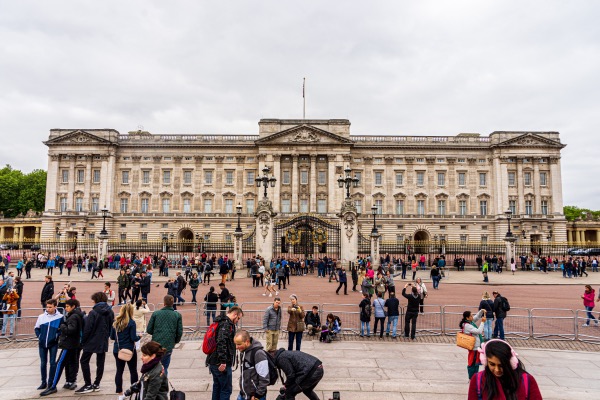
Foremost is Buckingham Palace, the official residence and office of the monarch – Queen Elizabeth II – in London. The palace – acquired for the Crown by King George III in 1761, converted to a palace by King George IV and first lived in by Queen Victoria – is also used for State ceremonies and for official entertaining.
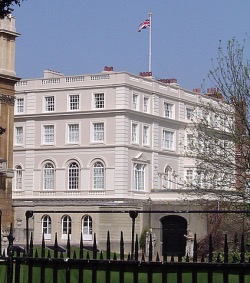
Other royal residences include Clarence House which is the official London residence of Prince Charles and Camilla, Duchess of Cornwall.
The property was built between 1825 and 1827 to the designs of John Nash for Prince William Henry, Duke of Clarence (hence the name).
It was the home of Queen Elizabeth, the Queen Mother, between 1953 and her death in 2002, and was also temporarily the home of the then-Princess Elizabeth and Prince Philip following their marriage in 1947.
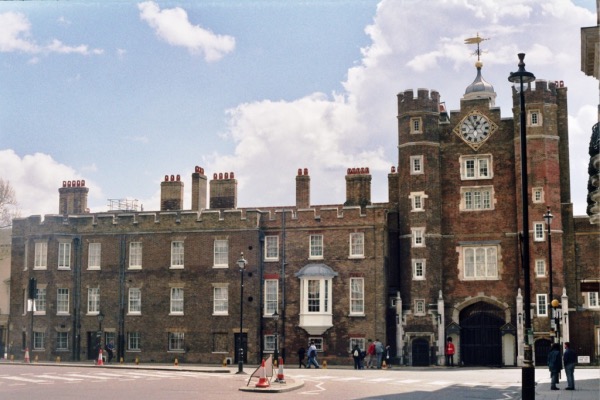
St James’s Palace, which was largely built by King Henry VIII and served as the residence of numerous monarchs until King William IV, also remains the home of several members of the Royal Family – including Princess Anne and Princess Alexandra – and their household offices.
The State Apartments are sometimes used for entertaining during in-coming State Visits, as well as for other ceremonial and formal occasions. Its history means diplomats are still accredited to the Court of St James.
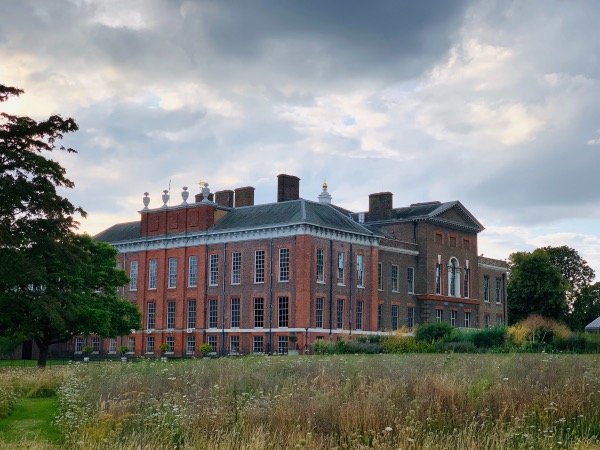
Kensington Palace – childhood home of Queen Victoria and favoured residence of monarchs from King William III to King George II – is these days the official London residence of Prince William and Katherine, the Duchess of Cambridge.
It also contains the London residences and offices of the Duke and Duchess of Gloucester, the Duke and Duchess of Kent and Prince and Princess Michael of Kent.
While Hampton Court Palace, the Tower of London, Kew Palace and the remnant of the Palace of Whitehall known as the Banqueting House are all royal palaces, they ceased being used regularly for royal court purposes in the 18th century and are now in the care of Historic Royal Palaces (along with parts of Kensington Palace).
The DLR, or Docklands Light Rail, is a driverless train network connected to the Tube system.
The DLR, which is located at the eastern end of the city, connects to the Tube network at numerous stations including Bank, Tower Gateway and Canary Wharf. It reaches as far south as Lewisham, east to Beckton and Woolwich Arsenal and north to Stratford International.
The 24 mile-long network, which first opened on 31st August 1987 and has since been extended numerous times, has 45 stations. It also provides connections to the Emirates Air Line and London City Airport.
The DLR trains run from around 5.30am to around 12.30am from Monday to Saturday with Sunday services starting later and finishing earlier.
The fares are the same as the Tube and you can use Oyster cards.
In the 2019/2020, the line hosted more than 115 million passenger journeys.
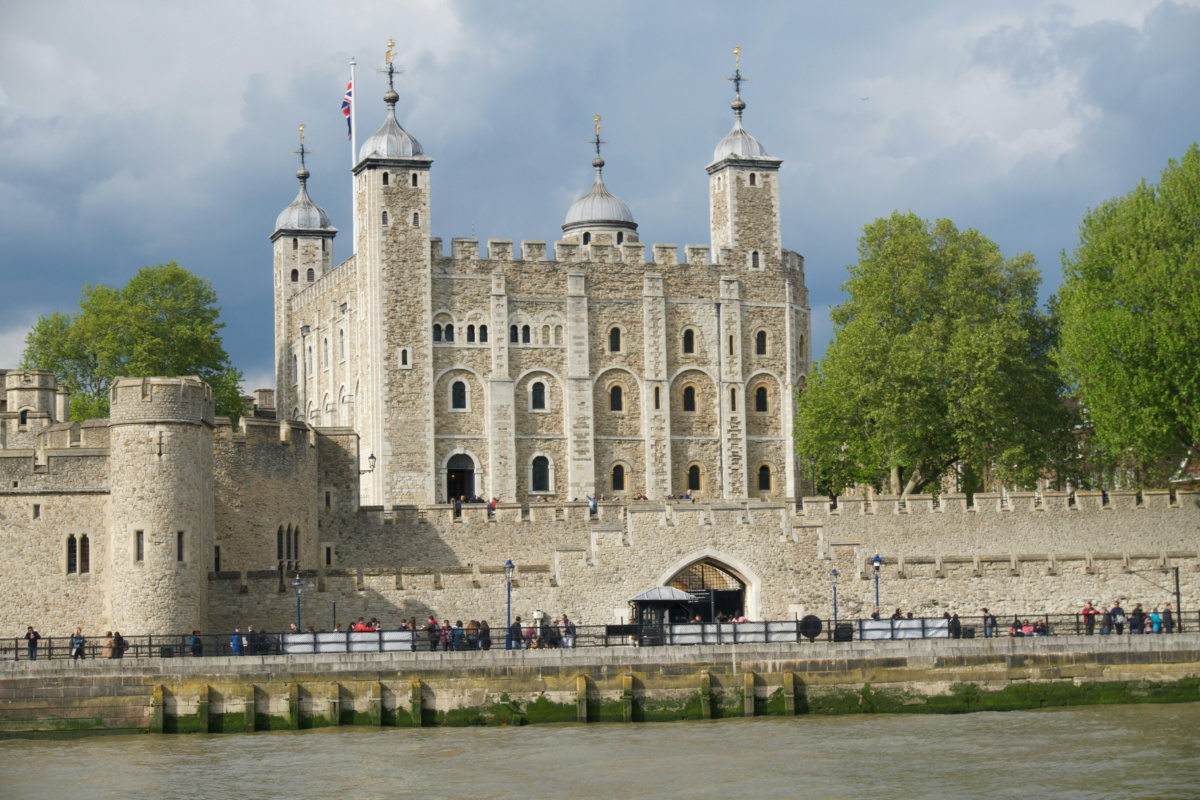
The Tower of London is one of the palaces under the care of Historic Royal Palaces. PICTURE: Nick Fewings/Unsplash
Visitors to several of London’s landmark royal properties will across an organisation known as Historic Royal Palaces.
HRP, as its sometimes shortened to, is a self-funding charity charged with the management of palaces which are owned by the Crown (technically by Queen Elizabeth II ‘in Right of Crown’ meaning she holds them in trust for the next monarch and by law cannot sell or lease them). The palaces are generally no longer used as royal residences.
These include the Tower of London, Hampton Court Palace, Kensington Palace, Kew Palace and the Banqueting House (once part of the Palace of Whitehall). Buckingham Palace, which remains the official London residence of Queen Elizabeth II and a working royal palace, is not one of them nor is St James’s Palace, home to several members of the Royal Family and their households.
All five of the properties in London which are under the care of Historic Royal Palaces ceased being regularly used by the Royal Court in the 19th century and were opened up to the public. The government became responsible for their care under the Crown Lands Act 1851.
In 1989, the government established Historic Royal Palaces as part of the Department of the Environment to oversee care of the five palaces. Six years later it became part of the Department of National Heritage(now known as the Department for Culture, Media & Sport).
In April, 1998, Historic Royal Palaces became an independent charity by Royal Charter. It is governed by a board of trustees who include the director of the Royal Collection Trust and the Keeper of the Privy Purse from the Royal Household as well as the Constable of the Tower of London.
Historic Royal Palaces now oversees management of the palaces under a contract with the Secretary of State for Culture, Media & Sport (as well as the five London properties, since 2014, it has also been responsible for the care of Hillsborough Castle in Northern Ireland).
Perhaps the most well-known faces of Historic Royal Palaces are joint curators – Tudor historian Tracy Borman, and architectural and social historian Lucy Worsley.
HRP collects revenues through entries to the palaces but also offer an annual membership through which you can have unlimited entry.







 Exploring London