10 disease-related memorials in London…10. Thomas Hodgkin…

Thomas Hodgkin was a physician, pathologist and reformer whose name is now associated with Hodgkin lymphoma, a malignant disease of lymph tissue.
Born in Pentonville in what is now central London, Hodgkin (1798-1866), who trained at St Thomas’s and Guy’s Medical School and the University of Edinburgh, went on to work at Guy’s – where he built up a reputation as a pathologist – and later heading teaching staff at St Thomas’s (after it had split from Guy’s).

He first described the disease that bears his name in a paper in 1832 but it wasn’t until 33 years later, thanks to the rediscovery of the disease by Samuel Wilks, that it was named for him.

A Quaker, Hodgkin was also involved in the movement to abolish slavery and also raised concerns about the impact of the West on Indigenous culture. He died while on a trip to Palestine in 1866 and is buried in Jaffa.

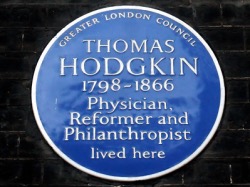
Hodgkin is commemorated with an English Heritage Blue Plaque on his former home at 35 Bedford Square in Bloomsbury. Interestingly the house also bears a plaque to another giant of the medical field – Thomas Wakley, the founder of The Lancet.

The plaque commemorating Hodgkin was erected by the Greater London Council in 1985.
PICTURE: Spudgun67 (licensed under CC BY 2.0)

LondonLife – Windrush generation commemorated in Kensal Green…

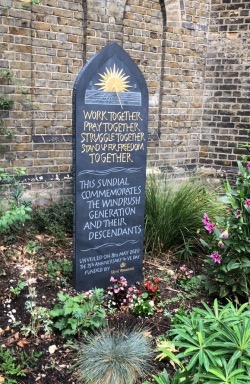
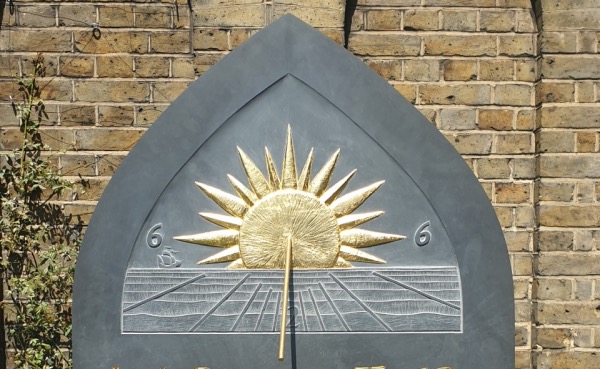
A new sundial and garden have been unveiled in Kensal Green commemorating the Windrush generation. The sundial, the work of carver Martin Cook, is located at St John The Evangelist Church which, according to its vicar, Rev David Ackerman, has relied upon the local Caribbean community to survive and thrive since the 1960s. The sundial has been made of a single piece of slate and carved with the words “Work Together, Pray Together, Struggle Together, Stand Up for Freedom Together” which are taken from Martin Luther King Jr’s famous ‘I have a dream’ speech. An official opening ceremony for the sundial – which was funded by Westminster City Council – was held earlier this month. In a statement, Jonathan Glanz, the Lord Mayor of Westminster, said he hoped the outdoor space would become a “beacon of peace and unity for the local community in troubled times”. PICTURES: Courtesy of the City of Westminster.

10 disease-related memorials in London…9. The Imperial Camel Corps Memorial…

It’s common to associate war memorials with the commemoration of those who died in combat. But disease, too, is a major killer of soldiers in a time of war yet few memorials explicitly mention disease as cause of death.

One which does do so, however, is the Imperial Camel Corps Memorial in Victoria Embankment Gardens.

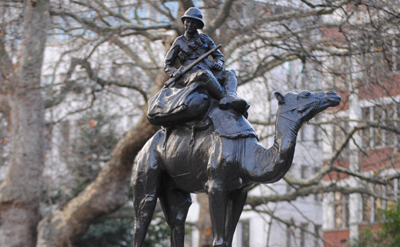
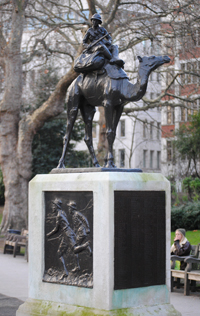
The memorial, which features a bronze figure riding a camel atop a stone plinth has a number of inscriptions and plaques recording the corps’ engagements during World War I and the names of the fallen.

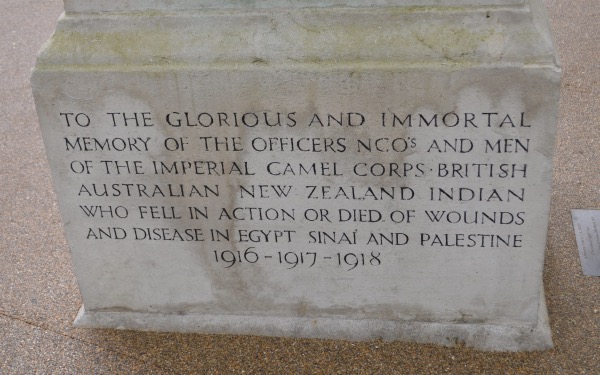
Among them is an inscription which reads “To the glorious and immortal memory of the officers, NCO‘s and men of the Imperial Camel Corps – British, Australian, New Zealand, Indian, who fell in action or died of wounds and disease in Egypt, Sinai and Palestine, 1916 -1917-1918.”

Disease was a significant killer in World War I – it’s estimated that some 113,000 British and Dominion soldiers died of disease – but the number was far fewer than those who died in combat or from wounds, a figure which equates to at least 585,000 (not including the tens of thousands of missing).

Yet, medical advances meant disease was far less a killer than in previous wars – it’s said that in the American Civil War, for example, as many as two-thirds of those who died were the result of various diseases.

The Imperial Camel Corps, which grew to four battalions including two Australian, one British and one New Zealander before it was disbanded after the end of the in 1919, suffered some 246 casualties during World War I – we don’t have a breakdown for how many of those deaths were attributable to disease.

The Grade II-listed memorial, which was sculpted by Major Cecil Brown – himself a veteran of the Corps, was unveiled in July, 1921, in the presence of both the Australian and New Zealand Prime Ministers.

PICTURES: Top and right – David Adams/Below  – Matt Brown (licensed under CC BY 2.0)

LondonLife – Chindit war memorial gets protection upgrade to mark VJ Day…

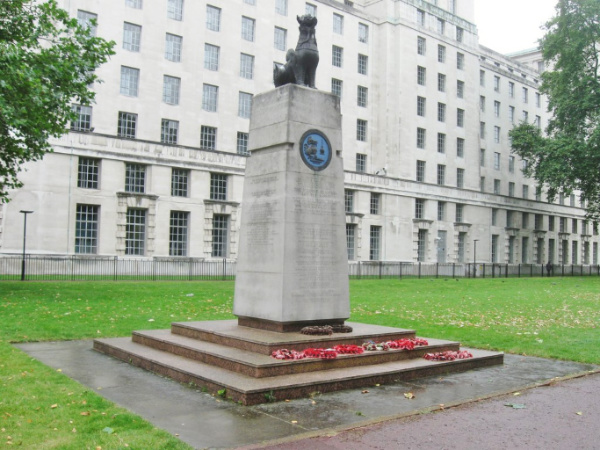
A memorial commemorating the role of the Chindit Special Forces in Burma during World War II has been awarded a Grade II listing on the National Heritage List for England in honour of the 75th anniversary of Victory in Japan (VJ) Day. Located in Victoria Embankment Gardens outside the Ministry of Defence building in Whitehall, the memorial’s granite plinth is topped with a bronze chinthe, a mythical beast that stands guard outside Burmese temples. The Chindit Special Forces, which were formed by British Army officer Major General Orde Charles Wingate and disbanded in early 1945, are credited with helping to turn the tide of World War II against Japan in the Far East. The memorial was designed by architect David Price and the chinthe sculpture the work of Frank Forster. It was unveiled by Prince Philip on 16th October, 1990. On Saturday, as the nation commemorated VJ Day, a military delegation lad a wreath at the foot of the memorial. PICTURE: Derek Voller (licensed under CC BY-SA 2.0).

Treasures of London – Berlin Wall segment…

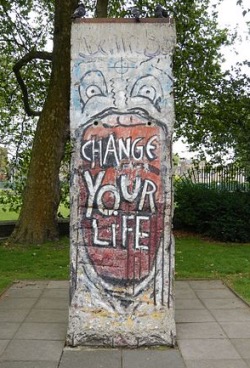
Located in Geraldine Mary Harmsworth Park in Kennington outside the Imperial War Museum, this segment of the Berlin Wall was taken from near the Brandenburg Gate in Berlin.

The concrete and steel wall is covered with graffiti, attributed to an artist ‘Indiano’, including an image of a giant mouth containing the words ‘Change your life’ (which may have come from a German poem).

The wall, which separated East and West Germany, was erected by East German forces in 1961 and finally fell in November, 1989. More than 80 people died attempting to cross the wall from East Germany before it was torn down.

This segment was acquired by the Imperial War Museum in January, 1991. It’s not the only part of the wall in London, among others is a fragment in Grosvenor Square.

PICTURE: K.ristof (licensed under CC BY SA 3.0)


10 disease-related memorials in London…6. Human BSE (vCJD) memorial…

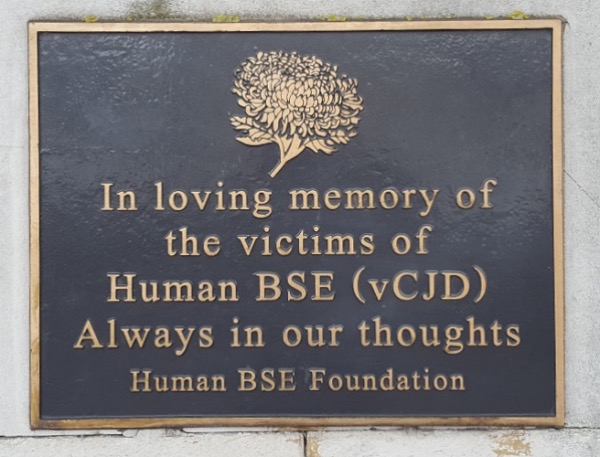
Located on the Albert Embankment outside St Thomas’ Hospital just to the south of Westminster Bridge, is a small plaque commemorating the victims of Human BSE (bovine spongiform encephalopathy), sometimes referred to as the human form of ‘Mad Cow Disease’.

The memorial, which was erected by the now defunct Human BSE Foundation, reads: “In loving memory of the victims of Human BSE (vCJD). Always in our thoughts.” There’s also an image of a chrysanthemum, a flower sometimes placed on graves to honour the dead.

It was reported in March, 2010, that since 1990, 168 people have died from Human BSE, also known as vCJD (variant Creutzfeldt–Jakob disease).

There has in recent years been a push to relocate the plaque from its position on the Albert Embankment to a more prominent place.

PICTURE: Cograng (licensed under CC BY-SA 4.0)

10 disease-related memorials in London…5. Sir Ronald Ross…

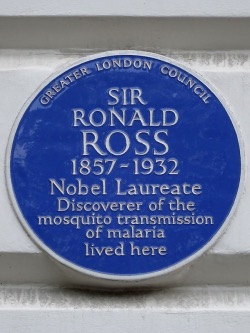
This English Heritage Blue Plaque marks the property in Cavendish Square, Westminster, where Sir Ronald Ross, a key figure in the battle against malaria, lived for a period.

The Indian-born Ross received the 1902 Nobel Prize for Physiology or Medicine for his efforts in discovering, while working for the Indian Medical Service in 1897, how malaria is transmitted by mosquitoes. The find opened the way for combatting the disease.

Having trained in London, Ross worked for the Indian Medical Service for 25 years before joining the faculty of Liverpool School of Tropical Medicine. He went on to hold the post of professor and chair in Tropical Sanitation at Liverpool University.

He held various other posts – including consultant physician to the War Office and consultant to the Ministry of Pensions – before, in 1926, he became director-in-chief of the Ross Institute and Hospital for Tropical Diseases, an institution established in Putney Heath and named after him.

He held this position until his death in 1932 and was buried in the Putney Vale Cemetery nearby.

The plaque on the property at 18 Cavendish Square, where Ross lived when establishing his institute, was installed in 1985 by the Greater London Council. Ross’ name, along with 23 others (including Edward Jenner) can also be seen on a frieze on the London School of Hygiene & Tropical Medicine, in honour of his contributions to public health.

While the impact of malaria has been dramatically curtailed around the world thanks to various interventions, the disease still kills hundreds of thousands. In 2018 alone, it was reported that 405,000 people, mostly young children in sub-Saharan Africa, died of malaria.

PICTURE: Spudgun67 (licensed under CC BY 2.0).

What’s in a name?…Seething Lane…

The name of this narrow throughfare in the City of London has nothing to do with anger. Rather the moniker comes from an old English word meaning ‘full of chaff’ – ‘sifethen’.

The reference relates to the presence of corn market which in medieval times was located nearby in Fenchurch street. The chaff apparently blew down from the market to the laneway. Hence ‘Sifethen’ or ‘Seething’ Lane.

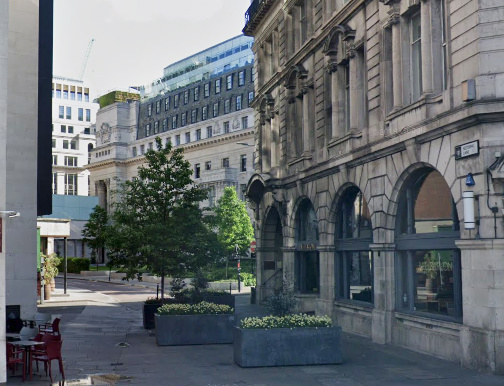
The lane, which runs north-south from the junction of Hart St and Crutched Friars to Byward Street, is famous for being the former location of the Navy Office. Built here in the 1650s, it was where diarist Samuel Pepys worked when appointed Clerk of the Acts of the Navy.

Pepys, who later became Secretary of the Admiralty, was given a house in the lane. The church where he worshipped, St Olave, Hart Street, is still located at the north end of the lane.

Having survived the Great Fire of London in 1666, the Navy Office burnt down in 1673 and was rebuilt soon after to the designs or Sir Christopher Wren or Robert Hooke. It was eventually demolished in 1788 when the office moved to Somerset House.

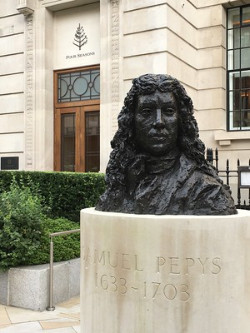
There’s a now a recently redeveloped garden where the Navy Office once stood in which can be found a bust of Pepys. The work of late British sculptor Karin Jonzen, it was first placed in an earlier garden on the site by the Pepys Society in 1983.

The garden, which is now part of the Trinity Square development, also features an English Heritage Blue Plaque commemorating the Navy Office and a series of scenes carved into stone by Alan Lamb depicting scenes from Pepys’ life and diaries.

All Hallows-by-the-Tower stands at the south end of the partly pedestrianised street.

PICTURE: Top – Google Maps (image lightened); Right – The bust of Samuel Pepys in the Seething Lane Gardens (Dave Bonta/licensed under CC BY-SA 2.0)


10 disease-related memorials in London…4. Edward Jenner statue…

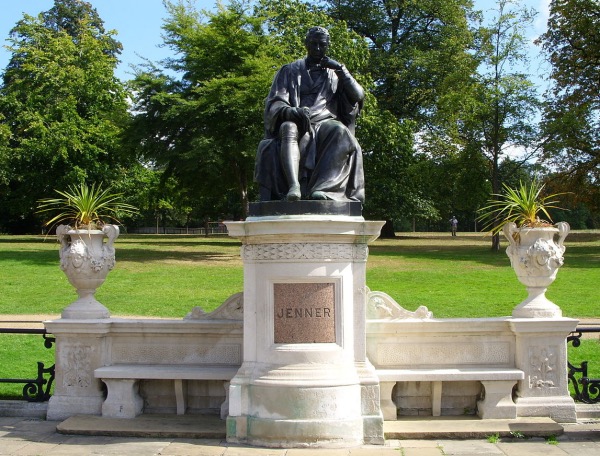
Located in the Italian Garden in Kensington Gardens, this statue commemorates Edward Jenner, the Gloucestershire-born doctor credited with the development of the modern vaccine for smallpox.

Smallpox is estimated to have killed some 400,000 people each year in the 18th century. Jenner, who trained in London in the early 1770s, had heard that having cowpox protected milkmaids from getting smallpox inoculated a healthy child, eight-year-old James Phipps (the son of his gardener), with cowpox and, injecting him with smallpox two months later, was able to show the boy was immune to smallpox (although the ethics of Jenner’s experiment still remain a matter of considerable debate).

The bronze statue, which depicts Jenner seated, was the work of Royal Academician William Calder Marshall. Funded through international subscription, it was originally was unveiled by Prince Albert in 1858 in Trafalgar Square. It was moved to the Italian Garden in 1862, apparently after pressure from anti-vaxxers.

A bronze plaque laid in the ground in front of the statue describes Jenner, who is sometimes hailed as the “Father of Immunology”, as a “country doctor who benefited mankind”.

Smallpox, which is believed to have killed some 300 million people in the 20th century alone, was declared to have been eradicated worldwide by the 33rd World Health Assembly in May, 1980, with the last reported case in Somalia in 1977.

Recent years have seen a push to have the statue returned to Trafalgar Square.

PICTURE: Iridescenti (licensed under CC BY-SA 3.0)

10 disease-related memorials in London…3. The Lambeth cholera epidemic memorial…

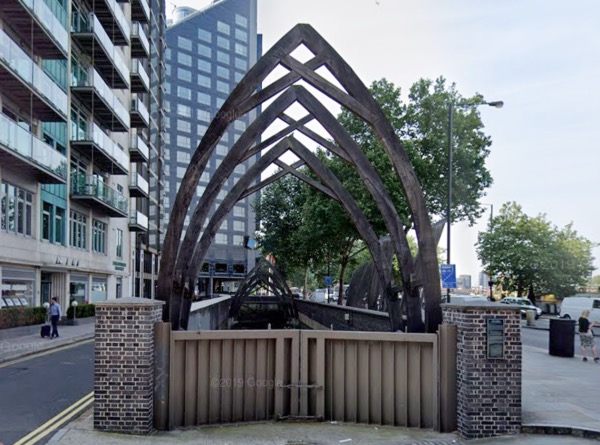
Located at White Hart Dock on Albert Embankment in Lambeth is a plaque with a rather lengthy inscription commemorating residents who died in the cholera epidemic of 1848-49.

More than 1,500 inhabitants of this waterfront district died in the outbreak first reported in September, 1848. The River Thames was believed the cause – with people drinking the river water due to lack of alternatives – and the absence of sanitation in the area and close living conditions were seen as exacerbating factors.

The plaque records that the first victim was recorded as John Murphy, a 22-year-old unemployed labourer who lived at of 26 Lower Fore Street. He fell ill on 30 September, 1848, and died the following morning.

The inscription also states that at least 1,618 Lambeth waterfront residents perished in the outbreak and and were buried in unmarked graves in the burial ground in Lambeth High Street, now the Lambeth Recreation Ground. However, the plaque adds that “it is likely many victims were unrecorded and the death toll was much higher.”

The plaque also features the text of a letter to the editor written concerning the cholera outbreak which had waned by autumn 1849.

The plaque, the text of which was written by Amanda J Thomas – author of two books on the subject of cholera in the Victorian era, was erected on a public artwork commemorating the former White Hart Dock in 2010.

PICTURE: White Hart Dock with the plaque on the right-hand side (via Google Maps).

This Week in London – Windrush oral histories; Berkeley Square gets a new sculpture; and, Sir Robert Geffrye statue under review…

Hitherto unheard oral histories documenting the lived experience of the Windrush generation and the generations that followed have been released by the Museum of London. The oral histories, which were recorded in 2018 as part of the Conversation Booth project in City Hall, are part of the museum’s new online collection of Windrush-related content. Drawn from the collections of both the Museum of London and Museum of London Docklands, it includes objects, photos, videos and articles. To explore the collection, head to www.museumoflondon.org.uk/museum-london-docklands/windrush-stories.

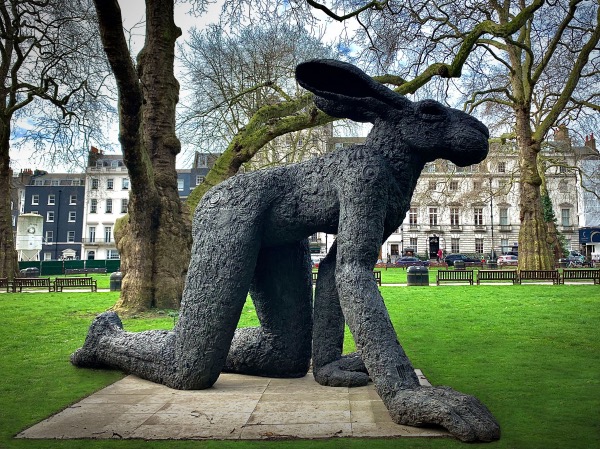
A hybrid sculpture depicting the body of a woman with the head of a hare has gone on show in Berkeley Square. The work of Sophie Ryder, Crawling was hand-made in 1999 from wet plaster, old machine parts and scavenged toys then cast in bronze. The work is part of City of Westminster’s City of Sculpture programme which brings sculpture to iconic outdoor locations.

The Museum of the Home is asking people for their opinion on the future of the statue of Sir Robert Geffrye which stands out the front of the almshouses housing the museum in Shoreditch. The almshouses were built by Geffrye, who was involved with the slave trade having made made his fortune with the East India Company and the Royal African Company, in 1714. The consultation is being held in partnership with Hackney Council which is conducting a wider review of landmarks and the naming of public spaces in the borough. The consultation remains open until the 2nd July. To have your say, head to www.surveymonkey.co.uk/r/geffrye-statue.

Send all items to exploringlondon@gmail.

10 disease-related memorials in London…1. The Broad Street pump…

With 2020 to be sadly remembered as the year of COVID-19 (and St Paul’s plans to commemorate those who have died in a permanent memorial in the cathedral), we thought we’d take a look memorials and monuments related to disease outbreaks of the past.

First up is a pump in Soho, a replica of the original Broad Street hand pump which lay at the centre of a cholera outbreak in 1854. Its commemorates the efforts of Dr John Snow, whose work in mapping the course of the outbreak lead to him identifying the pump as the source of the outbreak with the well beneath contaminated by human waste from an old cesspit.

The Yorkshire-born doctor’s work, which subsequently led him to have the pump handle removed and thus prevent further spread of the disease, was a breakthrough in preventing the spread of cholera by showing the source was contaminated water (many people had previously thought was spread through the air, the so-called “miasma theory”).

The replica pump was installed in what is now Broadwick Street, just outside The John Snow pub, in 1992 at the behest of the John Snow Society and Westminster Council. It was removed in 2015  as the area was redeveloped and was then re-installed – along with an explanatory plaque – in 2018.

It stands alongside a red granite block in the pavement which is said to mark the exact spot where the original pump was located (there’s another plaque mentioning that on the pub).

There’s also a blue plaque on the pub commemorating Snow’s work to determine cholera was a water-born disease which was erected by the Royal Society of Chemistry in 2008.

PICTURE: The memorial pump with the John Snow pub behind and the Royal Society of Chemistry blue plaque (Matt Brown/licensed under CC BY 2.0)

This Week in London – Statue of slave owner removed; Finsbury Circus to be redesigned; and, ZSL London Zoo reopening…

A statue of slave owner Robert Milligan has been removed from its position outside of the Museum of London Docklands. The Canal and River Trust removed the statue this week in recognition of the “wishes of the community”. The move had the support of the museum which is one of only three museums in the UK to address the history of the transatlantic slave trade. “The Museum of London recognises that the monument is part of the ongoing problematic regime of white-washing history, which disregards the pain of those who are still wrestling with the remnants of the crimes Milligan committed against humanity…” the museum said in a statement issued earlier in the week. “Now more than ever at a time when Black Lives Matter is calling for an end to public monuments honouring slave owners, we advocate for the statue of Robert Milligan to be removed on the grounds of its historical links to colonial violence and exploitation.” Milligan was a prominent British slave owner who, by the time of his death in 1809, owned 526 slaves and two sugar plantations in Jamaica. The statue, the work of Sir Richard Westmacott, was moved to a position outside the museum in West India Quay in 1997. Earlier this week, the Mayor of London, Sadiq Khan, announced a new Commission for Diversity in the Public Realm which will review landmarks – including murals, street art, street names, statues and other memorials – across the city of London with a view to improving diversity in the public realm.

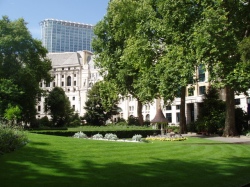
The City of London Corporation has launched a competition to redesign the Grade II-listed gardens at Finsbury Circus. The two-stage competition aims to identity creative and sustainable design ideas in a bid to return Finsbury Circus Gardens to being a multifunctional public space with a pavilion as well as a “sanctuary” within the Square Mile. The corporation is seeking a joint bid from an architect and a landscape architect to deliver a new design for the reinstatement of Finsbury Circus Gardens and Pavilion. Some two-thirds of the Finsbury Circus Gardens, one of the oldest parks in the City, have been used by Crossrail for the past 10 years to provide access to a section of tunnel between Farringdon and Liverpool Street. The works required the removal of historic features like the bowling green and historic Grade II drinking fountain and these will now be reinstated into the new design. PICTURE: Looking across Finsbury Circus Gardens in 2006 (David Williams /licenced under CC BY-SA 2.0)

Tickets for ZSL London Zoo have gone on sale ahead of its planned reopening next week. The zoo will reopen on Monday, 15th June, for the first time since its closure on Saturday, 21st March due to the coronavirus pandemic. The zoo, which is offering pre-allocated, timed entry slots, limited to just 2,000 visitors a day, says its taken numerous measures to ensure the safety of visitors. For more, head to www.zsl.org/zsl-london-zoo.

Send all items for inclusion to exploringlondon@gmail.com.

10 (lesser known) National Trust properties in London…4. The Strand Lane ‘Roman’ Baths…

Please note: Exploring London is aware that sites across London have closed temporarily as a result of the COVID-19 outbreak. But we’re continuing our coverage as usual – in the hope you can visit at a later time…

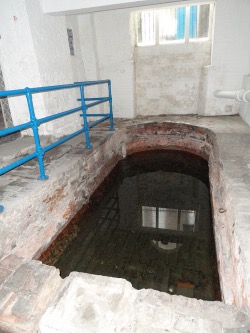
Located at 5 Strand Lane in the West End, these brick-lined baths were long-reputed to be of Roman origin. But they are actually believed to be the remains of a cistern built in 1612 to supply water to fountain in the gardens of Old Somerset House.

The fountain had been built by French engineer, Salomon de Caus, after he was commissioned to do so as part of King James I’s efforts to refurbish Somerset House for Queen Anne of Denmark.

Following the demolition of the fountain, the cistern was neglected until the 1770s when the cistern was used a public cold plunge bath attached to a property at 33 Surrey Street. A second bath, called the ‘Essex Bath’ was added (it’s now under the nearby KCL Norfolk Building).

The idea that they were Roman is believed to have originated in the 1820s when the bath was so described as an advertising gimmick (Charles Dickens’ helped popularise the idea in his book David Copperfield – it is believed Dickens himself may have bathed here).

The 1.3 metre deep bath passed through a couple of different hands in the ensuing decades including Oxford Street draper Henry Glave and Rev William Pennington Bickford, the Rector of St Clement Danes, who, believing in the bath’s Roman origins, hoped to turn them into a tourist attraction.

But his plans came to nothing due to a lack of funds and following his death, in 1944, the National Trust agreed to take on ownership while London County Council agreed to see to its maintenance. They reopened the baths, following repairs, in 1951.

These days, while owned by the Trust, the baths are managed by Westminster Council.

WHERE: 5 Strand Lane (nearest Tube station is Temple); WHEN: While National Trust properties are temporarily closed, viewings are usually arranged through Westminster Council and Somerset House Old Palaces tour; COST: Free; WEBSITE:  www.nationaltrust.org.uk/features/strand-lane-roman-baths.

PICTURE: Michael Trapp (licensed under CC BY-SA 4.0)

10 (lesser known) monuments featuring animals in London – A recap…

Before we move on from our recent series on animal monuments, we pause for a recap…

10 (lesser known) monuments featuring animals in London – 1. Dick Whittington’s cat…

10 (lesser known) monuments featuring animals in London – 2. Tom Sayer’s dog, Lion…

10 (lesser known) monuments featuring animals in London – 3. Hodge…

10 (lesser known) monuments featuring animals in London – 4. Trump…

10 (lesser known) monuments featuring animals in London – 5. Jamrach’s Tiger…

10 (lesser known) monuments featuring animals in London – 6. Sam the cat…

10 (lesser known) monuments featuring animals in London – 7. Jim and Tycho…

10 (lesser known) monuments featuring animals in London – 8. The elephants of the Tower…

10 (lesser known) monuments featuring animals in London – 9. Old Tom…

10 (lesser known) monuments featuring animals in London – 10. Jacob the horse…

We kick off a new Wednesday series next week…

10 (lesser known) monuments featuring animals in London – 10. Jacob the horse…


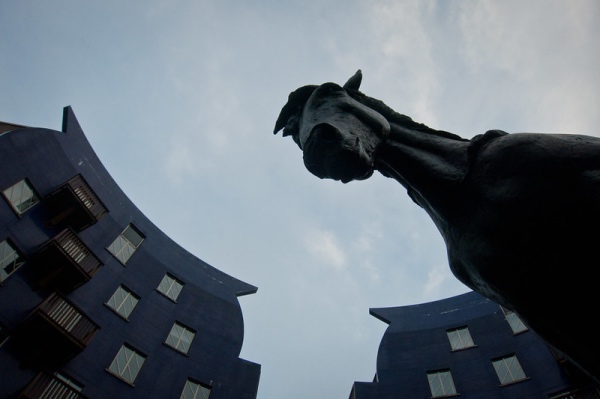
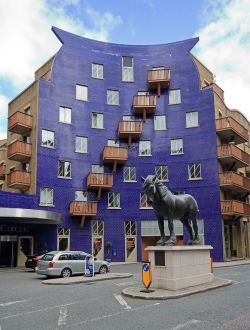
The statue of ‘Jacob’, a working dray horse, represents the horses who once worked at John Courage’s Anchor Brewhouse in Bermondsey near Tower Bridge.

The Courage horses – responsible for delivering beer from the brewery to pubs in London – were stabled beside the establishment, near where the monument now stands in Queen Elizabeth Street. Though the brewery buildings remain (and are now apartments), the stables do not.

Jacob, the statue, was installed by Jacobs Island Company and Farlane Properties in 1987 at the centre of the residential development known as ‘The Circle’ to commemorate the history of the site. The monument, which was delivered to the site by helicopter, is the work of artist Shirley Pace.

Jacob’s name apparently comes from Jacob’s Island which was formerly located in the area.

The area where the brewery stood was formerly part of the parish of Horsleydown – a moniker that is said by some to have derived from “horse-lie-down”, a description of working horses resting nearby on the south bank of the Thames before crossing London Bridge into the City of London.

PICTURES: Top – Nico Hogg (licensed under CC BY-NC 2.0); Right – Marc Pether-Longman (licensed under CC-BY-NC-ND 2.0)


10 (lesser known) monuments featuring animals in London – 9. Old Tom…

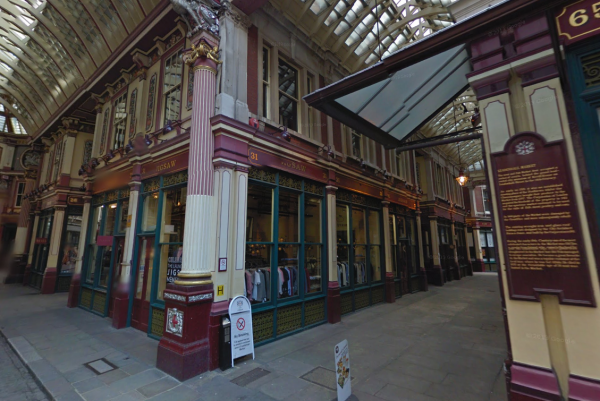
Famously associated with Leadenhall Market, Old Tom was a gander who for several decades was a popular figure at the City of London marketplace.

Said to have been born in the late 1790s, he was brought to London among a massive contingent of birds from the Continent the aim of being fattened up for the market block.

The story goes that when the time came for the chop, however, Tom did a dash and apparently held off his pursuers for several days, avoiding becoming one of the 34,000 hapless geese which were apparently slaughtered in a two day period. His doggedness in defying the blade led to sympathy among the workers at the market who decided to let him be.

Feed on tidbits from local inns, Tom took up residence and became something of a favourite among those who worked there. He apparently lived to the the ripe old age of 37 or 38-years-old and when he died in 1835, such was the love for him, that Tom lay in state at the market to allow people to pay their respects before his burial at the market. His obituary was published in The Times, referring to him as the “chief of geese, the poulterer’s pride”.

Old Tom is mentioned on a plaque at the entrance to Leadenhall Market (pictured) which tells something of his story and there’s also a bar within Leadenhall Market itself which serves as a memorial – Old Tom’s Bar.

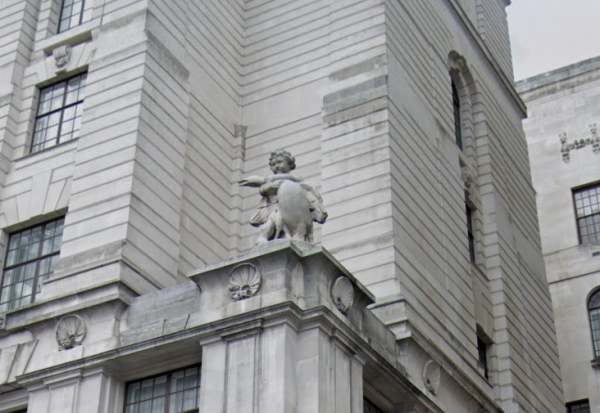
Some also believe that the two identical statues of a small boy grappling with a goose (pictured below) which sit atop the former Midland Bank headquarters building, located at 27 Poultry (and now hotel called The Ned) – just a few hundred paces from the market, also commemorate the gander.

The website of The Ned, however, suggests the statues, designed by Sir William Reid Dick for the architect Edwin Lutyens was actually inspired by Boethus’ famous sculpture of a boy playing with a goose which can be found in the Vatican.

Maybe it’s both?

PICTURES: Google Maps

10 (lesser known) monuments featuring animals in London – 8. The elephants of the Tower…

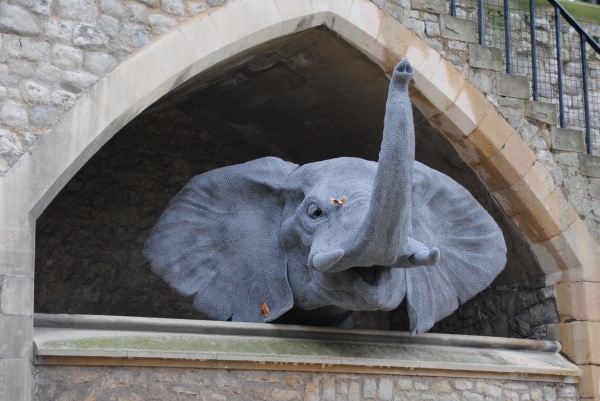
Sadly, we don’t know the name of this pachyderm – if it had one – but we do know that a couple of elephants lived in the Tower of London during the Middle Ages.

The first elephant to arrive was presented to King Henry III as a gift by King Louis IX of France.

The animal was apparently shipped across the Channel in 1255 and brought to the Tower of London by boat. A special 40 foot long wooden elephant house was built to accommodate it at the Tower.

It’s no surprise that such an exotic species attracted widespread interest. The medieval chronicler Matthew Paris was so intrigued he travelled from his monastery in St Albans to see it, noting that it was “the only elephant ever seen in England” (although it’s said that the Roman Emperor Claudius, when he arrived in Britain, came with elephants).

The elephant didn’t survive long – it died just two years after arriving in England and was buried in the Tower’s bailey. Its bones were apparently later dug up; it’s speculated this was so they could be made into receptacles for holy relics.

The elephant depicted could also represent one sent to King James I by the Spanish King in 1623 along with instructions that the poor creature should only drink wine between the months of September and April.

Made with galvanised wire, the sculpture of the elephant’s head – located in the courtyard between the Lantern and Salt Towers – is one of 13 representing some of the animal inhabitants of the Tower over the centuries. On display until 2021, ‘Royal Beasts’ is the work of artist Kendra Haste.

WHERE: Tower of London (nearest Tube station Tower Hill); WHEN: 9am to 4.30pm, Tuesday to Saturday, 10am to 4.30pm Sunday to Monday; COST: £24.70 adults; £11.70 children 5 to 15; £19.30 concessions (family tickets available; discounts for online purchases/memberships); WEBSITE: www.hrp.org.uk/toweroflondon/.

10 (lesser known) monuments featuring animals in London – 7. Jim and Tycho…

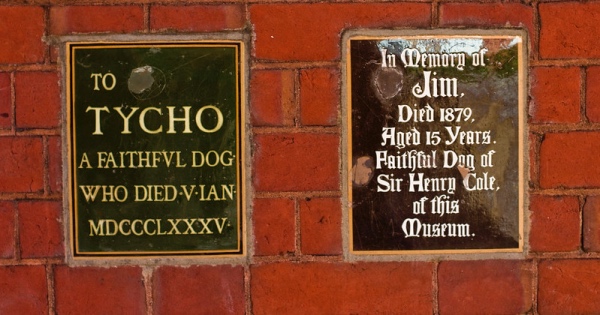
Set into a wall of the V&A’s John Madejski Garden in South Kensington are two small plaques – one dedicated to “Jim” and another to “Tycho”. Both, as one of the plaques records, were dogs, at least one of which belonged to the museum’s first director, Sir Henry Cole.

Jim was a Yorkshire terrier who died at Sir Henry’s home on 30th January, 1879, at the age of (as the plaque records) 15 years.

Sir Henry wrote in his diary on that day that “Jimmy”, who died very quietly apparently of “asthma and cold”, had been portrayed in Punch with him (although it was actually in Vanity Fair in 1871) and “was a character in the Museum”.

While Jim’s story is fairly well known, there’s a little more mystery surrounding the identity of Tycho, which the plaques records as a “faithful dog” who who died in 1885.

But according to Nicholas Smith, an archivist based at the V&A Archive and his meticulously researched blog post on the matter, Tycho is also mentioned in Cole’s diary – not as his own dog but as that of his son Alan. Indeed, one diary entry records Tycho fighting with another dog (presumably Cole senior’s) named Pickle. Which as Smith points out, begs the question of why no plaque for Pickle?

Both Jim and Tycho are believed to be buried in the garden where the plaques can be seen (which may explain the lack of a plaque for Pickle).

PICTURE: Steve and Sara Emry (licensed under CC BY-NC-SA 2.0)


10 (lesser known) monuments featuring animals in London – 6. Sam the cat…

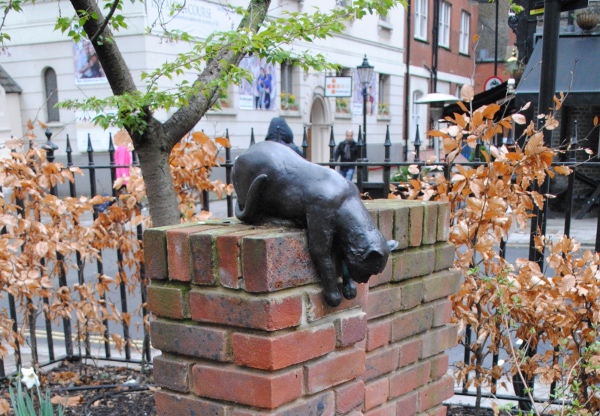
Captured preparing to jump off a red brick wall, this small playful statue of a domestic cat named Sam can be found in the south-west corner of Queen Square Gardens in Holborn. 

The bronze statue actually commemorates Patricia Penn (1914-1992), a former resident in the square who was a nurse, “champion of local causes” and member of the Queen Square Resident’s Association. The statue was donated by the local community in Penn’s memory.

As is clear from the monument, Penn was also a cat lover. Sam was, of course, one of her pet cats.

Sadly, the original version of Sam – which was installed in 2002 to mark the 10th anniversary of Penn’s death, was stolen in 2007. But a replacement was installed in 2009 – this time with steel rods running into the bricks to prevent it being taken again.