This Week in London – Noël Coward’s glittering world; figures from the African diaspora; and, reflections on land rights and colonialism in Australia…

The glittering world of playwright and songwriter Noël Coward is on show in a new exhibition opening at the Guildhall Art Gallery this Monday. The much delayed Noël Coward: Art & Style, which marks the 100th anniversary of Coward’s West End debut as a 19-year-old earlier this year, brings together never-before-seen materials from the Coward Archive and demonstrates the impact he and his creative circle had on the culture of his time – and today. Highlights include an original page of Coward’s handwritten lyrics for Mad Dogs and Englishmen, the chocolate brown evening suit he wore in the film Boom!, two of his signature silk dressing gowns, his iconic ‘Hamlet’ chair, and several of his own paintings. There’s also a specially commissioned new reconstruction of the iconic white satin dress that Molyneux designed in 1930 for Gertrude Lawrence in Private Lives and a never-before-exhibited gold lamé theatre cape by Lucile (Titanic survivor Lady Duff Gordon) from 1920. The exhibition, which is free, runs until 23rd December. Tickets must be booked in advance. For more, see www.cityoflondon.gov.uk/noelcoward.

A new portrait depicting Dido Belle (1761-1804) has gone on display at Kenwood House – one of six works depicting historic figures from the African diaspora now on show at English Heritage properties across the nation. Belle, who is depicted by artist Mikéla Henry-Lowe, was the illegitimate daughter of a young black woman named Maria Bell and a Royal Naval officer, Sir John Lindsay. She spent much of her life at Kenwood House with her great-uncle William Murray, 1st Earl of Mansfield, the Lord Chief Justice. Other portraits in the series depict the likes of African-born Roman Emperor Septimius Severus (the work of Elena Onwochei-Garcia, it’s on display at Corbridge Roman Town on Hadrian’s Wall, Northumberland), North African-born 7th century Abbot Hadrian (the work of Clifton Powell, it’s on display at St Augustine’s Abbey in Kent) and Queen Victoria’s god-daughter Sarah Forbes Bonetta (the work of Hannah Uzor, it’s on display at Osborne House on the Isle of Wight). For more, see www.english-heritage.org.uk/learn/histories/black-history/.

More than 25 works by Australian artists exploring debates around land rights and colonialism have gone on show in a new exhibition at the Tate Modern. A Year in Art: Australia 1992 takes as its starting point the High Court of Australia’s landmark 1992 Mabo ruling which overturned the doctrine of terra nullius. Works on show include Emily Kame Kngwarreye’s 1989 Untitled (Alhalkere) – an expression of her cultural life as an Anmatyerre elder, Gordon Bennett’s 1991 work Possession Island (Abstraction) which is presented in dialogue with Algernon Talmage’s 1937 work The Founding of Australia 1788, and Tracey Moffatt’s 1997 photographic series Up in the Sky, which speaks to the ‘Stolen Generations’ – the forced separation of Aboriginal families by government agencies. At the heart of the display is Vernon Ah Kee’s 2010 four-screen video installation tall man which shows footage of the protests and riots following the death in custody of Mulrunji Doomadgee on Palm Island in 2004. The exhibition is free. For more, see www.tate.org.uk.

Send all items for inclusion to exploringlondon@gmail..com

This Week in London – Royal gowns; first ‘blossom garden’; and, the brightest colours ever created…

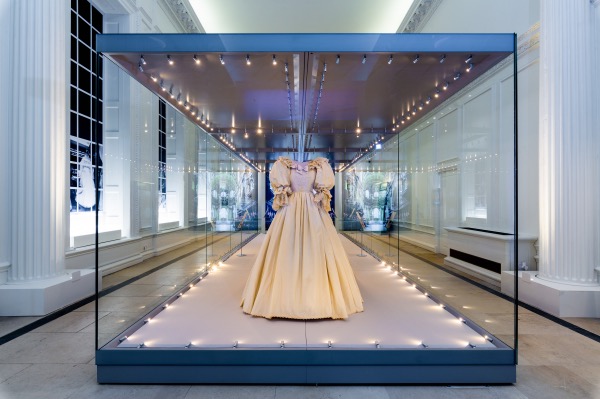
A view of the Royal Style in the Making exhibition. PICTURE © Historic Royal Palaces.

A stunning wedding dress worn by Diana, the Princess of Wales – including its 25 foot long sequin encrusted train – and a rare surviving ‘toile’ – a working pattern – of the 1937 coronation gown of Queen Elizabeth, The Queen Mother, are among star items on display in a new exhibition in Kensington Palace’s Orangery. Royal Style in the Making features some never-before-seen items from the archives of some of the most celebrated royal couturiers of the 20th century as well as original sketches, fabric swatches and unseen photographs from the Royal Ceremonial Dress Collection, a treasure trove of more than 10,000 items of dress and design history cared for by Historic Royal Palaces. Admission charge applies. The display can be seen until 2nd January. For more, see www.hrp.org.uk.

• The first in a series of ‘blossom gardens’ has been opened by the National Trust in Queen Elizabeth Olympic Park in London’s east. The garden features 33 trees including cherry, plum, hawthorn and crab apple which represent the city’s 32 boroughs and the City of London itself. The garden, which was opened last month by the Mayor of London, Sadiq Khan, will be followed by further gardens planted over the next five years across England, Wales and Northern Ireland.

The brightest colours ever created are dazzling eyes at Kew Gardens. Naturally Brilliant Colour, an exhibition in the Shirley Sherwood Gallery of Botanical Art, explores the origins of colour and vision and showcases how botanical artists have depicted the brightest and most intense colours found in nature. Works by Robert John Thornton (1768-1837) and contemporary artist Julia Trickey are on show as well as the world’s first botanical artwork to accurately reproduce natural structural colour (it features flakes of ‘Pure Structural Colour’ which artificially replicates how microscopic structures within the surface layers of plants and animals reflect sunlight in a specific way to generate bright colours). Runs until 26th September. Admission charge applies. For more, see www.kew.org.

Send all items for inclusion to exploringlondon@gmail.com.
LondonLife – The Bow Street Police Museum opens its doors…

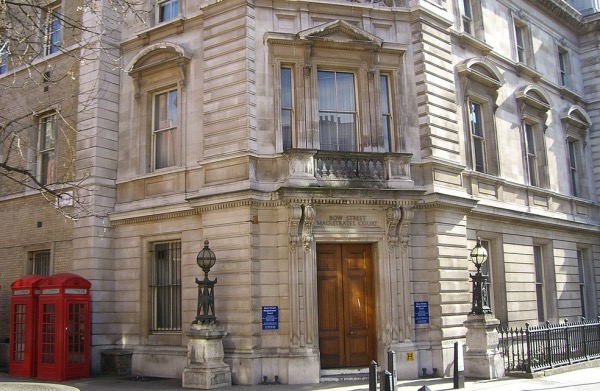
The Bow Street Magistrates’ Court in 2006, the year of its closure. PICTURE: Edward (public domain)

The Bow Street Police Museum, located on the site of the 1881 Bow Street Magistrates’ Court and Police Station, has opened its doors in Covent Garden. The museum tells the story of the early Bow Street Runners, the first official law enforcement service in the city, and the Metropolitan Police officers who came after. Visitors can explore the former cells and hear the stories of those who once worked in the building. The connections between Bow Street and the constabulary dates back to 1740 when Thomas de Veil opened a Magistrates’ Court in his family home at number four Bow Street in the 18th century and continued until the closure of the Bow Street Magistrates’ Court in 2006. Among the famous faces who passed through Bow Street’s police station and court over that time were Oscar Wilde, Suffragettes Sylvia Pankhurst, Christabel Pankhurst and Mrs Drummond, and the Kray twins. For more, head to https://bowstreetpolicemuseum.org.uk.

This Week in London – Nero at the British Museum; Stephen Hawking’s office to be recreated at the Science Museum; and, Blue Plaque for Indian engineer Ardaseer Cursetjee Wadia…

This image has an empty alt attribute; its file name is head-of-nero-bm.jpg
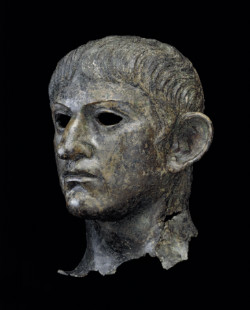
Head from a bronze statue of the emperor Nero. Found in England, AD 54– 61. PICTURE: © The Trustees of the British Museum.

A bronze head of the Roman Emperor Nero found in the River Alde in Suffolk – long wrongly identified as being that of the Emperor Claudius – and the Fenwick Hoard – which includes Roman coins, military armlets and jewellery – are among the star sights at a new exhibition on Nero at the British Museum. Nero: the man behind the myth is the first major exhibition in the UK which takes Rome’s fifth emperor as its subject. The display features more than 200 objects charting Nero’s rise to power and his actions during a period of profound social change and range from graffiti and sculptures to manuscripts and slave chains. Other highlights include gladiatorial weapons from Pompeii, a warped iron window grating burnt during the Great Fire of Rome of 64 AD, and frescoes and wall decorations which give some insight into the opulent palace he built after the fire. The exhibition, which opens today, runs until 24th October in the Sainsbury Exhibitions Gallery. Admission charge applies. For more, see www.britishmuseum.org/whats_on/exhibitions/nero/events.aspx.

The office of late theoretical physicist Professor Stephen Hawking will be recreated at the Science Museum, it was announced this week. The contents of the office, which Hawking, the author of the best-selling A Brief History of Time, occupied at Cambridge’s department of applied mathematics and theoretical physics from 2002 until shortly before his death in 2018, includes reference books, blackboards, medals, a coffee maker and Star Trek mementoes as well as six of his wheelchairs and the innovative equipment he used to communicate. The museum, which reportedly initially plans to put the objects on display in 2022 and later recreate the office itself, has acquired the contents through the Acceptance in Lieu scheme, which allows families to offset tax (his archive will go to the Cambridge University Library under the same scheme).

Nineteenth century civil engineer Ardaseer Cursetjee Wadia – the first Indian Fellow of the Royal Society – has been honoured with an English Heritage Blue Plaque at his former Richmond home. The plaque, which can be found on 55 Sheen Road – the villa Cursetjee and his British family moved to upon his retirement in 1868, was installed to mark the 180th anniversary of his election as a Fellow of the Royal Society. Cursetjee is considered the first modern engineer of India and was the first Indian at the East India Company to be placed in charge of Europeans. He was at the forefront of introducing technological innovations to Mumbai including gaslight, photography, electro-plating and the sewing machine. Cursetjee first visited London in 1839 and travelled regularly been Mumbai (formerly Bombay) and London until his retirement. For more, see www.english-heritage.org.uk/visit/blue-plaques.

Send all items for inclusion to exploringlondon@gmail.com.
This Week in London – V&A celebrates Alice; life under Nazi air raids; and, carbon capture at the Science Museum…

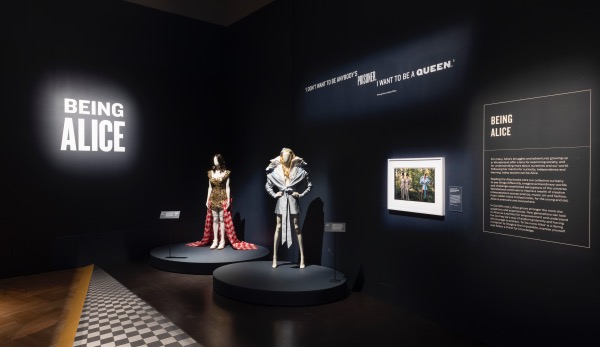
A view of the Alice: Curiouser and Curiouser exhibition at the V&A. PICTURE: Courtesy of the V&A

A landmark exhibition focusing on the iconic work of literature, Alice in Wonderland, opens at the V&A on Saturday. Alice: Curiouser and Curiouser features more than 300 objects encompassing film, performance, fashion, art, music and photography and explores the cultural impact of Alice in Wonderland and its ongoing inspiration for everyone from Salvador Dalí to The Beatles, Vivienne Westwood and Little Simz. Highlights of the exhibition, which boasts theatrical sets and immersive environments including a special VR experience, include Lewis Carroll’s handwritten manuscript, illustrations by John Tenniel, Ralph Steadman and Mary Blair for Walt Disney’s iconic 1951 film adaptation, Royal Opera House stage costumes, fashion from Iris van Herpen and photography from Tim Walker. Admission charges apply. Runs in The Sainsbury Gallery until 31st December. For more, see vam.ac.uk/alice.

Artworks which shine a new light on the experience of ordinary people forced into new patterns of living by Nazi air raids during World War II are the subject of a new exhibition which opened in the Churchill War Rooms this week. Wartime London: The Art of the Blitz includes newly acquired drawings from Henry Moore, as well as works from other British artists including William Matvyn Wright, Eric Ravilious, Ernest Boye Uden, Mabel Hutchinson, Evelyn Gibbs, Evelyn Dunbar, and Leila Faithfull. Admission charge applies. Runs until 12th September. For www.iwm.org.uk/events/wartime-london-art-of-the-blitz.

A prototype mechanical tree that absorbs carbon dioxide from the atmosphere is among objects on display in a new exhibition Our Future Planet – at the Science Museum. The exhibition offers visitors a look at the cutting-edge technologies and natural solutions being used to mitigate the impacts of climate change and, as well as Klaus Lackner’s Mechanical Tree – on display in the UK for the first time, it features experts including leading ecologists studying ancient forests, engineers at Arizona State University who developed the earliest versions of carbon capture machines, and chemists at C-Capture who are working to remove carbon dioxide from emissions at the UK’s largest power plant. This free exhibition runs until 4th September, 2022. For more, see www.sciencemuseum.org.uk/see-and-do/our-future-planet.

Send all items to exploringlondon@gmail.com.

Famous Londoners – Napoleon?

We know, we know – Napoleon Bonaparte never visited London. But given this month marks the bicentenary of his death on 5th May, 1821, we thought we’d mention a couple of places where you can find traces of the French Emperor in the British capital…

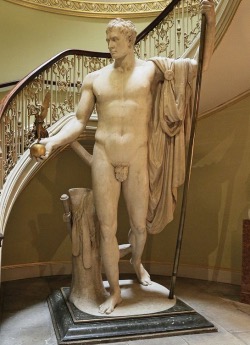
Napoleon as Mars the Peacemaker. PICTURE: Jörg Bittner Unna (licensed under CC BY-SA 3.0;image cropped)

1. Napoleon As Mars The Peacemaker. This larger than life statue – it stands 11 feet tall – is the work of Italian artist Antonio Canova and depicts Napoleon as the Roman God. Napoleon didn’t like the almost naked statue – when he saw it in 1811, he declared it “too athletic” and as a result, it was never displayed in public. Following the defeat of Napoleon at the Battle of Waterloo in 1815, the British Government purchased the statue and presented it to the Duke of Wellington as a gift. Recently cleaned, it is now on display in the Iron Duke’s former home, Apsley House at Hyde Park Corner (and can be seen there when it reopens to the public this week). The house also counts a recently restored bronze death mask of Napoleon among its treasures. The bronze is a copy of a plaster mask modelled on Napoleon’s corpse. For more, see www.english-heritage.org.uk/visit/places/apsley-house/.

2. Napoleon’s horse Marengo. A small grey Arab, Marengo was named after Napoleon’s victory at the Battle of Marengo in Italy in 1800 and apparently served the Emperor between 1800 and 1815. Marengo was captured on the battlefield after Napoleon’s defeat at Waterloo and transported to England. After its death, the horse’s skeleton was preserved and initially displayed at the Royal United Services Institute, moving to the National Army Museum in Chelsea in the 1960s. The skeleton is currently undergoing conservation work at the Natural History Museum before returning to the National Army Museum where it will be displayed in the Battle gallery. For more on the National Army Museum, see www.nam.ac.uk.

3. Portrait of Napoleon. A small image of a young Napoleon, this portrait – which arrived in England in 1797 – was the first many British people had seen of the Emperor (it was copied in engravings which were published across Britain). It was painted in a campaign tent on the road from Verona to Vienna in March, 1797, by Venetian artist named Francesco Cossia. Cossia had been commissioned by Francophile Maria Cosway, an artist then living in Oxford Street, London, to paint likenesses of several French Revolutionary generals including Napoleon. It is believed to have entered the collection of Sir John Soane somewhere between 1827 and 1830 and can now be seen in the Breakfast Room at the Sir John Soane’s Museum in Lincoln’s Inn Fields (reopening on 19th May). For more, see www.soane.org.

This Week in London – Rodin at the Tate; life-sized Monopoly; and, a floral tribute to John Keats…

Many London institutions reopen in the coming week – while some are continuing with exhibitions which were already on before lockdowns lead to closures, there are also some new exhibitions being launched and these we’ll feature in coming weeks…

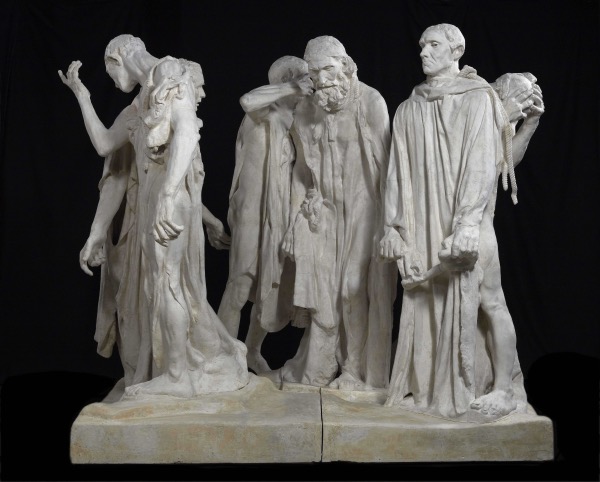
Auguste Rodin Monument to the Burghers of Calais, 1889 Musée Rodin, S.00153. PICTURE: Courtesy of the Tate Gallery.

A major new exhibition on the work of French sculptor Auguste Rodin opens at the Tate Modern on Monday. The EY Exhibition: The Making of Rodin features more than 200 works including the Thinker (1881) and The Three Shades (1886) as well as a newly restored plaster made in preparation for The Burghers of Calais (1889). The exhibition is the first show to focus in-depth on Rodin’s use of plaster and takes inspiration from the artist’s landmark self-organised exhibition at the Pavillon de l’Alma in 1900. It also explores the complex dynamics with different models – including his onetime studio assistant and collaborator Camille Claudel – and looks at his use of photography and watercolours. Located in the Eyal Ofer Galleries, the exhibition runs until 21st November. Admission charges applies. For more, see www.tate.org.uk.

The world’s first life-sized Monopoly-based attraction will be opening in Tottenham Court Road in August, it was revealed this week. Hasbro, Inc and Gamepath, a new division of international theatre producer Selladoor Worldwide, are behind the attraction which the City of London Corporation says will “bring together the best of the iconic board game, escape rooms and team challenge”. The premises at 213-215 Tottenham Court Road will house individually designed and unique main gameplay boards including Classic, The Vault, and City as well as a Junior Board. There will also be a retail outlet and a Monopoly-themed bar and restaurant. Stay tuned for more.

A new floral display featuring flowers from John Keats’ graveside in Rome and his home in London’s Hampstead form part of a new indoor art installation at the Hampstead property, Keats House, when it reopens Monday. The display, created by London artist Elaine Duigenan, is part of the Keats200 commemorations marking the bicentenary of his death. “Flowers are embedded in John Keats’s life story and are a vehicle for expressing something both transitory and lasting, and my installation seeks to honour his legacy by alluding to human frailty and resilience,” says Duigenan. “As an artist, I understand both the desire for recognition and the fear of leaving no mark, so I have crowned him laureate and wreathed him as though for oblivion.” For more (to check opening times before attending), see  www.cityoflondon.gov.uk/keats.

Send all items for inclusion to exploringlondon@gmail.com.
This Week in London – Raphael Court to reopen at V&A; naming a Tower raven; and, Caroline Norton’s Blue Plaque…

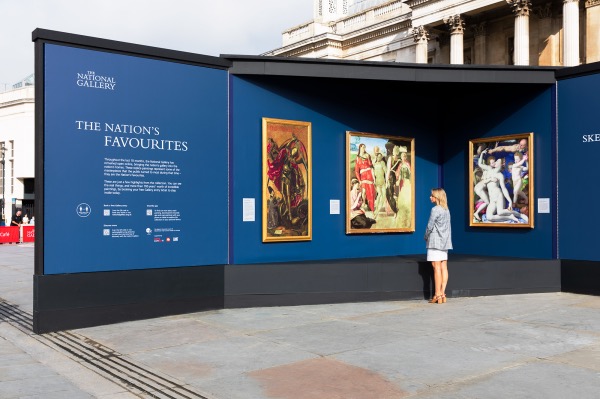
The V&A has unveiled its refurbished Raphael Court – home to the world famous Raphael Cartoons – after a renovation last year to mark the 500th anniversary of the artist’s death. The gallery, which reopens to the public along with the rest of the museum on 19th May, transforms the way visitors will encounter the large scale cartoons on loan to the V&A from the Royal Collection. The new gallery features state-of-the-art LED lighting, acoustic panelling and bespoke furnishings. There are also high-resolution images of the cartoons which can be explored at the gallery as well as online. The cartoons were created by Raphael in 1513 after he was commissioned by Pope Leo X to create a set of 10 designs for a series of tapestries to hang in the the Sistine Chapel. Illustrating scenes from the lives of Saints Peter and Paul, each of the cartoons – which were sent to the workshop of merchant-weaver Pieter van Aelst in Brussels to be made into tapestries – measures around five metres wide and 3.5 metres high. Seven of them survive and were brought to Britain in the early 17th century by the Prince of Wales (later King Charles I). They were first lent to the South Kensington Museum – now the V&A – by Queen Victoria in 1865. For more, see vam.ac.uk/raphael-cartoons.

People across the globe are invited to help name a baby female raven, one of a pair born at the Tower of London during lockdown. Until 18th May, people are invited to vote for their favourite name on the Ravenmaster’s shortlist – from Matilda (the name of a medieval queen) to Florence (named for Florence Nightingale), Brontë (named for the writing family), Winifred (named for Winifred Maxwell, the Countess of Nithsdale, who plotted her husband Lord Nithsdale’s escape from the Tower in 1716 disguised as a woman) and Branwen (a figure from Celtic mythology). The poll can be found at http://bit.ly/NameOurRaven and the winning name will be announced as part of the reopening of the Tower on 19th May.

Nineteenth century women’s rights campaigner Caroline Norton has been commemorated with an English Heritage Blue Plaque. The plaque is located on a townhouse at 3 Chesterfield Street in Mayfair, the home from where Norton fought for the rights to own the proceeds of her own work as a writer. Her abusive marriage and subsequent separation from George Chapple Norton was one of the most highly publicised cases in 19th-century Britain. It led to Norton successfully lobbying for legal rights for married women and, as a result of her campaigning, mothers were eventually granted custody of children under seven (and access thereafter) in cases of divorce or separation. For more on Blue Plaques, see www.english-heritage.org.uk/visit/blue-plaques.

Send all items for inclusion to exploringlondon@gmail.com.
This Week in London – Well-being at Kew; Poussin wins credit for ‘The Triumph of Silenus’; and, Euston explored…

Kew Gardens have unveiled a new programme of well-being events with the aim of encouraging people to enjoy the outdoors after the COVID-19 lockdown. The events, all of which will be COVID-19 safe and follow government guidelines, including everything from forest bathing sessions in the Arboretum inspired by the Japanese art of Shinrin-yokuto, a rare chance to cycle through the gardens on an evening bike ride, pilates in the Nash Conservatory and yoga sessions in the Temperate House. Check the Kew website for dates and times and admission charges.

The Triumph of Silenus hanging in Room 29 at The National Gallery. PICTURE: © The National Gallery

• The creator of The Triumph of Silenus (c1637), which was one of the first paintings to enter the collection of The National Gallery when it did so in 1824, has been confirmed as 17th century French painter Nicolas Poussin. The painting had long been plagued by questions of authenticity but following recent conservation work and in-depth technical analysis, it has been confirmed as a work of Poussin. The confirmation means the gallery holds 14 works by Poussin, making it one of the world’s leading collections of paintings by him. Later this year, the picture will feature in a new exhibition, Poussin and the Dance.

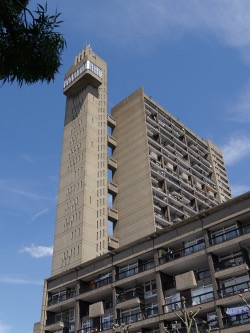
• People will have the chance to see parts of Euston Station usually not accessible to the public on a new virtual tour announced by the London Transport Museum. The tour is part of the next season of ‘Hidden London’ virtual events with new dates also to be announced for tours of King William Street, Brompton Road, Holborn (Kingsway) and Aldwych. Meanwhile, the museum will recommence its ‘Secrets of Central London’ walking tour in the West End on 17th May. Charges apply. For more on the virtual tours and dates, head to www.ltmuseum.co.uk/hidden-london/virtual-tours.

Send all items for inclusion to exploringlondon@gmail.com.

This Week in London – Online Book of Condolence; IWM’s photographic tribute; and, ZSL London Zoo reopens…

PICTURE: duncan c
(licensed under CC BY-NC 2.0/image cropped)

With books of condolence not available for the public to sign due to the coronavirus pandemic, the Royal Family has created a national Online Book of Condolence for those who wish to leave a message following the death of Prince Philip. The family have also asked that members of the public consider making a donation to a charity instead of leaving floral tributes in memory of the Duke. The ceremonial funeral, which is not open to the public, will be held on Saturday at 3pm in St George’s Chapel, Windsor. A national one minute of silence will observed at 3pm, as the funeral, commences.

Meanwhile, among tributes to remember Prince Philip is an online gallery of images at the Imperial War Museum’s website. Access the gallery from the IWM’s collections here.

ZSL London Zoo reopened to the public this week, three months after it closed its doors for the third national coronavirus-related lockdown. Visitor numbers are limited to ensure social distancing and visitors must pre-book. A one-way system is in place, with three prescribed routes ensuring guests remain socially-distanced while exploring. Indoor exhibits, including the Reptile House and Rainforest Life, will remain closed for now. For more, see www.zsl.org.

Send all items for inclusion to exploringlondon@gmail.com.
This Week in London – Gold bunnies at Hampton Court; ‘The Adoration of the Kings’ on a phone; and last two trees for London Blossom Garden…

Despite the ongoing impacts of the coronavirus pandemic, we hope you have a happy Easter break!

A screenshot from ‘Sensing the Unseen: Step into Gossaert’s ‘Adoration’, mobile edition’

The National Gallery’s first exhibition aimed at mobile phone users – exploring Jan Gossaert’s masterpiece, The Adoration of the Kings – goes live from Friday. Sensing the Unseen: Step into Gossaert’s ‘Adoration’, mobile edition features six poems in the voice of King Balthasar, a character depicted in the painting, who interprets six scenes shown in the work while interactive sound brings them to life, all in an effort to guide people to details they may have missed in the work. Users can use their zoom function to explore the masterpiece’s minutiae and share their favourite finds on Instagram. The mobile phone offering is a pre-cursor to the planned reopening of the physical exhibition Sensing the Unseen: Step into Gossaert’s ‘Adoration’ – forced to close just a week after opening last December – on 17th May. To see the mobile display, head to nationalgallery.org.uk/visiting/virtual-tours.

Hampton Court Palace is once again holding its Lindt Gold Bunny hunt for Easter. Families are invited to join in the search for the famous Lindt Gold Bunnies which have been hidden around the palace, enjoying the gardens along the way. Using a trail map, children will be able to learn about various lesser known Hampton Court residents including John Dale, Henry VIII’s master cook, and John Blanke, the King’s royal trumpeter. Successful treasure hunters can then claim a chocolate reward and a pair of gold bunny ears. Included in admission, the trail is designed for children aged three to 12-years-old and takes about one-and-a-half hours to complete. Runs until 18th April. For more, see www.hrp.org.uk/hampton-court-palace/whats-on/easter-lindt-gold-bunny-hunt/.

The final two blossom trees have been planted in the new London Blossom Garden. The public garden, which is being created as a lasting, living memorial to Londoners who have lost their lives to COVID-19 and the city’s shared experience of the pandemic, is located in the northern part of Queen Elizabeth Olympic Park in Newham. Scheduled to open later this spring, it has been created in partnership with the National Trust and with the support of Bloomberg, and features 33 blossoming trees representing London’s boroughs and the City of London.

Send all items for inclusion to exploring-london@gmail.com

This Week in London – Famous faces take in history, and, the Tudor world brought to life…

Famous faces from TV and radio including Strictly Come Dancing champion Oti Mabuse and her partner Marius Iepure, Radio 2’s Reverend Kate Bottley and TV presenter Monty Halls, are visiting dramatic historic locations that are special to them in a new series of videos launched by Historic England. In each film in the #UncoverMore campaign, the personalities “discover a thread through time that brings to life the stories of people, places and spaces that have survived through the decades”. In their film, Oti and Marius dance at two of England’s oldest ballrooms (at Powderham Castle and Hampton Court Place), while Rev Bottley visits Loughborough Bellfoundry, and Monty Halls takes in ‘The Lost Gardens of Heligan’. To watch the videos, head to https://historicengland.org.uk/coronavirus/culturerecoveryfund/uncover-more/.

The magnificence of the Tudor world will be bought to life in an online talk featuring Historic Royal Palace’s Chief Curator Dr Lucy Worsley next Wednesday. Worsley will be joined by Professor Glenn Richardson from St Mary’s University and fellow Historic Royal Palaces curators Dr Alden Gregory and Brett Dolman in an hour long talk that will focus one of “the most spectacular examples of royal showmanship”, the Field of Cloth of Gold, the 1520 event when Henry VIII met near Calais with his great rival François I of France. The talk will also feature a sneak preview of Hampton Court Palace’s upcoming exhibition Gold and Glory: Henry VIII and the French King. The event is free (although donations of £10 are encouraged). To register, head here.

Send all items for inclusion to exploringlondon@gmail.com.
LondonLife – Women’s history inspires comedians for International Women’s Day…

Female bus conductor. March 1975 © Henry Grant Collection – Museum of London

The world observed International Women’s Day on Monday and to mark the occasion, the Museum of London has launched an original video series featuring five female comedians performing short original pieces inspired by objects in the museum’s women’s history archives. The first of the videos features comedian Thanyia Moore responding to a Henry Grant photograph of a female bus conductor from the mid-1970s when London Underground first officially employed women as bus drivers (pictured right). Further videos – which will be rolled out over Women’s History Month – feature comedians Samantha Baines, Jenny Bede, Jen Ives and Leila Navabi responding to objects ranging from a commemorative toilet roll created by First 100 Years to mark a century since the Sex Disqualification (Removal) Act made it illegal to ban people from jobs based on their sex in 1919 (pictured below) to a recruitment letter from Sainsbury’s seeking female staff to work in their shops during World War I. To watch the first of the series head here.

Commemorative toilet roll, 2017 © Museum of London

This Week in London – Take One Picture images hit giant screens; Old Royal Naval College to reopen; and, women at the Jewish Museum…

‘Take One Picture’ exhibition artwork displayed on Ocean Outdoor’s screen at Holland Park Roundabout, London. PICTURE: © The National Gallery, London

Artworks created by primary school children have taken centrestage on giant screens around the country including in London. The gallery’s 25th annual ‘Take One Picture’ exhibition, being run in partnership with Ocean Outdoor, sees the artworks appear on the large format screens until 15th March. Each year schools taking part in the initiative are invited to have students respond to a particular National Gallery collection work in creating their own works. This year’s focus painting is American painter George Bellows’ 1912 work Men of the Docks which depicts a group of longshoremen waiting to unload an ocean liner against the backdrop of a wintry river landscape in New York. For more, see www.nationalgallery.org.uk/take-one-picture.

The grounds of the Old Royal Naval College in Greenwich will be open from 12th April in line with government guidelines. Meanwhile, a route through the college grounds – along College Way via the East and West Gates – will continue to be open to pedestrians and cyclists between 7am and 7pm Monday to Friday and 8am and 4pm over the weekends.

The Jewish Museum has announced a new virtual tour focusing on the pioneering women whose stories are told in its collection. The tour, which will be delivered via Zoom on 8th March to mark International Women’s Day (as well as later dates), looks at the various ways women have contributed to Jewish history and culture in Britain over the centuries. Admission charge applies. For more, see https://jewishmuseum.org.uk/event/women-of-worth/.

Send all items for inclusion to exploringlondon@gmail.com.
This Week in London – Astronomical wonders; Lambeth Mayor’s homemade chain; a gift for conservation; and, a Darwinian donation…

Winner of the People’s Choice Awards 2020 – The Cave of the Wild Horses © Bryony Richards (Winner)

A photograph of the Milky Way taken from the Cave of the Wild Horses in the southern Utah desert has won the Insight Investment Astronomy Photographer of the Year: People’s Choice Awards 2020. The stunning image by Bryony Richards was captured in the cave after a long hike through the desert. It was selected from 25 images short-listed by the Royal Observatory Greenwich. ‘Reflection of the Stars’ by Linh Nguyen won second place award and Qiqige (Nina) Zhao won third for ‘Anniversary of Apollo 11 Mission’. Meanwhile, the deadline for the Astronomy Photographer of the Year 13 competition run by the Royal Observatory Greenwich in association with BBC Sky at Night Magazine is looming – photographers need to have submitted their images by 12pm on 5th March. The overall winner of the competition will take home a top prize of £10,000 and see their image in the accompanying exhibition, which is scheduled to open at the National Maritime Museum on 18th September. For more details, see www.rmg.co.uk/astrocomp.

The Mayor of Lambeth’s homemade ceremonial chain has been acquired by the Museum of London as part of its ‘Collecting COVID’ initiative. The chain was made by the mayor, Councillor Philip Normal, for the virtual ceremony in which he was created mayor on 22nd April, 2020, during the first national lockdown. Made of card and plaited t-shirt fabric, it features Lambeth’s coat of arms painted within a fluorescent pink oval with the words ‘Spectemur Agendo’ meaning, ‘Let us be judged by our acts’. For more on ‘Collecting COVID’, see www.museumoflondon.org.uk.

An oil painting of Sir John Maitland by an unknown Anglo-Dutch artist, part of the art collection at Ham House in London’s south-west, is among artworks which are to undergo restoration thanks to a £3 million gift to the National Trust from American charity, the Royal Oak Foundation. The gift will support the Trust’s conservation work for the next five years mainly based at its specialist conservation studio in Knole, Kent. It was made in honour of the 125th anniversary of the National Trust, which cares for more than 200 historic properties containing more than a million objects – everything from artworks to furniture, textiles and ceramics. The painting of Sir John came to public attention in 2017 when X-ray analysis revealed what is believed to be an unfinished portrait of Mary, Queen of Scots, hidden underneath it. For more, see www.nationaltrust.org.uk.

• Looking further afield and a keepsake box containing mementos associated with Charles Darwin – including shells gathered on his famous voyage in the HMS Beagle – have been donated to English Heritage. The charity announced the gift this week to mark the 150th anniversary of the 1871 publication of his book, The Descent of Man and Selection in Relation to Sex. The red leather box and its contents will go on display at Down House in Kent later this year following conservation work. Charles and Emma Darwin initially gave the box to their eldest daughter Annie but, following her death at the age of 10 in 1851, it passed to her sister Henrietta, known as “Etty”. Among the souvenirs placed in it were locks of hair belonging to different members of the Darwin family (including Emma and Henrietta), a silk handkerchief embroidered with Charles’ initials CD, and the shells which his daughters later carefully labelled using scrap paper from the naturalist’s draft manuscripts. English Heritage is appealing for donations for the care and display of the box. To support the work, head to www.english-heritage.org.uk/support-us/.

Send all items for inclusion to exploringlondon@gmail.com.
Treasures of London – Sutton Hoo helmet…

This spectacular Anglo-Saxon helmet – perhaps the most famous Anglo-Saxon object in a museum today – was among the finds made at the Sutton Hoo burial site in Suffolk in the late 1930s, the story of which is told in the current Netflix film, The Dig.

The Sutton Hoo helmet in the British Museum in 2016. PICTURE: Geni (licensed under CC BY-SA 2.0)

The ornately decorated helmet, the manufacture of which is dated to the late 6th or early 7th century, was found buried in the grave mound of an important figure whom some believe was an East Anglian king named Rædwald. The grave mound had been constructed over a ship containing the body and artefacts including the helmet. The ship itself had disintegrated but its imprint was uncovered during the excavation.

Excavated in hundreds of corroded fragments, the iron and bronze helmet, which is believed to have weighed about 2.5 kilograms, was painstakingly reassembled in the mid-1940s to reveal a helmet featuring cheek and neck guards and a mask with sculpted facial features including a nose, eyebrows and moustache as well as holes for the eyes. It features a number of other decorative elements including representations of dragons and warriors as well as geometric patterns. Gold and silver were used in the decorations.

The helmet underwent a second reconstruction in the early 1970s after issues were identified with the first.

The helmet, along with other artefacts found at the site, were deemed to be the property of Suffolk landowner Edith Pretty who subsequently donated it to the British Museum. It is on permanent display in Room 41 of the museum.

This Week in London – V&A reimagines its online experience; ‘Wildlife Photographer of the Year’; and, most viewed works at The National Gallery…

More than 1.2 million items from the V&A’s vast collections can now be seen online in a new digital platform, Explore the Collections. The new platform, which launched in beta form this week and brings together previous online options in a single site, reimagines the online experience of the V&A in a story-led approach with users able to search for specific objects or allow the site to recommend options based on their interests. The platform will be continually developed and updated over the coming months. You can access it here –  www.vam.ac.uk/collections.

‘Bushfire’ by Robert Irwin, Australia. Winner 2020, Wildlife Photographer of the Year People’s Choice Award.

Australian photographer Robert Irwin has won the 56th Natural History Museum’s ‘Wildlife Photographer of the Year People’s Choice Award’ with an image of bushfire in northern Australia. More than 55,000 people voted for one of 25 short-listed images selected from the more than 49,000 submitted works. Irwin, who used a drone to take the aerial image near the Steve Irwin Wildlife Reserve in Cape York, Queensland, said he was incredibly excited by the win. “For me, nature photography is about telling a story to make a difference for the environment and our planet,” he said. “I feel it is particularly special for this image to be awarded, not only as a profound personal honour but also as a reminder of our effect on the natural world and our responsibility to care for it.” Irwin’s and four other highly commended images will be shown at the Wildlife Photographer of the Year exhibition at the Natural History Museum when the museum reopens. For more, see nhm.ac.uk/visit/exhibitions/wildlife-photographer-of-the-year.html.

Jan van Eyck’s masterpiece, The Arnolfini Portrait, has topped a list of the National Gallery’s most viewed paintings since March last year. Others in the top 10 included Holbein’s The Ambassadors and Van Gogh’s Sunflowers along with works by Turner, Leonardo, Velázquez, Titian, Constable, Botticelli, Monet, Caravaggio and Vermeer. The data was collected between 19th March last year – when the gallery first closed in a lockdown – and the start of February. The gallery houses more than 2,300 works. For more, see www.nationalgallery.org.uk.

Send all items for inclusion to exploringlondon@gmail.com

Famous Londoners – John Keats…

This month marks 200 years since the death of Romantic poet and London resident John Keats – famous for poems including Ode to a Grecian Urn and Ode to the Nightingale – at the age of just 25.

Born on 31st October, 1795, Keats was the eldest of Thomas Keats and Frances Jennings’ four children. The story goes that he was born in the stable – owned by his mother’s father and managed by his father, located near Finsbury Circus.

John Keats by William Hilton, after Joseph Severn (based on a work of circa 1822) National Portrait Gallery (NPG 194)

At the age of eight, Keats attended the boy’s academy at Enfield (his brothers George and Tom would also attend). He had been at the school for less than a year when, on the night of 15th April, 1804, his father was seriously injured in a horse-riding accident and died the following day.

Within a couple of months, his mother entered an ill-fated marriage and eventually left her family to live with another man. She returned to her family by 1808 but, now ill, she died of tuberculosis in March, 1809. following his mother’s death, his grandmother appointed two London merchants including tea broker Richard Abbey as Keats’ guardians.

Keats, meanwhile, built up a close friendship with headmaster John Clarke and his older son Charles Cowden Clarke at Enfield and through them really began to foster a love of literature (in particular Edmund Spenser‘s Faerie Queene is said to have helped awakened his love of poetry).

But at Abbey’s instruction he left Enfield in 1811 and began to work toward a career as a surgeon, apprenticed to surgeon Thomas Hammond, in nearby Edmonton.

In October, 1815, he left his apprenticeship with Dr Hammond, apparently after a quarrel between them. Moving into London, he registered at Guy’s Hospital for the six-month course of study which was required for him to become a licensed surgeon and apothecary. Lodging with two older students at 28 St Thomas Street, he progressed quickly and was soon promoted to “dresser”, a role which saw him involved dressing wounds daily to prevent or minimize infection, setting bones, and assisting with surgery.

Poetry, however, continued to occupy his mind and his sonnet O Solitude! became his first published poem when it appeared in The Examiner on 5th May, 1816 (editor Leigh Hunt, who was introduced to Keats by Clarke later that year, also went on to publish other works including his sonnet On First Looking into Chapman’s Home).

Keats, who became a certified apothecary in late 1816 (he’d holidayed in Margate with his brother Tom after passing his exams earlier that year), now faced further studies to become a surgeon. But he instead decided to give up medicine and devote himself entirely to his poetry (a move which apparently infuriated his now sole guardian Abbey). About the same time he moved into lodgings at 76 Cheapside with his two brothers, George and Tom (there was also a sister Fanny), having previously lived with that at 8 Dean Street in Southwark.

His circle of artistic acquaintances – which included fellow Romantic poet Percy Bysshe Shelley and painter Benjamin Robert Haydon – now growing, in March, 1817, Keats’ first book of poetry – Poems – was published. It was also around that time that he moved with his brothers to a property at 1 Well Walk in Hampstead, no longer needing to be near the hospitals where he had worked and studied.

In May, 1818, Keats published his 4,000 line allegorical romance, Endymion, but it received a rather scathing reception including by Blackwood’s Magazine which apparently declared the work nonsense and recommended Keats give up writing poetry.

In summer that year, Keats went on a walking tour of Scotland, Ireland and the Lake District with his friend Charles (Armitage) Brown. Following his return to Hampstead, Keats nursed his brother Tom who was ailing from tuberculosis (George having by now left for America) and who died on 1st December.

Following his brother’s death, Keats accepted Brown’s invitation to move into his property at Wentworth Place, located on the edge of Hampstead Heath (now the Keats House museum).

Keats’ House in Keats Grove, Hampstead. PICTURE: Spencer Means (licensed under CC BY-SA 2.0)

While living at Wentworth Place, Keats developed an intimate relationship with next-door neighbour Frances (Fanny) Brawne and the couple “came to an understanding” but his literary ambitions and failing health – by early 1820 he too had tuberculosis – meant it never came to marriage.

Keats third volume of poetry – containing his famous odes including Ode to a Nightingale and Ode to a Grecian Urn – was published in mid-1820 but now increasingly suffering from tuberculosis, he was advised by his doctors to head to a warmer climate. In September that year he left for Rome with his friend, the painter Joseph Severn (who painted a famous posthumous portrait of Keats), knowing he would probably never see Brawne again.

In Rome – having had to spend 10 days quarantine after the ship arrived in Naples due to a suspected cholera outbreak, he moved into a villa on the Spanish Steps (now home to the Keats-Shelley Memorial House museum) but, despite medical efforts, his health continued to deteriorate.

John Keats died on 23rd February, 1821, and was buried in the city’s Protestant cemetery. His tombstone bears no name or date, just the words “Here lies One whose Name was writ in Water” and an epitaph which speaks of a “young English poet”.

Keats, depicted in a 2007 bronze statue at Guy’s Hospital PICTURE: under_volcano (licensed under CC BY-SA 2.0)

Keats had only been a serious poet for some six years prior to his death and his three volumes of poetry had probably only amounted to some 200 copies. But his reputation continued to grow after his death with support from the likes of Shelley, Tennyson and the pre-Raphaelites, and he is now well-established in the literary canon as one of the greatest English poets.

As well as Keats’ House – which is managed by the City of London and which features an English Heritage Blue Plaque on the facade, Keats is memorialised with several other plaques in London and a famous statue at Guy’s Hospital which features him seated in a former alcove removed from London Bridge – see image above).

Treasures of London – Charles Dickens’ writing desk and chair…

Charles Dickens’ desk and chair at the Charles Dickens Museum. PICTURE: Alyx Dellamonica (Licensed under CC BY-NC 2.0)

Among the treasures to be found at Dickens’ former house (and now the Charles Dickens Museum) in Doughty Street, Bloomsbury, is the desk and accompanying chair where Dickens’ wrote several of his later novels including Great ExpectationsOur Mutual Friend and the unfinished The Mystery of Edwin Drood.

Dickens purchased the mahogany pedestal writing desk as well as the walnut and fruitwood smoker’s armchair in 1859. He used them in the study of his final home at Gad’s Hill Place in Kent (Dickens also had an identical chair in his London office which is now in the New York State Library).

After the author’s death in 1870, the desk and chair – which feature in Luke Fildes’ 1870 work The Empty Chair and the RW Buss’ 1875 work Dickens’ Dream  – were passed down through the Dickens family until they was auctioned in the 2000s with the funds raised used to benefit the Great Ormond Street Hospital.

While the desk and chair had previously been loaned to the museum for display, in 2015 the establishment was able to purchase the desk and chair and make it part of its permanent collection thanks to a £780,000 grant from the National Heritage Memorial Fund.

While the museum is currently closed due to the coronavirus pandemic, we include these details for when it reopens.

WHERE: 48-49 Doughty Street, Bloomsbury (nearest Tube stations are Russell Square, Chancery Lane or Holborn). WHEN: Currently closedCOST: £9.50 adults/£7.50 concessions/£4.50 children (under six free); WEBSITE: www.dickensmuseum.com.

This Week in London – Exploring the ‘Raphael Cartoons’; using art to bridge Brexit divide; a 21st century police box; and, COVID’s viral tweets…

One of the Raphael Cartoons depicting ‘The Death of Ananias (Acts 5: 1-5)’, by Raphael, 1515 –16, Italy. Photo: © Victoria and Albert Museum, London. Courtesy Royal Collection Trust / Her Majesty Queen Elizabeth II 2021as.

An in-depth exploration of the so-called ‘Raphael Cartoons’ has gone online at the V&A ahead of the reopening of the newly transformed Raphael Court later this year. Among the greatest Renaissance treasures in the UK, the cartoons were commissioned by Pope Leo X for the Sistine Chapel in the Vatican shortly after his election in 1513. The Pope asked artist Raphael to create a series of 10 designs illustrating the lives of St Peter and St Paul which could then be turned into tapestries to grace the walls of the chapel. Created in the workshop of merchant-weaver Pieter van Aelst in Brussels, the 10 tapestries were each five metres wide and 3.5 metres high. Seven of Raphael’s original cartoons survive – they were brought to Britain in the early 17th century by the Prince of Wales (later King Charles I) and remained behind closed doors in the Royal Collection until they were lent to the South Kensington Museum – now the V&A – by Queen Victoria in 1865 in memory of Prince Albert. The cartoons have been on public display in the museum ever since. The new online offering traces the story of the cartoons and using ultra- high-resolution photography, infrared imagery, and 3D scans, and is the first time people have been able to explore the cartoons in such detail. It was produced as part of the V&A’s ‘Raphael Project’, marking the 500th anniversary of Raphael’s death in 2020, which includes a landmark renovation of the Raphael Court – home to the cartoons. The refurbished gallery will be unveiled when the museum reopens. To see the new online display, head to vam.ac.uk/raphael-cartoons.

A participatory art project exploring the relationship between the UK and France in a post-Brexit world has commenced this week. I Love You, Moi Non Plus – presented in partnership by Somerset House, Dover Street Market London, The Adonyeva Foundation, Collectif Coulanges, Eurostar and coordinated by Sabir, invites artists to share their interpretation of what the British-French relationship means to them with works to be displayed in a new online gallery alongside bespoke pieces from “project ambassadors” including Chinese artist Ai Weiwei, fashion designer Stella McCartney, English electronic musician Brian Eno, English National Ballet artistic director Tamara Rojo,and British artist Bob and Roberta Smith. The project seeks to highlight how art and creativity can “maintain connections between communities across the channels, unifying voices from across Britain and the EU”. Participants are asked to contribute either by sharing their creations on social media with hashtags #ILoveYouMoiNonPlus, #ILYMNP and #LifeAfterBrexit or submit them directly to the website here

Does this mean a new Tardis for Dr Who? The City of London Corporation is calling on architects, landscape architects, designers and artists to submit ideas for the design of a “21st century police box”. The competition, which is being run by the City in conjunction with the City of London Police, New London Architecture (NLA) and Bloomberg Associates, aims to provide “a modern and engaging way to provide information and safety” to the Square Mile’s residents, workers and visitors. Up to six shortlisted teams will be awarded funding to develop their idea into a design proposal and the winning design will be unveiled in the summer. For more, head to nla.london/submissions/digital-service-point-open-call-competition.

The Museum of London has acquired 13 tweets shared by Londoners during the initial coronavirus-related lockdown as part of its ongoing ‘Collecting COVID’ project. The tweets, which were collected under the ‘Going Viral’ strand of the Collecting COVID project, now form part of the museum’s permanent collection and lay bare what people were experiencing during 2020. The Going Viral project focused on collecting text, memes, videos and images that were ‘shared’ or ‘liked’ on Twitter more than 30,000 times. Additional tweets will be considered for acquisition this year.

Send all items for inclusion to exploringlondon@gmail.com.