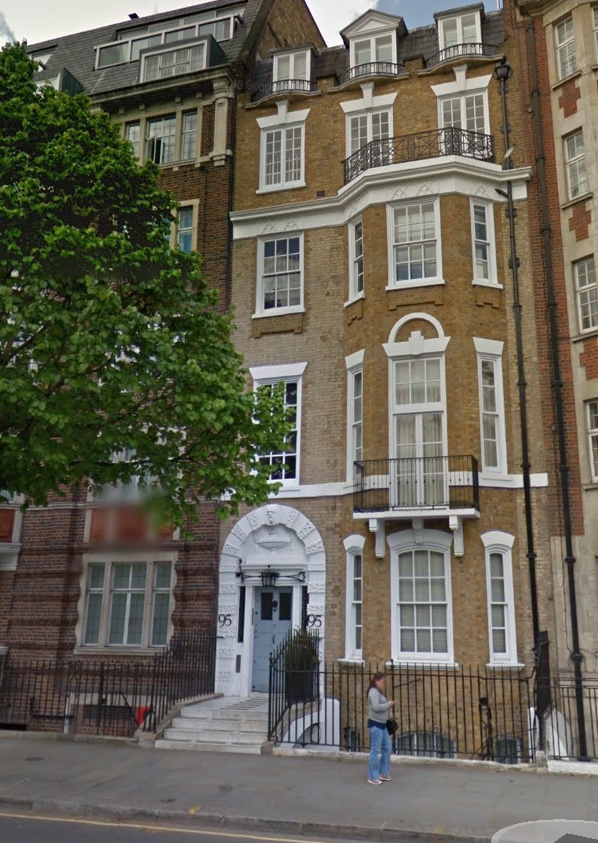
 Gertrude Bell – an adventurer, archaeologist, mountaineer and diplomat (who was at least partially responsible for the creation of the nation of Iraq) – has been honoured with an English Heritage Blue Plaque on the Chelsea home that served as her London based for some 40 years. The three storey Georgian residence at 95 Sloane Street (pictured) belonged to Lady Olliffe, the mother of Bell’s step-mother Florence. Bell, who spent much of her time in the Middle East, used the home as her London base between 1884, when she graduated from Queen’s College, through to her last visit to London in 1925, including during an extended period in 1915 when she managed the Red Cross’s Wounded and Missing Enquiry Department’s office in Arlington Street. Meanwhile, jazz musician Ronnie Scott has also been honoured with a Blue Plaque which marks the site of his first club in Soho. Scott and fellow saxophonist Pete King opened jazz club in the basement of 39 Gerrard Street in Chinatown on 30th October, 1959 – 60 years ago this year. The club remained there for six years before moving to 47 Frith Street in 1965. Musicians including Zoot Sims, Johnny Griffin, Roland Kirk, Dexter Gordon, Sonny Stitt, Stan Getz, Benny Golson, Ben Webster, and Al Cohn all performed at the club while patrons included Harold Pinter, the Beatles, Peter O’Toole, and Spike Milligan. For more on English Heritage Blue Plaques, visit www.english-heritage.org.uk/visit/blue-plaques/. PICTURE: Google Maps
News
This Week in London – Children’s literary rebels; immerse yourself in Leonardo; and, a rare Jubilee Line journey…
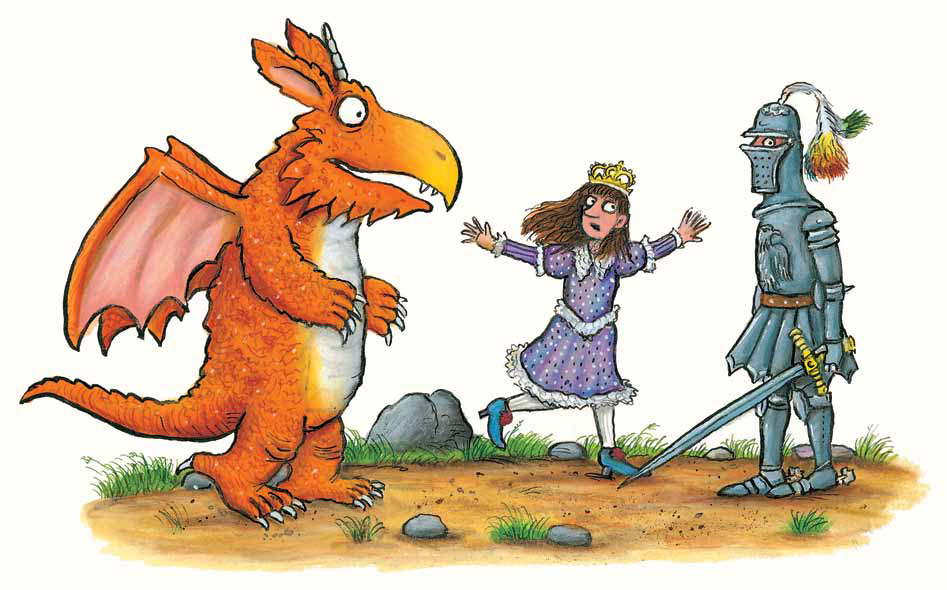
• Pippi Longstocking, Matilda and the Zog are among a pantheon of beloved children’s literary characters at the heart of a new exhibition opening at the British Library tomorrow. Marvellous and Mischievous: Literature’s Young Rebels features about 40 books, manuscripts and original artworks spanning a period of 300 years and puts a spotlight on the “rebels, outsiders and spirited survivors” within the library’s collection of children’s literature. Highlights include a UK first edition of Anne of Green Gables, the first version of Cruikshank’s coloured illustrations of Oliver Twist as well as original artworks for books including Tracy Beaker, What Planet Are You From, Clarice Bean?, Zog (pictured above), When Hitler Stole Pink Rabbit and Azzi in Between. The free exhibition, which can be seen until 1st March, is accompanied by a programme of events. For more, see www.bl.uk. PICTURE: © Zog by Julia Donaldson, illustrated by Axel Scheffler 2010 (Alison Green Books).
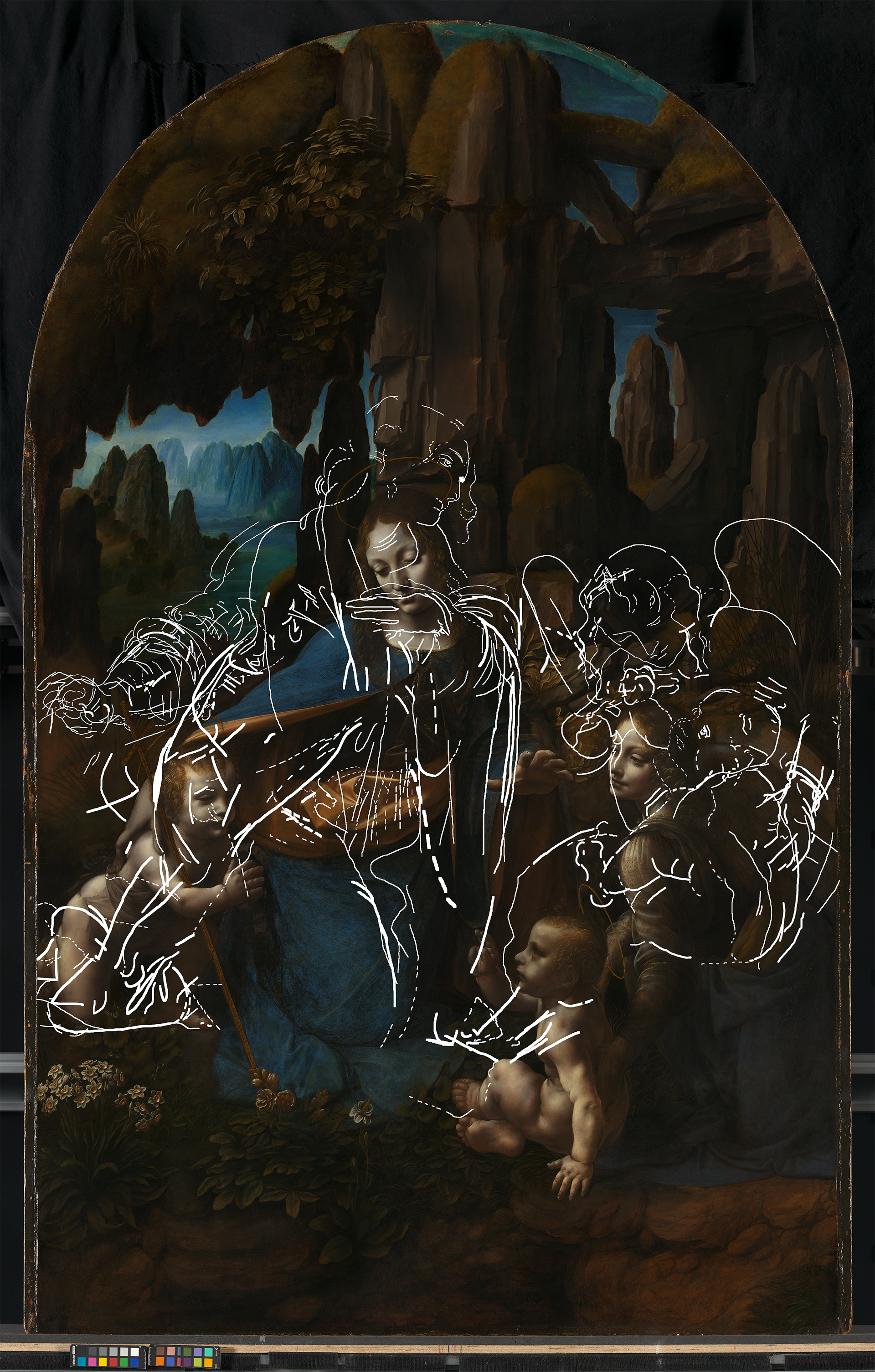 • A new immersive exploration of the work of Leonardo da Vinci, centred on The Virgin of the Rocks, opens at the National Gallery on Saturday. Leonardo: Experience a Masterpiece encompasses a range of multi-sensory experiences presented across four rooms, allowing visitors to step into the painting’s setting, explore Leonardo’s own research and how he employed science in his effects of light and shadow in the painting and even visit a modern conservation studio and see how recent search revealed the previously hidden drawings behind the masterpiece. The experience, which is the work of 59 Productions, can be enjoyed until 12th January. Admission charge applies. For more, see www.nationalgallery.org.uk. PICTURE: Virgin of the Rocks (about 1491/2-9 and 1506-8) – tracing of the lines relating to underdrawing for the first composition, incorporating information from all technical images. © The National Gallery, London
• The Jubilee Line has turned 40 and to mark the occasion, the Jubilee Line in conjunction with London Transport Museum’s Hidden London programme are offering the chance to travel on the original route of the train. The trip includes a section of the track now not open to the public. The 96 stock train leaves from Stanmore station at 9am Sunday, terminating at Charing Cross, or from Charing Cross at 1pm, terminating at Stanmore. When Exploring London looked this week, only tickets for the 9am trip were still available. To buy tickets (which must be purchased in advance), head to www.ltmuseum.co.uk/whats-on/heritage-vehicles-outings.
Send all items for inclusion to exploringlondon@gmail.com.
LondonLife – St Bride’s among historic sites “rescued” in 2019…
 St Bride’s Church in Fleet Street was among the hundreds of historic sites removed from Historic England’s Heritage at Risk Register this year. Published last month, the register is an annual inventory of historic sites “most at risk of being lost forever as a result of neglect, decay or inappropriate development”. It shows that while some 310 items have been removed from the list over the past year, some 247 were added, meaning there were 5,073 entries on the list this year, 87 less than the previous year. The Grade I-listed St Bride’s, which was designed by Sir Christopher Wren after the Great Fire of 1666, had needed repairs to both its famous steeple – said to have inspired the tiered wedding cake design – and the body of the church itself. Historic England spent almost £8.5 million on grants to help restore some of the country’s most historic sites over the past year. Among London sites still on the list are the Grade II*-listed Crystal Palace Park, the Grade I-listed St Pancras Church and sections of what remains of London’s Roman and medieval wall. For more, see www.historicengland.org.uk/advice/heritage-at-risk/.
This Week in London – Saint Agatha returns to Osterley; Lucian Freud’s self-portraits; and, the collection of Sir Stamford Raffles…
• A painting of early Christian martyr Saint Agatha by 17th century Italian artist Carlo Dolci is the highlight of a new exhibition opening at Osterley House in London’s west on Monday. The painting, which has been acquired by the National Trust for the house thanks to an Art Fund grant and other donations, is at the heart of Treasures of Osterley – Rise of a Banking Family which explores the rise to fame and fortune of the Child family. Sir Robert Child had originally purchased the picture at the start of the 18th century but it was later sold with other family heirlooms in the 1930s. The painting depicts the miraculous moment with St Peter appeared to St Agatha in a vision and healed her wounds. The exhibition can be seen until 23rd February. Admission charge applies. For more, see www.nationaltrust.org.uk/osterley-park-and-house.
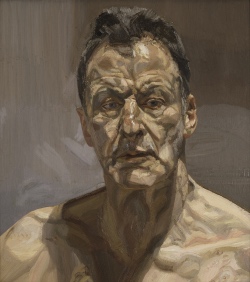 • The first exhibition to focus on the “visceral and unflinching” self-portraits of artist Lucian Freud (1922-2011) has opened at the Royal Academy in Piccadilly. Lucian Freud: The Self-portraits features about 50 works that chart his artistic development from early graphic works to the fleshy, painterly style of his later work. The display is organised into six sections, starting with first major self-portrait, Man with a Feather (1943), which is juxtaposed with his late work, Self-portrait, Reflection (2000). It ends with two self-portraits he painted in 2002 and 2003. The exhibition can be seen in The Jillian and Arthur M Sackler Wing of Galleries until 26th January. Admission charge applies. For more, see www.royalacademy.org.uk. PICTURE: Reflection (Self-portrait), 1985 Oil on canvas, 55.9 x 55.3 cm Private collection, on loan to the Irish Museum of Modern Art © The Lucian Freud Archive / Bridgeman Images
• On Now: Sir Stamford Raffles: collecting in Southeast Asia 1811-1824. Controversial figure Sir Thomas Stamford Raffles spent most of his career as an official with the East India Company in South-East Asia during which he was an avid collector of objects from the region. His collection, one of the first large collections from the region, was eventually donated to the British Museum. This display at the museum showcases an important selection of 130 objects from that collection including Hindu-Buddhist antiquities, different types of theatrical puppets, masks, musical instruments and stone and metal sculpture. A collaboration with Asian Civilisations Museum in Singapore, the exhibition can be seen until 12th January in Room 91. It’s free to enter. For more, see www.britishmuseum.org.
Send all items for inclusion to exploringlondon@gmail.com
This Week in London – St Paul’s Watch remembered in digital projections; Buddhism at the British Library; and, Elizabeth Peyton at the National Portrait Gallery…
• The story of the St Paul’s Watch, the volunteers who worked to protect St Paul’s Cathedral during the Blitz, will be told in a digital display projected onto the cathedral’s facade this weekend. Where The Light Falls is being held in partnership with Historic England and is part of Fantastic Feats: the building of London – the City of London’s six-month cultural events season. It will see a display of poetry, visuals and photography, created by Poetry Society and Double Take Projections, projected onto the cathedral’s south side, north side and main facade in honour of those men and women who, armed with sandbags and water pumps, risked their lives to save the cathedral. The free show lasts for about 20 minutes and can be seen between 6.30pm and 10pm from tonight until Saturday night and then from 8pm to 10pm on Sunday. Meanwhile, St Paul’s is also open for a special late opening on Friday night during which poets from the Poetry Society will be bringing to life accounts of loss, bravery and sacrifice. Admission charge applies. For more on both events, head here.
• The history, teachings and contemporary relevance of Buddhism are being explored in a major new exhibition opening at the British Library on Friday. Buddhism features rare and colourful scrolls, painted wall hangings and folding books and will highlight the theory, practice and art of Buddhism, examine the enduring iconography of Buddha and consider what it means to be Buddhist today. The exhibition, which is accompanied by a program of events, runs until 23rd February. For more, see www.bl.uk.
• On Now: Elizabeth Peyton: Aire and Angels. This exhibition at the National Portrait Gallery is the first to situate the work of contemporary artist Elizabeth Peyton within the historical tradition of portraiture. In additional to the more than 40 works on display in the exhibition, Peyton has been honoured by being first artist to be given the run of the entire gallery with a series of displays within the permanent collection which juxtapose Peyton’s art with historic portraits from the Tudor period onwards. Among her portraits on show are those of Napoleon, Queen Elizabeth II, Yuzuru Hanyu, Frida Kahlo, Tyler the Creator, Isa Genzken, David Bowie, Elias Bender Rønnenfelt, David Fray, and Louis XIV. Runs until 5th January. Entry is free. For more, see www.npg.org.uk/elizabethpeyton.
Send all items for inclusion to exploringlondon@gmail.com.
LondonLife – Westminster Abbey marks 750th anniversary of Henry III’s rebuild; new mental health awareness tour at National Gallery; and, Rembrandt at Kenwood…
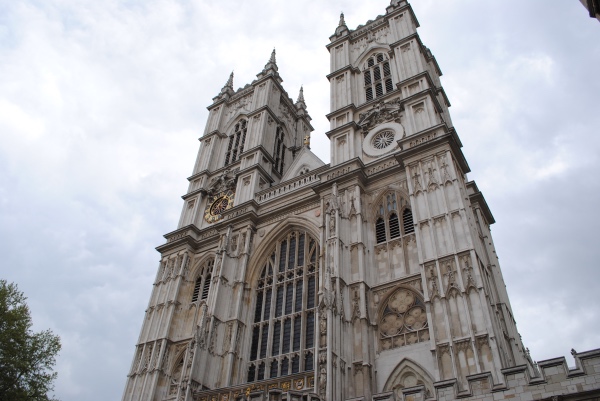
• Two 13th century manuscripts from Westminster Abbey’s collection have this month gone on show in the Queen’s Diamond Jubilee Galleries at the abbey to mark the 750th anniversary of King Henry III’s rebuilding of the church originally constructed on the orders of Edward the Confessor. Believed to have never before been displayed to the public, the manuscripts – which feature ink script on vellum and have wax seals on silk cords attached – include a royal charter dated 1246 in which King Henry III announces his intention to be buried alongside Edward the Confessor in Westminster Abbey and an inventory of Edward the Confessor’s Shrine dating from 1267 which shows how much gold, precious stones and jewels were taken from it and pawned to provide the king with much-needed money. The documents can only be seen until 28th October. Admission charge applies. For more, www.westminster-abbey.org/visit-us/plan-your-visit/the-queens-diamond-jubilee-galleries. The display is one of number of special events taking place to mark the anniversary of the third consecration of the abbey church which took place in the presence of King Henry III on 13th October, 1269. While Queen Elizabeth II and the Duchess of Cornwall attended a special service to mark the occasion on Tuesday, other events aimed at the public include a special family day next Wednesday (23rd October) featuring medieval re-enactors in the cloisters, the chance to meet some of the abbey staff and to take part in a family-friendly Eucharist as well as a late opening for amateur photographers to take photographs inside the abbey (23rd October), and special family tours of the abbey (22nd and 24th October). Meanwhile, this Saturday, the abbey will host the National Pilgrimage to the Shrine of St Edward the Confessor. For more on other events at the abbey, head to www.westminster-abbey.org/events.
• The National Gallery launched its first mental health awareness tour to mark World Mental Health Day last week. The tour, which is available as a smartphone app, aims to improve understanding of mental health among gallery visitors with an alternative perspective on the collection which draws on young people’s experiences of mental health – gleaned through workshops with 16 to 25-year-olds – and connects visitors with the gallery’s paintings to challenge common myths about mental health. The tour includes a focus on paintings by Van Gogh, Cima, Crivelli and Joseph Wright of Derby as well as the gallery’s architecture and figures from its portico entrance mosaic flooring such as Virginia Woolf and Winston Churchill. The tour – co-created by researchers from King’s College London, the McPin Foundation, a group of young people affected by mental health issues and members of the Gallery’s Young Producers programme and funded by Medical Research Council and the British Academy – is available free to visitors for six months. For more, see nationalgallery.org.uk.
• Kenwood House in Hampstead is hosting a special display commemorating 350 years since Rembrandt’s death on 4th October, 1669. The exhibition – Rembrandt #nofilter – centres on the artist’s Self-portrait with Two Circles which has been taken from its usual place in the former dining room and represented in the dining room lobby alongside a digital photo mosaic of the painting made of “selfies” taken by visitors to Kenwood. Entry is free Runs until 12th January. For more, see www.english-heritage.org.uk/visit/places/kenwood/.
Send all items for inclusion to exploringlondon@gmail.com.
This Week in London – A rare surviving piece of Queen Elizabeth’s dress on show?; Inside Ronnie Scott’s Jazz Club, and, Islamic influences on art…
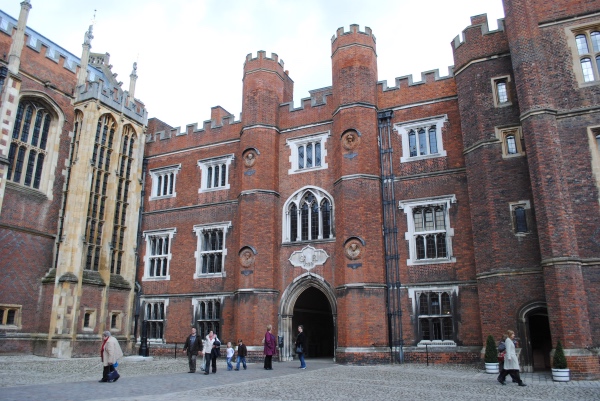
• An altar cloth which may have once been part of a dress worn by Queen Elizabeth I goes on show at Hampton Court Palace (pictured) this Saturday. The Bacton Altar Cloth, which was discovered in a church in Bacton in rural Hertfordshire, has undergone two years of conservation work and will be displayed alongside a portrait of the “Virgin Queen” featuring a dress of similar design. The altar cloth has long been associated with Bacton-born Blanche Parry, one of Queen Elizabeth’s servants who became her Chief Gentlewoman of the Bedchamber. Records show the Queen regularly gave her discarded clothing to Parry and for years there has been speculation that the altar cloth was part of one such discarded item. Historic Royal Palaces curator Eleri Lynn, an expert in Tudor court dress, was able to identify previously unseen features and studied the seams of the fabric to show it had once been part of a skirt. Further research – including an examination of the dyes used in the item – have added weight to the theory it was once part of a dress. The altar cloth, on loan from St Faith’s Church in Bacton, can be seen until 23rd February. Admission charges apply. For more, see www.hrp.org.uk. PICTURE: David Adams.
• A photographic exhibition of the first ‘golden’ decade of Ronnie Scott’s Jazz Club – featuring images of legendary British and American jazz singers – opens at the Barbican Music Library on Saturday. Ronnie Scott’s 1959-1969: Photographs by Freddy Warren, which marks the club’s 60th anniversary, features Warren’s photographs of the likes of Miles Davis, Duke Ellington, Dizzy Gillespie, Count Basie, Ella Fitzgerald, Zoot Sims, Cleo Laine and Tony Bennett. Warren was the in-house photographer at the Soho club from the opening night in 1959, when it was based in Gerrard Street, and documented the construction of the new site in Frith Street in the mid-1960s along with the arrival in London of big American stars. The exhibition includes rare vintage prints – some which were salvaged from the walls when the club was renovated in 2006, Freddy Warren’s original contact sheets, and previously unseen prints specially produced from the original negatives. The exhibition is free. Runs until 4th January. For more, see www.barbican.org.uk/your-visit/during-your-visit/library.
• An exhibition exploring how western artists have been inspired by the Islamic world opens at the British Museum today. Inspired by the east: how the Islamic world influenced western art features paintings by leading ‘Orientalists’ including Eugène Delacroix, John Frederick Lewis and Frederick Arthur Bridgman as well as less well-known pieces like British artist Edmund Dulac’s original illustrations for a 1907 edition of the Arabian Nights, and ceramics by Frenchman Théodore Deck, who in the late 19th century created a range of pieces directly inspired by Islamic originals. The display also includes contemporary reactions to the imagery of Orientalism by Middle Eastern and North African female artists such as Lalla Essaydi’s Women of Morocco triptych and Inci Eviner’s 2009 video work Harem. The display can be seen in The Sir Joseph Hotung Exhibition Gallery until 26th January. Admission charge applies. For more, see www.britishmuseum.org.
Send all items for inclusion to exploringlondon@gmail.com.
LondonLife – Pepys’ plate on show at Museum of London…
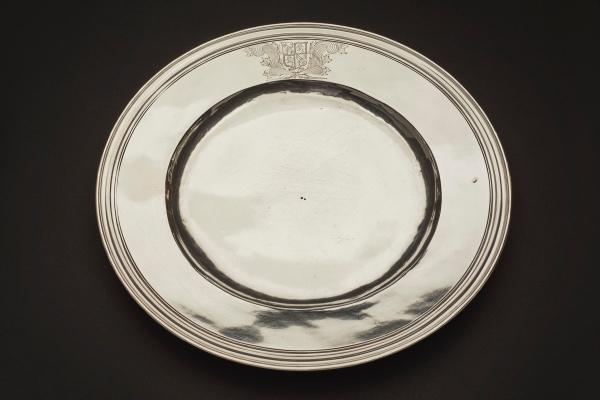
A silver trencher plate – one of only three silver pieces in the world known to have belonged to 17th century diarist Samuel Pepys (and the only one on display in the UK, the other two being in the US) – has gone on show in the Museum of London’s ‘War, Plague and Fire’ gallery following its recent acquisition. The plate, which was only recently recognised as belonging to Pepys – a naval administrator and MP, bears his coat-of-arms on the rim while the underside features London hallmarks testifying to the metal’s purity. The plate is also stamped with a “date letter” representing 1681-82 as the year it was made along with an MK in a lozenge, the maker’s mark of the workshop of Mary King in Foster Lane (the date 1681 also appears scratched on the surface but this was done at a later date). Knife and fork scratch marks are also visible on the trencher which may have been among the silver objects Pepys boasted about serving his guests with in his diary instead of the less expensive pewter. Admission to see the plate is free. For more, see www.museumoflondon.org.uk/discover/samuel-pepys-silver-plate. PICTURES: © Museum of London.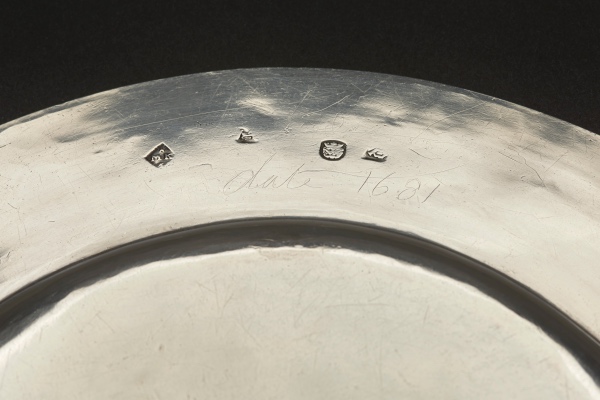
This Week in London – Celebrating Rembrandt’s relationship with light; Paul Gauguin’s portraits; and, sacred Japanese images…
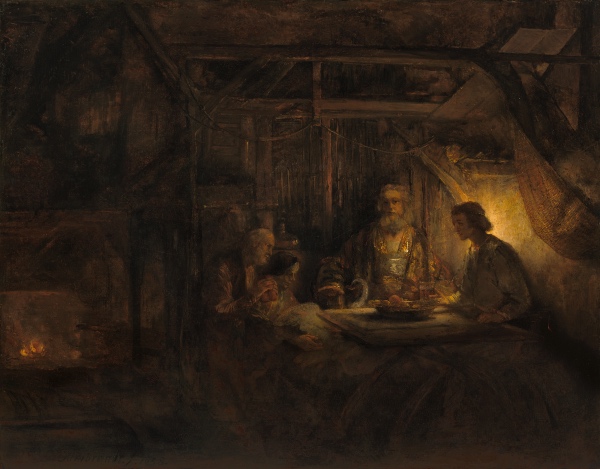
• Rembrandt’s mastery of light is the subject of a new exhibition opening at the Dulwich Picture Gallery on Friday to mark 350 years since the Dutch artist’s death. Rembrandt’s Light includes 35 of his greatest paintings, etchings and drawings including international loans The Pilgrims at Emmaus (1648) and – shown for the first time in the UK – Philemon and Baucis, (1658), Tobit and Anna with the Kid (1645) and The Dream of Joseph (1645). The works have been arranged thematically and show how he used light and shadow for dramatic effect, focusing on his work during the middle period of his career – 1639-1658 – while he was living in his “dream house” on Breestraat in Amsterdam where the large windows provided ideal access to light. The display will employ a new LED Bluetooth lighting system installed at the gallery while cinematographer Peter Suschitzky, famed for his work on Star Wars: The Empire Strikes Back; The Rocky Horror Picture Show and Mars Attacks!, has worked with the curators to create what the gallery promises will be an “atmospheric visitor experience”. Admission charge applies. Runs to 2nd February. PICTURE: Rembrandt van Reign, Philemon and Baucis (1658), oil on panel transferred to panel, National Gallery of Art, Washington.
• The first ever exhibition devoted to the portraits of Paul Gauguin opens at the National Gallery on Monday. The Credit Suisse Exhibition: Gauguin Portraits shows how the French artist, who was famed for his paintings of French Polynesia, revolutionised the portrait to express himself and his ideas about art. It features more than 50 works including paintings, sculptures, prints, and drawings – many of which have rarely been seen together. They include Madame Mette Gauguin in Evening Dress (1884), Young Breton Girl (1889), Tehura (Teha’amana) (1891-93), Young Christian Girl (1894), Père Paillard (1902) and the last self-portrait he ever completed, made in 1903, probably shortly before the end of his life at the age of 55. Runs until 26th January in the Sainsbury Wing. Admission charge applies. For more, see www.nationalgallery.org.uk.
• Fifteen Buddhist and Shinto sacred images from the Nara Prefecture have gone on show at the British Museum. The works, which include five Japanese National Treasures, date from between 600 and 1300 AD and are displayed with related important Japanese and Chinese paintings from the museum’s collection. The objects include a gilt bronze sculpture, Bodhisattva of Compassion, a gilt-bronze libation dish featuring the birth of the Buddha and a pair of imposing wooden sculptures, Heavenly Kings, all of which date from the 700s. Nara: sacred images from early Japan can be seen in Room 3 (the Asahi Shimbun Displays) and the Mitsubishi Corporation Japanese Galleries (Room 93). Runs until 24th November. For more, see www.britishmuseum.org.
Send all items for inclusion to exploringlondon@gmail.com.
LondonLife – Bob Marley’s former Chelsea home given English Heritage Blue Plaque…
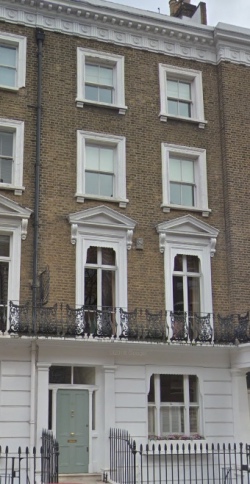 The Chelsea property where Jamaican singer-songwriter Bob Marley lived in 1977 has been given an English heritage Blue Plaque. Marley lived at the four storey terraced house at 42 Oakley Street while he and the Wailers were finishing recording their album Exodus which features hits including Jamming, Waiting in Vain, Three Little Birds and One Love. Marley, who often played football with bandmates at pitches in Battersea Park, said he regarded London as a “second base”. Among the evidence considered in deciding to award the plaque was Marley’s arrest for possession of cannabis on 10th March, 1977, along with bassist Aston ‘Family Man’ Barrett. Court records have Barrett’s address as 42 Oakley Street while Marley’s is recorded as 27 Collingham Gardens. Anecdotal evidence, however, suggests he gave this address to try and prevent the police from searching Oakley Street for drugs and English Heritage says the unanimous recollection of contemporary witnesses is that Oakley Street was both the band headquarters and Marley’s primary address at the time. Other music-related identities who have been honoured with blue plaques include Jimi Hendrix, John Lennon, George Frideric Handel and Wolfgang Amadeus Mozart. For more, see www.english-heritage.org.uk/visit/blue-plaques/. PICTURE: 42 Oakley Street (before plaque) via Google Maps.
This Week in London – The Krio people of Sierra Leone; photographer Tim Walker; blue plaques for Angela Carter and Martha Gellhorn; and, last chance to get NYE tickets…
• The history and culture of the Krio people of Sierra Leone are the subject of a new display opening at the Museum of London Docklands tomorrow. The Krios of Sierra Leone explores the dress, architecture, language, lifestyle, traditions and history of the Krio community with contemporary objects from Krio Londoners on show as well as items related to the history of British colonial rule of Sierra Leone from the museum’s collections. Highlights include a large carved wooden printing block dating from around 1800, known as a ’tillet block’, that bears the crest of the Sierra Leone Company, a silver entrée dish which was presented to Thomas Cole, acting colonial secretary of Sierra Leone and assistant superintendent of Liberated Africans, who was responsible for assisting people freed from slave ships when they arrived in the colony, and, a typical Krio dress ensemble wore by Krio women. The free exhibition can be seen until 27th September next year. For more, see www.museumoflondon.org.uk/krios.
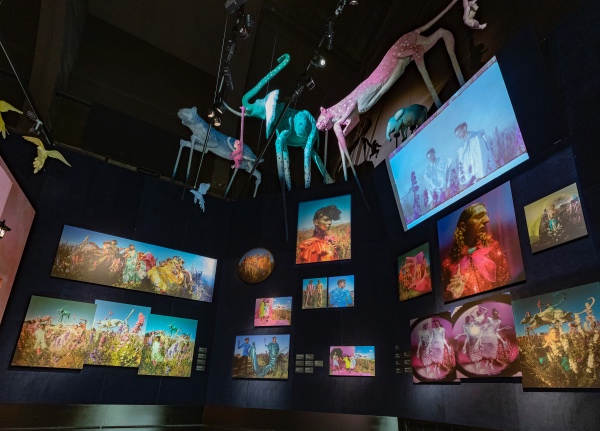
• Portraits of everyone from Sir David Attenborough to actor Tilda Swinton are on show as part of the largest ever exhibition of the work of photographer Tim Walker at the V&A. The display, Tim Walker: Wonderful Things (pictured above), features more than 150 new works inspired by the V&A’s collections and boasts more than 300 objects, encompassing photographs and the objects that inspired them as well as images of some of the biggest names in fashion – Lily Cole, Lindsey Wixson, Stella Tennant and Alexander McQueen among them – and portraits of such luminaries as Margaret Atwood, David Hockney, Daniel Day-Lewis, Claire Foy, Saoirse Ronan, Kate Moss, and artist Grayson Perry. Runs until 8th March. Admission charge applies. For more, see www.vam.ac.uk.
• Writers Angela Carter and Martha Gellhorn were both commemorated with English Heritage Blue Plaques earlier this month. Carter, an award-winning novelist, spent the last 16 years of her life at the property at 107, The Chase, in Clapham, and it was there she often tutored her then-student Kazuo Ishiguro and received fellow writers like JG Ballard, Ian McEwan and Salman Rushdie. Meanwhile, Gellhorn, a war correspondent who reported on conflicts ranging from the Spanish Civil War to the Vietnam War, was commemorated with a blue plaque on her former top floor flat in Cadogan Square where she spent the last 28 years of her life. For more, see www.english-heritage.org.uk/visit/blue-plaques/.
• The final release of tickets for this year’s New Year’s Eve fireworks go on sale from midday on Friday. Those who wish to attend the fireworks in central London must purchase a ticket priced at £10. To sign up for ticket updates and more information go to www.london.gov.uk/nye
Send all items for inclusion to exploringlondon@gmail.com.
Treasures of London – Sir Walter Raleigh, Greenwich…
 This Greenwich statue, which stands on King William Walk to the left of the entrance to the Pepys Building – once part of the Royal Naval College, depicts the Elizabethan adventurer and court favourite (well, at times) in a suitably heroic pose. The life-sized bronze of Raleigh (1552-1618), which stands on a stone plinth, was designed by William McMillan. It was originally unveiled by then-US Ambassador John Hay Whitney in 1959 on Raleigh Green outside the Ministry of Defence in Whitehall to mark the 350th anniversary of the foundation of the Commonwealth of Virginia (it was apparently originally suggested it be placed in front of the National Gallery in Trafalgar Square but that didn’t eventuate). Grade II-listed, it stood in Whitehall until 2001 until, deemed as out of scale with other statues, was moved to its current location. PICTURE: Loco Steve (licensed under CC BY-SA 2.0).
This Week in London – Open House London; street food explored; and, Antony Gormley…
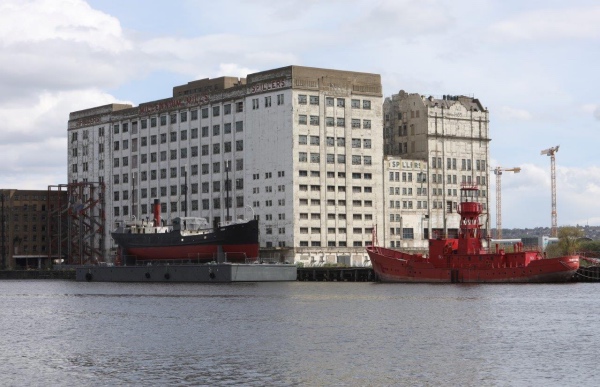
• It’s Open House London weekend and that means your chance to explore behind what are normally closed doors. More than 800 buildings are opening up to the public over the two day festival – this year’s theme is ‘social’ – and there’s an extensive programme of walks and architect-led tours with all events free to attend. While some buildings – like Number 10 Downing Street, BT Tower and the US Embassy London – are only open to those who were successful in already-held public ballots, there’s still plenty to see for those who have’t scored a place. Highlights include a chance to see inside first-time participants like Millennium Mills in Royal Docks (pictured above), the new Museum of London in West Smithfield and the new social housing estate, Kings Crescent Estate in Hackney, as well as a Tokyo Bike cycle tour, and By Beck Road 19 – a Bethnal Green terrace serving as an open-door art gallery. There’s also the chance to see inspiring residences like Open Practice Architecture’s Gin Distillery and Nimtim Architect’s Block House, family activities and the Open House ‘Elements’ photography competition to take part it. For the full programme of events, head to www.openhouselondon.org.uk.
• Images of London’s street food and hawkers, spanning the 16th to the 19th centuries, have gone on show at a new open-air exhibition in Aldgate Square. Hot Peascods! explores how selling food, which could require little more investment than buying basket and the first batch of pies or eels or gingerbread, provided an income for those who couldn’t find other work and was relied upon as a source of food for those who were so poor they couldn’t afford cooking facilities at home. As well as images, it features interviews recorded in the 1850s by pioneering social reformer Henry Mayhew. The exhibition, which is curated by the City of London Corporation’s Guildhall Library, can be seen in Aldgate Square until 29th September and then moves to Guildhall Yard where it can be seen between 1st and 16th October. Free.
• The work of acclaimed British sculptor Antony Gormley is the subject of a new exhibition opening at the Royal Academy of Arts on Saturday. Antony Gormley, which spans all 13 rooms in the RA’s Main Galleries, brings together both existing and specially conceived new works. They include Iron Baby (1999) located in the Annenberg Courtyard, works from the 70s and 80s like Land, Sea and Air (1977-79) and Fruits of the Earth (1978-79) in which natural and man-made objects are wrapped in lead (these evolved into Gormley’s ‘body case’ sculptures), and a series of concrete works from the 1990s including Flesh (1990). There are a series of whole-of-room installations including Lost Horizon I (2008) which features 24 cast-iron figures, and Host in which an entire gallery is filled, to a depth of 23 centimetres, with seawater and clay, while at the centre of the exhibition are two of Gormley’s early ‘expansion’ works, Body and Fruit, both from 1991-3. The exhibition also includes a selection of works on paper including Mould (1981), the Body and Light drawings, Linseed Oil Works (1985-1990), Double Moment (1987), and the Red Earth drawings (1987-1998). Runs until 3rd December. Admission charge applies. For more, see www.royalacademy.org.uk.
Send all items for inclusion to exploringlondon@gmail.com.
LondonLife – The beauty of space revealed…
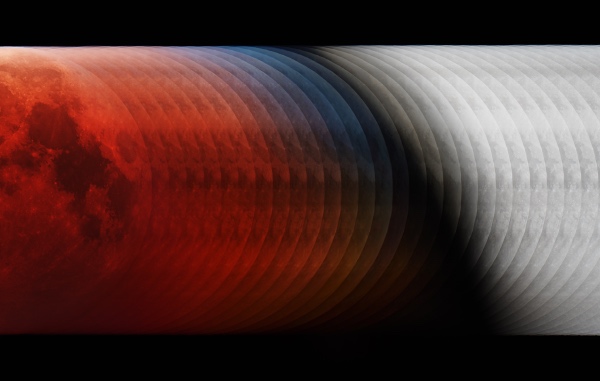
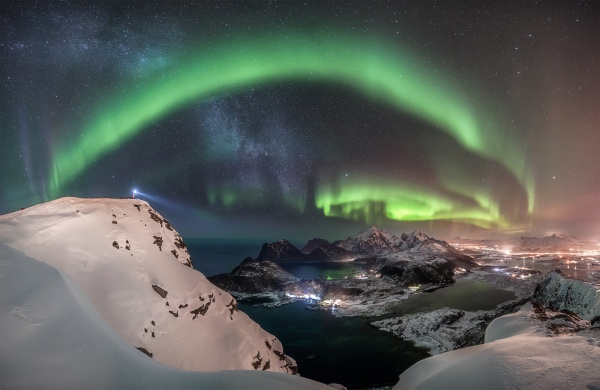
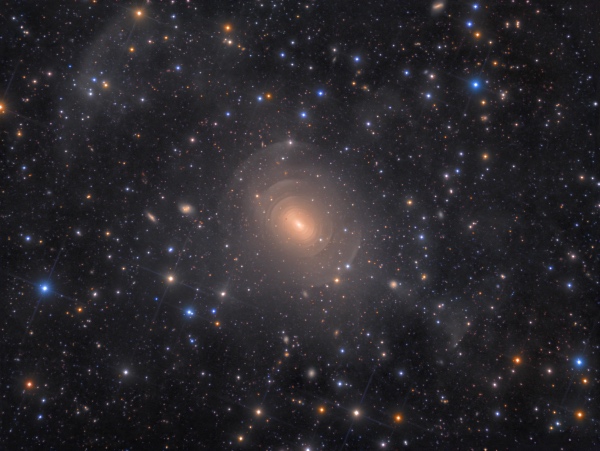
A “creative and artistic” composition of the 35 phases of the total lunar eclipse that took place on 21st January has won the Royal Observatory Greenwich’s Insight Investment Astronomy Photographer of the Year for 2019. The win, which carried a £10,000 prize for Hungarian photographer László Francsics, also means the image is now at the heart of an exhibition featuring all the competition’s winners, runners-up and highly commended, as well as 68 short-listed pictures running at the National Maritime Museum until 26th April. Competition judge Ed Robinson described the Francsics’ work as “nothing short of masterful”. “The colours of our atmosphere projected onto the Moon’s disc during the eclipse are not only artistically pleasing but also offer an understanding of such events that can reveal aspects of our own, thin, yet essential part of our atmosphere,” he said. “In a year that celebrates 50 years since the first lunar landings it is fitting that this year’s overall winning image captures such a dynamic and captivating view of our Moon.” Other images on display include German photographer Nicolai Brügger’s image showcasing the Aurora Borealis over the Lofoten Islands in Norway (winner of the ‘Aurorae’ category), an image featuring UK photographer Ben Bush and his dog Floyd surrounded by Mars, Saturn and the galactic core of the Milky Way galaxy (‘People and Space’), and a sequence of images by Australian Andy Casely following the progress of the great global dust storm on Mars (‘Planets, Comets and Asteroids’). The display also includes an image of the Rosette Nebula by 11-year-old Davy van der Hoeven, of The Netherlands, who won Young Astronomy Photographer of the Year. The Insight Investment Astronomy Photographer of the Year, now in its 11th year, is run by the Royal Observatory Greenwich in association with Insight Investment and BBC Sky at Night Magazine. Admission charge applies. For more, see www.rmg.co.uk/whats-on/astronomy-photographer-year/galleries/2019/overall-winners. PICTURES: Top – ‘Into the Shadow’ © László Francsics (overall winner); Below (from top down) – ‘The Watcher’ © Nicolai Brügger (winner of the ‘Aurorae’ category); and, ‘Shells of Elliptical Galaxy NGC 3923 in Hydra’ © Rolf Wahl Olsen (winner of the ‘Galaxies’ category) .
This Week in London – Blake at the Tate; London’s scientific contributions explored; and, dining out in the Tower moat…
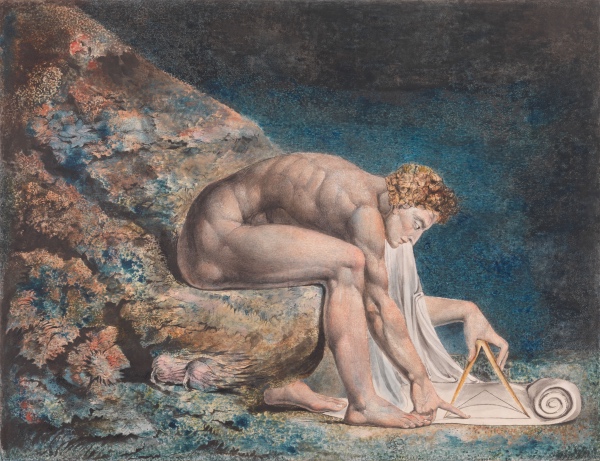
• The largest survey of the work of visionary artist and poet William Blake to be seen in the UK in a generation has opened at the Tate Britain in Millbank. William Blake features more than 300 works with highlights including The Spiritual Form of Nelson Guiding Leviathan (c1805-9) and The Spiritual Form of Pitt Guiding Behemoth (c1805) which, in a bid to see them as Blake intended, have been digitally enlarged and projected onto the gallery’s wall, providing them with the sort of the scale he had envisaged for them but never realised. The actual works themselves are displayed nearby in a recreation of the artist’s only significant attempt to acquire a public reputation as a painter – his ill-fated exhibition of 1809 which took place in a room over his family’s hosiery shop. The exhibition also provides a focus on London, described as a “constant inspiration” for Blake, and highlights the vital role of his wife Catherine played in the creation of his engravings and illuminated books with illustrations to Pilgrim’s Progress (1824-27) and a copy of the book The complaint, and the consolation Night Thoughts (1797) on display, both of which are thought to have been coloured by Catherine. Other highlights include what is thought to be the only self-portrait of Blake – exhibited in the UK for the first time, the work Albion Rose (c1793) depicting the mythical founding of Britain, illuminated books such as Songs of Innocence and of Experience (1794) and some of his best-known paintings including Newton (1795-c1805 – pictured above) and Ghost of a Flea (c1819-20). The exhibition closes with The Ancient of Days (1827), a frontispiece for an edition of Europe: A Prophecy, which was completed only days before Blake’s death. Runs until 2nd February. Admission charge applies. For more, see www.tate.org.uk. PICTURE: William Blake (1757-1827) Newton 1795-c1805 (Colour print, ink and watercolour on paper, 460 x 600mm Tate).
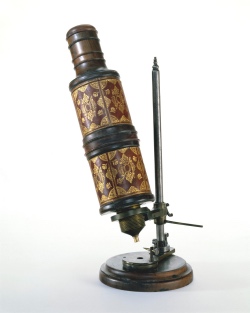 • A new gallery exploring how London’s scientists and artisans transformed our understanding of the world over 250 years spanning the period from the mid-16th century to the end of the 18th century opens at the Science Museum in South Kensington today. The 650 square metre gallery, known as ‘Science City 1550-1800: The Linbury Gallery’, features iconic objects such as Sir Isaac Newton’s famous work, Principia Mathematica, Robert Hooke’s microscope (pictured), and objects including an air pump and ‘Philosophical Table’ which were commissioned by King George III as the king conducted his own scientific investigations. There’s also a range of machine models including one of a pile driving machine used in the construction of Westminster Bridge in the 1740s. The gallery is free to visit. For more, see www.sciencemuseum.ac.uk. PICTURE: Microscope designed by Robert Hooke, 1671-1700 formerly in the George III collection, King’s College London © Science Museum Group
• The Tower of London Food Festival is being held in the fortress’ dry moat this weekend. Culinary talents including Chris Bavin and Emily Roux are among those offering live cookery demonstrations while visitors can put their own skills to the test with masterclasses. There’s also wine and sherry tasting sessions, an expanded array of food and drink to sample, activities for kids including cookery classes, games and face painting, and the Bandstand is back with deckchairs to relax in. Admission is included with entry to the Tower. Closes on Sunday. For more, see www.hrpfoodfestivals.com.
Send all items for inclusion to exploringlondon@gmail.com.
This Week in London – Totally Thames kicks off; ‘The London That Never Was’; and an evolutionary garden at Kew…
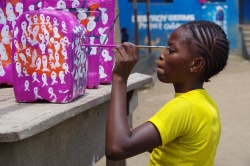 • London’s annual, month-long celebration of the River Thames, Totally Thames, has kicked off and this year’s program includes everything from concerts in Tower Bridge’s bascule chamber to the largest ever exhibition on mudlarking and a mass boat regatta at the end of the month. The programme includes more than 100 events stretching over 42 miles of the river as it winds through London, covering everything from art installations to heritage-related walks and talks, family-oriented offerings and the chance to get out on the river itself. Other highlights include the Rivers of the World Retrospective art exhibition, a scented heritage exhibition –The Barking Stink, a heritage walk through riverside Rotherhithe, open days at the RNLI Tower Lifeboat Station and this weekend’s Classic Boat Festival at St Katharine Docks. Many events are free. Runs until 30th September For the full programme, head to https://totallythames.org/. PICTURE Courtesy of Totally Thames.
• London’s grand building plans that never went ahead are the subject of a new exhibition opening at the Guildhall Art Gallery tomorrow. The London That Never Was imagines a city where the Tower Bridge is clad in glass and where a colossal burial pyramid looms over Primrose Hill. The free exhibition can be seen until 8th December. For more, head here. (To see some of the projects that were never built, see our previous series, 8 structures from the London That Never Was).
• A new garden celebrating the evolution of plants has opened at the Royal Botanic Gardens, Kew. The Agius Evolution Garden is divided into eight sections to form “garden rooms” with each room containing closely related plants, revealing fascinating stories such as the connection between strawberries and nettles and why the Asteraceae family have “false flowers”. Admission charge applies. For more, see www.kew.org.
Send all items for inclusion to exploringlondon@gmail.com.
This Week in London – Prince Albert explored; sheep at Hampstead Heath; and, the Tate’s own show their works…
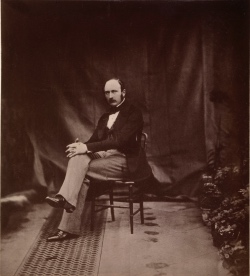 • More than 17,500 photographs, prints and private and official papers relating to Prince Albert, consort of Queen Victoria, have been published online. Launched last week, the new website Prince Albert: His Life and Legacy sheds fresh light on Albert’s role as Queen Victoria’s unofficial private secretary and as guide and mentor to some of the greatest national projects of his day as well as his various roles as a university chancellor, art historian, collector, and art and architecture patron. The website is part of the Prince Albert Digitisation Project which, by the end of 2020, will see some 23,500 items from the Royal Archives, the Royal Collection and the Royal Commission for the Exhibition of 1851 published online. PICTURE: After Roger Fenton, Prince Albert, May, 1854, 1889 copy of the original (Royal Collection Trust/ © Her Majesty Queen Elizabeth II 2019).
• Sheep have returned to Hampstead Heath for a week-long trial of an initiative aimed at replacing mowing with more natural grazing. The pilot project, which is being managed by the City of London Corporation in partnership with Heath & Hampstead Society, Heath Hands, Historic England, Mudchute Park & Farm and Rare Breeds Survival Trust, involves five sheep and will focus on The Tumulus on the Heath, an ancient Roman monument. If successful, the sheep – which include Oxford Down and Norfolk Horn – will take their grazing talents to other areas.
• Staff from the Tate galleries are showcasing their own artworks in a new free exhibition at the Tate Modern. The first Tate Staff Biennale, which can be seen for free in Tate Exchange on level five of the Blavatnik Building, features the work of 133 staff members from all four Tate Galleries – Tate Britain, Tate Modern, Tate Liverpool and Tate St Ives – and has been curated by the Inside Job Collective – a group of Tate staff dedicated to championing the work of colleagues who are also practicing artists. The biennale is inspired by ‘movement’, the theme of this year’s Tate Exchange, an experimental platform at the Tate Modern and Tate Liverpool which brings together the public, artists and associate partner organisations. Can be seen until 3rd September. For more, see www.tate.org.uk.
Send all emails for inclusion to exploringlondon@gmail.com.
This Week in London – Beasts at Smithfield; Food at Hampton Court; and ‘The Barking Stink’…
• Smithfield will play host to a “fantastical” free street party in which animals take centrestage this Bank Holiday Sunday. Curated by the Museum of London, Culture Mile’s Smithfield Street Party: A Beastly Adventure features music, performances, workshops, and games with families able to bring their four legged canine friends to join in the fun. Highlights include aerialists swinging from the rafters of the markets, a ‘beastly den’ in the Rotunda Garden, food, both local and global, in a ‘watering hole’ located in Long Lane and a host of free activities around the West Smithfield Rotunda including London’s biggest ‘play street’. The event runs from 11am to 7pm. Head to www.culturemile.london/festivals/smithfield-street-party.
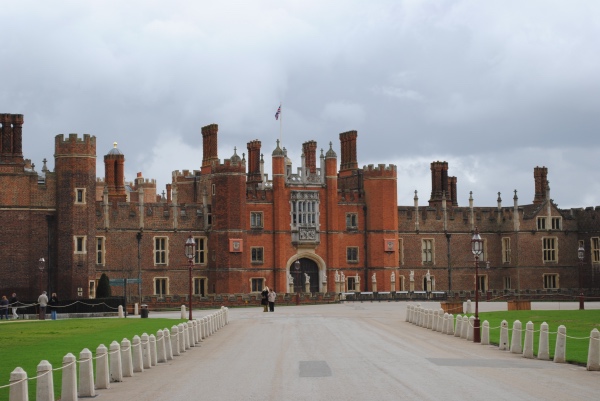
• The Hampton Court Palace Food Festival is on this weekend featuring plenty of mouth-watering opportunities for your tastebuds. As well as an array of street food from more than 100 artisan producers and companies, there will be cookery demonstrations from chefs and experts including Michel Roux Jr, Nadiya Hussain and Rhiannon Lambert and live music, all set in the palace’s East Front Gardens. Admission is included in palace entry. The festival runs over Saturday, Sunday and Monday from 10am to 6pm. For more, including the programme of events, head to www.hrpfoodfestivals.com/hampton-court-palace/whats-on/the-kitchen.
• The smells and stenches that tell the story of Barking’s industrial past are the subject of outdoor exhibitions opening at Valence House Museum in Dagenham and outside the National Theatre on South Bank this Saturday. The Barking Stink, being held as part of this year’s Totally Thames festival, takes a journey into the past through smell when, from the mid-19th century factories including those producing bitumen, asphalt, paint, chemicals and fertiliser joined with the iron foundries, breweries, soap factories and timber mills, not to mention the smell of fish, already found around Barking Creek. Runs at Valence House until 6th November and on South Bank until 5th October. For more, head here.
Send all items for inclusion to exploringlondon@gmail.com.
This Week in London – Extinction Rebellion at the V&A; and, helping the homeless in the City of London…
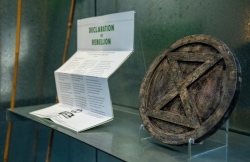 • Objects relating to climate change protest group Extinction Rebellion have gone on display at the V&A. The items, which can be seen in the V&A’s Rapid Response Collecting Gallery, range from the open source ‘Extinction Symbol’ created by street artist ESP in 2011 and adopted by the group, known as XR, in 2018 through to the first ‘Declaration of Rebellion’ pamphlet and flags carried during demonstrations. The objects – which also include a child’s high-vis jacket worn during a peaceful XR protest which has gone on display at the V&A Museum of Childhood in Bethnal Green – were given by the Extinction Rebellion Arts Group, a coalition of graphic designers, artists and activists responsible for XR’s design programme. The exhibition is free. For more, see www.vam.ac.uk. PICTURE: © V&A London
• The City of London has launched an alternative giving campaign aimed at helping the City’s homeless and rough sleepers, establishing four contactless card points where people can donate £3 a time. The contactless devices, which donate the money to homelessness charity Beam, are located at the City of London Information Centre in St Paul’s Churchyard, the Barbican Library, the Tower Bridge’s engine room and the Guildhall West Wing reception window. The campaign will run for three months.
Send all items for inclusion to exploringlondon@gmail.com.
LondonLife – ‘Ship of Tolerance’ docks in the Thames…
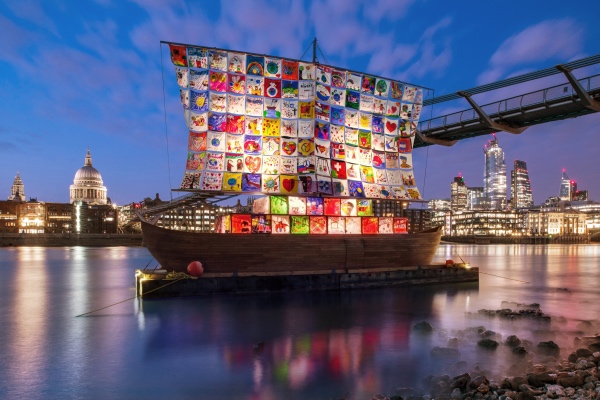
Ilya and Emilia Kabakov’s Ship of Tolerance is moored at Royal Docks this month ahead of the annual celebration of London’s river, Totally Thames, in September. The 60 foot long, hand-crafted wooden ship is dedicated to educating and inspiring young people and features sails made by children from 40 London primary schools, Great Ormond Street Hospital and refugee centres in Birmingham, Leeds, Peterborough and Calais. The award-winning ship was first launched in Egypt in 2005 and has since appeared in numerous cities around the world including Venice, Havana, Moscow, New York and Rome. It can be seen at Royal Docks until 31st August and then outside the Tate Modern from 4th September to 6th October. For more on the ship and Totally Thames, see www.totallythames.org. PICTURE: Courtesy of Totally Thames.
 Exploring London