This Week in London – The Krio people of Sierra Leone; photographer Tim Walker; blue plaques for Angela Carter and Martha Gellhorn; and, last chance to get NYE tickets…

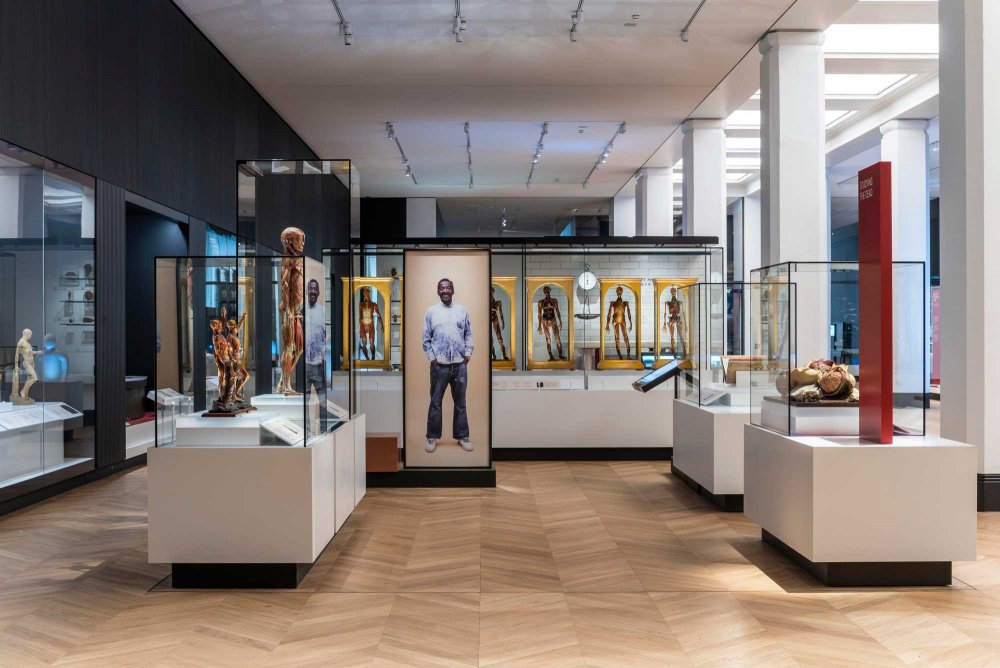
The history and culture of the Krio people of Sierra Leone are the subject of a new display opening at the Museum of London Docklands tomorrow. The Krios of Sierra Leone explores the dress, architecture, language, lifestyle, traditions and history of the Krio community with contemporary objects from Krio Londoners on show as well as items related to the history of British colonial rule of Sierra Leone from the museum’s collections. Highlights include a large carved wooden printing block dating from around 1800, known as a ’tillet block’, that bears the crest of the Sierra Leone Company, a silver entrée dish which was presented to Thomas Cole, acting colonial secretary of Sierra Leone and assistant superintendent of Liberated Africans, who was responsible for assisting people freed from slave ships when they arrived in the colony, and, a typical Krio dress ensemble wore by Krio women. The free exhibition can be seen until 27th September next year. For more, see www.museumoflondon.org.uk/krios.

Portraits of everyone from Sir David Attenborough to actor Tilda Swinton are on show as part of the largest ever exhibition of the work of photographer Tim Walker at the V&A. The display, Tim Walker: Wonderful Things (pictured above), features more than 150 new works inspired by the V&A’s collections and boasts more than 300 objects, encompassing photographs and the objects that inspired them as well as images of some of the biggest names in fashion – Lily Cole, Lindsey Wixson, Stella Tennant and Alexander McQueen among them – and portraits of such luminaries as Margaret Atwood, David Hockney, Daniel Day-Lewis, Claire Foy, Saoirse Ronan, Kate Moss, and artist Grayson Perry. Runs until 8th March. Admission charge applies. For more, see www.vam.ac.uk.

Writers Angela Carter and Martha Gellhorn were both commemorated with English Heritage Blue Plaques earlier this month. Carter, an award-winning novelist, spent the last 16 years of her life at the property at 107, The Chase, in Clapham, and it was there she often tutored her then-student Kazuo Ishiguro and received fellow writers like JG Ballard, Ian McEwan and Salman Rushdie. Meanwhile, Gellhorn, a war correspondent who reported on conflicts ranging from the Spanish Civil War to the Vietnam War, was commemorated with a blue plaque on her former top floor flat in Cadogan Square where she spent the last 28 years of her life. For more, see www.english-heritage.org.uk/visit/blue-plaques/.

The final release of tickets for this year’s New Year’s Eve fireworks go on sale from midday on Friday. Those who wish to attend the fireworks in central London must purchase a ticket priced at £10. To sign up for ticket updates and more information go to www.london.gov.uk/nye

Send all items for inclusion to exploringlondon@gmail.com.

Treasures of London – Sir Walter Raleigh, Greenwich…

This Greenwich statue, which stands on King William Walk to the left of the entrance to the Pepys Building – once part of the Royal Naval College, depicts the Elizabethan adventurer and court favourite (well, at times) in a suitably heroic pose. The life-sized bronze of Raleigh (1552-1618), which stands on a stone plinth, was designed by William McMillan. It was originally unveiled by then-US Ambassador John Hay Whitney in 1959 on Raleigh Green outside the Ministry of Defence in Whitehall to mark the 350th anniversary of the foundation of the Commonwealth of Virginia (it was apparently originally suggested it be placed in front of the National Gallery in Trafalgar Square but that didn’t eventuate). Grade II-listed, it stood in Whitehall until 2001 until, deemed as out of scale with other statues, was moved to its current location. PICTURE: Loco Steve (licensed under CC BY-SA 2.0).


This Week in London – Open House London; street food explored; and, Antony Gormley…

It’s Open House London weekend and that means your chance to explore behind what are normally closed doors. More than 800 buildings are opening up to the public over the two day festival – this year’s theme is ‘social’ – and there’s an extensive programme of walks and architect-led tours with all events free to attend. While some buildings – like Number 10 Downing Street, BT Tower and the US Embassy London – are only open to those who were successful in already-held public ballots, there’s still plenty to see for those who have’t scored a place. Highlights include a chance to see inside first-time participants like Millennium Mills in Royal Docks (pictured above), the new Museum of London in West Smithfield and the new social housing estate, Kings Crescent Estate in Hackney, as well as a Tokyo Bike cycle tour, and By Beck Road 19 – a Bethnal Green terrace serving as an open-door art gallery. There’s also the chance to see inspiring residences like Open Practice Architecture’s Gin Distillery and Nimtim Architect’s Block House, family activities and the Open House ‘Elements’ photography competition to take part it. For the full programme of events, head to www.openhouselondon.org.uk.

Images of London’s street food and hawkers, spanning the 16th to the 19th centuries, have gone on show at a new open-air exhibition in Aldgate Square. Hot Peascods! explores how selling food, which could require little more investment than buying basket and the first batch of pies or eels or gingerbread, provided an income for those who couldn’t find other work and was relied upon as a source of food for those who were so poor they couldn’t afford cooking facilities at home. As well as images, it features interviews recorded in the 1850s by pioneering social reformer Henry Mayhew. The exhibition, which is curated by the City of London Corporation’s Guildhall Library, can be seen in Aldgate Square until 29th September and then moves to Guildhall Yard where it can be seen between 1st and 16th October. Free.

The work of acclaimed British sculptor Antony Gormley is the subject of a new exhibition opening at the Royal Academy of Arts on Saturday. Antony Gormley, which spans all 13 rooms in the RA’s Main Galleries, brings together both existing and specially conceived new works. They include Iron Baby (1999) located in the Annenberg Courtyard, works from the 70s and 80s like Land, Sea and Air (1977-79) and Fruits of the Earth (1978-79) in which natural and man-made objects are wrapped in lead (these evolved into Gormley’s ‘body case’ sculptures), and a series of concrete works from the 1990s including Flesh (1990). There are a series of whole-of-room installations including Lost Horizon I (2008) which features 24 cast-iron figures, and Host in which an entire gallery is filled, to a depth of 23 centimetres, with seawater and clay, while at the centre of the exhibition are two of Gormley’s early ‘expansion’ works, Body and Fruit, both from 1991-3. The exhibition also includes a selection of works on paper including Mould (1981), the Body and Light drawings, Linseed Oil Works (1985-1990), Double Moment (1987), and the Red Earth drawings (1987-1998). Runs until 3rd December. Admission charge applies. For more, see www.royalacademy.org.uk.

Send all items for inclusion to exploringlondon@gmail.com.

LondonLife – The beauty of space revealed…

A “creative and artistic” composition of the 35 phases of the total lunar eclipse that took place on 21st January has won the Royal Observatory Greenwich’s Insight Investment Astronomy Photographer of the Year for 2019. The win, which carried a £10,000 prize for Hungarian photographer László Francsics, also means the image is now at the heart of an exhibition featuring all the competition’s winners, runners-up and highly commended, as well as 68 short-listed pictures running at the National Maritime Museum until 26th April. Competition judge Ed Robinson described the Francsics’ work as “nothing short of masterful”. “The colours of our atmosphere projected onto the Moon’s disc during the eclipse are not only artistically pleasing but also offer an understanding of such events that can reveal aspects of our own, thin, yet essential part of our atmosphere,” he said. “In a year that celebrates 50 years since the first lunar landings it is fitting that this year’s overall winning image captures such a dynamic and captivating view of our Moon.” Other images on display include German photographer Nicolai Brügger’s image showcasing the Aurora Borealis over the Lofoten Islands in Norway (winner of the ‘Aurorae’ category), an image featuring UK photographer Ben Bush and his dog Floyd surrounded by Mars, Saturn and the galactic core of the Milky Way galaxy (‘People and Space’), and a sequence of images by Australian Andy Casely following the progress of the great global dust storm on Mars (‘Planets, Comets and Asteroids’). The display also includes an image of the Rosette Nebula by 11-year-old Davy van der Hoeven, of The Netherlands, who won Young Astronomy Photographer of the Year. The Insight Investment Astronomy Photographer of the Year, now in its 11th year, is run by the Royal Observatory Greenwich in association with Insight Investment and BBC Sky at Night Magazine. Admission charge applies. For more, see www.rmg.co.uk/whats-on/astronomy-photographer-year/galleries/2019/overall-winners. PICTURES: Top – ‘Into the Shadow’ © László Francsics (overall winner); Below (from top down) – ‘The Watcher’ © Nicolai Brügger (winner of the ‘Aurorae’ category); and, ‘Shells of Elliptical Galaxy NGC 3923 in Hydra’ © Rolf Wahl Olsen (winner of the ‘Galaxies’ category) .

This Week in London – Blake at the Tate; London’s scientific contributions explored; and, dining out in the Tower moat…

The largest survey of the work of visionary artist and poet William Blake to be seen in the UK in a generation has opened at the Tate Britain in Millbank. William Blake features more than 300 works with highlights including The Spiritual Form of Nelson Guiding Leviathan (c1805-9) and The Spiritual Form of Pitt Guiding Behemoth (c1805) which, in a bid to see them as Blake intended, have been digitally enlarged and projected onto the gallery’s wall, providing them with the sort of the scale he had envisaged for them but never realised. The actual works themselves are displayed nearby in a recreation of the artist’s only significant attempt to acquire a public reputation as a painter – his ill-fated exhibition of 1809 which took place in a room over his family’s hosiery shop. The exhibition also provides a focus on London, described as a “constant inspiration” for Blake, and highlights the vital role of his wife Catherine played in the creation of his engravings and illuminated books with illustrations to Pilgrim’s Progress (1824-27) and a copy of the book The complaint, and the consolation Night Thoughts (1797) on display, both of which are thought to have been coloured by Catherine. Other highlights include what is thought to be the only self-portrait of Blake – exhibited in the UK for the first time, the work Albion Rose (c1793) depicting the mythical founding of Britain, illuminated books such as Songs of Innocence and of Experience (1794) and some of his best-known paintings including Newton (1795-c1805 – pictured above) and Ghost of a Flea (c1819-20). The exhibition closes with The Ancient of Days (1827), a frontispiece for an edition of Europe: A Prophecy, which was completed only days before Blake’s death. Runs until 2nd February. Admission charge applies. For more, see www.tate.org.uk. PICTURE: William Blake (1757-1827) Newton 1795-c1805 (Colour print, ink and watercolour on paper, 460 x 600mm Tate).

A new gallery exploring how London’s scientists and artisans transformed our understanding of the world over 250 years spanning the period from the mid-16th century to the end of the 18th century opens at the Science Museum in South Kensington today. The 650 square metre gallery, known as ‘Science City 1550-1800: The Linbury Gallery’, features iconic objects such as Sir Isaac Newton’s famous work, Principia Mathematica, Robert Hooke’s microscope (pictured), and objects including an air pump and ‘Philosophical Table’ which were commissioned by King George III as the king conducted his own scientific investigations. There’s also a range of machine models including one of a pile driving machine used in the construction of Westminster Bridge in the 1740s. The gallery is free to visit. For more, see www.sciencemuseum.ac.uk. PICTURE: Microscope designed by Robert Hooke, 1671-1700 formerly in the George III collection, King’s College London © Science Museum Group

The Tower of London Food Festival is being held in the fortress’ dry moat this weekend. Culinary talents including Chris Bavin and Emily Roux are among those offering live cookery demonstrations while visitors can put their own skills to the test with masterclasses. There’s also wine and sherry tasting sessions, an expanded array of food and drink to sample, activities for kids including cookery classes, games and face painting, and the Bandstand is back with deckchairs to relax in. Admission is included with entry to the Tower. Closes on Sunday. For more, see www.hrpfoodfestivals.com.

Send all items for inclusion to exploringlondon@gmail.com.

This Week in London – Totally Thames kicks off; ‘The London That Never Was’; and an evolutionary garden at Kew…

London’s annual, month-long celebration of the River Thames, Totally Thames, has kicked off and this year’s program includes everything from concerts in Tower Bridge’s bascule chamber to the largest ever exhibition on mudlarking and a mass boat regatta at the end of the month. The programme includes more than 100 events stretching over 42 miles of the river as it winds through London, covering everything from art installations to heritage-related walks and talks, family-oriented offerings and the chance to get out on the river itself. Other highlights include the Rivers of the World Retrospective art exhibition, a scented heritage exhibition –The Barking Stink, a heritage walk through riverside Rotherhithe, open days at the RNLI Tower Lifeboat Station and this weekend’s Classic Boat Festival at St Katharine Docks. Many events are free. Runs until 30th September For the full programme, head to https://totallythames.org/. PICTURE Courtesy of Totally Thames.

London’s grand building plans that never went ahead are the subject of a new exhibition opening at the Guildhall Art Gallery tomorrow. The London That Never Was imagines a city where the Tower Bridge is clad in glass and where a colossal burial pyramid looms over Primrose Hill. The free exhibition can be seen until 8th December. For more, head here. (To see some of the projects that were never built, see our previous series, 8 structures from the London That Never Was).

A new garden celebrating the evolution of plants has opened at the Royal Botanic Gardens, Kew. The Agius Evolution Garden is divided into eight sections to form “garden rooms” with each room containing closely related plants, revealing fascinating stories such as the connection between strawberries and nettles and why the Asteraceae family have “false flowers”. Admission charge applies. For more, see www.kew.org.

Send all items for inclusion to exploringlondon@gmail.com.

This Week in London – Prince Albert explored; sheep at Hampstead Heath; and, the Tate’s own show their works…

More than 17,500 photographs, prints and private and official papers relating to Prince Albert, consort of Queen Victoria, have been published online. Launched last week, the new website Prince Albert: His Life and Legacy sheds fresh light on Albert’s role as Queen Victoria’s unofficial private secretary and as guide and mentor to some of the greatest national projects of his day as well as his various roles as a university chancellor, art historian, collector, and art and architecture patron. The website is part of the Prince Albert Digitisation Project which, by the end of 2020, will see some 23,500 items from the Royal Archives, the Royal Collection and the Royal Commission for the Exhibition of 1851 published online. PICTURE: After Roger Fenton, Prince Albert, May, 1854, 1889 copy of the original (Royal Collection Trust/ © Her Majesty Queen Elizabeth II 2019).

Sheep have returned to Hampstead Heath for a week-long trial of an initiative aimed at replacing mowing with more natural grazing. The pilot project, which is being managed by the City of London Corporation in partnership with Heath & Hampstead Society, Heath Hands, Historic England, Mudchute Park & Farm and Rare Breeds Survival Trust, involves five sheep and will focus on The Tumulus on the Heath, an ancient Roman monument. If successful, the sheep – which include Oxford Down and Norfolk Horn – will take their grazing talents to other areas.

Staff from the Tate galleries are showcasing their own artworks in a new free exhibition at the Tate Modern. The first Tate Staff Biennale, which can be seen for free in Tate Exchange on level five of the Blavatnik Building, features the work of 133 staff members from all four Tate Galleries – Tate Britain, Tate Modern, Tate Liverpool and Tate St Ives – and has been curated by the Inside Job Collective – a group of Tate staff dedicated to championing the work of colleagues who are also practicing artists. The biennale is inspired by ‘movement’, the theme of this year’s Tate Exchange, an experimental platform at the Tate Modern and Tate Liverpool which brings together the public, artists and associate partner organisations. Can be seen until 3rd September. For more, see www.tate.org.uk.

Send all emails for inclusion to exploringlondon@gmail.com.

This Week in London – Beasts at Smithfield; Food at Hampton Court; and ‘The Barking Stink’…

Smithfield will play host to a “fantastical” free street party in which animals take centrestage this Bank Holiday Sunday. Curated by the Museum of London, Culture Mile’s Smithfield Street Party: A Beastly Adventure features music, performances, workshops, and games with families able to bring their four legged canine friends to join in the fun. Highlights include aerialists swinging from the rafters of the markets, a ‘beastly den’ in the Rotunda Garden, food, both local and global, in a ‘watering hole’ located in Long Lane and a host of free activities around the West Smithfield Rotunda including London’s biggest ‘play street’. The event runs from 11am to 7pm. Head to www.culturemile.london/festivals/smithfield-street-party.

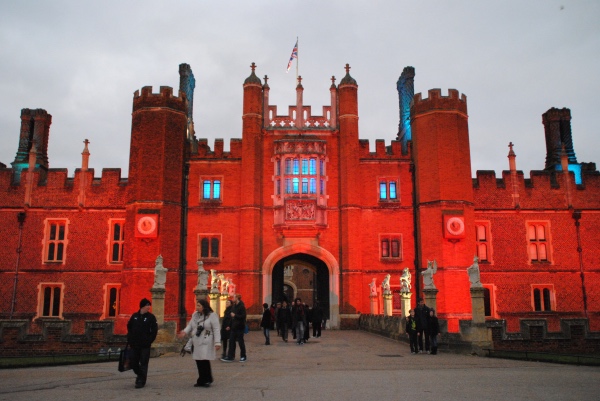
The Hampton Court Palace Food Festival is on this weekend featuring plenty of mouth-watering opportunities for your tastebuds. As well as an array of street food from more than 100 artisan producers and companies, there will be cookery demonstrations from chefs and experts including Michel Roux Jr, Nadiya Hussain and Rhiannon Lambert and live music, all set in the palace’s East Front Gardens. Admission is included in palace entry. The festival runs over Saturday, Sunday and Monday from 10am to 6pm. For more, including the programme of events, head to www.hrpfoodfestivals.com/hampton-court-palace/whats-on/the-kitchen.

The smells and stenches that tell the story of Barking’s industrial past are the subject of outdoor exhibitions opening at Valence House Museum in Dagenham and outside the National Theatre on South Bank this Saturday. The Barking Stink, being held as part of this year’s Totally Thames festival, takes a journey into the past through smell when, from the mid-19th century factories including those producing bitumen, asphalt, paint, chemicals and fertiliser joined with the iron foundries, breweries, soap factories and timber mills, not to mention the smell of fish, already found around Barking Creek. Runs at Valence House until 6th November and on South Bank until 5th October. For more, head here.

Send all items for inclusion to exploringlondon@gmail.com.

This Week in London – Extinction Rebellion at the V&A; and, helping the homeless in the City of London…

Objects relating to climate change protest group Extinction Rebellion have gone on display at the V&A. The items, which can be seen in the V&A’s Rapid Response Collecting Gallery, range from the open source ‘Extinction Symbol’ created by street artist ESP in 2011 and adopted by the group, known as XR, in 2018 through to the first ‘Declaration of Rebellion’ pamphlet and flags carried during demonstrations. The objects – which also include a child’s high-vis jacket worn during a peaceful XR protest which has gone on display at the V&A Museum of Childhood in Bethnal Green – were given by the Extinction Rebellion Arts Group, a coalition of graphic designers, artists and activists responsible for XR’s design programme. The exhibition is free. For more, see www.vam.ac.uk. PICTURE: © V&A London

The City of London has launched an alternative giving campaign aimed at helping the City’s homeless and rough sleepers, establishing four contactless card points where people can donate £3 a time. The contactless devices, which donate the money to homelessness charity Beam, are located at the City of London Information Centre in St Paul’s Churchyard, the Barbican Library, the Tower Bridge’s engine room and the Guildhall West Wing reception window. The campaign will run for three months.

Send all items for inclusion to exploringlondon@gmail.com.

LondonLife – ‘Ship of Tolerance’ docks in the Thames…

Ilya and Emilia Kabakov’s Ship of Tolerance is moored at Royal Docks this month ahead of the annual celebration of London’s river, Totally Thames, in September. The 60 foot long, hand-crafted wooden ship is dedicated to educating and inspiring young people and features sails made by children from 40 London primary schools, Great Ormond Street Hospital and refugee centres in Birmingham, Leeds, Peterborough and Calais. The award-winning ship was first launched in Egypt in 2005 and has since appeared in numerous cities around the world including Venice, Havana, Moscow, New York and Rome. It can be seen at Royal Docks until 31st August and then outside the Tate Modern from 4th September to 6th October. For more on the ship and Totally Thames, see www.totallythames.orgPICTURE: Courtesy of Totally Thames.

A Moment in London’s History – An iconic image of Abbey Road is taken…

It’s 50 years this month – it was last Thursday, 8th August, in fact – when an iconic photograph featuring the Fab Four on a zebra crossing was taken for cover of the Abbey Road album.

The photograph – which featured (in order) George Harrison, Paul McCartney, Ringo Starr and John Lennon striding across the pedestrian walk in St John’s Wood – was taken by the late Scottish photographer Iain Macmillan.

He apparently climbed onto a ladder in the middle of the street while a policeman held back traffic briefly (there are vehicles driving down the road in the distance in the image).

The entire shoot – which was apparently McCartney’s idea – reportedly took just 10 minutes and saw the band walk across the road six times (the chosen image – said to have been taken at 11:38am – was number five; the only one in which all their legs were in a perfect V shape).

The image carries a particular poignancy for Beatles fans because of the fact that they “officially” broke up less than a year later (the album it featured on, Abbey Road, was released on 26th September, 1969, and was the last recorded by the group even though it was released prior to Let It Be).

As well as being recreated by tourists at the site itself, the image has been reproduced and adapted countless times – including its reproduction on a 64p Royal Mail stamp in 2007 and an adaption involving the Simpsons for a Rolling Stone cover in 2002.

Abbey Road Studios – where the Abbey Road album was recorded – is located just a hop, skip and jump away and has operated a live webcam of the crossing since 2002. (For more on Abbey Road and the origins of its name, see our previous post here).

PICTURE: Via Wikipedia.

This Week in London – 16th century altar piece on display for first time in a century; Tudor sports at Hampton Court; and, the most expensive British-made watch…

One of the major surviving altarpieces created by Italian Renaissance painter and sculptor Giovanni Martini da Udine in the early 16th century has gone on display at The National Gallery. The Virgin and Child with Saints, said to date from about 1500–25, has undergone an extensive seven year conservation process – described as one of the longest and most complex in the gallery’s history – prior to going on show for the first time in 100 years. The process involved removing old varnish and repaints, dividing the altarpiece into its original three boards and cleaning and repairing them before putting them back together with an additional support and then finally filling and retouching the original paintwork and adding a frame to ensure it can be moved in the future. The painting depicts the Virgin and Child with St James on one side and St George on the other while a man, most likely the artist’s patron, kneels in front. Known as a ‘sacra conversazione’ (holy conversation), this type of painting become increasingly popular over the course of the 15th century. The work can be seen in Room 56. Admission is free. For more, see www.nationalgallery.org.uk. PICTURE: Installation of The Virgin and Child with Saints by Giovanni Martini da Udine in Room 56./©The National Gallery, London

Join in some Tudor sports this weekend at Hampton Court Palace. Until Sunday, families are invited to head to the East Front Gardens where they can try their hand at shooting a crossbow or a bow and arrow, practice some traditional sword fight, and watch demonstrations in hand to hand combat by King Henry VIII and his courtiers. There will also be some falconry displays. Admission to ‘Henry VIII’s Sporting Academy’ is included in general admission charge. For more, check out www.hrp.org.uk/hampton-court-palace/.

The most expensive British watch ever made has gone on show at the Science Museum in South Kensington. The 18ct gold-cased watch, known as the Space Traveller II, was handmade by George Daniels in 1982 and named in honour of the Moon landings. It sold for £3.2 million at auction in 2017. The watch, which has been loaned by a private donor, is being displayed in the Clockmakers’ Museum and sits in an exhibit about Daniels, a former master of the Worshipful Company of Clockmakers who is credited with helping to revive independent watchmaking in the late 20th century. While Space Traveller I was sold soon after its completion, Space Traveller II was used by Daniels until his death in 2011. It displays both solar and sidereal (star) time and also shows the phase of the Moon, an annular calendar, the equation of time and features a stopwatch which functions with either solar or sidereal time. Entry to the Clockmakers’ Museum is free. For more, see www.sciencemuseum.org.uk.

Send all items for inclusion to exploringlondon@gmail.com.

LondonLife – A roof in the park…

Japanese architect Junya Ishigami’s design for this year Serpentine Pavilion takes inspiration from architecture’s most common feature – the roof – and features an arrangement of slates positioned to form a single large canopy with a cave-like space beneath. The pavilion features 61 tonnes of Cumbrian slate tiles and 106 steel columns and, says Ishigami, is designed to play “with our perspectives of the built environment against the backdrop of a natural landscape, emphasising a natural and organic feel as though it had grown out of the lawn, resembling a hill made out of rocks”. “Possessing the weighty presence of slate roofs seen around the world, and simultaneously appearing so light it could blow away in the breeze, the cluster of scattered rock levitates, like a billowing piece of fabric,” he says. Ishigami is the 19th architect to design a pavilion for the Serpentine. His pavilion, which is located near the Serpentine Galleries in Kensington Gardens, can be visited until 6th October. It’s open 10am to 6pm daily. OS x Serpentine Park Nights, a programme of talks, films and performances, takes place on selected Friday nights. For more, head to this linkALL PICTURES: © Junya Ishigami + Associates/Photography – Top and immediately below © 2019 Norbert Tukaj; Others below – © 2019 Iwan Baan.


This Week in London – Women in the British Army; communications secrets exposed; and, cinema at Somerset House…

An exhibition exploring the changing roles of women in the British Army from 1917 to the present day has opened at the National Army Museum in Chelsea. Rise of the Lionesses, which is being held in partnership with the WRAC Association, charts the major contributions women have made to the Army’s history as well as how perceptions of “appropriate” roles for females have affected these contributions and how women have fought to redefine those roles. Highlights include the combat shirt and medical kit belonging to Sergeant Chantelle Taylor – the first female British soldier to kill in combat, the first Army-issue bra, and the vehicle chassis used to train Princess Elizabeth (now Queen Elizabeth II) while she served in the Auxiliary Territorial Service during World War II (pictured above). The free display can be seen until 20th October and is accompanied by a programme of public events. For more, head to this link. PICTURE: Courtesy of National Army Museum.

• Communications intelligence and cyber security are explored in an exhibition at the Science Museum, making the centenary of UK intelligence, security and cyber agency,  GCHQ. Top Secret: From ciphers to cyber security features more than 100 objects including cipher machines used during World War II, secure telephones of the type used by British Prime Ministers, and an encryption key used by the Queen. There’s also encryption technology used by Peter and Helen Kroger who, until their arrest in the 1960s, were part of the most successful Soviet spy ring in Cold War Britain, and the remains of the crushed hard drive alleged to contain top secret information which was given by Edward Snowden to The Guardian in 2013 while the work of GCHQ’s National Cyber Security Centre is also explored with visitors able to see a computer infected with the WannaCry ransomware which, in 2017, affected thousands of people and organisations including the NHS. Runs until 23rd February. Admission is free. For more, head to www.sciencemuseum.org.uk.

The pioneering work of Hungarian avant garde artist Dóra Maurer goes on show at the Tate Modern on South Bank next Monday in the first UK exhibition celebrating her five decade career. The free display brings together 35 of her works – from conceptual photographic series and experimental films to colourful graphic works and striking geometric paintings – with highlights including Seven Foldings (1975), Triolets (1981), Timing (1973/1980) and the six-metre-long Stage II (2016). The year-long display is one of several free displays opening at the Tate Modern this month. Others include an exhibition of Sol LeWitt’s graphic woodcut prints, a show featuring photograms, films, painting and drawings by Polish émigré artists Franciszka Themerson and Stefan Themerson, and photography displays by Mitch Epstein, Naoya Hatakeyama and David Goldblatt. For more, see www.tate.org.uk.

Cinema is being celebrated at Somerset House this month with the launch of Film4 Summer Screen at Somerset House. The event includes courtyard screenings, specially curated DJ sets and live performances, and panel discussions from industry insiders. Actor Antonio Banderas will join Spanish director Pedro Almodóvar to introduce the festival’s opening night premiere, Pain and Glory, with other special guests including the cast of Shane Meadows’ BAFTA-award winning film This is England, Francis Lee, the director and writer of God’s Own Country, and  the film’s lead actor Josh O’Connor as well as Peter Webber, director of Inna de Yard. Runs from 8th to 21st August. For more, see www.somersethouse.org.uk.

Send all items for inclusion to exploringlondon@gmail.com.

LondonLife – Roman “pen” souvenir among thousands of finds on Bloomberg site…

An iron stylus bearing an inscription – described as the sort of cheap souvenir you might bring back for a friend after visiting a foreign city – is among thousands of Roman-era artefacts discovered during excavations for Bloomberg’s new European headquarters in Cannon Street. The stylus, which is about the length of a modern pen, dates from about AD70 and was used to write on wax-filled wooden writing tablets. It is inscribed in Latin text which, translated by classicist and epigrapher Dr Roger Tomlin, reads: “I have come from the city. I bring you a welcome gift with a sharp point that you may remember me. I ask, if fortune allowed, that I might be able [to give] as generously as the way is long [and] as my purse is empty”. It is believed the “city” referred to is Rome. The stylus is one of some 14,000 items Museum of London Archaeology archaeologists unearthed on the dig – including 200 styli (although only one bears an inscription) – which took place on what was the bank of the (now lost) Thames tributary, the Walbrook, between 2010 and 2014. It is among items on show in an exhibition now on at the Ashmolean Museum in Oxford called Last Supper in Pompeii. Head here for more details. Other finds from the excavations can be seen at the recently opened London Mithraeum Bloomberg SPACE. PICTURE: © MOLA

This Week in London – Queen Victoria at Buckingham Palace; royal etchings; and, Ed Ruscha at Tate Modern…

The impact of Queen Victoria on Buckingham Palace, transforming what was empty residence into “the most glittering court in Europe”, is a special focus of this year’s summer opening of Buckingham Palace. Marking the 200th anniversary of the birth of the Queen, the exhibition Queen Victoria’s Palace recreates the music, dancing and entertaining that characterised the early part of the Queen’s reign using special effects and displays. Highlights include the Queen’s costume (pictured) for the Stuart Ball of 13th July, 1851, where attendees dressed in the style of King Charles II’s court. There’s also a recreation of a ball held in the palace’s newly completed Ballroom and Ball Supper Room on 17th June, 1856, to mark the end of the Crimean War and honour returning soldiers which uses a Victorian illusion technique known as Pepper’s Ghost to bring to life Louis Haghe’s watercolour, The Ball of 1856. The table in the State Dining Room, meanwhile, has been dressed with items from the ‘Victoria’ pattern dessert service, purchased by the Queen at the 1851 Great Exhibition, and the room also features the Alhambra table fountain, a silver-gilt and enamel centrepiece commissioned by Victoria and Albert in the same year, and silver-gilt pieces from the Grand Service, commissioned by the Queen’s uncle, King George IV, on which sit replica desserts based on a design by Queen Victoria’s chief cook, Charles Elme Francatelli. The summer opening runs until 29th September. Admission charges apply. For more, see www.rct.uk/visit/the-state-rooms-buckingham-palace. PICTURE: Royal Collection Trust/ © Her Majesty Queen Elizabeth II 2019

 The Victorian reign is also the subject of a new exhibition at the British Museum where rare etchings by Queen Victoria and Prince Albert have gone on display. At home: Royal etchings by Queen Victoria and Prince Albert features 20 artworks that they created during the early years of their marriage and depict scenes of their domestic lives at Windsor Castle and Claremont including images of their children and pets. The display includes three works donated to the museum by King George V, Queen Victoria’s grandson, in 1926, and it’s the first time they’ve gone on public display. Prince Albert introduced the Queen to the practice of etching soon after their wedding and under the guidance of Sir George Hayter they made their first works on 28th August, 1840. They would go on to collaborate on numerous works together. The display can be seen in Room 90a until mid-September. Admission is free. For more, see www.britishmuseum.org. PICTURE: The Princess Royal and Prince of Wales, 1843, by Albert, Prince Consort (after Queen Victoria) © The Trustees of the British Museum.

American artist Ed Ruscha is the subject of the latest “Artist Rooms” annual free display in the Tate Modern’s Blavatnik building on South Bank. The display features works spanning Ruscha’s six-decade career, including large, text-based paintings and his iconic photographic series. There is also a display of Ruscha’s artist’s books – including Various Small Fires 1964 and Every Building on the Sunset Strip 1966 – as well as some 40 works on paper gifted to Tate by the artist. Highlights include his series of photographs of LA’s swimming pools and parking lots, paintings inspired by classic Hollywood cinema, and works such as DANCE? (1973), Pay Nothing Until April (2003) and Our Flag (2017). Runs until spring 2020. Admission is free. For more, see www.tate.org.uk.

Send all items for inclusion to exploringlondon@gmail.com.

This Week in London – Exploring the Moon; celebrating London’s green spaces; and, Finnish artist Helene Schjerfbeck at the RA…

Lunar samples collected during the Apollo 11 mission and objects that travelled to the Moon with the astronauts including Edwin “Buzz” Aldrin’s “Snoopy Cap” and the famous Hasselblad camera equipment are among items on display as part of a new major exhibition which opens at the National Maritime Museum in Greenwich on Friday. Celebrating the 50th anniversary of the 1969 Moon landing, The Moon explores Earth’s relationship with the Moon over time and across civilisations. Other items among the more than 180 objects from public and private collections on show include a rare lunar meteorite from the Natural History Museum’s collection (pictured), a Mesopotamian tablet from 172 BC and a series of contemporary and historical artworks including paintings by JMW Turner and John Constable. There’s also a new version of Christian Stangl’s film Lunar in which animated photographs from Apollo missions allow visitors to experience the Moon landings through the eyes of the astronauts. The Moon can be visited until 5th January. Admission charges apply. For more, see www.rmg.co.uk/moon50. PICTURE: Lunar meteorite Found in the Sahara Desert, North West Africa, 2017 © The Trustees of the Natural History Museum, London.

London’s inaugural and free week long National Park City Festival kicks off on Saturday to celebrate the city’s green spaces, wildlife and waterways. Opening the festival – which is an initiative of the Mayor of London and National Park City Foundation as well as other partners – this weekend is a free cultural programme, run in partnership with the National Theatre, on its outdoor river stage on South Bank which features dance, theatre and music. Other highlights among the more than 300 events being held during the nine day event include the ‘National Park City Rooftops’ initiative – which sees people given free access to some of the city’s most beautiful garden rooftops and natural spaces including Crossrail Place in Canary Wharf, Barbican Conservatory and Ham Yard Hotel in Soho, the ‘National Park City Forest’ initiative which sees a unique audio installation, Living Symphonies, installed in Epping Forest, the ‘National Park City Wildlife’ – a photography competition and exhibition held in partnership with the London Wildlife Trust, and the multi-site ‘National Park City Splash’ initiative in which everybody can try their hand at activities like paddle boarding and open water swimming. The week runs to 28th July. For the complete programme of events, head to https://nationalparkcity.london.gov.uk.

The work of Finnish artist Helene Schjerfbeck (1862 – 1946) is being celebrated at the Royal Academy of Arts. Opening on Saturday, the first solo UK exhibition of Schjerfbeck’s works features some 65 portraits, landscapes and still lifes, and follows the development of the artist’s work from a naturalistic style, inspired by French Salon painters in the early 1880s, to what the RA describes as “a radically abstracted and modern approach from the turn of the 20th century onwards”. The exhibition is being shown in five sections with highlights including Two Profiles (1881) – the earliest work on display, The Convalescent (1888), My Mother (two paintings – one from 1902 and another from 1909), a series of self-portraits and later works like Måns Schjerfbeck (The Motorist) (1933) and Three Pears on a Plate (1945). Runs until 27th October in The Gabrielle Jungels-Winkler Galleries. Admission charge applies. For more, see www.royalacademy.org.uk.

Send all items for inclusion to exploring london@gmail.com.

This Week in London – Culture, heritage and war at IWM; Sir Arthur Pearson honoured; and, Takis at the Tate Modern…

Exhibitions exploring why culture and heritage are attacked during times of war and how cultural treasures in British museums and galleries were protected during World War II open at London’s Imperial War Museum on Friday. What Remains – which highlights both historic and contemporary instances in which buildings, places, art and artefacts have been deliberately targeted during times of conflict as well as examples of resistance, protection and restoration, and, Art in Exile – which looks at the role UK cultural organisations have played in wartime, are both part of Culture Under Attack, a free season of events that explore how war threatens cultural heritage. Also launching as part of Culture Under Attack this week is Rebel Sounds, an immersive exhibition that reveals how music has been used to resist and rebel against war and oppression with examples from Nazi Germany in the 1930s, Northern Ireland in the 1970s, Serbia in the 1990s and present day Mali. All three displays run until 5th January. For more, see www.iwm.org.uk/seasons/culture-under-attack. PICTURE: British Army poster from 1943, created to educate and inform its soldiers of the importance of respecting property, including cultural heritage (© IWM)

• Sir Arthur Pearson, newspaper publisher and founder of St Dunstan’s (Blind Veterans UK), has been remembered with an English Heritage Blue Plaque. The plaque was unveiled at his now Grade II*-listed home on Portland Place in Marylebone last week, the place where he lived with his wife and some of the blinded servicemen supported by St Dunstan’s in the later years of World War I and those following. Pearson had made a fortune as a press magnate, founding the Daily Express in 1900 and later purchasing The Evening Standard but his attention turned to campaigning for the blind after he was told he would lose his sight in 1913. For more on English Heritage Blue Plaques, see www.english-heritage.org.uk/visit/blue-plaques/.

The largest ever exhibition of the work of pioneering Greek artist Takis (Panayiotis Vassilakis) has opened at the Tate Modern this week. Takis features more than 70 works by the self-taught artist – renowned as a “sculptor of magnetism, light and sound” –  including a rarely-seen Magnetic Fields installation, a series of musical devices generating resonant and random sounds, and forests of his antenna-like Signals. Can be seen until 27th October. Admission charge applies. For more, see www.tate.org.uk.

Send all items for inclusion to exploringlondon@gmail.com.

LondonLife – Angles on an iconic bridge…

Tower Bridge marked its 125th birthday last weekend so to celebrate, here’s some different angles on London’s most photographed bridge. The Victorian Gothic bascule and suspension bridge, which spans the Thames just to the east of London Bridge (with which it’s not to be confused), took eight years to build and was officially opened on 30th June, 1894, by the then Prince and Princess of Wales (later King Edward VII and Queen Alexandra). For more on the celebrations taking place at the bridge over the coming weeks and months, see www.towerbridge.org.uk/125/.


This Week in London – Tower Bridge turns 125; Cindy Sherman at the National Portrait Gallery; and, Félix Vallotton at the RA…

•  Tower Bridge marks its 125th anniversary on Sunday and in honour of the event, there will be celebrations inside and outside the bridge right across the weekend. Entry to the bridge will be priced at just £1.25 and visitors will also receive a one-off souvenir bookmark as well as £5 off the official Tower Bridge book. Tickets cannot be booked in advance. Among the activities is a new photographic exhibition on the high-level walkways showcasing rare archival images and new photographs while costumed performers depicting historic figures – including the bridge’s first and only Indian engineer, divers who dug the foundations and the bridge’s first female employees – will be re-enacting scenes which (might have) happened during construction. Visitors can also join in the bridge architect Sir Horace Jones’ 200th “big birthday bash” in the Engine Rooms and view a new installation on the piers imagining some of the alternative river crossings that could have been built in place of the bridge. Special events will be continuing until the end of the year. For more, see www.towerbridge.org.uk/125/. PICTURE: Paul Varzar/Unsplash

Contemporary artist Cindy Sherman’s ground-breaking series, Untitled Film Stills (1977-80) has gone on public display for the first time in the UK in a major new retrospective of the artist’s work. Hosted at the National Portrait Gallery, Cindy Sherman explores the development of the artist’s work from the mid-1970s to the present day and includes all 70 images from the Untitled Film Still series as well all five of Sherman’s Cover Girl series, completed while she was a student in 1976 and being displayed together for the first time. There will also be a range of source material from the artist’s studio to give insights into her working processes. Runs until 15th September. Admission charge applies. For more, see www.npg.org.uk.

The work of Swiss artist Félix Vallotton (1865–1925) is being exhibited in a dedicated display for the first time in the UK since 1976. Opening in the The Jillian and Arthur M Sackler Wing of Galleries at the Royal Academy of Arts on Sunday, Félix Vallotton: Painter of Disquiet features about 100 works from public and private collections across Europe and the US and is organised in three sections spanning his career. Highlights include Self-portrait at the Age of Twenty (1885), The Sick Girl (1892), The Visit (1899), Gabrielle Vallotton (1905), Nude Holding her Gown (1904),  This is War! (1916), Red Peppers (1915), and Sandbanks on the Loire (1923). On show until 29th September after which the exhibition will travel to The Metropolitan Museum of Art in New York City. Admission charge applies. For more, see www.royalacademy.org.uk.

Send all items for inclusion to exploringlondon@gmail.com.