This Week in London – Marie Duval explored; Christmas in Trafalgar Square and at Dulwich; and, Australian Impressionists at The National Gallery…

The life and work of 19th century London actress, cartoonist and illustrator Marie Duval is the subject of a new exhibition which opens at the Guildhall Library in the City tomorrow. Marie Duval: Laughter in the First Age of Leisure is the first one solely dedicated to Duval’s work (her real name was Isabelle Émilie de Tessier) as a 19th century pioneer of the art of comics. Her work first appeared in a range of cheap British ‘penny papers’ and comics of the 1860s to 1880s aimed at working class people. The exhibition has been produced by the University of Chester in partnership with the library and with the support of the British Library.

Carol singing has kicked off in Trafalgar Square to mark the Christmas season. More than 40 groups are taking part in the sessions – free to watch – which take place between 4pm and 8pm on weekdays and from 2pm on weekends until 23rd December. The square is also home to a traditional Norwegian spruce Christmas Tree which has, as has been the case every year since 1947, been brought from forest near Oslo in thanks for Britain’s support of Norway during World War II. For more, see www.london.gov.uk/events.

The Dulwich Picture Gallery’s Christmas festival – featuring the ‘Winterlights’ lights trail, artisan Christmas market, pop-up carollers and other entertainments – has opened at the south London gallery. This year’s festivities also include two contemporary baroque-inspired Christmas trees by 3D art specialists, Nagual Creations, and visitors also have the chance to create their own festive family photo using a specially commissioned giant gold frame in the grounds as well as listen to Christmas story-telling in the gallery’s Keeper’s Cottage. The Winterlights display runs from 6pm to 10pm until 18th December (excluding Mondays; admission charges apply) with the market, featuring 50 stalls, held over the next two weekends – 10th-11th December and 17th-18th December (entry is free). For more, see www.dulwichpicturegallery.org.uk.

The first UK exhibition to focus on Australian impressionist paintings has opened at The National Gallery. Australia’s Impressionists features 41 paintings including some never shown before in the UK and explores the impact of European Impressionism on Australian painting of the 1880s and 1890s with a particular focus on four artists: Tom Roberts, Arthur Streeton, Charles Conder and John Russell. The exhibition is organised into three sections: the first looking at the landmark 1889 9 by 5 Impression Exhibition held in Melbourne, the second looking at the role of Australian Impressionism in the forging of a national identity, and the third looking at the work and influence of John Russell. The exhibition can be seen in the Sunley Room until 26th March. Entry is free. For more, see www.nationalgallery.org.uk.

This Week in London – The Gilbert Galleries reopen at the V&A and period Christmases at the Geffrye…

gilbert-galleriesA 17th century Peruvian gold bowl recovered from a shipwreck, Tudor fashion accessories and a collection of ‘micromosaics’ including tabletops commissioned by Tsar Nicholas I are among highlights of the newly reopened Rosalinde and Arthur Gilbert Galleries at the V&A. The South Kensington museum reopened the four galleries last month after the objects within the collection were removed in 2014 as part of the V&A’s Exhibition Road building project which will be completed in July next year. Amassed by collectors Rosalinde and Arthur Gilbert over a period of 40 years from the 1960s, the collection features about 1,200 objects, more than 500 of which are now on display. The collection was on display at the Los Angeles County Museum of Art before being transferred to the UK in 1996 and accepted as a gift to the nation by the Queen Mother in 2000. It was displayed at Somerset House until coming to the V&A where it opened to the public in 2009. Other highlights on display include a newly acquired silver christening gift presented by King George II to his god-daughter, Lady Emilia Lennox, in 1731, and a life-sized silver swan made by Asprey, London, in 1985 (pictured). Entry to the galleries is free. For more, see www.vam.ac.uk. PICTURE: © Victoria and Albert Museum, London

The period living rooms at the Geffrye Museum of the Home have been transformed for Christmas in its annual Yuletide display. Now in its 25th year, the exhibition at the Shoreditch establishment recreates the Christmas traditions of times past including everything from kissing under the mistletoe to decorating the tree, parlour games such as blind man’s bluff to hanging up stockings and sending cards. Christmas Past is accompanied by a programme of events including craft fairs, festive evenings, carol sings and decoration workshops with festive food and drinks available in the cafe. Runs until 8th January. Entry is free. For more, see www.geffrye-museum.org.uk.

Send all items for inclusion to exploringlondon@gmail.com.


Eight historic department stores in London…4. Harrods…

harrods

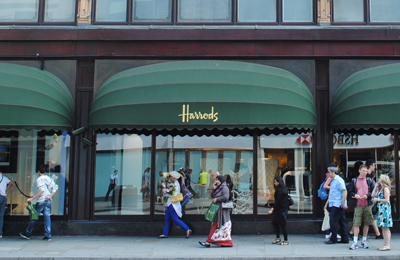
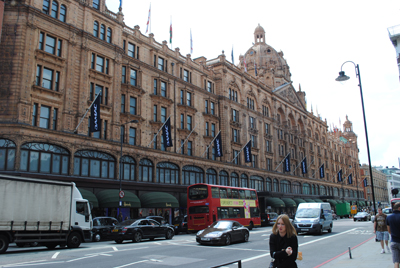
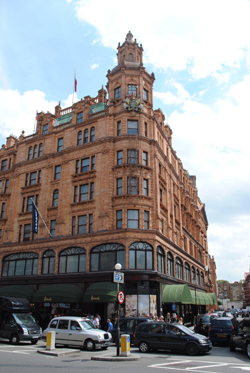
Famed as a luxury shopping destination for the rich and famous, Harrods on Brompton Road in Knightsbridge takes its name from founder Charles Henry Harrod.

Harrod first established a drapery business in Southwark in 1824 and in 1832, founded Harrods & Co Grocers in Clerkenwell. Two years later he established another grocery, this time in Stepney, with a particular interest in tea.

harrods2In 1849, to capitalise on trade to the upcoming Great Exhibition in Hyde Park in 1851, he took over a small shop on the site of the current store – initially with just two assistants and a messenger boy. In 1861 his son, the similarly-named Charles Digby Harrods, took over the business and by 1880, the store was employing more than 100 people offering customers everything from medicines and perfumes to clothing and food and already attracting the wealthy customers it would become known for.

Even the burning down of the store in late 1883, failed to dint its long-term success, and Harrod took the opportunity to build a capacious new building on the site. Designed by Charles Williams Stephens, the building, which wasn’t finished until 1905, featured Art Nouveau windows and was topped with a dome. One of its attractions opened on 16th November, 1898, when it became home to England’s first “moving staircase” (escalator). Nervous customers were apparently offered a brandy once they’d made the journey.

Harrods’ fame continued to grow and over the years a who’s who of London society has been associated with the store – everyone from writers like Oscar Wilde, and AA Milne, actors Ellen Terry, Charlie Chaplin and Laurence Olivier and luminaries such as the “father of psychoanalysis” Sigmund Freud and many members of the Royal family.

Under the motto of Omnia Omnibus Ubique (All Things for All People, Everywhere), the store became famous for selling whatever the customer wanted including, thanks to an exotic pets department which lasted up until the 1970s, a lemur called Mah-Jongg which was sold to Stephen and Virginia Courtauld in 1923 and lived with them at Eltham Palace and a lion called Christian to Australian expats John Rendall and Anthony “Ace” Bourke in 1969 (it was later set free in Kenya).

The ownership meanwhile has long since left the Harrods family – Charles Digby had sold his shares as far back as 1889 when the company was floated on the London Stock Exchange and renamed Harrods Stores Limited with Sir Alfred James Newton as chairman and Richard Burbridge as managing director. Burbridge was succeeded by his son in 1917 and he by his son in 1935.

In 1959, the company was bought by House of Fraser and in 1985, the store was sold to the Al-Fayed brothers (Mohamed Al-Fayed famously had two memorials created inside dedicated to Diana, Princess of Wales, and his son Dodi Fayed, both of whom died in a car crash in Paris in 1997. He also decided not to renew the company’s Royal warrants – it has had up to four). Current owners Qatar Holding, the sovereign wealth fund of Qatar, bought the company in 2010.

The company has opened a number of other Harrods stores over the years – including its only ever foreign branch (long since independent) in Argentina in 1914 and, in 2000, a shop aboard the ship RMS Queen Elizabeth 2.

The Knightsbridge store, meanwhile, has been twice bombed by the IRA – in 1983 when six were killed and scores more injured after a car bomb exploded in an adjoining street and in 1993 when a bomb was placed in a litter bin, injuring four. In 1989, it controversially introduced a dress code, banning casual wear like flip-flops and Bermuda shorts.

Now the largest department store in Europe, the Brompton Road store has more than million square feet of selling floor over seven stories. It attracts some 15 million customers a year to its more than 300 different departments and other facilities including more than 25 restaurants and cafes, a concierge, bank, spa and personal shopping service.

harrods3

LondonLife – Christmas lights up at Kew…

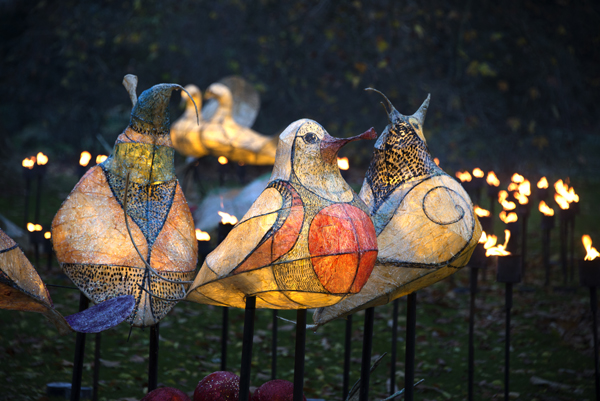
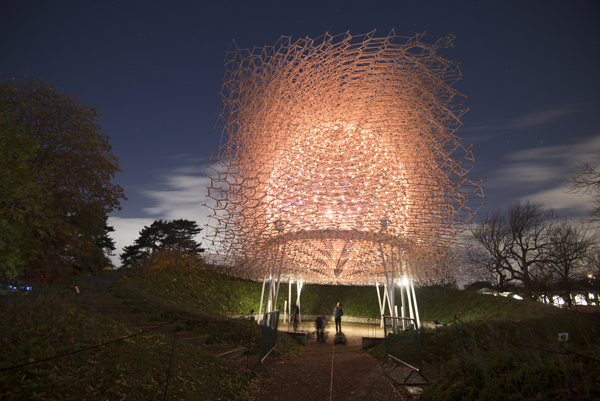
kewaMore than 60,000 lights are being used to illuminate Kew Gardens this Christmas in a mile long trail through the foliage. The trail features eight newly commissioned installations from UK and international artists including Bloom – a display of 1,700 swaying flowers by the group Squidsoup (above), and the roaring scented Fire Garden – a display themed around the Twelve Days of Christmas by And Now: (pictured below are three French hens from the installation). The trail also features Wolfgang Buttress’ bee-inspired installation, known as the The Hive (pictured second below), which has been lit with 1,000 LEDs that pulsate and glow against the night sky, and finishes with an “explosion” of brightly coloured laser beams across the Palm House Pond (pictured third below). There’s also a panto featuring Santa and his elves and a Victorian carousel. The night lights can be seen until 2nd January. Admission charge applies (and there’s timed entry). Kew is also running a program of family-oriented Christmas activities during the day across the period. For more, see www.kew.org. PICTURES: Jeff Eden, RBG Kew.

kewb

kewc

kew-1

Treasures of London – The (new) Design Museum…

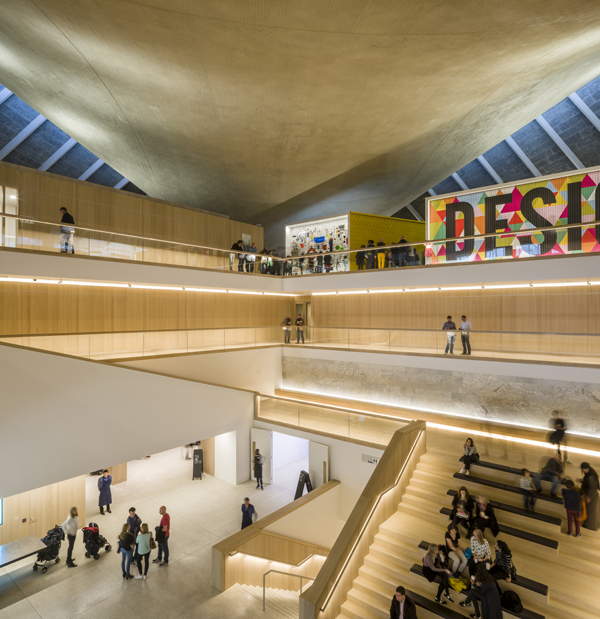
design-museum1

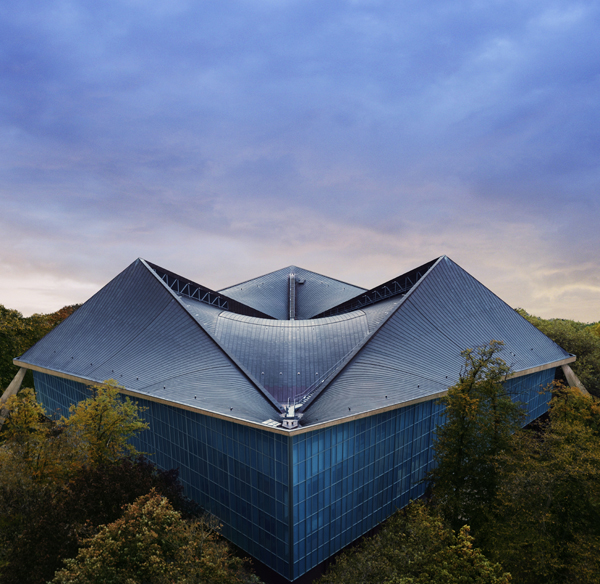
The Design Museum’s new home in Kensington finally opened this week and it’s already been getting some rave reviews, hence why, despite its freshness, we thought we’d mention it in our Treasures of London feature.

The museum, which moved to its new premises after 25 years in Shad Thames, now occupies the former Commonwealth Institute building, which dates from 1962 and was designed by Robert Matthew. The building has recently undergone a £83 million makeover with the interiors designed by architect John Pawson.

The new museum has three times the space of the previous premises and features the only collection in the UK devoted exclusively to contemporary design and architecture. At the heart of the building is the Designer Maker User exhibition which, as the museum’s first free permanent display, occupies the top floor of the museum, and includes more than 1,000 items of 20th and 21st century design. At its entrance can be found a wall featuring more than 200 items from 25 countries nominated by the general public including a Bible, Coca-Cola can and a £5 banknote.

design-museum2

Inside, the Designer section focuses on the thought-processes of designers and features a full-sized production of a gerberette used in the Richard Rogers-designed Centre Pompidou in Paris as well as models and images of the works of the late architect Zaha Hadid, David Mellor’s traffic lights, Kinneir and Calvert’s British road signage system and a full scale prototype for a new London Tube train designed by PriestmanGoode as well as Moulton bicycles and London Underground maps.

The Maker section, meanwhile, traces the evolution of manufacturing from Thonet bentwood cafe chairs and Model T Ford cars to robotic arms and 3D printing and includes objects at different stages of production – from tennis balls to the London 2012 Olympic Torch.

And in the User section, visitors will be led to explore the interaction between the consumer and brands that have become household names – Braun, Sony, Apple and Olivetti – as well as the impact of design on politics, fashion and music. Displays in the latter part include Gucci tennis shoes, the fashions of Vivienne Westwood and Christian Louboutin and the pioneering magazine The Face.

design-museum3

As many as 500,000 people are expected to visit the museum in its first year. Along with permanent displays, also unveiled this week was the new exhibition, Fear and Love, featuring 11 new installations by world leading designers. They include The Pan-European Living Room by architecture practice OMA, Room Tone by fashion designer Hussein Chalayan, Pittsburgh-based designer Madeline Gannon’s “mechanical creature” Mimus, and a series of death masks called Vespers created using 3D printing technology Neri Oxman.

And running until 19th February is the Beazley Designs of the Year, a celebration of design that promotes or delivers change, enables access, extends design practice or captures the spirit of the year past. Categories include architecture, digital, fashion, graphics, product and transport.

WHERE: The Design Museum, 224-238 Kensington High Street, Kensington (nearest Tube stations are Kensington High Street. Earl’s Court and Holland Park); WHEN: 10am to 6pm daily; COST: free (admission charges to special exhibitions); WEBSITE: http://designmuseum.org

PICTURES: Top – Gravity; Middle – Gareth Gardner; Bottom – Helene Binet. Courtesy The Design Museum.

This Week in London – London and the slave trade; a rare VC; and, Sir Elton John’s photo collection…

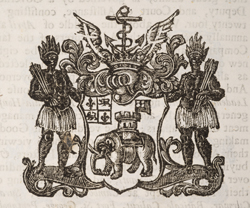
royal-african-company• London’s role in the slave trade during the 17th and 18th centuries is the subject of a new display opening at the Museum of London Docklands tomorrow. Called The Royal African, it tells the story of the Royal African Company, founded as a joint venture between the Duke of York (the future King James II) and leading London merchants in 1672 (the coat-of-arms of which is pictured), through looking in-depth at the life of William Sessarakoo. An African prince, Sessarakoo grew up in a Royal African Company fort at Annamaboe in modern Ghana but when his father sent him to London to be educated, he was tricked and instead sold into slavery in Barbados. He spent four years as a slave until he was freed by members of the Royal African Company who wanted to retain good relations with his father and subsequently brought him to London. The display is being housed in the museum’s London, Sugar & Slavery Gallery and can be seen until 4th June next year. Entry is free. For more, see www.museumoflondon.org.uk/museum-london-docklands. PICTURE: © Museum of London.

• A rare Victoria Cross found on the foreshore of the River Thames has gone on show at the Museum of London in the City. Mystery surrounds the medal which was given for actions at the Battle of Inkerman during the Crimean War. While a number of medals were awarded for actions in the battle, only two have a location recorded as unknown. The first is that awarded to Scottish Private John McDermond from the 47th (the Lancashire) Regiment for saving the life of Lt Col O’Grady Hall who had been injured and surrounded by the enemy which leading a charge against a Russian column while the second is that awarded to Irish Private John Byrne of the 68th (Durham) Light Infantry who rescued a wounded comrade under fire. On show alongside the medal is a record book which details the engraving on each VC issued between 18554 and 1927, the original medal design from the jewellers Hancocks and a modern copy of a VC. The medal, which was found and then reported by Tobias Neto, is on show until 15th December. For more, see http://www.museumoflondon.org.uk/museum-london.

Sir Elton John’s collection of modernist photography is the subject of an exhibition which opened at the Tate Modern in South Bank earlier this month. The Radical Eye: Modernist Photography from the Sir Elton John Collection features more than 150 works from more than 60 artists including Man Ray, André Kertész, Berenice Abbot, Alexandr Rodchenko and Edward Steichen. Among the subjects show in the images are Henri Matisse, Pablo Picasso and Jean Cocteau. The exhibition runs until 7th May. For more, see www.tate.org.uk/visit/tate-modern.

Send all items for inclusion to exploringlondon@gmail.com.

This Week in London – New museum on policing in the Square Mile; the 801st Lord Mayor’s Show; and maps on show at the BL…

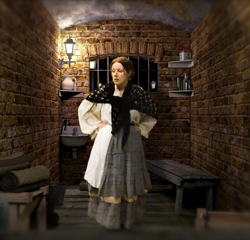
catherineeddowes2Stories including that of Catherine Eddowes, one of the victims of the notorious Jack the Ripper whose tale is brought to life through a virtual hologram (pictured), that of the Houndsditch Murders which claimed the lives of three police officers, and those of the more than 70 horses which have served in the City of London Police are among those told in the new purpose-built City of London Police Museum. A collaboration between the City of London Police and the City of London Corporation’s Guildhall Library, the new facility covers the 177 year history of the men and women charged with policing the Square Mile. Other stories highlighted in the museum include that of the recruitment of women into the force, the impact of the two World Wars on policing in the capital (featuring photographs taken by City of London police officers Arthur Cross and Fred Tibbs), the force’s tackling of terrorism and the progress of its communications, uniforms and kit and the victory of the City of London Police as the winner of the Olympic gold medal for the tug of war in 1920 (which, given the event was dropped, leaves them as the current champions). Entry to the museum, which opened this week at Guildhall, is free. For more, see www.cityoflondon.police.uk/about-us/history/museum/Pages/default.aspx. PICTURE: Courtesy City of London Police Museum.

The Lord Mayor’s Show takes place this Saturday, kicking off with a river pageant followed by the grand procession through City streets and fireworks over the Thames. The 801st Lord Mayor’s Show celebrates the election of Andrew Parmley as the 689th Lord Mayor of the City of London. This year’s procession, which kicks off at 11am and runs from Mansion House down Cheapside to the Royal Courts of Justice – where the Lord Mayor swears allegiance to the Crown – and back again at 1pm via Victoria Embankment, features 6,500 participants, 180 horses and 164 vehicles including steam engines, fire engines and a tank. The Show’s Pageantmaster, Dominic Reid, is celebrating his 25th consecutive show this year (his father organised 20 shows before him). The river pageant, featuring the QRB Gloriana, sets off from Westminster at 8.30am with Tower Bridge opening in salute at 9.25am. The fireworks display, which takes place over the Thames between Blackfriars and Waterloo, starts at 5.15pm. The tradition dates back to 1215. For more, see https://lordmayorsshow.london.

A major new exhibition looking at the history of the 20th century through maps has opened at the British Library in King’s Cross. Maps and the 20th Century: Drawing the Line features maps ranging from the first sketch of the London Underground dating from 1931, to declassified Ministry of Defence maps from the Cold War era, John Betjeman’s personal set of Ordinance Survey maps from the 1920s, a Russian moon globe from 1961 and EH Shepard’s first map of the Hundred Acre Wood (home of Winnie the Pooh). Other highlights include 3D relief models of the Western Front from 1917, a dress made of World War II escape maps printed on silk, an aerial photograph of Liverpool with targets marked used by the Luftwaffe, a map of the Atlantic Ocean floor from 1968. The exhibition, which runs to 1st March, is running in conjunction with a series of events exploring how maps continue to shape and influence our world. Admission charge applies. For more, follow this link.

Send all items for inclusion to exploringlondon@gmail.com

This Week in London – Emma Hamilton’s life explored; artist self-portraits; and, National Trust garnitures…

Emma Hamilton, the mistress of Horatio Nelson – hero of the Battle of Trafalgar, is the subject of a new exhibition at the National Maritime Museum in Greenwich. One of the most famous figures of her time, Hamilton rose from obscure beginnings to the heights of celebrity and is best remembered for the scandalous affair she had with Lord Nelson for the six years prior to his death in 1805. Emma Hamilton: Seduction and Celebrity brings together more than 200 objects, many of which have never been displayed before, including paintings, letters, costumes and jewellery. Highlights include works by artists George Romney, Sir Joshua Reynolds and Sir Thomas Lawrence, letters from Hamilton and her lovers, betrothal rings exchanged between Hamilton and Nelson, her songbooks and decorative objects. The exhibition, which runs until 17th April, is accompanied by a series of events including walking tours and late openings. Admission charges apply. For more, see www.rmg.co.uk/national-maritime-museum.

The first-ever exhibition of portraits of artists in the Royal Collection opens at The Queen’s Gallery, Buckingham Palace, tomorrow. Portrait of the Artist features more than 150 paintings, drawings, prints, photographs and decorative arts including a self-portrait by Sir Peter Paul Rubens (1623) which was hung in Whitehall Palace, a portrait of his former assistant Anthony van Dyck (c1627-28), and Cristofano Allori’s work Head of Holofernes (1613) in which the artist appears as the decapitated Holofernes as well as self-portraits by everyone from Rembrandt to Lucien Freud and David Hockney. The exhibition runs until 17th April. Admission charges apply. For more, see www.royalcollection.org.uk/visit/the-queens-gallery-buckingham-palace.

Sir Joseph Lyons, founder of Lyons tea shops and the ‘Corner Houses’ of London – among the first chain restaurants in England, has been honoured with an English Heritage Blue Plaque at his former home in Hammersmith. Sir Joseph, who lived at the property in the 1890s close to the now-demolished headquarters of his catering empire at Cadby Hall, opened the doors to his first teashop at 213 Piccadilly in 1894. He was knighted by King George V in 1911. For more, see www.english-heritage.org.uk/visit/blue-plaques/.

On Now: Garnitures: Vase sets from National Trust Houses. Being run in conjunction with the National Trust, the display at the Victoria & Albert Museum in South Kensington explores the history of ‘garniture’ – sets of ornamental vases unified by their design and a specific context. A status symbol for a period between the 17th and 19th century, garnitures fell out of fashion and complete sets are now extremely rare. The display features garnitures loaned from 13 different National Trust houses as well as objects from the V&A’s collection. Highlights include a garniture made in miniature for a doll’s house, an extremely rate 17th century silver set of jars, a Rococo set and Wedgwood ceramics. The free exhibition runs until 30th April. For more, see www.vam.ac.uk/exhibitions/garnitures.

Send all items for inclusion to exploringlondon@gmail.com.

This Week in London – Museums at Night; Roman London rediscovered; and, Pablo Picasso on show…

museums-at-night From tonight (and across this weekend), museums all over Greater London will be opening their doors after usual closing time as part of the annual Museums at Night event. Among those institutions taking part in the event, produced by Culture24, are such well-known icons as the British Museum, Tower Bridge and The National Gallery as well as lesser known establishments like Queen Elizabeth’s Hunting Lodge in Chingford, Southside House on Wimbledon Common and the Grant Museum of Zoology in central London. The October event follows an earlier Museums at Night in May. For the full programme of events, see www.museumsatnight.org.uk.

Roman London is the subject of a new exhibition at the City of London Corporation’s Guildhall Library. Londinium AD43 features the work of photographer Eugenio Grosso who takes the visitors on a photographic journey through time from London’s foundations to its present. The display shows how much of London’s Roman settlement has been preserved and features photographs of locations once home to significant London sites. Runs until 31st March. For more, see www.cityoflondon.gov.uk/things-to-do/guildhall-library/Pages/default.aspx

More than 75 portraits in all media by Spanish artist Pablo Picasso can be seen at the recently opened Picasso Portraits exhibition at the National Portrait Gallery. Including well-known masterpieces and some works never seen in Britain before, the works include a group of self-portraits as well as caricatures of Picasso’s friends, lovers, wives and children and images he created inspired by artists of the past. Runs until 5th February. Admission charge applies. For more, see www.npg.org.uk.

Send all items for inclusion to exploringlondon@gmail.com.

This Week in London – A Dutch master rediscovered; Science Museum’s new gallery; and, Rome defaced…

The first exhibition dedicated to the works of 17th century Dutch master Adriaen van de Velde has opened at the Dulwich Picture Gallery in south London. Adriaen can de Velde: Dutch Master of Landscape features more than 60 of his most accomplished works including landscapes and beachscapes as well as red chalk preparatory studies, pen and ink drawings and watercolours. There’s also a selection of his larger works including Portrait of a Family in a Landscape and Landscape with cattle and figures. Part of the Rediscovering Old Masters: The Melosi Series being shown at the Dulwich Picture Gallery, the exhibition is being held in partnership with the Rijksmuseum in Amsterdam. Runs until 15th January. For more, see www.dulwichpicturegallery.org.uk.

• The Science Museum in South Kensington has opened its “most ambitious” interactive science gallery featuring interactive exhibits, artworks, live demonstrations and immersive experiences. Wonderlab: The Statoil Gallery, which cost £6 million to create, features more than 50 exhibits in seven zones and spans topics as diverse as sound, forces, light and mathematics. Highlights include a giant interactive orrery (mechanical model of the solar system), the chance to explore the effects of different materials on a friction slide and live science shows featuring explosions, rockets, and space. Admission charges apply. For more, see www.sciencemuseum.org.uk/wonderlab.

 A free exhibition focusing on defaced coins and other objects has opened at the British Museum. Defacing the past: damnation and desecration in imperial Rome takes on Roman history from the view of the defacer and features coins of Caligula and Nero – the first emperors to suffer ‘damnation’ after their deaths, as well as defaced images of Domitian and Commodus, both of whom were killed by conspirators as a result of their extravagant and autocratic behaviour. Runs in Room 69a until 7th May. For more, see www.britishmuseum.org.

Send all items for inclusion too exploringlondon@gmail.com.

LondonLife – Heathrow gets greener…

heathrow-garden-gateThe UK’s first airport “garden gate” – featuring some 1,680 plants – has been planted at Heathrow’s Terminal 3 in a six month trial of the concept which could see the garden gates being implemented across the airport. Designed by urban greening specialists Biotecture, the installation at Gate 25 covers seven different sites in the gate room and features plants such as English native ivy and the Peace Lily and provides an “eco-sanctuary”, conveying a sense of calm to passengers as they embark on their journey.

This Week in London – The Queen’s House reopens; Caravaggio at The National Gallery; and, Victorian entertainments at the British Library…

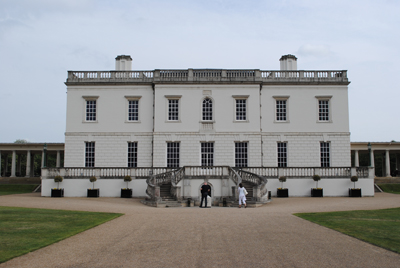
the-queens-houseThe Queen’s House in Greenwich has reopened this week following more than a year long restoration to mark its 400th anniversary. The property was designed by Inigo Jones for King James I’s wife, Queen Anne of Denmark (supposedly it was a gift from the king, given as an apology for swearing in front of her after she accidentally killed one of his dogs while hunting), and, commissioned in 1616 (but not finished until 1636, well after Queen Anne’s death), is regarded as Britain’s first fully classical building. The newly reopened premises houses more than 450 works of art from the National Maritime Museum’s collection and a new gold leaf artwork – inspired by the newly restored Tulip Stairs – on the ceiling of the Great Hall created by Turner Prize-winning artist Richard Wright. Other attractions include Gentileschi’s painting Joseph and Potiphar’s Wife, which has returned to the house, where it is on display in the King’s Presence Chamber, for the first time since 1650, and the iconic Armada Portrait of Queen Elizabeth I, which is now on permanent display. Entry to the property is free. The property’s reopening is being accompanied by a series of talks. For more, see  www.rmg.co.uk/queens-house.

The first major exhibition to explore the work Italian artist Caravaggio has opened at The National Gallery on Trafalgar Square this week. Beyond Caravaggio features 49 paintings traces the life of Michelangelo Merisi da Caravaggio (1571-1610), from his early years in Rome producing highly original works depicting youths, musicians, cardsharps and fortune-tellers through to his sensational first public commission in 1600 and the many commissioned works which followed, his two trips to the Kingdom of Naples (both times while fleeing the law, the first after committing murder), and how his works inspired – and were reflected in the works of – other painters. Works on show include Caravaggio’s Boy Bitten by a Lizard (1594-95) and The Supper at Emmaus (1601), as well as the recently discovered The Taking of Christ (1602) and Saint John the Baptist in the Wilderness (1603-04) along with a host of works from other painters. The exhibition is a collaboration with the National Gallery of Ireland and the Royal Scottish Academy and will head to these institutions after it finishes its run at The National Gallery on 15th January. Admission charge applies. For more, see www.nationalgallery.org.

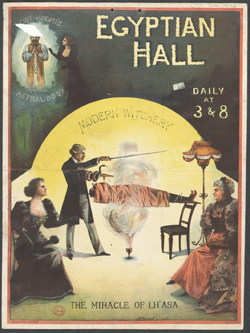
egyptian-hallA free exhibition exploring the popular Victorian entertainments which have shaped today’s theatrical traditions opens at the British Library in King’s Cross tomorrow. Victorian Entertainments: There Will Be Fun focuses on five performers who were instrumental entertainers during the 19th century – from mesmerist Annie De Montfort and ‘Royal Conjurer’ Evasion to Dan Leno – the “funniest man on earth”, circus owner ‘Lord’ George Sanger and magician John Nevil Maskelyne of the Egyptian Hall. The display features decorative posters, handbills, musical scores, advertisements and tickets and  includes items drawn from the 6,000 pieces of printed ephemera contained in the library’s Evasion collection as well as original sound recordings, artefacts on loan from The Magic Circle Museum and memorabilia from the Egyptian Hall in London. Five original performance pieces have been commissioned for the exhibition and every Saturday until 17th December, a company of actors and performers will present archive material from the exhibition in a contemporary performance. There’s also an extensive events programme accompanying the exhibition. Runs until 12th March. For more, see www.bl.uk/events/victorian-entertainments-there-will-be-fun. PICTURE: Modern Witchery Maskelyne at the Egyptian Hall; © British Library Board

Send all items for inclusion to exploringlondon@gmail.com.

This Week in London – Saxons camp out in Hyde Park on the way to battle; “ordinary punks” at Museum of London; and, Bridget Riley meets Seurat…

battle-of-hastings

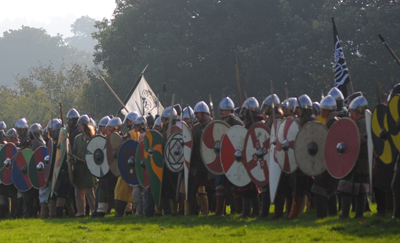
A temporary ‘Saxon’ camp will appear in Hyde Park this Saturday as Battle of Hastings’ re-enactors pause on their journey south to meet the forces of William, the Duke of Normandy, in an event marking the battle’s 950th anniversary. English Heritage is recreating the hurried march south of the Saxon King Harald and his followers following the Battle of Stamford Bridge in Yorkshire to Battle Abbey where they will join in an annual re-enactment of the world famous Battle of Hastings on 15th and 16th October. Having already visiting British landmarks like Lincoln’s Roman arch, Peterborough Cathedral, and Waltham Abbey, they will be found at a free “pop-up living history encampment” near Apsley House in Hyde Park between 11am and 3pm on Saturday. People are invited to visit the encampment and meet the re-enactors, learn how the armies lived and ate while on the march, discover which weapons they used and play some Norman games as well as see the Battle of Hastings recreated using vegetables. Later on Saturday, the re-enactors will head across London to the Jewel Tower in Westminster and then on, Sunday, on to Eltham Palace in the city’s south-east, before setting off for Battle to the south. For more – including a day-by-day calendar of the march – head to www.english-heritage.org.uk/learn/1066-and-the-norman-conquest/the-1066-march/. PICTURE: An earlier re-enactment of the Battle of Hastings/David Adams.

A free exhibition celebrating all things punk has opened at the Museum of London to mark the end of a year long festival commemorating 40 years of the movement’s influence. Punks, which tells the stories of “ordinary punks” living in London in the late 1970s, features artefacts like handmade mixtape sleeves, DIY fanzines and the radical clothes sold on the King’s Road. The exhibition, which runs until 15th January, is accompanied by what is promised to be a “no holds barred” debate centred on the punk phenomena in November. For more information, see www.museumoflondon.org.uk and for more about other events related to the 40th anniversary of punk, see www.punk.london.

On Now – Bridget Riley: Learning from Seurat. This exhibition at The Courtauld Gallery explores Riley’s breakthrough encounter with Georges Seurat’s 1887 work Bridge at Courbevoie. For the first time, it brings together a copy Riley made of the painting in 1959 with the original work as well as presenting a small group of Riley’s seminal works to show how her understanding of Seurat’s art led her to create what are described as “some of the most radical and original abstract works of the past five decades”. Part of the gallery’s ongoing series of displays focusing on major contemporary artists, it runs until 17th January. Admission charge applies. For more, see www.courtauld.ac.uk/gallery.

Send all items for inclusion to exploringlondon@gmail.com.

LondonLife – ‘Really Good’…

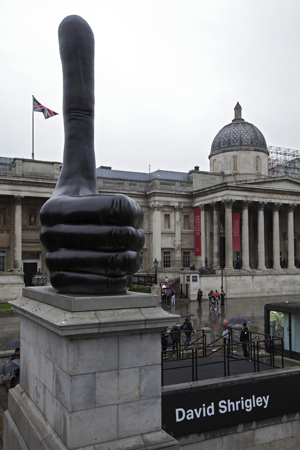
really-good-by-david-shrigley-c-gautier-deblondeA giant hand giving a thumbs-up, the latest commission to grace Trafalgar Square’s famous Fourth Plinth, was unveiled late last month. Really Good, by UK artist David Shrigley stands seven metres high and features a disproportionately long thumb arising from a closed fist. The sculpture is the latest in a string of artworks to have graced the plinth which was built in 1841 and originally designed to hold a statue of King William IV but, thanks to a lack of money, remained empty until recent times. Speaking at the launch of the new work last month, the artist said the work was about “making the world a better place or it purports to actually make the world a better place”. “Obviously, this is a ridiculous proposition, but I think it’s a good proposition,” The Independent reports him saying. “Artworks on their own are inanimate objects so they can’t make the world a better place. It is us, so I guess we have to ask ourselves how we can do this.” For more on the Fourth Plinth program, see www.london.gov.uk/what-we-do/arts-and-culture/art-and-design/fourth-plinth-2016

PICTURE: © Gautier Deblonde

This Week in London – Medieval embroidery; Maino on show; former toilet block becomes Kensington Garden’s newest eatery; and, a new Lord Mayor…

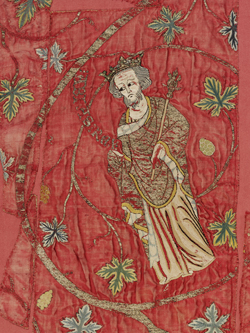
the_jesse_cope_detail_ca-_1310-25_c_victoria_and_albert_museum_londonObjects associated with some of the most notable personages of the Middle Ages – from King Edward I and his wife, Queen Eleanor of Castile through to Edward, the Black Prince, and martyred archbishop, Thomas Becket – will go on show at the V&A in South Kensington as part of a display of medieval embroidery. Opening Saturday, Opus Anglicanum: Masterpieces of English Medieval Embroidery features embroidered treasures such as a seal-bag which, dating from the early 12th century, was made to hold the foundation document of Westminster Abbey, the Toledo Cope which has been brought back to England from Spain for the first time since its creation in the 14th century and an embroidered vestment associated with Thomas Becket. There’s also the Hólar Vestments from Iceland, the Jesse Cope from the V&A’s own collections (pictured), the Daroca Cope from Madrid and an embroidered tunic worn by Edward, the Black Prince. As well as embroidery, the display features panel paintings, manuscripts, metalwork and sculpture. Runs until 5th February along with a season of events. Admission charges apply. See www.vam.ac.uk/opus for more. PICTURE: © Victoria and Albert Museum, London.

Two works by Spanish painter Fray Juan Bautista Maino have gone on exhibition for the first time in the UK at The National Gallery, off Trafalgar Square. The Adoration of the Shepherds and The Adoration of the Kings, dating from 1612-14, have been loaned from the Museo Nacional del Prado in Madrid, Spain, and can be seen for free in a display being held in conjunction with the upcoming exhibition Beyond Caravaggio. Each of the paintings measures more than three metres in height and were originally part of a retable (altarpiece) created for the altar of the Dominican church of San Pedro Martir in Toledo. The work took three years to complete and it was while he was doing so that Maino took religious vows and joined the Dominican Order (there’s also a chance he included a self portrait in the work in the form of a pilgrim on the altar’s far left). Can be seen until 29th January. For more, see www.nationalgallery.org.uk.
A former disused toilet block has been converted into a new cafe overlooking the 150-year-old Italian Gardens in the Kensington Gardens. Formally opened by Loyd Grossman, chairman of the Royal Parks charity, earlier this month, the cafe has a “living roof” aimed at supporting the biodiversity and wildlife of the gardens and has been designed in sympathy with the gardens and the nearby Grade 2* listed Queen Anne’s Alcove, currently being restored. The Italian Gardens were a gift from Prince Albert to Queen Victoria. For more on the cafe, including opening times, head here.

Alderman Andrew Parmley has been elected as the 689th Lord Mayor of London. In keeping with tradition, he will take up the office after the ‘Silent Ceremony’ in Guildhall on 11th November followed by the annual Lord Mayor’s Show parade through the City the following day.

Send all items to exploringlondon@gmail.com for inclusion.

This Week in London – Marking the transatlantic cable’s 150th; Sir James Thornhill celebrated; and, food at the Foundling Museum…

commerce-and-sea-power_william-lionel-wyllie

• This year marks the 150th anniversary of the transatlantic cable connecting Europe and America and in celebration of the event, the City of London Corporation’s Guildhall Art Gallery is holding an exhibition looking at the impact of cable telegraphy on people’s understanding of time, space and the speed of communication. Victorians Decoded: Art and Telegraphy, a collaboration between the gallery, King’s College London, The Courtauld Institute of Art and the Institute of Making at University College London, features never-before-seen paintings from the gallery’s collection as well as rare artefacts such as code books, communication devices, samples of transatlantic telegraph sales and ‘The Great Grammatizor’, a messaging machine that will enable the public to create a coded message of their own. It took nine years, four attempts and the then largest ship in the world, the Great Eastern, to lay the cable which stretched from Valentia Island in Ireland to Newfoundland in Canada and enabled same-day messaging across the continents for the first time. Displayed over four themed rooms – ‘Distance’, ‘Resistance’, ‘Transmission’ and ‘Coding’, the exhibition features works by artists including Edward John Pointer, Edwin Landseer, James Clarke Hook, William Logsdail, William Lionel Wyllie and James Tissot. The free exhibition, which runs until 22nd January, is accompanied by a series of special curator talks. For more information, see www.cityoflondon.gov.uk/victoriansdecoded. PICTURE: Commerce and Sea Power, William Lionel Wyllie/Courtesy Guildhall Art Gallery.

• The life of artist Sir James Thornhill – the painter behind the remarkable Painted Hall at the Old Royal Naval College in Greenwich, has opened at The Stephen Lawrence Gallery in Greenwich. A Great and Noble Design: Sir James Thornhill’s Painted Hall explores the story behind the commissioning of the Painted Hall, painted between 1708 and 1727, through a series of preparatory sketches made by the artist, including three newly-conserved original sketches by Thornhill. Also on show will be the results of new research undertaken into the paintings in the light of upcoming conservation work on the hall’s ceiling. The free exhibition runs at the centre at Stockwell Street until 28th October. For more, see www.ornc.org.

The food served at the Foundling Hospital comes under scrutiny in a new show at The Foundling Museum in Bloomsbury. Based on new research, Feeding the 400 looks at the impact food and eating regimes had on children at the hospital between 1740 and 1950 through an examination of art, photographs, objects including tableware and the voices of former student captured in the museum’s extensive sound archive. Guest curated by Jane Levi, the exhibition also includes a newly commissioned sound work which evokes the experience of communal eating. A programme of events accompanies the exhibition which runs until the 8th January. Admission charge applies. For more, see www.foundlingmuseum.org.

Send all items for inclusion to exploringlondon@gmail.com.

This Week in London – GPO’s archaeological finds on show; Flora Japonica at Kew; and, a blue plaque for Freddie Mercury…

roman-mortarium-made-by-albinus The most prized archaeological finds from a 1975 excavation of the General Post Office on Newgate Street, one of the largest archaeological sites ever excavated in London, are on show in a new exhibition at the Museum of London. Delivering the Past, the free display features objects from across a 3,000 year period and include everything from Roman era finds such as a dog skull, a rare amber die, a spoon and mortar with the makers’ names of Albinus, Sollus and Cassarius stamped on the side (pictured) to floor tiles and architectural fragments from the medieval parish church of St Nicholas Shambles. There’s also a 17th century Bellarmine beer bottle (these were widely imported from Germany in the 1600s), the only 19th century twisted clay tobacco pipe ever excavated in London, and a 19th/20th century ceramic fragment showing General Post Office branding. The exhibition runs until 8th January. The museum is also offering free 45 minute walks to notable excavation sites around Newgate Street every weekday until the end of October. For more, see www.museumoflondon.org.uk.

• Japan’s native flora comes to Kew from this weekend with a new exhibition in the Shirley Sherwood Gallery of Botanical Art. Flora Japonica features paintings from 30 of the Asian nation’s best contemporary artists as they attempt to capture the beauty of everything from camellias to cherry trees and the delicate Japanese maple. The watercolours have been produced based specimens collected from across Japan as well as, in a couple of cases, specimens found within Kew Gardens. Also on display are works never before seen outside Japan including historic drawings and paintings by revered botanists and artists such as Dr Tomitaro Makino (1863-1957), Sessai Hattori and Chikusai Kato (both Edo period artists), artefacts from Kew’s Economic Botany Collection including traditional Japanese lacquerware collected in the 1880s and wooden panels from 1874, and  illustrations from Kew’s collections such as a 17th century illustrated manual of medicinal plants. Runs from Saturday until 5th March after which the exhibition will move to Japan. Admission charge applies. For more, see www.kew.org.

An English Heritage blue plaque honouring late Queen frontman Freddie Mercury was unveiled at his childhood home in Feltham, in London’s west, earlier this month. Mercury’s parents bought the house in Gladstone Avenue in 1964 after the family had left Zanzibar for the UK. He was still living in the home when he met Queen band mates Brian May and Roger Taylor. The new plaque was revealed on 1st September, on what would have been the singer’s 70th birthday.  For more, see www.english-heritage.org.uk/visit/blue-plaques/.

Send all items for inclusion to exploringlondon@gmail.com.

This Week in London – Totally Thames; Sixties revolution at the V&A; and, French portrait drawings…

totally-thamesIt’s September and that means Totally Thames, an annual month of events celebrating London’s great watery artery. Highlights among this year’s 150 events include this Saturday’s Great River Race in which more than 300 boats from across the UK and around the world compete on a course running from Millwall Slipway to Ham House in Richmond, Life Afloat, an exhibition looking at the evolution of the houseboat living on the Thames across the last 100 years, and the 8th annual Classic Boat Festival at St Katharine Docks this weekend as well as walks, talks, performances, art installations and boat trips including a tour of Brunel’s London. Runs until the end of the month. For more information and the full programme of events, see www.totallythames.org. PICTURE: Totally Thames/Barry Lewis.

The changes that swept across society in the late 1960s are the subject of a new exhibition which opens at the V&A this weekend. You Say You Want a Revolution? Records and Rebels 1966-70 is divided into six distinct sections, and starts with a recreation of Carnaby Street as it was before moving on to subjects like clubs and counterculture, revolution on the street, revolution in consumerism, festivals and alternative communities. Among the objects on display are costumes designed for Mick Jagger, a Cecil Beaton portrait of Twiggy, Roger Corman’s 1967 film about LSD, The Trip, a wall of protest posters, film, sound and still footage from the 1967 Montreal and 1970 Osaka World Expos, a kaftan worn by Grace Slick of Jefferson Airplane at Woodstock, and a rare Apple 1 computer. Runs from 10th September to 26th February at the South Kensington institution. For more, see www.vam.ac.uk/revolution.

A new exhibition showcasing the British Museum’s holdings of French portrait drawings opens at the Bloomsbury establishment today. French portrait drawings from Clouet to Courbet offers the chance to see some well-known French portrait drawings alongside others that have never been exhibited before. Pictures on show include Francois Clouet’s portrait of Catherine de’Medici, Jean-Michel Moreau le Jeune’s chalk drawing of his infant daughter, and a ‘playful’ portrait of artist Artemisia Gentileschi by Pierre Dumonstier. The free display can be seen in Room 90 until 29th January.

Send all items for inclusion to exploringlondon@gmail.com.

LondonLife – Remembering the Great Fire of 1666…

London-1666,-designed-by-David-Best-for-London's-Burning,-produced-by-Artichoke,-(c)-Matthew-Andrews0.1

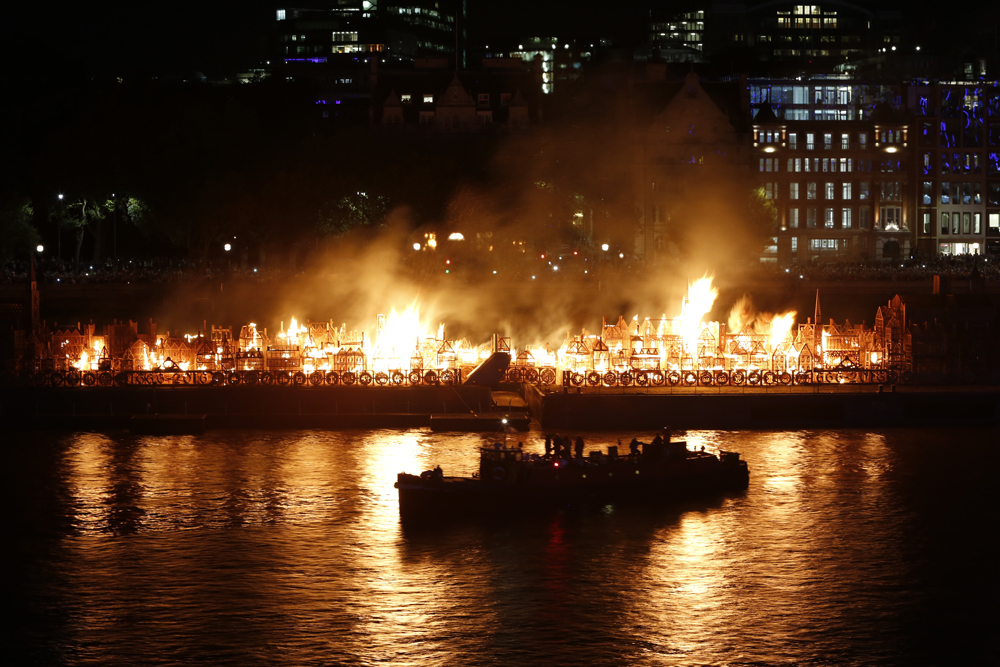
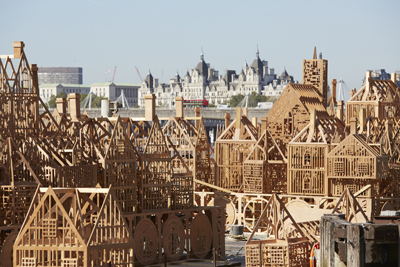
London blazed again on Sunday night when a 120 metre long wooden replica of the city as it was in Restoration times was set alight to mark 350th years since the Great Fire of London. London 1666 was designed by US “burn artist” David Best for London’s Burning – a festival of events in the City of London produced by Artichoke to mark the anniversary. It had been placed on a barge moored in the River Thames before it was lit up to ensure that the fire didn’t spread anywhere it wasn’t wanted. The actual Great Fire of London broke out in a bakery on Pudding Lane shortly after midnight on 2nd September, 1666, and blazed across the city for four days, destroying more than three quarters of the old City of London as it render tens of thousands of Londoners homeless and devastated iconic structures like Old St Paul’s Cathedral. You can see a video of the burn herePICTURES: © Matthew Andrews.


London-1666,-designed-by-David-Best-for-London's-Burning,-produced-by-Artichoke,-(c)-Matthew-Andrews

This Week in London – The Great Fire of London’s 350th anniversary…

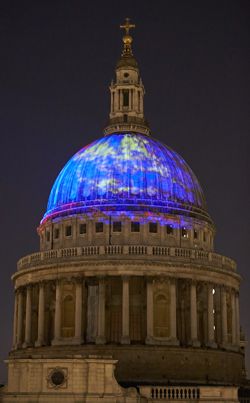
London-1666-by-David-Best-in-collaboration-with-Artichoke-©-Matthew-Andrews-(3)• The 350th anniversary of the Great Fire of London is upon us and to mark the event, the City of London is playing host to London’s Burning, a “festival of arts Fires-of-London--Fires-Ancient-and-Moden-by-Martin-Firrell-©-C.-Totman-(1)and ideas”, over the coming weekend. Produced by Artichoke, the festival includes everything from Fire Garden – an installation by French street art group Compagnie Carabosse at the Tate Modern, and Holoscenes – a six hour underwater performance installation by Los Angeles-based company, Early Morning Opera, in Exchange Square, Broadgate, to Fires of London: Fires Ancient and Fires Modern – two large scale projections by artist Martin Firrell onto St Paul’s Cathedral (pictured right) and The National Theatre, Station House Opera’s Dominoes – a kinetic sculpture of breeze block dominoes which retraces the path of the fire through the streets, and London 1666 – a 120 metre long wooden sculpture of Restoration London by American artist David Best working in collaboration with Artichoke which will be set alight on Sunday at a site on the river between Blackfriars Bridge and Waterloo Bridge (the sculpture is pictured above – you can also watch it live online here). Events run until 4th September. Head here to see the list of events in London’s Burning and to download a copy of the programme complete with map. PICTURES: © Matthew Andrews and C Totman.

Entry to The Monument – built as a permanent reminder of the great conflagration of 1666 – will be free from 2nd to 4th September in celebration of the Great Fire anniversary. Opening hours at the iconic 202 foot tall column have also been extended for the weekend but be warned that due to limited capacity, tickets mist be booked in advance with allotted time slots for entry. To book, head here.

A free exhibition telling the story of London’s bakers and their cakes, bread and puddings over the 350 years since 1666 has opened at the London Metropolitan Archives this week. London’s Baking! Bakers, Cakes, Bread and Puddings from 1666 takes its inspiration from Thomas Farriner and his Pudding Lane bakery, ground zero for the fire. And along with the displays, it features recipes for you to take away and bake including almond cakes from 1700, suet puddings from 1850 and “questionable” school dinner chocolate sponge traybake from the 1970s. Runs at the Clerkenwell-based organisation until 1st February. For more, see www.cityoflondon.gov.uk/events/Pages/event-detail.aspx?eventid=2749.

• Of course, these are just some of the events taking place as part of Great Fire 350. Others include the Fire Food Market in Guildhall Yard, running from 6.30pm to 10pm Saturday night and from 5pm to 10pm Sunday night, as well as events we’ve previously mentioned including the programme of events running at St Paul’s Cathedral and the Fire! Fire! exhibition at the Museum of London. For more of the walks, talks, performances, installations and other events taking place, head to www.visitlondon.com/greatfire350.

Send all items for inclusion to exploringlondon@gmail.com.