This Week in London – Impressionists on paper; Vanessa Bell and Duncan Grant honoured with a Blue Plaque; new Burnham Beeches history app; and, young artists celebrated on London billboards…

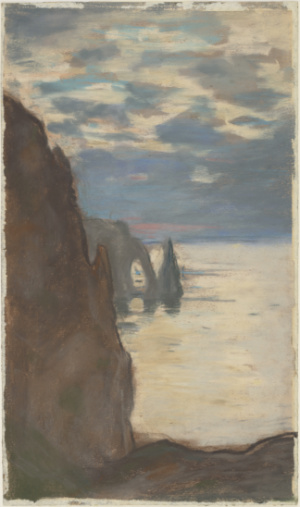
Claude Monet, ‘Cliffs at Etretat: The Needle Rock and Porte d’Aval’, c 1885. National Galleries of Scotland.

A new exhibition exploring how Impressionist and Post-Impressionist artists in late 19th-century France radically transformed the status of works on paper opens at the Royal Academy on Friday. Impressionists on Paper: Degas to Toulouse-Lautrec features around 80 works on paper by artists including Mary Cassatt, Paul Cézanne, Edgar Degas, Paul Gauguin, Eva Gonzalès, Claude Monet, Berthe Morisot, Odilon Redon, Pierre-Auguste Renoir, Georges Seurat, Henri de Toulouse-Lautrec and Vincent van Gogh. Among the highlights are Degas’ Woman at a Window (1870-71), van Gogh’s The Fortifications of Paris with Houses (1887), Monet’s Cliffs at Etretat: The Needle Rock and Porte d’Aval (c1885) and Toulouse-Lautrec’s images of the urban underworld of Montmartre. The display can be seen in The Gabrielle Jungels-Winkler Galleries until 10th March. Admission charges apply. For more, see royalacademy.org.uk.

English Heritage have unveiled their final Blue Plaque for 2023 and it celebrates two of the most influential painters of the early-to-mid 20th century, Vanessa Bell and Duncan Grant. The plaque was unveiled at number 46 Gordon Square in Bloomsbury, from where the Bloomsbury Group – of which Bell and Grant were leading members – drew its name. Bell first lived at number 46 with her siblings, including Virginia Stephen (later Woolf), and, in 1914, Grant moved in with Vanessa and her husband, Clive Bell. Paintings the pair made at number 46 include Grant’s Interior at Gordon Square (c1915) and Bell’s Apples: 46 Gordon Square (c1909-10), a still-recognisable view from the drawing-room balcony to the square. For more on the English Heritage Blue Plaques scheme, head to www.english-heritage.org.uk/visit/blue-plaques/.

The history of Burnham Beeches has been brought to life with a new augmented reality app. The app allows users to superimpose periods of Burnham Beeches’ history – from the Iron Age, Middle Ages and World War II – over what they see when visiting the site and incorporates sounds from selected era as well. It can be accessed via a QR code which is being published on signs at Burnham Beeches. Burnham Beeches, located near the village of Burnham in Buckinghamshire, was acquired by the City of London in 1880 when the area was threatened by development and is managed as a free open space. For more, head here.

The work of 30 young artists celebrating African community and culture is being showcased on billboards across the city in conjunction with Tate Modern’s current exhibition, A World in Common. The photographs have been selected following a call from the Tate Collective for 16-to-25-year-olds to submit images responding to the exhibition. More than 100 entries were submitted by young people based across the UK and beyond and Londoners will be able to view the 30 shortlisted works on billboards in Haringey, Lambeth, Southwark and Tower Hamlets over the next two weeks.

Send all items to exploringlondon@gmail.com.
This Week in London – Hans Holbein at The Queen’s Gallery; ‘Crown and Coronation’ at the Tower; Christmas at Kew; and, Charles Dickens’ friendship with Wilkie Collins explored…

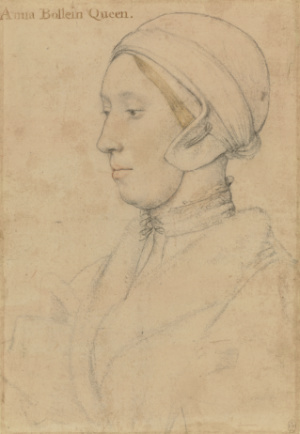
Hans Holbein the Younger, 
Anne Boleyn (1532)/Royal Collection Trust / © His Majesty King Charles III 2023.

The largest exhibition of the work of Tudor-era artist Hans Holbein the Younger has opened at The Queen’s Gallery, Buckingham Palace. Holbein at the Tudor Court features more than 50 works by Holbein including intimate portrait drawings of the royal family and the Tudor nobility including one of few surviving drawings of Anne Boleyn made during her lifetime, drawings of Jane Seymour and Sir Thomas More, and an unfinished portrait of King Henry VIII’s son Prince Edward. Other portraits include that of Derich Born, a 23-year-old Steelyard merchant, and one of Richard Southwell, a convicted murderer who was one of King Henry VIII’s closest advisors. The exhibition also features objects including a Brussels tapestry, jewel-like miniatures and Henry VIII’s magnificent armour, usually on show at Windsor and in London for the first time in a decade. Runs until 14th April. Admission charge applies. For more, see www.rct.uk/collection/themes/exhibitions/holbein-at-the-tudor-court/the-queens-gallery-buckingham-palace

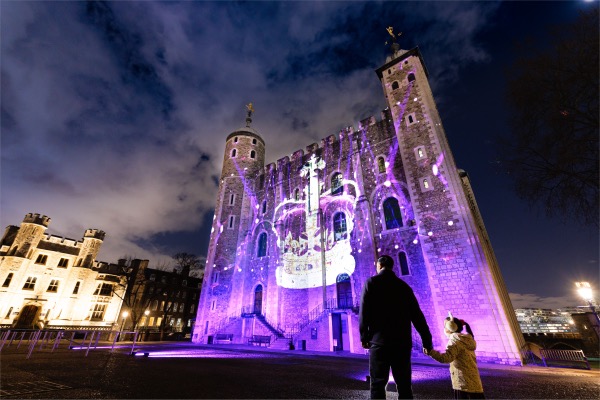
The White Tower looking south-east, showing a coloured light projection of St Edward’s Crown, the crown used at the moment of Coronation. PICTURE: © His Majesty King Charles III 2023 -Royal Collection Trust – Historic Royal Palaces

The magnificence of coronations and the Crown Jewels will be on show at the Tower of London from tomorrow night in a new light and sound show. Crown and Coronation – which has been created by Historic Royal Palaces in partnership with Luxmuralis as part of an artistic collaboration between artist Peter Walker and composer David Harper – brings the “spectacle, significance and shared experience” of coronations to life and demonstrates the pivotal role of the Crown Jewels in the ceremony as it takes visitors on a journey through the past 1,000 years. Images of the jewels will be projected on the White Tower in the show with visitors then able to view the actual jewels themselves in a special after hours opening. But you’ll have to be quick – the show can only be seen for nine days, ending on 25th November before it embarks on a two year UK-wide tour. Admission charge applies. For more, see www.hrp.org.uk/tower-of-london/.

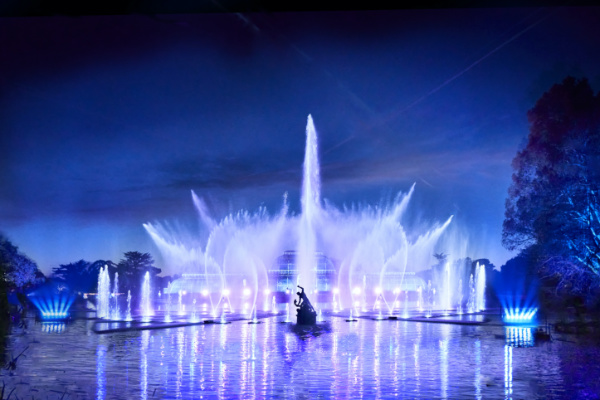
The Palm House light show, part of Christmas at Kew. PICTURE: © Raymond Gubbay Ltd, Richard Haughton

Christmas returned to Kew this week with the launch of it’s new festive light trail featuring seven new installations. Highlights of this year’s trail include three metre tall illuminated flowers, cascading lights suspended from the tree canopy, one of the longest light tunnels to ever feature in Kew’s Christmas celebrations and the Hive – which recreates life inside a beehive – as well as the iconic Palm House light show, the twinkling tunnel of light inspired by arched church windows known as the ‘Christmas Cathedral’, and a ‘Fire Garden’ at the Temperate House. There’s also festive treats to sample and visitors can experience a traditional Christmas dinner at The Botanical Brasserie. Admission charges applies. Runs until 7th January (advance bookings only). For more, see www.kew.org/christmas.

Charles Dickens’ friendship and collaboration with writer Wilkie Collins is explored in a new exhibition at The Charles Dickens Museum in Bloomsbury. Dickens met Collins, who would become one of his most significant friends, in 1851 as they performed together in a play at the house of John Forster and their personal and professional relationship lasted more than 15 years. The display features works produced as a result of the friendship – everything from articles in Dickens’s Household Words through to novellas and plays such as The Lazy Tour of Two Idle Apprentices and The Frozen Deep – and features original letters, historic objects, and interactive displays focusing on everything from the pair’s moustache-growing contests and cruising international entertainment districts to co-writing side by side, discussing writer’s block and plot devices. Admission is included with general admission. Runs until 25th February. For more, see https://dickensmuseum.com.

Send all items to exploringlondon@gmail.com.
This Week in London – 695th Lord Mayor’s Show; Peruvian and Andean culture at the British Museum; and, a ‘virtual heart’ at the Science Museum…

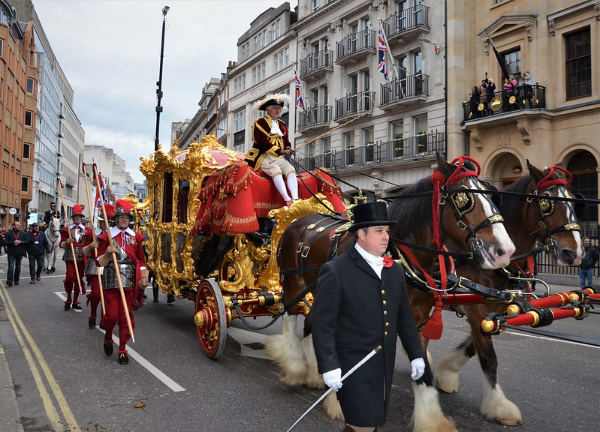
The Lord Mayor’s Show in 2019. PICTURE: It’s No Game (licensed under CC BY 2.0)

The 695th Lord Mayor’s Show – the oldest and longest civic procession in the world – will be held in the City of London this weekend. The three mile-long parade, which dates back to the 13th century, will feature Lord Mayor of London, Michael Mainelli (who will take office during the Silent Ceremony on Friday), who will process through the City streets to swear allegiance to the Crown in Westminster. Accompanying him will be a procession featuring some 7,000 people, 200 horses and around 150 floats and will include representatives of the City’s livery companies as well as military groups, bands and community organisations. The procession leaves from Mansion House at 11am and rolls down Poultry and Cheapside to St Paul’s Cathedral and then via Ludgate Hill and Fleet Street to the Royal Courts of Justice before returning, from 1:10pm, via Queen Victoria Street to Mansion House. For more, see https://lordmayorsshow.london.

The first permanent display of Peruvian and Andean culture at the British Museum has opened in the Wellcome Trust Gallery. Part of the Living and Dying exhibition is divided into two sections – the first exploring the culture’s relationship with the sea and the second with the land. The displays includes digital elements as well as objects ranging from pottery and textiles to metalwork and conch shells. For more, see www.britishmuseum.org.

A “compelling, complex and beautiful” large-scale virtual model of a human heart has gone on display in the Science Museum in South Kensington. The model was created by bioengineer Dr Jazmín Aguado Sierra using scans of her own heart and functions just as her real heart does. The ‘Virtual Heart’ display, which is introduced by Dr Aguado Sierra, can be seen in the Engineers gallery, in a section which explores collaborations between clinicians, medical engineers and patients and showcases real-world health solutions. The display is free to see. For more, see sciencemuseum.org.uk/engineers.

Send all items to exploringlondon@gmail.com.

This Week in London – Myanmar explored; Hockney portraits; and the world’s fastest all-electric aircraft…

The Golden Letter of Alaungpaya, Konbaung period, 18th century © Gottfried Wilhelm Leibniz Bibliothek –Niedersächsische Landesbibliothek, Hannover, Ms IV 751a
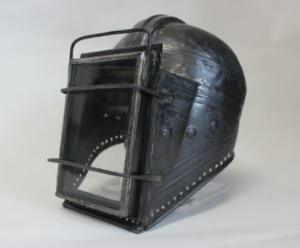
Oil Workers Helmet, 1900s © Calderdale Museums Services

A new exhibition exploring the history of Myanmar, also known as Burma, opens at the British Museum today. Burma to Myanmar, the first major exhibition in the UK to focus on the country’s history, features more than 110 objects and spans the period from around 450 AD through today. Highlights include: a golden letter sent from King Alaungpaya to George II which, made of gold, is set with 24 rubies and placed in an elephant tusk case; a wall hanging (a ‘shwe-chi-doe’ or ‘kalaga’) illustrating scenes from the Ramayana; a gold Buddhist reliquary from the 1400s; a late 19th or early 20th century blanket from the Nung-Rawang people; an oil worker’s helmet from the early 1900s; a map of several Shan states from the 1880s made to assist the British in the process of drawing hard borders with China; and, a bust of General Aung San (1915–47), leader of the Burma Independence Army. The exhibition in the Joseph Hotung Great Court Gallery can be seen until 11th February. Admission charge applies. For more, see http://www.britishmuseum.org/exhibitions/burma-myanmar

More than 30 portraits painted by British artist David Hockney at his Normandy studio between 2021 and 2022 can be seen for the first time in an exhibition of the artist’s works at the National Portrait Gallery. David Hockney: Drawing from Life was open for just 20 days prior to the gallery’s closure due to COVID-19 in 2020. It has now returned in an expanded form, featuring 160 works which trace the trajectory of Hockey’s practice largely through his intimate portraits of five sitters – Celia Birtwell, Hockney’s mother Laura Hockney; his former partner and curator Gregory Evans; master printer Maurice Payne and himself. The newly added portraits include depictions of the likes of actor and singer Harry Styles and people from the Normandy community in which he works. The exhibition can be seen until 21st January. Admission charge applies. For more, see ngp.org.uk/whatson/exhibitions/2023/hockney-drawing-from-life.

Rolls Royce’s Spirit of Innovation electric aircraft © Science Museum Group

The world’s fastest all-electric aircraft, Spirit of Innovation, has gone on show at the Science Museum in South Kensington. Suspended as if in mid-flight, the aircraft is the final object in Making the Modern World, a major gallery which presents advances in science and technology from the birth of the Industrial Revolution to the present day. Powered by a lightweight and energy efficient 400kW electric powertrain, Spirit of Innovation holds the all-electric aircraft world record for highest top speed over three kilometres, with an average of 555.9km/h (345.4 mph), breaking the previous record by over 200 kilometres per hour. The plane also set a new record for the fastest climb by an electric aircraft to three kilometres. Rolls-Royce created the aircraft as part of the Accelerating the Electrification of Flight (ACCEL) project, in collaboration with Electroflight (now part of Evolito), YASA, and the Aerospace Technology Institute. The gallery is free to visit. For more, see www.sciencemuseum.org.uk.

Send all items for inclusion to exploringlondon@gmail.com

This Week in London – London’s transport posters on show; a musical exploration at the Science Museum; and, ‘Petrichor’ at Kew…

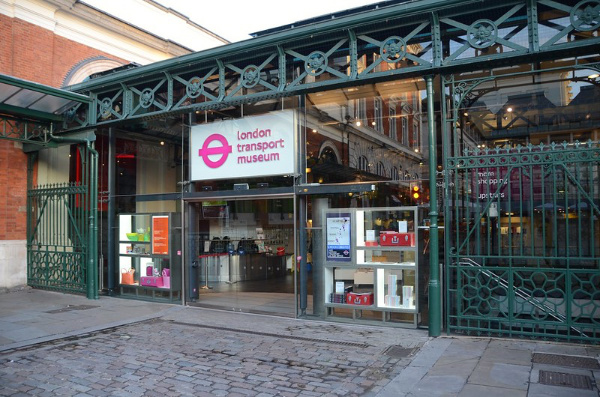
London Transport Museum in Covent Garden. PICTURE: Marcus Meissner (licensed under CC BY 2.0)

The first permanent gallery dedicated to the history of poster art and design at the London Transport Museum in Covent Garden opens tomorrow. The new Global Poster Gallery, sponsored by Global, the Media & Entertainment Group, showcases the museum’s collection of 20th century graphic art and design – one of the world’s largest. The new gallery, which is set over two floors, launches with the exhibition, How to Make a Poster, and an accompanying programme of events. The exhibition visually explores the process of creating posters from the pre-digital age from 1900 and features more than 110 poster artworks and posters including the Underground’s very first pictorial poster titled No need to ask a p’liceman by John Hassall, dating from 1908. Admission charge applies. The exhibition runs until 2025. For more, see www.ltmuseum.co.uk.

A new interactive exhibition exploring the mysterious hold music can have over us opens at the Science Museum today. Turn It Up: The power of music features historic music players, inventions and unusual instruments. Among the inventions on show are the MiMU gloves invented by Imogen Heap and used by Ariana Grande and Kris Halpin which use gestures to control electronic music-making software, and a virtual instrument called Headspace, created by professional trumpeter Clarence Adoo and inventor Rolf Gelhar after Adoo was paralysed from the shoulders down in a car accident while among the unusual instruments are the pyrophone organ powered by flames to the Anarchestra satellite dish which can be played in multiple new ways to make music. The exhibition can be seen until 6th May at the South Kensington premises. Admission charges apply. For more, see www.sciencemuseum.org.uk.

The work of acclaimed contemporary artist Mat Collishaw goes on show tomorrow at Kew Garden’s Shirley Sherwood Gallery of Botanical Art on Saturday. Highlights of the exhibition – Petrichor – include the UK premieres of Alluvion, a series of six new AI artworks inspired by Dutch Old Masters, and the large-scale projected work Even to the End. Other works include Heterosis – a collection of dynamic NFT’s which combine genetic algorithms with blockchain technology to facilitate the hybridisation of mutable digital flowers, The Centrifugal Soul – a zoetrope which creates a stunning illusion of motion, and Albion – a large-scale piece in the form of an intricate 19th-century ‘Pepper’s Ghost’ illusion which depicts the Major Oak in Sherwood Forest. Runs until 7th April. Admission charge applies. For more, see www.kew.org.

Send all items for inclusion to exploringlondon@gmail.com.

This Week in London – How Jewish Londoners shaped global fashion; the influence of Japanese folklore on art and design; and, Claudia Jones honoured…

• An iconic red coat worn by Princess Diana when she announced she was pregnant with Prince William is going on show in a new exhibition at the Museum of London Docklands at West India Quay. Fashion City: How Jewish Londoners shaped global style – the first major exhibition in two decades centred on the museum’s extensive dress and textile collection – tells the story of Jewish designers, makers and retailers responsible for some of the most recognisable looks of the 20th century. As well as the David Sassoon-designed coat, it also features a newly acquired Alexon tweed coat worn by EastEnders character Dot Cotton, hats relating to the ‘milliner millionaire’, Otto Lucas, who changed the global reputation of British fashion in the mid-20th century, and garments designed by Mr Fish, a leading figure of the Peacock Revolution whose flamboyant menswear was worn by stars including Jimi Hendrix, David Bowie, and Muhammad Ali. The fashion items are joined by personal items from some of the 200,000 Jewish people who arrived in Britain between the late 19th and mid 20th century, such as a small travelling case used by a child arriving in London as part of the Kindertransport (the rescue effort of children from Nazi-controlled territory in 1938-1939), and a leather bag owned by a woman who fled from Vienna in 1938. Opens on Friday and runs until 14th April next year. Admission charges apply. For more, see www.museumoflondon.org.uk/museum-london-docklands/whats-on/exhibitions/fashion-city

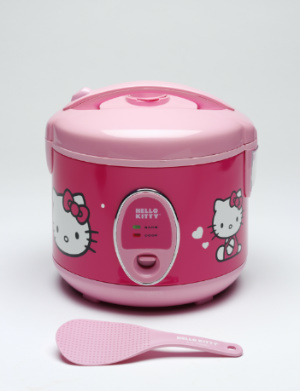
Sakar International, Inc, Hello Kitty rice-cooker, 2014, Japan © Victoria and Albert Museum, London

Drawing on everything from Hokusai to Pokémon and Studio Ghibli, the influence of Japanese folklore on Japan’s art and design is the subject of the first exhibition at the new Young V&A. Japan: Myths to Manga is divided into four sections – Sky, Sea, Forest, and City – and features more than 150 historic and contemporary objects along with hands-on activities for visitors of all ages ranging from manga-making to Taiko drumming and yōkai interactive. Highlights in the display include works by celebrated 19th century Japanese artists, such as Hokusai’s Great Wave (1831), Sylvanian families matched with historic netsuke (small sculptures), a stage model for the Royal Shakespeare Company’s production of My Neighbour Totoro, and a Hello Kitty rice cooker from 2014. An installation of 1,000 paper cranes, a symbol of remembrance from the Hiroshima Peace Memorial Park in Japan, will also be present. The display, which opens at the Bethnal Green premises on Saturday, runs until 11th August next year. Admission charges apply. A series of events linked to the exhibition are also being run. For more, see www.vam.ac.uk/exhibitions/japan-myths-to-manga.

Anti-racism activist and a ‘founding spirit’ of the Notting Hill Carnival, Claudia Jones, has been honoured with an English Heritage Blue Plaque in Vauxhall. The plaque marks the mid-19th century terraced house that was her home for almost four years during which she founded the West Indian Gazette and came up with the idea of bringing Caribbean carnival to London (the first carnival took place in  It was during her time living in this shared dwelling that Jones founded the West Indian Gazette and came up with the idea of bringing Caribbean carnival to London (the first carnival took place in St Pancras Town Hall on 30th January, 1959; the Notting Hill Carnival, an outdoor event, came later). For more, see www.english-heritage.org.uk/visit/blue-plaques/.

Send all items for inclusion to exploringlondon@gmail.com.

This Week in London – ‘Spies, Lies and Deception’ at IWM London; the printing of Shakespeare’s plays; and, Georgian illuminations at the Sir John Soane’s Museum…

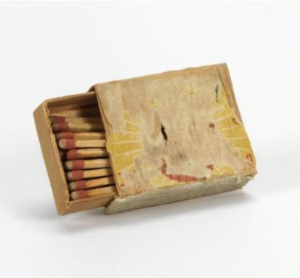
A box of matches containing one match specially adapted for writing
secret messages used during World War II.
© IWM (EPH 178)

A free exhibition exploring the “tricks, tools and elaborate plots that make up the secret world of spying and deception” has opened at IWM London. Spies, Lies and Deception features more than 150 objects including gadgets, official documents, art and newly digitised film and photography. Highlights include Operation Mincemeat mastermind Ewen Montagu’s private papers relating to the World War II plot – which fooled German High Command about the location of the next major Allied assault by planting a dead body with fake military documents off the Spanish coast – along with an oar from the submarine’s dinghy which deposited the body. There is also a box of matches with a match specially adapted for writing secret messages (pictured), footprint overshoes made by SOE (Special Operations Executive) in South-East Asia during World War II to disguise the wearer’s real footprints, and papier-mâché heads used to deceive snipers in World War I trenches. The exhibits also detail the work of the World War I Postal Censorships department – which examined letters sent to foreign locations including testing letters for invisible ink and tell the story of SOE operative Noor Inayat Khan – the first female wireless operator sent by SOE into Occupied France, she successfully transmitted messages to London for four months before being betrayed, captured and executed. There’s also a newly commissioned interview with Eliot Higgins, founder of Bellingcat, an international collective of researchers who used open source data to uncover the real identities of those responsible for the Salisbury Novichok poisonings in 2018, along with a photo album of double agent Kim Philby in Siberia after he escaped to the Soviet Union following his discovery in 1963. The free display can be seen until 14th April next year. For more, see iwm.org.uk/events/spies-lies-and-deception.

A exhibition looking at the history of printing William Shakespeare’s plays has opened at the Guildhall Library. Folio 400: Shakespeare in Print covers everything from the printing of the small ‘Quartos’ of the late 16th century to the reworking of the text in the 18th century and the rediscovery of original texts in the 19th century. Running in parallel is a display at the City of London Heritage Gallery at Guildhall Art Gallery which features the library’s copy of the First Folio, widely regarded as one of the finest and most complete. Entry is free. Runs until 30th January. For more, see www.cityoflondon.gov.uk/things-to-do/history-and-heritage/guildhall-library.

An exhibition centring on the spectacular light illuminations of the Georgian period has opened at Sir John Soane’s Museum. Georgian Illuminations celebrates the light shows of the period and the impressive and the elaborate temporary architectural structures created for them, often designed by leading architects and artists, including Sir John Soane. It features newly discovered linen transparencies, which were back-lit in Georgian windows as patriotic decoration during the Napoleonic Wars, as well as a contemporary work by light artist Nayan Kulkarni light artist which sees the facade of the museum at Lincoln’s Inn Fields illuminated each night from dusk until about 11pm. A series of events accompanies the exhibition. Runs until 7th January, 2024. Entry is free. For more, see www.soane.org/exhibitions/georgian-illuminations,

Send all items to exploringlondon@gmail.com for inclusion.

This Week in London – Charles Dickens’ court suit and Queen Elizabeth II’s coronation glove; Frans Hals at The National Gallery; Peter Paul Rubens at Dulwich; and, email explored…

• A piece of the only surviving dress worn by Queen Elizabeth I, Charles Dickens’ court suit, an RSC robe worn by David Tennant as Richard II, and the coronation glove of Queen Elizabeth II are among highlights of a new exhibition at the Guildhall Art Gallery. Marking the 400th anniversary of the Worshipful Company of Gold and Silver Wyre Drawers, Treasures of Gold and Silver Wire features more than 200 objects related to royalty, the arts, military, and the church spanning the period stretching from the Middle Ages to today. Other highlights include a uniform of the State Trumpeter, The Jubilee Cope from St Paul’s Cathedral, a robe of Order of the Garter and the burse of the Great Seal of King Charles II. The exhibition, which opens on Friday, runs until 12th November. Admission charge applies. For more, see www.cityoflondon.gov.uk/events/treasures-of-gold-and-silver-wire-exhibition.

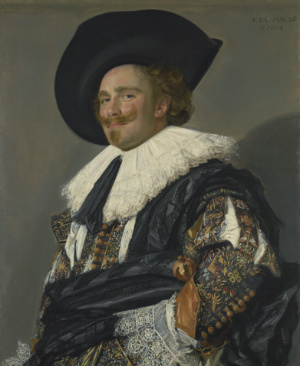
Frans Hals, ‘The Laughing Cavalier’ (1624)/ Oil on canvas, 83 x 67 cm © Trustees of the Wallace Collection, London    

The Laughing Cavalier serves as the centrepiece of a new exhibition of Frans Hals works at the National Gallery – the largest focused the 17th century Dutch painters’ works in more than 30 years. The Credit Suisse Exhibition: Frans Hals, which has been organised with the Rijksmuseum, Amsterdam features some 50 of the artists works gathered from across the globe. Alongside The Laughing Cavalier which is on loan from the Wallace Collection, highlights include Portrait of Isaac Massa (1626), Portrait of Pieter Dircksz. Tjarck (about 1635–38), The Rommel-Pot Player (1618–22) and Portrait of Tieleman Roosterman (1634). Admission charge applies. Runs until 21st January.

A major exhibition on the work of Flemish artist Peter Paul Rubens (1577-1640) has opened at the Dulwich Picture Gallery. Rubens & Women features more than 40 paintings and drawings along with archival material and challenges the perception that the artist only painted one type of women as it explores his relationships with women and how they nourished his career and creativity. Highlights include Portrait of a Woman (c1625), Marchesa Maria Serra Pallavicino or Marchesa Veronica Spinola Doria (1606-07), The Virgin in Adoration of the Child (c1616), Looking Down (Study for head of St Apollonia) (1628), Ceres and Two Nymphs (1615-17), The Birth of the Milky Way (1636-1638), and Clara Serena Rubens, the Artist’s Daughter (c1620-23). The exhibition runs until 28th January. Admission charge applies. For more, see www.dulwichpicturegallery.org.uk.

An interactive exhibition exploring email’s impact in our lives – how it shapes our work, relationships, cultures and economies – opens at The Design Museum today. Email is D̶e̶ad̶ ̶, being held in partnership with Intuit Mailchimp, charts the history of email, from its embryonic beginnings in the 1970s to what the email experience might be like in 2070. Admission is free. Runs until 22nd October. For more, see https://designmuseum.org.

Send all items to exploringlondon@gmail.com for inclusion.

This Week in London – English Heritage unveils 1000th Blue Plaque; Chris Ofili’s ‘Requiem’ at Tate Britain; and, Astronomy Photographer of the Year…

English Heritage has unveiled its 1000th Blue Plaque in London. The plaque – located on a three storey building at number 1, Robert Street in Westminster – marks the former London headquarters of the suffragist organisation, the Women’s Freedom League. The league, which was formed in 1907, worked out of the building between 1908 and 1915 – its most active period. The blue plaques scheme has been running for more than 150 years and honours everyone from John Keats and Charles Dickens to Ada Lovelace and Alan Turing. For more, see www.english-heritage.org.uk/visit/blue-plaques/.

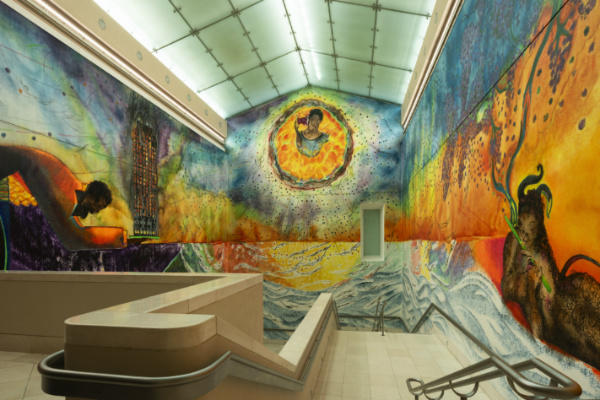
Chris Ofili, ‘Requiem’, 2023 (detail) commissioned for Tate Britain’s north staircase
© Chris Ofili. Courtesy the artist. PICTURE: Thierry Bal

A major new work by Chris Ofili commemorating fellow artist Khadija Saye and the tragedy of the Grenfell Tower fire in which Saye died, has gone on display at the Tate Britain in Millbank.  Requiem, a site-specific work which is shown across three walls, is described as a “journey through an imagined landscape of giant skies with vast horizons and flowing water” which unfolds in three chapters. Ofili says that when making the work, he recalled the feelings he had when creating No Woman, No Cry in 1998 as a tribute to murdered Black teenager Stephen Lawrence and his mother Doreen. “That feeling of injustice has returned,” he said. “I wanted to make a work in tribute to Khadija Saye. Remembering the Grenfell Tower fire, I hope that the mural will continue to speak across time to our collective sadness.” For more, see  tate.org.uk/visit/tate-britain.

The Astronomy Photographer of the Year display has opened at the National Maritime Museum in Greenwich featuring the competition’s winning image, Andromeda. The picture, the work of Marcel Drechsler, Xavier Strottner and Yann Sainty, depicts a huge plasma arc next to the Andromeda Galaxy. Other winners include two 14-year-old boys from China – Runwei Xu and Binyu Wang – who won the Young Astronomy Photographer of the Year award for The Running Chicken Nebula as well as Argentinian Eduardo Schaberger Poupeau who won the ‘Our Sun’ category for A Sun Question which captures a huge filament in the shape of a question mark, China’s Angel An, who won the ‘Skyscapes’ category for Grand Cosmic Fireworks – a photograph of the extremely rare phenomenon of atmospheric luminescence, and the UK’s John White who won the Annie Maunder Prize for Image Innovation for Black Echo which used audio source material from NASA’s Chandra Sonification Project, to visually capture the sound of the black hole at the centre of the Perseus Galaxy. For more, see www.rmg.co.uk/astrophoto.

Send all items for inclusion to exploringlondon@gmail.com

This Week in London – The Indian Army at Hampton Court Palace; Chanel at the V&A; and, Mantegna’s ‘The Triumphs Caesar’ at the National Gallery…

Part of the Indian Army at the Palace display at Hampton Court Palace: PICTURE © Historic Royal Palaces.

A rare charity pin badge like those sold by Indian princess and suffragette Sophia Duleep Singh to raise funds for the Indian Army has gone on show at Hampton Court Palace. It’s part of a new display which shares the stories of Indian soldiers who took up residence on the Hampton Court estate four times: for the coronations of King Edward VII in 1902, King George V in 1911 and King George VI in 1937, as well as for the World War I Victory Parade in London. The Indian Army at the Palace explores their experiences in the camp and in London more generally – everything from food and rationing to entertainment, travel and religious accommodations. Highlights of the display include objects from the Historic Royal Palaces’ collection – such as an official plan from one of the camps, press cuttings depicting the soldiers’ arrival at Hampton Court station, and Indian soldiers in and around the Palace grounds – as well as items on loan from the South Asian community, including a 32nd Sikh Pioneers Indian Army Officer’s tunic, medals and photos belonging to soldiers from the 1902 and 1911 contingents, original photographs of the Gurkha regiment in the 1919 parade and newspaper articles depicting the visits. The display can be seen until 3rd March next year and entry is included in general admission. For more, see www.hrp.org.uk/hampton-court-palace/.

A scene from the ‘Gabrielle Chanel. Fashion Manifesto’ display. PICTURE: ©Victoria & Albert Museum, London.

The first UK exhibition dedicated to the work of pioneering fashion designer Gabrielle ‘Coco’ Chanel opens at the V&A on Saturday. Gabrielle Chanel. Fashion Manifesto, which is being presented in partnership with Palais Galliera, Fashion Museum of the City of Paris, Paris Musées, charts the evolution of Chanel’s iconic design style and the establishment of the House of Chanel, from the opening of her first millinery boutique in Paris in 1910 to the showing of her final collection in 1971. The display’s 10 sections feature more than 200 “looks” as well as accessories, perfumes and jewellery. Highlights include one of the earliest surviving Chanel garments from 1916; original Chanel-designed costumes for the 1924 Ballets Russes production of Le Train Bleu; outfits created for Hollywood stars Lauren Bacall and Marlene Dietrich; an early example of Chanel’s ground-breaking evening trousers; and, ensembles from Chanel’s final collection of 1971. Runs until 25th February. Admission charge applies. For more, see vam.ac.uk/chanel.

Six of Andrea Mantegna’s monumental paintings The Triumphs of Caesar go on display at The National Gallery from Monday. On loan from the Royal Collection, the Renaissance artist’s greatest masterpiece will be on show at the gallery for around two years, while their usual home, the Mantegna Gallery at Hampton Court Palace, is closed for maintenance. Mantegna painted a total of nine canvasses for the Gonzaga family in Mantua, between about 1485 and 1506. They were acquired by King Charles I in 1629 and taken to Hampton Court Palace soon after their arrival in England. The paintings, which are being displayed in specially made frames, will be able to be seen in Room 14, along with Peter Paul Rubens’ A Roman Triumph (about 1630) to show a later artistic response to the Triumphs. Other works by Mantegna from the National Gallery’s collection including The Introduction of the Cult of Cybele at RomeSamson and DelilahTwo Exemplary Women of Antiquity and The Virgin and Child with the Magdalen and Saint John the Baptist are displayed nearby in Room 5 while Mantegna’s The Agony in the Garden can be seen in Room 29. Admission is free. For more, see www.nationalgallery.org.uk.

Send all items to exploringlondon@gmail.com

This Week in London – George III pocket watch at heart of new exhibition; Tommy Flowers honoured; and, Sara Shamma at Dulwich…

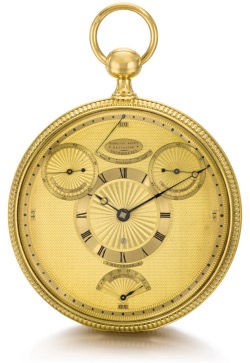
A gold pocket watch made for King George III. PICTURE: Courtesy of the Clockmakers’ Museum/Science Museum

A new display featuring timepieces by one of the greatest watchmakers of all time, Abraham-Louis Breguet, opens in Clockmakers’ Museum at the Science Museum on Tuesday. Marking the bicentenary of Breguet’s death on 17th September, 1823, Abraham-Louis Breguet: The English Connection features 25 items seldom seen in public before. They include an exceptionally rare gold four-minute tourbillon pocket watch made for George III in 1808, a ‘Simple à 2 aiguilles equation’ pocket watch made for politician Thomas Noel Hill, 2nd Baron Berwick of Attingham, and, a gilt bronze carriage clock ‘Pendule de voyage petite’ which originally belonged to Robert Henry Herbert, the 12th Earl Pembroke. The museum is located on level 2 of the Science Museum. Entry is free. For more, see www.sciencemuseum.org.uk/clocks.

An electrical engineer whose ground-breaking work in engineering culminated in the creation of the world’s first ever large-scale programmable digital computer has been honoured with an English Heritage Blue Plaque. The plaque is located at the former workplace of Tommy Flowers at Chartwell Court, in Dollis Hill. Now flats, the property was the former Post Office Research Station where Flowers designed, built and tested the computer known as ‘Colossus’. Flowers, who spent a brief period at Bletchley Park working the code-breakers in 1941, successfully demonstrated Colossus at the research station in 1943 after just 11 months of work. For more, see www.english-heritage.org.uk/visit/blue-plaques/. Meanwhile, news this week that the UK Government, inspired by London’s Blue Plaques, is introducing a national blue plaques scheme. Historic England will work together with English Heritage, local partners, and current plaque schemes to develop and roll out the national programme.

Artist Sara Shamma’s thought-provoking interpretations of works by artists including Rembrandt van Rijn, Peter Lely, Anthony van Dyck and Peter Paul Rubens go on display at Dulwich Picture Gallery from Saturday. With a focus on women, Bold Spirits addresses themes including identity, death, motherhood and unexpected beauty. Runs until 25th February. Admission charge applies. For more, see www.dulwichpicturegallery.org.uk.

Send all items to exploringlondon@gmail.com

This Week in London – Bartholomew Fair revival; ‘Totally Thames’; ‘Black on the Square’; and, Art of London’s third season…

A recreation of Bartholomew Fair featuring more than 30 free events kicks off in the City of London today. The programme kicks off with RESURGAM, a vertical dance performance on St Paul’s Cathedral with other highlights including immersive theatrical circus performance Dinner for All, Follow Me Into by imitating the dog – a series of projections that weaves through the City, and, Carnesky’s Showwomxn Spectacular, a street show featuring a cast of circus, variety and rare skilled women performers. There’s also al fresco dining at locations across the City of London and creative workshops on Saturdays. The Bartholomew fair, which ran from the 12th century until 1855, started as a cloth market but evolved to become the City’s pre-eminent event, attracting people from across the country and beyond. The revival runs until 16th September. For the full programme of events, see www.thecityofldn.com/bartholomew-fair/

The River Thames. PICTURE: Unsplash

• Totally Thames, London’s month-long celebration of its river kicks off on Friday. Events this year include an exhibition at London Bridge Station celebrating London’s bridges by photographer Henry Reichhold and another looking at medieval artefacts recovered by mudlarks at St Paul’s Cathedral, walks exploring the history of everywhere from Rotherhithe to Twickenham and the Royal Docks (as a well as a walk on which you’ll meet six medieval women in Southwark), ‘Wren by River’ – a tour on Uber Boat By Clippers Thames featuring an introduction to Wren’s London legacy from the perspective of the river (be quick, this takes place on 1st September), and art installations including the Saltley Geyser, a 30 metre high plume of water in the Royal Docks created by David Cotterrell. And, of course, the St Katharine Docks Class Boat Festival on the weekend of 9th and 10th September and the The Great River Race on 16th September. For the full programme of events, see https://thamesfestivaltrust.org.

Black on the Square, a new “showcase of Black culture and creativity”, takes place in Trafalgar Square this Saturday. The one day family-friendly festival will feature art, fashion and musical performances including jazz, spoken word, freestyle rap and soul as well as DJ sets from the likes of Touching Bass, Art Beyond the Shell, MOBO Unsung, Shortee Blitz, BXKS, The Spit Game UK. There will also be vendors representing a range of Black-owned businesses, including Caribbean and African food, as well as artisan goods ranging from customised accessories to handmade homeware and gifts. The festival kicks off at noon and runs until 6pm. For more, see https://www.london.gov.uk/events/black-square-2023.

Art of London has launched its third annual season featuring everything from gallery late openings to photography exhibitions and public art displays. Events, which run though until October, include: ‘Art Reframed’ which, developed in partnership with the recently reopened National Portrait Gallery, showcases the gallery’s most iconic portraits of everyone from Olivia Colman to Elton John and William Shakespeare on 52 giant colourful cubes across Coventry Street and Irving Street; photographs by artist Ray Burmiston showcased on the Piccadilly Lights; and, ‘Art After Dark’ in which galleries across the West End open their doors for late night viewings. For the full programme, head to artoflondon.co.uk/seasons/season.

Send all items to exploringlondon@gmail.com

This Week in London – Notting Hill Carnival weekend; new TV and film tour at Hampton Court; and, Museum of London seeks signage…

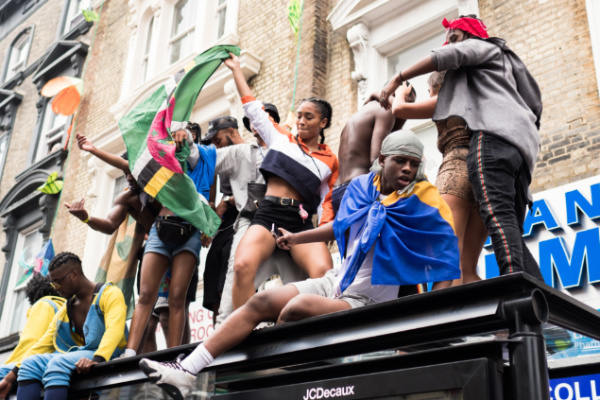
A scene from the Notting Hill Carnival in 2019. PICTURE: Glodi Miessi/Unsplash

It’s the Notting Hill Carnival weekend, three days of festivities celebrating Caribbean culture culminating in the main parade on Monday. Europe’s biggest street festival, which has been taking place since 1966 with a couple of exceptions, features music, street food and spectacular costumes. Saturday is Steel Band Competition Day, a ticketed event featuring the UK National Panorama Steel Band Competition, while Sunday is Families and Children’s Day featuring a children’s parade and carnival. On Monday, the main parade and carnival is held. For more information, see https://nhcarnival.org.

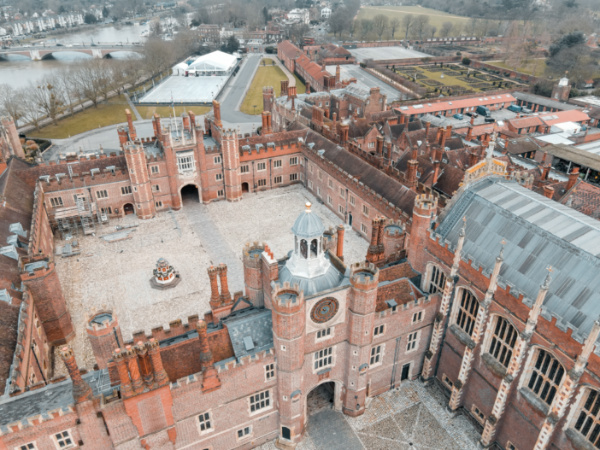
Aerial view of Hampton Court Palace. PICTURE: Ollie Craig/Pexels

Hampton Court Palace has launched a new ‘film and TV locations’ audio tour, taking visitors behind the scenes of everything from Pirates of the Caribbean to The Favourite and the recent Netflix series Bridgerton. The palace first appeared in a 1926 movie bearing its name which detailed the marriage of King Henry VIII and Catherine Howard and has since gone on to appear in numerous productions ranging from The Theory of Everything and A Little Chaos to Sherlock Holmes: A Games of Shadows and Mamma Mia: Here We Go Again!. The tour includes exclusive interviews with the director and executive producer of Bridgerton and also details the involvement of Historic Royal Palace staff who ensure the site remains protected during photo shoots. The ‘Film and TV Locations Tour’ is included in general admission. For more, head here.

The Museum of London is calling for suggestions for signs to feature in ‘Hanging Out’, a permanent installation planned for the new London Museum, set to open in Smithfield’s General Market building in 2006. It’s intended the space will represent a broad range of London’s communities with the focus on the last 80 years. Signs could relate to everything from sports venues and cafes and pubs to nightclubs, music venues and theatres. People with suggestions for signs are asked to email ourtime@museumoflondon.org.uk.

Send all items to exploringlondon@gmail.com

This Week in London – Open House Festival programme out; women’s lives celebrated at Tower of London; and, families at Buckingham Palace…

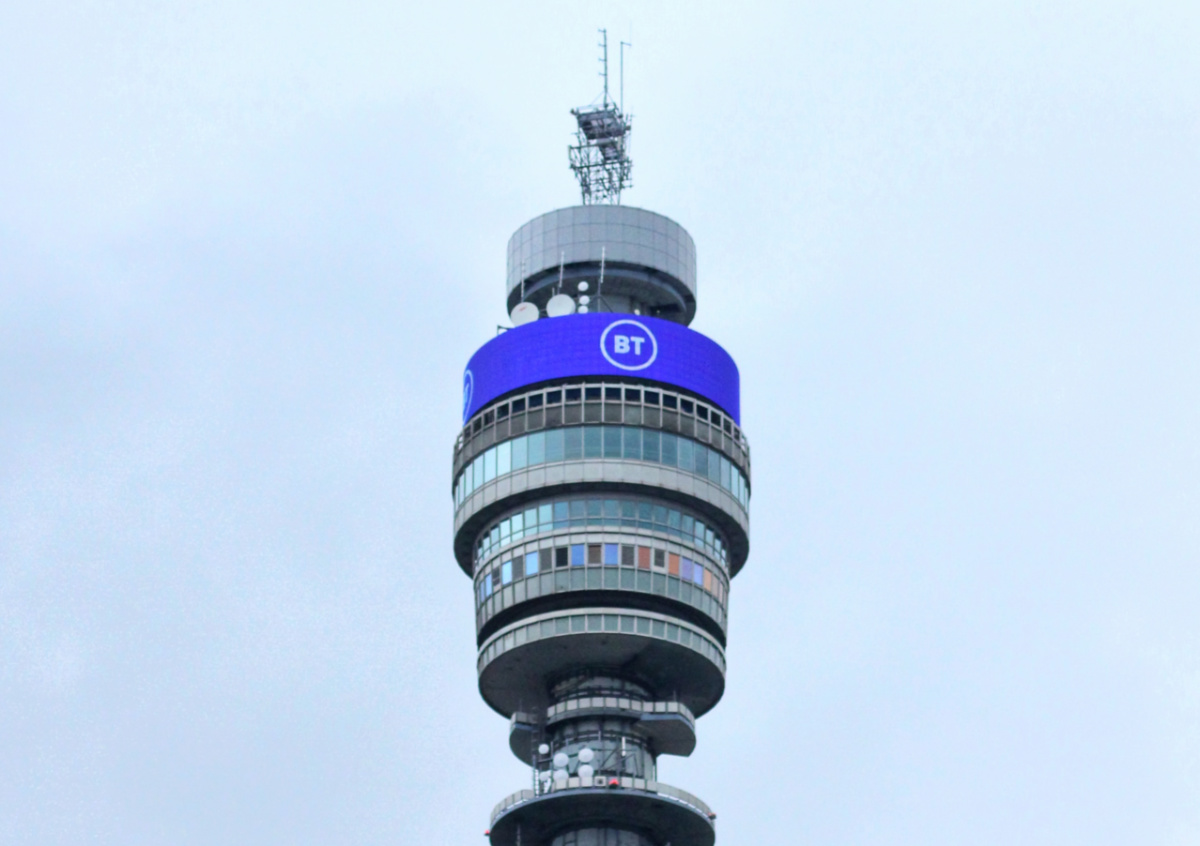
BT Tower. PICTURE: Metin Ozer/Unsplash

London’s Open House Festival celebrates 30 years this September with two weeks of tours, events, and, of course, the chance to look inside some rarely opened buildings. The full programme of events has been released with highlights including the chance to see up close the conservation and restoration project revitalising the Crystal Palace Victorian Subway, a rare opportunity to visit the BT Tower’s famous revolving floor and the ability to join a guided tour of Burlington House, home to the Royal Astronomical Society since 1874 (and refurbished in 2007). The event runs from 8th to 21st September. For more, see https://programme.openhouse.org.uk.

The stories of five women – from a servant to a Queen to a suffragette who smashed the Crown Jewels display – are being highlighted at the Tower of London. Trailblazers: Women at the Tower of London, which runs until 3rd September, celebrates the five women with processions through the grounds, staged performances on the South Lawn, and the opportunity to meet and interact with them. Among the women being featured are Catalina of Motril, a servant to Henry VIII’s first wife, Katherine of Aragon; Alice Tankerville, who was imprisoned at the Tower of London in 1534 for piracy; Leonora Cohen, a suffragette who smashed the Crown Jewels display with a crowbar; and Phillis Wheatley, the first published African-American woman who visited the Tower in 1773. Trailblazers is included in the cost of admission. For more, see www.hrp.org.uk/tower-of-london/.

Story-telling in the Family Pavilion PICTURE: Royal Collection Trust / © His Majesty King Charles III 2023

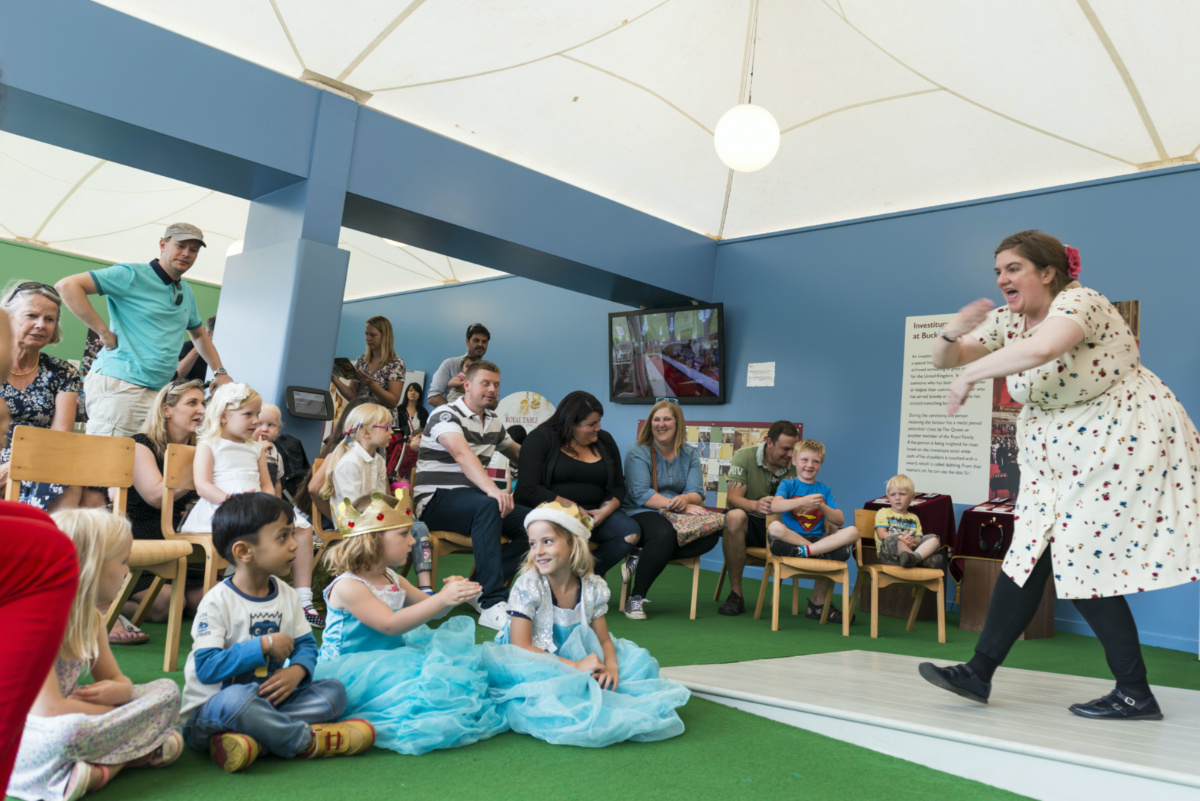
Families are a special focus of this year’s Summer Opening at Buckingham Palace with a special “Family Pavilion” in the palace garden, “Family Mondays” and a special “Family Festival Day”. The Family Pavilion is open daily and features a range of activities including, inspired by the recent coronations, the chance for children to dress up in gowns and crowns and pose for a photo in a model Gold State Coach. The pavilion also features a rotating programme of arts and crafts activities on Mondays and the family activities will culminate in a special ‘Family Festival’ on 28th August at which families visiting the State Rooms can enjoy story-telling sessions exploring Queen Victoria’s coronation and take part in craft activities outside in the palace garden. Activities are included in the price of admission. For more, see www.rct.uk/visit/buckingham-palace.

Send all items to exploringlondon@gmail.com

This Week in London – New section of London’s Wall revealed; ‘Summer on the Square’; and, Heath Robinson’s fairy tale illustrations…

PICTURES: Courtesy of Urbanest.

A large section of London’s Roman wall had gone on show to the public thanks to an innovative collaboration between Urbanest, the City of London Corporation, Historic England, and the Museum of London. A new free display – The City Wall at Vine Street – has been created by Urbanest as part of a redevelopment of the site. At its heart is a segment of London’s Roman wall, including the foundations of a bastion or tower. Alongside the wall is a permanent display of artefacts from the Museum of London ranging from a tile marked with a cat’s paw print to Roman coins and ceramics. Completed between AD 190 and 230, the Roman wall was between two and three metres thick and faced with blocks of Kentish ragstone. This section of the wall was first rediscovered in 1905 when a new building – Roman Wall House – was constructed on the site and the inner face of the wall was exposed and preserved in the basement. In 1979, the outer face of the wall and the bastian foundations were also uncovered – but the wall was still left largely forgotten in the building’s basement. The site was acquired by Urbanest in 2016 and during the subsequent construction of Urbanest City in 2018, the wall was protected by a timber enclosure. Tickets to The City Wall at Vine Street, located at 12 Jewry Street in the City of London, can be booked for free. For more head to https://citywallvinestreet.org.

Summer on the Square PICTURE: © James Ross, courtesy The National Gallery, London

‘Summer on the Square’ has returned to The National Gallery’s North Terrace with a series of workshops aimed at inspiring the local community and visitors to engage with themes around the gallery’s collection. The programme sees the gallery work with a variety of artists and creative practitioners in a shared focus of creating child-led art, design and play activities. The workshops – which range from a session on discovering what you can do with bamboo to discovering movement and shapes in the National Gallery paintings – are free, drop-in and open to all ages and abilities. Summer on the Square, which runs until 28th August, is supported by and part of Westminster City Council’s Inside Out Programme. For the full programme, see www.nationalgallery.org.uk/whats-on/summer-on-the-square.

On Now: Happily Ever After? Illustrating Andersen & Perrault. This exhibition at the Heath Robinson Museum in Pinner focuses on works Heath Robinson created for the fairy tale collections of Hans Christian Andersen, which he illustrated three times, and Charles Perrault’s Old Time Stories published in 1921. The display, which also features works on the same subjects by Michael Foreman, shows how Heath Robinson was able to explore subjects and characters which ranged from sleeping princesses to adventurers and monsters in some of his lesser known works. Runs until 17th September. Admission charge applies. For more, see www.heathrobinsonmuseum.org.

This Week in London – Joshua Reynolds at Kenwood; ‘Power Up’ at the Science Museum; and ‘Crivelli’s Garden’…

Seventeen of Joshua Reynolds’ paintings – from one of his earliest portraits to the last painting he ever completed – have gone on show at Kenwood House. Marking the 300th anniversary of the artist’s birth (on 16th July, 1723), Spotlight on Reynolds: Lord Iveagh’s Favourite Artist at 300 features works including Catherine Moore (painted in Paris in 1752 when he was returning from his studies in Italy), Miss Cocks and her Niece (one of the last paintings begun by Reynolds before the loss of his sight around 1790), and a self-portrait he completed in 1788 when aged around 65 (the only self-portrait to show Reynolds wearing spectacles). Also on show in the display are three full-length works that span the early 1770s to the early 1780s: Mrs Tollemache as MirandaLady Louisa Manners and Mrs Musters as Hebe. Runs until 19th November. For more, see www.english-heritage.org.uk/visit/places/kenwood/.

Power Up at the Science Museum PICTURE: © Benjamin Ealovega

After five successful temporary seasons, Power Up, the popular hands-on video gaming gallery, returns permanently to the Science Museum from today. Visitors will be able to play on more than 160 consoles and hundreds of video games, as well as undertake a journey through five decades of gaming, from Pong and Mario Kart to the PlayStation 5 and Xbox and the latest in VR technology. The exhibition is divided into 14 themes and sections including a physical games area and a dedicated PC-area. Admission charge applies (daily and annual passes are available). The opening is accompanied by the return of adults-only Gaming Lates. For more, see www.sciencemuseum.org.uk.

Dame Paula Rego’s public commission, Crivelli’s Garden, is the subject of a new display at The National Gallery. Planned in collaboration with Rego, who died on 8th June last year, the display unites the monumental 10-metre-long artwork with the 15th-century altarpiece by Carlo Crivelli that inspired it, alongside life studies Rego produced of the gallery colleagues that feature in the painting. The display can be seen until 29th October. Admission is free. For more, see https://www.nationalgallery.org.uk.

• Send all items for inclusion to exploringlondon@gmail.com.

This Week in London – Ceremony of Cart Marking; London Underground’s K8 phoneboxes listed; and, ‘Ice Weekend’…

A carriage takes part in the 2008 Ceremony of Cart Marking. PICTURE: Clive A Brown (licensed under CC BY-NC 2.0)

The ceremony of Cart Marking takes place this Saturday in Guildhall Yard. Hosted by the City of London and the Worshipful Company of Carmen, the ceremony dates back 500 years and involved people having their carts marked – with a brand – after paying the appropriate licence fee. More than 50 vintage vehicles – ranging from handcarts, to horse-drawn, steam and modern vehicles – will take part in the event, entering Guildhall Yard through its famous arch and then symbolically marked with a brand. Entry to watch the event is free. For more, see www.cartmarking.org.

Four rare K8 phonebooks – located in the London Underground network – have been listed at Grade II. The K8 kiosks were the last generation of the classic public telephone box and some 11,000 were installed across the UK between 1968 and 1983. Only around 50 now remain in their original position – most of them were removed by British Telecom following its privatisation in 1984. The K8 was replaced by the sleek silver KX100 kiosk, which in turn were made virtually obsolete by mobile phones. While most of the surviving K8s were located in Hull, there are four in the London Underground network including blue boxes at High Street Kensington and Chorleywood stations, a maroon one at Chalfont and Latimer and a white one at Northwick Park.

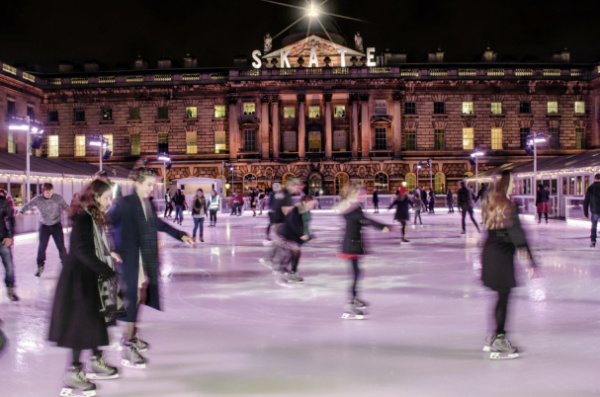
It’s Ice Weekend at the London Canal Museum. Events – including a showing of rare film of ice harvesting, ice cream making demonstrations, and talks about the ice trade – take place on both Saturday and Sunday but the chance to visit the facility’s ice well takes place on Sunday only. Admission charges apply. For more, see www.canalmuseum.org.uk/whatson/icewell-visit.htm. The event is part of the 2023 Festival of Archaeology.

Send all items to exploringlondon@gmail.com

This Week in London – Coronation outfits at Buckingham Palace; Rex the Raven; and, a Crystal Palace dinosaur recreated…

Royal Collection Trust / © His Majesty King Charles III 2023

The coronation outfits worn by King Charles III and Queen Camilla can be seen at Buckingham Palace from Friday as part of the summer opening of the State Rooms. The clothing includes the Robe of Estate worn by the King for his departure from Westminster Abbey (it had been worn by his grandfather King George VI for his coronation in 1937), the King’s cream silk overshirt and the Purple Coronation Tunic – both specially created for the occasion – and the King’s Royal Naval Trousers as well as Queen Camilla’s Bruce Oldfield-designed Coronation Dress and her Robe of Estate. Also on display will be the Coronation Glove and the Girdle or Coronation Sword Belt – both of which were first worn by King George VI at his coronation. Visitors to the State Rooms will also be able to see the Diamond Jubilee State Coach, and by combining their trip with a visit to the Royal Mews, the Gold State Coach, used in every coronation procession since King William IV in 1831. The State Rooms are open until 24th September. Admission charges apply. For more, including an accompanying programme of events, see www.rct.uk.

A new raven chick, Rex, has joined the flock at the Tower of London. Rex, who is joining the six other ravens at the Tower, is named for the Latin title meaning “King, Ruler” – appropriate for a Tower raven born in the year of HM King Charles III’s Coronation. The term is referenced on King Charles III’s cypher that appears on the uniforms of Yeoman Warders, and above the entrance to the Jewel House. The cypher displays the intertwining initials “C” and “R”, representing “Charles” and “Rex”, an update from Her Late Majesty Queen Elizabeth’s cypher “E R” “(Elizabeth Regina).

PICTURE: James Balston

• A recreation of a Victorian-era sculpture of an extinct mammal distantly related to horses, has been placed at the Grade I-listed Crystal Palace dinosaurs site. The 2.2 metre-long sculpture of Palaeotherium magnum is the work of one of Britain’s leading palaeo artist, Bob Nicholls, under the supervision of the Friends of Crystal Palace Dinosaurs, scientists from the Natural History Museum and the University of Portsmouth. It has been funded by the new Crystal Palace Park Trust and Friends of Crystal Palace Dinosaurs.

Send all items to exploringlondon@gmail.com.
This Week in London – Young V&A opens its doors; contemporary African photography; and, Yehudi Menuhin honoured…

The Young V&A’s Town Square PICTURE: © Luke Hayes courtesy of Victoria and Albert Museum, London.

The new Young V&A in Bethnal Green has opened its doors and a free summer festival takes place this weekend. Designed with and for children aged up to 14-year-olds, the Young V&A features more than 2,000 objects, dating from 2,300 BC to today, found across three galleries – ‘Play’, ‘Imagine’ and ‘Design’. The ‘Play’ gallery includes a ‘Mini Museum’ as well as a construction zone called Imagination Playground in which children can build dens, The Arcade in which they can explore Minecraft worlds and Adventure in which they can create stories inspired by objects on show. The ‘Imagine’ gallery features a new performance space, portraits of local children and luminaries such as Quentin Blake, Kenneth Branagh and Linda McCartney, while ‘Design’ showcases innovative objects and case studies that explore how things are designed, made and used, and the ways in which design can change the world. Among the objects on show at the museum is everything from a life-size Joey the War Horse puppet to a Microline car suspended from the ceiling, Harry Potter’s Nimbus 2000 broomstick, Christopher Reeve’s original Superman costume and a large-scale installation of doll’s houses – Place (Village) – by Rachel Whiteread. Meanwhile, the free Summer Festival, which takes place on Saturday and Sunday, invites visitors to explore the museum as well as join in free and creative activities and see performances from young talent including Britain’s Got Talent finalists IMD Legion, the east London-based Grand Union Orchestra, and hula-hoop performance group Marawa’s Majorettes. There’s also the chance help create a large-scale art installation with Leap then Look. For more see vam.ac.uk/young.

‘The Place (Village)’ installation in Imagine Gallery at the Young V&A PICTURE: © David Parry, courtesy of Victoria and Albert Museum, London
Aïda Muluneh, ‘Star Shine Moon Glow, Water Life’, 2018 Photograph, inkjet print on paper; 800 x 800mm Commissioned by WaterAid. ©  Aïda Mulune

A major new exhibition celebrating contemporary African photography has opened at the Tate Modern. Featuring works by 36 artists, A World in Common: Contemporary African Photography is spread across seven thematic sections and highlights contemporary perspectives on cultural heritage, spirituality, urbanisation and climate change. As well as illuminating alternative visions of Africa’s many histories, cultures and identities, the display also explores the rise of studio photography across the continent during the 1950s and 1960s – a time when many African nations gained independence – before moving on to document the expansion and transformation of cities today as well as exploring themes of migration and climate activism. Runs until 14th January, 2024. Admission charge applies. For more, see tate.org.uk.

Celebrated 20th century violinist and conductor Yehudi Menuhin has been honoured with an English Heritage Blue Plaque at his former home in Belgravia. The six-storey house at 65 Chester Square, built by Thomas Cubitt in 1838, was where Menuhin lived and worked for the last 16 years of his life. The lower-ground floor vaults provided space for his collection of violins while an open space on the fourth floor served as his studio, a place which hosted much of his teaching and mentoring and where he also practiced yoga – including his famous headstand.

Send all items to exploringlondon@gmail.com.
This Week in London – McCartney’s photographic portraits; Georgian-era ice-cream; and, the UK’s rocky past…

In the wake of last week’s reopening of the National Portrait Gallery, another new exhibition – this time focused on the photography of Paul McCartney – opened yesterday. Paul McCartney Photographs 1963-64: Eyes of the Storm reveals, for the first time, portraits captured by McCartney using his own camera between December, 1963, and February, 1964, – a period during which John, Paul, George and Ringo went from being Britain’s most popular band to international stardom. The images reveal McCartney’s personal perspective on what it was like to be a Beatle at the start of what became known as ‘Beatlemania’ through images captured everywhere from gigs in Liverpool and London to performing on The Ed Sullivan Show in New York. Runs until 1st October. Admission charge applies. For more, see www.npg.org.uk/whatson/exhibitions/2023/paul-mccartney-photographs-1963–64-eyes-of-the-storm/.

Kenwood House. PICTURE: Marc Barrot (licensed under CC BY-NC-ND 2.0)

Kenwood House in London is among 13 English Heritage sites across the country where you can try out Georgian-era “brown bread ice-cream” this summer. Created in partnership with family ice cream maker Marshfield Farm, the flavour is inspired by some of the more bizarre flavours of ice-cream popular among the Georgians including cucumber, black tea and parmesan. For the full list of places where it will be available, head to www.english-heritage.org.uk/about-us/search-news/the-best-thing-since-sliced-bread–english-heritage-re-creates-georgian-brown-bread-ice-cream-this-summer/.

Angela Palmer with ‘Tower of Time’. PICTURE: Ewa McBride Photography.

A unique sculptural portrait of the UK formed with interlocking blocks of stones from all four countries is on show in an exhibition at the Pangolin London Sculpture Gallery in King’s Cross. Four Nations is just one of the works by Highbury-based artist Angela Palmer in the display, Deep Time: Uncovering Our Hidden. Among others is the 2.5 metre high Tower of Time, which features 16 rocks from the four countries including a 2.5-billion-year-old White Anorthosite rock, the same type of rock brought back from the Moon by Apollo 15 in 1971, and Torus of Time, a one-metre diameter ring representing the country’s three billion year history as a circle of time. Runs until 16th September. For more, see www.pangolinlondon.com.

Send all items to exploringlondon@gmail.com.