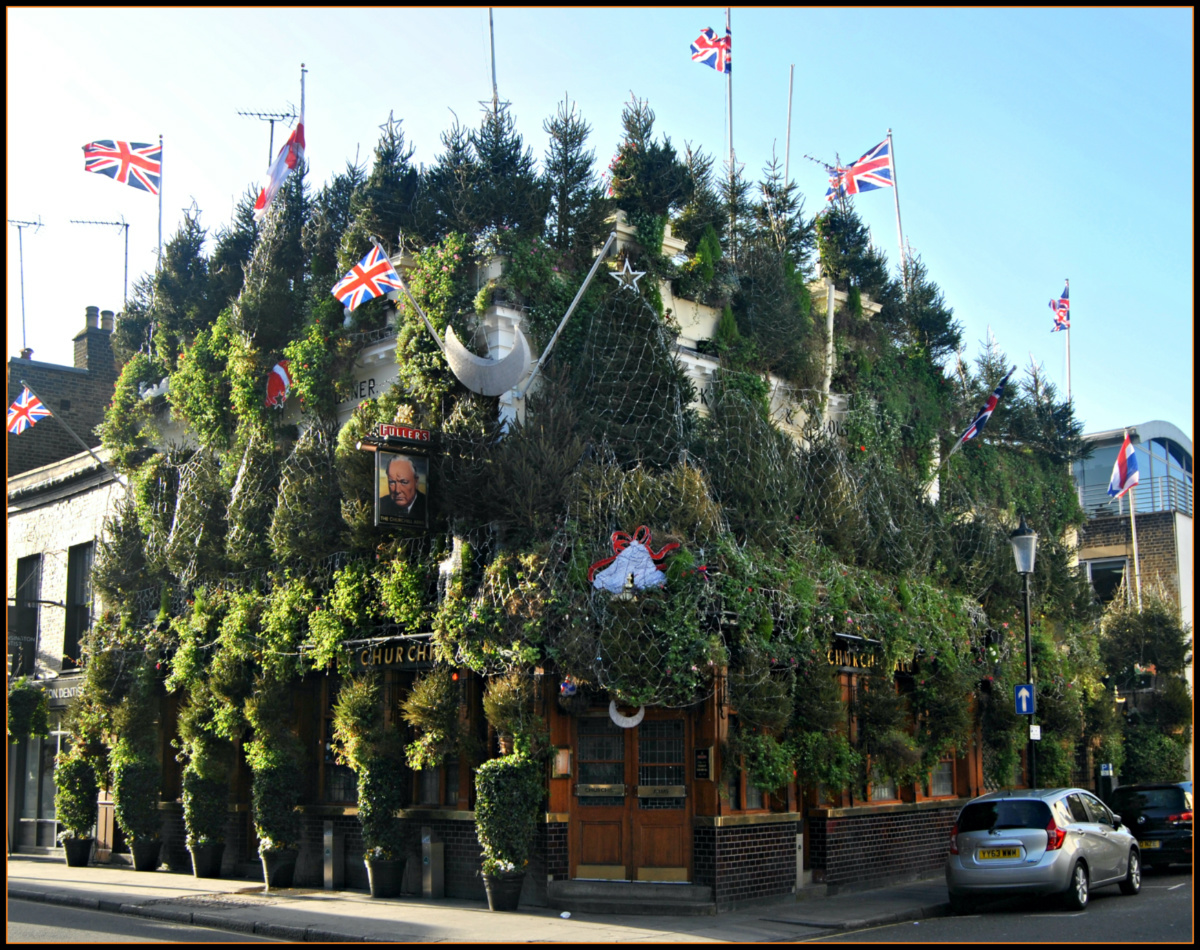
The Churchill Arms decorated for Christmas in 2015. PICTURE: Loco Steve (licensed under CC BY-SA 2.0)
It’s Christmas in London and for such a festive occasion, one pub immediately springs to mind – The Churchill Arms.
The name is certainly not a mystery and doesn’t really have anything to do with the Christmas theme. It stems from, of course, wartime Prime Minister Winston Churchill – or rather, his grandparents, the Duke and Duchess of Marlborough, John and Frances Anne Spencer-Churchill, who were patrons here and which, in honour of Churchill and them, saw the pub so-named after World War II.
Churchill remains a theme in the interior where a good deal of related memorabilia can be found – including wartime posters, pictures of the man himself and a (fake) plaque commemorating Churchill’s use of the pub for his wartime broadcasts (there’s even a celebratory night held each year around Churchill’s birthday).
The pub, which is located at 119 Kensington Church Street, dates from 1750.
But in recent times, it’s become famous for its stunning Christmas light displays which this year reportedly feature some 80 Christmas trees and 22,000 lights. The pub is also known for its extraordinarily profuse flower displays which cost thousands of pounds each year and which have even won at none other than the Chelsea Flower Show.
It also holds the claim to fame of being the first London pub to serve Thai food when it did so as far back as 1988.
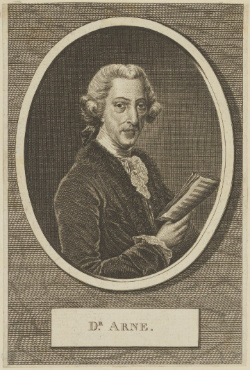
Eighteenth century English composer Thomas Arne, considered one of British greatest theatrical composers and most well known for creating the music for his patriotic song Rule Britannia, spent most of his life in London.
The son of an upholster, Arne, whose middle name was Augustine, was born in Covent Garden in 1710 and baptised in St Paul’s, Covent Garden. Arne was educated at Eton College where, such was his passion for music, he is said to have secretly practised with a spinet, a smaller type of harpsichord, in his room at night, muffling the strings to keep from being discovered.
He became a violin student of composer Michael Festing and, such was his love of music, that he is said to have disguised himself in the livery of servant to attend the opera.
Following his father’s wishes, Arne worked briefly as a solicitor after leaving school but was subsequently permitted to leave the law and pursue a life in music (there were other family connections to music and performance – his father had actually been involved in financing some operas and both his sister Susannah Maria and brother Richard would go on to have careers in the theatre and music worlds).
Over the more than 40 years between 1733 and 1776, Arne wrote music for about 80 stage works which included everything from plays and masques to pantomimes and operas.
His big break came when he became house composer at Drury Lane Theatre, writing music for various plays and pantomimes and involving both his brother and his sister in the performances (his residences at this time are said to have included properties in Great Queen Street and Lincoln’s Inn Fields).
Arne was already a star when, on 15th March, 1737, he married the singer Cecilia Young (he may have already had a son prior to this).
In 1738, he – along with others including George Frideric Handel – founded the Society of Musicians (which would become the Royal Society of Music). Arne also received the patronage of Frederick, the Prince of Wales – in fact, it was at the prince’s country house, Cliveden, that he debuted Rule, Britannia, during a performances of his Masque of Alfred in 1740.
Arne and his wife spent two years in Dublin in the early 1740s and on his return to London in 1744, he was again composing music for Drury Lane. He also composed music for performances at Vauxhall Gardens.
Arne left Drury Lane for the Covent Garden Theatre in 1750 after he had begun to fall out of favour with theatre manager David Garrick who was increasingly turning to other composers.
In 1755, while again in Dublin, he separated from Cecilia, alleging she was mentally ill, and began a relationship with one of his students, Charlotte Brent. Brent would perform in several of his works including in Thomas and Sally (the first English opera to be completely sung) and Artaxerxes (which became one of the most successfully and influential English operas of the era). Brent would eventually go on to eventually marry a violinist in 1766.
His career took a downturn in the mid 1760s but in 1769, Garrick appointed Arne musical director for the Shakespeare festival at Stratford upon Avon. Arne composed several pieces for the event including An Ode upon Dedicating a Building to Shakespeare, the success of which put him back into favour with the London theatres.
In late 1777, Arne was reconciled with his wife (their son, Michael, went on to become a composer). But his health deteriorated soon after and Arne died on 5th March, 1778, at a house in Bow Street, Covent Garden. He was buried in the churchyard of St Paul’s, Covent Garden.
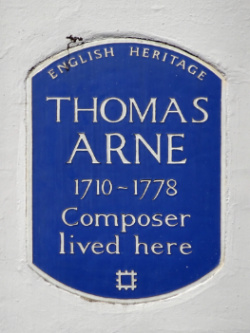
An English Heritage Blue Plaque was erected at the site of his former home at 31 King Street, Covent Garden, in 1988 (pictured above).
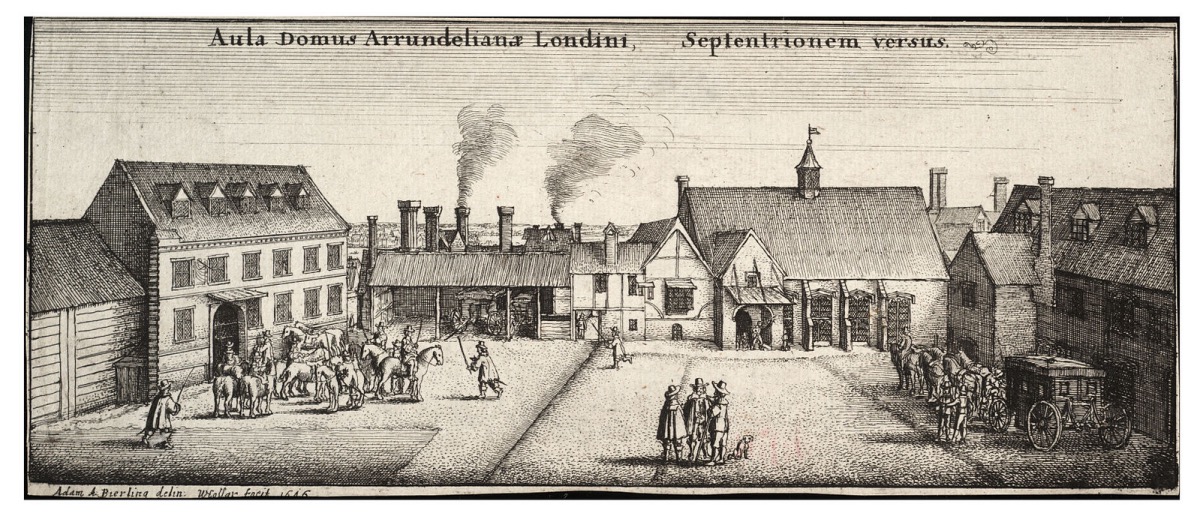
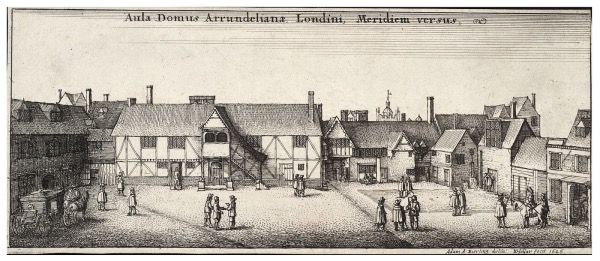
Arundel House, from the south, by Wenceslas Hollar.Via Wikimedia Commons.
One of a string of massive residences built along the Strand during the Middle Ages, Arundel House was previously the London townhouse of the Bishops of Bath and Wells (it was then known as ‘Bath Inn’ and Cardinal Thomas Wolsey was among those who resided here during this period).
Following the Dissolution, in 1539 King Henry VIII granted the property to William Fitzwilliam, Earl of Southampton (it was then known as Hampton Place). After reverting to the Crown on his death on 1542, it was subsequently given to Thomas Seymour, 1st Baron Seymour of Sudeley, a younger brother of Queen Jane Seymour, Henry VIII’s third wife, and known as ‘Seymour Place’. Then Princess Elizabeth (late Queen Elizabeth I) stayed at the property during this period (in fact, it’s said her alleged affair with Thomas Seymour took place here).
Arundel House, from the south, by Wenceslas Hollar.Via Wikimedia Commons.
Seymour significantly remodelled the property, before in 1549, he was executed for treason. The house was subsequently sold to Henry Fitz Alan, 12th Earl of Arundel, for slightly more than £40. He was succeeded by his grandson, Philip Howard, but he was tried for treason and died in the Tower of London in 1595. In 1603, the house was granted to Charles, Earl of Nottingham, but his possession was short-lived.
Just four years later it was repurchased by the Howard family – in particular Philip’s son, Thomas Howard, 14th Earl of Arundel – who had been restored to the earldom.
Howard, who was also the 4th Earl of Surrey, housed his famous collection of sculptures, known as the ‘Arundel Marbles’, here (much of his collection, described as England’s first great art collection, is now in Oxford’s Ashmolean Museum).
During this period, guests included Inigo Jones (who designed a number of updates to the property) and artist Wenceslas Hollar who resided in an apartment (in fact, it’s believed he drew his famous view of London, published in 1647, while on the roof).
Howard, known as the “Collector Earl”, died in Italy in 1646. Following his death, the property was used as a garrison and later, during the Commonwealth, used as a place to receive important guests
It was restored to Thomas’ grandson, Henry Howard, 6th Duke of Norfolk, following the Restoration. Following the Great Fire of London in 1666, for several years the property was used as the location for Royal Society meetings.
The house was demolished in the 1678. It’s commemorated today by the streets named Surrey, Howard, Norfolk and Arundel (and a late 19th century property on the corner of Arundel Street and Temple Place now bears its name).
Arguably the grandest music venue in London, the Royal Albert Hall, named in memory of Queen Victoria’s husband Prince Albert, has been hosting musical events since it first hosted a concert in 1871.
The Grade I-listed hall, which has a seating capacity of more than 5,000 and which did suffer from acoustic problems for many years (until mushroom-shaped fibreglass acoustic diffusers were hung from the ceiling following tests in the late 1960s), has been the setting for some of the most important – and, in some cases, poignant – music events of the past 150 years, not just in London but the world at large.
Among some of the most memorable are the Titanic Band Memorial Concert – held on 24th May, 1912, just six weeks after the sinking of the iconic ship to remember the 1514 people who died with a particular focus on the eight musicians who played on as the stricken vessal sank, the ‘Great Pop Prom’ of 15th September, 1963 – only one of a handful of occasions when The Beatles and Rolling Stones played on the same stage, and Pink Floyd’s gig of 26th June, 1969 – coming at the end of a UK tour, the on-stage antics saw the band banned (it was short-lived, however, they returned just a few years later in 1973).
Other musical figures to have taken to the stage here include everyone from composers Richard Wagner, John Philip Sousa, and Benjamin Britten to the Von Trapp family, jazz greats Billie Holiday and Ella Fitzgerald, and the likes of Shirley Bassey, Bob Dylan and Elton John – a veritable musical who’s who of the past 150 years. The venue also hosted the 13th Eurovision Song Contest in 1968.
Of course, Royal Albert Hall is famous for The Proms, an annual festival of classical music which was first performed here in 1941 after the venue where it had been held since 1895 – the Queen’s Hall on Langham Place – was lost to an incendiary bomb during World War II.
Prom stands for ‘Promenade Concert’, a phrase which originally referred to the outdoor concerts in London’s pleasure gardens during which the audience was free to walk around while the orchestra was playing (there are still standing areas during performances). The most famous night of the season is the ‘Last Night of the Proms’ which, broadcast by the BBC, features popular classics and ends with a series of patriotic tunes to stir the blood.
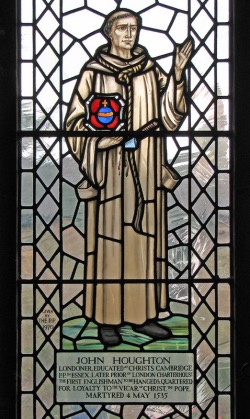
St John Houghton is remembered as the first Catholic Englishman to have been executed for refusing to take the oath prescribed by King Henry VIII’s Act of Supremacy.
Stained glass depicting St John Houghton in St Etheldreda’s Catholic Church in Ely. PICTURE: Lawrence OP (licensed under CC BY-NC 2.0)
Houghton was born around 1487 and is believed to have been educated at Cambridge, becoming ordained around 1511 before he entered the London Charterhouse in 1515 or 1516. By 1523, he held the position of sacristan and in 1528 that of procurator before, in 1531, he was transferred to Beauvale Priory in Nottinghamshire to serve as its prior.
But he returned to London in November that same year when he was unanimously elected Prior of the London Charterhouse. The following year was named Visitor of the English Province for the Carthusian Order.
When the King’s agents visited in April, 1534, requiring the community to take an oath as required under the 1534 Act of Succession (which excluded Katherine of Aragon’s daughter Mary in favour of Anne Boleyn’s daughter, Elizabeth), Houghton asked that the community be exempted.
Such a request was not looked upon kindly and Houghton, along with his procurator, Humphrey Middlemore, was arrested and taken to the Tower of London. Subsequently convinced that the oath was consistent with their Catholic faith by fellow clerics, the two returned to the Charterhouse in May, and there, in the presence of an armed force, the whole community eventually took the oath.
But in 1535, the community was again required to take an oath – this time recognising King Henry VIII as the Supreme Head of the Church of England as required by the 1534 Act of Supremacy. But Houghton, along with the heads of the other two English Carthusian houses – Robert Lawrence, Prior of Beauvale, and Augustine Webster, Prior of Axholme – sought an audience with Thomas Cromwell and asked for an exemption. All three were sent to the Tower.
The three men were interrogated by Cromwell on 26th April and then, a few days later, were called before a special commission and sentenced to death.
Houghton was among five clerics – along with the other two Carthusian priors as well as Bridgettine monk Richard Reynolds and John Haile, the parish priest of Isleworth – who were dragged through the streets to Tyburn on 4th May. There, Houghton – wearing his religious habit – is said to have embraced his executioner as he recited the words of the 31st Psalm before he was the first to be hanged, drawn and quartered.
Catholic tradition says that when Houghton’s body was cut open to remove his heart, he said to have prayed: “O Jesus, what wouldst thou do with my heart?”
Pieces of Houghton’s body were then displayed around London – his head was displayed above London Bridge and his arm was nailed to the gate of the Charterhouse,
Houghton was beatified on 9th December, 1886, and canonised in 25th December, 1970. He is considered one of the 40 Catholic Martyrs of England and Wales, all of whom were executed between 1535 and 1679 during the English Reformation.
Thankfully much copied (at least in part), this full length portrait of King Henry VIII, his third wife and parents was the work of Hans Holbein the Younger.
Holbein, appointed the king’s painter in 1536, was commissioned to create the work following the King’s marriage to Jane Seymour on 30th May, 1536, and completed it in 1537 (there’s some speculation it may have been commissioned in celebration of the birth of King Henry’s son, King Edward VI).
The mural featured the King standing in full splendour, although without typical symbols of royalty such as a crown or sceptre, as well as his wife Jane Seymour, and his parents, King Henry VII and Queen Elizabeth of York. They were all standing around a central pillar upon which are inscribed verses in Latin extolling the Tudor dynasty.
The work is understood to have been commissioned for one of the King’s more private chambers in the Palace of Whitehall which Henry had seized after the downfall of Cardinal Thomas Wolsey.
The portrait survived the reign of King Henry VIII but was destroyed in the fire which devastated the palace in 1698.
A full-sized cartoon of the left-hand side of the work which was completed by Holbein in preparation for its creation is held in the collection of the National Portrait Gallery (pictured right).
While there are numerous copies of the figure of King Henry VIII, the only complete copy of the mural is attributed to Remigius van Leemput who created it in 1667 – it can be seen at Hampton Court Palace.
OK, so we all know about the Abbey Road crossing and its connection with the Beatles, but where are some other sites of historic musical significance in London?
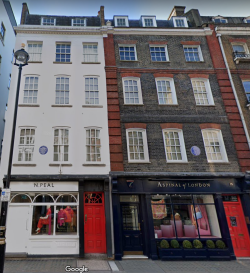
23 and 25 Brook Street, Mayfair. PICTURE: Google Maps.
First up, it’s the Mayfair home where 18th century composer George Frideric Handel lived from 1723 until his death in 1759 – and where he composed much of his best known work including masterpieces such as Zadok the Priest (1727, it was composed for the coronation of King George II), Israel in Egypt (1739), Messiah (1741), and Music for the Royal Fireworks (1749).
The German-born Handel, who settled permanently in London in 1712 (and who became a naturalised British citizen in 1727), was the first occupant of the terraced house located at what is now 25 Brook Street (but previously known as 57) which is now a museum dedicated to his life and work.
The property, which is today decorated as it would have been during early Georgian times, is thought to have been convenient for its proximity to be the theatres where his works works were performed and St James’s Palace, where he served as Composer of Music for the Chapel Royal.
A small room on the first floor is believed to be where Handel did most of his composing. He is also understood to have used the larger adjoining music room for rehearsing his works from the 1730s (possibly due to a lack of space at the venue where he mainly performed, the Covent Garden Theatre).
Handel died in the house on 14th April, 1759. The property, which subsequently was lived in by various people, became a museum dedicated to the composer in 2001.
Known for the first 15 years of its existence as the Handel House Museum, in 2016 it was expanded to include the upper floors of the adjoining home, 23 Brook Street, a flat which served as home to another musical great, Jimi Hendrix, in 1968-1969. The museum is now known as Handel & Hendrix in London.
Both properties have English Heritage Blue Plaques upon them. The first plaque were erected on Handel House in about 1870 by the Society of Arts and was replaced in 1952 and again in 2001, when his middle name was corrected to Frideric from Frederick. The plaque commemorating Hendrix’s residence in Number 23 was erected in 1997.
The museum is closed, with limited exceptions, until March, 2023, for a refurbishment project called the The Hallelujah Project. But you can head to the website to take a 3D virtual tour: https://handelhendrix.org.
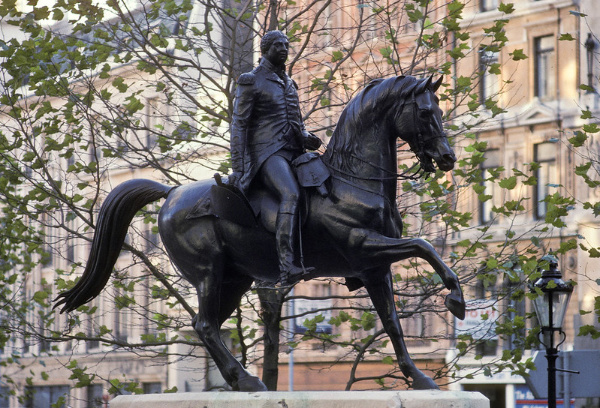
Equestrian statue of King George III in Cockspur Street. PICTURE: David Nicholls (licensed under CC BY-NC 2.0)
This month marks 260 years since King George III and Charlotte of Mecklenburg-Strelitz were crowned King and Queen of the Kingdom of Great Britain at a ceremony at Westminster Abbey.
Only 23-years-old at the time, King George III had ascended to the throne before following the death of his grandfather, King George II, in October, 1760. He and his wife, then Princess Charlotte of Mecklenburg-Strelitz, had married in the Chapel Royal at St James’s Palace just two weeks prior to the coronation on 8th September, 1761 (they had met earlier the same day).
The royal couple started the day of the coronation – 22nd September – at St James’s Palace and were carried in sedan chairs to Westminster Hall, arriving at about 11am. They then processed on foot through crowds from the hall to Westminster Abbey (the crowds were said to be such that numerous carriages had collided with each other in the bid to reach the abbey). There, they proceeded to a special platform built in the abbey for the occasion.
Commencing at about 3pm, the coronation ceremony began. In an elaborate ceremony overseen by the Archbishop of Canterbury Thomas Secker, the new King was then crowned (Zadok the Priest, which George Frideric Handel had written for the coronation of King George II, was the anthem at the new king’s request). A simpler ceremony followed in which Charlotte was crowned Queen Consort.
The whole affair reportedly lasted more than six hours, so long that some guests are said to have tucked into snacks while watching.
A feast was subsequently held in Westminster Hall during which the King’s Champion, wearing full armour, rode into the hall and threw down a gauntlet challenging any who questioned the King’s legitimacy to step up (none did). During the feast, spectators in the galleries above let down baskets and handkerchiefs for their better placed friends below to fill with food.
The King and Queen departed the feat at about 10pm followed by guests. After they’d vacated the premises, the doors were then opened for the public to come in and to finish off the food.
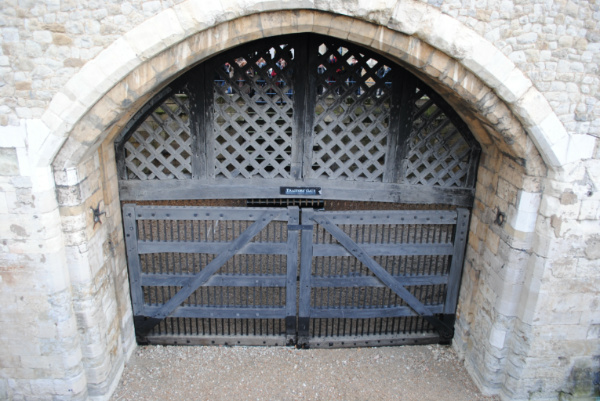
Built by King Edward I in the 13th century as a water gate to provide access from the Tower of London to the River Thames, the name ‘Traitor’s Gate’ came to be applied to this portal in Tudor times in relation to those accused of treason who were brought into the tower under its arch.
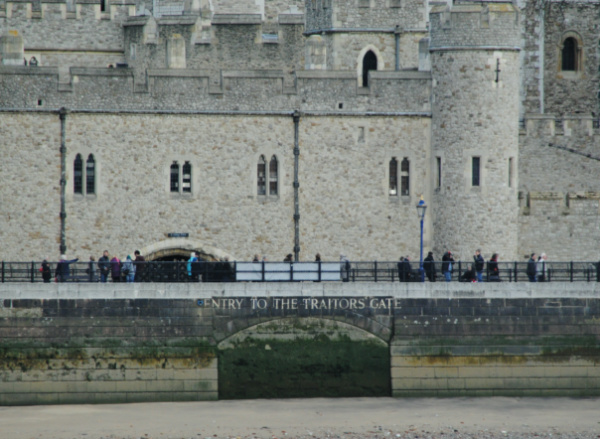
The double gateway is part of St Thomas’s Tower, which was designed by a Master James of St George, and behind it is a pool which was used to feed water to a cistern on the roof of the White Tower. While the gate was originally built to give access directly to the river, Traitor’s Gate now sits behind a wharf which runs along the river bank (and where can be seen the bricked up entrance says ‘Entry to the Traitor’s Gate’ – this was bricked up in the 19th century when embankment works were carried out)
Sir Thomas More, Sir Walter Raleigh and even the future Queen Elizabeth I (when a princess) were among those who were brought in by barge through the Traitor’s Gate (their journey would have led them under London Bridge where the heads of executed prisoners were on display). Whether Henry VIII’s disgraced Queen Anne Boleyn entered the tower through the gate remains a matter of some dispute.
• Some 5,000 papers and photographs relating to the life and legacy of Prince Albert, consort of Queen Victoria, have been published online. The move, which marks the completion of the Prince Albert Digitisation Project, means some 22,000 archival documents, prints and photographs from the Royal Archives, the Royal Collection and the Royal Commission for the Exhibition of 1851 are now publicly available, many for the first time, through the website Prince Albert: His Life and Legacy which was launched in mid-2019 to mark the 200th anniversary of the Prince’s death. The new items predominantly consist of the Prince’s private and official papers and correspondence as well as excerpts from Albert’s now lost diaries, spanning the years from 1841 to 1852. Highlights include a note he wrote to Victoria on October, 1858, which reads: “I declare that I have every confidence in you. A”; a letter from 10-year-old Princess Louise to her father from Swiss Cottage, the life-sized playhouse he had installed for his children at Osborne House on the Isle of Wight, in which she reports cooking and making “some wafers and schneemilch” (a type of Austrian pudding); and, an annotated list of candidates for the role of Master of the Household in which Albert lists why they are unsuitable with reasons including ‘too old’ and ‘too useful to the Navy’ and ‘bad temper’ and ‘French mistress’.
• London Transport Museum are offering people the chance to go behind the scenes at its depot in Acton, West London, this weekend. The depot, which houses more than 320,000 objects from London’s transport history, will play host to a programme of events – ‘Underground Uncovered’ – which includes talks, vintage vehicle displays and family activities. Highlights include a talk by Siddy Holloway, a disused station history expert and co-presenter of the new Secrets of the London Underground TV series, the chance to try your hand at being a train operator in the Victoria Line driving cab, and the opportunity to watch a demonstration of restored London Underground signalling frames. The open days are being held from today until Sunday, 11am to 5pm. Admission charge applies. To book and see the full programme of events, see www.ltmuseum.co.uk/visit/depot/events.
• W1 Curates and artist Anthony James’ light exhibition inside the Marble Arch Mound has opened to the public with free entry to what has been a somewhat controversial attraction to continue. James’ Lightfield installation involves a series of 12 cubed light sculptures in three rooms inside the mound through which visitors will make their way after first visiting the viewing platform on top. James, who has described the cubes as alluding to the “mycorrhizal nature of birch tree forests”, says it’s the first time his works have been displayed and viewed in such a “fully immersive way”. Visitors are asked to book an entry time at www.themarblearchmound.com.
Send all items for inclusion to exploringlondon@gmail.com.
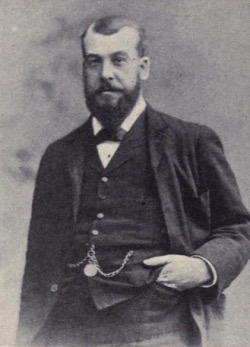
His surname now synonymous with the famous annual dog show, Charles Cruft is credited as taking the concept of dog shows to a whole new level.
Charles Cruft (picture from From Dog shows and doggy people (1902) by Charles Henry Lane).
Cruft was born, thought to have been in Bloomsbury, on 28th June, 1852, and attended Ardingly College in Sussex, before initially following on in his father’s footsteps and working in the family jewellery business (while taking evening classes briefly at Birkbeck College).
But it was his next move, taking on the role of office boy in the Holborn shop of “dog cake” manufacturer James Spratt that brought him into the world of canines.
Cruft quickly moved into sales and then management at the firm and it was while on a trip to Europe that he was given the opportunity to run the dog show at the third World’s Fair in 1878 (he married Charlotte Hutchinson, with whom he had four children, the same year). Further offers to run shows followed and in 1886, he was approached to run a dog show for terriers in London by the Duchess of Newcastle.
The show – billed as the “the first great show of all kinds of terriers” – opened at the Royal Aquarium in Westminster on 10th March that year and further annual shows, expanding into other breeds, followed. In 1891, his name was added to the event with the “Cruft’s Greatest Dog Show” held at the Royal Agricultural Hall in Islington with 2,437 entries and 36 breeds.
So popular had the shows become that Queen Victoria and Russian Tsar were among the exhibitors (Cruft did also try his hand at cat shows in 1894 and 1895 but it was a short-lived venture).
By 1914, Cruft’s show had become the largest in the world and in 1936, when it celebrated its ‘Golden Jubilee’ (or 50th anniversary), there were more than 10,000 dogs entered.
Cruft, who had married his second wife Emma Isabel Hartshorn in 1894 following Charlotte’s death (they had no children together), died of a heart attack on 10th September, 1938. He was buried 11 days later in the western area of Highgate Cemetery (the tomb is now Grade II-listed). Tributes flowed in and apparently included comparisons to American showman PT Barnum.
Emma took over the running of the show following his death and since 1948, the show has been run by the Kennel Club.
There’s a plaque on the home where he died in Highbury Grove in Highbury (other London residences included 325 Holloway Road).
John Brodie Donald, the creator of the Lost London Churches Project, talks about how the project came about, its aim and his personal favourite “lost” church…
1. First up, when you talk about London’s “lost churches”, what do you mean by the expression? “Of the 108 churches in the City of London in 1600 only 39 remain. The rest have been lost in the last 350 years, either destroyed in the Great Fire of London in 1666 or in the Blitz or demolished by commercial developers as property prices soared.”
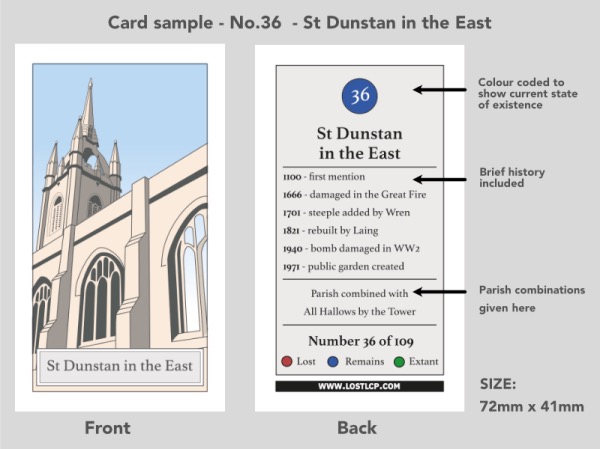
2. What is the aim of the Lost London Churches Project? “The Lost London Churches Project aims to promote interest in the ancient church buildings and parishes of the City of London through collectable cards, books, maps and downloadable explorers walks. We have created a ecclesiastical treasure hunt – a way of exploring the history of the square mile that costs nothing and can be easily fitted into a few spare lunchtimes.”
3. How many churches are included in the project? “There are 78 churches for which collectable cards have been produced and these are available in a growing number of churches in the City. It is hard to find evidence of what the churches lost in the fire of 1666 looked like, but hopefully after further research these will be included in a second edition. “
4. Does the project cover every “lost” church in the City of London? “It covers not just ‘lost’ churches but also the extant ones for two reasons. First, because those who are collecting the cards need a place to pick them up which they can do in the churches that still exist. Secondly, although the church buildings were lost, the parishes still remain to this day for administrative reasons. Every one of the 109 churches still has a parish clerk. The parishes have been amalgamated with the existing churches. So, for example, St Vedast in Foster Lane is a church of 13 united parishes having acquired them as the church buildings were lost over the centuries.”
5. Tell us how the Lost London Churches Project came about? “It all started when I was redrawing the Ogilby and Morgan map of 1676 in colour for my own pleasure. This large scale map (100 feet the inch) shows every single house in the City of 350 years ago. It was completed just after the Great Fire and so shows the location of all the lost churches clearly. The original covered 20 separate black and white sheets but I redrew them all joined together in colour on my computer. The end result was so huge it was impractical to print…So it made sense to break it up and publish in a book, and since the most interesting information in the map was the churches lost in the fire. it became the basis for the collectors book for the Lost London Churches project. At the same time, I was going through my late father’s papers and found a booklet of cigarette cards that he had collected in the 1940s. He also had a passion for painting watercolours of churches. That’s when I had the idea of producing a series of ‘cigarette cards’ showing the lost churches and the project was born.”
6. What’s the role of the cards? “The role of the cards is to give some tangible treasure to collect while exploring the lost churches. Like trading cards or Pokemon the challenge is – can you collect them all? In every participating church you will be able to pick up that church’s card along with a pack of five random cards for a small voluntary donation. Cards are also available from the project’s website lostlcp.com.”
7. You mentioned earlier that there were a number of ways the City of London’s churches become lost? “They were lost in three phases. Around 85 were destroyed or damaged in the Great Fire of 1666 of which 34 were never rebuilt. The others were rebuild by Christopher Wren, along with St Pauls Cathedral. Then 26 more churches were lost after the Union of Benefices Act of 1860 triggered a second wave of demolition. The purpose of the act was to combine parishes and free up space for the swelling capital of the British Empire. Lastly, the City suffered badly in the Blitz of World War II which took a further toll on these ancient buildings.”
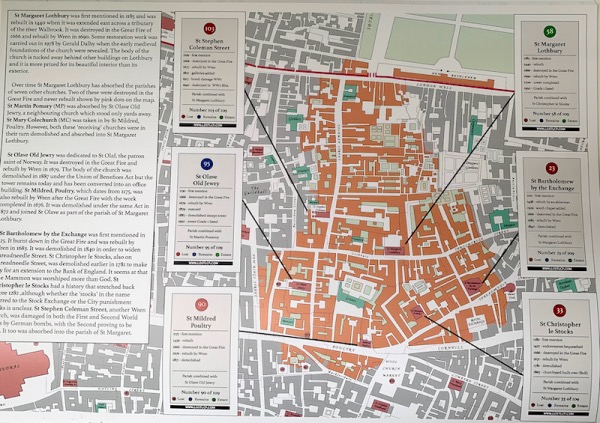
8. How easy is it to spot remnants of the City’s lost churches? “Though the buildings are lost, the parishes remain and you can still see the old parish boundary markers even on modern buildings. The best place to see an example of these is to walk down Cheapside along the New Change shopping centre towards the church of Mary le Bow. In only 100 or so yards you will have crossed the boundaries of five different parishes; St Vedast Foster Lane, St Matthew Friday Street, St Peter Westcheap, All Hallows Bread Street and St Mary Magdalene Milk Street. As you walk down the street look up above the shops ( see picture below) and you will see little plaques marking these parish boundaries. These type of parish boundary markers are scattered throughout the City. Our downloadable explorers walks on Google Maps available (for free) on our website lostlcp.com will show you some routes to find them. There is also a A4 sized map of the ancient parishes we have published for you to use as a guide.”
Parish markers on a building on Cheapside and, inset, in detail.
9. Have you uncovered any particularly interesting stories in your research into London’s lost churches? “I think one the most interesting things is the unusual names and how they were derived: Benet Fink, Stephen Coleman, Mary Somerset, Martin Ludgate and Gabriel Fenchurch. Couldn’t these be the names in an Agatha Christie mystery where the key to the murder is church themed aliases? But seriously, every church has a rich history since most were established before 1200 so in visiting them you are trekking right back to medieval times.”
10. And lastly, do you have a favourite “lost” London church? “My favourite is St Mary Abchurch just off Cannon Street. It is not only the headquarters of the ‘Friends of the City Churches’ charity but also a perfect jewel of a Wren church with the most glorious painted ceiling – like a secret Sistine chapel!”
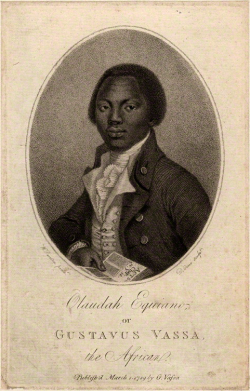
Author and abolitionist Olaudah Equiano was, according to his own account, born in Africa, probably in southern Nigeria, in 1745.
Equiano, whose claim to have been born in Africa has recently been the subject of some dispute, wrote that he was kidnapped from his home as an 11-year-old child and sold to slave traders. He was sold again several times and eventually put on a slave ship to Barbados in the British West Indies before being sent on to the Colony of Virginia in what is now the US.
There he was purchased by Michael Henry Pascal, a lieutenant in the Royal Navy, who, against Equiano’s wishes, renamed him ‘Gustavus Vassa’ after 16th-century King of Sweden (he had previously been given names Michael and Jacob).
Equiano accompanied Pascal back to England then served as his valet during the Seven Years’ War with France, a role which saw present at or participating in several battles.
He learnt to read and write during this period and was baptised as a Christian in St Margaret’s Church in Westminster on 9th February, 1759.
In December, 1762, Equiano was sold to Captain James Doran of the Charming Sally at Gravesend. He was transported back to the Caribbean where in Montserrat he was sold to Robert King, an American Quaker merchant from Philadelphia.
Equiano was put to work by King as a deckhand, valet and barber. King promised him his freedom for the price of £40 and he achieved this in 1766 at about the age of 21.
Despite King’s urgings for him to continue to stay on as a business partner, Equiano, who had narrowly escaped being kidnapped and placed back into enslavement, left for England in about 1768 where he picked up work on ships, including on an Arctic expedition, and also on a project to establish an (ultimately unsuccessful) plantation in Central America’s Mosquito Coast.
Back in England in the last 1770s, he settled in London and became actively involved in the abolitionist movement, sharing his experiences with the likes of Granville Sharp including what he knew of the Zong massacre – the mass killing of more than 130 enslaved Africans aboard the British ship, Zong, during a voyage in late 1781. He was also one of eight delegates from ‘Africans in America’ to present an ‘Address of Thanks’ to the Quakers at a meeting in Gracechurch Street, London, in October, 1785.
In the 1780s, he also became involved in aiding slaves who had been freed by the British during and after the American War of Independence and was at one stage involved in the ill-fated plan for a new settlement of so-called Black Loyalists, many of whom were former slaves, at Sierra Leone (although he never went there himself).
Encouraged by his abolitionist friends, he wrote his famous autobiography, The Interesting Narrative of the Life of Olaudah Equiano, or Gustavus Vassa, the African. Published in 1789, it was a hit and during his lifetime went through nine English editions and one American as well as being published in various other languages. His book and his first person accounts of slavery are seen as instrumental to the passing of an act abolishing Britain’s slave trade in 1807 (almost a decade after his death).
He married an English woman, Susannah Cullen, in April, 1792, and lived with her in Soham, Cambridgeshire, where they had two daughters, Anna Maria and Joanna.
Equiano subsequently lived at several locations in London and by the time of his death, on 31st March, 1797, he was living in Paddington Street in Westminster. Such was his fame that his death was reported in both British and American newspapers.
Equiano was buried at Whitefield’s Tabernacle in Tottenham Court Road on 6th April (the exact site is lost).
He is commemorated in Martin Bond’s 1997 sculpture Wall of the Ancestors in Deptford and a memorial tablet in St Margaret’s Church (there’s also a crater named after him on Mercury).
In 2007, a first edition of Equiano’s book was carried in procession at a special service in Westminster Abbey to commemorate the bicentenary of the passing of Britain’s Abolition of the Slave Trade Act.
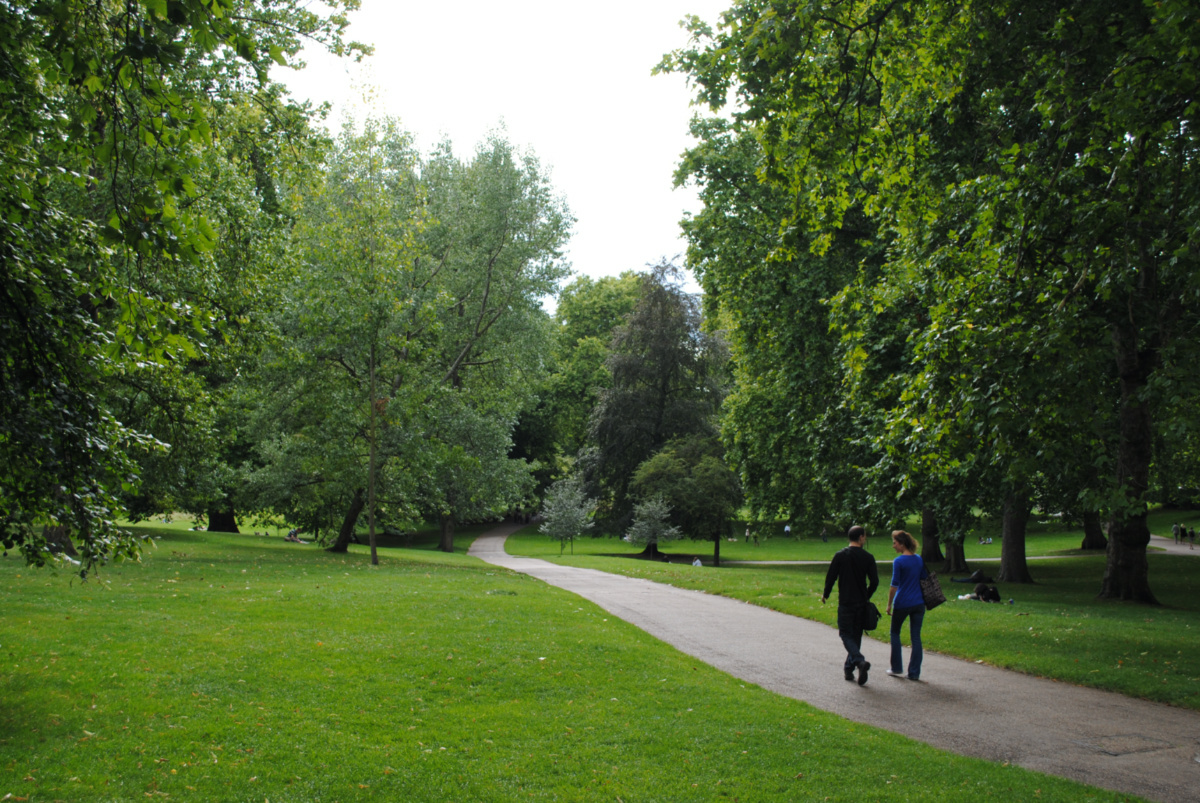
Green Park, the smallest of the eight Royal Parks. PICTURE: David Adams
One of the most beautiful features of London are its Royal Parks.
The Royal Parks signage in The Regent’s Park. PICTURE: Elliott Brown (licensed under CC BY 2.0)
The parks, which covers some 5,000 acres, are owned by the Crown and managed by a charity, The Royal Parks. They include eight of London’s largest open spaces – Hyde Park, The Green Park, Richmond Park, Greenwich Park, St James’s Park, Bushy Park, The Regent’s Park, and Kensington Gardens – as well as some other important open spaces such as Brompton Cemetery, Victoria Tower Gardens, Canning Green and Poet’s Corner.
All eight of the Royal Parks have historically been owned by the Crown with St James’s Park considered the oldest (while Greenwich Park is the oldest enclosed park).
Under an Act of Parliament passed in 1851, the Crown transferred management of the parks to the government. These powers were originally vested in the Commissioners of Works and later transferred to the Minister of Works in 1942. They now rest with the Secretary of State for Culture, Media and Sport.
The Royal Parks charity was created in 2017 when The Royal Parks Agency – a former executive agency of the Department for Culture, Media and Sport – and the Royal Parks Foundation came together. It is governed by a board led by chairman Loyd Grossman.
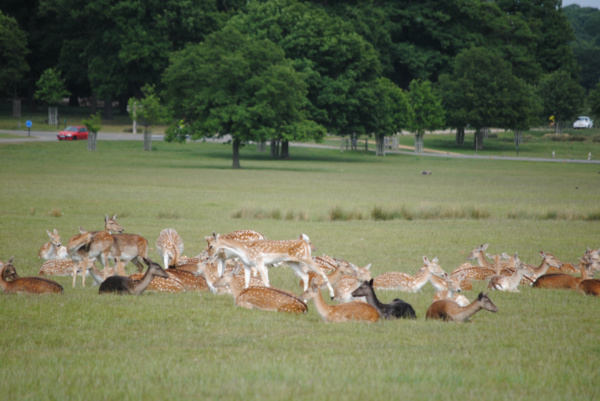
Deer in Richmond Park, largest of The Royal Parks. PICTURE: David Adams
The largest of the eight Royal Parks is Richmond Park which covers some 2,500 acres in London’s south-west (it’s followed by Bushy Park which is just over 1,000 acres). The smallest of the parks is Green Park at just 40 acres.
Interestingly, Hampton Court Palace gardens, which are open to the public are not part of The Royal Parks but instead are under the care of Historic Royal Palaces.
Here’s one fact about each of the eight Royal Parks.
Cardinal Thomas Wolsey gave Bushy Park to King Henry VIII in 1529 (along with Wolsey’s home, Hampton Court Palace).
Green Park was initially known as Upper St James’s Park after it was enclosed by King Charles II in 1668.
The Royal Observatory, designed by Sir Christopher Wren, is located in Greenwich Park.
Hyde Park became the location of the first artificially lit highway in the country when King William III, who had moved his court to Kensington Palace and found his walk back to St James’s rather dangerous, had 300 oil lamps installed upon a route which later became known as Rotten Row.
Queen Caroline, wife of George II, gave Kensington Gardens much of its present form when, in 1728, she oversaw the creation of the the Serpentine and the Long Water.
Horse Guards Parade is considered part of St James’s Park.
Architect John Nash designed a summer palace for the Prince Regent which was to be located in The Regent’s Park but was never built.
Prime Minister Lord John Russell was given a home in Richmond Park (Pembroke Lodge) by Queen Victoria in 1847.
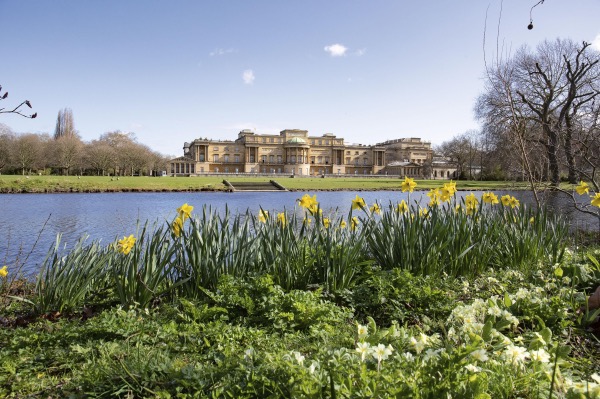
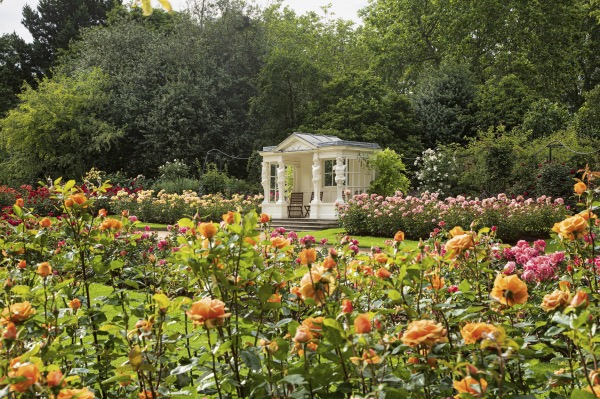
The historic 39 acre garden at Buckingham Palace opened to the public for the first time last Friday as part of the palace’s summer opening. Visitors can follow a route that takes in the 156-metre Herbaceous Border, plane trees which were planted by and named for Queen Victoria and Prince Albert, and views of the island and its beehives across the 3.5-acre lake. There’s also the opportunity to enjoy a picnic on the lawns and guided tours of the south-west of the garden with features including the Rose Garden, summer house and wildflower meadow. The current landscape dates back to the 1820s when King George IV turned Buckingham House into a place. It features more than 1,000 trees, the National Collection of Mulberry Trees (mulberry trees were first planted by King James I in 1608), 320 different wildflowers and grasses, and, since 2008, five beehives. The Queen traditionally hosts three garden parties in the gardens annually which are each attended by 8,000 guests, who consume around 27,000 cups of tea, 20,000 sandwiches and 20,000 slices of cake. The gardens are open until 19th September. Admission charge applies. For more, see www.rct.uk.
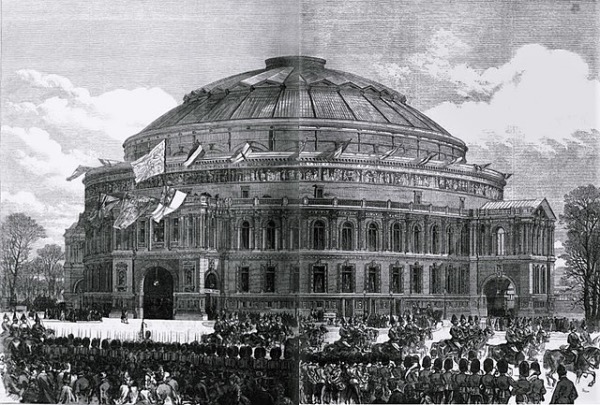
Crowds gathered at the Opening of Royal Albert Hall, on 29th March, 1871, as seems in the Illustrated London News, on the 8th April, 1871.
Next week sees the Royal Albert Hall’s 150th anniversary concert taking place, one of a number of events to mark the anniversary of the hall’s opening.
This spectacular building in South Kensington was officially opened on 29th March, 1871, as The Royal Albert Hall of Arts and Sciences (the opening was actually brought forward from 1st May – 20th anniversary of the opening of the Great Exhibition – at the request of Queen Victoria).
The Queen had laid the foundation stone in 1867 and the work on the building, the creation of which was partly funded by profits from the Great Exhibition of 1851, was complete by the end of 1870 (at least its structure – much of the interior decoration was apparently added later).
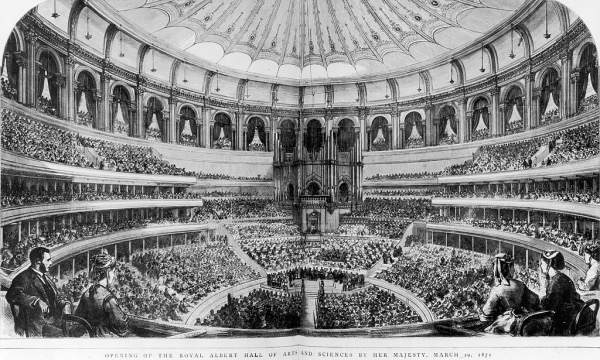
An image of the interior of the hall during the opening ceremony on 29th March. 1871. The illustration originally appeared in The Graphic.PICTURE: Via Wikipedia.
Queen Victoria and members of the Royal Family left Buckingham Palace in a line of state carriages for the event at noon escorted by the Royal Horse Guards Blue. Large crowds lined the route of her passage and a guard of honour composed of the Grenadiers stood opposite the entrance.
On arriving, the Queen was met by the Edward, the Prince of Wales (the future King Edward VII), members of the building committee and some of those who has served as commissioners of the Great Exhibition of 1851.
The Queen processed to a dais inside the building’ auditorium where some 8,000 dignitaries and invited guests waited in the audience. But she was apparently too overcome by memories of her late husband – Prince Albert, after whom the building as named – to give a speech. So it was the Prince who did so, although the Queen did reportedly add her own comments, saying according to an account in The Guardian: “I cannot but express my great admiration for this beautiful building, and my earnest wishes for its complete success.”
A battery of artillery performed a salute in nearby Hyde Park after which the Queen and Royal Family took their seats in the Royal Box to watch the musical program that followed. The Queen then returned to Buckingham Palace.
Interestingly, the first concert at the hall, held to test acoustics, actually took place month earlier on 25th February for an audience of some 7,000 people made up of those who had worked on the building and their families as well as officials and various invited members of the public.
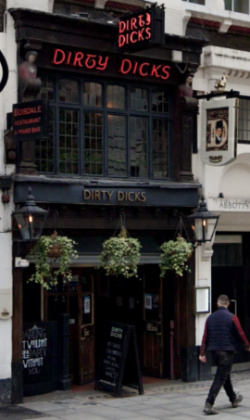
This City of London pub, located close to Liverpool Street Station, was originally known as The Old Jerusalem and dates back to the mid-18th century.
Dirty Dicks. PICTURE: Courtesy of Google Maps.
But the pub’s name was changed in the 19th century, inspired by the tragic history of a local businessman by the name of Nathaniel (there are some that suggest his name was Richard) Bentley.
The story goes that Bentley, who owned a hardware shop and warehouse, had been something of a dandy in his youth, earning the nickname, the “Beau of Leadenhall Street”.
But when his fiance died on the eve of their wedding day, he broke down and subsequently refused to clean anything, including himself (there was also speculation that he’d closed the dining room where the wedding breakfast was to be held with the spread still on the table). His home, shop and warehouse in Leadenhall Street became filthy and so famous that letters were apparently addressed to ‘The Dirty Warehouse, London’. He died in 1809 and the warehouse was later demolished.
William Barker, the owner of The Old Jerusalem, subsequently changed the name of his pub to Dirty Dick’s and it apparently became known for its own lack of cleanliness in sympathy with the man after whom it was named.
Charles Dickens is said to have been a patron of this establishment and it’s said that Bentley’s story inspired Dickens to create the character of Miss Havisham for this book, Great Expectations.
In keeping with its name, the cellar bar was for years cluttered with cobwebs and all sorts of items including a mummified cat but more recent years have seen the clutter removed (although some has been preserved and relocated to a glass display case).
The pub, at 202 Bishopsgate, is now owned by Young’s. For more, see www.dirtydicks.co.uk.
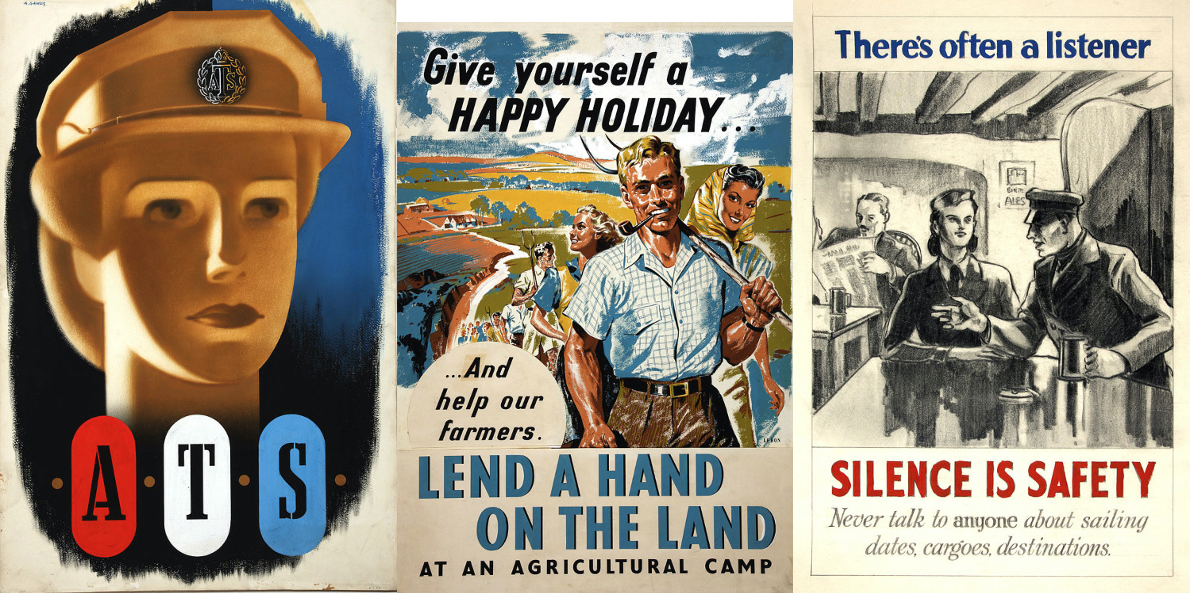
Left to right: Abraham Gomes, Forces Recruitment ATS (girl’s head) (between 1939 and 1946); Mary Le Bon, Give yourself a happy holiday…and help our farmers. Lend a hand on the land at an agricultural camp (between 1939 and 1946); Unknown author, There’s often a listener. Silence is safety. Never talk to anyone about sailing dates, cargoes, destinations (between 1939 and 1946).
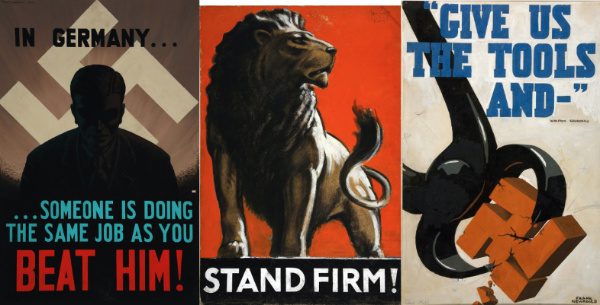
These posters are among almost 2,000 original works created by artists working for the Ministry of Information during World War II now in the collection of The National Archives based in Kew.
The posters tackle a range of issues – from saving on fuel at home to warnings about spies, posters to inspire effort on the homefront and those to recruit new men and women to the service.
Under a partnership with Wikimedia UK, in 2013 The National Archives digitised and released more than 350 images of the posters into the public domain. Here are some those released.
Left to right: Roy Nockolds, “In Germany…someone is doing the same job as you. Beat him!” (1942); Tom Purvis, “Stand Firm!” (between 1939 and 1946); and, Frank Newbould, “Give us the tools and-” – Winston Churchill (between 1939 and 1946).
Famous for his reform of the postal system, Sir Rowland Hill was a national celebrity during the Victorian era.
Born in Kidderminster, Worcestershire, on 3rd December, 1795, Rowland was the son of schoolmaster Thomas Wright Hill. Educated in his father’s school, Hill Top, in a Birmingham suburb, it was determined he would follow in his father’s footsteps at an early age and by the age of 12 had become a student teacher and in 1819 helped his family establish new model school, Hazelwood, in Edgbaston near Birmingham. In 1827, he was also involved with his family in establishing another new school, Bruce Castle School, in Tottenham, Middlesex.
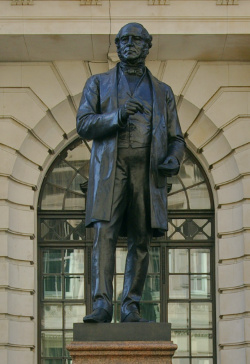
Statue of Sir Rowland Hill in London. PICTURE: Julian Osley (licensed under CC BY-SA 2.0/image cropped)
That same year, Hill married Caroline Pearson, who originally came from Wolverhampton, and together they had four children – three daughters Eleanor, Clara and Louisa and a son Pearson.
In the following years, Hill became involved in campaigns to colonise South Australia and in 1835 he joined the South Australian Colonisation Commission as Secretary, a role which he held until 1839 (interestingly and perhaps not surprisingly given his interest, Hill’s sister Caroline would later emigrate to South Australia with her family).
Hill was in his early 40s when he became interested in reforming the postal system – what to be his life’s great work. In 1837, he published his influential pamphlet, Post Office Reform: Its Importance and Practicability, in which he argued for consistency in the system including pre-payment of standardised charges for sending mail.
Hill believed that if letters were cheap to send, more people – including the poorer classes – would send more and thus the profitability of the system would increase (a thought which proved true). It’s said, although whether it’s true or not is uncertain, that Hill became interested in reforming the postal system after he noticed a young woman who too poor to claim a letter sent to her by her fiancé (at the time it was usually the recipients who paid for the letter’s mailing).
Only three years later, Parliament passed the Penny Postage Act which saw the world’s first official postage stamps – the penny black and the two-penny black – issued. Hill and his family had by then moved to Orme Square in Bayswater (there’s now an English Heritage Blue Plaque on the property).
After the new government of Sir Robert Peel took office in 1841, Hill was dismissed and, joining the London and Brighton Railway as a director in 1843, relocated to Brighton.
But Hill was able to resume his postal reform efforts in 1846 after another change of government saw him appointed Secretary to the Postmaster-General. In 1854, he was appointed Secretary to the Post Office, a job he held until his retirement in 1864 due to ill health.
Hill was knighted in 1860. He spent the last 30 years of his life at Bartram House, Hampstead, and it was there he died 27th August, 1879 (a plaque now marks the house). He was buried in Westminster Abbey.
There are several public statues commemorating Hill include a bronze which, created in 1881, stands in King Edward Street in London (pictured).
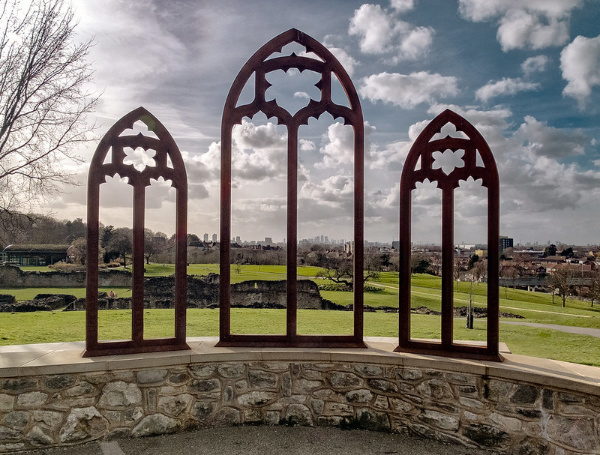
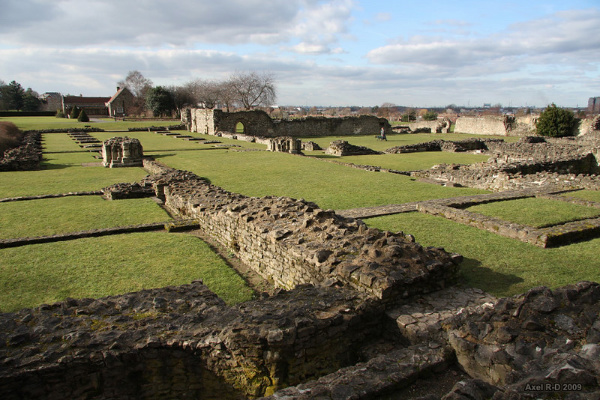
A viewpoint overlooking the the ruins of Lesnes Abbey. PICTURE: M W Pinsent (licensed under CC BY-NC-ND 2.0)
Located in London’s south-east, Lesnes Abbey was founded in 1178 as the Abbey of St Mary and St Thomas the Martyr by Richard de Luci, a joint Chief Justiciar of England at the time.
It’s believed de Luci did so as an act of penance for his support of King Henry II in his dispute with St Thomas Becket (in fact, de Luci was ex-communicated by him twice before Becket was murdered in Canterbury Cathedral in December, 1170). De Luci retired here after resigning his office in 1179 and died soon after. He was buried in the chapter house.
The Augustinian monastery, never a large or wealthy community, had fallen into a state of disrepair and debt by the early 15th century apparently due to mismanagement but at least partly caused by the cost of maintaining the river wall and draining the marshes in which it was located.
Some rebuilding was carried out at the start of the 16th century but in 1525 it was closed or suppressed on Cardinal Thomas Wolsey’s orders and the monastic buildings were demolished with the exception of the Abbot’s lodging.
The site was subsequently sold off and passed through various hands – it spent some 300 years as a possession of Christ’s Hospital – and eventually became farmland with the abbot’s house forming the core of a farmhouse which was demolished in 1844.
The site was excavated under the direction of Sir Alfred Clapham in the early 20th century and was purchased by the London County Council in 1930. It was opened as a public park in 1931. Since 1986, it’s been owned and managed by the London Borough of Bexley.
The site today, a scheduled ancient monument, includes some impressive ruins from the abbey. The nearby woods takes its name from the abbey.