Before we move on, here’s a recap of our most recent Wednesday series…
4. The Strand Lane ‘Roman’ Baths…
We’ll kick off a new Wednesday series next week…
Before we move on, here’s a recap of our most recent Wednesday series…
4. The Strand Lane ‘Roman’ Baths…
We’ll kick off a new Wednesday series next week…
Located just 13 miles south-east of London’s centre, this 338 acre woodland is a haven of tranquility.
Petts Wood (the name is also that of a suburb) is believed to take its name from 16th century master shipbuilder William Pett – its first known mention was in 1577 when the wood appeared in his will. Pett had used oaks from Petts Wood in his ship-building yards located at Deptford and Woolwich on the River Thames.
 The eastern part of Petts Wood – known as the Willett Memorial Wood – was given to the National Trust in 1927 in a bid to protect it from development while the remainder of the woodland, which had subsequently been purchased by Colonel Francis Edlmann and added to his neighbouring estate, Hawkwood, was donated 30 years later by Robert and Francesca Hall.
The Willett Memorial Wood is named for William Willett, leader of the movement which campaigned for recognition of British Summer Time (there’s a stone sundial memorial to him there). Willett lived nearby.
The western part of Pett’s Wood is known as the Edlmann Memorial Wood. It contains a stone memorial to the Halls and Colonel Edlmann which was unveiled in 1958.
The main house on the Hawkwood Estate and gardens, were acquired from Francesca Hall in 1975 with the proviso that farming would continue to preserve the area’s rural character.
There are a couple of marked walks around the woodlands. Among the activities which take part in the woodlands is the age-old practice of charcoal making. Made for barbecues, it’s sold in National Trust shops.
WHERE: Chislehurst (nearest train stations are Petts Wood, Chislehurst, and St Mary Cray); WHEN: Dawn to dusk; COST: Free; WEBSITE: www.nationaltrust.org.uk/petts-wood-and-hawkwood
PICTURES: Top and Right – Maureen Barlin (licensed under CC BY-NC-ND 2.0)
The next two entries in our countdown are:

This iconic and unique Arts and Crafts home in Bexleyheath in London’s east was at the centre of the Pre-Raphaelite movement.
Commissioned by poet, designer and artist William Morris in 1859 – and built by his friend, architect Philip Webb (with whom Morris would co-found the The Society for the Protection of Ancient Buildings in 1877) – the L-shaped house was designed to be a home for Morris and his new wife Jane as well as a hub for the so-called “second wave” of Pre-Raphaelites.
 Described by Dante Gabriel Rossetti as “more a poem than a house”, the two storey red brick property (hence the name ‘Red House’) is characterised by elements of romanticised Gothic medieval design – including a steep gable roof, tall chimney stacks, oriel windows and stained glass – but also contains a very practical layout.
The Morrises moved in during June, 1860, and, inspired by medieval art and literature, commenced elaborately decorating the property in bold colours. The couple hung the walls with embroideries and pictures and commissioned Webb to design furnishing while others who helped with the interior decoration included Rossetti, Elizabeth Siddal and Edward Burne-Jones.
It was this communal response to the home’s design that is credited as leading to the founding of the decorative arts company Morris, Marshall, Faulkner & Co – often referred to as ‘The Firm’ – in 1861.
A plan to extend the property in the mid-1860s to add workshops as well as allow Burne-Jones and his family to live there was aborted after the then pregnant Georgiana Burne-Jones contracted scarlet fever, losing the child as a result.
Meanwhile, Morris – whose two daughters Jenny and May were born in the property – was apparently discovering the home’s short-comings – including its orientation away from the sun and its distance from London. He subsequently decided to move his family back to London and in 1866 sold the property, never returning to it again.
The house remained in private hands until it was acquired by the National Trust in 2003. Morris, meanwhile, went on to lease Kelmscott Manor in Oxfordshire with Rossetti and is buried in the nearby churchyard of St George’s Church.
The now Grade I-listed house, which still contains original features and furnishings, is surrounded by a garden which was designed to “clothe” the property and which, as well as being informed by Arts and Crafts principles, features a beautiful conical-roofed well-house. When open, there’s a cafe and second-hand bookshop on site.
The house has an English Heritage Blue Plaque commemorating Morris and Webb.
For more, visit www.nationaltrust.org.uk/red-house.
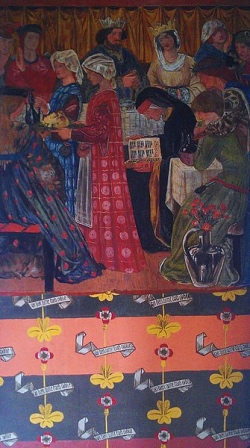
PICTURE: Top – The property with well house in the foreground (Steve Parkinson/ licensed under CC BY-NC-ND 2.0); Right – A mural in the drawing room designed by Edward Burne-Jones depicting the marriage feast of Sir Degrevant (Ethan Doyle White at English Wikipedia (licensed under CC BY-SA 3.0)
This Chelsea home, at 24 Cheyne Row, was that of Victorian philosopher, historian and writer Thomas Carlyle and his wife Jane.
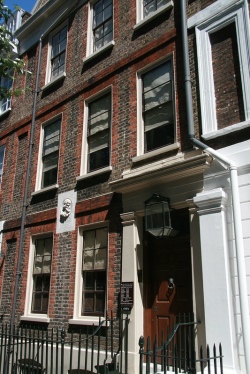 The couple moved to the red and brown brick Queen Anne terraced house, then known as number 5 Cheyne Row, from Scotland in 1834 – it was at the time a rather unfashionable location.
They continued to rent the property until their deaths – Janes in 1866 and Thomas, the “Chelsea Sage” in 1881 – and during their time in the home, it became a hub for writers and thinkers with Charles Dickens, Alfred, Lord Tennyson, George Eliot, and William Makepeace Thackeray all among those who visited.
The property was where Carlyle wrote his most famous book, The French Revolution, A History, which almost never made it into print – he lent the only copy to John Stuart Mill and while in his possession, one of his servants accidentally threw it on the fire meaning Carlyle had to start writing the entire book again from scratch.
The four level property’s interiors are typical of those of a 19th century townhouse and include a parlour (captured as it was in 1857 in a painting by Robert Tait which hangs on the wall), drawing room, basement kitchen (where Carlyle smoked with Tennyson) and a specially designed “sound proof” attic study (it isn’t).
Inside can be found Carlyle’s original manuscripts and possessions as well as part of his original library (his hat still hangs on a peg in the entrance hall). Outside there’s a small walled garden which featured flowers and vegetables as well as plants to remind Jane of Scotland.
The Grade II*-listed property, which dates from 1708, was first opened to the public in 1895. It was taken over the by the National Trust in 1936.
For more, see www.nationaltrust.org.uk/carlyles-house/
PICTURE: Peter Reed (licensed under CC BY-NC 2.0)
Like other National Trust properties, Fenton House is now closed – please do not travel there. But we run this article in the hope you’ll be able to visit in the future…
This Hampstead property dates from the 17th century but its current name comes instead from Philip Fenton, a merchant who bought it in 1793, some 100 years after it was constructed.
The two storey brown brick property, which had previously been known as Ostend House (perhaps a reference to its unknown first owner’s Flemish links), was considerably altered by Fenton, a merchant from Yorkshire who had based himself in Riga. But despite that – and subsequent alterations, many original features remain.
The Grade I-listed property was acquired by Katherine, Lady Binning, in 1936. In 1952 she bequeathed it to the National Trust complete with her rather large collections of porcelain, needlework, furniture and artworks.
The Trust also moved in a large collection of early musical instruments. Assembled by Major George Benton Fletcher, these had been given them to the Trust in 1937 and include a harpsichord dating from 1612 which was probably used by Handel.
Located on an acre, the house features a notable walled garden featuring formal topiary and lawn, a sunken rose garden, a 300-year-old apple and pear orchard and kitchen garden.
Fenton House is now closed – but for more information on when it might reopen, keep an eye on www.nationaltrust.org.uk/fenton-house.
PICTURE: Top – A view of Fenton House (It’s No Game/licensed under CC BY 2.0); Below – Inside the property (Kotomi_/licensed under CC BY-NC 2.0)

Only acquired by the National Trust in 2010, this property features a series of uniquely fashioned interiors created by Kenyan-born poet, novelist, artist and British civil servant Khadambi Asalache.
Asalache (1935-2006), who had trained as an architect, purchased the then dilapidated 1819 terraced house while working at the Treasury in 1981 (he apparently spotted it from a passing bus and ended up buying it for less than the asking price).
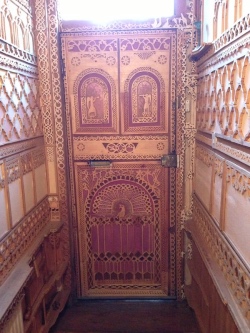 Confronted with a damp patch in the basement that resisted treatment, he initially covered it with wood and then, deciding that was bit drab, created fretwork to put over the top.
It was the beginning of a massive undertaking which saw the property transformed. Over the next 20 years, Asalache used a fretsaw to turn the home into an extraordinary work of art, eventually embellishing almost every wall, ceiling and door in the house with Moorish inspired fretwork patterns and motifs, hand-carved from reclaimed pine doors and floorboards which he’d found in skips.
The rooms, which are also influenced by African, Ottoman, and British design, are filled with Asalache’s handmade fretwork furniture and his eclectic collections of objects such as pressed-glass inkwells, pink and copper lustreware, postcards and his typewriter.
The Clapham property, which appears unassuming from the front, was left to the National Trust in Asalache’s will.
Only a select number of visitors can visit the property each year on pre-booked tours (although it’s currently closed due to the coronavirus outbreak). For updates on its opening status, head to www.nationaltrust.org.uk/575-wandsworth-road.
PICTURES: Interiors of the property (Shakespearesmonkey (licensed under CC BY-NC 2.0))
We decided to continue with our Wednesday series. While the properties are all currently closed, we hope you’ll still enjoy exploring them with us online until the day they reopen…
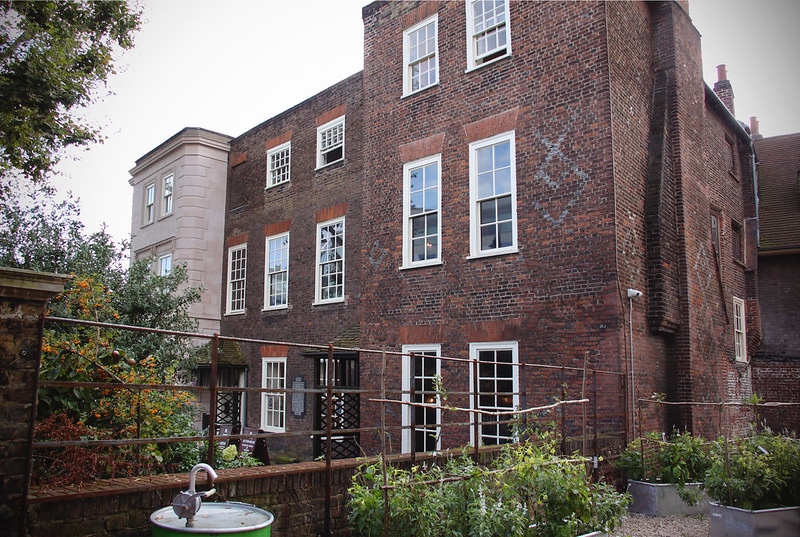
Hackney property Sutton House – originally known simply as ‘the bryk place’ – was built by Ralph Sadleir (or Sadler), a courtier who started out in the service of Thomas Cromwell but rose to become Principal Secretary of State to King Henry VIII. Sadleir, who had married a cousin of Cromwell, had the property constructed in 1535 as his family home.
Sadleir – who makes an appearance in Hilary Mantel’s Thomas Cromwell novels and who, as well as being of service to King Henry VIII, also served King Edward VI, Queen Mary I and Queen Elizabeth I – sold the property just 15 years later. The red brick house – now said to be the oldest surviving domestic building in Hackney – subsequently passed through numerous hands with its owners apparently including merchants, a sea captain and French Huguenot refugees. In 1751, it was divided into two residences – Ivy House and Milford House.
The property housed a boy’s school in the early 1800s – novelist Edward Bulwer-Lytton was among those who attended – and later became a girl’s school. The rector of Hackney bought the premises in 1891 and used it as a base for the St John at Hackney Church Institute, a social and recreational centre for young men. His modifications included turning part of the cellars into a chapel.
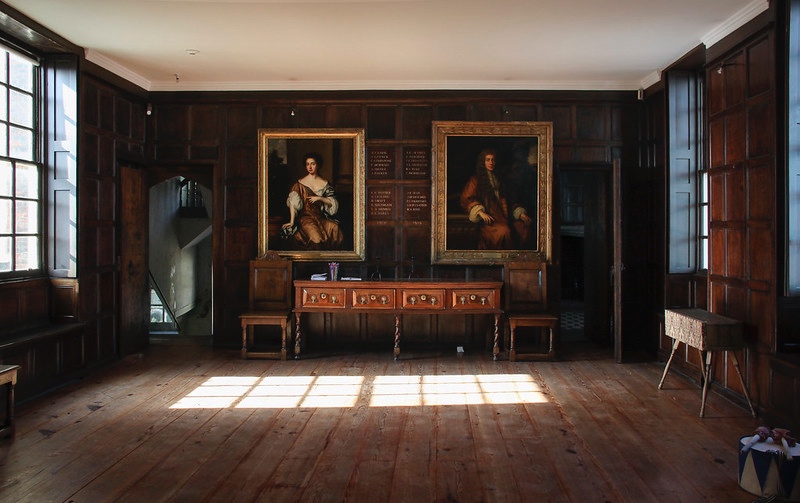
Mistakenly named after the founder of the Charterhouse School, Thomas Sutton (he actually lived in a now demolished adjacent property), Sutton House was bought by the National Trust in the 1930s using the proceeds of a bequest made in memory of two men killed in World War I.
Among its various roles, the building served as a centre for fire wardens during World War II and, from the 1960s, serving as the offices of a trade union. After the union left in the 1980s, the house fell into disrepair and in 1982 squatters moved in and it was renamed ‘the Blue House’. Several murals from this period – when rock concerts were held in the barn – are preserved into the house.
The squatters were evicted and in the late Eighties, a society was formed with the aim of saving the house. Following renovations, the house opened to the public in 1994. These days the Grade II*-listed home is used as a museum and art gallery. There’s also a shop and cafe.
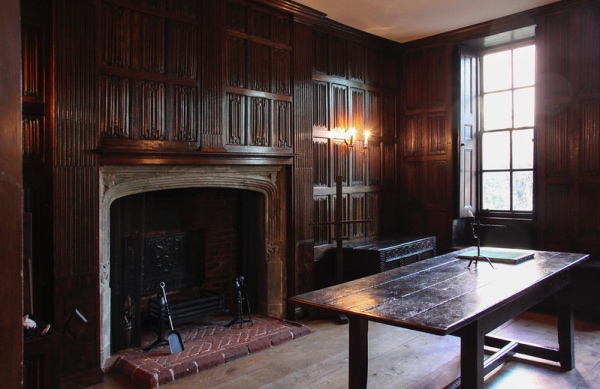
While the facade of the house underwent some changes during the Georgian era, the property’s interior remains essentially Tudor. Highlights include the kitchen, oak panelled chambers, carved fireplaces and, of course, the cellars.
The National Trust reclaimed some adjacent land to create an award winning garden known as the Breaker’s Yard. The name comes from the fact the land was once occupied by a car breaker’s yard.
There’s said to be a couple of ghosts who reside in the house including wailing dogs and a mysterious ‘blue lady’.
The property, which stands in Homerton High Street, is temporarily closed but for more information, check the website at www.nationaltrust.org.uk/sutton-house-and-breakers-yard.
We’ll kick off a new Wednesday series after Easter. In the meantime, here are the next two entries in our countdown…
80. Lost London – Pasqua Rosee’s Coffee House…
79. LondonLife – The Royal Menagerie
With all National Trust properties closed for the time being in London due to the coronavirus outbreak, we’re taking a break from our current Wednesday series.
Instead, we continue our countdown of Exploring London’s 100 most popular posts of all time with numbers 84 and 83…
82. Lost London – King Edward III’s Thames-side manor house…
We continue our celebratory countdown to mark our 10th anniversary…
84. London Pub Signs – The Dickens Inn…
83. Famous Londoners – Peter de Colechurch…
Please note: Exploring London is aware that sites across London have closed temporarily as a result of the COVID-19 outbreak. But we’re continuing our coverage as usual – in the hope you can visit at a later time…
Located at 5 Strand Lane in the West End, these brick-lined baths were long-reputed to be of Roman origin. But they are actually believed to be the remains of a cistern built in 1612 to supply water to fountain in the gardens of Old Somerset House.
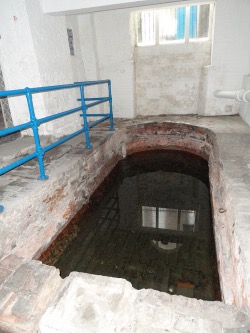 The fountain had been built by French engineer, Salomon de Caus, after he was commissioned to do so as part of King James I’s efforts to refurbish Somerset House for Queen Anne of Denmark.
Following the demolition of the fountain, the cistern was neglected until the 1770s when the cistern was used a public cold plunge bath attached to a property at 33 Surrey Street. A second bath, called the ‘Essex Bath’ was added (it’s now under the nearby KCL Norfolk Building).
The idea that they were Roman is believed to have originated in the 1820s when the bath was so described as an advertising gimmick (Charles Dickens’ helped popularise the idea in his book David Copperfield – it is believed Dickens himself may have bathed here).
The 1.3 metre deep bath passed through a couple of different hands in the ensuing decades including Oxford Street draper Henry Glave and Rev William Pennington Bickford, the Rector of St Clement Danes, who, believing in the bath’s Roman origins, hoped to turn them into a tourist attraction.
But his plans came to nothing due to a lack of funds and following his death, in 1944, the National Trust agreed to take on ownership while London County Council agreed to see to its maintenance. They reopened the baths, following repairs, in 1951.
These days, while owned by the Trust, the baths are managed by Westminster Council.
WHERE: 5 Strand Lane (nearest Tube station is Temple); WHEN: While National Trust properties are temporarily closed, viewings are usually arranged through Westminster Council and Somerset House Old Palaces tour; COST: Free; WEBSITE: www.nationaltrust.org.uk/features/strand-lane-roman-baths.
PICTURE: Michael Trapp (licensed under CC BY-SA 4.0)
Cultural institutions across London have closed temporarily this week (or are closing soon) as part of the response to the COVID-19 virus (although it’s worth noting that at the time of writing many outdoor spaces remain open including Royal Parks and English Heritage’s outdoor spaces).
So for the time being, Exploring London will be suspending our regular Thursday ‘This Week in London’ post and be replacing it with other content. This week, we’re simply continuing with our celebratory countdown…
86. Treasures of London – Temple Church knight effigies…
85. 10 sites commemorating the Great Fire of London – 4. St Paul’s ‘Resurgam’…
Please note: Exploring London is aware that many sites have closed temporarily or considering doing so as a result of the COVID-19 outbreak. We’ll be continuing much of our coverage as usual – in the hope you can visit at a later time…

This modernist home in Hampstead was designed by Budapest-born architect Ernö Goldfinger in 1939 for his family.
Goldfinger, who had emigrated to London in the early 1930s, decided to build the property in what was at the time something of an artistic hotspot. But his plan to build three residences in Willow Road – his home was the largest in the middle of the block of three terraced homes – was a controversial project.
Those who voiced their opposition included James Bond author Ian Fleming (who named a now famous villain after Goldfinger) and Lord Brooke of Cunmor, Secretary of the Heath and Old Hampstead Protection Society (and later MP for Hampstead as well as a Home Secretary in the 1960s), who said the proposed project was “disastrously out of keeping” with the character of the neighbourhood.
But, with the support of other local residents, Goldfinger defended his design, stating that it would respect both the surroundings and tradition of Georgian building in London.
The three storey, Grade II* property – which is built to appear as a single building along with its two neighbours – features a facade dominated by the use of red brick but also revealing exposed concrete bearing columns and a continuous strap of picture windows on the first floor.
It features a famous central spiral staircase designed by Danish engineer Ove Arup while Goldfinger himself designed much of the furniture. The house also contains a significant collection of 20th century art by artists including Bridget Riley, Man Ray and Max Ernst.
Goldfinger lived at the property along with his wife, artist and heiress Ursula (nee Blackwell, of the Crosse & Blackwell fortune), until his death in 1987 (his wife, whose money funded the project, died after him).
During their residency, the home hosted exhibitions in support of left-wing causes including one held in 1942 for the ‘Aid to Russia’ Fund of the National Council of Labour.
Number 2 Willow Road was acquired by the National Trust in 1992 (it was the first modernist building acquired by the Trust). Numbers 1 and 3 Willow Road remain private residences.
WHERE: 2 Willow Road, Hampstead (nearest Tube station is Hampstead/nearest Overground is Hampstead Heath); WHEN: Temporarily closed – check website for times when it reopens; COST: £8.50 an adult/£4.25 a child; WEBSITE: www.nationaltrust.org.uk/2-willow-road
PICTURE: Public Domain
The next two in our countdown celebrating 10 years of Exploring London…
88. Lost London – Inigo Jones’ Grand Portico on Old St Paul’s Cathedral…
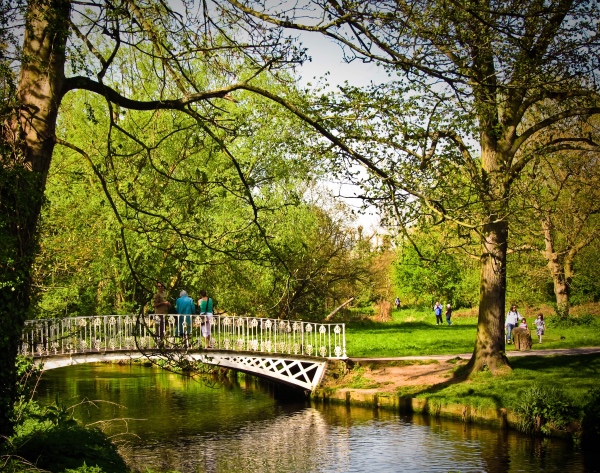
Located on the banks of the River Wandle in Morden, south London, Morden Hall was built for the Garth family in the 18th century on the site of an earlier manor house.
The manor, which had once been held by the abbot of Westminster Abbey, had been in the Garth family since it was purchased by Richard Garth, a clerk and son of a successful lawyer, following the Dissolution in the 16th century. At the time, the newly built manor house, apparently known as Growtes, stood just to the south of where the hall now stands.
 The now Grade II-listed hall was built for the family in between 1759 and 1765 and over the next century a number of tenants occupied it – it was used at once point as a school for young gentlemen.
In 1867, the Garth family sold the altered house and estate to a tobacco merchant, Gilliat Hatfeild (Gilliat’s father, Alexander Hatfeild, had, since 1834, leased two mills on the site to ground tobacco from plantations in Virginia into snuff). Gilliat created a park from the land surrounding the hall, planting trees and demolishing cottages.
His son, Gilliat Edward Hatfeild, took over the running of the estate on the death of his father in 1906. During World War I, the hall saw service as a convalescent home for the military and was later used by the Salvation as a home for women and children.
In 1941, Alexander’s grandson, Gilliat Edward Hatfield – who had closed the mills and snuff-making factory in the early 1920s – left the house and the core of the estate (the remainder was occupied by new housing and roads) to the National Trust. The hall itself has since been used as a restaurant and, following a 2015 renovation, is now a venue for weddings.
The 125 acres of grounds, which are open to the public, contain a variety of landscapes including the remains of a deer park, meadows and a wetland. The restored rose garden was first planted by Gilliat Edward Hatfeild in around 1921 in part of what had been his father’s deer park. It was laid out in two halves separated by a small stream with rose-covered bridges. The rose garden also features a massive Westfelton Yew which is believed to be hundreds of years old.
The snuff mills, which were built in 1750 and 1830, are still standing (the western mill contains an exhibition on the life of the Morden mill workers in the Victorian era) as are various workshops, the former stables and Morden Cottage, parts of which date from the 1750s and which was used by GE Hatfeild who preferred living there to the hall. Facilities in the park include the Potting Shed Café near the main entrance and a second-hand bookshop in the former stable yard.
WHERE: Morden Hall Park, Morden Hall Road, Morden (nearest train station is Stableyard); WHEN: The rose garden is open from 8am to 6pm daily (check the website for other times); COST: Free; WEBSITE: www.nationaltrust.org.uk/morden-hall-park.
PICTURES: Top – The White Bridge over the River Wandle at Modern Hall Park (Garry Knight/licensed under CC BY 2.0); Right – Morden Hall from the park (public domain)
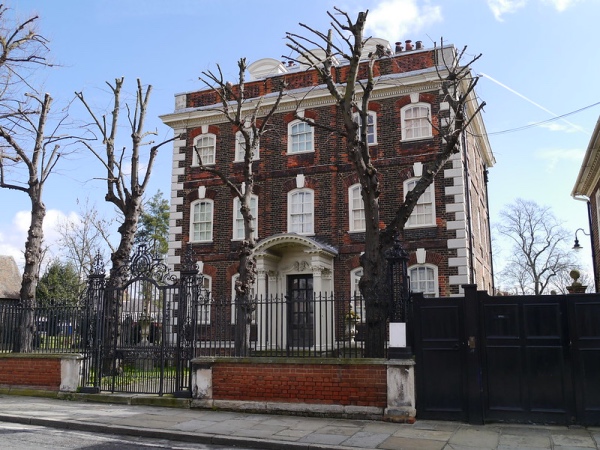
The National Trust is this year celebrating its 125th anniversary so we though we’d take a look at some of the lesser-known National Trust properties and gardens in London. First up, it’s Rainham Hall, one of the finest examples of an early 18th century merchant’s home in the UK.
Located at Rainham in the London Borough of Havering, the Queen Anne-style property was built in 1729 for sea merchant Captain John Harle. Harle came from a family South Shields that supplemented their farming income with shipping. He’d settled in London sometime after 1704 and in 1719 married a widow, Mary Tibbington (it’s speculated her name may have been the inspiration for his ship, the Mary).
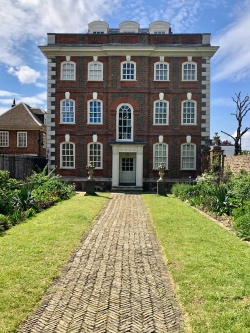 Following his marriage, John went less to sea and handed command of the ship to a cousin while he managed the business in London becoming a frequent visitor to the Royal Exchange and coffee houses to gather information on shipping and make trading deals.
Harle moved to Rainham in 1728 and built the house the following year with a design more akin to a London townhouse than a country villa. After his wife died without any children in 1739, John remarried and his new wife, a widow named Sarah Gregory, gave birth to their only child – a son named John – in 1740.
Harle died in late 1742 and was buried in Rainham Church. Sarah died seven years later and their orphaned son John was cared for by family members – during this period the contents of the hall were auctioned and the building leased out.
The house remained in family ownership until 1895 when it was purchased by a clergyman and then, in 1917, by art historian and property developer Colonel Herbert Hall Mulliner who never resided at the property but conducted significant restoration works including in the garden.
During World War II, the property was requisitioned for use as a nursery for children so mothers could go out to work – it remained a nursery until 1954. It was during this period – in 1949 – that both the house and gardens, of which almost three acres remain – were given to the National Trust.
Now Grade II* listed, the property recently underwent a £2.5 million restoration project and opened to the public for the first time in 2015. Current displays includeThe Denney Edition: Celebrating an icon of 20th century style, which celebrates the life and work of Anthony Denney (1913-90), Vogue photographer, interior designer and all round style icon who lived at the hall between 1964 and 1969, during which he set about an extensive programme of interior refurbishment (only some of which still remains).
The property has appeared in films and TV productions including, most recently the 2019 BBC production of A Christmas Carol. A cafe now occupies the stables.
WHERE: Rainham Hall, The Broadway, Rainham, Havering (nearest train station is Rainham); WHEN: 10.30am-4.30pm, Wednesday to Sunday; COST: £9.50 adults; £4.75 children; £23.75 family (National Trust members and under fives free); WEBSITE: www.nationaltrust.org.uk/rainham-hall.
PICTURES: Rainham Hall from the front (shirokazan/licensed under CC BY 2.0)/Right – Rainham Hall from the rear (David Merrett/licensed under CC BY 2.0).
Before we move on from our recent series on animal monuments, we pause for a recap…
10 (lesser known) monuments featuring animals in London – 1. Dick Whittington’s cat…
10 (lesser known) monuments featuring animals in London – 2. Tom Sayer’s dog, Lion…
10 (lesser known) monuments featuring animals in London – 3. Hodge…
10 (lesser known) monuments featuring animals in London – 4. Trump…
10 (lesser known) monuments featuring animals in London – 5. Jamrach’s Tiger…
10 (lesser known) monuments featuring animals in London – 6. Sam the cat…
10 (lesser known) monuments featuring animals in London – 7. Jim and Tycho…
10 (lesser known) monuments featuring animals in London – 8. The elephants of the Tower…
10 (lesser known) monuments featuring animals in London – 9. Old Tom…
10 (lesser known) monuments featuring animals in London – 10. Jacob the horse…
We kick off a new Wednesday series next week…
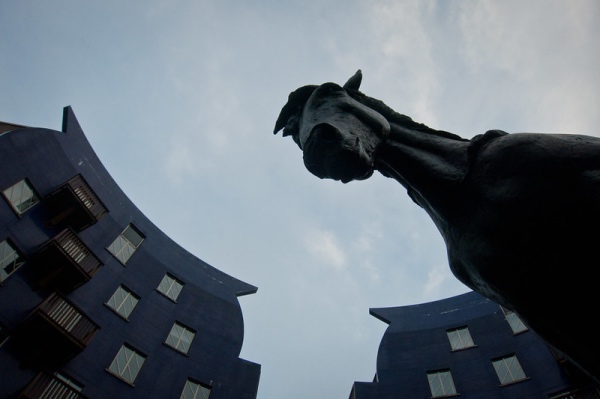
The statue of ‘Jacob’, a working dray horse, represents the horses who once worked at John Courage’s Anchor Brewhouse in Bermondsey near Tower Bridge.
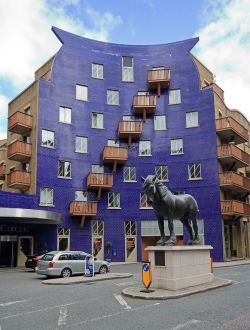 The Courage horses – responsible for delivering beer from the brewery to pubs in London – were stabled beside the establishment, near where the monument now stands in Queen Elizabeth Street. Though the brewery buildings remain (and are now apartments), the stables do not.
Jacob, the statue, was installed by Jacobs Island Company and Farlane Properties in 1987 at the centre of the residential development known as ‘The Circle’ to commemorate the history of the site. The monument, which was delivered to the site by helicopter, is the work of artist Shirley Pace.
Jacob’s name apparently comes from Jacob’s Island which was formerly located in the area.
The area where the brewery stood was formerly part of the parish of Horsleydown – a moniker that is said by some to have derived from “horse-lie-down”, a description of working horses resting nearby on the south bank of the Thames before crossing London Bridge into the City of London.
PICTURES: Top – Nico Hogg (licensed under CC BY-NC 2.0); Right – Marc Pether-Longman (licensed under CC-BY-NC-ND 2.0)
And this week’s “best of” posts are:


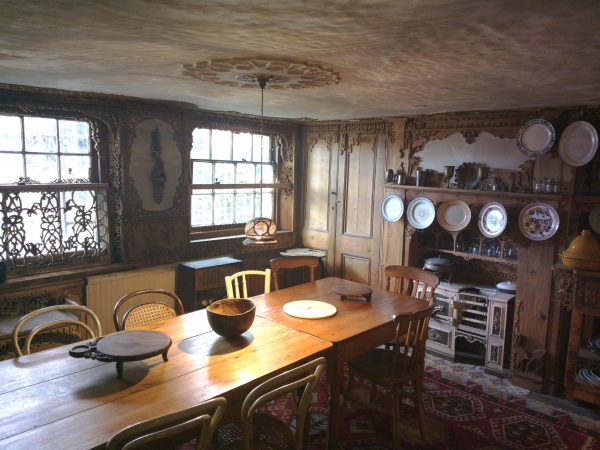
 Exploring London