10 (lesser known) memorials to women in London – 6. Sarah Siddons…

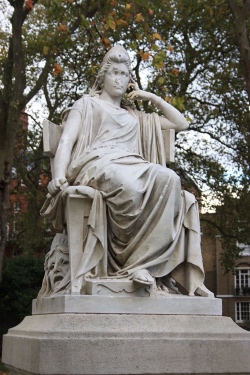
Located on Paddington Green, this statue of 18th century theatrical luminary Sarah Siddons (1755-1831) was unveiled by fellow thespian Sir Henry Irving on 14th June, 1897, who apparently noted that, Shakespeare aside, Siddons was the first actor to be immortalised with a statue in London.

It is also said to be the first outdoor statue erected in London of a non-royal woman.

Seated in a pose apparently inspired by Joshua Reynolds’ 1784 painting, Mrs Siddons as the Tragic Muse (now in California), the marble statue, which sits on a Portland stone plinth, is the work of French sculptor Leon-Joseph Chavailliaud.

The location was apparently selected due to the fact Siddons lived at Westbourne Green from 1805 to 1817 and is buried in St Mary’s Churchyard next to Paddington Green.

The Grade II-listed statue, which was paid for by public subscription, is sadly now need of a makeover – Mrs Siddons is missing a nose.

There is, incidentally, another, earlier, statue of Mrs Siddons in London – this larger-than-life work, is located in the chapel of St Andrew in Westminster Abbey’s north transept.

The work of sculptor Thomas Campbell, it features a standing Mrs Siddons, and dates from 1845.

PICTURE: Stephencdickson (licensed under CC BY-SA 4.0)

10 (lesser known) memorials to women in London – 5. Ada Salter…


Since 1991, a statue of Dr Alfred Salter (as well as his daughter Joyce and cat) had sat on the south bank of the River Thames in Bermondsey.

But after the statue of Dr Salter – MP for Bermondsey for many years – was stolen in 2011 (presumably for scrap value) and the statues of Joyce and the cat subsequently put into storage, it was decided to reassemble the group but this time adding in a new figure – that of Dr Salter’s wife Ada, whose story was certainly as significant as his.

A social reformer, environmentalist and pacifist, Ada Salter (1866-1942) was co-founder and president of the Women’s Labour League, one of the first women councillors in London (she was elected to Bermondsey in 1909) and, on being appointed Mayor of Bermondsey in 1922, the first woman mayor in London and the first Labour woman mayor in Britain.

In 1931, she was elected chair of the National Gardens Guild. Together the couple, who were both Quakers, dedicated much of their lives to helping the people of Bermondsey, regenerating slums, building model housing and planting thousands of trees.

A campaign was subsequently launched to raise funds to replace the statue of Dr Salter and install a new one of Ada and, on raising £120,000 (the £60,000 raised was matched by Southwark Council), artist Diane Gorvin, who had designed the original statue of Dr Salter, was commissioned to make them.

The resultant statues – known collectively as ‘The Salter Statues’ and ‘Dr Salter’s Daydream’ – were unveiled where the previous grouping had been found at Bermondsey Wall East near the Angel pub, in November, 2014.

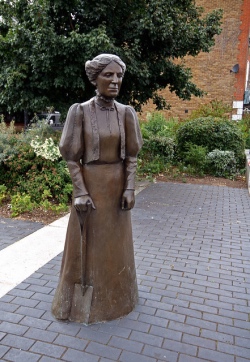
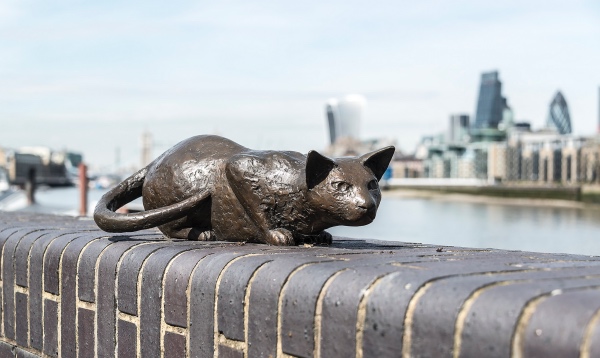
While Dr Salter sits on a granite bench looking toward the river and his daughter Joyce, who leans against the river wall watched by the family cat, Ada stands nearby – also looking at her daughter – but with a spade in her hand.

Writes the artist: “The idea was to show Dr Salter in old age remembering  his young daughter when she was still alive. Ada is represented with a spade as she was so instrumental in tree and planting schemes for Bermondsey. Her left hand is designed to hold real flowers. It was important to celebrate the work of this couple who dedicated their lives to helping the local community.”

There’s a poignant aspect to the statues in that Joyce, the couple’s only child, had died at the age of eight from scarlet fever in 1910.

Ada Salter also has a garden named after her in Southwark Park.

PICTURE: Top – Loz Pycock (licensed under CC BY-SA 2.0 – image cropped and lightened); Right – Marc Pether-Longman (licensed under CC-BY-NC-ND-2.0); Below – Steve James (licensed under CC-BY-NC-ND 2.0).

10 (lesser known) memorials to women in London – 4. Noor Inayat Khan…

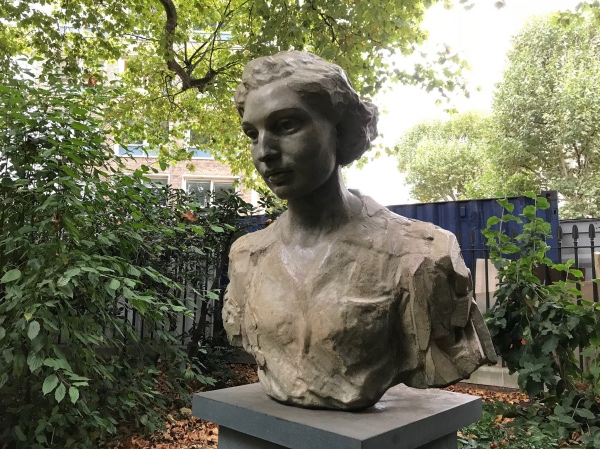
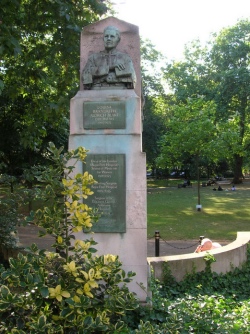
Located in Gordon Square Gardens in King’s Cross, this bust commemorates British agent Noor Inayat Khan (1914-1944), who was executed during World War II.

Khan, who was of Indian descent (in fact, a direct descendent of Tipu Sultan of Mysore), had escaped to England from her home in Paris after the fall of France during World War II. She joined the Women’s Auxiliary Air Force (WAAF) in November, 1940, and in 1942 was recruited to join the Special Operations Executive (SOE) as a radio operator.

In June, 1943, she became the first female radio operator to be flown into occupied France. There she worked for the “Prosper” resistance network under the code name Madeleine but in October she was betrayed and arrested by the Gestapo.

Sent to Germany the following month, she was held in prison before, in September 1944, Khan and three other female SOE agents were transferred to Dachau concentration camp where they were shot on the 13th of that month. Her last word was said to have been “Liberte”.

Khan, dubbed the “Spy Princess” by her biographer, was posthumously awarded the George Cross and the French Croix de Guerre.

The bust of her in Gordon Square Gardens was unveiled by Princess Anne, the Princess Royal, on 8th November, 2012. A message from her brother Hidayat Inayat-Khan was read out at the unveiling.

The bust is believed to be the first stand-alone memorial to an Asian woman in the UK. The work of Karen Newman, it was commissioned by the Noor Inayat Khan Memorial Trust.

Various inscriptions on the bust plinth provide biographical details and also record that Noor lived nearby and “spent some quite time in this garden”.

PICTURE: Matt Brown (licensed under CC BY 2.0)

10 (lesser known) memorials to women in London – 3. Lady Henry Somerset…

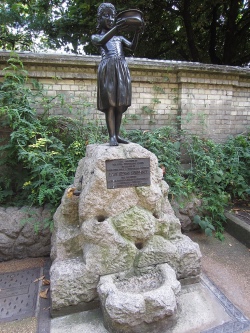
A bird bath and drinking fountain located in Victoria Embankment Gardens, this monument dedicated to Lady Henry Somerset – a key temperance campaigner – was unveiled in the late 19th century.

Lady (Isabella) Somerset (1851-1921) was president of the British Women’s Temperance Association from 1890 to 1903, president of World’s Women’s Christian Temperance Union between 1989 and 1906, and founder of a farm colony for inebriate women near Reigate in Surrey.

The monument isn’t actually a true memorial – Lady Somerset was still alive when the bronze, sculpted by GE Wade was unveiled on 29th May, 1897. It had been commissioned by the “Children of The Loyal Temperance Legion” to commemorate Lady Somerset’s “work done for the temperance cause”.

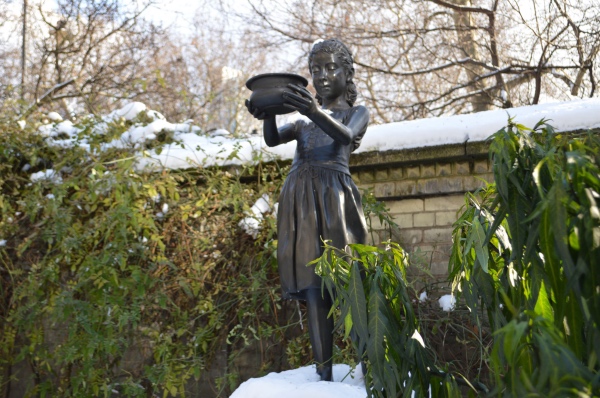
The monument – which depicts a young girl holding out a basin – was Grade II-listed in 1958.

The original statue, however, was stolen in 1971 after it was sawn off at the feet. The statue which now stands there is actually a replica – by Philomena Davidson Davis – installed in 1999.

As well as the dedication, the rough granite plinth upon which the statue stands bears the rather odd inscription (given Lady Somerset’s campaigning), “I was thirsty and ye gave me drink.”

PICTURE: Top – Matt Brown (licensed under CC BY 2.0); Right –  Another Believer (licensed under CC BY-SA 4.0)

10 (lesser known) memorials to women in London – 2. Margaret Ethel MacDonald…

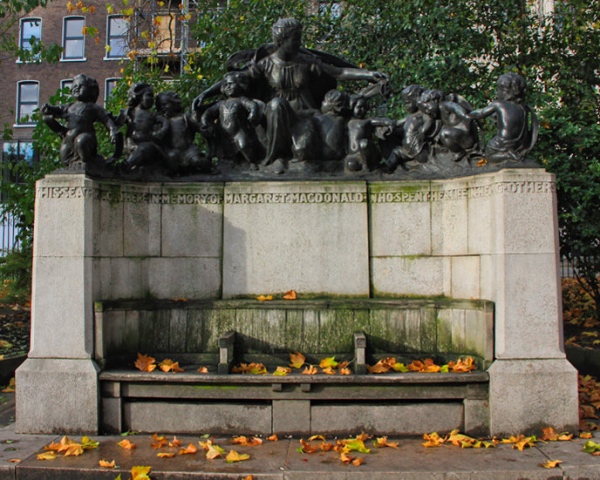
Located on the north side of Lincoln’s Inn Fields, this rather elaborate monument commemorates Margaret Ethel MacDonald (1870-1911), wife of the first British Labour Prime Minister Ramsay MacDonald, a noted feminist and social activist.

The Grade II-listed monument, which was unveiled in December, 1914 – three years after her death (which occurred before her husband became PM), stands not far from the flat where she lived with her husband and their children at Number 3.

It features a granite seat atop which is a bronze group of sculptures of nine children gathered around the kneeling MacDonald – the work of Richard Goulden. At the top of the seat – just below the sculptures, is a dedication to MacDonald “who spent her life in helping others”.

On the rear is a plaque containing biographical details and further dedication ending with the words that she “took no rest from doing good”.

PICTURE: mapa mundi (licensed under CC BY-SA 2.0)


10 (lesser known) memorials to women in London – 1. Dame Louisa Brandreth Aldrich-Blake…


We’re kicking off a new Wednesday series this week and in honour of the fact that a statue of Millicent Fawcett became the first commemorating a female to be erected in Parliament Square earlier this year, we’re looking at 10 other memorials – lesser known ones – to women in London. 

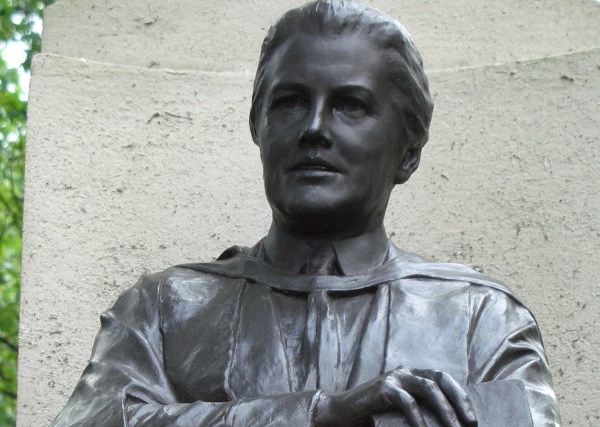
First up, it’s a Grade II-listed monument in Tavistock Square Gardens commemorating Louisa Brandreth Aldrich-Blake (1865-1925), the first female surgeon in Britain and pioneer of new surgical methods treating cancers of the cervix and rectum. She was also dean of the London School Of Medicine For Women.

This double-sided monument, which sits above a curved seat, features two busts of Dame Aldrich-Blake, both holding a book. On the sides of the monument are the depictions of the Rod of Asclepius – an intertwined staff and serpent long used as a symbol for the medical profession.

The base and seat were designed by Edwin Lutyens – the man behind the Cenotaph – and the identical bronze busts were the work of Arthur George Walker.

The monument was apparently erected in 1926, a year after Dame Aldrich-Blake’s death, in a rather fitting location, Tavistock Square is the location of the headquarters of the British Medical Association in BMA House.

As well as listing her achievements in the world of medicine, the monument bears the rather uplifting inscription: “The path of the just is as the shining light”.

PICTURE: Top – Stu’s Images (licensed under CC BY-SA 3.0); Right – Robin Sones (licensed under CC BY-SA 2.0)  

10 islands in the Thames – A recap…

We’re starting a new Wednesday series but before we do, here’s a recap…

10 islands in the Thames – 1. Chiswick Eyot…

10 islands in the Thames – 2. Oliver’s Ait…

10 islands in the Thames – 3. Brentford Ait…

10 islands in the Thames – 4. Isleworth Ait...

10 islands in the Thames – 5. Corporation Island (and the Flowerpots)…

10 islands in the Thames – 6. Glover’s Island…

10 islands in the Thames – 7. Eel Pie Island…

10 islands in the Thames – 8. Thames Ditton Island…

10 islands in the Thames – 9. Taggs Island…

10 islands in the Thames – 10. Garrick’s Ait…

We launch our next new series next Wednesday…

10 islands in the Thames – 10. Garrick’s Ait…

And so we come to the final entry in our Wednesday special series on River Thames islands. 

Garrick’s Ait, which was previously known as Shank’s Eyot, lies only a few hundred metres upstream from Taggs Island and is said to be the only island in Britain named after an actor – in this case, 18th century star David Garrick.

Similarly to other Thames islands, it was traditionally used to grow and harvest willow osiers but was later popular for picnics and camping. There were apparently no permanent buildings until the 1920s and 1930s when wooden cabins begin to appear on the island and it’s now home to about 20 houses (three were reportedly destroyed in a 2003 fire).

The island took on the name of Garrick’s Ait (ait, like eyot, we recall, being a name for a river island) after the actor bought a property on the Hampton bank in 1754 which he named Garrick’s Villa. In its grounds he famously built a garden folly known as the Temple to Shakespeare.

The ait, which can only be accessed by boat and which sits closer to the Molesey bank than the Hampton bank, was apparently one of three Thames islands that Garrick bought in the area (along with several properties).

PICTURE: © David Kemp (licensed under CC-BY-SA 2.0)


10 islands in the Thames – 9. Taggs Island…


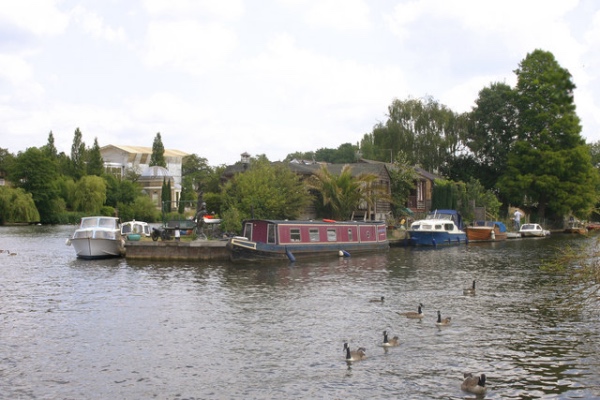
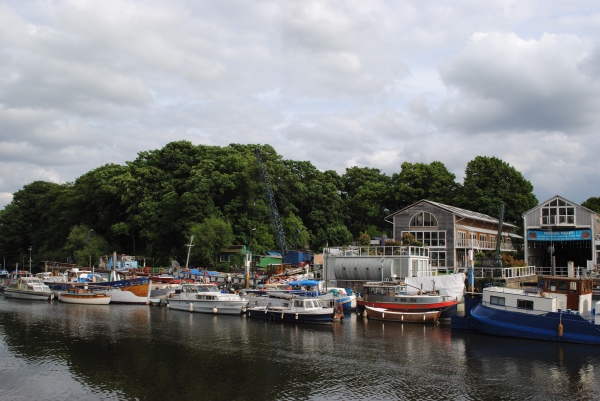
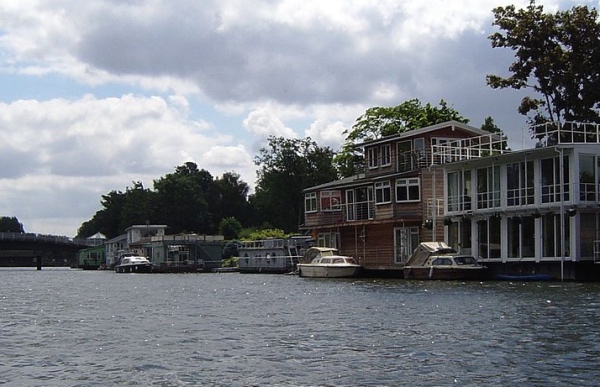
Formerly known as Walnut Tree Island (among other names), this Thames River island, which lies just upstream of Hampton Court Place, was once a playground for the wealthy and is now home to about 100 residents living in houseboats.

The island was once part of the manor of Hampton Court and by the mid-19th century was home to a number of squatter families who made a living by harvesting osiers (willow rods) used in basket weaving.

In 1850, it was purchased by a property speculator and lawyer Francis Kent (another name for the island was Kent’s Ait) who evicted the squatters and rented part of the island to Joseph Harvey, who established a pub called The Angler’s Retreat there. Another part he leased to a local boatbuilder and waterman named Thomas George Tagg who set up a boat rental and boat-building business there.

In the 1870s, Tagg – whose name became that of the island’s – took over the licence of the pub and built a larger, more imposing hotel in its place, transforming the backwater establishment into a high society favourite. Among its patrons were none other than Edward, Prince of Wales (later King Edward VII) and the actress Sarah Bernhardt.

The island also become a mooring site for luxurious houseboats and by the 1880s, the island was ringed with the craft – among those who rented one was none other than JM Barrie, later the author of Peter Pan.
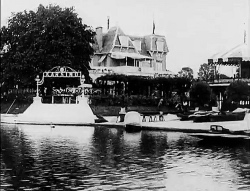
In 1911, Tagg’s original lease of the island ran out and it was subsequently taken by Fred Karno (formerly known as Fred Westcott), a theatre impresario who is credited with having ‘discovered’ Charlie Chaplin and Stan Laurel and who had stayed in houseboats on the island.

He subsequently built a luxurious hotel there, The Karsino, which he sold in 1926, but which went on to change hands several time over the ensuring years (and names – it became known variously as the Thames Riviera and the Casino Hotel).

Eventually, in a badly dilapidated state, the hotel once known as The Karsino was demolished in 1971 (but not before putting in an appearance in Kubrick’s A Clockwork Orange).

Karno also owned a luxurious houseboat, the Astoria, which was once moored on the island but which is now owned by Pink Floyd guitarist David Gilmour (who adapted it into a rather stylish recording studio in the Eighties – A Momentary Lapse of Reason and The Division Bell were apparently both recorded here) and moored upstream on the northern bank of the Thames.

A road bridge was built to connect the island to the mainland in the 1940s – when the island was being used to produce munitions – but this collapsed in the 1960s.

A new bridge was built to the island in the 1980s and a small lagoon carved out of the centre to increase the number of mooring sites for houseboats.

No homes are these days permitted to be constructed on the island but it’s still a mooring place for houseboats, some 62, in fact. These days the island owned by an association of the houseboat owners who each have their own garden on the island.

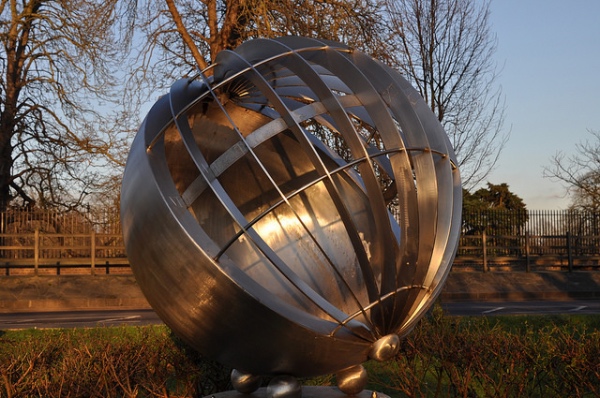
In the centre of the island is a rather unique sundial (see below). And just to the south-east of Taggs Island lies the much smaller Ash Island; the stretch of water separating the two was apparently once known as Hog’s Hole.

PICTURES: Top – Houseboats on Taggs Island ( Motmit at en.wikipedia/licensed under CC BY-SA 3.0) ; Right – The Karsino in 1924 (Adam37/licensed under CC BY-SA 4.0); Below – The sundial (stevekeiretsu/licensed under CC BY-NC 2.0)
10 islands in the Thames – 8. Thames Ditton Island…

We’re skipping upstream, past a few islands this week, to take a look at Thames Ditton Island which lies in Kingston Reach, above Teddington Lock. The island is the largest of a group of three which also includes Swan Island (the smallest) and Boyle Farm Island.

Located opposite the grounds of Hampton Court Palace (built by Cardinal Thomas Wolsey in the early 16th century and then, following his fall from grace, claimed by King Henry VIII in 1525), the 320 metre long Thames Ditton Island owes its existence to King Henry who had the river widened and straightened here so that he could use the river for an uninterrupted journey up the river from Westminster to Hampton Court. In doing so, the island was created.

Used as pasture land for the local manor (and known apparently at one point as Colly’s Ait, ait being a word for a river island, before being renamed Thames Ditton after the village on the west bank) for several centuries, the island became a popular recreation spot for the wealthy interested in water sports during the Edwardian era, thanks to the arrival of the railway in the area in the late 19th century.

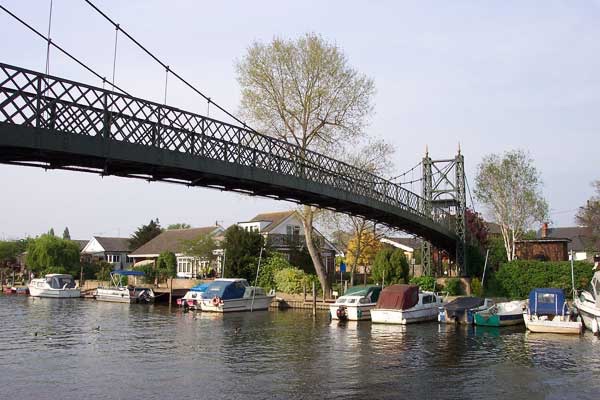
The island is these days connected to the Thames Ditton bank by a 1930s suspension bridge which ends near the 13th century Ye Olde Swan pub. It is now home to more than 45 rather exclusive riverside properties (almost all are in stilts to help ward off the danger of flooding, a phenomenon with which long-term residents in the area are familiar).

Swan Island, while lies just to the south of Thames Ditton Island, is tiny and the location of the home of the ferryman, who up until 1911, would take people across the river to Hampton Court.

Further to the south likes Boyle Farm Island which also has a single house open it. It stands opposite the mainland property formerly known as Boyle Farm but now a nursing home known as the Home of Compassion.

Interestingly, while Thames Ditton Island is part of Greater London, Boyle Farm Island is part of Surrey (along with Thames Ditton village).

PICTURE: Andrew Lewin (licensed under CC BY-NC-ND 2.0)

10 islands in the Thames – 7. Eel Pie Island…

And so we come to one of the most curiously named, yet perhaps most famous, of all the Thames islands in London.

First, to the name. The almost nine acre island, which was previously divided into two and perhaps even three, was previously known by other names including Twickenham Ait and Parish Ait. A place of recreation since perhaps as early as the start of the 17th century – there’s an early reference to a bowling alley being located there, since at least the mid-18th century it was also home to an inn, known variously as The Ship and The White Cross.

During the 19th century, the island became a popular destination for steamer excursions and the inn was rebuilt on a grander scale in about 1830. It became famous for the eel pies that could be bought there – so popular were they that the island’s name was apparently changed in tribute (although there’s a very dubious story that it was King Henry VIII who first made the island’s eel pies famous by stopping to sample one from a stall there – that, however, seems unlikely).

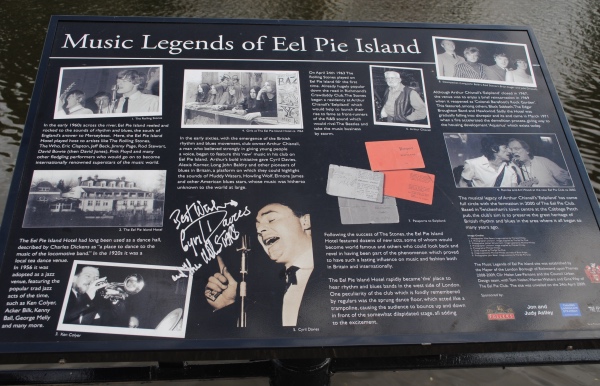
Second, to the fame. Now known as the Eel Pie Hotel, in the first half of the 20th century the inn began an association with music which would see it one day make an important contribution to the development of British pop music.

Dances were held there in the 1920s and 30s and in the mid-1950s, jazz sessions were held there. By the Sixties, the venue – under the stewardship of Arthur Chisnall – had started to attract R&B bands and among those who played here in the following years were everyone from Eric Clapton (as part of John Mayall’s Bluesbreakers) and The Rolling Stones to The Who, The Moody Blues, David Bowie and Rod Stewart. In 1967, the venue was forced to close due to the cost of repairs but reopened briefly in 1969 as ‘Colonel Barefoot’s Rock Garden’, attracting bands including Black Sabbath, Hawkwind and the Edgar Broughton Band.

The new venture didn’t last. Squatters moved in and in 1971, the hotel burned down in a “mysterious” fire while it was being demolished.

The island, the centre of which was again damaged by fire in 1996, now hosts about 50 homes and a few boatyards as well as other businesses and artist’s studios. It’s also home to the Twickenham Rowing Club, which was first established in 1860 and moved to the island in 1880.

While for many years it could only be accessed by ferry, the island can these days be accessed via a footbridge (the first bridge was installed in 1957 and replaced in 1998).

Notable residents on the island have included William Hartnell, the original Dr Who, and inventor Trevor Baylis (best known for the wind-up radio). The island has appeared in several books and TV shows including the 2005 series How To Start Your Own Country in which TV personality Danny Wallace attempted to “invade” the island. He was unsuccessful.

PICTURES: Above – Eel Pie Island from Twickenham. Below – A signboard tribute to the island’s musical heritage. (David Adams).

10 islands in the Thames – 6. Glover’s Island…

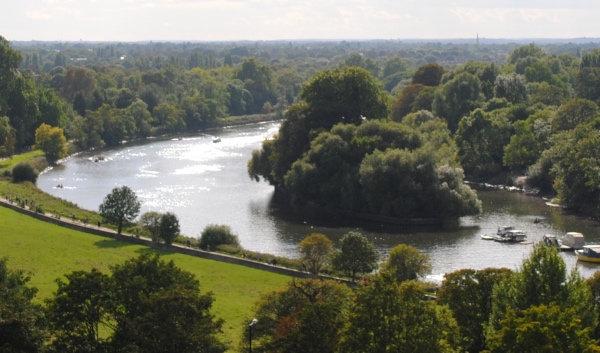
Originally known as Petersham Ait, this small island located in a stretch of river known as Horses Reach between Petersham and Twickenham was renamed Glover’s Island after it was bought by a Richmond-based waterman, Joseph Glover, in 1872. 

Having originally paid the sum of £70 for it, in 1895 Glover advertised it for sale for the rather higher sum of £5,000. The Richmond Corporation was approached but declined to pay such a high sum and so a couple of years later Glover, apparently in a move designed to put pressure on the municipal authorities, put the island up for auction with the suggestion it could be sold to Pear’s Soap Company and a massive advertising billboard erected on it.

Amid concerns over the need to preserve the view from Richmond Hill from such an atrocity, efforts were made to raise public funds to purchase the island at auction but when the auction came around – in September, 1898 – only £50 had been raised.

It didn’t matter – the highest bid at the auction only reached £200, however, so Glover didn’t sell, nor did he accommodate a local resident who apparently subsequently offered £1,000 for the island (with the intention of passing it on to the Richmond Corporation). Instead, Glover withdrew it from sale.

Temporarily, it seems. Because in 1900, Richmond Hill resident – as well as businessman, art collector and philanthropist – Max Waechter, later Sir Max, bought the island for an undisclosed price and gave it to council with the condition that it never be developed.

It remains so to this day – the uninhabited, heavily wooded half acre island, which was raised to its present height using rubble excavated from London Tube tunnels in the 19th century, still provides a pleasant feature in the landscape for those looking out from Richmond Hill and, with the view now protected by an Act of Parliament, that’s not likely to change.

PICTURE: View from Richmond Hill of the Thames and Glover’s Island (David Adams)

10 islands in the Thames – 5. Corporation Island (and the Flowerpots)…

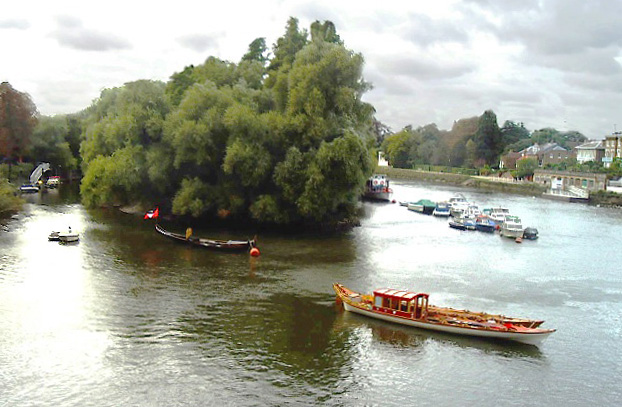
Located between Richmond Bridge and Richmond Rail Bridge (and part of the much taken-in view from the Richmond waterfront), this is another uninhabited Thames island which is frequented by herons.

Heavily wooded, tree species include various willows and black poplars. In the 1960s, the council approved the cutting down of plane trees on the island – the willows were planted subsequently.

The name presumably comes from the Richmond Corporation – that is the Municipal Borough of Richmond – which owned the island.

Downstream of Corporation Island – also known as Richmond Ait –  lay two small islands called the Flowerpots.

PICTURE: David Kemp (licensed under CC BY-SA 2.0)

10 islands in the Thames – 4. Isleworth Ait..

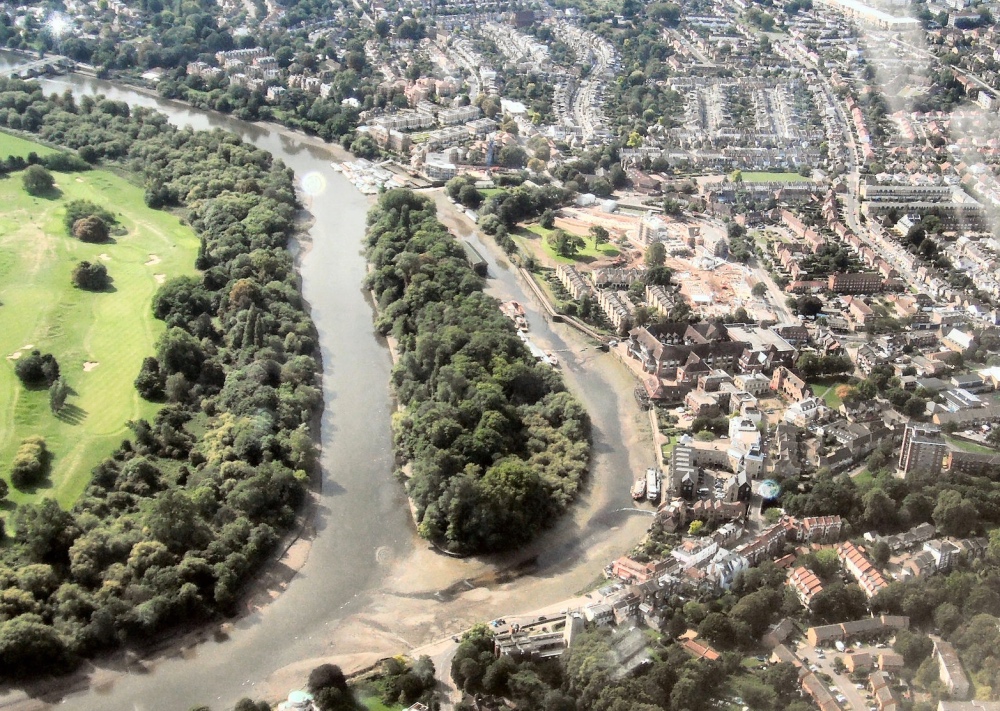
Another unpopulated ait (another word for river island), this nine acre isle is located in a stretch of the Thames with old Isleworth on one bank and the Kew towpath on the other.

The tidal island, which regularly floods, was once, like other arts in the Thames, used for the production of osiers, a type of willow used to make baskets to carry produce from Middlesex to London. There were once said to be five neighbouring islands, all of which have now disappeared.

Once the property of the Duke of Northumberland (it formed part Syon Park estate, his London property, which is located nearby), the island was purchased by the Metropolitan Water Board and is now owned by Thames Water.

Covered in trees, the ait provides a sanctuary for birds – including everything from kingfishers to swifts and herons – and rare snails like the two-lipped door snail. Officially declared a Local Nature Reserve, it has been under the management of the London Wildlife Trust since 1995.

The ait cannot be accessed without permission from the trust.

PICTURE: John McLinden (image cropped; licensed under CC BY-ND 2.0)

10 islands in the Thames – 3. Brentford Ait…

Located just upstream (and around the bend) from Oliver’s Island, this 4.5 acre island (ait being a word for a river island) has also been known by numerous other names including Makenshaw and Twigg Ait.

It was (in)famously home to a pub known as The Three Swans – there’s still a series of steps on the Brentford bank which lead down to the river where people crossed it to the pub.

The pub ceased trade around the turn of the 18th century and the island is now uninhabited.

In 1920s, this long ait was planted with trees to screen the local gasworks from those looking across the river from Kew Gardens.

The island, which features willows and alders and is reportedly home to a “significant heronry” as well as other birdlife, has a gap in the middle known as Hog Hole which can apparently be seen at high tide when it effectively creates two islands.

At the western end of Brentford Ait can be found the smaller Lot’s Ait (also known previously as Barbel Island, apparently after the Barbel fish found in the river there).

This island was previously used for growing osiers used for basket-making as well as grass for cattle fodder. It has appeared on the screen including in Humphrey Bogart’s 1951 film, The African Queen.

It’s now privately owned and currently home to a boat-builders. It’s been linked to the riverbank by a footbridge since 2012.

PICTURE: Brentford Ait (Jim Linwood licensed under CC BY 2.0)

10 islands in the Thames – 2. Oliver’s Ait…

Formerly known as Strand Ait (or Ayt), this small island’s name was changed after the English Civil War, inspired by a story that Oliver Cromwell himself had taken refuge here during the war.

There’s apparently no truth to that story (or at least no evidence has been found) or to the legend that there was a secret tunnel which ran under the river from the mid-stream island to the nearby Bull’s Head pub on Strand-on-the-Green in Chiswick where Cromwell was said to have had established a headquarters (the tunnel was apparently so he could escape if the Cavaliers got too close).

The island, which stands in a stretch of the river between Kew and Chiswick (just upstream from Kew Railway Bridge and downstream from Kew Bridge) in London’s west, is not quite an acre in size (and, like Chiswick Ait, it’s roughly ship-shaped) but has served various purposes over the years.

In 1777, the City of London’s navigation committee built a wooden, castle-shaped tollbooth on the island with a barge moored alongside to catch passing river trade and so fund improvements to the navigability of the river. One story says it’s that barge that apparently lent its name to the delightful nearby pub, The City Barge, but others say the pub is named after the Lord Mayor of London’s State Barge which had winter moorings nearby for a time.

In 1865 a smithy was built on the island which was used in the building and repair of barges. It was later, after the Port of London Authority took over ownership in 1909, used as a storage facility and wharves for derelict vessels. The building survived until the 1990s but is now gone – along with any other signs of civilisation.

The island, which now has a dense canopy largely made up of sycamore trees, is these days inhabited by birds – those spotted there have included mallards, cormorants, Black-headed gulls, Canada geese, Egyptian geese, mute swans, magpies and robins – as well as  a range of other life – a 2014 survey found 11 species of mollusc and 35 species of vegetation and the island has also been cited as a habitat for bats and Thames door snails.


10 islands in the Thames – 1. Chiswick Eyot…


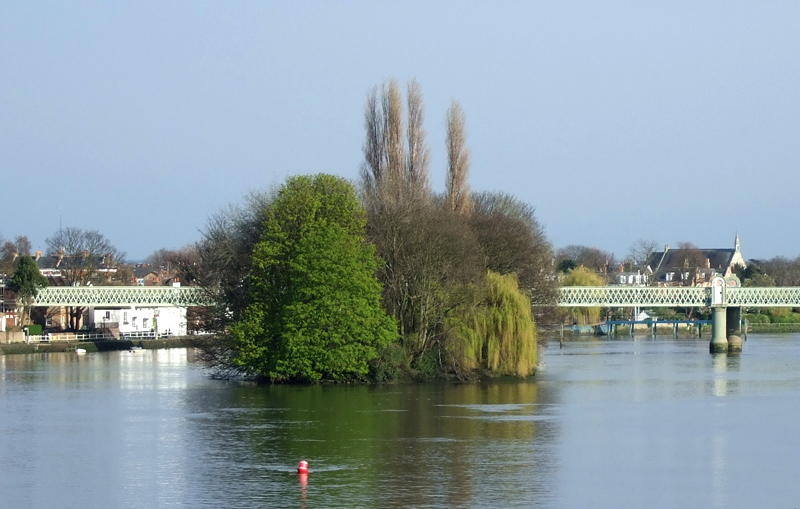
We kick of a new series this week looking at islands in the River Thames in Greater London and start with the uninhabited Chiswick Eyot or Ait (a word for a river island).

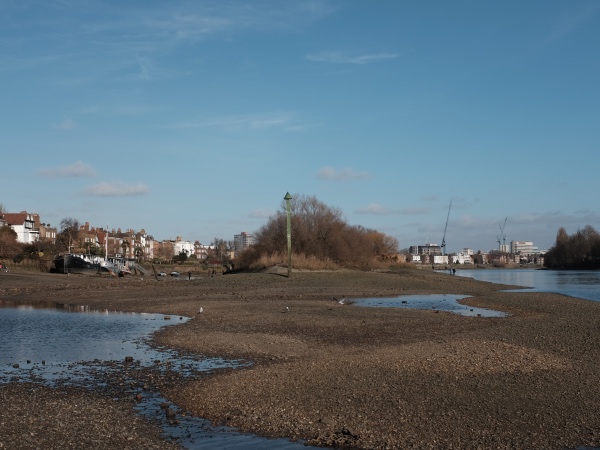
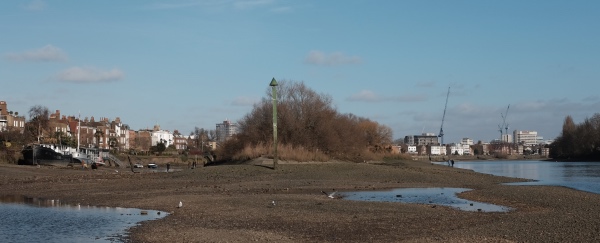
Located just off Chiswick Mall in London’s west, this 3.2 acre tidal island (one of 42 unbridged tidal islands in England) is the lowest in The Thames (and hence gets submerged at high tide – the island appears in the picture above at low tide).

Historically, the island – which is shaped like the plan of a ship sitting parallel to the Mall – was used as a location for the growing of osiers (basket willows) which were used to make baskets.

Formerly owned by the church, in 1934 ownership passed to the local council, now the London Borough of Hounslow. It declared the island a local nature reserve in 1993. Conservation days are regularly held on the island by river conservation group Thames21 (but otherwise people are requested to stay off the island).

The island is a key point on The Championship Course during the annual Boat Race between Oxford and Cambridge from Putney to Mortlake.

PICTURE: henry… (licensed under CC BY-NC-ND 2.0/image cropped)

10 of London’s modern icons – The Recap…

We’ve finished our series on modern icons (we’ll be looking at some more in another special series). But before we move on to our next series, here’s a quick recap. Which one is your favourite?

10 of London’s modern icons…1. Lloyd’s of London building

10 of London’s modern icons…2. 30 St Mary Axe (aka ‘The Gherkin’)

10 of London’s modern icons…3. The BT Tower…

10 of London’s modern icons…4. One Canada Tower…

10 of London’s modern icons…5. The London Eye…

10 of London’s modern icons…6. Millbank Tower…

10 of London’s modern icons…7. The O2…

10 of London’s modern icons…8. Tower 42…

10 of London’s modern icons…9. 20 Fenchurch Street (The Walkie Talkie)…

10 of London’s modern icons…10. The Shard…

10 of London’s modern icons…10. The Shard…


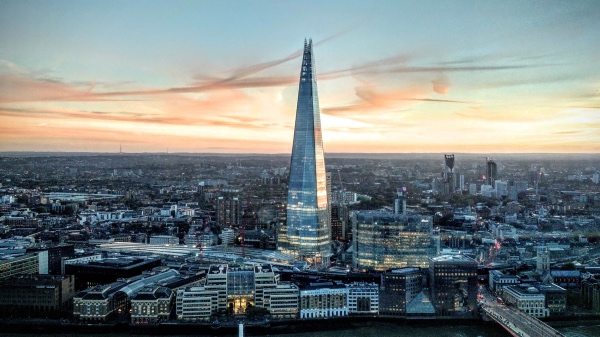
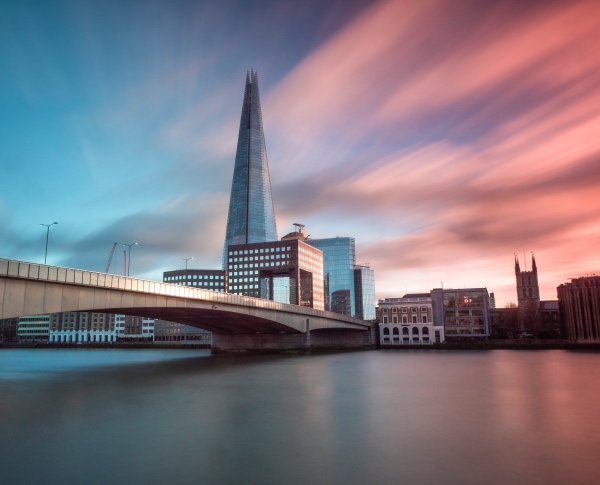
For the final in our series of modern icons of London, we’re looking at the tallest in London (and, at the time it was completed, the tallest in Europe) – the Shard.

Based in London Bridge, the 310 metre high skyscraper, was constructed between 2009 and mid-2012, and inaugurated by Qatar’s Prime Minister, Sheikh Hamad Bin Jassem Bin Jabor Al Thani, and Prince Andrew, the Duke of York, in July, 2012 – an event marked by a light and laser show (late that year, Prince Andrew abseiled down the building in a fund-raising effort for charity).

The observation deck of the building – originally known as London Bridge Tower and often referred to as The Shard of Glass – was opened to the public on 1st February, 2013, in an event overseen by the then Mayor of London, Boris Johnson.

Architect Renzo Piano’s lofty design for the building – first sketched out on the back of a napkin in a Berlin restaurant back in 2000 – was inspired by the London church spires and ship masts as seen in the work of 18th century Venetian painter Canaletto, to appear as a “spire-like sculpture emerging from the River Thames”.

It features eight sloping glass walls – the shards – with gaps or “fractures” between them to provide natural ventilation and a tapered structure to give the impression of lightness and transparency as it disappears into the clouds.

As well as office space, the building’s 72 habitable floors features shops, restaurants and bars, as well as a hotel – the Shangri-La, and apartments. News organisation Al Jazeera is also based in the building.

Located on floors 68, 69 and 72, the visitor attraction, The View from The Shard, offers panoramic views of up to 40 miles from an indoor viewing platform and the open air Skydeck (as well as the view, there are also virtual reality experiences available on the Skydeck for an additional cost).

The Shard – which attracted a million visitors in its first year alone – remained the tallest building in Europe until November, 2012, when it was surpassed by Moscow’s Mercury City Tower (it is still the tallest building in the European Union).

We’ll be kicking off a new special Wednesday series after Easter.

WHERE: The View from the Shard, Joiner Street (nearest Tube station is London Bridge); WHEN: Times vary, so check the website for details; COST: Pre-purchased timed and dated tickets range from £22.95 for adults/£16.95 for children aged four to 15 (check website for further details); WEBSITE: www.theviewfromtheshard.com.

PICTURES: Top: The Shard (Fred Mouniguet/Unsplash); Below – The Shard from the Thames (Matt Holland/Unsplash).


10 of London’s modern icons…9. 20 Fenchurch Street (The Walkie Talkie)…


Nick-named the ‘Walkie Talkie’ due to its distinctive, top-heavy, bulbous shape, 20 Fenchurch Street is a 38 storey building in the City of London.

Completed in early 2014 after a five year build with the public access areas opening the following year, the building contains 690,000 square feet of office space with the top three floors – reached by an express lift – housing a “sky garden” – described as the city’s “highest public garden” – with specially planted terraces as well as bars, restaurants and a public viewing deck.

Designed by New York City-based Uruguayan architect Rafael Vinoly, the 160 metre high building was controversial from the get-go, both for its impact on the skyline and surrounding streetscapes but also for the way its exterior cladding acted as a concave mirror and focused intense light on streets which lay to the south.

The heat was so intense that it damaged parked cars, leading some wags to dub it the ‘Walkie-Scorchie’ or ‘Fryscraper’, while a newspaper reporter famously fried an egg on the pavement below to demonstrate just how hot it was getting down there. Permanent sun shading was subsequently installed on the tower to deal with the issue.

The building was awarded the dreaded Carbuncle Cup in 2015, an annual award given to the ugliest building of the year, with one of the judges describing it as a “Bond villain tower” and another as a “gratuitous glass gargoyle”.

The building, which continues to draw strong opinions, was reportedly sold last year for a record £1.3 billion.

WHERE: 20 Fenchurch Street (nearest Tube station is Monument); WHEN: Visiting hours for the Sky Garden are 10am to 6pm weekdays and 11am to 9pm weekends (only a limited number of tickets available each day); COST: Free; WEBSITE: https://skygarden.london

PICTURES: Nigel Tadyanehondo/Unsplash