10 London sites associated with Sir Winston Churchill – 1. St Paul’s Cathedral…

St-Paul'sThe world recently paused to mark the 50th anniversary of the death of former British PM, Sir Winston Churchill (see our earlier post here), so we’re launching a new series looking at 10 sites associated with Churchill in London.

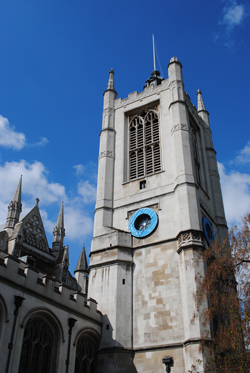
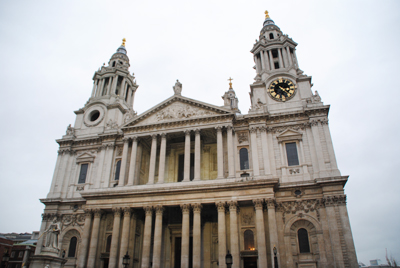
Given the recent anniversary, we’re starting at a site close to the end of his story, at St Paul’s Cathedral, where his state funeral was held on 30th January, 1965.

Code-named ‘Operation Hope Not’, the funeral had been thoroughly planned in the years leading up to the former PM’s death and took place just six days after he passed. Having lain in state in Westminster Hall for three days (during which time it’s estimated 320,000 filed past his flag draped body), his coffin, carried on a gun carriage pulled by 120 members of the Royal Navy, was escorted by more than 2,300 personnel from the military as it made its way through city streets lined with thousands of people to St Paul’s for the service.

During the service, the catafalque containing Churchill’s body stood on a raised platform beneath the central dome surrounded by six candlesticks. Among the official pallbearers – who marched before it down the aisle – were another former PM, Clement Attlee, along with military figures like Field Marshal Lord Slim and Admiral of the Fleet Lord Mountbatten of Burma.

A plethora of world leaders representing 112 nations attended the funeral service including six sovereigns, six presidents and 16 prime ministers. Among them – in an unprecedented move for a state funeral – was Queen Elizabeth II (sovereigns do not normally attend non-family funerals) along with Prince Philip and Prince Charles.

It’s estimated that as some 350 million people around the globe tuned in to watch the funeral on TV.

After the service, Churchill’s body was taken to Tower Pier (near the Tower of London) where, to the sound of a 19-gun salute fired by the Royal Artillery, he was loaded on the MV Havengore. Sixteen RAF Lightning aircraft then did a flypast as he was transported upriver to Festival Pier with dockers dipping their cranes in salute as the boat passed (this journey was recreated last week using the original barge in commemoration of the 50th anniversary of his death).

On its arrival at Festival Pier, the body was then taken to Waterloo Station from where it went via train in a specially prepared carriage (the refurbished funeral train has been brought back together at the National Railway Museum at York) to be buried in St Martin’s churchyard in Bladon, Oxfordshire – a site not far from his birthplace at Blenheim Palace.

A bronze memorial plaque commemorating where Churchill’s catafalque stood in St Paul’s is set before the Quire steps while in 2004, the Winston Churchill Memorial Screen was unveiled in the crypt where it stands in line with the final resting places of both Admiral Lord Nelson and the Duke of Wellington.

For more on the state funeral, St Paul’s has a great page of detail which you can find here, including downloadable copies of the Order of Service and other documents. 

8 structures from the London that never was – 8. Primrose Hill’s Pyramid of Death…

We started this series with a pyramidal-shaped structure (see A pyramid in Trafalgar Square), so we thought it only fitting that we end with one as well. 

PyramidThis time, it’s not so much a monument, however, as a place to house some of London’s ever increasing population of dead.  The over-crowded graveyards of early Victorian London (and the horror stories that went with them of bodies bursting forth from their graves), led to proposals for a range of innovative solutions in the early nineteenth century.

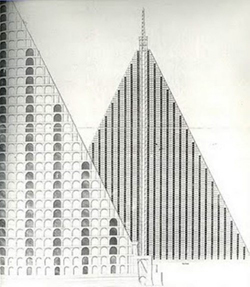
Among them was a pyramidal-shaped necropolis for Primrose Hill. Architect Thomas Willson came up with the 94 storey-high structure – which would have stood higher than St Paul’s Cathedral – to provide storage for some five million corpses with steam-powered lifts to carry the bodies to their place of rest.

Made from brick with granite facings, the base of the vast structure would have covered 18 acres. Its design, which included quarters for staff, four entrances and a central ventilation shaft, drew upon the Victorian fascination for all things Egyptian.

“It was supposed to be compact, hygienic and ornamental,” author Catharine Arnold told the BBC. “Willson hoped people would come to admire this huge pyramid from far and wide, picnicking on Primrose Hill and enjoying this splendid monument. But it would be rather like a giant car-park of the dead.”

According to the prospectus Willson, who trained at the Royal Academy, issued for potential investors, the pyramid – which was to cost £2,500 to build – would have raised a staggering sum of more than £10 million in profit when it was full.

Still, it was not to be and the idea never left the drawing board. But Willson did go on to join the board of the General Cemetery Company.

For more on London and its dead, see Catharine Arnold’s Necropolis: London and Its Dead.

8 structures from the London that never was – 7. Selfridges’ Tower…

Selfridges’ flagship Oxford Street store has been an institution for more than a century.

Selfridges_nameboardCredited as being the second biggest store in the UK, the now Grade II-listed neo-Classical premises was opened in 1909. It was designed by US architect Daniel Burnham and features five above ground stories, three basement levels and a roof terrace (a western extension, designed by Sir John Burnet, was added between 1924-29).

Less known is that there was at one stage a proposal to build a massive 450 foot high tower on top of the building. Selfridges’ founder, Harry Gordon Selfridge, backed the plan for the tower – drawn up in 1918 – and apparently spent years lobbying for permission to build it before, eventually successful in those efforts, he commissioned architect Philip Armstrong Tilden and Burnet to draw up plans (you can see some of the designs on the Royal Institute of British Architects’ website here and here and a picture of a plaster model here).

Selfridge apparently didn’t like any of the plans, however, and eventually dropped the idea, his attention instead coming to focus on building the “largest castle in the world” in Dorset (another plan which didn’t go ahead).

The tower was among a number of proposed London buildings that were never built which featured in a gingerbread display in Selfridges’ famous windows in 2013.

PICTURE: Anuradha Dullewe Wijeyeratne

8 structures from the London that never was – 6. Imperial Monumental Halls and Tower…

This massive Gothic revival structure would have dramatically changed the skyline of Westminster but, perhaps thankfully, never got further than the drawing board.

Westminster-Abbey-eastThe proposal was mooted in the early 1900s apparently amid concerns that, thanks to the number of monuments and memorials being placed within its walls, Westminster Abbey was becoming overcrowded. It was also apparently proposed as a memorial to Prince Albert.

The designs were the work of John Pollard Seddon – architect for the Church of England’s City of London Diocese – and another architect Edward Beckitt Lamb. They consisted of a 167 metre (548 foot) high tower and adjoining vast reception hall and numerous other galleries which sat at a right angle to the eastern end of the abbey minster (pictured).

Given the Clock Tower containing Big Ben is only 97.5 metres (320 feet high), the structure would have completely dominated its surrounds.

The project was exhibited at the Royal Academy in 1904 but, requiring an enormous and impractical budge (not to mention its dominating aesthetics), was never pursued any further.

8 structures from the London that never was – 5. Sir Joseph Paxton’s Great Victorian Way…

Fresh from the success of designing The Crystal Palace for the Great Exhibition of 1851 (see our earlier post here), in 1855 Sir Joseph Paxton came up with the idea of building a covered elevated railway “girdle” which would circle parts of central and west London and alleviate traffic congestion.

Great-Victorian-WayThe proposed 10 mile long, eight track railway – which would feature trains propelled by air pressure (an “atmospheric” system) rather than conventional steam engines and included  “express” trains which would only stop at select stations – was to be constructed inside a vast, 108 foot high glass covered arcade which would also contain a road, shopping and even housing.

The trains would travel at such a speed that to get from any one point on the “girdle” to its opposite point would only take 15 minutes.

Paxton presented his proposal to a Parliamentary Select Committee in June 1855 – he had already shown it to Prince Albert whom, he said, “gives it his approval”.

He estimated the cost of his proposal – which he thought would carry some 105,000 passengers every day – at some £34 million – a figure which parliament, which had initially been supportive of the idea, found a little hard to stomach.

This was especially thanks to the fact they were already dealing with the costs of Sir Joseph Bazalgette’s vast sewer system (see our earlier post here), created as a result of the ‘Great Stink’ in 1858 when the smell of untreated human excrement and other waste in the Thames became so strong, parliament had to act.

As a result, the project – which would have crossed the Thames three times, once with a spur line that ended near Piccadilly Circus – never eventuated but the Underground’s Circle Line today follows roughly the same route Paxton’s railway would have.

8 structures from the London that never was – 4. Whitehall Palace (remodelled)…

Banqueting-House

Still on designs for royal palaces and today we’re looking at two designs for the same palace. Both Inigo Jones (1573-1652) and Sir Christopher Wren (1632-1723) drew up designs for the remodelling and expansion of Whitehall Palace.

Inigo-Jones-proposalFirst up was the neo-classical architect Jones who drew up plans for a vast complex of buildings (pictured left) which would replace the Tudor palace King Henry VIII had created when he transformed the grand house formerly known as York Place into a residence suitable for a king (York Place had previously been a residence of Cardinal Thomas Wolsey and prior to that, the London residence of the Archbishops of York).

Jones’ complex – which apparently featured seven internal courts – covered much of what is now known as Whitehall as well as neighbouring St James’s Park with a magnificent River Thames frontage.

The first part of Jones’ grand scheme – the Banqueting House (see our earlier post here) – opened in 1622. It still survives today – pictured above – and gives a taste of the grandeur of his overall scheme.

Yet, despite the eagerness of King James I for the project, it failed to materialise. English Heritage chief executive Simon Thurley told the BBC in 2012 that the hall represented only five per cent of what Jones had planned.

King James I died in 1625 and his son King Charles I was apparently keen to continue the project – so much so that Jones submitted new plans in 1638 – but he didn’t find the funds the project needed (and, of course, as we know, then became consumed by the events of the Civil War before being beheaded outside the Banqueting House in 1649).

Following the Restoration, in the 1660s King Charles II apparently had Sir Christopher Wren quietly draw up plans to redevelop the palace but these weren’t follow through on although during the reign of King James II he did work on several projects at the palace including a new range of royal riverside apartments, terrace (remains of which can still be seen) and a chapel.

In 1698, much of the bloated Whitehall Palace – then the largest palace in Europe with more than 1,500 rooms – burnt down although the Banqueting House, though damaged, survived basically intact (in fact there’s an interesting anecdote, its veracity questionable, which has it that on hearing of the fire Wren rushed to the site and had an adjacent building blown up to create a firebreak and ensure the Banqueting House was saved).

The then king, King William III, approached Wren and he again submitted plans for its rebuilding (prior to the fire, he had already worked on several aspects of the palace including a new range of royal apartments and a chapel for King James II).

But Wren’s plans – images show a grand domed building – were largely never realised (although he did convert the Banqueting House into a chapel) and the destroyed palace never rebuilt (no doubt in large part due to the fact that King William III preferred a more rural and less damp location – such as that of Kensington Palace – thanks to his asthma).

For more on the history of the Palace of Whitehall, see Simon Thurley’s Whitehall Palace: The Official Illustrated History.

8 structures from the London that never was – 3. Sir John Soane’s royal palace…

Prolific early 19th century architect Sir John Soane designed many public buildings in London including, famously, the Bank of England (since considerably altered) and the somewhat revolutionary Dulwich Picture Gallery. He also designed a number that were merely fanciful works and never commissioned nor constructed.

Royal-PalaceForemost among them was a sprawling royal palace which would occupy part of Green Park off Constitution Hill.

While Soane had been designing royal palaces as far back as the late 1770s when in Rome on his Grand Tour, in 1821 he designed one, apparently as a new home for the newly crowned King George IV.

Birds-eye view drawings show a triangular-shaped palace with grand porticoes at each of the three corners as well as in the middle of each of the three sides. Three internal courtyards surround a large central dome.

Despite Soane’s hopes for a royal commission, the king appointed John Nash to the job of official architect and so Soane’s palace never went any further than the drawing board.

He also designed a grand gateway marking the entrance to London at Kensington Gore through which the monarch would travel when heading to the State Opening of Parliament in Westminster – it, too, was never realised.

 PICTURE: Wikipedia

8 structures from the London that never was – 2. Watkin’s Tower…

Designed as London’s response to the Eiffel Tower, Watkin’s Tower was the brainchild of railway entrepreneur and MP Sir Edward Watkin.

Watkin's-TowerFollowing the opening of the Eiffel Tower in 1889, Watkin wanted to go one better in London and build a tower than surpassed its 1,063 feet (324 metres) height.

He apparently first approached Gustave Eiffel himself to design the tower which was to be located as the centrepiece for a pleasure park development at Wembley Park in London’s north (which, incidentally, would be reached by one of Sir Edward’s railway lines – he opened Wembley Park station to service it). But Eiffel declined the offer and Watkin subsequently launched an architectural design competition.

Among the 68 designs received from as far afield as the US and Australia were a cone-shaped tower with a railway spiralling up its exterior, a Gothic-style tower (also with a railway), a tower topped with a 1/12 scale replica of the Great Pyramid, one modelled on the spire of Bow Church in Cheapside and one topped by a giant globe (you can see the catalogue of all entries here).

The winning entry was submitted by Stewart, MacLaren and Dunn who proposed a steel eight legged tower soaring 1,200 feet (366 metres) into the sky. To be lit with electric lighting at night, it came with two observation decks with restaurants, theatres and exhibition space as well as winter gardens, Turkish baths, shops, promenades and a 90 room hotel as well as an astronomical observatory. The top of the tower would be reached by a series of elevators.

The first stage of the project – formally known as London Tower or the Wembley Park Tower – had still not been completed when Wembley Park opened in May, 1894 – standing 154 feet (47 metres tall), it was finally finished in September the following year.

It was to never rise higher. The project become mired in problems – Watkin retired through ill health (and died in 1901), the structure started to subside and the construction company went into liquidation. Dubbed Watkin’s Folly and the London Stump, what there was of the tower was eventually demolished between 1904-1907.

While the dream of the tower never came to be, the site nonetheless became a popular vehicle for recreation and the site was later used for the 1924 British Empire Exhibition with Wembley Stadium built over the spot where the tower had once stood.

8 structures from the London that never was – 1. A pyramid in Trafalgar Square…

Trafalgar-Square

It’s Trafalgar Square but not as we know it. In a new Wednesday series we’re looking at eight proposed structures in London that were never realised and first up, is a proposal which would have seen a 300 foot high pyramid on what has become one of the city’s most iconic sites.

The stepped pyramid was the brainchild of an early 19th century Tory MP, Colonel (later General) Sir Frederick William Trench, and was designed in 1815 as a grand military and naval memorial to the Napoleonic Wars with each of the structure’s 22 steps apparently dedicated to a different year of the war.

Apparently drawn up by architects Philip and Matthew Cotes Wyatt – of the famous Wyatt architectural dynasty, the pyramid – which would have been taller than St Paul’s Cathedral and pretty much covered the entire space now occupied by the square – was, according to Nick Rennison’s The Book of Lists, costed at £1 million, a figure Sir Frederick – a veteran of the wars – apparently thought was not unreasonable.

But it didn’t prove a popular design with the public and got no further than the drawing board.

Among Sir Frederick’s other unrealised dreams was an elevated railroad running between London and Hungerford Bridges, an immense new royal palace which would have covered much of the West End, and an embankment – ‘Trench’s Terrace’ – along the north bank of the Thames. An embankment was, of course, later built, but not until after his death in 1859.

10 of London’s World War I memorials – 10. Grave of the Unknown Warrior, Westminster Abbey…

In this, the final in our series looking at London’s World War I memorials, we’re taking a look at one of the city’s most visited monuments – the grave of the Unknown Warrior in Westminster Abbey.

Located at the west end of the minster nave (pictured is the west front of the abbey inside of which lies the grave), the grave is that of a British soldier whose body was brought back from France and buried on the site on 11th November, 1920. The grave, which also contains soil brought from France, is covered by a slab of black marble from Belgium.

Westminster-Abbey2The slab bears an inscription written by Herbert Ryle, then dean of the abbey, which commemorates the “many multitudes” who died during World War I. “They buried him among the kings because he had done good toward God and toward his house”.

It is believed the idea for the memorial was that of a chaplain at the front during the war – Rev David Railton – who in 1916 saw a grave in northern France which featured a cross upon which was written, “An Unknown British Soldier”. He wrote to Ryle about what he’d seen and the idea for the new memorial slowly took shape – albeit with the initial misgivings of some including King George V.

Representing servicemen from the army, navy or air force from anywhere within Britain and its dominions who died in the war and have no other memorial or known grave, the unidentified body which lies in the grave is believed to have been selected at random from among a number bodies of soldiers who died early in the war – accounts suggest they numbered either four or six – and which were exhumed from battle areas at the Aisne, the Somme, Arras and Ypres.

Covered with Union flags, the bodies were taken to a chapel at St Pol on 7th November, 1920, and one selected by Brigadier General LJ Wyatt, commander of troops in France and Flanders. 

The three remaining bodies were reburied while the selected remains were placed in two coffins, the outer one made of oak harvested from a tree which had grown at Hampton Court Palace. A 16th century crusader’s sword taken from the Tower of London’s collection was placed in the wrought iron bands of the coffin and it was then covered with a flag which Rev Railton had used as an altar cloth during the war (known as the Ypres or Padre’s Flag, it now hangs nearby in St George’s Chapel at the abbey).

The coffin was then transported on the destroyer HMS Verdun to Dover and then taken by train to Victoria Station before, on the morning of 11th November, it was placed on a gun carriage drawn by six black horses and transported through massive but silent crowds which lined the streets.

Pausing at the Cenotaph in Whitehall, King George V unveiled the monument which represent an empty tomb (see our earlier post here) and placed a wreath on the coffin and then, followed by the king, other royal family members and dignitaries, it was taken to the abbey minster and lowered into the grave at a special service attended by the king, Queen Alexandra, the queens of Spain and Norway, and Prime Minister David Lloyd George and former Prime Minister HH (later Lord) Asquith (a recording made of some of the service – apparently conducted simultaneously with one at the Arc de Triomphe in Paris – became the first ever electrical recording to be sold to the public).

Thousands of mourners paid their respects at the open grave before the grave was filled in and covered with temporary stone on 18th November. The marble stone which now stands there was unveiled at a special service on 11th November the following year. A framed US Congressional Medal of Honor, conferred by General John J Pershing on the unknown warrior on 17th October, 1921, hangs from a pillar nearby.

WHERE: Westminster Abbey, Westminster (nearest Tube station is Westminster or St James’s Park); WHEN: Generally open to tourists everyday except Sunday  (times vary so check the website); COST: £18 an adult/£15 concessions/£8 schoolchildren (11-18 years), free for children aged under 11/£44 for a family (two adults, two children); WEBSITE: www.westminster-abbey.org.

10 of London’s World War I memorials – 9. Great Western Railway War Memorial…

One of many memorials located in London’s railway stations, the  Great Western Railway War Memorial is located on platform one of Paddington Station.

The memorial features a bronze figure of a soldier sculpted by Charles Sargeant Jagger standing against a granite and marble backdrop designed by Thomas S Tait. The soldier, who is dressed in battle gear with a helmet on his head and a great coat thrown about his shoulders, is depicted apparently reading a letter from home.

GWR-Memorial-smallTo either side of the soldier are reliefs depicting the emblems of the Royal Air Force and the Royal Navy while inscribed on the plinth beneath him is an inscription dedicated the memorial to employees of the railway who died in World War I. Inside the plinth was placed a sealed casket containing a vellum roll on which is written the names of all 2,524 men who died.

The memorial, known as the ‘GWR Memorial’, was unveiled on Armistice Day by Viscount Churchill, chairman of the Great Western Railway, in 1922 before a crowd estimated at around 6,000 people. It was later updated after World War II.

Restored in 2001, the memorial recently featured in the World War I commemorative project – “Letter to an Unknown Soldier” – in which members of the public were invited to write a letter to the soldier. The statue is also among more than 20 in London which have been brought to life as part of Sing London’s Talking Statues initiative (it has the voice of Patrick Stewart!).

Among our favourite railway memorials, others include the magnificent “Victory Arch” at Waterloo Station.

PICTURE: Cnbrb at the English language Wikipedia

10 of London’s World War I memorials – 8. The RAF Memorial…

RAF-Memorial
Aerial combat probably isn’t the first thing that springs to mind when thinking about the fighting in World War I but, as the Royal Air Force Memorial on Victoria Embankment records, air crew played a vital role.

The memorial features a bronze eagle perched on an orb girded with a belt depicting the signs of the zodiac which sits atop a Portland stone pylon. It was designed by Sir Reginald Blomfield with the eagle, inspired by the RAF’s badge, sculpted by William Reid Dick. Along with the dedication, it carries an inscription from the Bible (Exodus 19:4) –  “I bare you on eagles wings and brought you unto myself” (sic).

Various other sites were apparently considered for the memorial before the location – amid a string of other memorials between Westminster and Hungerford Bridge – was settled upon (as were other designers including the renowned Edwin Lutyens).

Unveiled on 13th July, 1923, by the Prince of Wales, the memorial was dedicated to the memory of all those who gave their lives in the ranks of the Royal Flying Corps, the Royal Naval Air Service  and the Royal Air Force  (formed through the amalgamation of the RFC and RNAS at a hotel in Strand in 1918) during World War I, along with those who had died while serving in air forces from across the British Empire.

A further dedication was later unveiled in 1946 on Battle of Britain Sunday remembering the men and women of air forces from across the Commonwealth and Empire who died during World War II.

A simple, yet still evocative, memorial.

10 of London’s World War I memorials – 7. The Machine Gun Corps Memorial…

Machine-Gun-Corps-MemorialWhile most of London’s World War I memorials feature sculptures depicting soldiers or weaponry, the controversial Machine Gun Corps Memorial at Hyde Park Corner takes as its centrepiece a more classical theme.

Designed by Francis Derwent Wood (known for his role in making masks for soldiers disfigured during the war), the larger than life-sized sculpture on top of this memorial is a nude statue of the Biblical character, David, who stands holding a giant sword – that of Goliath whose head he cut off. The Biblical theme is also found in an accompanying inscription from the Bible: 1 Samuel 18: 7 – “Saul hath slain his thousands but David his tens of thousands”.

To either side of the bronze figure – which has led to the memorial also being known as The Boy David – are two real bronzed Vickers guns wrapped in laurels while the Italian marble plinth carries a dedicated to the almost 14,000 of the corps who died between the raising of the corps in 1915 and its disbanding in 1922. The reverse of the memorial details the corps’ history, recording its service in “France, Flanders, Russia, Italy, Egypt, Palestine, Mesopotamia, Salonica, India, Afghanistan and East Africa”.

The Grade II* listed monument, which was much criticised thanks to the juxtaposition of the naked figure and machine guns, was unveiled by the Duke of Connaught in 1925. Originally located on a traffic island to the south of the Royal Artillery Memorial it was dismantled in 1945 when roadworks were carried out and it wasn’t until 1963 that it was reassembled on its current site.

Interestingly, there is another statue of The Boy David by Edward Bainbridge Copnall standing atop a column which stands on Chelsea Embankment.

10 of London’s World War I memorials – 6. The Royal Fusilier’s Memorial…

Fusiliers-MonumentLocated at Holborn Bar – one of the traditional entry points to the City of London, this memorial was erected in 1922 to the memory of the almost 22,000 solider of the Royal Fusiliers (City of London Regiment) who died during the Great War.

The monument, which stands on a traffic island in the middle of busy High Holborn, was designed by sculptor Albert Toft (and hence is known affectionately as “Albert”) along with architects Cheadle and Harding at the behest of several senior officers from the regiment.

It was originally intended to be erected in one of the capital’s many parks. Hounslow Barracks was the next intended location but, after consultation with the City, the site in Holborn was eventually settled upon.

The larger-than-life bronze figure, which stands on a Portland stone pedestal holding a rifle with fixed bayonet, was apparently modelled on an actual person – a Sgt Cox, who served with the Royal Fusiliers throughout the war. The east face features a plate listing all the battalions who served in World War I; the west face features the regimental crest and dedication.

The Grade II-listed memorial, which was officially unveiled by the Lord Mayor of London (we think it was Sir Edward Cecil Moore) on 4th November, 1922, was later updated with inscriptions commemorating those who fell during World War II and in subsequent conflicts.

The original model for the monument can now be seen in the Fusilier Museum at the Tower of London. Interestingly, there is a twin monument, dedicated to the 41st Division, at Flers on the Somme, in France. It was unveiled in 1932.

PICTURE: Mike Peel (www.mikepeel.net)

10 of London’s World War I memorials – 5. Royal Artillery Memorial…

Royal-Artillery-Memorial

Often deemed to be one of London’s finest war memorials, if not the finest (indeed London Historians’ Mike Paterson has said so previously on these very pages), the Royal Artillery Memorial at Hyde Park Corner commemorates the more than 49,000 members of the Royal Artillery Regiment who died in World War I.

Royal-Artillery-Memorial3Designed by sculptor Charles Sargeant Jagger – who had served in the infantry during the war – and architect Lionel Pearson, it was unveiled in 1925 by Prince Arthur and Anglican priest, Rev Alfred Jarvis.

The monument, described by architectural historian Nikolaus Pevsner as a “masterpiece of British 20th century sculpture”, features an oversized stone replica of a 9.2 inch Howitzer Mk I atop a stone plinth accompanied by a series of four realistic bronze figures and a series of carved reliefs depicting scenes of military life.

The figures represent a gun crew: a driver, artillery captain, shell carrier and, controversially at the time, a dead soldier lying beneath his cape and helmet with an inscription from Shakespeare’s Henry V –  “Here was a royal fellowship of death”.

Three bronze panels were later added at the south end of the monument in commemoration of the almost 30,000 of the Royal Artillery who died in World War II. It was unveiled by the then Princess Elizabeth in 1949.

In late 2011, English Heritage completed a major restoration of the Grade I-listed work with a grant from the Bulldog Trust.

PICTURE: Above – David Adams. Below – virtusincertus/Flickr

10 of London’s World War I memorials – 4. Imperial Camel Corps Monument…

Camel-Corps2

A reminder that it’s not just humans involved in war, the small but distinctive Imperial Camel Corps monument commemorates the role dromedaries played in the Middle East during World War I.

Camel-CorpsRaised in December, 1916, the Imperial Camel Corps Brigade fought in the Sinai and Palestine during the war and its four battalions were eventually comprised of British, Australian, New Zealand and Indian troops. It was disbanded at the end of the war.

The Grade II-listed monument, located in Victoria Embankment Gardens, was designed by Scottish sculptor Cecil Brown, himself a World War I veteran, and features a bronze soldier mounted on a camel set on a Portland stone pedestal.

It was unveiled on 22nd July, 1921, and, on bronze plaques on the side of the plinth can be found the names of those soldiers who died in battle as well as a list of all the battles and engagements fought by the corps.

For more on the history of the corps, see the Australian War Memorial’s page.

10 of London’s World War I memorials – 3. Tower Hill Memorial…

The Tower Hill Memorial was originally built to commemorate those of the Merchant Navy and fishing fleets who died at sea in World War I and was later expanded to include those who died in World War II.

Tower-Hill-MemorialLocated in the south-west corner of the garden in Trinity Square, the part of the memorial relating to World War I has the form of a 20-plus metre long vaulted corridor inside of which are a series of bronze plaques engraved with the names of 11,919 people whose grave was the sea.

Designed by Sir Edwin Lutyens and featuring sculptures by Sir William Reid-Dick, the Portland Stone memorial was unveiled on 12th December, 1928, by Queen Mary. The names are placed alphabetically under the names of their ships with the skipper or master the first name.

Located to the north of the original monument, the World War II extension, which was unveiled by Queen Elizabeth II on 5th November, 1955, takes the form of a semi-circular sunken garden and features the names of almost 24,000 seamen who died in World War II. It was designed by Sir Edward Maufe with sculpture by Charles Wheeler.

The memorial’s register is located inside nearby Corporation of Trinity House office (Cooper’s Row entrance).

PICTURE: Chmee2/Wikimedia Commons


10 of London’s World War I memorials – 2. Borough High Street War Memorial…

Southwark

Recently restored ahead of the World War I centenary, the St Saviour’s parish war memorial in Southwark was  designed by Captain Philip Lindsey Clark, awarded the Distinguished Service Order for his service during the war.

Unveiled in November, 1922, it features a bronze figure depicting an advancing infantryman atop a plinth and has bronze panels on either side of the plinth featuring scenes of battleships and of bi-planes. The figure of St George and the dragon can be found on the front of the plinth and a mourning woman, depicting Grief, with a baby and a dove on the rear.

The Grade II-listed memorial, which is located on a traffic island, is dedicated to “the men of St Saviour’s Southwark who gave their lives for the Empire 1914-1918”.

The recent restoration project, which came after one of the relief panels fell off in 2011, was funded by Borough, Bankside & Walworth Community Council’s Cleaner Greener Safer programme. The picture (above) was taken before the restoration.

10 of London’s World War I memorials – 1. The Cenotaph…

Commemorations of the outbreak of World War I have begun, so we thought we’d take a look at 10 of London’s memorials to those who died in the Great War.

CenotaphFirst on the list in the Cenotaph. Located on a traffic island in the middle of Whitehall, it’s Britain’s national war memorial and is the focus of Remembrance Sunday commemorations each year.

Initially a wood and plaster structure, it was just one of a number of a memorials unveiled in July 1919 for a special ‘Peace Day’ commemoration of the previous year’s armistice.

But such was its popularity that it was replaced in the following year by the Portland stone monument – built by Holland, Hannen & Cubitts – which now stands on the site. It was officially unveiled by King George V on Remembrance Day in 1920.

Designed by Sir Edwin Lutyens, the decision to model it after a ‘cenotaph’ – a classical Greek design depicting an empty tomb for those who remains are elsewhere – was apparently Lutyens’ own. The cloth flags on both sides – part of the original design (although Lutyens apparently wanted them in stone) – represent various elements of the British armed forces.

Temporary railings were added on the south side of the memorial in 1938 by Lutyens and are brought out for the Remembrance Sunday service each year. The Cenotaph was updated after World War II with the addition of Roman numerals recording its dates after which it was unveiled a second time, this time by King George VI, on 10th November, 1946.

The Cenotaph – designated a Grade I-listed building – has spawned a host of replicas in places once part of the British Empire – from Australia to Canada and Hong Kong.

PICTURE: Godot13/Wikipedia


10 sites from Shakespearean London – 10: London in Shakespeare’s plays…

In this, the final in our series looking at Shakespeare’s London, we take a quick look at some of the plethora of London locations mentioned by the Bard in his historical plays. Some we have already covered, but here are a few more…

Westminster-AbbeyWestminster Abbey (pictured): We’ve already talked about Poet’s Corner but Shakespeare himself makes mention of Westminster Abbey in his plays, notably in Henry VI, Part I, when it’s the scene of Henry V’s funeral. The Jerusalem Chamber, principal room of Cheyneygates, the medieval house of abbots of Westminster is mentioned in Henry IV, Part II.

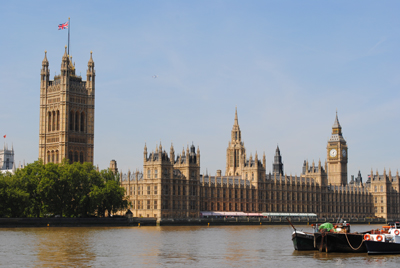
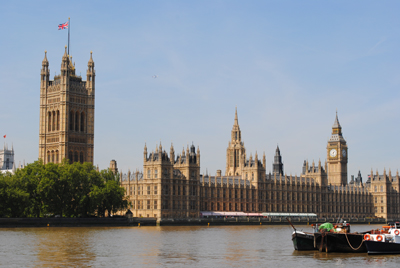
The Houses of Parliament: True, the buildings have changed somewhat since Shakespeare’s day but the former Palace of Westminster is the site of scenes in numerous plays including Richard IIHenry IV, Part II and Henry VI, Part III are set. Among rooms mentioned is Westminster Hall which survives today from the original building.

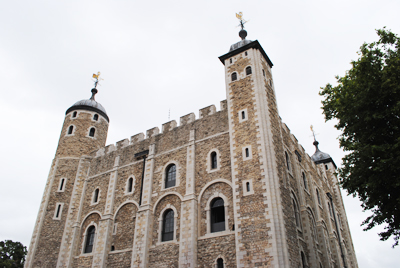
The Tower of London: As one would expect, this prominent London landmark pops up in several of Shakespeare’s plays including Henry VI, Part I and Richard III where its plays a rather central role – among the events recorded in the latter play are the infamous drowning of Richard III’s elder brother George in a butt of Malmsey wine.

Ely House: The London residence of the bishops of Ely, this long gone building is mentioned in Richard II (for more on Ely House see our earlier posts on Ye Olde Mitre Tavern here and St Etheldreda’s Church here ).

The London Stone: Now at 111 Cannon Street, the London Stone originally was located at another location in Cannon Street and its here in Henry VI, Part II, that rebel Jack Cade stops to strike his sword upon the stone (for more on the London Stone, see our earlier post here).

Other London sites mentioned in Shakespeare’s plays include generic “London Streets” (mentioned in a number of plays), “Eastcheap, near the Boar’s Head Tavern” (Henry IV, Part II), the Temple Garden (Henry VI, Part I) and Blackheath (Henry VI, Part II).