Treasures of London – The Exeter Salt…

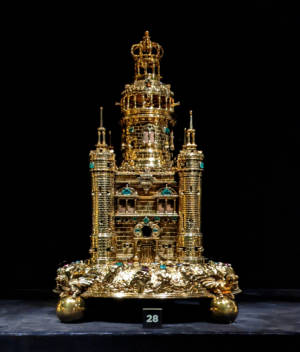
Part of the Crown Jewels held in the Tower of London, the Exeter Salt (or more formally the Salt of State) is, as the name suggests, a salt cellar but one which is exquisitely designed in the shape of a castle.

PICTURE: Firebrace/Wikipedia (licensed under CC BY-SA 4.0)

Standing 1.5 foot tall, the salt was made by Johann Hass of Hamburg, in what is now Germany, in about 1630. It is was made of silver gilt and mounted with some 73 gems including almandine garnets, turquoises, sapphires, emeralds, rubies, amethysts. It is thought the gems were not part of the original construction and may have been added at the time King Charles II’s coronation.

The design features a fantasy castle with turrets at each corner and a round tower topped by a dome and crown in the centre and comes complete with details such as cannons and decorative shields. It appears to stand on a base of rock which is supported by dragons at each corner.

It has a central compartment under the main tower as well as compartment under each turret. There are also a series of drawers used for pepper and other spices (the numbers suggesting it was made as a spice box).

The salt was purchased by Richard Bradshaw, representative of the then-Cromwellian government, in Hamburg in 1657 with the intention that it and other gifts be presented to the Russian court which had broken ties with Britain after the death of King Charles I.

But Bradshaw only made it as far as Riga in what is now Latvia (sadly many of his party dying of plague on the journey). He spent eight months waiting to cross into Russia to no avail. Bradshaw eventually returned to London via Hamburg, taking with him the gifts.

He is understood to have sold the gifts when back in London to try and recoup some of the losses he had experienced on his attempt to reach Russia.

The council of the city of Exeter acquired the salt in 1660, using the royal goldsmith, Sir Robert Vyner, as an intermediary, and paying a staggering £700 (and giving it a new name). The city, which had been a Parliamentary stronghold during the civil war, then presented it to King Charles II for his coronation.

It now forms part of the Crown Jewels and is held in the Tower of London’s Jewel House.

WHERE: The Jewel House, The Tower of London (nearest Tube Station is Tower Hill); WHEN: 9am to 4:30pm Tuesday to Saturday; opens 10am Sundays and Mondays (last entry at 3pm); COST: £35.80 adults; £28.50 concession; £17.90 children (free for Historic Royal Palaces members and £1 tickets are available for those in receipt of certain means-tested financial benefits); WEBSITE: www.hrp.org.uk/tower-of-london/crown-jewels/

Treasures of London – The Huntress Fountain, Hyde Park…

PICTURE: Ilya Bogin (Licensed under CC BY 2.0)

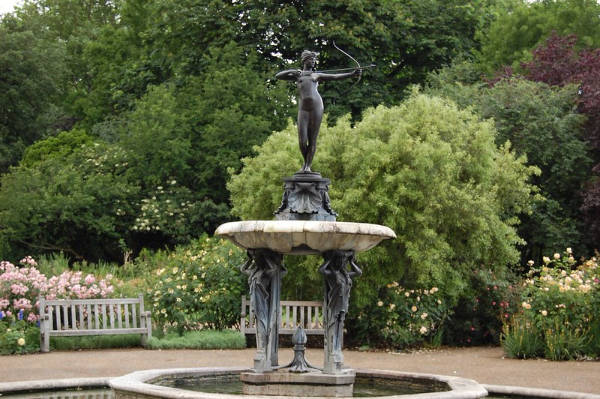
Located in the Hyde Park Rose Garden in the south-east corner of Hyde Park, the Huntress Fountain dates from 1906.

It is topped with a bronze statue depicting Diana, the Roman goddess of hunting (known as Artemis to the Greeks), naked and in the process of shooting an arrow.

The statue, which was once known as the Diana Fountain, is the work of Countess Feodora Gleichen. She was posthumously named one of the first female members of the Royal Society of Sculptors in 1922.

It is said to have been originally made for Sir Walter Palmer’s pile, Frognal, at Ascot in 1899 but was instead donated the park by Sir Walter and Lady Palmer.

Treasures of London – Coronation Stone, Kingston upon Thames…

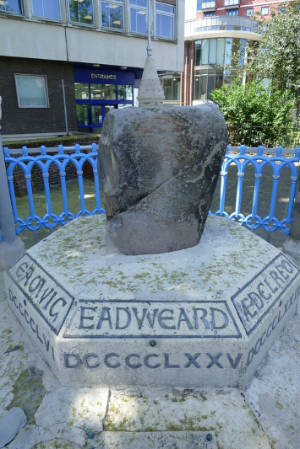
The Coronation Stone in Kingston-upon-Thames. PICTURE: Loz Pycock (licensed under CC BY-SA 2.0)

This month marks the 1,100th anniversary of the coronation of the Saxon King Aethelstan, so we thought it fitting to recall the place of his coronation, believed to be the Coronation Stone at the heart of the south-west London Royal Borough of Kingston upon Thames.

Located outside the Guildhall, the now Grade I-listed stone is an ancient block of sarsen stone which was originally at a chapel, believed to have been wooden, on the edge of the town’s market place (close to the site of All Saints Church which originally dates from the 12th century).

Subscribe to access all of Exploring London’s content for just £3 a month.

Treasures of London – The Royal Mews…

Usually Treasures of London focuses on an object held in a museum or gallery or an outdoor feature such as sculpture or memorial but in honour of its 200th birthday this year, today we’re taking a look at the Royal Mews at Buckingham Palace.

Here are some facts about the Mews which you may not know…

Subscribe for just £3 a month to access all of Exploring London’s content…

Treasures of London – The Medieval Palace at the Tower of London…

Located in one of the oldest parts of the city’s iconic fortress, the medieval palace has undergone a revamp with a restoration of the sumptuous and extravagant decorative scheme that was in place in the 13th century.

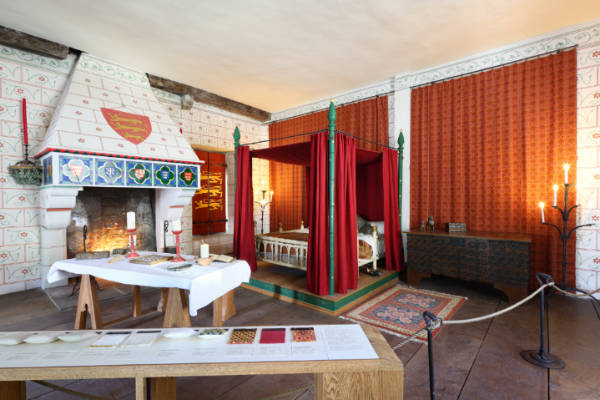
The King’s Bedchamber inside St Thomas’s Tower, part of the medieval palace in the Tower of London. PICTURE: Michael Bowles/© Historic Royal Palaces

The medieval palace is found within the St Thomas’s Tower, the Wakefield Tower and the Lanthorn Tower on the southern side of the Tower and was built on the orders of successive monarchs, King Henry III and his son King Edward I. They were used as a domestic and diplomatic space periodically by the kings and their queens, Eleanor of Provence and Eleanor of Castile.

The medieval palace today includes a recreation of Edward I’s vibrant bedchamber in the St Thomas’s Tower (which once directly fronted the River Thames and sits above the water gate later known as Traitor’s Gate) and an exploration of the influence Eleanor of Castile had on the decoration.

The Wakefield Tower, meanwhile, was built by King Henry III as royal lodgings between 1220 and 1240. It originally sat at the river’s edge and could be accessed from the river by private stairs.

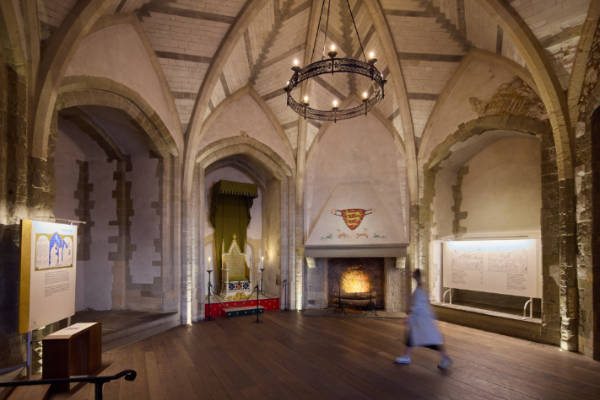
Believed to have been used as an audience chamber, it contains a recreation of a throne and canopy based on 13th century examples which are decorated with a Plantagenet lion – the symbol of the royal family. The vaulted ceiling is 19th century.

Inside the Wakefield Tower in the Medieval Palace in the Tower of London. PICTURE: Michael Bowles/© Historic Royal Palaces.

The third of the towers – the Lanthorn Tower – was built as lodgings for King Henry III’s Queen but is now a 19th century reconstruction after the original tower was gutted by fire.

It contains a display and among the new objects is a stone, on loan from the Jewish Museum London, which came from a Jewish mikveh or ritual bath, dating to about 1200 and discovered in London in 2001 within the home of the medieval Crespin family. It’s part of a new effort to explore the story of London’s medieval Jewish community, the taxation of which helped to pay for the construction of St Thomas’s Tower in the 1270s.

Other new objects on show in the Lanthorn Tower include a 13th century seal matrix from a 13th century Italian knight and a gold and enamel 13th century pyx – a small round container used to hold communion wafers made in the French city of Limoges (both on loan from the British Museum) as well as a child’s toy knight made of lead that dates from c1300, lent by London Museum and a perfectly preserved wicker fish trap which was excavated from the Tower moat, containing bones likely dating from the 15th or 16th century and illustrating the moat’s role as a fishery.

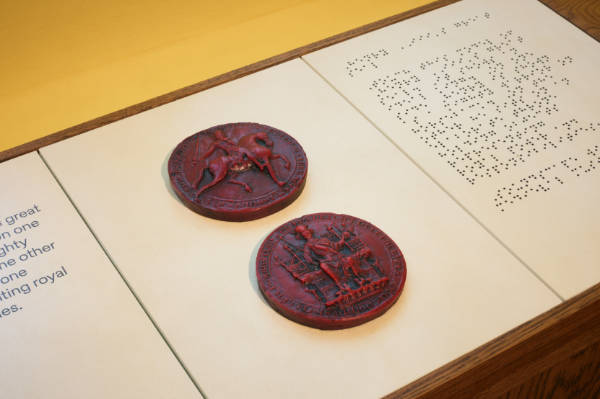
A replica of King Edward I’s seal matrix in the Medieval Palace exhibition, accompanied by a description in braille. This item is intended to be touched by visitors, to help them understand what the seal matrix might have looked and felt like in three dimensions. PICTURE: Michael Bowles (www.michael-bowles.com)

The medieval palace also includes a small private chapel which is where it’s believed King Henry VI died in 1471.

Among other stories now told in the display is that of less well-known Tower residents such as King Edward I’s laundress Matilda de Wautham, and John de Navesby the keeper of the white bear which was held in the menagerie at the Tower.

WHERE: The Medieval Palace, The Tower of London (nearest Tube Station is Tower Hill); WHEN: 9am to 5:30pm daily (last entry 3:30pm); COST: £35.80 adults; £28.50 concession; £17.90 children (free for Historic Royal Palaces members and £1 tickets are available for those in receipt of certain means-tested financial benefits); WEBSITE: www.hrp.org.uk/tower-of-london/

Treasures of London – The Anglo-Saxon archway, All Hallows by the Tower…

PICTURE: JRennocks/Wikipedia (licensed under CC BY-SA 4.0)

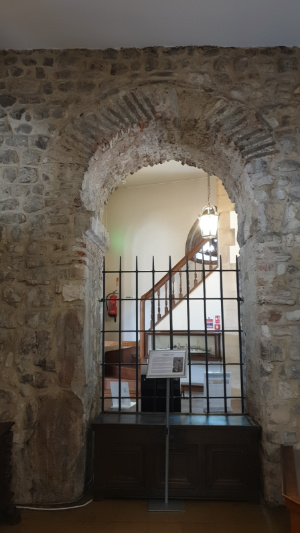
This rounded arch in the Church of All Hallows is believed to be oldest surviving arch of the Anglo-Saxon period surviving in the City of London.

The arch can be found at the west end of the nave and dates from an earlier church on the site, possibly built as early as the 7th century (the church was later rebuilt and expanded several times, survived the Great Fire in 1666, and was then largely destroyed during the Blitz before being rebuilt and reconsecrated in 1957).

Roman tiles have been reused in the arch’s construction as well as Kentish ragstone and it doesn’t include a keystone.

The arch was fully revealed after a bombing during the Blitz in 1940 brought down a medieval wall and revealed it.

The arch has given some weight to the idea that the Anglo-Saxon church was founded not long after Erkenwald founded Barking Abbey in the 7th century (he went on to become the Bishop of London in 675).

WHERE: All Hallows by the Tower, Byward Street (nearest Tube station is Tower Hill); WHEN: 8am to 5pm Monday to Friday; 10am to 5pm Saturday and Sunday; COST: Free; WEBSITE: https://www.ahbtt.org.uk/

Treasures of London – Charles Hare’s uniform…

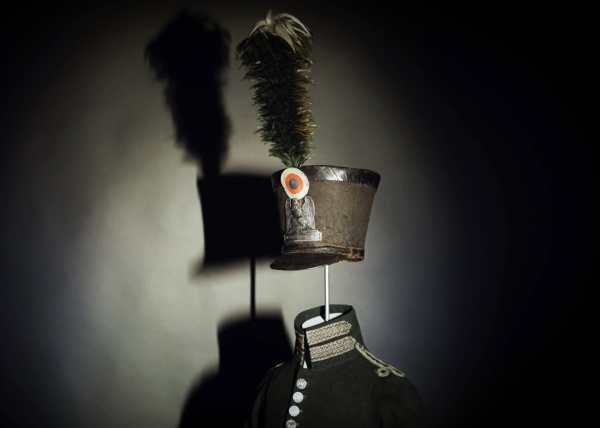
The Charles Hare uniform PICTURE: Courtesy of the National Maritime Museum, Greenwich

Newly acquired by the National Maritime Museum in Greenwich is the uniform of an officer in the French Imperial Customs Service (Les Douanes) worn by a Naval midshipman during his escape from Napoleonic France.

The son of a naval officer in Lincolnshire, Charles Hare had joined the Royal Navy at the age of 11 in 1801 and was serving as a naval midshipman on board the ship Minerva when it was captured off Cherbourg in 1803.

Along with the other officers, Hare, just 13-years-old, was sent to a the walled town of Verdun which served as a prison depot and allowed to live within the walls on parole. In 1806, however, he was transferred to the prison fortress of Sarre Libre (now Saarlouis in modern Germany).

On 12th August, 1809, Hare – now aged 19 and wearing the above mentioned uniform which includes a dark green coat with stripes of silver lace at the collar and a shako, a tall and cylindrical military cap featuring a plume of green and white feathers – made his escape from Sarre Libre.

He travelled by carriage to Mainz and then took a number of boats along the Rhine including on a barge hosting a wedding where he had to join in the drinking of brandy and singing. He eventually reached the port of Rotterdam in what is now The Netherlands.

On the 25th August, fishermen rowed Hare and his dog out to the British warship Royal Oak which was involved in a blockade of the Dutch coast. A few days later he sailed back to Britain where later that month Hare was reunited with his mother and sisters (his father had died in the year he joined the Navy) in the village of Fillingham, Lincolnshire.

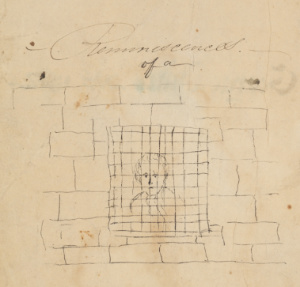
A amall drawing on inner cover of Charles Hare’s account of his escape. PICTURE: Courtesy of the National Maritime Museum, Greenwich

Astonishingly, along with the uniform, the museum was also able to acquire a hand-written account of Hare’s escape which he apparently wrote for his young son George.

In it, Hare talks about the risk he was taking in wearing a “military habit” (he could have been executed as a spy if discovered) and his pet English terrier dog which he had been given while at Verdun and which accompanied him throughout the escape.

Hare soon returned to his career in the navy and eventually settled in Canada.

Following conservation work, the uniform – the most complete surviving example of its type from the Napoleonic era – can be how seen in the Nelson, Navy, Nation gallery at the National Maritime Museum.

WHERE: Nelson, Navy, Nation gallery at the National Maritime Museum, Romney Road, Greenwich (nearest DLR is Cutty Sark; nearest train stations are Greenwich and Maze Hill); WHEN: 10am to 5pm daily; COST: Free (booking recommended): WEBSITE: rmg.co.uk.

Treasures of London – 10 Downing Street’s original door…

Now found in the Churchill War Rooms, the original black door from the Prime Minister’s residence at 10 Downing Street dates from the 1770s.

Subscribe for just £3 a month to gain access to all Exploring London’s content.

Treasures of London – The Abraham Tapestries, Hampton Court Palace…

Hanging in the Tudor Great Hall at Hampton Court Palace, this series of 10 huge tapestries are believed to have been commissioned by King Henry VIII and were first hung in the hall in 1546.

To see the rest of this post (and all of our coverage), subscribe for just £3 a month. This small contribution – less than the cost of a cup of coffee – will help us continue and grow our coverage. We appreciate your support!

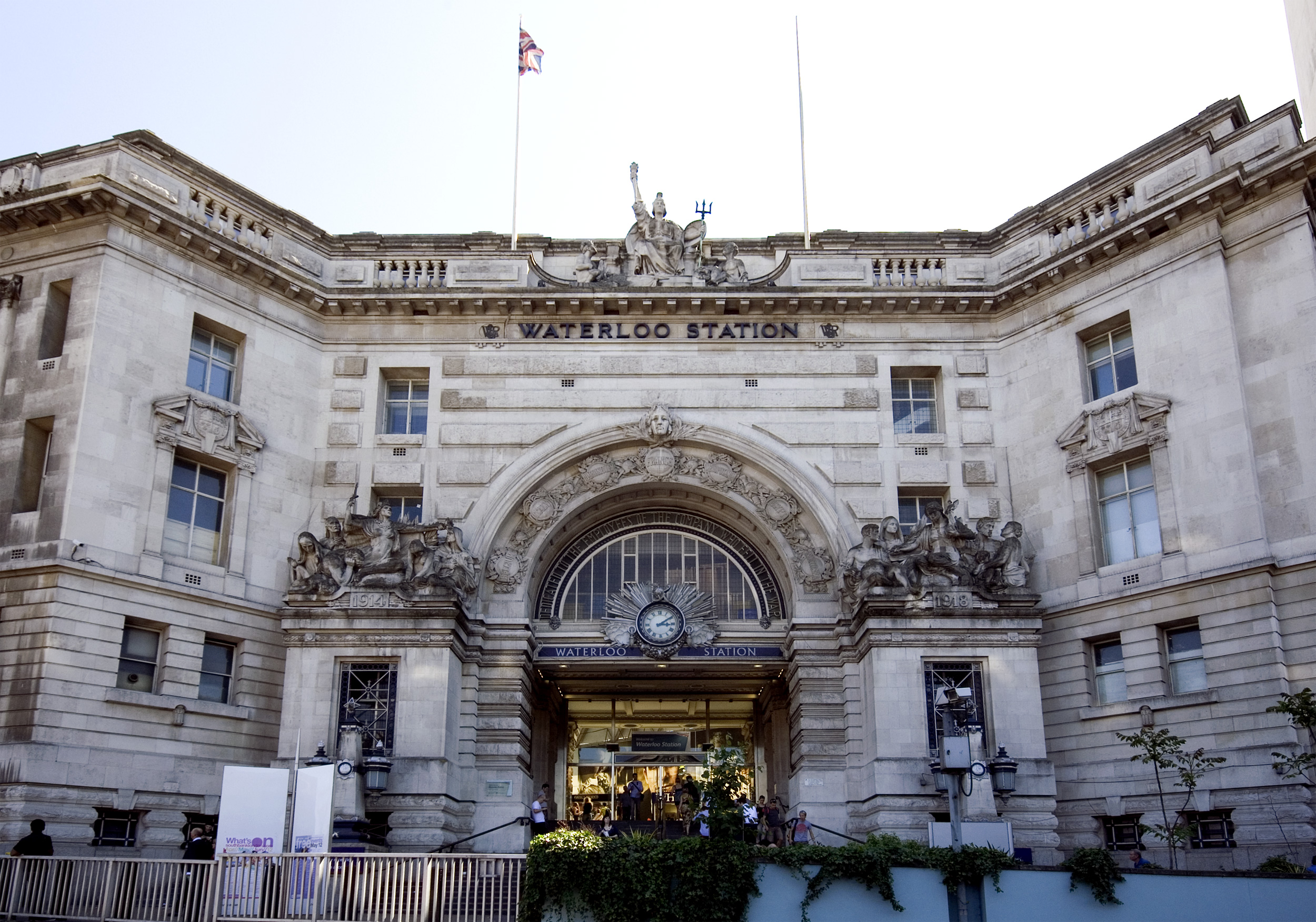
Treasures of London – Waterloo Station Victory Arch…

PICTURE: Prioryman (licensed under CC BY-SA 3.0)

Sitting over the main entrance to Waterloo Station is a Victory Arch which commemorates railway personnel who died in World War I and II.

There are several plaques located at the top of the steps under the arch commemorating those who died in the conflicts and among them, particularly notable this week as the world marks the 80th anniversary of D-Day, is one commemorating those who died in the Normandy landings.

The plaque was installed on the 50th anniversary of the landings – 6th June, 1994.

The arch was built as part of a station rebuild in the first couple of decades of the 20th century and added to the design following World War I. The new station was completed in 1922.

The now Grade II-listed memorial, the work of sculptor Charles Whiffen, features two sculptural groups located on either side – one dedicated to Bellona and dated 1914 and the other dedicated to Peace and dated 1918.

Set around a glazed arch are the names of countries where key battles were fought in the conflict and at the centre is a clock set within in a sunburst. Sitting above the arch is a depiction of Britannia holding aloft the torch of liberty.

As well as the D-Day plaque under the arch, a Roll of Honour commemorates the 585 London and South Western Railway employees who lost their lives in World War I. There is also a plaque commemorating the 626 men of the Southern Railway who died in World War II.

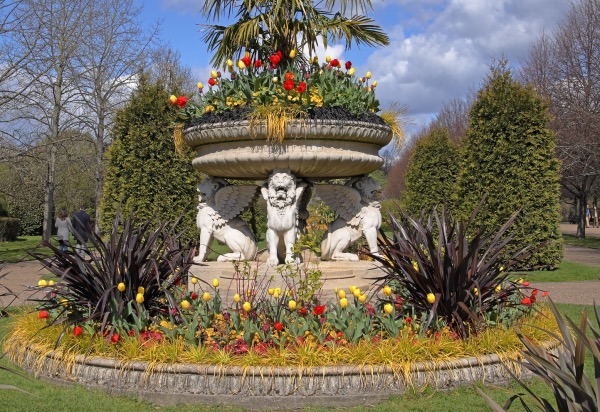
Treasures of London – The Griffin Tazza…

PICTURE: Marc (licensed under CC BY-NC-ND 2.0/image cropped)

Located in The Regent’s Park, this circular stone planter – often called the ‘Lion Vase’ – dates from the 1860s.

The vase (‘tazza’ just means ‘vase’), which features a circular bowl sitting atop four winged lions or griffins, was designed by Austin and Seeley out of artificial stone.

It was installed as the centrepiece of the Italian Gardens by their designer, William Andrews Nesfield, in 1863.

The vase – which is one of about 30 stone vases in the Avenue Gardens – was restored in the mid-1990s.

WHERE: The Griffin Tazza, The Avenue Gardens, The Regent’s Park (nearest Tube stations are Regent’s Park and Great Portland Street); WHEN: 5am to 9:30pm daily; COST: Free: WEBSITE: www.royalparks.org.uk/visit/parks/regents-park-primrose-hill

Treasures of London – Long John Silver Figurehead Collection…

PICTURE: David McDonald45 (licensed under CC BY-ND 2.0)

Said to be the largest collection of Merchant Navy ship figureheads in the world, the figurehead collection was that of Sydney Cumbers, nicknamed “Long John Silver” due to the eye-patch he wore after a childhood accident.

A successful businessman, Cumbers built up a significant collection of more than 100 figureheads – carved wooden figures which decorated the prows of sailing ships, which he and his wife – The Mate – kept along with a larger collection of maritime memorabilia at their residence in Kent nicknamed ‘The Look-Out’ (which features rooms named after parts of a ship).

In 1953, he donated the collection to the Cutty Sark a restoration of which had recently been completed so it could be opened to the public.

The figureheads, which are made from a variety of woods including oak and teak, date mostly from the 19th century. They depict a range of characters, some anonymous, and others taken from history and myth.

The latter include everyone from Sir Lancelot, the classical warrior Thermopylae and Hiawatha to Elizabeth Fry, Florence Nightingale and William Wilberforce. Others feature political figures such as Benjamin Disraeli, William Pitt and William Gladstone.

The collection is dedicated to the merchant seamen of Great Britain and the flotilla of small ships that rescued the British Expeditionary Force from Dunkirk in 1940.

WHERE: Long John Silver Figurehead Collection, Cutty Sark, King William Walk, Greenwich (nearest DLR is Cutty Sark Station); WHEN: 10am to 5pm daily (last entry 4:15pm); COST: £18 adults/£9 child (4-15)/£12 student/under 25s/Free for under fours; WEBSITE: www.rmg.co.uk/cutty-sark.

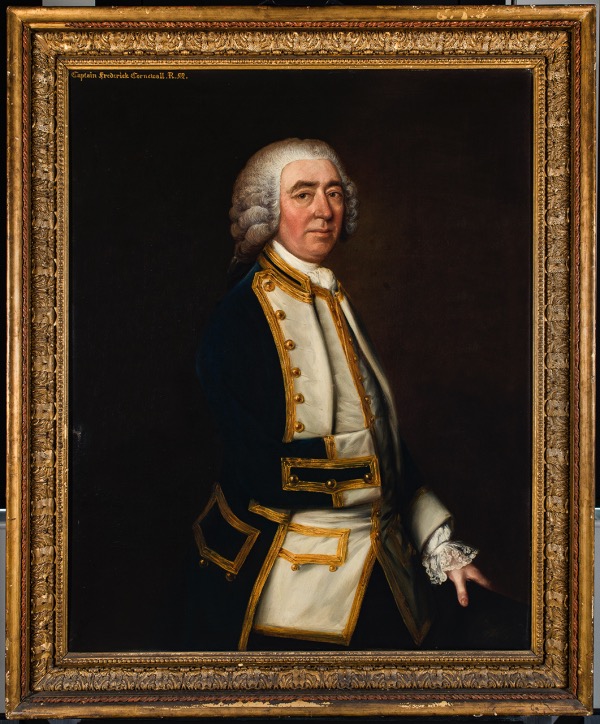
Treasures of London – Thomas Gainsborough’s ‘rediscovered’ portrait of Captain Frederick Cornewall…

Part of the collection at Royal Museums Greenwich since 1960, this three quarter-length portrait of Captain Frederick Cornewall (1706 – 1788) has in recent decades had been attributed to an unknown artist and held in storage.

That was reportedly thanks to a curator who, after the painting was acquired by RMG, didn’t deem it of sufficient quality to be a work of famed 18th century artist Thomas Gainsborough (1727 to 1788) (this was despite having previously been attributed to him).

Pre-treatment shot of an oil painting of Captain Frederick Cornewall, 1706-88, British School, 18th century, c1765. PICTURE: © National Maritime Museum, Greenwich.

Research by historian Hugh Belsey and RMG curators has now turned that on its head. Belsey, who had first come across the work in a photograph dating from the early 20th century, requested to see it in February last year after becoming aware it was in the museum’s collection.

Having inspected it, he found it – based on the warm palette and “unrivalled” draughtsmanship – to have been a work by Gainsborough and dated it to about 1762 when the artist was working in Bath. Society columns in newspapers from the time confirmed that the Captain had visited Bath in March, 1762.

‘I have been studying Gainsborough’s works for over forty years and during that time I have taken every opportunity to look at as many paintings and drawings as possible,” said Belsey. “I am delighted that this splendid portrait is now identified as a fine early work by Gainsborough.”

The painting, which was perhaps intended to commemorate Cornewall’s retirement from active naval service the previous year, depicts the captain in undress uniform and a bag wig, standing against a plain brown background.

He is shown without his right arm which he lost in 1744 Battle of Toulon (he also fought in the Battle of Minorca in 1756), the sleeve of his coat attached by a small loop to a button on his waistcoat apparently in imitation of the traditional 18th-century pose where men were often painted tucking one hand into their waistcoat.

Gainsborough has painted him with his right arm forward in an apparent effort to emphasise his war wound.

The painting is currently too fragile for display, according to curators, and RMG has launched a crowdfunding campaign to raise £60,000 towards the conservation work is preparation for its eventual display at the Queen’s House.

To donate, head to https://donate.rmg.co.uk/.

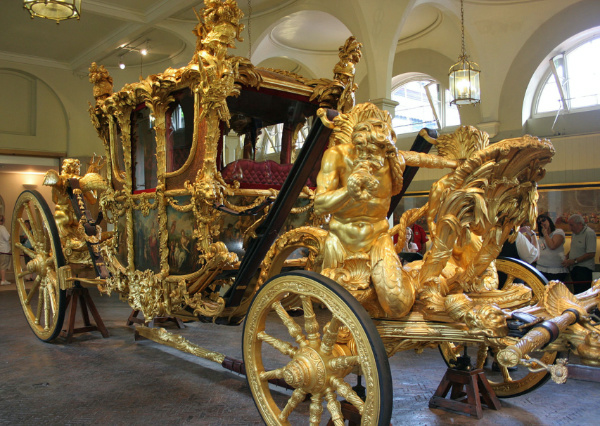
Treasures of London – The Gold State Coach…

The Gold State Coach will feature in the Coronation Procession of King Charles III (though, interestingly, not for both journeys), it was announced earlier this week so we thought we’d take a more detailed look at it.

The Gold State Coach in the Royal Mews. PICTURE: Crochet.david (talk) (licensed under CC BY-SA 3.0)

The coach – which was last seen publicly during Queen Elizabeth II’s Platinum Jubilee in June, 2022 – was built for King George III to travel to the State Opening of Parliament in 1762.

Designed by Sir William Chambers, it was built in the London workshops of coach maker Samuel Butler and cost more than £7,500 at the time.

The coach weighs some four tonnes and is 28 foot long and 12 feet high. The coach is made of giltwood – a thin layer of gold leaf over wood – and features sculptures by Sir Joseph Wilton including three cherubs on the roof (representing England, Ireland and Scotland) and four tritons (a display of imperial power) above the wheels. The coach is also decorated with painted panels depicting Roman gods and goddesses by artist Giovanni Battista Ciprian.

Inside the coach is lined with velvet and satin.

The coach is pulled by a team of eight horses wearing a Red Morocco leather harness. At the coronation it will be pulled by Windsor Greys and due to its age and weight, will only move at walking pace.

The coach has been used in every coronation since that of King William IV and was also used for the State Opening of Parliament by Kings George III, George IV and William IV as well as Queen Victoria (up until Prince Albert’s death).

The coach is, however, not said to be the most comfortable ride – Queen Elizabeth II is known to have said so while King William IV described travelling in the coach as like being on a ship “in a rough sea”. So it will only be used for the return, post-Coronation, journey from Westminster Abbey to Buckingham Palace.

For the outward journey – from Buckingham Palace to Westminster Abbey – the King and Queen Consort Camilla will travel in the more comfortable – and Australian-made – Diamond Jubilee State Coach (unlike the Gold State Coach, it comes with air-conditioning, modern suspension and electric windows).

Both coaches are usually housed in the Royal Mews at Buckingham Palace.

On Coronation Day, the Gold State Coach will transport the newly crowned King and Queen Consort on a shorter route than that of Queen Elizabeth II on her Coronation Day – just 1.3 miles compared to the late Queen’s five mile route back to the palace. Leaving Westminster Abbey, it will travel down Whitehall and pass under Admiralty Arch before travelling down The Mall to Buckingham Palace.

WHERE: The Royal Mews, Buckingham Palace (nearest Tube stations are Victoria, Green Park, St James’s Park and Hyde Park Corner); WHEN: 10am to 5pm (check website for closure dates around the coronation); COST: £15 adults/£10 young person (aged 18-24)/£9 child (aged five to 17); WEBSITE: www.rct.uk/visit/the-royal-mews-buckingham-palace

Treasures of London – Coalbrookdale Gates…

Christine Matthews (licensed under CC BY-SA 2.0)

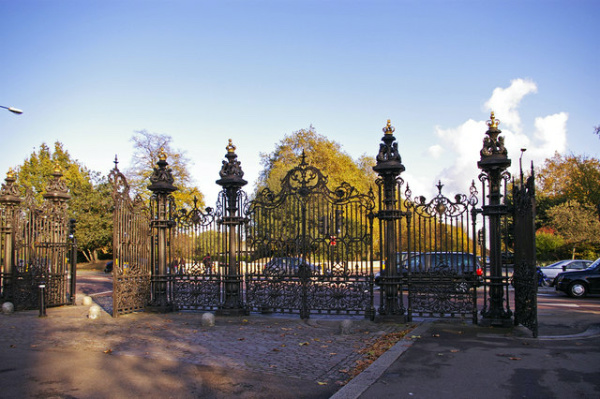
Located at the southern end of West Carriage Drive – the road which divides Kensington Gardens and Hyde Park – are bronze-painted cast iron gates which were made for the Great Exhibition of 1851.

The gates are named for their manufacturer, the Coalbrookdale Company in Shropshire, and were designed by Charles Crookes.

Each of the gates were cast in one piece and feature cherubs or mer-children below gold crowns atop the finials. There are stags head urns sitting atop Portland stone pillars bearing Queen Victoria’s monograms at either end.

The gates were originally positioned as an entrance to the Great Exhibition and were known as the Queen’s Gate (due to their being through which Queen Victoria entered).

The gates were moved here from their original position during the construction of the Albert Memorial in 1871.

The now Grade II-listed gates were damaged by a bomb during World War II. They were restored in 2000.

Treasures of London – The Jewel Tower’s vaulted chamber…

The Jewel Tower which contains the ground floor vaulted chamber. PICTURE: David Adams

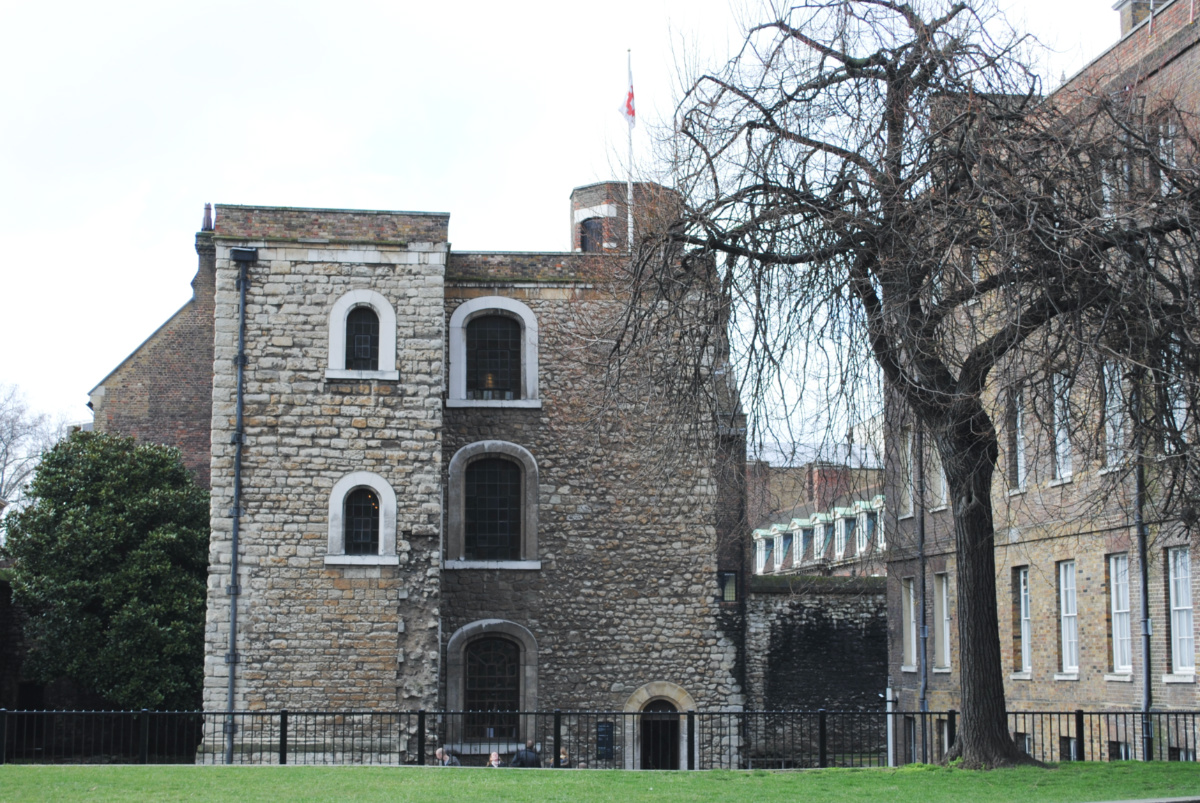
Located in the ground floor of Westminster’s three-storied Jewel Tower is a fine 14th-century ribbed vault, described as an “architectural masterpiece”.

One of the ceiling bosses in the ground floor chamber. PICTURE: Daniel Stockman (licensed under CC BY-SA 2.0)

The room is believed to have been constructed, along with the rest of the building, in the 1360s to the designs of master mason Henry de Yevele.

Located in the south-west corner of Old Palace Yard, the tower was originally used as a personal treasure-house for King Edward III and was known as the King’s Privy Wardrobe. Later it was used to house government documents and in 1869 became the Weights and Measures Office.

It is one of few surviving buildings from the medieval Palace of Westminster (the rest having been destroyed in the fire of 1834).

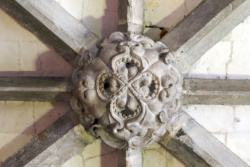
The vaulted chamber incorporates tiercerons – ribs set between the transverse and diagonal ribs to form simple fans and also features a series of sculpted bosses.

Made in Reigate stone, these depict human and mythical animal heads, as well as intertwined pairs of eagles and swans and plant designs. It is believed the bosses were once whitened.

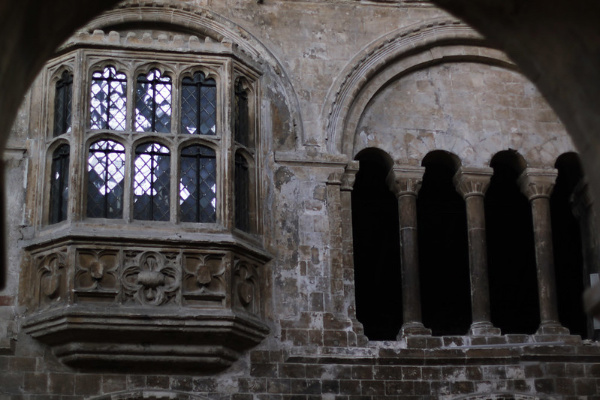
The west wall of the chamber features the remains of a fireplace while the main window reveal is medieval (although the window itself dates from the 18th century).

The property, which is under the care of English Heritage, is not to be confused with the Jewel House at the Tower of London.

WHERE: The Jewel Tower, Abingdon Street, Westminster, (nearest Tube stations are Westminster and St James’s Park); WHEN: 10am to 4pm on weekends; COST: £6 adults/£3.60 children (aged five to 17 years)/£5.30 concession; family tickets available; WEBSITE: www.english-heritage.org.uk/visit/places/jewel-tower/

10 most popular posts for 2022 – Numbers 4 and 3…

4. 10 historic stairways in London – 4. The Nelson Stair…

3. Treasures of London – Wren’s Great Model of St Paul’s Cathedral…

Treasures of London – The first (commercial) Christmas card…

Christmas cards have been a staple of Christmases (although a declining one these days) since at least as far back as 1843.

It was then that Sir Henry Cole, a civil servant, inventor and the first director of the Victoria & Albert Museum, came up with the idea of sending out a card bearing Christmas greetings to a large number of people as a means of coping with the substantial volume of correspondence he was receiving (and would have to send to greet family and friends at Christmas).

Sir Henry commissioned his friend, painter John Callcott Horsley, to design the card and an initial run of 1,000 cards were printed by Jobbins of Warwick Court in Holborn (a further thousands cards were printed in a second run).

Having sent the cards he required, Sir Henry sold the rest for a shilling each under his literary pseudonym of Felix Summerly from the premises of his publisher Joseph Cundall in Old Bond Street (the introduction of the uniform Penny Post in 1840 having made sending them affordable – Cole had been an important figure in its establishment as assistant to the idea’s main instigator Rowland Hill).

The card, which were hand-coloured by professional colourer Mason, depicts a family gathered for Christmas and imbibing wine with side panels depicting two acts of charity – “feeding the hungry” and “clothing the naked”. On it were printed the words “A Merry Christmas and a Happy New Year to You”.

The card was apparently controversial for its depiction of drinking wine (temperance advocates argued it promoted drunkenness) and particularly for its images of children drinking wine.

The idea didn’t also catch on immediately – the cost of a shilling was rather steep. But new designs soon began to appear in the following years and by the mid-1850s, the idea had finally taken hold.

WHERE: The Postal Museum, 15-20 Phoenix Place (nearest Tube stations are Farringdon, Russell Square, King’s Cross St Pancras and Chancery Lane); WHEN: 10am to 5pm Wednesday to Sunday (booking in advance suggested); COST: Adult £17/Young person (16-24) £12/Child (3-15) £10 (discounts apply for booking online/other ticket types available; WEBSITE: www.postalmuseum.org

Treasures of London – Prior Bolton’s oriel window…

Prior Bolton’s oriel window (left) seen in the church. PICTURE: Kotomi_ (licensed under CC BY-NC 2.0)

This 500-year-old window is located inside the church of St Bartholomew the Great.

It was constructed on the orders of William Bolton who became prior of St Barts in 1505. Bolton, who was employed by both King Henry VII and King Henry VIII on various building projects including at Westminster Abbey and the Tower of London, also brought his love of construction to his role as prior and ordered the construction of a new lodging for himself to be built at the church’s eastern end.

A wooden gallery led from the first floor of the new lodging to the gallery of the church quire, where he had a private chapel. The oriel window, located in the chapel, gave a view of the quire, the high altar and the tomb of Rahere – the founder of the priory, located on the other side of the church (the window also enabled the prior to keep an eye on the monks!).

Bolton had his name recorded on the window in the form of a pictorial pun which shows a barrel or ‘tun’ pieced by a crossbow bolt (ie bolt-tun).

Bolton also had a door put through from the church to his new lodgings – it too can still be seen in the church.

WHERE: Off Little Britain, West Smithfield (nearest tube station is Barbican); WHEN: 10am to 5pm Monday to Saturday, 1pm to 5pm Sunday (plus services) ; COST: Free (but donations welcomed); WEBSITE: www.greatstbarts.com

Treasures of London – The ‘Line of Kings’…

PICTURE: HRP/Newsteam

A star sight at the Tower of London for some 350 years, the ‘Line of Kings’ dates back to the mid-17th century and was originally installed in the Royal Armouries at the Tower to promote the restored monarchy of King Charles II and the Stuart dynasty.

Often described as the “world’s longest running tourist attraction” (the first visitor was recorded in 1652), it features the historic armour of monarchs on wooden figures and accompanied by fully decked-out carved horses – the work of Grinling Gibbons and others among Britain’s best woodcarvers.

The line has been added to and redisplayed numerous times over its history, partly to accommodate successive monarchs (17 in all were included with King George II being the last).

Only those monarchs deemed worthy were included – this deemed “bad” kings like King Richard III were omitted while “good” kings like King William the Conqueror, King Edward III and King Henry V were included. Queens were not included – when Queen Mary II and King William III were created joint monarchs, only King William was included.

The display began to be mentioned in guidebooks from the 1750s onwards. In 1825, amid growing scholarship and criticism, the line underwent a major change.

It was dismantled and then redisplayed in a purpose-built gallery adjoining the south side of the White Tower. The new line-up included prominent noblemen as well as kings while the kings themselves were reshuffled with some, like King Edward III, dropped, and King James II added.

It was further enhanced in 1869 but the display closed in 1882. The equestrian figures then appeared on the upper floor of the White Tower.

The Line of Kings, which is now located on the entrance floor of the Tower, last underwent a significant revamp between 2011 and 2013.

Highlights include the earlier surviving armour of King Henry VIII – a silvered and engraved armour which was made in the years following his coronation in 1509 – as well as the gilded armours of King Charles I and King James II.

WHERE: White Tower, Tower of London (nearest Tube station Tower Hill); WHEN: 9am to 5.30pm daily; COST: £29.90 adults; £14.90 children under 15; £24 concession; family tickets from £52.20; WEBSITE: www.hrp.org.uk/toweroflondon/.