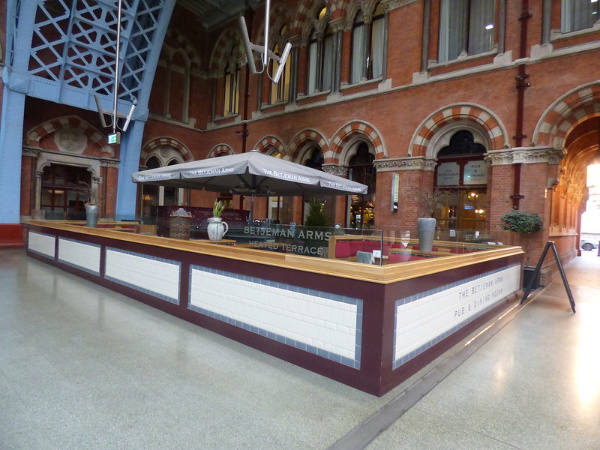
This St Pancras pub – located inside St Pancras International Station itself – bears the name of poet, writer, broadcaster and activist Sir John Betjeman.
The Betjeman Arms seen in 2016. PICTURE: Elliott Brown (licensed under CC BY-SA 2.0)
Betjeman, who was Poet Laureate from 1972 until his death in 1984, did have a particular connection to this location: he helped save the George Gilbert Scott-designed station from demolition in the 1960s with the station eventually awarded Grade I listed status in 1967.
The campaign to save St Pancras was just one of the many to save historic buildings that Betjeman was involved in, although not all were successful.
Betjeman is also remembered in a larger-than-life statue of the man which is located on the station concourse. Martin Jennings’ bronze statue depicts the poet and stands on a slate roundel featuring a selection of his writings.
The pub, which features a Betjeman ale, is now part of the Young’s group. For more, head to www.thebetjemanarms.co.uk/.
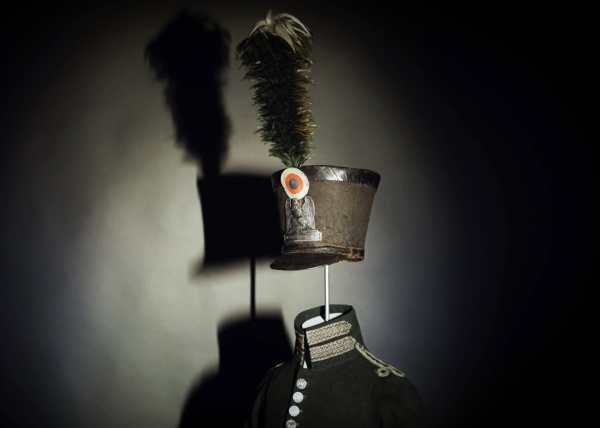
The Charles Hare uniform PICTURE: Courtesy of the National Maritime Museum, Greenwich
Newly acquired by the National Maritime Museum in Greenwich is the uniform of an officer in the French Imperial Customs Service (Les Douanes) worn by a Naval midshipman during his escape from Napoleonic France.
The son of a naval officer in Lincolnshire, Charles Hare had joined the Royal Navy at the age of 11 in 1801 and was serving as a naval midshipman on board the ship Minerva when it was captured off Cherbourg in 1803.
Along with the other officers, Hare, just 13-years-old, was sent to a the walled town of Verdun which served as a prison depot and allowed to live within the walls on parole. In 1806, however, he was transferred to the prison fortress of Sarre Libre (now Saarlouis in modern Germany).
On 12th August, 1809, Hare – now aged 19 and wearing the above mentioned uniform which includes a dark green coat with stripes of silver lace at the collar and a shako, a tall and cylindrical military cap featuring a plume of green and white feathers – made his escape from Sarre Libre.
He travelled by carriage to Mainz and then took a number of boats along the Rhine including on a barge hosting a wedding where he had to join in the drinking of brandy and singing. He eventually reached the port of Rotterdam in what is now The Netherlands.
On the 25th August, fishermen rowed Hare and his dog out to the British warship Royal Oak which was involved in a blockade of the Dutch coast. A few days later he sailed back to Britain where later that month Hare was reunited with his mother and sisters (his father had died in the year he joined the Navy) in the village of Fillingham, Lincolnshire.
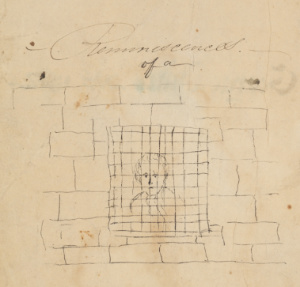
A amall drawing on inner cover of Charles Hare’s account of his escape. PICTURE: Courtesy of the National Maritime Museum, Greenwich
Astonishingly, along with the uniform, the museum was also able to acquire a hand-written account of Hare’s escape which he apparently wrote for his young son George.
In it, Hare talks about the risk he was taking in wearing a “military habit” (he could have been executed as a spy if discovered) and his pet English terrier dog which he had been given while at Verdun and which accompanied him throughout the escape.
Hare soon returned to his career in the navy and eventually settled in Canada.
Following conservation work, the uniform – the most complete surviving example of its type from the Napoleonic era – can be how seen in the Nelson, Navy, Nation gallery at the National Maritime Museum.
WHERE: Nelson, Navy, Nation gallery at the National Maritime Museum, Romney Road, Greenwich (nearest DLR is Cutty Sark; nearest train stations are Greenwich and Maze Hill); WHEN: 10am to 5pm daily; COST: Free (booking recommended): WEBSITE: rmg.co.uk.
• The largest survey of the development of photography in Britain across the 1980s to date goes on show at the Tate Britain today. The 80s: Photographing Britain draws on almost 350 images and archive materials from the period to explore how photographers responded to the “seismic social, political, and economic shifts around them” during the decade. It features the work of more than 70 lens-based artists and collectives and features images taken from across the UK – from John Davies’ post-industrial Welsh landscape to Tish Murtha’s portraits of youth unemployment in Newcastle and Don McCullin’s portraits of London’s disappearing East End. Along with documentary photography capturing key political events such as John Harris and Brenda Prince’s images of the miners’ strikes and Syd Shelton and Paul Trevor’s images of anti-racism demonstrations, the exhibition also includes a series of thematic displays, featuring works such as Roy Mehta and Vanley Burke images of their multicultural communities, which explore how photography became a compelling tool for representation. Other subjects covered include countercultural movements that took place in the 80s and the presence and visibility of the LGBTQ+ community during the period of the AIDS epidemic. Runs until 5th May. Admission charge applies. For more, see www.tate.org.uk.
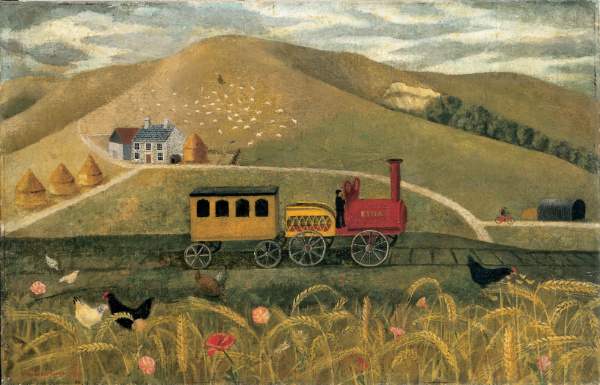
Tirzah Garwood, ‘Etna’, 1944, oil on canvas. PICTURE: Courtesy of Fleece Press/Simon Lawrence
• The first major exhibition devoted to the British artist and designer Tirzah Garwood has opened at the Dulwich Picture Gallery. Tirzah Garwood: Beyond Ravilious comes 10 years after the critically acclaimed show celebrating the work of Eric Ravilious, husband of Garwood who was a celebrated artist and printmaker in her own right. More than 80 of Garwood’s work are on show including most of her existing oil paintings. Along with Garwood’s works – which include everything from woodgravings to a series of experimental marbled papers and collaged paper portraits – are 10 watercolours by her husband which draw out the couple’s “thematic similarities, shared interests and distinct artistic personalities”. Runs until 26th May. Admission charge applies. For more, see www.dulwichpicturegallery.org.uk.
• Luke Jerram’s massive travelling installation Mars is unveiled at the Painted Hall in Greenwich this Saturday. Measuring seven metres in diameter and internally lit, the work features detailed NASA imagery of the Martian surface, recreated to scale (but about a million times smaller than the actual planet). The installation, which follows on from Jerram’s earlier artworks Gaia and Museum of the Moon, features a surround sound composition by BAFTA-winning composer Dan Jones which includes clips from NASA missions to Mars. Can be seen until 28th January. Admission charge applies. For more, see https://ornc.org/whats-on/mars/.
London’s rich layers of history has left its fair share of mysteries and in this series we’re going to take a look at 10, some well-known and others, such as this first one, less so…
First up, it’s a 500-year-old murder mystery. The victim was Robert Pakington, an MP and prominent member of the Worshipful Company of Mercers, who is often said to be the first victim to be murdered with a handgun.
Subscribe for just £3 a month to see all of Exploring London’s content (and the rest of this post). Thanks for your support of our work
One of the most devastating moments of World War II in Britain took place 80 years ago this month when, at 12:26pm on 25th November, 1944, a German V2 rocket bomb hit a Woolworths store in New Cross, south-east London.
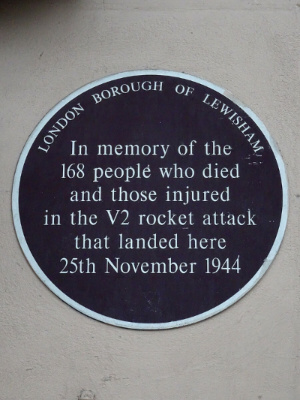
One of the plaques memorialising those killed in the V2 attack outside what is now an Iceland in New Cross. PICTURE: Spudgun67 (licensed under CC BY-SA 4.0)
There were some 30 staff and 100 customers in Woolworths when the rocket struck (a queue had formed at the store after word had spread that tin saucepans had arrived).
The massive blast flattened the shop and spread into nearby streets, bringing down neighbouring houses and shops, overturning an army lorry and causing cars to burst into flames.
Some 168 people, including Woolworths customers and store workers as well as 33 children (some just babies in prams), were killed in the blast. Some of those who died were in the neighbouring Royal Arsenal Co-operative Socierty store, others were sitting at their desks in nearby offices and some were killed while sitting on a passing bus. Some 123 passersby were injured in the blast.
It took three days to clear the debris. Twenty four of those killed were never identified.
It is believed that the nearby New Cross Station was the intended target.
The V2, the world’s first long-range guided ballistic missile, travelled at some 3,000 mph and, as such, few too high and fast to be tracked by radar, put down by anti-aircraft fire or intercepted by fighter aircraft.
V2s had only started to be used in September, 1944, following an order from Adolf Hitler for their manufacture in December, 1942. The first V2 rocket had hit Chiswick on 8th September, 1944, and over the next few months about half of the 3,000 rockets fired at Allied targets were aimed at London.
Such was the fear over the rocket attacks that it had only been on 10th November 1944, that Winston Churchill had publicly admitted the country was facing rocket attacks.
The New Cross attack is commemorated by two memorial plaques at the site, one erected by the Deptford History Group in 1994 and the other by the London Borough of Lewisham in 2009.
• World premiere installations Ombre by TILT – which takes the “form of a series of giant plants in bloom springing up from the landscape in a spectrum of vibrant shades” – and Threshold by Studio Vertigo – an “illuminated helix-like shape, bathed in golden yellow light to evoke the warmth and joy of the festive season” are at the centre of this year’s Christmas light trail at Kew Gardens. Other highlights at this year’s festive showing include Camellia Walk, which has been transformed into a snowy lane which showcases the spectacular tree canopy and evoking a wintery wonderland, Fish are Jumping by Dutch artists TOER and Mist Arches by Culture Creative which create “an atmospheric ambience across Kew’s Lake Crossing”. Annual favourites such as the light show on the Temperate House, the Fire Garden and Christmas Cathedral have also returned along with the Palm House finale. The trail can be visited on selected dates until 5th January. Admission charge applies. For more, see www.kew.org/christmas.
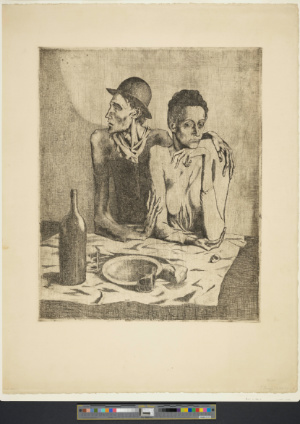
• Around 100 prints by Pablo Picasso – including some from his 347 Suite which have never been displayed before – are on show in a new exhibition at the British Museum.Picasso: Printmaker charts the artist’s engagement with printmaking (he produced around 2,400 in total) and centres on some of the more than 500 now in the British Museum’s collection (the largest in the UK). Highlights include his first professional print – The Frugal Meal (1904 – pictured) – as well as prints from the Vollard Suite (1930-1937) such as the aquatint Faun Uncovering a Woman (1936), and, the 347 Suite‘s Tree in the Storm, with Flight Towards a Church (1968). The exhibition can be seen in Room 90 until 30th March. Admission charges apply. For more, see www.britishmuseum.org/picasso.
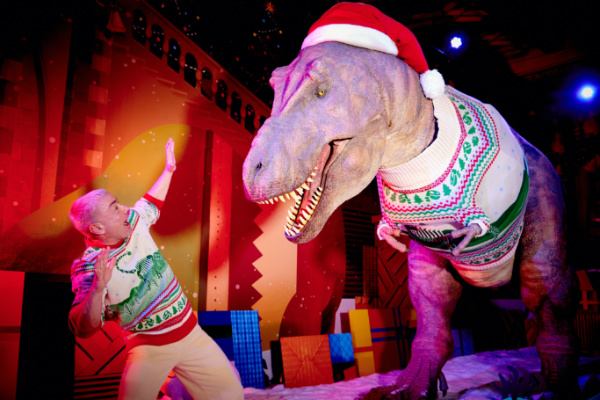
• The T rex’s new Christmas jumper has been unveiled at the Natural History Museum. This year’s design – which can be seen modelled by the T rex – features festive colours of red, blue, green and white and an image of the museum’s latest prehistoric resident, Fern the Diplodocus, who took up residence in the redesigned gardens earlier this year. The jumper can be seen in the Dinosaur’s Gallery until January. Human-sizxed versions can be bought in the museum shop (www.nhmshop.co.uk). For more, see nhm.ac.uk.
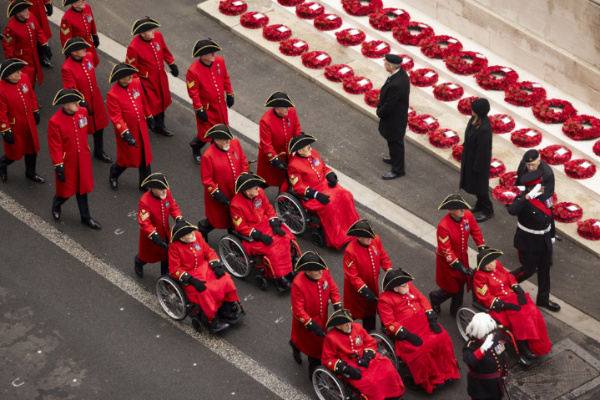
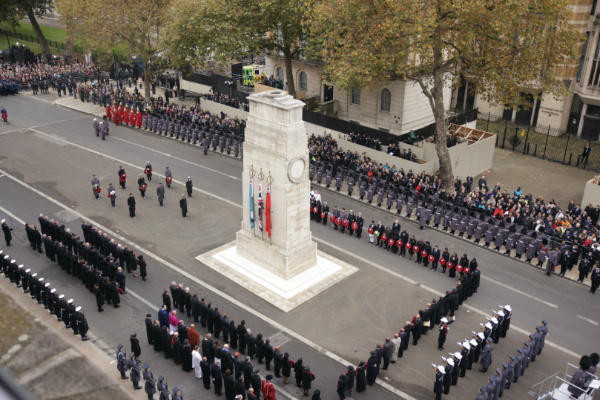
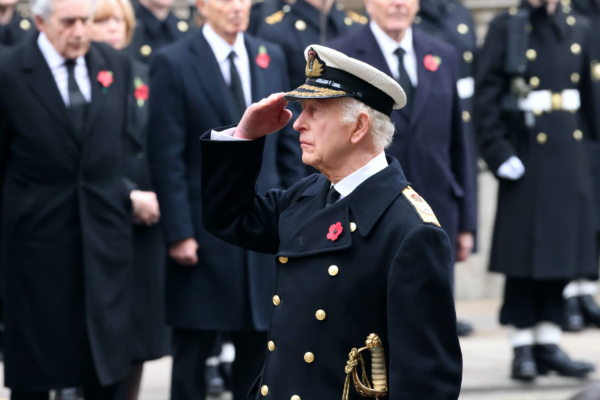
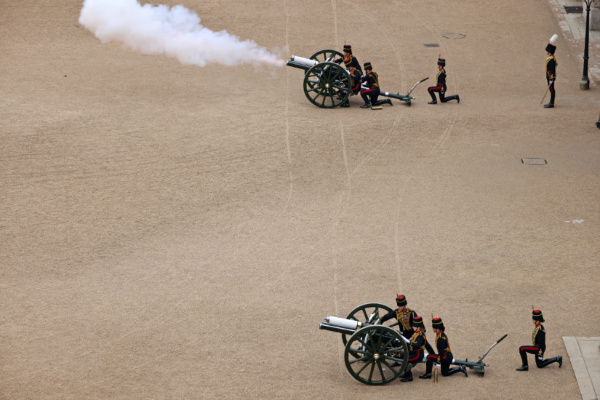
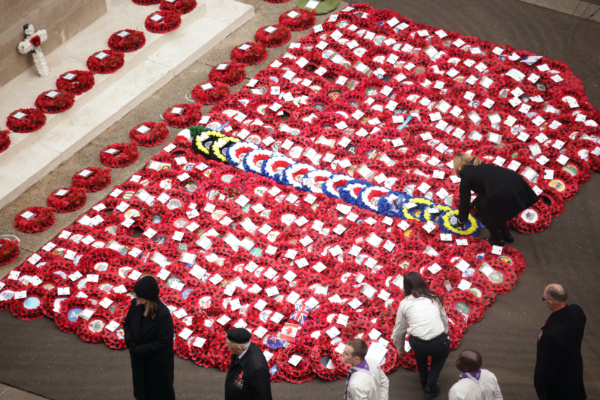
Some 10,000 people lined Whitehall to watch the The Royal British Legion’s Veterans Parade and take part in the annual two-minute silence at the Cenotaph on Sunday…
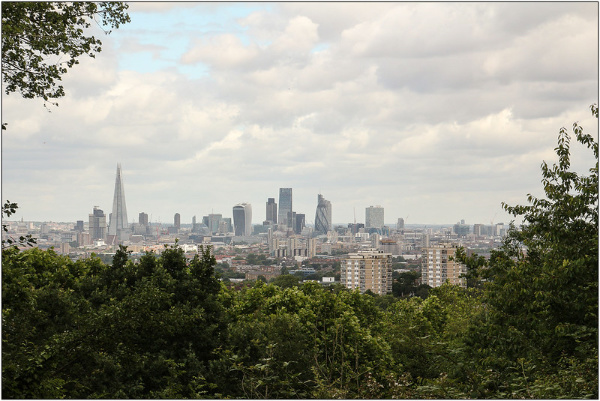
There’s a couple of possible explanations for the name – the first is that the oak in question once marked the southern boundary of the estates or “honour” of the 12th century Earls of Gloucester – hence ‘Honor Oak’.
The second is that Queen Elizabeth I apparently had a picnic with Sir Richard Bulkeley of Beaumaris under its branches on May Day, 1602. Hence again ‘Oak of Honor’ or ‘Honor Oak’.
Sadly, the original tree is gone – it was apparently hit by lightning in the 1880s – and a replacement, which can still be seen today, was subsequently planted nearby.
There’s a few stories surrounding the hill and its oak including that it was here that the Roman general Paulinus overcome Boudicca in 61AD. Another says that the highwayman Dick Turpin used it as a lookout.
Its height did see the hill put to use as a beacon by the Admiralty during the Napoleonic Wars and as a semaphore station by the East India Company. A beacon on top of the hill was erected to commemorate the Silver Jubilee of King George V in 1935 and subsequently used for celebrations including the coronation of Queen Elizabeth II and the Queen’s silver and golden jubilees.
There was also a gun emplacement built upon the hill during World War I.
The area around the hill was largely rural until the late 18th century. In 1809, the Croydon Canal Company constructed a canal which ran from Croydon north to New Cross and which included numerous locks. It was taken over almost 30 years later by the Croydon and London Railway for its new line (the current railway line, the stops on which include Honor Oak Park (opened in 1886), runs along the same course).
There was a bid to incorporate One Tree Hill into a golf course in the late 1800s but following a protest, this was halted and in 1905 the hill was acquired by the Camberwell Borough Council as public open space. It remains so today.
The Church of St Augustine was built to the designs of William Oakley on the hill’s east side in the late 19th century.
Famous residents in the streets around the hill have included Spike Milligan.
The Honor Oak Reservoir lies just to the north of the hill. It was constructed between 1901 and 1909 and was the largest brick built underground reservoir in the world. The roof of the still-in-use reservoir is grassed over and used as a golf course. A rather grand pumping station stands nearby.
• The Lord Mayor’s Show – featuring the 696th Lord Mayor of London, Alastair King – will be held this Saturday. The three-mile long procession – in which the Lord Mayor will ride in the Gold State Coach – features some 7,000 people, 250 horses, and 150 floats. It will set off from Mansion House at 11am and travel down Poultry and Cheapside to St Paul’s Cathedral before moving on down Ludgate Hill and Fleet Street to the Royal Courts of Justice. The return journey will set off again at 1:10pm from Temple Place and travel via Queen Victoria Street back to Mansion House where he will take the salute from the Pikemen and Musketeers at 2:40pm. For more information, including where to watch the show, head to https://lordmayorsshow.london.
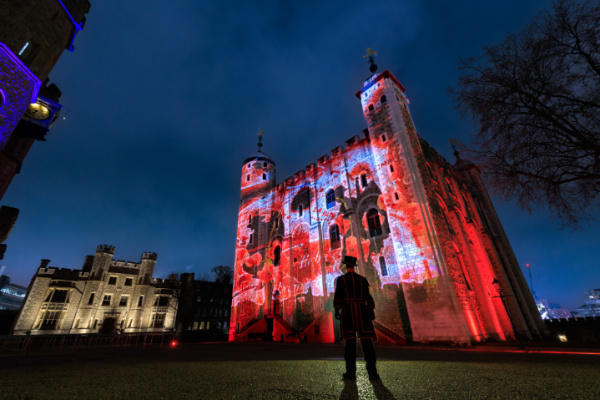
• An immersive sound and light show commemorating World War I and II opens at the Tower of London tomorrow ahead of Armistice Day and Remembrance Sunday. Historic Royal Palaces has partnered with Luxmuralis to present Poppy Fields at the Tower with visitors invited to go inside the Tower where – recalling the 2014 display Bloodswept Lands and Seas of Red in the Tower of London moat to mark the centenary of World War I – the walls will not only be illuminated with tumbling poppies but also historic photographs, documents and plans. The display is being accompanied by music composed by David Harper, and poetry recordings. Visitors will also be granted special access to see the Crown Jewels after-hours to learn more about their removal from the Tower during both World Wars. Runs until 16th November and should be pre-booked. Admission charges apply. For more, see https://www.hrp.org.uk/tower-of-london/whats-on/poppy-fields-at-the-tower/.
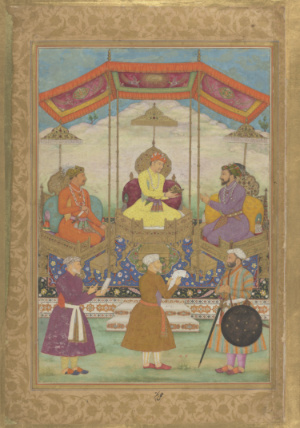
• An exhibition celebrating the golden age of the Mughal Court opens at the V&A in South Kensington on Saturday.The Great Mughals: Art, Architecture and Opulence examines the “creative output and internationalist culture” of Mughal Hindustan during the age of its greatest emperors, a period spanning c1560 to 1660. More than 200 objects are on display arranged in three sections corresponding to the reigns of the Emperor Akbar (1556-1605), Jahangir (1605 to 1627) and Shah Jahan (1628 to 1658). The objects include paintings, illustrated manuscripts, vessels made from mother of pearl, rock crystal, jade and precious metals. Highlights include four folios from the Book of Hamza, commissioned by Akbar in 1570, and the Ames carpet which was made in the imperial workshops between c1590 and 1600 and is on display for the first time in the UK. There’s also a unique wine cup made from white nephrite jade in the shape of a ram’s head for Shah Jahan in 1657, two paintings depicting a North American Turkey Cock and an African zebra created by Jahangir’s artists, and a gold dagger and scabbard set with over 2,000 rubies, emeralds and diamonds. Runs in Galleries 38 and 39 until 5th May. Admission charge applies. For more, see www.vam.ac.uk.
• Send all items for inclusion to exploringlondon@gmail.com.
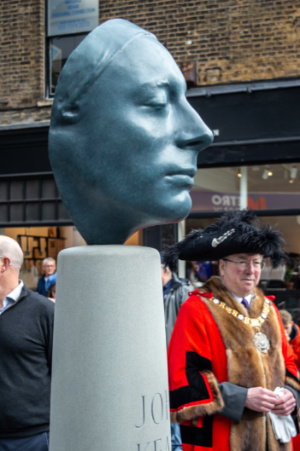
The new sculpture of John Keats with Lord Mayor of the City of London, Michael Mainelli.. PICTURE: Courtesy of the City of London Corporation.
A new sculpture of Romantic poet John Keats has been unveiled near his birthplace in Moorgate to mark the 229th anniversary of his birth.
The work of British artist Martin Jennings, the sculpture is a bronze cast of an enlarged life mask of Keats which was made when he was 21 (he died just four years later of consumption in 1821).
A plaster cast of the life mask is owned by Keats House, in Hampstead, and it was scanned and digitally enlarged as the basis for the sculpture which is mounted on a stone plinth. The plinth in turn is set in a circular slate base inscribed with some words from the Keat’s Ode on Idolence.
The new statue, which was unveiled last Thursday, was funded by former City of London Corporation Alderman, Bob Hall, who has donated it to the City of London Corporation. Hall has previously funded a statue of poet John Donne – the work of Nigel Boonham – which sits outside St Paul’s Cathedral.
Keats was son of an ostler at an inn and livery stable called The Swan and Hoop, which stood not far from the modern-day Moorgate station.
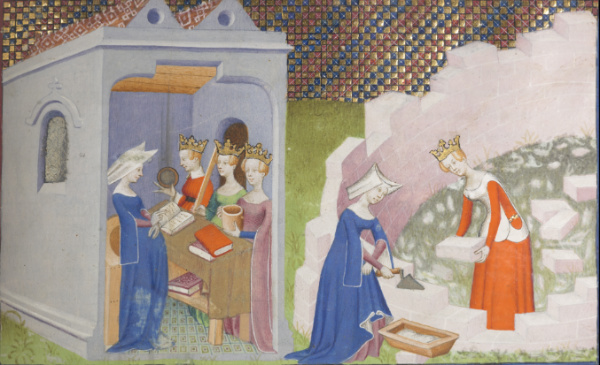
• The lives of medieval women are the subject of a new exhibition at the British Library.Medieval Women: In Their Own Words features more than 140 objects with highlights includinga letter bearing the earliest known signature of Joan of Arc which has never before been displayed outside France, a manuscript made in the early 15th century under the personal supervision of Christine de Pizan – the first professional women author in Europe, a 12th century ivory carving which belonged to Sybilla of Flanders, and, the oldest surviving Valentine’s Day letter, sent by Margery Brews in 1477. There’s also the book Behinat Olam Mantua, published between 1476 and 1480 by Estellina Conat who was the first recorded woman to print a book in Hebrew, the only surviving copy of the earliest known autobiography in English, The Book of Margery Kempe, which wasprobably written around 1438, a 15th century birthing girdle and the largest hoard of medieval gold coins ever discovered in Britain which was probably gathered as a result of Margaret of Anjou’s fundraising efforts in support of the Lancastrian side in the Wars of the Roses. The display is a multi-sensory experience which, as well as the objects on show, features scent installations, films, music and interactive digital technologies. The exhibition, which is accompanied by a programme of events, can be seen until 2nd March. Admission charge applies. For more, see www.bl.uk.
• An exhibition of the widest range of drawings from the Italian Renaissance ever to be shown in the UK opens at The King’s Gallery in Buckingham Palace on Friday.Drawing the Italian Renaissance features more than 160 works by more than 80 artists including Leonardo da Vinci, Michelangelo, Raphael and Titian. The works are all drawn from the Royal Collection and more than 30 are on display for the first time while a further 12 have never been shown in the UK. Highlights include Raphael’s The Three Graces in red chalk (c1517-18), Fra Angelico’s The bust of a cleric (c1447-50), a chalk study of an ostrich attributed to Titian (c1550), Leonardo da Vinci’s A costume study for a masque (c1517-18), Michelangelo’s The Virgin and Child with the young Baptist (c1532), and works by lesser-known artists such as Paolo Farinati’s 1590 study of three mythological figures under an arch. Admission charge applies. Can be seen until 9th March. For more, head to www.rct.uk/collection/exhibitions/drawing-the-italian-renaissance/the-kings-gallery-buckingham-palace
• Melek Zeynep Bulut’s postponed installation Duo can be seen in the Painted Hall at the Old Royal Naval College in Greenwich – but only until Sunday. Presented in partnership with the London Design Festival, Duo is a suspended installation which explores the concepts of duality and interaction. Admission charge applies. For more, see https://ornc.org/whats-on/ldf/.
Send all items for inclusion to exploringlondon@gmail.com
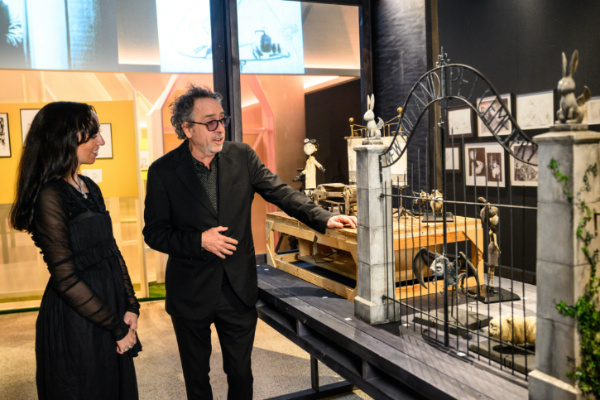
Tim Burton and curator Maria McLintock visit ‘The World of Tim Burton’ , on 23rd October. PICTURE: Matt Crossick/PA Media A (courtesy of the Design Museum)
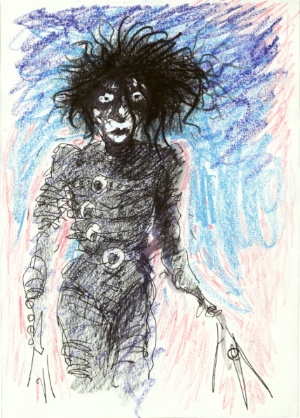
• The fantastical world of celebrated film-maker Tim Burton is on display in a touring exhibition opening at the Design Museum on Friday. The World of Tim Burton, making its final stop after a decade-long world tour, showcases his 50 years of creative output and looks at not only his role as film-maker but as illustrator, painter, photographer and author. Drawn from Tim Burton’s personal archive as well as film studio collections and other private holdings, the more than 600 objects include film props, drawings, paintings, photographs, sketchbooks, moving-image works, sculptural installations, set and costume design. Highlights include the Catwoman suit from 1992’s Batman Returns, Wednesday Addams’ viral Rave’N dance dress from the recent Netflix series and the Edward Scissorhands costume worn by actor Johnny Depp in the 1990 film. There’s also early drawings of the Martians from Mars Attacks! (1996), the Mad Hatter from Alice in Wonderland (2010), and Emily in Tim Burton’s Corpse Bride (2005) and a specially created cinema experience which gives voice to some of Burton’s key collaborators and is being shown in a bespoke art-deco space reminiscent of the theatres Burton frequented as a child growing up in Hollywood. Runs until 21st April. Admission charge applies. For more, see https://designmuseum.org/exhibitions/the-world-of-tim-burton.
• Hampton Court Palace and the Tower of London are marking Halloween with a series of spine-tingling events which delve into the mysterious past of the royal residences. From Saturday, visitors to Hampton Court Palace can, among other things, discover the ‘Alchemist’s Apothecary’ and meet the ghost of a long-departed alchemist, venture into the ‘Spider’s Lair’ in the depths of the palace’s wine cellar, catch a glimpse the frantic ghost of Catherine Howard in the Haunted Gallery, and encounter the spirit of Sybil Penn, a former nurse to Henry VIII’s son Edward, who has haunted the palace hallways ever since her tomb was disturbed. At the the Tower of London, meanwhile, the grounds have been transformed, hosting everything from a haunted chess game on the South Lawn to a glimpse into the tower’s astronomical past, complete with celestial maps and scientific instruments. Events take place until 3rd November. Admission charge applies. For more, see www.hrp.org.uk/hampton-court-palace/ or www.hrp.org.uk/tower-of-london/.
• The first Halloween-themed light trail has opened at Kew Gardens with eerie illuminated trees, ghoulish installations and fire performers. Visitors can wander through an illuminated spiders web or discover a neon Carnivorous Tree feeding on unsuspecting skeletons by choosing one of three sessions to attend (daylight, twilight and moonlight) with things getting scarier as the evening progresses. Runs until 3rd November. Admission charge applies. For more, see www.kew.org/kew-gardens/whats-on/halloween-at-kew.
• Diwali is being celebrated on Trafalgar Square this Sunday in a free, family-friendly festival. Delivered in partnership with the volunteer-led Diwali in London committee, the event – which showcases the culture of London’s Hindu, Sikh and Jain communities – features a programme of dance, music, activities and food. Highlights include dance workshops, sari and turban tying and the new Bhajan singing space where groups will perform throughout the day. The day runs from 1pm to 7pm. For more, see www.london.gov.uk/events/diwali-square-2024.
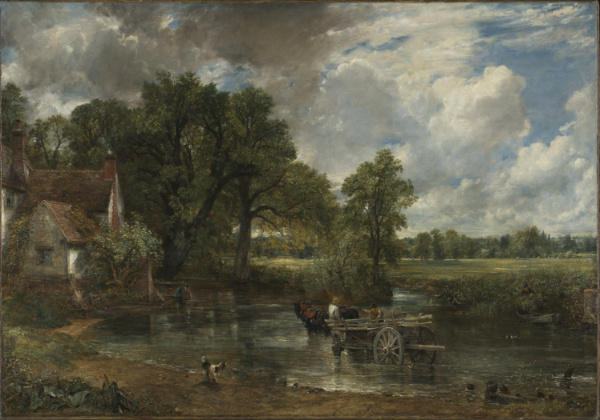
• John Constable’s iconic work The Hay Wain is the focus of a new free exhibition opening at The National Gallery.Discover Constable and The Hay Wain, which is being held as part of the gallery’s 200th anniversary celebrations, will look at the innovative nature of the painting when it was first exhibited at the Royal Academy in 1821 and show how Constable came to be established as a master in the history of British art. It will also examine the subsequent ownership of the painting, its acquisition by the National Gallery in 1886, and the rise in popularity of both Constable and The Hay Wain in the years since. The free exhibition in the Sunley Room opens today. Runs until 2nd February. For more, see www.nationalgallery.org.uk/exhibitions/discover-constable-and-the-hay-wain.
• A new exhibition examining how the British Museum’s collection reflects the legacies of British imperial power opens today. A collaboration with renowned Guyanese-British artist Hew Locke, Hew Locke: what have we here? is Locke’s “personal and emotive exploration” of the collection and features well-known objects from across the museum’s collection alongside specially commissioned new works by Locke. Can be seen until 9th February in the The Joseph Hotung Great Court Gallery (Room 35). For more, see www.britishmuseum.org.
• The first tickets for London’s New Year’s Eve fireworks celebration go on sale at noon tomorrow (Friday 18th October). The tickets, which cost between £20 and £50 depending on the viewing area (London residents pay £15 less on each ticket), represent the first of two batches of tickets to go on sale. Tickets must be purchased to watch the fireworks in person and only tickets bought from the authorised outlet Ticketmaster will be accepted. For those who can’t get tickets, the fireworks show is being broadcast live on the BBC. www.london.gov.uk/nye.


 Exploring London