10 sites in London you may not know about – 5. Richmond Park

OK, something this big can’t exactly be a secret but due to the fact it lies well out of the city centre, the vast expanse of Richmond Park in the city’s outer south-west, not far from the Thames, can get overlooked.

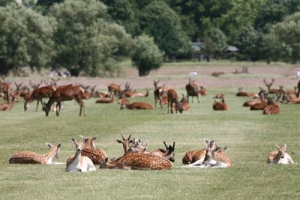
At almost 1,000 hectares, Richmond Park is the largest open space in the city and is home to some 650 Red and Fallow deer who roam about at will.

While the park’s royal connections go back to Edward I (1272-1307) when the area was known as the Manor of Sheen, a name which was changed to Richmond during the reign of Henry VII (1485-1509), it wasn’t until 1637 that Charles I decided to enclose the land with walls that remain to this day.

Deer aside, the park is also home to Pembroke Lodge which in 1847 became the home of then Prime Minister Lord John Russell (and is now a restaurant). The park’s features include King Henry’s Mound – which boasts great views on a clear day including that of St Paul’s Cathedral (12 miles away) – and the Isabella Plantation – an ornamental woodland garden.

WHERE: The park is located south of the Thames-side village of Richmond. Nearest tube is Richmond.  WHEN: 7am in summer to dusk; COST: Free to enter; WEBSITE: www.royalparks.org.uk/parks/richmond_park/

Image: Courtesy of Royal Parks. © Giles Barnard

Around London…

• The British Military Tournament takes up where the Royal Tournament left off. The abolition of Royal Tournament in 1999 ended almost 120 years of tradition and left a significant gap in London’s annual events calender. No longer. The concept has been reborn as the British Military Tournament which will be held on 4th and 5th December this year. Presented by ABF The Soldier’s Charity, the spectacle will feature 500 troops, 145 horses, massed bands and the “field gun run” among other things. Tickets start at £29 for adults/£22 for children.  www.britishmilitarytournament.com.

• A rare sketch of pre-1666 St Paul’s is to be auctioned. The drawing, made less than 10 years before the Great Fire consumed the cathedral, is by Bohemian artist Wenceslaus Hollar and was created for William Dugdale’s illustrated history of the cathedral. www.thisislondon.co.uk/standard/article-23851487-long-lost-sketch-of-medieval-st-pauls-cathedral-for-sale.do

• On Now – Treasures of Lambeth Palace Library. At the Lambeth Palace Library (open Monday to Saturday (10am-5pm), admission £8 adults/£7 concessions, www.lambethpalacelibrary.org/content/treasuresexhibition). Held in celebration of the 400th anniversary of the library’s foundation, the exhibition in the palace’s Great Hall features some of the most significant books and documents in the English-speaking world including a Gutenberg Bible – the first great printed book in Western Europe using moveable type, the warrant for the execution of Mary, Queen of Scots, signed by Queen Elizabeth I, the 9th century Irish McDurnan Gospels, the 13th century Lambeth Apocalypse, and a rare edition of the Babylonian Talmud. Exhibition closes 23rd July.

The Tip – Free online guides to walking in South Bank

The first in a regular section of tips to make the most out of your time in London…

South Bank Walks. Five free online walking guides, each of which comes with maps and detailed descriptions of points of interest along the way, are available on the South Bank Walks website, created by the South Bank Employers’ Group . The walks take in more that just South Bank – one starts in Soho and finishes in South Bank; another starts at St Paul’s and ends up at Borough Market – and include a guide specifically designed for young people. The website also has a terrific building and street search feature. www.southbankwalks.com

10 sites in London you may not know about – 4. Sir John Soane’s Museum

Sir John Soane’s Museum is still unknown to many but that is starting to change as growing numbers of tourists descend upon the property at Lincoln’s Inn Fields (as evidenced by the queues you can now often find waiting patiently outside).

The museum is housed in the former home of noted architect and collector, Sir John Soane, who left it to the nation after he died in 1837 by an Act of Parliament with the caveat that it be kept “as nearly as circumstances will admit in the state” it was on his death.

Sir John, born the son of the bricklayer in Oxfordshire in 1753, rose to become a famous – and somewhat controversial – architect, his most famous contribution being the Bank of England.

Having married into money – his wife, Elizabeth Smith was the daughter of a wealthy builder whose fortune he inherited, Sir John bought 12 Lincoln’s Inn Fields in 1792 and subsequently demolished and rebuilt it. In the early 1800s, he bought the property next door, number 13, and again demolished and rebuilt it, and, in the 182os bought number  14, which received the same treatment, eventually creating the delightfully odd and expansive home which now occupies the site.

Sir John was an avid collector of statues, furnishings, paintings and curiosities and the uniquely designed house remains filled with his collections – ranging from the Sarcophagus of Egypt’s Seti I (dating from around 1370 BC) to Sir Robert Walpole’s desk, medieval European stained glass, and William Hogarth’s famous series of paintings, A Rake’s Progress.

This is a museum worth visiting for its sheer eccentricity but it should be noted that it’s not really a place for young children – many of the rooms are small and crowded with artefacts that may just prove too tempting.

WHERE: 13 Lincoln’s Inn Fields. Nearest tube is Holborn. WHEN:10am to 5pm, Tuesday to Saturday; COST: Free to enter (there is a museum tour on Saturdays for £5); WEBSITE: www.soane.org

The Weekly Roundup

Each week, we’ll be bringing you a round-up of some of the news affecting historic and interesting places in London. So, to kick it off…

The gardens surrounding the neo-Palladian masterpiece Chiswick House have been reopened following a £12 million restoration. The 65 acres of gardens, known as the birthplace of the English Landscape Movement, were designed by Lord Burlington and William Kent in the 1720s and 1730s. They were created as a backdrop for the magnificent house Lord Burlington designed and had built on the west London property following a grand tour of Italy. The garden’s original vistas have been restored and statutory and garden buildings repaired – including a 19th century conservatory housing rare camellias. More than 1,600 trees have been planted – some of which were propagated from the original 18th century Lebanon cedars planted in the garden – and the Walled Gardens have also been restored (these will only be open to the public on special occasions). There’s also a new cafe designed by award-winning architects Caruso St John. ~ www.english-heritage.org.uk/chiswickhouse

Four new Blue Plaques have been unveiled in London. They include one for Sir William Nicholson (1872-1949), painter and printmaker (1 Pilgrim’s Lane, Hampstead); another for Charles Rolls (1877-1910), motoring and aviation pioneer (14/15 Conduit Street, Mayfair); Baron Carlo Marochetti (1805-1867), sculptor (34 Onslow Square, South Kensington); and, Wing Commander FFE Yeo-Thomas GC (1902-1964), secret agent (24-28 Queen Square, Holborn). ~ www.english-heritage.org.uk/blueplaques

On Now – Magnificent Maps: Power, Propaganda and Art. At the British Library (open daily, admission free, www.bl.uk/magnificentmaps/). The exhibition contains some 80 spectacular, mainly European, maps, dating from as far back as the Roman era, and explores how they have been employed for various purposes – as propaganda, works of art, teaching aids and indoctrination. Included in the exhibition are the world’s biggest and smallest atlases – the latter created for a doll’s house. Exhibition closes 19th September.

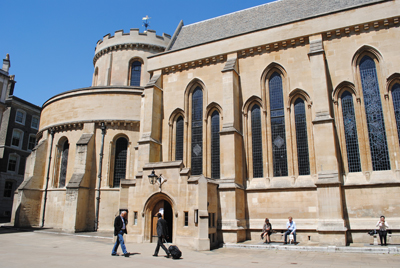
10 sites in London you may not know about – 3. Temple Church

Located just outside the west end of the medieval city walls, the Temple Church is an anomaly in a city where, thanks to the Great Fire of 1666, few medieval churches remain.

First consecrated in 1185, the church – like all Templar churches – features a round nave – known as the Round Church – modelled on that of the Holy Sepulchre in Jerusalem. It adjoins a ‘Hall Church’ which features three bays dating from the 13th century.

While they have been moved several times, the Round Church contains a number of tomb effigies including those believed to be that of William Marshall, 1st Earl of Pembroke and one of the towering figures of the 12th and early 13th centuries.

It also features a series of faces around the outer wall (these were renewed and replaced in the 1820s), each of which shows a different and, at times, plain odd expression.

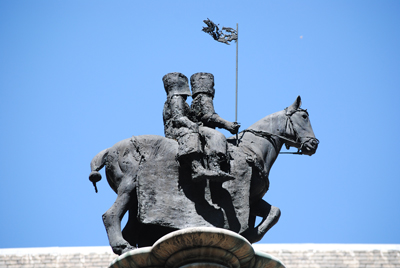
The church is located in the midst of what was once a large landholding – located between Fleet Street and the Thames – once owned by the Templar Knights which included quarters for the knights and serjeants. Following the disbanding of the order in early 1300s, the Temple Church passed into the hands of the Knights Hospitaller and then became the property of the Crown during the 16th century reformation.

In 1608, James I granted all the Templar’s land to the societies of the Inner and Middle Temple, two of London’s Inns of Court – the inns are still dedicated to housing those studying and practising law and it’s the inns which maintain the church today.

One of the most famous figures connected to the church is Richard Hooker, Master of the Temple between 1585-91, and author of Of The Laws of Ecclesiastical Polity, an important document in Anglican theological thought.

Christopher Wren also left his mark here – he refurbished the church’s interior in the 1670s although much of work was later removed – as did World War II – the roof of the Round Church was brought down during the Blitz.

Make sure you pop in for one of the free organ recitals which are held over lunchtimes each Wednesday.

WHERE: Off Fleet Street and down Inner Temple Lane (nearest tube station is Temple); WHEN: Check website for times; COST: £4 (free to under 18s and seniors); WEBSITE: www.templechurch.com

LondonLife: Trooping the Colour

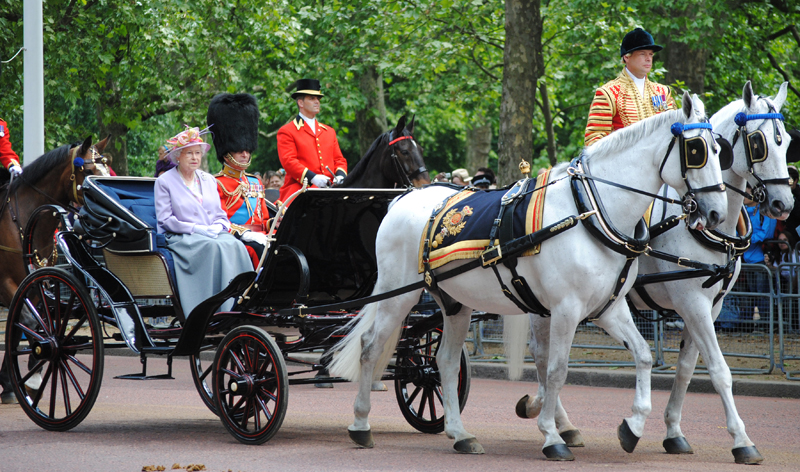
Last weekend saw thousands gather to celebrate Queen Elizabeth II’s birthday and watch the annual Trooping the Colour parade down The Mall to Horse Guards Parade in Whitehall. The tradition of Trooping the Colour began around the early eighteenth century when the ‘colours’ or flags of battalions were ‘trooped’ through the assembled ranks so they could be seen and recognised by the soldiers (important on the field of battle when the flags were used as a rallying point). Since 1748, the parade has doubled as a way of marking the King or Queen’s birthday (the current Queen’s birthday is actually 21st April). It has been an annual event since 1760 when George III succeeded to the throne and since the reign of Edward VII (1901-1910), the monarch has always been present at the parade. Up until 1986, the current Queen took the salute riding side-saddle on her horse, Burmese, but these days she rides as she did on Saturday with Prince Philip, the Duke of Edinburgh, in Queen Victoria’s 1842 phaeton, returning down the Mall to appear on the balcony of Buckingham Palace with the royal family where they watch an airforce flyby. WEBSITE www.royal.gov.uk/RoyalEventsandCeremonies/TroopingtheColour/TroopingtheColour.aspx

10 London sites you might not know about – 2. The Monument

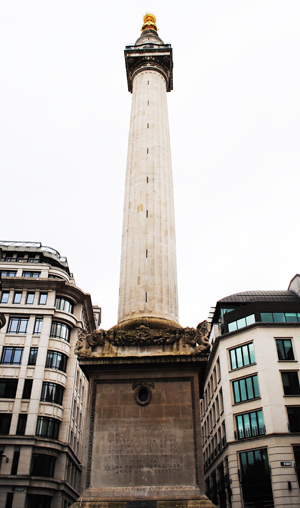
The MonumentIt was a toss-up whether to include The Monument in this list but, surprisingly perhaps, there are still many visitors to London who overlook what is a unique site in the old city of London and a reminder of one of the key events which have shaped the city.

The tallest free-standing stone column in the world, it was built between 1671-77 to commemorate the Great Fire of London in 1666 and the subsequent rebuilding of the city. The fire broke out in a baker’s shop in nearby Pudding Lane on Sunday, 2nd September, 1666, and burned until the following Wednesday, destroying much of the city in the meantime (although, thankfully, there was actually little loss of life).

Sir Christopher Wren (architect of St Paul’s fame and then Surveyor-General to King Charles II) and Dr Robert Hooke (Surveyor to the City of London and Wren’s assistant) designed the memorial which is topped by a drum and copper urn from which flames are emerging and stands 61 metres above the ground and which, if toppled, reaches the point in Pudding Lane where the fire began.

A spiral stone staircase winds it way up the column’s middle to a platform where you can get come stunning views of the city (but be warned at 311 steps, it’s quite a climb, although at least since 1842 there’s been an iron railing around the platform).

The reliefs on the western side of the base shows Charles II in all his glory while inscriptions on the other three sides tell the story of the great fire (incidentally, the main inscription, was altered in 1681 to include the words “But Popish frenzy, which wrought such horrors, is not yet quenched” which were removed in 1831). The site is now owned by the City of London Corporation.

WHERE: Junction of Monument Street and Fish Street Hill (Nearest Tube station is Monument). WHEN: Daily (9.30am-5.30pm). COST: Adults £3/concessions £2/children £1. WEBSITE: www.themonument.info

10 London sites you may not know about – 1. Eltham Palace

London is a vast city and whether you’re a first-time visitor or a seasoned Londoner, there’s probably still many places you haven’t yet visited. So over the next few posts we’re running a list of 10 of the less well-known sites for your perusal…

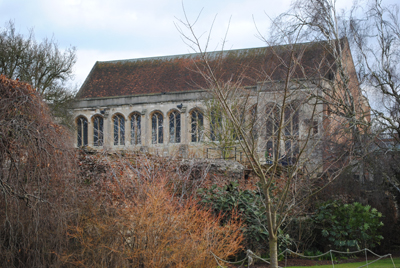
1. Eltham Palace. While Henry VIII’s final home, Hampton Court Palace, remains among London’s top 10 tourist sites, less well known is his childhood home, Eltham Palace. True, nowhere near as much of it remains from the Tudor and earlier medieval times, but with a later adjoined 1930s mansion housing some amazing Art Deco interiors, the medieval remains are just the start.
The palace’s history can be traced back to the Domesday survey of 1086. It passed into royal ownership in 1305 when then owner, Anthony Bek, Bishop of Durham, gave it to King Edward I.

Numerous kings and their families spent time at Eltham including Edward III, Henry IV, and Henry VI, and it was Edward IV who, between 1475 and 1480, ordered the Great Hall built – a treasure which still survives.

Henry VIII was the last English monarch to spend considerable time at Eltham – it was elipsed by Greenwich Palace as a royal residence – and, after falling into disrepair into the seventeenth century, it passed back into ‘non-royal’ hands.

Much of what stands at Eltham today dates from the 20th century when millionaire socialites Sir Stephen and Lady Virginia Courtauld oversaw the restoration of the medieval Great Hall and the construction of an adjoining mansion which is a masterpiece of 1930s style incorporating a combination of Art Deco, “ocean-liner style” and Swedish design.
The Courtaulds left for a new life in Southern Rhodesia in 1944 and from then until the early 1990s the military occupied the property. English Heritage subsequently oversaw a major restoration and opened it to the public in 1999.

It’s well worth a visit to see the medieval Great Hall (which apparently boasts the third largest hammer-beam roof in England) and the 1930s property (aside from the stunning interiors – including Virginia’s gold-plated bathroom and warmed sleeping quarters for the Courtauld’s pet lemur – there’s also some great Courtauld family movies on show which give an amazing insight into the family which once lived there and an audio guide tour fittingly narrated by David ‘Poirot’ Suchet). There’s also 19 acres of gardens to explore, including a magnificent medieval bridge spanning what remains of the moat, and a cafe to while away the afternoon.

WHERE: Off Court Road, SE9. Half a mile from Eltham and Mottingham train stations. COST: £8.30 adult/£7.20 concession/£4.20 child (garden only tickets are available). English Heritage members free. WEBSITE: www.elthampalace.org.uk
The return of the Temple Bar

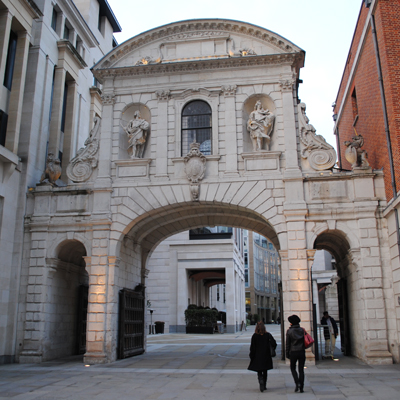
Temple Bar, LondonIt’s been a while since I was in London so I was delighted to find that the Temple Bar had been restored (not to its original site, but to the city as a whole!). The only surviving gateway into the city of London, it was constructed in 1672 to replace a crumbling wooden predecessor and was designed by Sir Christopher Wren (he of St Paul’s fame). The Temple Bar stood at the junction of Fleet Street and the Strand until 1878 when, to help traffic flow, it was removed. Apparently it was intended that it would be rebuilt somewhere else in the city, but time passed and no suitable site was found, so it eventually ended up on an estate in Hertfordshire. Where it remained until 2004 when – thanks to the work of the Temple Bar Trust – it was able to be returned to the city – it is now located between St Paul’s and Paternoster Square – for all to now enjoy.

WHERE: Between Paternoster Square and St Paul’s Cathedral. Nearest tube station is St Paul’s. COST: Free to see (actual building not open to public). WEBSITE: www.thetemplebar.info.

The Temple Bar isn’t the only ‘monument’, for want of a better word, which has been relocated in London. Another is the Wellington Arch, a magnificent structure which was originally finished (though not really completed) in 1830. Then known as the Green Park Arch, it stood parallel with the Hyde Park Screen (it was created to be seen in conjunction with it) and was later adorned with a huge – and controversial – statue of Wellington. But by the 1880s, traffic flow was again a problem and so it was decided to move the arch to its current location, perpendicular to the Hyde Park Screen. As a footnote, when the arch was moved in 1883, the statue of Wellington was not placed back on top but moved to a new site – Aldershot, where it is now.

WHERE: Grosvenor Place, Westminster, SW1X 7. Nearest tube station is Hyde Park Corner. COST: Adults £3.70/child £1.90 (English Heritage members free – there is a joint offer for others combined with Apsley House). WEBSITE: www.english-heritage.org.uk/daysout/properties/wellington-arch/.

Exploring London…

Welcome to Exploring London, a new blog concerned with uncovering some of the great city’s hidden past; to exploring its nooks and crannies; to delving into its secrets. It was noted resident Dr Johnson who famously said that to be bored with London is to be bored with life and indeed, this is a city that continues to surprise and amuse, no matter how long one spends here. I hope you enjoy the journey…