This Week in London – Charles Holden’s university vision; Two-Tone at the Barbican; and celebrating Winston…

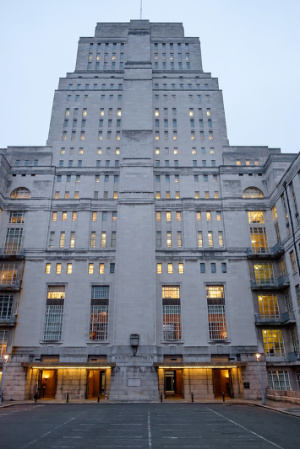
Senate House. PICTURE: Tim Abbott (licensed under CC BY-NC-ND 2.0)

A new exhibition celebrating the vision architect Charles Holden had for the design of the University of London – including the iconic Senate House – has opened at the venue. Holden had a hand in designing some 48 Tube stations and 55 Broadway – London’s first skyscraper - before in 1931 being appointed to develop the university’s Bloomsbury estate, including its headquarters. While the master plan was never completed (only the Senate House and its library were finished), it provides a fascinating insight into a part of London that could have been. Charles Holden’s Master Plan: Building the Bloomsbury Campus tells the story of institution’s design through architectural models, archival documents, photo albums, and other mixed media. The display in the Chancellor’s Hall Lobby on the first floor of the Senate House runs until 17th March. Entry is free. For more, see www.london.ac.uk/news-events/events/charles-holdens-master-plan-building-bloomsbury-campus.

A new exhibition tracing the origins and influence of the popular British music genre known as two-tone has opened at the Barbican Music Library. Two-tone, which is also known as ‘ska-rock’ or ‘ska revival’ and which had its heyday in the late 1970s and early 1980s, fused traditional Jamaican ska, rocksteady, and reggae music with elements of punk rock and new wave music. Its name comes from record label 2 Tone Records which was founded in 1978 by Jerry Dammers from The Specials, one of the most popular Two-tone bands of the time. The display – From the Caribbean to Coventry: Plotting the Rise of Two Tone – features band memorabilia as well as clothing, literature, art, photographs, and fan contributions, and explores how Caribbean immigration influenced UK youth culture. Runs until 25th May. Admission is free. For more, see https://fromthecaribbean2coventry.co.uk.

FURTHER AFIELD: Sir Winston’s family home – Chartwell in Kent – is hosting a new outdoor photography exhibition to mark what would have been his 150th birthday which features some of most spectacular birthday cakes. Press interest into Churchill’s birthday extravaganza – and in particular the cakes – was considerable and historic photographs from TopFoto have now been colourised for the first time, bringing the baking creations vividly to life. The images can be seen until 25th February. For more, see www.nationaltrust.org.uk/visit/kent/chartwell.

Send all items for inclusion to exploringlondon@gmail.com
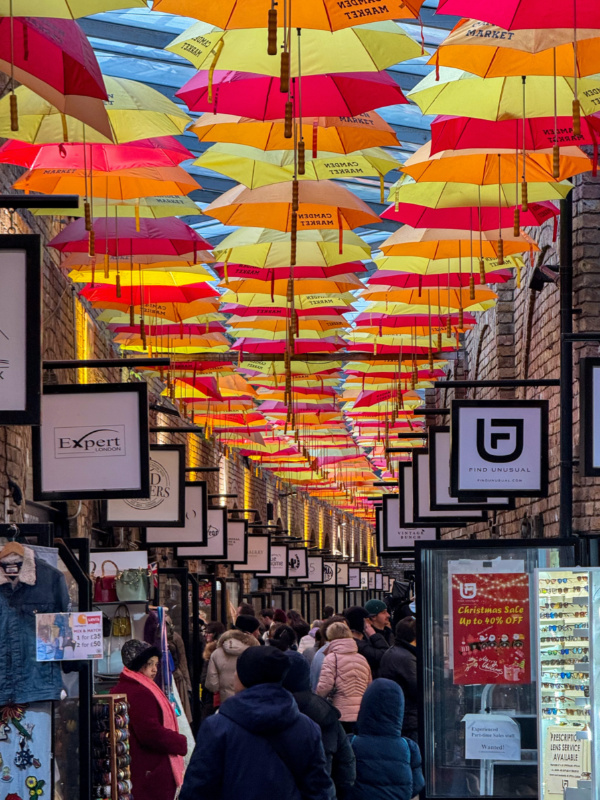
LondonLife – Camden Market…

PICTURE: Mayank Gupta/Unsplash

LondonLife – City illuminations…

The intersection of Northumberland Avenue and Whitehall Place. PICTURE: Ashley Main/Unsplash

Famous Londoners – John Stow…

Sixteenth century historian John Stow wrote numerous chronicles of English history but is mostly remembered for his landmark survey of London, a monumental work which has lead to him being informally given the title “founding father of London history”.

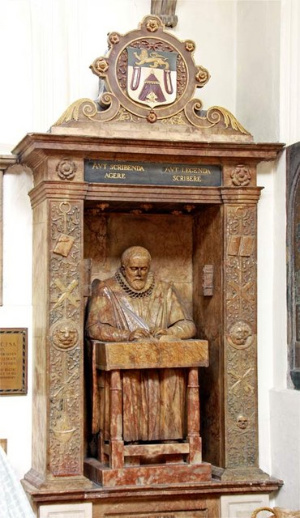
The monument depicting John Stow. PICTURE: John Salmon / St Andrew Undershaft, St Mary Axe, EC2 – Wall monument of John Stow / CC BY-SA 2.0

Stow (sometimes written as Stowe) was born a Londoner in about 1525 in the parish of St Michael, Cornhill. He was the eldest of seven children of Thomas Stow, a tallow chandler, and his wife Elizabeth.

Nothing is known about Stow’s early education - whether he attended a grammar school or was self-taught – but he is known to have developed a deep knowledge of English history, culture and customs as well as of Latin.

He didn’t follow his father’s trade but instead became an apprentice tailor and in 1547 was named a freeman of the Merchant Taylors’ Company. He is said to have worked as a tailor in London for almost 30 years.

In 1560, he started on his best known work, A Survey of London, a detailed topographical survey of the City of London and its suburbs – it was eventually published in 1598 (a second, longer edition followed in 1603). But his first book, on the works of Geoffrey Chaucer, was published in 1561, and he went on to publish numerous editions of English chronicles.

Stow was in contact with many of the era’s leading antiquarians, including the likes of John Dee and William Camden, and he was an active member of the first Society of Antiquaries, established in about 1586.

He also attracted the patronage of some significant figures including the Archbishops of Canterbury Matthew Parker and John Whitgift and Robert Dudley, Earl of Leicester, and was well-known for his collection of manuscripts, the largest group of which is now within the Harley collection at the British Library.

Stow, whose work never made him a wealthy man and who, at times, was the subject of his acquaintances’ charity (although Barrett L Beer in an entry in the Oxford Dictionary of National Biography describes his pleas of poverty as “exaggerated”), married his wife Elizabeth sometime after 1549. They lived initially in Aldgate where his business was also based (and later moved to the Lime Street ward). The couple had three daughters, two of whom – Joan and Julyan – survived him.

Stow died on 5th April, 1605. He was buried in the church of St Andrew Undershaft and his wife commissioned a marble monument to commemorate him which depicts Stow seated at his desk. A commemorative service, organised by the Merchant Taylors Company, is still held in the church every three years during which the quill he writes with is regularly replaced in a sign of respect.

10 most popular (new) posts for 2023 – Numbers 2 and 1…

The final entries in our countdown…

2. What’s in a name?…Amen Corner…

1. What’s in a name?…Shoe Lane…

Happy New Year!

PICTURE: studio-fi/iStockphoto

Wishing all our readers a great start to 2024!

10 most popular (new) posts for 2023 – Numbers 4 and 3…

4. 10 historic London homes that are now museums…2. Carlyle’s House…

3. 10 London locations related to Sir Christopher Wren…1. The Old Court House, Hampton Court Palace Green…

10 most popular (new) posts for 2023 – Numbers 6 and 5…

6. A Moment in London’s History – The coronation of King Henry V…

5. 10 historic London homes that are now museums…8. Queen Charlotte’s Cottage…

10 most popular (new) posts for 2023 – Numbers 8 and 7…

8. 10 historic London homes that are now museums…7. Sambourne House…

7. 10 historic London homes that are now museums…1. Benjamin Franklin House…

10 most popular (new) posts for 2023 – Numbers 10 and 9…

And so we come to our annual countdown of our most read new posts for 2023 (although the data is indicative only of posts looked at on their own page (and not on the homepage). But, with that caveat, we commence the countdown…

10. 10 historic vessels in London’s Thames…1. PS Tattershall Castle…

9. What’s in a name?…Chalk Farm…

Have a Merry Christmas!

Wishing you a safe and happy Christmas and New Year.

PICTURE: SHansche/iStockphoto

Keep an eye out for our annual countdown of the most popular posts for 2023 next week!

10 London locations related to Sir Christopher Wren – A recap…

We finish our series on Christopher Wren by providing a quick recap…

1. The Old Court House, Hampton Court Palace Green…

2. St Martin-in-the-Fields…

3. Scotland Yard…

4. Gresham College…

5. London coffee houses…

6. Westminster Abbey…

7. St Stephen Walbrook…

8. The Bankside Plaque…

9. St James’s Street, Piccadilly…

10. St Paul’s Cathedral…

We’ll start a new series in the New Year!

LondonLife – St Pancras ‘book tree’…

PICTURE: JuliaC2006/Flickr (licensed under CC BY 2.0)

A Christmas tree with a difference, this year’s festive display at St Pancras International features a 12 metre high ‘book tree’ with a winding staircase and 270 shelves adorned with over 3,800 hand-painted books, including classics like Charles Dickens’ A Christmas Carol and CS Lewis’ The Lion, The Witch, and the Wardrobe. There’s also a series of nooks where passerby can ensconce themselves and listen to a five minute excerpt from an audio book. The display is the result of a collaboration with bookseller Hatchards.

A Moment in London’s history – The first Selfridges Christmas windows display…

Oxford Street department store Selfridges is known for many firsts and among them is that it was the first department store in the UK to have window displays for Christmas.

It was in 1909, having opened the store in March that year, that American Harry Gordon Selfridge, drawing on his experience in the states where Macy’s in New York had featured Christmas window displays since the 1870s, decided to illuminate the display windows at his store in a bid to allow passersby to see the goods on display.

Selfridges Christmas window from 2014. PICTURE: Oast House Archive (licensed under CC BY-SA 2.0)

The windows were just one of the many innovations aimed at celebrating Christmas Selfridge – who is credited with having been the first to use the line “only (x) number of shopping days till Christmas” while working at Marshall Field’s in Chicago – embraced in the store.

Christmas displays were said to almost cover an entire floor and there were mince pies for customers, a chance to visit with Santa Claus, and a gift advice service as well as men-only tours of the store to help them with buying gifts for the females in their lives.

This year’s Christmas display at Selfridges was created around the theme of ‘showtime’ and reportedly took 100 hours to put together. It features characters including Santa Claus and the elves in a workshop.

This Week in London – Time to get your skates on…

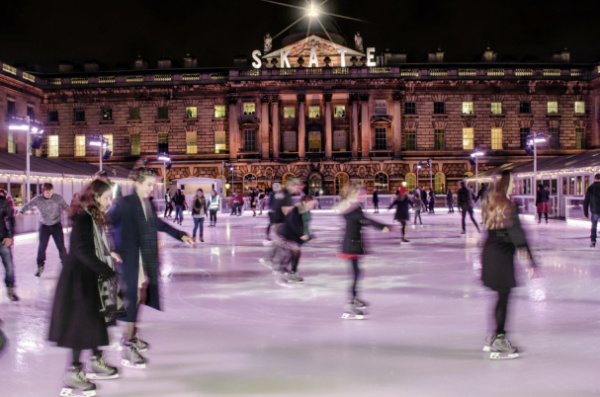
Ice skating at Somerset House in 2014. PICTURE: Alison Day (licensed under CC BY-ND 2.0)

It’s ice-skating time in London – here’s some of the most spectacular rinks:

Skate at Somerset House transforms the palace’s spectacular courtyard with a backdrop provided by Switzerland Tourism. There’s a 40 foot tall Christmas tree and a host of experiences to take part in, including the Skate School, featuring coaching sessions with National Ice Skate Association (NISA) instructors, a Kid’s Club and Chilled Out sessions as well as Skate Lates. Runs until 14th January. For more, see somersethouse.org.uk/whats-on/skate-somerset-house.

Hampton Court Palace Ice Rink features the chance to skate with stunning views of the Tudor palace as a backdrop. There’s also festive refreshments available from the onsite café and bar. Open until 7th January. For more, see www.hrp.org.uk/hampton-court-palace/whats-on/hampton-court-palace-ice-rink/#gs.24q96i.

The Queen’s House Ice Rink is set outside the historic Queen’s House in Greenwich with views of the Old Royal Naval College. There’s special sessions for young ones and relaxed sessions for those after a calmer environment. The Benugo café is located next to the rink. Open until 7th January. For more, see www.rmg.co.uk/queens-house/attractions/queens-house-ice-rink.

The UK’s largest open air ice rink, the Ice Rink at Hyde Park Winter Wonderland, is set under a canopy of lights and centred around a Victorian bandstand. There’s live entertainment on selected dates. Runs until 1st January. For more, see https://hydeparkwinterwonderland.com/things-to-do/ice-skating/.

Set in Canada Park Square, the Ice Rink Canary Wharf spans 1275 square metres. Wednesday nights feature DJs and on the 20th December, there’s an ‘Ultimate Christmas Party on Ice’. The rink stays open until 24th February. For more, see https://icerinkcanarywharf.co.uk.

10 London locations related to Sir Christopher Wren…10. St Paul’s Cathedral…

For the final entry in our Wednesday special series, we go to see Sir Christopher Wren’s greatest work – and also his resting place, St Paul’s Cathedral.

Following his death on 25th February, 1723, Wren was buried in the crypt of St Paul’s Cathedral on 5th March.

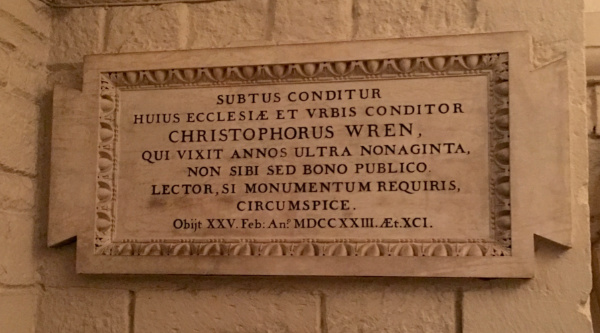
The memorial to Sir Christopher Wren. PICTURE: Phil Guest (licensed under CC BY-SA 2.0)

His burial location was in the south-east corner of the crypt and a simple memorial was placed there near that of his daughter Jane and his sister Susan Holder and her husband William.

The plaque which marks the location was written by his eldest son Christopher. Inscribed in Latin, it reads: “Here in its foundations lies the architect of this church and city, Christopher Wren, who lived beyond ninety years, not for his own profit but for the public good. Reader, if you seek his monument – look around you. Died 25 Feb. 1723, age 91.”

It’s a fitting tribute to one responsible for some of London’s most famous landmarks.

Interestingly, a fragment of Wren’s coffin can be seen at the RIBA Library. It was taken from his tomb in 1851 when it was last opened to allow for his last surviving direct descendent to be placed within.

WHERE: St Paul’s Cathedral (nearest Tube stations are St Paul’s, Mansion House and Blackfriars); WHEN: 8.30am to 4.30pm Monday to Saturday; COST: £23 adults/£20.50 concessions/£10 children/£56 family (these are walk-up rates – online advanced and group rates are discounted); WEBSITE: www.stpauls.co.uk.

London Explained – Freedom of the City of London…

On 1st December this year – World AIDS Day, four leading figures from two major HIV charities – Richard Angell, chief executive of Terrence Higgins Trust, and colleagues Dominic Edwardes and Barbara Tinubu, and Mark Santos, executive director of Positive East – were awarded the Freedom of the City of London.

But what exactly does it mean to be awarded the Freedom of the City of London?

An ancient tradition of the City of London, the Freedom is believed to date back to 1237 and was originally awarded to help citizens carry out their trade. The recipient was viewed as a “free man” and not subject to a feudal lord with the right to earn money for themselves and own property.

The Freedom of the City became closely linked with London’s medieval guilds, known as livery companies, and it was through membership of such a company that an application could be made to be a freeman, a necessary step for anyone who wants to hold office in a livery company.

In 1835, the Freedom was widened to include people living or working in the City or those with a strong London connection.

The award is these days also offered to people as a way of paying tribute to their “outstanding contribution” to London or public life, or to celebrate a very significant achievement. It is also necessary to be a freeman to stand for elected office in the City.

London’s Guildhall. PICTURE: stephenarcher (licensed under CC BY-NC 2.0)

Freedom ceremonies take place in the Chamberlain’s Court at Guildhall and are usually conducted by the Clerk of the Court or his assistant. Prospective freemen read the ‘Declaration of a Freeman’ – which, among other things they swear allegiance to the King and obedience to Lord Mayor of London – and sign the Freeman’s Declaration Book.

A parchment document, known as The Copy of the Freedom, is then presented to the recipient along with a copy of the ‘Rules for the Conduct of Life’ which date from the mid-18th century. The clerk then extends the right hand of fellowship to the recipient and greets them as “a Citizen of London”.

A fee, known as a “fine”, is charged for applications (currently it’s £170).

Other recent high-profile recipients of the Freedom of the City of London include the UK’s Chief Medical Officer, Professor Sir Chris Whitty, England football captain and former Tottenham Hotspur striker Harry Kane, Deputy Governor for Financial Stability at the Bank of England, Sir Jon Cunliffe and theatrical impresario Sir Cameron Mackintosh.

This Week in London – Trafalgar Square Christmas tree lights up tonight; first ever exhibition on Renaissance painter Pesellino; and, ‘Coalescence’ at The Painted Hall…

The world famous Trafalgar Square Christmas tree will be illuminated tonight. This year is the 76th year that tree has been gifted from the City of Oslo, Norway, in recognition of the support Britain gave the nation during World War II. The tree lighting ceremony kicks off at 6pm and the tree will remain in the square until 4th January, the 12th night of Christmas, before being recycled and used as mulch in gardens around the city. You can follow the tree on X. Meanwhile, in other Christmas-related activities, the Princess of Wales will host a special Christmas carol service at Westminster Abbey tomorrow night. The service will be filmed for broadcast and will air in the UK as part of a special programme on ITV1 and ITVX on Christmas Eve.

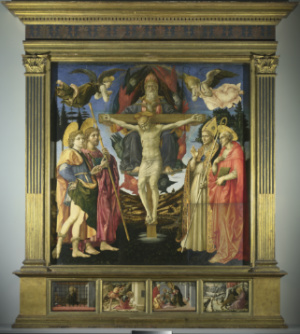
Francesco Pesellino, Fra Filippo Lippo and Workshop, The Pistoia Santa Trinità Altarpiece, (1455-60} © The National Gallery, London; Royal Collection Trust / © His Majesty King Charles III 2022

• The first-ever exhibition dedicated to the career of Italian Renaissance painter Francesco Pesellino (about 1422– 1457) opens at The National Gallery today. Pesellino was active in Florence in the mid-15th century but his early death at 35 and the subsequent misattribution of his surviving works meant he’s become one of the greatest Renaissance painters you’ve never heard of. Highlights include two ‘Story of David’ panels which date from the last years of his career and are being displayed in the round, the ‘Pistoia Trinity Altarpiece’, one of only two large-scale altarpieces Pesellino is known to have produced (and unfinished at his death), and his small-scale devotional work Madonna and Child (1450s). Entry to the exhibition in Room 46 is free. Can be seen until 10th March next year. For more, see www.nationalgallery.org.uk/exhibitions/pesellino-a-renaissance-master-revealed.

Coalescence, an artwork by designer Paul Cocksedge, is making its London debut at the Old Royal Naval College’s Painted Hall from Saturday. Made from over 2,500 pieces of coal – the amount consumed by a single 200 watt light bulb in a year – Coalescence will “create an intricate play of shadow and sparkle that draws on the lustrous quality of the anthracite, a form of high-carbon coal”, inviting visitors to question our dependence on fossil fuels. Also on show in the Nelson Room, will be a new artwork, 20 Trees, which brings a message about ecological balance by blending mathematical calculations with dwindling natural resources.

10 London locations related to Sir Christopher Wren…9. St James’s Street, Piccadilly…

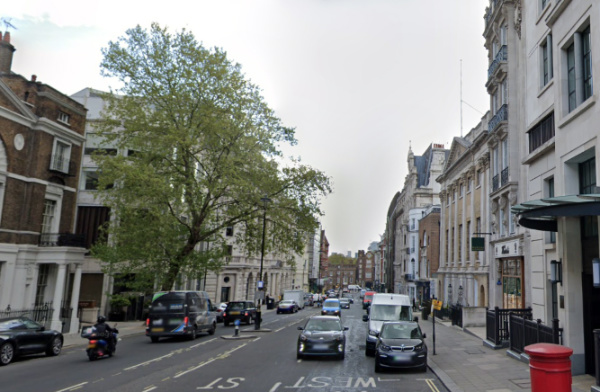
Looking south down St James’s Street. PICTURE: Via Google Maps

As noted at the outset of this series, in his latter years Sir Christopher Wren retired to the property on Hampton Court Palace Green, a property he was granted after he was appointed Surveyor-General to King Charles II in 1669.

But he also still spent time in London and, no longer having access to Scotland Yard, he lodged at his son Christopher’s house in St James’s Street, off Piccadilly. In fact, it was in this property that Wren, having suffered a chill, died while sitting in a chair at the age of 91 on 25th February, 1723.

It’s been suggested that the house in which Wren died was on the west side of the street. There’s an apocryphal story that suggests Wren came to London to check up on his greatest work, St Paul’s Cathedral.

LondonLife – The number 15…

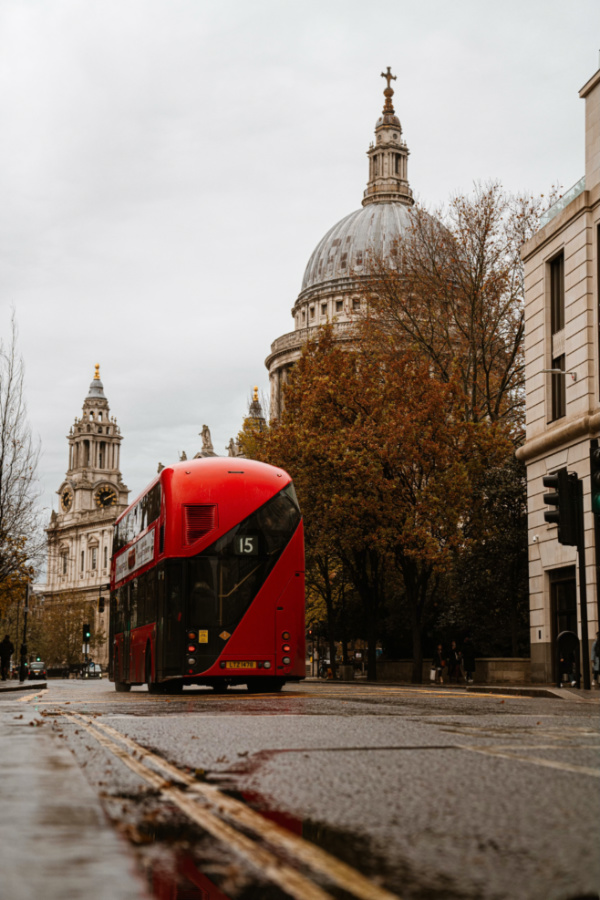
Lukas Souza/Unsplash.

The number 15 runs from Blackwall Station via Poplar High Street through the City, finishing at Charing Cross Station.