This Week in London – London homes in winter; artworks commemorating people of African, Caribbean, and Asian heritage; and, final NYE tickets…

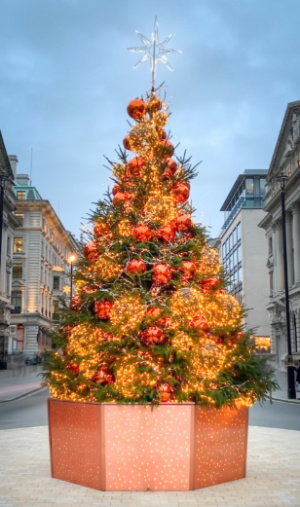
A Christmas tree in London. PICTURE: Hert Niks/Unsplash

See how Londoners lived during winters past at the Museum of the Home in Hoxton. Rooms Through Time: Winter Past centres on the museum’s ‘Rooms Through Time’ and reveals how winter has changed London homes through the last 400 years. The display – which includes rooms set out as they would have been on Millennium Eve, Christmas Eve in 1915, Twelfth Night in 1830, and during a Frost Fair in 1683 – takes a multi-sensory storytelling approach, offering new sounds, smells, sights and stories across the room sets. The display is accompanied by a series of ‘Winter Festival’ events. Runs until February next year. Entry is free. For more, see www.museumofthehome.org.uk.

• A series of artworks commemorating people of African, Caribbean, and Asian heritage from London’s past opens at the London Metropolitan Archives in Clerkenwell on Monday. Art at the Archive: Reimagining Unforgotten Lives sees three artists creating works after taking as their inspiration a range of people featured in LMA’s Unforgotten Lives exhibition. The works include Annie-Marie Akussah’s three-dimensional artwork depicting landscapes Black abolitionist Quobna Ottobah Cugoano would have seen in Ghana as well as London’s West and East India Docks, Elyssa Rider’s oil portraits of Ann Duck, a young woman living in London from 1717 to 1744 whose criminal past is preserved in the court records of the Old Bailey and Tara Jerome-Bernabé’s woven painting which reimagines the lives and images of young Black servants who were enslaved and forced to work in aristocratic households. Runs until 27th March. Admission is free. For more, see head here.

The final tickets to see London’s New Year’s Eve fireworks celebrations on the banks of the River Thames go on sale on Friday. Just over 20,000 tickets will go on sale at noon, taking to 100,000 the total number of tickets sold. Tickets, which cost £20 each, must be bought in advance from the only authorised outlet, AXS. Only ticket holders will be able to watch the fireworks in person. Those without a ticket are encouraged to watch the display live on BBC One or via BBC iPlayer alongside millions of viewers or to celebrate the new year at the capital’s fantastic range of bars, restaurants, pubs and clubs. Tickets can be bought online at AXS.com. For more, see www.london.gov.uk/nye.  

Send all items to exploringlondon@gmail.com
10 London locations related to Sir Christopher Wren…8. The Bankside Plaque…

PICTURE: Robin Sones (licensed under CC BY-SA 2.0)

Sir Christopher Wren’s name is one which pops up in association with buildings all over London – some authentically so, others less so.

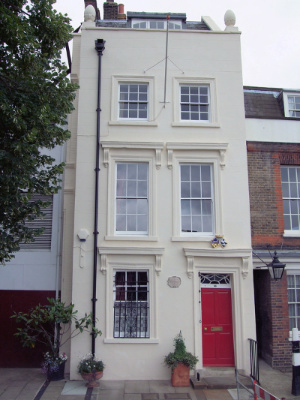
The house at 49 Bankside with the plaque to the left of the door. PICTURE: Jim Linwood (licensed under CC BY 2.0)

One of the more talked about locations where it can be physically seen is on a plaque attached to the front of a house overlooking the Thames at 49 Bankside, on the corner with Cardinal Cap Alley.

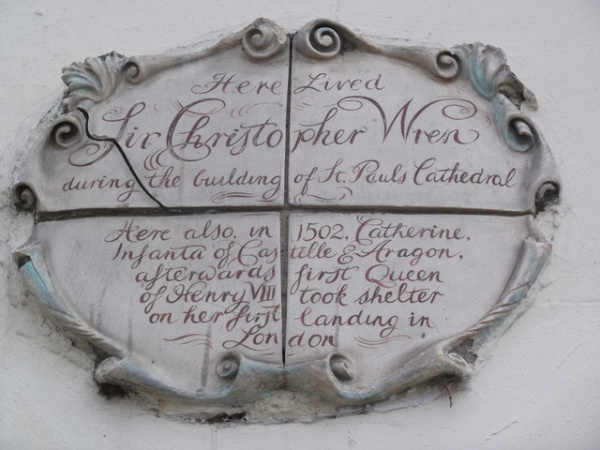
The plaque, written in a flowery script, claims that “Here lived Sir Christopher Wren during the building of St Pauls Cathedral” before going on to state that the property was also where in 1502, Catherine of Aragon, “took shelter” on first arriving in London before her marriage to King Henry VIII.

But author and historian Gillian Tyndall debunks the claim in her 2006 book The House by the Thames and the People who Lived There.

Tyndall explains that the property apparently dates from 1710 – St Paul’s was officially declared complete in 1711, leaving little cross-over (and certainly ruling out any residence by Queen Catherine who actually landed in Plymouth). She says that while it’s true the present house stands in the footprint of an older one, the house where Wren may have actually lodged during the 1670s is located further west along Bankside.

London Remembers notes that this property was apparently marked with an 18th century plaque commemorating Wren. But when that house was demolished in 1906, the plaque was saved and subsequently attached to a power station’s outer wall. When that was redeveloped in the post-war period, the plaque disappeared.

It was apparently that plaque which inspired the creation of the current plaque which was created by Major Malcolm Munthe, who acquired the property in 1945, and subsequently had the plaque made for the home’s exterior.

So it seems the plaque, despite what it says, does not commemorate a Wren residence (although perhaps it may commemorate the residence of Wren in the area). And, it’s been suggested, that while the plaque may not actually have marked a Wren home, its presence may have been enough to protect the building it adorns from threatened redevelopment in the mid-20th century.

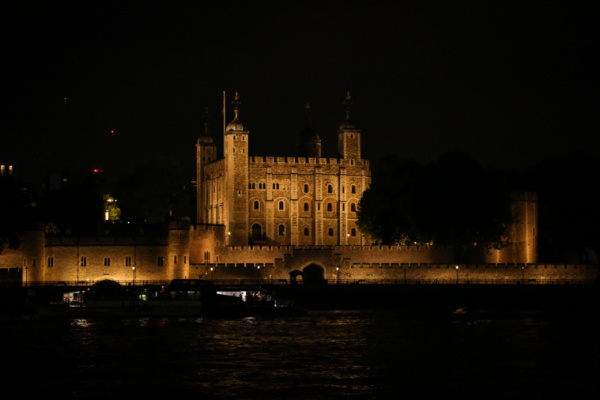
LondonLife – Tower by night…

PICTURE: Hamayoon Pacha/Unsplash

What’s in a name?…Poplar…

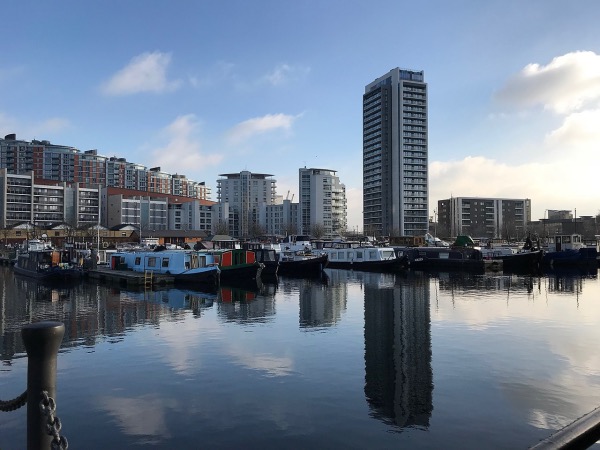
Poplar Dock and Horizons Tower in East London. PICTURE: Matt Brown (licensed under CC BY 2.0)

Though they no longer in evidence, this Thames-side East London district takes its name from the Black Poplar trees which were once abundant in the area.

The area was apparently fertile ground for the poplars thanks to the proximity of the Lea and Thames Rivers which created the moist soil the tree needs. There was still a poplar tree in the area until the mid-1980s.

The name goes back to the 14th century but Poplar wasn’t an independent parish until the 19th century (before which it was a hamlet of Stepney). Poplar is now part of the Borough of Tower Hamlets.

The medieval village of Poplar was centred on Poplar High Street and the East India Company, which built ships in Blackwall Yard, established a chapel and almshouses in Poplar.

The area expanded rapidly in the early 19th century thanks to the maritime industries that grew up here but by late that century this had diversified into other manufacturing and transport-related industries.

The area has long had a maritime association with ship fitting taking place in the area from the 15th century. Poplar was impacted by bombings during World War I and then devastated during the Blitz with about half the houses in the area damaged and the population dropping significantly as a result.

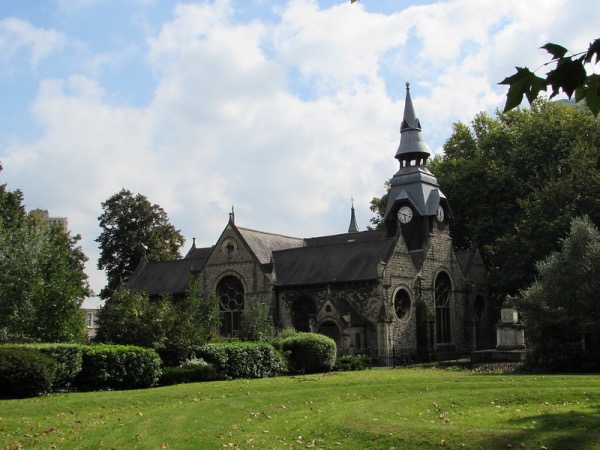
St Matthias Old Church, now a community centre, in Poplar. PICTURE: Michael Day (licensed under CC BY-NC 2.0)

Landmark buildings include the old Poplar Town Hall, now a hotel, the Grade II*-listed St Matthias Old Church (originally the chapel built by the East India Company in 1654 and now a community centre), the Grade II-listed All Saints Church, dating from 1821-23, and the Museum of London Docklands at West India Quay.

The area also features considerable post-war housing including the Brutalist-style 26 storey Balfron Tower. In more recent years, with the development of the Docklands and the linking of the area to the city by the Docklands Light Railway, the area has continued to undergo regeneration.

This Week in London – Impressionists on paper; Vanessa Bell and Duncan Grant honoured with a Blue Plaque; new Burnham Beeches history app; and, young artists celebrated on London billboards…

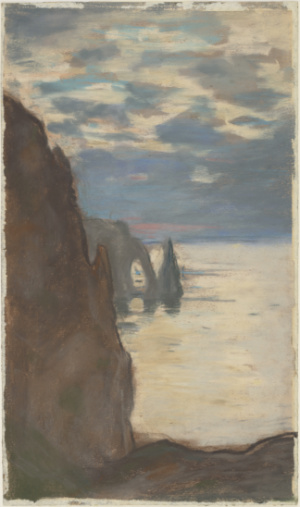
Claude Monet, ‘Cliffs at Etretat: The Needle Rock and Porte d’Aval’, c 1885. National Galleries of Scotland.

A new exhibition exploring how Impressionist and Post-Impressionist artists in late 19th-century France radically transformed the status of works on paper opens at the Royal Academy on Friday. Impressionists on Paper: Degas to Toulouse-Lautrec features around 80 works on paper by artists including Mary Cassatt, Paul Cézanne, Edgar Degas, Paul Gauguin, Eva Gonzalès, Claude Monet, Berthe Morisot, Odilon Redon, Pierre-Auguste Renoir, Georges Seurat, Henri de Toulouse-Lautrec and Vincent van Gogh. Among the highlights are Degas’ Woman at a Window (1870-71), van Gogh’s The Fortifications of Paris with Houses (1887), Monet’s Cliffs at Etretat: The Needle Rock and Porte d’Aval (c1885) and Toulouse-Lautrec’s images of the urban underworld of Montmartre. The display can be seen in The Gabrielle Jungels-Winkler Galleries until 10th March. Admission charges apply. For more, see royalacademy.org.uk.

English Heritage have unveiled their final Blue Plaque for 2023 and it celebrates two of the most influential painters of the early-to-mid 20th century, Vanessa Bell and Duncan Grant. The plaque was unveiled at number 46 Gordon Square in Bloomsbury, from where the Bloomsbury Group – of which Bell and Grant were leading members – drew its name. Bell first lived at number 46 with her siblings, including Virginia Stephen (later Woolf), and, in 1914, Grant moved in with Vanessa and her husband, Clive Bell. Paintings the pair made at number 46 include Grant’s Interior at Gordon Square (c1915) and Bell’s Apples: 46 Gordon Square (c1909-10), a still-recognisable view from the drawing-room balcony to the square. For more on the English Heritage Blue Plaques scheme, head to www.english-heritage.org.uk/visit/blue-plaques/.

The history of Burnham Beeches has been brought to life with a new augmented reality app. The app allows users to superimpose periods of Burnham Beeches’ history – from the Iron Age, Middle Ages and World War II – over what they see when visiting the site and incorporates sounds from selected era as well. It can be accessed via a QR code which is being published on signs at Burnham Beeches. Burnham Beeches, located near the village of Burnham in Buckinghamshire, was acquired by the City of London in 1880 when the area was threatened by development and is managed as a free open space. For more, head here.

The work of 30 young artists celebrating African community and culture is being showcased on billboards across the city in conjunction with Tate Modern’s current exhibition, A World in Common. The photographs have been selected following a call from the Tate Collective for 16-to-25-year-olds to submit images responding to the exhibition. More than 100 entries were submitted by young people based across the UK and beyond and Londoners will be able to view the 30 shortlisted works on billboards in Haringey, Lambeth, Southwark and Tower Hamlets over the next two weeks.

Send all items to exploringlondon@gmail.com.

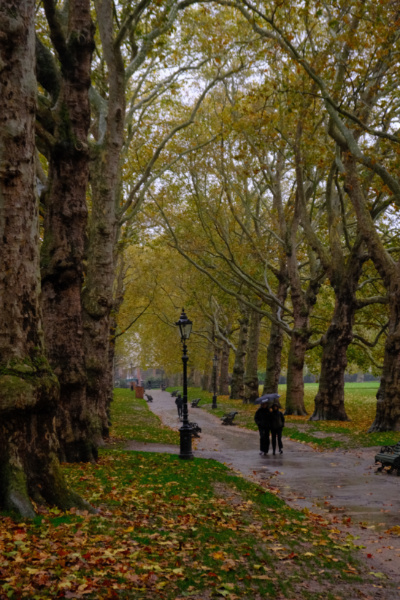
LondonLife – Autumnal walk…

PICTURE: Kostas Vourou/Unsplash

Seen in Green Park on a wet day.

Where’s London’s oldest… (continuously cultivated) garden?

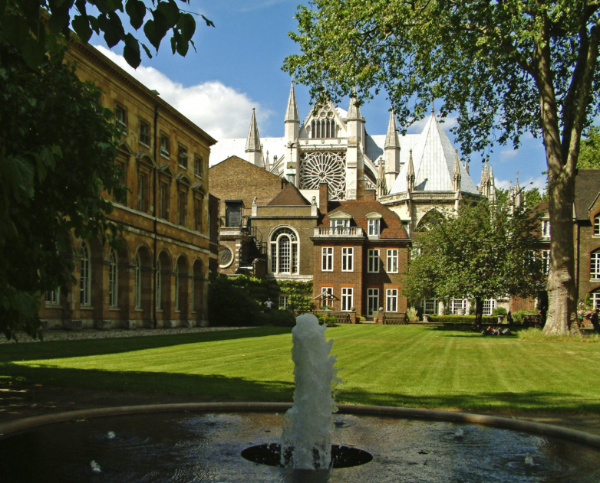
The College Garden. PICTURE: Anguskirk/Flickr (licensed under CC BY-NC-ND 2.0)

Not to be confused with London’s oldest botanic garden (The Chelsea Physic Garden), the College Garden at Westminster Abbey is believed to be the oldest garden in England under continuous cultivation.

In monastic times, the garden, as well as providing eye-pleasing flower displays, was used to grow vegetables and medicinal herbs for the abbey’s resident monks and it also included an orchard, as well as fishponds and beehives. The first herbarium dates from at least 1306 although the infirmary garden was originally established in the 11th century..

The garden was under the overall supervision of the abbey’s Infirmer – responsible for caring for the sick or infirm – and was tended to by a head gardener and two under-gardeners (all of whom were monks).

The oldest surviving feature of the garden today is a high stone wall which dates from 1376. Today the garden features London plane trees planted in the 1850s and a broad expanse of lawn.

There is also a small rose garden which marks Queen Elizabeth II’s accession to the throne and a herb garden planted to commemorate the lives of the monks and the founding of the Westminster School.

A 1993 bronze sculpture depicting the Crucifixion of Jesus Christ, by Enzo Plazzotta, sits out the south end of the garden. A single jet fountain was added in 2002.

The west side of the garden is bordered by the 18th century dormitory for the Westminster School. Two late Victorian houses, originally used for clergy, stand at the north end.

The garden is accessed from the south-east corner of the abbey cloister.

This Week in London – Hans Holbein at The Queen’s Gallery; ‘Crown and Coronation’ at the Tower; Christmas at Kew; and, Charles Dickens’ friendship with Wilkie Collins explored…

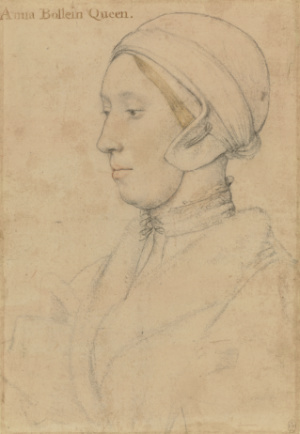
Hans Holbein the Younger, 
Anne Boleyn (1532)/Royal Collection Trust / © His Majesty King Charles III 2023.

The largest exhibition of the work of Tudor-era artist Hans Holbein the Younger has opened at The Queen’s Gallery, Buckingham Palace. Holbein at the Tudor Court features more than 50 works by Holbein including intimate portrait drawings of the royal family and the Tudor nobility including one of few surviving drawings of Anne Boleyn made during her lifetime, drawings of Jane Seymour and Sir Thomas More, and an unfinished portrait of King Henry VIII’s son Prince Edward. Other portraits include that of Derich Born, a 23-year-old Steelyard merchant, and one of Richard Southwell, a convicted murderer who was one of King Henry VIII’s closest advisors. The exhibition also features objects including a Brussels tapestry, jewel-like miniatures and Henry VIII’s magnificent armour, usually on show at Windsor and in London for the first time in a decade. Runs until 14th April. Admission charge applies. For more, see www.rct.uk/collection/themes/exhibitions/holbein-at-the-tudor-court/the-queens-gallery-buckingham-palace

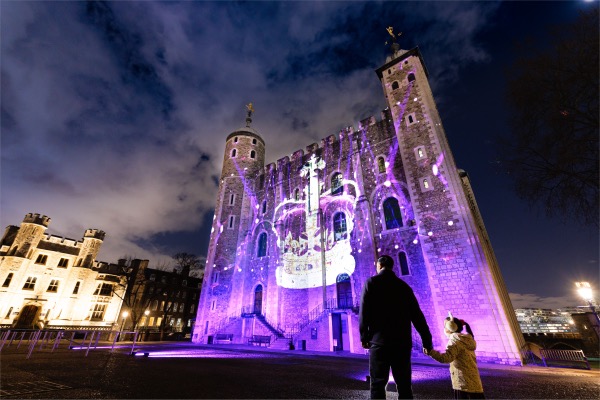
The White Tower looking south-east, showing a coloured light projection of St Edward’s Crown, the crown used at the moment of Coronation. PICTURE: © His Majesty King Charles III 2023 -Royal Collection Trust – Historic Royal Palaces

The magnificence of coronations and the Crown Jewels will be on show at the Tower of London from tomorrow night in a new light and sound show. Crown and Coronation – which has been created by Historic Royal Palaces in partnership with Luxmuralis as part of an artistic collaboration between artist Peter Walker and composer David Harper – brings the “spectacle, significance and shared experience” of coronations to life and demonstrates the pivotal role of the Crown Jewels in the ceremony as it takes visitors on a journey through the past 1,000 years. Images of the jewels will be projected on the White Tower in the show with visitors then able to view the actual jewels themselves in a special after hours opening. But you’ll have to be quick – the show can only be seen for nine days, ending on 25th November before it embarks on a two year UK-wide tour. Admission charge applies. For more, see www.hrp.org.uk/tower-of-london/.

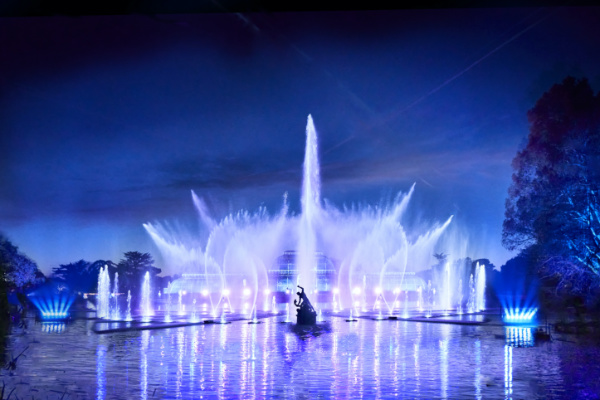
The Palm House light show, part of Christmas at Kew. PICTURE: © Raymond Gubbay Ltd, Richard Haughton

Christmas returned to Kew this week with the launch of it’s new festive light trail featuring seven new installations. Highlights of this year’s trail include three metre tall illuminated flowers, cascading lights suspended from the tree canopy, one of the longest light tunnels to ever feature in Kew’s Christmas celebrations and the Hive – which recreates life inside a beehive – as well as the iconic Palm House light show, the twinkling tunnel of light inspired by arched church windows known as the ‘Christmas Cathedral’, and a ‘Fire Garden’ at the Temperate House. There’s also festive treats to sample and visitors can experience a traditional Christmas dinner at The Botanical Brasserie. Admission charges applies. Runs until 7th January (advance bookings only). For more, see www.kew.org/christmas.

Charles Dickens’ friendship and collaboration with writer Wilkie Collins is explored in a new exhibition at The Charles Dickens Museum in Bloomsbury. Dickens met Collins, who would become one of his most significant friends, in 1851 as they performed together in a play at the house of John Forster and their personal and professional relationship lasted more than 15 years. The display features works produced as a result of the friendship – everything from articles in Dickens’s Household Words through to novellas and plays such as The Lazy Tour of Two Idle Apprentices and The Frozen Deep – and features original letters, historic objects, and interactive displays focusing on everything from the pair’s moustache-growing contests and cruising international entertainment districts to co-writing side by side, discussing writer’s block and plot devices. Admission is included with general admission. Runs until 25th February. For more, see https://dickensmuseum.com.

Send all items to exploringlondon@gmail.com.

10 London locations related to Sir Christopher Wren…7. St Stephen Walbrook…

Looking up at the dome of St Stephen Walbrook. PICTURE: James Stringer (licensed under CC BY-NC 2.0)

While this series is more focused on Sir Christopher Wren’s life rather than the many works he left behind, we’ve included the remarkable church of St Stephen Walbrook for a couple of reasons.

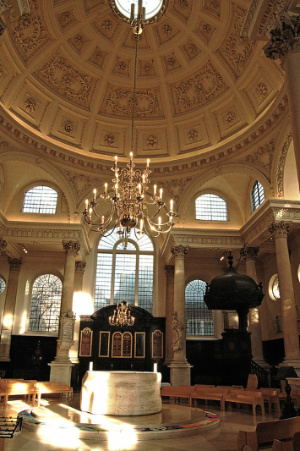
Inside St Stephen Walbrook. PICTURE: It’s No Game (licensed under CC BY 2.0)

The first is that it is generally seen as being one of the more important church designs he created, particularly with regard to his later design of St Paul’s Cathedral, of which the St Stephen Walbrook dome is said to be a prototype.

The second is it’s claimed St Stephen Walbrook had a rather personal connection in that Wren lived at number 15 Walbrook during the period the church was being built, making it his parish church.

But the church was built between 1672 and 1679 and we know that from 1669 onwards – when Wren was appointed Surveyor-General of the King’s Works by King Charles II – Wren had a substantial home and office at Scotland Yard which was a perk of the office. Prior to that, he was largely based in Oxford and had rooms within Gresham College.

We’ve been unable to find any detailed reference to Wren living at 15 Walbrook either online or in the biographies we’ve read (we’ll keep searching).

But, his residency in Walbrook aside, it’s clear that St Stephen Walbrook – which has been described as the “pride of English architecture” – was a special church for Wren.

Designed to a rectangular form by Wren (and it’s certain this design was that of Wren himself), the church features a dome located toward the east end supported by eight Corinthian columns with the interior light by sizeable windows at the east end. A tower stands at the west end. The altar, a modern design by Henry Moore, sits under the centre of the dome.

As an interesting final note, it is recorded that Wren attended a dinner hosted by the church wardens – along with collaborator Robert Hooke – at the Swan Tavern in Old Fish Street on 4th March, 1673, as work for the church was underway.

WHERE: St Stephen Walbrook, 39 Walbrook (nearest tube stations are Bank and Cannon Street); WHEN: Opening times vary – check website details; COST: Free; WEBSITE: www.ststephenwalbrook.net.  

LondonLife – London remembers…

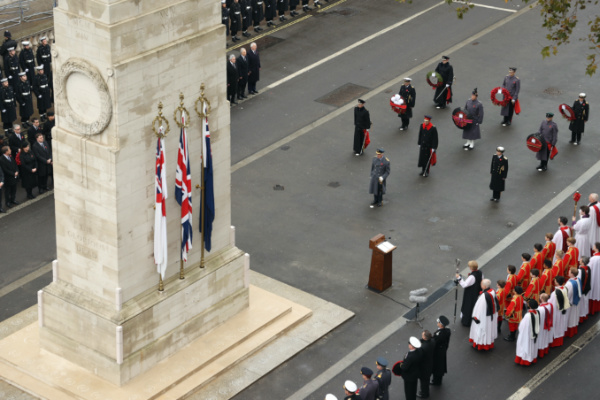
King Charles III having laid a wreath at the Cenotaph on Sunday during the National Service of Remembrance in Whitehall. PICTURE: Petty Officer Joel Rouse/UK MOD © Crown copyright 2023.
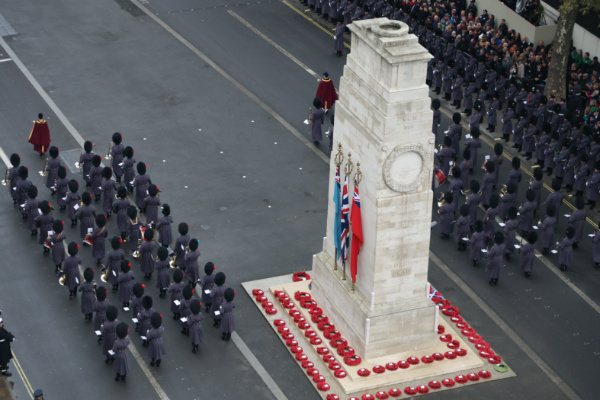
The Massed Bands of the Household Division march past the Cenotaph. More than 800 armed forces personnel took part in the annual Remembrance Sunday ceremonies in central London. PICTURE: AS1 Jake Hobbs RAF/UK MOD © Crown copyright 2023
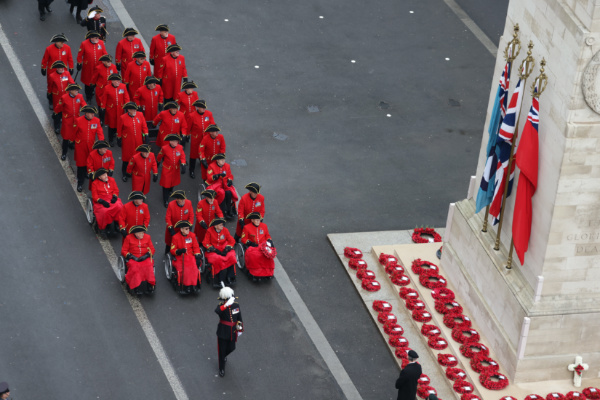
Chelsea Pensioners march past the the Cenotaph. PICTURE: AS1 Jake Hobbs RAF/UK MOD © Crown copyright 2023.
Members of the Royal Family at the Cenotaph. PICTURE: SSgt Dek Traylor/UK MOD © Crown copyright 2023.
Political leaders including Prime Minister Rishi Sunak, Leader of the Opposition Sir Keir Starmer and former PM Boris Johnson at the Cenotaph. PICTURE: Petty Officer Joel Rouse/UK MOD © Crown copyright 2023

This Week in London – 695th Lord Mayor’s Show; Peruvian and Andean culture at the British Museum; and, a ‘virtual heart’ at the Science Museum…

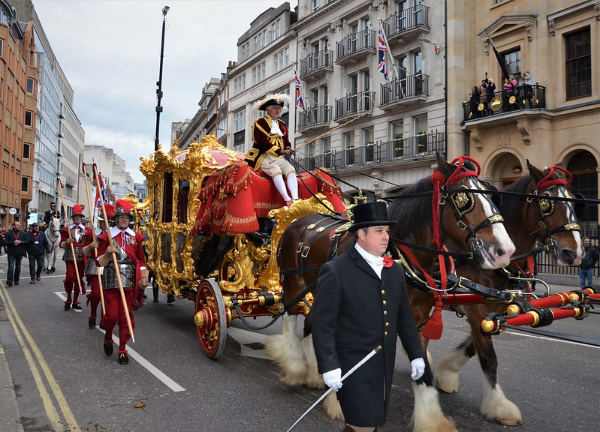
The Lord Mayor’s Show in 2019. PICTURE: It’s No Game (licensed under CC BY 2.0)

The 695th Lord Mayor’s Show – the oldest and longest civic procession in the world – will be held in the City of London this weekend. The three mile-long parade, which dates back to the 13th century, will feature Lord Mayor of London, Michael Mainelli (who will take office during the Silent Ceremony on Friday), who will process through the City streets to swear allegiance to the Crown in Westminster. Accompanying him will be a procession featuring some 7,000 people, 200 horses and around 150 floats and will include representatives of the City’s livery companies as well as military groups, bands and community organisations. The procession leaves from Mansion House at 11am and rolls down Poultry and Cheapside to St Paul’s Cathedral and then via Ludgate Hill and Fleet Street to the Royal Courts of Justice before returning, from 1:10pm, via Queen Victoria Street to Mansion House. For more, see https://lordmayorsshow.london.

The first permanent display of Peruvian and Andean culture at the British Museum has opened in the Wellcome Trust Gallery. Part of the Living and Dying exhibition is divided into two sections – the first exploring the culture’s relationship with the sea and the second with the land. The displays includes digital elements as well as objects ranging from pottery and textiles to metalwork and conch shells. For more, see www.britishmuseum.org.

A “compelling, complex and beautiful” large-scale virtual model of a human heart has gone on display in the Science Museum in South Kensington. The model was created by bioengineer Dr Jazmín Aguado Sierra using scans of her own heart and functions just as her real heart does. The ‘Virtual Heart’ display, which is introduced by Dr Aguado Sierra, can be seen in the Engineers gallery, in a section which explores collaborations between clinicians, medical engineers and patients and showcases real-world health solutions. The display is free to see. For more, see sciencemuseum.org.uk/engineers.

Send all items to exploringlondon@gmail.com.

10 London locations related to Sir Christopher Wren…6. Westminster Abbey…

PICTURE: Benjamin Elliott/Unsplash

Think of Sir ChristopherWren and chances are it’s St Paul’s Cathedral – perhaps the most famous building he designed – which comes to mind. Certainly not Westminster Abbey, which he did not.

Yet, aside from his time at the Westminster School as a child, Wren did have a long relationship with the royal church at Westminster. In March, 1698, he was appointed the Surveyor of the Fabric at Westminster Abbey, a post he held until his death (when he was succeeded by Sir Nicholas Hawksmoor).

Wren did some work on the building. Prior to being appointed surveyor he had undertaken some work on schoolmaster Dr Richard Busby’s house (Wren had been one of his students) in the Little Cloister in 1683 (the house was destroyed during the Blitz in World War II).

Following his appointment, Wren did undertake a major restoration of the decayed stonework and roof of the church. He also approved designs by his deputy, William Dickinson, for the north front and an altarpiece which Wren had originally designed for the royal chapel at the Palace of Whitehall was given to the minster by Queen Anne (it was removed in the 19th century).

In 1713, Wren had also created designs for a series of works at the abbey which included the addition of a central tower and spire at the abbey and the completion of the west front which were never realised and which were shelved after his death (the wooden model for the tower and spire is located in Queen’s Diamond Jubilee Galleries, along with a pair of wooden obelisks he designed for the entrance to the Quire).

While there’s no memorial to him in the Abbey, Wren’s image can be seen in the lower right section of a memorial window in the north choir aisle dedicated to 19th century engineer Robert Stephenson while his coat of arms is shown along with numerous others in some post-war glass windows in the Chapter House.

WHERE: Westminster Abbey (nearest Tube stations are Westminster and St James’s Park); WHEN: Times vary – see the website for details; COST: £29 adults/£26 concession/£13 children (family rates available); WEBSITE: www.westminster-abbey.org.

LondonLife – Gathered round Eros…

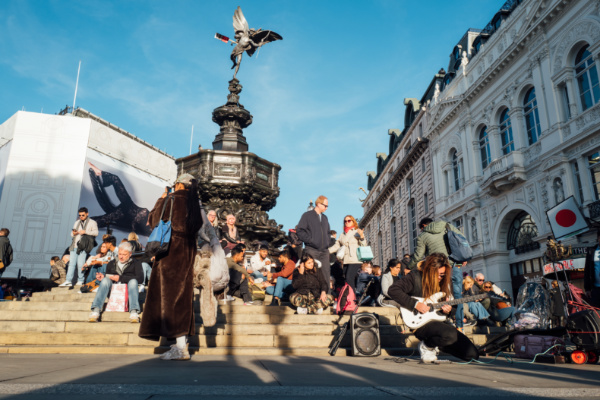
PICTURE: Mon Jester/Unsplash

The statue of Eros at the heart of Piccadilly Circus.

London pub signs – The Sir John Hawkshaw…

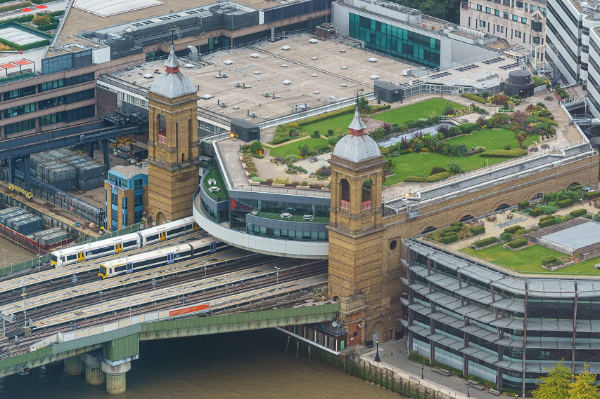
The Sir John Hawkshaw is located inside the Cannon Street Station (with good reason). PICTURE:© User:Colin / Wikimedia Commons / CC BY-SA 4.0.

This establishment in the Cannon Street Station in the City of London is a modern take on the pub but thanks to the name and location comes with built-in history.

Sir John Hawkshaw (1811-1891) was a railway engineer who, importantly given this pub’s location, is recognised for his work on the original Cannon Street railway station – which he designed with JW Barry – as well as the adjoining Cannon Street Railway Bridge over the Thames (it was originally named ‘Alexandra Bridge’ in honour of Princess Alexandra of Denmark, wife of Edward, the Prince of Wales)

The original Cannon Street station, which opened on 1st September, 1866, featured two “Wren-style” towers which stand 135 feet high and faced the Thames (these two towers, now Grade II listed, are still there today). They helped support the station’s single arched iron and glass roof which stretched some 700 feet in length to cover the railway platforms (an adjoining Italianate-style hotel and forecourt designed by Barry opened the following year).

While Hawkshaw’s two towers remain (and it should be noted that the engineer was also famous for his work on other projects including, among others, the Severn Tunnel and Suez Canal), the current Cannon Street Station is a much more modern structure dating originally from the 1980s with some works being completed in the last decade or so.

The site’s known history, meanwhile, goes back much further, however. Prior to Hawkshaw’s station, since 1690 the site had been occupied by the livery hall of the Worshipful Company of Plumbers. Prior to that it was the site of the Steelyard and, much further back in time, the remains of a Roman palace have been found beneath the site which date from the 1st century.

The modern pub, located in the station, is part of the JD Wetherspoon chain.

For more on the pub, see https://www.jdwetherspoon.com/pub-histories/england/london/the-sir-john-hawkshaw-cannon-street.

This Week in London – Myanmar explored; Hockney portraits; and the world’s fastest all-electric aircraft…

The Golden Letter of Alaungpaya, Konbaung period, 18th century © Gottfried Wilhelm Leibniz Bibliothek –Niedersächsische Landesbibliothek, Hannover, Ms IV 751a
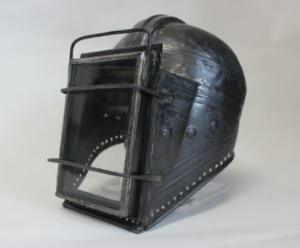
Oil Workers Helmet, 1900s © Calderdale Museums Services

A new exhibition exploring the history of Myanmar, also known as Burma, opens at the British Museum today. Burma to Myanmar, the first major exhibition in the UK to focus on the country’s history, features more than 110 objects and spans the period from around 450 AD through today. Highlights include: a golden letter sent from King Alaungpaya to George II which, made of gold, is set with 24 rubies and placed in an elephant tusk case; a wall hanging (a ‘shwe-chi-doe’ or ‘kalaga’) illustrating scenes from the Ramayana; a gold Buddhist reliquary from the 1400s; a late 19th or early 20th century blanket from the Nung-Rawang people; an oil worker’s helmet from the early 1900s; a map of several Shan states from the 1880s made to assist the British in the process of drawing hard borders with China; and, a bust of General Aung San (1915–47), leader of the Burma Independence Army. The exhibition in the Joseph Hotung Great Court Gallery can be seen until 11th February. Admission charge applies. For more, see http://www.britishmuseum.org/exhibitions/burma-myanmar

More than 30 portraits painted by British artist David Hockney at his Normandy studio between 2021 and 2022 can be seen for the first time in an exhibition of the artist’s works at the National Portrait Gallery. David Hockney: Drawing from Life was open for just 20 days prior to the gallery’s closure due to COVID-19 in 2020. It has now returned in an expanded form, featuring 160 works which trace the trajectory of Hockey’s practice largely through his intimate portraits of five sitters – Celia Birtwell, Hockney’s mother Laura Hockney; his former partner and curator Gregory Evans; master printer Maurice Payne and himself. The newly added portraits include depictions of the likes of actor and singer Harry Styles and people from the Normandy community in which he works. The exhibition can be seen until 21st January. Admission charge applies. For more, see ngp.org.uk/whatson/exhibitions/2023/hockney-drawing-from-life.

Rolls Royce’s Spirit of Innovation electric aircraft © Science Museum Group

The world’s fastest all-electric aircraft, Spirit of Innovation, has gone on show at the Science Museum in South Kensington. Suspended as if in mid-flight, the aircraft is the final object in Making the Modern World, a major gallery which presents advances in science and technology from the birth of the Industrial Revolution to the present day. Powered by a lightweight and energy efficient 400kW electric powertrain, Spirit of Innovation holds the all-electric aircraft world record for highest top speed over three kilometres, with an average of 555.9km/h (345.4 mph), breaking the previous record by over 200 kilometres per hour. The plane also set a new record for the fastest climb by an electric aircraft to three kilometres. Rolls-Royce created the aircraft as part of the Accelerating the Electrification of Flight (ACCEL) project, in collaboration with Electroflight (now part of Evolito), YASA, and the Aerospace Technology Institute. The gallery is free to visit. For more, see www.sciencemuseum.org.uk.

Send all items for inclusion to exploringlondon@gmail.com

This Week in London – Fantasy worlds revealed at the British Library; Diwali in the Square; and; skateboards at the Design Museum…

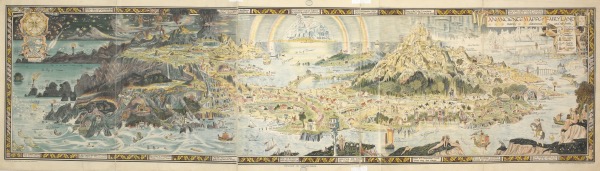
An ancient mappe of Fairyland newly discovered and set forth’, Bernard Sleigh, 1918, photograph © British Library Board

A major exhibition celebrating fantasy writers and the world’s they’ve created opens at the British Library tomorrow. Fantasy: Realms of Imagination, which is being run in partnership with Wayland Games, will take visitors on a journey to worlds ranging from Middle-earth to Pan’s Labyrinth and those created by Studio Ghibli. The exhibition is accompanied by a range of events including Neil Gaiman and Rob Wilkins discussing the impact of Terry Pratchett’s first Discworld novel The Colour of Magic 40 years after it first hit shelves, Susan Cooper speaking with Natalie Haynes on the 50th anniversary of her best-selling novel The Dark is Rising; and Brian and Wendy Froud exploring how they developed the design concept for 1980’s cult classic The Dark Crystal. There will also be talks from the likes of bestselling fantasy writers RF Kuang, Adrian Tchaikovsky, and Philip Pullman, and a special late opening featuring musical performances and art inspired by the electronic music duo Drexciya and an event featuring Arthur C Clarke award-winning author Tade Thompson. Runs until 25th February. Admission charge applies. For more, see www.bl.uk/events/fantasy.

Diwali in the Square will take place in Trafalgar Square this Sunday. The capital’s celebration of the Festival of Lights, which opens with 200 colourfully dressed dancers, features performances from artists drawn from London’s Hindu, Sikh and Jain communities, a range of family-friendly activities including dance workshops, yoga and meditation, Ramayana Puppet shows, Soho Theatre comedy, and a ‘Glimpse of Goddesses’ stall, and food from 1pm to 7pm. The event is free to attend. For more, see www.london.gov.uk/events/diwali-square-2023.

The first major UK exhibition to map the design evolution of the skateboard has opened at The Design Museum. Skateboard chronicles the history of skateboard design from the 1950s to the present day, from humble, homemade, beginnings to technologically advanced models used by today’s professionals. It features around 90 skateboards – including Laura Thornhill’s Logan Earth Ski 1970s pro model, Tony Hawk’s first ever professional model skateboard, Sky Brown’s first pro model and the Sky Brown x Skateistan Almost deck – alongside 100 other objects hardware such as wheels and tucks, safety equipment, VHS tapes, DVDs, magazines and ephemera. The exhibition also features a skate ramp, offering skaters the incredibly rare opportunity to skate inside a major museum. Admission charge applies. Runs until 2nd June. For more, see https://designmuseum.org/exhibitions/skateboard.

Send all items to exploringlondon@gmail.com
10 London locations related to Sir Christopher Wren…5. London coffee houses…

Sir Christopher Wren was apparently a frequent visitor to London’s burgeoning coffee houses in the late 17th and early 18th centuries.

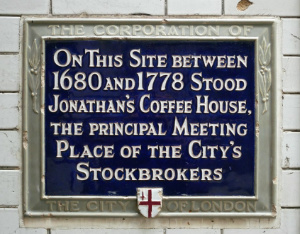
A plaque in the City of London marking the former site of Jonathan’s Coffee House in Exchange Alley. PICTURE: Ethan Doyle White (licensed under CC BY-SA 4.0)

Wren apparently started visiting coffee houses during his time in Oxford (the first in England is said to have opened there in 1652; the first in London – Pasqua Roseé’s premises st Michael’s Alley off Cornhill – opened late that same year) and continued to do so in London.

While it’s hard to pin down those he preferred, he reportedly met Robert Hooke at Man’s Coffee House in Charing Cross. The premises was apparently frequented by stockjobbers.

Wren was in good company attending such premises – other luminaries known to have done so at the time include diarist and naval administrator Samuel Pepys, John Locke, Edmund Halley, John Dryden and Alexander Pope.

Among other prominent coffee houses at the time was Jonathan’s – where in, 1698, the London Stock Exchange was born – and Garraway’s Coffee House, both of them located in Exchange Alley, as well as Button’s in Covent Garden.

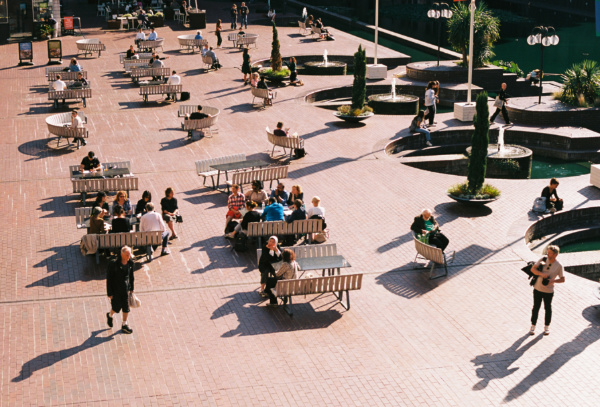
LondonLife – Taking a break at the Barbican Center…

PICTURE: Lawrence Chismorie/Unsplash

This Week in London – London’s transport posters on show; a musical exploration at the Science Museum; and, ‘Petrichor’ at Kew…

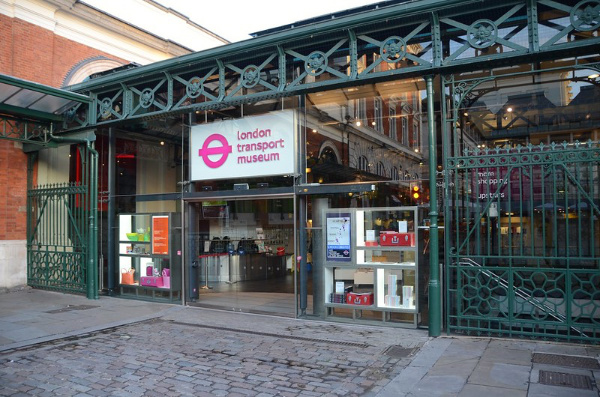
London Transport Museum in Covent Garden. PICTURE: Marcus Meissner (licensed under CC BY 2.0)

The first permanent gallery dedicated to the history of poster art and design at the London Transport Museum in Covent Garden opens tomorrow. The new Global Poster Gallery, sponsored by Global, the Media & Entertainment Group, showcases the museum’s collection of 20th century graphic art and design – one of the world’s largest. The new gallery, which is set over two floors, launches with the exhibition, How to Make a Poster, and an accompanying programme of events. The exhibition visually explores the process of creating posters from the pre-digital age from 1900 and features more than 110 poster artworks and posters including the Underground’s very first pictorial poster titled No need to ask a p’liceman by John Hassall, dating from 1908. Admission charge applies. The exhibition runs until 2025. For more, see www.ltmuseum.co.uk.

A new interactive exhibition exploring the mysterious hold music can have over us opens at the Science Museum today. Turn It Up: The power of music features historic music players, inventions and unusual instruments. Among the inventions on show are the MiMU gloves invented by Imogen Heap and used by Ariana Grande and Kris Halpin which use gestures to control electronic music-making software, and a virtual instrument called Headspace, created by professional trumpeter Clarence Adoo and inventor Rolf Gelhar after Adoo was paralysed from the shoulders down in a car accident while among the unusual instruments are the pyrophone organ powered by flames to the Anarchestra satellite dish which can be played in multiple new ways to make music. The exhibition can be seen until 6th May at the South Kensington premises. Admission charges apply. For more, see www.sciencemuseum.org.uk.

The work of acclaimed contemporary artist Mat Collishaw goes on show tomorrow at Kew Garden’s Shirley Sherwood Gallery of Botanical Art on Saturday. Highlights of the exhibition – Petrichor – include the UK premieres of Alluvion, a series of six new AI artworks inspired by Dutch Old Masters, and the large-scale projected work Even to the End. Other works include Heterosis – a collection of dynamic NFT’s which combine genetic algorithms with blockchain technology to facilitate the hybridisation of mutable digital flowers, The Centrifugal Soul – a zoetrope which creates a stunning illusion of motion, and Albion – a large-scale piece in the form of an intricate 19th-century ‘Pepper’s Ghost’ illusion which depicts the Major Oak in Sherwood Forest. Runs until 7th April. Admission charge applies. For more, see www.kew.org.

Send all items for inclusion to exploringlondon@gmail.com.

LondonLife – After office hours…

PICTURE: Krisztián Korhetz/Unsplash