Famous Londoners – William Camden…

Famed 16th century historian and writer William Camden is celebrated not only for the influence he and his career had on writers including the likes of Ben Jonson and Edmund Spenser, but also for his work in helping to transform the idea of historical inquiry.

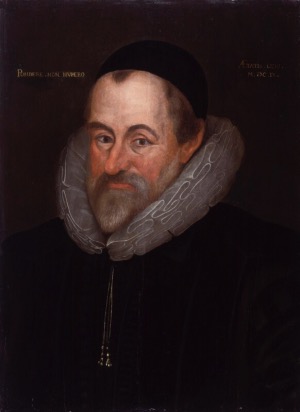
‘William Camden’ by or after Marcus Gheeraerts the Younger, oil on panel, 17th century, based on a work of 1609 NPG 528. PICTURE: © National Portrait Gallery, London

Camden was born in London on 2nd May, 1551, the son of Sampson, a painter-stainer originally from Lichfield, and his wife Elizabeth (Curwen).

He attended a school at Christ’s Hospital and then St Paul’s School before going on to study at the University of Oxford., graduating with a BA in 1573.

He had returned to London a couple of years earlier and in 1575 was appointed the second master of Westminster School (Jonson was one of his pupils; according to tradition, Camden sponsored his position).

It was during this period that, when not attending his duties at Westminster, he travelled the country, collecting material for what would be the first topographical survey of England. Titled Britannia and written in Latin, it was published in 1586.

Camden was made head master in 1593 and in 1595 published a Greek grammar which became seen as standard work.

In 1597, he was made Clarenceux king-of-arms (one of the three principal heralds at the College of Arms) which allowed him more time for writing (in 1589, he had been granted the prebend of Ilfracombe at Salisbury Cathedral).

Camden, who had established the Society of Antiquities with friends in about 1585 (it helped lay the foundations for the school of 17th century historians), published several history-related works between 1600 and 1607 including the first guide to Westminster Abbey’s monuments.

He was, from the end of that period, also working on his Annales Rerum Anglicarum et Hibernicarum Regnante Elizabetha (Annals of the Affairs of England and Ireland During the Reign of Elizabeth), the first volume of which was published in 1615 (a second volume was completed in 1617 but not published until after Camden’s death).

In 1618, in poor health, Camden retired two Chislehurst in Kent and while there founded the first chair of history at the University of Oxford (in fact the first such chair at any English university). He died, having never married, at Chislehurst on 9th November, 1623.,

Camden was buried in Poet’s Corner, in the south transept, of Westminster Abbey and has a monument which features his bust.

This Week in London – How Jewish Londoners shaped global fashion; the influence of Japanese folklore on art and design; and, Claudia Jones honoured…

• An iconic red coat worn by Princess Diana when she announced she was pregnant with Prince William is going on show in a new exhibition at the Museum of London Docklands at West India Quay. Fashion City: How Jewish Londoners shaped global style – the first major exhibition in two decades centred on the museum’s extensive dress and textile collection – tells the story of Jewish designers, makers and retailers responsible for some of the most recognisable looks of the 20th century. As well as the David Sassoon-designed coat, it also features a newly acquired Alexon tweed coat worn by EastEnders character Dot Cotton, hats relating to the ‘milliner millionaire’, Otto Lucas, who changed the global reputation of British fashion in the mid-20th century, and garments designed by Mr Fish, a leading figure of the Peacock Revolution whose flamboyant menswear was worn by stars including Jimi Hendrix, David Bowie, and Muhammad Ali. The fashion items are joined by personal items from some of the 200,000 Jewish people who arrived in Britain between the late 19th and mid 20th century, such as a small travelling case used by a child arriving in London as part of the Kindertransport (the rescue effort of children from Nazi-controlled territory in 1938-1939), and a leather bag owned by a woman who fled from Vienna in 1938. Opens on Friday and runs until 14th April next year. Admission charges apply. For more, see www.museumoflondon.org.uk/museum-london-docklands/whats-on/exhibitions/fashion-city

Sakar International, Inc, Hello Kitty rice-cooker, 2014, Japan © Victoria and Albert Museum, London

Drawing on everything from Hokusai to Pokémon and Studio Ghibli, the influence of Japanese folklore on Japan’s art and design is the subject of the first exhibition at the new Young V&A. Japan: Myths to Manga is divided into four sections – Sky, Sea, Forest, and City – and features more than 150 historic and contemporary objects along with hands-on activities for visitors of all ages ranging from manga-making to Taiko drumming and yōkai interactive. Highlights in the display include works by celebrated 19th century Japanese artists, such as Hokusai’s Great Wave (1831), Sylvanian families matched with historic netsuke (small sculptures), a stage model for the Royal Shakespeare Company’s production of My Neighbour Totoro, and a Hello Kitty rice cooker from 2014. An installation of 1,000 paper cranes, a symbol of remembrance from the Hiroshima Peace Memorial Park in Japan, will also be present. The display, which opens at the Bethnal Green premises on Saturday, runs until 11th August next year. Admission charges apply. A series of events linked to the exhibition are also being run. For more, see www.vam.ac.uk/exhibitions/japan-myths-to-manga.

Anti-racism activist and a ‘founding spirit’ of the Notting Hill Carnival, Claudia Jones, has been honoured with an English Heritage Blue Plaque in Vauxhall. The plaque marks the mid-19th century terraced house that was her home for almost four years during which she founded the West Indian Gazette and came up with the idea of bringing Caribbean carnival to London (the first carnival took place in  It was during her time living in this shared dwelling that Jones founded the West Indian Gazette and came up with the idea of bringing Caribbean carnival to London (the first carnival took place in St Pancras Town Hall on 30th January, 1959; the Notting Hill Carnival, an outdoor event, came later). For more, see www.english-heritage.org.uk/visit/blue-plaques/.

Send all items for inclusion to exploringlondon@gmail.com.
10 London locations related to Sir Christopher Wren…4. Gresham College…

Described as “probably the most famous Gresham College professor in history”, Sir Christopher Wren was appointed professor of astronomy at the college in 1657.

Wren is believed to have been educated at the Westminster School before attending Wadham College in Oxford and graduating with a BA in 1651. An MA followed in 1653 and he was subsequently elected a fellow of All Soul’s College in Oxford.

Engraving of Gresham College in the City of London, looking east at the front onto Old Broad Street by George Vertue (1740). PICTURE: Public domain (via Wikipedia).

That was followed by the Gresham appointment with Wren giving his inaugural lecture in August of 1657. His tenure was somewhat interrupted when, following the resignation of Richard Cromwell in May, 1659, the college was occupied by the military (and Wren stayed in Oxford). He returned to London following the Restoration which culminated in King Charles II’s entry into London in May, 1660.

Wren left Gresham later that same year and four years later, in 1664, he was appointed Savilian professor of astronomy at Oxford – a position he held until his appointment surveyor of works to King Charles II.

Gresham College was established in 1597 under the terms of the will of Sir Thomas Gresham and was originally located in Sir Thomas’ former mansion on Bishopsgate. It was here that Wren – and other lecturers including Sir Robert Hooke – lectured.

In the mid-18th century, Gresham moved to the corner of Gresham and Basinghall Streets. In 1991, it again relocated – this time to the 14th century Barnard’s Inn Hall near Chancery Lane. The college today continues its founding tradition of providing free lectures (there’s now a considerable archive of these online).

There was a Corporation of the City of London plaque commemorating the original location of Gresham College in Old Broad Street but it’s apparently been removed.

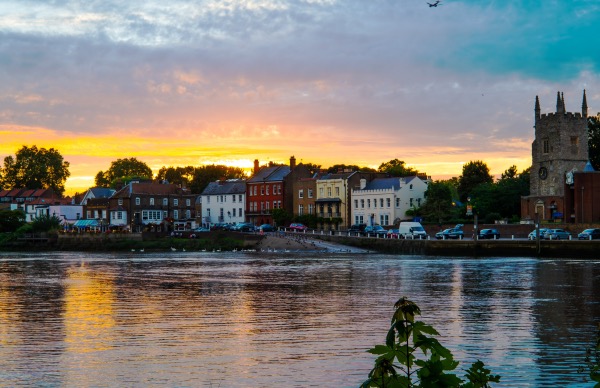
LondonLife – Isleworth sunset…

PICTURE: Ruth Gledhill/Unsplash

London Explained – Parish boundary markers…

You may have noticed small stone or metal plaques installed on buildings which are inscribed with some letters and a date.

These are typically parish boundary markers, marking the geographical reach of a particular parish. The letters refer to the parish name and the date when the boundary was set or marked (some markers actually have more than one date, the second being when parish boundaries were confirmed).

Parish boundary markers in Chancery Lane. PICTURE: R~P~M (licensed under CC BY-NC-ND 2.0)

Traditionally, parishioners were reminded of the boundaries each year at Rogationtide – the three days of the Monday, Tuesday and Wednesday before Ascension Day (39 days after Easter Sunday) – in a ceremony known as the ‘Beating the Bounds’.

This custom involved the priest and parishioners, led by the churchwardens and beadle, walking around the stones which served as boundary markers and pausing to beat each one with sticks and pray for protection and blessings (apparently there was also a practice of pushing boys from the charity schools into the boundary walls so they’d remember them or beating them with willow wands when there was no wall).

The boundary stones have, in more recent centuries, been replaced by the plaques in London but the ceremony is still carried out in some parishes.

Interestingly, in some parishes, the boundary is located in the midst of the Thames and boats are taken to ‘beat the mark’ in the middle of the river.

This Week in London – ‘Spies, Lies and Deception’ at IWM London; the printing of Shakespeare’s plays; and, Georgian illuminations at the Sir John Soane’s Museum…

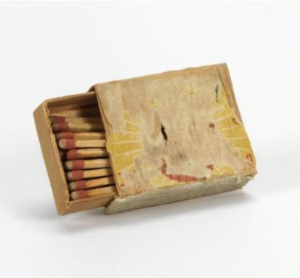
A box of matches containing one match specially adapted for writing
secret messages used during World War II.
© IWM (EPH 178)

A free exhibition exploring the “tricks, tools and elaborate plots that make up the secret world of spying and deception” has opened at IWM London. Spies, Lies and Deception features more than 150 objects including gadgets, official documents, art and newly digitised film and photography. Highlights include Operation Mincemeat mastermind Ewen Montagu’s private papers relating to the World War II plot – which fooled German High Command about the location of the next major Allied assault by planting a dead body with fake military documents off the Spanish coast – along with an oar from the submarine’s dinghy which deposited the body. There is also a box of matches with a match specially adapted for writing secret messages (pictured), footprint overshoes made by SOE (Special Operations Executive) in South-East Asia during World War II to disguise the wearer’s real footprints, and papier-mâché heads used to deceive snipers in World War I trenches. The exhibits also detail the work of the World War I Postal Censorships department – which examined letters sent to foreign locations including testing letters for invisible ink and tell the story of SOE operative Noor Inayat Khan – the first female wireless operator sent by SOE into Occupied France, she successfully transmitted messages to London for four months before being betrayed, captured and executed. There’s also a newly commissioned interview with Eliot Higgins, founder of Bellingcat, an international collective of researchers who used open source data to uncover the real identities of those responsible for the Salisbury Novichok poisonings in 2018, along with a photo album of double agent Kim Philby in Siberia after he escaped to the Soviet Union following his discovery in 1963. The free display can be seen until 14th April next year. For more, see iwm.org.uk/events/spies-lies-and-deception.

A exhibition looking at the history of printing William Shakespeare’s plays has opened at the Guildhall Library. Folio 400: Shakespeare in Print covers everything from the printing of the small ‘Quartos’ of the late 16th century to the reworking of the text in the 18th century and the rediscovery of original texts in the 19th century. Running in parallel is a display at the City of London Heritage Gallery at Guildhall Art Gallery which features the library’s copy of the First Folio, widely regarded as one of the finest and most complete. Entry is free. Runs until 30th January. For more, see www.cityoflondon.gov.uk/things-to-do/history-and-heritage/guildhall-library.

An exhibition centring on the spectacular light illuminations of the Georgian period has opened at Sir John Soane’s Museum. Georgian Illuminations celebrates the light shows of the period and the impressive and the elaborate temporary architectural structures created for them, often designed by leading architects and artists, including Sir John Soane. It features newly discovered linen transparencies, which were back-lit in Georgian windows as patriotic decoration during the Napoleonic Wars, as well as a contemporary work by light artist Nayan Kulkarni light artist which sees the facade of the museum at Lincoln’s Inn Fields illuminated each night from dusk until about 11pm. A series of events accompanies the exhibition. Runs until 7th January, 2024. Entry is free. For more, see www.soane.org/exhibitions/georgian-illuminations,

Send all items to exploringlondon@gmail.com for inclusion.

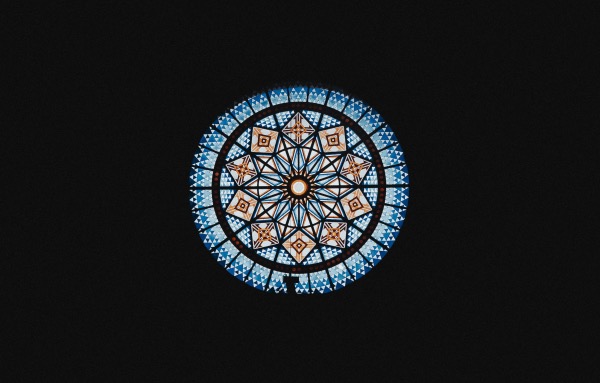
LondonLife – Alexandra Palace glasswork…

PICTURE: Samuel Regan-Asante/Unsplash

What’s in a name?…Pudding Lane…

Looking northward up Pudding Lane (to the right of the picture is a somewhat controversial plaque marking the site of the bakery). PICTURE: Google Maps

Famous for being the location of the bakery where the Great Fire of London started, Pudding Lane runs between Eastcheap and Lower Thames Street in the City of London.

While it has been claimed in the past that the name did come from desserts or puddings being sold here, it’s now generally believed that the name relates to the medieval word ‘pudding’ which meant offal – the guts or entrails of animals.

It was apparently down this lane that the butchers of the Eastcheap market (London’s primary meat market in medieval times, located at the northern end of the lane), having slaughtered an animal for consumption, would have the ‘puddings’ carried down the lane so they could be disposed of on waste barges (earlier on, the butchers were apparently permitted to toss the offal into the Thames when tide conditions were right).

The lane, which 16th century historian John Stow said was also known as Rother Lane (due to a Thames wharf called Rothersgate at its southern end) and Red Rose Lane (after a shop sign in the lane), also has the honour of being one of the world’s first designated one-way streets.

This Week in London – Charles Dickens’ court suit and Queen Elizabeth II’s coronation glove; Frans Hals at The National Gallery; Peter Paul Rubens at Dulwich; and, email explored…

• A piece of the only surviving dress worn by Queen Elizabeth I, Charles Dickens’ court suit, an RSC robe worn by David Tennant as Richard II, and the coronation glove of Queen Elizabeth II are among highlights of a new exhibition at the Guildhall Art Gallery. Marking the 400th anniversary of the Worshipful Company of Gold and Silver Wyre Drawers, Treasures of Gold and Silver Wire features more than 200 objects related to royalty, the arts, military, and the church spanning the period stretching from the Middle Ages to today. Other highlights include a uniform of the State Trumpeter, The Jubilee Cope from St Paul’s Cathedral, a robe of Order of the Garter and the burse of the Great Seal of King Charles II. The exhibition, which opens on Friday, runs until 12th November. Admission charge applies. For more, see www.cityoflondon.gov.uk/events/treasures-of-gold-and-silver-wire-exhibition.

Frans Hals, ‘The Laughing Cavalier’ (1624)/ Oil on canvas, 83 x 67 cm © Trustees of the Wallace Collection, London    

The Laughing Cavalier serves as the centrepiece of a new exhibition of Frans Hals works at the National Gallery – the largest focused the 17th century Dutch painters’ works in more than 30 years. The Credit Suisse Exhibition: Frans Hals, which has been organised with the Rijksmuseum, Amsterdam features some 50 of the artists works gathered from across the globe. Alongside The Laughing Cavalier which is on loan from the Wallace Collection, highlights include Portrait of Isaac Massa (1626), Portrait of Pieter Dircksz. Tjarck (about 1635–38), The Rommel-Pot Player (1618–22) and Portrait of Tieleman Roosterman (1634). Admission charge applies. Runs until 21st January.

A major exhibition on the work of Flemish artist Peter Paul Rubens (1577-1640) has opened at the Dulwich Picture Gallery. Rubens & Women features more than 40 paintings and drawings along with archival material and challenges the perception that the artist only painted one type of women as it explores his relationships with women and how they nourished his career and creativity. Highlights include Portrait of a Woman (c1625), Marchesa Maria Serra Pallavicino or Marchesa Veronica Spinola Doria (1606-07), The Virgin in Adoration of the Child (c1616), Looking Down (Study for head of St Apollonia) (1628), Ceres and Two Nymphs (1615-17), The Birth of the Milky Way (1636-1638), and Clara Serena Rubens, the Artist’s Daughter (c1620-23). The exhibition runs until 28th January. Admission charge applies. For more, see www.dulwichpicturegallery.org.uk.

An interactive exhibition exploring email’s impact in our lives – how it shapes our work, relationships, cultures and economies – opens at The Design Museum today. Email is D̶e̶ad̶ ̶, being held in partnership with Intuit Mailchimp, charts the history of email, from its embryonic beginnings in the 1970s to what the email experience might be like in 2070. Admission is free. Runs until 22nd October. For more, see https://designmuseum.org.

Send all items to exploringlondon@gmail.com for inclusion.

10 London locations related to Sir Christopher Wren…3. Scotland Yard…

An English heritage Blue Plaque marking the location of Scotland Yard. PICTURE: Google Maps

OK, so there’s not much left to see here – at least not from Wren’s time. But it was in Scotland Yard that Wren spent much of his time after being appointed Surveyor-General of the King’s Works.

The yard, which was located just north of the kitchens serving the Palace of Whitehall and to the south of aristocratic mansions built along the Strand, was the location of the Office of Works. It served as a workplace for Wren and was also the location of his main residence between 1669 and 1718 when he lived in a house built by his predecessor in the office, John Denham.

According to a recent lecture by Professor Simon Thurley at Gresham College, newly identified plans of the house show the ground floor contained a hall, with a kitchen and scullery to the rear while on the first floor was a great dining room, a smaller private dining room, bedroom and dressing room. A floor above contains quarters for servants and possibly the nursery for his children. There were cellars below, two yards and a long narrow walled garden (he also had a stable nearby for his horses and carriage). Most importantly, a door connected the house directly with the Office of Works next door.

Said Thurley: “Although slightly further [from] the royal lodgings than some apartments, Wren’s house was amongst the largest and best appointed of all the houses allocated to senior courtiers.”

Wren lived here with his two wives – his first wife Faith Coghill died of smallpox here in 1675 and his second wife Jane Fitzwilliam died of tuberculosis in 1680 as well as their children – Christopher, William and Elizabeth. Both William and Elizabeth never left their father’s care and died before him.

The origins of the name of Scotland Yard – which has since become synonymous with the Metropolitan Police (now based at New Scotland Yard) – apparently come from the fact the site contained lodgings where the Kings of Scotland stayed when visiting London (the last Scottish royal to stay here did so before Wren’s time, apparently in the reign of King Henry VIII).

From the Stuart period onward, the site was used for government offices – as well as Wren, other famous residents included Inigo Jones, one of Wren’s predecessors as Surveyor of Works, and, during the Commonwealth, John Milton, while serving as Latin Secretary to Oliver Cromwell.

The location of Scotland Yard is these days commemorated in the name of Great Scotland Street and Scotland Place, just off Whitehall. There’s also an English Heritage Blue Plaque marking the site in Whitehall Place, although Wren doesn’t get a mention on that (it’s entirely devoted to the former police presence).

LondonLife – Eye and Moon…

PICTURE: Ben Wicks/Unsplash

Where’s London’s oldest…florist?

Moyses Stevens premises at 53 Elizabeth Street in Belgravia. PICTURE: Google Maps

While flowers have been sold in London for centuries, the oldest surviving family florist is said to be Moyses Stevens.

The original shop was opened by Miss Moyses (who became Mrs Stevens) in Victoria Street, Belgravia. It was extended in the 1930s and a branch in Berkeley Square, Mayfair, followed in 1936.

The firm, a regular at the Chelsea Flower Show, held the royal warrant for Queen Elizabeth The Queen Mother and that for then-Prince Charles (we’re not clear on what this means now he’s King).

Known for their wedding arrangements, Moyses Stevens now operates out of locations across the city including one in the Selfridges Food Hall and, since 2019, a flower school in the former Battersea Power Station.

For more, see www.moysesflowers.co.uk

This Week in London – English Heritage unveils 1000th Blue Plaque; Chris Ofili’s ‘Requiem’ at Tate Britain; and, Astronomy Photographer of the Year…

English Heritage has unveiled its 1000th Blue Plaque in London. The plaque – located on a three storey building at number 1, Robert Street in Westminster – marks the former London headquarters of the suffragist organisation, the Women’s Freedom League. The league, which was formed in 1907, worked out of the building between 1908 and 1915 – its most active period. The blue plaques scheme has been running for more than 150 years and honours everyone from John Keats and Charles Dickens to Ada Lovelace and Alan Turing. For more, see www.english-heritage.org.uk/visit/blue-plaques/.

Chris Ofili, ‘Requiem’, 2023 (detail) commissioned for Tate Britain’s north staircase
© Chris Ofili. Courtesy the artist. PICTURE: Thierry Bal

A major new work by Chris Ofili commemorating fellow artist Khadija Saye and the tragedy of the Grenfell Tower fire in which Saye died, has gone on display at the Tate Britain in Millbank.  Requiem, a site-specific work which is shown across three walls, is described as a “journey through an imagined landscape of giant skies with vast horizons and flowing water” which unfolds in three chapters. Ofili says that when making the work, he recalled the feelings he had when creating No Woman, No Cry in 1998 as a tribute to murdered Black teenager Stephen Lawrence and his mother Doreen. “That feeling of injustice has returned,” he said. “I wanted to make a work in tribute to Khadija Saye. Remembering the Grenfell Tower fire, I hope that the mural will continue to speak across time to our collective sadness.” For more, see  tate.org.uk/visit/tate-britain.

The Astronomy Photographer of the Year display has opened at the National Maritime Museum in Greenwich featuring the competition’s winning image, Andromeda. The picture, the work of Marcel Drechsler, Xavier Strottner and Yann Sainty, depicts a huge plasma arc next to the Andromeda Galaxy. Other winners include two 14-year-old boys from China – Runwei Xu and Binyu Wang – who won the Young Astronomy Photographer of the Year award for The Running Chicken Nebula as well as Argentinian Eduardo Schaberger Poupeau who won the ‘Our Sun’ category for A Sun Question which captures a huge filament in the shape of a question mark, China’s Angel An, who won the ‘Skyscapes’ category for Grand Cosmic Fireworks – a photograph of the extremely rare phenomenon of atmospheric luminescence, and the UK’s John White who won the Annie Maunder Prize for Image Innovation for Black Echo which used audio source material from NASA’s Chandra Sonification Project, to visually capture the sound of the black hole at the centre of the Perseus Galaxy. For more, see www.rmg.co.uk/astrophoto.

Send all items for inclusion to exploringlondon@gmail.com

LondonLife – Viewing the Shard from Lovat Lane…

PICTURE: Alice Greenland/Unsplash

View of The Shard from Lovat Lane in the City of London.

London pub signs – The Pyrotechnists Arms…

Guy Fawkes depicted on The Pyrotechnists Arms sign. PICTURE: Matt Brown (licensed under CC BY 2.0)

A rather unusual name for a pub, this Nunhead establishment owes its name to the past history of the area in which it’s built.

The pub’s name apparently comes from the fireworks factory, Brocks Fireworks, which was built nearby in 1868.

The pub’s sign features images of Guy Fawkes and other Gunpowder Plot conspirators – apparently some believe Fawkes imbibed at an establishment in the area (though clearly not this one given it’s relatively recent origins).

The building originally dates from 1874 and underwent a refit in the 1930s, of which many features – including the bar counters – still remain.

The ‘Pyro’ is located at 39 Nunhead Green. For more, see https://www.facebook.com/thepyronunhead.

This Week in London – The Indian Army at Hampton Court Palace; Chanel at the V&A; and, Mantegna’s ‘The Triumphs Caesar’ at the National Gallery…

Part of the Indian Army at the Palace display at Hampton Court Palace: PICTURE © Historic Royal Palaces.

A rare charity pin badge like those sold by Indian princess and suffragette Sophia Duleep Singh to raise funds for the Indian Army has gone on show at Hampton Court Palace. It’s part of a new display which shares the stories of Indian soldiers who took up residence on the Hampton Court estate four times: for the coronations of King Edward VII in 1902, King George V in 1911 and King George VI in 1937, as well as for the World War I Victory Parade in London. The Indian Army at the Palace explores their experiences in the camp and in London more generally – everything from food and rationing to entertainment, travel and religious accommodations. Highlights of the display include objects from the Historic Royal Palaces’ collection – such as an official plan from one of the camps, press cuttings depicting the soldiers’ arrival at Hampton Court station, and Indian soldiers in and around the Palace grounds – as well as items on loan from the South Asian community, including a 32nd Sikh Pioneers Indian Army Officer’s tunic, medals and photos belonging to soldiers from the 1902 and 1911 contingents, original photographs of the Gurkha regiment in the 1919 parade and newspaper articles depicting the visits. The display can be seen until 3rd March next year and entry is included in general admission. For more, see www.hrp.org.uk/hampton-court-palace/.

A scene from the ‘Gabrielle Chanel. Fashion Manifesto’ display. PICTURE: ©Victoria & Albert Museum, London.

The first UK exhibition dedicated to the work of pioneering fashion designer Gabrielle ‘Coco’ Chanel opens at the V&A on Saturday. Gabrielle Chanel. Fashion Manifesto, which is being presented in partnership with Palais Galliera, Fashion Museum of the City of Paris, Paris Musées, charts the evolution of Chanel’s iconic design style and the establishment of the House of Chanel, from the opening of her first millinery boutique in Paris in 1910 to the showing of her final collection in 1971. The display’s 10 sections feature more than 200 “looks” as well as accessories, perfumes and jewellery. Highlights include one of the earliest surviving Chanel garments from 1916; original Chanel-designed costumes for the 1924 Ballets Russes production of Le Train Bleu; outfits created for Hollywood stars Lauren Bacall and Marlene Dietrich; an early example of Chanel’s ground-breaking evening trousers; and, ensembles from Chanel’s final collection of 1971. Runs until 25th February. Admission charge applies. For more, see vam.ac.uk/chanel.

Six of Andrea Mantegna’s monumental paintings The Triumphs of Caesar go on display at The National Gallery from Monday. On loan from the Royal Collection, the Renaissance artist’s greatest masterpiece will be on show at the gallery for around two years, while their usual home, the Mantegna Gallery at Hampton Court Palace, is closed for maintenance. Mantegna painted a total of nine canvasses for the Gonzaga family in Mantua, between about 1485 and 1506. They were acquired by King Charles I in 1629 and taken to Hampton Court Palace soon after their arrival in England. The paintings, which are being displayed in specially made frames, will be able to be seen in Room 14, along with Peter Paul Rubens’ A Roman Triumph (about 1630) to show a later artistic response to the Triumphs. Other works by Mantegna from the National Gallery’s collection including The Introduction of the Cult of Cybele at RomeSamson and DelilahTwo Exemplary Women of Antiquity and The Virgin and Child with the Magdalen and Saint John the Baptist are displayed nearby in Room 5 while Mantegna’s The Agony in the Garden can be seen in Room 29. Admission is free. For more, see www.nationalgallery.org.uk.

Send all items to exploringlondon@gmail.com

10 London locations related to Sir Christopher Wren…2. St Martin-in-the-Fields…

The current Church of St Martin-in-the-Fields. PICTURE: Javier Martinez/Unsplash

Not one of the many churches rebuilt by Wren after the Great Fire of 1666, St Martin-in-the-Fields, located just to the east of what is now Trafalgar Square, is special to the great architect for very personal reasons.

For it was in this church that his first wife Faith (nee Coghill) and his first son Gilbert were both buried, having died within a few years of each other, along with his second wife Jane (nee Fitzwilliam).

Wren married Faith Coghill, a childhood neighbour and daughter of Sir Thomas Coghill of Bletchingdon, at the age of 37 on 7th December, 1669, at the Temple Church (it’s been suggested it was his appointment that year as Surveyor of the King’s Works that may have provided him with the financial security he desired before marrying).

Their first child – Gilbert – was born in October, 1762. But he died at the age of just 18-months-old. A second child, Christopher (Wren the Younger), was born in February, 1675 (he would go on to live a full life and follow in his father’s footsteps as an architect).

Faith died of smallpox on 3rd September that same year. She was buried beneath the chancel of St Martin-in-the-Fields beside Gilbert.

On 24th February, 1677, Wren married again, this time to Jane Fitzwilliam, daughter of William FitzWilliam, 2nd Baron FitzWilliam, and Jane Perry, in a private ceremony believed to have been undertaken in the Chapel Royal at Whitehall. The couple had two children together – Jane in November that year and William in June, 1679.

Tragically, Jane also died after only a few years of marriage of tuberculosis on 4th October, 1680. She was buried alongside Wren’s first wife and child in St Martin-in-the-Fields.

Wren was not to marry again – and for his long 90 years of life, he was only in the end married for nine.

The medieval church of St Martins-in-the-Fields was altered several times during its lifetime – including being enlarged and beautified – but it’s this earlier church that Wren would have known. The current church was rebuilt to the designs of James Gibbs in the early 1720s and was completed in 1726 after Wren’s death in 1723.

Interestingly, the first wife of Wren’s son Christopher – Mary – was also buried in the church in 1712 and a monument to her can still be seen in the crypt.

LondonLife – Marking a year since the King’s accession…

PICTURE: Sgt Donald C Todd/UK MOD © Crown copyright 2023

The King’s Troop Royal Horse Artillery fired 41 blank artillery rounds using six guns in Hyde Park to mark a year since the accession of King Charles III on 8th September. Below, the 105mm light artillery guns of the Honourable Artillery Company prepare to fire at The Tower of London in another salute on the same day. Both regiments taking part were responsible for firing the Death Gun salutes to mark the passing of Queen Elizabeth II one year ago, and the following day, the Proclamation salutes to mark the new reign.

PICTURE: Corporal Rob Kane/UK MOD © Crown copyright 2023

Famous Londoners – Thomas Dagger…

Josepha Jane Battlehooke’s ‘The Great Fire of London’ depicts the scene as though from a boat in the. vicinity of Tower Wharf. PICTURE: Public domain via Wikipedia.

Thomas Dagger, a 17th century journeyman baker, only became famous rather recently when new research identified him as the first witness to one of the seminal events in London’s history – the Great Fire of 1666.

The research was undertaken by Professor Kate Loveman at the University of Leicester for the Museum of London and will be used to inform its gallery displays when it opens its new site at Smithfield in 2026.

Drawing on letters, pamphlets, legal and guild records, Professor Loveman put Dagger, who worked in Thomas Farriner’s bakery on Pudding Lane, at the centre of the the fire’s origin story.

It’s well-known that the fire began in Farriner’s bakery in the early hours of 2nd September, 1666, and went on to consume some 13,200 homes in the city, leaving some 65,000 people homeless. But reports differ as to who was in the bakery when the fire started.

Among accounts pointing to Dagger being present is a letter from MP Sir Edward Harley who wrote in a letter to his wife that Thomas Farriner’s “man” – a term referring to his servant or journeyman – was woken after in the early hours on 2nd September choking from smoke. He reported that Farriner, his daughter and “his man” then escaped out of an upper window, but his maid died.

Dagger’s name is also found grouped with other Farriner household members among witnesses on a subsequent indictment targeting Frenchman Robert Hubert who was convicted and hanged for starting the fire after making a somewhat dubious confession.

Professor Loveman concludes that, based on her research, Thomas Dagger was the first witness to the Great Fire of London, woken by choking smoke shortly before 2am on 2nd September. Aware of the fire, he then alerted other members of the household before, along with his boss Thomas Farriner, Farriner’s son Thomas Farriner, Jr, and Farriner’s daughter Hanna, escaping by climbing out of an window. An unnamed maid who was in the house did not escape with them and was killed.

Professor Loveman’s research further showed that Dagger arrived in London from Wiltshire in 1655 and was apprenticed to one Richard Sapp for nine years but ended up serving part of that time with Farriner. Soon after the fire, in 1667, he took his freedom and by January the following year had married and had a baby. He went on to establish his own bakery at Billingsgate.

Says Professor Loveman: “It was fascinating to find out more about what happened on that famous night. Although most of the evidence about the Farriners is well known to historians, Thomas Dagger’s role has gone unrecognised. Unlike the Farriners, his name didn’t become associated with the fire at the time. Soon after the disaster, he merges back into the usual records of Restoration life, having children and setting up his own bakery. His is a story about the fire, but also about how Londoners recovered.”

Lost London – The London Coffee House…

Site of the London Coffee House. PICTURE: Google Maps

Established in the early 1730s on Ludgate Hill (next to St Martin Ludgate), the proprietor of this establishment was one James Ashley (hence the coffee house also being known as Ashley’s London Punch House – the punch was apparently particularly affordable).

It was known to have been frequented by the likes of Joseph Priestley and his friend, American Benjamin Franklin, while James Boswell described its customers as being primarily physicians, dissenting clergy and “masters of academies”.

Its location also meant it served as a place where Old Bailey juries which could not reach a decision were sequestered for the night.

Continued to be favoured by Americans, in 1851 philanthropist George Peabody gave a dinner here for those from the United States who were connected with the Great Exhibition being held in Hyde Park.

In 1806, a statue of Hercules and a hexagonal Roman altar, dedicated to Claudia Martina by her soldier husband, were found here. The coffee house has also been identified as the “Coffee House on Ludgate Hill” mentioned in Charles Dickens’ Little Dorritt.

It closed in 1867. The site is now occupied by a pub, The Ye Olde London.