This Week in London – Bonfire Night; Treason at The National Archives; two Turner’s return after 100+ years; and, science fiction at the Science Museum…

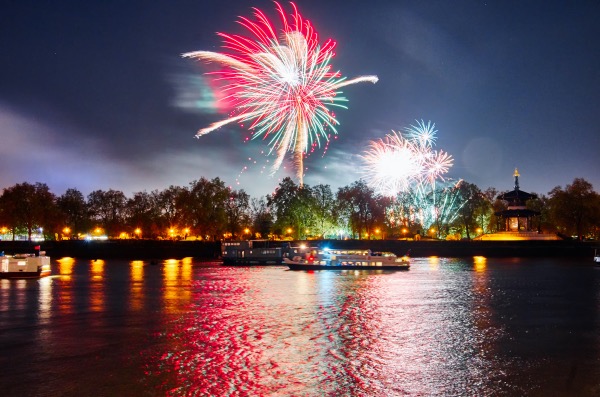
A previous Bonfire Night in London. PICTURE: teo73/iStockphoto

“Remember, remember, the 5th of November…” It’s Bonfire Night this Saturday night and fireworks displays will be held across London with key displays at Alexandra Palace, Battersea Park and Wimbledon Park. Rather than list them all here, Visit London has put together a handy guide which you’ll find here.
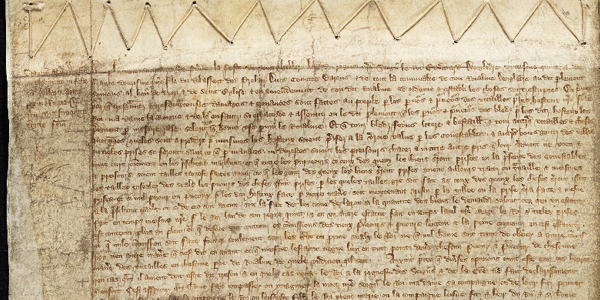
A section of the Treason Act. PICTURE: Courtesy of The National Archives (Open Government Licence)

What did the abolition of the transatlantic slave trade, the establishment of the Church of England, the creation of the United States of America and the extension of UK voting rights have to do with acts of treason? Treason: People, Power & Plot, a new exhibition at The National Archives in Kew, examines the role treason has played across the span of 700 years of history. On display will be the original Treason Act, passed in 1352 during the reign of King Edward III (pictured), and the Monteagle Letter – which suggested the recipient should not attend parliament on 5th November, 1605 (effectively tipping them off about the Gunpowder Plot) as well as Guy Fawkes’ confession, a document containing the charges levelled against King Henry VIII’s ill fated wife, Anne Boleyn, and the United States’ Declaration of Independence. Accompanying the display will be a range of online and on-site events. The free exhibition opens on Saturday and runs until 6th April. For more, see www.nationalarchives.gov.uk/treason/.
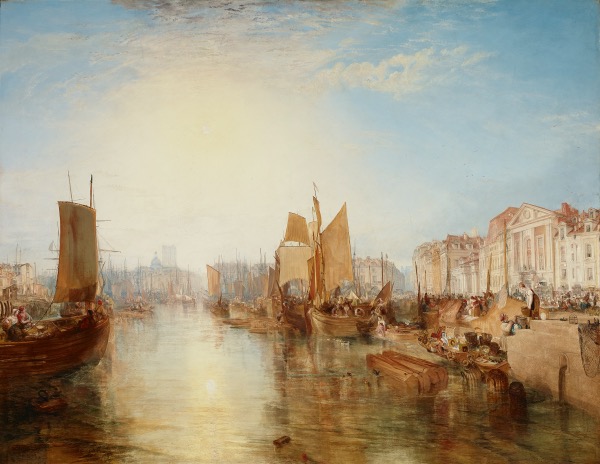
Joseph Mallord William Turner (1775 – 1851) The Harbor of Dieppe, 1826 oil on canvas 68 3/8 in. x 88 3/4 in. (173.67 cm x 225.43 cm) Henry Clay Frick Bequest. Accession number: 1914.1.122

Two ground-breaking JMW Turner paintings – Harbour of Dieppe: Changement de Domicile and Cologne, the Arrival of a Packet-Boat: Evening – have returned to the UK for the first time in more than 100 years as part of a new exhibition at The National Gallery. The Turner on Tour exhibition looks at the artist’s life-long fascination with ports and harbours and highlights the regular sketching tours he took within Europe that were central to his fame as an artist-traveller, as well as his “radical approach to colour, light and brushwork”. The two paintings, which have not been since in the UK since 1911, were exhibited in New York in 1914 at the Knoedler Gallery. They were subsequently acquired by the American industrialist Henry Clay Frick and have remained in the United States ever since but are now being generously lent by The Frick Collection. Can be seen until 19th February in Room 46. Admission is free. For more, see nationalgallery.org.uk.

On Now: Science Fiction: Voyage to the Edge of Imagination. This exhibition at the Science Museum in South Kensington features more than 70 objects and uncovers connections between significant scientific innovations and celebrated science fiction works. On display is classic literature that has inspired new understandings of the world as well as set-pieces and props from iconic films and TV – everything from a Lieutenant Uhura costume from Star Trek: The Motion Picture, to the Dalek from Doctor Who and a Darth Vader helmet created for Star Wars: Episode V – The Empire Strikes Back. There are also contemporary artworks from across the globe that explore alternative futures for humanity. The exhibition is accompanied by an events programme. Runs until 4th May. Admission charges apply. For more, see sciencemuseum.org.uk/science-fiction.

Send all items for inclusion to exploringlondon@gmail.com

8 locations for royal burials in London…5. Henry VII’s Lady Chapel, Westminster Abbey…

Located just to the east of St Edward the Confessor’s Chapel in Westminster Abbey is the lavishly ornate Lady Chapel built on the orders of King Henry VII.

Described as the “last masterpiece of English medieval architecture”, the chapel is the resting place of King Henry VII and his wife Queen Elizabeth of York.

Effigies of King Henry VII and Queen Elizabeth of York. PICTURE: Ann Longmore-Etheridge/Public domain

The couple were the first to be buried in a vault under the floor rather than a tomb but still features an elaborate monument above the floor.

The monument was designed in the Renaissance style by Italian sculptor Pietro Torrigiano and features gilt bronze effigies of the King and Queen lying side-by-side above a black marble base decorated with six medallions representing the Virgin Mary and Henry’s patron saints (who included St Edward the Confessor). At either end of the base are coats of arms supported by cherubs.

A fine grille, designed by Thomas Ducheman, surrounds the monument – once gilded, it featured 30 statues in niches but only six – depicting saints – now remain. The lengthy Latin inscription written on the grille lauds King Henry as “a wise and watchful monarch, a courteous lover of virtue” among other superlatives. There are further inscriptions on the monument.

They’re not the only kings and queen’s buried in the chapel. King James I is buried in the vault under the King Henry VII’s tomb and his wife Queen Anne of Denmark is buried nearby.

Tomb of Elizabeth I. PICTURE: Wikimedia Commons (licensed under CC BY-SA 4.0)

Queen Elizabeth I is buried in the chapel’s north aisle with a monument above depicting her effigy. Her coffin was placed on top of her half-sister Queen Mary I whose body had been placed there after her death in 1558. The monument was installed on the orders of King James I who, while commissioning a depiction of Queen Elizabeth, didn’t order an effigy of Mary to be made. Instead, she is commemorated with an inscription translated as “Partners both in throne and grave, here rest we two sisters, Elizabeth and Mary, in the hope of the Resurrection.”

The religious differences of the two Queens – Elizabeth being a Protestant and Mary a Catholic – are meanwhile commemorated in an inscription on the floor which reads: “Remember before God all those who divided at the Reformation by different convictions laid down their lives for Christ and conscience sake.”

Buried in a vault beneath the south aisle of the chapel – with just simple inscriptions on stones above (no monuments were erected due to the lack of space apparently – are the remains of the Stuart monarchs King Charles II, Queen Anne (and her husband Prince George), Queen Mary II and King William III.

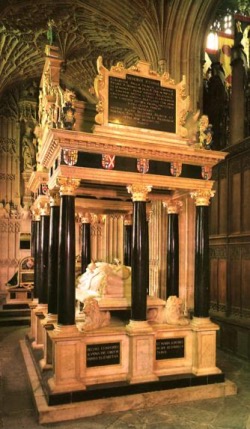
The rather flamboyant tomb of Mary, Queen of Scots, is also in this aisle. King James I had her remains brought to the abbey from Peterborough Cathedral in 1612 and laid to rest in a marble tomb featuring an elaborate canopy and a white marble effigy at the feet of which stands a crowned Scottish lion. The eldest son of King James I, Henry Frederick, Prince of Wales, was also buried in the Queen’s vault (she was his grandmother), probably due to lack of space.

The young king Edward VI is buried beneath the floor in front of the altar and the last monarch to be buried in the abbey – King George II – lies in a vault under the central aisle along with his wife Queen Caroline and some of their children as well as other family members. On the King’s orders, the sides of the coffins of King George II and that of Queen Caroline were removed so their remains could mingle.

Several other royals – including Princess Mary of Orange, eldest daughter of Charles I and Henrietta Maria, and Prince Rupert of the Rhine – are also buried in the chapel.

HERE: Lady Chapel, Westminster Abbey (nearest Tube stations are Westminster and St James’s Park); WHEN: Times vary – see the website for details; COST: £27 adults/£24 concession/£12 children (discounts for buying online; family rates available); WEBSITE: www.westminster-abbey.org

LondonLife – The two towers…

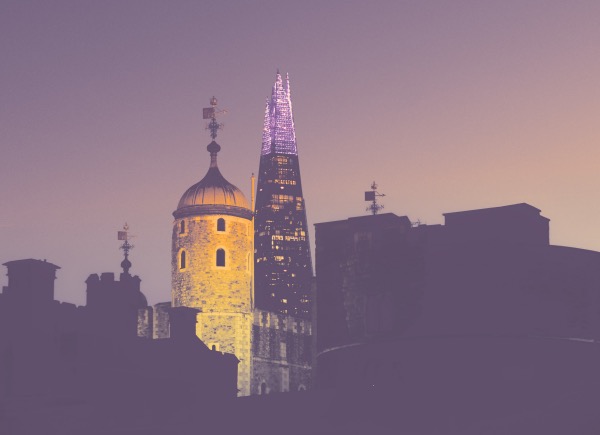
The White Tower and The Shard. PICTURE: Nico V/Unsplash

Where’s London’s oldest…perfumer?

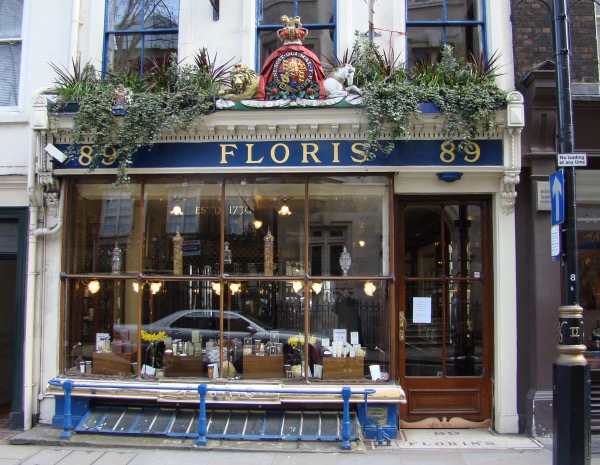
Not just said to be the oldest perfumer in London but in the UK, Floris London started life as a barber-shop and comb-maker in Jermyn Street, St James’s, by immigrant Juan Famenias Floris.

PICTURE: Sergey Moskalev (licensed under CC BY-SA 3.0)

Floris arrived in London in 1730, having travelled from the island of Menorca in the Balearic Islands which had become a British possession after it was captured in 1708 in the War of the Spanish Succession.

The story goes that Floris was missing the sweet scent of the flowers of his youth on the island and so he and his wife Elizabeth began creating and selling perfumes (and living in a premises above the shop).

Floris was granted his first Royal Warrant in 1820 soon after the accession of King George IV as ‘Smooth Pointed Comb Maker’ to His Majesty. It was to be the first of many.

Customers have included everyone from Admiral Lord Nelson (who kept a room Lady Emma Hamilton on the building’s third floor) and Florence Nightingale to Mary Shelley, Beau Brummell, Oscar Wilde, Winston Churchill, Marilyn Monroe and members of the Royal Family including the Duke and Duchess of Sussex, creating a bespoke fragrance for their wedding in 2016.

Writer Ian Fleming was also a customer – the No 89 Eau de Toilette was to become a favourite of James Bond. The company’s other pop culture references include a mention in the Al Pacino film, Scent of a Woman.

Still a privately owned family business, Floris is still run by Juan’s’ descendants today and the London store at 89 Jermyn Street, which was renovated in 2017, remains in the same building Floris first established his business. The current shop front was added in the early 19th century and over it sits the original coat-of-arms granted by King George IV.

Inside, the Spanish mahogany cabinets were purchased from the Great Exhibition held in Hyde Park in 1851. The four storey property, which these days features a small museum at the rear, is now Grade II-listed.

Floris opened a second store at 147 Ebury Street, Belgravia in 2012.

For more, see www.florislondon.com.

This Week in London – Musical theatre at the V&A; getting spooky at Hampton Court and the Tower; and, Bill Brandt at Tate Britain…

Costume for Eliza Doolittle in Lerner and Lowe’s musical My Fair Lady, designed by Cecil Beaton, worn by Julie Andrews, Theatre Royal, Drury Lane, 1958. Given bythe Friends of the Victoria and Albert Museum.© Cecil BeatonImage courtesy of Victoria and Albert Museum, London

The glittering world of musical theatre is at the centre of a new exhibition which opened at the V&A in South Kensington recently. Re:Imagining Musicals showcases some 100 objects, most being displayed for the first time, with highlights including Paul O’Grady’s Miss Hannigan costume from Annie, new costume acquisitions from SIX the MusicalEverybody’s Talking About JamieMoulin Rouge! The MusicalCompany, and A Chorus Line, the rarely displayed beaded gown designed by Cecil Beaton which was worn by Julie Andrews in My Fair Lady in 1958; the toy Olaf puppet from Frozen the Musical, and an original poster from the off-Broadway premiere of Hamilton signed by the cast and creatives. There’s also a 1965 original cast recording of Hello Dolly! signed by Carol Channing, Bunny Christie’s Olivier and Critics’ Circle award winning costume design, model and costume for Rosalie Craig as Bobbie in the 2019 West End revival of Company and Shakespeare’s first folio, which celebrates its 400th anniversary in 2023. The free display can be seen in the Theatre and Performance Galleries until 27th November, 2023. For more, see www.vam.ac.uk/exhibitions/reimagining-musicals.

Base Court and cloisters dressed for the Halloween ghost trail at Hampton Court Palace. PICTURE: © Historic Royal Palaces.

Visitors to Hampton Court Palace and the Tower of London are being invited to explore some of the properties’ spookiest stories in the lead-up to Halloween. Until 30th October, visitors to Hampton Court are able to explore the stories of everyone from King James I to tormented wives to Tudor trumpeters with special effects including mystical projections and eerie sound effects. Meanwhile, until 31st October, visitors can follow in the footsteps of infamous prisoners at the Tower of London with “spooky decorations, spine-tingling sound effects, and rooms transformed to tell terrifying tales about past inhabitants” while ghostly figures such as the Welsh Prince Gruffydd ap Llywelyn and King Henry VIII’s ill-fatded wife Anne Boleyn wander the grounds. Admission charges apply. For more, see www.hrp.org.uk.

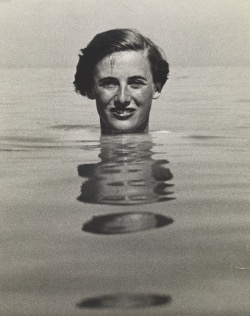
Bill Brandt – Woman Swimming
Tate. Accepted by HM Government in lieu of inheritance tax from the Estate of Barbara Lloyd and allocated to Tate 2009 © The Estate of Bill Brandt.

The work of British photographer Bill Brandt (1904-83) is the subject of a new exhibition at Tate Britain on Millbank. Bill Brandt: Inside the Mirror features 44 original photographs from across his career are displayed alongside the magazines and photobooks in which these images were most often seen. Brandt was first known as a photojournalist, renowned in the 1930s for his observations of British life, and later for his landscapes, portraits and nudes. Highlights include Woman Swimming (pictured), Hail, Hell & Halifax and his handmade photobook ‘A Dream’ – which is being exhibited for the first time. Runs until 15th January. Admission is free. For more, see tate.org.uk.

Send all items for inclusion to exploringlondon@gmail.com.

8 locations for royal burials in London…4. Christ Church Greyfriars…

We’ll return to Westminster Abbey shortly but first we’re heading into the City of London.

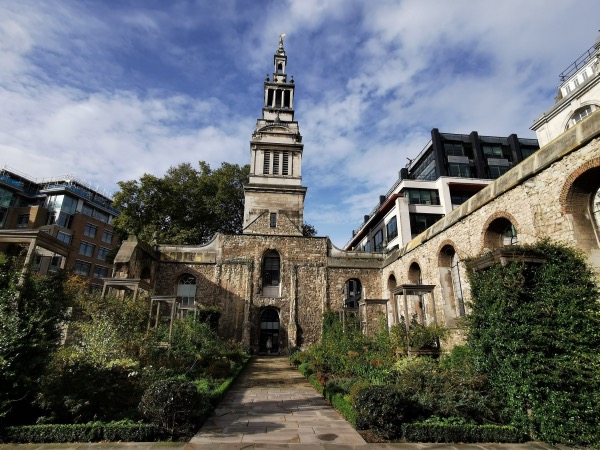
Christ Church Greyfriars, also known as Christ Church Newgate Street, was the burial site of several queens in the medieval era.

Christ Church Greyfriars. PICTURE: Karmakolle (licensed under CC BY-SA 4.0).

These include the second wife of King Edward I, Queen Marguerite, who partly financed construction of the church which commenced in the 1290s and finished well after her death in the 1360s.

Marguerite, who was the first uncrowned queen since the Norman Conquest (apparently due to the expense), was only 26 when she was widowed in 1307 (having married the king in 1299 when he was at least 40 years her senior).

She died on 14th February, 1318, while at her castle at Marlborough but her remains were brought to London where she was buried in Greyfriars wearing a Francisan habit. Her tomb, sadly, was destroyed during the Reformation.

Also buried in Greyfriars was Queen Isabella, the widow (and adversary) of the ill-fated King Edward II. Isabella, who was also known as the ‘She-wolf of France’, is said to have been buried in the clothes she wore at her wedding to the King 50 years earlier. Despite rumours to the contrary, her lover, Roger Mortimer, was not buried with her (although Isabella’s daughter – Joan of the Tower, who was the wife of King David II of Scotland – was).

While their predecessor as Queen, Eleanor of Provence, wife of King Henry III, was buried at Amesbury Priory in Wiltshire where she had died (the grave is unmarked), her heart was brought to London and buried in Greyfriars.

Others buried in the church include King Henry III and Eleanor’s daughter, Beatrice of England, and King Edward III’s daughter Isabella, Countess of Bedford.

There’s not much left of Greyfriars these days – the medieval church, one of the largest then in London, burned in the Great Fire of London of 1666 and following a rebuild under Sir Christopher Wren’s supervision, it was again all but destroyed during the Blitz in World War II.

It was decided not to rebuild and what remained of the church – some of the outer walls and tower – were designated a Grade I-listed building in 1950. Plantings inside are laid out to resemble the pews of the church in plan.

WHERE: Christ Church Greyfriars, King Edward Street (nearest Tube station is St Paul’s); WHEN: Anytime; COST: Free; WEBSITE: www.cityoflondon.gov.uk/things-to-do/city-gardens/find-a-garden/christchurch-greyfriars-church-garden

LondonLife – A tumultuous week in national politics and (another) new PM…

The Houses of Parliament (pictured here in 2020). PICTURE: Yaopey Yang/Unsplash

Rishi Sunak was appointed as the nation’s third Prime Minister in less than two months today following Liz Truss announcement she would resign on Friday. Sunak visited King Charles III at Buckingham Palace after Truss visited earlier to officially resign.

Moment(s) in London’s History – Three (more) short-term PMs…

As the nation awaits the announcement of new Prime Minister following the 48 day tenure of Liz Truss – the shortest of any British Prime Minister, we take a quick look at the circumstances surrounding the next three shortest serving PMs…

1. George Canning. Canning, a Tory, had twice served as Foreign Secretary – between 1807-1809 and 1822-1827 (a period during which he also served as Leader of the House of Commons) when, following the resignation of Prime Minister Lord Liverpool in April, 1827, he was chosen to succeed him in the office. But Canning’s health took a turn for the worse soon after and he died in office on 8th August, 1827, having served just 119 days as Prime Minister.

2. The Viscount Goderich. FJ Robinson, 1st Viscount Goderich, succeeded George Canning as Prime Minister in 1827. But he was unable to hold together Canning’s coalition of Tories and Whigs and so resigned himself after just 144 days in office. He nonetheless went on to serve in the cabinets of both Earl Grey and Sir Robert Peel.

3. Andrew Bonar Law. The only Canadian to have served as British Prime Minister, Law was a Conservative Party leader who became Prime Minister after the fall of David Lloyd George’s Coalition Government on 23rd October, 1922. The party then won a clear majority in a general election on 15th November of that year. But ill with throat cancer he resigned on 20th May the following year, having served just 211 days in office. He died soon after on 30th October that year.

This Week in London – London’s history of executions; myth-making around Alexander the Great; and, Édouard Manet’s ‘Eva Gonzalès’ examined…

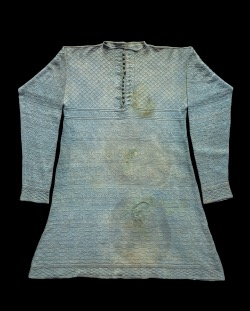
Charles I vest, Executions 2022 © Museum of London

• The history of public executions in London – spanning a period of some 700 years – is the subject of a landmark new exhibition at the Museum of London Docklands in West India Quay. Executions explores how capital punishment became embedded in the city’s landscape – from the first recorded public execution in 1196 to the last in 1868 – and looks at the rarely told and often tragic human stories behind them. Items on display include an intricately woven silk vest said to have been worn by King Charles I at his execution outside the Banqueting House (pictured), a 300-year-old bedsheet embroidered with a love note in human hair and personal items which once belonged to prison reformer Elizabeth Fry. Visitors can also stand in front of the Newgate Prison door, marking the last steps for prisoners heading to the scaffold, and see a dramatic recreation of the Tyburn “Triple Tree” gallows. Visitors will also learn about the 200 offences that became punishable by death and the spectacle and rituals of execution days as well as what led celebrity criminals to the gallows. Admission charge applies. Runs until 16th April next year. For more, see https://www.museumoflondon.org.uk/museum-london/whats-on/exhibitions/executions.

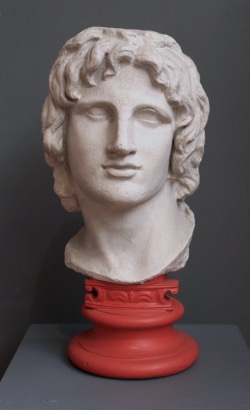
Marble head of Alexander © Museum of Classical Archaelogy

The first exhibition exploring the rich history of story-telling around one of the most famous figures of the ancient world – Alexander the Great – opens at the British Library tomorrow. Alexander the Great: The Making of a Myth features almost 140 exhibits from 25 countries including astrological clay tablets, ancient papyri and medieval manuscripts as well as comics, films and video games. It reveals how Alexander’s character has been adapted and appropriated by different cultures and religions, with conflicting interpretations. Runs until 19th February. Admission charge applies. A season of in-person and online events accompanies the exhibition. For more, see www.bl.uk/events/alexander-the-great-the-making-of-a-myth.

• Portraits of the Euro 2020 England men’s football squad and its manager, Gareth Southgate, will be shown at the City of London Corporation’s Guildhall Art Gallery from today. The free exhibition, This is England, features the most successful men’s national team – finalists in Euro 2020 – since the winners of the World Cup in 1966, from Harry Kane and Jude Bellingham to Bukayo Saka and Raheem Sterling. The paintings are the work of artist Matt Small and were commissioned by the FA and exhibited at the St George training ground during the Euro 2020 finals. The paintings can be seen until 19th February. For more, see www.cityoflondon.gov.uk/events/this-is-england.

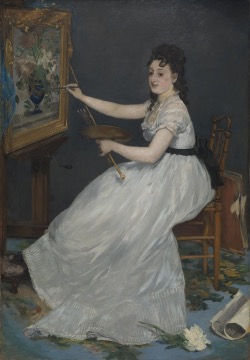
Edouard Manet, ‘Eva Gonzalès’, 1870

Édouard Manet’s 1870 portrait of Eva Gonzalès is the subject of a new exhibition at The National Gallery opening on Friday. The painting was considered by the early 20th century to be the most famous modern French painting in the UK and Ireland. The exhibition, the first in a new series of ‘Discover’ exhibitions to be staged in the Sunley Room with the aim of exploring well-known paintings in the collection through a contemporary lens, examines the lifelong artistic dialogue and the complexities of the friendship and mentorship between Manet and Gonzalès, his only formal pupil. It also looks at the broader context of female self portraits from the 18th to early 20th centuries, alongside portraits of women artists by male friends, husbands, and teachers The free exhibition includes works by Eva Gonzalès, Elisabeth Louise Vigée Le Brun, Edouard Manet, Berthe Morisot, Alfred Stevens and Laura Knight. Runs until 15th January. For more, see www.nationalgallery.org.uk/exhibitions/discover-manet-eva-gonzalès.

Send all items for inclusion to exploringlondon@gmail.com.

8 locations for royal burials in London…3. St Edward’s Chapel, Westminster Abbey…

This chapel at the heart of Westminster Abbey is so named for the first king that was buried there – St Edward “the Confessor” – in early 1066.

The abbey, which had been constructed on the site of a Saxon Church at the behest of King Edward in fulfilment of a vow, was newly built when the King died. It had been consecrated on 28th December, 1065, but the king had been too ill to attend the service.

He died just a few days later some time on the night of 4th to 5th January. His burial took place on 6th January (the burial procession is actually depicted in the Bayeux Tapestry) with his body laid to rest beneath the floor of the new church (archaeologists using ground-penetrating radar believe they located the exact location of his original tomb in 2005).

He wasn’t to rest there for long. King Edward’s saintly reputation grew over the ensuing years and miracles began to be reported at the tomb – it’s also said said that when the tomb was opened in 1102, a “wonderful fragrance” is said to have filled the church suggesting that it he wasn’t embalmed the body was packed with aromatic herbs.

In 1163, two years after Edward had been made saint by Pope Alexander III, the king’s body was transferred from the tomb to a specially made shrine.

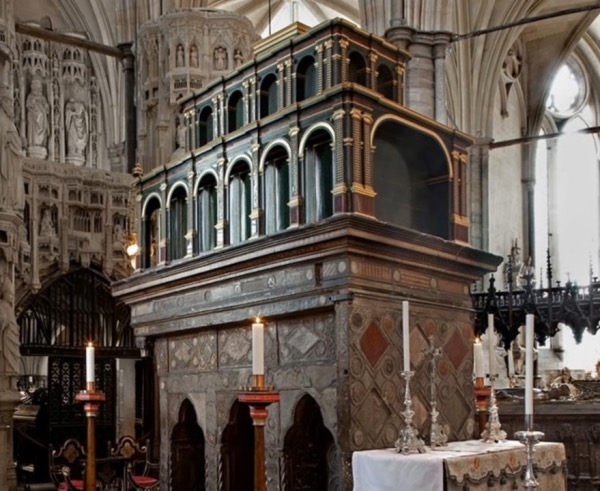
In the 13th century, King Henry III rebuilt St Edward’s church in the new Gothic-style of architecture, spending extravagant sums on the new building. His rebuilding programme culminated in 1269 when the bones of St Edward was translated into a new shrine featuring mosaics on a stone base created by Italian workmen in which the king’s coffin was placed with a wooden canopy over the top (such was his veneration of St Edward that King Henry III, his brother Richard, Duke of Cornwall, and the king’s two sons bore the coffin to the new shrine).

Shrine of St Edward the Confessor. PICTURE: VCR Giulio19 (licensed under CC BY-SA 4.0)

The shrine became a place of pilgrimage during King Henry III’s reign but his cult declined in the later years (and St Edward, who had for a time been considered patron saint of England was eventually replaced by St George).

The shrine was despoiled during King Henry VIII’s Dissolution of 1540 – the jewels were removed and presented to the King – and Edward’s body removed to another location in the abbey. But Queen Mary I had the Purbeck marble base reassembled (with new jewels added) and Edward’s body returned. The tiered wooden canopy which stands above the stone stone dates from the 16th century (and was heavily restored in the 1950s).

St Edward isn’t the only king buried in the chapel space. Others buried there – around the outer edges of the chapel – included King Henry III, King Edward I and his wife Eleanor of Castile, King Edward III and his wife Philippa of Hainault, King Richard II and his wife Queen Anne of Bohemia, King Henry V and Catherine of Valois (King Henry V had a chantry chapel built above his tomb at the eastern end of St Edward’s Chapel). Matilda, the wife of King Henry I, is also buried there.

WHERE: North Aisle, Westminster Abbey (nearest Tube stations are Westminster and St James’s Park); WHEN: Times vary – see the website for details; COST: £27 adults/£24 concession/£12 children (discounts for buying online; family rates available); WEBSITE: www.westminster-abbey.org

LondonLife – Celebrating wildlife at the Natural History Museum…

‘The Big Buzz’ by Karine Aigner, USA, winner of Wildlife Photographer of the Year.

An up-close image of a buzzing ball of cactus bees over the hot sand at a Texas ranch has won American photographer Karine Aigner the honour of Wildlife Photographer of the Year. The image depicts male bees as they compete for the attention of the single female bee at the centre of the ball. Aigner is the fifth woman to win the Grand Title award in the 58 year history of the competition, which is run by the Natural History Museum. Her image is being shown along with that of 16-year-old Thai Katanyou Wuttichaitanakorn – who won Young Wildlife Photographer of the Year for an up-close image of a whale’s baleen – as well as those of category winners in this year’s contest in a redesigned exhibition at the museum in South Kensington.  Alongside the photographs, the display features short videos, quotes from jury members and photographers and insights from museum scientists on how human actions continue to shape the natural world. The exhibition can be seen until 2nd July. Admission charge applies. For more, see www.nhm.ac.uk/visit/exhibitions/wildlife-photographer-of-the-year . The 59th annual competition is now open for entries. For more on how to enter, see www.nhm.ac.uk/wpy/competition.

‘The Beauty of Baleen’ by Katanyou Wuttichaitanakorn, Thailand, winner of Young Wildlife Photographer of the Year.

London pub signs – The Widow’s Son…

The Widow’s Son in late 2020. PICTURE: Google Maps

This pub in London’s East End takes it’s name – or so the story goes – from the building which formerly stood on the site – a cottage belonging to a widow.

The pub’s sign showing a sailor with the hanging net of buns.

The tale goes that the widow’s only son went to sea – it’s thought this was during the Napoleonic Wars – and wrote home to his mother that she should expect him at Easter (and could she have a nice hot cross bun waiting for him)?

Tragically, the son never returned, but for the rest of her life, the widow – apparently refusing to accept he had died – continued to keep a hot cross bun for him on every Good Friday. It’s said that following her death, a net full of the unclaimed buns was found hanging from the ceiling of her house.

The site became known as The Bun House and when the pub was built on it in 1848 and named The Widow’s Son in honour of the widow’s tradition, it too carried the “bun house” moniker.

The pub has continued the widow’s tradition and every Good Friday, a sailor from the Royal Navy places a new bun in a net which hangs over the bar.

The now Grade II*-listed pub at 75 Devons Road in Bromley-by-Bow, while not particularly appealing from the outside, still has interior fittings dating from the 1870s.

For more, see https://www.widowsson.co.uk.

This Week in London – Hieroglyphs explored at the British Museum; King Charles III coronation date announced; ‘The Admiral’s Revenge’ in Greenwich’; and, Dickens and ghosts…

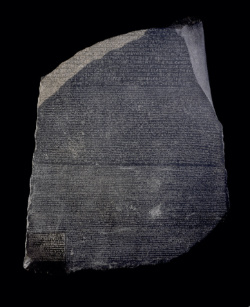
The Rosetta Stone. Granodiorite; Rasid, Egypt; Ptolemaic, 196 BC © The Trustees of the British Museum.

• Marking 200 years since French Egyptologist Jean-Francois Champollion (1790-1832) was able to decipher hieroglyphs using the Rosetta Stone, a new exhibition opening at the British Museum explores how the stone and other inscriptions and objects helped scholars unlock one of the world’s oldest civilisations. Hieroglyphs: unlocking ancient Egypt centres on the Rosetta Stone but also features more than 240 other objects, many of which are shown for the first time. Alongside the Rosetta Stone itself, highlights include: “the Enchanted Basin”, a large black granite sarcophagus from about 600 BCE which is covered with hieroglyphs and images of gods; the richly illustrated, more than 3000-year-old Book of the Dead papyrus of Queen Nedjmet which measures more than four metres long; and the mummy bandage of Aberuait, a souvenir from one of the earliest ‘mummy unwrapping events’ in the 1600s where attendees each received a piece of the linen, preferably inscribed with hieroglyphs. There’s also the personal notes of key figures in the race to decipher hieroglyphs including those of Champollion which come from the Bibliothèque nationale de France as well as those of England’s Thomas Young (1773 – 1829) from the British Library. The exhibition can be seen in the Sainsbury Exhibition Gallery until 19th February. Admission charge applies. For more, see britishmuseum.org/hieroglyphs.

• King Charles III will be crowned at Westminster Abbey on 6th May next year, Buckingham Palace has announced this week. The Queen Consort, Camilla, will be crowned alongside him in the first such coronation since 12th May, 1937, when King George VI and Queen Elizabeth were crowned in the abbey. The ceremony, which will be conducted by the Archbishop of Canterbury, will, according to the palace, “reflect the monarch’s role today and look towards the future, while being rooted in longstanding traditions and pageantry”. King Charles III is expected to sign a Proclamation formally declaring the coronation date at a meeting of the Privy Council later this year. The first documented coronation at Westminster Abbey was that of King William the Conqueror on 25th December, 1066, and there have been 37 since, the most recent being that of Queen Elizabeth II on 2nd June, 1953.

https://www.youtube.com/embed/Vfmo5dgTEl0″ title=”YouTube video player” frameborder=”0″ allow=”accelerometer; autoplay; clipboard-write; encrypted-media; gyroscope; picture-in-picture” allowfullscreen

A new dark comedy, The Admiral’s Revenge, has opened in The Admiral’s House in the Old Royal Naval College, Greenwich. The play, set in 1797, features sea shanties, puppetry and follows a crew of shipmates in the wake of the ill-fated Battle of Tenerife. Audiences have the chance to explore the Admiral’s House before the show and enjoy a complimentary rum cocktail. Runs until 12th November. For ticket prices, head to https://ornc.org/whats-on/1797-the-mariners-revenge/.

A new exhibition exploring Charles Dickens’ interest in the paranormal has opened at the Charles Dickens Museum in Bloomsbury. To Be Read At Dusk: Dickens, Ghosts and the Supernatural explores Dickens’ famous ghost stories, including A Christmas Carol, and reveals his influence on the genre. Highlights include a copy of The Chimes which Dickens gifted to fellow author Hans Christian Anderson, original John Leech sketches of Dickens’ ghosts of the past, present and future and original tickets and playbills relating to the author’s public performances of his ghost stories. The display will also look into Dickens’ own views on the supernatural as a fascinated sceptic and includes  correspondence in which he was asking about the location of a supposedly haunted house. Runs until 5th March. Admission charge applies. For more, see https://dickensmuseum.com/blogs/all-events/to-be-read-at-dusk-dickens-ghosts-and-the-supernatural.

Send all items to exploringlondon@gmail.com

This Week in London – Cezanne at the Tate; Freud at The National Gallery; Diwali on the Square; and; a new Blue Plaque…

Paul Cezanne, Mont Sainte-Victoire (1902-6)/Philadelphia Museum of Art. Gift of Helen Tyson Madeira, 1977.

A “once-in-a-generation” exhibition of Paul Cezanne’s paintings, watercolours and drawings opened at the Tate Modern this week. The EY Exhibition: Cezanne features around 80 works including key examples of his iconic still life paintings, Provençale landscapes, portraits and bather scenes. There are also more than 20 works which have never been seen in the UK before including The Basket of Apples (c1893, from the The Art Institute of Chicago), Mont Sainte-Victoire (1902-06, from the Philadelphia Museum of Art) and Still Life with Milk Pot, Melon, and Sugar Bowl (1900-06, from a private collection). The display traces Cezanne’s (1839-1906) artistic development and also examines the relationships which were central to his life, particularly that with his wife Marie-Hortense Fiquet and their son Paul, immortalised in paintings such as Madame Cezanne in a Red Armchair (c1877) and Portrait of the Artist’s Son (1881-2). Admission charge applies. Runs until 12th March. For more, see www.tate.org.uk.

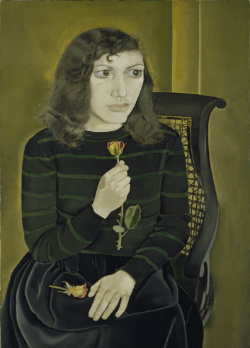
Lucian Freud, Girl with Roses, (1947-8)/Oil on canvas; 105.5 x 74.5 cm
Courtesy of the British Council Collection
© The Lucian Freud Archive. All Rights Reserved 2022/ Bridgeman Images

A landmark exhibition to make the centenary of the birth of 20th century artist Lucian Freud (1922-2011) has opened at The National Gallery. The Credit Suisse Exhibition – Lucian Freud: New Perspectives is the most significant survey of his paintings in a decade and brings together output from across his seven decade career, everything from early works such as Girl with Roses (1940s) to Two Children (Self-Portrait) (1960s) and famous late works such as The Brigadier (2003–4). The display also shows how Freud positioned himself in the tradition of court painters such as Rubens or Velázquez through works such as HM Queen Elizabeth II (2001). Can be seen in the First Floor Galleries until 22nd January. Admission charge applies but in response to the cost of living crisis, the gallery is allowing visitors on Friday nights to pay as much as or little as they like. For more, see www.nationalgallery.org.uk/exhibitions/the-credit-suisse-exhibition-lucian-freud-new-perspectives.

Diwali on the Square will take place at Trafalgar Square this Sunday. The free annual family-friendly event will open with 200 colourfully dressed dancers in the main square followed by performances from artists drawn from London’s Hindu, Sikh and Jain communities. From 1pm to 7pm, there will also be a host of activities including Neasden Temple’s Diwali Festival Experience, dance workshops, yoga and meditation, sari and turban tying, comedy, a children’s zone, and, henna and face painting. Meanwhile, an array of South Asian food stalls will be serving up delicious traditional and fusion, vegan and vegetarian cuisine.  For full details, head here.

Lawyer Hersch Lauterpacht, who played a key role in prosecuting the Nazis at the Nuremberg trials and whose belief that states should be held accountable for crimes against their own people led to lasting change in international law, has been honoured with an English Heritage Blue Plaque. Born in what is now Ukraine, Lauterpacht moved to London in 1923, originally to study at the LSE and lived with his family at 103 Walm Lane in Cricklewood for 10 years (it was here that his son Elihu – who went on to be a prominent lawyer himself – was born in 1928 and where Lauterpacht was living when he was naturalised as a British citizen in 1931). For more, see www.english-heritage.org.uk/visit/blue-plaques/.

Nicholas Lyons was elected as the 694th Lord Mayor of the City of London last week. He succeeds current Lord Mayor Vincent Keaveny and will take office on 11th November for a one-year term.  The annual Lord Mayor’s Show takes place on 12th November, which will be followed by the Lord Mayor’s Banquet on 28th November at Guildhall where the Prime Minister will deliver a keynote speech.

Send all items for inclusion to exploringlondon@gmail.com.

8 locations for royal burials in London…2. St Clement Danes…

This “island church”, located in the middle of the Strand just outside the Royal Courts of Justice, is believed to have been the eventual burial site of King Harold I “Harefoot” who died in 1040.

St Clement Danes today. PICTURE: eltpics (licensed under CC BY-NC 2.0)

The son of King Cnut, Harold’s rule was brief. Following the death of his father, he initially ruled as regent on behalf of his father’s heir and younger half-brother Harthacnut (Harthacnut was in Denmark and threats to the kingdom meant he couldn’t leave).

While Harold had apparently sought to be crowned king from the start of his rule (without success thanks to the opposition of Aethelnoth, the Archbishop of Canterbury), it was only in 1037 that, with the support of Leofric, the Earl of Mercia, and other nobles, he was crowned king.

But Harold (who was known by the name Harefoot apparently due to his speed and skill at hunting) died in 1040 and his brother subsequently returned from Denmark to claim the throne peacefully.

The story goes that King Harold had originally been buried in Westminster but that Harthacnut (clearly not a fan) had his body exhumed and flung into marshlands by the River Thames. The body was said to have been found by a fisherman who then had him buried at the church.

It had been established in the ninth century to serve the Danish community which was established after King Alfred the Great had granted them land.

Of course, the current church was not one King Harold would have recognised, having last been completely rebuilt in the 1680s to the designs of Sir Christopher Wren (and then having had its interior completely restored after it was gutted when bombed during World War II).

St Clement Danes, also known as one of the contenders for the church mentioned in the song Oranges and Lemons, is now the central church of the Royal Air Force. It’s one of two “island churches” in the Strand, the other being St Mary le Strand.

WHERE: St Clement Danes, Strand (nearest Tube stations are Temple, Covent Garden and Holborn); WHEN: 10am to 3:30pm weekdays; 10am to 3pm weekends; COST: Free (donations appreciated); WEBSITE: https://stclementdanesraf.org

LondonLife – ‘Antelope’ debuts on The Fourth Plinth…

Samson Kambalu’s Antelope was unveiled on Trafalgar Square’s Fourth Plinth last week. The sculpture – the 14th commission since the Fourth Plinth programme began – depicts the restaged of a photograph taken of Baptist preacher and educator John Chilembwe and European missionary John Chorley which was taken in 1914 in Nyasayland (now Malawi) at the opening of Chilembwe’s new Baptist church.

Chilembwe, who is shown wearing a hat in defiance of rules forbidding Africans from wearing hats in front of white people and is depicted as almost twice the size of Chorley, led an uprising in 1915 against British colonial rule, triggered by the mistreatment of refugees from Mozambique and the conscription to fight German troops during World War I. He was killed and his church destroyed by the colonial police.

Though his rebellion was ultimately unsuccessful, Malawi, which gained independence in 1964, celebrates John Chilembwe Day on January 15th and the uprising is viewed as the beginning of the Malawi independence struggle.  

The artist Samson Kambalu was born in 1975 in Malawi, and is now associate professor of fine art and a lifelong fellow at Magdalen College, Oxford University.

“I am thrilled to have been invited to create a work for London’s most iconic public space, and to see John Chilembwe’s story elevated,” he said in a statement. “Antelope on the Fourth Plinth was ever going to be a litmus test for how much I belong to British society as an African and a cosmopolitan. Chilembwe selected himself for the Fourth Plinth, as though he waited for this moment. He died in an uprising but ends up victorious.”

This Week in London – Korean pop culture at the V&A; of video games and conflict; and, William Kentridge at the RA…

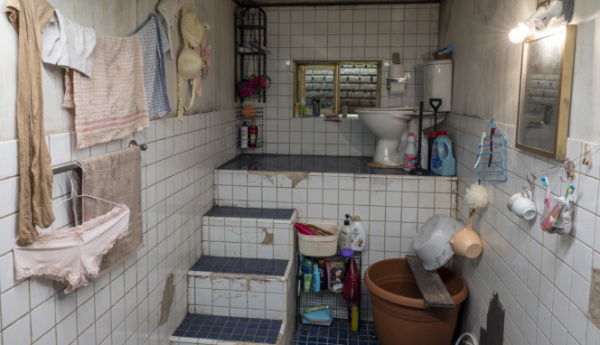
Installation image featuring re-creation of Parasite bathroom scene, at Hallyu! The Korean Wave at the V&A Ⓒ Victoria and Albert Museum, London

From K-Pop to Parasite, the popular culture of South Korea is being celebrated in a new exhibition which opened at the V&A last weekend. Hallyu! The Korean Wave features around 200 objects across four thematic sections focused on the phenomenon known as ‘hallyu’ (meaning ‘Korean Wave’) which rose to prominence in the late 1990s and rippled across Asia before reaching across the world. Highlights including outfits worn by K-Pope idols PSY, Vespa and ATEEZ, an immersive recreation of Parasite’s bathroom set and monumental artworks by the likes of Nam June Paik, Ham Kyungah and Gwon Osang. There’s also fashion designs by Tchai Kim, Miss Sohee and Minju Kim, and early examples of advertising and branding, including an original poster from the Seoul Olympics, and the first Korean branded cosmetic from the 1910s. The display can be seen until 25th June next year. Admission charge applies. For more, see www.vam.ac.uk/exhibitions/hallyu-the-korean-wave.

An exhibition which seeks to challenge perceptions about how video games interpret stories about war and conflict opens at the Imperial War Museum London on Friday. War Games: Real Conflicts | Virtual Worlds | Extreme Entertainment explores the relationship between video games and conflict through a series of 11 unique titles, including everything from Call of Duty: Modern Warfare to 2D artillery game Worms and a military training simulator, which, over the last 40 years, have reflected events from the First World War to the present. The display features immersive installations, never-before-displayed objects and perspectives from industry experts. There’s also a retro gaming zone and a programme of supporting events. Admission is free. Runs until 28th May next year. For more, see iwm.org.uk/events/war-games.

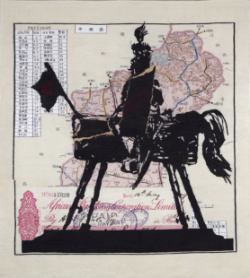
William Kentridge, ‘Colleoni’, 2021. Hand-woven mohair tapestry, 350 x 300 cm. Courtesy the artist © William Kentridge
 

The work of celebrated South African artist and Honorary Royal Academician William Kentridge has gone on show the Royal Academy. Spanning the artist’s 41 year career, William Kentridge brings together important works spanning from the 1980s through to the present day, including charcoal drawings, animated films, a mechanical theatre, sculptures, tapestries and performance pieces. Highlights include a selection of Kentridge’s early, rarely-seen drawings from the 1980s and 1990s including three triptychs displayed together for the first time and the most significant work from the period, The Conservationist’s Ball, (1985) as well as around 25 large charcoal drawings, made for the creative process of the eleven animated Drawings for Projection, and the installation Black Box / Chambre Noire, (2005), a mechanical theatre piece including puppets and projections, which interrogates the harrowing story of the massacre of the Herero people in Namibia, now considered the first genocide of the 20th century. The display in the Main Galleries can be seen until 11th December. Admission charge applies. For more, see roy.ac/kentridge.

Send all items for inclusion to exploringlondon@gmail.com
8 locations for royal burials in London…1. (Old) St Paul’s Cathedral…

Following the laying to rest of Queen Elizabeth II in St George’s Chapel, Windsor, we’re taking a look at where some royal burials have taken place within London.

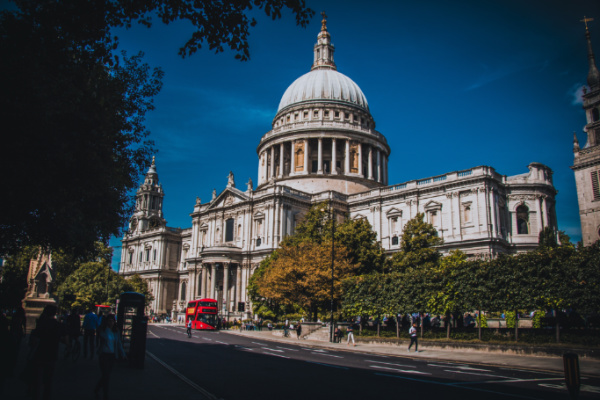
St Paul’s Cathedral. PICTURE: Catalin Bot/Unsplash

We start our new series with Old St Paul’s Cathedral which believed to have been the burial site of two Anglo-Saxon kings before it was destroyed in the Great Fire of 1666.

Aethelred (Ethelred) the Unready, who ruled from 978 until 1013 (and then again from 1014 until his death on 23rd April, 1016) was known to have been buried in the quire of the old cathedral (it’s marked on Wenceslaus Hollar’s 1658 plan of the cathedral as being on the northern side of the quire, just past the north transept) but his tomb was lost in the fire.

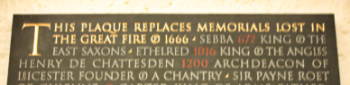
His memorial is among those which were lost in the Great Fire mentioned on a modern plaque in the crypt of the St Paul’s of today.

PICTURE: Stephencdickson (licensed under CC BY-SA 4.0‘/cropped and straightened)

While his was the last royal burial to take place in St Paul’s, Aethelred wasn’t the only Anglo-Saxon king who was interred there.

Sæbbi, a king of the East Saxons who ruled from 664 to 694 (and is also known as Sebba or Sebbi), is also listed as being buried there (Aethelred was apparently buried close to him) and his grave also lost in the great fire.

There’s a story that when Sæbbi was about to be buried in a stone coffin, it was found it was too short for his body to lie at full length. Various solutions were proposed – including burying him with bent legs, but when they put the body back in the stone coffin this time, miraculously, it did fit.

Following an earlier fire in St Paul’s – in 1087 – Sæbbi body was transferred to a black marble sarcophagus in the mid-1100s and it’s that which was lost in the Great Fire.

LondonLife – Afternoon tea at The Savoy…

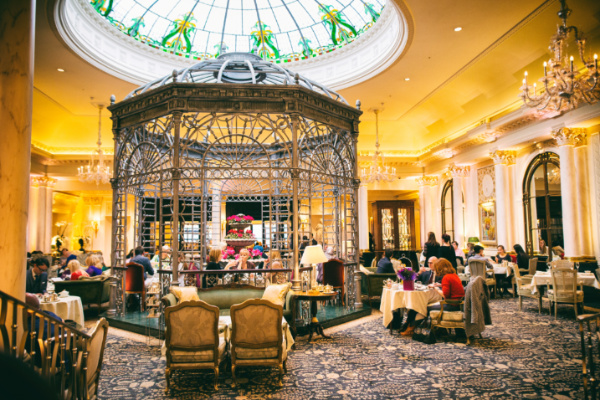
PICTURE: Christian Lendl/Unsplash

Afternoon tea is served under the glass-dome of The Savoy Hotel‘s Thames Foyer. Once an outdoor terrace, the covered-in foyer was opened in 1889. The custom of afternoon tea, which dates back to 1840, had become a tradition at the hotel by the 1920s and, as well as sandwiches and patisserie, included everything from English muffins to fruit salad, chocolates to sweet waffles known as gaufres. Entertainment included music played by a house band while professional dancers demonstrated the latest moves for guests. Guests at the famous London hotel have included everyone from Sir Winston Churchill to Marilyn Monroe. For more, see www.thesavoylondon.com/experience/afternoon-tea-london/.

What’s in a name?…Angel…

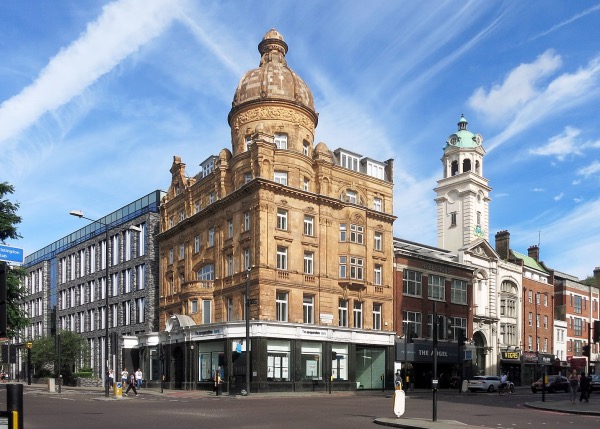
The Angel Hotel, built in 1903. PICTURE: Des Blenkinsopp (licensed under CC BY-SA 2.0)

Located just north of Clerkenwell, this inner city district is centred on the intersection of Islington High Street and Pentonville Road.

Its name come from a building that once stood on that site – the Angel Inn, which was existent in the early 17th century. The building has since gone through several incarnations with the current structure on the site, the Angel Hotel, built in 1903, and now used as offices. A modern pub, called the Angel, is adjacent.

The district encompasses both the triangular Islington Green in the north and Chapel Market in the west.

Angel is also the name of a Tube station on the Northern Line. Other landmarks include the Angel Wings sculpture in Liverpool Road.

The Angel Islington is also, of course, a property on the Monopoly board (one of the cheapest in reflection of the area’s standing at the time of the game’s creation, before the gentrification that took place there in the 1980s).

The story goes that it was in 1936 that Victor Watson, founder of the game’s manufacturers John Waddington Ltd, who decided to include the property whilst taking tea at the cafe when occupied the lower floors of the Angel Hotel.