• Some 5,000 papers and photographs relating to the life and legacy of Prince Albert, consort of Queen Victoria, have been published online. The move, which marks the completion of the Prince Albert Digitisation Project, means some 22,000 archival documents, prints and photographs from the Royal Archives, the Royal Collection and the Royal Commission for the Exhibition of 1851 are now publicly available, many for the first time, through the website Prince Albert: His Life and Legacy which was launched in mid-2019 to mark the 200th anniversary of the Prince’s death. The new items predominantly consist of the Prince’s private and official papers and correspondence as well as excerpts from Albert’s now lost diaries, spanning the years from 1841 to 1852. Highlights include a note he wrote to Victoria on October, 1858, which reads: “I declare that I have every confidence in you. A”; a letter from 10-year-old Princess Louise to her father from Swiss Cottage, the life-sized playhouse he had installed for his children at Osborne House on the Isle of Wight, in which she reports cooking and making “some wafers and schneemilch” (a type of Austrian pudding); and, an annotated list of candidates for the role of Master of the Household in which Albert lists why they are unsuitable with reasons including ‘too old’ and ‘too useful to the Navy’ and ‘bad temper’ and ‘French mistress’.
• London Transport Museum are offering people the chance to go behind the scenes at its depot in Acton, West London, this weekend. The depot, which houses more than 320,000 objects from London’s transport history, will play host to a programme of events – ‘Underground Uncovered’ – which includes talks, vintage vehicle displays and family activities. Highlights include a talk by Siddy Holloway, a disused station history expert and co-presenter of the new Secrets of the London Underground TV series, the chance to try your hand at being a train operator in the Victoria Line driving cab, and the opportunity to watch a demonstration of restored London Underground signalling frames. The open days are being held from today until Sunday, 11am to 5pm. Admission charge applies. To book and see the full programme of events, see www.ltmuseum.co.uk/visit/depot/events.
• W1 Curates and artist Anthony James’ light exhibition inside the Marble Arch Mound has opened to the public with free entry to what has been a somewhat controversial attraction to continue. James’ Lightfield installation involves a series of 12 cubed light sculptures in three rooms inside the mound through which visitors will make their way after first visiting the viewing platform on top. James, who has described the cubes as alluding to the “mycorrhizal nature of birch tree forests”, says it’s the first time his works have been displayed and viewed in such a “fully immersive way”. Visitors are asked to book an entry time at www.themarblearchmound.com.
Send all items for inclusion to exploringlondon@gmail.com.
The doors to two new stations – Nine Elms and Battersea Power Station – located on the extension of the Northern Line opened this week in the first major expansion of the Tube this century. The opening of the two new Zone 1 stations, which extend the line past Kennington, is the culmination of efforts which began in 2015 to construct new new three kilometre twin-tunnel railway between Kennington and Battersea Power Station, via Nine Elms. Tube services started running on the line at 5:28am on Monday with inaugural passengers including Sadiq Khan, the Mayor of London, Grant Shapps, Secretary of State for Transport, and Andy Byford, London’s Transport Commissioner, as well as councillors and Simon Murphy, CEO of the Battersea Power Station Development Company. Six services per hour are running on the line during peak increasing to 12 by mid-2022.
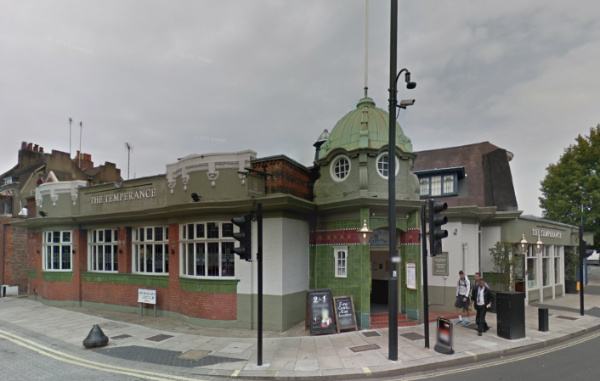
The Temperance, Fulham, in 2020. PICTURE: Google Maps
This pub’s name seems somewhat at odds with its purpose for the Temperance, as the name suggests, was once actually a Temperance Billards Hall, built as part of a movement to reduce or prohibit the drinking of alcoholic beverages.
The property, now Grade II-listed, was built in 1910 for Temperance Billiard Halls Ltd and designed by the company architect, Norman Evans. It was one of five such halls the company built in London, along with another 12 in Manchester.
The halls were located in areas where numerous news pubs had been established and, as its Historic England listing notes, such buildings “often used the same decorative materials as pubs, such as tiled facades and stained glass windows, to create the congenial atmosphere of a public house without the pitfalls of available alcohol”.
The building, at 90 Fulham High Street not far from Putney Bridge, was subsequently converted into a pub. It was apparently briefly previously known as The Pharaoh & Firkin and then became part of the O’Neills chain before taking on the current name in a nod to the history’s building.
• The third and final part of the free exhibition, Our Broken Planet: How We Got Here and Ways to Fix It, has opened at the Natural History Museum. Following on from sections exploring the food we eat and the products we use, the third phase of the display explores the energy humans consume and how we can we create a greener, cleaner future. Specimens in the display include a juvenile European bison, illustrating an experimental rewilding project in Kent which is investigating if bison feeding habits will improve the forest’s biodiversity and store more carbon in the soil, blue-green algae collected during Captain Scott’s famed RRS Discovery expedition which is being used in the study of climate change, and the recently extinct Chinese paddlefish, a casualty of the global boom in hydroelectric dams. Entry to the South Kensington museum is free but visitors are encouraged to book a time ticket in advance to ensure entry. For more, see www.nhm.ac.uk/visit/our-broken-planet.html.
• The West End comes to Trafalgar Square this weekend with a line-up of free performances from top shows taking to the stage. Forming part of Westminster City Council’s Inside Out Festival and the Society of London Theatre’s #BackOnStage campaign, the West End LIVE event will feature the first ever West End LIVE appearances from award-winning musicals Hamilton and The Book Of Mormon, as well as an exciting roster of new shows including The Prince Of Egypt, Dear Evan Hansen, Cinderella, Back To The Future: The Musical and Pretty Woman. More than 30 acts will be involved in the free and unticketed event. For the full programme, see www.westendlive.co.uk.
• The first major UK exhibition of woodcuts by the leading abstract expressionist, Helen Frankenthaler, opened at the Dulwich Picture Gallery this week. Helen Frankenthaler: Radical Beauty brings together more than 30 works on loan from the Helen Frankenthaler Foundation which span the artist’s career from her first ever woodcut in 1973 to her last work published in 2009. Works include including Madame Butterfly (2000), East and Beyond (1973), Cameo (1980) and Freefall (1993). The display can be seen until 18th April. Admission charge applies. For more, see www.dulwichpicturegallery.org.uk.
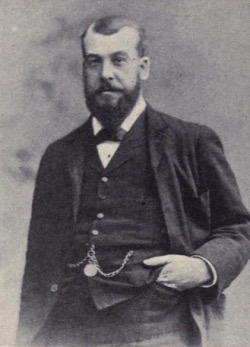
His surname now synonymous with the famous annual dog show, Charles Cruft is credited as taking the concept of dog shows to a whole new level.
Charles Cruft (picture from From Dog shows and doggy people (1902) by Charles Henry Lane).
Cruft was born, thought to have been in Bloomsbury, on 28th June, 1852, and attended Ardingly College in Sussex, before initially following on in his father’s footsteps and working in the family jewellery business (while taking evening classes briefly at Birkbeck College).
But it was his next move, taking on the role of office boy in the Holborn shop of “dog cake” manufacturer James Spratt that brought him into the world of canines.
Cruft quickly moved into sales and then management at the firm and it was while on a trip to Europe that he was given the opportunity to run the dog show at the third World’s Fair in 1878 (he married Charlotte Hutchinson, with whom he had four children, the same year). Further offers to run shows followed and in 1886, he was approached to run a dog show for terriers in London by the Duchess of Newcastle.
The show – billed as the “the first great show of all kinds of terriers” – opened at the Royal Aquarium in Westminster on 10th March that year and further annual shows, expanding into other breeds, followed. In 1891, his name was added to the event with the “Cruft’s Greatest Dog Show” held at the Royal Agricultural Hall in Islington with 2,437 entries and 36 breeds.
So popular had the shows become that Queen Victoria and Russian Tsar were among the exhibitors (Cruft did also try his hand at cat shows in 1894 and 1895 but it was a short-lived venture).
By 1914, Cruft’s show had become the largest in the world and in 1936, when it celebrated its ‘Golden Jubilee’ (or 50th anniversary), there were more than 10,000 dogs entered.
Cruft, who had married his second wife Emma Isabel Hartshorn in 1894 following Charlotte’s death (they had no children together), died of a heart attack on 10th September, 1938. He was buried 11 days later in the western area of Highgate Cemetery (the tomb is now Grade II-listed). Tributes flowed in and apparently included comparisons to American showman PT Barnum.
Emma took over the running of the show following his death and since 1948, the show has been run by the Kennel Club.
There’s a plaque on the home where he died in Highbury Grove in Highbury (other London residences included 325 Holloway Road).
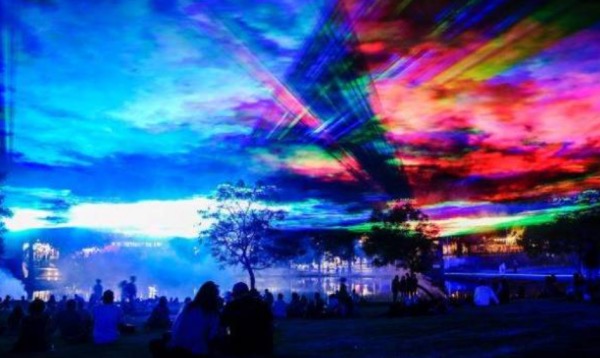
One Night Light Show by Leo Villareall as part of Totally Thames. PICTURE: Totally Thames.
• Totally Thames, the annual month-long celebration of London’s river, is celebrating its 25th iteration this month. Highlights this year include Leo Villareal’s Illuminated River which lights up the Thames every night (along with a special three-day celebration including guided tours, talks, sketching workshops and a one-off illumination event on 23rd September) as well as the chance to explore the foreshore with ‘Mudlarking’ at St Paul’s Cathedral, take a deep dive into the history of dockside communities with ‘The Islanders’ and see river-themed art from children across the globe come together at the National Maritime Museum in Rivers of the World. More than 80 events are included in the programme which runs until the end of the night. For more, see https://thamesfestivaltrust.org/whats-on.
• Muppet creator Jim Henson was honoured with an English Heritage Blue Plaque at his former Hampstead home this week. Henson lived in the home at 50 Downshire Hill between 1979 and 1982 and continued to use it as his base until his death in 1990. It stands opposite the former ‘Jim Henson’s Creature Shop’, where creatures from fantasy films including The Dark Crystal, The Storyteller and Labyrinth were created. Henson’s son Brian, chairman of the board at The Jim Henson Company, said it was an honour to have the property recognised, “knowing that he so admired and respected the talent in London, and that this is the place he called home when creating some of his most memorable productions.” For more, see www.english-heritage.org.uk/visit/blue-plaques/.
• Beerfest-Lite takes place in Guildhall Yard in the City of London today. The event , which runs from noon to 9pm – features beers from the Meantime, Windsor and Eaton, Hook Norton and Shepherd Neame breweries and a street vendor menu including paella, hot dogs, souvlaki and Caribbean dishes as well as a jazz performance from the Alvar Tree Frogs and Bavarian Oompah band Würst Brass. For more, see www.citybeerfest.org.
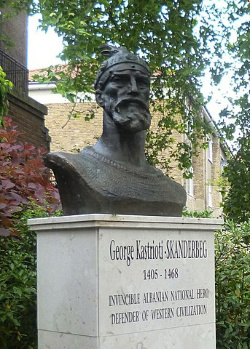
Des Blenkinsopp / An Albanian Hero (licensed under CC BY-SA 2.0)
Unveiled just nine years ago, this bust in Bayswater commemorates George Kastrioti Skanderbeg, a 15th century Albanian lord who led a rebellion against the Ottoman Empire(and who later became a central figure of inspiration in the Albanian National Awakening of the 19th century).
Located on the corner of Inverness Terrace and Porchester Gardens, the bronze bust was created by Kreshnik Xhiku.
An inscription on the front reads “George Kastrioti Skanderbeg, 1405 – 1468, invincible Albanian national hero, defender of western civilization.”
It was unveiled on the 100th anniversary of Albanian independence on 28th November, 2012, with Westminster City Councillor Robert Davis and Albanian Charge d’affaires, Mal Berisha, in attendance.
The bust was installed as part of Westminster’s City of Sculpture initiative.
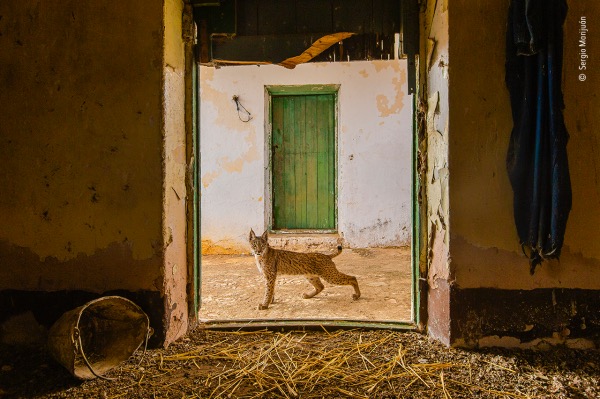
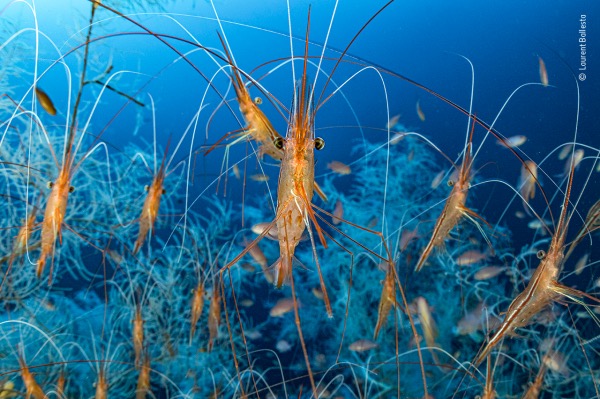
A selection of entries into this year’s Wildlife Photographer of the Year have been released ahead of the opening of the annual exhibition at the Natural History Museum in October. Among the images selected from the more than 50,000 entries in the 57th competition is that of Sergio Marijuán’s Lynx on the threshold depicting a young Iberian lynx pausing in the doorway of the abandoned hayloft where it was raised in Sierra Morena in Spain (pictured above), Gil Wizen’s Beautiful bloodsucker depicting a female ornamented mosquito in the process of biting (below), and Laurent Ballesta’s Deep feelers showing a vibrant community of narwhal shrimps in deep waters off the French Mediterranean coast (far below). The winners will be announced at a ceremony on 12th October. The exhibition at the South Kensington museum opens on 15th October at the Natural History Museum. To book tickets for the exhibition, head to www.nhm.ac.uk/visit/exhibitions/wildlife-photographer-of-the-year.html. The 2021 competition opens on 18th October.
Piccadilly Circus lies at the heart of London’s West End. PICTURE: Sheep purple (licensed under CC BY 2.0)
This term is used to describe what was traditionally the western end of London as it developed beyond the City of London boundaries and has since became a word synonymous with the city’s theatre district.
The term’s origins are lost to history although it’s said it first started being used in earnest to describe fashionable areas to the west of Charing Cross in the late 17th or early 18th centuries. The term as it’s used today covers an area which contains the commercial and entertainment heart of London.
While the eastern boundary of the West End can be easily defined as where the City of London ends (Temple Bar on the Strand marks the City of London’s boundaries), thanks to its not being a formally designated geographic area, exactly where the West End finishes is a matter of considerable debate.
While the some see the West End only including Theatreland itself – an area stretching from Aldwych across to Piccadilly Circus and north from Trafalgar Square to Oxford Circus, others have adapted a broader definition which sees include not only Aldwych, Soho and Covent Garden but also Mayfair, Fitzrovia and Marylebone with Oxford Circus at the centre (some even go further and include districts such as Bloomsbury and Knightsbridge in their definition of the West End).
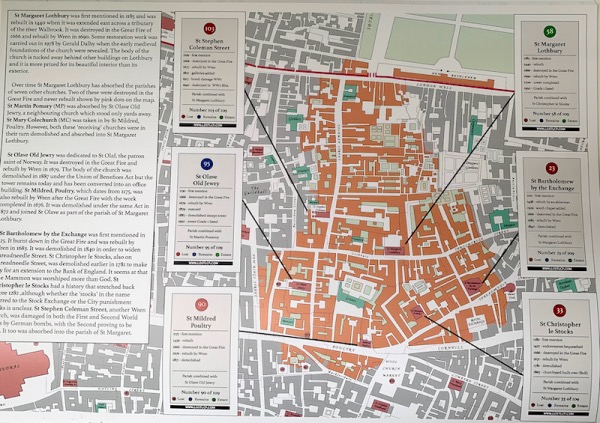
John Brodie Donald, the creator of the Lost London Churches Project, talks about how the project came about, its aim and his personal favourite “lost” church…
1. First up, when you talk about London’s “lost churches”, what do you mean by the expression? “Of the 108 churches in the City of London in 1600 only 39 remain. The rest have been lost in the last 350 years, either destroyed in the Great Fire of London in 1666 or in the Blitz or demolished by commercial developers as property prices soared.”
2. What is the aim of the Lost London Churches Project? “The Lost London Churches Project aims to promote interest in the ancient church buildings and parishes of the City of London through collectable cards, books, maps and downloadable explorers walks. We have created a ecclesiastical treasure hunt – a way of exploring the history of the square mile that costs nothing and can be easily fitted into a few spare lunchtimes.”
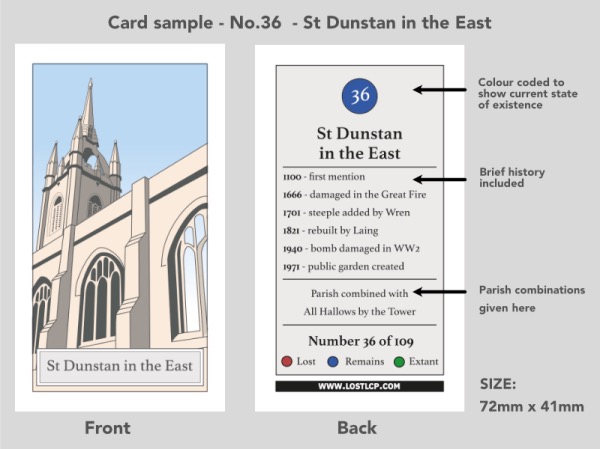
3. How many churches are included in the project? “There are 78 churches for which collectable cards have been produced and these are available in a growing number of churches in the City. It is hard to find evidence of what the churches lost in the fire of 1666 looked like, but hopefully after further research these will be included in a second edition. “
4. Does the project cover every “lost” church in the City of London? “It covers not just ‘lost’ churches but also the extant ones for two reasons. First, because those who are collecting the cards need a place to pick them up which they can do in the churches that still exist. Secondly, although the church buildings were lost, the parishes still remain to this day for administrative reasons. Every one of the 109 churches still has a parish clerk. The parishes have been amalgamated with the existing churches. So, for example, St Vedast in Foster Lane is a church of 13 united parishes having acquired them as the church buildings were lost over the centuries.”
5. Tell us how the Lost London Churches Project came about? “It all started when I was redrawing the Ogilby and Morgan map of 1676 in colour for my own pleasure. This large scale map (100 feet the inch) shows every single house in the City of 350 years ago. It was completed just after the Great Fire and so shows the location of all the lost churches clearly. The original covered 20 separate black and white sheets but I redrew them all joined together in colour on my computer. The end result was so huge it was impractical to print…So it made sense to break it up and publish in a book, and since the most interesting information in the map was the churches lost in the fire. it became the basis for the collectors book for the Lost London Churches project. At the same time, I was going through my late father’s papers and found a booklet of cigarette cards that he had collected in the 1940s. He also had a passion for painting watercolours of churches. That’s when I had the idea of producing a series of ‘cigarette cards’ showing the lost churches and the project was born.”
6. What’s the role of the cards? “The role of the cards is to give some tangible treasure to collect while exploring the lost churches. Like trading cards or Pokemon the challenge is – can you collect them all? In every participating church you will be able to pick up that church’s card along with a pack of five random cards for a small voluntary donation. Cards are also available from the project’s website lostlcp.com.”
7. You mentioned earlier that there were a number of ways the City of London’s churches become lost? “They were lost in three phases. Around 85 were destroyed or damaged in the Great Fire of 1666 of which 34 were never rebuilt. The others were rebuild by Christopher Wren, along with St Pauls Cathedral. Then 26 more churches were lost after the Union of Benefices Act of 1860 triggered a second wave of demolition. The purpose of the act was to combine parishes and free up space for the swelling capital of the British Empire. Lastly, the City suffered badly in the Blitz of World War II which took a further toll on these ancient buildings.”
8. How easy is it to spot remnants of the City’s lost churches? “Though the buildings are lost, the parishes remain and you can still see the old parish boundary markers even on modern buildings. The best place to see an example of these is to walk down Cheapside along the New Change shopping centre towards the church of Mary le Bow. In only 100 or so yards you will have crossed the boundaries of five different parishes; St Vedast Foster Lane, St Matthew Friday Street, St Peter Westcheap, All Hallows Bread Street and St Mary Magdalene Milk Street. As you walk down the street look up above the shops ( see picture below) and you will see little plaques marking these parish boundaries. These type of parish boundary markers are scattered throughout the City. Our downloadable explorers walks on Google Maps available (for free) on our website lostlcp.com will show you some routes to find them. There is also a A4 sized map of the ancient parishes we have published for you to use as a guide.”
Parish markers on a building on Cheapside and, inset, in detail.
9. Have you uncovered any particularly interesting stories in your research into London’s lost churches? “I think one the most interesting things is the unusual names and how they were derived: Benet Fink, Stephen Coleman, Mary Somerset, Martin Ludgate and Gabriel Fenchurch. Couldn’t these be the names in an Agatha Christie mystery where the key to the murder is church themed aliases? But seriously, every church has a rich history since most were established before 1200 so in visiting them you are trekking right back to medieval times.”
10. And lastly, do you have a favourite “lost” London church? “My favourite is St Mary Abchurch just off Cannon Street. It is not only the headquarters of the ‘Friends of the City Churches’ charity but also a perfect jewel of a Wren church with the most glorious painted ceiling – like a secret Sistine chapel!”
St Leonards Court Air Raid Shelter in Sheen. PICTURE: Courtesy of Open House London
• Open House London kicks off this weekend and this year is being billed as a nine day ‘festival’ of the city’s architecture and urban landscapes. This year’s programme features “hidden gems” such asa World War II air raid shelter designed to appear like an old dovecote or garden storeroom in East Sheen (pictured right) and the UK’s only Brutalist Quaker Meeting House in Blackheath as well as buildings deemed at risk from demolition such as the soon to be vacated City Hall and Notting Hill’s landmark Trellick Tower. The programme also features five of London’s outstanding housing estates in a bid to celebrate those estates which helped support positive wellbeing during the COVID-19 pandemic. There’s also a number of important projects from some of the black, Asian and ethnic minority designers as well as annual programme favourites like 10 Downing Street, the HM Treasury building, and various churches across the metropolis. For the full programme of events (most of which are free but some of which have to be rebooked), check out https://open-city.org.uk/open-house.
• The first in a new series of ‘After Dark’ events kicks off at the London Transport Museum on Friday night. The nights, which run from 6,30pm to 9pm, come with a variety of themes starting with a night themed around the museum’s ‘Hidden London’ tours of ‘ghost’ stations and other secret sites across the Capital’s transport network. As well as the chance to explore the museum’s galleries free from crowds and enjoy the thematic fun, guests can also visit a pop-up bar featuring the museum’s signature red Routemaster cocktail. For full details of the events, head to www.ltmuseum.co.uk/news/new-season-after-dark-evening-events-kick-september.
• The work of award-winning illustrator Korky Paul will be on display at the Heath Robinson Museum on Saturday.Korky Paul’s Magic of Illustration (with a Flying Visit from Winnie and Wilbur) is the first solo exhibition of his original work which includes such characters as Winnie the Witch, The Fish Who Could Wish, Professor Puffendorf and Sir Scallywag. The exhibition will provide an insight into Korky Paul’s process of illustrating and preparing illustrations by drawing on his archive of drawings and other material relating to the development of the illustrations of each book and its publication. Korky Paul, whose work “often clearly shows the influence of Heath Robinson’s humorous drawings” according to the museum, has sold over 10 million of books worldwide in more than 35 languages. Runs until 9th January. Admission charge applies. For more, see www.heathrobinsonmuseum.org.
Send items for inclusion to exploringlondon@gmail.com.
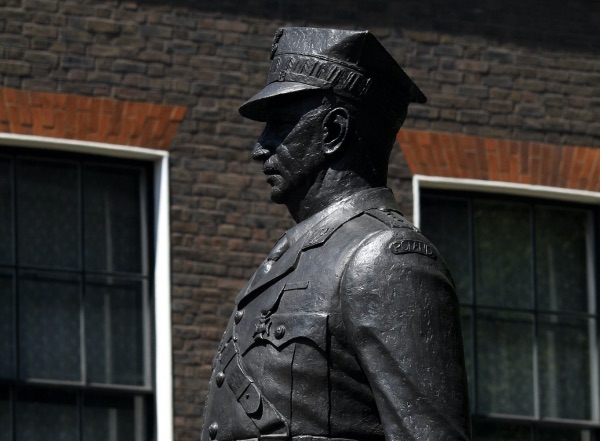
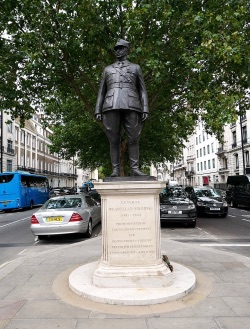
This statue in Portland Place in Marylebone commemorates wartime Polish Prime Minister and military leader (and British ally) Władysław Sikorski (1881-1943).
Larger than lifesize, the bronze statue depicts Sikorski in military uniform standing on a white stone plinth. It is the work of late British artist Faith Winter (also the sculptor of a controversial statue of Air Chief Marshal Sir Arthur Harris outside the RAF church on the Strand).
Funded by public subscription, this statue of Sikorski was erected on 24th September, 2000, and unveiled by the Duke of Kent. It stands near the Polish Embassy on a traffic island near the intersection with Weymouth Street.
There’s inscriptions on each face of the plinth which commemorate Sikorski as well as the “Soldiers, Seamen and Airmen of the Polish Armed Forces and the Resistance Movement” between 1939 – 1945. The east face inscription commemorates Polish involvement in World War II through a listing of battles.
Sikorski is also commemorated with a plaque adorning the Rubens Hotel in Buckingham Palace Road which served as his headquarters between 1940 until his death in an air crash in Gibraltar in 1943 (where there is another memorial to him).
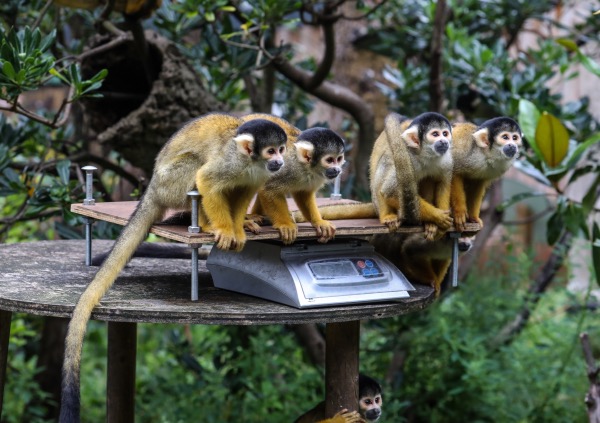
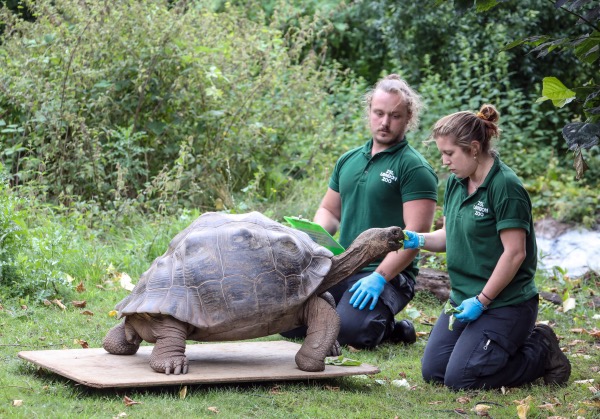
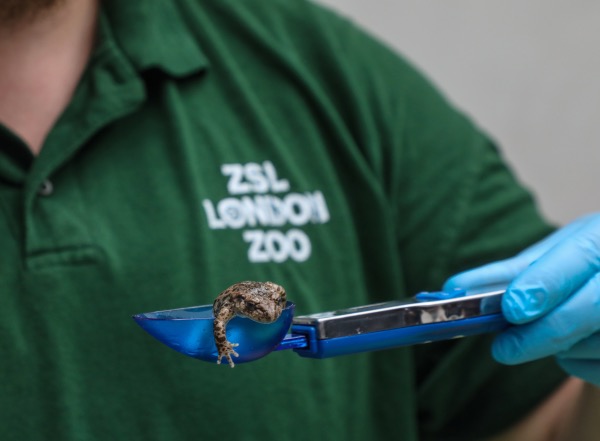
Last week saw the annual weigh-in of animals at ZSL London Zoo and all creatures great and small took part – from the Bolivian black-capped squirrel monkeys (pictured above) to the giant Galapagos tortoises and the tiny midwife toads (both pictured below). With more than 20,000 animals in the care of the zoo, the keepers spend hours through the year recording the heights and weights of all the animals. It’s an important task – the information aids them in monitoring the health and wellbeing of all those in the zoo. “It helps to ensure that every animal we look after is healthy, eating well, and growing at the rate they should – weight is a particularly important indicator of health and wellbeing,” says the zoo’s animal manager Angela Ryan. “A growing waistline can also help us to detect and monitor pregnancies, which is so important as many of the species at ZSL London Zoo are threatened and part of international breeding programmes, including today’s Asiatic lions and big-headed turtles. By sharing information with other zoos and conservationists worldwide, we can all use this knowledge to better care for the species we’re striving to protect.” For more, see www.zsl.org.
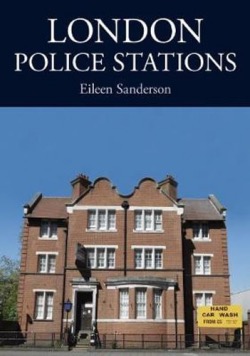
London Police Stations Eileen Sanderson Amberley Publishing, Stroud, Gloucestershire, UK, 2021 ISBN – 978 1 3981 0016 9
Since the opening of the first purpose-built police station in Bow Street in 1831, police stations have grown to become a familiar feature in high streets across London.
But policing in the capital is in a state of flux with stations closing and resources consolidated. Thankfully comes Eileen Sanderson’s London Police Stations with the aim of capturing what is mainly a “pictorial record of these buildings as they exist now while these changes are occurring”.
Divided into six chapters – the first presenting a potted history of the Metropolitan Police Service and each thereafter covering a different geographical area of London, London Police Stations captures the diverse range of architectural styles that police stations are created in – from the late 19th century grandeur of stations like Kentish Town to more modern office blocks like that of Paddington Green.
It’s also filled with fascinating tidbits of police history. We learn about the small police station that was once located inside the top of Marble Arch overlooking Hyde Park (and another at the top of Wellington Arch on the other side of the park), that the original lamp from the now closed Vine Street Police Station hangs outside the modern Holborn Police Station, and how the lion-shaped brass doorknockers, stolen from Rotherhithe Police Station in 1881, turned up in 1952 following a death bed confession in which a man admitted that he had taken them as a drunken dare and had kept them hidden ever since.
A fascinating insight into the evolution of policing in London, London Police Stations will appeal to anyone interested in digging a little deeper into the fabric of London and its policing history.
• The Northern Lights come to Greenwich this Bank Holiday weekend. The Greenwich + Docklands International Festival, promoted as London’s “leading festival of free outdoor theatre and performing arts”, features two major installations in the Old Royal Naval College grounds – the Borealis and We are Watching – from artist Dan Acher as well as the Greenwich Fair on Sunday. There’s also dance and theatrical performances – including Family Tree, a performance inspired by the life of Henrietta Lacks, an African American woman whose cells were harvested and cultivated without her consent after her death from cervical cancer in 1951, and Future Cargo, Requardt & Rosenberg, a contemporary sci-fi dance show – and pop-up events in neighbourhoods across the Royal Borough of Greenwich. The festival opens tomorrow and runs until 11th September. For the full programme of events and for more information, see https://festival.org/gdif/whatson/. For bookings for Borealis, head here.
• Art historian and broadcaster, Sir Kenneth Clark, has been honoured with an English Heritage Blue Plaque at his former Marylebone home. Clark (1903-1983), who is probably best known for the landmark 1969 BBC TV series Civilisation, lived in the property at 30 Portland Place between 1934 and 1939 – the period when he became director of The National Gallery and when he was knighted. Sir Kenneth and his wife Jane hosted parties at the property where guests included Winston Churchill and Vanessa Bell. Sir Kenneth, who also headed organisations including the Arts Council of Great Britain and the Independent Television Authority, is noted for having saved some of the nation’s most valuable artworks during World War II by having more than 800 paintings evacuated to rural Wales. He was also responsible for many of the Ministry of Information’s wartime films and sponsored emerging artists including Henry Moore and Graham Sutherland. For more, see www.english-heritage.org.uk/visit/blue-plaques/.
• A celebration of Phyllida Barlow’s art has opened at the Tate Modern on South Bank.ARTIST ROOMS: Phyllida Barlow spans the British artist’s 60 year career and features some of her large-scale sculptures as well as more than 30 works on paper. Highlights include Object for the television (1994), the only surviving work from Barlow’s 1990s series Objects for… and major installations such as untitled: brokenstage/hangingcontainer, 2012/2013 and untitled: upturnedhouse2, 2012. The exhibition is free to enter. For more, see www.tate.org.uk.
Send all items for inclusion to exploringlondon@gmail.com.
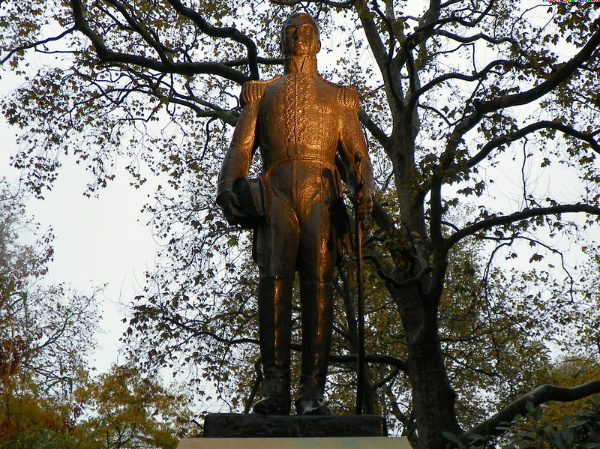
Another of the many statues in Belgrave Square and surrounds, this statue depicts a giant of South American history.
Don José de San Martín was an Argentine general who was instrumental in the continent struggle for independence from the Spanish Empire and is regarded as a hero in Argentina, Chile and Peru.
The bronze statue, the work of Juan Carlos Ferraro, was cast in Buenos Aires in 1993 and unveiled in the northern corner of the square’s gardens by the Duke of Edinburgh in 1994 in the presence of dignitaries including Senator Eduardo Menem of Argentina, Lord Mayor of Westminster Angela Hooper, UK Foreign Secretary Douglas Hurd and Argentine Ambassador Mario Campora. It was erected by the Argentine-British community in Argentina and is dedicated to the people of London.
San Martín is depicted standing in military uniform on top of a heavy plinth. It’s inscribed on the front with the words “General Don José de San Martín, 1778-1850, founder of the Argentine independence, he also gave freedom to Chile and Peru.” There are also some further inscriptions referring to its creation and one on the right side of the plinth saying “His name represents democracy justice and liberty”.
A plaque was added on the ground in front of the statue to mark the 150th anniversary of San Martin’s death – 17th August, 2000.
It’s not the only memorial to San Martín in London – there’s also a Blue Plaque, erected by the London County Council in 1953, at 23 Park Road in Marylebone (San Martín stayed here for a few months in 1824).
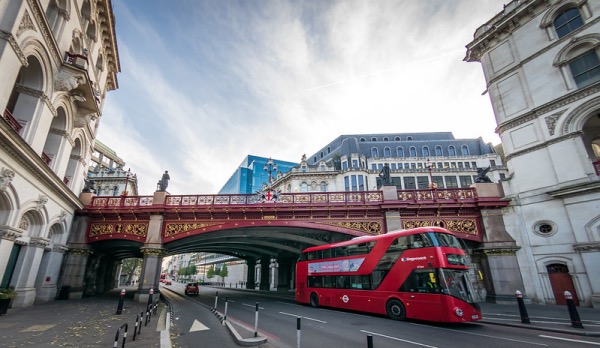
The oldest flyover in central London was actually built well before the first automobile.
Spanning the Fleet River valley, it was built between 1863 and 1869 and, spanning Farringdon Street below (which follows the line of the Fleet (now beneath the ground), it linked the City of London with Holborn (or more specifically Holborn with Newgate Street).
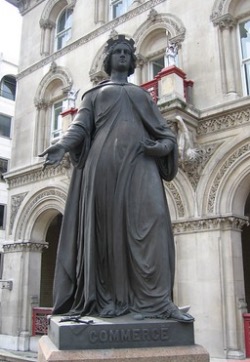
Statue of commerce on the flyover. PICTURE: steve_w (licensed under CC BY-NC-ND 2.0)
The flyover was designed by City of London surveyor William Heywood. It was part of a number of improvements designed to create better access to the City from the West End.
A number of old buildings and indeed some entire streets had to be demolished before construction could begin and thousands of bodies buried in St Andrew Holborn’s northern churchyard had to be relocated.
Made of cast iron, the flyover is about 1400 feet (425 metres) long and 80 foot (24 metres) wide and features three spans – the largest in the middle – supported on granite pillars.
Pavilions containing stairs allowing pedestrians to move between levels were built at either end on both sides of the roadway (the two northern buildings are both replacements – the previous versions were demolished after being damaged during the Blitz and have been replaced in more recent years).
The decorations include a series of four bronze statues featuring Agriculture and Commerce on the south side (the work of Henry Bursill) and Fine Arts and Science on the north side (the work of firm Farmer & Brindley).
There are also statues of winged lions and globe lamps (the current lamps are replicas with the originals thought to have been destroyed during the Blitz) as well as well as the City of London’s coat-of-arms and dragons.
The buildings containing the stairs, meanwhile, each feature a statue of a famous medieval Londoner on the facade – merchant Sir Thomas Gresham (1519-1579), engineer Sir Hugh Myddelton (1560-1631), and Mayors Sir William Walworth (d.1385) and Henry Fitz Ailwin (1135-1212).
The viaduct was opened by Queen Victoria on 6th November, 1869. It was listed as Grade II in 1972.








 Exploring London