A Moment in London’s History – Sir Robert Walpole becomes first ‘Prime Minister’…

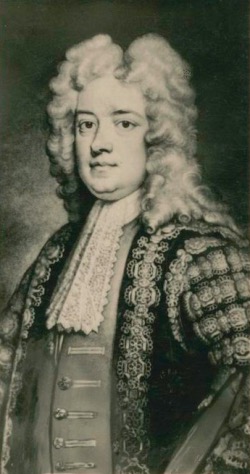
Portrait of Robert Walpole (1676-1745); probably a work of Godfrey Kneller (via Wikipedia).

This month – over the Easter weekend, in fact – marked the 300th anniversary of the date on which Sir Robert Walpole effectively became the first Prime Minister of the United Kingdom.

Walpole, who had entered Parliament as a Whig at the age of 25 in 1701, had had a tumultuous political career which had included rising quickly to the positions of Secretary at War and Treasury of the Navy before, having been targeted by his Tory opponents, spending six months in the Tower of London after he was found guilty of corruption.

The accession of King George I in 1714 was good news for the Whigs and the following year Walpole was appointed First Lord of the Treasury and Chancellor of the Exchequer in 1715. He resigned a couple of years later due to a party split but by 1720 he was once again man of influence, appointed to the Privy Council and made Paymaster General as well as Paymaster of the Forces.

The following year, on 3rd April, 1721, he was effectively elevated to the position of Prime Minister after being appointed First Lord of the Treasury, Chancellor of the Exchequer, and leader of the House of Commons.

Walpole remained at the head of the government until 1742 when he resigned after a motion of no confidence was moved against him. But it wasn’t all bad news, King George II subsequently elevated him to the House of Lords as the Earl of Orford.

Interesting, it was also King George II who offered Walpole the residence in Downing Street (Walpole only accepted on condition that it be a gift to the office of the First Lord of the Admiralty so he wasn’t liable for the cost of upkeep).

Walpole was the first of what has since been an unbroken line of 77 Prime Ministers (although only 55 people have held the office due to the multiple occasions on which individuals have served).

While the term was used informally to describe Walpole as far back as the 1730s (although in 1741 he denied he was the “sole and prime minister” in the House of Commons, thanks to the association of the term with foreign tyrannies), it wasn’t until the following century that it was used in Parliament (Benjamin Disraeli, was the first to sign an act using the title in 1878) and not until 1905 was the post of prime minister officially given recognition in the order of precedence.

This Week in London – Online Book of Condolence; IWM’s photographic tribute; and, ZSL London Zoo reopens…

PICTURE: duncan c
(licensed under CC BY-NC 2.0/image cropped)

With books of condolence not available for the public to sign due to the coronavirus pandemic, the Royal Family has created a national Online Book of Condolence for those who wish to leave a message following the death of Prince Philip. The family have also asked that members of the public consider making a donation to a charity instead of leaving floral tributes in memory of the Duke. The ceremonial funeral, which is not open to the public, will be held on Saturday at 3pm in St George’s Chapel, Windsor. A national one minute of silence will observed at 3pm, as the funeral, commences.

Meanwhile, among tributes to remember Prince Philip is an online gallery of images at the Imperial War Museum’s website. Access the gallery from the IWM’s collections here.

ZSL London Zoo reopened to the public this week, three months after it closed its doors for the third national coronavirus-related lockdown. Visitor numbers are limited to ensure social distancing and visitors must pre-book. A one-way system is in place, with three prescribed routes ensuring guests remain socially-distanced while exploring. Indoor exhibits, including the Reptile House and Rainforest Life, will remain closed for now. For more, see www.zsl.org.

Send all items for inclusion to exploringlondon@gmail.com.

10 London hills – 2. Cornhill…

Looking along the street named Cornhill from its western end with the Royal Exchange on the left. PICTURE: Teseum
(licensed under CC BY-NC 2.0)

The highest of the city’s three ancient hills (at 17.7 metres or 58 feet above sea level), it was on Cornhill that the first Romans settled following the invasion of 43AD and the later the site of the basilica.

In medieval times, a grain market was established on Cornhill which gave it the name it now bears.

Cornhill was also the location of a pillory (Daniel Defoe famously spent a day here in 1703 after writing a seditious pamphlet), stocks, and a prison known as the Tun where street walkers and lewd women were incarcerated.

Remembered in the name of the street which today runs from Bank junction to the western end of Leadenhall Street as well as being the name of one of London’s 25 wards, the hill is the site of several churches.

These include the aptly named St Michael Cornhill and St Peter-upon-Cornhill (said to be the oldest place of Christian worship in London) as well as the curiously named St Benet Fink (despite being rebuilt by Sir Christopher Wren after the Great Fire of 1666 this was eventually demolished in 1844 when the Royal Exchange was rebuilt).

The hill was also the location of The Standard, at the junction of Cornhill and Leadenhall Streets. Constructed in 1582, this was the first mechanically pumped public water supply in London. It was sometimes used as a point from where to measure distances out of London.

The area became famed for its coffee houses in the 16th to 19th centuries (Pasqua Rosée opened what is claimed to be London’s first in St Michael’s Alley in 1652) and as such was a financial centre. Much of Cornhill is now occupied by offices.

London mourns – Vale Prince Philip…

Piccadilly Circus. PICTURE: duncan c (licensed under CC BY-NC 2.0)

This Week in London – Women commemorated in new Blue Plaques, and, Buckingham Palace gardens explored…

A social reformer, a former slave turned campaigner and the “people’s princess” are among six women who will be commemorated with new English Heritage Blue Plaques this year. The first of the new plaques – dedicated to crystallographer and peace campaigner Kathleen Lonsdale – was unveiled last week at the home in Seven Kings, Redbridge, where she lived from 1911 to 1927 during her early days at UCL and the Royal Institute. Lonsdale went on to carry out ground-breaking work on crystal structures and played what’s described as a “fundamental role” in progressing x-ray crystallography. Other plaques will commemorate social reformer Caroline Norton, designer Jean Muir, former slave and campaigner Ellen Craft, barrister Helena Normanton, and, Diana, Princess of Wales. For more on English Heritage’s Blue Plaques, see www.english-heritage.org.uk/visit/blue-plaques/.

The lake in the grounds of Buckingham Palace. PICTURE: Bob Jones (licensed under CC BY-SA 2.0)

The garden at Buckingham Palace will open to the public this summer, allowing visitors to explore the 39 acre grounds on a self-guided tour for the first time. The route will encompass the 156-metre herbaceous border, plane trees planted by Queen Victoria and Prince Albert, and take in views of the garden’s 3.5 acre lake and island with its beehives. Visitors will also have the chance to enjoy a picnic on the lawns and explore the south-west of the garden – which includes the Rose Garden, summer house and wildflower meadow – on guided tours. Meantime, during April and May enthusiasts are able to enjoy the garden in springtime on guided tours. And for those unable to make it in person, a series of digital talks, A Warden’s Welcome, which explore Buckingham Palace, Windsor Castle and the Palace of Holyroodhouse kick off online next Wednesday. Charges apply for all – for more information and tickets, see www.rct.uk.

Send all items for inclusion to exploringlondon@gmail.com.

10 London hills – 1. Ludgate Hill…

Rome has its seven hills, Athens has the Acropolis and Paris – well, who can go past Montmatre? Yet, while hills may not be the first thing which come to mind when thinking of London, the city is home to numerous (low) peaks which have shaped the urban environment since ancient times (and some of which provide magnificent viewing points).

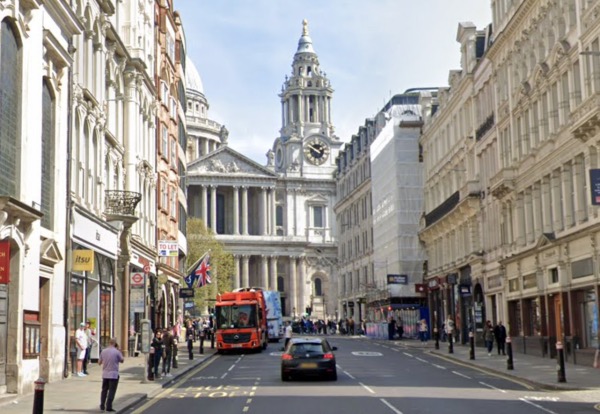
Looking up Ludgate Hill (the street) to where St Paul’s sits on top of Ludgate Hill. PICTURE: Google Maps.

First up, we’re looking at Ludgate Hill, located in the western end of the City of London. One of the three ancient hills within the City walls, Ludgate Hill, which is now the site of St Paul’s Cathedral, is believed in Roman times to have been the site of a temple dedicated to Diana.

The hill, which today rises just 17.6 metres above sea level (the highest point lying apparently just to the north of the cathedral), is named after the former city gateway of Ludgate which is, in turn, named after the mythical King Lud.

These days the hill’s name is also commemorated in a street – Ludgate Hill – which runs from Ludgate Circus at its western end to St Paul’s Churchyard at its eastern end. It was also formerly the name of a railway station which opened in the late 1860s but was closed in 1923.

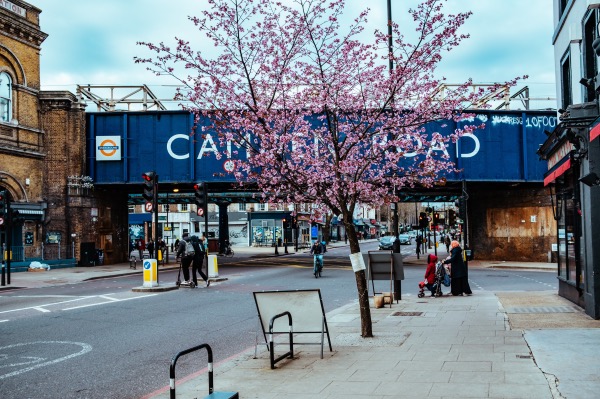
LondonLife – Blossom, Camden Road

PICTURE: Samuel Regan-Asante/Unsplash

This Week in London – Gold bunnies at Hampton Court; ‘The Adoration of the Kings’ on a phone; and last two trees for London Blossom Garden…

Despite the ongoing impacts of the coronavirus pandemic, we hope you have a happy Easter break!

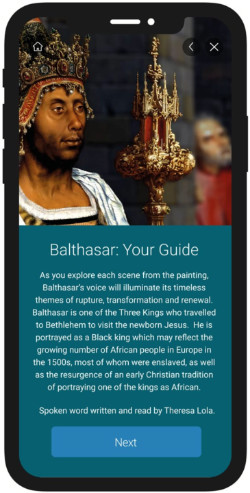
A screenshot from ‘Sensing the Unseen: Step into Gossaert’s ‘Adoration’, mobile edition’

The National Gallery’s first exhibition aimed at mobile phone users – exploring Jan Gossaert’s masterpiece, The Adoration of the Kings – goes live from Friday. Sensing the Unseen: Step into Gossaert’s ‘Adoration’, mobile edition features six poems in the voice of King Balthasar, a character depicted in the painting, who interprets six scenes shown in the work while interactive sound brings them to life, all in an effort to guide people to details they may have missed in the work. Users can use their zoom function to explore the masterpiece’s minutiae and share their favourite finds on Instagram. The mobile phone offering is a pre-cursor to the planned reopening of the physical exhibition Sensing the Unseen: Step into Gossaert’s ‘Adoration’ – forced to close just a week after opening last December – on 17th May. To see the mobile display, head to nationalgallery.org.uk/visiting/virtual-tours.

Hampton Court Palace is once again holding its Lindt Gold Bunny hunt for Easter. Families are invited to join in the search for the famous Lindt Gold Bunnies which have been hidden around the palace, enjoying the gardens along the way. Using a trail map, children will be able to learn about various lesser known Hampton Court residents including John Dale, Henry VIII’s master cook, and John Blanke, the King’s royal trumpeter. Successful treasure hunters can then claim a chocolate reward and a pair of gold bunny ears. Included in admission, the trail is designed for children aged three to 12-years-old and takes about one-and-a-half hours to complete. Runs until 18th April. For more, see www.hrp.org.uk/hampton-court-palace/whats-on/easter-lindt-gold-bunny-hunt/.

The final two blossom trees have been planted in the new London Blossom Garden. The public garden, which is being created as a lasting, living memorial to Londoners who have lost their lives to COVID-19 and the city’s shared experience of the pandemic, is located in the northern part of Queen Elizabeth Olympic Park in Newham. Scheduled to open later this spring, it has been created in partnership with the National Trust and with the support of Bloomberg, and features 33 blossoming trees representing London’s boroughs and the City of London.

Send all items for inclusion to exploring-london@gmail.com

10 London sites related to St Thomas Becket – A recap…

We’ve finished our series on London sites related to the story of Thomas Becket. Before we move on to our next special series, here’s a recap…

1. Cheapside…

2. Merton Priory…

3. Guildhall…

4. London churches…

5. The Tower of London…

6. Westminster Abbey…

7. Southwark…

8. St Thomas Becket memorial…

9. St Thomas’ Hospital…

10. The Pilgrim’s Way…

We’ll launch our new series next Wednesday.

LondonLife – A wall for remembrance…

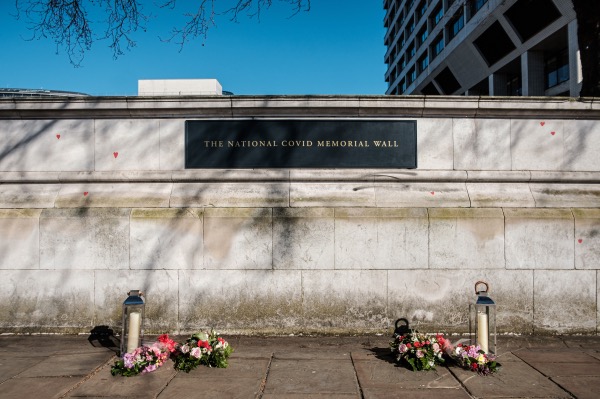
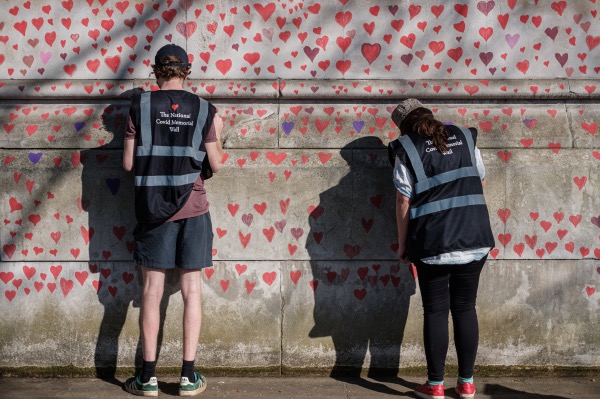
The National COVID Memorial Wall. PICTURES: Ehimetalor Akhere Unuabona/Unsplash

A memorial wall for the victims of the COVID-19 pandemic has been established on The Queen’s Walk outside St Thomas’ Hospital. Bereaved family and friends on Monday began to paint the first of tens of thousands of love hearts – representing those who have died of COVID-19 – on the wall which faces the Houses of Parliament across the Thames. The memorial, which is expected to stretch for hundreds of metres, is the work of the COVID-19 Bereaved Families for Justice group which has called for a public inquiry into how the government has handled the pandemic. Co-founder Matt Fowler, whose 56-year-old father, Ian, died last April, was the first to paint a heart on the wall on Monday. “This is an outpouring of love,” he reportedly said. “Each heart is individually hand-painted; utterly unique, just like the loved ones we’ve lost. And, like the scale of our collective loss, this memorial is going to be enormous.”

London Pub Signs – The Edgar Wallace…

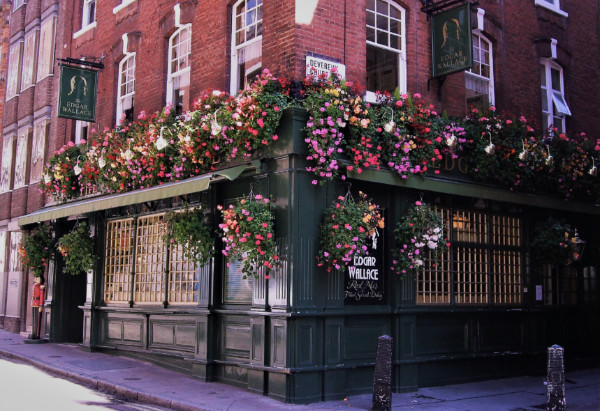
The Edgar Wallace pub in 2018. PICTURE: Jim Linwood (licensed under CC BY 2.0)

Formerly named The Essex Head, this West End pub was established as far back as 1777.

Perhaps its greatest claim to fame (in its earliest incarnation, at least) was that it was the location where, in 1783, lexicographer Samuel Johnson and his friend and physician Richard Brocklesby established the Essex Head Club.

James Boswell was a member and the club apparently met at the pub three times a week as a favour to the landlord, Sam Greaves, a former servant of the Thrale family, friends of Johnson (who also lived with them for some years). It apparently lived on for some time even after Johnson’s death in 1784

The original name of the pub, located at the corner of Essex Street and Devereux Court in the Temple district, referred to Robert Devereaux, Earl of Essex and favourite of Queen Elizabeth I, whose London home, Essex House, was previously located nearby (the house was largely demolished in the 1670s).

The pub, meanwhile, took on its current name in 1975. It was done to commemorate the 100th anniversary of the birth of celebrated crime writer Edgar Wallace.

Wallace, who was known for wearing a trilby and apparently driving a yellow Rolls Royce (and whose claims to fame include initially drafting the screenplay for the film King Kong – he died before it was completed), is credited as being the inventor of the modern thriller novel.

While he was born in Greenwich, Wallace had spent his childhood in the area where the pub now stands (there’s also a plaque to him in Fleet Street commemorating the time he spent working as a reporter before he found fame as an author – we’ll being telling more of his story in an upcoming ‘Famous Londoners’).

Lost London – The Dome of Discovery…

The Skylon and the Dome of Discovery at the 1951 Festival of Britain PICTURE: Peter Benton (licensed under CC BY-SA 2.0/image cropped)

Built for the post-war Festival of Britain in 1951, the Dome of Discovery was a temporary exhibition building located in South Bank.

Designed by architect Ralph Tubbs, the dome was, with a diameter of 365 feet and a height of 93 feet, the largest in the world at the time. It was located next to the Skylon, another iconic structure built for the festival.

The prefabricated dome, which was made from aluminium and concrete, was filled with galleries which housed exhibitions around the overarching theme of discovery. The display was grouped under eight different sections including “the land”, “the sea”, “sky” and “outer space”. The dome also contained a 50 foot long mural on the theme of discovery by artist Keith Vaughan.

The dome was dismantled just 11 months after it was installed and sold for scrap metal (despite pleas from Tubbs and proposals for it to be relocated to places as diverse as Sao Paulo in Brazil and Coventry in England). Some of the metal was apparently made into souvenirs including commemorative paper knives.

This Week in London – Dennis & Gnasher at Kew; ‘Now Play This’; and, work starts on ‘Gateway to Soho’…

A Beano Studios product © DC Thomson Ltd (2021)

Characters from the popular Beano comic and TV series, Dennis & Gnasher: Unleashed! will be at Kew this Easter. Marking 70 years of Dennis, Dennis and Gnasher’s Big Bonanza at Kew will feature an exclusive giant 3D comic strip – the largest ever created by Beano – with the chance to take part in all sorts of tricks and jokes and, of course, learn about some of Kew’s plants including their slimy, sticky, smelly and deceptive powers. Runs from 31st March to 18th April. Admission charge applies. For more, see www.kew.org.

A four day “festival of experimental games”  kicks off today with a virtual programme featuring  interactive games, workshops, and conversations. Now Play This, part of the London Games Festival, explores the climate crisis through games and play, and features a discussion within games designer Hosni Auji’s Airplane Modesimulator, a live role-play simulation of UN climate change negotiations in World Climate Simulation and the new interactive design game Among Ripples whichoffers players the chance to experiment with building and maintaining their own lake ecosystem. The free online festival runs until Sunday, 28th March. It can be found at www.nowplaythis.net.

• Work has begun this week to create an open-air gallery in part of Soho as part of a £150 million project aimed at transforming Oxford Street and surrounds. The project will see Ramillies Street, Ramillies Place, Hills Place and a small section of Great Marlborough Street made into a ‘Gateway to Soho’ and the site of an annual ‘Photographers’ Gallery’ programme featuring light projections and large-scale art.

Send all items for inclusion to exploringlondon@gmail.com

  ​

LondonLife Special – Marking a year since the first national lockdown…

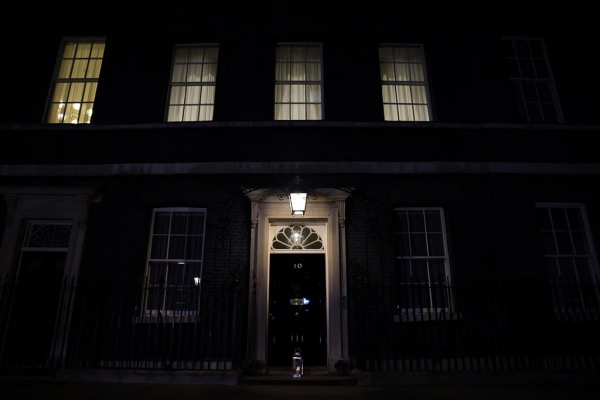
Remembering the more than 126,000 lost. A candle is lit outside 10 Downing Street on Tuesday night to mark the first anniversary of the first national lockdown. PICTURE: Pippa Fowles/No 10 Downing Street.

LondonLife – Inspiring stories from a pandemic…

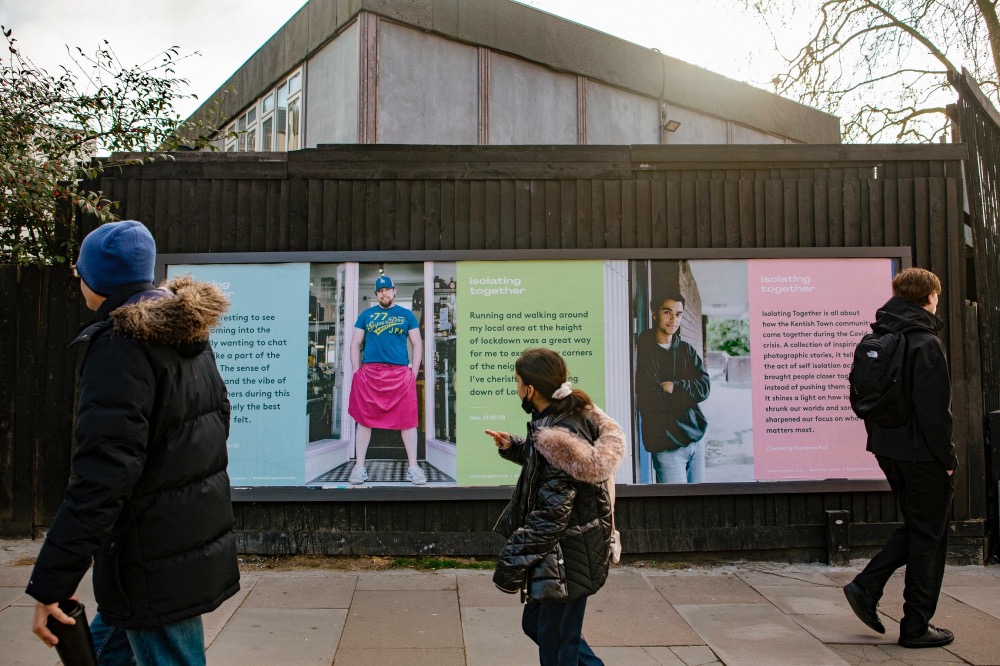
Artist Karishma Puri at one of the 18 sites in ‘Isolating Together’. PICTURES: Supplied.

A new outdoor exhibition celebrating inspiring stories of community, action and solidarity during the year of the COVID-19 pandemic can be seen in Camden. Created to mark a year since the pandemic began, Isolating Together features the work of artist Karishma Puri who was inspired to capture the images after establishing Covid Mutual Aid – a WhatsApp-based community group – in Kentish Town to help neighbours support one another and overcome isolation. The images, seen at 18 locations across Camden, highlight the vital role that local businesses like Truffles Deli have played in the community during the pandemic as well as personal stories like that of Nafisa who started a support system that ensured people in the local Somali community had a steady supply of free fruit and vegetables during the pandemic. Run in collaboration with Jack Arts and No Ordinary Experience, Isolating Together uses billboards, community spaces and local shop windows to create a vast outdoor gallery with its centrepiece displayed across a 14 metre wall at Number 19, the home of community action in Camden. The exhibition can be seen on a self-guided walk until 31st March. A map and more information is available at https://isolatingtogether.co.uk/exhibition.

‘Isolating Together’ installation at Swiss Cottage.
Isolating Together’ installation at Aces & Eights.

Famous Londoners – Old Martin…

A grizzly bear (not Old Martin). PICTURE: Joshua J Cotten/Unsplash

A large, fully grown, grizzly bear presented to King George III by the Hudson’s Bay Company in 1811, Old Martin was one of the scarier residents of the Tower of London’s menagerie.

The bear, who was apparently named after a famous bear in Europe (the “old” was added because he spent so long in resident at the Tower), is said to have been the first grizzly in London.

He was not, however, the first bear to live there – King Henry III had been given a polar bear by King Haakon IV Haakonsson of Norway in 1251 (George, however, was apparently unimpressed with his gift, said to have commented in private that he would have preferred a tie or pair of socks).

Despite his many years in the menagerie, Old Martin apparently refused to be tamed and remained fierce towards both strangers and his keepers alike.

When the Duke of Wellington closed the menagerie in the early 1830s (King William IV apparently had little interest in the animals), Old Martin was moved to the London Zoo in Regent’s Park. He died there in 1838.

His skin and skull were subsequently sent to the Natural History Museum and rediscovered there in 1999 for an exhibition at the Tower.

There’s a rather odd story associated with Old Martin. It’s said that in 1816 – when Old Martin was living in the Tower’s menagerie – a Yeoman Warder saw a ghostly bear while on night duty near the Martin Tower. He apparently attempted to run it through with a bayonet but the blade went straight through and struck the door frame behind it. The somewhat dubious story goes that the poor Yeoman Warder died of shock just a few hours later.

This Week in London – Famous faces take in history, and, the Tudor world brought to life…

Famous faces from TV and radio including Strictly Come Dancing champion Oti Mabuse and her partner Marius Iepure, Radio 2’s Reverend Kate Bottley and TV presenter Monty Halls, are visiting dramatic historic locations that are special to them in a new series of videos launched by Historic England. In each film in the #UncoverMore campaign, the personalities “discover a thread through time that brings to life the stories of people, places and spaces that have survived through the decades”. In their film, Oti and Marius dance at two of England’s oldest ballrooms (at Powderham Castle and Hampton Court Place), while Rev Bottley visits Loughborough Bellfoundry, and Monty Halls takes in ‘The Lost Gardens of Heligan’. To watch the videos, head to https://historicengland.org.uk/coronavirus/culturerecoveryfund/uncover-more/.

The magnificence of the Tudor world will be bought to life in an online talk featuring Historic Royal Palace’s Chief Curator Dr Lucy Worsley next Wednesday. Worsley will be joined by Professor Glenn Richardson from St Mary’s University and fellow Historic Royal Palaces curators Dr Alden Gregory and Brett Dolman in an hour long talk that will focus one of “the most spectacular examples of royal showmanship”, the Field of Cloth of Gold, the 1520 event when Henry VIII met near Calais with his great rival François I of France. The talk will also feature a sneak preview of Hampton Court Palace’s upcoming exhibition Gold and Glory: Henry VIII and the French King. The event is free (although donations of £10 are encouraged). To register, head here.

Send all items for inclusion to exploringlondon@gmail.com.

10 London sites related to St Thomas Becket – 10. The Pilgrim’s Way…

The final in our series on St Thomas Becket’s London is not about a static site but a pathway, one that people have been walking since the Middle Ages as pilgrims to the shrine of St Thomas Becket in Canterbury.

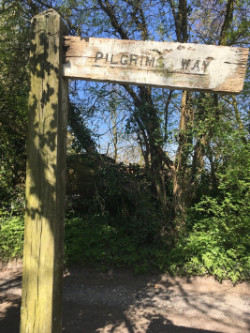
A Pilgrim’s Way signpost near Chaldon in Surrey. PICTURE: G Travels (licensed under CC BY-NC 2.0)

Famous today through its association with Geoffrey Chaucer’s The Canterbury Tales, the Pilgrim’s Way actually refers to not one path but a series of routes taken by pilgrims as they made their way from London to Canterbury, linking up along the way with another route originating in Winchester.

The pilgrimage from London typically started at the now long lost St Thomas Becket Chapel in the middle of Old London Bridge and then headed south through Southwark where the Tabard Inn – where Chaucer has his pilgrims staying at the start of his journey – was located.

These days, there’s several routes – the official Pilgrim’s Way website has a couple of different routes through London. Both start at Southwark Cathedral and one then follows the line of A2 south before heading east to the Thames through Deptford where it joins up with a second route. This route, on leaving Southwark Cathedral, follows the south bank of the Thames east.

On becoming one route at Deptford, the Pilgrim’s Way then follows the Thames through Greenwich and Woolwich before turning southward to Dartford and eventually linking up with the Pilgrim’s Way from Winchester in the village of Otford in Kent (and then on to Canterbury).

Other versions of the pilgrimage route start at Westminster Abbey and take in St Paul’s Cathedral before crossing over the Thames and heading east to Gravesend and on to the Medway towns and eventually Canterbury.

Interestingly, some believe that King Henry II took the route from London to Canterbury when performing his very public act of atonement for his role in the saint’s death (although others believe he made the pilgrimage from Winchester).

LondonLife – Tunnel of colour…

Adams Plaza Bridge, Canary Wharf, Docklands. The colourful crossing, which links Crossrail Place and One Canada Square, was created by artist Camille Walala as part of last year’s London Mural Festival. PICTURE: Samuel Regan-Assante/Unsplash

London Explained – The Tube…

Commonly used as a nickname to describe the London Underground, the “Tube” is an obvious reference to shape of the tunnels themselves.

Construction of the Tube at Mile End (c1946). PICTURE: The National Archives UK (London Transport Museum © Transport for London)

The word is believed to have been first popularised around 1890. Underground lines had previously been constructed using the ‘cut and cover’ method – that is, digging out the trench for the Underground line, lining the tunnel with iron and them covering it.

Thanks to its depth (due to the fact it had to pass under the Thames), City and South London Railway’s line from King William Street (a now disused station) to Stockwell was the first to be created by boring a tunnel through the earth and then lining it to create a tube. The line, a forerunner of what is now the Northern Line, opened in December, 1890. It was the first true ‘tube’ of the Underground system.

The construction of the line was followed in 1900 by the opening of the Central London Railway’s line from Shepherd’s Bush to Bank (now part of the Central Line) which was given the nickname the “Twopenny Tube”.

The name stayed and was soon applied to the entire network of Underground lines (and interestingly, it wasn’t until 1908 that the word “Underground” first appeared in stations).